
Philippines HVAC Market Size and Share
| Study Period | 2019 - 2030 |
| Forecast Data Period | 2025 - 2030 |
| Historical Data Period | 2019 - 2023 |
| Market Size (2025) | USD 1.65 Billion |
| Market Size (2030) | USD 2.35 Billion |
| CAGR (2025 - 2030) | 7.40% |
| Market Concentration | Low |
Major Players *Disclaimer: Major Players sorted in no particular order |
Philippines HVAC Market Analysis by Mordor Intelligence
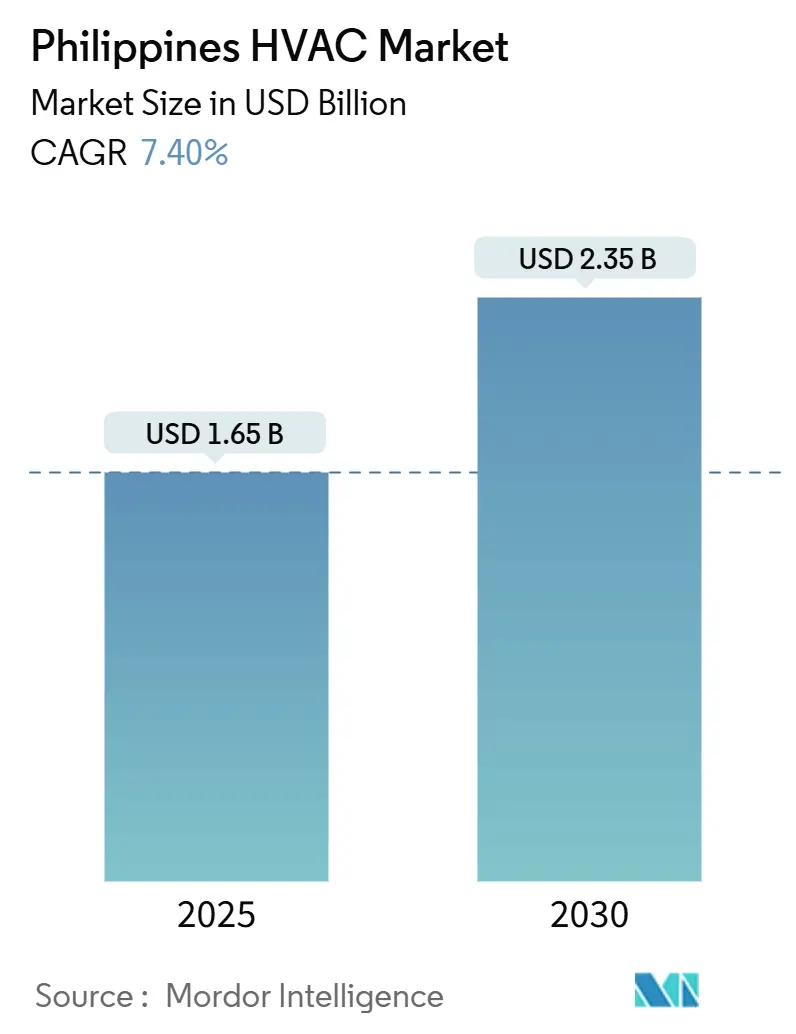
The Philippines HVAC Market size is estimated at USD 1.65 billion in 2025, and is expected to reach USD 2.35 billion by 2030, at a CAGR of 7.40% during the forecast period (2025-2030).
- HVAC is a comprehensive system designed to create and maintain comfortable indoor environmental conditions in residential, commercial, and industrial spaces. Heating is the first component, which involves warming interior spaces during cold weather through various methods such as furnaces, heat pumps, and radiant heating systems. These technologies convert energy into heat, distributing warmth evenly throughout a building to ensure occupant comfort and prevent temperature-related issues.
- The Philippines is undergoing significant changes in its economic and social landscape, primarily driven by growing urbanization and rising disposable incomes. Urbanization in the Philippines has been accelerating in recent years, with more people migrating to cities for better employment opportunities, education, and improved living standards.
- According to the World Bank, urban areas in the Philippines are expected to house over 60% of the population in the coming years. This shift towards urban living is creating a surge in the construction of residential, commercial, and industrial buildings, all of which require efficient HVAC systems for climate control and air quality management.
- As cities expand, the need for modern infrastructure, including energy-efficient HVAC solutions, becomes critical. Urban areas are characterized by higher temperatures and pollution levels, making effective climate control systems essential for maintaining comfort and health. Consequently, real estate developers and builders are increasingly investing in advanced HVAC technologies to meet the demands of urban dwellers, further propelling market growth.
- Alongside urbanization, the Philippines has experienced a notable increase in disposable incomes, driven by economic growth and a burgeoning middle class. The Philippine Statistics Authority reported that household incomes have been rising steadily, allowing more families to invest in improved living conditions. With higher disposable income, consumers are more inclined to invest in modern amenities, including HVAC systems, which enhance comfort and convenience in their homes and workplaces.
- The Philippine government has implemented various policies aimed at bolstering economic growth, which directly impacts the HVAC market. The Philippine Development Plan (PDP) serves as a blueprint for national development and includes strategies to enhance infrastructure, which is crucial for the HVAC sector. By prioritizing investments in infrastructure, the government is creating a conducive environment for HVAC companies to thrive. This includes the construction of new commercial buildings, residential developments, and public facilities, all of which require efficient HVAC systems to ensure comfort and safety.
- Moreover, the Build, Build, Build program, initiated by the government, aims to accelerate infrastructure development across the nation. This initiative not only creates jobs but also stimulates demand for HVAC installations in various infrastructures such as airports, schools, hospitals, and commercial buildings. As a result, the HVAC market is witnessing a surge in opportunities, leading to increased competition and innovation within the industry.
- However, the high initial investment costs significantly restrain the growth of the HVAC market in the Philippines. This challenge is particularly pressing in a country where many businesses and households lack the financial resources to invest in sophisticated HVAC systems. The upfront costs associated with purchasing, installing, and maintaining these systems can be prohibitive, especially for small to medium-sized enterprises and lower-income households.
- Additionally, the cost of energy-efficient technology is often higher than traditional HVAC systems, discouraging consumers from making the switch despite the long-term savings on energy bills. Furthermore, the lack of financing options or government incentives exacerbates this issue, as many potential buyers are unable to secure the necessary capital.
- Also, many potential customers are unaware of the benefits of modern HVAC systems, such as energy efficiency, comfort, and improved air quality. This lack of understanding leads to reduced demand for advanced HVAC solutions, stifling market growth.
Philippines HVAC Market Trends and Insights
Increase in Construction Activities is Anticipated to Drive the Demand for the Studied Market
- The construction industry in the Philippines has witnessed significant growth over the past decade, driven by a myriad of factors that are reshaping the landscape of urban development. This surge in construction activities not only reflects the country's economic progress but also has profound implications for various sectors, including the HVAC market.
- One of the primary catalysts for the increase in construction activities in the Philippines is the nation’s robust economic growth. According to the International Monetary Fund (IMF), the Philippines has a steadily growing economy, with a gross domestic product (GDP) that reached over USD 461.62 billion in 2024. The GDP of the Philippines is expected to increase substantially to over USD 757.67 billion by 2030. The country has experienced a steady rise in GDP, attributed to various sectors such as agriculture, manufacturing, and services. As the economy expands, so does the need for infrastructure development. Urbanization also plays a crucial role in this growth, with a growing population migrating to urban areas in search of better opportunities. This influx of people necessitates the construction of housing, commercial buildings, and public infrastructure, all of which require effective HVAC solutions.
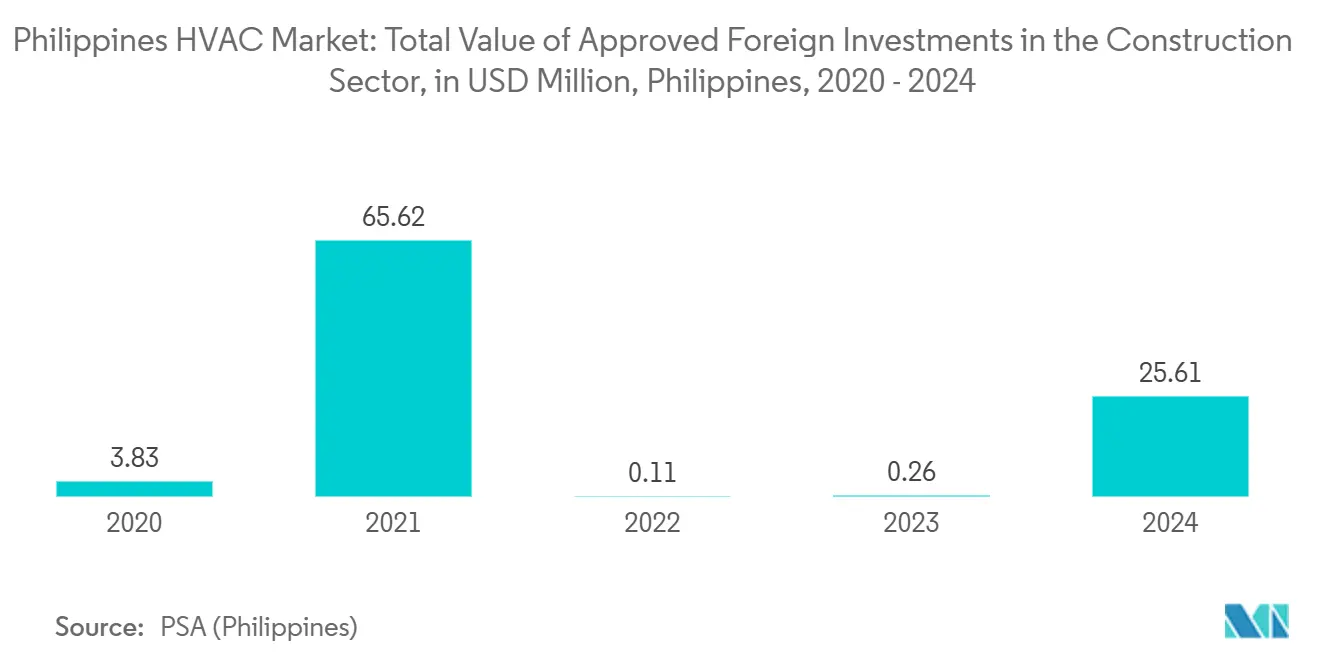
- According to the Philippine Statistics Authority (PSA), the total value of approved foreign investments into the construction industry in the Philippines reached approximately USD 25.61 million in 2024, as compared to USD 0.26 million in 2023. Further, the gross value added generated from the construction sector in the Philippines amounted to approximately USD 30 billion in 2024, an increase from USD 27 billion in 2023.
- As the economy strengthens, there is a corresponding increase in the standard of living for many Filipinos. With more disposable income, consumers are more inclined to invest in comfortable living environments, which include the installation of HVAC systems. The demand for energy-efficient and high-performance HVAC solutions is particularly pronounced in urban centers where residential and commercial spaces are increasingly being equipped with modern amenities. This rising standard of living is a significant driver for the HVAC market as consumers prioritize comfort and energy efficiency in their homes and workplaces.
- Additionally, the HVAC industry is witnessing rapid technological advancements that enhance system efficiency and user comfort. Innovations such as smart thermostats, energy recovery ventilators, and advanced filtration systems are becoming increasingly popular in new constructions. Builders and developers are keen to integrate these technologies into their projects to attract buyers and tenants who prioritize modern living standards. As a result, the demand for HVAC systems that incorporate these cutting-edge technologies is surging, further accelerating growth in the HVAC market alongside rising construction activities.
The Air Conditioning Equipment Sector is Anticipated to Hold a Major Market Share
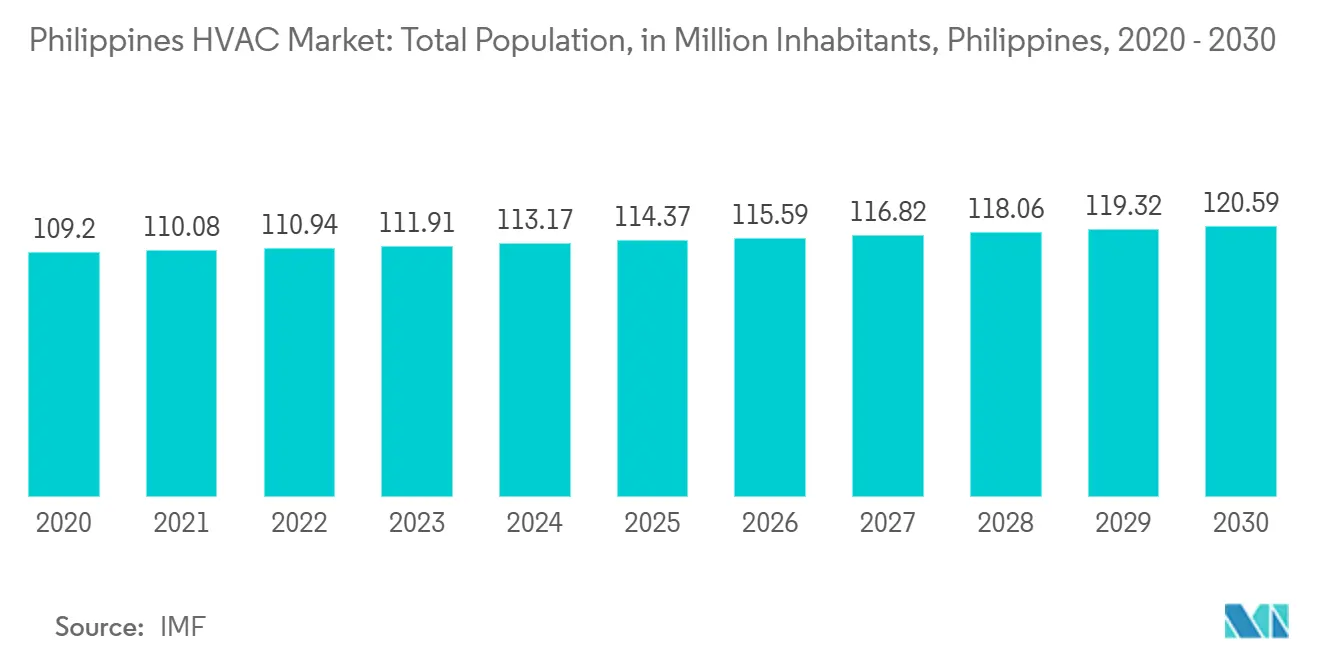
- The air conditioning (AC) equipment market in the Philippines has experienced significant growth in recent years, fueled by a variety of factors that reflect both the economic landscape and the changing lifestyle of its citizens. The country has also experienced significant population growth, contributing to the growth of the studied market. For instance, according to the International Monetary Fund (IMF), in 2024, the total population of the Philippines was approximately 114.17 million inhabitants, an increase from 119.32 million in 2023.
- The Philippines is located in a tropical climate zone, characterized by high humidity and temperatures that can reach uncomfortable levels, especially during the summer months. Climate change has intensified these conditions, leading to longer and hotter summers. As a result, more individuals and businesses are seeking the comfort of climate control systems. This trend is particularly evident in urban areas where heat islands amplify temperature increases.
- Additionally, initiatives such as the Philippine Energy Plan (PEP) outline strategies for enhancing the country's energy security and sustainability. The PEP encourages the use of renewable energy sources and promotes the adoption of energy-efficient appliances and systems. As HVAC systems are significant energy consumers, these policies create a favorable environment for the development and adoption of advanced HVAC technologies, such as variable refrigerant flow (VRF) systems and smart thermostats.
- VRF systems, with their energy-efficient capabilities, often qualify for government incentives and support, making them a more attractive option for both residential and commercial users. This regulatory environment fosters a more favorable market for VRF systems, further driving their growth in the HVAC sector.
- The Philippine government has also introduced incentives to encourage green building practices, which significantly influence the HVAC market. The Green Building Code, implemented in 2009, sets standards for energy efficiency and environmental sustainability in building designs. Compliance with this code often requires the integration of efficient HVAC systems that minimize energy consumption. As more developers and builders seek to obtain green certifications, the demand for innovative and efficient HVAC solutions continues to rise.
- Moreover, the Philippines has seen a surge in awareness regarding sustainability and environmental impact, aligning with global trends towards greener technologies. With the government's push for energy-efficient appliances and sustainable construction practices, VRF systems have gained popularity as they often utilize eco-friendly refrigerants like R-410A, which have a lower global warming potential compared to older refrigerants.
- The modular design of VRF systems is another key innovation contributing to their growth in the Philippines. Unlike traditional systems that require extensive ductwork and infrastructure, VRF systems can be installed in a variety of configurations. This flexibility is particularly beneficial in urban areas where space is limited, allowing for installations in both new constructions and retrofitting existing buildings.
- The ability to connect multiple indoor units to a single outdoor unit also allows for zoning capabilities, enabling different areas of a building to be cooled or heated independently. This feature not only enhances comfort for occupants but also contributes to further energy savings, as only the areas in use will consume energy.
Competitive Landscape
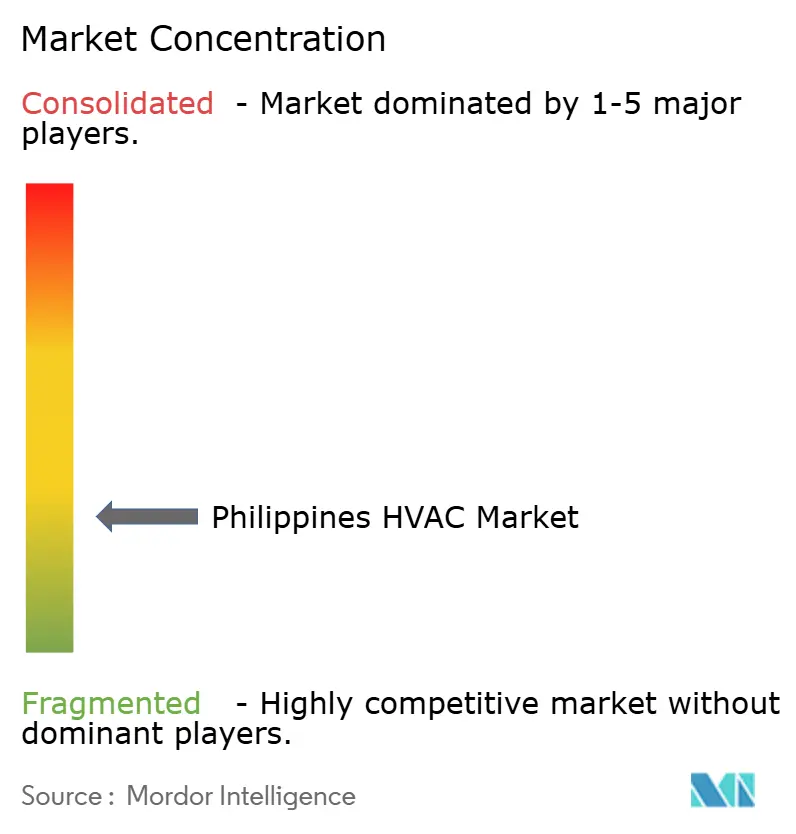
The HVAC market in the Philippines is characterized by a mix of specialized players and regional conglomerates, each operating across diverse segments. While certain high-value segments see dominance from large multinational corporations, a plethora of regional and niche players intensifies the competition, underscoring the market's diversity. This competitive landscape is fueled by the myriad applications of HVAC equipment, enabling both small and large entities to not just coexist but flourish.
Prominent players in the Philippines' HVAC arena encompass names like Mitsubishi Electric Corporation, Robert Bosch GmbH, Danfoss A/S, Daikin Industries, Ltd., and Vaillant Group, among others. These companies, bolstered by strong brand recognition and expansive regional operations, wield considerable market influence. Their competitive strengths lie in innovation, a diverse solutions portfolio, and a solid distribution network. To further entrench their market position and expand their reach, these industry leaders actively engage in strategic acquisitions and partnerships.
In the competitive landscape of the Philippines HVAC market, companies that emphasize innovation in their heating, ventilation, and air conditioning solutions stand a better chance of thriving. As industries lean towards advanced solutions, the significance of HVAC equipment as a differentiator becomes pronounced. Moreover, broadening service offerings and bolstering customer support will be pivotal in cultivating enduring relationships and ensuring repeat business. Firms that strategically invest in emerging markets and customize their products to resonate with regional demands can carve out a distinct competitive edge in this fragmented market.
Philippines HVAC Industry Leaders
-
Daikin Industries Ltd.
-
Carrier Global Corporation
-
LG Electronics Inc.
-
Panasonic Corporation
-
Mitsubishi Electric Corporation
- *Disclaimer: Major Players sorted in no particular order
Recent Industry Developments
- March 2025: Panasonic expanded its Matter-enabled smart AC portfolio for the residential segment; the new line-up is designed to withstand extreme temperatures up to 55ᵒC. Panasonic Air Conditioners can be controlled from the Miraie app and offer a unique sleep profile feature, helping consumers adjust room temperature automatically.
- January 2025: Trane – by Trane Technologies, a global climate innovator, completed its redesign of the Precedent Rooftop Unit portfolio and updates to its unitary, split systems, and variable air volume products. Two new indoor unit styles have also been added to the Trane/ Mitsubishi Electric HVRF product line, a market-first all-electric Variable Refrigerant Flow (VRF). The HVRF system uses a combination of refrigerant to connect outdoor units to the Hybrid Branch Controller (HBC) and water to connect the HBC to indoor units.
Philippines HVAC Market Report Scope
HVAC is a comprehensive system designed to create and maintain comfortable indoor environmental conditions in residential, commercial, and industrial spaces. Heating is the first component, which involves warming interior spaces during cold weather through various methods such as furnaces, heat pumps, and radiant heating systems. These technologies convert energy into heat, distributing warmth evenly throughout a building to ensure occupant comfort and prevent temperature-related issues.
Ventilation represents the critical process of exchanging indoor and outdoor air, ensuring proper air circulation, removing pollutants, controlling humidity, and maintaining air quality. This aspect of HVAC involves mechanical and natural ventilation techniques that introduce fresh air, filter contaminants, and regulate oxygen levels. Proper ventilation is essential for preventing the buildup of harmful gases, reducing moisture-related problems, and creating a healthy indoor environment.
Air Conditioning focuses on cooling and dehumidifying interior spaces during warm weather. Modern air conditioning systems use refrigeration cycles to remove heat and moisture from the air, creating a comfortable and controlled climate. These systems range from central air conditioning units to ductless mini-splits, providing precise temperature management and improving overall indoor comfort. The integration of these three components- heating, ventilation, and air conditioning- creates a sophisticated environmental control system that adapts to changing weather conditions and occupant needs.
The study tracks the revenue accrued through the sale of HVAC product types by various players in the Philippines. The study also tracks the key market parameters, underlying growth influencers, and major vendors operating in the industry, which supports the market estimations and growth rates over the forecast period. The study further analyses the overall impact of macroeconomic factors on the market. The report's scope encompasses market sizing and forecasts for the various market segments.
The Philippines HVAC Market is Segmented by product type (heating equipment [heat pumps (air source, ground source), furnaces (gas, electric, oil), boilers (condensing, non-condensing), unit heaters, and others (radiators & baseboard heaters, solar water heating systems)], ventilation equipment [air handling units (AHUs), energy recovery ventilators (ERVs)/heat recovery, ventilators (HRVs), exhaust and supply fans, dehumidifiers/humidifiers], air conditioning equipment [unitary air conditioners, variable refrigerant flow (VRF) systems, chillers (air-cooled, water-cooled), fan coil units (FCUs), and others (window and portable air conditioners)]) and end-user industry (residential, commercial, and industrial). The market sizes and forecasts are provided in terms of value (USD) for all the above segments.
| Heating Equipment | Heat Pumps (Air Source, Ground Source) | |
| Furnaces (Gas, Electric, Oil) | ||
| Boilers (Condensing, Non-condensing) | ||
| Unit Heaters | ||
| Others (Radiators & Baseboard Heaters, Solar Water Heating Systems) | ||
| Ventilation Equipment | Air Handling Units (AHUs) | |
| Energy Recovery Ventilators (ERVs) / Heat Recovery Ventilators (HRVs) | ||
| Exhaust and Supply Fans | ||
| Dehumidifiers / Humidifiers | ||
| Air Conditioning Equipment | Unitary Air Conditioners | Split Air Conditioners |
| Packaged Terminal ACs (PTACs) | ||
| Rooftop Packaged Units (RTUs) | ||
| Variable Refrigerant Flow (VRF) Systems | ||
| Chillers (Air-Cooled, Water-Cooled) | ||
| Fan Coil Units (FCUs) | ||
| Others (Window and Portable Air Conditioners) | ||
| Residential |
| Commercial |
| Industrial |
| By Product Type | Heating Equipment | Heat Pumps (Air Source, Ground Source) | |
| Furnaces (Gas, Electric, Oil) | |||
| Boilers (Condensing, Non-condensing) | |||
| Unit Heaters | |||
| Others (Radiators & Baseboard Heaters, Solar Water Heating Systems) | |||
| Ventilation Equipment | Air Handling Units (AHUs) | ||
| Energy Recovery Ventilators (ERVs) / Heat Recovery Ventilators (HRVs) | |||
| Exhaust and Supply Fans | |||
| Dehumidifiers / Humidifiers | |||
| Air Conditioning Equipment | Unitary Air Conditioners | Split Air Conditioners | |
| Packaged Terminal ACs (PTACs) | |||
| Rooftop Packaged Units (RTUs) | |||
| Variable Refrigerant Flow (VRF) Systems | |||
| Chillers (Air-Cooled, Water-Cooled) | |||
| Fan Coil Units (FCUs) | |||
| Others (Window and Portable Air Conditioners) | |||
| By End-User Industry | Residential | ||
| Commercial | |||
| Industrial | |||
Key Questions Answered in the Report
How big is the Philippines HVAC Market?
The Philippines HVAC Market size is expected to reach USD 1.65 billion in 2025 and grow at a CAGR of 7.40% to reach USD 2.35 billion by 2030.
What is the current Philippines HVAC Market size?
In 2025, the Philippines HVAC Market size is expected to reach USD 1.65 billion.
Who are the key players in Philippines HVAC Market?
Daikin Industries Ltd., Carrier Global Corporation, LG Electronics Inc., Panasonic Corporation and Mitsubishi Electric Corporation are the major companies operating in the Philippines HVAC Market.
What years does this Philippines HVAC Market cover, and what was the market size in 2024?
In 2024, the Philippines HVAC Market size was estimated at USD 1.53 billion. The report covers the Philippines HVAC Market historical market size for years: 2019, 2020, 2021, 2022, 2023 and 2024. The report also forecasts the Philippines HVAC Market size for years: 2025, 2026, 2027, 2028, 2029 and 2030.
Philippines HVAC Market Report
Statistics for the 2025 Philippines HVAC market share, size and revenue growth rate, created by Mordor Intelligence™ Industry Reports. Philippines HVAC analysis includes a market forecast outlook for 2025 to 2030 and historical overview. Get a sample of this industry analysis as a free report PDF download.