
Singapore HVAC Market Size and Share
| Study Period | 2019 - 2030 |
| Forecast Data Period | 2025 - 2030 |
| Historical Data Period | 2019 - 2023 |
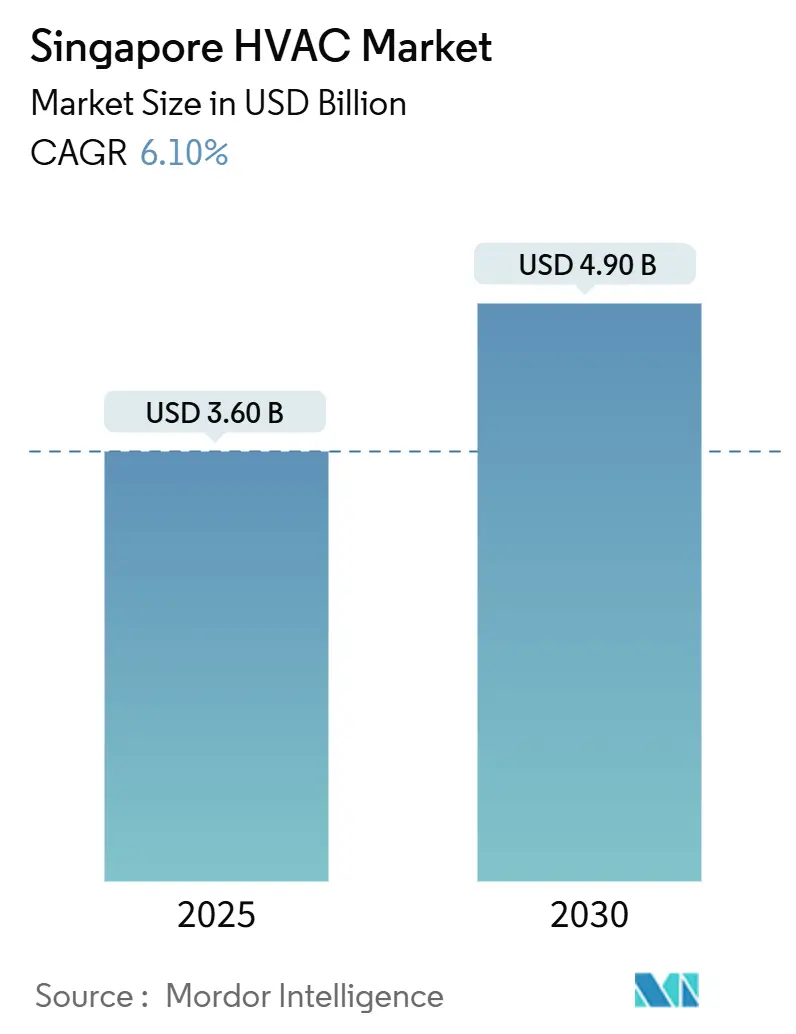
| Market Size (2025) | USD 3.60 Billion |
| Market Size (2030) | USD 4.90 Billion |
| CAGR (2025 - 2030) | 6.10% |
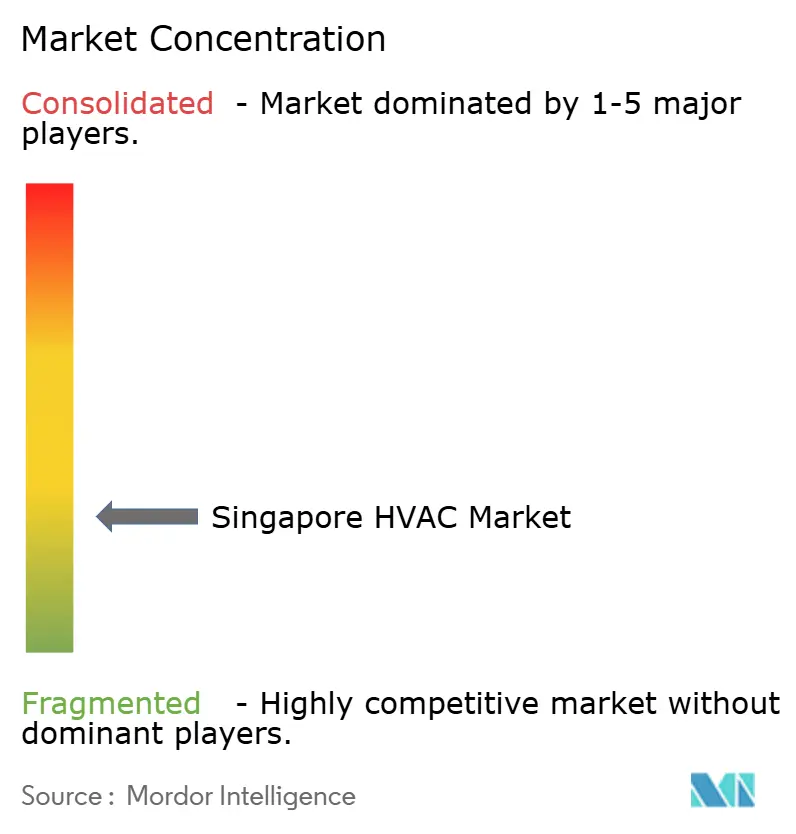
| Market Concentration | Low |
Major Players *Disclaimer: Major Players sorted in no particular order |
Singapore HVAC Market Analysis by Mordor Intelligence
The Singapore HVAC Market size is estimated at USD 3.60 billion in 2025, and is expected to reach USD 4.90 billion by 2030, at a CAGR of 6.10% during the forecast period (2025-2030).
- HVAC equipment serves a multitude of purposes across various venues, including shopping centers, industrial facilities, and warehouses. Its main function is to uphold ideal climate conditions, guaranteeing comfort and safety for occupants through adept management of heating, cooling, and air quality.
- In rapidly developing cities, urbanization and population growth significantly influence various sectors. Singapore's urbanization journey uniquely blends strategic planning with rapid development. With around 6 million residents crammed into just 728.6 square kilometers, Singapore, one of the world's most densely populated nations, has built an extensive urban infrastructure. To cater to its growing populace and businesses, the nation continuously erects modern skyscrapers, residential complexes, and commercial centers.
- Proactive government policies, notably the Urban Redevelopment Authority's (URA) initiatives, have been pivotal in facilitating this urban growth. Through smart urban planning and sustainable practices, the government not only enhances residents' living conditions but also champions energy efficiency and environmental sustainability. As urban areas burgeon, so does the demand for effective climate control solutions. HVAC systems play a crucial role in ensuring comfortable indoor environments for both residential and commercial spaces.
- Factors like natural growth and immigration shape Singapore's population growth. For instance, data from the Singapore Department of Statistics reveals that in 2024, out of Singapore's total population of approximately 6.03 million, around 3.64 million were citizens, while under 1.86 million were non-residents. Singapore's strategic positioning as a global business hub draws a diverse international workforce, fueling its demographic expansion. This population surge amplifies the demand for housing, commercial spaces, and infrastructure, all of which increasingly rely on efficient HVAC systems.
- Macroeconomic factors, including stringent government regulations and initiatives, significantly drive the growth of the HVAC market in Singapore. A key catalyst for this market's expansion is the government's unwavering commitment to energy efficiency. The Singapore Green Plan 2030 lays out a sustainable development roadmap, aiming for reduced carbon emissions and bolstered energy conservation. Through the Green Mark Scheme, the Building and Construction Authority (BCA) promotes the adoption of energy-efficient technologies, spotlighting advanced HVAC systems. Buildings achieving the Green Mark certification enjoy various grants and rebates, incentivizing investments in modern HVAC technology.
- The government's regulatory framework is instrumental in shaping Singapore's HVAC market. The Energy Conservation Act mandates large energy consumers to adopt energy management practices and report their usage. This requirement has driven many businesses to upgrade their HVAC systems for enhanced energy efficiency. Additionally, Singapore’s Energy Efficiency Standards for HVAC ensure the installation of only high-performance systems, spurring innovation and competition among manufacturers and service providers.
- Despite its growth, the HVAC market grapples with challenges, notably high initial investment costs, which deter many potential entrants. Installing HVAC systems demands significant financial outlays, from advanced technology and skilled labor to regulatory compliance. This challenge is magnified in Singapore, where urbanization and climate concerns heighten the demand for energy-efficient and smart HVAC solutions.
- These hefty upfront costs dissuade small and medium-sized enterprises (SMEs) from entering the market, stifling competition and innovation. Even businesses that take the plunge contend with lengthy payback periods, complicating the justification of their initial investment. Consequently, many might resort to cheaper, less efficient alternatives, potentially stunting overall market growth.
- Moreover, the ever-evolving regulatory landscape demands continuous workforce skill updates and training, presenting resource allocation challenges. As regulations grow more intricate, companies may find it challenging to keep up, risking project delays and heightened operational risks.
Singapore HVAC Market Trends and Insights
The Economic Development and Construction Activities are Anticipated to Drive the Demand for the Studied Market
- Singapore, a global financial hub, has experienced rapid economic development and urbanization over the past few decades. This growth has been accompanied by a boom in construction activities, primarily driven by government initiatives, urban planning, and a continuous influx of foreign investments. As a result, the HVAC market in Singapore has witnessed significant expansion.
- The economic landscape in Singapore has transformed dramatically, characterized by a robust GDP growth rate and a diversified economy. The city-state's strategic location in Southeast Asia has made it an attractive destination for multinational corporations and foreign investments. The influx of capital has spurred various sectors, including real estate, hospitality, and commercial buildings, leading to increased demand for HVAC solutions. As businesses expand and new projects emerge, the need for efficient climate control systems has become paramount.
- Urbanization, a direct byproduct of economic development, has led to a surge in population density. Singapore's urban planning initiatives aim to create sustainable and livable environments, which necessitate advanced HVAC systems to maintain indoor air quality and thermal comfort. With more people living and working in confined spaces, effective ventilation and cooling systems are essential, thereby propelling the HVAC market's growth.
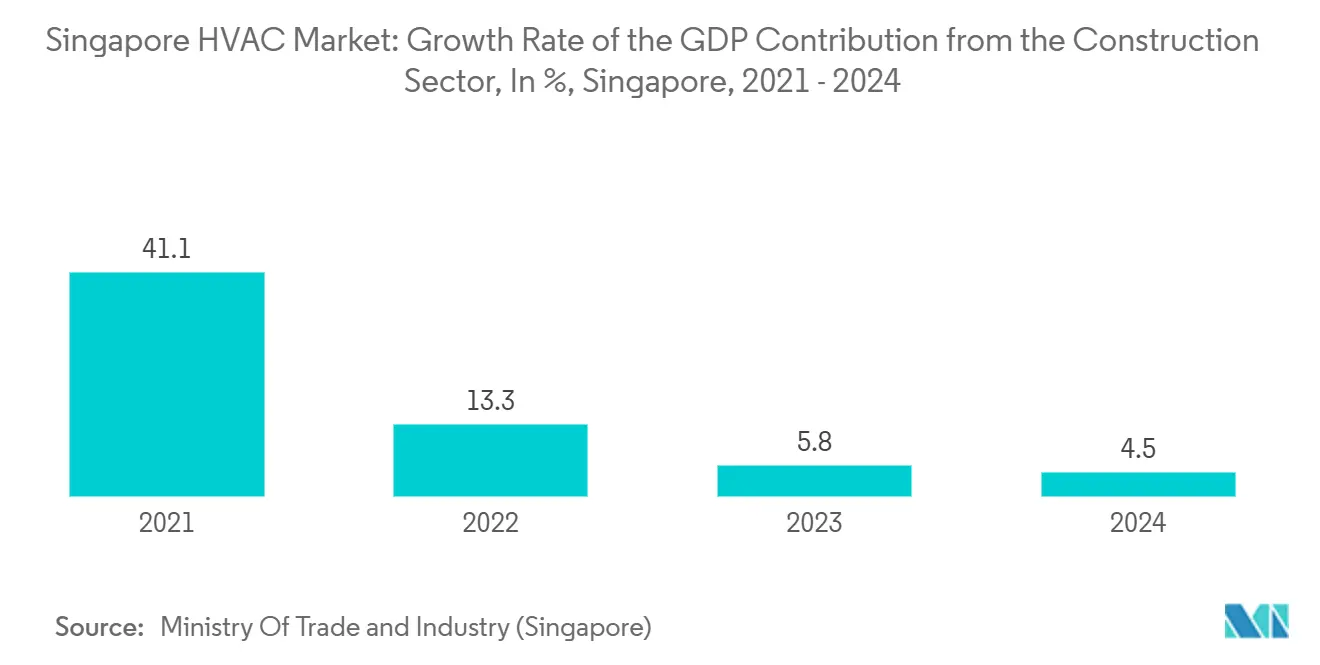
- The construction industry in Singapore has been a cornerstone of its economic development. According to the Ministry of Trade and Industry (Singapore), the construction sector in Singapore grew by 4.5% in 2024, as compared to 2023. Government-led infrastructure projects, such as the development of the Greater Southern Waterfront and various public housing schemes, have catalyzed construction activities. The Building and Construction Authority (BCA) has outlined ambitious plans to enhance Singapore's built environment, incorporating smart technologies and sustainable practices. This shift towards smart buildings necessitates advanced HVAC systems that can integrate with building management systems, further fueling market growth.
- As the construction sector expands, the demand for HVAC systems in residential, commercial, and industrial buildings increases. High-rise buildings, which dominate the Singapore skyline, require sophisticated HVAC solutions to ensure efficient air distribution and energy management. The need for heating and cooling in these structures creates a steady demand for HVAC equipment and services, benefiting manufacturers and suppliers alike.
- Moreover, the increasing awareness of climate change and environmental issues among consumers has led to a demand for greener HVAC solutions. End-users are now more inclined to invest in systems that not only provide comfort but also minimize their carbon footprint. This trend is driving HVAC manufacturers to innovate and offer products that meet the growing demand for sustainability.


The Air Conditioning Equipment Sector is Anticipate to Hold a Major Market Share
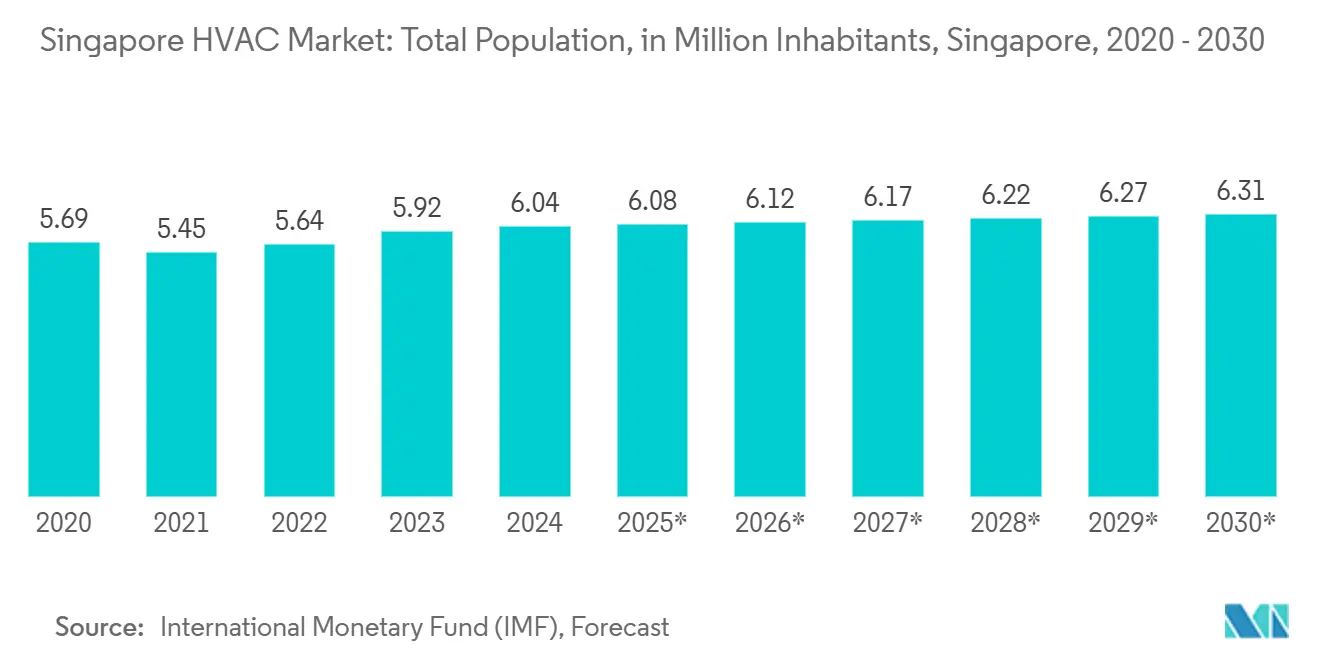
- The air conditioning equipment segment within the Singapore HVAC market has experienced significant growth over the years. This growth is attributed to a combination of climatic, economic, technological, and social factors that have shaped the demand for air conditioning systems. Singapore is one of the most urbanized countries in the world, with a population density that necessitates the development of high-rise buildings and infrastructure. The rapid urbanization and population growth have led to an expansion of residential complexes, commercial buildings, and industrial facilities, all of which require adequate HVAC solutions, primarily air conditioning. According to the International Monetary Fund (IMF), in 2024, the total population of Singapore is estimated to be approximately 6.04 million people.
- Innovations in energy efficiency, smart technology, and eco-friendly refrigerants have made modern air conditioning systems more attractive to consumers. One of the most significant advancements in the air conditioning sector is the emphasis on energy efficiency. The introduction of higher Seasonal Energy Efficiency Ratio (SEER) ratings has led to the development of systems that consume less power while providing effective cooling. Innovations such as inverter technology have revolutionized air conditioning units by allowing them to adjust their cooling output based on the ambient temperature. This not only results in lower energy consumption but also enhances the lifespan of the units.
- Moreover, the Singapore government has implemented stringent energy efficiency regulations, encouraging manufacturers to innovate further. The Green Mark Scheme, which rates buildings based on their environmental performance, has motivated developers to incorporate energy-efficient HVAC systems. This has created a competitive market where energy-efficient air conditioning units are not only a selling point but a necessity for compliance with regulations.
- The integration of smart technology into air conditioning systems is another transformative trend. Smart thermostats and IoT-enabled devices allow users to control their air conditioning units remotely via smartphones or other smart devices. These technologies enable homeowners and businesses to optimize their cooling needs, leading to enhanced comfort and significant energy savings.
- Furthermore, smart air conditioning systems can learn user preferences and adjust settings automatically. For instance, they can detect when a room is unoccupied and reduce cooling output accordingly. This level of automation not only improves user experience but also contributes to energy conservation, aligning with Singapore's sustainability goals.
- The HVAC industry is also witnessing a shift towards environmentally friendly refrigerants. Traditional refrigerants, such as R-22, have been phased out due to their high global warming potential (GWP). In response, manufacturers are developing air conditioning systems that utilize low-GWP refrigerants, such as R-32 and R-454B. These alternatives are not only less harmful to the environment but also offer improved energy efficiency.
- The adoption of these refrigerants is critical in Singapore, where the government is actively promoting green technologies and sustainable practices. By transitioning to eco-friendly refrigerants, the air conditioning equipment segment can significantly reduce its carbon footprint, thereby contributing to national and global climate goals.
- With increasing awareness of health and wellness, there has been a growing demand for enhanced indoor air quality (IAQ) solutions in air conditioning systems. Technological advancements have led to the development of air purification systems that can be integrated with HVAC units. These systems utilize technologies such as HEPA filters, UV light, and ionization to eliminate airborne contaminants, allergens, and pathogens. In Singapore, where humidity levels can contribute to mold and other indoor pollutants, the significance of effective IAQ solutions cannot be overstated. As a result, consumers are increasingly seeking air conditioning systems that not only cool but also purify the air, driving innovation in this area. Manufacturers are responding by developing multi-functional units that address both cooling and air quality needs.

Competitive Landscape
The Singapore HVAC market is fragmented, with specialized players and regional conglomerates operating across various segments. While multiple large multinational companies dominate certain high-value segments, numerous regional and niche players contribute to the overall competition, making the market highly diverse. This competition is driven by the wide range of applications for HVAC equipment, allowing both small and large companies to coexist and thrive in the market.
Several leading companies in the Singapore HVAC market include Mitsubishi Electric Corporation, Carrier Corporation, LG Electronics Inc., Daikin Industries, Ltd., Panasonic Corporation, and many others. With strong brand recognition and extensive regional operations, these companies command a significant market share. Their strengths include innovation, a broad solutions portfolio, and robust distribution networks. To maintain their competitive edge and broaden their market reach, these leaders frequently pursue strategic acquisitions and partnerships.
In the Singapore HVAC market, companies that prioritize innovation in heating, ventilation, and air conditioning equipment are more likely to succeed. As industries increasingly seek advanced solutions, HVAC equipment is set to become a key differentiator. Additionally, expanding service offerings and enhancing customer support will be essential for building long-term relationships and securing repeat business. Firms that invest in emerging markets and tailor their products to regional needs can gain a competitive advantage in this fragmented landscape.
Singapore HVAC Industry Leaders
Daikin Industries Ltd.
Carrier Global Corporation
LG Electronics Inc.
Panasonic Corporation
Mitsubishi Electric Corporation
- *Disclaimer: Major Players sorted in no particular order

Recent Industry Developments
- March 2025: Carrier Global Corporation, a global player in intelligent climate and energy solutions, and Google Cloud announced that they are joining forces to enhance grid flexibility and support smarter energy management. Led by Carrier Energy, Carrier's new energy solutions business, this initiative is anticipated to integrate Carrier's battery-enabled HVAC technology-delivered through its Home Energy Management System (HEMS) solutions-with Google Cloud's AI-powered analytics and WeatherNext AI models built by Google DeepMind and Google Research. The combined solution is expected to create intelligent, connected solutions for residential HVAC energy customers.
- January 2025: Home appliance brand Sterra launched two new dehumidifiers aimed at tackling the challenges of Singapore’s humid climate. As with most dehumidifiers, if not all, the Sterra Ray and Sterra Titan are claimed to be designed to improve indoor living conditions by reducing moisture levels, curbing mold growth, and enhancing air quality. The Sterra Ray is designed for smaller spaces, making it a good choice for studio apartments or single rooms. For larger areas, Sterra says the Titan offers “industrial-grade performance”, capable of managing moisture in more expansive spaces.


Singapore HVAC Market Report Scope
HVAC is a comprehensive system designed to create and maintain comfortable indoor environmental conditions in residential, commercial, and industrial spaces. Heating is the first component, which involves warming interior spaces during cold weather through various methods such as furnaces, heat pumps, and radiant heating systems. These technologies convert energy into heat, distributing warmth evenly throughout a building to ensure occupant comfort and prevent temperature-related issues.
Ventilation represents the critical process of exchanging indoor and outdoor air, ensuring proper air circulation, removing pollutants, controlling humidity, and maintaining air quality. This aspect of HVAC involves mechanical and natural ventilation techniques that introduce fresh air, filter contaminants, and regulate oxygen levels. Proper ventilation is essential for preventing the buildup of harmful gases, reducing moisture-related problems, and creating a healthy indoor environment.
Air Conditioning focuses on cooling and dehumidifying interior spaces during warm weather. Modern air conditioning systems use refrigeration cycles to remove heat and moisture from the air, creating a comfortable and controlled climate. These systems range from central air conditioning units to ductless mini-splits, providing precise temperature management and improving overall indoor comfort. The integration of these three components- heating, ventilation, and air conditioning- creates a sophisticated environmental control system that adapts to changing weather conditions and occupant needs.
The study tracks the revenue accrued through the sale of HVAC product types by various players in Singapore. The study also tracks the key market parameters, underlying growth influencers, and major vendors operating in the industry, which supports the market estimations and growth rates over the forecast period. The study further analyses the overall impact of macroeconomic factors on the market. The report's scope encompasses market sizing and forecasts for the various market segments.
The Singapore HVAC Market is Segmented by product type (heating equipment [heat pumps (air source, ground source), furnaces (gas, electric, oil), boilers (condensing, non-condensing), unit heaters, and others (radiators & baseboard heaters, solar water heating systems)], ventilation equipment [air handling units (AHUs), energy recovery ventilators (ERVs)/heat recovery, ventilators (HRVs), exhaust and supply fans, dehumidifiers/humidifiers], air conditioning equipment [unitary air conditioners, variable refrigerant flow (VRF) systems, chillers (air-cooled, water-cooled), fan coil units (FCUs), and others (window and portable air conditioners)]) and end-user industry (residential, commercial, and industrial). The market sizes and forecasts are provided in terms of value (USD) for all the above segments.
| Heating Equipment | Heat Pumps (Air Source, Ground Source) | |
| Furnaces (Gas, Electric, Oil) | ||
| Boilers (Condensing, Non-condensing) | ||
| Unit Heaters | ||
| Others (Radiators & Baseboard Heaters, Solar Water Heating Systems) | ||
| Ventilation Equipment | Air Handling Units (AHUs) | |
| Energy Recovery Ventilators (ERVs)/Heat Recovery Ventilators (HRVs) | ||
| Exhaust and Supply Fans | ||
| Dehumidifiers/Humidifiers | ||
| Air Conditioning Equipment | Unitary Air Conditioners | Split Air Conditioners |
| Packaged Terminal ACs (PTACs) | ||
| Rooftop Packaged Units (RTUs) | ||
| Variable Refrigerant Flow (VRF) Systems | ||
| Chillers (Air-Cooled, Water-Cooled) | ||
| Fan Coil Units (FCUs) | ||
| Others (Window and Portable Air Conditioners) | ||
| Residential |
| Commercial |
| Industrial |
| By Product Type | Heating Equipment | Heat Pumps (Air Source, Ground Source) | |
| Furnaces (Gas, Electric, Oil) | |||
| Boilers (Condensing, Non-condensing) | |||
| Unit Heaters | |||
| Others (Radiators & Baseboard Heaters, Solar Water Heating Systems) | |||
| Ventilation Equipment | Air Handling Units (AHUs) | ||
| Energy Recovery Ventilators (ERVs)/Heat Recovery Ventilators (HRVs) | |||
| Exhaust and Supply Fans | |||
| Dehumidifiers/Humidifiers | |||
| Air Conditioning Equipment | Unitary Air Conditioners | Split Air Conditioners | |
| Packaged Terminal ACs (PTACs) | |||
| Rooftop Packaged Units (RTUs) | |||
| Variable Refrigerant Flow (VRF) Systems | |||
| Chillers (Air-Cooled, Water-Cooled) | |||
| Fan Coil Units (FCUs) | |||
| Others (Window and Portable Air Conditioners) | |||
| By End-User Industry | Residential | ||
| Commercial | |||
| Industrial | |||


Key Questions Answered in the Report
How big is the Singapore HVAC Market?
The Singapore HVAC Market size is expected to reach USD 3.60 billion in 2025 and grow at a CAGR of 6.10% to reach USD 4.90 billion by 2030.
What is the current Singapore HVAC Market size?
In 2025, the Singapore HVAC Market size is expected to reach USD 3.60 billion.
Who are the key players in Singapore HVAC Market?
Daikin Industries Ltd., Carrier Global Corporation, LG Electronics Inc., Panasonic Corporation and Mitsubishi Electric Corporation are the major companies operating in the Singapore HVAC Market.
What years does this Singapore HVAC Market cover, and what was the market size in 2024?
In 2024, the Singapore HVAC Market size was estimated at USD 3.38 billion. The report covers the Singapore HVAC Market historical market size for years: 2019, 2020, 2021, 2022, 2023 and 2024. The report also forecasts the Singapore HVAC Market size for years: 2025, 2026, 2027, 2028, 2029 and 2030.
Page last updated on:
Singapore HVAC Market Report
Statistics for the 2025 Singapore HVAC market share, size and revenue growth rate, created by Mordor Intelligence™ Industry Reports. Singapore HVAC analysis includes a market forecast outlook for 2025 to 2030 and historical overview. Get a sample of this industry analysis as a free report PDF download.





