
Market Overview
| Study Period | 2020 - 2031 |
|---|---|
| Forecast Data Period | 2026 - 2031 |
| Historical Data Period | 2020 - 2024 |
| Base Year Market Size (2025) | USD 204.91 Million |
| Market Size (2026) | USD 213.64 Million |
| Market Size (2031) | USD 263.27 Million |
| Growth Rate (2026 - 2031) | 4.26 % |
Major Players *Disclaimer: Major Players sorted in no particular order Image © Mordor Intelligence. Reuse requires attribution under CC BY 4.0. | |
Zimbabwe Pharmaceutical Market Analysis by Mordor Intelligence
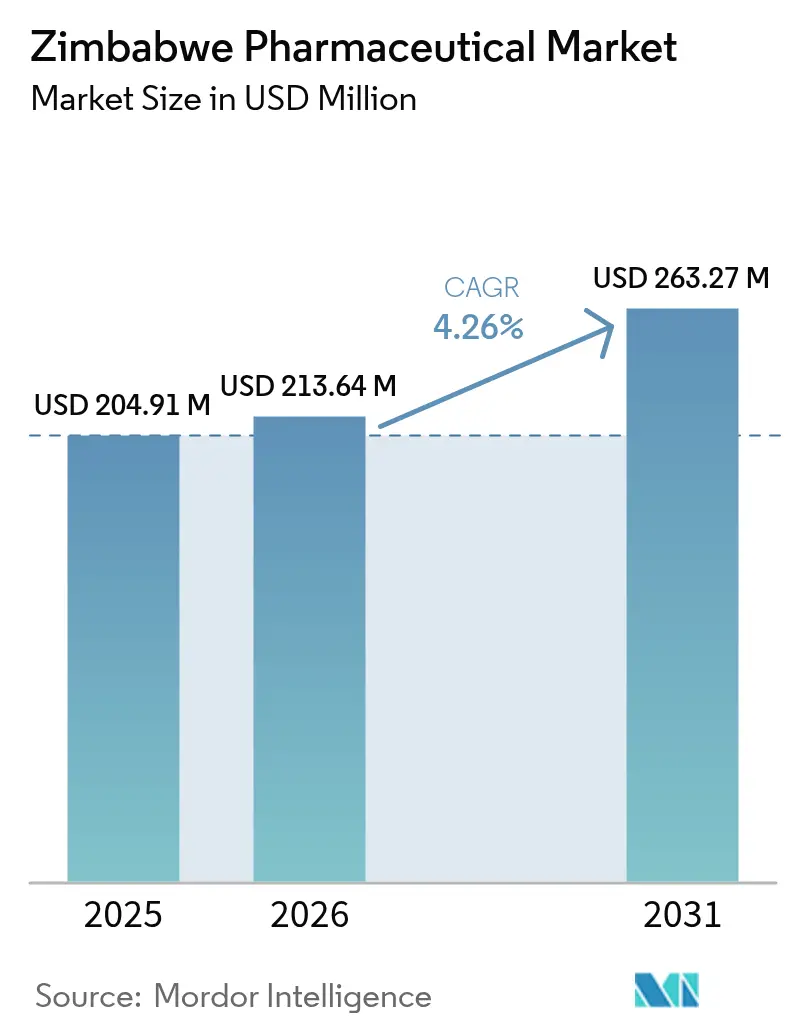
The Zimbabwe Pharmaceutical Market size was valued at USD 204.91 million in 2025 and estimated to grow from USD 213.64 million in 2026 to reach USD 263.27 million by 2031, at a CAGR of 4.26% during the forecast period (2026-2031).
The COVID-19 impact on the pharmaceutical industry in Zimbabwe was significant. The industry saw an increased demand for therapeutics to treat COVID-19-infected patients, which further led to an increase in the large-scale manufacturing of pharmaceutical products in the country. As the supply chain between the other regions of the world and Zimbabwe was disrupted due to lockdown measures, the local manufacturers played a critical role during the COVID-19 pandemic. For instance, according to a research article published in the Journal of Public Health International in May 2021, the disruption of medical supplies such as pharmaceuticals during the pandemic provided a great opportunity for Zimbabwe to be less dependent on foreign medical supplies, thereby increasing the local manufacturing of therapeutics. However, post-pandemic, the sector has been recovering well since supply chain restrictions were lifted. An increase in the supply of medication from global manufacturers and a rise in initiatives from the key market players, among others, have been leading the market recovery. Moreover, the Zimbabwean Ministry of Health and Child Care (MOHCC) took measures to strengthen the country's ability to produce medical supplies through various organizations such as Varichem, CAPS, Natpharma, and Avail Pharmaceuticals during the pandemic and is expected to impact the market's growth in post-pandemic phase. Thus, as per the analysis, the abovementioned factors significantly affected the market's growth.
With an ageing population and rising rates of chronic disease, Zimbabwe's pharmaceutical sector is poised for expansion. According to the United Nations Population Fund report for 2022, the population aged 65 years and older in Zimbabwe was estimated at 3 million in 2022. The senior population is more likely to suffer from chronic conditions like cardiovascular disease, cancer, and gastrointestinal disorders, hence this demographic shift is predicted to boost the need for drugs in Zimbabwe.
Furthermore, in June 2021, the Zimbabwean government launched the 2021-2025 Pharmaceutical Manufacturing Strategy to improve the local production of drugs, thereby increasing the availability of the country's essential medicines and exporting excess drugs. In addition, in March 2021, the Republic of Zimbabwe became the 19th African Union (AU) Member State to sign the Treaty to establish the African Medicines Agency (AMA). This move may enable a favorable regulatory environment for pharmaceutical research and development, local production, and trade across countries on the African continent. Likewise, in April 2022, the University at Buffalo and the University of Zimbabwe entered a partnership to train future HIV researchers in Zimbabwe and received a USD 1.4 million grant from the National Institutes of Health (NIH). Such initiatives are expected to drive market growth over the forecast period.
Therefore, the demand for effective and novel therapeutics is expected to grow in the coming years. Thus, the abovementioned factors are anticipated to aid the market's growth over the forecast period. However, the stringent regulatory framework is expected to restrain the growth.
Note: Market size and forecast figures in this report are generated using Mordor Intelligence’s proprietary estimation framework, updated with the latest available data and insights as of 2026.
Zimbabwe Pharmaceutical Market Trends and Insights
The Generic Drugs Segment Holds a Significant Share and is Expected to Continue the Trend During the Forecast Period
The major driving factors for the generic drugs segment are the rising initiatives by key players, the launch of new products aimed at treating various illnesses, the growing geriatric population, the rising prevalence of chronic diseases such as cardiovascular diseases, cancers, and autoimmune diseases, and the growing awareness about the use of prescription drugs in the country. In addition, according to the study published in Therapeutic Innovation & Regulatory Science in January 2021, more than 80% of the drugs sold in Zimbabwe are generic drugs.
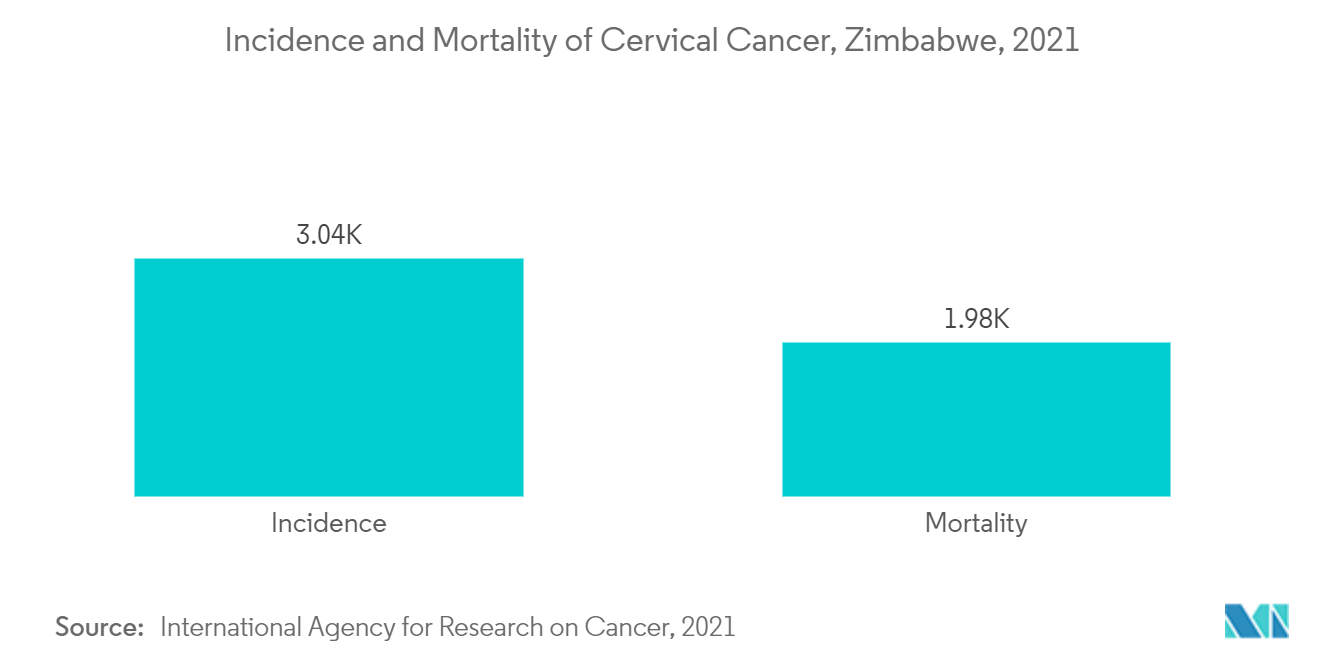
The prevalence of chronic diseases such as cancers is increasing in Zimbabwe, thus boosting the demand for advanced therapeutics and driving the market segment due to the affordability of these drugs. As an example, the Zimbabwe Human Papillomavirus and Related Cancers Fact Sheet 2021 reports that there are 3,043 new instances of cervical cancer in Zimbabwe per year. The high rate of cervical cancer in the country is likely to raise the consumption of generic medications, which could boost demand within the predicted time frame.
Furthermore, in November 2022, the deputy minister of health and child care of zimbabwe urged pharmaceutical firms to encourage the manufacturing of generic medications in order to lower the cost of the nation's medical imports. Such initiatives will lead to increased production of generic drugs, thereby lead to increased adoption, driving the segment growth.
Therefore, owing to the above-mentioned factors, the generic drugs segment is expected to grow over the forecast period.


General Anti-infective Systemic Segment is Expected to Hold a Significant Share in the Market
The factors driving the growth of this segment include the rising prevalence of infectious diseases such as HIV, HPV, and TB and the rising launch of drugs for infectious diseases, among others.
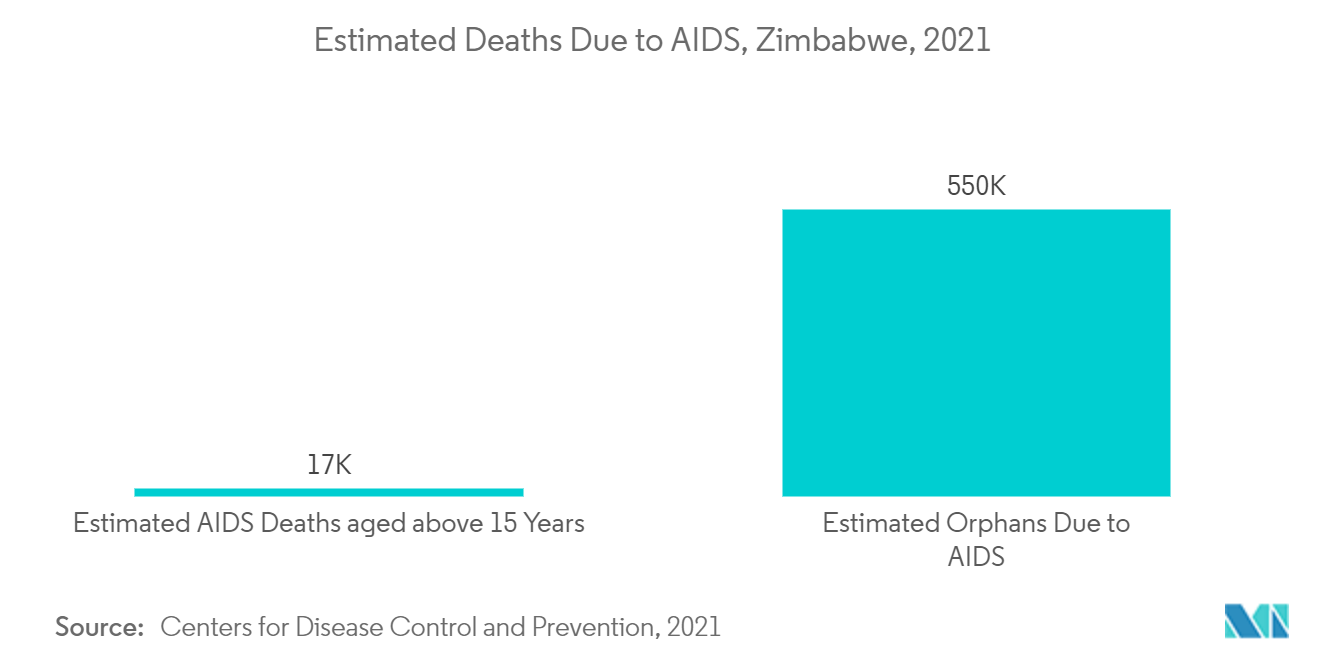
According to the CDC, in 2021, the estimated prevalence of HIV in Zimbabwe among the 15-49 year age group was found to be 11.6%, and the number of adults above the age of 15 on antiretroviral therapy in 2021 was 1,136,246. Therefore, the huge prevalence of HIV and the dependence on antiviral therapy are expected to drive segment growth over the forecast period.
Furthermore, the rising approvals of antiinfective drugs in Zimbabwe are expected to drive the segment's growth. For instance, in October 2021, the Medicines Control Authority of Zimbabwe approved three private hospitals and three private pharmacies to dispense Ivermectin, a broad-spectrum anti-parasitic drug, for the prevention and treatment of COVID-19. Therefore, increasing approvals from the government of Zimbabwe are expected to drive the growth of this segment.
Thus, the rising infectious diseases and the rising approvals for anti-infective therapies are likely to boost the segment's growth over the analysis period.
Regulatory Landscape
Medicines regulation in Zimbabwe is led by the Medicines Control Authority of Zimbabwe (MCAZ) under the Medicines and Allied Substances Control Act (MASCA). MCAZ covers product registration and market authorization, licensing of premises, and pharmacovigilance. In January 2026, MCAZ issued updated Guidelines for Clinical Trial Application and Authorization in Zimbabwe (GL04-Rev-4), reinforcing formal requirements for trial approvals and aligning applications with MASCA and supporting statutory instruments.
Recent regulatory actions point to increased reliance pathways and efforts to streamline evaluations. In April 2026, Cabinet announced the removal of initial registration fees for wholesalers and pharmaceutical premises, along with the elimination of annual renewal fees for retail pharmacies, which reduces compliance and entry costs for parts of the distribution chain. MCAZ also maintains reliance mechanisms referenced in its guidance, including WHO Prequalification and SADC ZAZIBONA, to support more efficient evaluations for eligible products. Meanwhile, government-led discussions to amend MASCA focus on strengthening controls around falsified medicines and may expand the scope to additional regulated health technologies.
Competitive Landscape
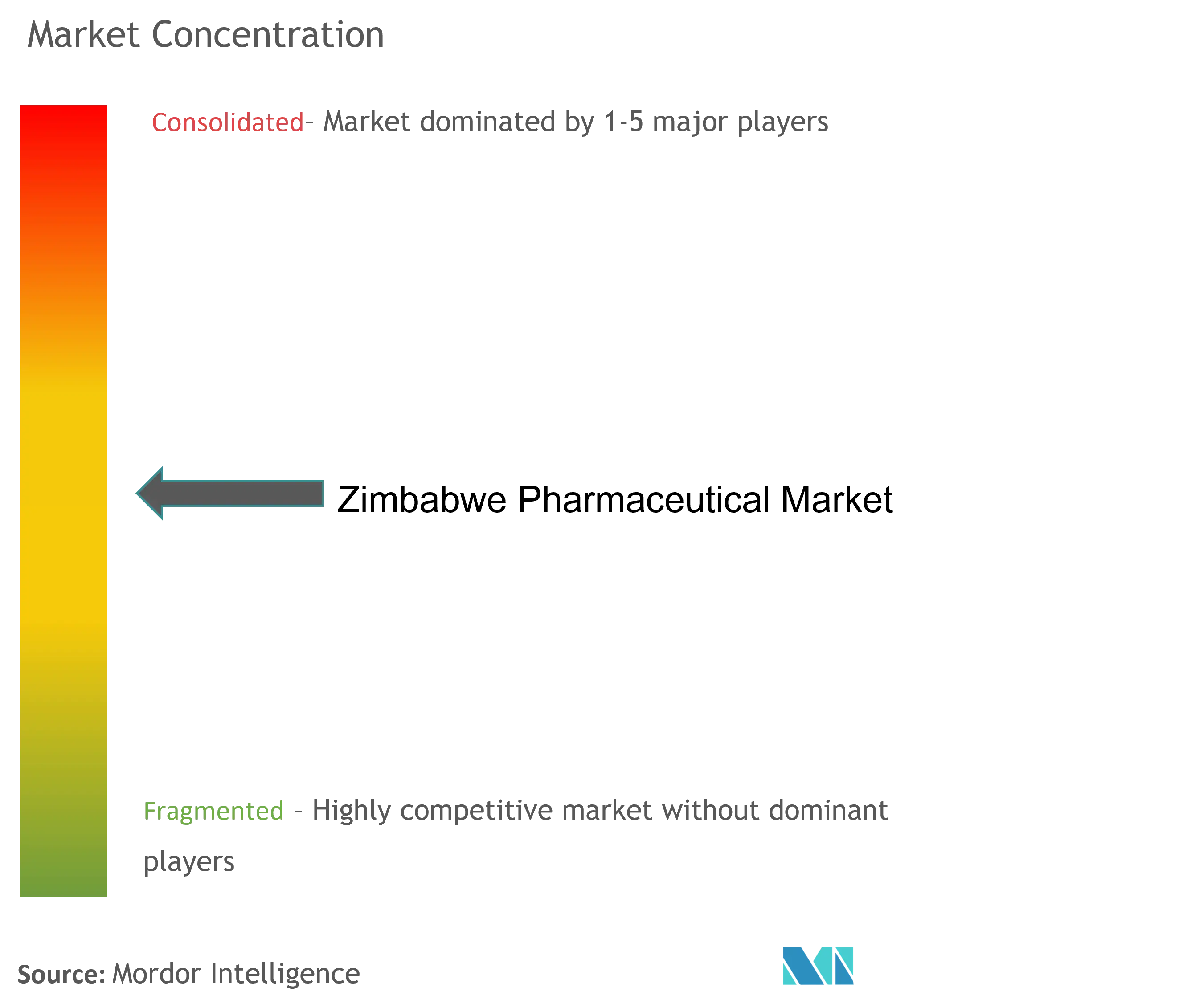
The Zimbabwe pharmaceutical market is highly competitive and consists of several major players. In terms of market share, a few major players are currently dominating the market. Some prominent players are vigorously making acquisitions and joint ventures with other companies to consolidate their market positions in the country. Some of the companies in this market include DatLabs (Pvt) Ltd., Pharmanova, CosPharma, Zim Laboratories Limited, and B. Braun SE, among others.
Zimbabwe Pharmaceutical Industry Leaders
Pharmanova
Zim Laboratories Limited
Datlabs
Caps (Pvt) Ltd
B. Braun
- *Disclaimer: Major Players sorted in no particular order

Market Opportunities and Future Outlook
Policy-backed localization and manufacturing scale-up appear to be the key sources of whitespace in Zimbabwe's pharmaceutical ecosystem. Cabinet approval of the Pharmaceutical Value Chain Policy (June 2025) and the earlier 2021-2025 Pharmaceutical Manufacturing Strategy support industrial measures for local production and cGMP-aligned upgrades. The government target to raise the share of locally produced medicines to 60% by 2030 provides a domestic substitution runway for finished-dose manufacturers and local packers. Regulatory cost reductions announced by Cabinet in April 2026, including the removal or rationalization of several fees affecting wholesalers, manufacturers, and retail pharmacies, also address market access friction for distribution and dispensing.
Beyond finished-dose manufacturing, supply-chain modernization and state-led procurement and distribution infrastructure create additional opportunity areas. NatPharm's shift toward in-country manufacturing, including work initiated in March 2026 to repurpose an older warehouse facility into the first of two internal manufacturing plants, supports openings in technology transfer, contract manufacturing, and GMP compliance services. Another opportunity is data-enabled improvements in availability and distribution, supported by the pilot National Medicines Availability Platform (MAP-TP) referenced in late 2025 and by investments that expand compliant storage and quality-assured distribution capacity for essential medicines and high-volume generics.
Recent Industry Developments
- June 2026: Varichem Pharmaceuticals invested more than USD 3 million in plant and machinery upgrades to improve manufacturing efficiency, product quality, and alignment with international standards. This supports higher local output in categories where import dependence remains significant and improves readiness for more stringent quality expectations in regulated supply.
- March 2026: National Pharmaceutical Company (NatPharm) announced plans to establish two drug manufacturing plants alongside upgrades to warehousing infrastructure, extending its role beyond distribution into local production. The move supports national localization goals and increases demand for equipment, validation, and compliant manufacturing know-how.
- May 2024: Cospharm Pharmaceuticals launched a manufacturing plant in the Madokero Industrial area of Harare, reporting annual capacity of over 300 million tablets and 3.2 million oral liquids. The added capacity increases domestic supply options for high-volume formulations and supports regional export ambitions from Zimbabwe-based production.


Research Methodology Framework and Report Scope
Market Definition and Coverage
For this study, the market covers the value of medicines sold and used within Zimbabwe, including prescription drugs and over-the-counter drugs, counted at the country level for the defined study period.
Scope exclusions: This sizing excludes non-drug healthcare items such as medical devices, diagnostics, and routine hospital consumables.
Segmentation Overview
- By ATC/Therapeutic Category
- Blood and Hematopoietic Organs
- Digestive Organ and Metabolism
- Cardiovascular System
- Nervous System
- Musculoskeletal Organ
- General Antiinfectives Systemic
- Respiratory System
- Other ATC/Therapeutic Categories
- By Drug Type
- Prescription Drugs (Rx)
- Branded
- Generic
- OTC Drugs
- Prescription Drugs (Rx)
Data Sources, Market Sizing, and Validation
Desk Research
Desk research was used to build the basic demand pool and the operating context for medicines in Zimbabwe, before assumptions were fine-tuned through field inputs. We reviewed publicly available health and trade signals such as Zimbabwe National Statistics Agency releases, UN Comtrade and ITC Trade Map for import patterns, and World Bank and IMF macro indicators that help explain affordability and funding cycles.
To keep therapy mix and policy direction grounded, we also referenced sources such as WHO guidance and country profiles, Government of Zimbabwe health budget documents and procurement notices, and regulator publications from the Medicines Control Authority of Zimbabwe (for registration activity and category cues). Alongside these, company filings, investor presentations, and reputable press were used to clarify supply footprints and changes in local manufacturing and distribution. Where needed, paid subscriptions were used in a limited way for company financials and news screening, for import-export shipment-level checks, and for patent look-ups related to important molecules. These desk research sources are illustrative, and many other public references were also used for data collection, cross-checks, and clarification.
Primary Interviews and Surveys
We use expert interviews and surveys with pharmaceutical manufacturers, importers, distributors, procurement specialists, and pharmacy and healthcare managers in Zimbabwe. Their feedback is used to validate secondary data, fill gaps in local production, stock availability, pricing, and channel movement, and triangulate the final market model.
Distribution of primary research fieldwork respondents
| Company type | Respondent position |
|---|---|
| Top tier: 28% | CXOs: 20% |
| Mid tier: 47% | Functional/Unit leaders: 30% |
| Smaller Players: 25% | Managers: 50% |
Market-Sizing & Forecasting
Sizing started with a top-down build where national medicine demand was reconstructed using a combination of health expenditure direction, import dependence signals from trade statistics, and the expected split between prescription and OTC consumption. After that, selective bottom-up approximations were used as a check, such as sampled price per pack for common therapies multiplied by estimated volumes, and distributor and pharmacy channel checks to confirm whether totals looked realistic.
A few practical inputs were treated as key model drivers, including changes in the exchange rate that influence landed costs, the share of imported finished formulations, registration activity as a proxy for category expansion, public procurement timing that can shift annual volumes, and therapy-level demand linked to chronic disease burden. When data gaps appeared, for example in informal retail flow or short-term stock-outs, the model used conservative ranges that were then narrowed through interview feedback before final totals were locked.
For forecasting, scenario analysis was used because the market is sensitive to funding cycles and currency impacts, and then the scenarios were anchored to expected macro direction and healthcare spending priorities shared by primary respondents. The same set of variables was carried forward year by year so the forecast can be repeated and stress-tested with updated public data.
Data Validation & Update Cycle
Validation was done through multiple passes so that outliers were caught early and corrected with evidence. Model outputs were compared against independent signals such as import value trends, known procurement events, and the implied per-capita medicine spend, and then any sharp jumps were investigated before sign-off.
If variances were not explainable through a clear event, assumptions were revisited and, where needed, respondents were re-contacted to confirm pricing movements or volume shifts. Reports are refreshed annually, and interim updates are added when material events occur, such as major currency moves or meaningful policy changes that affect medicine access. Before delivery, an analyst runs a fresh review to ensure the latest public releases and interview learnings are reflected in the final numbers.
Mordor Intelligence's Zimbabwe Pharmaceutical Industries Market Size Versus Other Published Estimates
Published numbers for Zimbabwe often differ even when the topic sounds the same, since each study can draw the line differently around what counts as pharmaceuticals and which price basis is used. The table helps show how scope choices, time windows, and assumption style can push market values apart.
The benchmark table shows a spread that mainly comes from what is counted inside the market and how pricing is treated, and in Mordor Intelligence's model the value reflects medicines within Zimbabwe split across prescription drugs and OTC drugs, rather than a wider healthcare-products ecosystem or channel-specific reclassification.
Benchmark comparison
| Source | Market Size | Gaps in Research Methodology |
|---|---|---|
| Mordor Intelligence | USD 204.91 M (2025) | |
| Global Consultancy A | USD 198.46 M (2024) | Uses a broader ecosystem definition that references research and manufacturing alongside distribution, and the year basis differs, which can shift totals when exchange rates and procurement cycles change. |
| Regional Consultancy B | USD 265.94 M (2024) | Appears to lean on channel-led sizing (hospital, retail, online) and a longer horizon view, which can inflate the current-year figure if hospital procurement and pricing assumptions are applied aggressively. |
Taken together, the differences are explainable once you align the year, the included product boundary, and the pricing and channel treatment. Our approach stays traceable to a defined medicines-only demand pool, and cross-checks against trade signals and on-ground pricing help keep the total practical for planning.


Key Questions Answered in the Report
How big is the Zimbabwe Pharmaceutical Market?
The Zimbabwe Pharmaceutical Market size is expected to reach USD 213.64 million in 2026 and grow at a CAGR of 4.26% to reach USD 263.27 million by 2031.
What is the current Zimbabwe Pharmaceutical Market size?
In 2026, the Zimbabwe Pharmaceutical Market size is expected to reach USD 213.64 million.
Who are the key players in Zimbabwe Pharmaceutical Market?
Pharmanova, Zim Laboratories Limited, Datlabs, Caps (Pvt) Ltd and B. Braun are the major companies operating in the Zimbabwe Pharmaceutical Market.
What years does this Zimbabwe Pharmaceutical Market cover, and what was the market size in 2025?
In 2025, the Zimbabwe Pharmaceutical Market size was estimated at USD 204.91 million. The report covers the Zimbabwe Pharmaceutical Market historical market size for years: 2020, 2021, 2022, 2023, 2024 and 2025. The report also forecasts the Zimbabwe Pharmaceutical Market size for years: 2026, 2027, 2028, 2029, 2030 and 2031.
Page last updated on:


 Your data is secure and never sold or shared.


