
Pharmaceutical Dextran (Glucose) Market Size and Share
Market Overview
| Study Period | 2020 - 2031 |
|---|---|
| Market Size (2026) | USD 253.81 Million |
| Market Size (2031) | USD 320.1 Million |
| Growth Rate (2026 - 2031) | 4.75 % |
| Fastest Growing Market | Asia Pacific |
| Largest Market | North America |
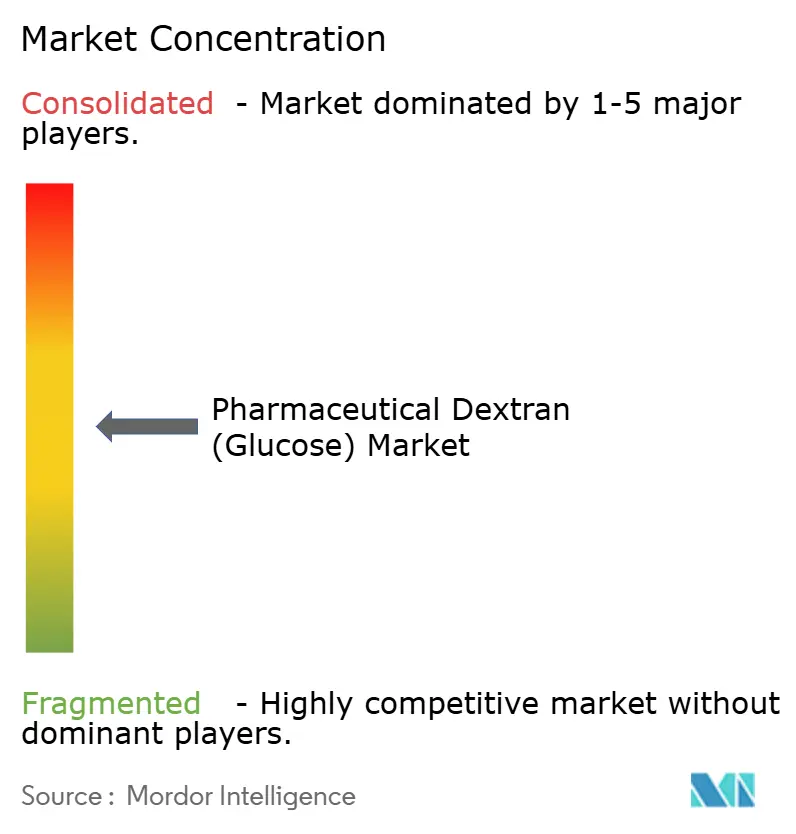
| Market Concentration | Medium |
Major Players.webp) *Disclaimer: Major Players sorted in no particular order Image © Mordor Intelligence. Reuse requires attribution under CC BY 4.0. | |
Pharmaceutical Dextran (Glucose) Market Analysis by Mordor Intelligence
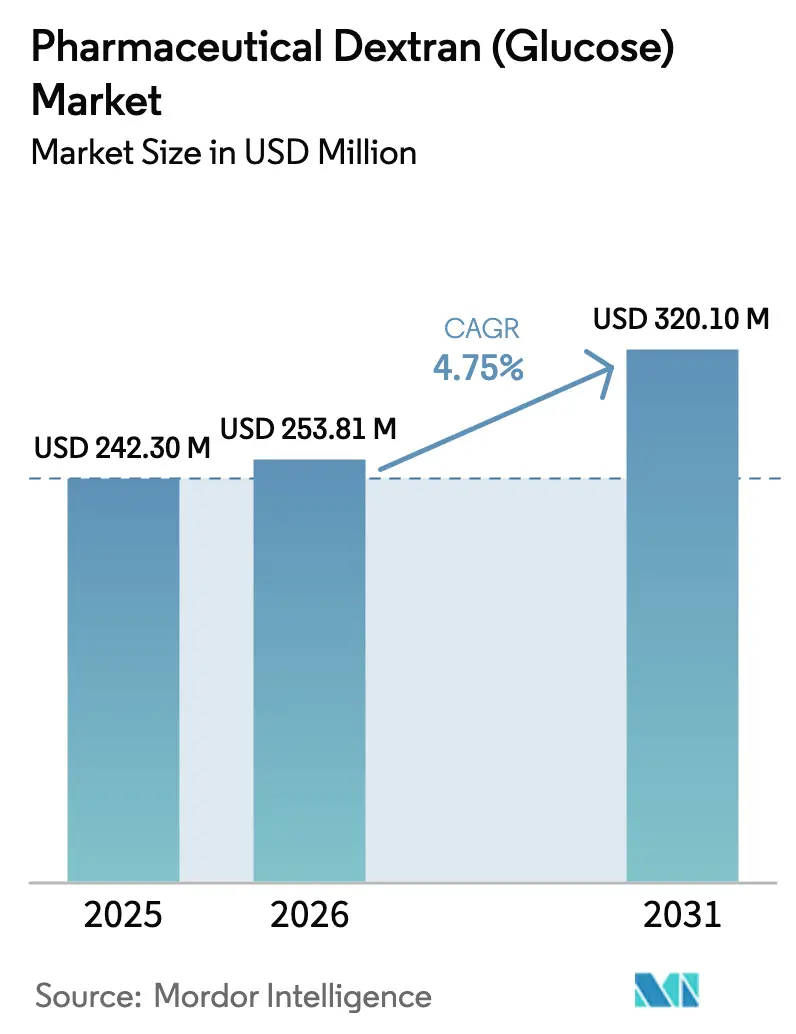
The Pharmaceutical Dextran market size is expected to grow from USD 242.30 million in 2025 to USD 253.81 million in 2026 and is forecast to reach USD 320.1 million by 2031 at 4.75% CAGR over 2026-2031.
This solid upward path reflects the widening use of dextran-based excipients in plasma volume expansion, vaccine formulation and cell-therapy cryopreservation. Strong regulatory backing for biodegradable excipients, continuous gains in biologics capacity and steady progress in regenerative-medicine pipelines keep the growth engine engaged. At the same time, ongoing consolidation among excipient suppliers and investment in advanced purification systems are helping manufacturers meet rising quality standards. Demand visibility also improves as injectable biologics, mRNA vaccines and precision-medicine products embed dextran to stabilize sensitive active ingredients.
Key Report Takeaways
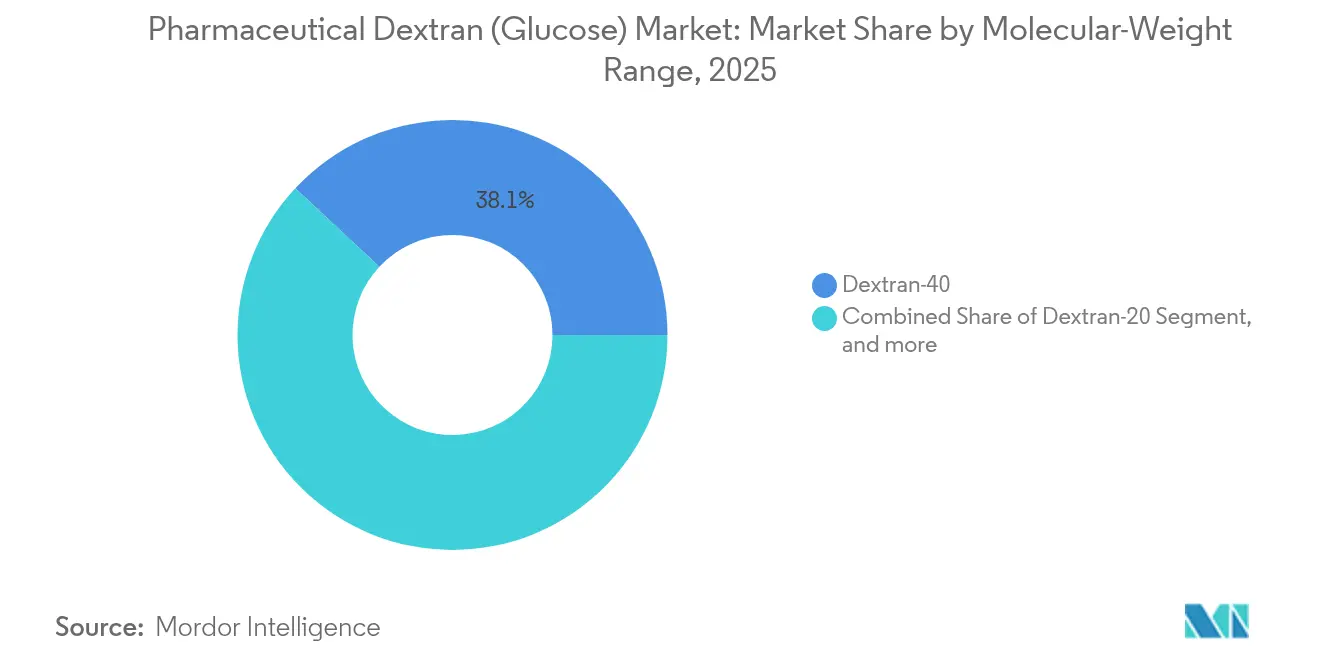
- By molecular-weight range, dextran-40 held a 38.05% share of the pharmaceutical dextran market in 2025 while dextran-20 is projected to expand at a 6.54% CAGR through 2031.
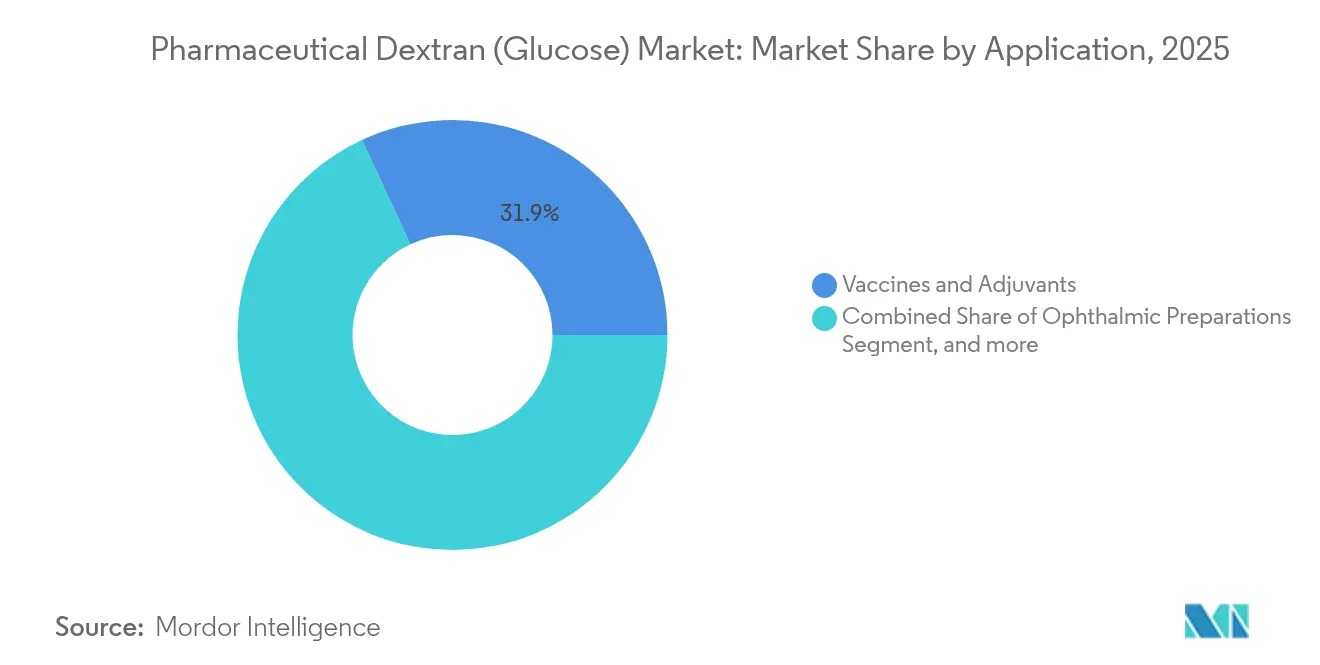
- By application, vaccines and adjuvants commanded 31.92% share of the pharmaceutical dextran market size in 2025; cell and tissue cryopreservation is advancing at a 7.08% CAGR to 2031.
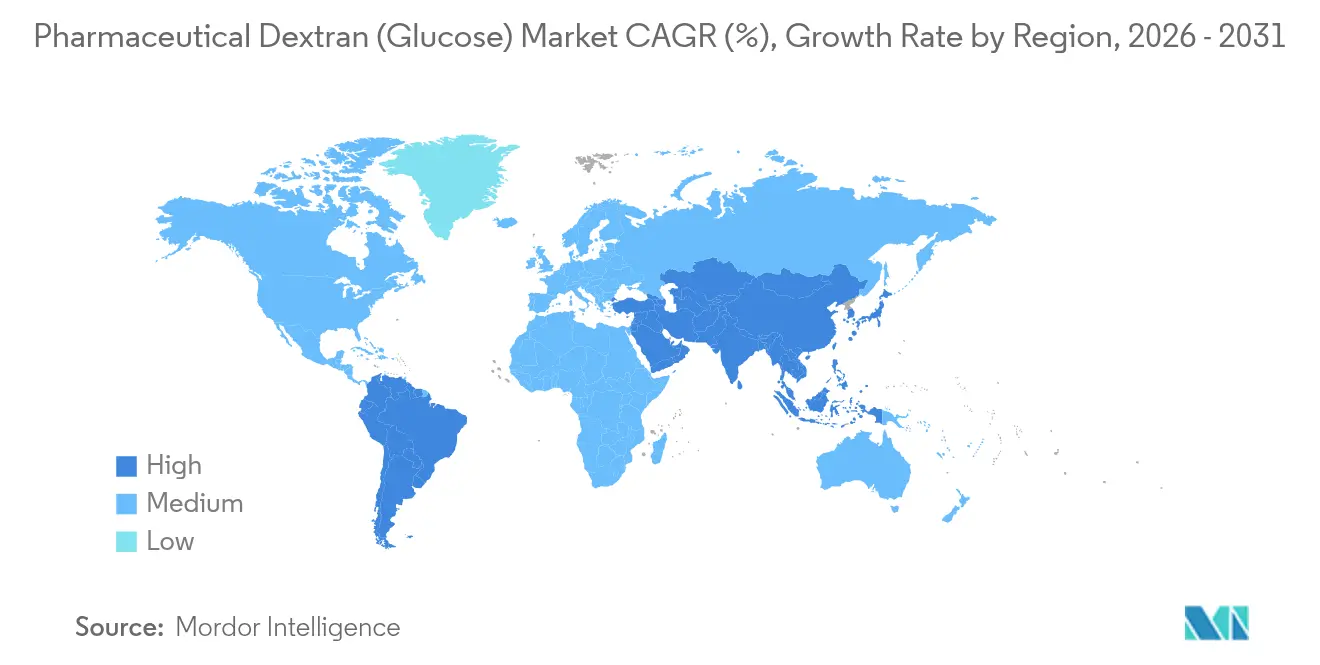
- By geography, North America retained 35.48% of the pharmaceutical dextran market share in 2025, whereas Asia Pacific is forecast to rise at a 7.43% CAGR through 2031.
Note: Market size and forecast figures in this report are generated using Mordor Intelligence’s proprietary estimation framework, updated with the latest available data and insights as of 2026.
Market Trends and Insights
Drivers Impact Analysis of Pharmaceutical Dextran (Glucose) Market*
| Driver | (~) % Impact on CAGR Forecast | Geographic Relevance | Impact Timeline |
|---|---|---|---|
| Growing Demand for Blood-Plasma Substitutes | +1.2% | Global, concentrated in North America and Europe | Medium term (2-4 years) |
| Expanding Vaccine & Biologics Manufacturing | +1.8% | Global, led by North America and Asia Pacific | Long term (≥ 4 years) |
| Rising Incidence of Hematological Disorders | +0.9% | Global, mainly developed markets | Long term (≥ 4 years) |
| Regulatory Shift to Biodegradable Excipients | +0.7% | North America and EU, spreading to Asia Pacific | Medium term (2-4 years) |
| Nanoparticle-Conjugated Dextran Delivery | +0.5% | North America and Europe, early adoption | Long term (≥ 4 years) |
| Scale-Up of Cell-Therapy Cryopreservation | +0.6% | Global, concentrated in advanced markets | Medium term (2-4 years) |
| Source: Mordor Intelligence | |||
Growing Demand for Blood-Plasma Substitutes
Tighter blood-supply conditions and safety concerns around donor products are accelerating the use of synthetic plasma expanders. Dextran-40 and dextran-70 solutions continue to demonstrate solid clinical effectiveness in treating hypovolemic shock and preventing postoperative thrombosis.[1]Drugs.com Editorial Team, “Dextran 40 Monograph,” Drugs.com, drugs.com The World Federation of Hemophilia reports that many countries consume less than 1 IU of factor VIII per capita, highlighting sizeable unmet needs that synthetic volume expanders can address.[2]World Federation of Hemophilia, “Annual Global Survey 2024,” WFH, wfh.org Regulatory refinement is also under way; the withdrawal of certain legacy formulations has cleared the runway for next-generation dextran products engineered for improved consistency. These factors together exert a medium-term lift on the pharmaceutical dextran market.
Expanding Vaccine & Biologics Manufacturing
Global biologics capacity recently climbed to 16.5 million liters across more than 1,500 facilities, expanding at double-digit rates and boosting excipient demand. The FDA’s Emergency Use Authorization for a novel protein-based COVID-19 vaccine underlines the reliance on sophisticated polysaccharide adjuvants for stability. Academic teams are also demonstrating how dextran-laden hydrogels can strengthen immune responses without altering lipid nanoparticle chemistry.[3]Frontiers Editorial Office, “Polymer-Nanoparticle Hydrogels for mRNA Vaccines,” Frontiers in Immunology, frontiersin.org Such broadening applications keep the pharmaceutical dextran market growth momentum intact over the long term.
Rising Incidence of Hematological Disorders
Clinical programs confirm the therapeutic value of dextran derivatives in iron-deficiency management and specialized blood-disorder treatment. Iron dextran and ferumoxytol studies report non-inferiority to competing options while delivering favorable safety profiles. Investigational dextran sulfate also posted encouraging neurological data across a 48-week evaluation, opening fresh avenues for precision medicine. As more biologics incorporate imaging and drug-delivery functions, the pharmaceutical dextran market stands to benefit from the molecule’s versatility.
Regulatory Shift to Biodegradable Excipients
Environmental scrutiny is reshaping excipient selection criteria. The European Medicines Agency now mandates robust environmental-risk assessments for new medicinal products, heightening demand for naturally derived polymers. In parallel, the FDA has broadened composition-statement guidance, making ingredient transparency and sustainability business imperatives. Industry leaders are responding through capacity investments and acquisitions that accelerate scale in biodegradable excipients, supporting sustained pharmaceutical dextran market expansion.
Restraints Impact Analysis of Pharmaceutical Dextran (Glucose) Market*
| Restraint | (~) % Impact on CAGR Forecast | Geographic Relevance | Impact Timeline |
|---|---|---|---|
| High Production and Purification Costs | -1.1% | Global, especially emerging markets | Short term (≤ 2 years) |
| Limited cGMP Capacity in Emerging Markets | -0.9% | Asia Pacific, Latin America, Africa | Long term (≥ 4 years) |
| Volatility in Pharmaceutical-Grade Glucose | -0.8% | Global, acute impact in Asia Pacific | Medium term (2-4 years) |
| Cold-Chain Stability Challenges | -0.6% | Global, focused on developing regions | Medium term (2-4 years) |
| Source: Mordor Intelligence | |||
High Production and Purification Costs
Pharmaceutical-grade dextran manufacture requires precise bacterial fermentation followed by multistep purification to meet injectable standards. Escalating glucose-substrate prices and energy-intensive filtration lift operating costs, compressing margins for suppliers. Heightened FDA inspection activity has further compelled firms to invest in quality-system upgrades, elevating near-term capital outlays. Although efficiency gains are under way, cost volatility restrains the pharmaceutical dextran market in the short run.
Limited cGMP Capacity in Emerging Markets
Lower-income regions often lack certified facilities, modern utilities and trained personnel essential for cGMP compliance. Heightened regulatory scrutiny in India and China, including a surge in warning letters and recalls, underscores persistent capability gaps. Limited domestic supply keeps dependence on imports high and raises lead-time risk for local formulators. This structural hurdle subtracts growth momentum from the pharmaceutical dextran market over the long term.
*Our forecasts treat driver/restraint impacts as directional, not additive. The impact forecasts reflect baseline growth, mix effects, and variable interactions.
Pharmaceutical Dextran (Glucose) Market Segment Analysis
By Molecular-Weight Range:
Dextran-40 Leads, Low-MW Grades AccelerateDextran-40 accounted for 38.05% of the pharmaceutical dextran market in 2025, retaining leadership through decades of clinical validation in plasma expansion and microcirculation enhancement. The pharmaceutical dextran market size attached to Dextran-40 is projected to add steady incremental value through routine surgical and emergency-medicine use. Meanwhile, Dextran-20 is slated to post a 6.54% CAGR to 2031 on the back of nanoparticle conjugation and targeted drug-delivery projects that favor lower molecular weights for improved cellular penetration. Regulatory moves to withdraw outdated Dextran-70 formulations have shifted share toward optimized alternatives with tighter impurity profiles.
R&D pipelines reveal a sharp focus on molecular-weight customization as sponsors tailor viscosity, immunogenicity and tissue-penetration attributes. Magnetic nanoparticle studies highlight how the surface chemistry of Dextran-20 supports higher drug-loading efficiency. At the same time, Dextran-60 and Dextran-70 retain niche positions in ophthalmology and protein-stabilization applications. Collectively, these trends confirm that precise molecular-weight control now acts as a key purchase criterion, fostering technology investment across the pharmaceutical dextran market.



By Application:
Cryopreservation Surges Past Traditional UsesVaccines and adjuvants held 31.92% of the pharmaceutical dextran market size in 2025, supported by established roles in viral and bacterial vaccine formulations. Cell and tissue cryopreservation, though smaller in revenue, is pacing fastest at 7.08% CAGR through 2031 as regenerative-medicine companies standardize dextran-based media to reduce DMSO toxicity. Clinical evidence shows superior stem-cell viability when dextran solutions replace or complement traditional cryoprotectants. Oral-delivery systems, ophthalmic preparations and protein stabilization round out the use case spectrum.
Volume improvements in mRNA vaccine manufacturing and advanced biologics require freeze-dry and cold-chain stability that dextran provides by lowering glass-transition temperatures and limiting aggregation. Cross-linked hyaluronic acid-dextran blends are also gaining traction in dry-eye therapeutics, demonstrating how formulation innovation keeps broadening the pharmaceutical dextran market. Rising adoption across both prophylactic and therapeutic segments ensures sustained demand visibility for suppliers through the end of the decade.
Geography Analysis
North America Pharmaceutical Dextran (Glucose) Market
North America maintained 35.48% of the pharmaceutical dextran market share in 2025, leveraging comprehensive clinical-trial infrastructure and clear regulatory pathways. The FDA logged 24 biological-device clearances and 17 biologics license approvals in 2024, underscoring a robust pipeline that feeds continuous excipient demand. Manufacturing footprints benefit from reliable cold-chain networks and advanced purification assets, enabling timely scale-up for both plasma expanders and next-generation biologics. Continued emphasis on precision medicine further solidifies the region’s leadership position.
Europe Pharmaceutical Dextran (Glucose) Market
Europe sustains a sizeable contribution underpinned by stringent environmental and quality regulations that reward biodegradable excipients. The EMA’s revised environmental-risk guidelines, effective September 2024, elevate natural polymers like dextran in formulation selection. A supportive policy environment combines with deep chemical-process expertise and strategic acquisitions, including a prominent USD 2.85 billion deal that broadened dextran capacity, to enhance supply security. European manufacturers now target global demand with competitive sustainability credentials.
APAC Pharmaceutical Dextran (Glucose) Market
Asia Pacific emerges as the fastest-growing region at 7.43% CAGR through 2031. China, India, South Korea and select ASEAN countries are scaling biologics capacity, aided by government incentives and export aspirations. Capacity-building programs and regulatory-harmonization initiatives are in progress, yet local production gaps persist, keeping opportunities open for multinational suppliers eager to expand their pharmaceutical dextran market presence.

Competitive Landscape
The pharmaceutical dextran market shows moderate fragmentation. Established leaders such as Pharmacosmos A/S, Polydex Pharmaceuticals and Meito Sangyo retain share through proprietary fermentation know-how and dependable regulatory track records. Competitive stakes rose after a USD 2.85 billion acquisition that combined large-scale polysaccharide expertise with a global sales footprint, creating a heavyweight challenger in specialty excipients. Although the top tier controls meaningful volumes, space remains for niche innovators focusing on veterinary medicine or nanoparticle-conjugated dextran.
Product differentiation now pivots on high-purity output and flexible molecular-weight offerings. Continuous-filtration systems and membrane-chromatography technologies help producers cut endotoxin levels and tailor viscosity, winning preference among biologics formulators. Regulatory alignment and sustainability commitments also shape buying decisions, favoring suppliers that document low environmental footprints and transparent sourcing. These factors collectively preserve a competitive but orderly pharmaceutical dextran market.
Looking ahead, incremental consolidation appears likely as suppliers seek economies of scale to offset fermentation and purification costs. At the same time, emerging-market entrants with regional reach continue to vie for share, particularly in Asia Pacific where proximity supports responsive delivery. This balance between scale and specialization sets the stage for a dynamic yet stable rivalry landscape through 2030.
Pharmaceutical Dextran (Glucose) Industry Leaders
Pharmacosmos A/S
Polydex Pharmaceuticals Ltd
Meito Sangyo Co., Ltd.
Jinyang Pharmaceutical
PK Chemicals A/S
- *Disclaimer: Major Players sorted in no particular order
Pharmaceutical Dextran (Glucose) Market Companies Covered in this Report
- Pharmacosmos
- Polydex Pharmaceuticals Ltd
- Meito Sangyo Co., Ltd.
- Jinyang Pharmaceutical
- PK Chemicals A/S
- Pfizer
- Merck
- Central Drug House (CDH)
- Otto Chemie Pvt Ltd
- Dextran Products Ltd
- Fresenius
- Baxter
- Sanofi
- Otsuka Pharmaceutical Co.
- Roquette Frères
- Tate & Lyle PLC
- Qingdao Bright Moon Group
- Jiangsu Wanbang Biochemistry
- Corden Pharma GmbH
- Novasep Holding SAS

Recent Industry Developments in Pharmaceutical Dextran (Glucose) Market
- October 2024: Lotte Fine Chemical signed a USD 740 million global distribution agreement with Colorcon for pharmaceutical cellulose products, reflecting the growing consolidation in pharmaceutical excipients markets. The decade-long exclusive agreement demonstrates the strategic value of distribution partnerships in the specialized excipients sector, with implications for dextran manufacturers seeking global market access.
- October 2024: Asahi Kasei Medical launched the Planova FG1 next-generation virus removal filter for biotherapeutics manufacturing, offering filtration speeds seven times faster than previous models. The innovation addresses growing demand for monoclonal antibodies and biopharmaceuticals, projected to increase 5-10% annually, supporting the broader biologics manufacturing ecosystem that relies on dextran excipients.
- May 2024: Roquette completed its USD 2.85 billion acquisition of IFF Pharma Solutions, creating a leading pharmaceutical excipients platform with approximately USD 1 billion in combined annual revenues and enhanced capabilities in drug delivery solutions. The transaction strengthens Roquette's position in the global excipients market and expands its dextran-based product portfolio through IFF's established customer relationships and manufacturing infrastructure.
- January 2024: Ildong Pharmaceutical announced a strategic move by signing an eye drop co-promotion agreement with Hanlim Pharm. This collaboration aims to facilitate Ildong's entry into the OTC (over-the-counter) segment of the ophthalmology market. The agreement spotlights Numaren Eye Drops, a hypromellose-dextran formulation designed to address dry eyes and tear production deficiencies.


Global Pharmaceutical Dextran (Glucose) Market Report Scope
Dextran, a viscous polysaccharide produced through bacterial action on sucrose, is widely utilized in various applications, including confections, lacquers, and, most notably, medicine, as an extender for blood plasma.
The pharmaceutical dextran (glucose) market is segmented into power type, application, and geography. By power type, the market is segmented into dextran 20, dextran 40, dextran 60, dextran 70, and other power types. By application, the market is segmented into vaccines, eye care, protein stabilization, cryopreservation, oral application, and other applications. By geography, the market is segmented into North America, Europe, Asia-Pacific, and the Rest of the World. For each segment, the market sizing and forecasts are based on revenue (USD).
| Dextran-20 |
| Dextran-40 |
| Dextran-60 |
| Dextran-70 |
| Other MW Grades |
| Vaccines & Adjuvants |
| Ophthalmic Preparations |
| Protein Stabilisation |
| Cell & Tissue Cryopreservation |
| Oral & GI Uses |
| Other Pharmaceutical Uses |
| North America | United States |
| Canada | |
| Mexico | |
| Europe | Germany |
| United Kingdom | |
| France | |
| Italy | |
| Spain | |
| Rest of Europe | |
| Asia-Pacific | China |
| Japan | |
| India | |
| Australia | |
| South Korea | |
| Rest of Asia-Pacific | |
| Middle East & Africa | GCC |
| South Africa | |
| Rest of Middle East & Africa | |
| South America | Brazil |
| Argentina | |
| Rest of South America |
| By Molecular-Weight Range | Dextran-20 | |
| Dextran-40 | ||
| Dextran-60 | ||
| Dextran-70 | ||
| Other MW Grades | ||
| By Application | Vaccines & Adjuvants | |
| Ophthalmic Preparations | ||
| Protein Stabilisation | ||
| Cell & Tissue Cryopreservation | ||
| Oral & GI Uses | ||
| Other Pharmaceutical Uses | ||
| By Geography | North America | United States |
| Canada | ||
| Mexico | ||
| Europe | Germany | |
| United Kingdom | ||
| France | ||
| Italy | ||
| Spain | ||
| Rest of Europe | ||
| Asia-Pacific | China | |
| Japan | ||
| India | ||
| Australia | ||
| South Korea | ||
| Rest of Asia-Pacific | ||
| Middle East & Africa | GCC | |
| South Africa | ||
| Rest of Middle East & Africa | ||
| South America | Brazil | |
| Argentina | ||
| Rest of South America | ||


Key Questions Answered in the Report
What is the current market size of the pharmaceutical dextran market?
The pharmaceutical dextran market size is USD 253.81 million in 2026 and is projected to reach USD 320.1 million by 2031.
Which molecular-weight segment commands the largest share?
Dextran-40 leads with 38.05% share in 2025, chiefly due to its long-standing use in plasma volume expansion therapies.
Which application segment is growing the fastest?
Cell and tissue cryopreservation shows the highest growth, advancing at a 7.08% CAGR to 2031 as regenerative-medicine adoption rises.
What region offers the highest growth potential?
Asia Pacific is forecast to expand at a 7.43% CAGR, propelled by rapid drug-manufacturing capacity gains in China and India.
What key factor restrains market growth in emerging economies?
Limited availability of cGMP-compliant facilities and skilled personnel continues to hinder local dextran production, constraining near-term growth opportunities.
Page last updated on:


 Your data is secure and never sold or shared.


