
Kuwait HVAC Market Size and Share
| Study Period | 2019 - 2030 |
| Forecast Data Period | 2025 - 2030 |
| Historical Data Period | 2019 - 2023 |
| Market Size (2025) | USD 0.47 Billion |
| Market Size (2030) | USD 0.56 Billion |
| CAGR (2025 - 2030) | 3.45% |
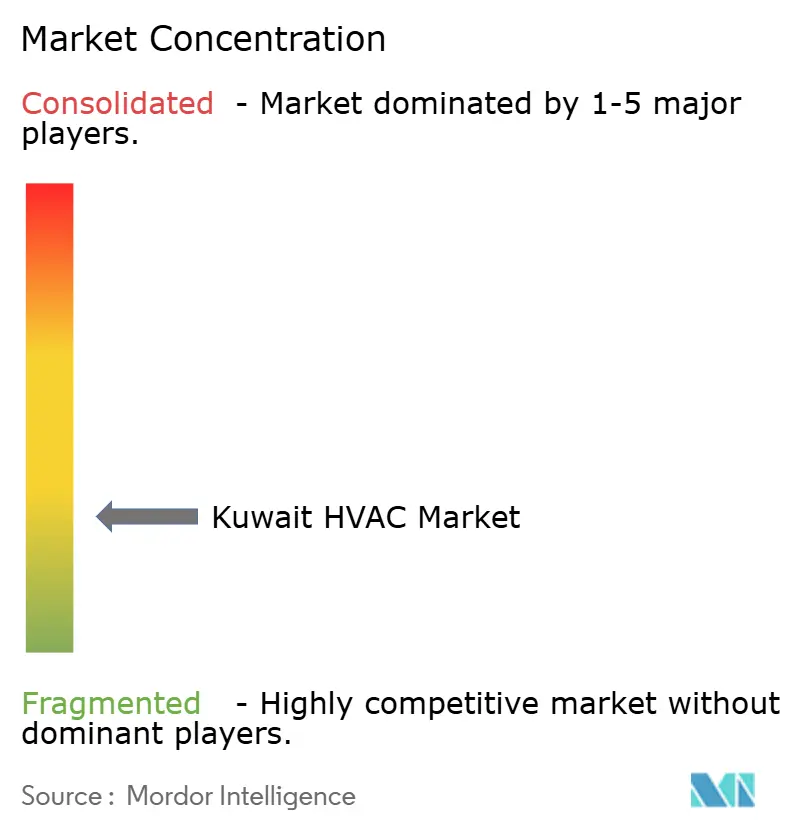
| Market Concentration | Low |
Major Players *Disclaimer: Major Players sorted in no particular order |
Kuwait HVAC Market Analysis by Mordor Intelligence
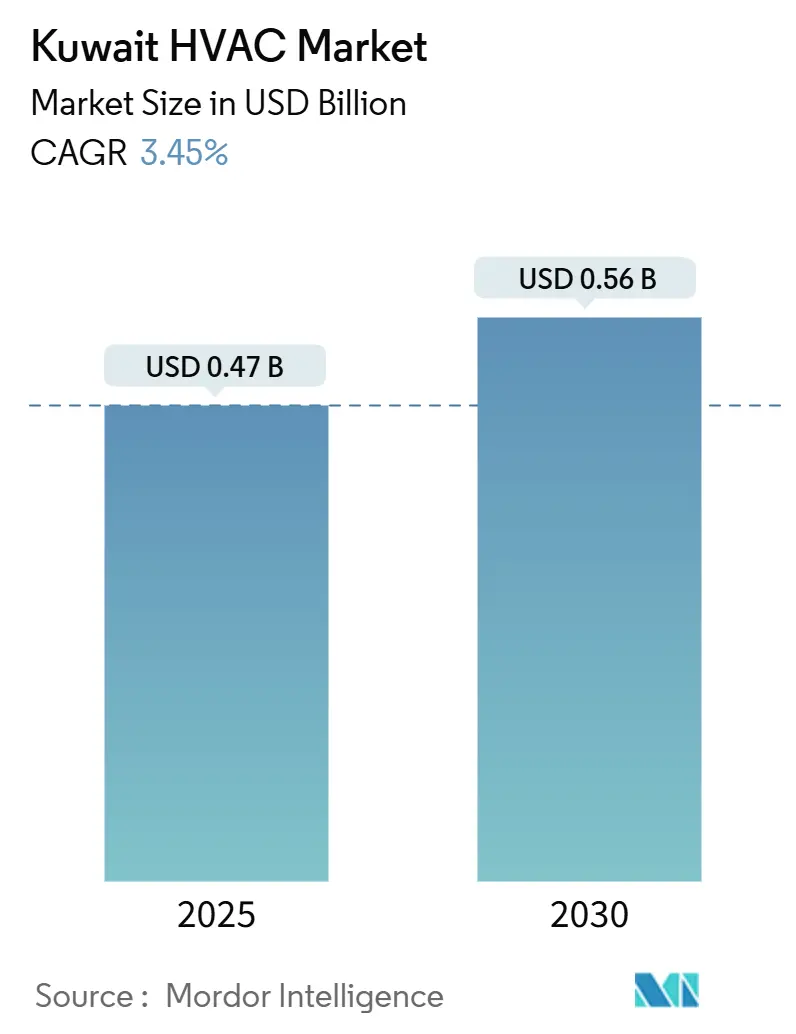
The Kuwait HVAC Market size is estimated at USD 0.47 billion in 2025, and is expected to reach USD 0.56 billion by 2030, at a CAGR of 3.45% during the forecast period (2025-2030).
- HVAC is a comprehensive system designed to create and maintain comfortable indoor environmental conditions in residential, commercial, and industrial spaces. Heating is the first component, which involves warming interior spaces during cold weather through various methods such as furnaces, heat pumps, and radiant heating systems. These technologies convert energy into heat, distributing warmth evenly throughout a building to ensure occupant comfort and prevent temperature-related issues.
- Kuwait experiences extreme climatic conditions, characterized by high temperatures, particularly during the summer months, where temperatures can soar above 50°C (122°F). This harsh desert climate includes low humidity levels, which can lead to discomfort without adequate cooling systems. The need for efficient heating, ventilation, and air conditioning (HVAC) systems is thus crucial for both residential and commercial sectors.
- Additionally, Kuwait's rapid urbanization and economic development are driving increased demand for HVAC solutions. With a growing population and expanding infrastructure projects, there is a heightened focus on energy-efficient systems that can cope with the extreme heat while minimizing energy consumption. The government’s commitment to sustainability and energy efficiency further propels the HVAC market, as regulations increasingly favor environmentally friendly technologies.
- Moreover, the Gulf Coast proximity contributes to fluctuating humidity levels, necessitating effective dehumidification systems. As a result, HVAC companies are innovating to provide solutions that not only ensure comfort but also comply with green building standards. This combination of climatic challenges and urban growth underlines a robust HVAC market potential in Kuwait, making it a critical sector for future developments.
- One of the foremost initiatives is the implementation of energy efficiency standards for buildings. The Kuwaiti government has introduced regulations that mandate the use of energy-efficient HVAC systems in new constructions. These standards not only reduce energy consumption but also lower carbon emissions, aligning with Kuwait's commitment to environmental sustainability.
- Additionally, the Kuwait Vision 2035 national development plan plays a critical role in driving market growth. This long-term strategy focuses on diversifying the economy and improving living standards, which includes substantial investments in infrastructure. Enhanced commercial and residential developments naturally lead to an increased demand for advanced HVAC systems to ensure optimal indoor climates.
- Another significant factor is Kuwait's push toward renewable energy sources. The government has set ambitious targets for renewable energy use, which encourages innovation in energy-efficient HVAC technologies that integrate with solar and wind energy systems.
- One of the primary restraints is the high initial costs associated with HVAC systems. The expense of purchasing and installing HVAC units can be significant, especially for high-quality brands that ensure energy efficiency and long-term performance. This financial barrier can deter both residential and commercial customers, particularly in a market where price sensitivity is prevalent. As a result, many potential buyers may opt for less efficient systems or postpone their investments altogether.
- Additionally, the ongoing maintenance costs can be a deterrent for potential buyers. Regular servicing is essential to ensure optimal performance and longevity of HVAC systems, which can add to the overall expenditure.
Kuwait HVAC Market Trends and Insights
The Economic Development and Construction Activities are Anticipated to Drive the Demand for the Studied Market
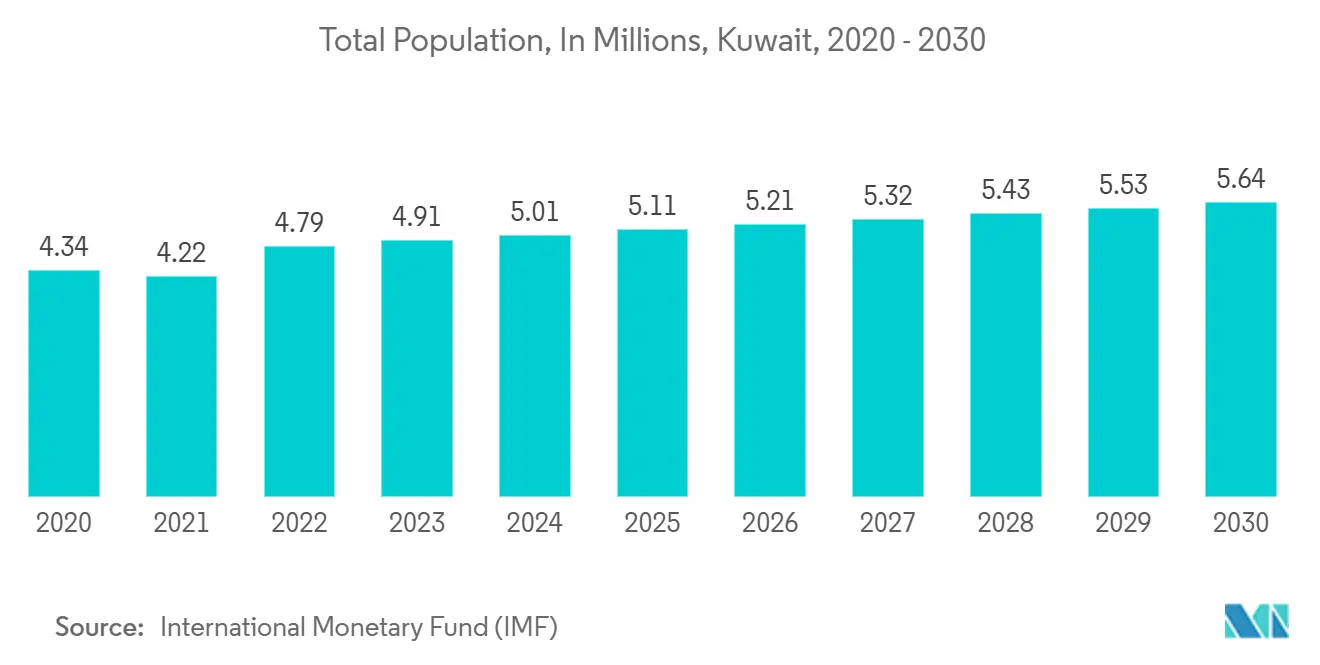
- Kuwait is undergoing a notable transformation, with its population steadily increasing. According to the International Monetary Fund (IMF), the total population of Kuwait was estimated at 5.11 million in 2025, an increase from 5.01 million people in 2024.
- Various factors, such as economic opportunities, improved living standards, and the desire for modern amenities, are driving the growth of the urban population. The influx of people into urban areas necessitates the development of housing, commercial spaces, and public infrastructure, all of which require effective HVAC systems.
- The increasing density of urban populations creates a pressing demand for reliable and efficient climate control systems. In hot climates like Kuwait, where summer temperatures can soar, the need for effective air conditioning is paramount. Consequently, the rising urban population directly correlates with an increased demand for HVAC solutions to ensure comfortable living and working conditions.
- The Kuwaiti government has committed to ambitious infrastructure development projects as part of its national vision, aiming to diversify the economy and reduce reliance on oil revenues. Key initiatives include the construction of new residential complexes, commercial centers, and public infrastructure projects, such as schools, hospitals, and transportation networks.
- These construction activities lead to a surge in demand for HVAC systems. New buildings require advanced heating and cooling solutions that are energy-efficient and environmentally friendly. Developers are increasingly seeking sustainable HVAC options to align with global green building standards and regulations. This shift not only addresses the growing environmental concerns but also reduces operational costs for end-users.


The Air Conditioning Equipment Sector is Anticipate to Hold a Major Market Share
- The air conditioning equipment segment in Kuwait has seen a significant surge in demand over the years, contributing to the overall growth of the HVAC market. Kuwait experiences extreme temperatures, especially during the summer months, when temperatures can soar above 50°C. This harsh climate necessitates the use of air conditioning systems for comfort in residential, commercial, and industrial spaces. The high demand for effective cooling solutions is one of the primary reasons for the rising air conditioning equipment market.
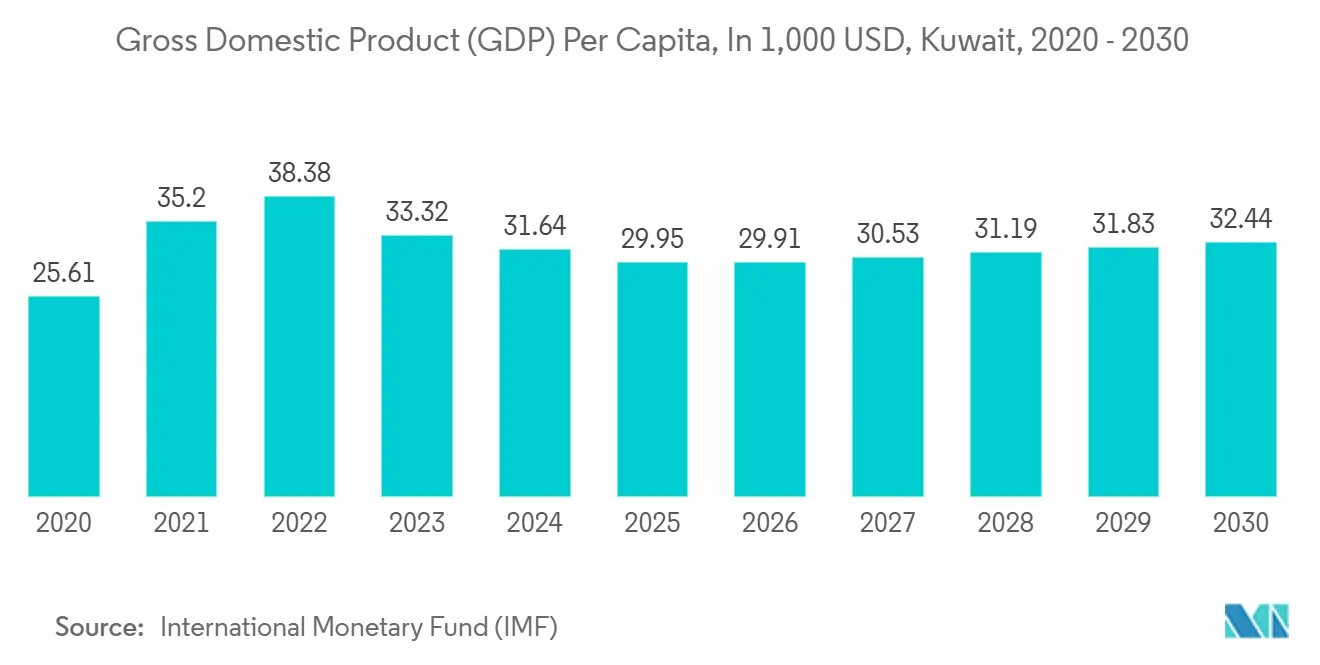
- Kuwait has witnessed significant growth in Gross Domestic Product (GDP), rapid urbanization, with a growing population that increases the demand for housing and commercial infrastructure. According to the International Monetary Fund (IMF), the gross domestic product (GDP) per capita in Kuwait was estimated at USD 31.64 thousand in 2024 and USD 29.95 thousand in 2025.
- As more people move to urban areas, the need for air conditioning systems in residential buildings, offices, and retail environments has surged. The construction of new residential complexes and commercial establishments further drives the demand for HVAC systems.
- Additionally, Kuwait's economy has been bolstered by the oil and gas sector, leading to increased disposable income among residents. As the standard of living rises, more households opt for air conditioning units to enhance comfort. Additionally, businesses are investing in HVAC systems to improve productivity and employee comfort, which stimulates further demand. Further, Kuwait's Vision 2035 aims to diversify the economy away from oil dependence. As part of this initiative, the government is investing in infrastructure projects that require advanced HVAC systems. This includes the development of smart cities and eco-friendly buildings, which will inherently drive the demand for modern air conditioning solutions.
- Moreover, the growing awareness of health and wellness has led to a focus on indoor air quality. Air conditioning systems with advanced filtration and ventilation features are increasingly seen as essential for maintaining a healthy living environment. This is particularly relevant in commercial settings, where maintaining air quality can influence employee health and productivity.
- Also, Kuwait’s strategic location as a trade hub in the Middle East facilitates the import of advanced HVAC technologies from global markets. This has resulted in a variety of products available for consumers, from budget options to high-end systems. The competition among international and local manufacturers enhances the market landscape, driving further growth.
- Environmentally friendly refrigerants and sustainable cooling technologies are emerging as a critical driver in Kuwait's HVAC market. Eco-friendly solutions that use low global warming potential (GWP) refrigerants are becoming mandatory, aligning with global environmental regulations and Kuwait's sustainability goals. These technologies not only reduce the carbon footprint but also improve overall system performance and longevity.

Competitive Landscape
The Kuwait HVAC market is fragmented, with specialized players and regional conglomerates operating across various segments. While multiple large multinational companies dominate certain high-value segments, numerous regional and niche players contribute to the overall competition, making the market highly diverse. This competition is driven by the wide range of applications for HVAC equipment, allowing both small and large companies to coexist and thrive in the market.
Several leading companies in the Kuwait HVAC market include Mitsubishi Electric Corporation, Carrier Corporation, LG Electronics Inc., Daikin Industries, Ltd., Panasonic Corporation, and many others. With strong brand recognition and extensive regional operations, these companies command a significant market share. Their strengths include innovation, a broad solutions portfolio, and robust distribution networks. To maintain their competitive edge and broaden their market reach, these leaders frequently pursue strategic acquisitions and partnerships.
In the Kuwait HVAC market, companies that prioritize innovation in heating, ventilation, and air conditioning equipment are more likely to succeed. As industries increasingly seek advanced solutions, HVAC equipment is set to become a key differentiator. Additionally, expanding service offerings and enhancing customer support will be essential for building long-term relationships and securing repeat business. Firms that invest in emerging markets and tailor their products to regional needs can gain a competitive advantage in this fragmented landscape.
Kuwait HVAC Industry Leaders
Daikin Industries Ltd.
Carrier Global Corporation
LG Electronics Inc.
Panasonic Corporation
Mitsubishi Electric Corporation
- *Disclaimer: Major Players sorted in no particular order

Recent Industry Developments
- April 2025: Al-Quds International Company broadened its portfolio of central air conditioning solutions, spotlighting energy efficiency and advanced control technologies for both residential and commercial uses. The company's integrated systems are claimed to provide energy savings of up to 40% over conventional systems, catering to the rising demand for sustainable HVAC solutions in Kuwait's harsh climate.
- July 2024: Johnson Controls sold its Residential and Light Commercial HVAC business to the Bosch Group for USD 8.1 billion, while simultaneously announcing a partnership with KNETCO to develop smart building solutions in Kuwait using the OpenBlue platform. This strategic realignment focuses Johnson Controls on large commercial buildings while enhancing its position in the smart building technology sector.
- February 2024: Rheem, a company that produces water heating and HVACR products, has introduced its latest heat pump called the Endeavor Line Classic Plus Series Universal Heat Pump RD17AZ. The Rheem RD17AZ, which is ENERGY STAR certified, has been recognized as the most efficient unit for the year 2024, even in cold weather conditions. This heat pump is compatible with almost any HVAC system or can be used as a Universal Replacement with minimal modifications needed.


Kuwait HVAC Market Report Scope
HVAC is a comprehensive system designed to create and maintain comfortable indoor environmental conditions in residential, commercial, and industrial spaces. Heating is the first component, which involves warming interior spaces during cold weather through various methods such as furnaces, heat pumps, and radiant heating systems. These technologies convert energy into heat, distributing warmth evenly throughout a building to ensure occupant comfort and prevent temperature-related issues.
Ventilation represents the critical process of exchanging indoor and outdoor air, ensuring proper air circulation, removing pollutants, controlling humidity, and maintaining air quality. This aspect of HVAC involves mechanical and natural ventilation techniques that introduce fresh air, filter contaminants, and regulate oxygen levels. Proper ventilation is essential for preventing the buildup of harmful gases, reducing moisture-related problems, and creating a healthy indoor environment.
Air Conditioning focuses on cooling and dehumidifying interior spaces during warm weather. Modern air conditioning systems use refrigeration cycles to remove heat and moisture from the air, creating a comfortable and controlled climate. These systems range from central air conditioning units to ductless mini-splits, providing precise temperature management and improving overall indoor comfort. The integration of these three components- heating, ventilation, and air conditioning- creates a sophisticated environmental control system that adapts to changing weather conditions and occupant needs.
The study tracks the revenue accrued through the sale of HVAC product types by various players in Kuwait. The study also tracks the key market parameters, underlying growth influencers, and major vendors operating in the industry, which supports the market estimations and growth rates over the forecast period. The study further analyses the overall impact of macroeconomic factors on the market. The report's scope encompasses market sizing and forecasts for the various market segments.
The Kuwait HVAC Market is segmented by product type (heating equipment [heat pumps (air source, ground source), furnaces (gas, electric, oil), boilers (condensing, non-condensing), unit heaters, and others (radiators & baseboard heaters, solar water heating systems)], ventilation equipment [air handling units (AHUs), energy recovery ventilators (ERVs)/heat recovery, ventilators (HRVs), exhaust and supply fans, dehumidifiers/humidifiers], air conditioning equipment [unitary air conditioners, variable refrigerant flow (VRF) systems, chillers (air-cooled, water-cooled), fan coil units (FCUs), and others (window and portable air conditioners)]) and end-user industry (residential, commercial, and industrial). The market sizes and forecasts are provided in terms of value (USD) for all the above segments.
| Heating Equipment | Heat Pumps (Air Source, Ground Source) | |
| Furnaces (Gas, Electric, Oil) | ||
| Boilers (Condensing, Non-condensing) | ||
| Unit Heaters | ||
| Others (Radiators & Baseboard Heaters, Solar Water Heating Systems) | ||
| Ventilation Equipment | Air Handling Units (AHUs) | |
| Energy Recovery Ventilators (ERVs) / Heat Recovery Ventilators (HRVs) | ||
| Exhaust and Supply Fans | ||
| Dehumidifiers / Humidifiers | ||
| Air Conditioning Equipment | Unitary Air Conditioners | Split Air Conditioners |
| Packaged Terminal ACs (PTACs) | ||
| Rooftop Packaged Units (RTUs) | ||
| Variable Refrigerant Flow (VRF) Systems | ||
| Chillers (Air-Cooled, Water-Cooled) | ||
| Fan Coil Units (FCUs) | ||
| Others (Window and Portable Air Conditioners) | ||
| Residential |
| Commercial |
| Industrial |
| By Product Type | Heating Equipment | Heat Pumps (Air Source, Ground Source) | |
| Furnaces (Gas, Electric, Oil) | |||
| Boilers (Condensing, Non-condensing) | |||
| Unit Heaters | |||
| Others (Radiators & Baseboard Heaters, Solar Water Heating Systems) | |||
| Ventilation Equipment | Air Handling Units (AHUs) | ||
| Energy Recovery Ventilators (ERVs) / Heat Recovery Ventilators (HRVs) | |||
| Exhaust and Supply Fans | |||
| Dehumidifiers / Humidifiers | |||
| Air Conditioning Equipment | Unitary Air Conditioners | Split Air Conditioners | |
| Packaged Terminal ACs (PTACs) | |||
| Rooftop Packaged Units (RTUs) | |||
| Variable Refrigerant Flow (VRF) Systems | |||
| Chillers (Air-Cooled, Water-Cooled) | |||
| Fan Coil Units (FCUs) | |||
| Others (Window and Portable Air Conditioners) | |||
| By End-User | Residential | ||
| Commercial | |||
| Industrial | |||


Key Questions Answered in the Report
How big is the Kuwait HVAC Market?
The Kuwait HVAC Market size is expected to reach USD 0.47 billion in 2025 and grow at a CAGR of 3.45% to reach USD 0.56 billion by 2030.
What is the current Kuwait HVAC Market size?
In 2025, the Kuwait HVAC Market size is expected to reach USD 0.47 billion.
Who are the key players in Kuwait HVAC Market?
Daikin Industries Ltd., Carrier Global Corporation, LG Electronics Inc., Panasonic Corporation and Mitsubishi Electric Corporation are the major companies operating in the Kuwait HVAC Market.
What years does this Kuwait HVAC Market cover, and what was the market size in 2024?
In 2024, the Kuwait HVAC Market size was estimated at USD 0.45 billion. The report covers the Kuwait HVAC Market historical market size for years: 2019, 2020, 2021, 2022, 2023 and 2024. The report also forecasts the Kuwait HVAC Market size for years: 2025, 2026, 2027, 2028, 2029 and 2030.
Page last updated on:
Kuwait HVAC Market Report
Statistics for the 2025 Kuwait HVAC market share, size and revenue growth rate, created by Mordor Intelligence™ Industry Reports. Kuwait HVAC analysis includes a market forecast outlook for 2025 to 2030 and historical overview. Get a sample of this industry analysis as a free report PDF download.





