
Biosurgery Market Size and Share
Market Overview
| Study Period | 2020 - 2031 |
|---|---|
| Market Size (2026) | USD 17.89 Billion |
| Market Size (2031) | USD 23.89 Billion |
| Growth Rate (2026 - 2031) | 5.95 % |
| Fastest Growing Market | Asia Pacific |
| Largest Market | North America |
| Market Concentration | Medium |
Major Players *Disclaimer: Major Players sorted in no particular order Image © Mordor Intelligence. Reuse requires attribution under CC BY 4.0. | |
Biosurgery Market Analysis by Mordor Intelligence
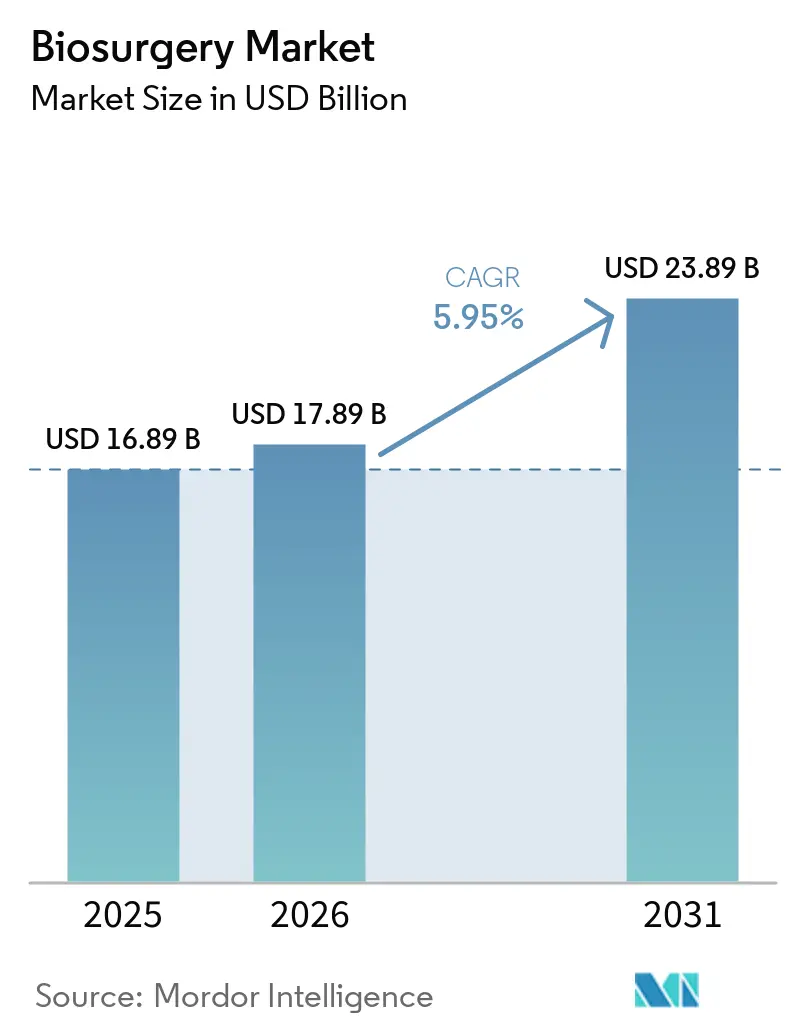
The Biosurgery Market size is expected to grow from USD 16.89 billion in 2025 to USD 17.89 billion in 2026 and is forecast to reach USD 23.89 billion by 2031 at 5.95% CAGR over 2026-2031.
This expansion reflects the combined impact of population aging, higher surgical complexity, and widespread adoption of minimally invasive techniques that demand refined solutions for hemostasis, tissue repair, and wound closure. Hospitals are intensifying their focus on rapid‐recovery protocols, which elevates demand for next-generation biomaterials that shorten operating times and curb transfusions. Meanwhile, real-time 3-D-printed, bioresorbable scaffolds are making patient-specific implants economically viable, strengthening the biosurgery market’s momentum. The rise of hospital-at-home models, supported by new Medicare coding for caregiver wound-care training, is shifting a portion of postoperative care into residential settings, creating fresh opportunities for portable sealing and adhesive kits. North America leads in reimbursement sophistication, yet Asia-Pacific’s accelerating surgical volumes position it as the fastest-growing region through 2030. Competitive pressure is moderate but mounting as specialized innovators challenge long-standing incumbents with smart biomaterials and digital-enabled surgical platforms.
Key Report Takeaways
- By product type, bone-graft substitutes held 32.97% of the biosurgery market share in 2025, while surgical sealants and adhesives are forecast to expand at a 6.05% CAGR to 2031.
- By source, biologic products commanded 61.24% revenue in 2025; synthetic and semi-synthetic alternatives are advancing at an 7.29% CAGR through 2031.
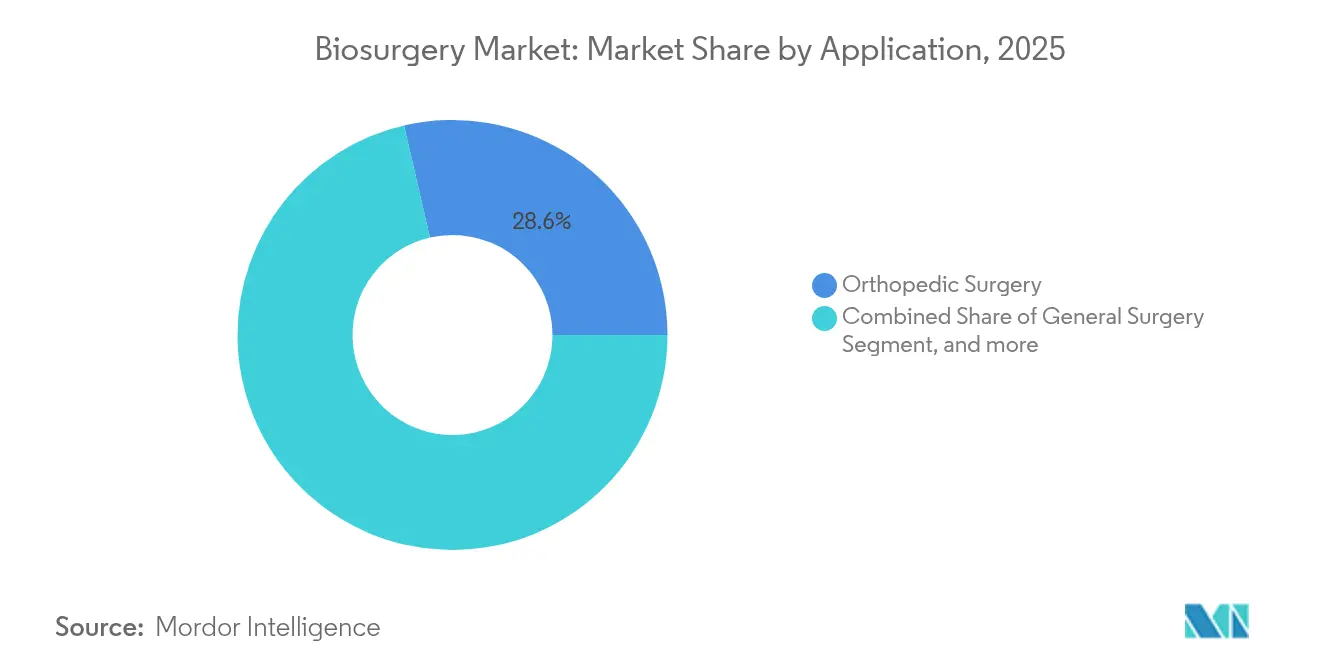
- By application, orthopedic surgery accounted for 28.62% of the biosurgery market size in 2025, whereas cardiovascular surgery is growing fastest at a 8.82% CAGR through 2031.
- By end user, hospitals controlled 67.47% of 2025 revenue; ambulatory surgical centers are projected to grow at an 8.35% CAGR to 2031.
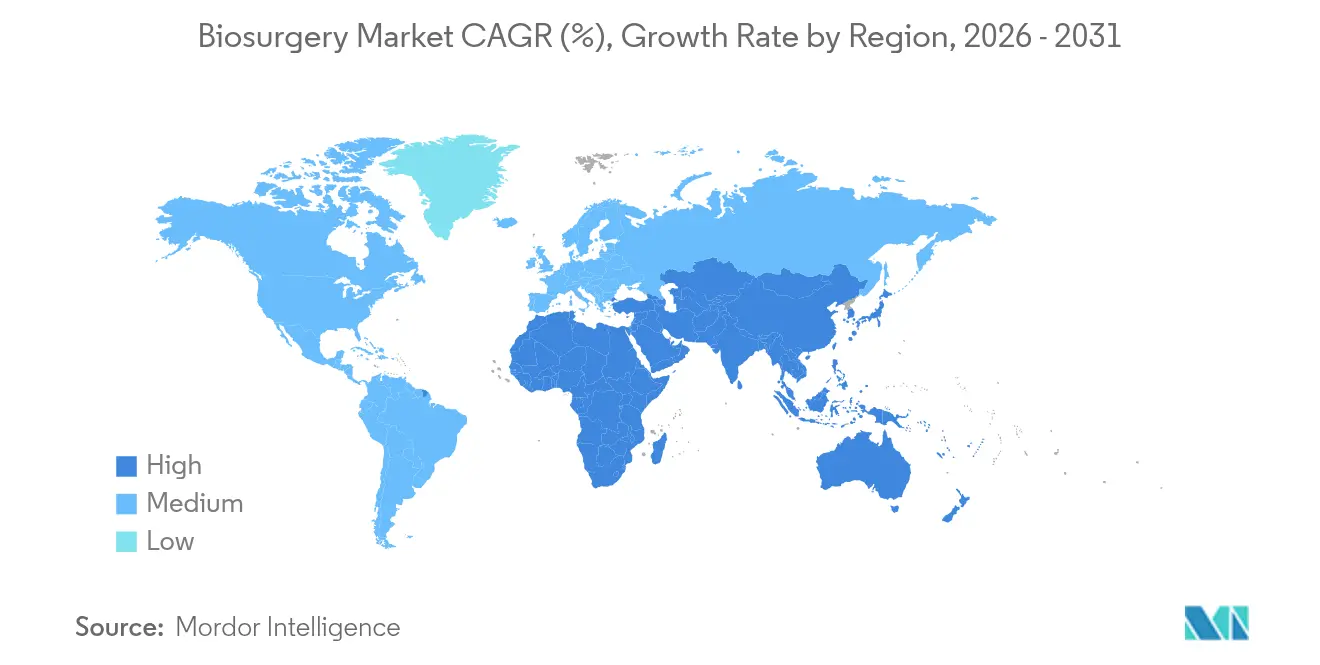
- By geography, North America led with 41.34% share in 2025; Asia-Pacific is set to rise at an 6.75% CAGR through 2031.
Note: Market size and forecast figures in this report are generated using Mordor Intelligence’s proprietary estimation framework, updated with the latest available data and insights as of 2026.
Market Trends and Insights
Drivers Impact Analysis of Biosurgery Market*
| Driver | (~) % Impact on CAGR Forecast | Geographic Relevance | Impact Timeline |
|---|---|---|---|
| Surging geriatric & co-morbid patient pool | +1.8% | Global; highest in North America & Europe | Long term (≥ 4 years) |
| Rise in complex & minimally invasive surgical volumes | +1.5% | Global; led by North America & Asia-Pacific | Medium term (2–4 years) |
| Pipeline of next-gen biomaterials & combination products | +1.2% | North America & Europe; expanding in Asia-Pacific | Medium term (2–4 years) |
| Hospital-at-home reimbursement for rapid wound-closure kits | +0.8% | North America & Europe | Short term (≤ 2 years) |
| Point-of-care 3-D-printed, bioresorbable scaffolds | +0.6% | North America & Europe; early Asia-Pacific uptake | Medium term (2–4 years) |
| Supplier localisation of plasma-derived sealants | +0.4% | Asia-Pacific & emerging markets | Long term (≥ 4 years) |
| Source: Mordor Intelligence | |||
Surging Geriatric & Co-Morbid Patient Pool
The median age of surgical patients climbed from 56 to 59 years between 2008 and 2020 and is projected to reach 61.5 years by 2030, amplifying demand for products that safely control bleeding in fragile tissue.[1] Concurrently, obesity prevalence among surgical candidates is increasing, with 80% expected to present above-normal BMI by 2030, further complicating hemostasis. A Geneva tertiary center documented a 48.3% rise in high-risk elderly anesthesia cases over the past decade, underscoring healthcare systems’ willingness to operate on complex geriatric profiles. Complication rates exceed 32% in patients over 90 years when general anesthesia is applied, compared with 19.4% under regional techniques, highlighting the need for advanced, minimally traumatic biosurgical options. These demographic shifts secure long-horizon growth for the biosurgery market.
Rise in Complex & Minimally Invasive Surgical Volumes
Robotic hernia repairs, though under 5% of all repairs in Nordic countries, are climbing steadily, reflecting global adoption of robotic platforms that work within confined anatomical spaces. Laparoscopic and robotic lumbar fusion surgeries show lower complication rates and reduced recovery times than open procedures, but they depend on sealants and adhesives that perform reliably in limited fields.[2] Cardiovascular settings echo this trend: pulsed-field ablation products yielded nearly 30% revenue growth for a leading manufacturer in 2025, signalling robust uptake of advanced devices that must integrate seamlessly with bioactive adjuncts. As emerging markets invest in robotics and high-definition imaging, the biosurgery market receives another tailwind.
Pipeline of Next-Gen Biomaterials & Combination Products
Programmable 3-D-printed scaffolds that deform at 48 °C to fill defects and modulate macrophage responses at 42 °C illustrate the shift toward dynamic biomaterials. Recombinant human collagen eliminates zoonotic risk while delivering consistent mechanical strength. The FDA cleared multiple platelet-rich-plasma devices in 2024, confirming regulatory openness to autologous products that shorten healing timelines.[3] Injectable hydrogel platforms now emulate extracellular matrices yet remain deliverable via minimally invasive techniques. Artificial-intelligence tools fine-tune scaffold architecture to individual biomechanics, pushing the biosurgery market from generic to patient-specific solutions.
Hospital-At-Home Reimbursement Accelerating Demand for Rapid Wound-Closure Kits
CMS introduced caregiver-training codes in the 2025 Physician Fee Schedule, validating remote wound-care models. Chronic wounds impact 10.5 million Medicare beneficiaries and cost USD 28 billion annually, driving providers to favor early closure solutions that avoid readmissions. Digital telehealth platforms such as WoundConnect demonstrate that remote monitoring can cut costs and improve outcomes. Venture funding is flowing into apps that guide caregivers through dressing changes and track healing progress in real time. The convergence of reimbursement incentives and digital oversight accelerates uptake of portable sealants and adhesives, bolstering the biosurgery market.
Restraints Impact Analysis of Biosurgery Market*
| Restraint | (~) % Impact on CAGR Forecast | Geographic Relevance | Impact Timeline |
|---|---|---|---|
| Premium pricing & limited reimbursement | -1.1% | Global; sharpest in emerging markets | Medium term (2–4 years) |
| Stringent multi-jurisdiction biologic approval pathways | -0.7% | Worldwide; variable by region | Long term (≥ 4 years) |
| Cold-chain fragility of biologic sealants | -0.5% | Asia-Pacific, MEA & South America | Medium term (2–4 years) |
| Collagen-derived graft contamination & AMR scrutiny | -0.3% | Global; heightened in North America & Europe | Short term (≤ 2 years) |
| Source: Mordor Intelligence | |||
Premium Pricing & Limited Reimbursement
CMS plans a 2.93% cut to average wound-care payments in 2025, tightening hospital budgets and pressuring procurement of premium biosurgery products. Autologous platelet-rich plasma lacks consistent reimbursement despite favorable outcomes in diabetic ulcers, prompting clinicians to weigh cost against efficacy. Emerging markets magnify the challenge; Brazil’s import tariffs elevate prices and restrict access to high-end biomaterials. As reimbursement lags innovation, uptake of the newest offerings is uneven, tempering the biosurgery market’s full potential.
Stringent Multi-Jurisdiction Biologic Approval Pathways
The FDA–EMA Parallel Scientific Advice program streamlines some filings, but divergent data requirements mean companies still navigate lengthy, costly paths before launch. Biologics License Applications demand extensive manufacturing validation versus simpler chemical drug filings, stretching development timelines and budgets. Although a 2024 FDA final rule forecasts USD 2.8 million in annual regulatory cost reductions, complexity persists for gene-therapy-adjacent biosurgical innovations. Where regulatory convergence is slow, the biosurgery market faces staggered rollouts and patchy global availability.
*Our forecasts treat driver/restraint impacts as directional, not additive. The impact forecasts reflect baseline growth, mix effects, and variable interactions.
Biosurgery Market Segment Analysis
By Product Type:
Bone-Graft Substitutes Lead InnovationBone-graft substitutes captured 32.97% of the biosurgery market share in 2025, owing to escalating orthopedic and dental surgery volumes. The segment benefits from tri-element-doped hydroxyapatite–polycaprolactone scaffolds that inhibit tumor recurrence, foster osteogenesis, and provide inherent antibacterial action. Hemostatic agents remain core staples across specialties, as 54 FDA-approved formulations offer varied formats for open and minimally invasive procedures. Adhesion barriers, typified by SEPRAFILM, decrease repeat operations by limiting fibrous scar formation. While niche, staple-line reinforcement products gain traction alongside robotic surgeries that amplify staple use.
Surgical sealants and adhesives, the fastest-growing product set at 6.05% CAGR, benefit from innovations such as a fibrin sealant that cut transfusions 35% and trimmed operating time by 25 minutes. A room-temperature patch launched in 2025 eliminates refrigeration, easing logistics and broadening reach. LIQUIFIX liquid adhesive, the only FDA-cleared internal hernia sealant, exemplifies device specialization in complex repairs. These breakthroughs highlight how materials science, ease-of-use, and procedure-time savings propel the biosurgery market.


By Source:
Biologic Dominance Faces Synthetic ChallengeBiologic offerings commanded 61.24% of 2025 revenue, buoyed by fibrin and collagen matrices that integrate naturally into healing pathways. Demand for plasma-derived medicinal products is projected to climb 30% by 2030, yet collection shortfalls linger, prompting governments to localize plasma supply. Clinical trials such as Grifols’ ADFIRST fibrinogen study underline ongoing biologic innovation.
Synthetic and semi-synthetic materials, however, are outpacing the market at an 7.29% CAGR. Polymer constructs like a fully absorbable P4HB scaffold now in breast revision trials promise durable support without foreign-body permanence. Injectable alginate–collagen hydrogels loaded with antibiotics demonstrated single-dose efficacy equal to multi-dose systemic regimens, mitigating infection risk while curbing overall antibiotic exposure. Rising pharmaceutical cold-chain investment (USD 9.6 billion expected by 2035) underscores biologic distribution hurdles that synthetics circumvent. The biosurgery market thus bifurcates, with biologics prevailing in high-performance indications and synthetics thriving where cost and logistics matter most.
By Application:
Orthopedic Surgery Leads, Cardiovascular AcceleratesOrthopedic surgery contributed 28.62% to biosurgery market size in 2025 on the strength of joint replacements and sports-medicine repairs. Customized lattice implants that mirror bone anisotropy are enhancing load distribution and long-term fixation. Platelet-rich-fibrin-coated scaffolds achieved 100% union rates in complex hindfoot procedures, cutting average healing to 20.2 weeks. General surgical applications sustain steady demand for universal hemostatic agents, while neurosurgical matrices such as DuraGen resorb within 34 days, reducing the need for secondary interventions.
Cardiovascular surgery, forecast to grow 8.82% annually, benefits from demographic urgency and advanced energy sources like pulsed-field ablation. Surgical aortic-valve cases are projected to climb annually through 2041 in tertiary centers, adding incremental volume and sealing demand. Gynecologic and thoracic specialties adopt tailored adhesion barriers that cut postoperative adhesions up to 85% in trials. The precision-medicine ethos across these indications deepens reliance on bespoke, outcome-driven biosurgical solutions.
By End User:
Hospitals Dominate, ASCs Gain MomentumHospitals held 67.47% of 2025 revenue, reflecting their role in high-acuity, multi-disciplinary care. Elderly patients above 90 years experience ICU admissions in 44.6% of general-anesthesia cases, amplifying the need for dependable hemostatic management. July 2024 Outpatient Payment updates added pass-through codes for new skin substitutes, confirming continued hospital alignment with advanced biosurgery technologies.
Ambulatory surgical centers, expanding at an 8.35% CAGR, benefit from lower overhead and a surge in outpatient minimally invasive procedures. Robotics accelerates this migration, while ASCs leverage streamlined inventories that favor versatile, easy-to-use adhesives and patches. Hospital-at-home programs further blur boundaries, allowing ASC clinicians to extend postoperative surveillance via telehealth and remote wound-monitoring systems.
Geography Analysis
North America Biosurgery Market
North America represented 41.34% of the biosurgery market in 2025, underpinned by robust reimbursement, high procedure volumes, and steady regulatory throughput. Multiple platelet-rich-plasma devices cleared by the FDA in 2024 spotlight the region’s rapid technology adoption. Canada accelerates public-hospital modernization, while Mexico leverages cross-border device supply chains, though regulatory harmonization continues to evolve.
Europe Biosurgery Market
Europe sustains strong uptake of room-temperature sealing patches that bypass cold logistics, widening access especially in midsize hospitals. EMA-FDA cooperative frameworks support simultaneous submissions, yet subtle documentation differences prolong some approvals. Investments in manufacturing automation and sustainability align with the region’s stringent environmental standards, steadily shaping procurement criteria.
APAC, MEA and South America Biosurgery Market
Asia-Pacific, forecast at an 6.75% CAGR, is propelled by demographic momentum and infrastructure spend, with the local production initiatives, such as a USD 15 million plasma-collection facility in China, aim to secure supply and meet viral-safety norms. The region confronts fragile cold chains, spurring AI-driven monitoring tools that maintain product integrity in tropical climates. Middle East & Africa and South America trail but show rising procedure rates as public and private insurers broaden surgical coverage; regulatory overhauls in Brazil signal growing regional standardization.
Regulatory Landscape
Biosurgery products sit at the intersection of medical devices and biologics, so market access is shaped by risk-based classification and evidence expectations that differ by jurisdiction. In the European Union, many biosurgery solutions (for example, implantables used for tissue repair) are regulated under the Medical Device Regulation, Regulation (EU) 2017/745 (MDR), with classification guided by Annex VIII and supported by updated harmonized standards such as the EN ISO 10993 series for biological evaluation. In 2026, the EU updated MDR-related requirements via Commission Delegated Regulation (EU) 2026/1451 and Regulation (EU) 2026/1359, adjusting exemption lists for certain implantable and Class III devices and specific Class IIb implantables, while maintaining clinical evaluation obligations.
In the United States, the FDA applies device-specific frameworks across 21 CFR parts and uses special controls for certain higher-risk categories, including guidance for absorbable poly(hydroxybutyrate) surgical sutures produced by recombinant DNA technology that still require robust 510(k) evidence addressing identified risks. A major compliance anchor in 2026 is the FDA Quality Management System Regulation (QMSR), implemented on February 2, 2026, which incorporates ISO 13485:2016 principles and updates inspection expectations, increasing the emphasis on globally aligned quality systems for manufacturers operating across regions. Cross-border regulatory alignment continues through bodies such as the International Medical Device Regulators Forum (IMDRF), while U.S. user-fee program discussions (MDUFA VI) indicate an ongoing push for more defined review performance goals that can affect time-to-market planning for biosurgery portfolios.
Competitive Landscape
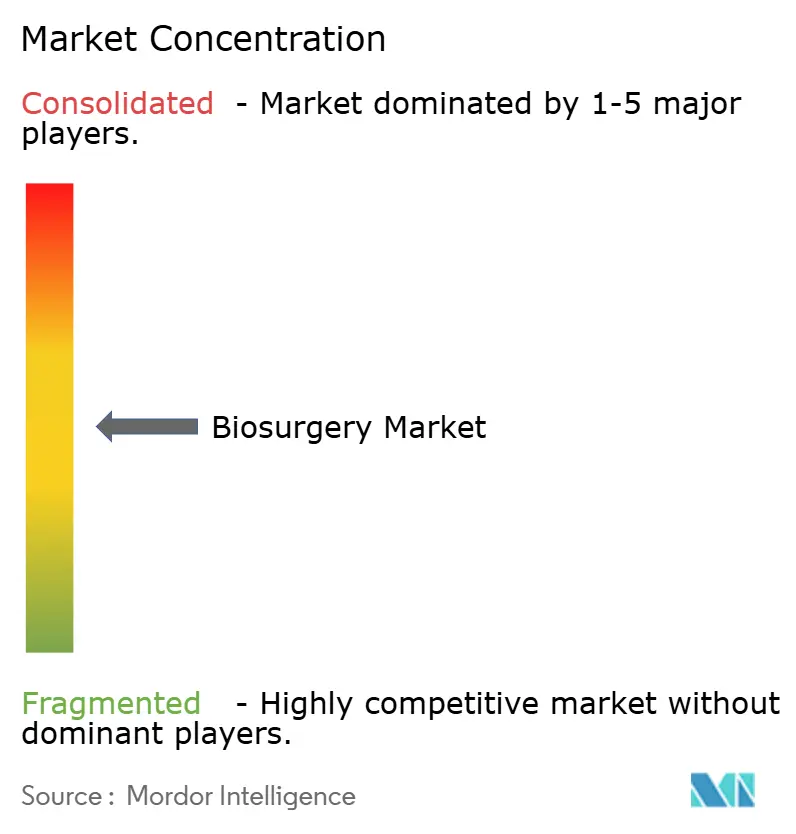
The biosurgery market is moderately competitive and consists of several major players. Market leadership concentrates among diversified multinationals, yet space remains for agile innovators. Johnson & Johnson integrated its med-tech franchises under a single banner and earmarked USD 148.07 billion for technology advancement, reinforcing scale advantages. Medtronic generated USD 33.5 billion in 2025 and plans a diabetes spin-off to sharpen focus on high-growth cardiovascular and surgical segments.
Acquisitions remain pivotal: Stryker’s USD 4.9 billion purchase of Inari Medical opens the peripheral-vascular channel, while BD’s USD 4.2 billion bid for a critical-care portfolio expands its smart-connected-care footprint. Small-cap disruptors such as TELA Bio capitalize on narrow but meaningful gaps, with the only FDA-approved liquid adhesive for internal hernia repairs. The FDA’s acceptance of autologous platelet-rich products reduces entry barriers for niche players.
Platform convergence defines the next competitive stage: firms combining AI-guided planning, on-site 3-D printing, and responsive biomaterials can outmaneuver product-centric rivals. Sustainability is an emerging differentiator, as health systems rank suppliers on carbon and cold-chain footprints. Moderate consolidation paired with rising specialist entrants underpins a dynamic yet balanced biosurgery market.
Biosurgery Industry Leaders
-
Baxter International Inc.
-
Johnson & Johnson
-
Becton, Dickinson and Company
-
B. Braun Melsungen AG
-
CryoLife (Artivion)
- *Disclaimer: Major Players sorted in no particular order
Biosurgery Market Companies Covered in this Report
- Johnson & Johnson
- Baxter
- Beckton Dickinson
- Medtronic
- B. Braun
- Integra LifeSciences
- CSL Behring
- CryoLife (Artivion)
- Hemostasis
- Arch Therapeutics
- Kuros Biosciences
- Zimmer Biomet
- Stryker
- Sanofi
- Terumo
- Advanced Medical Solutions (AMS)
- Grifols
- Gluetec AG
- Collagen Matrix
- Orthofix
Market Opportunities and Future Outlook
Opportunities in biosurgery are being created by shifts in sites of care and by product designs that reduce logistical barriers. The report context highlights hospital-at-home expansion and CMS caregiver-training codes in the 2025 Physician Fee Schedule as a concrete reimbursement signal that supports remote wound-care workflows, creating whitespace for portable sealing, hemostasis, and adhesive kits designed for residential use and telehealth-supported monitoring. Along with this, room-temperature storage configurations address cold-chain fragility for biologic sealants, and the 2026 commercial traction described in the context (including Baxter reporting growing adoption of room-temperature Hemopatch in Australia and New Zealand) supports the market's focus on simplified storage and operating room readiness.
A second opportunity cluster is the growing flow of regulatory clearances and approvals for differentiated biosurgery adjacencies, which expands the competitive set beyond legacy hemostats and graft materials. Examples include Royal Biologics receiving FDA clearance in April 2026 for Fibrinet PRF Wound Matrix for exuding cutaneous wounds, and earlier high-evidence pathways such as Cerapedics receiving FDA PMA in June 2025 for PearlMatrix P-15 Peptide Enhanced Bone Graft for single-level lumbar fusion. On the supply side, manufacturers are also using process innovation to scale constrained biomaterials, with Regentis Biomaterials reporting European Notified Body approval in July 2026 for a solvent-free manufacturing process for GelrinC and a stated yield increase of about 400%, which provides a tangible pathway to improve availability and unit economics for selected biomaterial platforms. Global compliance harmonization continues to shape go-to-market choices, and the FDA QMSR (effective February 2, 2026) and the EU’s Health Technology Assessment Regulation timeline (coordinated evaluation of high-risk devices beginning in January 2025 and joint clinical assessments commencing in 2026) raise the value of high-quality clinical and real-world evidence packages that can be reused across submissions and payer-facing assessments.
Recent Industry Developments in Biosurgery Market
- July 2026: Johnson & Johnson announced FDA approval for the Dual Energy THERMOCOOL SMARTTOUCH SF platform. The approval strengthens the companys cardiovascular intervention portfolio and reinforces demand for procedure-enabling surgical adjuncts used alongside advanced energy systems in complex cardiac workflows.
- June 2025: Stryker Corporation announced a definitive agreement to acquire Inari Medical for USD 4.9 billion. The deal broadens Strykers reach in peripheral vascular interventions, expanding its exposure to procedure volumes that can pull through biosurgery products used for vascular repair, hemostasis, and complication management.
- July 2024: Outpatient payment updates added pass-through codes for new skin substitutes. This reimbursement action supports hospital adoption of advanced wound-care and tissue repair products and improves commercialization pathways for higher-value biosurgery solutions used in outpatient and post-acute settings.
Biosurgery Market Report Scope and Research Methodology
Market Definition and Coverage
For this methodology, the biosurgery market is defined as revenues from surgical products that help control bleeding, seal tissues, reduce adhesions, and support bone or soft-tissue repair during procedures.
Scope exclusions: We exclude general wound care dressings used outside the operating room, standard sutures and staplers, and broad implant revenues unless they are sold and used as biosurgery adjuncts.
Segments Covered in This Report
- By Product Type
- Bone-Graft Substitutes
- Hemostatic Agents
- Surgical Sealants & Adhesives
- Adhesion Barriers
- Soft-Tissue Attachments
- Staple-Line Reinforcement
- By Source
- Biologic
- Synthetic / Semi-synthetic
- By Application
- Orthopedic Surgery
- General Surgery
- Neurological Surgery
- Cardiovascular Surgery
- Gynecological Surgery
- Thoracic & Reconstructive Surgery
- By End User
- Hospitals
- Ambulatory Surgical Centres
- Speciality Clinics
- By Geography
- North America
- United States
- Canada
- Mexico
- Europe
- Germany
- United Kingdom
- France
- Italy
- Spain
- Rest of Europe
- Asia-Pacific
- China
- Japan
- India
- Australia
- South Korea
- Rest of Asia-Pacific
- Middle East & Africa
- GCC
- South Africa
- Rest of Middle East & Africa
- South America
- Brazil
- Argentina
- Rest of South America
- North America
Data Sources, Market Sizing, and Validation
Desk Research
Desk research was used to set a clean definition for biosurgery and to build procedure and healthcare setting context by country. Public sources such as the US CDC, CMS, FDA safety notices and product databases, OECD health statistics, and the World Bank indicators helped us map surgery volumes, end-user mix, and reimbursement direction.
We also reviewed company annual reports, investor presentations, association websites, and medical-journal articles to understand product use patterns, adoption barriers, and pricing narratives. When it was relevant, patent databases were used to track new sealant, hemostat, and graft material formats that can shift mix over time, and an import-export shipment-level database was referenced as a sense check on trade intensity for select material categories. These examples are not exhaustive, and many other public sources were also used for data collection, validation, and research clarification.
Primary Interviews and Surveys
Primary work focused on validating which biosurgery products are typically used per procedure type, how purchasing happens across hospitals and ambulatory surgical centers, and how pricing changes with product form and clinical pathway. We spoke with a mix of manufacturers, distributors, clinicians, and procurement roles across APAC, EMEA, and the Americas, which then helped fill gaps from desk inputs and confirm realistic penetration rates.
Distribution of primary research fieldwork respondents
| Company type | Respondent position | Region |
|---|---|---|
| Top tier: 36% | CXOs: 14% | APAC: 48% |
| Mid tier: 47% | Functional/Unit leaders: 41% | EMEA: 33% |
| Smaller Players: 17% | Managers: 45% | Americas: 19% |
Market-Sizing & Forecasting
Market size is built using a top-down and bottom-up combined logic, where the top-down starts from procedure volumes by specialty and care setting, and then translates this into biosurgery demand using usage rates and price ranges. To keep totals grounded, we corroborate results with selective bottom-up approximations, such as sampled average selling price bands multiplied by estimated unit consumption for key product families, followed by distributor and channel feedback.
Inputs used in the model include surgery volumes by specialty (for example, orthopedic, cardiovascular, general, neurological, and gynecological), penetration of minimally invasive procedures, hospital versus ambulatory surgical center share, typical units used per case for hemostats and sealants, and observed price bands by product form. Because product groups can overlap in how they are used, assumptions are set at the procedure level first, and then split across product families so double counting is reduced.
For forecasting, scenario analysis is applied around procedure growth and product penetration, with scenario weights refined through expert consensus from interviews. When country data is thin, gaps are handled by using proxy procedure rates and health spending indicators from comparable markets, and then rechecking the implied per-procedure spend with respondents before finalizing.
Data Validation & Update Cycle
Validation is done through repeated cross-checks between model outputs and independent market signals, and then by reviewing country and product-level variances before sign-off. Outliers, such as sudden jumps in implied spend per procedure or unrealistic regional mix shifts, are flagged, investigated, and corrected through a second pass of assumptions and, when needed, re-contact with respondents.
Reports are refreshed annually, and interim updates are made when material events occur, such as regulatory actions, pricing changes, or shifts in procedure volumes. Before delivery, a final analyst pass is completed so clients receive the most current view aligned to the latest available public data.
Mordor Intelligence's Biosurgery Market Estimate Compared With Other Published Estimates
Published biosurgery market sizes often differ because authors do not always count the same product set, they choose different base years, and they vary on how they translate surgeries into product demand. Currency timing and how quickly price assumptions are refreshed can also shift the value that ends up being reported.
Some estimates roll in broader surgical consumables and adjacent biomaterials, which can lift the reported total even when procedure trends look similar. For Mordor Intelligence, the count is restricted to defined biosurgery product families used during procedures, and procedure-to-usage assumptions are rechecked through interviews so faster-growing regions do not get overstated.
Benchmark comparison
| Source | Market Size | Gaps in Research Methodology |
|---|---|---|
| Mordor Intelligence | USD 18.06 B (2026) | |
| Global Consultancy A | USD 27.14 B (2024) | Uses a 2023 base and reports a near-term 2024 value, and it can reflect a wider product interpretation that blends adjacent surgical adjunct revenues into the biosurgery total. |
| Industry Publisher B | USD 14.61 B (2024) | Starts from a lower 2024 value with a different forecast window, and the published scope detail is limited, which can lead to tighter product inclusion and more conservative penetration assumptions. |
The spread mainly comes from scope choices and year alignment, followed by how adoption per procedure is treated across specialties. Our method stays traceable to clear procedure and pricing inputs, so assumptions can be reviewed and updated in a repeatable way when new signals emerge.
Key Questions Answered in the Report
What is the current size of the biosurgery market?
The biosurgery market was valued at USD 17.89 billion in 2026 and is forecast to reach USD 23.89 billion by 2031.
Which product category holds the highest biosurgery market share?
Bone-graft substitutes led with 32.97% revenue in 2025.
Which region is expanding fastest in the biosurgery market?
Asia-Pacific is projected to grow at an 6.75% CAGR through 2031.
What is driving adoption of surgical sealants and adhesives?
Breakthroughs in biomaterial science and evidence of reduced transfusions and operating times are propelling a 7.55% CAGR in this segment.
Why are ambulatory surgical centers important to biosurgery growth?
ASCs perform a rising volume of minimally invasive procedures, supporting an 8.35% CAGR for biosurgical products suited to outpatient settings.