
Myasthenia Gravis Therapeutics Market Size and Share
Market Overview
| Study Period | 2020 - 2031 |
|---|---|
| Market Size (2026) | USD 2.18 Billion |
| Market Size (2031) | USD 3.17 Billion |
| Growth Rate (2026 - 2031) | 7.82 % |
| Fastest Growing Market | Asia Pacific |
| Largest Market | North America |
| Market Concentration | Medium |
Major Players *Disclaimer: Major Players sorted in no particular order Image © Mordor Intelligence. Reuse requires attribution under CC BY 4.0. | |
Myasthenia Gravis Therapeutics Market Analysis by Mordor Intelligence
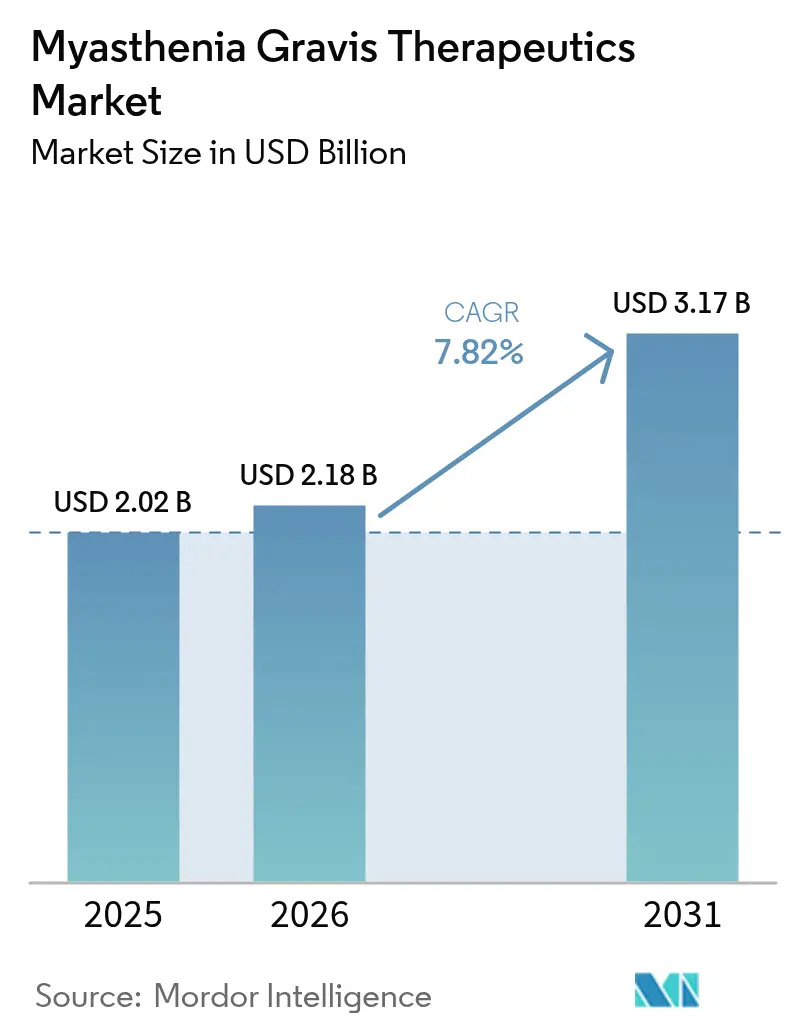
Myasthenia gravis therapeutics market size in 2026 is estimated at USD 2.18 billion, growing from 2025 value of USD 2.02 billion with 2031 projections showing USD 3.17 billion, growing at 7.82% CAGR over 2026-2031. Rising biologic adoption, especially FcRn antagonists and complement inhibitors, is redefining care pathways and prompting payers to reassess reimbursement frameworks. Pipeline maturation, orphan-drug incentives and venture-backed collaborations have shortened development cycles, while subcutaneous (SC) formulations are accelerating treatment decentralization. Strong prevalence growth, earlier diagnosis through AI-enabled tools and premium pricing latitude further strengthen revenue prospects. Competitive intensity is expected to increase as Johnson & Johnson, argenx and UCB scale new launches and as biosimilar programs prepare post-2030 entries.
Key Report Takeaways
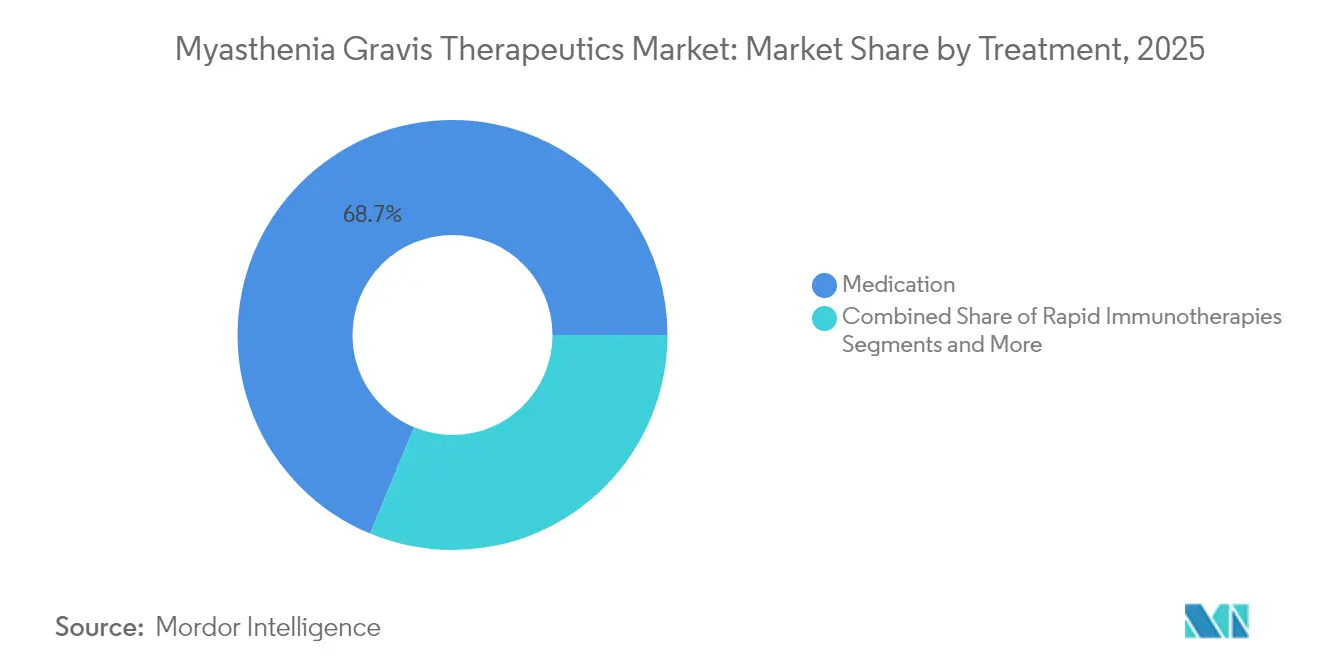
- By treatment, medication therapies led with 68.74% revenue share in 2025; gene and cell therapies are expanding at a 9.41% CAGR through 2031.
- By route of administration, intravenous delivery held 62.90% of the myasthenia gravis therapeutics market share in 2025, while the SC segment is advancing at a 9.85% CAGR through 2031.
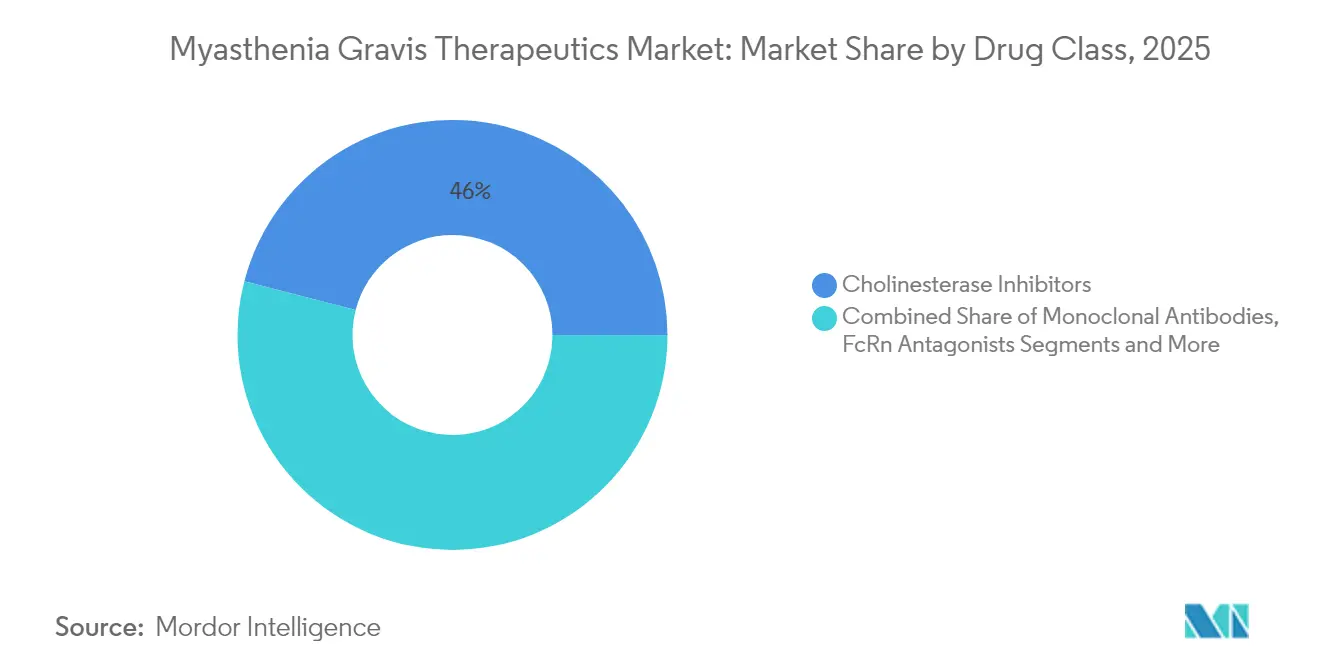
- By drug class, cholinesterase inhibitors accounted for a 45.98% share of the myasthenia gravis therapeutics market size in 2025; monoclonal antibodies are growing at 11.06% CAGR to 2031.
- By end-user, hospitals held 58.88% share in 2025, whereas home-care settings are rising at 10.54% CAGR as SC biologics enable self-administration.
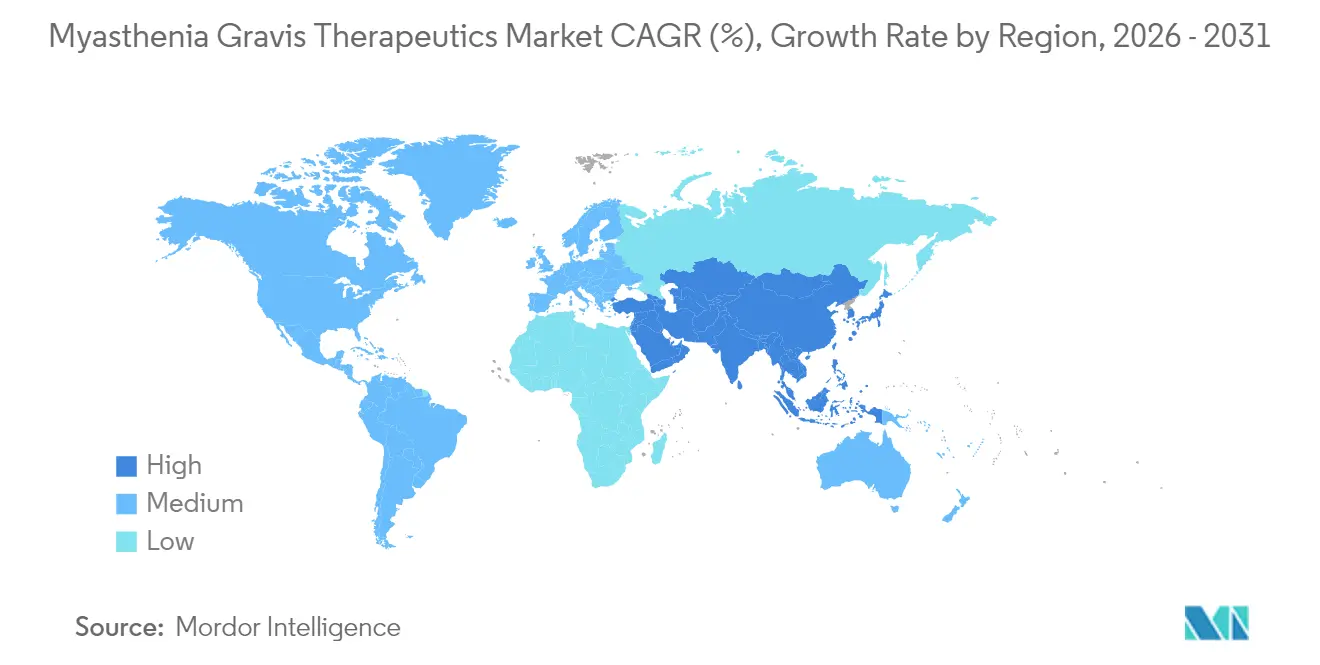
- By geography, North America commanded 44.01% revenue in 2025; Asia-Pacific is the fastest-growing region at 9.46% CAGR through 2031.
Note: Market size and forecast figures in this report are generated using Mordor Intelligence’s proprietary estimation framework, updated with the latest available data and insights as of 2026.
Market Trends and Insights
Drivers Impact Analysis of Myasthenia Gravis Therapeutics Market*
| Driver | (~) % Impact on CAGR Forecast | Geographic Relevance | Impact Timeline |
|---|---|---|---|
| Rising Incidence & Earlier Diagnosis Of MG | +1.2% | Global, with concentrated gains in North America & EU | Medium term (2-4 years) |
| Accelerating Approvals Of Complement- & FcRn-Targeted Biologics | +2.1% | Global, led by US & EU regulatory pathways | Short term (≤ 2 years) |
| Rare-Disease Incentives & Premium Pricing Leverage | +1.8% | North America & EU core markets | Long term (≥ 4 years) |
| Robust Clinical-Trial Pipeline Driven By Venture/Big-Pharma Deals | +1.5% | Global, with R&D concentrated in North America | Medium term (2-4 years) |
| Self-Administered SC Biologics Improving Adherence | +0.9% | Global, with early adoption in developed markets | Short term (≤ 2 years) |
| AI-Based Electromyography Analytics Enabling Earlier Intervention | +0.6% | North America & EU, expanding to APAC | Long term (≥ 4 years) |
| Source: Mordor Intelligence | |||
Rising incidence & earlier diagnosis
Incidence rose to 68.5 new U.S. cases per million in 2024, reflecting growing awareness and improved insurance coverage for neuromuscular testing. In tertiary clinics, AI-assisted ocular-motor analytics can identify fatigue signatures in under 60 seconds and have been associated with reducing average diagnostic lag from 2.3 years to under 12 months.[1] Early confirmation allows clinicians to initiate immune-modifying therapy sooner, and centers that achieve a sub-one-year diagnosis report 40% higher minimal manifestation rates at two-year follow-up. Broader tele-neurology access, coupled with payer incentives for prompt work-ups, continues to enlarge the myasthenia gravis therapeutics market patient pool.
Accelerated approvals of FcRn/complement biologics
Between 2023 and 2025, four breakthrough drugs—rozanolixizumab, zilucoplan, nipocalimab and SC efgartigimod—completed regulatory review in just 6-8 months under priority pathways. Condensed timelines shorten cash-burn periods, encouraging venture investors and fostering big-pharma deal activity. Parallel approvals in the EU, Japan and Australia allow near-simultaneous launches, accelerating global revenue capture during exclusivity windows. These dynamics add scale and depth to the myasthenia gravis therapeutics market and validate precision immunology as a core growth theme.
Rare-disease incentives & premium pricing
Orphan-drug status grants seven-year exclusivity, a 25% R&D tax credit and waived FDA user fees, removing sizable regulatory costs. List prices exceed USD 800,000 per patient-year, yet outcomes-based contracts mitigate payer pushback while preserving strong net revenue flows. Manufacturers channel high margins into next-generation programs such as CAART and bispecific antibodies, reinforcing a virtuous investment cycle that keeps the myasthenia gravis therapeutics industry attractive for both incumbents and entrants.
SC biologics improving adherence
EMA clearance for self-injected rozanolixizumab and FDA approval of Vyvgart Hytrulo prefilled syringes shift treatment from infusion suites to the home, raising adherence from 65% to 89% within six months of rollout. Home dosing eliminates travel burdens, an advantage cited by 83% of survey respondents. Improved persistence yields steadier IgG suppression, fewer exacerbations and lower crisis-related hospitalizations, strengthening the clinical and economic rationale for biologic use in the myasthenia gravis therapeutics market.
Restraints Impact Analysis of Myasthenia Gravis Therapeutics Market*
| Restraint | (~) % Impact on CAGR Forecast | Geographic Relevance | Impact Timeline |
|---|---|---|---|
| High Cost Of Long-Term Biologic Therapy | -1.8% | Global, most acute in emerging markets | Long term (≥ 4 years) |
| Low Disease Awareness In Emerging Economies | -1.1% | APAC, Latin America, MEA | Medium term (2-4 years) |
| Cold-Chain & Assay QA Complexity For mAbs | -0.7% | Global, infrastructure-dependent regions | Short term (≤ 2 years) |
| Price-Erosion Risk Post-Soliris LOE & Biosimilar Entry | -0.9% | North America & EU primarily | Long term (≥ 4 years) |
| Source: Mordor Intelligence | |||
High biologic therapy cost
Annual FcRn inhibitor expenditure approximates USD 833,000, while cost-utility studies suggest prices must fall by up to 88% to meet willingness-to-pay thresholds in the United States and Europe.[2] Budget caps trigger prior-authorization delays of four to six weeks, and emerging-market patients often default to steroids or plasmapheresis because of high co-payments. Wide affordability gaps therefore temper demand growth for the myasthenia gravis therapeutics market despite clinical superiority of novel agents.
Low disease awareness in emerging economies
Primary-care recognition of myasthenia gravis averages below 30% in many APAC and Latin American settings, with misdiagnosis at initial presentation exceeding 60%.[3] Patients may rotate through ophthalmology and ENT services for up to a year before being referred to neurology, potentially delaying access to disease-modifying therapy. These factors restrict market penetration, keeping prescription volumes low even when products receive regulatory approval.
*Our forecasts treat driver/restraint impacts as directional, not additive. The impact forecasts reflect baseline growth, mix effects, and variable interactions.
Myasthenia Gravis Therapeutics Market Segment Analysis
By Treatment:
Gene Therapies Accelerate Precision CareGene and cell therapies are the fastest-growing treatment category at a 9.41% CAGR, though medication regimens still captured 68.74% of 2025 revenue. Early CAR-T case studies show Quantitative MG scores dropping from 21 to 5, sustaining muscle strength gains without ongoing immunosuppression. Telitacicept’s 98.1% MG-ADL response in late-stage trials and CAART technology that selectively depletes pathogenic B cells reinforce growing confidence in curative approaches. Venture capital and disease-foundation grants provide critical funding, while regulators familiar with AAV vectors streamline IND reviews. As one-time interventions mature, the myasthenia gravis therapeutics market may shift toward front-loaded revenue, with chronic medication budgets gradually pivoting to post-treatment monitoring.
The existing medication segment remains sizeable because steroids, cholinesterase inhibitors and IVIg continue to manage mild or rapidly progressive episodes. Nonetheless, FcRn antagonists and complement inhibitors now enable steroid tapering in nearly half of patients, eroding dependence on broad immunosuppressants. Combination protocols blending biologics with targeted gene-editing may create hybrid models of care that preserve maintenance margins while unlocking durable remission for high-risk groups. Such innovation sustains revenue diversity in the myasthenia gravis therapeutics market and cushions drug makers against binary regulatory outcomes.

By Route of Administration:
SC Delivery Redefines ConvenienceSubcutaneous administration is growing 9.85% annually and is poised to chip away at intravenous dominance, which accounted for 62.90% of revenue in 2025. EMA endorsement of self-injected rozanolixizumab and FDA clearance for Vyvgart Hytrulo prefilled syringes confirm the safety and efficacy of patient-controlled delivery. SC dosing can be completed in five minutes at home, compared with several-hour infusion visits, lifting adherence to 89% and driving switch-over among patients eager to reduce clinic time. Such convenience broadens the myasthenia gravis therapeutics market size by engaging rural residents and mobility-limited patients who previously skipped biologic therapy.
Technology partnerships, like argenx’s USD 30 million expansion with Halozyme, target higher drug concentrations and smaller injection volumes, enhancing comfort and logistics. The shift frees infusion chairs for other specialties, a benefit valued by hospital administrators, and lowers payer facility costs. Oral formulations remain confined to legacy cholinesterase inhibitors and steroids, yet future extended-release or nanoparticle biologics could move additional therapies into home care. Broader SC penetration will therefore continue reshaping revenue allocation within the myasthenia gravis therapeutics market.
By Drug Class:
Monoclonal Antibodies Outpace Legacy DrugsMonoclonal antibodies posted the highest growth trajectory at an 11.06% CAGR through 2031, although cholinesterase inhibitors still generated 45.98% of 2025 revenue. FcRn antagonists such as efgartigimod, rozanolixizumab and nipocalimab deliver rapid IgG reduction, improving MG-ADL and QMG scores within weeks. Complement inhibitors remain critical for patients with complement-mediated pathology, offering remission prospects when autoantibody titers stay elevated despite FcRn therapy. Rituximab retains a niche in MuSK-positive disease, with 97% of recipients achieving improved clinical status yet limited by off-label reimbursement hurdles.
Pipeline diversification includes C2 inhibitors and MuSK agonists, suggesting fresh launch waves that keep prescribing decisions fluid and competitive. Network meta-analysis highlights batoclimab’s superior QMG response and rozanolixizumab’s leading MG-ADL gains, implying eventual algorithm-based drug selection. Such data-driven personalization supports sustained biologic share expansion inside the myasthenia gravis therapeutics market while giving payers levers to negotiate value-based contracts.
By End-User:
Home-Care Settings Capture Fastest GrowthHome-care settings are expanding at a 10.54% CAGR, challenging hospitals that held a 58.88% share in 2025. The COVID-19 experience normalized self-injection and tele-monitoring, reducing patient anxiety about administering high-value biologics at home. AI-enabled platforms now automate neuromuscular examinations, allowing clinicians to adjust dosing based on remote performance scores. Over the forecast horizon, the myasthenia gravis therapeutics market is expected to experience a steady shift in maintenance dosing from specialty clinics to patients' homes.
Hospitals still dominate initiation because neurologists perform baseline assessments, infusion titrations, and crisis management. Ambulatory surgery centers continue to play a role in thymectomy and electrophysiology, yet billing volumes are declining as biologics reduce procedural demand. Payers endorse decentralisation when adherence metrics prove stable, and some insurers offer premium discounts to patients who transition to home administration. This shift reallocates revenue streams but enlarges the overall myasthenia gravis therapeutics market by removing logistical barriers to chronic care.
Geography Analysis
North America Myasthenia Gravis Therapeutics Market
North America generated 44.01% of 2025 revenue, underpinned by broad insurance coverage and rapid biologic uptake following FDA breakthrough designations. Incidence now sits at 68.5 per million, equating to roughly 82,700 U.S. adults needing ongoing therapy. AI-enabled ocular-motor testing and tele-neurology reduce specialist bottlenecks, promoting early starts that heighten cumulative drug exposure. Competitive intensity rose in 2025 when Johnson & Johnson launched nipocalimab, adding price tension that may widen patient access by tempering annual cost escalators.
Europe Myasthenia Gravis Therapeutics Market
Europe follows with a cohesive regulatory environment that approved rozanolixizumab in January 2024 and SC self-administration in February 2025. Health-technology assessments secure 20-30% list-price discounts, yet still recognise orphan-drug value where real-world data show faster steroid tapering and fewer crises. Preference studies confirm 83% of European patients favor SC dosing, letting payers reallocate infusion budgets to drug acquisition. Conditional approvals require post-market surveillance, ensuring safety transparency while allowing income flow during data collection. Rising biosimilar programs for complement inhibitors could generate additional savings, potentially funding broader FcRn adoption across national formularies.
APAC Myasthenia Gravis Therapeutics Market
Asia-Pacific is the fastest-growing region at a 9.46% CAGR, buoyed by PMDA and NMPA reviews that now lag U.S. clearances by less than six months. Japan approved efgartigimod as VYVDURA for generalized myasthenia gravis and immune thrombocytopenia, while China authorised both IV and SC forms for gMG and CIDP. Despite these gains, out-of-pocket costs still average 40% of annual household income in China, which caps utilisation for high-priced biologics. Telemedicine and AI-based infrared spectroscopy are beginning to close specialist gaps. Continued healthcare-infrastructure investment and local manufacturing initiatives, including planned FcRn biosimilars, should lift the regional contribution to the myasthenia gravis therapeutics market over the next decade.
Regulatory Landscape
Regulatory activity across major markets continues to shape access to gMG therapies through accelerated and harmonized pathways for rare-disease biologics. In the United States, the FDA expanded labeling for FcRn-directed therapy in May 2026 to cover all adult serotypes of generalized MG, broadening eligibility and real-world use.
In Europe and the United Kingdom, multiple anchors anchor the regulatory arc: EMA granted marketing authorization for Imaavy (nipocalimab) in November 2025; the UK MHRA authorized Imaavy for adults and adolescents aged 12 and older in June 2026; and the EMA opened a public consultation on clinical investigation guidelines for myasthenia gravis from 13 February 2026 to 30 August 2026, signaling emphasis on endpoints and trial designs amid rapid pipeline expansion.
Value Chain Analysis
The value chain for myasthenia gravis therapeutics spans discovery and clinical development of targeted immunology assets (FcRn blockers, complement inhibitors, and B-cell directed therapies), biologics manufacturing (drug substance plus aseptic fill-finish), and specialist-led commercialization into neurology channels. As high-cost biologics broaden their labels, regulatory-compliant manufacturing and change control (for example, FDA biologics requirements for facility changes and distribution reporting) remain central to maintaining supply continuity and supporting multi-region submissions.
On the commercialization and distribution side, specialty channels play an outsized role because many therapies require prior authorization, cold-chain handling, and patient support for home or outpatient use. Limited specialty pharmacy networks, such as PANTHERx Rare supporting UCB's Rystiggo, have become critical nodes that coordinate payer access, patient onboarding, and distribution for self-administered products. Manufacturing capacity and technical capabilities are supported through specialized partners, including FUJIFILM Diosynth Biotechnologies in argenx's supply ecosystem and Recipharm collaborations for development and scale-up, aligning the supply chain to rising demand for subcutaneous presentations and broader patient eligibility.
Competitive Landscape
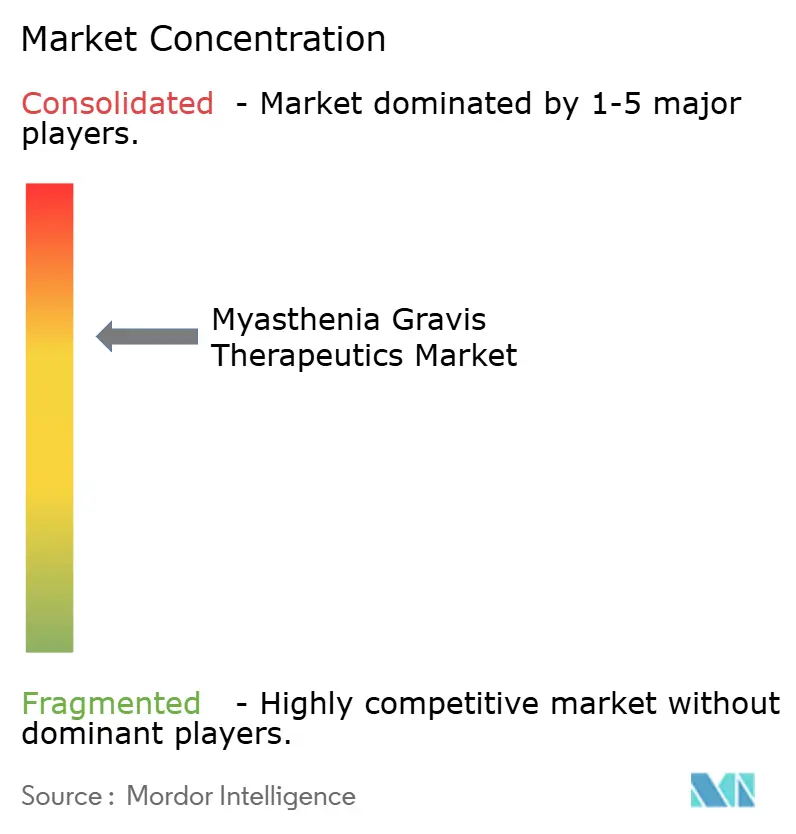
The myasthenia gravis therapeutics market shows moderate consolidation. Argenx remains the revenue leader, posting USD 573 million in Q3 2024 Vyvgart sales and targeting 50,000 global patients by 2030. Johnson & Johnson’s May 2025 nipocalimab approval provides strong head-to-head data showing four-fold higher sustained improvement versus placebo, supplying immediate scale via its global immunology franchise. UCB’s rozanolixizumab differentiates with self-injection and a dual AChR/MuSK indication, appealing to patients seeking home dosing.
AstraZeneca’s complement inhibitor line is vulnerable to FcRn encroachment yet maintains loyalty among complement-positive subgroups. Immunovant’s batoclimab, now in Phase 3, posted a 5.6-point MG-ADL benefit that may elevate competition on depth of IgG reduction. Technology alliances keep reshaping the field; argenx’s Enhanze partnership with Halozyme targets four new SC candidates that could extend its brand moat. Gene-therapy entrants, including CAART developers, are likely acquisition targets for big pharma seeking durable remission assets, further strengthening the future pipeline for the myasthenia gravis therapeutics market.
The pricing picture is fluid. Cost-effectiveness studies urge large discounts, yet outcomes-based contracts and bundled chronic-care models grant manufacturers latitude if they can document crisis reduction and steroid sparing. As more agents enter, national systems may leverage competitive tenders to drive net prices down, but high immunology margins and scarce manufacturing capacity still favour originators over biosimilars before 2030.
Myasthenia Gravis Therapeutics Industry Leaders
-
argenx SE
-
UCB Pharma
-
Johnson & Johnson
-
Novartis AG
-
AstraZeneca
- *Disclaimer: Major Players sorted in no particular order
Myasthenia Gravis Therapeutics Market Companies Covered in this Report
- AstraZeneca
- argenx SE
- UCB
- Johnson & Johnson
- Novartis
- Mitsubishi Tanabe Pharma
- CSL Behring
- Horizon Therapeutics
- Immunovant Inc.
- Regeneron Pharmaceuticals
- Roche
- Takeda Pharmaceuticals
- Astellas Pharma
- Pfizer
- CuraVac N.V.
- Chugai Pharmaceutical
- Abbvie
- Grifols
- Bausch Health
Market Opportunities and Future Outlook
Regulatory actions broaden access to gMG therapies. In the United States, the FDA expanded labeling for FcRn therapies in May 2026 to encompass all adult serotypes of generalized MG, expanding eligible patient populations. In Europe, the EMA granted marketing clearance for Imaavy in November 2025, and the UK MHRA followed with June 2026 approval for adults and adolescents aged 12 and older, establishing differentiated cross-country pathways and cross-recognition arrangements. The EMA also initiated a February 2026 public consultation on revised clinical investigation guidelines for MG, signaling alignment on endpoints and study design amid rapid pipeline growth.
Product differentiation around dosing convenience and administration routes continues to shape therapy choices. Amgen's UPLIZNA moved from the US to EC approval in February 2026 as an add-on option for AChR or MuSK antibody-positive gMG, illustrating cross-market momentum for B-cell targeted approaches alongside FcRn blockers. Separately, Regeneron's cemdisiran has progressed with regulatory submissions accepted by the FDA and EMA in June 2026 for adults with AChR antibody-positive MG, underscoring ongoing exploration of less frequent dosing constructs and potential reductions in site-of-care costs.
Recent Industry Developments in Myasthenia Gravis Therapeutics Market
- June 2026: Regeneron announced that the FDA and EMA accepted regulatory applications for cemdisiran in adults with AChR antibody-positive generalized myasthenia gravis. The filing milestone advances competition beyond FcRn-only positioning and raises the importance of differentiated maintenance regimens and pathway selection in treatment algorithms.
- December 2025: Amgen received FDA approval for UPLIZNA (inebilizumab-cdon) for adults with AChR and MuSK antibody-positive generalized myasthenia gravis. The approval expands the commercial set of targeted immunology options and strengthens competitive pressure around long-term disease control and steroid-sparing evidence.
- March 2024: The UK MHRA approved UCB's Rystiggo (rozanolixizumab) for adult patients with generalized myasthenia gravis. This added a targeted FcRn option in the UK market and supported broader uptake of self-administered biologic pathways alongside infusion-based care.
Myasthenia Gravis Therapeutics Market Report Scope and Research Methodology
Market Definition and Coverage
This market covers the revenues generated from therapies used to treat myasthenia gravis, counted across the care settings where patients receive these treatments and the routes by which they are administered.
Scope exclusions: Diagnostic testing, physician visit fees, and non-therapeutic disease management costs are not counted unless they are bundled into the therapeutic product price.
Segments Covered in This Report
- By Treatment
- Medication
- Rapid Immunotherapies
- Intravenous Immunoglobulin (IVIg)
- Plasmapheresis
- Gene & Cell Therapies
- Other Emerging Therapies
- By Route of Administration
- Oral
- Intravenous
- Sub-cutaneous
- By Drug Class
- Cholinesterase Inhibitors
- Corticosteroids & Other Immunosuppressants
- Monoclonal Antibodies
- Complement Inhibitors
- FcRn Antagonists
- Others
- By End-User
- Hospitals
- Specialty Neurology Clinics
- Home-care Settings
- Ambulatory Surgical Centers
- By Geography
- North America
- United States
- Canada
- Mexico
- Europe
- Germany
- United Kingdom
- France
- Italy
- Spain
- Rest of Europe
- Asia-Pacific
- China
- Japan
- India
- Australia
- South Korea
- Rest of Asia-Pacific
- Middle East and Africa
- GCC
- South Africa
- Rest of Middle East and Africa
- South America
- Brazil
- Argentina
- Rest of South America
- North America
Data Sources, Market Sizing, and Validation
Desk Research
Desk research was used to establish the epidemiology baseline, treatment pathways, and pricing context before building the model. We relied on public sources such as the US FDA and EMA drug labels and approval databases, CDC and NIH publications, clinical trial registries, and peer reviewed journals that report prevalence, treatment outcomes, and real world utilization trends.
To keep the commercial picture grounded, we also reviewed company annual reports, SEC filings, investor presentations, and reputable press coverage on launches, label changes, and reimbursement developments. Where needed, paid subscription data focused on company financials was used to cross-check therapy revenue disclosures, and patent databases helped track pipeline maturity. These desk sources are illustrative, and we reviewed other references during data collection, validation, and clarification.
Primary Interviews and Surveys
Primary interviews were used to pressure test the treatment mix, typical patient flow into advanced therapies, and how pricing is trending by route of administration across major regions. We spoke with a mix of manufacturers, neurology clinicians, hospital and specialty clinic procurement stakeholders, and distribution side experts to fill gaps that are not consistently visible in public sources, then aligned assumptions to what is actually being used in practice.
Distribution of primary research fieldwork respondents
| Company type | Respondent position | Region |
|---|---|---|
| Top tier: 35% | CXOs: 14% | APAC: 44% |
| Mid tier: 51% | Functional/Unit leaders: 41% | EMEA: 37% |
| Smaller Players: 14% | Managers: 45% | Americas: 19% |
Market-Sizing & Forecasting
Sizing starts with a top-down demand pool based on diagnosed myasthenia gravis prevalence, the treated share, and the portion of patients who receive each therapy class over a year. Those patient counts are then converted into value using typical dosing patterns and annualized cost of therapy by route (oral, intravenous, and sub-cutaneous). Interviews also help validate what is used in practice versus what is only described on labels.
To keep totals grounded, we corroborate results with selective bottom-up checks, such as sampled price points multiplied by expected volume for key therapy groups, and channel checks on hospital versus specialty clinic distribution. When data is thin for a newer class, we bridge using adjacent class uptake curves and then adjust after follow-up expert validation. For forecasting, we run scenario analysis around new approvals, label expansions, payer access, and biologic price erosion, and we select the final curve only after the drivers match what experts expect by region.
Data Validation & Update Cycle
Outputs are checked against independent signals, including epidemiology totals, therapy class mix expectations, and observed launch uptake patterns, and then any large variance is traced back to one or two assumptions. A second analyst review is used to challenge the math, input logic, and the reasonableness of year-to-year movement before sign-off.
The study is refreshed annually, and interim updates are triggered when there are material events such as major approvals, safety warnings, or reimbursement changes. Before delivery, we run a fresh pass on key inputs so the view reflects the latest public information and validated expert feedback.
Mordor Intelligence's Myasthenia Gravis Therapeutics Market Size Compared Against Other Published Estimates
Published market sizes for myasthenia gravis therapeutics often do not match because the therapy basket, the year used for sizing, and the way pricing is annualized can change from one study to another. Differences also come from whether the analysis focuses only on drug therapies or also includes procedure-led interventions and other care costs.
Key gap drivers in this market usually sit in what is treated as a therapeutic revenue line, how rapid immunotherapies are counted, and whether the forecast assumes faster uptake of premium biologics versus a more measured adoption curve. Currency timing and the refresh cadence also matter, especially when a few launches can shift the mix quickly in a rare disease market.
Benchmark comparison
| Source | Market Size | Gaps in Research Methodology |
|---|---|---|
| Mordor Intelligence | USD 2.18 B (2026) | |
| Industry Publisher A | USD 1.30 B (2023) | Uses an earlier base year and a narrower regional cut in its published snapshot, and it emphasizes drug treatment revenues without fully reflecting newer class penetration and route specific price progression. |
| Industry Publisher B | USD 2.20 B (2028) | Reports a later forecast-year point and applies a higher growth curve, which can be influenced by faster assumed uptake of advanced biologics and less explicit reconciliation to diagnosed and treated patient counts. |
The table shows that the spread is driven as much by timing as by scope, and under Mordor Intelligence's scope, rapid immunotherapies and plasmapheresis are treated as part of the therapeutics revenue pool alongside medication and emerging therapies, which shifts totals versus drug-only or later-year views. Once the year, included therapy set, and pricing logic are aligned, the remaining differences typically narrow and become easier to explain through a small set of traceable assumptions.
Key Questions Answered in the Report
What is the current value of the myasthenia gravis therapeutics market?
The market stands at USD 2.18 billion in 2026 and is set to reach USD 3.17 billion by 2031 at a 7.82% CAGR.
Which treatment category is growing fastest?
Gene and cell therapies lead, expanding at a 9.41% CAGR through 2031 as CAR-T and telitacicept show high response rates.
Why are SC biologics gaining popularity?
EMA and FDA approvals for self-injected formulations lift adherence to 89% and eliminate infusion-suite visits, improving patient convenience and payers’ cost profiles.
Which region offers the highest growth potential?
Asia-Pacific shows a 9.46% CAGR thanks to faster PMDA and NMPA reviews, although affordability remains a challenge.
What are the main barriers to biologic uptake?
Annual costs near USD 833,000 and low disease awareness in emerging economies slow adoption despite strong clinical efficacy.