
Motion Sickness Treatment Market Size and Share
Market Overview
| Study Period | 2022 - 2031 |
|---|---|
| Market Size (2026) | USD 691.26 Million |
| Market Size (2031) | USD 804.55 Million |
| Growth Rate (2026 - 2031) | 3.08 % |
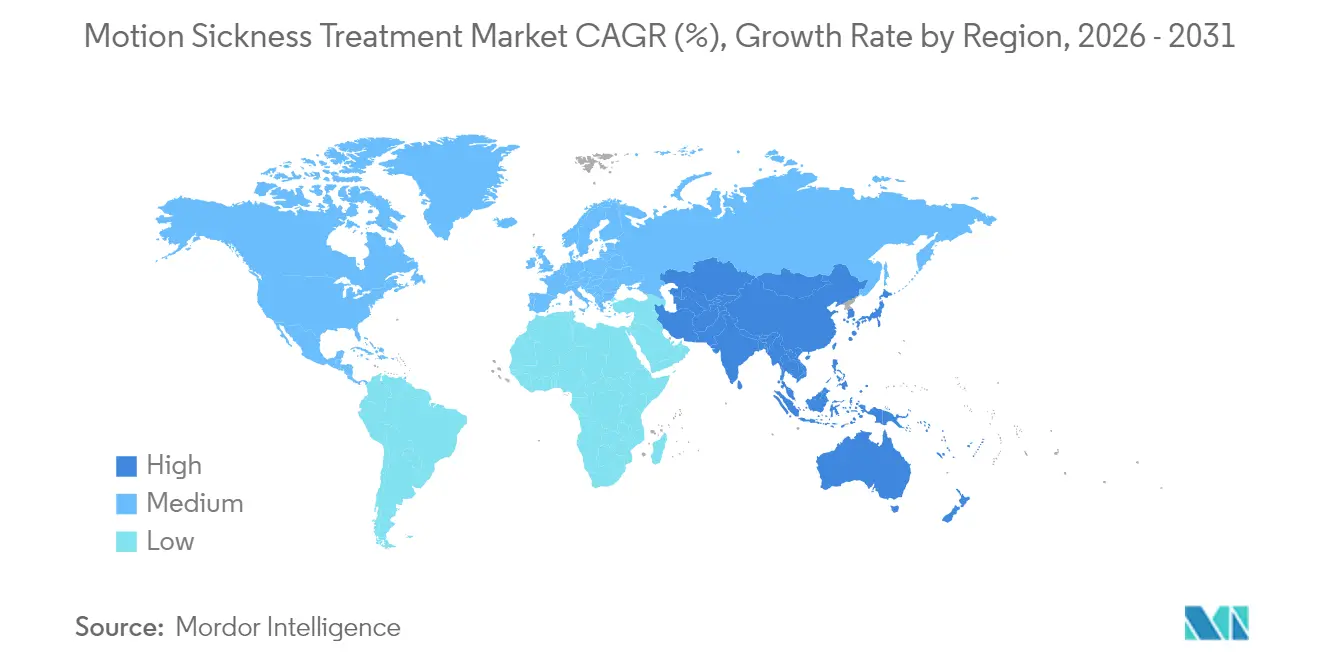
| Fastest Growing Market | Asia-Pacific |
| Largest Market | North America |
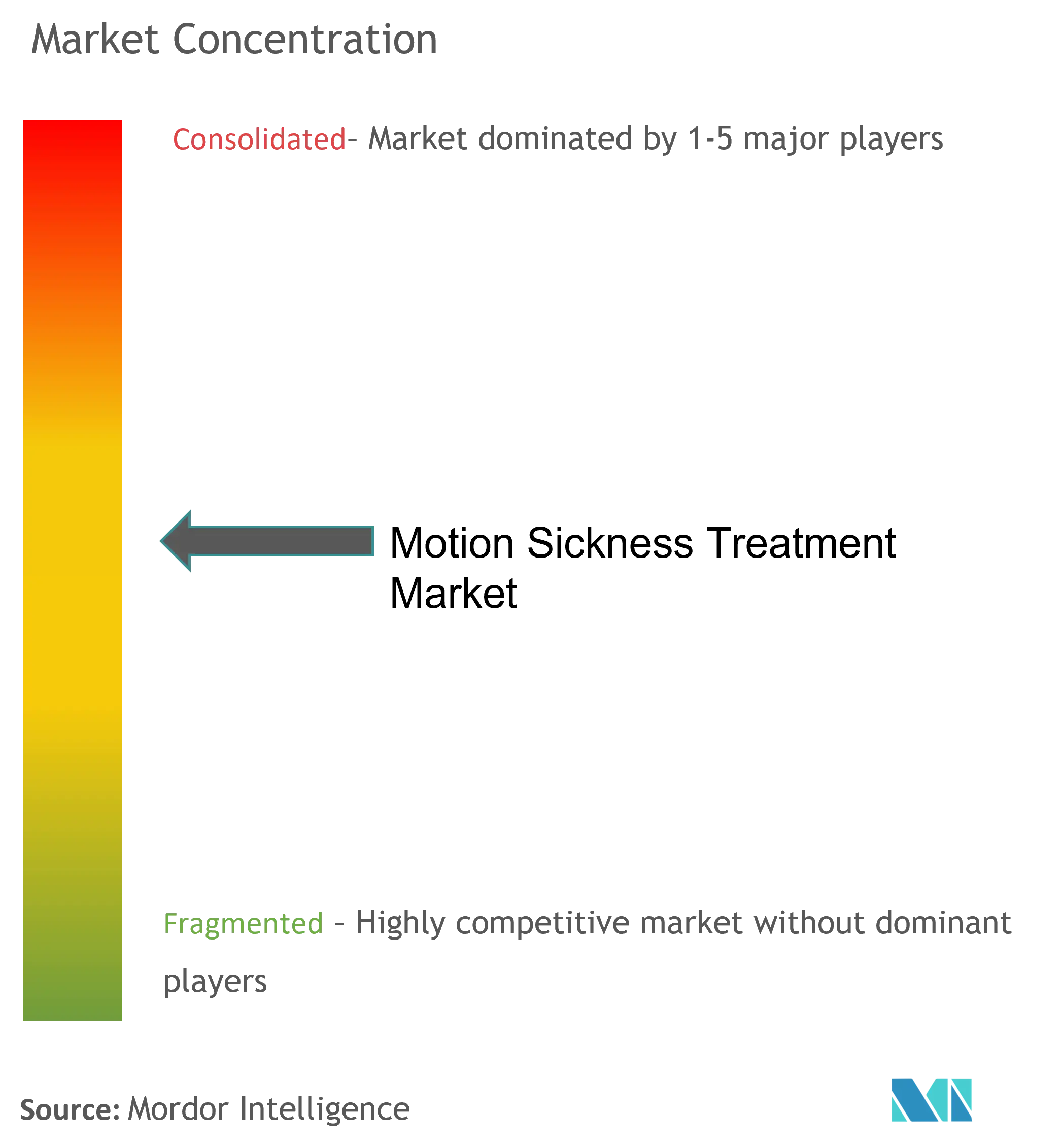
| Market Concentration | Medium |
Major Players *Disclaimer: Major Players sorted in no particular order Image © Mordor Intelligence. Reuse requires attribution under CC BY 4.0. | |
Motion Sickness Treatment Market Analysis by Mordor Intelligence
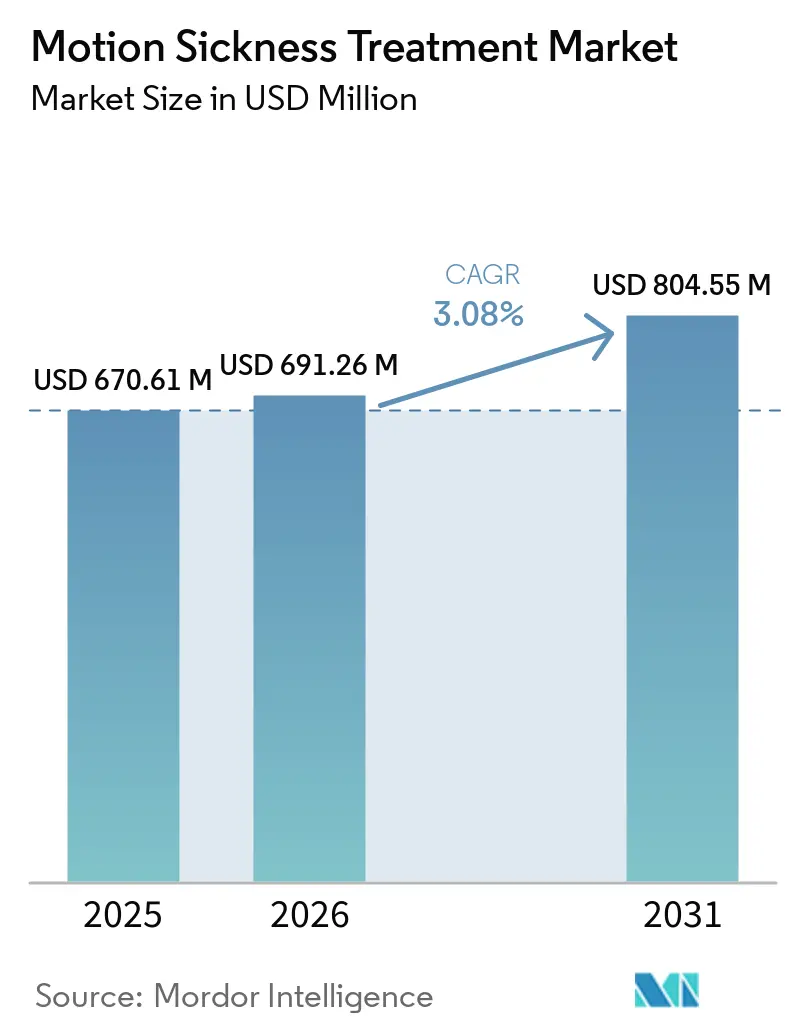
Motion sickness treatment market size in 2026 is estimated at USD 691.26 million, growing from 2025 value of USD 670.61 million with 2031 projections showing USD 804.55 million, growing at 3.08% CAGR over 2026-2031. Steady expansion co-exists with fast-moving innovation, as wearable neuromodulation devices challenge long-standing pharmaceutical dominance and regulators scrutinize safety profiles of legacy drugs. Consumer preference for drug-free options, the rebound in global travel, and growing adoption of self-care solutions collectively strengthen demand. Manufacturers now invest heavily in digital platforms that enable direct-to-consumer sales, while biotechnology firms target novel vestibular pathways to meet unmet clinical needs. These shifts signal a structural transition toward integrated, technology-enabled care models across the motion sickness treatment market.
Key Report Takeaways
- By treatment type, anticholinergics led with 46.24% motion sickness treatment market share in 2025, whereas neurokinin-1 receptor antagonists are projected to expand at a 5.26% CAGR through 2031.
- By distribution channel, retail pharmacies held 53.92% of the motion sickness treatment market size in 2025; online pharmacies post the quickest growth at 6.65% CAGR to 2031.
- By dosage form, oral tablets and chews accounted for 61.88% share of the motion sickness treatment market size in 2025, while nasal sprays and gels advance at a 6.21% CAGR through 2031.
- By region, North America commanded 42.01% motion sickness treatment market share in 2025; Asia-Pacific records the highest regional CAGR at 4.22% up to 2031.
Note: Market size and forecast figures in this report are generated using Mordor Intelligence’s proprietary estimation framework, updated with the latest available data and insights as of 2026.
Market Trends and Insights
Drivers Impact Analysis of Motion Sickness Treatment Market*
| Driver | % Impact on CAGR Forecast | Geographic Relevance | Impact Timeline |
|---|---|---|---|
| Expansion of global passenger mobility and tourism | +0.8% | Global, with APAC leading recovery | Medium term (2-4 years) |
| Rising consumer awareness and self-medication practices | +0.6% | North America & EU primarily | Short term (≤2 years) |
| Technological innovations in drug delivery and wearable therapeutics | +0.9% | Global, early adoption in developed markets | Long term (≥4 years) |
| Proliferation of virtual and augmented reality applications | +0.4% | North America, EU, select APAC markets | Medium term (2-4 years) |
| Growth of e-commerce and over-the-counter pharmacy distribution | +0.5% | Global, accelerated in APAC | Short term (≤2 years) |
| Strategic investments by aerospace and defense sectors | +0.3% | North America, EU defense markets | Long term (≥4 years) |
| Source: Mordor Intelligence | |||
Expansion of Global Passenger Mobility and Tourism
Asia-Pacific travel volumes surpassed pre-2019 levels in early 2025, driving sustained consumption of preventive therapies among cruise and automotive passengers. Japanese drug makers responded with rapid-dissolving tablets tailored for elderly tourists, acknowledging the rising average age of travelers. Cruises have enlarged on-board pharmacy inventories, treating motion discomfort as essential infrastructure rather than discretionary spending. Airlines now partner with manufacturers to include sample patches in amenity kits, reinforcing habitual use during long-haul flights. This structural linkage between travel recovery and the motion sickness treatment market underpins volume stability across seasons.
Rising Consumer Awareness and Self-Medication Practices
Direct-to-consumer branding and social media outreach have normalised over-the-counter therapies. Dramamine’s 75th-anniversary campaign in 2024 celebrated the decline of airline emesis bags, embedding the brand in popular culture. Widespread travel blogs promote personalised dosing tips, and mobile apps recommend timing for tablet intake based on itinerary data. Pharmacies report higher basket values as shoppers add natural ginger chews alongside antihistamines. These behaviours align with broader self-care trends and accelerate unit sales in the motion sickness treatment industry.
Technological Innovations in Drug Delivery and Wearable Therapeutics
EmeTerm wristbands delivered 85% symptom relief in clinical trials without pharmacological side effects. Reliefband obtained additional FDA clearances, enabling marketing claims for pregnancy-related nausea. Researchers at Nagoya University proved that 100 Hz sound pulses can stabilise the vestibular system within minutes[1]. Venture capital continues to flow: Ōtolith Labs advanced a head-mounted device for vertigo treatment, while VMocion developed sensory-alignment software for VR-related sickness. Such breakthroughs broaden the clinical toolbox and draw new, tech-savvy consumers into the motion sickness treatment market.
Proliferation of Virtual and Augmented Reality Applications
Cybersickness has emerged as a distinct indication. Apple integrated motion-cue technology into Vision Pro headsets to improve user comfort. Enterprise training platforms now budget for anti-nausea devices to reduce employee downtime during extended VR sessions. Educational publishers bundle discount codes for wrist-worn neuromodulators with immersive courseware. Start-ups secure seed funding to refine algorithms that synchronise vestibular inputs with visual stimuli, enlarging addressable demand beyond transport settings.
Restraints Impact Analysis of Motion Sickness Treatment Market*
| Restraints Impact Analysis | (~) % Impact on CAGR Forecast | Geographic Relevance | Impact Timeline |
|---|---|---|---|
| Adverse side-effects and safety concerns of existing pharmacological agents | -0.7% | Global, particularly regulated markets | Short term (≤2 years) |
| Increasing adoption of low-cost traditional or herbal alternatives | -0.4% | APAC primarily, expanding globally | Medium term (2-4 years) |
| Intensifying generic competition and price erosion | -0.5% | Global, heightened in emerging markets | Long term (≥4 years) |
| Regulatory restrictions on medication use in safety-critical occupations | -0.3% | North America, EU aviation & maritime sectors | Short term (≤2 years) |
| Source: Mordor Intelligence | |||
Adverse Side-Effects and Safety Concerns of Existing Pharmacological Agents
In June 2025 the FDA required augmented warnings on scopolamine patches after 13 severe hyperthermia cases, including one death. Hospital audits linked transdermal scopolamine to higher delirium and pneumonia rates among seniors. Prescribers now favour shorter-acting antihistamines for cruises and space tourism flights. Litigation risk has widened insurance premiums for cruise lines that distribute patches. This scrutiny suppresses volumes in the core anticholinergic segment of the motion sickness treatment market.
Increasing Adoption of Low-Cost Traditional or Herbal Alternatives
The European Medicines Agency formally recognised ginger as an effective prophylactic, giving herbal products regulatory legitimacy[2]. Tianxiang Capsule research in China demonstrated multi-target action through arachidonic acid pathways. Budget-minded travellers increasingly choose ginger chews, driving supermarkets to expand shelf space. Premium brands respond with hybrid formulations combining low-dose antihistamines and botanicals. Price competition, especially in APAC, exerts downward pressure on average selling prices across the motion sickness treatment market.
*Our forecasts treat driver/restraint impacts as directional, not additive. The impact forecasts reflect baseline growth, mix effects, and variable interactions.
Motion Sickness Treatment Market Segment Analysis
By Treatment Type:
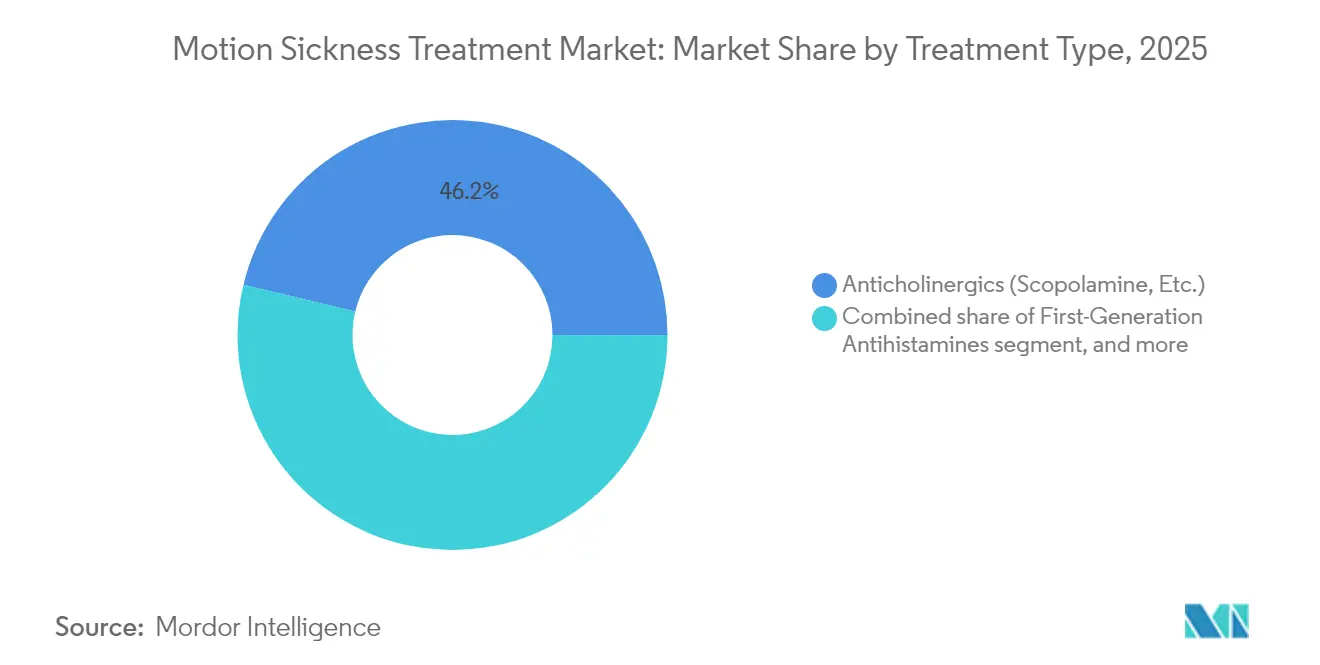
Anticholinergics Encounter Safety ChallengesAnticholinergics captured 46.24% of the motion sickness treatment market in 2025, anchored by scopolamine patches valued for 72-hour protection. Recent hyperthermia alerts, however, have dented demand among cruise operators and pediatricians. First-generation antihistamines maintain relevance through well-known brands, though daytime drowsiness prompts consumers to explore non-sedating variants. Neurokinin-1 receptor antagonists show the quickest rise, posting a 5.26% CAGR thanks to pipeline assets that modulate vestibular signalling rather than neurotransmitter suppression. Herbal remedies and neuromodulation devices gather momentum as consumers weigh efficacy alongside safety.
The motion sickness treatment market size for neurokinin-1 antagonists is forecast to climb from USD 83.37 million in 2026 to USD 107.68 million by 2031. Wearable devices, while outside traditional drug categories, now sit within payer formularies for pregnant users and chemotherapy patients. As regulatory bodies tighten labels on anticholinergics, manufacturers pivot toward combination packs pairing low-dose antihistamines with ginger extracts to defend share.

By Distribution Channel:
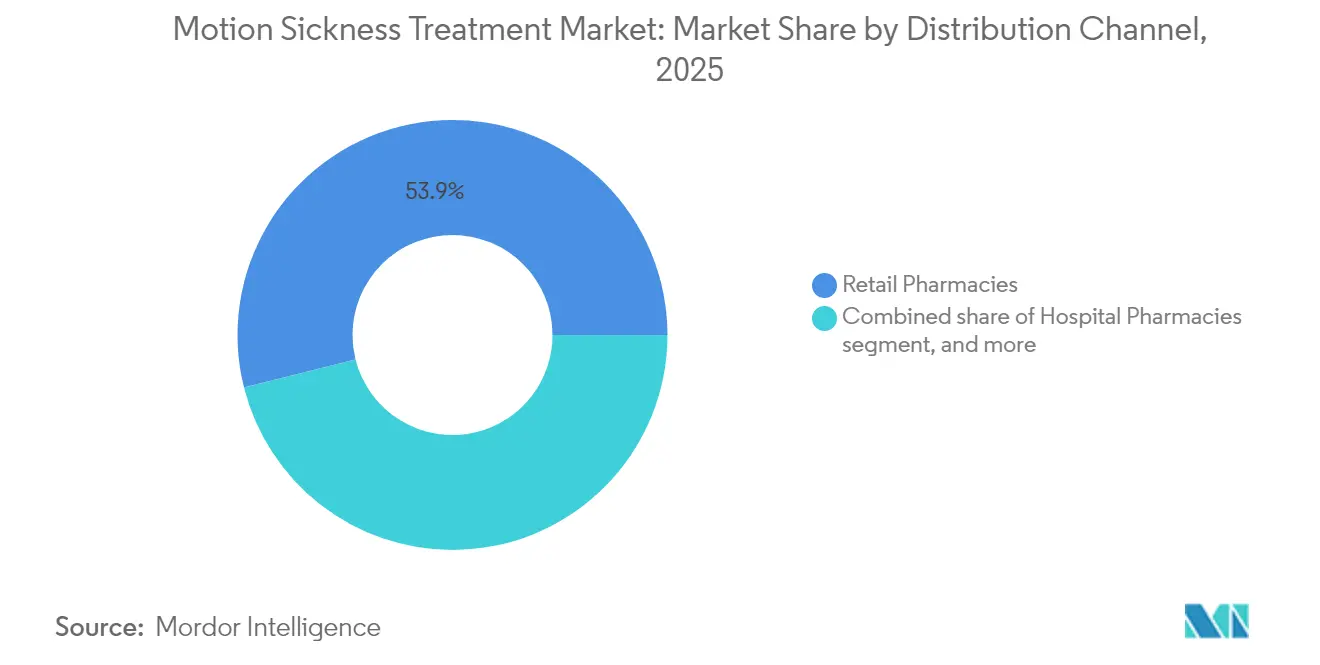
Digitally Enabled Access Broadens ReachRetail outlets retained 53.92% share of the motion sickness treatment market size in 2025, benefitting from pharmacist guidance for prescription items. Convenience stores in Japan added quasi-drug quick-dissolve strips aimed at weekend travelers, reflecting hyper-local merchandising. Online pharmacies, however, increase penetration fastest at 6.65% CAGR as cross-border e-commerce simplifies access to hard-to-find dosages. Device makers employ livestream shopping to demonstrate neuromodulation bands, generating rapid spikes in conversion.
The motion sickness treatment market share of online channels is projected to reach 21.60% by 2031 as subscription refill programs gain traction. Physical chains respond by offering click-and-collect for last-minute airport pickup. Hospital pharmacies focus on severe postoperative cases requiring IV antiemetics, a niche insulated from digital disruption.
By Dosage Form:
Innovation Shapes DifferentiationOral tablets and chews delivered 61.88% revenue in 2025, favoured for low cost and ease of mass production. Transdermal patches still serve long-duration voyages but face shrinking uptake after safety advisories. Nasal sprays progress at a 6.21% CAGR, marketed for rapid onset before roller-coaster rides and VR sessions. Wearables reframe dosage as continuous peripheral nerve stimulation; Reliefband’s latest model logs symptom data to a companion app for clinician review.
The motion sickness treatment market size for neuromodulation devices is expected to nearly double, hitting USD 160.25 million in 2031 as sports-gaming arenas adopt rental kiosks. Injectable formulations stay confined to hospital walls, where anesthesiologists employ promethazine for intractable cases. Form factor diversity provides manufacturers flexibility to meet age-specific needs, especially among children reluctant to swallow pills.
Geography Analysis
North America Motion Sickness Treatment Market
North America contributed 42.01% of global revenue in 2025, supported by premium pricing, active FDA pathways, and strong insurance coverage for prescription therapies. Device innovators leverage Silicon Valley capital to commercialise vestibular headsets, and U.S. cruise operators stock branded OTC packets in cabin minibars. Canada follows similar patterns, while Mexico’s coastal resorts drive OTC sales to tourists.
Europe Motion Sickness Treatment Market
Europe ranks second in the motion sickness treatment market, aided by harmonised EMA rules that validate botanical options and tighten synthetic drug labelling. Germany and the United Kingdom invest in digital therapeutics for post-stroke vestibular rehab, indirectly advancing consumer acceptance. Ferry routes across Scandinavia and the Mediterranean create predictable spikes in seasonal demand, prompting pharmacies at ports to expand inventories.
APAC Motion Sickness Treatment Market
Asia-Pacific posts the fastest regional CAGR at 4.22%. Japan pioneers age-friendly melt-in-mouth films, and local manufacturers bundle them with train tickets during national holidays. Chinese firms develop Western-traditional hybrids, blending scopolamine derivatives with ginger to suit cultural preferences. Cruise growth from Singapore and Australia amplifies exposure. Rising disposable incomes and broader e-commerce logistics collectively enlarge the motion sickness treatment market in the region.
Competitive Landscape
Global competition remains moderately fragmented. Prestige Consumer Healthcare’s Dramamine line leads OTC antihistamines, reinforcing brand recall through nostalgia-driven campaigns. Reliefband Technologies differentiates through FDA-cleared neuromodulation wearables, pricing units at USD 249 with optional replacement gel pads subscription. Vanda Pharmaceuticals seeks to diversify with tradipitant, with FDA decision due December 2025.
Perrigo focuses on store-brand OTC tablets but reported lower 2025 revenue due to discontinued low-margin contracts. Start-ups like VMocion secure venture funding to integrate sensory alignment into VR platforms, blurring lines between hardware and software solutions. Incumbents increase M&A scouting for device assets to hedge against declining anticholinergic volumes.
Companies that combine clinical validation, user-centric design, and omnichannel distribution hold strategic advantage. Regulatory headwinds against legacy patches accelerate resource reallocation toward innovative modalities, intensifying race for differentiated intellectual property across the motion sickness treatment market.
Motion Sickness Treatment Industry Leaders
-
Prestige Consumer Healthcare Inc.
-
Perrigo Company Plc
-
GlaxoSmithKline Plc
-
Pfizer Inc.
-
Reliefband Technologies, Inc.
- *Disclaimer: Major Players sorted in no particular order
Motion Sickness Treatment Market Companies Covered in this Report
- Prestige Consumer Healthcare
- Perrigo Company
- GlaxoSmithKline
- Pfizer
- Baxter
- Johnson & Johnson (McNeil)
- DM Pharma
- Lupin
- Reliefband Technologies
- Wellspring Pharmaceutical Corp.
- Caleb Pharmaceuticals
- Myungmoon Pharm Co., Ltd.
- Vanda Pharmaceuticals
- Bausch + Lomb Corp.
- Sun Pharmaceuticals Industries
- Dr. Reddy’s Laboratories
- Abbott Laboratories
- Yunnan Baiyao Group Co., Ltd.
- Church & Dwight Co., Inc. (Gravol)
- CVS Health Corp.
Recent Industry Developments in Motion Sickness Treatment Market
- July 2025: Vanda Pharmaceuticals announced FDA acceptance of its tradipitant NDA for motion sickness, with decision expected 30 December 2025.
- June 2025: FDA mandated new hyperthermia warnings for Transderm Scōp patches after 13 severe cases.
- May 2025: Perrigo reported Q1 2025 net sales of USD 1.04 billion, a 3.5% decline, yet reaffirmed full-year outlook.
- April 2025: Nagoya University validated 100 Hz sound therapy that eases symptoms within one minute.
- March 2025: Baylor College of Medicine mapped neural circuits linking motion sickness and thermoregulation, suggesting future drug targets.
Global Motion Sickness Treatment Market Report Scope
As per the scope of the report, motion sickness is a common disorder characterized by a set of symptoms such as dizziness, nausea, and fatigue experienced by a person while traveling due to differences in impulses in the eyes, other body tissues, and sensory receptors. The motion sickness treatment market is segmented by treatment type (anticholinergics, antihistamines, and others), distribution channel (retail pharmacies, online pharmacies, and others), and geography (North America, Europe, Asia-Pacific, the Middle East and Africa, and South America). The market report also covers the estimated market sizes and trends for 17 countries across major regions globally. The report offers the value (in USD million) for the above segments.
| Anticholinergics (Scopolamine, Etc.) |
| First-Generation Antihistamines (Dimenhydrinate, Meclizine, Etc.) |
| Second-Generation / Non-Sedating Antihistamines |
| Neurokinin-1 Receptor Antagonists (Tradipitant, VLY-686) |
| Herbal & Nutraceuticals (Ginger, Peppermint, Etc.) |
| Neuromodulation & Wearable Devices |
| Retail Pharmacies |
| Hospital Pharmacies |
| Online Pharmacies |
| Travel Retail (Airports, Cruise-Ships) |
| Hypermarkets & Convenience Stores |
| Oral Tablets / Chews |
| Transdermal Patches |
| Nasal Sprays & Gels |
| Injectables / Infusions |
| Wearable Neuromodulation Devices |
| North America | United States |
| Canada | |
| Mexico | |
| Europe | Germany |
| United Kingdom | |
| France | |
| Italy | |
| Spain | |
| Rest of Europe | |
| Asia-Pacific | China |
| Japan | |
| India | |
| Australia | |
| South Korea | |
| Rest of Asia-Pacific | |
| Middle East & Africa | GCC |
| South Africa | |
| Rest of Middle East & Africa | |
| South America | Brazil |
| Argentina | |
| Rest of South America |
| By Treatment Type | Anticholinergics (Scopolamine, Etc.) | |
| First-Generation Antihistamines (Dimenhydrinate, Meclizine, Etc.) | ||
| Second-Generation / Non-Sedating Antihistamines | ||
| Neurokinin-1 Receptor Antagonists (Tradipitant, VLY-686) | ||
| Herbal & Nutraceuticals (Ginger, Peppermint, Etc.) | ||
| Neuromodulation & Wearable Devices | ||
| By Distribution Channel | Retail Pharmacies | |
| Hospital Pharmacies | ||
| Online Pharmacies | ||
| Travel Retail (Airports, Cruise-Ships) | ||
| Hypermarkets & Convenience Stores | ||
| By Dosage Form | Oral Tablets / Chews | |
| Transdermal Patches | ||
| Nasal Sprays & Gels | ||
| Injectables / Infusions | ||
| Wearable Neuromodulation Devices | ||
| Geography | North America | United States |
| Canada | ||
| Mexico | ||
| Europe | Germany | |
| United Kingdom | ||
| France | ||
| Italy | ||
| Spain | ||
| Rest of Europe | ||
| Asia-Pacific | China | |
| Japan | ||
| India | ||
| Australia | ||
| South Korea | ||
| Rest of Asia-Pacific | ||
| Middle East & Africa | GCC | |
| South Africa | ||
| Rest of Middle East & Africa | ||
| South America | Brazil | |
| Argentina | ||
| Rest of South America | ||
Key Questions Answered in the Report
What is the current value of the motion sickness treatment market?
The motion sickness treatment market size is USD 691.26 million in 2026.
Which treatment class holds the largest share today?
Anticholinergics account for 46.24% motion sickness treatment market share in 2025.
Why are wearable devices gaining traction?
Wearables deliver drug-free symptom relief with 85% success in trials and carry no systemic side effects.
Which region is expanding fastest?
Asia-Pacific leads growth at a 4.22% CAGR, supported by rising travel and blended traditional-modern therapies.
What prompted recent FDA action on scopolamine patches?
Reports of serious hyperthermia cases led the FDA to require stronger safety warnings in June 2025.
How will e-commerce shape future sales?
Online channels are projected to command 21.60% of global revenue by 2031 through subscription and direct device sales.