
Mosquito Repellent Market Size and Share
Market Overview
| Study Period | 2021 - 2031 |
|---|---|
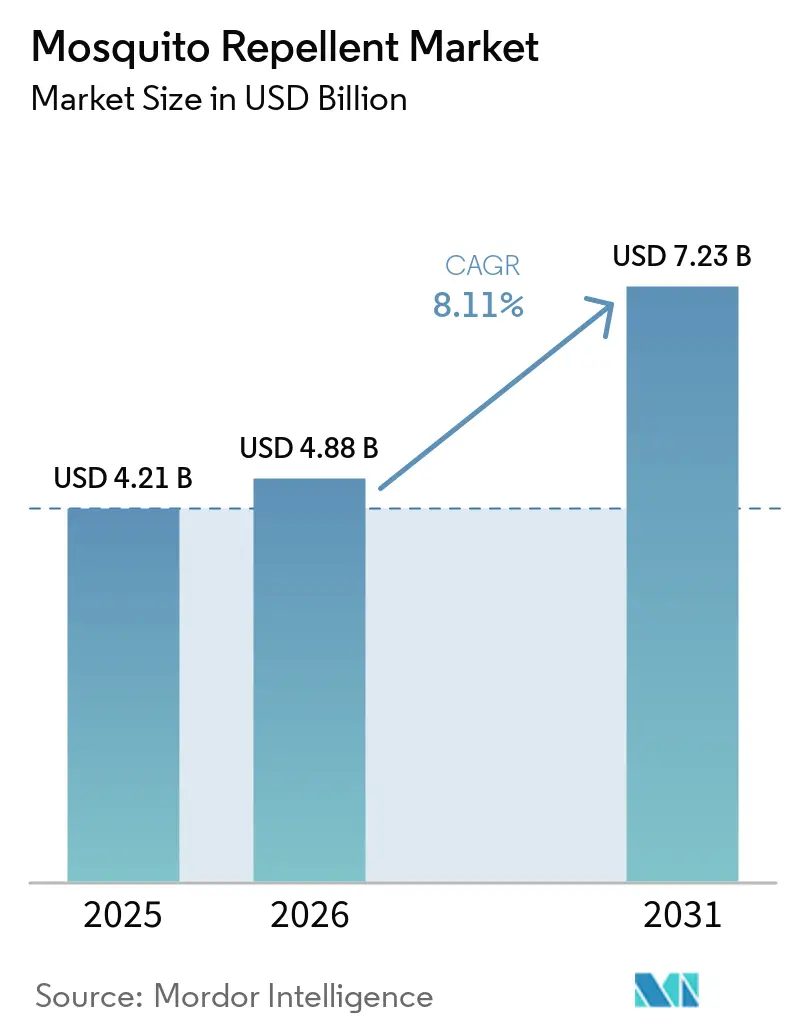
| Market Size (2026) | USD 4.88 Billion |
| Market Size (2031) | USD 7.23 Billion |
| Growth Rate (2026 - 2031) | 8.11 % |
| Fastest Growing Market | Asia Pacific |
| Largest Market | Asia Pacific |
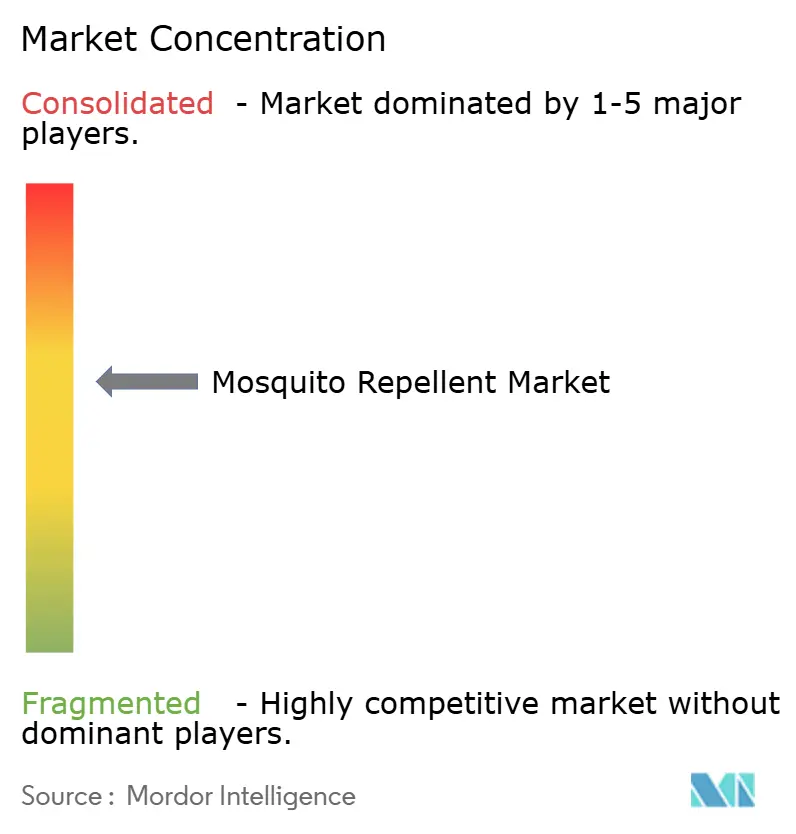
| Market Concentration | Medium |
Major Players
*Disclaimer: Major Players sorted in no particular order Image © Mordor Intelligence. Reuse requires attribution under CC BY 4.0. |
|
Mosquito Repellent Market Analysis by Mordor Intelligence
The mosquito repellent market size is valued at USD 4.88 billion in 2026, growing from the 2025 value of USD 4.21 billion, and is forecast to climb to USD 7.23 billion by 2031, advancing at a 8.11% CAGR, with accelerating disease prevalence, climate-driven vector expansion, and expanding product formats supporting demand. Spray and aerosol products in the mosquito repellent market continue to dominate value sales, yet vaporizer devices are gaining overnight traction in endemic regions. Natural formulations within the mosquito repellent market, though still a niche, are widening consumer appeal in North America and Europe as safety worries over DEET and other synthetics surface. E-commerce penetration, celebrity-backed campaigns, and public health procurements reinforce year-round purchasing cycles in both mature and emerging economies. Competitive intensity remains moderate, allowing multinationals and agile regional brands to coexist through differentiated ingredient strategies and omnichannel distribution.
Key Report Takeaways
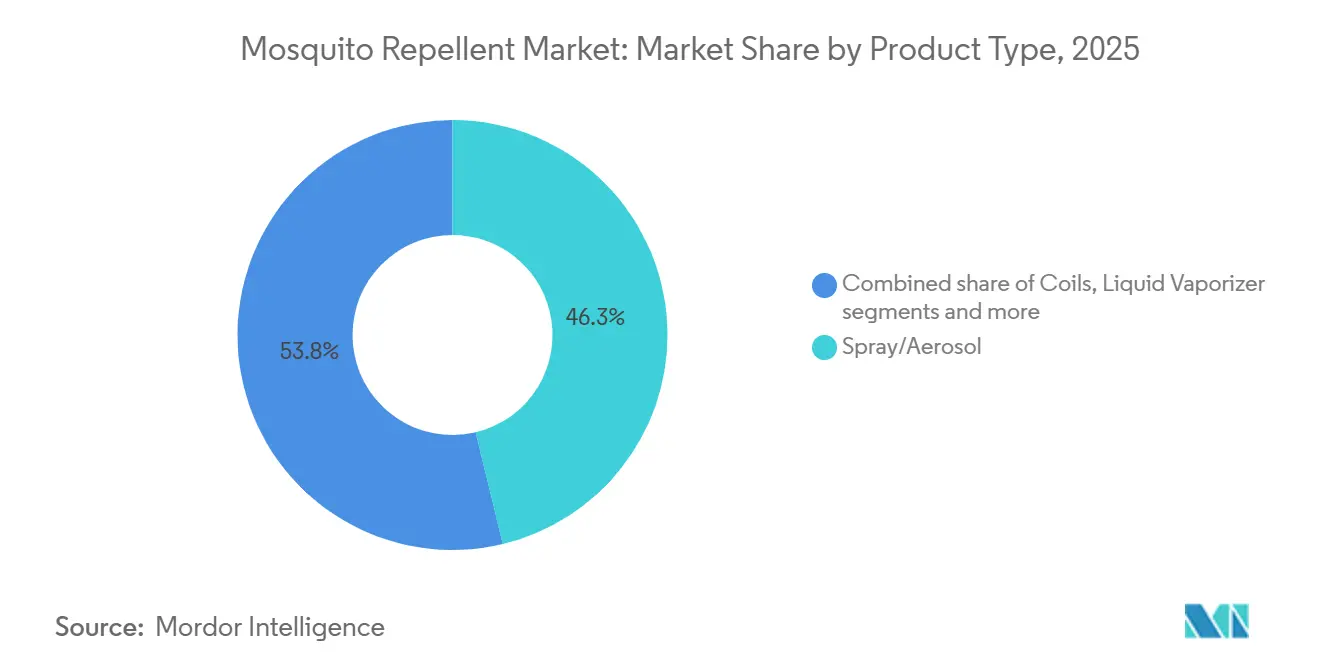
- By product type, spray/aerosol formats led with a 46.25% revenue share in 2025, whereas liquid vaporizers are projected to post the highest 9.14% CAGR through 2031.
- By ingredient type, conventional synthetics accounted for 83.48% of the mosquito repellent market share in 2025, while natural formulations are forecasted to advance at a 9.55% CAGR through 2031.
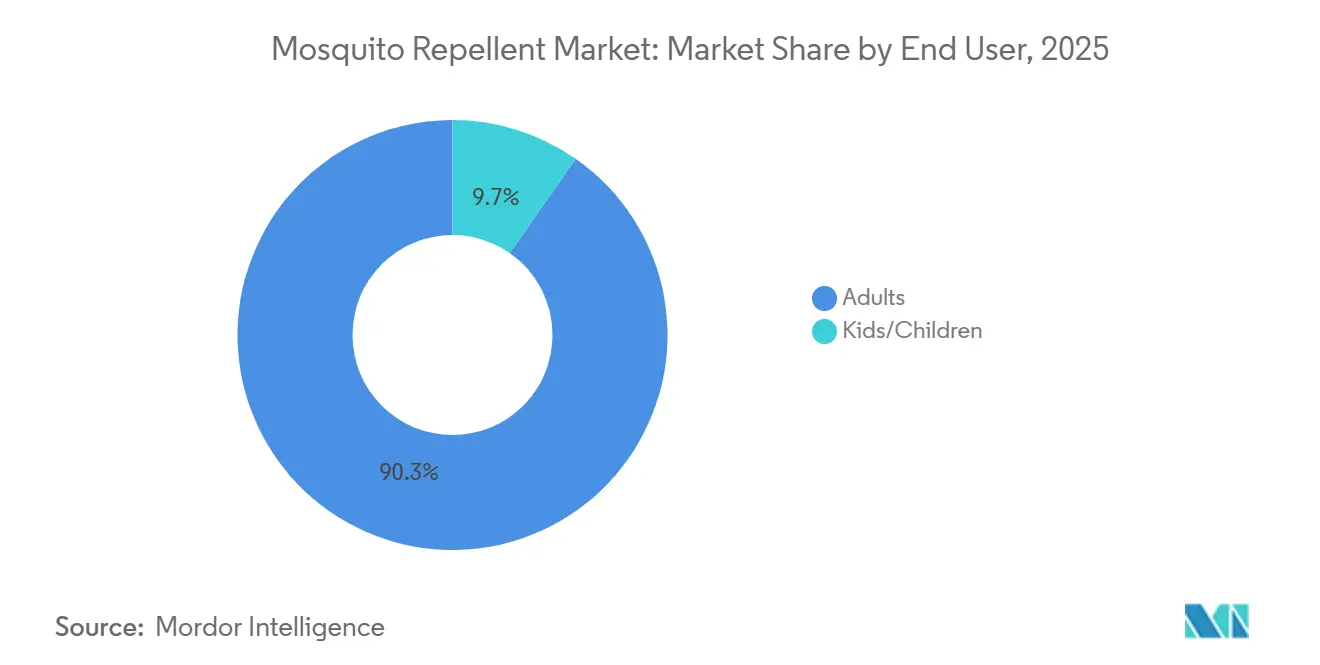
- By end user, adults accounted for 90.28% of 2025 sales, yet the kids/children segment in the mosquito repellent market is expected to grow the fastest at an 8.53% CAGR through 2031.
- By distribution channels, supermarkets and hypermarkets captured 45.62% value in 2025, whereas online retail is set to deliver a 9.55% CAGR between 2026 and 2031.
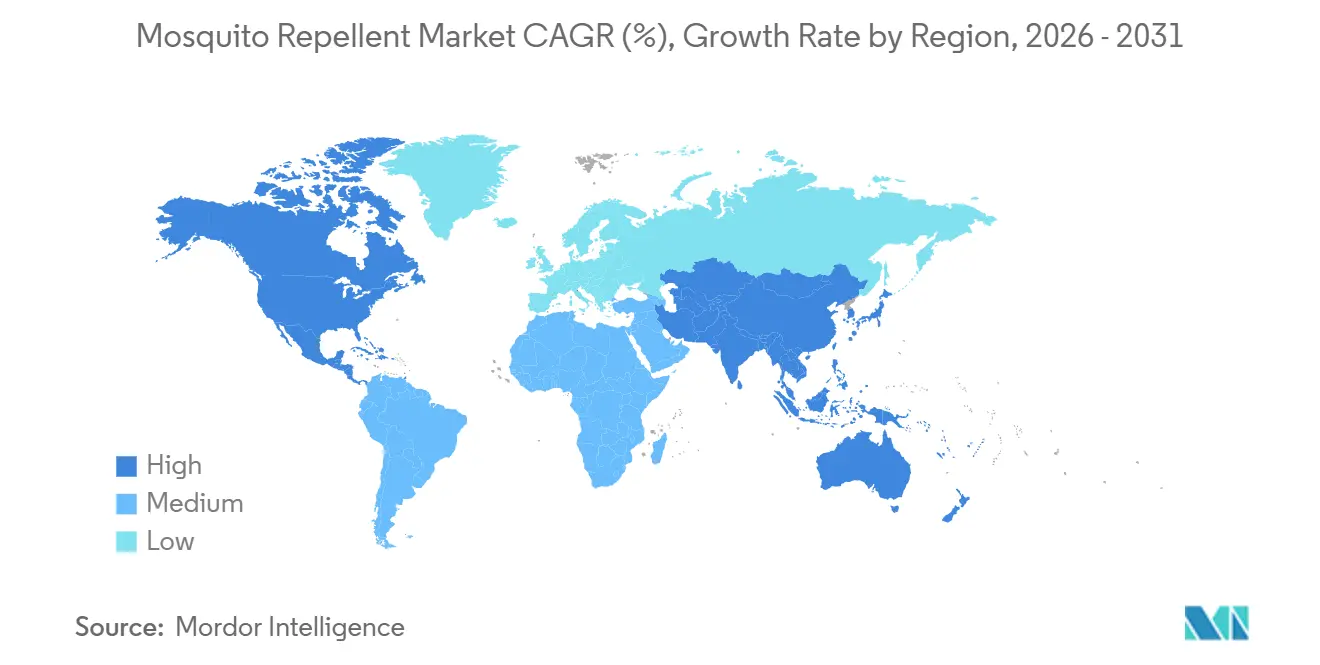
- By geography, the Asia-Pacific commanded 54.72% of 2025 revenue and is projected to expand at a 9.58% CAGR, outpacing all other regions to 2031.
Note: Market size and forecast figures in this report are generated using Mordor Intelligence’s proprietary estimation framework, updated with the latest available data and insights as of January 2026.
Market Trends and Insights
Drivers Impact Analysis of Mosquito Repellent Market*
| Driver | (~) % Impact on CAGR Forecast | Geographic Relevance | Impact Timeline |
|---|---|---|---|
| Increasing prevalence of mosquito-borne diseases | +2.5% | Global, concentrated in Asia-Pacific, South America, and Sub-Saharan Africa | Long term (≥ 4 years) |
| Rising preference for natural, organic, and plant-based repellents | +1.8% | North America, Europe, urban Asia-Pacific | Medium term (2-4 years) |
| Innovation in product formats, including wearables, mats, coils, and long-lasting formulations | +1.5% | Global, with early adoption in North America and Europe | Medium term (2-4 years) |
| Government initiatives and public health campaigns | +1.2% | Asia-Pacific (India, Indonesia, Thailand), South America (Brazil, Colombia), Sub-Saharan Africa | Long term (≥ 4 years) |
| Influence of social media platforms and celebrity endorsements | +0.8% | Global, strongest in North America, Europe, and urban Asia-Pacific | Short term (≤ 2 years) |
| Higher disposable incomes in developing markets enable spending on premium and eco-friendly products | +1.0% | Asia-Pacific (China, India, Indonesia), Middle East, South America | Medium term (2-4 years) |
| Source: Mordor Intelligence | |||


Increasing Prevalence of Mosquito-Borne Diseases
In 2024, global dengue cases surged to 14.6 million, leading to over 12,000 fatalities. The Centers for Disease Control and Prevention reported that in the first seven months of 2025, there were more than 4 million cases and 3,000 deaths[1]Source: Centers for Disease Control and Prevention, “Dengue,” cdc.gov. Meanwhile, malaria cases stood at 246 million in 2023, and vector-borne diseases accounted for over 700,000 annual deaths. Climate change is lengthening transmission seasons and relocating Aedes and Anopheles mosquitoes to once-temperate areas, turning sporadic outbreaks into persistent threats. In 2024, India recorded 285,296 dengue cases with 190 deaths, and in 2023, it logged 1.6 million malaria cases. Indonesia faced 143,266 dengue cases and 1,481 deaths, while Thailand had 134,784 cases with 141 fatalities. Rising temperatures and urbanization are creating breeding grounds in water storage containers, discarded tires, and construction sites, enabling year-round transmission in tropical megacities. As a result, personal protection through topical and spatial repellents in the mosquito repellent market has shifted from a seasonal precaution to a daily necessity, driving sustained demand growth in endemic regions.
Rising Preference for Natural, Organic, and Plant-Based Repellents
In the mosquito repellent market, consumers in North America and Europe are increasingly cautious about synthetic ingredients like DEET, citing concerns over skin irritation, neurotoxicity, and environmental persistence. Lafe's Baby Organic Mosquito Repellent, featuring USDA Certified Organic essential oils, is priced at USD 8.99 for a 4-ounce bottle. In comparison, Hello Bello's plant-based spray, priced at USD 10.99 for 6.7 ounces, is distributed through major retailers such as CVS, Kohl's, Target, and Walmart. Wondercide offers lab-tested, plant-based formulations priced between USD 12.99 and USD 44.99, catering to pet owners and families seeking DEET-free alternatives. The U.S. Environmental Protection Agency (EPA) has categorized certain botanical ingredients under its 25(b) exemptions, enabling quicker market entry without full registration. However, studies reveal that these ingredients provide shorter protection durations compared to established options like picaridin or IR3535. Brands must carefully balance their marketing claims with product performance. Consumer preferences also vary, with some willing to reapply repellents every two hours, while others prioritize products offering all-day protection. This diversity in demand is a primary driver of growth in the mosquito repellent market.
Innovation in Product Formats, Including Wearables, Mats, Coils, and Long-Lasting Formulations
The mosquito repellent market growth is attributed to households in endemic regions prioritizing overnight protection without direct skin contact. 3M's Ultrathon insect repellent, which uses controlled-release polymer technology, provides 12-hour protection. In comparison, STAYTEC's formulations extend efficacy to 14 hours, reducing the need for frequent reapplications, which benefits outdoor workers and travelers. Thermacell's spatial repellent devices, which disperse transfluthrin or metofluthrin, create 15-foot protection zones and have received a 2025 recommendation from the World Health Organization for spatial repellents[2]Source: World Health Organization, "WHO Recommendation on Spatial Emanators for Mosquito Control." who.int. Wearable patches and permethrin-treated clothing cater to hikers, military personnel, and construction crews by offering hands-free, sweat-resistant solutions. The US Environmental Protection Agency's VERV program accelerates the review process for innovative mosquito control products, encouraging manufacturers to invest in next-generation actives and advanced delivery systems. As product formats diversify and compete for shelf space, retailers in the mosquito repellent market are shifting their approach. Instead of defaulting to aerosol products, they are curating assortments based on local disease prevalence, climate conditions, and consumer sophistication.
Government Initiatives and Public Health Campaigns
India's National Centre for Vector Borne Diseases Control actively carries out the National Framework for Malaria Elimination (2016-2030) and the Integrated Disease Surveillance Programme. These efforts include source reduction, larviciding, fogging, and information-education-communication campaigns across states such as Delhi, Maharashtra, and Karnataka. In Indonesia, the Ministry of Health drives the 3M campaign (Eliminate, Drain, Close) and conducts Wolbachia mosquito release trials to reduce dengue transmission. Thailand's Department of Disease Control implements the National Dengue Strategic Plan, emphasizing community engagement and school-based programs. Simultaneously, the World Health Organization's Regional Office for South-East Asia oversees a regional strategy for dengue prevention and control for the 2021-2025 period. SC Johnson's Healthier World Initiative, as part of a public-private partnership, reached over 110 million people and donated 240,000 mosquito repellents during Argentina's 2024 dengue outbreak, highlighting enhanced distribution efforts in crisis zones. Although government procurement contracts for schools, military bases, and public housing projects provide stable demand, budget constraints and bureaucratic delays can hinder supply continuity.
Restraints Impact Analysis of Mosquito Repellent Market*
| Restraint | (~) % Impact on CAGR Forecast | Geographic Relevance | Impact Timeline |
|---|---|---|---|
| Proliferation of counterfeit products | -0.7% | Asia-Pacific, Middle East and Africa, South America | Medium term (2-4 years) |
| Health and safety concerns over synthetic chemicals' toxicity, skin irritation, and long-term effects | -1.2% | North America, Europe, urban Asia-Pacific | Long term (≥ 4 years) |
| Stringent regulations on chemical ingredients | -0.9% | Europe (EU BPR), North America (EPA), Asia-Pacific (country-specific) | Long term (≥ 4 years) |
| Consumer shift toward traditional products | -0.5% | Rural Asia-Pacific, Sub-Saharan Africa, South America | Medium term (2-4 years) |
| Source: Mordor Intelligence | |||
Health and Safety Concerns Over Synthetic Chemicals' Toxicity, Skin Irritation, and Long-Term Effects
Health concerns are slowing adoption among parents, pregnant women, and individuals with sensitive skin. DEET, the most widely used active ingredient, faces criticism for potential neurotoxicity and skin reactions, despite decades of regulatory approval from the US Environmental Protection Agency and the European Chemicals Agency. Picaridin and IR3535 provide similar efficacy with gentler sensory profiles, but limited consumer awareness keeps DEET as the default choice in many markets. Essential oils like citronella, lemongrass, and eucalyptus offer shorter protection durations—typically two hours or less—requiring frequent reapplication or reduced coverage during peak biting periods. The US Food and Drug Administration and the Centers for Disease Control and Prevention recommend EPA-registered repellents for reliable protection. However, anecdotal reports of adverse reactions, amplified by online forums and social media, are undermining confidence in synthetic formulations. Brands in the mosquito repellent market that focus on clinical trials, dermatological testing, and transparent ingredient labeling can stand out in a market increasingly driven by safety perceptions.
Stringent Regulations on Chemical Ingredients
The European Chemicals Agency, under the Biocidal Products Regulation (EU) 528/2012, categorizes mosquito repellents as Product Type 19 (Repellents and attractants). Active substances must receive approval before market authorization in member states. Approved substances include DEET, icaridin (also called picaridin), IR3535, PMD/Citriodiol, and transfluthrin, with transfluthrin's approval renewed in 2024 for use in spatial repellent devices. In the U.S., the Environmental Protection Agency requires conventional repellents to be registered, while certain botanical ingredients are exempt under the 25(b) minimum-risk provisions. However, the EPA mandates efficacy and safety data for novel active ingredients. In the Asia-Pacific, regulatory frameworks are fragmented. India's Central Insecticides Board, China's National Health Commission, and Indonesia's Ministry of Health each enforce unique approval pathways and ingredient restrictions. These factors, including compliance costs, extended approval timelines, and post-market surveillance requirements, often discourage smaller manufacturers. Consequently, market shares are increasingly dominated by multinationals with specialized regulatory affairs teams. Although the World Health Organization's Pesticide Evaluation Scheme has made progress, harmonization remains incomplete. As a result, companies must navigate jurisdiction-specific approvals, which delay product launches and increase development costs.
*Our forecasts treat driver/restraint impacts as directional, not additive. The impact forecasts reflect baseline growth, mix effects, and variable interactions.
Mosquito Repellent Market Segment Analysis
By Product Type:
Liquid Vaporizer Technology Drives InnovationIn 2025, spray and aerosol formats accounted for 46.25% of the mosquito repellent market, highlighting strong consumer demand for portable and instant solutions, particularly for outdoor activities, travel, and emergencies. Liquid vaporizers, preferred for their overnight protection without requiring skin contact or frequent reapplication, are projected to grow at the fastest rate, with a 9.14% CAGR through 2031, especially in dengue-prone regions. In India, Godrej Consumer Products' Goodknight liquid vaporizers dominate urban and semi-urban markets. Similarly, Reckitt Benckiser's Mortein brand holds a significant market share in Australia and Southeast Asia. Coils continue to be widely used in rural areas and outdoor settings where electricity access is limited.
However, concerns about smoke inhalation and shorter burn durations have reduced their popularity in urban areas. For parents, creams, lotions, and roll-ons provide a controlled application option for children, with Dabur's Odomos cream leading India's topical market. Although patches and wearables represent the smallest segment, they are attracting notable innovation efforts. Brands such as Wondercide and Hello Bello are developing DEET-free clip-on devices and adhesive patches aimed at hikers, festival-goers, and military personnel. The US Environmental Protection Agency's VERV program is expediting the review of these innovative delivery systems, motivating manufacturers to invest in spatial repellents and long-lasting formulations that reduce the need for frequent reapplication.


By Ingredient Type:
Natural Formulations Challenge Synthetic DominanceIn 2025, conventional synthetic repellents accounted for 83.48% of the mosquito repellent market share, supported by DEET's proven efficacy over decades and approvals from the US Environmental Protection Agency and the European Chemicals Agency. Between 2026 and 2031, natural mosquito repellents are projected to grow at a 9.55% CAGR, driven by North American and European consumers increasingly examining ingredient labels and favoring botanical actives such as citronella, lemongrass, eucalyptus, and neem. Lafe's Baby Organic Mosquito Repellent, made with USDA Certified Organic essential oils, is priced at USD 8.99 for a 4-ounce bottle. In comparison, Hello Bello's plant-based spray, priced at USD 10.99 for 6.7 ounces, is available through major retailers like CVS, Kohl's, Target, and Walmart. Wondercide offers lab-tested, plant-based formulations priced between USD 12.99 and USD 44.99, catering to pet owners and families seeking DEET-free options.
However, a significant efficacy gap remains: essential oils typically provide around two hours of protection, whereas synthetics like picaridin or IR3535 offer eight to twelve hours. As a result, users of natural products must either reapply more frequently or accept reduced coverage during peak biting periods. The US Environmental Protection Agency classifies certain botanical ingredients under its 25(b) exemptions, enabling faster market entry without full registration. However, post-market surveillance has revealed varying performance across formulations. In the mosquito repellent market, brands focusing on innovations such as microencapsulation, controlled-release polymers, and synergistic blends can improve the efficacy of natural products, narrowing the performance gap with synthetic alternatives and attracting cost-conscious consumers who are reluctant to pay higher prices for minimal improvements.
By End User:
Kids/Children Segment Attracts Premium PositioningIn 2025, adults represented 90.28% of end-user demand, reflecting broader population demographics and increased outdoor activities among working-age individuals. The children's segment in the mosquito repellent market is expected to grow at an 8.53% CAGR through 2031, driven by parents' willingness to pay for premium products featuring gentler formulations, hypoallergenic properties, and pediatrician endorsements. The US Centers for Disease Control and Prevention recommends EPA-registered repellents for children over two months old but advises against using oil of lemon eucalyptus (PMD) for those under three years, which restricts formulation options and raises regulatory compliance costs.
Packaging advancements in the mosquito repellent market, such as roll-on applicators, non-aerosol sprays, and wearable patches, help reduce accidental ingestion risks and simplify application for caregivers managing multiple children. Social media influencers and parenting forums enhance brand visibility, with SC Johnson's OFF! FamilyCare and Spectrum Brands' Cutter Skinsations are gaining traction through targeted digital campaigns. Adults prioritize products with longer efficacy durations and lower cost per application, favoring high-concentration DEET or picaridin formulations for activities like hiking, camping, and travel, while children's products focus on safety, pleasant fragrances, and dermatological testing.
By Distribution Channels:
E-Commerce Disrupts Traditional RetailIn 2025, supermarkets and hypermarkets accounted for a 45.62% share of the distribution, leveraging shelf visibility, seasonal promotions, and impulse purchases during peak mosquito season. In the mosquito repellent market, online retail channels are projected to grow at a 9.55% CAGR through 2031, reflecting the 16.4% e-commerce share of total US retail sales in Q3 2025. This growth highlights a consumer preference for subscription models, bulk discounts, and direct-to-consumer brands, as reported by the US Census Bureau[3]. Deloitte's Q3 2025 consumer trends report indicated that 64% of Gen Z shoppers use social media for product research. Additionally, 84% of them trust private-label quality as much as or more than national brands. This trend creates significant opportunities for retailers to develop exclusive mosquito repellent lines.
Leading platforms like Amazon, Walmart, and regional e-commerce sites are fostering customer loyalty through subscription discounts, auto-replenishment options, and detailed customer reviews. Urban consumers, facing unexpected outbreaks, rely on convenience stores and pharmacies for immediate relief. Drug stores such as CVS and Walgreens address these needs by offering pediatrician-recommended formulations and travel-sized packaging. Direct-to-consumer brands like Wondercide bypass traditional retail channels, focusing on digital marketing, influencer collaborations, and educational content to build communities around natural pest control. in the mosquito repellent market retailers are implementing omnichannel strategies that combine in-store sampling, online ordering, and curbside pickup. This approach appeals to consumers who research online but prefer a hands-on evaluation before purchasing multi-packs or premium formulations.
Geography Analysis
APAC Mosquito Repellent Market
In 2025, Asia-Pacific accounted for a significant 54.72% share of the mosquito repellent market and is expected to maintain its position as the fastest-growing region with a strong 9.58% CAGR through 2031. This growth is primarily driven by concerning dengue statistics: India reported 285,296 cases and 190 deaths in 2024, Indonesia recorded 143,266 cases with 1,481 fatalities, and Thailand reported 134,784 cases with 141 deaths. In China, the National Health Commission actively manages dengue through integrated vector management in southern provinces such as Guangdong, Yunnan, and Fujian, where annual cases range between 2,000 and 10,000. Rising disposable incomes in China, India, and Indonesia are driving demand for premium natural formulations and long-lasting vaporizers, with a shift from traditional coils to liquid vaporizers and aerosols. In the mature markets of Japan, South Korea, and Singapore, spatial repellents and wearable devices have achieved high penetration. Meanwhile, Australia's outdoor lifestyle continues to sustain demand for high-concentration DEET and picaridin sprays.
North America and Europe Mosquito Repellent Market
In the mosquito repellent market in North America and Europe, consumers are increasingly cautious about synthetic ingredients like DEET, driving a preference for natural and organic formulations. Regulatory frameworks in these regions further support this shift by promoting botanical alternatives. For example, the US Environmental Protection Agency's 25(b) exemptions facilitate quicker market entry for certain plant-based ingredients. Similarly, the European Chemicals Agency enforces strict regulations under the Biocidal Products Regulation (EU) 528/2012, requiring active substance approval and member-state authorization. Brands such as Lafe's, Hello Bello, and Wondercide are capitalizing on the premium market with USDA Certified Organic and plant-powered formulations priced between USD 8.99 and USD 44.99. These products are widely available at major retailers like CVS, Kohl's, Target, and Walmart, as well as through direct-to-consumer channels.
South America and MEA Mosquito Repellent Market
In South America, the ongoing threat of diseases like dengue and malaria sustains demand for effective and affordable mosquito repellents. SC Johnson took proactive measures by distributing 240,000 mosquito repellents during Argentina's 2024 dengue outbreak. The company also partnered with Brazilian influencer Tata Werneck in January 2023, using the #ViraOJogo social media campaign to reach over 25,000 individuals. Countries such as Brazil, Colombia, Chile, and Peru face endemic dengue transmission. Government contracts for schools, military bases, and public housing projects provide stable demand for repellents, but budget limitations and bureaucratic delays often disrupt supply chains within the mosquito repellent market. Regions like South Africa, Saudi Arabia, and the UAE, with higher per-capita incomes, are more likely to invest in premium natural formulations and long-lasting vaporizers. However, resource shortages and political instability, particularly in conflict-affected areas, continue to hinder effective implementation.

Competitive Landscape
The mosquito repellent market shows moderate consolidation, resulting in competitive market conditions. Established players dominate significant portions of the market, leveraging their extensive distribution networks, strong brand equity, and advanced research and development capabilities to maintain their leadership positions. Companies in the mosquito repellent market, like SC Johnson and Son, with its flagship brand OFF!, and Reckitt Benckiser, known for Mortein, have built strong consumer trust through consistent product quality and innovation. These players focus on continuous product diversification, such as introducing multi-functional repellents that combine mosquito protection with skincare benefits, to cater to a broad consumer base.
At the same time, the market provides ample opportunities for new entrants and regional specialists to establish themselves. These players often adopt differentiated strategies to capture market share, focusing on niche segments that are underserved by larger competitors. For instance, companies like Mamaearth and Goodknight have introduced natural and plant-based mosquito repellents, addressing the growing demand for chemical-free alternatives. Additionally, premium technologies, such as wearable repellents and smart devices like ultrasonic mosquito repellents, are gaining traction in the mosquito repellent market. Startups and smaller companies are leveraging these innovations to carve out unique positions in the market. By targeting specific consumer needs, such as child-safe formulations or products tailored for outdoor enthusiasts, these companies are able to compete effectively despite the dominance of established brands.
Furthermore, the competitive landscape is shaped by evolving consumer preferences and regulatory frameworks, which encourage innovation and diversification. Emerging players often capitalize on these trends by introducing eco-friendly and sustainable products, aligning with the global shift toward environmentally conscious consumption. For example, brands like Herbal Strategi and All Out have launched biodegradable mosquito repellent solutions to cater to environmentally aware consumers. Regional specialists also play a crucial role in addressing localized needs, such as repellents designed for specific mosquito species prevalent in tropical regions or products suited for varying climatic conditions.
Mosquito Repellent Industry Leaders
-
Godrej Consumer Products Ltd
-
Dabur India Ltd
-
Spectrum Brands Holdings Inc.
-
Reckitt Benckiser Group plc
-
S.C. Johnson and Son, Inc.
- *Disclaimer: Major Players sorted in no particular order
Mosquito Repellent Market Companies Covered in this Report
- S. C. Johnson and Son, Inc.
- Reckitt Benckiser Group plc
- Spectrum Brands Holdings Inc.
- Godrej Consumer Products Limited
- Dabur India Ltd
- PIC Corporation
- Tiger Brands Ltd
- Coghlan's Ltd.
- HonasaConsumer Pvt. Ltd.
- Henkel AG and Co. KGaA
- Natura and Co. Holding SA (Avon)
- 3M Company
- Newell Brands Inc.
- Sawyer Products, Inc.
- Jyothy Labs Limited
- PelGar International Limited
- Enesis Group
- Clariant AG
- Hello Bello LLC
- Mother Sparsh Baby Care Private Limite

Recent Industry Developments in Mosquito Repellent Market
- March 2025: Thermacell Repellents, Inc. introduced the E65 Rechargeable Mosquito Repeller, which incorporated a fast-charging dock and 6.5-hour battery life. The device established a 20-foot protection zone and retailed at USD 39.99. The product delivered rechargeable functionality and extended coverage for outdoor recreation markets.
- November 2024: Nippo launched 'Swooper', a mosquito repellent that combined Japanese MFT (Metrofluthrin) formula with sandalwood fragrance. The product was available in retail and online stores across India, featuring Japanese technology integrated with traditional sandalwood essence to meet consumer preferences.
- July 2024: Godrej Consumer Products (GCPL) had incorporated its patented mosquito repellent molecule, 'Renofluthrin', into its household insecticide products. The molecule, developed by GCPL's research and development division, protected against mosquitoes and improved the effectiveness of the company's insecticide range.


Mosquito Repellent Market Report Scope and Research Methodology
Market Definition and Coverage
Our study defines the mosquito repellent market as retail-packed products, liquids, coils, sprays, creams, roll-ons, bracelets, and other consumer formats, whose primary purpose is to keep mosquitoes from landing on human skin. The valuation covers factory-gate revenues converted to USD using annual average exchange rates.
Scope exclusion: Bulk insecticides for public-health fogging or agricultural use are outside this assessment.
Segments Covered in This Report
-
Product Type
- Liquid Vaporizer
- Coils
- Spray/Aerosol
- Creams, Lotions, and Roll-ons
- Patches and Wearables
- Other Product Types
-
Ingredient Type
- Natural Mosquito Repellent
- Conventional Mosquito Repellent
-
Distribution Channels
- Supermarkets/Hypermarkets
- Convenience Stores
- Pharmacies and Drug Stores
- Online Retail Channels
- Other Distribution Channels
-
By Geography
-
North America
- United States
- Canada
- Mexico
- Rest of North America
-
Europe
- Germany
- United Kingdom
- Italy
- France
- Spain
- Netherlands
- Poland
- Belgium
- Sweden
- Rest of Europe
-
Asia-Pacific
- China
- India
- Japan
- Australia
- Indonesia
- South Korea
- Thailand
- Singapore
- Rest of Asia-Pacific
-
South America
- Brazil
- Argentina
- Colombia
- Chile
- Peru
-
Middle East and Africa
- South Africa
- Saudi Arabia
- United Arab Emirates
- Nigeria
- Egypt
- Morocco
- Turkey
- Rest of Middle East and Africa
-
North America
Data Sources, Market Sizing, and Validation
Primary Research
Mordor analysts interviewed dermatologists, entomologists, large retail buyers, and e-commerce category managers across Asia-Pacific, North America, and Africa. These conversations clarified usage frequencies, average selling prices, and emerging preferences for plant-based actives, allowing us to tune model drivers identified in desk work.
Desk Research
We pull baseline volumes and prices from open sources such as the World Health Organization's vector-borne disease dashboards, UN COMTRADE export codes for HS 380891, and national health surveys (CDC, India's NVBDCP). Trade associations, American Mosquito Control Association, European Mosquito Control Association, and Japan Cosmetic Industry Association, help us gauge ingredient demand shifts. Company filings and 10-K statements enrich margin assumptions, while paid portals like D&B Hoovers and Dow Jones Factiva supply verified financials and news sentiment. This list is illustrative; many additional references are reviewed during validation.
Market-Sizing & Forecasting
We start with a top-down reconstruction that aligns reported mosquito-borne case numbers, population at risk, and average applications per capita with import-export balances and production statistics. Select bottom-up supplier roll-ups, factory output multiplied by sampled ASP, serve as guardrails. Key variables include disease incidence, urban humidity index, single-use pack penetration, online channel share, and regulatory approvals of actives such as picaridin. A multivariate regression links these factors to historical sales, and scenario analysis adjusts for outbreak cycles. Gaps in granular country data are bridged by regional proxies scaled with income elasticity and climate similarity.
Data Validation & Update Cycle
Outputs pass variance checks against household panel data and syndicated retail trackers before a senior analyst review. We refresh the model annually and trigger interim updates when outbreaks, policy shifts, or material M&A events occur. A final pass immediately precedes publication.
How Mordor Intelligence's Mosquito Repellent Market Size Compares to Other Published Estimates
Published figures often diverge because firms pick different product mixes, price points, and refresh schedules.
Key gap drivers include: some publishers fold insecticides and after-bite lotions into totals, others inflate value by using consumer shelf prices, and several extend forecasts from pre-pandemic growth slopes without re-benchmarking post-COVID channel shifts. Our scope, factory-gate pricing, and yearly recalibration mitigate these distortions.
Benchmark comparison
| Market Size | Anonymized source | Primary gap driver |
|---|---|---|
| USD 4.6 billion | Mordor Intelligence | - |
| USD 7.5 billion | Global Consultancy A | Uses shelf prices and includes household insecticides |
| USD 6.0 billion | Industry Publisher B | Combines broader insect categories and relies on 2024 base without outbreak adjustment |
| USD 6.9 billion (2021 base) | Market Tracker C | Back-casts older data, limited primary verification |
In sum, our disciplined scope selection, dual-track modelling, and continuous validation give decision-makers a dependable, transparent baseline.


Key Questions Answered in the Report
How big is the mosquito repellent market in 2026?
The mosquito repellent market size stands at USD 4.88 billion in 2026, growing toward USD 7.23 billion by 2031.
Which product type is expanding the fastest?
Liquid vaporizer devices are forecast to record the highest 9.14% CAGR through 2031 due to demand for passive, overnight protection.
Are natural repellents gaining popularity?
Yes, natural formulations are projected to post a 9.55% CAGR as label-conscious consumers in North America and Europe seek botanical alternatives.
Which region leads global sales?
Asia-Pacific accounts for 54.72% of 2025 revenue and is projected to grow at a 9.58% CAGR through 2031.
Page last updated on:


 Your data is secure and never sold or shared.


