
Morphine Market Size and Share
Market Overview
| Study Period | 2020 - 2031 |
|---|---|
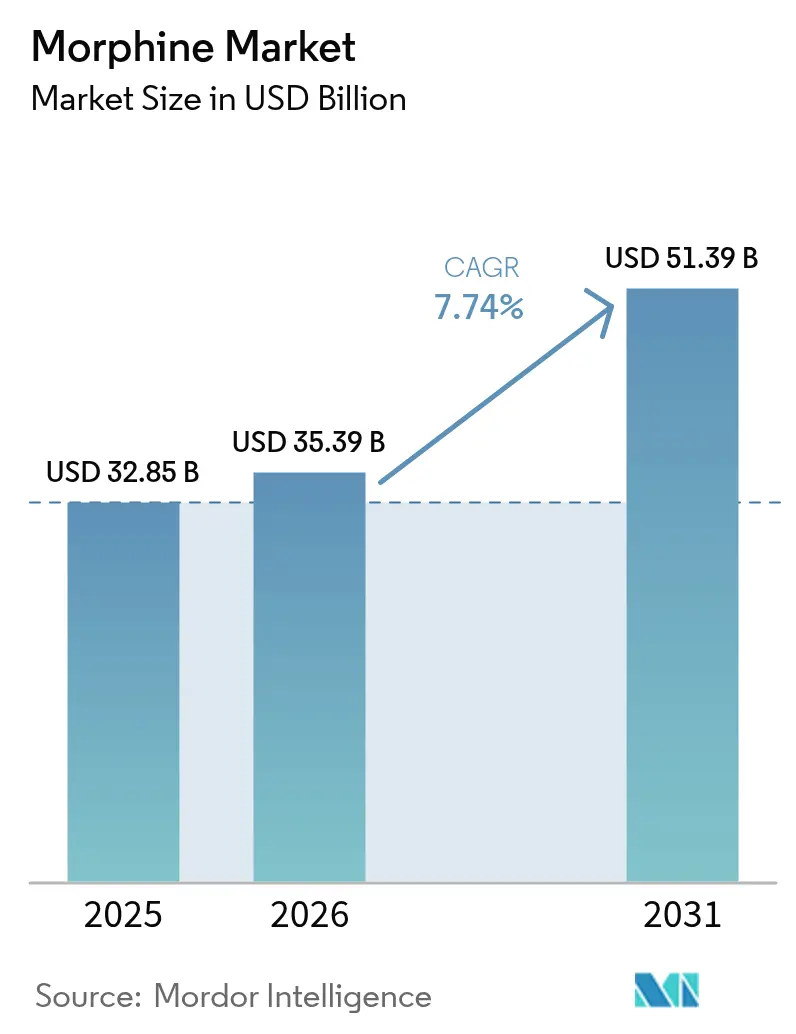
| Market Size (2026) | USD 35.39 Billion |
| Market Size (2031) | USD 51.39 Billion |
| Growth Rate (2026 - 2031) | 7.74 % |
| Fastest Growing Market | Asia-Pacific |
| Largest Market | North America |
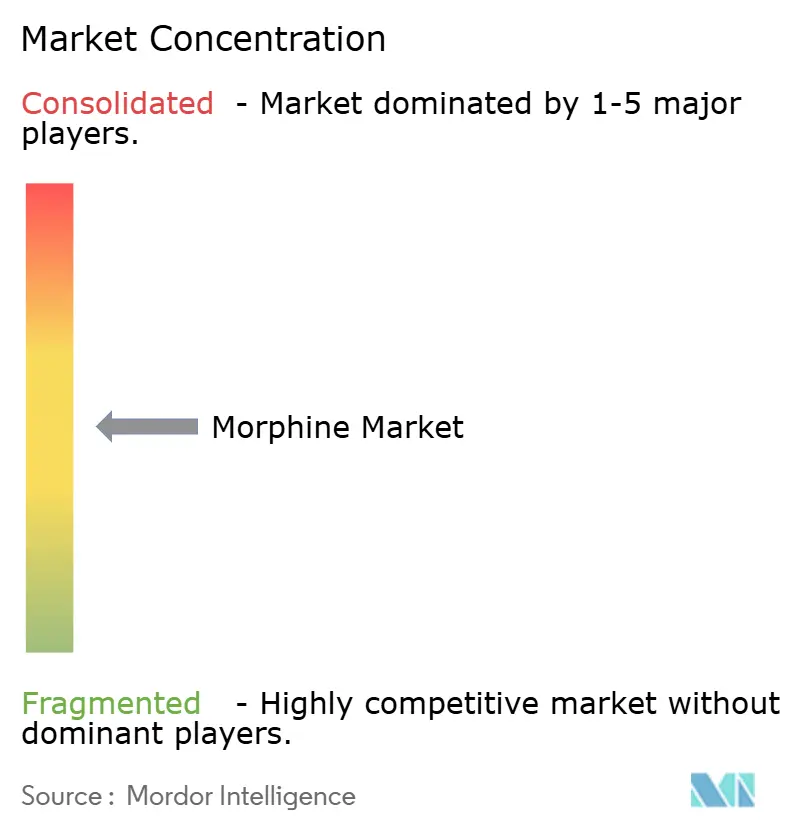
| Market Concentration | Medium |
Major Players *Disclaimer: Major Players sorted in no particular order Image © Mordor Intelligence. Reuse requires attribution under CC BY 4.0. | |
Morphine Market Analysis by Mordor Intelligence
The Morphine Market size was valued at USD 32.85 billion in 2025 and estimated to grow from USD 35.39 billion in 2026 to reach USD 51.39 billion by 2031, at a CAGR of 7.74% during the forecast period (2026-2031). This expansion rests on an aging population that requires more surgical and palliative procedures, the emergence of abuse-deterrent formulations that reassure regulators, and the rapid digitalization of hospital drug-delivery systems. Supply constraints triggered by Afghanistan’s poppy restrictions have elevated raw-material costs but also curbed illicit competition, strengthening manufacturer pricing power. Meanwhile, specialty-generic leaders pursue mergers to gain scale and compliance expertise; the Mallinckrodt–Endo tie-up underscores this consolidation push. Digitally enabled patient-controlled analgesia pumps are reducing adverse drug reactions by 79.2%, making smart infusion technology a pivotal selection factor for hospitals. Despite tougher oversight, robust demand from hip and knee replacements and broad hospice expansion continues to propel the morphine market trajectory.
Key Report Takeaways
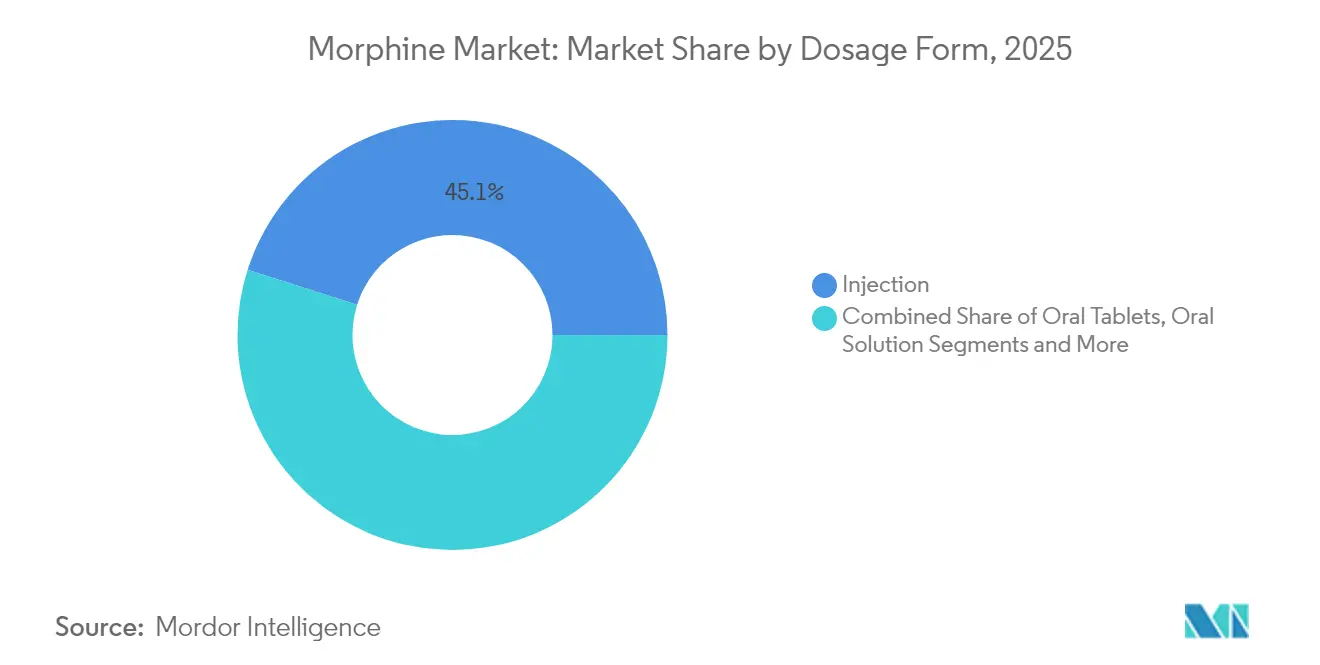
- By dosage form, injectable products captured 45.10% of morphine market share in 2025; oral solutions are projected to expand at an 8.14% CAGR to 2031.
- By release type, immediate-release drugs led with 60.05% revenue share in 2025, while extended-release formulations are forecast to rise at 9.22% CAGR through 2031.
- By route of administration, intravenous delivery accounted for 57.40% of the morphine market size in 2025; intrathecal delivery is set to grow at 12.98% CAGR between 2026-2031.
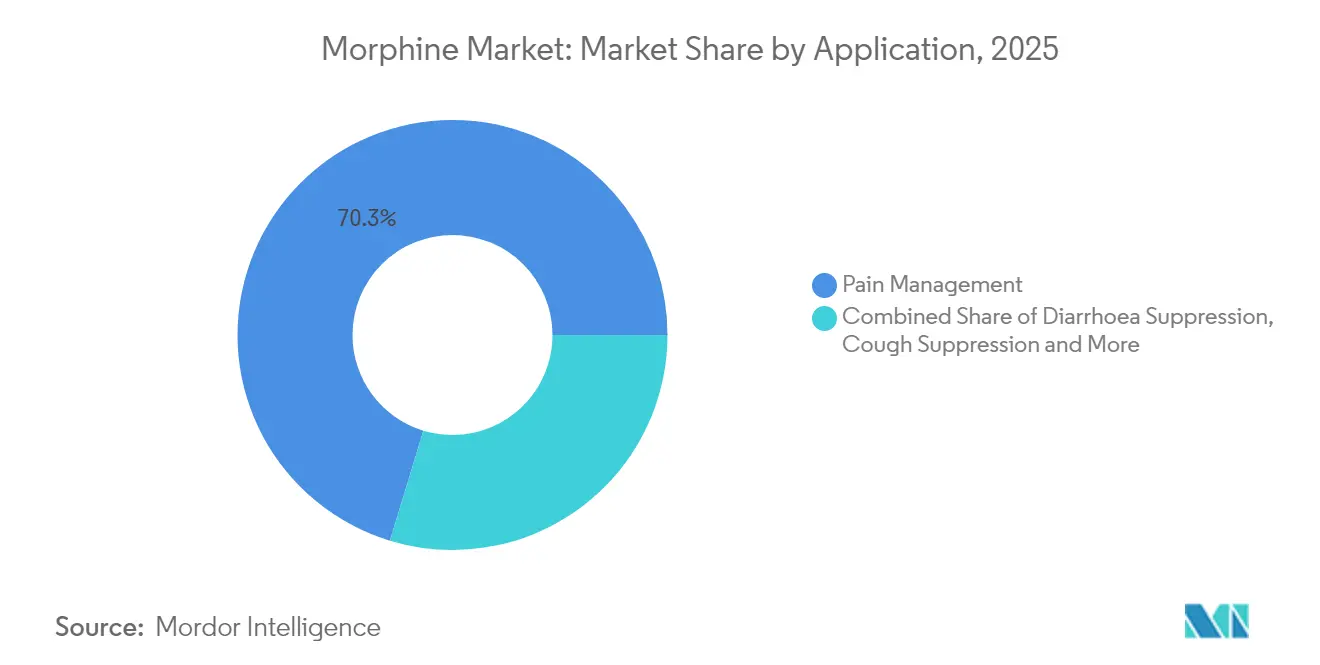
- By application, pain management dominated with 70.30% revenue share in 2025; cough suppression is advancing at an 8.49% CAGR through 2031.
- By end-user, hospitals held 38.35% share of the morphine market size in 2025, whereas online pharmacies are on track for an 8.01% CAGR to 2031.
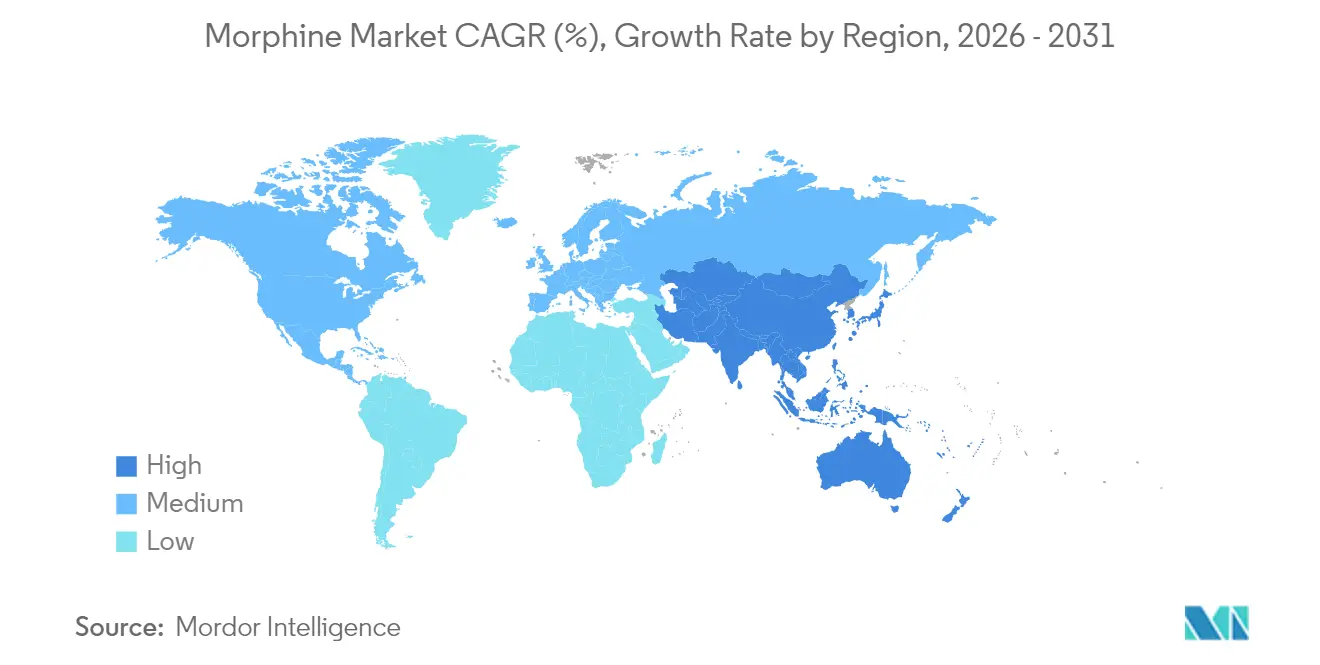
- By geography, North America led with a 34.45% share of the morphine market in 2025, although Asia-Pacific is pacing at a 9.48% CAGR toward 2031.
Note: Market size and forecast figures in this report are generated using Mordor Intelligence’s proprietary estimation framework, updated with the latest available data and insights as of 2026.
Market Trends and Insights
Drivers Impact Analysis of Morphine Market*
| Driver | (~) % Impact on CAGR Forecast | Geographic Relevance | Impact Timeline |
|---|---|---|---|
| Launch Of Abuse-Deterrent Extended-Release (ER) Formulations | +1.5% | North America & Europe, regulatory spillover to APAC | Short term (≤ 2 years) |
| Escalating Global Hip & Knee Replacement Procedures | +1.2% | North America & Europe, expanding to APAC | Medium term (2-4 years) |
| Digitally-Enabled PCA Pumps Driving Injectable Demand In Hospitals | +0.9% | Global, led by developed markets | Medium term (2-4 years) |
| Rapid Expansion Of Hospice & Palliative-Care Beds In Various Regions Globally | +0.8% | Global, with highest growth in APAC and MEA | Long term (≥ 4 years) |
| Emerging Micro-Spherical Depot R&D To Prolong Analgesia | +0.6% | North America & Europe, early adoption phase | Long term (≥ 4 years) |
| Source: Mordor Intelligence | |||
Launch Of Abuse-Deterrent Extended-Release (ER) Formulations
FDA approval of RoxyBond’s updated REMS in November 2024 set a safety benchmark that now covers all ER opioids, morphine included[1]U.S. Food and Drug Administration, “Approval Letter 209777Orig1s010,” accessdata.fda.gov. SentryBond technology, validated across 2,000 tamper-tests, curtails intranasal and intravenous misuse, giving manufacturers a competitive edge. Hospitals and insurers accept premium prices because liability risk falls when prescribers choose abuse-deterrent products. Early uptake improves revenue per dose and raises barriers for low-tech rivals. As regulatory authorities in Asia-Pacific adopt similar labeling rules, global diffusion accelerates near-term sales momentum.
Rapid Expansion Of Hospice & Palliative-Care Beds In Various Regions Globally
CMS lifted hospice payments 2.6% for FY 2025, injecting USD 705 million into end-of-life care budgets[2]Centers for Medicare & Medicaid Services, “FY 2025 Hospice Wage Index and Payment Rate Update,” federalregister.gov. Uzbekistan opened its first children’s hospice, signaling demand in lower-income settings. A Chinese survey scored home hospice care needs at 115.70 points, underscoring unmet demand in the world’s second-largest economy. The WHO’s May 2025 guideline urging wider controlled-medicine access may prompt regulatory reform that smooths supply chains. These structural shifts broaden the morphine market as palliative beds multiply and prescribers standardize opioid protocols.
Digitally-Enabled PCA Pumps Driving Injectable Demand In Hospitals
Smart infusion pumps introduced to 1,327 beds achieved 100% drug-library compliance and cut dosing alerts to 0.79%, cementing the devices as a patient-safety necessity. Wi-Fi oral PCA units trim nurse administration time by 84%, turning capital outlays into rapid labor savings. Cloud-linked pumps sustain ±6.47% infusion accuracy and enable real-time audits that hospitals use during procurement. Because morphine dominates acute pain regimens, every new smart pump effectively lifts injectable volumes. Vendors that bundle morphine with interoperable devices enjoy stickier contracts and better formulary access.
Escalating Global Hip & Knee Replacement Procedures
WHO Resolution WHA77.4 pushes health systems to expand surgical capacity, indirectly lifting perioperative morphine needs. Ontario Health’s 2024/25 plan to shorten wait times shows how regional policy converts into procedure growth. Patient-controlled analgesia in emergency departments increased satisfaction without raising adverse events, reinforcing morphine’s role in postoperative care. As minimally invasive techniques cut hospital stays, clinicians still rely on morphine for breakthrough pain, so rising surgery counts keep the morphine market on an upward track.
Restraints Impact Analysis of Morphine Market*
| Restraint | (~) % Impact on CAGR Forecast | Geographic Relevance | Impact Timeline |
|---|---|---|---|
| Prescription Opioid Diversion & Black-Market Resale | -1.8% | Global, most severe in North America | Short term (≤ 2 years) |
| National-Level REMS and Tighter FDA and EMA Labeling Requirements | -1.1% | North America & Europe, regulatory spillover globally | Medium term (2-4 years) |
| Supply Bottlenecks In Poppy Raw-Material (Papaver Somniferum) Cultivation | -0.7% | Global supply chain, price volatility in all regions | Long term (≥ 4 years) |
| Source: Mordor Intelligence | |||
Prescription Opioid Diversion & Black-Market Resale
DEA seized 2.7 million fentanyl pills in New Mexico in April 2025, reflecting the scale of illicit trades that suppress legitimate prescriptions[3]DEA Headquarters, “DEA Seizes Record-Setting Number of Fentanyl Pills,” dea.gov. Prosecutions of clinicians for theft raise professional liability fears and reduce prescribing enthusiasm. The DOJ links more than 110,000 overdose deaths to opioids, prompting quota tightening and reporting burdens that delay distribution. Higher compliance cost slows shipments, shaving near-term growth from the morphine market.
Supply Bottlenecks In Poppy Raw-Material Cultivation
Taliban enforcement shrank Afghan poppy fields 67% from 2023 to 2024 and drove opium to USD 750 per kilogram, up tenfold from 2022. Badakhshan now contributes over half of remaining output, concentrating risk in a remote area with poor logistics. Six-point-nine million Afghans depend on opium for income, so ban durability is uncertain, placing inventory planning in flux. Lacking alternative farms of similar scale, pharmaceutical buyers face persistent cost inflation, trimming long-term margins across the morphine market.
*Our forecasts treat driver/restraint impacts as directional, not additive. The impact forecasts reflect baseline growth, mix effects, and variable interactions.
Morphine Market Segment Analysis
By Dosage Form:
Injectable Dominance Drives Hospital AdoptionInjectable products commanded 45.10% of morphine market share in 2025 on the strength of rapid onset and fine-tuned dose control essential in operating rooms and emergency wards. Smart infusion-pump interoperability trimmed medication-error rates by 15.4% to 90.5%, adding clinical justification for high-value injectable contracts. Oral solutions, supported by hospice expansion, are projected to post an 8.14% CAGR through 2031, closing part of the accessibility gap in palliative settings.
Rising shortages of injectable opioids compel hospital pharmacists to shift some patients to oral formats, indirectly accelerating oral adoption. Nonetheless, sustained surgical growth keeps the injectables line firmly ahead in absolute dollars, ensuring the morphine market retains a balanced product mix.



By Release Type:
Extended-Release Innovation Accelerates GrowthImmediate-release formulations held 60.05% share in 2025 due to deep prescriber familiarity and insurance ease. Yet extended-release drugs, fortified with abuse-deterrent layers, are set for 9.22% CAGR, the highest among release categories. The morphine market size for extended-release products is projected to climb markedly as health insurers view lower diversion risk as cost-saving over the therapy cycle.
FDA-monitored REMS intensify training and record-keeping. Manufacturers willing to invest in nano-carrier or microsphere technologies can price at a premium while aligning with REMS goals. Flexible licensing paths encourage regional players to partner with global innovators, enriching the formulation pipeline across the morphine market.
By Route of Administration:
Intrathecal Growth Reflects Specialized ApplicationsIntravenous modalities generated the bulk of hospital revenue, representing 57.40% of the morphine market size in 2025. Nevertheless, intrathecal systems will outpace all others at a 12.98% CAGR, propelled by chronic cancer pain cases where systemic dosing fails. Depot-based naloxone prodrugs under preclinical review offer future overdose safeguards that may encourage wider intrathecal adoption.
Epidural and subcutaneous routes keep niche positions in obstetrics and ambulatory care. Innovations that synchronize pump settings with electronic health-record alerts promise to lift dosing precision, reinforcing morphine’s role in multiple clinical pathways.
By Application:
Pain Management Leadership Faces Therapeutic DiversificationPain management generated 70.30% of 2025 revenues, keeping morphine the analgesic backbone for oncology, neuropathic, and osteoarthritis protocols. However, cough suppression is pacing at 8.49% CAGR, driven by respiratory-care integration where codeine alternatives fall short. Emerging formulations with lower histamine release aim to reduce antitussive side-effects.
Regulatory complexity hinders cancer-pain coverage in developing markets; a survey showed half the global population lives where opioid rules limit access. Side-effect management also shapes utilization: 30% of Japanese weak-opioid users experienced constipation in week one, prompting adjunct laxative development that loops back to morphine adherence. As clinical guidelines evolve, the morphine market diversifies without eroding its pain leadership.
By End-User:
Online Pharmacies Drive Digital TransformationHospitals accounted for 38.35% of morphine market share in 2025, but online pharmacies hold the fastest lane with an 8.01% CAGR. Telehealth growth and prescription-upload functions make virtual channels appealing, particularly for chronic patients who require refill convenience. Yet controlled-substance logistics remain stringent; Walgreens booked USD 6.6 billion for opioid-related liabilities, underscoring compliance risk.
Wholesale giants like McKesson operate 27 DEA-regulated hubs and invest in blockchain pilot programs for track-and-trace. Their scale assures steady hospital supply while enabling e-pharmacy fulfillment partnerships.
Geography Analysis
North America Morphine Market
North America anchored 34.45% of the morphine market in 2025 due to robust insurance coverage, advanced surgical volume, and stringent yet transparent FDA and DEA oversight. Abuse-deterrent uptake is highest here, aligning public-health mandates with manufacturer innovation. Digital PCA pumps see early adoption, further consolidating morphine’s clinical foothold.
Europe Morphine Market
Europe maintains a balanced regulatory climate under EMA coordination. Cross-country reimbursement frameworks vary, yet broad palliative-care availability safeguards baseline demand. Manufacturers leverage intra-EU supply channels to offset Afghan raw-material volatility, tempering cost spikes that ripple through the morphine market.
APAC Morphine Market
Asia-Pacific registers the swiftest rise at 9.48% CAGR, benefiting from large-scale hospital construction, aging demographics, and policy moves to loosen opioid access barriers. Malaysia recorded a 993.18% jump in overall opioid consumption, though fentanyl dominates; in Thailand and Vietnam, morphine remains the staple analgesic. WHO guidelines should accelerate approvals and procurement funding, expanding the morphine market size across lower-income segments.

Competitive Landscape
Industry consolidation accelerates as compliance hurdles rise. The 2025 Mallinckrodt–Endo merger formed a USD 3.6 billion revenue platform with expanded controlled-substances franchises. Mallinckrodt’s specialty generics division grew 23% in 2024, aided by resilient morphine volumes despite raw-material cost inflation.
Differentiation centers on formulation technology. Ensysce Biosciences advances PF614 with Trypsin-Activated Abuse Protection, targeting oral overdose reduction along with sustained efficacy. Meanwhile, generic players in India and Turkey face capital challenges to retrofit plants for REMS-grade output, keeping entry barriers high and helping incumbents preserve pricing.
Supply-chain resilience now defines competitiveness. Firms with diversified poppy sources in Australia, France, and Spain mitigate Afghan shocks, while those lacking alternative farms accept slimmer margins. Digital traceability and cold-chain analytics rise as procurement criteria, pushing manufacturers to intertwine IT and quality-assurance roadmaps.
Morphine Industry Leaders
Pfizer Inc.
Verve Health Care Ltd.
AbbVie Inc.
Mallinckrodt Pharmaceuticals
Sun Pharma Industries Ltd
- *Disclaimer: Major Players sorted in no particular order
Morphine Market Companies Covered in this Report
- Mallinckrodt Pharmaceuticals
- Pfizer
- Sun Pharma Industries Ltd
- Abbvie
- Teva Pharmaceutical Industries
- Hikma Pharmaceuticals
- Viatris
- Daiichi Sankyo Co.
- Johnson & Johnson
- Purdue Pharma
- Amneal Pharmaceuticals
- Dr Reddy's Laboratories Ltd
- Aurobindo Pharma
- Alcaliber S.A.
- Sanofi
- Verve Health Care
- Cadila Healthcare (Zydus)
- Kaleo Inc. (Naloxone co-formulation)
- Gruppo Farma-Vita
- Sandoz Group

Market Opportunities and Future Outlook
Regulators and payers are reshaping the legal supply runway for morphine, which creates near-term room for compliant manufacturers and hospital-facing formats. In the United States, DEA actions in 2026 included raising the annual aggregate production quota for morphine (10.55% increase for 2026) and proposing revisions to quota regulations to improve manufacturing and procurement visibility and reduce shortage risk. For producers, this favors firms that can document controlled-substance controls and respond quickly to demand signals. At the same time, hospitals are prioritizing workflow efficiency and safety outcomes, supporting higher-value injectable presentations that reduce preparation steps and dosing variability, reinforced by launches such as Hikma Pharmaceuticals morphine sulfate injection in prefilled syringe formats in the United States (July 2025).
Supply diversification and export readiness are becoming more visible differentiators as raw-material volatility persists while medical need expands across palliative and surgical settings. The International Narcotics Control Board continues to urge opioid-manufacturing countries to increase availability of morphine preparations for pain management, and 2026 reporting around India engaging domestic manufacturers to address morphine demand for Russia highlights how acute, non-routine demand can shift procurement toward established manufacturing hubs with validated controlled-substance handling. For manufacturers and CDMOs, this environment points to opportunities in (i) audit-ready, REMS-aligned extended-release portfolios as labeling and risk communications tighten, (ii) sterile injectable capacity and device-compatible formats for hospitals adopting digitally enabled analgesia workflows, and (iii) resilient sourcing strategies across regulated poppy-growing regions to stabilize API availability for finished-dose portfolios.
Recent Industry Developments in Morphine Market
- May 2026: U.S. drug labeling for morphine sulfate extended-release tablets was updated in the DailyMed record, reflecting ongoing opioid analgesic REMS alignment and risk-focused labeling requirements. The update reinforces the compliance burden for extended-release morphine suppliers and increases the value of robust pharmacovigilance, education, and distribution controls.
- August 2025: Mallinckrodt completed its merger with Endo, creating a scaled diversified therapeutics company with controlled substances and sterile injectables capabilities under one platform. The combination supports greater manufacturing and compliance scale in controlled medicines, which can influence procurement confidence and contracting leverage in hospital and wholesale channels.
- April 2024: Japan’s Ministry of Health issued updated medical narcotic guidance built on WHO recommendations to foster appropriate morphine use in cancer care. The update signals continued policy attention to balancing access and safety, shaping prescriber protocols and reinforcing demand for standardized, guideline-aligned morphine regimens in oncology pain management.


Morphine Market Report Scope and Research Methodology
Market Definition and Coverage
This market is defined as the value of pharmaceutical-grade morphine sold for human medical use, across common dosage forms and routes of administration, and counted at the point of use through standard dispensing channels.
Scope exclusions: Excludes illicit opioids, veterinary-only morphine, and raw poppy alkaloid trading that does not represent finished morphine medicines.
Segments Covered in This Report
- By Dosage Form
- Injection
- Oral Tablets / Capsules
- Oral Solution / Drops
- Suppositories
- By Release Type
- Immediate-Release (IR)
- Extended-Release (ER) / Controlled-Release
- By Route of Administration
- Intravenous
- Intramuscular / Sub-cutaneous
- Epidural
- Intrathecal
- By Application
- Pain Management
- Cancer Pain
- Neuropathic Pain
- Osteoarthritis & Musculoskeletal Pain
- Other Pain Segments
- Diarrhoea Suppression
- Cough Suppression
- Adjunct to Anaesthesia
- Pain Management
- By End-User
- Hospitals
- Retail Pharmacies
- Home-Care / Hospice Centres
- Online Pharmacies
- Geography
- North America
- United States
- Canada
- Mexico
- Europe
- Germany
- United Kingdom
- France
- Italy
- Spain
- Rest of Europe
- Asia-Pacific
- China
- Japan
- India
- South Korea
- Australia
- Rest of Asia-Pacific
- Middle East and Africa
- GCC
- South Africa
- Rest of Middle East and Africa
- South America
- Brazil
- Argentina
- Rest of South America
- North America
Data Sources, Market Sizing, and Validation
Desk Research
Our desk work begins with collecting public reference points that anchor demand and supply signals for morphine. This includes sources such as the World Health Organization and UN health statistics for disease burden and palliative care indicators, government drug control and health agency publications (for example, U.S. CDC and FDA safety communications), and UN Comtrade for trade flows of relevant pharmaceutical categories.
We also review sources such as the International Narcotics Control Board reports for controlled-substance availability context, peer-reviewed journals for pain management practice patterns, and national reimbursement and formulary documents where they are publicly available. Company filings, investor presentations, and reputable press are then used to validate product availability, route mix shifts, and changes in manufacturing footprint. When needed, paid subscriptions for company financials and patent databases are used to cross-check timelines and product portfolios. These desk sources are illustrative, and we also used other public and paid references for data collection, validation, and clarification.
Primary Interviews and Surveys
Primary inputs were gathered through expert interviews and structured surveys with stakeholders across finished-dose manufacturing, distribution, hospital pharmacy procurement, and clinical use. The goal was to sanity-check route-level usage and pricing bands before we locked the model. Because this is a global market, we took feedback across major regions so local controlled-substance rules, access constraints, and tender behavior could be reflected in assumptions before finalizing the model.
Distribution of primary research fieldwork respondents
| Company type | Respondent position | Region |
|---|---|---|
| Top tier: 38% | CXOs: 14% | APAC: 44% |
| Mid tier: 41% | Functional/Unit leaders: 30% | EMEA: 33% |
| Smaller Players: 21% | Managers: 56% | Americas: 23% |
Market-Sizing & Forecasting
Sizing is built using top-down and bottom-up logic, where controlled-medicine consumption indicators and healthcare delivery volumes are first used to reconstruct the addressable demand pool, and then reconciled with supply-side reality checks. In practice, we start with region-level signals such as treated severe-pain episodes, oncology and post-surgical pain volumes, and the split between inpatient and outpatient settings, which are then translated into morphine-equivalent consumption and value using observed dosing norms.
To keep the numbers realistic, the model uses a focused set of inputs that can be tracked over time, including route mix (injectable versus oral), immediate-release versus extended-release share, average treatment duration for acute versus chronic pain, and price movement under reimbursement and tender settings. Because gaps exist in public reporting, we run selective bottom-up approximations using sampled average selling price bands multiplied by estimated units, then adjust using distributor and hospital channel checks to address outliers. Forecasting is completed using scenario analysis, with near-term changes driven by access controls and prescribing guidance, and medium-term movement shaped by procedure volumes, aging population, and palliative care coverage discussed by experts.
Data Validation & Update Cycle
Results are validated by comparing outputs against independent signals, such as controlled-substance availability notes, healthcare utilization trends, and observed shifts in route and setting of care. When the model shows unusual jumps, we re-check assumptions and trigger follow-up outreach to confirm whether changes are tied to policy updates, supply disruptions, or price resets.
Before sign-off, the work goes through multiple analyst review steps so calculations, conversions, and regional splits remain internally consistent. Reports are refreshed annually, and interim updates are made when a material event changes access, pricing, or supply. Right before delivery, a fresh pass is completed so clients receive the most current view based on the latest available inputs.
Mordor Intelligence's Morphine Market Estimate Compared With Other Published Estimates
Published morphine market values can look far apart because firms do not always use the same product boundary, price point in the value chain, or timing for currency conversion. Differences also come from how prescription restrictions and availability constraints are handled, which can change the implied consumption pool even when clinical need is similar.
The table shows a noticeable spread, and in Mordor Intelligence's model the scope is kept at pharmaceutical-grade finished morphine products sold for human medical use, while excluding raw alkaloid trading and other adjacent opioid categories that some sources may fold in. Another driver is pricing logic, where some estimates appear to use factory-gate values or broad list prices. Our build relies on channel-validated price bands and route mix instead, so injectables and oral forms are not blended into one average.
Benchmark comparison
| Source | Market Size | Gaps in Research Methodology |
|---|---|---|
| Mordor Intelligence | USD 35.39 B (2026) | |
| Industry Publisher A | USD 21.82 B (2024) | Uses factory-gate valuation and a different base year, and it may treat supply-chain resales and services differently, which shifts the revenue capture point versus end-market value. |
| Industry Publisher B | USD 18.39 B (2025) | Uses a narrower value capture and a longer forecast window, and the definition cues suggest a different inclusion mix by application and channel, which can undercount hospital-led injectable demand in some regions. |
Across the three figures, the main takeaway is that scope boundary, valuation point, and base-year choice explain most of the gap, more than any single growth assumption. By tying the estimate to observable care-setting volumes, route-level mix, and realistic price bands, the final number stays traceable to inputs that can be rechecked and updated in a repeatable way.


Key Questions Answered in the Report
What is the current value of the morphine market?
The morphine market stands at USD 35.39 billion in 2026 and is forecast to climb to USD 51.39 billion by 2031.
Which dosage form dominates global sales?
Injectable formulations lead with 45.10% of morphine market share in 2025 due to hospital demand for rapid and precise analgesia.
Why are extended-release formulations growing faster than immediate-release?
Abuse-deterrent technologies, coupled with new REMS frameworks, make extended-release morphine safer and more attractive, driving a 9.22% CAGR through 2031.
Which region shows the fastest market growth?
Asia-Pacific posts the highest regional CAGR at 9.48%, supported by healthcare infrastructure investment and regulatory modernization.
How are smart infusion pumps influencing morphine usage?
Smart PCA systems cut severe adverse drug reactions by 79.2% and reduce nurse administration time, encouraging hospitals to favor injectable morphine supplied with interoperable devices.
What risks threaten sustained market expansion?
Rising diversion of prescription opioids and supply shocks from poppy cultivation bans create regulatory and cost headwinds that may temper growth rates over the next two years.
Page last updated on:


 Your data is secure and never sold or shared.


