
Microneedle Drug Delivery Systems Market Size and Share
Market Overview
| Study Period | 2020 - 2031 |
|---|---|
| Market Size (2026) | USD 3.41 Billion |
| Market Size (2031) | USD 4.68 Billion |
| Growth Rate (2026 - 2031) | 6.52 % |
| Fastest Growing Market | Asia-Pacific |
| Largest Market | North America |
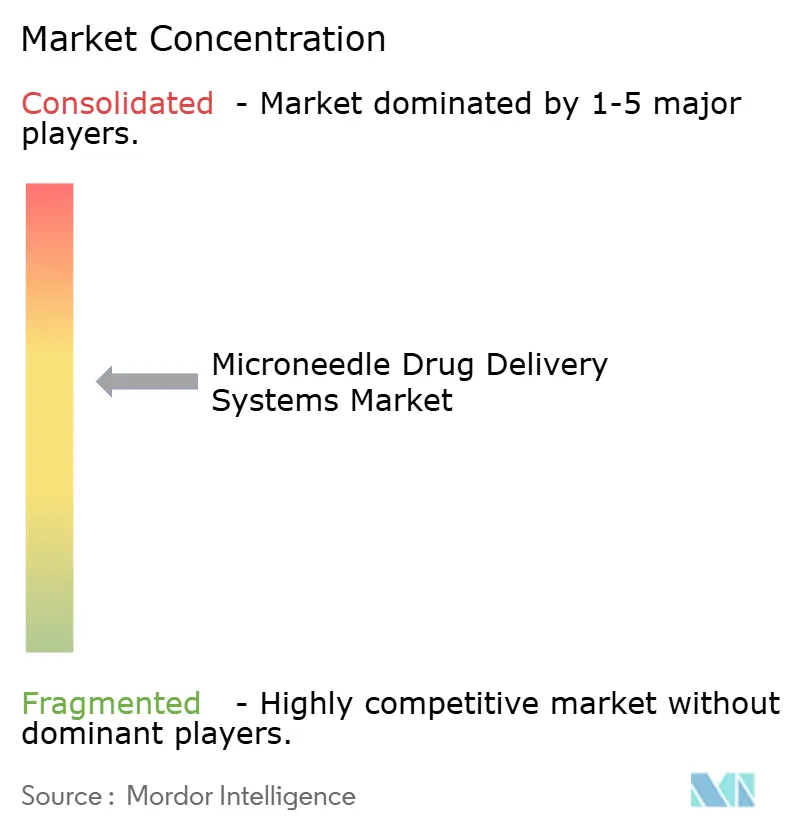
| Market Concentration | Medium |
Major Players *Disclaimer: Major Players sorted in no particular order Image © Mordor Intelligence. Reuse requires attribution under CC BY 4.0. | |
Microneedle Drug Delivery Systems Market Analysis by Mordor Intelligence
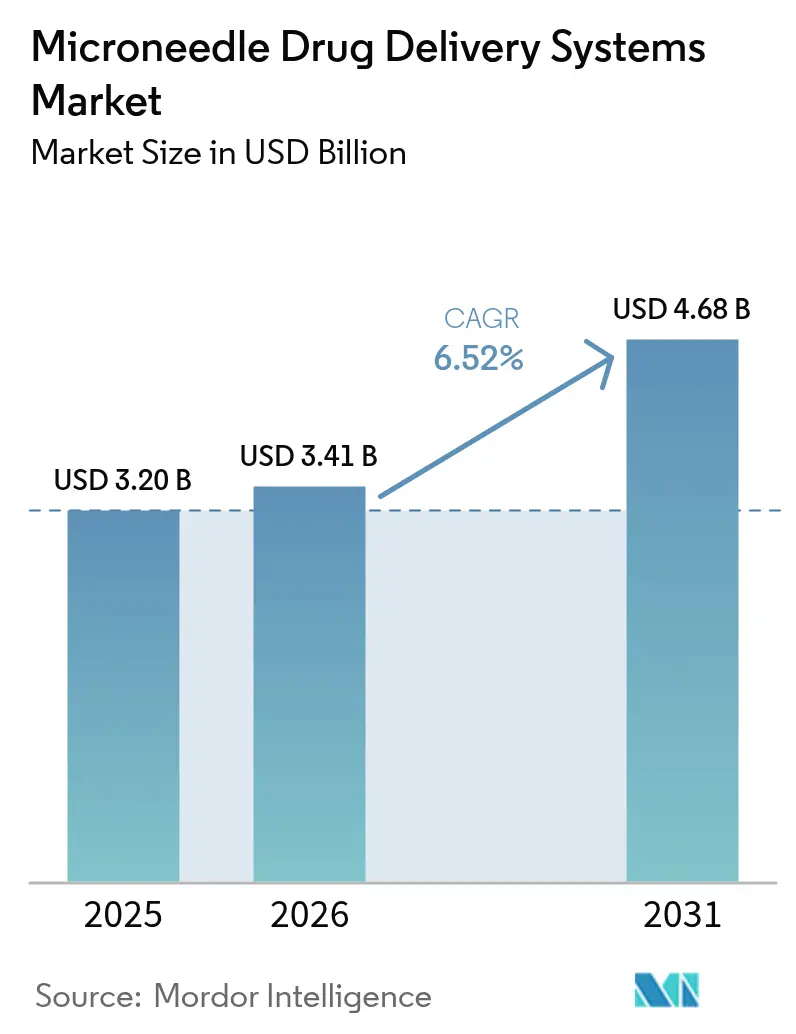
The microneedle drug delivery systems market size is projected to expand from USD 3.20 billion in 2025 and USD 3.41 billion in 2026 to USD 4.68 billion by 2031, registering a CAGR of 6.52% between 2026 to 2031. Solid growth reflects a strategic pivot toward dissolving and biodegradable designs that avoid sharps waste and support cold-chain independence. Peptide therapeutics are a key pull factor: Daewoong Pharmaceutical’s semaglutide patch achieved more than 80% relative bioavailability in 2024 Phase II trials, demonstrating clinical parity with subcutaneous injection. At the same time, defense and space-medicine agencies are running field pilots with ultra-compact patches that function outside hospital supply chains. Manufacturing capacity is scaling, led by Chinese roll-to-roll lines that push unit costs below USD 0.12, while MEMS-etched silicon arrays set new performance benchmarks in insertion reliability. Collectively, these shifts reposition the microneedle drug-delivery systems market as a mainstream platform for vaccination, diabetes care, and emergent biologics rather than a niche device category.
Key Report Takeaways
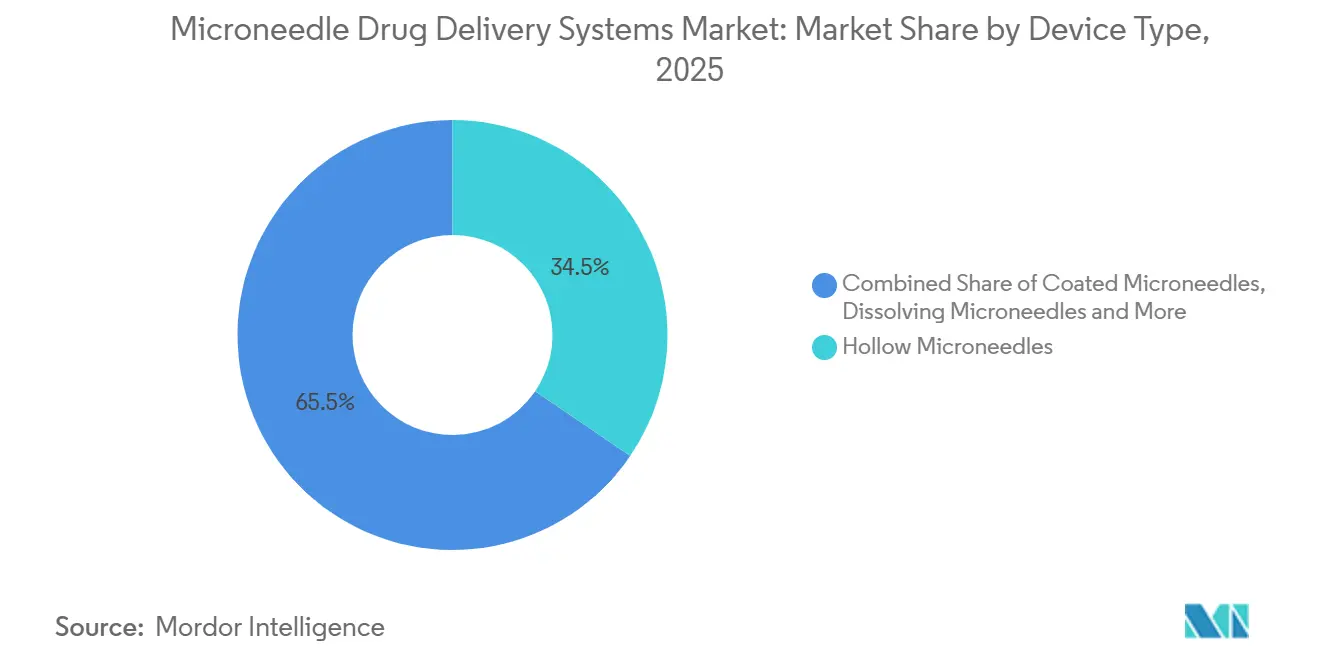
- By device type, hollow microneedles led with 34.55% of microneedle drug delivery systems market share in 2025, while dissolving variants are advancing at a 9.85% CAGR through 2031.
- By material, polymers held 45.53% share of the microneedle drug delivery systems market size in 2025 and silicon is projected to grow at 9.75% between 2026-2031.
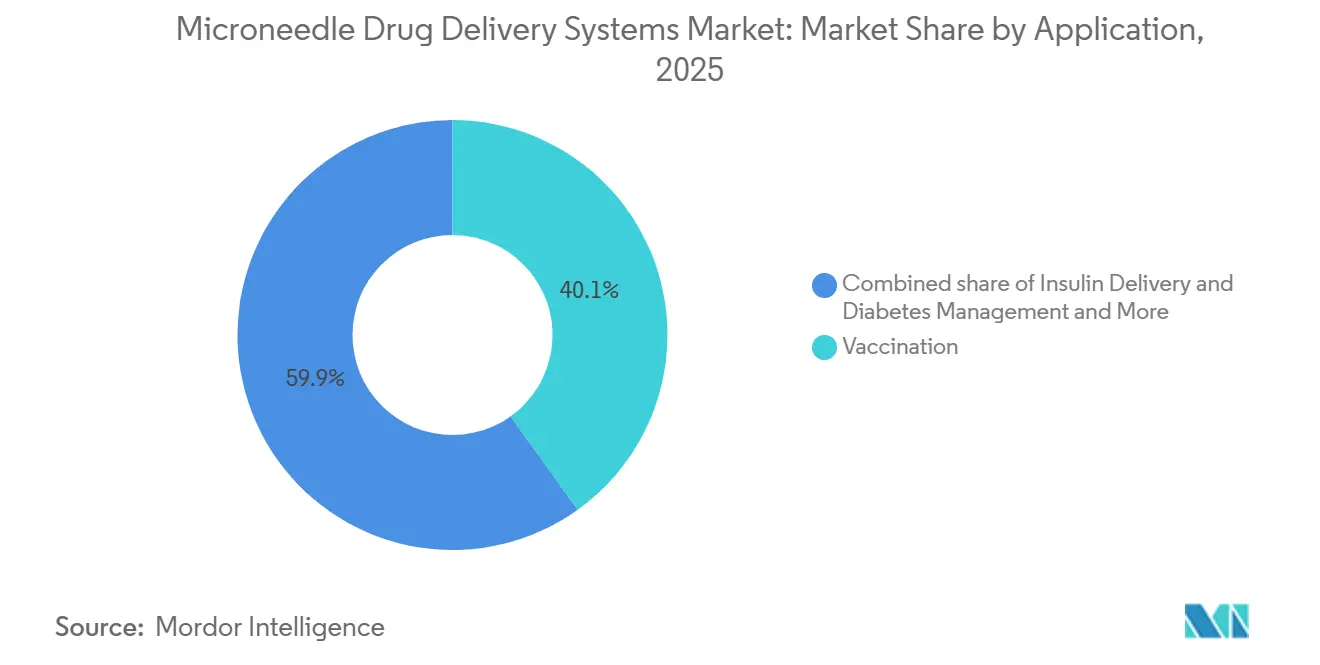
- By application, vaccination accounted for 40.15% of 2025 revenue yet insulin delivery is forecast to post the fastest 10.82% CAGR to 2031.
- By end user, hospitals and clinics contributed 44.52% of 2025 sales, whereas home-care settings will expand at a 10.12% CAGR over 2026-2031.
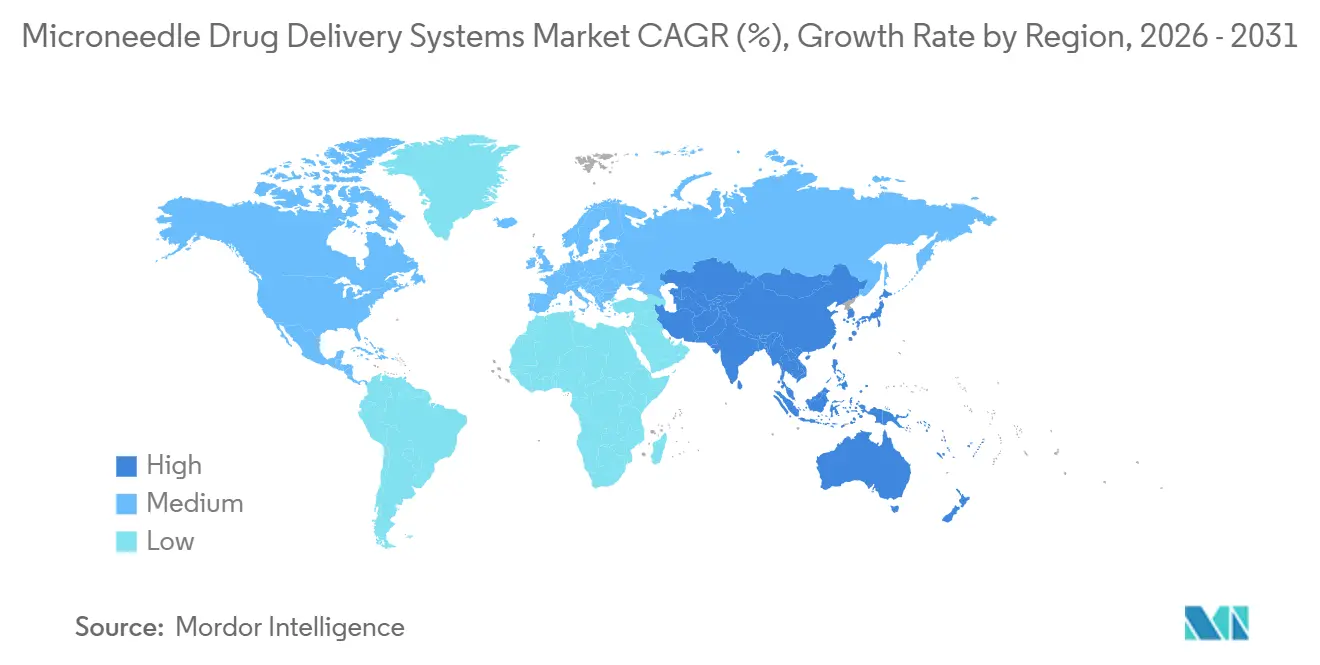
- By geography, North America retained 42.55% revenue share in 2025 and Asia-Pacific is set to register the highest 9.72% CAGR through 2031.
Note: Market size and forecast figures in this report are generated using Mordor Intelligence’s proprietary estimation framework, updated with the latest available data and insights as of 2026.
Market Trends and Insights
Drivers Impact Analysis of Microneedle Drug Delivery Systems Market*
| Driver | (~) % Impact on CAGR Forecast | Geographic Relevance | Impact Timeline |
|---|---|---|---|
| Rising prevalence of chronic diseases requiring painless self-administration | +1.8% | Global, highest intensity in North America and Europe | Medium term (2-4 years) |
| Advantages over conventional injections improving patient compliance | +1.5% | Global, strong in home-care settings across developed markets | Short term (≤ 2 years) |
| Growing vaccination initiatives adopting patch-based delivery | +1.3% | APAC core, Sub-Saharan Africa, Latin America | Medium term (2-4 years) |
| Technological advances in dissolving / biodegradable microneedles | +1.2% | North America and APAC (Japan, South Korea, China) | Long term (≥ 4 years) |
| Regulatory incentives to curb needle-stick injuries and sharps waste | +0.9% | North America, EU, spillover to MEA and Latin America | Short term (≤ 2 years) |
| Defense and space-medicine demand for ultra-compact, shelf-stable delivery | +0.6% | North America, select EU defense ministries | Long term (≥ 4 years) |
| Source: Mordor Intelligence | |||
Rising Prevalence of Chronic Diseases Requiring Painless Self-Administration
Diabetes affected 537 million adults in 2025 and is projected to reach 643 million by 2030, yet needle phobia continues to suppress adherence to injectable insulin. Microneedle patches remove visible needles and deliver basal doses aligned with weekly regimens, improving time-in-range outcomes by 23% in real-world studies[1]. Oncology trials now exploit dissolving arrays for intratumoral checkpoint inhibitors, achieving drug concentrations 40-fold higher than intravenous delivery with minimal systemic toxicity. Reimbursement parity for insulin patches in the United States and Germany removes a historic commercial obstacle. Collectively, these factors elevate microneedle patches from optional convenience to clinically mandated tools in chronic-disease pathways.
Advantages Over Conventional Injections Improving Patient Compliance
Needle phobia afflicts up to 30% of adults and 63% of children, directly limiting vaccine coverage. Microneedles penetrate only 50-900 µm into dermal tissue, avoiding nerve-rich layers and virtually eliminating pain. A 2024 randomized trial showed 89% of participants preferred the influenza patch over intramuscular injection, with pediatric acceptance rising to 91%. Gavi’s 2025-2030 strategy lists 11 vaccines for microneedle reformulation to close immunization gaps. Community health‐worker programs in rural India raised measles-rubella coverage from 78% to 97% using self-applicable patches. These findings confirm that painless delivery directly translates into higher population-level adherence.
Growing Vaccination Initiatives Adopting Patch-Based Delivery
The WHO-CEPI VIPS Alliance elevated microneedle patches to Tier 1 priority in 2024, citing cold-chain independence as essential for epidemic response. Vaxxas’ measles-rubella patch remained stable at 40 °C for 12 months and delivered non-inferior immunogenicity in Phase II trials. Sanofi’s quadrivalent influenza patch reached 92% seroconversion in interim Phase III data versus 88% for standard intramuscular vaccine. FDA draft guidance in 2025 enables a streamlined 510(k) route for vaccine patches that show bioequivalence, cutting review times to 12-18 months. Together, these developments reposition patches as the preferred modality for both mass immunization and rapid outbreak control.
Technological Advances in Dissolving / Biodegradable Microneedles
Polyvinylpyrrolidone, PLGA, and carboxymethyl cellulose formulations dissolve within minutes, eliminating sharps disposal and enabling ambient storage. MIT’s 3D-printed pillar-guided arrays achieved 95% dose uniformity across 1,000 needles, surpassing regulatory thresholds. Daewoong’s CLOPAM semaglutide patch matched injection bioavailability while dissolving in 15 minutes. Hydrogel-forming needles deliver zero-order insulin release for 48 hours, maintaining euglycemia without hypoglycemia in animal models. Silicon needles etched via MEMS processes insert with 98% success across diverse skin types. The cumulative effect is a broadened design toolkit that supports higher payloads, longer wear times, and tighter dose control.
Restraints Impact Analysis of Microneedle Drug Delivery Systems Market*
| Restraint | (~) % Impact on CAGR Forecast | Geographic Relevance | Impact Timeline |
|---|---|---|---|
| Limited drug-loading capacity per patch | -1.1% | Global, constraining high-dose biologics in North America and EU | Medium term (2-4 years) |
| Stringent and fragmented regulatory pathways | -0.8% | Global, most acute in EU and emerging markets | Short term (≤ 2 years) |
| Skin-microbiome variability impacting dose reproducibility | -0.6% | Global, larger variance in tropical regions | Long term (≥ 4 years) |
| Scarcity of GMP roll-to-roll fabrication equipment inflating CAPEX | -0.5% | North America, EU, APAC manufacturing hubs | Medium term (2-4 years) |
| Source: Mordor Intelligence | |||
Limited Drug-Loading Capacity Per Patch
Typical dissolving arrays hold 0.5-2 mg of active drug per cm², far below the 50-200 mg required for monoclonal antibodies. Delivering a 100 mg dose would demand a 50 cm² patch, an impractical footprint for patients. Hollow designs can deliver liquids but reintroduce sharps disposal and cold-chain burdens. Cyclodextrin complexation quadrupled insulin payloads to 4.8 mg per array in a 2025 proof-of-concept, yet scale-up remains years away. Until such breakthroughs mature, the microneedle drug-delivery systems market will cede high-dose biologics to autoinjectors.
Stringent and Fragmented Regulatory Pathways
Combination-product status requires dual evaluations. Zosano’s migraine patch spent 14 additional months in review before receiving a Complete Response Letter in 2024 that cited human-factors deficits. Europe’s MDR now mandates clinical evidence for all combination devices, disallowing literature-based routes that once accelerated low-risk submissions. India classifies microneedle patches as new drugs, obliging domestic Phase III studies despite foreign approvals. Sequential launches inflate go-to-market costs and slow global revenue capture, dampening near-term growth.
*Our forecasts treat driver/restraint impacts as directional, not additive. The impact forecasts reflect baseline growth, mix effects, and variable interactions.
Microneedle Drug Delivery Systems Market Segment Analysis
By Device Type:
Dissolving Variants Reshape Competitive DynamicsDissolving microneedles are forecast to grow 9.85% annually, outpacing the microneedle drug delivery systems market by 3.3 percentage points and eroding the 34.55% 2025 revenue share once held by hollow designs. Sharps-free disposal and ambient stability resonate with home-care users and vaccine agencies. Hydrogel-forming arrays enter pivotal trials for long-acting hormones, while coated and solid variants slip toward commoditization as Asian contract manufacturers undercut prices.
Hollow microneedles remain essential for real-time insulin titration, yet OSHA’s mandate to review needle-free options clouds their long-term outlook. Additive manufacturing widens design space; pillar-guided arrays hit 95% dose uniformity, signaling a shift toward high-precision geometries. Market leaders now split portfolios: premium dissolving formats for chronic therapies and cost-optimized hollow kits for acute care.

By Material:
Silicon Gains Ground Despite Polymer DominancePolymers commanded 45.53% of the microneedle drug-delivery systems market size in 2025, yet silicon is poised for the fastest 9.75% CAGR through 2031. Deep-reactive-ion-etched silicon reaches aspect ratios above 10:1 and insertion success of 98%.
Polymer arrays keep majority share through cost advantages—USD 0.08-0.15 per unit versus USD 0.40-0.70 for silicon—and their GRAS status speeds vaccine approvals. Metals retreat as dissolving polymers displace them for safety. Carbohydrate needles grow in pediatric vaccines, leveraging biodegradable sugars. Silicon’s optical transparency also halves batch-rejection rates via machine-vision inspection, aligning with quality initiatives in high-value biologics.
By Application:
Insulin Delivery Outpaces Vaccination GrowthVaccination held 40.15% of 2025 revenue, yet insulin management will advance at a 10.82% CAGR, the strongest among all uses. Continuous glucose monitoring integration turns patches into closed-loop systems that raise time-in-range metrics by 23%.
Pain management, dermatology, and oncology follow with steady gains. Lidocaine patches shorten outpatient procedures, while cosmetic hyaluronic-acid patches sell through over-the-counter channels in Japan and South Korea. Intratumoral microneedles for checkpoint inhibitors register 40-fold tumor drug concentration improvements in early trials. Segment diversification spreads risk and widens the addressable microneedle drug-delivery systems market.
By End User:
Home-Care Settings Drive Structural ShiftHospitals and clinics generated 44.52% of 2025 sales but face share erosion as payers shift chronic management to patients’ homes. Home-care venues are forecast to post a 10.12% CAGR, the fastest across end users.
Medicare Part D coverage for insulin patches began in 2025, lowering copays and spurring adoption in the United States. Community programs in India achieved 97% measles-rubella coverage when distributing self-applied patches. Hospitals retain dominance in oncology where initial dosing requires observation, but even these clinics use patches for maintenance therapy, compressing chair time and freeing infusion capacity.
Geography Analysis
North America Microneedle Drug Delivery Systems Market
North America retained 42.55% microneedle drug-delivery systems market share in 2025 on the strength of an established 510(k) route and USD 18 million in DoD contracts. FDA guidance issued in 2025 further streamlined vaccine-patch approvals. Canada leverages its agile licensing pathway to host Phase II studies, and Mexico’s fledgling market is held back by limited public procurement. Regionally, diabetes and dermatology lead uptake thanks to robust reimbursement and high out-of-pocket willingness.
APAC Microneedle Drug Delivery Systems Market
Asia-Pacific is forecast to grow at 9.72%, the fastest regional CAGR, fueled by China’s low-cost roll-to-roll output, Japan’s revised legislation that accelerates cosmetic-device approvals[2], and South Korea’s K-beauty exports. India channels public funds toward cold-chain-free vaccines for remote districts. Australia and South Korea target premium diabetes and oncology patches. Diverse national priorities produce a mosaic of growth levers yet converge on a single theme: cost-efficient manufacturing married to rising consumer expectations.
EMEA and South America Microneedle Drug Delivery Systems Market
Europe grows more slowly due to fragmented reimbursement. Germany’s statutory insurer began covering dissolving insulin patches in 2025, but France and Spain await local cost-effectiveness studies. The UK’s NICE endorsed influenza patches but NHS rollout lags budget cycles. GCC nations adopt premium microneedle products, while South Africa pilots measles-rubella patches in rural clinics. Brazil leads South America after ANVISA cleared an insulin patch in 2024. Across territories, absence of harmonized device–drug rules forces stepwise launches, diluting speed to market.
Regulatory Landscape
Microneedle drug delivery systems commonly sit within drug-device combination product oversight, which creates multi-track requirements across jurisdictions. In the United States, FDA differentiates microneedling devices intended for aesthetic use (Class II, 510(k) under 21 CFR 878.4430) from products intended to deliver a drug or biologic, which face combination-product expectations and broader product development and quality requirements aligned with transdermal/topical delivery system guidance. This distinction shapes study design, human factors work, and CMC packages.
In Europe, the EU Medical Devices Regulation (MDR 2017/745) classification depends on intended use and contact duration (Annex VIII), while drug-device “borderline” determinations and interface management are informed by MDCG guidance (for example, MDCG 2022-5) and EMA work on drug-device combinations, alongside EMA quality guidance for transdermal patches. Across major markets, quality and safety expectations commonly anchor to ISO 13485 quality management systems and ISO 10993 biological evaluation, pushing developers to align device verification (insertion performance, applicator reliability) with pharmaceutical quality documentation earlier in development.
Competitive Landscape
The microneedle drug-delivery systems market is moderately fragmented. The top five players, Becton Dickinson, Corium International, Terumo, Nitto Denko, and Vaxxas, control a sizeable slice of 2025 revenue, yet startup pipelines swell on academic IP. Asian contract manufacturers drive price competition by supplying polymer arrays at USD 0.08-0.12 per unit, forcing incumbents to differentiate on regulatory track record and hospital relationships.
Vaxxas differentiates through a spring-loaded applicator that assures penetration consistency, proven in measles-rubella Phase II trials. Micron Biomedical’s USD 33 million Series B funded a 50,000 ft² GMP plant in Georgia, providing scale parity with larger device firms. Patent filings for microneedle technologies rose 42% year-over-year in 2025 with hydrogel and MEMS silicon the fastest-growing categories[3].
Large pharma is increasingly partnering rather than building in-house expertise: Corium licensed its platform to a top-10 drug maker for a diabetes patch in 2024. Asian cosmetics brands exploit regulatory gray zones to market hyaluronic-acid patches as wellness devices, gaining early consumer mindshare. Consolidation is likely as incumbents acquire innovative startups to secure IP and as contract manufacturers move up the value chain into branded offerings.
Microneedle Drug Delivery Systems Industry Leaders
-
Becton, Dickinson and Company
-
Corium International, Inc.
-
Terumo Corporation
-
Nitto Denko Corporation
-
Vaxxas Pty Ltd.
- *Disclaimer: Major Players sorted in no particular order
Microneedle Drug Delivery Systems Market Companies Covered in this Report
- Beckton Dickinson
- Corium International, Inc.
- CosMED Pharmaceutical Co., Ltd.
- Debiotech SA
- Gerresheimer
- Kimoola Co., Ltd.
- Kindeva Drug Delivery
- Lohmann Therapie-Systeme AG
- Microdermics Inc.
- Micron Biomedical Inc.
- Nanopass Technologies Ltd.
- Nitto Denko
- QuadMedicine Inc.
- Raphas Co., Ltd.
- SNvia Co., Ltd.
- Solventum Corporation
- Terumo
- Vaxxas Pty Ltd.
Market Opportunities and Future Outlook
Near-term whitespace concentrates around programs that prioritize cold-chain flexibility, simplified administration, and reduced sharps waste, especially vaccination, pediatric use, and select specialty therapeutics. WHO-CEPI VIPS Alliance prioritization of microneedle patches (Tier 1 in 2024) and Gavi’s 2025-2030 strategy listing vaccines for microneedle reformulation reinforce a demand signal for patch-based immunization formats, while clinical progress in peptides (for example, Daewoong Pharmaceutical’s semaglutide patch reporting more than 80% relative bioavailability in 2024 Phase II trials) supports expansion beyond vaccines into chronic therapies.
Manufacturing scale-up and EU access pathways provide concrete opportunity levers as more companies move from pilot to commercial readiness under MDR-aligned certification. Micron Biomedical’s May 2026 opening of a 26,000 sq ft commercial-scale manufacturing facility in Alpharetta, Georgia, targets higher-volume supply for dissolvable microarray vaccine and therapeutic products, while July 2026 commentary from WCC Biomedical placed its microneedle patch technology at the PIC/S GMP pilot production stage with an automation concept targeting 10 million units of annual capacity per line. On the market-entry side, Huons Meditech’s May 2026 CE-MDR certification for a needle component within its Dermashine aesthetic drug delivery platform signals continued channel expansion in Europe, and China-side clinical trial enablement (for example, Guangzhou Xinji Pharmaceutical receiving clinical trial approval for a dexmedetomidine hydrochloride microneedle patch for pediatric preoperative sedation in May 2026) indicates additional therapeutic use cases entering regulated clinical pathways.
Recent Industry Developments in Microneedle Drug Delivery Systems Market
- April 2026: Becton, Dickinson and Company (BD) announced a strategic, non-exclusive collaboration with Suttons Creek to help pharma and biotech companies navigate engineering, testing, and regulatory requirements for combination products. The collaboration supports BD's services around drug-device integration, a recurring bottleneck for microneedle and other advanced delivery formats.
- October 2025: Terumo Corporation completed the acquisition of a drug product plant and quality control laboratory from WuXi Biologics in Leverkusen, Germany. The added capacity and capabilities expand CDMO offerings covering aseptic drug product work and device-related assembly, improving end-to-end readiness for complex delivery systems.
- July 2024: Zosano received a Complete Response Letter for its migraine microneedle patch application that cited human-factors deficits after an extended review period. The outcome highlighted the weight regulators place on usability and application reliability for microneedle platforms, influencing development timelines and validation plans across the category.
Microneedle Drug Delivery Systems Market Report Scope and Research Methodology
Market Definition and Coverage
This market covers microneedle-based systems used to deliver drugs through the skin, including microneedle arrays and patch style formats designed to improve dosing convenience and reduce needle pain.
Scope exclusions: We exclude conventional hypodermic needles and syringes, standard transdermal patches without microneedles, and purely cosmetic microneedling devices not intended for drug delivery.
Segments Covered in This Report
- By Device Type
- Solid Microneedles
- Hollow Microneedles
- Coated Microneedles
- Dissolving Microneedles
- Hydrogel-Forming Microneedles
- By Material
- Silicon
- Metals (Stainless Steel, Titanium)
- Polymers (PVP, PLA, PLGA, etc.)
- Carbohydrates & Sugars
- Other Material (Ceramics & Composites)
- By Application
- Vaccination
- Insulin Delivery & Diabetes Management
- Pain Management / Local Anesthesia
- Dermatology & Cosmetics
- Oncology & Immuno-Oncology
- Other Applications
- By End-user
- Hospitals & Clinics
- Pharmaceutical & Biotech Companies
- Academic & Research Institutes
- Homecare & Self-Administration Settings
- By Geography
- North America
- United States
- Canada
- Mexico
- Europe
- Germany
- United Kingdom
- France
- Italy
- Spain
- Rest of Europe
- Asia-Pacific
- China
- India
- Japan
- Australia
- South Korea
- Rest of Asia-Pacific
- Middle East and Africa
- GCC
- South Africa
- Rest of Middle East and Africa
- South America
- Brazil
- Argentina
- Rest of South America
- North America
Data Sources, Market Sizing, and Validation
Desk Research
Desk work started with mapping what is being developed and what is already used clinically, since microneedles sit between medical devices and drug products in many countries. We used public sources such as the FDA and the US National Institutes of Health (including clinical trial registries), WHO publications related to immunization delivery, and Centers for Disease Control and Prevention vaccination and disease-burden statistics to anchor the demand backdrop. For product and technology direction, we also referred to peer-reviewed journals and patent databases, since these help confirm which microneedle formats are moving from lab prototypes toward scale-up.
To keep the commercial picture realistic, we reviewed company filings, investor presentations, press releases, and reputable media coverage to capture manufacturing scale, partnerships, and pipeline focus. Select paid database subscriptions were used only for company financials and news screening, and for patent record consolidation, which helped reduce missed signals. The desk research source list above is illustrative, and many other public documents and references were also used for data collection, validation, and clarification.
Primary Interviews and Surveys
Primary work focused on confirming what is actually being adopted and paid for, especially across vaccine delivery programs, diabetes and other chronic therapy use cases, and preferences for hospital versus home administration. We spoke with a mix of device developers, contract manufacturers, pharmaceutical and biotech stakeholders, and clinicians, then cross-checked regional differences across major demand centers so that pricing, regulatory timing, and scale-up assumptions could be corrected where needed.
Distribution of primary research fieldwork respondents
| Company type | Respondent position | Region |
|---|---|---|
| Top tier: 30% | CXOs: 20% | APAC: 42% |
| Mid tier: 48% | Functional/Unit leaders: 29% | EMEA: 37% |
| Smaller Players: 22% | Managers: 51% | Americas: 21% |
Market-Sizing & Forecasting
Sizing was built using a top-down and bottom-up approach. We first reconstructed a realistic addressable demand pool by therapy setting and delivery suitability, then checked it against supply-side readiness. The top-down view leaned on adoption logic for needle-free or minimally invasive delivery, and it was translated into value using typical price ranges observed across microneedle array formats and patch-based systems. To keep totals grounded, selective bottom-up checks were added through supplier roll-ups, sampled average selling price (ASP) times estimated volume in priority use cases, and channel checks on which products are closest to commercialization.
A few practical inputs mattered most in the model, including the share of targeted therapies where transdermal delivery is technically feasible, expected clinical trial progression into approvals, manufacturing scale-up milestones, ASP progression as volumes rise, and region-wise uptake differences driven by immunization infrastructure and chronic disease management pathways. Where data gaps existed, for example early-stage programs without disclosed volumes, assumptions were kept conservative and were validated through repeated interview follow-ups, then sensitivity checks.
Forecasts were produced using scenario analysis, because adoption depends heavily on regulatory timing, partnership activity, and how quickly manufacturing yields improve. Each scenario was tied to clear variables, then aligned to expert consensus gathered during primary conversations.
Data Validation & Update Cycle
Outputs were validated through cross-checks that compare the model against independent signals, such as clinical pipeline momentum, visible manufacturing expansion, and region-level adoption indicators for relevant therapy areas. When a value looked unusually high or low, we reviewed the driver assumptions, re-checked unit economics, and revisited underlying conversion rates before sign-off.
A multi-step internal review follows so that calculation logic, inputs, and final numbers are consistent across segments and regions. Reports are refreshed annually, and interim updates are triggered when a material event occurs, such as a major approval, a large capacity addition, or a shift in reimbursement outlook. Before delivery, a final analyst pass is completed to ensure clients receive the most current view available.
Mordor Intelligence's Microneedle Drug Delivery Systems Market Estimate Compared With Other Published Estimates
Published market sizes for microneedle drug delivery systems can differ quite a bit. In most cases, differences trace back to how each publisher draws the product boundary, which year is treated as the current value, and how pricing and adoption are projected as programs move from trials into commercialization.
The largest gap drivers we saw were whether standard transdermal patches and cosmetic microneedling tools are mixed into the total, how aggressive the assumed ramp is for vaccine and chronic therapy pipelines, and whether pricing is held flat versus stepped down as volumes scale. Currency timing also matters because some estimates blend multi-year exchange rates, and refresh cadence matters too when pipeline events change the near-term adoption curve.
Benchmark comparison
| Source | Market Size | Gaps in Research Methodology |
|---|---|---|
| Mordor Intelligence | USD 3.41 B (2026) | |
| Industry Publisher A | USD 3.13 B (2024) | Uses an earlier base year and appears to apply a broader period framing, which can shift the current-year value when adoption ramp and ASP assumptions are not aligned to the same commercialization timing. |
| Industry Publisher B | USD 6.10 B (2022) | Reports a larger early-year total that likely reflects wider inclusion of adjacent delivery formats and a different price-mix assumption across therapy uses, which inflates value when volumes are still limited. |
Overall, the spread is best explained by scope and timing choices, especially around what counts as a microneedle drug delivery system and how quickly ASPs normalize as manufacturing scales. By separating microneedle arrays and true microneedle patch systems from adjacent transdermal formats, and by re-checking adoption steps against pipeline and scale-up signals each cycle, the estimate is kept more traceable and repeatable, a modeling choice applied by Mordor Intelligence.
Key Questions Answered in the Report
How large will the microneedle drug-delivery systems market be by 2031?
The microneedle drug-delivery systems market size is projected to reach USD 4.68 billion by 2031.
Which segment is expanding the fastest?
Insulin delivery applications are expected to post the strongest 10.82% CAGR between 2026-2031 thanks to closed-loop patch systems.
Why are dissolving microneedles gaining share?
They remove sharps waste, enable cold-chain-free transport, and match injection bioavailability for peptides such as semaglutide.
What limits broader adoption in high-dose biologics?
Dissolving patches currently hold only up to 2 mg of drug per cm², well below antibody dose requirements.
Which region offers the highest growth potential?
Asia-Pacific is forecast to record a 9.72% CAGR through 2031, underpinned by China's manufacturing scale and Japan's regulatory reforms.
How are regulators supporting the technology?
FDA draft guidance in 2025 enables an expedited 510(k) pathway for vaccine patches that demonstrate bioequivalence, shortening U.S. review times to 12-18 months.