
Market Overview
| Study Period | 2021 - 2031 |
|---|---|
| Forecast Data Period | 2026 - 2031 |
| Base Year Market Size (2025) | USD 173.32 Million |
| Market Size (2026) | USD 184.9 Million |
| Market Size (2031) | USD 255.56 Million |
| Growth Rate (2026 - 2031) | 6.68 % |
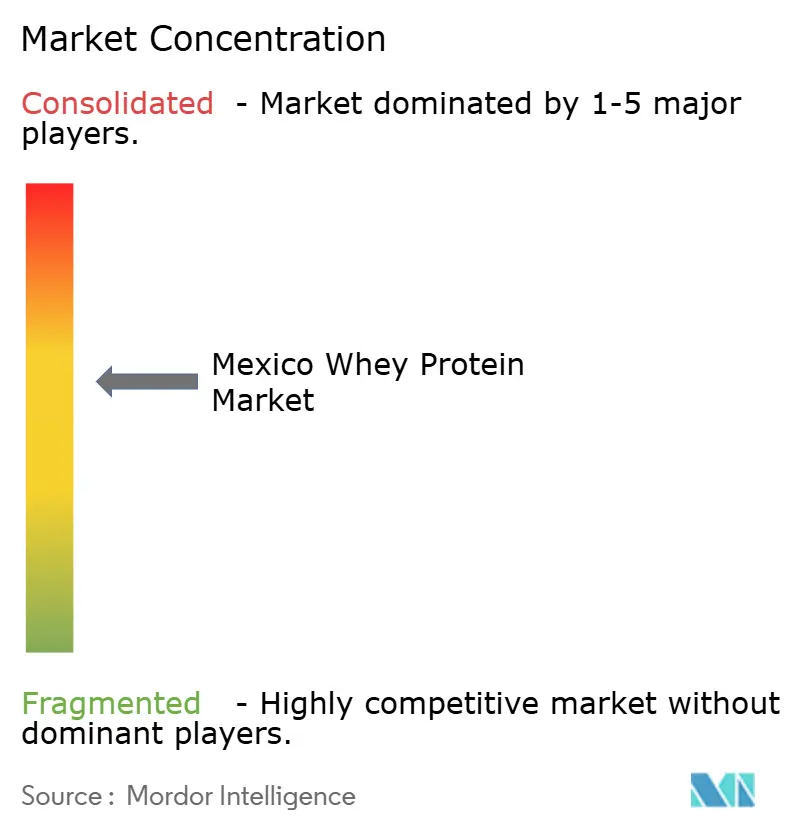
| Market Concentration | Medium |
Major Players
*Disclaimer: Major Players sorted in no particular order Image © Mordor Intelligence. Reuse requires attribution under CC BY 4.0. |
|
Mexico Whey Protein Market Analysis by Mordor Intelligence
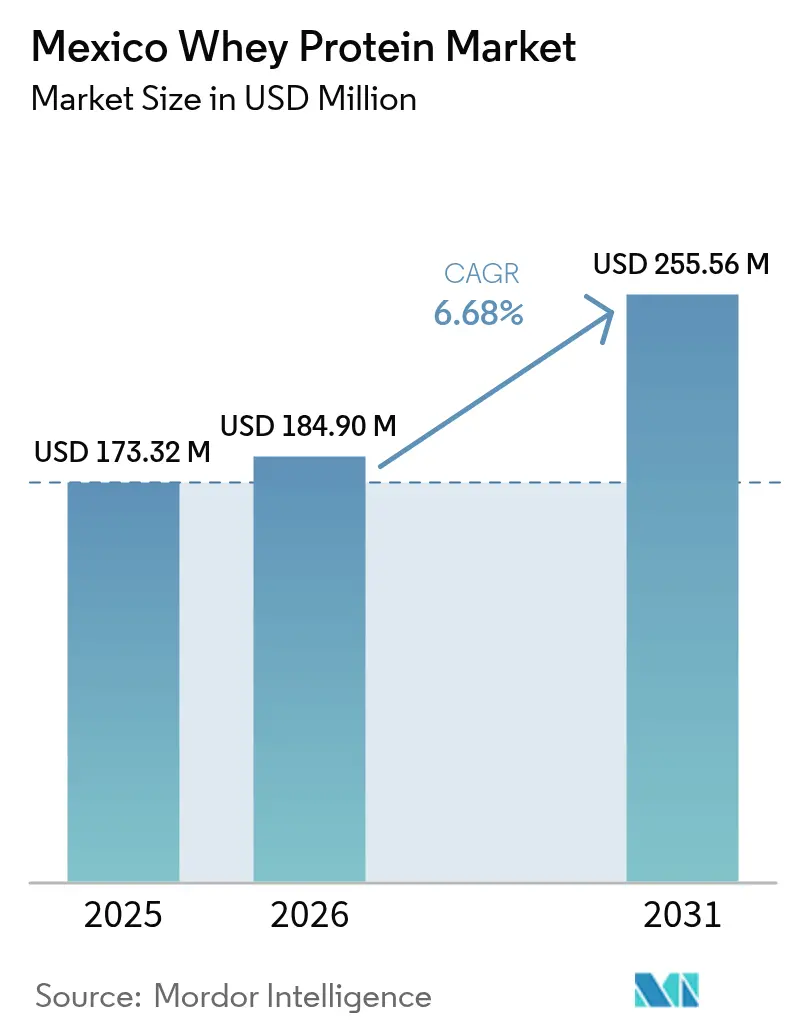
The Mexico Whey Protein Market size is expected to grow from USD 173.32 million in 2025 to USD 184.9 million in 2026 and is forecast to reach USD 255.56 million by 2031 at 6.68% CAGR over 2026-2031. This growth reflects changes in the nutrition landscape and an expanding consumer base. The market is shifting from a niche, athlete-focused segment to a broader nutrition category, driven by increasing awareness of protein's benefits for muscle health, weight management, and overall wellness. Whey protein is now viewed not only as a sports supplement but also as a functional dietary component suitable for daily consumption across various age groups and lifestyles. The market's development is influenced by changes in consumer behavior, including the growing adoption of fitness and active lifestyles, heightened health and wellness awareness, and increased recognition of protein deficiencies in regular diets.
Key Report Takeaways
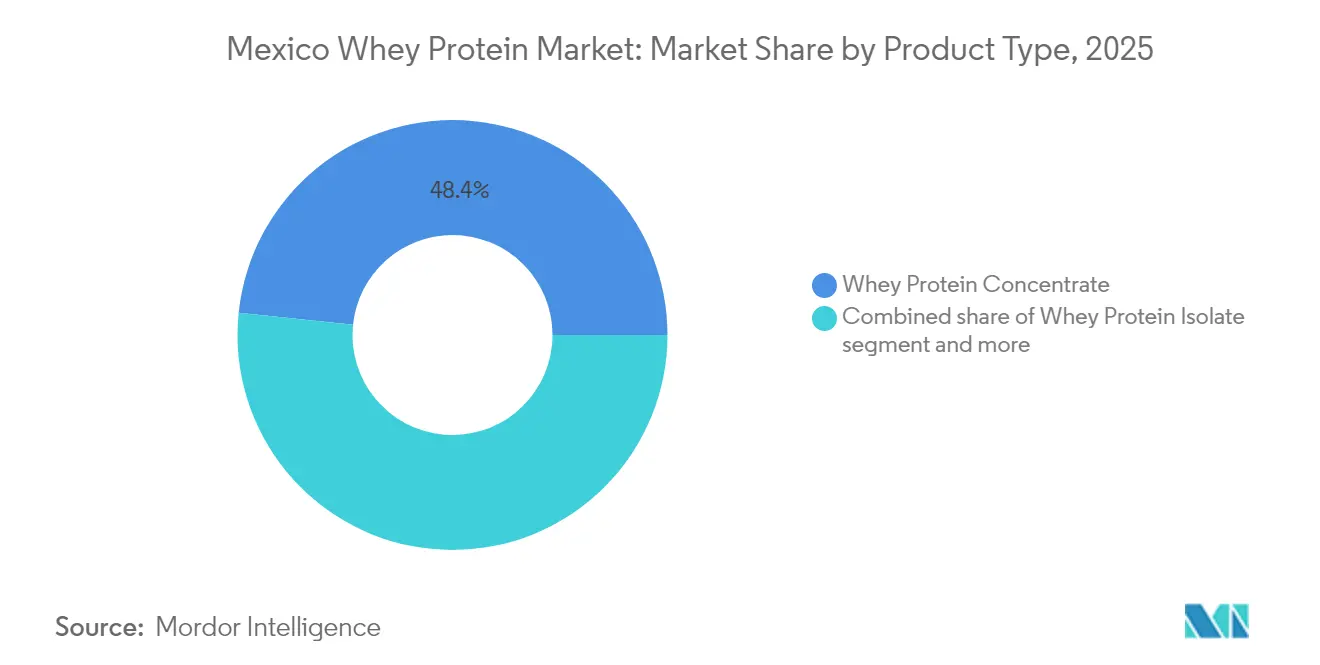
- By product type, whey protein concentrate led with 48.35% of Mexico whey protein market share in 2025; hydrolyzed whey protein is forecast to expand at a 7.08% CAGR to 2031.
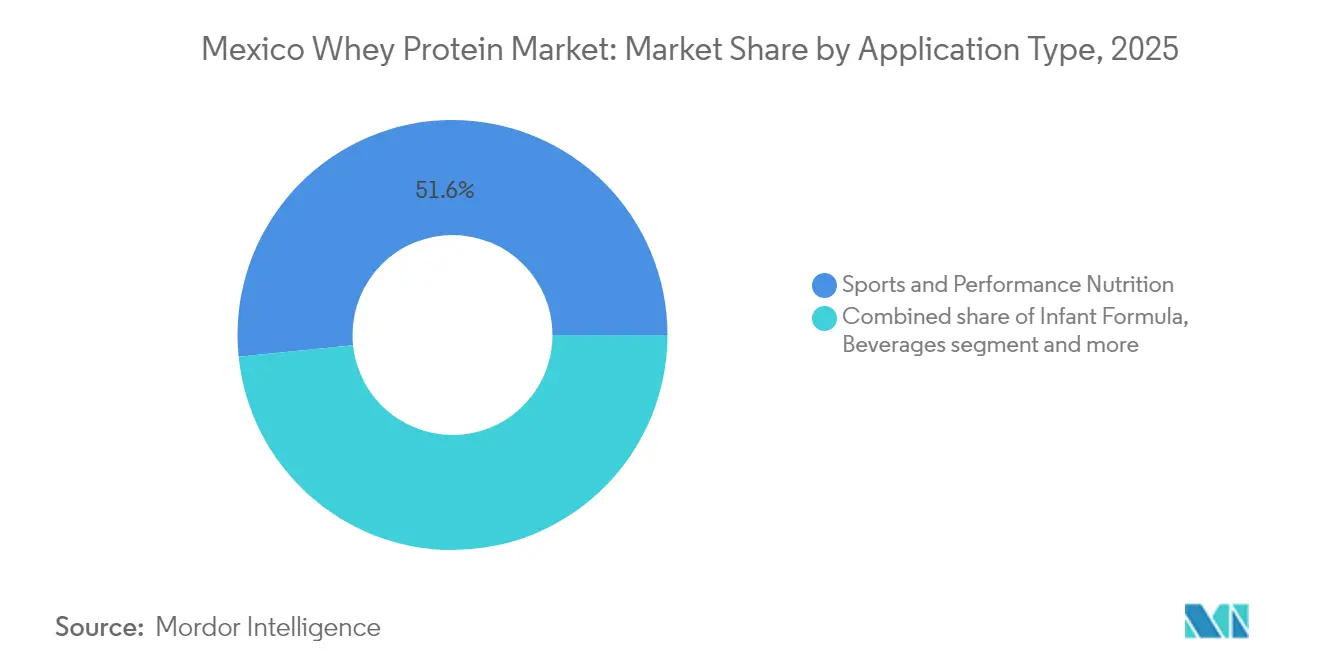
- By application, sports and performance nutrition accounted for a 51.62% share of Mexico whey protein market size in 2025 and beverages are advancing at an 7.92% CAGR through 2031.
Note: Market size and forecast figures in this report are generated using Mordor Intelligence’s proprietary estimation framework, updated with the latest available data and insights as of 2026.
Mexico Whey Protein Market Trends and Insights
Drivers Impact Analysis*
| Driver | (~) % Impact on CAGR Forecast | Geographic Relevance | Impact Timeline |
|---|---|---|---|
| Growing fitness and active lifestyle culture | +1.2% | National, with concentration in Mexico City, Guadalajara, Monterrey | Medium term (2-4 years) |
| Rising health and wellness awareness | +1.0% | National, accelerating in urban centers and higher socioeconomic segments | Short term (≤ 2 years) |
| Increase in protein deficiency awareness | +0.8% | National, particularly among women and elderly populations | Medium term (2-4 years) |
| Preference for clean-label and natural products | +0.7% | National, driven by NOM-051 compliance and consumer demand | Short term (≤ 2 years) |
| Improved processing technologies | +0.9% | Global, with direct impact on Mexico through imported ingredients | Long term (≥ 4 years) |
| Product innovation and variety | +1.1% | National, led by international brands and e-commerce platforms | Medium term (2-4 years) |
| Source: Mordor Intelligence | |||
Growing fitness and active lifestyle culture
The growing culture of fitness and active lifestyles is a key driver for the Mexico whey protein market. An increasing portion of the population is participating in physical exercise, organized sports, and recreational fitness activities. This cultural shift toward health, strength, and physical well-being has broadened the consumer base for protein supplements, extending beyond professional athletes to include gym-goers, amateur sports participants, and general fitness enthusiasts. Whey protein has gained popularity as a nutritional solution within this trend due to its high biological value, rapid absorption, and established role in supporting muscle recovery, endurance, and lean muscle development. This trend is supported by national participation data. According to the National Institute of Statistics and Geography (INEGI), 41.1% of people in Mexico engaged in some form of sport or physical exercise during their free time in 2024 [1]Source: National Institute of Statistics and Geography (INEGI), "Number of adults who were physically active in Mexico", inegi.org.mx. This high level of participation highlights the growing prevalence of fitness and active lifestyles across the country. It also emphasizes a broad and expanding market for sports and performance nutrition products, with whey protein recognized as a fundamental component of post-exercise nutrition.
Rising health and wellness awareness
Increasing health and wellness awareness is a key driver of the Mexico whey protein market, as more consumers recognize the connection between nutrition, lifestyle, and long-term health outcomes. Concerns about weight management, metabolic health, and overall physical well-being are prompting individuals to adopt protein-rich diets as part of balanced nutrition plans. Whey protein, valued for its high-quality amino acid profile, satiety benefits, and role in supporting lean muscle mass, is increasingly perceived not only as a sports supplement but also as a daily nutritional option for weight management and improving dietary quality. According to the Ministry of Health, 67.6% of individuals aged 20–39 in Mexico were classified as overweight or obese in 2023, underscoring the significant nutrition- and lifestyle-related health challenges in the country [2]Source: Ministry of Health, "Prevalence of overweight and obesity in adults in Mexico", gob.mx. This high prevalence has heightened awareness of preventive health, encouraging consumers to adjust their dietary habits by increasing protein intake and reducing empty calories. Consequently, whey protein is gaining popularity in weight management products, functional foods, and beverages focused on satiety, muscle preservation, and healthier lifestyles.
Increase in protein deficiency awareness
Rising awareness of protein deficiency is a significant driver of the Mexico whey protein market, as consumers and healthcare professionals increasingly emphasize the importance of adequate protein intake for maintaining muscle mass, metabolic health, and overall physical functionality. Historically, many diets in the region have been carbohydrate-dominant, resulting in insufficient consumption of high-quality protein, particularly among young adults, older populations, and individuals with active lifestyles. With improved nutritional education and growing awareness of the effects of protein deficiency such as muscle loss, fatigue, weakened immunity, slower recovery, and reduced physical performance consumers are actively seeking convenient and complete protein sources. Whey protein, known for its high biological value, complete amino acid profile, rapid digestibility, and versatility in various applications, is gaining recognition as an effective solution to address daily protein intake deficiencies and support overall health goals.
Preference for clean-label and natural products
The preference for clean-label and natural products is a significant driver of the Mexico whey protein market, as consumers increasingly value transparency, simplicity, and trust in food and nutrition products. This trend reflects a broader shift toward informed consumption, where individuals carefully evaluate product contents and prefer items made with natural, minimally processed ingredients and clear labeling. In the whey protein market, this has led to growing demand for formulations free from artificial sweeteners, synthetic flavors, and unnecessary additives. Consumers are particularly drawn to claims such as natural sourcing, grass-fed dairy, non-GMO ingredients, and clean manufacturing practices. Supporting this trend, consumer behavior insights from the Kerry Group reveal that 50% of consumers in Mexico read product labels more carefully, and 43% pay close attention to ingredient lists. These findings highlight increased awareness and skepticism toward complex or unfamiliar ingredients, emphasizing the critical role of ingredient transparency in building consumer trust.
Restraints Impact Analysis*
| Restraint | (~) % Impact on CAGR Forecast | Geographic Relevance | Impact Timeline |
|---|---|---|---|
| High product pricing and premium positioning | -0.6% | National, most acute in lower socioeconomic segments and rural areas | Short term (≤ 2 years) |
| Competition from plant-based proteins | -0.5% | National, concentrated in vegan and lactose-intolerant consumer segments | Medium term (2-4 years) |
| Supply chain and import dependence | -0.4% | National, with vulnerability to trade policy and logistics disruptions | Long term (≥ 4 years) |
| Regulatory and labeling challenges | -0.3% | National, affecting all manufacturers and importers | Medium term (2-4 years) |
| Source: Mordor Intelligence | |||
High product pricing and premium positioning
High product pricing and premium positioning serve as significant restraints on the growth of the Mexico whey protein market, restricting adoption primarily to urban and fitness-focused consumer segments. Premium whey protein products, particularly isolates and hydrolyzed variants, are priced considerably higher due to advanced processing requirements, imported raw materials, and value-added attributes such as purity, fast absorption, or clean-label claims. This premium pricing creates a barrier for price-sensitive consumers, especially in secondary cities and semi-urban or rural areas, where affordability is a critical factor in purchasing decisions. Consequently, a substantial portion of potential consumers may either reduce consumption frequency or choose lower-cost protein alternatives. Furthermore, the lack of targeted marketing strategies, limited distribution networks, and insufficient consumer education about the benefits of whey protein in non-urban areas significantly impede market growth and broader adoption.
Competition from plant-based proteins
Competition from plant-based proteins poses a significant and escalating challenge for the Mexico whey protein market, as consumers increasingly shift toward alternative protein sources driven by health, sustainability, and ethical priorities. Plant-based proteins, including pea, soy, rice, and blended botanical formulations, are rapidly gaining prominence in sports nutrition, functional foods, and beverages, establishing themselves as credible and attractive substitutes for animal-based whey protein. These alternatives are heavily marketed as lactose-free, vegan-friendly, and environmentally sustainable, strongly appealing to individuals with digestive sensitivities, dairy-free preferences, or plant-forward dietary lifestyles. With growing consumer awareness, continuous product innovation, and wider accessibility of plant-based options, these alternatives are steadily capturing a larger share of the market, particularly among younger, health-conscious, and environmentally aware consumers who are driving this shift.
*Our forecasts treat driver/restraint impacts as directional, not additive. The impact forecasts reflect baseline growth, mix effects, and variable interactions.
Segment Analysis
By Product Type: Hydrolyzed Whey Gains Despite Concentrate Dominance
Whey protein concentrate (WPC) accounted for 48.35% of the total market share in the Mexico whey protein market in 2025, highlighting its significant role in driving market growth. This dominance is attributed to WPC's balanced combination of protein content, functionality, and versatility, making it suitable for diverse applications in sports nutrition, functional foods, beverages, and general wellness products. Unlike isolates or hydrolysates, Whey protein concentrate retains beneficial bioactive compounds such as immunoglobulins and lactoferrin, enhancing its appeal to manufacturers prioritizing holistic nutrition over high protein purity. Additionally, its strong amino acid profile, particularly branched-chain amino acids (BCAAs), supports its extensive use in muscle recovery and performance-focused formulations.
Hydrolyzed whey protein is projected to grow at a CAGR of 7.08% from 2026 to 2031, reflecting its increasing importance in premium and specialized nutrition markets. This growth is driven by rising demand for fast-absorbing, highly digestible protein formats, particularly among professional athletes, fitness enthusiasts focused on performance, and individuals seeking advanced recovery solutions. The enzymatic hydrolysis process breaks down protein chains into smaller peptides, enabling faster amino acid delivery and reducing gastrointestinal stress, distinguishing hydrolyzed whey from conventional concentrates and isolates.



By Application: Beverages Surge as Sports Nutrition Matures
Sports and performance nutrition accounted for a significant 51.62% share of the Mexico whey protein market in 2025, underscoring its pivotal role in driving market demand. This dominance is primarily attributed to the growing fitness and wellness culture in Mexico. Increasing numbers of consumers, including professional athletes, amateur sports enthusiasts, and gym-goers, are prioritizing muscle building, recovery, and performance enhancement. Whey protein, known for its high-quality amino acid profile and rich content of branched-chain amino acids (BCAAs), has become the preferred supplement for post-workout recovery, endurance improvement, and lean muscle mass development. The market is further supported by the proliferation of specialized sports nutrition products, such as protein powders, ready-to-drink shakes, bars, and fortified beverages, catering specifically to performance-oriented consumers.
The beverages segment in the Mexico whey protein market is expected to grow at a CAGR of 7.92% from 2026 to 2031, making it one of the fastest-growing application segments. This significant growth underscores a notable shift in consumer preferences toward convenient, ready-to-consume nutritional options, such as ready-to-drink (RTD) protein shakes and fortified beverages. The increasing prevalence of busy urban lifestyles, rising on-the-go consumption habits, and the growing demand for effortless protein intake without preparation are key factors driving the widespread adoption of whey-based beverages. These products are gaining traction among both fitness-focused individuals seeking performance benefits and general wellness consumers prioritizing health and convenience.
Geography Analysis
The geographical distribution of Mexico’s whey protein market is predominantly concentrated in urban centers, with Mexico City, Guadalajara, and Monterrey leading in consumption. These metropolitan areas benefit from higher per-capita incomes, well-developed fitness infrastructure, and strong e-commerce penetration, collectively driving consumption levels above the national average. Urban residents are more exposed to sports nutrition trends, health and wellness campaigns, and premium supplement offerings, making these cities the primary hubs for both retail and online sales of whey protein products. Meanwhile, smaller or less urbanized states, such as Tlaxcala, Chiapas, and Hidalgo, are experiencing the fastest growth rates. This growth is attributed to rising awareness of protein supplementation and gradual improvements in retail distribution and online accessibility.
Import dynamics significantly influence regional availability and product diversity in Mexico’s whey protein market. According to the Observatory of Economic Complexity (OEC), Mexico imported USD 49.5 million worth of whey in 2023, ranking as the 20th largest importer globally . These imports supply premium isolates and specialized hydrolyzed whey protein products, which are often not produced locally in sufficient quantities. Urban centers, with their concentration of health stores, gyms, and e-commerce logistics, benefit the most from these imports, ensuring quick availability of international brands and premium formulations. However, import trends also impact pricing and accessibility, as imported products are generally positioned at higher price points and cater to affluent consumer segments.
Regional consumption patterns in Mexico highlight the dual nature of the economy, with notable differences between affluent urban neighborhoods and broader mass-market areas. In wealthier districts of Mexico City, such as Polanco and Santa Fe, as well as in Monterrey, premium whey protein isolates and ready-to-drink beverages are particularly popular. This demand is driven by a preference for convenience and high-performance nutrition. Conversely, concentrate-based powders and private-label products dominate mass retail channels and smaller cities, where consumers are more price-sensitive and favor versatile, cost-effective formulations. This geographical segmentation underscores the premium-driven nature of urban consumption while highlighting the growing opportunities in secondary cities and rural areas, which are increasingly contributing to overall market expansion.
Regulatory Landscape
Whey protein sold in Mexico generally falls under two compliance pathways: as an ingredient in conventional foods and beverages, or as an ingredient in dietary supplements. Labeling for prepackaged foods and non-alcoholic beverages is governed by NOM-051-SCFI/SSA1-2010, which pushes reformulation and tighter claims through mandatory nutrition information (including protein) and clear allergen declaration for milk-derived inputs such as whey.
For dietary supplement positioning, requirements under the Reglamento de Control Sanitario de Productos y Servicios (RCSPyS), including Article 168, shape ingredient listing and presentation, while COFEPRIS oversight applies when sanitary compliance, additive/coadjuvant permissions, or classification certainty are required (for example, when formulations include regulated additives). On the trade side, animal-origin dairy ingredients can trigger SENASICA zoosanitary controls, including the Hoja de Requisitos Zoosanitarios (HRZ) process for import eligibility, so import documentation and correct product classification are key to avoiding interruptions in supply.
Value Chain Analysis
Mexico's whey protein value chain is tied to dairy origination and fractionation outside the country for many specifications, then completed locally through import clearance and downstream formulation. Upstream steps include whey collection at dairy processors, membrane concentration (ultrafiltration and, for higher-end specifications, microfiltration), drying, and bulk packaging by global ingredient suppliers such as Glanbia, Fonterra, Arla Foods Ingredients, Lactalis Ingredients, and Hilmar Ingredients. Because Mexico relies on imports for premium isolates and hydrolysates, inbound logistics, quality documentation (including certificates of analysis), and consistency of specification influence availability and price positioning.
Midstream, customs and sanitary clearance run through multiple touchpoints (SAT for customs, COFEPRIS for sanitary and labeling compliance where applicable, and SENASICA for animal-origin requirements), followed by B2B distribution to manufacturers and local blenders or repackagers (for example, distributors such as DILAC S.A. de C.V.). Downstream demand is concentrated in sports and performance nutrition, infant formula fortification, and broader food and beverage manufacturing, where large domestic dairy and packaged-food players pull for tailored functionality (solubility, heat stability, and taste masking) and for clean-label formulations aligned with NOM-051 constraints.
Competitive Landscape
The Mexico whey protein market is moderately fragmented, featuring a mix of global dairy companies, ingredient specialists, and regional distributors. Prominent multinational players, including Glanbia PLC, Fonterra Co-operative Group Limited, Royal FrieslandCampina N.V., Arla Foods amba, and Hilmar Cheese Company, Inc., maintain strong market positions. Their advantages stem from scale, established supply chains, and advanced processing capabilities. These companies utilize global sourcing networks, consistent quality standards, and long-standing relationships with food, beverage, and sports nutrition manufacturers in Mexico. Their dominance is particularly pronounced in premium segments such as whey protein isolates and hydrolyzed whey, where technical expertise and processing efficiency are critical factors.
Technology serves as a key differentiator in the competitive landscape, influencing product quality, functionality, and versatility. Leading players invest significantly in advanced technologies such as filtration, enzymatic hydrolysis, and microfiltration to enhance protein purity, solubility, digestibility, and taste. These innovations not only improve performance attributes but also support clean-label positioning by minimizing the need for additives or flavor-masking agents. Furthermore, technological advancements enable suppliers to develop customized whey protein solutions tailored to specific applications, including sports nutrition, infant formula, and functional beverages. This customization strengthens long-term partnerships with downstream manufacturers.
Despite the strong presence of established global players, opportunities exist in hybrid protein formulations that combine whey with plant-based proteins. These formulations address shifting consumer preferences for sustainability, improved digestion, and dietary diversity. Hybrid solutions provide a strategic approach to counter competition from plant-based proteins while leveraging whey’s superior amino acid profile. Smaller and emerging players can seize this opportunity by focusing on application-specific blends, localized formulations, and cost-effective offerings for mass-market segments. As a result, competition in the Mexico whey protein market is expected to intensify, with innovation, formulation expertise, and technological capabilities serving as the primary drivers of differentiation and long-term growth.
Mexico Whey Protein Industry Leaders
-
Glanbia PLC
-
Fonterra Co-operative Group Limited
-
Royal Friesland Campina N.V.
-
Arla Foods amba
-
Hilmar Cheese Company, Inc.
- *Disclaimer: Major Players sorted in no particular order

Market Opportunities and Future Outlook
A key opportunity is building domestic dairy processing capacity alongside protein-enriched product development under named investment programs. Alpura's May 2025 announcement of a MX$10 billion, five-year investment to expand installed capacity and develop protein-enriched products points to sustained interest in value-added dairy nutrition, creating room for whey protein ingredients and application support in beverages and functional foods. Separately, Milk for Well-Being (Liconsa) launched its Growth Strategy 2026-2030 in February 2026, including expansion of collection centers (to 85) and added pasteurization and drying infrastructure (including a new plant in Campeche and a drying plant in Michoacan), which increases the operational base for dairy solids handling and industrial formulation.
On the product and formulation side, Mexico's shift toward ready-to-drink and heat-treated applications creates room for specialty whey proteins with improved process tolerance and dispersibility. The adoption of membrane filtration (ultrafiltration and microfiltration) to raise purity and functionality supports this. Another opportunity sits in localized blending, premixes, and hybrid formulations (whey plus plant proteins), which can help brands navigate price sensitivity while keeping amino acid quality, particularly as clean-label scrutiny intensifies under NOM-051 and as manufacturers continue to scale automation and quality control in CPG operations.
Recent Industry Developments
- April 2026: Royal FrieslandCampina completed a major expansion of its Borculo facility in the Netherlands to double production capacity for whey protein isolate and milk fat globule membrane. The added output supports global availability of premium whey fractions used in high-protein beverages and specialized nutrition, which matters for Mexico because a meaningful share of isolates is sourced through international supply networks.
- March 2025: FrieslandCampina Ingredients introduced Nutri Whey ProHeat, a heat-stable whey protein ingredient produced using a patent-pending microparticulation process. The launch targets processing issues such as gelling and viscosity increases during thermal treatment, expanding formulation options for shelf-stable and heat-processed beverage formats.
- April 2024: Arla Foods Ingredients signed an agreement to acquire the Whey Nutrition division of Volac's business via the purchase of shares in Volac Whey Nutrition Holdings Limited and its subsidiaries. The transaction expands Arla Foods Ingredients' capability set and portfolio in whey-based nutrition, strengthening a key multinational supplier base that serves ingredient demand across markets including Mexico.


Research Methodology Framework and Report Scope
Market Definition and Coverage
For this study, the market means the total value of whey-protein ingredients sold into Mexico across key uses like sports nutrition, infant formula, and fortified foods, counted at the point of ingredient sale within the country.
Scope exclusions: We exclude general dairy proteins that are not whey-based, as well as non-protein nutrition ingredients and finished-product retail markups that sit beyond the whey-ingredient value.
Segmentation Overview
-
By Product Type
- Whey Protein Concentrate
- Whey Protein Isolate
- Hydrolyzed Whey Protein
-
By Application
- Sports and Performance Nutrition
- Infant Formula
- Functional/Fortified Food
- Beverages
- Others
Data Sources, Market Sizing, and Validation
Desk Research
Desk work starts with building a clean picture of Mexico demand and supply signals that can be checked year by year. We rely on public sources such as Mexico customs trade statistics for whey and related dairy ingredient flows, FAO dairy balance data, and statistics from the Mexican government bodies that publish food industry and consumer price series.
To anchor product mix and application pull, we also scan sources such as dairy and nutrition trade associations, peer-reviewed food science journals on whey processing and formulation trends, and company filings and investor presentations for capacity, product lines, and regional revenue commentary. Where helpful, a paid subscription for company financials and another for shipment-level import and export records are used to standardize entities, remove duplicates, and cross-check values against volume movements. These desk research sources are illustrative only, and many other public and paid references were also used for collection, validation, and clarification.
Primary Interviews and Surveys
Primary work is used to pressure-test the desk assumptions and translate Mexico demand signals into realistic volumes and pricing for whey-protein ingredients. We spoke with ingredient suppliers, importers and distributors, contract manufacturers, and large end users across sports nutrition, infant nutrition, and fortified foods. Follow-up checks were then used to align on mix shifts, pricing behavior, and channel margins. Because this is a single-country market, we validated the inputs using Mexico-specific buyer and seller perspectives so the final model reflects what is traded and used in-market.
Distribution of primary research fieldwork respondents
| Company type | Respondent position |
|---|---|
| Top tier: 26% | CXOs: 17% |
| Mid tier: 54% | Functional/Unit leaders: 33% |
| Smaller Players: 20% | Managers: 50% |
Market-Sizing & Forecasting
Sizing starts with a top-down reconstruction of Mexico whey protein demand using import patterns, local production indicators, and application-level consumption logic, which are then translated into value using observed price bands. The totals are corroborated with selective bottom-up approximations, such as sampled supplier sell-in, distributor throughput checks, and ASP times volume math for key product types, and then adjusted when the two views do not align.
A few practical inputs do most of the work in the model, including whey protein import volumes and declared values, whey protein concentrate versus isolate versus hydrolysate mix, typical protein-content positioning that influences pricing, the split of usage between sports and performance nutrition versus infant formula versus fortified foods, and the Mexico inflation and FX movement that affects landed costs. When data is missing for smaller channels, gaps are handled through conservative shares agreed in interviews and then reconciled back to the total demand pool.
For forecasting, scenario analysis is used, supported by expert views on how quickly premium isolates gain share, how formulation trends in fortified foods progress, and how pricing normalizes after commodity swings. This keeps the forecast explainable, while still reacting to the variables that move the Mexico market most.
Data Validation & Update Cycle
Outputs are validated through triangulation across trade, pricing, and application signals, and then checked for year-on-year jumps that do not match known events. If a variance cannot be explained by mix, price, or policy changes, the assumption is reopened and targeted re-contacts are triggered with the most relevant respondents.
Before sign-off, the model and key assumptions go through multiple analyst review steps, including cross-checks against independent indicators like dairy input costs and nutrition category momentum. The report is refreshed annually, and material events are incorporated through interim updates, followed by a final pre-delivery pass to ensure the latest numbers and context are reflected.
Mordor Intelligence's Mexico Whey Protein Market Size Measured Against Other Published Estimates
Published market sizes for Mexico whey protein can look far apart, even when the topic sounds the same, because the underlying timing, pricing, and what is being counted are often different. The spread usually comes from how each publisher treats ingredient versus finished product value, which year is used as the anchor, and how price changes are carried into the forecast.
In this market, the refresh cadence and the currency timing matter a lot because landed whey costs move with FX and global dairy cycles, and then ASPs move again as the mix shifts toward higher-protein isolates. A key difference is whether the value is built from ingredient sell-in with explicit ASP updates (and re-checked against import values) or whether it is modeled more broadly using consumer-oriented nutrition spending, which is why Mordor Intelligence lands at a smaller but more traceable total for the ingredient market.
Benchmark comparison
| Source | Market Size | Gaps in Research Methodology |
|---|---|---|
| Mordor Intelligence | USD 173.32 M (2025) | |
| Industry Databook A | USD 390.10 M (2024) | Uses a different base year and may capture a broader revenue pool, with pricing carried from consumer-facing nutrition spend rather than checking landed ingredient values and mix-driven ASP shifts. |
| Industry Publisher B | USD 986.51 M (2022) | Anchors on an earlier year and appears to include a wider set of whey-protein product revenues, which can inflate value if finished supplement sales and downstream margins are counted alongside ingredient trade. |
Taken together, the table shows that the biggest driver is not the growth outlook but the counting boundary and the year and price conversion choices. By keeping the value tied to observable Mexico ingredient flows and then updating ASP assumptions in line with mix and FX checks, the estimate stays easier to reconcile and repeat when new trade and pricing data becomes available.


Key Questions Answered in the Report
What is the current value of the Mexico whey protein market?
The Mexico whey protein market size stands at USD 184.9 million in 2026 and is projected to reach USD 255.56 million by 2031.
Which product type is growing fastest in Mexico?
Hydrolyzed whey protein is forecast to grow at 7.08% CAGR through 2031 due to demand in clinical and premium sports applications.
Why are ready-to-drink whey beverages gaining ground?
Heat-stable innovations such as Nutri Whey ProHeat enable shelf-stable drinks, satisfying breakfast and on-the-go consumption.
How does NOM-051 influence product formulation?
Front-of-pack warnings for high sugar or fat push brands toward low-sugar, clean-label recipes that favor isolates and hydrolysates with natural sweeteners.
Page last updated on:





