
Marine Collagen Market Size and Share
Market Overview
| Study Period | 2021 - 2031 |
|---|---|
| Market Size (2026) | USD 297.84 Million |
| Market Size (2031) | USD 422.78 Million |
| Growth Rate (2026 - 2031) | 7.25 % |
| Fastest Growing Market | Asia Pacific |
| Largest Market | Asia Pacific |
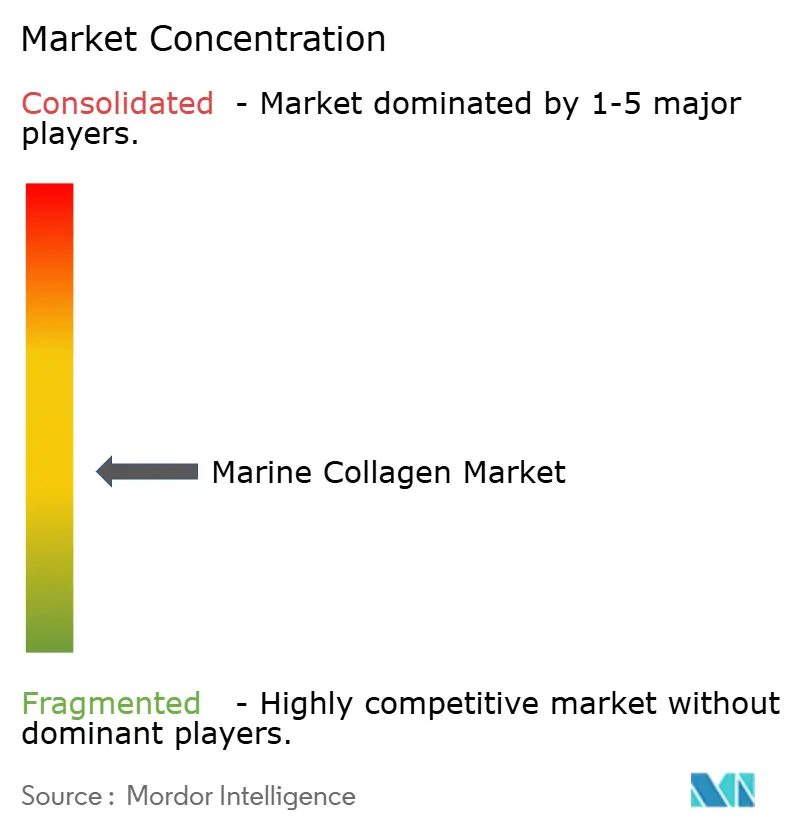
| Market Concentration | Medium |
Major Players
*Disclaimer: Major Players sorted in no particular order Image © Mordor Intelligence. Reuse requires attribution under CC BY 4.0. |
|
Marine Collagen Market Analysis by Mordor Intelligence
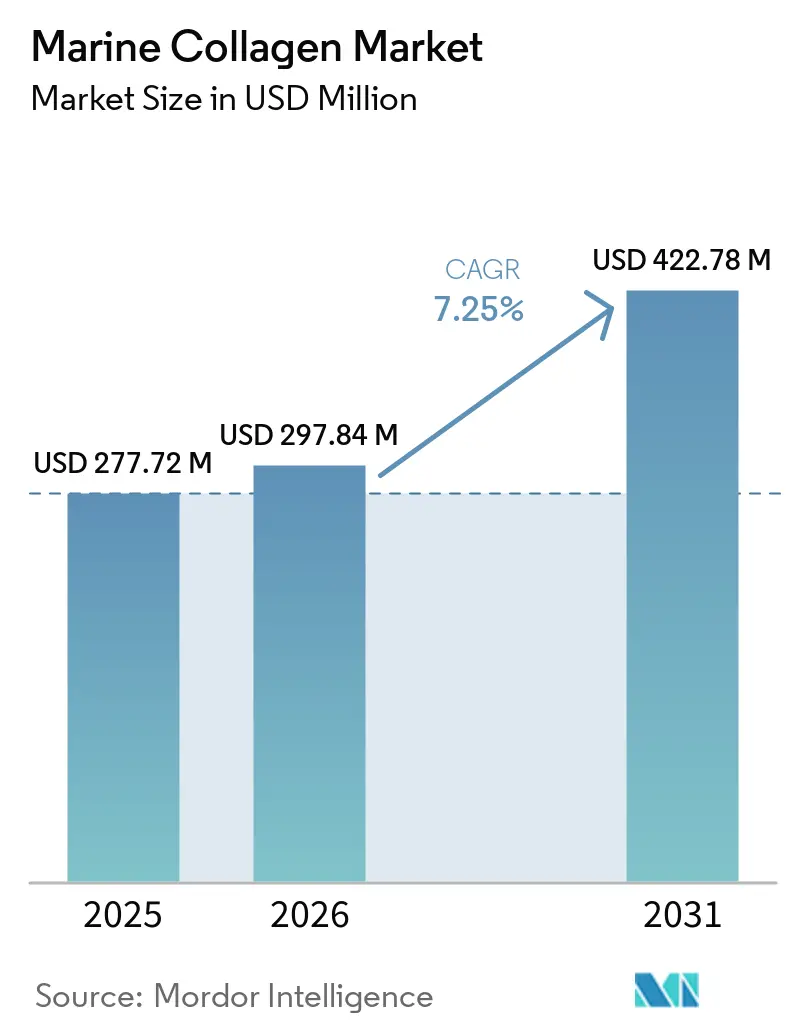
The marine collagen market size is expected to grow from USD 277.72 million in 2025 to USD 297.84 million in 2026 and is forecast to reach USD 422.78 million by 2031 at 7.25% CAGR over 2026-2031. This growth highlights the increasing popularity of marine-sourced collagen, which is transitioning from being a specialized ingredient to becoming a widely used component in beauty products, nutritional supplements, and functional foods. Consumers are increasingly seeking clean-label protein options, and marine collagen stands out due to its high bioavailability. Regulatory support in major Asian markets is also encouraging the development of sustainable and innovative ingredients. For example, Thai Union has invested USD 30 million in a facility dedicated to producing premium tuna-skin collagen, showcasing the significant capital being directed toward strengthening the supply chain. The marine collagen market is moderately fragmented, with key players like Weishardt Group and Darling Ingredients leveraging their access to raw materials and long-standing relationships with clients in the food and pharmaceutical industries to maintain their competitive edge.
Key Report Takeaways
- By type, Type I collagen led with a 62.74% revenue share in 2025, while Type III is projected to expand at a 9.12% CAGR through 2031.
- By source, fish skin captured 45.02% of the marine collagen market share in 2025, whereas bones and tendons are poised for a 9.01% CAGR to 2031.
- By application, food and beverages accounted for 55.10% of the marine collagen market size in 2025, while personal care and cosmetics advance at a 9.22% CAGR through 2031.
- By geography, Asia-Pacific dominated with a 41.05% share of the marine collagen market in 2025 and is set to grow at a 9.74% CAGR to 2031.
Note: Market size and forecast figures in this report are generated using Mordor Intelligence’s proprietary estimation framework, updated with the latest available data and insights as of 2026.
Market Trends and Insights
Drivers Impact Analysis of Marine Collagen Market*
| DRIVER | (~) % IMPACT ON CAGR FORECAST | GEOGRAPHIC RELEVANCE | IMPACT TIMELINE |
|---|---|---|---|
| Growing demand for nutricosmetics | +1.8% | Global, with Asia-Pacific and Europe leading adoption | Medium term (2-4 years) |
| Rise in geriatric population and joint health concerns | +1.4% | Global, concentrated in North America and Europe | Long term (≥ 4 years) |
| Growing use in functional foods and beverages | +1.2% | Asia-Pacific core, spill-over to North America | Medium term (2-4 years) |
| Expansion in sports nutrition and fitness industry | +0.9% | North America and Europe, expanding to Asia-Pacific | Short term (≤ 2 years) |
| High bioavailability and absorption rate than animal-based collagen | +0.7% | Global | Long term (≥ 4 years) |
| Growing innovation and product diversification | +0.5% | Global, with Research and Development centers in developed markets | Medium term (2-4 years) |
| Source: Mordor Intelligence | |||
Growing demand for nutricosmetics
The increasing demand for nutricosmetics is significantly boosting the growth of the marine collagen market. Consumers are increasingly choosing beauty supplements that improve skin hydration, elasticity, and radiance. Marine collagen has become especially popular because it can deliver visible results within just eight weeks, as supported by clinical studies. Supportive regulations in these countries are encouraging companies to create innovative products, such as collagen drinks, powders, and gummies, which combine convenience with health benefits. Many companies are now focusing on sourcing collagen peptides from upcycled marine by-products, such as tuna and cod skin. For example, brands like Shiseido and Meiji have introduced marine collagen products in eco-friendly packaging. Consumer spending on supplements has been steadily increasing. According to the Council for Responsible Nutrition (CRN), the median monthly expenditure on supplements by users was USD 48 in 2023 and rose to USD 50 in 2024 [1]Source: Crnusa.org, "CRN Survey Shows Consistent Supplement Usage with Increase of Specialty Product Use Over Time," crnusa.org. This indicates a growing willingness among consumers to invest in health and beauty products, further driving the demand for marine collagen.
Rise in geriatric population and joint health concerns
The growing elderly population and increasing concerns about joint health are driving the demand for marine collagen, which is known for its excellent absorption and effectiveness in supporting mobility among seniors. In 2024, the global population of individuals aged 65 and older accounted for 10.3% of the total world population, according to the United Nations Population Fund [2]Source: Unfpa.Org, "Ageing," unfpa.org. This number is expected to double by 2074, reaching 20.7%. Clinical studies have shown that marine collagen peptides can significantly reduce joint pain and stiffness, with benefits lasting up to six months after treatment. This makes it a promising long-term solution for managing osteoarthritis and other age-related joint issues. Since older adults often face challenges with digestion, the high bioavailability of marine collagen makes it particularly suitable for this group. As a result, healthcare professionals are increasingly recommending collagen as part of preventive care routines. In some European countries, governments are even considering reimbursement options for collagen-based treatments. To meet the needs of this growing consumer base, companies are introducing senior-friendly products such as drinkable ampoules and pre-measured powders.
Growing use in functional foods and beverages
The use of marine collagen in functional foods and beverages is becoming more popular due to advancements in processing techniques. For example, methods like ozone oxidation have reduced the strong fishy odor of marine collagen by over 60%, making it more appealing for consumers while maintaining its nutritional benefits. These improvements allow marine collagen to be added to products like dairy alternatives, protein bars, and other everyday food items. Its natural ability to form a protective film and retain moisture also enhances the texture and quality of these products. In Southeast Asia, where there is a strong preference for clean-label and natural ingredients, marine collagen is gaining significant attention. Beverage companies are now offering neutral-flavored collagen micro-peptides in ready-to-drink formats, making it convenient for busy consumers to include collagen in their daily routines. This trend is helping marine collagen move beyond traditional supplements and into a wider range of food and beverage options, increasing its appeal and market potential.
Expansion in sports nutrition and fitness industry
The sports nutrition and fitness industry is driving a significant rise in demand for marine collagen, especially among athletes and fitness enthusiasts who prioritize joint health, faster recovery, and improved performance. Physical activity is widely recognized for its role in preventing and managing noncommunicable diseases like heart disease, diabetes, and certain cancers, while also enhancing mental health and overall well-being, according to the World Health Organization [3]Source: World Health Organization, "Physical activity," who.int. Marine collagen, particularly Type III, is highly valued for its smaller molecular size, which allows for better absorption in the body. Unlike bovine collagen, marine collagen is free from many cultural or religious restrictions, making it a more inclusive option for consumers worldwide. The availability of easy-to-use formats, such as granulated marine collagen that dissolves quickly in water, makes it convenient for gym-goers and active individuals to incorporate into their routines. These benefits position marine collagen as an essential ingredient in modern sports nutrition products, catering to the growing health-conscious population.
Restraints Impact Analysis of Marine Collagen Market*
| RESTRAINT | (~) % IMPACT ON CAGR FORECAST | GEOGRAPHIC RELEVANCE | IMPACT TIMELINE |
|---|---|---|---|
| Allergic reactions and dietary restrictions | -0.8% | Global, with higher impact in religiously diverse markets | Short term (≤ 2 years) |
| Fishy odor and flavor masking challenges in rtd beverages | -0.6% | Global, particularly affecting beverage applications | Medium term (2-4 years) |
| Competition from alternative collagen proteins | -0.5% | Global, with fermentation-based alternatives gaining traction | Long term (≥ 4 years) |
| Limited raw material availability | -0.4% | Global, with supply chain concentration in fishing regions | Long term (≥ 4 years) |
| Source: Mordor Intelligence | |||
Allergic reactions and dietary restrictions
Marine collagen faces certain challenges due to allergy risks and dietary restrictions. Fish allergies, which affect approximately 0.1% to 0.4% of the global population, as per Annallergy Org, as of October 2024 [4]Source: Annallergy.org, "Fish allergy," annallergy.org. This limits the consumer base for marine collagen products. To address this, regulatory authorities like the U.S. FDA have made allergen labeling mandatory and have issued warnings to brands that fail to comply with these standards. While marine collagen avoids the concerns associated with porcine sources, it still faces hesitancy from some religious and cultural groups, such as segments of the Hindu population, who may avoid all animal-derived proteins. These factors create a barrier to market expansion unless brands take proactive steps. Companies can work on clearer labeling, develop hypoallergenic processing methods, or explore alternative sources like fermented or plant-based collagen analogs. Such innovations could help broaden the appeal of marine collagen and make it accessible to a wider audience.
Fishy odor and flavor masking challenges in RTD beverages
Marine collagen's use in ready-to-drink (RTD) beverages faces several challenges, mainly due to its natural fishy smell and taste, which many consumers find unappealing. Technologies like ozone oxidation have been developed to address these issues by reducing the odor and taste, but these solutions require a significant upfront investment. This makes it difficult for smaller manufacturers to afford the necessary equipment, limiting their ability to compete or expand in the market. Additionally, improving the flavor of these beverages often involves using advanced flavor-masking systems, which further increases production costs and adds complexity to the manufacturing process. As a result, marine collagen RTD beverages face tough competition in the functional beverage market, where price and taste are critical factors. Unless more cost-effective and scalable solutions are introduced, the growth of marine collagen in liquid beverage formats may remain slower compared to powdered supplements.
*Our forecasts treat driver/restraint impacts as directional, not additive. The impact forecasts reflect baseline growth, mix effects, and variable interactions.
Marine Collagen Market Segment Analysis
By Type:
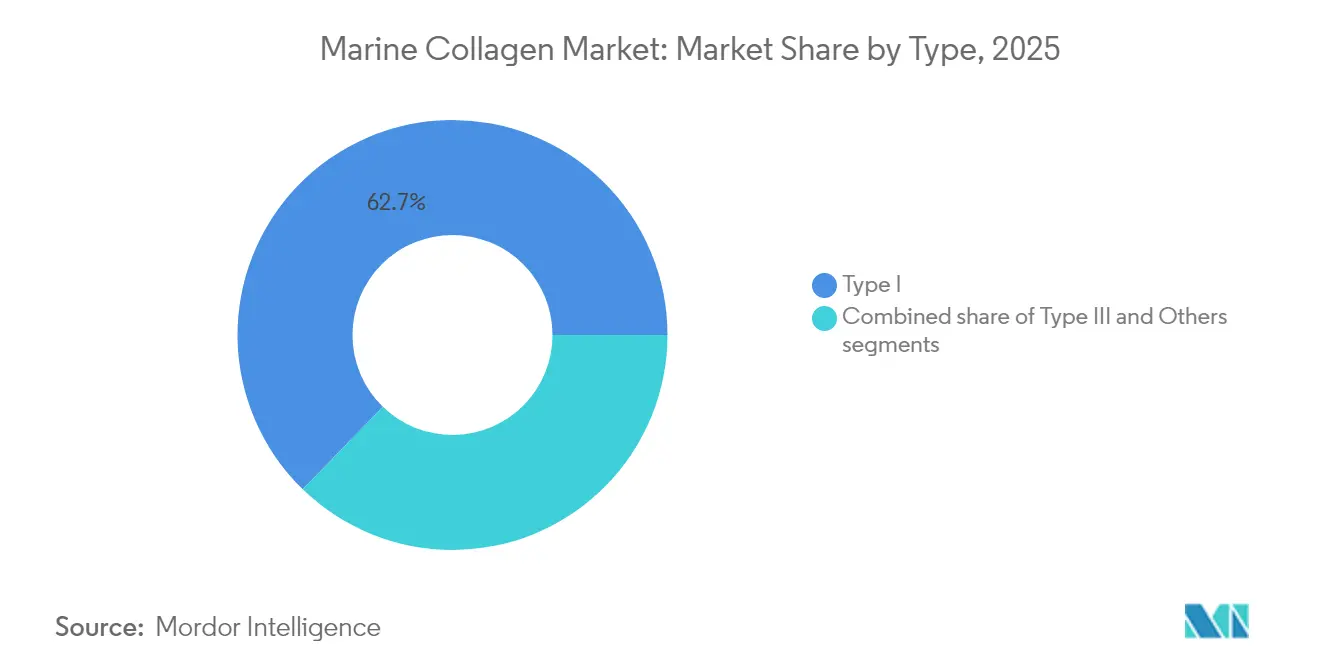
Type I Dominance Faces Type III Innovation PushIn 2025, Type I collagen accounts for 62.74% of the market share, supported by extensive clinical research, regulatory approval, and cost-effective extraction methods from fish skin. Type I collagen remains the most dominant in the marine collagen market, driven by its strong association with skin health benefits. Its popularity is largely due to its proven effectiveness in promoting skin elasticity and hydration, making it a preferred choice in beauty and skincare products. However, Type III collagen is gaining traction, with a projected CAGR of 9.12%, as demand grows for its use in performance nutrition and vascular healing. Manufacturers are focusing on advanced hydrolysis techniques to maintain the bioactive triple helix structure, ensuring better functionality and effectiveness.
Meanwhile, other collagen types, such as Types II, IV, and V, are emerging as promising options for specialized medical and therapeutic applications. For instance, Type V collagen peptides derived from shortbill spearfish have shown potential in cardiovascular health due to their ACE-inhibitory properties. These types are also being explored for use in regenerative medicine and medical devices. As fermentation technology advances, suppliers may soon produce high-purity, type-specific collagens without relying on marine biomass. This innovation could expand the market significantly, offering new opportunities and applications within the marine collagen industry.



By Source:
Fish Skin Leadership Challenged by Bone ValorizationFish skin remains the most popular source of marine collagen, contributing to 45.02% of the market share. This dominance is due to its well-established supply chain, which is integrated into seafood processing hubs. Fish skin offers high collagen yield and excellent thermal stability, making it a preferred choice for biomedical gels and cosmetic applications. However, bones and tendons are quickly gaining traction as alternative sources, with a projected growth rate of 9.01% CAGR. This growth is driven by advancements in enzymatic extraction techniques, which improve collagen yield and utilize waste materials effectively. These developments align with the principles of a circular economy and help address the challenge of raw material shortages in the marine collagen market.
Sardine scales, which were previously considered waste, are now being explored for their potential. New enzymatic methods not only increase collagen recovery but also produce antimicrobial hydrolysates that are effective against bacteria like Staphylococcus aureus at concentrations as low as 2.1 µg/mL. These innovations expand the range of raw materials available, enhance the variety of collagen peptides, and strengthen the sustainability narrative. This is particularly important as environmentally conscious consumers increasingly demand transparency and ethical sourcing practices.
By Application:
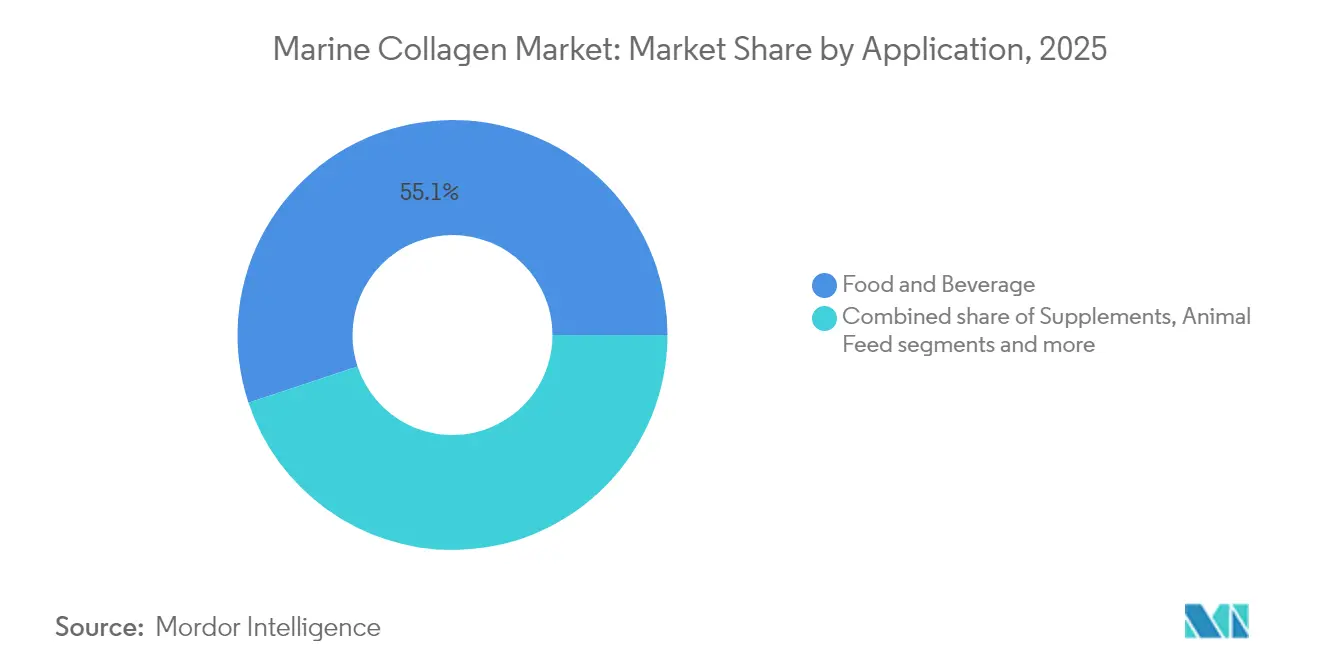
Food Beverages Lead While Cosmetics AccelerateFood and beverage applications made up 55.10% of the marine collagen market size in 2025 around USD 153.04 million by utilizing collagen’s unique benefits like improving texture, foaming, and adding protein. For instance, collagen is commonly used to enhance the texture and consistency of dairy alternatives such as plant-based milk and yogurt. It is also a preferred ingredient in sports drinks due to its neutral taste and high protein content, catering to health-conscious consumers. This growing use of marine collagen in everyday food products highlights its versatility and ability to meet the rising demand for functional and clean-label ingredients. Manufacturers are increasingly incorporating marine collagen into their products to improve nutritional value and cater to consumers seeking healthier and more innovative food options.
The personal care and cosmetics segment, while smaller in size, is growing rapidly at a 9.22% CAGR. Products like ingestible beauty capsules, which promote skin health from within, and combined topical and oral collagen regimens are becoming increasingly popular. Additionally, collagen products certified by the Aquaculture Stewardship Council (ASC) are gaining traction among environmentally conscious consumers. Marine collagen is preferred over land-based collagen due to its better absorption by the body and its sustainable sourcing. This growth reflects the rising consumer interest in beauty products that not only deliver visible results but also align with ethical and eco-friendly practices. The segment’s rapid expansion highlights the potential for marine collagen to become a key ingredient in the beauty and skincare industry.
Geography Analysis
APAC Marine Collagen Market
Asia-Pacific accounted for 41.05% of the marine collagen market in 2025 and is experiencing the fastest growth, with a 9.74% CAGR. The region benefits from abundant marine resources, well-established seafood processing industries, and supportive government policies. For instance, companies like Thai Union have invested heavily, such as their USD 30 million tuna-skin collagen plant, to cater to the growing demand in premium markets like Japan and South Korea. Governments in the region are also encouraging the use of by-products like fish bones and scales, driving innovation in sustainable collagen production. Additionally, rising disposable incomes and the influence of K-beauty trends are encouraging consumers to spend more on high-quality, clinically proven collagen products.
North America and Europe Marine Collagen Market
North America and Europe remain important markets for marine collagen, though they are more mature compared to Asia-Pacific. In Europe, sustainability is a key focus, with regulators emphasizing eco-friendly practices. For example, Sweden introduced ASC-certified collagen supplements, setting a benchmark for traceability and sustainability from sourcing to final products. In the United States, the market is shifting from bovine collagen to marine collagen due to growing concerns about safety and the preference for religiously neutral options. Millennials and Gen Z consumers, in particular, are driving this trend as they prioritize health-conscious and sustainable choices in their purchasing decisions.
MEA and South America Marine Collagen Market
Emerging regions like South America, the Middle East, and Africa are showing increasing potential for marine collagen demand. For instance, Vietnam’s Navico has partnered in a joint venture to establish a plant with an annual capacity of 800 tons, aiming to meet both regional and export demands. These regions are witnessing a rise in middle-class populations and greater awareness of health and wellness, which is expected to boost collagen consumption. As health campaigns and disposable incomes grow, these areas are gradually becoming more integrated into the global marine collagen market, presenting new opportunities for expansion.

Competitive Landscape
The marine collagen market is competitive, with many companies working to gain a strong position, making it moderately fragmented. Well-established players like Weishardt Group, Gelita, and Darling Ingredients benefit from their access to raw materials and long-term partnerships with clients in the food and pharmaceutical industries. In Asia, smaller and mid-sized companies are leveraging their proximity to raw materials and lower production costs to compete effectively. At the same time, Western biotech firms are exploring innovative methods like fermentation-based collagen production, which avoids challenges like inconsistent quality and ethical concerns tied to fish-derived materials. These varied approaches show how companies are adapting to meet market demands and stay competitive.
To strengthen their market presence, companies are investing in advanced technologies and infrastructure. For instance, Thai Union has built a new facility to improve its supply chain control and produce premium-quality specialty ingredients. Similarly, Evonik has developed Vecollan, a medical-grade collagen made using precision fermentation, which ensures consistent quality and addresses the limitations of traditional fish-based collagen. Partnerships are also becoming a key strategy, such as Brenntag teaming up with Cambrium to distribute NovaColl, a vegan collagen alternative. These initiatives highlight the industry's focus on innovation, sustainability, and meeting the growing demand for high-quality, ethical products.
Buyers in the marine collagen market are increasingly prioritizing factors like cost, product purity, and sustainability certifications. Companies that can provide traceable sourcing, eco-friendly practices, and clinically proven benefits are more likely to succeed. As consumers become more focused on sustainability and product effectiveness, manufacturers with these capabilities are expected to gain a competitive advantage. This will help them capture larger market shares and command premium pricing. With the rising demand for marine collagen, companies that align with these trends are well-positioned for long-term growth in the market.
Marine Collagen Industry Leaders
-
Weishardt Group
-
Seagarden AS
-
Croda International PLC
-
Ashland Global Holdings Inc.
-
Darling Ingredients Inc.
- *Disclaimer: Major Players sorted in no particular order
Marine Collagen Market Companies Covered in this Report
- Weishardt Group
- Seagarden AS
- Croda International PLC
- Ashland Global Holdings Inc.
- Darling Ingredients Inc.
- Nestle S.A.
- Gelita Group
- Italgelatine S.p.A
- Further Food
- Nitta Gelatin Inc.
- CoreFX Ingredients
- Amandean LLC
- Norland Products Inc.
- Innovactiv
- Titan Biotech Ltd.
- Certified Nutraceuticals Inc.
- Planet Paleo Ltd.
- Shenzhen Taier Biotechnology Co., Ltd
- Nippi, Incorporated
- NutraBio Labs Inc.

Recent Industry Developments in Marine Collagen Market
- June 2025: Thai Union invested USD 30 million in a marine collagen facility producing 200 t/y of tuna-skin collagen aimed at Japan, South Korea, and Australia.
- March 2025: BioLab teams up with Real Collagen to develop fish collagen products. This partnership focused on fish collagen and aims to improve BioLab's wound healing solutions, which use human tissue allograft from the amniotic membrane to protect wounds.
- February 2025: GNC launched a new premium collagen product line featuring marine and bovine collagen peptide formulas with enhanced absorption properties. The product development aligns with global beauty trends and aims to improve skin appearance through nutritional supplementation.
- June 2024: Tranont has introduced Glow-M, an innovative marine collagen supplement aimed at improving skin radiance, strengthening hair, and supporting healthier nails. This product is specially formulated to provide superior absorption.


Global Marine Collagen Market Report Scope
The global marine collagen market is segmented by type, source, and application. By type, the market is segmented into Type I, Type III and others (Type II, Type IV, and Type V), By source, into fish skin, fish scales, fish bones and tendons and others. By application, the market is segmented into food and beverages (bakery, snacks and beverages), supplements (sports/performance nutrition and elderly nutrition and medical nutrition), cosmetics and personal care and animal feed. The market is also classified by geography into the regions of North America, Europe, Asia Pacific, South America, and the Middle East and Africa.
| Type I |
| Type III |
| Others (Other types include Type II, Type IV, and Type V) |
| Fish Skin |
| Fish Scales |
| Fish Bones and Tendons |
| Others |
| Food and Beverages | Bakery |
| Snacks | |
| Beverages | |
| Supplements | Sport/Performance Nutrition |
| Elderly Nutrition and Medical Nutrition | |
| Cosmetics and Personal Care | |
| Animal Feed |
| North America | United States |
| Canada | |
| Mexico | |
| Rest of North America | |
| Europe | Germany |
| United Kingdom | |
| France | |
| Italy | |
| Spain | |
| Rest of Europe | |
| Asia-Pacific | China |
| Japan | |
| South Korea | |
| India | |
| Australia and New Zealand | |
| Rest of Asia-Pacific | |
| South America | Brazil |
| Argentina | |
| Rest of South America | |
| Middle East and Africa | Saudi Arabia |
| United Arab Emirates | |
| South Africa | |
| Rest of Middle East and Africa |
| By Type | Type I | |
| Type III | ||
| Others (Other types include Type II, Type IV, and Type V) | ||
| By Source | Fish Skin | |
| Fish Scales | ||
| Fish Bones and Tendons | ||
| Others | ||
| By Application | Food and Beverages | Bakery |
| Snacks | ||
| Beverages | ||
| Supplements | Sport/Performance Nutrition | |
| Elderly Nutrition and Medical Nutrition | ||
| Cosmetics and Personal Care | ||
| Animal Feed | ||
| By Geography | North America | United States |
| Canada | ||
| Mexico | ||
| Rest of North America | ||
| Europe | Germany | |
| United Kingdom | ||
| France | ||
| Italy | ||
| Spain | ||
| Rest of Europe | ||
| Asia-Pacific | China | |
| Japan | ||
| South Korea | ||
| India | ||
| Australia and New Zealand | ||
| Rest of Asia-Pacific | ||
| South America | Brazil | |
| Argentina | ||
| Rest of South America | ||
| Middle East and Africa | Saudi Arabia | |
| United Arab Emirates | ||
| South Africa | ||
| Rest of Middle East and Africa | ||


Key Questions Answered in the Report
What is the current marine collagen market size?
The marine collagen market size stands at USD 297.84 million in 2026, showcasing robust mainstream demand.
How fast is the marine collagen market expected to grow?
From 2026 to 2031, the marine collagen market is projected to post a 7.25% CAGR, reaching USD 422.78 million by the end of the period.
Which region holds the largest share of the marine collagen market?
Asia-Pacific leads with 41.05% of marine collagen market share in 2025, supported by integrated supply chains and rising beauty-from-within adoption.
Which collagen type is growing the fastest?
Type III collagen records the fastest growth at a 9.12% CAGR due to specialized applications in sports nutrition and vascular health.
Page last updated on:





