
Latex Probe Cover Market Size and Share
Market Overview
| Study Period | 2019 - 2030 |
|---|---|
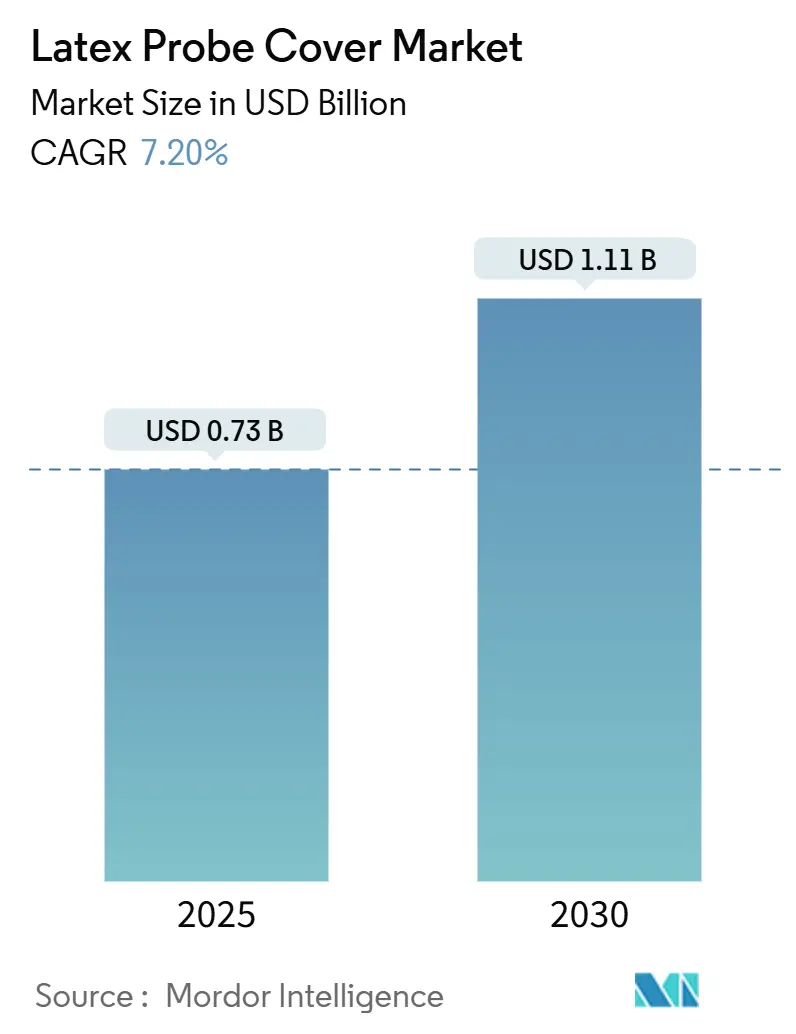
| Market Size (2025) | USD 0.73 Billion |
| Market Size (2030) | USD 1.11 Billion |
| Growth Rate (2025 - 2030) | 7.20 % |
| Fastest Growing Market | Asia Pacific |
| Largest Market | North America |
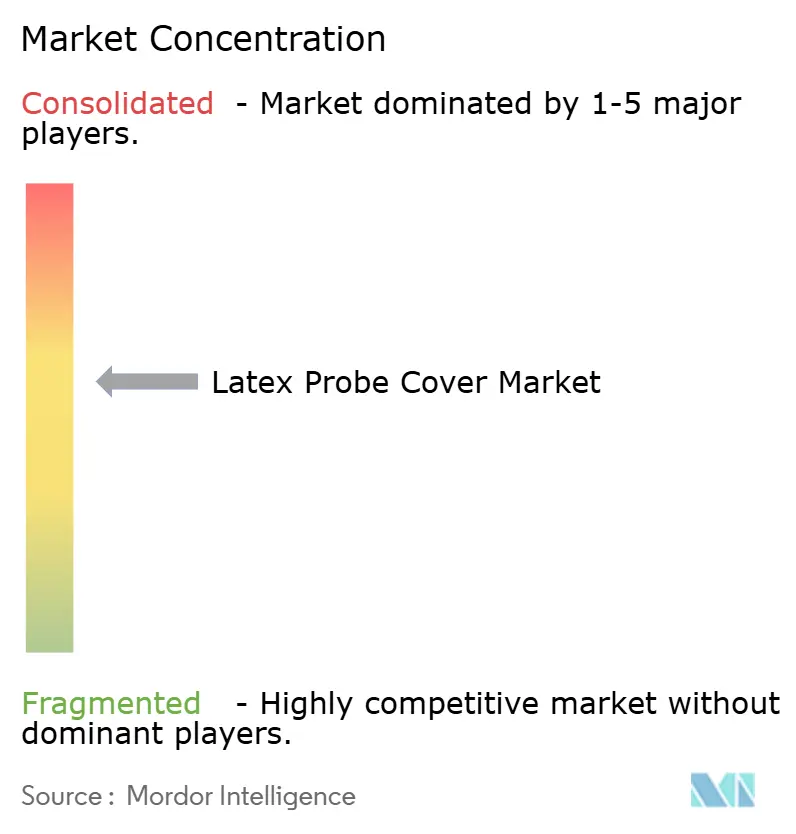
| Market Concentration | Medium |
Major Players *Disclaimer: Major Players sorted in no particular order Image © Mordor Intelligence. Reuse requires attribution under CC BY 4.0. | |
Latex Probe Cover Market Analysis by Mordor Intelligence
The latex probe cover market size reached USD 0.73 billion in 2024 and is projected to hit USD 1.11 billion by 2030, advancing at a 7.2% CAGR during the forecast window. Rapid restoration of ultrasound procedure volumes, stricter infection-control mandates, and renewed focus on single-use elastomeric barriers propel the latex probe cover market across every clinical environment. North America and Europe dominate procurement because regulators demand FDA- or CE-cleared sterile barriers, while Asia-Pacific registers the fastest unit growth as local suppliers leverage lower cost structures to penetrate price-sensitive facilities. Hospitals, ambulatory surgical centers, and emerging point-of-care settings treat latex covers as essential consumables, placing material integrity and allergen management ahead of price. Competitive positioning now hinges on low-protein formulations that align with automated high-level disinfection cabinets, a shift that favors suppliers able to validate compatibility data rather than merely offer commodity latex sleeves.
Key Report Takeaways
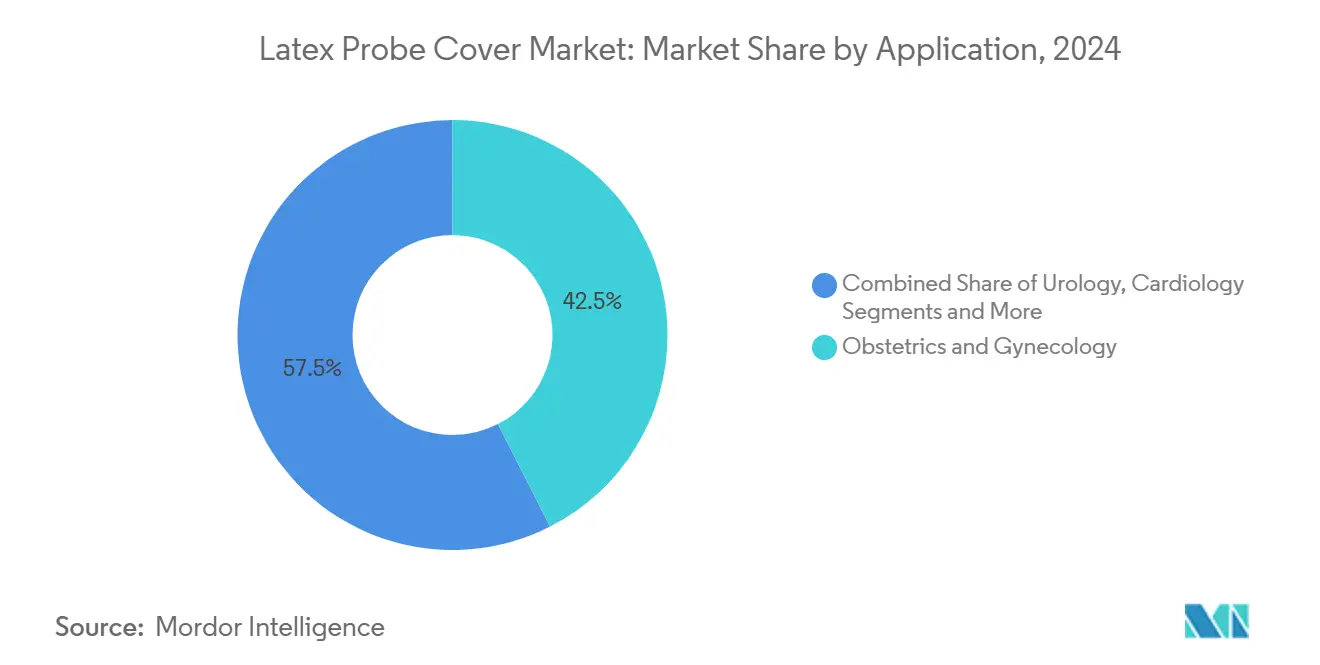
- By application, obstetrics and gynecology held 42.5% of latex probe cover market share in 2024; veterinary and other emerging applications are forecast to expand at a 13.4% CAGR through 2030.
- By probe type, endocavity probes captured 38.1% revenue in 2024, while interventional probes are projected to post the highest 12.1% CAGR through 2030.
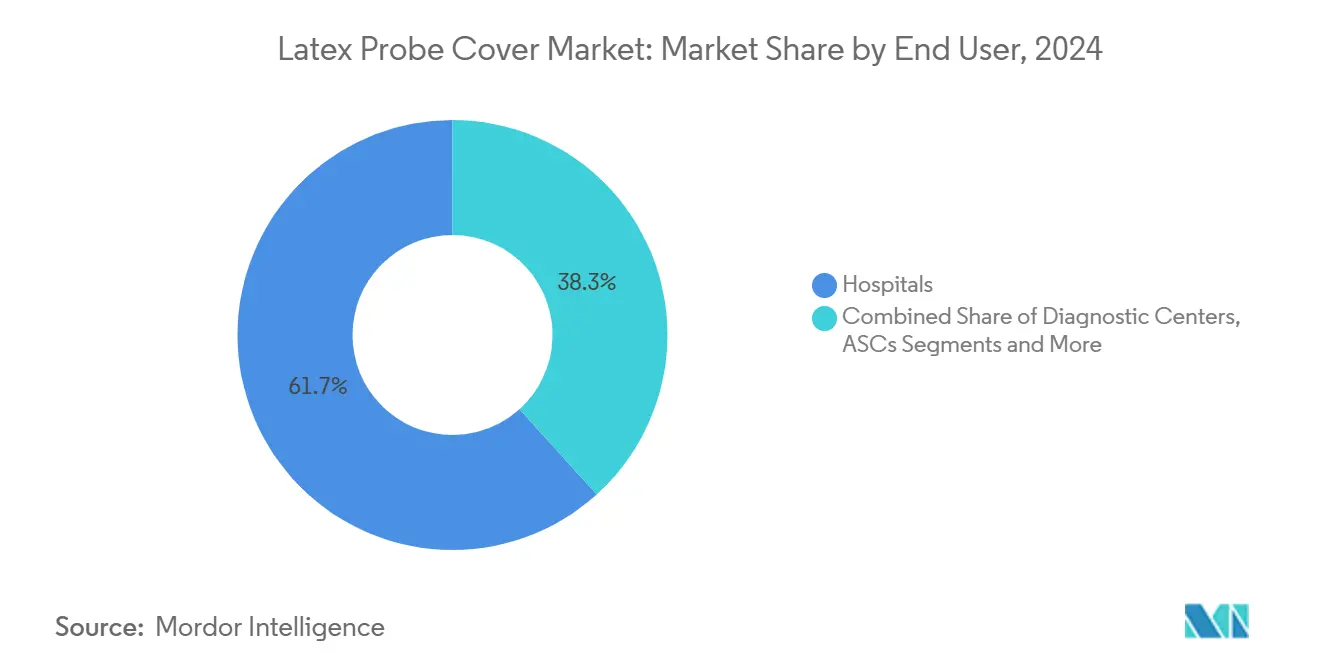
- By end user, hospitals represented 61.7% of the latex probe cover market size in 2024, whereas ambulatory surgical centers are on track for an 11.0% CAGR through 2030.
- By type, disposable sleeves accounted for 68.9% of global revenue in 2024, even as sustainability debates persist over single-use waste streams.
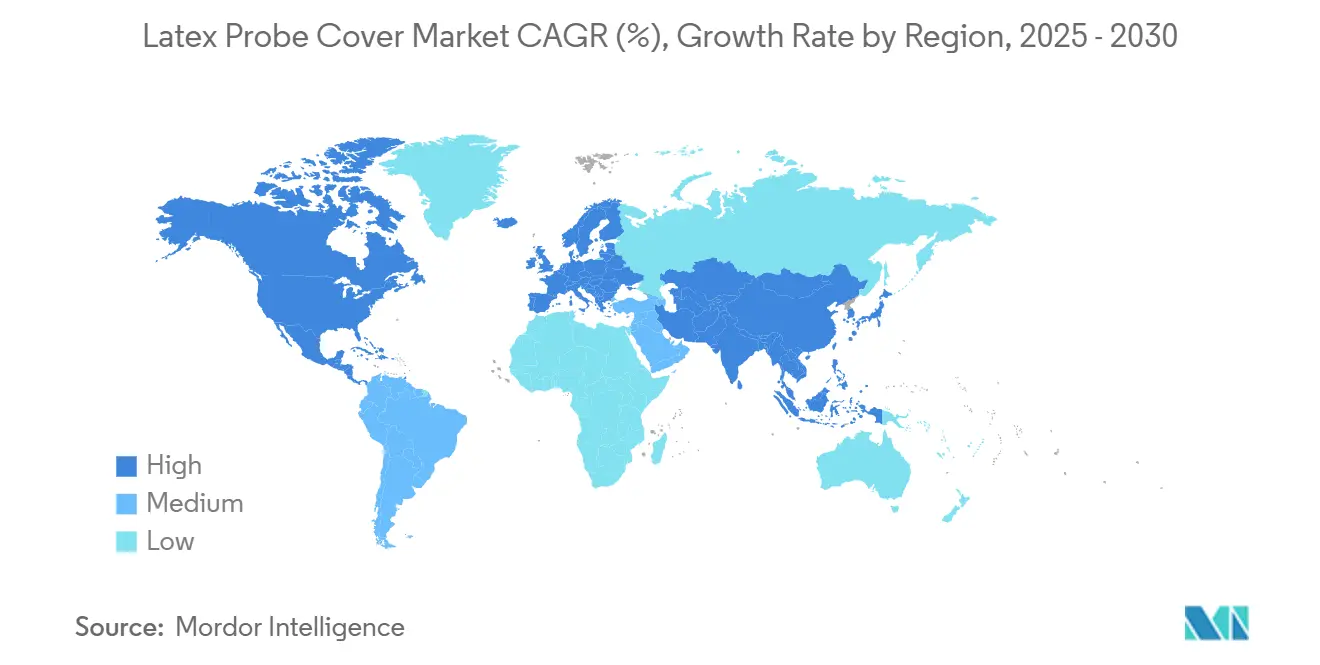
- By region, North America led with 38.8% share in 2024, while Asia-Pacific is on track for a 8.1% CAGR through 2030.
Note: Market size and forecast figures in this report are generated using Mordor Intelligence’s proprietary estimation framework, updated with the latest available data and insights as of January 2026.
Market Trends and Insights
Drivers Impact Analysis of Latex Probe Cover Market*
| Driver | (~) % Impact on CAGR Forecast | Geographic Relevance | Impact Timeline |
|---|---|---|---|
| Rising global ultrasound procedure volumes post-COVID | +1.80% | Global, strongest in North America & Europe | Short term (≤ 2 years) |
| Strict infection-control mandates in key markets | +1.50% | North America & Europe, expanding to Asia-Pacific | Medium term (2–4 years) |
| Shift toward single-use consumables in outpatient imaging | +1.20% | Global, led by ambulatory surgical centers | Medium term (2–4 years) |
| Procurement preference for latex covers in endocavity scans | +0.80% | Global, with regional latex-free transitions | Long term (≥ 4 years) |
| Rapid growth of POCUS in low-resource settings | +1.00% | Asia-Pacific core, spill-over to MEA and Latin America | Long term (≥ 4 years) |
| Emerging veterinary ultrasound adoption | +0.70% | North America & Europe, expanding globally | Long term (≥ 4 years) |
| Source: Mordor Intelligence | |||
Rising Global Ultrasound Procedure Volumes Post-COVID
Elective imaging rebounded quickly once pandemic restrictions eased, and ambulatory surgical centers recorded a 5.7% jump in interventional procedures per beneficiary in 2024 compared with 2023.[1]Each diagnostic or guided intervention consumes at least one barrier, so rising volumes directly scale demand within the latex probe cover market. Emergency departments now embed “cover-every-contact” rules in infection-prevention scorecards, and over 250,000 U.S. primary-care physicians remain potential adopters of pocket ultrasound devices that will each require compatible latex sleeves.[2]
Strict Infection-Control Mandates in Key Markets
AAMI TIR99 (2024) clarifies that barriers for semi-critical transducers must be FDA-cleared and paired with validated high-level disinfection. The CDC echoes that covers alone cannot replace chemical or UV-C reprocessing.[3]Hospitals increasingly audit barrier usage during Joint Commission surveys, elevating compliant latex products from optional accessories to line-item mandates within the latex probe cover market.
Shift Toward Single-Use Consumables in Outpatient Imaging
Outpatient centers rarely operate centralized reprocessing, so they embrace disposable latex covers to meet sterility targets without capital investment in washers. The CDC’s 2025 alert on contaminated ultrasound gel reinforced field sterility protocols that mandate individually wrapped barriers. Medicare’s site-neutral payment models divert ever more interventional cases to ambulatory settings, sustaining double-digit volume growth for the latex probe cover market here.
Procurement Preference for Latex Covers in Endocavity Scans
Clinicians value natural-rubber elasticity, tactile sensitivity and puncture resistance, especially in transvaginal procedures. Recent bench tests confirm non-latex polyurethane products demonstrate lower failure rates, but many obstetrics departments still specify ultra-flexible latex for maneuverability, defending a core revenue stream in the latex probe cover market.
Restraints Impact Analysis of Latex Probe Cover Market*
| Restraint | (~) % Impact on CAGR Forecast | Geographic Relevance | Impact Timeline |
|---|---|---|---|
| Latex-allergy litigation risk & hospital bans | -0.90% | North America & Europe, policy spill-over globally | Medium term (2–4 years) |
| Accelerated switch to latex-free materials in Europe | -0.60% | Europe leading, with global regulatory harmonization | Long term (≥ 4 years) |
| Price pressure from generic Asian suppliers | -1.10% | Global, intense in cost-sensitive markets | Short term (≤ 2 years) |
| Supply-chain volatility in natural-rubber latex | -0.80% | Global, impacting latex-dependent manufacturers | Medium term (2–4 years) |
| Source: Mordor Intelligence | |||
Latex-Allergy Litigation Risk & Hospital Policy Bans
Hospital risk committees place latex gloves and probe covers on high-liability lists because employee allergy claims can exceed USD 50,000 per incident. Some U.S. systems implement blanket latex bans, forcing departments to requalify alternative materials and dampening growth for certain SKUs within the latex probe cover market.
Price Pressure from Generic Asian Suppliers
Factories in China and Malaysia supply commodity latex sleeves at 30–50% discounts relative to Western brands, capturing formulary positions in South Asia, Africa and Latin America. ASP deflation pushes premium players to pivot toward low-protein, ultra-thin innovations to protect margins in the latex probe cover market.
*Our forecasts treat driver/restraint impacts as directional, not additive. The impact forecasts reflect baseline growth, mix effects, and variable interactions.
Latex Probe Cover Market Segment Analysis
By Application:
Obstetrics Dominates While Veterinary AcceleratesObstetrics and gynecology contributed 42.5% of 2024 revenue, reflecting compulsory cover use during every transvaginal exam—an unwavering anchor for the latex probe cover market. Conversely, veterinary imaging plus emerging therapies recorded the fastest 13.4% CAGR projection, fueled by rising pet ownership, insurance adoption and success of non-invasive tumor ablation in companion animals. Urology and cardiology sustain mid-single-digit growth as catheter-based interventions increasingly lean on ultrasound guidance.
Demand in radiology stabilizes due to plateauing inpatient scans, but emergency medicine and anesthesia departments keep ordering latex covers for vascular access and nerve blocks. Endoscopic ultrasound growth in gastroenterology remains steady, although specialized probe shapes sometimes require custom silicone sheaths, limiting latex capture in that niche of the latex probe cover market.

By Probe Type:
Endocavity Leads While Interventional Shoots UpEndocavity probes accounted for 38.1% of global sales in 2024 because sterile barriers are mandatory for transvaginal, transrectal and transesophageal imaging. Interventional probes, particularly for biopsy and ablative therapies, are slated for a 12.1% CAGR, benefiting from oncology centers replacing CT guidance with zero-radiation ultrasound. Linear probes for vascular access, along with convex probes for abdominal POCUS, represent steady high-volume outlets within the latex probe cover market.
By End User:
Hospitals Rule, ASCs RiseHospitals absorbed 61.7% of procurement outlays in 2024 owing to broad specialty coverage and accreditation obligations. Yet ambulatory surgical centers display the briskest expansion at 11.0% CAGR as payer policies incentivize outpatient care. Diagnostic imaging chains and mobile ultrasound vans maintain smaller but consistent purchase volumes. Veterinary clinics, academic labs and military medical units collectively enlarge the total addressable volume for the latex probe cover market.
By Type:
Disposables Dominate Despite Green PushbackDisposable latex sleeves delivered 68.9% of revenue in 2024, a share unlikely to erode before 2030 because infection-control value supersedes waste concerns. Reusable fabric or silicone sleeves occupy limited niches where established washer-disinfector capacity exists or local waste regulations impose stringent single-use penalties. Even there, high break-through rates keep clinicians committed to single-use quality, underpinning continued growth for the latex probe cover market.
Geography Analysis
North America Latex Probe Cover Market
North America retained its foremost position in 2024, driven by FDA reprocessing rules and robust liability frameworks that mandate sterile-barrier documentation for every semi-critical transducer use case. U.S. procedure volumes crossed 52 million diagnostic scans, while Canada enforced unified guidance through IPAC, requiring validated barriers in all provinces. High malpractice costs and risk-based purchasing push hospitals to prefer low-protein latex or latex-free hybrids, yet latex still dominates obstetrics settings, maintaining a robust revenue base inside the latex probe cover market.
Europe Latex Probe Cover Market
Europe’s mature ecosystem enforces MDR documentation and drives rapid adoption of automated UV-C cabinets, yet mandates simultaneous use of single-use sleeves for risk mitigation. Germany and the United Kingdom spearhead technology deployment, while France invests heavily in primary-care ultrasound to reduce specialist backlogs—each exam triggering latex sleeve consumption. Environmental stewardship agendas stir trials of recyclable packaging, yet current procurement still revolves around sterile, disposable rubber barriers, safeguarding the latex probe cover market’s European revenues.
APAC Latex Probe Cover Market
Asia-Pacific showcases the fastest volume growth through 2030. China acts both as a high-volume user and the largest exporter; public hospitals purchase domestically made budget sleeves in bulk, while tier-1 facilities often import premium low-protein brands for high-risk departments. India’s federal insurance scheme finances ultrasound expansion across Tier-2 cities, and latex sleeves dominate due to price advantages and limited washer infrastructure. Japan’s aging demographic inflates diagnostic imaging frequencies, though reimbursement caps push buying committees to negotiate steep discounts. Australia and South Korea mirror Western compliance regimes, with Nanosonics’ Trophon cabinets entrenched, thereby requiring latex covers proven compatible with hydrogen-peroxide mist cycles. These combined country dynamics elevate Asia-Pacific’s role in driving incremental gains for the latex probe cover market.
LATAM and MEA Latex Probe Cover Market
Latin America and the Middle East & Africa present mixed scenarios: resource-constrained clinics favor inexpensive bulk latex sleeves imported from Asia, yet premium private hospitals in Brazil, Saudi Arabia and the UAE increasingly adopt low-protein or latex-free options to protect international accreditation status. Political instabilities and currency fluctuations disrupt supply chains episodically but overall procedure growth in maternity care sustains underlying demand within the latex probe cover market.
Competitive Landscape
The latex probe cover market is moderately concentrated: the five most prominent vendors control roughly the majority of the market. CIVCO Medical Solutions, Parker Laboratories, and Sheathing Technologies leverage multi-decade distribution channels and in-house latex compounding expertise. Asian suppliers such as Jiangsu Yuyue and Zhejiang Gongdong flood global tenders with commodity sleeves at a discount, yet often lack robust post-market surveillance systems demanded by the FDA and EU MDR.
Product differentiation now focuses on ultra-low-protein (<50 µg/g) latex films, powder-free dipping methods, and tear-resistant seams validated for 50-cmHg pressure to withstand transesophageal articulation. Companies publish peer-reviewed integrity data to secure infection-control committee approval. Bundled sales linking sleeves, sterile gel, and automated disinfection cartridges create stickier accounts, mirroring Nanosonics’ annuity-based model where Trophon users buy proprietary hydrogen-peroxide neutralizers plus compatible latex sheaths.
Regulatory evolution—particularly FDA’s 2024 Quality System Regulation alignment with ISO 13485—raises documentation thresholds, favoring established manufacturers and encouraging M&A as smaller firms struggle with compliance costs. Strategic acquisitions revolve around geographic expansion; Western players pursue Malaysia-based dip-molders to lock in latex supply. Chinese companies seek CE-marked assets to penetrate the European latex probe cover market without de novo audits.
Latex Probe Cover Industry Leaders
-
CIVCO Medical Solutions
-
Parker Laboratories
-
Protek Medical Products
-
Nanosonics
-
Medline Industries
- *Disclaimer: Major Players sorted in no particular order
Latex Probe Cover Market Companies Covered in this Report
- CIVCO Medical solutions
- Parker Laboratories
- Protek Medical Products (Ecolab)
- Nanosonics
- Sheathes
- EDM Medical Solutions
- Medline Industries
- CS Medical LLC
- Nissha Medical Technologies
- Krystal Medical Products
- VWR International
- Smiths Medical (SurgiVet)
- Fairmont Medical
- Advance Medical Design
- Aspen Surgical
- Dynarex
- Cardinal Health
- SonoGuard Medical
- Besmed Health Business
- Teleflex Medical
Recent Industry Developments in Latex Probe Cover Market
- September 2024: Germitec’s Chronos UV-C system received FDA De Novo clearance as the first chemical-free, 90-second high-level disinfection cabinet for ultrasound probes, positioned to complement—rather than replace—single-use probe covers
- May 2024: The American College of Emergency Physicians revised its ultrasound disinfection guideline, instructing clinicians to use probe covers for all contaminated skin or mucous membrane contact and to take extra precautions for latex-sensitive patients.
- May 2024: The FDA finalized labeling recommendations that discourage the generic phrase “latex-free” and instead require precise disclosure of elastomer content to improve patient-safety messaging on medical devices.
Global Latex Probe Cover Market Report Scope
| Obstetrics & Gynecology |
| Urology |
| Cardiology |
| Radiology & General Imaging |
| Gastroenterology & Interventional |
| Others |
| Endocavity Probes |
| Transesophageal (TEE) Probes |
| Convex / General-Purpose Probes |
| Linear / Vascular Probes |
| Interventional / Surgical Probes |
| Hospitals |
| Diagnostic Imaging Centers |
| Ambulatory Surgical Centers |
| Others |
| Disposable |
| Reusable |
| North America | United States |
| Canada | |
| Mexico | |
| Europe | Germany |
| United Kingdom | |
| France | |
| Italy | |
| Spain | |
| Rest of Europe | |
| Asia Pacific | China |
| Japan | |
| India | |
| South Korea | |
| Australia | |
| Rest of Asia Pacific | |
| Middle East & Africa | GCC |
| South Africa | |
| Rest of Middle East & Africa | |
| South America | Brazil |
| Argentina | |
| Rest of South America |
| By Application | Obstetrics & Gynecology | |
| Urology | ||
| Cardiology | ||
| Radiology & General Imaging | ||
| Gastroenterology & Interventional | ||
| Others | ||
| By Probe Type | Endocavity Probes | |
| Transesophageal (TEE) Probes | ||
| Convex / General-Purpose Probes | ||
| Linear / Vascular Probes | ||
| Interventional / Surgical Probes | ||
| By End User | Hospitals | |
| Diagnostic Imaging Centers | ||
| Ambulatory Surgical Centers | ||
| Others | ||
| By Type | Disposable | |
| Reusable | ||
| By Geography | North America | United States |
| Canada | ||
| Mexico | ||
| Europe | Germany | |
| United Kingdom | ||
| France | ||
| Italy | ||
| Spain | ||
| Rest of Europe | ||
| Asia Pacific | China | |
| Japan | ||
| India | ||
| South Korea | ||
| Australia | ||
| Rest of Asia Pacific | ||
| Middle East & Africa | GCC | |
| South Africa | ||
| Rest of Middle East & Africa | ||
| South America | Brazil | |
| Argentina | ||
| Rest of South America | ||
Key Questions Answered in the Report
What will the latex probe cover market be worth by 2030?
It is projected to reach USD 1.11 billion, growing at a 7.2% CAGR from 2024.
Which clinical area consumes the greatest number of latex probe covers?
Obstetrics and gynecology accounted for 42.5% of global demand in 2024 because every transvaginal or transrectal exam requires a sterile barrier.
Why are ambulatory surgical centers a key growth channel?
ASCs lack centralized reprocessing equipment, so they prefer single-use latex sleeves, driving an 11.0% CAGR in this end-user segment through 2030.
What material attributes are hospitals prioritizing?
Buyers increasingly request low-protein, powder-free latex films that reduce allergy risk while maintaining elasticity and puncture resistance.
How do automated disinfection cabinets affect sleeve purchases?
Systems such as Nanosonics- Trophon reinforce demand for validated covers that tolerate hydrogen-peroxide mist, rather than eliminating the need for barriers.
What is the main threat to growth for latex probe covers?
Rising hospital bans linked to latex allergy litigation are shifting some demand toward synthetic alternatives, trimming the overall CAGR by an estimated 0.9 percentage points.