
Interferons Market Size and Share
Market Overview
| Study Period | 2020 - 2031 |
|---|---|
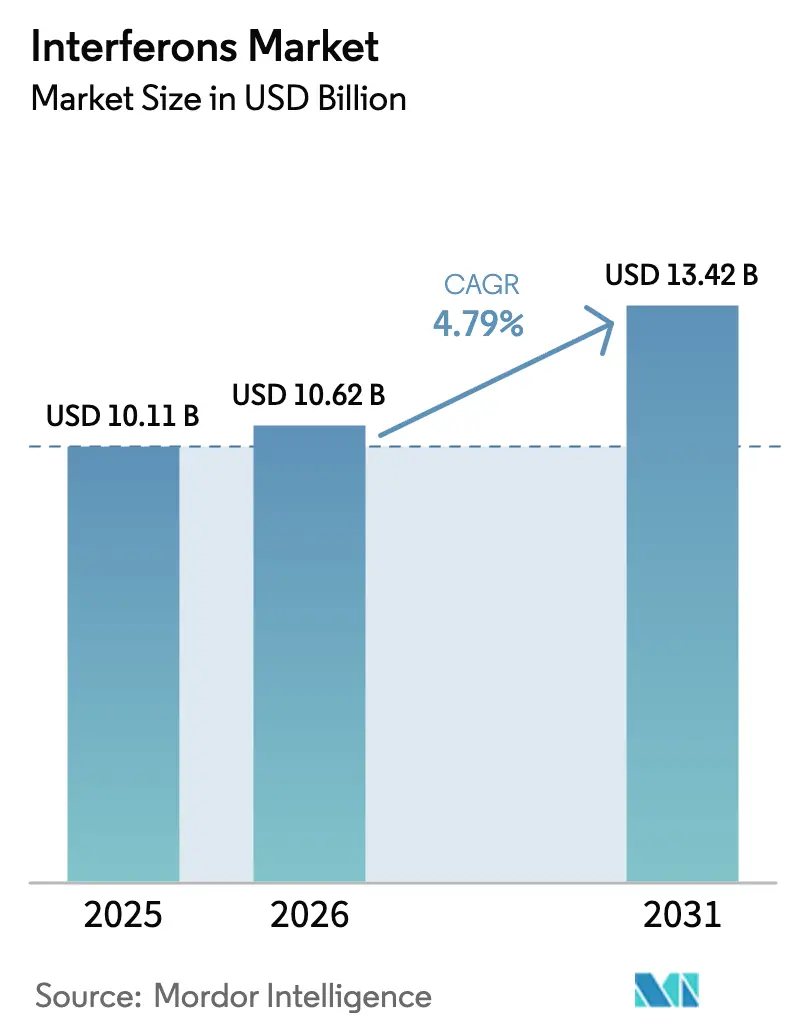
| Market Size (2026) | USD 10.62 Billion |
| Market Size (2031) | USD 13.42 Billion |
| Growth Rate (2026 - 2031) | 4.79 % |
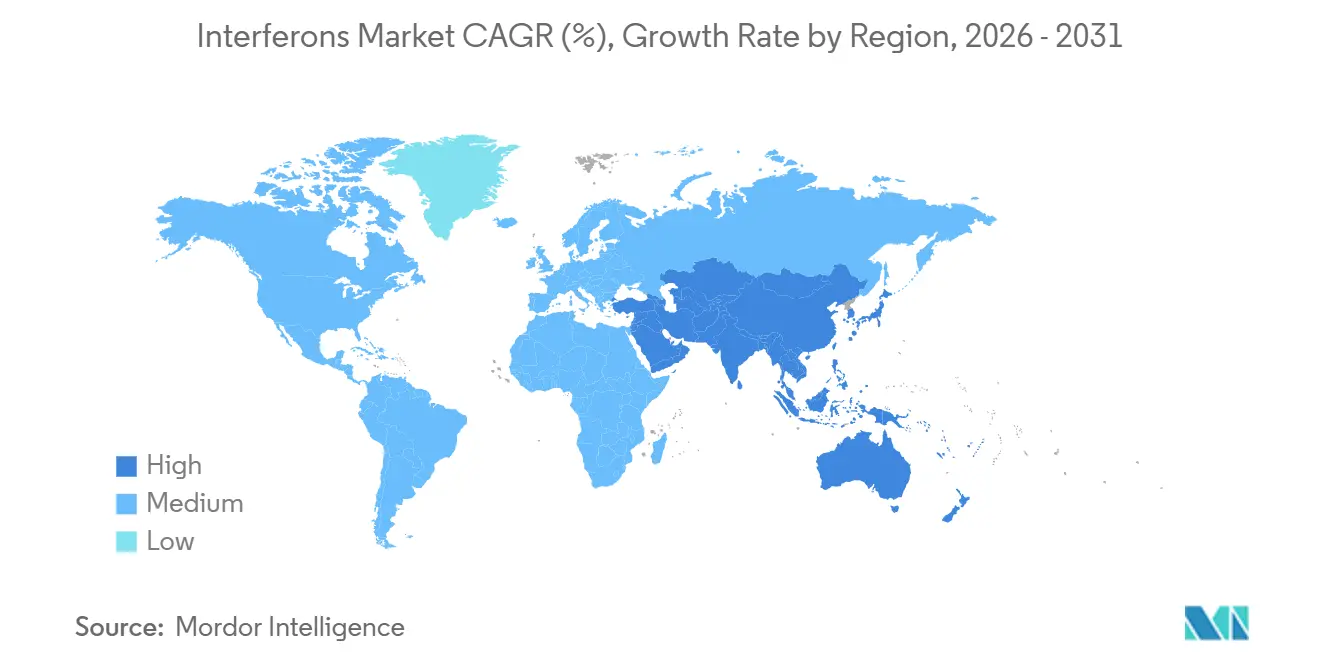
| Fastest Growing Market | Asia-Pacific |
| Largest Market | North America |
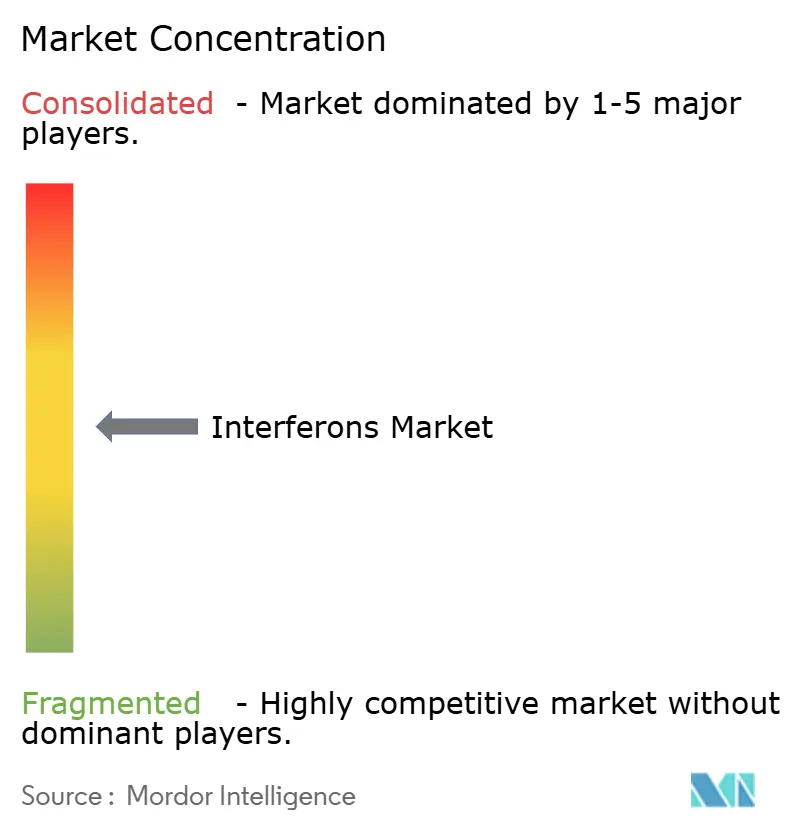
| Market Concentration | Medium |
Major Players *Disclaimer: Major Players sorted in no particular order Image © Mordor Intelligence. Reuse requires attribution under CC BY 4.0. | |
Interferons Market Analysis by Mordor Intelligence
The Interferons Market size is expected to increase from USD 10.11 billion in 2025 to USD 10.62 billion in 2026 and reach USD 13.42 billion by 2031, growing at a CAGR of 4.79% over 2026-2031.
The headline growth conceals a structural realignment: injectable interferon-α demand for hepatitis C has almost vanished, yet long-acting fusion proteins and intranasal prophylactics are opening new emergency-preparedness niches. Steady multiple-sclerosis prescribing of interferon-β, rising biosimilar penetration in price-sensitive regions, and fast-tracked oncology approvals for ropeginterferon alfa-2b underpin the market’s resilience. Meanwhile, cost-optimized manufacturing in India and China is expanding patient access, albeit at tighter margins, and government stockpiling of intranasal formulations for future respiratory outbreaks is emerging as a supplementary revenue stream.
Key Report Takeaways
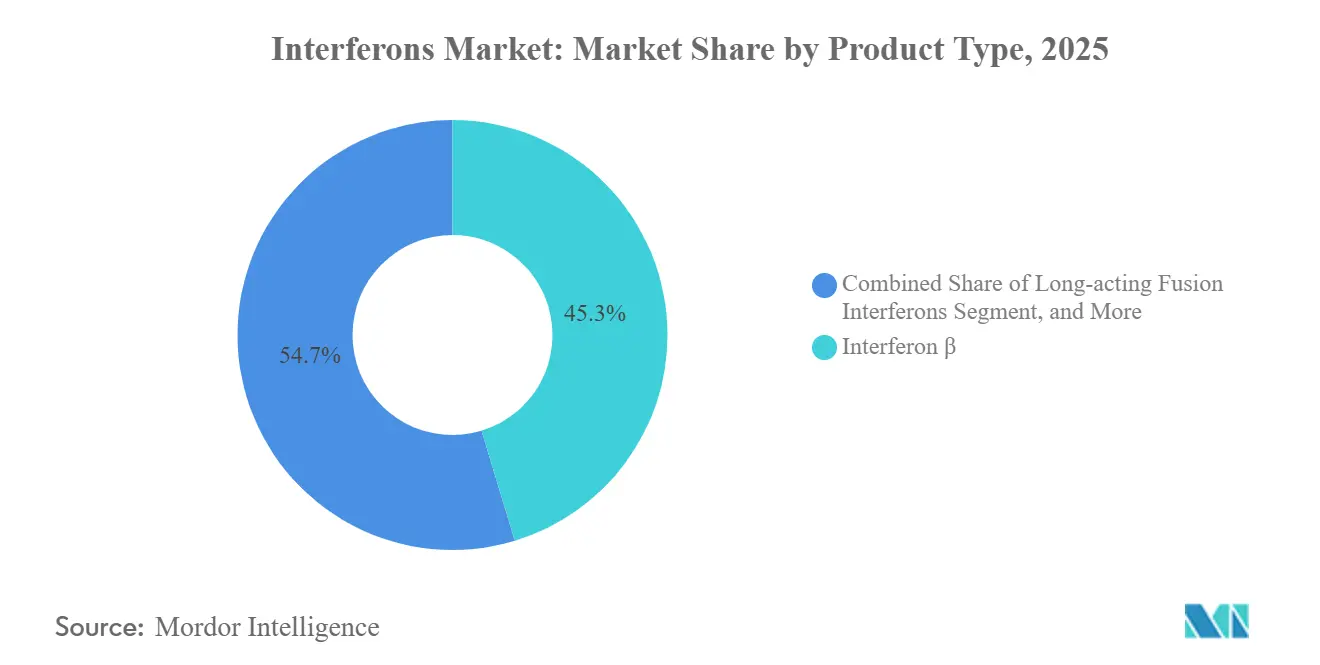
- By product type, interferon-β held 45.31% of the interferons market share in 2025, while long-acting fusion interferons are forecast to expand at a 7.02% CAGR through 2031.
- By application, multiple sclerosis accounted for 36.63% of the interferon market size in 2025, whereas emerging viral diseases are projected to advance at a 7.48% CAGR through 2031.
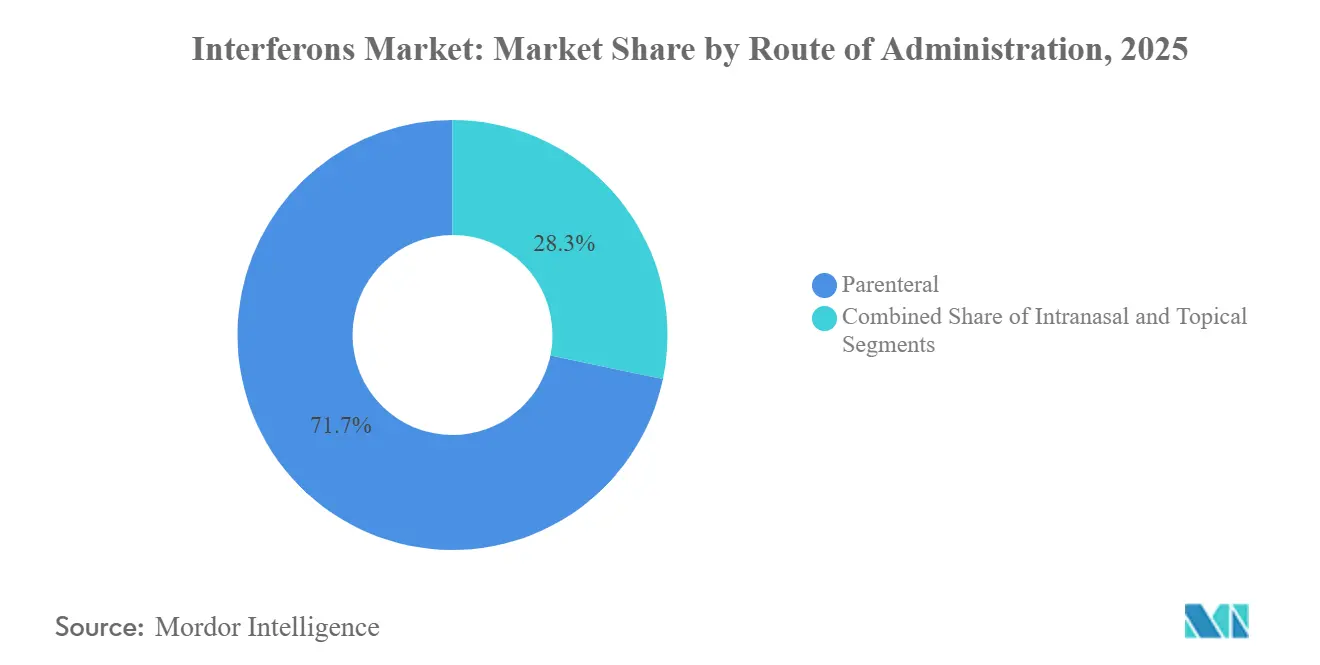
- By route of administration, parenteral products accounted for 71.72% of the interferon market size in 2025; intranasal delivery is projected to rise at a 6.13% CAGR.
- By end-user, hospitals generated 58.36% of 2025 revenue; home-care settings are posting the fastest 8.85% CAGR through 2031.
- By geography, North America led the interferon market share with 41.26% in 2025; however, the Asia-Pacific region is projected to grow at an 8.04% CAGR from 2026 to 2031.
Note: Market size and forecast figures in this report are generated using Mordor Intelligence’s proprietary estimation framework, updated with the latest available data and insights as of January 2026.
Market Trends and Insights
Drivers Impact Analysis of Interferons Market*
| Driver | (~) % Impact on CAGR Forecast | Geographic Relevance | Impact Timeline |
|---|---|---|---|
| Rising prevalence of chronic viral infections | +0.8% | Asia-Pacific core, spill-over to Sub-Saharan Africa and Latin America | Long term (≥ 4 years) |
| Growing multiple-sclerosis patient pool using IFN-β first-line | +0.6% | North America & EU, emerging adoption in Middle East | Medium term (2-4 years) |
| Wider adoption of cost-saving biosimilar interferons | +1.2% | Global, concentrated in India, China, Brazil, CIS | Short term (≤ 2 years) |
| Expanding oncology pipeline using interferon-based immunotherapy | +0.5% | North America & EU, clinical trial activity in Japan and South Korea | Long term (≥ 4 years) |
| Intranasal interferon for pandemic respiratory threats | +0.7% | Global, early stockpiling in high-income countries | Medium term (2-4 years) |
| Long-acting fusion-protein interferons in late-stage R&D | +0.9% | North America & EU, licensing interest in Asia-Pacific | Long term (≥ 4 years) |
| Source: Mordor Intelligence | |||
Rising Prevalence of Chronic Viral Infections
Chronic hepatitis B affects an estimated 296 million carriers worldwide, with the highest burden concentrated in China and India.[1]Peginterferon offers a finite 48-week regimen and achieves hepatitis B surface antigen loss in 3-7% of treatment-naive adults, outperforming the <1% rate associated with indefinite nucleos(t)ide analogue therapy. Combination trials pairing peginterferon with small-interfering RNA agents such as elebsiran achieved 21-33% antigen clearance, tripling monotherapy outcomes and renewing payer interest in interferon-based regimens. Domestic biosimilar producers in India and China undercut originator prices by up to 40%, enlarging eligible populations despite lower unit margins. Parallel research on dengue, mpox, and other expanding arboviruses highlights the broad antiviral utility of interferons, reinforcing their inclusion in national pandemic-preparedness stockpiles even before full commercial approval.
Growing Multiple-Sclerosis Patient Pool Using IFN-β First-Line
International guidelines continue to recommend interferon-β as a first-line option for patients with relapsing-remitting multiple sclerosis and low disease activity, or those with contraindications to higher-efficacy monoclonal antibodies. Although U.S. prescriptions declined as clinicians switched to ocrelizumab and BTK inhibitors, the global diagnosed MS population is expanding, particularly in the Middle East, where improved neurologic infrastructure is raising treatment rates. Pegylated interferon beta-1a (Plegridy), which extends injection intervals to every two weeks, preserves adherence in risk-averse cohorts until patent expiry in 2027, opening the door for biosimilars that will reset pricing across developed markets. Emerging MS centers in Saudi Arabia and Turkey are expected to leapfrog to these lower-cost alternatives, partly offsetting the erosion of North American revenue.
Wider Adoption of Cost-Saving Biosimilar Interferons
Price discounts of 15-35% in European tenders are enabling health ministries to treat 25-40% more patients within static budgets.[2]Zydus Lifesciences’ acquisition of Agenus’s California biologics plants in 2025 signaled a strategic pivot toward FDA-compliant capacity that could introduce the first U.S. interferon biosimilar shortly after Plegridy’s patent cliff. Although pharmacy-benefit-manager rebate practices still favor originators, bipartisan pressure on drug costs is accelerating legislative proposals that would grant interchangeability designations to biosimilars with robust head-to-head data, a catalyst expected to compress North American prices by up to 30% over the next decade.
Expanding Oncology Pipeline Using Interferon-Based Immunotherapy
Ropeginterferon alfa-2b received FDA approval for the treatment of polycythemia vera, offering a once-monthly fusion protein that achieved significant reductions in JAK2V617F allele burden, an emerging molecular surrogate for event-free survival. Phase 3 enrollment in essential thrombocythemia reached 50% of target patients by mid-2024, buoyed by hematologists seeking non-cytotoxic cytoreduction strategies. Developers are now repurposing interferons for niche hematologic malignancies rather than competing head-on with checkpoint inhibitors in solid tumors. This focus promises modest but durable revenue streams under orphan-drug exclusivities.
Restraints Impact Analysis of Interferons Market*
| Restraint | (~) % Impact on CAGR Forecast | Geographic Relevance | Impact Timeline |
|---|---|---|---|
| Rapid uptake of DAAs displacing interferon in HCV | -1.4% | Global, complete displacement in high-income countries | Short term (≤ 2 years) |
| Flu-like adverse events lower treatment adherence | -0.6% | Worldwide, pronounced in oncology settings | Medium term (2-4 years) |
| Shortage of GMP-grade plasmid supply for recombinant IFN | -0.4% | North America & EU manufacturing hubs | Medium term (2-4 years) |
| Environmental concerns on pegylated IFN metabolites | -0.3% | EU & North America, emerging in Asia-Pacific | Long term (≥ 4 years) |
| Source: Mordor Intelligence | |||
Rapid Uptake of DAAs Displacing Interferon in HCV
All-oral direct-acting antivirals achieve a sustained virologic response of greater than 95%, prompting the WHO and CDC to remove interferon-based regimens from their guidelines for hepatitis C.[3] The resulting USD 2–3 billion annual revenue loss between 2015 and 2023 shows how swiftly interferon sales can evaporate in the face of superior efficacy.
Flu-Like Adverse Events Lower Treatment Adherence
Injection-related fever, fatigue, and myalgia affect up to 60% of patients within 24 hours, driving discontinuation rates close to 20% in hepatitis B and multiple sclerosis cohorts. Pegylation reduces injection frequency, but not symptom severity, and even monthly ropeginterferon dosing leaves a tolerability gap relative to oral or targeted biologics.
*Our forecasts treat driver/restraint impacts as directional, not additive. The impact forecasts reflect baseline growth, mix effects, and variable interactions.
Interferons Market Segment Analysis
By Product Type:
Fusion Proteins Extend Dosing IntervalsInterferon-β dominated 2025 revenue with 45.31% interferon market share, but long-acting fusion proteins are accelerating at a 7.02% CAGR toward 2031. Ropeginterferon’s 78-hour half-life and monthly pen device support premium positioning for myeloproliferative neoplasms, while pegylated interferons remain the workhorse for finite-duration hepatitis B therapy. High-dose interferon-α in melanoma and renal cell carcinoma is being contracted, limited to centers that combine it with regional immunotherapies. Interferon-γ contributes negligible sales because its approved uses are restricted to rare pediatric immunodeficiencies.
Pipeline fusion constructs aim for half-lives exceeding 120 hours, potentially enabling quarterly maintenance dosing that repositions interferons as convenient options for chronic diseases. Developers pursuing albumin or hyFc scaffolds argue that reduced injection frequency will offset higher manufacturing costs. Whether HTA bodies will reimburse at premium price points hinges on real-world adherence gains and molecular-response surrogates proving long-term clinical benefit.

By Application:
MS Dominance Erodes as Viral Preparedness RisesMultiple sclerosis generated 36.63% of 2025 revenue, yet its share is inching downward as ocrelizumab and BTK inhibitors cannibalize first-line starts. In contrast, intranasal interferon stockpiling for future pandemics drives a 7.48% CAGR in the emerging-viral-disease segment. Hepatitis B remains a solid secondary pillar, thanks to peginterferon’s finite therapeutic window and superior functional cure probability.
Cancer indications are bifurcating: hematologists are embracing ropeginterferon for molecularly defined myeloproliferative neoplasms, while oncologists treating solid tumors continue to migrate to checkpoint inhibitors. The distinct trajectories illustrate how interferons retain relevance in niches where their broad immune activation complements targeted agents.
By Route of Administration:
Mucosal Delivery Challenges Parenteral DominanceParenteral formats held 71.72% interferons market size in 2025, sustained by autoinjector upgrades that lowered injection-site-pain complaints by 30-40%. Nonetheless, intranasal candidates are attracting pandemic-preparedness funding and growing at 6.13% CAGR, propelled by once-daily prophylactic regimens that sidestep systemic cytokine toxicity. Topical and inhaled formats remain minor, with inhaled interferon-β failing to show clear survival benefits in mixed COVID-19 studies.
By End-User:
Home-Care Gains as Autoinjectors Simplify Self-AdministrationHospitals represented 58.36% of 2025 sales, but payer site-of-care differentials, telemedicine onboarding, and improved pen-device usability are driving an 8.85% CAGR in home-care settings. Specialty clinics maintain a stable share by titrating doses and managing side effects, whereas academic centers contribute negligible direct revenue yet generate the clinical evidence needed for formulary adoption.
Geography Analysis
North America, Europe, APAC and Middle East Interferons Market
North America’s interferon market size, at 41.26%, remains the largest region in 2025, despite steady revenue contraction, with payer negotiations and impending biosimilar substitution expected to erode average selling prices by 20–25% after 2027. Europe follows a tender-driven procurement model that accelerates biosimilar turnover; originators maintain share primarily in Germany and Scandinavia, where physician loyalty and real-world evidence delay rapid switching. Asia-Pacific’s volume expansion, with a CAGR of 8.04% from 2026 to 2031, is driven by the hepatitis-B burden and cost-effective domestic manufacturing; however, fragmented provincial reimbursement in China moderates the pace of uptake. Emerging programs in Saudi Arabia, the United Arab Emirates, and Turkey are enhancing neurologic care infrastructure, increasing multiple sclerosis diagnosis rates, and providing a short-term boost to interferon-β uptake before next-generation oral therapies become dominant.
South America, Africa and Oceania Interferons Market
South America’s growth hinges on Brazil’s public tender cycles and Argentine biosimilar penetration. At the same time, Sub-Saharan Africa remains untapped mainly due to affordability constraints, although donor-funded procurement for viral outbreaks could catalyze sporadic spikes in demand. High-income Asia-Pacific markets, such as Japan and South Korea, enforce stringent biosimilar equivalence trials, which slow the introduction but ensure quality. Australia maintains niche use in hematology, with hospital groups favoring fusion proteins for myeloproliferative neoplasms under orphan-drug reimbursement pathways.
Regulatory Landscape
Interferons are regulated globally as biologics, with a strong focus on Chemistry, Manufacturing, and Controls (CMC), including validated analytical methods and comparability protocols for biosimilars and for post-approval manufacturing changes. The US FDA and the EMA are the main reference regulators for interferon lifecycle management, while newer and emerging-market authorities are codifying change-control expectations for biotherapeutics. For example, in January 2025 the Ethiopian Food and Drug Authority issued guidelines on procedures and data requirements for changes to approved biotherapeutic products.
In Europe, updates tied to Regulation (EU) 2024/1701 and the revised variations framework (applicable from January 2026) provide a clearer route for classifying and processing marketing-authorization variations, supporting supply resilience for established interferons. The practical impact shows up in EMA-authorized manufacturing site variations for Pegasys (peginterferon alfa-2a), including approval for Loba biotech GmbH to manufacture the active substance under a marketing authorization variation in 2025. In the United States, device and usability changes are also moving through regulatory pathways, including the June 2026 FDA approval of the BESREMi Pen (ropeginterferon alfa-2b-njft) for self-administration in adults with polycythemia vera.
Competitive Landscape
Combined, Biogen, Roche, Merck, and AOP Orphan controlled a significant share of global revenue in 2025, signaling moderate concentration. Incumbents defend their share through patent-life extensions, such as Plegridy to 2027, and a Pegasys type-II variation in 2024, as well as by advancing long-acting fusion or intranasal formulations. Indian and Chinese manufacturers, including Zydus, Intas, and Anhui Anke, are expanding their FDA-ready facilities to challenge originators in regulated markets, a move expected to reduce U.S. interferon prices by up to one-third.
Strategic plays in 2025 included Zydus’s USD 75 million acquisition of Agenus’s California sites to accelerate biosimilar filings and CDMO contracts, as well as Merck’s purchase of Cidara Therapeutics to diversify its antiviral pipeline. Start-ups such as Kineta are advancing interferon-λ candidates that selectively activate epithelial immunity without systemic cytokine spikes; yet, these remain Phase 1 assets.
White-space opportunities lie in government procurement of intranasal interferons for respiratory-virus preparedness and in quarterly-dosing fusion constructs targeting chronic inflammatory diseases. Success in either avenue would shift technology differentiation from pegylation a commodity technique to advanced scaffold engineering, raising entry barriers for low-cost biosimilar producers.
Interferons Industry Leaders
-
Merck & Co.,Inc.
-
Biogen Inc
-
Bayer AG
-
Amega Biotech
-
F. Hoffmann-La Roche Ltd
- *Disclaimer: Major Players sorted in no particular order
Interferons Market Companies Covered in this Report
- Abbvie
- Amega Biotech
- AOP Orphan Pharmaceuticals AG
- Bayer
- Biogen
- Biosidus
- Chugai Pharmaceutical
- CSL Behring AG
- Roche
- GeneSys Biologics Pvt Ltd
- GlaxoSmithKline
- Hikma Pharmaceuticals
- Intas Pharmaceutical
- Kineta Inc.
- Merck
- Novartis
- Pfizer
- Rentschler Biopharma SE
- Sanofi
- Zydus Lifesciences Ltd
Market Opportunities and Future Outlook
Label expansion and geography-by-geography lifecycle management around long-acting interferons create near-term whitespace, particularly in myeloproliferative neoplasms where monthly dosing and molecular-response tracking support differentiated positioning. In 2026, PharmaEssentia reported multiple regulatory milestones for ropeginterferon alfa-2b: Japan approval for a high-dose (500 mcg) maintenance regimen in polycythemia vera (March 2026), US FDA approval of the BESREMi Pen device for self-administration (June 2026), Taiwan approval for essential thrombocythemia (June 2026), and Health Canada Notice of Compliance for polycythemia vera via FORUS Therapeutics (July 2026). These actions broaden addressable patient pools and reduce administration friction, strengthening demand in both hospital and home-care pathways where device-enabled self-injection is increasingly relevant.
A second opportunity set involves programs targeting lower systemic interferon toxicity through localized or controlled delivery, expanding use beyond legacy parenteral regimens. In 2026, academic work highlighted vectorized interferon-beta local delivery in high-grade glioma models (AAV-based approaches) and aerosolized interferon-alpha1b activity against respiratory viruses with localized lung delivery, supporting continued R&D interest in site-directed interferon exposure. Clinical-trial activity also points to niche prophylaxis and relapse-prevention concepts in hematologic malignancies, including a Phase 2 trial (NCT07449286) initiated in 2026 evaluating interferon-alpha prophylaxis in TP53-mutated AML and MDS patients after allogeneic transplant. Together, these efforts keep interferons positioned as modular immune tools in narrowly defined, high-need settings, even as broad antiviral use in hepatitis C has been displaced by DAAs.
Recent Industry Developments in Interferons Market
- July 2026: Health Canada granted a Notice of Compliance for FORUS Therapeutics' polycythemia vera therapy. The approval broadens patient access in Canada and supports home and hospital pathways for interferon-based regimens. The milestone strengthens the position of interferon products in North American hematology markets.
- November 2025: Merck announced an agreement to acquire Cidara Therapeutics, expanding its infectious-disease and immunology portfolio with a late-stage antiviral asset. The move signals continued large-pharma appetite for differentiated antivirals and immunomodulators, influencing partnering and funding for interferon-adjacent programs.
- August 2024: European Commission granted marketing authorization for a Type II variation of Pegasys (peginterferon alfa-2a), expanding its use as monotherapy for adults with polycythemia vera or essential thrombocythemia. The regulatory action supports lifecycle extension and strengthens Pegasys positioning in hematology indications where long-acting interferons compete on dosing convenience and clinical familiarity.
Interferons Market Report Scope and Research Methodology
Market Definition and Coverage
We size the interferons market as the value of interferon based therapies sold for clinical use, covering interferon alfa, beta, and gamma products supplied through standard healthcare channels.
Scope exclusions: We exclude non-therapeutic research reagents and general cytokine research tools that are not sold as patient treatments.
Segments Covered in This Report
- By Product Type
- Interferon α
- Interferon β
- Interferon γ
- Pegylated Interferons
- Long-acting Fusion Interferons
- By Application
- Hepatitis B
- Multiple Sclerosis
- Melanoma
- Leukemia
- Renal Cell Carcinoma
- Emerging Viral Diseases
- By Route of Administration
- Parenteral
- Intranasal
- Topical
- By End-User
- Hospitals
- Specialty Clinics
- Home-care Settings
- Academic & Research Institutes
- By Geography
- North America
- United States
- Canada
- Mexico
- Europe
- Germany
- United Kingdom
- France
- Italy
- Spain
- Rest of Europe
- Asia-Pacific
- China
- Japan
- India
- Australia
- South Korea
- Rest of Asia-Pacific
- Middle East & Africa
- GCC
- South Africa
- Rest of Middle East & Africa
- South America
- Brazil
- Argentina
- Rest of South America
- North America
Data Sources, Market Sizing, and Validation
Desk Research
Desk work starts with building the disease and treatment context that drives interferon use, and then tying it to public healthcare signals. We used sources such as the World Health Organization, the US FDA, the European Medicines Agency, and the US Centers for Disease Control and Prevention to understand approved uses, safety labeling, and shifts in standard of care.
To keep the sizing grounded, we also reviewed payer and public health signals that point to treated volumes and therapy mix, using sources such as CMS datasets, OECD health statistics, and major national health ministry publications where available. Company annual reports, investor decks, and reputable press were used to confirm product footprints, reported revenues, and geography exposure, and paid subscription access for company financials and news helped cross-check timelines and one-off events. This list is illustrative only, and many other public and paid sources were used for data collection, validation, and clarification during the work.
Primary Interviews and Surveys
Primary work was used to validate demand drivers and pricing logic that are not fully visible in public datasets, especially where treatment has shifted to newer modalities and interferon use is concentrated in specific indications. We spoke with a mix of manufacturer-side roles, distributors, hospital and specialty clinic stakeholders, and therapy area specialists across major regions, and then used their input to stress-test assumptions on adoption, treatment duration, and ASP movement.
Distribution of primary research fieldwork respondents
| Company type | Respondent position | Region |
|---|---|---|
| Top tier: 34% | CXOs: 15% | APAC: 46% |
| Mid tier: 47% | Functional/Unit leaders: 41% | EMEA: 29% |
| Smaller Players: 19% | Managers: 44% | Americas: 25% |
Market-Sizing & Forecasting
The core model is built using a top-down approach where the treated demand pool is reconstructed by indication and region, then converted into value using typical dosing patterns and observed pricing ranges. Because interferons are used in a defined set of conditions, the model tracks practical fingerprints such as diagnosed and treated patient pools for hepatitis and multiple sclerosis, average therapy duration, route of administration mix, and the share of patients staying on interferon versus switching to newer options.
Those outputs are then checked using selective bottom-up approximations, including sampled product revenue roll-ups from public company reporting, country level channel checks, and an ASP times volume sense-check in markets where usage is concentrated. When direct splits are not available, gaps are handled through proxy ratios (such as relative treated prevalence and healthcare access indicators), followed by expert review to avoid overstating smaller countries.
For forecasting, we relied on scenario analysis supported by a light multivariate regression layer, where key variables like diagnosis rates, guideline-driven substitution trends, access and reimbursement tightening, and expected price erosion are adjusted based on interview consensus. Once these assumptions are set, the forecast is extended by region and indication and then rebalanced to keep totals aligned with the validated demand pool.
Data Validation & Update Cycle
Validation is done through multi-step checks so that unusual jumps are explained before numbers are finalized. We compare model outputs against independent signals such as therapy adoption commentary, product level revenue direction, and country level healthcare spend patterns, then investigate variances that do not match the expected clinical and access reality.
Any large deviation triggers a re-check of the drivers, followed by targeted re-contacts with interviewees to confirm whether the change is real or an assumption issue. Reports are refreshed annually, and interim updates are made when material events occur, such as major approvals, safety warnings, or reimbursement changes. Before delivery, an analyst performs a fresh pass on recent public updates so clients receive the latest view while staying tied to consistent assumptions.
Mordor Intelligence's Interferons Market Size Compared Against Other Published Estimates
Published interferons market values can vary quite a bit, even when the topic name looks the same, because the product boundary and the counted use cases are not always consistent. Differences also come from how prices are normalized across countries, and whether the estimate is refreshed after major therapy mix changes.
The main gap comes from whether the estimate treats interferons as a focused therapeutic market versus bundling adjacent cytokines or research grade reagents, a scope choice that materially shifts the numerator before forecasting even begins, and Mordor Intelligence counts only clinically used interferon alfa, beta, and gamma therapies priced at the country level and then validated against indication level demand signals.
Benchmark comparison
| Source | Market Size | Gaps in Research Methodology |
|---|---|---|
| Mordor Intelligence | USD 10.62 B (2026) | |
| Trade Publisher A | USD 3.51 B (2025) | This figure appears to track a narrower revenue pool with unit-volume framing and a declining base case, which can undercount indication spillover and country level price differences when interferons are assessed across multiple clinical uses. |
| Industry Bulletin B | USD 2.65 B (2023) | The release reports an incremental growth value rather than a full market total, so it is not directly comparable to a point-in-time market size and can be sensitive to the chosen start year and currency timing. |
Taken together, the spread mainly reflects scope and reporting format, not just forecasting optimism. By keeping the count tied to clinical interferon demand by indication, and by using repeatable price and access checks, the resulting number stays traceable to clear variables that can be re-tested during updates.
Key Questions Answered in the Report
What valuation and CAGR are forecast for global interferons through 2031?
Revenue is projected to rise from USD 10.62 billion in 2026 to USD 13.42 billion by 2031, implying a 4.79% CAGR.
Which therapy area currently contributes the most to interferon revenue?
Multiple sclerosis delivers the largest share, accounting for 36.63% of 2025 sales, owing to entrenched interferon-β first-line use.
How important is Asia-Pacific growth for interferon suppliers?
Asia-Pacific volumes are projected to expand at an 8.04% CAGR through 2031, driven by the prevalence of hepatitis B and cost-efficient biosimilar manufacturing in India and China.
Do long-acting fusion proteins meaningfully improve dosing schedules?
Yes, products such as ropeginterferon extend half-life to 78 hours, enabling once-monthly injections versus weekly or bi-weekly regimens for earlier pegylated versions.
How are intranasal interferons positioned for pandemic preparedness?
Phase 2 data showing 40% COVID-19 risk reduction in immunocompromised patients have spurred early government stockpiling, positioning nasal sprays as rapid-deploy prophylactics in future respiratory outbreaks.