
Inflammatory Bowel Therapeutics Market Size and Share
Market Overview
| Study Period | 2020 - 2031 |
|---|---|
| Market Size (2026) | USD 28.95 Billion |
| Market Size (2031) | USD 37.92 Billion |
| Growth Rate (2026 - 2031) | 5.55 % |
| Fastest Growing Market | Asia-Pacific |
| Largest Market | North America |
| Market Concentration | Medium |
Major Players *Disclaimer: Major Players sorted in no particular order Image © Mordor Intelligence. Reuse requires attribution under CC BY 4.0. | |
Inflammatory Bowel Therapeutics Market Analysis by Mordor Intelligence
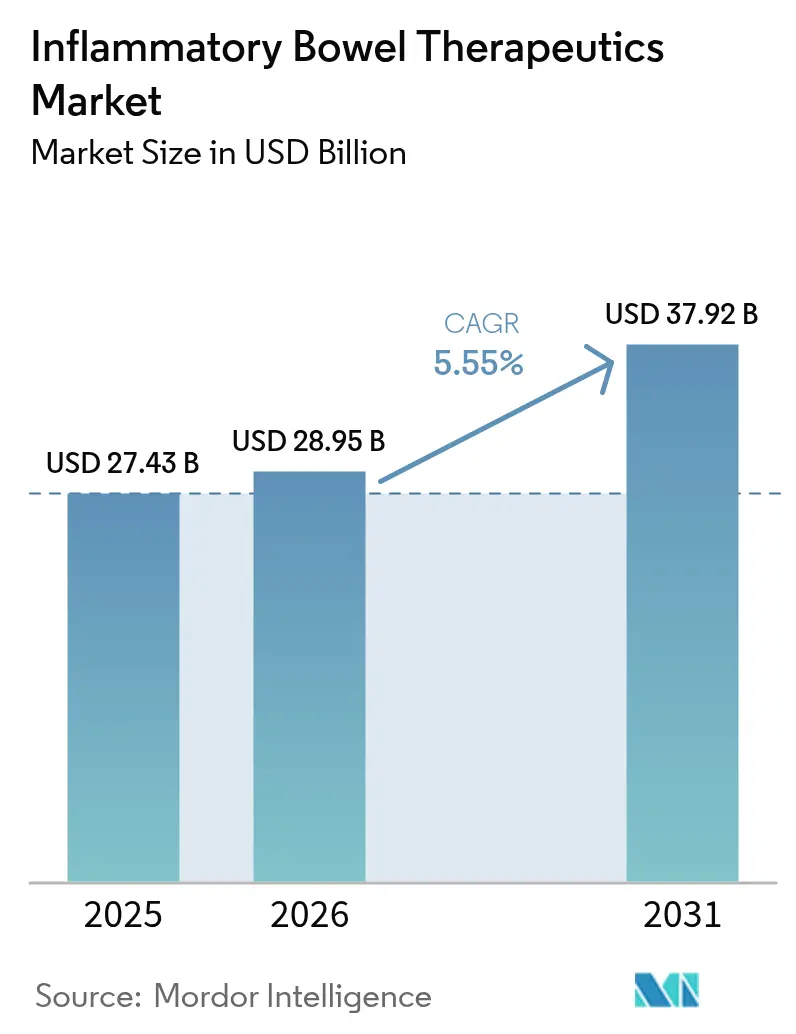
The inflammatory bowel therapeutics market size is expected to grow from USD 27.43 billion in 2025 to USD 28.95 billion in 2026 and is forecast to reach USD 37.92 billion by 2031 at 5.55% CAGR over 2026-2031. The inflammatory bowel therapeutics market is benefiting from a late-stage pipeline rich in anti-IL-23 and TL1A agents, the rapid commercial uptake of oral JAK inhibitors, and a decisive swing toward biosimilars that is widening patient access in insured as well as cost-sensitive regions. Physician adherence to treat-to-target guidelines that call for early biologic use and endoscopic remission as the primary endpoint is accelerating product adoption, while supply-chain investments are gradually easing manufacturing bottlenecks for complex biologics. AbbVie’s pivot from Humira to Skyrizi and Rinvoq underscores a broader industry transition away from TNF-alpha dominance and toward precision immunology, small-molecule convenience, and portfolio diversification.
The market’s momentum is reinforced by strong performance of ulcerative colitis drugs, continued double-digit growth in oral formulations, and a rising share of digital adherence solutions that improve real-world outcomes. Crohn’s disease therapies are expanding faster than the overall market, contract development and manufacturing organizations (CDMOs) are adding new capacity, and payer demands for value-based contracting are forcing manufacturers to combine innovation with disciplined pricing strategies. North America remains the largest revenue contributor, but Asia-Pacific is the fastest-growing region as regulators harmonize biosimilar pathways and governments invest in specialty care infrastructure. Collectively, these dynamics point to a resilient outlook for the inflammatory bowel therapeutics market.
Key Report Takeaways
- By disease, ulcerative colitis led with 51.68% of inflammatory bowel therapeutics market share in 2025, while Crohn’s disease is poised to expand at an 8.32% CAGR to 2031.
- By drug class, TNF inhibitors retained 35.95% share of the inflammatory bowel therapeutics market size in 2025 and JAK inhibitors are advancing at a 6.85% CAGR through 2031.
- By route of administration, parenteral products accounted for 75.62% of the inflammatory bowel therapeutics market size in 2025; oral therapies are growing at an 8.08% CAGR to 2031.
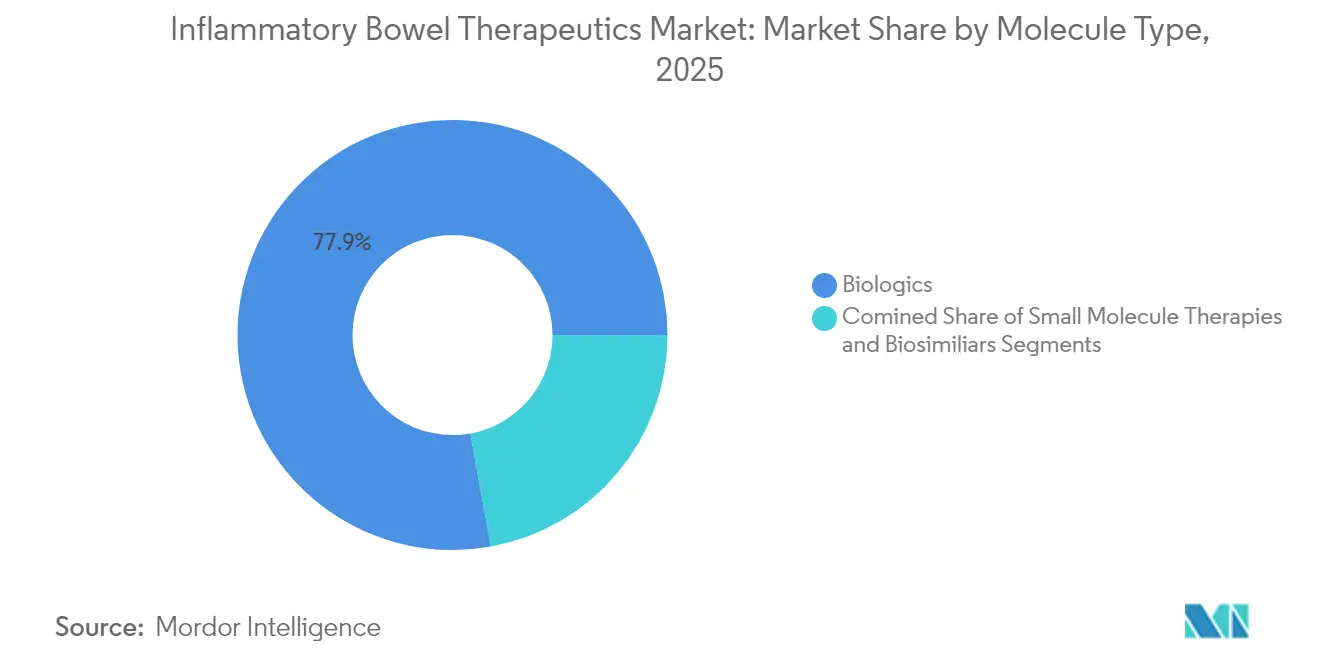
- By molecule type, biologics commanded 77.86% of revenue in 2025 while small-molecule therapies are forecast to rise at a 9.29% CAGR between 2026 and 2031.
- By distribution channel, hospital pharmacies controlled 47.31% of global sales in 2025, whereas online pharmacies are on course for a 9.17% CAGR amid direct-to-patient fulfillment gains.
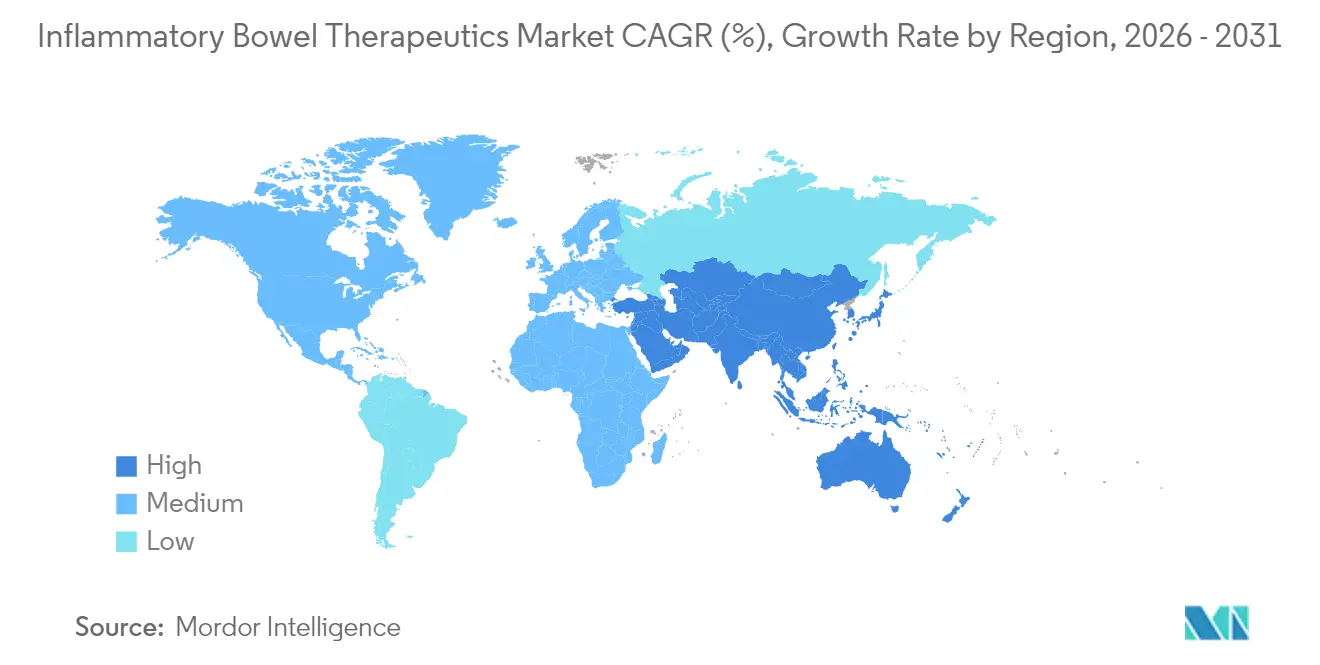
- By geography, North America held 35.84% of the inflammatory bowel therapeutics market share in 2025 and Asia-Pacific is projected to post the highest 8.21% CAGR through 2031.
Note: Market size and forecast figures in this report are generated using Mordor Intelligence’s proprietary estimation framework, updated with the latest available data and insights as of 2026.
Global Inflammatory Bowel Therapeutics Market Trends and Insights
Drivers Impact Analysis*
| Driver | (~) % Impact on CAGR Forecast | Geographic Relevance | Impact Timeline |
|---|---|---|---|
| Intensifying Late-Stage Pipeline For Anti-IL-23 & TL1A Agents | +0.7% | Global, with early gains in North America & EU | Medium term (2-4 years) |
| Rapid Uptake Of Oral JAK Inhibitors In Moderate-To-Severe UC & CD | +1.2% | North America & EU core, spill-over to APAC | Short term (≤ 2 years) |
| Expansion Of Treat-To-Target Guidelines Boosting Early Biologic Use | +0.9% | Global, with advanced implementation in North America | Medium term (2-4 years) |
| Mainstream Biosimilar Penetration Driving Patient Access | +0.8% | EU leading, North America accelerating, APAC emerging | Long term (≥ 4 years) |
| Rise Of Digital Adherence Solutions Improving Real-World Outcomes | +0.6% | North America & EU, expanding to APAC | Medium term (2-4 years) |
| Investment In Microbiome-Based Adjunct Therapies | +0.4% | Global research hubs, commercial focus in North America | Long term (≥ 4 years) |
| Source: Mordor Intelligence | |||
Intensifying Late-Stage Pipeline for Anti-IL-23 & TL1A
Anti-IL-23 drugs are displacing legacy TNF blockers as Phase 3 data confirm superior endoscopic remission rates; risankizumab achieved 31.8% at week 48 versus ustekinumab’s 16.2% in a head-to-head trial. The European regulator issued a positive opinion for risankizumab in ulcerative colitis, setting the stage for a continent-wide launch. Eli Lilly’s mirikizumab is in late-stage testing alongside tirzepatide to address obesity comorbidities, underscoring the market’s move toward multi-disease management. TL1A inhibitors are moving through proof-of-concept studies as drug makers strive for intestine-specific anti-inflammatory action without systemic immune suppression. These combined efforts are set to reshape treatment algorithms and reallocate revenue streams within the inflammatory bowel disease (IBD) therapeutics market.
Rapid Uptake of Oral JAK Inhibitors in Moderate-to-Severe UC & CD
Oral JAK inhibitors have broken the injection barrier that discouraged some patients from initiating biologic therapy. Tofacitinib and upadacitinib deliver efficacy comparable to infusion-based biologics, while copay savings programs cut out-of-pocket costs for eligible patients. The United States FDA has refined the REMS program to balance vigilance with prescriber convenience, and real-world data are clarifying cardiovascular and malignancy risk profiles in IBD populations. Pediatric trials of etrasimod in adolescents signal that the addressable pool will grow as age restrictions fall. This convergence of clinical data, patient demand, and payer support is translating into a materially higher growth contribution from oral therapies to the inflammatory bowel disease (IBD) therapeutics market.
Expansion of Treat-to-Target Guidelines Boosting Early Biologic Use
The STRIDE-II framework positions endoscopic remission as the primary outcome, prompting clinicians to escalate therapy faster and favor biologics earlier in the disease course.[1]Noor et al., “A Biomarker-Stratified Comparison of Top-Down vs Accelerated Step-Up Treatment Strategies for Patients with Newly Diagnosed Crohn’s Disease (PROFILE),” The Lancet, thelancet.com Biomarker-driven dosing tools such as the REMODEL-CD algorithm are demonstrating fewer treatment failures and longer drug persistence in pediatric patients.[2] Phillip Paul Minar, “Precise Infliximab Exposure and Pharmacodynamic Control to Achieve Deep Remission in Paediatric Crohn’s Disease (REMODEL-CD): Study Protocol for a Multicentre, Open-Label, Pragmatic Clinical Trial in the USA,” BMJ Open, bmjopen.bmj.com Updated American Gastroenterological Association recommendations de-emphasize adalimumab as first-line therapy in complex Crohn’s disease, redirecting demand toward IL-23 and JAK inhibitors. As adoption widens, early biologic starts increase revenue per patient and lift long-run adherence, fortifying the revenue outlook for the inflammatory bowel disease (IBD) therapeutics market.
Mainstream Biosimilar Penetration Driving Patient Access
Adalimumab biosimilars reached an 18% prescription share by mid-2024 after key formulary switches by large US pharmacy benefit managers. Sandoz’s Hyrimoz now captures most biosimilar scripts under the CVS Cordavis label, showing how PBM policies can override lingering prescriber hesitancy. Payer incentives are estimated to save national health systems up to USD 6 billion, though PBMs must offset lost rebate income. Gastroenterologists are embracing switching faster than dermatologists, and AbbVie has responded by cutting Humira list prices by up to 86% while channeling investment into Skyrizi and Rinvoq. As competitive pricing reshapes formularies, the inflammatory bowel disease therapeutics market gains new demand from previously untreated or under-treated patients.
Restraints Impact Analysis*
| Restraint | (~) % Impact on CAGR Forecast | Geographic Relevance | Impact Timeline |
|---|---|---|---|
| Stringent REMS & Boxed Warnings For JAK Class | -0.8% | North America leading, EU following, APAC adapting | Short term (≤ 2 years) |
| High Biologic Pricing Pressure From Payers & HTA Bodies | -0.5% | Global, with intense scrutiny in EU & emerging markets | Medium term (2-4 years) |
| Manufacturing Capacity Bottlenecks For Complex Biologics | -0.4% | Global supply chains, acute in North America & EU | Long term (≥ 4 years) |
| Patient Reluctance Toward Long-Term Immunosuppression | -0.3% | Global, with cultural variations across regions | Medium term (2-4 years) |
| Source: Mordor Intelligence | |||
Stringent REMS & Boxed Warnings for JAK Class
Uptake of JAK inhibitors faces regulatory friction as prescribers must counsel patients on cardiovascular, malignancy, and thrombosis risks under the FDA’s REMS program. The boxed warnings are particularly restrictive for elderly or comorbid populations, slowing first-line adoption in these cohorts. Although accumulating real-world data may soften these constraints over time, the near-term drag favors IL-23 agents and gut-selective mechanisms, trimming potential growth for the inflammatory bowel disease therapeutics market.
High Biologic Pricing Pressure From Payers & HTA Bodies
Cost-effectiveness agencies such as Germany’s IQWiG and England’s NICE have tightened incremental benefit thresholds, forcing originator companies to offer larger rebates or face exclusion from formularies. A study in Iran pegged average annual biologic costs at USD 2,316.90 per patient, with direct medical costs accounting for nearly half of the economic burden.[3]Hassan Karami, Amin Ghanbarnejad, Mitra Nowrouzpour, Ali Mouseli, Reihaneh Taheri Kondar, Maryam Shirvani Shiri, and Farbod Ebadi Fard Azar, “Cost-of-Illness Analysis of Ulcerative Colitis Patients Treated with Biological Therapy: A Prospective Observational Study in Iran,” BMC Health Services Research, bmchealthservres.biomedcentral.com Copay accumulator and maximizer programs further complicate patient affordability until state-level legislation intervenes. These developments cap price expansion potential and narrow gross margins in the inflammatory bowel disease therapeutics market.
*Our forecasts treat driver/restraint impacts as directional, not additive. The impact forecasts reflect baseline growth, mix effects, and variable interactions.
Segment Analysis
By Disease: Crohn’s Disease Drives Future Growth
Revenue from Crohn’s disease is projected to climb at an 8.32% CAGR to 2031, overtaking overall market pace despite ulcerative colitis’ 51.68% revenue dominance in 2025. The crohn’s-specific inflammatory bowel disease therapeutics market size for pediatric patients is enlarging as pharmacokinetic studies in children as young as two demonstrate safe dosing of risankizumab. Combination regimens that pair an anti-integrin with a JAK inhibitor have yielded superior endoscopic healing in refractory cases, further lifting average treatment spend.
Persistent mucosal damage and higher surgical rates push clinicians to adopt early biologic intervention in Crohn’s disease, and insurers are gradually approving top-down protocols. The disease’s heterogeneity raises per-patient monitoring costs, but also creates headroom for premium-priced precision therapies. Ulcerative colitis, by contrast, benefits from a clearer disease course and an expanding lineup of effective oral agents, including newly approved mirikizumab. Treatment personalization, spanning dual biologic approaches as well as comorbidity management, is set to raise lifetime revenue per Crohn’s patient within the inflammatory bowel disease therapeutics market.




By Drug Class: JAK Inhibitors Challenge TNF Dominance
TNF inhibitors held a 35.95% inflammatory bowel disease therapeutics market share in 2025 even as biosimilar erosion intensified. Skyrizi and Rinvoq revenues leapt to USD 17.689 billion in 2024, exemplifying how carefully sequenced portfolio hand-offs can cushion the erosion of legacy assets. JAK inhibitors, growing at a 6.85% CAGR, marry oral convenience with increasingly favorable safety packages and are progressively tested in younger cohorts.
Interleukin inhibitors, particularly IL-23 agents, are positioned for step-change adoption once broad reimbursement starts in Europe and Japan. Anti-integrins continue to serve patients who prefer gut-selective targeting, and research into TL1A antagonists is adding another mechanism to the therapeutic mix. Meanwhile, PHD inhibitors such as ISM5411 are carving out a future niche as gut-restricted small molecules, indicating that mechanistic diversification will remain central to competitiveness within the inflammatory bowel disease therapeutics market.
By Route of Administration: Oral Therapies Gain Momentum
Parenteral delivery commanded 75.62% of 2025 spending because most biologics remain injectable, yet oral products are the fastest-growing segment at 8.08% CAGR to 2031. The shift is propelled by busy lifestyles, needle-phobia, and remote prescription refills, prompting companies to prioritize small-molecule pipelines and even explore oral biologic formats.
Subcutaneous self-injection is narrowing the convenience gap, but a pronounced preference for pill-based regimens persists, especially in moderate ulcerative colitis where rapid symptom relief is crucial. Pediatric and adolescent communities favor oral dosing to avoid school-day clinic visits. As REMS requirements are clarified and long-term safety data accumulate, the oral drug class is expected to win an elevated role in first-line therapy decisions within the inflammatory bowel disease therapeutics market.
By Molecule Type: Small Molecules Challenge Biologic Supremacy
Biologics represented 77.86% of 2025 revenue on the strength of mature TNF and emerging IL-23 franchises. Even so, small-molecule therapies are slated for a 9.29% CAGR, the highest across all segmentation types. Small molecules eliminate cold-chain logistics and carry lower production costs, enabling competitive pricing and easier distribution through retail and digital channels.
Pfizer’s comprehensive affordability solutions for tofacitinib and etrasimod underscore how support services can neutralize payer hurdles. Biosimilar competition will extract value from legacy biologics, but next-generation constructs such as bispecific antibodies and orally delivered proteins may defend biologics’ revenue base. AI-guided discovery platforms are accelerating candidate generation, promising a robust stream of differentiated small molecules that will diversify the inflammatory bowel disease therapeutics market.
By Distribution Channel: Digital Transformation Accelerates
Hospital pharmacies commanded 47.31% of global sales in 2025 owing to their role in infusion services and multidisciplinary care coordination. Yet online pharmacies are expanding at 9.17% CAGR as direct-to-patient shipping, telehealth follow-ups, and auto-refill programs proliferate. Specialty pharmacy hubs offer cold-chain warehousing and virtual nursing check-ins, thereby merging clinical oversight with e-commerce convenience.
Retail outlets remain relevant for maintenance or step-down therapy, but newer reimbursement models favor digital channels that can integrate copay assistance and adherence monitoring. Insurers are increasingly comfortable reimbursing telepharmacy services, reducing friction for patients in rural areas. This multi-channel approach is redefining how stakeholders capture value across the inflammatory bowel disease therapeutics market.
Geography Analysis
North America controlled 35.84% of global revenue in 2025 on the back of advanced health-care infrastructure, strong insurance coverage, and rapid product launches through the FDA’s breakthrough designation pathway. Uptake of Skyrizi and Rinvoq, which booked USD 17.689 billion in combined sales, demonstrates how quickly prescribers migrate to new mechanisms when supported by robust real-world evidence. Copay assistance remains essential, yet 29 states still allow accumulator programs that can blunt the benefit of manufacturer coupons, prompting ongoing patient-advocacy efforts.
Europe ranks second by value but leads the world in biosimilar adoption, creating a price-competitive environment that compresses margins yet expands patient reach. The EMA’s positive CHMP opinion for risankizumab in ulcerative colitis is expected to accelerate IL-23 growth, whereas HTA bodies continue to challenge incremental innovation premiums, directing companies toward outcomes-based contracts. Post-marketing safety registries are especially developed, informing global regulatory revisions and underpinning payer negotiations.
Asia-Pacific is forecast for the highest regional CAGR at 8.21% through 2031, propelled by regulatory harmonization and public-sector investment in specialty care. Japan’s biotechnology revitalization strategy includes funding for local startups and expedited review pathways, while China’s retrospective study of ustekinumab reports 75% remission rates in pediatric Crohn’s disease cohorts. India is emerging as a CDMO alternative under the US Biosecure Act, appealing to multinationals wary of supply-chain concentration in China. These developments collectively add depth and resilience to the inflammatory bowel disease therapeutics market across Asia-Pacific.
Middle East and Africa, though smaller in absolute terms, deliver long-run upside thanks to young demographics and improving specialty-care access. GCC governments are building IBD centers of excellence and partnering with multinational firms for local fill-and-finish operations. South Africa’s clinical-trial capacity is drawing early-phase studies, giving the region first-hand exposure to cutting-edge therapies that could shorten launch timelines.
South America delivers steady gains as Brazil and Argentina refine their regulatory frameworks and court foreign investment. Economic volatility still pressures biologic pricing, but phased reimbursement programs and local production partnerships are increasing availability. Clinical-trial participation continues to serve as an entry strategy for companies targeting Latin America, offering compassionate-use channels for severe cases while building prescriber familiarity.

Regulatory Landscape
In inflammatory bowel disease (IBD) therapeutics, regulatory decisions continue to focus on benefit-risk management for immunomodulators and evidentiary rigor for advanced endpoints. In the United States, the FDA expanded available IL-23 options for Crohn's disease with approvals for Eli Lilly's Omvoh (mirikizumab-mrkz) in January 2025 and Johnson & Johnson's TREMFYA (guselkumab) in March 2025, reinforcing the shift away from TNF-first sequencing in moderate-to-severe disease. For biosimilars, the FDA's November 2024 decision to approve an interchangeable ustekinumab biosimilar (Yesintek, ustekinumab-kfce) creates a substitution pathway that can accelerate payer-driven switching in Crohn's disease and ulcerative colitis.
In Europe, the EMA and European Commission continue to shape access and lifecycle outcomes through marketing authorization actions and guideline evolution, including pediatric development updates and patient-reported outcome (PRO) endpoint support for IBD trials. Commercial strategy can also alter regulatory trajectories, as seen in August 2025 when the European Commission withdrew the marketing authorization for Eksunbi (ustekinumab) at the request of Samsung Bioepis NL B.V., and in May 2026 when Celltrion Healthcare Hungary Ktf. withdrew its EMA application for Veblocema (infliximab) in Crohn's disease and ulcerative colitis (among other indications). Separately, the April 2026 US Presidential Proclamation under Section 232, introducing 100% ad valorem tariffs on imported patented pharmaceuticals and active ingredients (with exemptions for generics and biosimilars), adds a trade-policy overlay that can affect where patented IBD biologics are manufactured and how supply resilience is structured.
Value Chain Analysis
The IBD therapeutics value chain covers discovery and clinical development (biologic and small-molecule platforms), specialized API and biologics manufacturing (cell line development, upstream and downstream processing), sterile fill-finish and device assembly for injectables, and multi-channel commercialization through hospital and specialty pharmacies alongside growing direct-to-patient fulfillment. Complexity is highest for biologics, where cold-chain logistics, single-source fill-finish dependencies, and sterile manufacturing requirements such as EMA GMP Annex 1 can limit throughput and produce localized access gaps even when products are not formally listed on national shortage databases.
CDMOs and strategic manufacturing partners are central to scaling next-generation modalities and reducing time-to-clinic. National Resilience's January 2025 partnership with Parvus Therapeutics to support development and manufacturing of PVT401 for IBD illustrates this role, while the January 2026 Sinorda Biomedicine collaboration with WuXi Biologics for clinical manufacturing of the bispecific antibody SND006 targeting IBD shows how manufacturers are aligning for new modalities. On the downstream side, intermittent specialty-pharmacy supply challenges reported for Takeda's vedolizumab (Entyvio) in 2026, and broader constraints in generic budesonide extended-release supply linked to manufacturing consolidation and global raw material sourcing, highlight friction points that can affect treatment continuity and formulary execution for both complex biologics and selected oral maintenance therapies.
Competitive Landscape
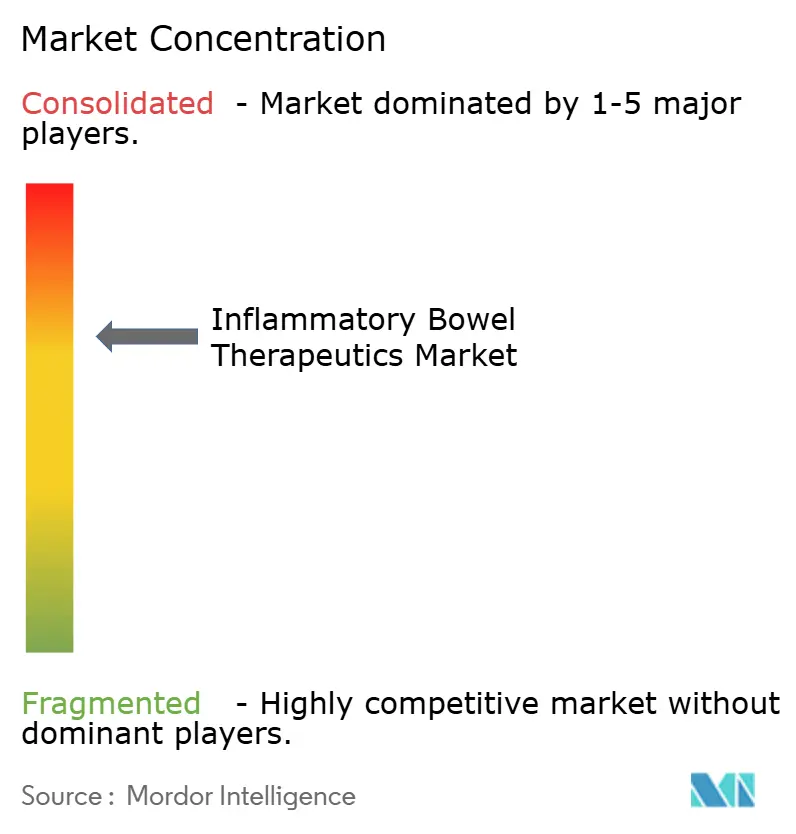
The inflammatory bowel disease therapeutics market is moderately concentrated, with the top five companies still accounting for a majority of sales, yet competitive intensity is rising as biosimilars and novel mechanisms gain ground. AbbVie’s shift toward IL-23 and JAK franchises shows how legacy leaders can defend share after loss of exclusivity, while Johnson & Johnson is exploring dual biologic strategies that combine Stelara with vedolizumab to serve refractory patients.
Start-ups harnessing artificial intelligence are compressing research timelines; Insilico Medicine took only 18 months to bring ISM5411 from concept to Phase 1 completion, illustrating the disruptive potential of AI-first platforms. CDMOs are critical enablers, and capacity restraints make long-term supply agreements a competitive differentiator. Manufacturers are also enhancing patient-support ecosystems; AbbVie’s Skyrizi Complete bundles reimbursement counseling, nurse coaching, and digital adherence monitoring to lock in persistence.
Hybrid commercialization models that pair digital health solutions with pharmacotherapy are gaining traction. Seres Therapeutics and Takeda are piloting microbiome-plus-biologic bundles, offering a more holistic approach to disease control. Payers, meanwhile, are scrutinizing real-world effectiveness to inform risk-share contracts, pushing drug makers to invest in post-marketing registries and outcome-tracking platforms. Together, these trends underscore a market where innovation extends beyond the molecule into manufacturing, service delivery, and data analytics.
Inflammatory Bowel Therapeutics Industry Leaders
Bristol-Myers Squibb Company
AbbVie Inc.
Bausch Health
Johnson & Johnson
Takeda Pharmaceutical
- *Disclaimer: Major Players sorted in no particular order

Market Opportunities and Future Outlook
Clinical and commercial whitespace is opening around refractory IBD management, pediatric expansion, and administration simplification, as companies advance dual-pathway and next-generation IL-23 programs while payers tighten value scrutiny. In 2026, Johnson & Johnson disclosed Phase 2b data for JNJ-4804, a co-antibody targeting IL-23 and TNF-alpha, and moved into Phase 3 (DUET ENCORE-CD and DUET ENCORE-UC), signaling active investment in combination-biology designed to differentiate against established single-target biologics in harder-to-treat segments. MSD's positive Phase 3 ATLAS-UC readout in June 2026 for tulisokibart (MK-7240), an anti-TL1A antibody, provides additional evidence that TL1A is moving from late-stage promise into registrational-grade data, supporting portfolio strategies that pair novel mechanisms with payer-relevant outcome narratives.
Lifecycle opportunities are also visible through label expansion and route-of-administration optimization that can broaden eligible populations and reduce administration burden. The FDA approval of STELARA (ustekinumab) for pediatric Crohn disease patients aged 2 years and older (April 2026) expands biologic use into younger cohorts, increasing the importance of pediatric trial design, long-term safety registries, and age-appropriate dosing and support programs. At the same time, AbbVie's April 2026 FDA submission for SKYRIZI (risankizumab-rzaa) subcutaneous induction in Crohn's disease points to a competitive push for more flexible induction options that align with specialty-pharmacy fulfillment models and can reduce dependence on infusion infrastructure. In the United States, meaningful formulary-driven biosimilar uptake in adalimumab, together with interchangeability decisions such as the FDA's 2024 ustekinumab interchangeable biosimilar approval, creates an additional access lever and raises the bar for differentiated services, real-world evidence, and contracting approaches beyond price alone.
Recent Industry Developments
- May 2026: Johnson & Johnson reported Phase 2b results for JNJ-4804, an investigational co-antibody targeting IL-23 and TNF-alpha, and advanced the program into Phase 3 via DUET ENCORE-CD and DUET ENCORE-UC. The program increases competitive pressure on single-pathway biologics by moving a dual-target mechanism into late-stage development for both Crohn's disease and ulcerative colitis.
- October 2025: AbbVie announced that the US FDA approved an updated indication statement for RINVOQ (upadacitinib) for inflammatory bowel disease, broadening the described patient pathway after prior systemic therapy when TNF blockers are clinically inadvisable. The label update supports oral JAK inhibition positioning across more real-world treatment sequences while retaining class risk-management requirements.
- July 2024: AbbVie received European Commission approval for SKYRIZI (risankizumab) for adults with moderately to severely active ulcerative colitis. The decision expanded the IL-23 franchise footprint in Europe and strengthened cross-indication portfolio leverage across ulcerative colitis and Crohn's disease.


Research Methodology Framework and Report Scope
Market Definition and Coverage
This market covers revenues generated from drug therapies used to treat inflammatory bowel disease in routine clinical practice, including prescription products across induction and maintenance of remission for Crohn's disease and ulcerative colitis.
Scope exclusions: We exclude diagnostics, medical devices, surgical procedures, and general gastrointestinal supportive care that is not used as an IBD-directed therapeutic.
Segmentation Overview
- By Disease
- Crohn’s Disease
- Ulcerative Colitis
- By Drug Class
- TNF Inhibitors
- JAK Inhibitors
- IL Inhibitors
- Anti-integrins
- Aminosalicylates
- Corticosteroids
- Other Classes
- By Molecule Type
- Biologics
- Small-Molecule Therapies
- Biosimilars
- By Route of Administration
- Parenteral
- Oral
- By Distribution Channel
- Hospital Pharmacies
- Retail Pharmacies
- Online Pharmacies
- By Geography
- North America
- United States
- Canada
- Mexico
- Europe
- Germany
- United Kingdom
- France
- Italy
- Spain
- Rest of Europe
- Asia-Pacific
- China
- Japan
- India
- Australia
- South Korea
- Rest of Asia-Pacific
- Middle East and Africa
- GCC
- South Africa
- Rest of Middle East and Africa
- South America
- Brazil
- Argentina
- Rest of South America
- North America
Data Sources, Market Sizing, and Validation
Desk Research
Desk work was used to lock the market boundaries, build the country coverage frame, and collect the base inputs that can be checked in public data. We reviewed non-paywalled sources such as the US FDA drug database and approvals updates, the European Medicines Agency public assessment reports, the US CDC health statistics, and OECD health indicators to understand diagnosed population trends and treatment patterns.
Alongside these, we used sources such as peer reviewed clinical journals, national health service pricing and reimbursement publications where available, gastroenterology association websites, and reputable company filings and investor presentations to map branded drugs, biosimilars, and launch timelines. A paid subscription focused on company financials and another on patent tracking were used selectively to validate revenue direction and pipeline timing when public disclosures were not clear. The desk sources listed here are illustrative and not exhaustive, and we used additional public datasets and publications for data collection, cross-checks, and clarifications.
Primary Interviews and Surveys
Primary work centered on structured interviews and short surveys with gastroenterologists, hospital pharmacists, payers, and distribution-side experts, so that therapy mix, switching behavior, and real world uptake could be confirmed. We also validated biosimilar substitution expectations, new oral therapy adoption in practice, and access restrictions across major regions using manufacturer-facing roles and regional channel participants.
Distribution of primary research fieldwork respondents
| Company type | Respondent position | Region |
|---|---|---|
| Top tier: 32% | CXOs: 12% | APAC: 37% |
| Mid tier: 51% | Functional/Unit leaders: 38% | EMEA: 36% |
| Smaller Players: 17% | Managers: 50% | Americas: 27% |
Market-Sizing & Forecasting
Market sizing used a top-down and bottom-up blend, where epidemiology and treated-patient pools were rebuilt by country and then translated into therapy demand using real prescribing and access checks. To make the totals usable and repeatable, we tied demand to practical inputs such as diagnosed prevalence trends, the share of moderate to severe patients eligible for advanced therapies, biologic versus small molecule mix, average duration on therapy before switching, and country level pricing and reimbursement logic.
Once the demand pool was created, the value was derived using class-level and route-level pricing progression, including the expected impact of biosimilar entry and tender pricing where relevant, followed by adjustments for channel markups and patient support mechanisms that change net selling prices. Where a country had limited public price transparency, gaps were handled through regional price corridors and proxy markets with similar reimbursement systems, then refined through primary checks. For forecasting, scenario analysis was used because pipeline timing, label expansions, and payer step edits can shift uptake quickly, and the scenarios were anchored using expert consensus on adoption curves for newer mechanisms and biosimilar penetration.
Data Validation & Update Cycle
Validation was done through cross-checking the final market values against independent signals, such as therapy class share patterns, biologic use trends in major markets, and known launch and loss of exclusivity timelines. When unexpected jumps appeared at country or class level, we reopened the assumptions, and respondents were re-contacted to confirm whether the driver was pricing, access, or a treatment mix shift.
Before sign-off, the model and assumptions go through a multi-step analyst review so that arithmetic, currency conversions, and forecast logic remain consistent across regions. Reports are refreshed annually, with interim updates when material events occur, such as major approvals, meaningful safety changes, or large pricing actions. Right before delivery, a final refresh pass is completed so clients receive the most current view that can be traced back to clear variables and checks.
Mordor Intelligence's Inflammatory Bowel Therapeutics Market Size Compared Against Other Published Estimates
Published IBD therapeutics market sizes can look far apart because the word "therapeutics" is not treated the same way by every publisher, and the timing of the base year also changes the starting point. Differences can also come from how net pricing is handled for biologics and biosimilars, and whether the numbers reflect access restrictions that slow real uptake.
The main gap comes from whether adjacent categories are added in, because some estimates fold in supportive gastrointestinal drugs or broader autoimmune immunology revenues, while Mordor Intelligence counts IBD therapeutics only when use is tied to Crohn's disease or ulcerative colitis treatment and the price is modeled as an expected net level after rebates and biosimilar discounting.
Benchmark comparison
| Source | Market Size | Gaps in Research Methodology |
|---|---|---|
| Mordor Intelligence | USD 28.95 B (2026) | |
| Global Consultancy A | USD 28.10 B (2025) | Uses a different base year and appears to apply a faster near-term uptake curve for newer drug classes, which can lift the starting value if access and switching frictions are not fully modeled. |
| Industry Publisher B | USD 21.80 B (2024) | Builds the market from a broader treated pool with less explicit net price adjustment, which can reduce comparability when rebates, biosimilar tender effects, and country reimbursement constraints are not handled consistently. |
The spread in the table is mainly explained by scope choice and how quickly prices and access are adjusted in the model across countries. By keeping the value tied to a treated IBD pool, class mix, and practical net price steps that can be rechecked, our estimate stays easier to audit and update when approvals, biosimilar waves, or reimbursement rules change.


Key Questions Answered in the Report
What is the current size of the inflammatory bowel disease therapeutics market?
The inflammatory bowel disease therapeutics market size reached USD 28.95 billion in 2026 and is projected to hit USD 37.92 billion by 2031, growing at a 5.55% CAGR.
Which therapeutic area is expanding the fastest within this market?
Crohn’s disease drugs are expected to grow at an 8.32% CAGR to 2031, outpacing ulcerative colitis therapies.
How quickly are oral JAK inhibitors gaining share?
The JAK inhibitor segment is forecast to rise at 6.85% CAGR, supported by oral convenience and maturing safety data.
Why is Asia-Pacific the most attractive growth region?
Regulatory harmonization, rising disease awareness, and expanding biosimilar access underpin an 8.21% CAGR for Asia-Pacific through 2031.
What is driving biosimilar penetration?
Aggressive payer formulary changes and potential healthcare savings estimated at up to USD 6 billion are accelerating adalimumab biosimilar uptake.
How are digital pharmacies influencing distribution?
Online pharmacies are growing at 9.17% CAGR thanks to direct-to-patient shipping, automated refills, and integrated copay support programs.
Page last updated on:





