
Indonesia Enterprise Mobility Management Market Size and Share
| Study Period | 2019 - 2030 |
| Forecast Data Period | 2025 - 2030 |
| Historical Data Period | 2019 - 2023 |
| Market Size (2025) | USD 2.69 Billion |
| Market Size (2030) | USD 3.86 Billion |
| CAGR (2025 - 2030) | 7.50% |
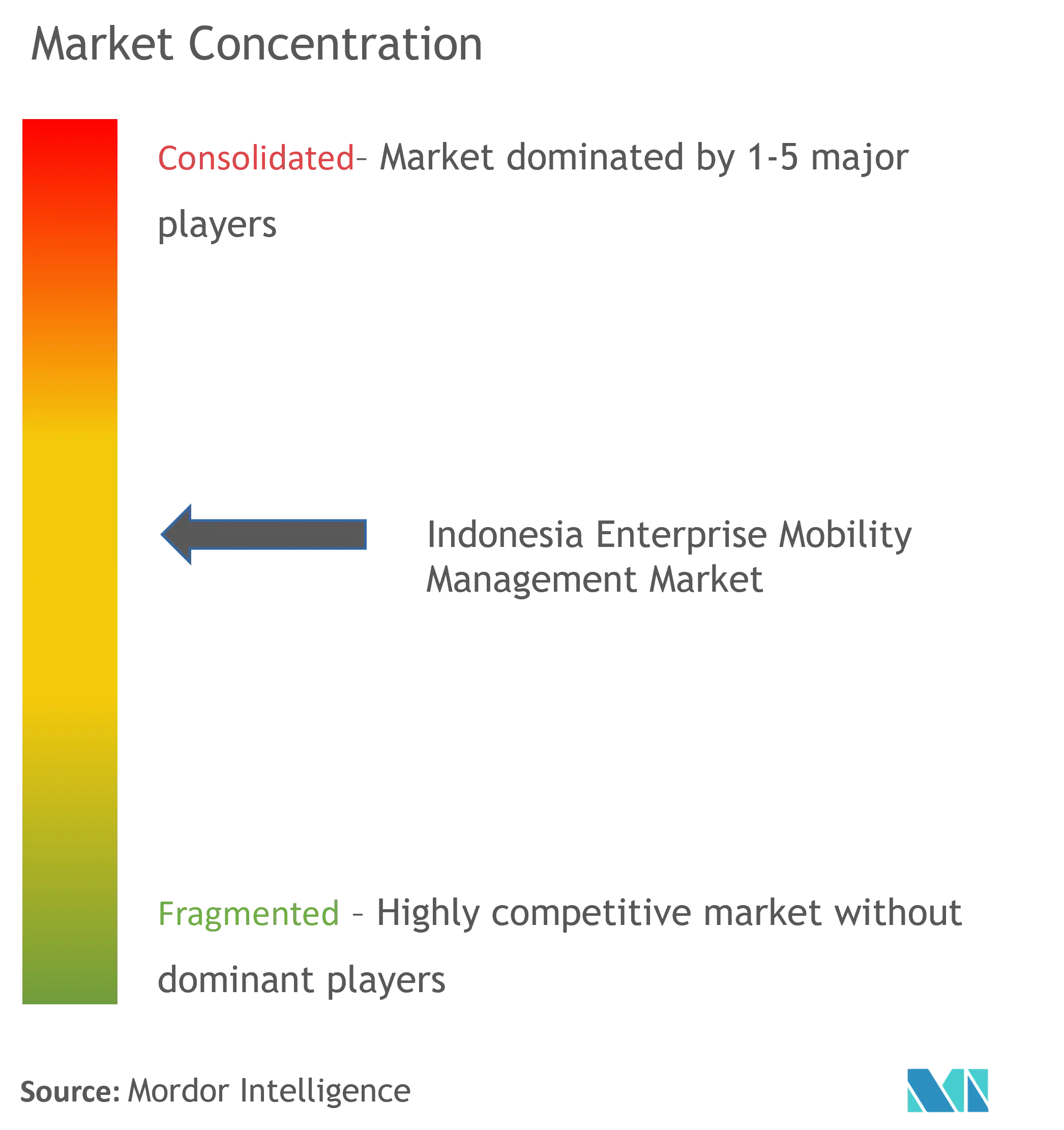
| Market Concentration | Medium |
Major Players *Disclaimer: Major Players sorted in no particular order |
Indonesia Enterprise Mobility Management Market Analysis by Mordor Intelligence
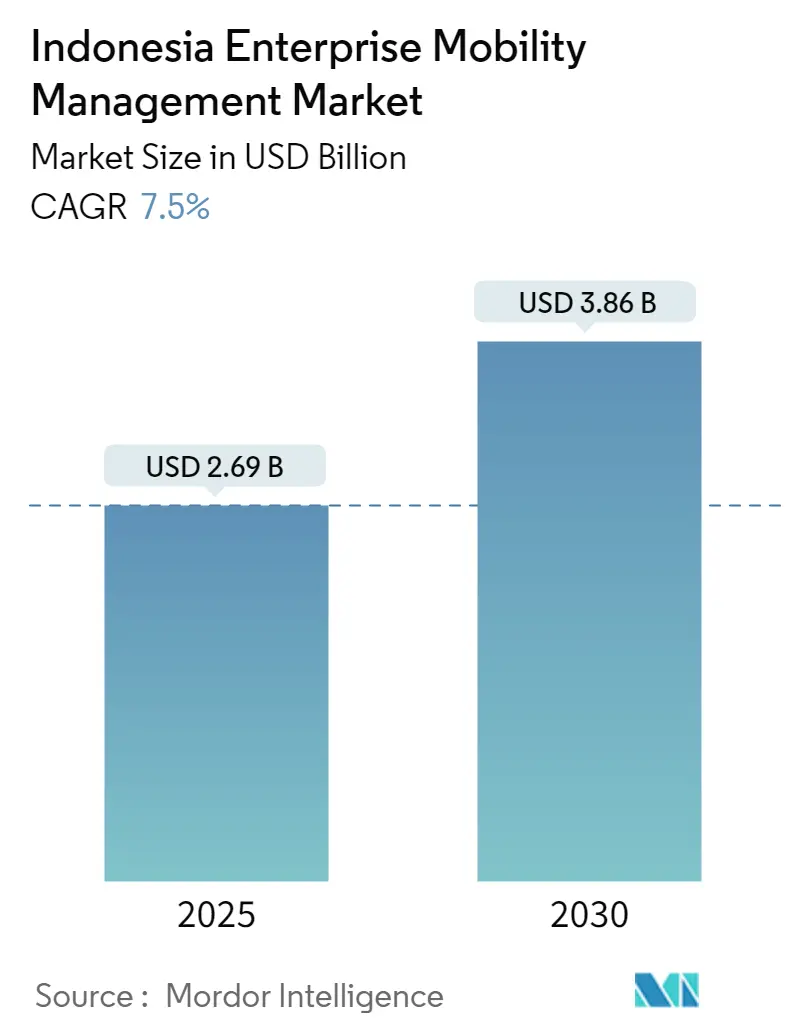
The Indonesia Enterprise Mobility Management Market size is estimated at USD 2.69 billion in 2025, and is expected to reach USD 3.86 billion by 2030, at a CAGR of 7.5% during the forecast period (2025-2030).
Enterprise mobility management (EMM) products are witnessing increasing global demand owing to a significant growth in mobile devices. Shifting various end-user organizations' focus on protecting their digital infrastructure drives market growth. Further, improvements in cloud-based EMM solutions create a positive outlook for the market. The rising adoption of Bring Your Device (BYOD) policies and the increasing mobile workforce by various companies to enhance employees' productivity are expected to drive market growth in the forecast period.
- Mobile device management (MDM) functionality involves wirelessly distributing applications, data, and configuration settings to various devices, including smartphones, tablets, ruggedized mobile computers, mobile printers, and mobile POS devices. These solutions are now crucial for managing both company-owned and employee-owned (BYOD) devices within enterprises and devices owned by consumers. The growing BYOD trend necessitates heightened MDM efforts and enhanced security measures. This is especially critical as employers and employees often hold differing views on the restrictions suitable for mobile devices.
- Cybercriminals today have become much more sophisticated. With employees handling endless apps and data becoming currency, enterprises across the globe are under significant pressure to make suitable investment and strategy adjustments using mobile security solutions. Mobile security has been complex due to many potential attack vectors where the devices can be targeted at multiple levels. On an application level, malware can be developed and deployed through malicious apps that users could unknowingly install on their devices. Mobile security solutions should detect and block the downloads of these malicious apps.
- Organizations in the digital transformation era increasingly rely on innovative IT applications and extensions for success. Information technology now stands as a pivotal competitive advantage for many. As cloud migrations and services increase, IT outsourcing transcends its former role as a mere cost-cutting measure. This evolution is primarily fueled by organizations' aspirations for business expansion, enhanced customer experiences, and the desire to disrupt the competitive landscape. Historically, IT outsourcing revolved around tangible assets like servers, data centers, and specific person-hours. However, the advent of cloud services has ushered in a new era, offering on-demand, asset-free IT solutions. Concurrently, cloud computing has revolutionized how companies pay for and access IT services.
- The use of mobile devices in the workplace has numerous benefits, the most important of which is increased employee productivity. Delegating routine and menial tasks to AI and introducing self-learning algorithms may help reduce human workload, making AI one of the most essential managed mobility services trends in the future. Several companies have recently used hybrid cloud technology to simplify business processes such as time tracking, expense report management, customer relationship management, etc. It enhances remote workforce support, security, risk management, data scalability, and management. This is expected to drive the managed mobility service market even further in the coming years.
- On the contrary, Customers investing in third-party managed mobility services continue to grapple with cost visibility challenges. Certain vendors need help to gauge total costs accurately, lacking the expertise to factor in all parameters manually. This not only hampers market progress but also leads to further hurdles. Even when costs are estimated, customers need help reconciling actual expenses with estimates, exacerbating the issue. Consequently, customers must turn to additional third-party cost estimation tools, underscoring the prevailing lack of cost visibility control.
Worldwide, activity is shaped by contributions from multiple countries and regions, with Indonesia representing one among them. The global report on enterprise mobility management market by Mordor Intelligence reflects how these countries and regional layers combine into a single system.
Indonesia Enterprise Mobility Management Market Trends and Insights
BFSI is Expected to Hold a Significant Share of the Market
- Enterprise Mobility in the Banking market is experiencing robust change due to the increasing adoption of mobile devices and the need for seamless banking services. This trend is propelled by the convenience and accessibility that mobile banking offers. The market is witnessing rapid technological advancements, such as the integration of AI and IoT, which further enhance the customer experience. Furthermore, with the rising digitalization and the shift towards remote working environments, the demand for enterprise mobility solutions in the banking sector is expected to grow substantially in the coming years.
- Banks and financial institutions now have advanced websites and mobile apps to enable clients to carry out their financial transactions and other essential processes through their mobile devices. Banks collaborate with mobile app development companies to develop apps that enable customers to manage their bank accounts globally, irrespective of their current geographic location. Mbanking lets tech-savvy customers know the bank's financial services in detail. Customers can now perform more secure transactions owing to multiple security checks they undergo through mobile and web apps before being allowed the final transaction.
- Various trends are expected to drive the demand for enterprise mobility in the banking sector. For example, One of the main advantages of using mobile devices in the workplace is increased staff productivity due to delegating menial and routine tasks to artificial intelligence (AI). Introducing self-learning algorithms allows for a reduction of human workload, placing AI among the most critical trends in enterprise mobility. Chatbots are message bubbles on websites that pop out of nowhere after users have scrolled down the page for a few seconds and asked if they can enable users with anything. They are AI-based software that authorizes the automation of many customer service processes.
- The banking workforce has to carry sensitive customer's account, financial and identification data on their devices. The data, however, remains vulnerable to misuse and threats. For example, a lost or stolen device significantly threatens crucial data and may induce irreversible damage to an enterprise's reputation. An EMM solution primarily allows the admin to remotely lock the devices in case of any loss or theft incident. The solution can also detect if any device has been jailbroken and restrict individuals from installing unapproved apps.
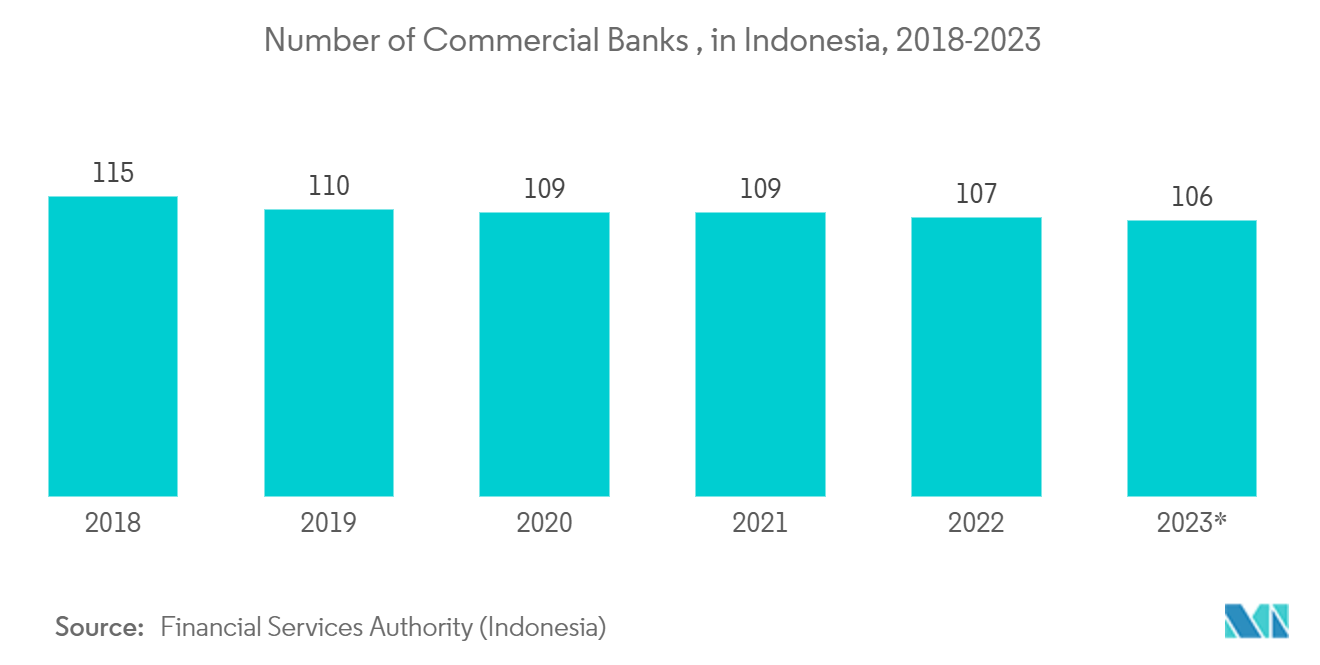
- According to the Financial Services Authority (Indonesia), As of January 2023, 106 commercial banks were located in Indonesia. The region's abundance of banks presents a prime opportunity for market players to innovate and seize a larger market share. Despite being home to numerous banks, many in the country have yet to harness mobile technologies' powerfully. To remain competitive, these banks must pivot from their traditional transaction-centric models. Notably, the banking sector grapples with a notable gap: the need for a comprehensive system to oversee device inventory and monitor their online status.


Sumatra Region is Expected to Hold a Significant Share of the Market
- The nation has made digital transformation a primary priority, and it is progressing quickly as more businesses adopt formal strategies to aid in their initiatives. By offering the newest technology, the managed services providers in the nation greatly emphasize lowering security risks and improving operations for the end users. However, using outsourced services for an organization's IT resources can be an appealing way to significantly reduce costs, improve connectivity, and enhance the performance and uptime of applications and devices. Also, government regulations are rapidly encouraging the nation's traditional industries to embrace digital transformation and increase their usage of IT technologies. Therefore, they are increasing their demand for mobility services, fueling market expansion.
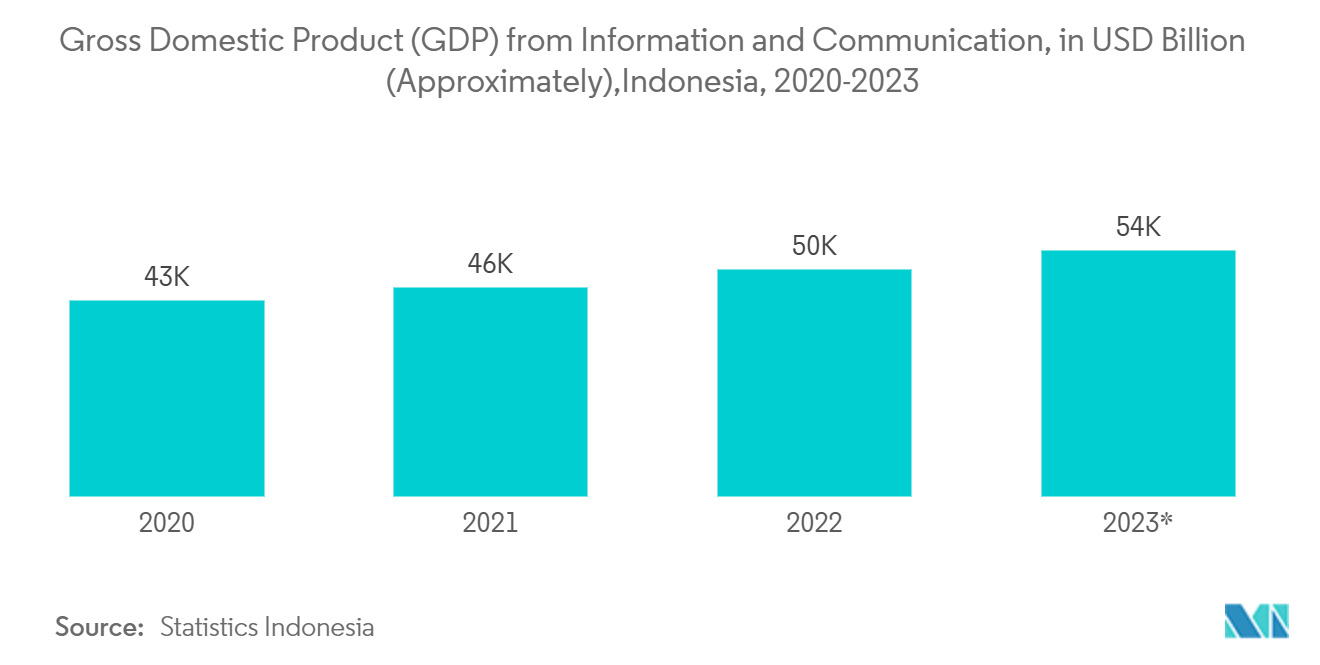
- According to Statistics Indonesia, in 2023, preliminary figures showed that the gross domestic product from information and communications in Indonesia amounted to around IDR 883.64 trillion. The GDP derived from information and communications in Indonesia has gradually increased since 2014. Such a rise in IT's contribution to the country's economy is expected to create an opportunity for the studied market to grow over the forecasted period.
- The use of mobile devices in the workplace has numerous benefits, the most important of which is increased employee productivity. Delegating routine and menial tasks to AI and introducing self-learning algorithms may help reduce human workload, making AI one of the most essential managed mobility services trends in the future. Several companies have recently used hybrid cloud technology to simplify business processes such as time tracking, expense report management, customer relationship management, etc. It enhances remote workforce support, security, risk management, data scalability, and management. This is expected to drive the managed mobility service market even further in the coming years.
- Many supermarkets now supply their customers with mobile devices while shopping. Department stores often offer fixed tablets to perform a similar role. These can ring up items while shopping, check inventory levels, and act as a final point of sale in-store. These devices provide a smooth and safe customer experience with fewer resources required. Mobile device management helps secure customer data by restricting the user (retail staff) in booking the apps containing sensitive customer information and exposing only the part the administrator wants to reveal. Retail stores increasingly leverage mobile devices for digital signage and self-service, underscoring the need to prevent these devices from exiting the premises. Enterprise mobility management tools offer the functionality to restrict device movement beyond designated geographical boundaries.
- Healthcare mobile application management services ensure minimal service disruptions, precise infrastructure sizing for optimal application support, and consistently high performance by strategically planning for capacity and availability. These services, typically operated through dedicated centers, offer ongoing support, encompassing maintenance, enhancements, vendor fixes, patches, and swift resolutions to production issues via tier II and tier III support. According to Healthcare Finance, currently, the healthcare system is observing a rise in the outsourcing of medical billing services by hospitals and physicians due to the necessary implementation of the complex ICD-10 coding system, growing healthcare costs, and a federal mandate to implement electronic health records for the maintenance of reimbursement levels.

Competitive Landscape
The Indonesian enterprise mobility market is semi-consolidated, with prominent players such as IBM Corporation, Microsoft Corporation, PT Satya Amarta Prima (Samara), and PT. Artha Mulia Trijaya (AMT) IT Solutions, PT Cisco Systems Indonesia (Cisco), and others; corporations continually spend on strategic partnerships and product development to increase market share. The following are some recent market developments:
In October 2023, InterSystems, a data technology provider dedicated to helping clients solve multiple critical scalability, interoperability, and speed problems, announced a collaboration with Indonesian electronic medical record (EMR) systems provider Zi. Care to provide expert services via the InterSystems IRIS for Health – Indonesia Edition data platform. As part of the partnership, Zi. Care will sell the InterSystems IRIS for Health – Indonesia Edition data platform, Zi. Care HUB and provide expert services to assist healthcare providers in mapping, transforming, and cleaning their electronic medical record (EMR) data for routing to the government’s SATUSEHAT national integrated health data platform.
In August 2023, CyberArk, the identity security company, recently launched its locally-hosted unified CyberArk Identity Security Platform to sufficiently protect Indonesian firms from increasing attacks on human and non-human identities. CyberArk SaaS-based solutions will also support data sovereignty compliance. A provincial investment and tech hub, the move signifies CyberArk’s long-term dedication to supporting Indonesia’s efforts to promote a safe and investor-friendly digital ecosystem. The availability of locally-hosted solutions allows firms using CyberArk to keep their data including authentication credentials and secrets – and aid in compliance with the Peraturan Pemerintah (PP) no. 71/2019 government regulation, which defines the need to conduct data management, processing, and storage operations within Indonesia.
Indonesia Enterprise Mobility Management Industry Leaders
IBM Corporation
Microsoft Corporation
PT Satya Amarta Prima (Samara)
PT. Artha Mulia Trijaya (AMT) IT Solutions
PT Cisco Systems Indonesia (Cisco)
- *Disclaimer: Major Players sorted in no particular order

Recent Industry Developments
- December 2023: Honeywell and Enterprise Mobility Management (EMM) provider SOTI has achieved a significant milestone, remotely managing over one million devices worldwide. In collaboration with SOTI's mobility management solutions, Honeywell's mobile computers empower businesses to extend their hardware's lifecycles. This is achieved through remote monitoring, diagnosis, and repair. SOTI's ONE Platform ensures the protection of corporate data on mobile devices. It bolsters data security, streamlines software installations, and seamlessly integrates with enterprise IT systems.
- June 2023: ZTE Corporation, a global provider of information and communication technology solutions, and the multinational internet service provider company MyRepublic jointly released Indonesia's first FTTR solution on May 30 at ZTE Day 2023. The solution comprises the FTTR master gateway G8605, the industry's first gateway supporting XGS-PON and 2.5G, along with the slave gateway G1611. With data rates of 2,000 Mbit/s and the ability to seamlessly upgrade home network devices, this solution simultaneously meets the requirements for Internet access, VoIP, and IPTV services.


Indonesia Enterprise Mobility Management Market Report Scope
Enterprise mobility management (EMM) software empowers organizations to enable employees to utilize mobile devices and applications securely. Beyond bolstering security, EMM software enhances employee productivity by allowing IT departments to furnish the necessary applications and data for tasks on mobile devices.
The Indonesia enterprise mobility market is segmented by type, end-user vertical, and region. By type, the market is segmented into enterprise collaboration, VoIP solutions, contact center solutions, and others. By end-user vertical, the market is segmented into BFSI, retail and e-commerce, healthcare, government and public sector, IT and telecom, and other end-user verticals. By region, the market is segmented into Java, Sumatra, Kalimantan, and others.
The market sizes and forecasts are provided in terms of value in USD for all the above segments.
| Enterprise Collaboration |
| VoIP Solutions |
| Contact Center Solutions |
| Others |
| BFSI |
| Retail and e-Commerce |
| Healthcare |
| Government & Public Sector |
| IT & Telecom |
| Other End-user Verticals |
| Java |
| Sumatra |
| Kalimantan |
| Others (Sulawesi, Papua & Muluku and Bali & Nusa Tenggara) |
| By Type | Enterprise Collaboration |
| VoIP Solutions | |
| Contact Center Solutions | |
| Others | |
| By End-user Vertical | BFSI |
| Retail and e-Commerce | |
| Healthcare | |
| Government & Public Sector | |
| IT & Telecom | |
| Other End-user Verticals | |
| By Region | Java |
| Sumatra | |
| Kalimantan | |
| Others (Sulawesi, Papua & Muluku and Bali & Nusa Tenggara) |


Key Questions Answered in the Report
How big is the Indonesia Enterprise Mobility Management Market?
The Indonesia Enterprise Mobility Management Market size is expected to reach USD 2.69 billion in 2025 and grow at a CAGR of 7.5% to reach USD 3.86 billion by 2030.
What is the current Indonesia Enterprise Mobility Management Market size?
In 2025, the Indonesia Enterprise Mobility Management Market size is expected to reach USD 2.69 billion.
Who are the key players in Indonesia Enterprise Mobility Management Market?
IBM Corporation, Microsoft Corporation, PT Satya Amarta Prima (Samara), PT. Artha Mulia Trijaya (AMT) IT Solutions and PT Cisco Systems Indonesia (Cisco) are the major companies operating in the Indonesia Enterprise Mobility Management Market.
What years does this Indonesia Enterprise Mobility Management Market cover, and what was the market size in 2024?
In 2024, the Indonesia Enterprise Mobility Management Market size was estimated at USD 2.49 billion. The report covers the Indonesia Enterprise Mobility Management Market historical market size for years: 2019, 2020, 2021, 2022, 2023 and 2024. The report also forecasts the Indonesia Enterprise Mobility Management Market size for years: 2025, 2026, 2027, 2028, 2029 and 2030.
Page last updated on:
Indonesia Enterprise Mobility Management Market Report
Statistics for the 2025 Indonesia Enterprise Mobility Management market share, size and revenue growth rate, created by Mordor Intelligence™ Industry Reports. Indonesia Enterprise Mobility Management analysis includes a market forecast outlook for 2025 to 2030 and historical overview. Get a sample of this industry analysis as a free report PDF download.





