
Market Overview
| Study Period | 2022 - 2031 |
|---|---|
| Forecast Data Period | 2026 - 2031 |
| Base Year Market Size (2025) | USD 1.62 Billion |
| Market Size (2026) | USD 1.76 Billion |
| Market Size (2031) | USD 2.66 Billion |
| Growth Rate (2026 - 2031) | 8.64 % |
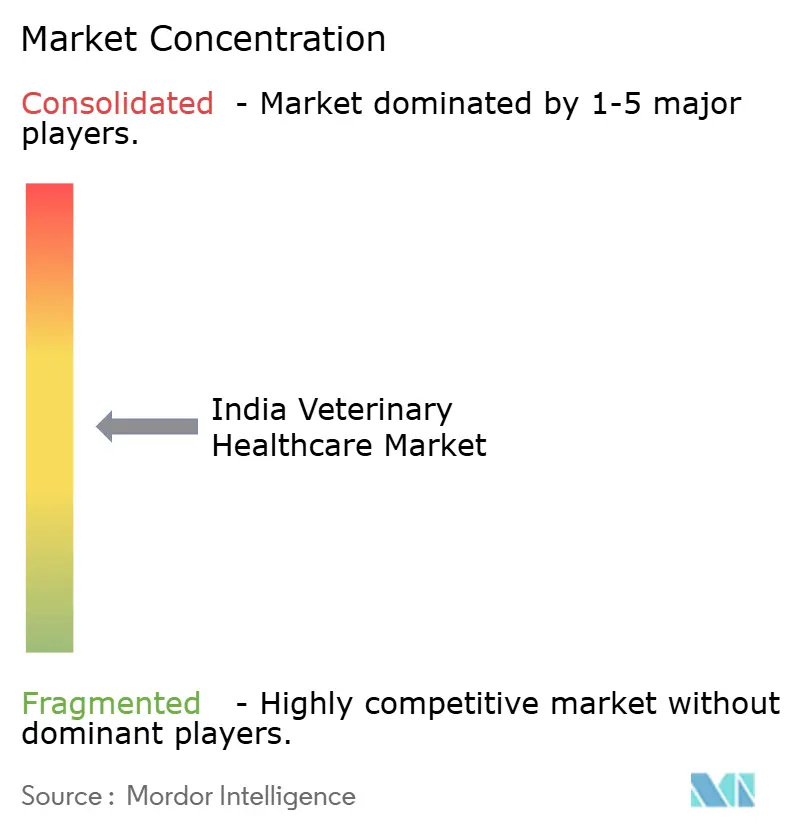
| Market Concentration | Medium |
Major Players *Disclaimer: Major Players sorted in no particular order Image © Mordor Intelligence. Reuse requires attribution under CC BY 4.0. | |
India Veterinary Healthcare Market Analysis by Mordor Intelligence
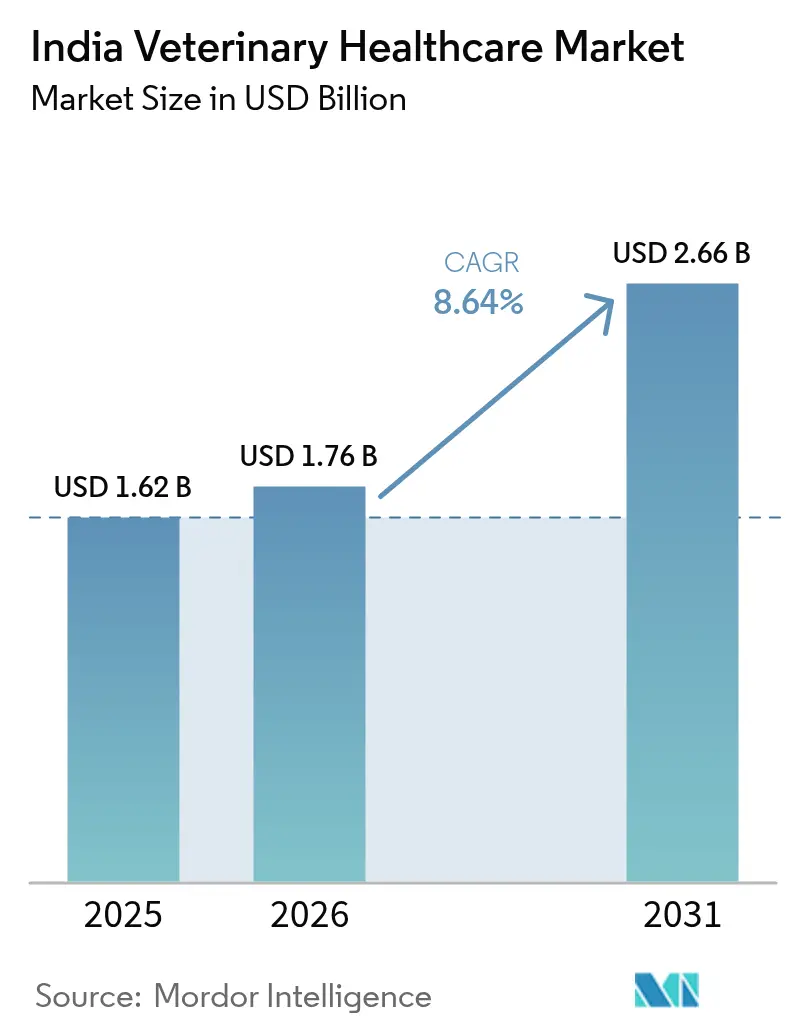
India veterinary healthcare market size in 2026 is estimated at USD 1.76 billion, growing from 2025 value of USD 1.62 billion with 2031 projections showing USD 2.66 billion, growing at 8.64% CAGR over 2026-2031. Growth is propelled by rising pet humanization, government-funded immunization programs, and AI-enabled diagnostic solutions that improve access to quality care in both urban and rural regions. India’s status as the largest global livestock holder gives therapeutics scale, while a surge in companion animal ownership boosts premium services. Indigenous vaccine development, notably for lumpy skin disease, is strengthening supply security and lowering import reliance. Technology investments by multinationals in local AI centers are unlocking rapid point-of-care testing and telehealth models that narrow the urban-rural treatment gap.
Key Report Takeaways
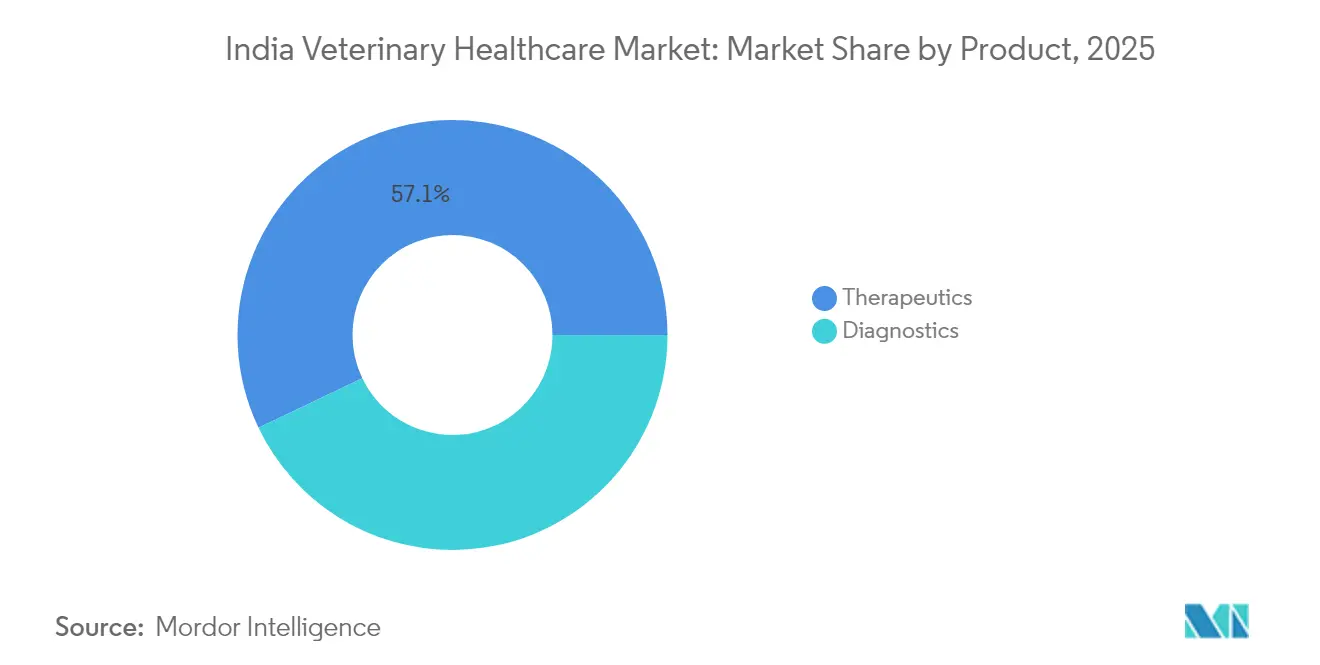
- By product, therapeutics led with a 57.10% revenue share of the India veterinary healthcare market in 2025; diagnostics is advancing at a 9.48% CAGR to 2031.
- By animal type, dogs & cats captured 45.00% of the India veterinary healthcare market share in 2025, while poultry is forecast to expand at an 8.87% CAGR through 2031.
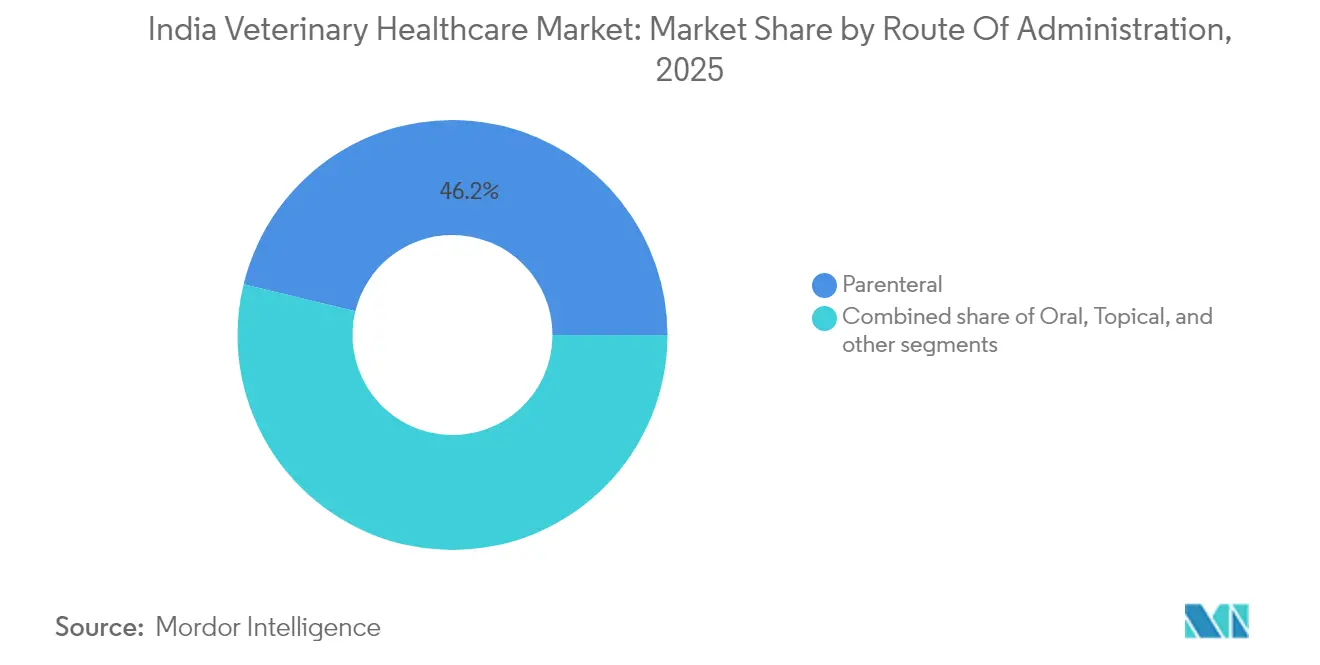
- By route of administration, parenteral formulations held 46.20% share of the India veterinary healthcare market size in 2025; oral delivery is projected to rise at an 8.72% CAGR to 2031.
- By end user, veterinary hospitals & clinics accounted for 58.00% of the India veterinary healthcare market in 2025; point-of-care testing settings are growing the fastest at a 9.42% CAGR through 2031.
Note: Market size and forecast figures in this report are generated using Mordor Intelligence’s proprietary estimation framework, updated with the latest available data and insights as of 2026.
India Veterinary Healthcare Market Trends and Insights
Drivers Impact Analysis*
| Driver | % Impact on CAGR Forecast | Geographic Relevance | Impact Timeline |
|---|---|---|---|
| Growing Animal Population And Ownership | +2.1% | National — strongest in urban metros | Medium term (2-4 years) |
| Government-Led Immunization And Disease-Control Programs | +1.8% | National — rural emphasis | Long term (≥ 4 years) |
| Technological Advancements In Veterinary Diagnostics And Telehealth | +1.5% | Urban centers, spreading to Tier-2 cities | Short term (≤ 2 years) |
| Rising Adoption Of Pet Insurance And Health Financing | +1.2% | Urban India, especially metros | Medium term (2-4 years) |
| Expansion Of Organized Veterinary Retail And E-Commerce Channels | +1.0% | National, led by urban demand | Short term (≤ 2 years) |
| Intensifying Focus On Livestock Productivity And Food Safety | +0.9% | Rural and semi-urban belts | Long term (≥ 4 years) |
| Source: Mordor Intelligence | |||
Growing Animal Population and Ownership
Pet dog numbers jumped from 12.6 million in 2014 to 33.6 million in 2023 and are projected to hit 51.5 million by 2028, driving sustained demand for wellness, diagnostics, and elective procedures. Urban households already show 25% pet penetration and are on track to reach 35% by 2025, shifting care expectations from basic vaccinations to multi-specialty services. Annual pet healthcare spending averages INR 70,000-80,000, with surgical episodes costing INR 20,000-30,000, underpinning premiumization across products and services. Parallel livestock expansion keeps demand broad-based as India’s cattle herd touches 307.42 million, requiring mass immunization and nutritional support[1]USDA Foreign Agricultural Service, “Livestock and Poultry: India Semi-annual,” usda.gov. This dual growth across companion and production animals sustains the India veterinary healthcare market by diversifying revenue streams.
Government-Led Immunization and Disease-Control Programs
The National Livestock Mission offers 50% capital subsidies up to INR 50 lakh for breeding farms, feed units, and clinics, directly stimulating purchases of vaccines and therapeutics. June 2024 saw the rollout of the indigenously produced lumpy skin disease vaccine that safeguards the country’s 300 million-plus bovines. The National One Health Mission aligns human and animal disease surveillance, accelerating uptake of diagnostics that detect zoonoses early. April 2025 approvals of H9N2 poultry vaccines and stricter farm biosecurity rules reinforce the preventive health paradigm[2]Press Information Bureau, “Launch of Lumpy Skin Disease Vaccine,” pib.gov.in. Given India’s status as the third-largest egg producer, these programs mitigate economic shocks from outbreaks and keep the India veterinary healthcare market growth trajectory intact.
Technological Advancements in Veterinary Diagnostics and Telehealth
Zoetis expanded its Hyderabad Capability Center in 2025 to recruit AI/ML talent for next-generation diagnostic platforms. Its AI Masses module for the Vetscan Imagyst system delivers near real-time cytology interpretations, raising diagnostic accuracy and clinic throughput. Point-of-care testing is forecast to more than double globally between 2020 and 2030, and Indian clinics are early adopters, especially in underserved rural belts[3]Frontiers in Veterinary Science, “Point-of-Care Diagnostics Market,” frontiersin.org. CNN-based image analytics have achieved 86.54% precision in lumpy skin disease detection, highlighting AI’s role in herd health monitoring. Telehealth, boosted by the Ayushman Bharat Digital Mission, extends specialist consultations to remote districts, ensuring the India veterinary healthcare market reaches previously untapped customers.
Rising Adoption of Pet Insurance and Health Financing
Pet insurance premiums are set to hit INR 6,500 crore in 2025, growing 14% annually as owners look for financial cushions against rising treatment costs. Private insurers now cover outpatient consultations, diagnostics, and prescriptions, moving beyond basic mortality coverage. With elective surgeries costing INR 20,000-30,000, insurance uptake allows vets to adhere to best-practice protocols without affordability constraints. Urban millennials’ view of pets as family accelerates policy purchase, supporting stable revenue inflows for clinics. The trend further supports advanced modality adoption, such as MRI scans and laparoscopic surgeries, which raise average invoice values in the India veterinary healthcare market.
Restraints Impact Analysis*
| Restraints Impact Analysis | (~) % Impact on CAGR Forecast | Geographic Relevance | Impact Timeline |
|---|---|---|---|
| Prevalence Of Counterfeit Or Substandard Veterinary Products | −1.4% | National, highest in rural markets | Medium term (2-4 years) |
| High Cost Of Advanced Veterinary Treatments And Diagnostics | −1.1% | Rural and semi-urban areas | Long term (≥ 4 years) |
| Shortage Of Skilled Veterinary Professionals And Support Staff | −0.8% | National, urban-rural divide | Medium term (2-4 years) |
| Inadequate Cold Chain And Rural Distribution Infrastructure | −0.9% | Predominantly rural regions | Long term (≥ 4 years) |
| Source: Mordor Intelligence | |||
Prevalence of Counterfeit or Substandard Veterinary Products
Dual oversight by central and state regulators creates enforcement blind spots that illicit manufacturers exploit by shifting production across jurisdictions. From January 2025, all drug approvals must be filed online with the CDSCO, a move expected to tighten traceability. Still, price-sensitive buyers in rural markets often favor cheaper products without verified quality, which can compromise treatment outcomes and erode trust in veterinary interventions. Smaller firms face high compliance costs under revised Schedule M GMP norms implemented in December 2023, increasing the risk of non-compliance among resource-constrained players. Substandard therapeutics hamper disease control, slow vaccination drives, and ultimately weigh on the India veterinary healthcare market CAGR.
High Cost of Advanced Veterinary Treatments and Diagnostics
Only 5% of the 3,500 veterinarians graduating annually choose companion-animal practice, creating urban-skewed service availability. Insufficient cold-chain logistics raise distribution costs for biologics in remote districts, inflating end-user prices. Ninety percent of poultry growers operate on thin margins, limiting their capacity to pay for high-end diagnostics or specialized vaccines, which depresses penetration rates. Delayed government reimbursements to field vets and competition from subsidized public dispensaries further squeeze private providers’ ability to invest in advanced gear. Bridging this affordability gap is imperative if the India veterinary healthcare market is to reach its full potential.
*Our forecasts treat driver/restraint impacts as directional, not additive. The impact forecasts reflect baseline growth, mix effects, and variable interactions.
Segment Analysis
By Product: Therapeutics Sustain Revenue While Diagnostics Lead Innovation
Therapeutics accounted for a 57.10% share of the India veterinary healthcare market in 2025 and remain foundational due to the country’s 300 million-head cattle herd. Vaccine demand is buoyed by the domestic lumpy skin disease shot launched in 2024, while parasiticides gain traction from products like NexGard Spectra approved in April 2024. Vaccines dominate sub-category revenues, reflecting India’s role as a 60% supplier of global doses, and policies such as the National Livestock Mission accelerate uptake. Parasiticides and anti-infectives keep production animals efficient and companion animals parasite-free. Medical feed additives help producers maintain productivity while managing antimicrobial resistance mandates.
Diagnostics is the fastest-growing product group at a 9.48% CAGR through 2031. The segment rides on point-of-care systems that allow rapid barn-side decision-making, critical in geographies lacking specialist labs. Immunodiagnostics remain the largest sub-segment, tapped by One Health surveillance programs. Molecular tests pair with AI image readers to deliver 86.54% accuracy in bovine lesion detection, minimizing economic losses. Clinical chemistry and imaging thrive as corporate vet chains upscale practices. IDEXX logged 700 orders for its inVue analyzer in Q3 2024, underscoring rising in-clinic diagnostics adoption. This tech momentum is positioning diagnostics to capture a rising proportion of the India veterinary healthcare market size over the forecast horizon.



By Animal Type: Companion Animals Dominate Value While Poultry Scales Fast
Dogs & cats generated 45.00% of the India veterinary healthcare market in 2025, underpinned by high per-pet spending and growing insurance penetration. Average annual outlays of INR 70,000-80,000 include elective treatments, preventive care, and specialized nutrition, boosting provider margins. Mars Inc.’s 2024 investment in Crown Veterinary Services reflects the anticipated surge in urban pet healthcare demand. Equine care remains niche but gains visibility through welfare programs at fairs. Ruminants continue to underpin vaccine volume, driven by herd-level immunization initiatives.
Poultry is projected to be the fastest-growing animal segment at an 8.87% CAGR, reflecting India’s third-place rank in global egg production. Virbac’s 2024 purchase of Globion for its poultry vaccine line signals confidence in this category. Capacity is scaling to 267,800 birds per hour by 2026, increasing disease-prevention spending. Government-endorsed H9N2 vaccines plus farm registration mandates encourage broader adoption of preventive health programs. AI-enhanced flock monitoring tools improve feed conversion and disease prediction, propelling poultry’s share of the India veterinary healthcare market upward.
By Route of Administration: Parenteral Remains Core as Oral Gains Convenience Appeal
Parenteral products delivered 46.20% of the India veterinary healthcare market in 2025 thanks to universal injectable vaccine schedules for lumpy skin, foot-and-mouth, and avian influenza. National cold-chain upgrades protect biologic potency from plant to paddock, sustaining efficacy. Injectable hormones and antibiotics provide precise dosages in production herds, reinforcing vet clinic revenues.
Oral formulations exhibit an 8.72% CAGR through 2031, reflecting owner preference for at-home dosing. Boehringer Ingelheim’s VETMEDIN Solution, the first FDA-approved liquid for canine heart failure, exemplifies user-friendly innovation. Chewable parasiticide tablets like NexGard Spectra facilitate high compliance rates in companion animals. E-commerce favors ambient-stable oral SKUs that ship without cold-chain costs, accelerating rural reach. This convenience pivot is gradually lifting oral’s contribution to the India veterinary healthcare market share.
By End User: Clinics Anchor Spend as Point-of-Care Testing Democratizes Access
Veterinary hospitals & clinics controlled 58.00% of 2025 revenues, benefiting from concentration of specialist talent and in-house surgical suites. Mars-backed Crown Veterinary Services is expanding multi-doctor practices that offer imaging, dentistry, and emergency care under one roof. Yet talent shortages and urban clustering limit nationwide coverage.
Point-of-care testing is the fastest-rising end-user segment at 9.42% CAGR. IDEXX’s inVue analyzer and Zoetis’s AI Masses module empower clinics and mobile units to diagnose hematology and cytology cases within minutes, reducing referrals and speeding therapy decisions. Decentralized diagnostics align with India’s geographic realities, letting para-vets and technicians support rural herds effectively. As kit prices fall, the India veterinary healthcare market size attached to point-of-care solutions will expand rapidly, narrowing the care quality divide.
Geography Analysis
Northern and western states such as Punjab, Haryana, Gujarat, and Maharashtra form high-value clusters because intensive dairy and poultry operations coexist with higher consumer incomes. These regions benefit from tertiary veterinary institutes, robust cold chains, and a strong presence of multinational manufacturers. Southern hubs like Telangana, Tamil Nadu, and Karnataka post above-average growth as they host emerging AI centers and vaccine plants, including a planned INR 700 crore facility by Indian Immunologicals near Hyderabad.
Eastern states, though infrastructure-light, represent latent potential due to large livestock bases and new rural funding lines under the National Livestock Mission. Government One Health programs provide uniform policy scaffolding nationwide, but rollout effectiveness varies by local governance capacity.
Urban metros are epicenters of the companion-animal boom, with expected pet penetration of 35% by 2025 and flourishing premium clinics. Rural belts, accounting for most livestock, rely on government dispensaries and sporadic mobile camps, a gap that telemedicine and portable analyzers aim to bridge. Regional specialization emerges: dairy belts stress reproductive hormones; egg clusters prioritize ND and H9N2 vaccines; metros focus on endoscopy, dentistry, and oncology. Initiatives such as the Namo Drone Didi program indicate openness to technology diffusion that may soon extend to veterinary deliveries. These dynamics collectively keep the India veterinary healthcare market poised for balanced geographic expansion.
Regulatory Landscape
Veterinary pharmaceuticals in India operate under a dual framework led by the Central Drugs Standard Control Organization (CDSCO) for licensing of import, manufacture, distribution, and sale under the Drugs and Cosmetics Act, 1940 and the Drugs Rules, 1945, alongside technical oversight from the Department of Animal Husbandry and Dairying (DAHD), particularly for veterinary vaccines and biologicals (including NOCs and reviews tied to new strains and biosecurity considerations). This multi-agency process influences go-to-market timelines for vaccines, parasiticides, and anti-infectives, while also raising compliance expectations for manufacturers and importers.
Quality and biosecurity controls extend beyond licensing. Veterinary vaccine standards reference the Indian Pharmacopoeia (Veterinary), and testing capacity is anchored by national facilities such as the Chaudhary Charan Singh National Institute of Animal Health (CCSNIAH), Baghpat, which supports specified vaccine testing (including Haemorrhagic Septicaemia and Ranikhet Disease). In February 2026, the Government of India established the Animal Health-Regulatory (ECAH) subcommittee to streamline and coordinate recommendations for submissions and approvals of veterinary vaccines, biologicals, and drugs. For trade-linked risk management, livestock product imports are governed by the Livestock Importation Act, 1898 (notably Sections 3 and 3A), which requires DAHD-issued Sanitary Import Permits based on import risk analysis, alongside Foreign Trade Policy provisions that classify many veterinary inputs under Open General License routes.
Competitive Landscape
The market shows moderate fragmentation, but consolidation is accelerating. The Rs 8,000 crore SeQuent Scientific-Viyash Life merger forms a top-tier domestic player with 16 plants and 150-plus export markets. Global firms pursue technology-led differentiation: Zoetis enlarged its Hyderabad AI hub, while Boehringer Ingelheim bought Saiba Animal Health for vector-based vaccines.
Premium companion-animal spending allows multinationals to price at a premium, whereas price-sensitive livestock customers gravitate to cost-efficient domestic brands. Rural unmet needs open space for disruptors offering tele-consultation, AI lesion scoring, and subscription vaccine services. Regulatory digitalization rewards firms with compliance prowess, raising entry barriers for informal producers.
Veterinarian scarcity remains a hurdle, inspiring start-ups that build triage chatbots and remote imaging review platforms. Virbac’s acquisition of Globion boosts its poultry portfolio and positions it for rapid growth in the fastest-expanding animal category. Strategy convergence around AI diagnostics, indigenous vaccines, and direct-to-farmer models will shape competition as the India veterinary healthcare market matures.
India Veterinary Healthcare Industry Leaders
Boehringer Ingelheim GmbH
Zoetis Inc.
Merck & Co. Inc.
Elanco Animal Health
Vetoquinol
- *Disclaimer: Major Players sorted in no particular order

Market Opportunities and Future Outlook
Quality and compliance upgrades create whitespace for manufacturers and diagnostics providers that can operate with traceability and standardized release processes for biologics. In June 2026, the Ministry of Health and Family Welfare issued the Drugs (Sixth Amendment) Rules, 2026, designating CCSNIAH (Baghpat, Uttar Pradesh) as the laboratory for testing 42 categories of veterinary vaccines. This requirement favors firms that can meet tighter batch quality expectations and also supports ancillary opportunities in cold-chain integrity, documentation, and testing workflows across vaccine-heavy categories.
Government and industry programs are also expanding routes for care delivery and domestic production. The DAHD-run Livestock Health and Disease Control Program (LHDCP) uses Mobile Veterinary Units (MVUs) to deliver services at farmers doorsteps, creating a channel for point-of-care diagnostics and field-ready therapeutics in under-served districts. On the supply side, the Technology Development Board (TDB) sanctioned financial assistance in February 2026 for Biovet to establish a manufacturing facility for critical veterinary hormones, which reinforces import-substitution momentum in high-dependency inputs. In companion animals, distribution and promotion partnerships are extending global portfolios beyond metros, including Boehringer Ingelheim’s January 2026 partnership with Alivira Animal Health (Viyash Scientific subsidiary), supporting organized-channel distribution for premium therapeutics and preventive care for dogs and cats.
Recent Industry Developments
- January 2026: Boehringer Ingelheim India partnered with Alivira Animal Health Limited (a subsidiary of Viyash Scientific Limited) to distribute and promote its companion animal products in India. The agreement strengthens on-ground access to branded pet therapeutics through an established animal-health distribution network and supports faster penetration beyond metro clinics.
- June 2025: Boehringer Ingelheim India launched a three-in-one poultry vaccine positioned to protect against Bursal, Newcastle, and Marek’s disease. The launch supports more standardized preventive health protocols in commercial poultry production, where multi-disease coverage helps simplify vaccination programs and reduce operational complexity for integrators.
- September 2024: Zoetis expanded the Zoetis India Capability Centre (ZICC) in Hyderabad, scaling to a 40,000 square foot facility with capacity for about 350 employees. The expansion deepens local AI and digital execution capability tied to diagnostics and connected-care tools, strengthening the technology backbone that supports faster in-clinic decision-making and remote enablement models.


Research Methodology Framework and Report Scope
Market Definition and Coverage
For this methodology, the India veterinary healthcare market covers spending on animal therapeutics and veterinary diagnostics that are used to prevent, detect, and treat diseases across companion animals and livestock within India.
Scope exclusions: We exclude human healthcare products, animal feed as a commodity, and farm equipment that is not directly used for veterinary diagnosis or treatment.
Segmentation Overview
- By Product
- Therapeutics
- Vaccines
- Parasiticides
- Anti-Infectives
- Medical Feed Additives
- Other Therapeutics
- Diagnostics
- Immunodiagnostic Tests
- Molecular Diagnostics
- Diagnostic Imaging
- Clinical Chemistry
- Other Diagnostics
- Therapeutics
- By Animal Type
- Dogs & Cats
- Horses
- Ruminants
- Swine
- Poultry
- Other Animal Types
- By Route Of Administration
- Oral
- Parenteral
- Topical
- Other Route of Administrations
- By End User
- Veterinary Hospitals & Clinics
- Reference Laboratories
- Point-Of-Care / In-House Testing Settings
- Academic & Research Institutes
Data Sources, Market Sizing, and Validation
Desk Research
Desk research was used to set the boundaries of what counts as veterinary healthcare in India and to anchor the model to repeatable demand signals. We relied on public sources such as Department of Animal Husbandry and Dairying releases, livestock census and allied statistics, FAOSTAT for broader livestock context, peer reviewed veterinary science journals, and standards or guidance documents from national regulators and recognized institutes.
To translate these signals into market value, we also reviewed company annual reports, investor presentations, product catalogs, and reputed press coverage for pricing cues and launch timelines. Where available, a paid subscription for company financials and a patent database were used to cross check product portfolios and India exposure, especially when disclosures were limited. The sources listed above are illustrative, and additional public and paid references were used for data collection, validation, and clarification.
Primary Interviews and Surveys
Primary interviews and structured surveys were used to test adoption, pricing movement, and channel mixes across India. We spoke with a mix of veterinarians, clinic owners, diagnostic lab professionals, distributor level respondents, and managers connected to livestock and companion animal care, and then reconciled gaps that desk research could not answer clearly. Because this is an India only study, we balanced inputs across major animal clusters and high demand states to avoid over weighting metro clinic activity.
Distribution of primary research fieldwork respondents
| Company type | Respondent position |
|---|---|
| Top tier: 25% | CXOs: 14% |
| Mid tier: 57% | Functional/Unit leaders: 38% |
| Smaller Players: 18% | Managers: 48% |
Market-Sizing & Forecasting
Sizing starts with a top-down build that reconstructs India demand pools by animal population and treated incidence, then applies typical therapy and testing intensity to arrive at annual volumes. Those volumes are converted to value using blended price bands that reflect route of administration and the common mix seen in clinics, farms, and lab settings, and we also adjust for import dependence where it affects pricing.
To keep the model practical, we used a small set of market fingerprints as inputs, such as livestock and companion animal population trends, vaccination and deworming cadence, disease seasonality discussed by practitioners, diagnostics penetration in clinics versus reference labs, and observed price changes after key product launches or tender like procurement cycles. Results were then cross checked using selective bottom-up approximations, including sampled brand level price checks, distributor channel feedback on throughput, and roll ups of visible revenue disclosures where India splits were available. Gaps were handled through conservative allocation rules agreed during interviews.
For forecasting, scenario analysis was used because growth depends on a few moving parts that can shift year to year, such as clinic density expansion, farm biosecurity spending, and diagnostics adoption for companion animals. Assumptions for each variable were reviewed with practitioners, and the final forecast tracks a base case that stays consistent with those field validated constraints.
Data Validation & Update Cycle
Outputs were checked against independent indicators so large jumps could be explained and not just accepted, and then the logic was reviewed in more than one analyst pass before sign off. When the model produced unusual share shifts across therapeutics and diagnostics, the underlying inputs were rechecked, and a targeted call back was triggered to confirm whether the change was real or driven by a bad assumption.
The report is refreshed annually, and interim updates are made when material events occur, such as major regulation changes, disease outbreaks that alter treatment volumes, or sharp currency moves that affect imported product prices. Before delivery, a final sweep is completed so clients receive the most current version of the estimates and assumptions.
Mordor Intelligence's India Veterinary Healthcare Market Market Size Compared With Other Published Estimates
Published market sizes for India veterinary healthcare often do not match because each study draws the line differently around what is included and what year is treated as the starting point. Differences also show up when pricing is assumed from list prices versus realized channel prices, and when forecasts lean aggressive without being checked against on ground buying behavior.
Clinic level diagnostics throughput, animal population trend lines, and route wise price checks provide the evidence that ties Mordor Intelligence's estimate to the treated demand pool rather than a broader animal health spend bucket. In other publications, gaps usually come from mixing veterinary medicine only with full veterinary healthcare, including adjacent nutrition or services, and applying faster price escalation without validating it with distributor and practitioner feedback.
Benchmark comparison
| Source | Market Size | Gaps in Research Methodology |
|---|---|---|
| Mordor Intelligence | USD 1.62 B (2025) | |
| Industry Publisher A | USD 2.30 B (2025) | Uses a broader basket that can blend therapeutics, diagnostics, and adjacent spend categories, and it often applies higher growth and price uplift assumptions that are not consistently reconciled to clinic and lab level utilization signals. |
| Industry Publisher B | USD 1.73 B (2024) | Covers veterinary medicine as the core scope, which can exclude parts of diagnostics and related care pathways, and the base year shift also changes inflation and currency timing when values are compared year to year. |
The table shows that the spread is largely explained by scope boundaries and the year used for the snapshot, followed by how prices and penetration are moved forward in the forecast. By keeping the model linked to repeatable demand indicators and then cross checking totals through field feedback, the final estimate stays easier to trace and update when market conditions change.


Key Questions Answered in the Report
How fast is India spending on animal health solutions growing?
Expenditure is rising at an 8.64% CAGR as the India veterinary healthcare market expands from USD 1.76 billion in 2026 to USD 2.66 billion by 2031.
Which animal segment is growing the quickest?
Poultry is the fastest-growing segment, projected at an 8.87% CAGR through 2031 as India strengthens its egg and broiler output.
What share do therapeutics hold today?
Therapeutics account for 57.10% of 2025 revenue, driven by high vaccine and parasiticide uptake across large livestock herds.
Why are point-of-care tests important in rural regions?
Portable analyzers give instant results, reducing the need for distant labs and enabling quicker treatment decisions where vet access is limited.
What policy is spurring vaccine self-reliance?
Government backing under the National Livestock Mission enabled domestic production of the lumpy skin disease vaccine launched in 2024.
How severe is the counterfeit drug problem for veterinarians?
Substandard products shave 1.4% off the marketÕs forecast CAGR by undermining treatment efficacy and farmer confidence.
Page last updated on:




