
Cooler Box Market Size and Share
Market Overview
| Study Period | 2020 - 2031 |
|---|---|
| Market Size (2026) | USD 8.46 Billion |
| Market Size (2031) | USD 13.15 Billion |
| Growth Rate (2026 - 2031) | 9.22 % |
| Fastest Growing Market | Asia-Pacific |
| Largest Market | North America |
| Market Concentration | Medium |
Major Players *Disclaimer: Major Players sorted in no particular order Image © Mordor Intelligence. Reuse requires attribution under CC BY 4.0. | |
Cooler Box Market Analysis by Mordor Intelligence
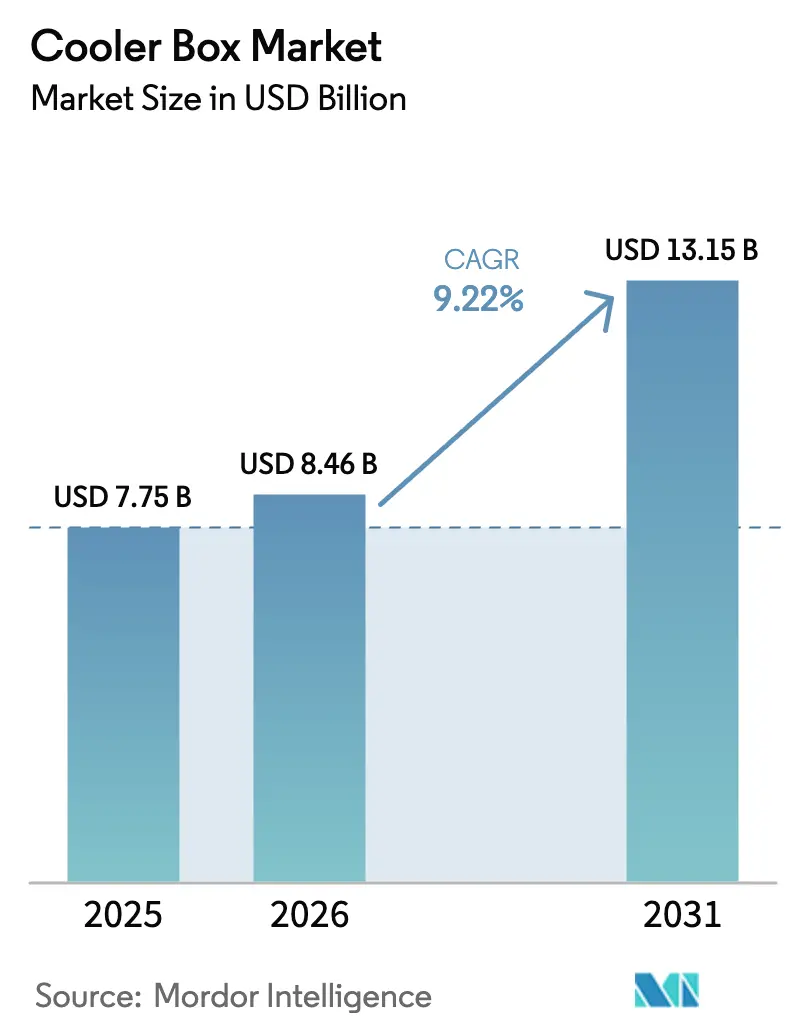
The cooler box market size is expected to grow from USD 7.75 billion in 2025 to USD 8.46 billion in 2026 and is forecast to reach USD 13.15 billion by 2031 at 9.22% CAGR over 2026-2031. Growth is propelled by expanding pharmaceutical cold-chain logistics, a continuing boom in outdoor recreation, and steady innovation in rotomolding and insulation technologies. Manufacturers now pair multi-layer polyethylene shells with high-performance foams, extending ice-retention beyond five days while trimming production costs. Premium brands benefit from regulatory shifts that favour reusable packaging, whereas low-cost disposable foam units face headwinds from impending bans on single-use plastics. Meanwhile, electric cooler adoption rises as consumers seek plug-and-play convenience for road trips, food delivery, and at-home entertaining.
Key Report Takeaways
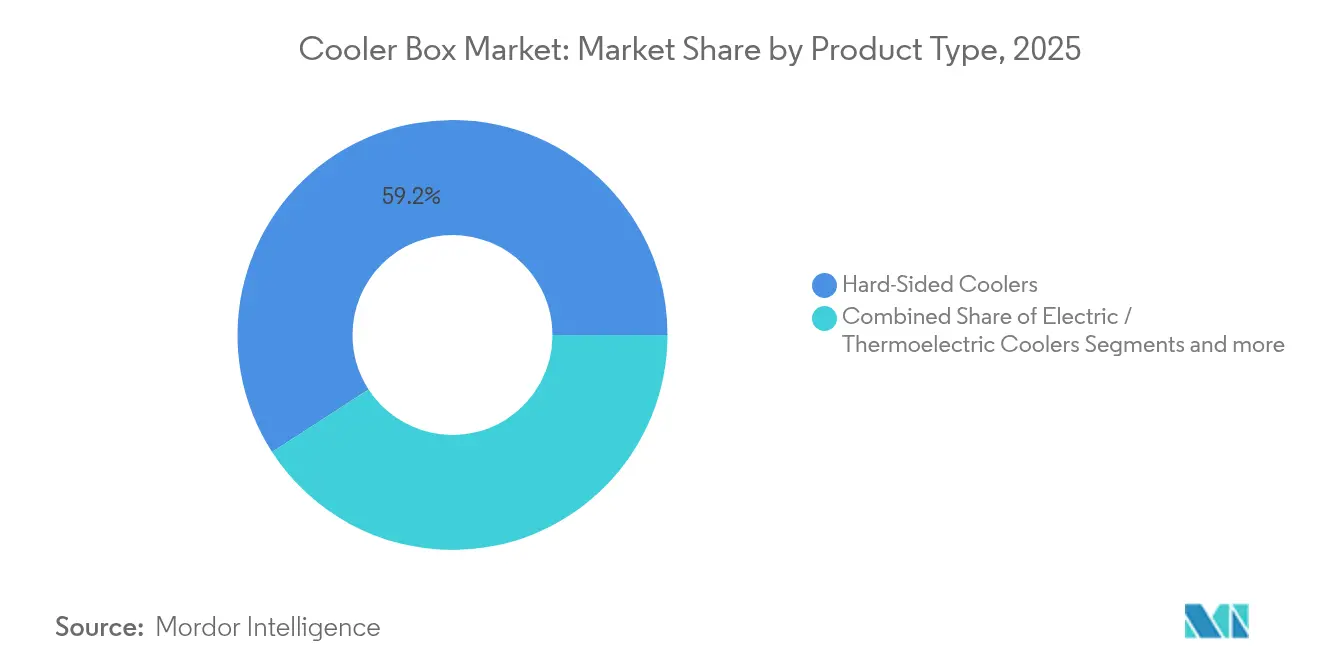
- By product type, Hard-sided coolers led with 59.15% of the cooler box market share in 2025, while electric/thermoelectric units are projected to post a 10.12% CAGR through 2031.
- By material, Rotomolded LLDPE accounted for 46.75% share of the cooler box market size in 2025; stainless-steel hybrids are expected to expand at an 11.01% CAGR to 2031.
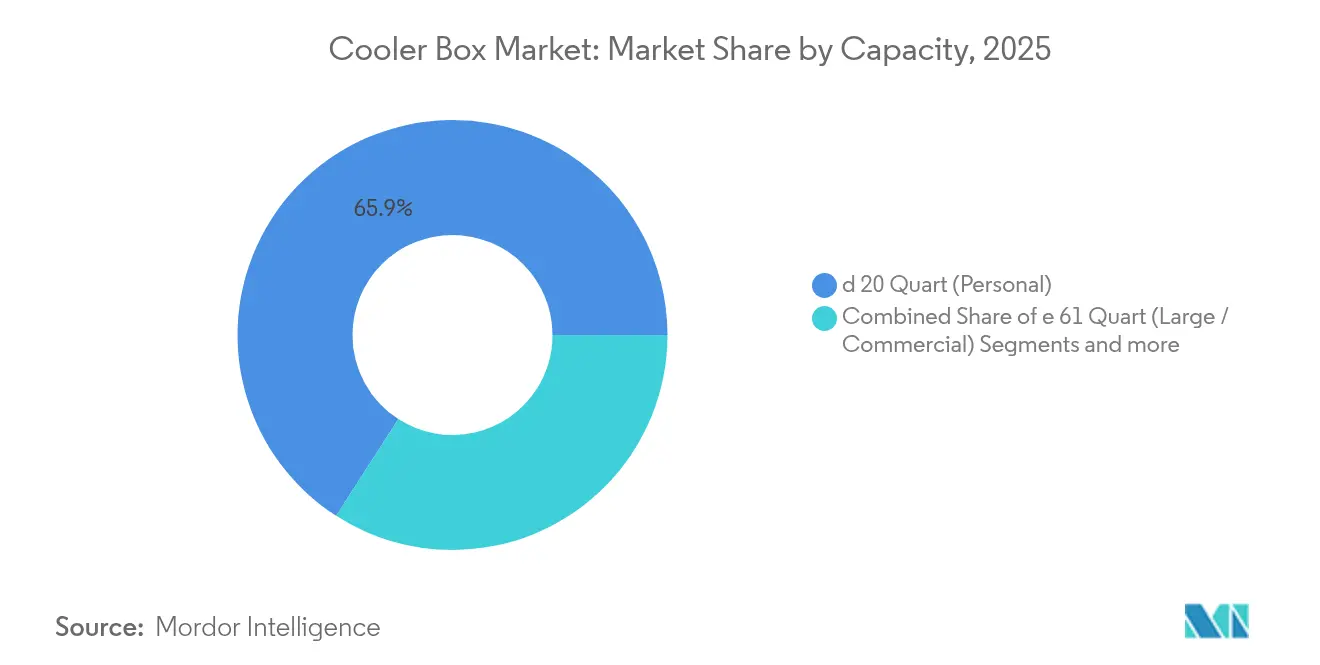
- By capacity, Personal units (≤20 qt) captured 65.90% of the cooler box market size in 2025; large/commercial models (≥61 qt) will advance at a 10.52% CAGR.
- By end user, Household/backyard events represented 33.05% of the cooler box market share in 2025, whereas pharmaceutical and biomedical logistics will grow at 9.65% CAGR.
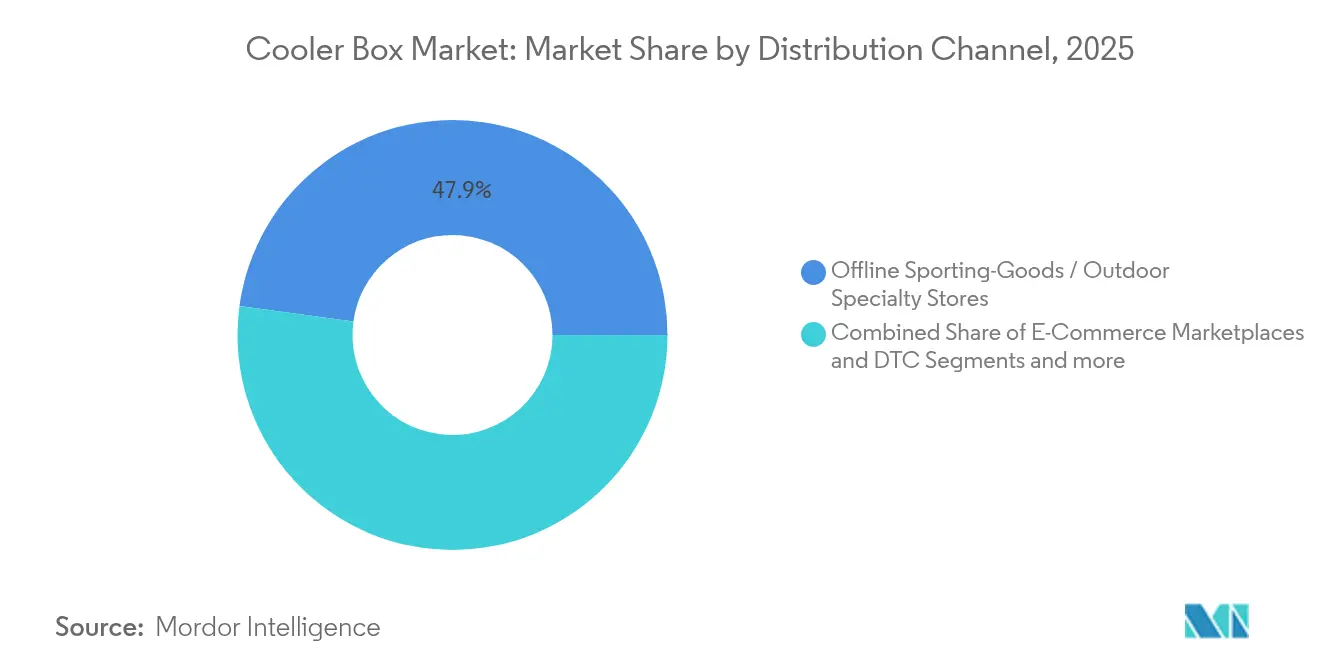
- By distribution channel, Offline Sporting-Goods / Outdoor Specialty Stores held 47.85% of the cooler box market share in 2025; e-commerce and direct-to-consumer channels are forecast to record a 9.84% CAGR.
- By geography, North America retained 41.75% of the cooler box market size in 2025; Asia-Pacific is the fastest-growing region with a 9.28% CAGR through 2031.
Note: Market size and forecast figures in this report are generated using Mordor Intelligence’s proprietary estimation framework, updated with the latest available data and insights as of 2026.
Market Trends and Insights
Drivers Impact Analysis of Cooler Box Market*
| Driver | % Impact on CAGR Forecast | Geographic Relevance | Impact Timeline |
|---|---|---|---|
| Growth in outdoor recreational & camping activities | +2.1% | Global, with a concentration in North America & APAC | Medium term (2-4 years) |
| Rising demand in pharmaceutical cold-chain logistics | +1.8% | Global, led by North America & Europe | Long term (≥ 4 years) |
| Expansion of food & beverage home-delivery services | +1.4% | Global, urban centres are driving adoption | Short term (≤ 2 years) |
| Advancements in insulation and rotomolding technology | +1.2% | Global manufacturing hubs in APAC & North America | Medium term (2-4 years) |
| Military demand for rugged, long-duration cooler boxes | +0.8% | North America, Europe, select APAC markets | Long term (≥ 4 years) |
| Sustainability regulations favouring reusable coolers | +1.0% | Europe & North America, expanding to APAC | Medium term (2-4 years) |
| Source: Mordor Intelligence | |||
Growth in Outdoor Recreational & Camping Activities
Camping participation remains above pre-2020 levels, supporting sustained cooler purchases for day trips and multi-day adventures. China’s “Development Plan for the Outdoor Sports Industry (2022-2025)” promotes safe, sustainable recreation and drives equipment spending across tents, cook sets, and rugged coolers [1]. Glamping’s fusion of hotel-style comfort with nature elevates demand for premium hard-sided coolers as upscale amenities. Social-media engagement in hiking, cycling, and overlanding content stimulates aspirational buying, particularly among millennials. As a result, the cooler box market enjoys a reliable medium-term lift in developed economies with strong outdoor cultures.
Rising Demand in Pharmaceutical Cold-Chain Logistics
The pharmaceutical industry, particularly segments such as biologics, vaccines, and GLP-1 therapies, demonstrates a strong reliance on cold chain logistics, necessitating precise temperature-controlled transportation within the 2-8 °C range. The growing emphasis on cost efficiency and environmental sustainability is driving a transition toward reusable packaging solutions, which currently account for 70% of the market share. This shift reflects the industry's strategic focus on minimizing long-term operational costs while adhering to sustainability objectives. Advanced packaging technologies, including high-performance rotomolded units, are anticipated to witness substantial growth in adoption as companies seek innovative solutions. Furthermore, the demand for active electric models is projected to remain robust, given their ability to maintain stringent temperature control standards. This trend is expected to persist through 2030, aligning with the industry's evolving requirements for reliable and sustainable cold chain logistics.
Expansion of Food & Beverage Home-Delivery Services
Insulated containers are a critical component in maintaining food safety during last-mile delivery operations for meal-kit, grocery, and restaurant delivery markets. This growth trajectory highlights the rising importance of infrastructure that supports temperature-sensitive logistics. As delivery service providers expand their operations into suburban areas, the demand for portable coolers that combine compact designs with the ability to maintain cold temperatures for extended periods is increasing. These coolers are becoming indispensable for ensuring the quality and safety of perishable goods during transit. The growing adoption of such solutions is creating immediate revenue opportunities, particularly for advanced cooler formats like electric and soft-sided models, which are preferred for their payload optimization and operational efficiency.
Advancements in Insulation and Rotomolding Technology
Advancements in manufacturing processes have resulted in tighter wall tolerances and enhanced resin dispersion, significantly improving thermal retention without adding substantial weight. The development of innovative foams has achieved expansion ratios of up to 120×, coupled with exceptionally low thermal conductivity of 26.69 mW m⁻¹ K⁻¹. Composite polymer tubes now offer thermal conductivity of 6.5 W/(m K), providing performance comparable to titanium alloys while maintaining superior corrosion resistance [2]. These technological improvements enable manufacturers to reduce wall thickness and resin consumption while still meeting and exceeding the five-day ice retention standard. The adoption of these advancements is expected to accelerate over the medium term as tooling upgrades are implemented across production facilities in APAC and North America. This trend reflects a growing emphasis on efficiency and performance in material engineering within the industry.
Restraints Impact Analysis of Cooler Box Market*
| Restraint | % Impact on CAGR Forecast | Geographic Relevance | Impact Timeline |
|---|---|---|---|
| An abundance of low-cost disposable foam coolers | -1.5% | Global, particularly price-sensitive markets | Short term (≤ 2 years) |
| High upfront price of premium rotomolded coolers | -1.2% | Global, affecting market penetration rates | Medium term (2-4 years) |
| Air-transport lithium-battery limits on active units | -0.8% | Global, affecting the electric cooler segment | Short term (≤ 2 years) |
| Recycling complexity is hurting large-volume procurement | -0.6% | Europe & North America, sustainability-focused markets | Medium term (2-4 years) |
| Source: Mordor Intelligence | |||
An Abundance of Low-Cost Disposable Foam Coolers
Expanded polystyrene (EPS) coolers maintain a strong foothold in the market due to their affordability, which often undercuts the pricing of durable alternatives. These products remain particularly prevalent in applications such as picnics, beach outings, and bait storage, despite their subpar insulation performance and single-use waste implications. The European Union's Packaging and Packaging Waste Regulation (PPWR), set to ban non-recyclable single-use packaging by 2028, is expected to drive a significant shift toward reusable solutions. However, cultural resistance to change is evident, as demonstrated by Germany's mandatory reusable scheme, which has achieved only a 1.60% adoption rate to date. Over the next two years, the low cost of foam coolers is anticipated to continue hindering the adoption of premium alternatives in price-sensitive markets. Nonetheless, increasingly stringent regulatory frameworks are likely to erode the long-term viability of these low-cost, single-use products.
Air-Transport Lithium-Battery Limits on Active Units
Beginning January 2025, the IATA Dangerous Goods Regulations cap the state of charge at 30% for lithium batteries shipped by air, complicating logistics for compressor and thermoelectric coolers [3]. U.S. PHMSA guidelines require additional labeling, documentation, and carrier approvals, inflating compliance costs. These hurdles delay international market entry and raise inventory-carrying expenses for brands pivoting to active cooling. While ground and sea lanes remain open, lead times lengthen, and just-in-time delivery promises weaken. Consequently, the restraint trims near-term sales growth in the fastest-growing electric segment.
*Our forecasts treat driver/restraint impacts as directional, not additive. The impact forecasts reflect baseline growth, mix effects, and variable interactions.
Cooler Box Market Segment Analysis
By Product Type:
Electric Units Drive InnovationThe hard-sided segment retained a commanding 59.15% share of the cooler box market size in 2025, thanks to robust polyethylene shells, pressure-injected foams, and bear-resistance certifications. Premium models such as YETI’s Tundra series fetch USD 350-600, yet justify the price with week-long ice retention and lifetime warranty coverage. Electric/thermoelectric models, though only a fraction of current sales, are projected to clock a 10.12% CAGR through 2031 as consumers embrace plug-in convenience for RV road trips and food-delivery routes. Soft-sided coolers fill lightweight day-use needs, whereas disposable Styrofoam units fight for survival amid tightening plastic bans.
Electric innovation accelerates with in-lid solar panels, Bluetooth temperature monitors, and USB-A power taps that charge phones at campsites. Coleman’s 2025 Pro Cooler launch shaved 15-30% weight versus category leaders while adding antimicrobial liners and a 10-year warranty. Competitive gaps narrow as mid-tier brands replicate rotomolded aesthetics at lower price points using hybrid foam cores. However, shipping constraints on lithium batteries and airline restrictions curb international momentum for compressor-driven models. Over the forecast window, value-oriented brands will target sub-USD 300 electrics, while rugged premium units defend price positions through material and feature superiority.

By Material:
Rotomolded LLDPE Leads PerformanceIn 2025, rotomolded linear low-density polyethylene (LLDPE) accounted for 46.75% of the cooler box market share, driven by its superior impact resistance, extended ice retention capabilities, and customizable color options. The use of wall thicknesses up to 2.5 cm combined with pressure-injected polyurethane foam has enabled these products to achieve insulation R-values that outperform traditional blown-molded designs. Stainless steel and powder-coated aluminum hybrids are experiencing rapid growth, primarily due to their high demand in brewery distribution, military applications, and luxury overland vehicles, where durability and premium aesthetics are critical. Injection-molded polypropylene (PP) and high-density polyethylene (HDPE) continue to dominate the budget segment, offering cost-effective solutions despite their limitations in ice retention performance. The increasing preference for hybrid materials reflects a shift toward premiumization in the cooler box market, catering to niche applications requiring enhanced functionality and aesthetics. Meanwhile, the budget-friendly segment remains essential for addressing cost-sensitive consumer needs, albeit with compromises in durability and insulation efficiency.
Advancements in material science are driving the adoption of biobased feedstocks and post-consumer resin blends, significantly reducing the environmental footprint of LLDPE. The PPWR regulation, set to enforce minimum recycled content in large packaging by 2031, is compelling cooler manufacturers to integrate reclaimed resin blends while maintaining product durability. Foam suppliers are innovating with non-HFC blowing agents to comply with the EU's F-gas phase-down targets, thereby contributing to reduced carbon emissions. Retailers are increasingly limiting shelf space for EPS/EPP foam coolers, despite their cost advantages, to mitigate compliance risks and align with growing consumer demand for eco-friendly products. These shifts underscore a broader industry trend toward sustainable practices, driven by regulatory pressures and evolving market preferences.
By Capacity:
Personal Units Dominate VolumePersonal coolers up to 20 qt captured 65.90% of the cooler box market size in 2025, driven by urban picnics, school sports, and grocery runs. Lightweight designs with single-hand carry handles and modular ice packs cater to on-the-go consumers who value convenience over multi-day retention. Mid-range 21-40 qt models serve couples and small families, balancing storage and portability for weekend camping. Large/commercial units above 61 qt show the fastest growth at 10.52% CAGR as food caterers, pharmaceutical shippers, and disaster-relief agencies require bulk capacity. Units between 41-60 qt remain the core family segment, excelling in multi-day voyages and boat outings.
Capacity preferences also shift with vehicle trends; compact SUVs and electric cars limit trunk space, elevating demand for collapsible or soft-sided 20 qt formats. Conversely, pickup sales in North America sustain demand for 65-110 qt rotomolded chests that double as casting platforms and camp seats. Commercial cold-chain providers favor stackable 120-270 qt wheeled designs compatible with pallet systems. Military procurement cycles extend to 400 qt refrigerated cargo boxes with integral 24 V compressors for field hospitals, though data remain classified. As e-commerce grocery delivery scales, there is interest in 15-25 qt insulated totes designed for rapid turnover and easy sanitation between drops.
By End User:
Household Events Lead AdoptionHousehold and backyard gatherings represented 33.05% of the cooler box market share in 2025, underpinned by pandemic-era habits of outdoor socializing that now feel permanent. Multi-function lids doubling as cutting boards, cup holders, and Bluetooth speakers enhance appeal for barbeques and pool parties. Camping and general outdoor recreation remain resilient, drawing in new participants attracted by glamping’s comfort-first ethos. Pharmaceutical and biomedical logistics, while smaller today, will post a 9.65% CAGR as biologics pipelines expand and reusable packaging gains traction in GDP-compliant transport. Fishing and hunting demand grows in sync with license issuances, particularly in the U.S. Southeast and Scandinavia, where anglers prize coolers that keep ice frozen for five days.
Food-service delivery firms deploy insulated totes and active compressor boxes to meet strict Hazard Analysis Critical Control Point (HACCP) rules. Caterers leverage large coolers with internal dividers for hot-cold separation at weddings and corporate events. Military and defense agencies specify NATO-standard fittings, tie-down slots, and infrared-absorbing pigments to blend with tactical environments. Industrial users such as construction crews rely on 5-gal beverage coolers and 50-qt lunch chests that withstand site abuse. The pharmaceutical rise validates investments in temperature data loggers and tamper-evident seals integrated into premium models.
By Distribution Channel:
Specialty Stores Maintain LeadershipIn 2025, sporting goods and outdoor specialty retailers accounted for 47.85% of the cooler box market share, leveraging their expertise and interactive merchandising strategies to provide customers with hands-on evaluation of product features such as gasket seals and lid latches. E-commerce and direct-to-consumer (DTC) platforms are anticipated to grow at a compound annual growth rate (CAGR) of 9.84%, supported by the increasing adoption of free-return policies, augmented reality (AR) sizing tools, and influencer-driven marketing campaigns that facilitate consumer confidence in purchasing high-value items online. Mass retail chains are strategically focusing on offering value-oriented product lines and implementing seasonal promotions that coincide with national holidays to drive sales. The growth of e-commerce channels reflects a shift in consumer behavior toward convenience and digital engagement, which is further amplified by technological advancements and targeted marketing efforts. Sporting goods and outdoor specialty retailers continue to dominate the market by combining product expertise with experiential retailing, creating a competitive advantage in a highly fragmented market landscape.
Igloo achieved a fourfold increase in online orders by implementing an omnichannel fulfillment strategy and utilizing AI-driven demand forecasting to reduce stock-outs effectively. Institutional buyers, such as pharmaceutical distributors and defense agencies, prioritize vendors that provide calibration certificates and validated thermal modeling, often entering into multi-year agreements with such suppliers. Marketplace platforms, including Amazon, enforce policies of brand neutrality, compelling companies to differentiate themselves through the development of exclusive SKUs and the introduction of limited-edition product variations. The adoption of AI tools has enabled Igloo to align inventory levels with demand patterns, ensuring a seamless supply chain and enhanced customer satisfaction. Vendors operating in institutional and marketplace channels must strategically innovate to meet compliance requirements and stand out in competitive environments.
Geography Analysis
North America Cooler Box Market
In 2025, North America accounted for 41.75% of the cooler box market, primarily due to the region's well-established camping culture, elevated levels of disposable income, and strong consumer preference for premium brands. The recreational equipment market in Canada demonstrates consistent growth, supported by government investments in provincial parks and financial incentives aimed at boosting domestic tourism. Across the continent, environmentally conscious consumers are increasingly transitioning toward rotomolded cooler boxes, particularly those designed to integrate with deposit-return systems or repair programs. This shift reflects a broader trend toward sustainability, as these durable alternatives gradually replace single-use foam products. The evolving consumer preferences and supportive policy measures are expected to further solidify North America's dominance in the cooler box market.
APAC Cooler Box Market
Asia-Pacific is the fastest-growing region, logging a projected 9.28% CAGR through 2031. In China, central government policy promotes outdoor sports and safety training, stimulating purchases of durable coolers for hiking, rafting, and event catering. Rising middle-class incomes enable premiumization, while local manufacturers scale production for export and domestic demand. Japan’s inbound tourism rebound, with inbound visitors surpassing 30 million, fuels cooler sales to hospitality providers for bento delivery and outdoor festivals. India’s expanding gig economy drives the adoption of insulated food-delivery bags and hard-sided boxes for fish and dairy. Although price sensitivity persists, regional manufacturing advantages allow brands to launch tiered product lines adapted to varying spending power.
Europe Cooler Box Market
Europe represents a mature yet shifting landscape shaped by rigorous regulatory controls. The PPWR, effective February 2025, obliges reusable or recyclable packaging, incentivizing coolers built for 20+ year service lives. Germany’s reusable packaging mandate, though still at 1.60% uptake, spotlights the policy momentum that will intensify through 2030. Glamping resorts proliferate in France, Italy, and the Nordics, prioritizing premium aesthetics and eco credentials in guest amenities. Manufacturing clusters in Poland and Portugal expand capacity to serve EU demand for compliant materials. Meanwhile, logistics hubs in the Netherlands and Belgium trial active compressor coolers for pharmaceutical cross-dock operations, signaling Europe’s pivot toward high-value industrial applications
Mordor Intelligence provides coverage of the cooler box market across other key regional markets, including Europe, each with their regulatory frameworks and demand patterns.

Regulatory Landscape
Cooler boxes that contact food and beverages are shaped by food-contact chemical rules, led by the US FDA framework for food contact substances (21 CFR Parts 174-179, including the polymers provisions under Part 177). These requirements affect resin selection (PP, PE, related additives) and the compliance documentation brands must maintain for interior liners, gaskets, and coatings that may migrate into food.
Sustainability and safety programs also influence design choices and category mix. In Europe, the Packaging and Packaging Waste Regulation (PPWR), effective February 2025, accelerates the shift away from non-recyclable single-use packaging, reinforcing demand for reusable hard-sided formats while increasing scrutiny of EPS single-use coolers. For rugged outdoor use, bear-resistant performance claims in North America often reference certification protocols from the Interagency Grizzly Bear Committee (IGBC), which pushes lock and latch engineering and drives premium-feature differentiation. Large brands also formalize supply-chain chemical controls through programs such as YETI's Restricted Substance List (RSL) program.
Value Chain Analysis
The cooler box value chain begins with petrochemical and recycled feedstocks converted into polymers (LLDPE, HDPE, PP and related compounds) and insulation systems (polyurethane foams and other high-performance foams). Conversion then occurs through rotomolding and injection molding for shells, lids, and accessories. Component supply extends to gaskets, hinges/latches, wheels/handles, and, for active units, thermoelectric modules or compressor assemblies, controls, and lithium-based power packs, which introduce additional compliance and shipping complexity.
Manufacturing, assembly, and QA are closely tied to insulation performance targets, commonly expressed through multi-day ice retention, and to application-led specifications such as food-contact, rugged outdoor, or validated cold-chain use. Cost structure remains sensitive to resin and foam inputs, with crude-oil-derived polymer volatility extending into March 2026, and manufacturers responding with more localized sourcing and resilient procurement to reduce tariff and logistics exposure. Downstream, products move through outdoor specialty retail, mass retail, and increasingly DTC and e-commerce, while institutional channels in food delivery, catering, and pharma logistics add requirements for traceability, thermal validation, and serviceable, reusable packaging cycles.
Competitive Landscape
The cooler box market demonstrates moderate concentration, with the top ten companies controlling roughly half of global sales. Premium leaders capitalize on brand equity, intellectual property in hinge and latch designs, and broad accessory ecosystems that lock in repeat customers. Mid-tier entrants chase volume through price-to-performance sweet spots and private-label deals with major retailers. Commodity producers in Southeast Asia fill the low-end, exporting EPS foam units in bulk, though their addressable volume shrinks under anti-plastic legislation.
Strategic moves focus on vertical integration and portfolio expansion. YETI’s USD 48.5 million purchase of Mystery Ranch brings technical backpack know-how under its umbrella, creating cross-sell opportunities with cooler-compatible load-bearing systems. The company also aims to cut China sourcing to under 5% of cost of goods by end-2025, diversifying risk amid geopolitical tensions. Igloo’s takeover by ACON Investments injects capital to update R&D, boost DTC marketing, and widen global reach, especially in Latin America. Coleman targets value-minded shoppers through its Pro Cooler line, competing on lighter weight and 10-year warranties that echo premium assurances at a lower price point.
Brands are increasingly differentiating their offerings by integrating advanced technologies, such as Bluetooth-enabled smart lids, which provide real-time alerts on temperature fluctuations and seamlessly connect with health-code compliance applications tailored for catering clients. Electric cooler manufacturers are focusing on operational efficiency by introducing swappable battery packs that comply with the 'charge rule,' thereby minimizing logistical challenges during shipments. To sustain consumer engagement in a market characterized by incremental functional advancements, companies across all levels are strategically leveraging influencer collaborations to amplify brand visibility. Additionally, limited-edition seasonal color launches are being employed as a tactical approach to create exclusivity and drive demand. These initiatives collectively reflect a shift towards innovation-driven strategies aimed at enhancing product appeal and maintaining competitive advantage.
Cooler Box Industry Leaders
-
YETI Holdings Inc.
-
Igloo Products Corp.
-
Newell Brands (Coleman)
-
Pelican Products Inc.
-
ORCA Coolers LLC
- *Disclaimer: Major Players sorted in no particular order

Cooler Box Market Companies Covered in this Report
- YETI Holdings Inc.
- Igloo Products Corp.
- Newell Brands (Coleman)
- Pelican Products Inc.
- ORCA Coolers LLC
- OtterBox
- RTIC Outdoors
- Engel Coolers
- K2 Coolers
- Dometic Group AB
- RovR Products
- Stanley (PMI)
- Grizzly Coolers
- AO Coolers
- Arctic Zone
- Calcutta Outdoors
- Bison Coolers
- CampZero
- Cabela’s (Bass Pro)
- Rubbermaid (Newell)
Market Opportunities and Future Outlook
Reusable cold-chain packaging is a clear whitespace for cooler-format suppliers as pharmaceutical and biomedical logistics expand their use of reusable solutions, with the report context citing 70% share for reusable packaging. This points to demand for hard-sided rotomolded and validated cooler boxes that support temperature ranges such as 2-8 C and can integrate temperature monitoring, along with tamper evidence, data logging, and standardized lane qualification beyond basic ice retention.
Sustainability-driven material and process shifts also create room for differentiated, compliance-forward product lines. The EU PPWR (effective February 2025) strengthens the business case for durable, repairable coolers and for incorporating post-consumer recycled content and lower-impact foam chemistries, including HFC-free approaches, without sacrificing performance. On the consumer side, innovation focused on portability and space efficiency is advancing quickly, as shown by Coleman introducing Snap 'N Go in March 2026 as a collapsible hard cooler concept. Form-factor changes like this support demand in urban households, small vehicles, and multi-use scenarios spanning backyard entertaining, travel, and day trips.
Recent Industry Developments in Cooler Box Market
- June 2026: Newell Brands (Coleman) announces a €40 million planned investment for French operations to enhance regional infrastructure and capacity. The move expands Coleman’s European distribution capabilities to support growing demand for cooler boxes. It strengthens the supply chain footprint to accelerate market expansion in Western Europe.
- May 2026: YETI Holdings Inc. approves an increase to share repurchase program; $500 million available for repurchases as of May 14, 2026. The capital allocation signals confidence in core cooler business fundamentals. It could support shareholder value while maintaining flexible liquidity for growth initiatives.
- April 2026: Igloo Products Corp. launches the Gripper CoolBox 10 Qt Cooler, a portable injected-molded cooler for daily use. The product expansion adds a compact, durable option for professionals and urban commuters. It broadens Igloo's portfolio to address on-the-go cooling needs.
Cooler Box Market Report Scope and Research Methodology
Market Definition and Coverage
This market covers revenue generated from selling ice and cooler boxes used to keep food, beverages, and other temperature-sensitive items cold, using insulation and, where applicable, powered cooling components.
Scope exclusions: We exclude large stationary cold rooms, household refrigerators, and commercial display refrigeration units that are not designed as portable cooler boxes.
Segments Covered in This Report
- By Product Type
- Hard-Sided Coolers
- Soft-Sided Coolers
- Electric / Thermoelectric Coolers
- Disposable / Styrofoam Coolers
- By Material
- Rotomolded LLDPE
- Injection-Molded PP/HDPE
- Fabric / Soft Shell (Poly-Nylon)
- Stainless-Steel & Metal Hybrid
- EPS / EPP Foam (Disposable)
- Other Materials
- By Capacity
- ≤ 20 Quart (Personal)
- 21 – 40 Quart (Small Group)
- 41 – 60 Quart (Family/Weekend)
- ≥ 61 Quart (Large / Commercial)
- By End User
- Camping & Outdoor Recreation
- Fishing & Hunting
- Household / Backyard Events
- Food & Beverage Delivery / Catering
- Pharmaceutical & Biomedical Logistics
- Industrial & Military / Defense
- By Distribution Channel
- Offline Sporting-Goods / Outdoor Specialty Stores
- Mass Retail & Hypermarkets
- E-Commerce Marketplaces & DTC
- B2B & Institutional Direct Sales
- By Geography
- North America
- Canada
- United States
- Mexico
- South America
- Brazil
- Peru
- Chile
- Argentina
- Rest of South America
- Europe
- United Kingdom
- Germany
- France
- Spain
- Italy
- BENELUX (Belgium, Netherlands, Luxembourg)
- NORDICS (Denmark, Finland, Iceland, Norway, Sweden)
- Rest of Europe
- Asia-Pacific
- India
- China
- Japan
- Australia
- South Korea
- South-East Asia (Singapore, Malaysia, Thailand, Indonesia, Vietnam, Philippines)
- Rest of Asia-Pacific
- Middle East and Africa
- United Arab Emirates
- Saudi Arabia
- South Africa
- Nigeria
- Rest of Middle East and Africa
- North America
Data Sources, Market Sizing, and Validation
Desk Research
Desk research was used to set the basic market structure and to define guardrails around volumes and pricing. We reviewed public statistics and standards, including US International Trade Commission trade data, UN Comtrade, US Bureau of Labor Statistics inflation series, and product safety and materials guidance from ASTM and ISO, which help indicate what products are being sold and how they are classified.
To avoid over-counting, we also checked company filings and investor decks for category revenue language, along with retailer and distributor listings to understand the real-world mix of hard and soft coolers, typical capacities, and feature trends. In parallel, we used paid subscriptions for company financials and news intelligence, plus patent databases to track insulation, rotomolding, and powered-cooler design activity that can influence ASP movement. These desk sources are illustrative only, and many other public and paid references were used to collect, validate, and clarify data points.
Primary Interviews and Surveys
Primary work focused on validating unit economics and clarifying how demand is split by use case, which is not always visible from public data. We spoke with a mix of manufacturers, component suppliers (foam and plastics), distributors, and large buyers tied to outdoor recreation and cold-chain use, and then re-checked key assumptions when responses showed wide variance.
Because the market is global, inputs were triangulated across the Americas, EMEA, and APAC so regional seasonality, channel mix, and price ladders could be normalized before the final totals were locked.
Distribution of primary research fieldwork respondents
| Company type | Respondent position | Region |
|---|---|---|
| Top tier: 33% | CXOs: 12% | APAC: 46% |
| Mid tier: 47% | Functional/Unit leaders: 33% | EMEA: 30% |
| Smaller Players: 20% | Managers: 55% | Americas: 24% |
Market-Sizing & Forecasting
Sizing starts with a top-down build where production, trade, and consumption signals are used to reconstruct the addressable pool of portable cooler boxes by region, followed by product mix splits that keep totals realistic. After that, the numbers are cross-checked using selective bottom-up approximations, such as sampled ASP times unit volumes by channel, plus supplier and distributor checks, which are then used to adjust outliers.
Key inputs in the model include the mix of hard-sided versus soft-sided units, typical capacity bands (in quarts), insulation and shell material trends that shift ASPs, seasonality linked to outdoor activity and travel, and cold-chain shipment intensity for temperature-sensitive use. Where unit data was not directly observable in a country, we used proxy indicators such as import patterns, retailer assortment depth, and price ladders reported by interviewees, then filled gaps using conservative interpolation anchored to nearby markets.
Forecasts were built using scenario analysis, since demand can swing with travel cycles, extreme weather seasons, and replacement behavior, and those swings are not always captured by a single curve. Assumptions on volume growth and ASP progression were reviewed with industry participants so the final forecast stays consistent with observed channel behavior and planned product launches.
Data Validation & Update Cycle
Validation is handled through multiple checks so a single noisy data series does not drive the result. We compare the modeled totals with independent signals such as trade values, category pricing ranges, and regional demand indicators, and then investigate anomalies at the country and segment level before sign-off.
The draft is reviewed in steps, including a second-analyst review of assumptions, arithmetic checks, and a final consistency check across historical and forecast periods. If a major mismatch shows up during review, respondents are re-contacted to confirm whether the gap is real or caused by differences in product definitions or channel coverage. Reports are refreshed annually, with interim updates when material events occur, and a final pre-delivery pass is completed so clients receive the most current view.
Mordor Intelligence's Ice Or Cooler Box Market Size Compared With Other Published Estimates
Published market values for cooler boxes can differ even when the products sound similar, because each publisher draws the line differently around what counts as a cooler and which channels and geographies are fully captured. Variations also come from how ASPs are modeled across premium and mass units, plus the timing of currency conversion and inflation normalization.
Electric powered portable coolers and thermoelectric variants sit inside Mordor Intelligence's scope when they are sold as cooler boxes, but adjacent portable refrigeration and broader cold-chain equipment are not, which is one reason some published totals look higher or lower. Other gaps often come from using shipment value proxies without correcting for re-exports, applying a single global price trend across all capacity bands, or carrying forward older base-year assumptions without re-validating channel mix shifts.
Benchmark comparison
| Source | Market Size | Gaps in Research Methodology |
|---|---|---|
| Mordor Intelligence | USD 8.46 B (2026) | |
| Trade Journal A | USD 7.29 B (2024) | Uses an earlier base year and appears to center on passive ice chests, with limited visibility into powered cooler inclusion and regional channel price differences, which can compress the value estimate. |
| Industry Publisher B | USD 3.51 B (2024) | Likely tracks a narrower set of consumer ice chests only, with tighter product taxonomy and less coverage of larger-capacity and commercial-use cooler boxes, which reduces the addressable revenue pool. |
The comparison shows that the spread is mainly explained by what is counted as a cooler box and how pricing is lifted from product mix rather than a single average. By keeping the scope tied to portable cooler box demand and then checking it against channel pricing and trade signals, the final number stays traceable to clear inputs and repeatable steps.
Key Questions Answered in the Report
How big is the cooler box market in 2026?
The cooler box market size stands at USD 8.46 billion in 2026 and is forecast to reach USD 13.15 billion by 2031 at a 9.22% CAGR over 2026-2031.
Which product segment grows the fastest?
Electric and thermoelectric coolers are the fastest-growing segment, tracking a 10.12% CAGR as consumers adopt plug-in convenience for travel and delivery.
What region leads global sales?
North America commands 41.75% of cooler box market share due to a vibrant outdoor culture and willingness to pay premium prices for high-performance coolers.
How are sustainability regulations influencing product design?
The EU’s PPWR compels manufacturers to prioritize recyclable materials and multi-use durability, accelerating a shift from disposable foam to rotomolded polyethylene and metal hybrids.
Why is the pharmaceutical sector important for cooler sales?
Growth in temperature-sensitive biologic drugs is driving demand for reusable, validated cooler boxes that safeguard cargo valued at billions of dollars annually.
What distribution channels are expanding most quickly?
E-commerce and direct-to-consumer websites are growing at a projected 9.84% CAGR as brands seek higher margins and consumers grow comfortable buying premium coolers online.