
Graves Disease Market Size and Share
Market Overview
| Study Period | 2020 - 2031 |
|---|---|
| Market Size (2026) | USD 2.26 Billion |
| Market Size (2031) | USD 2.87 Billion |
| Growth Rate (2026 - 2031) | 4.92 % |
| Fastest Growing Market | Asia-Pacific |
| Largest Market | North America |
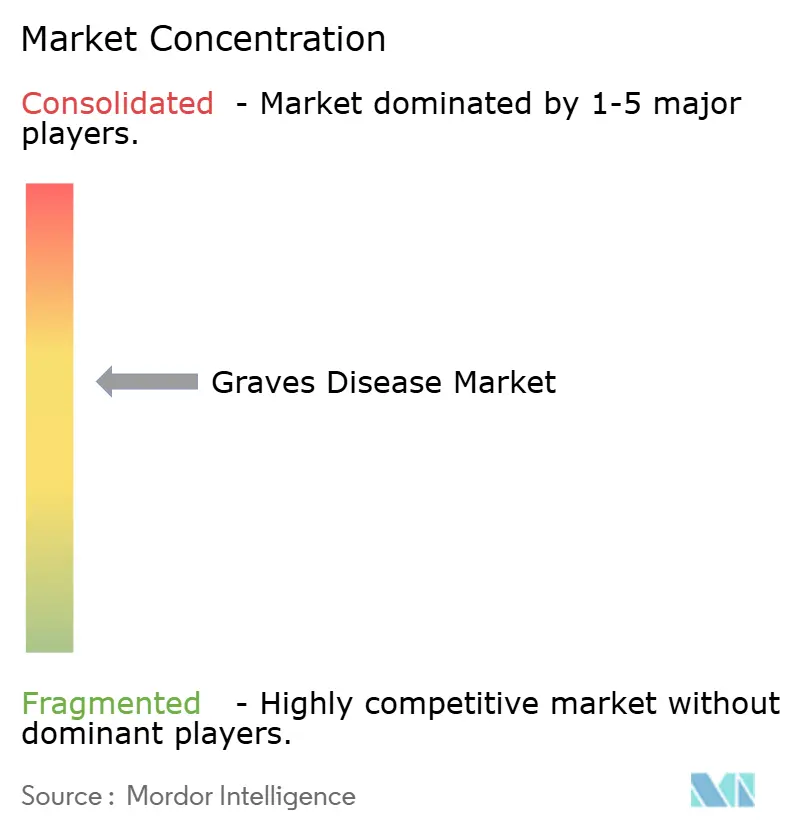
| Market Concentration | Medium |
Major Players *Disclaimer: Major Players sorted in no particular order Image © Mordor Intelligence. Reuse requires attribution under CC BY 4.0. | |
Graves Disease Market Analysis by Mordor Intelligence
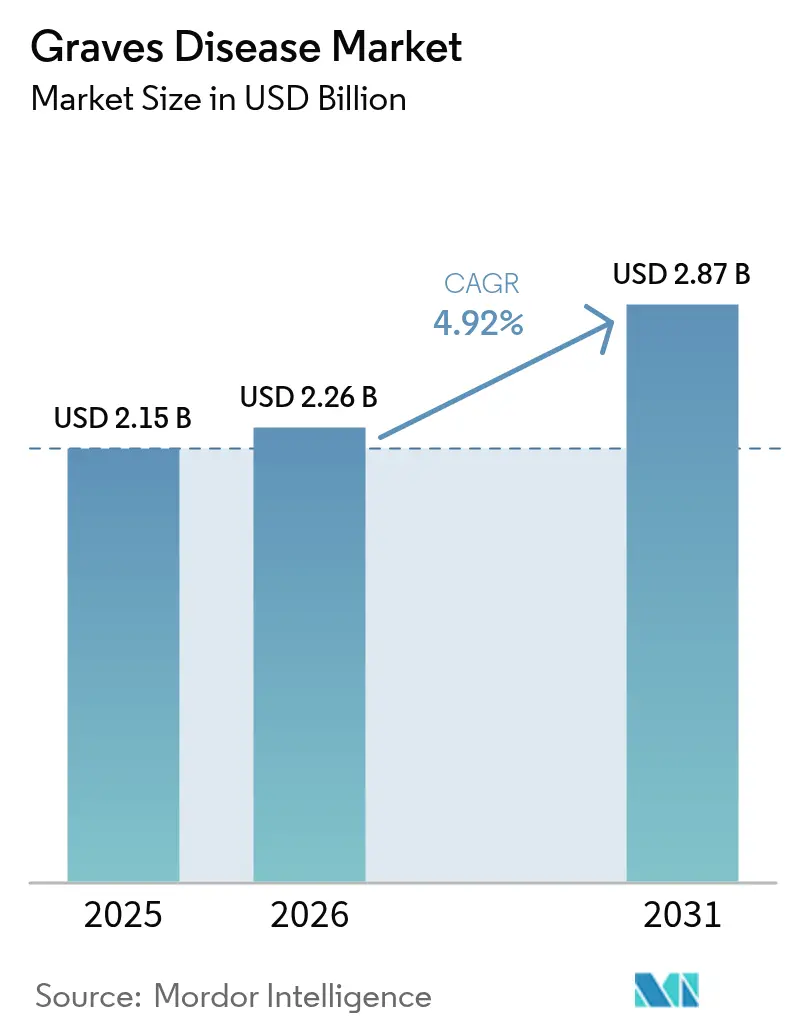
The Graves’ disease market size was valued at USD 2.15 billion in 2025 and estimated to grow from USD 2.26 billion in 2026 to reach USD 2.87 billion by 2031, at a CAGR of 4.92% during the forecast period (2026-2031). The pivot away from symptom-focused antithyroid drugs toward precision immunotherapies keeps demand high while attracting fresh capital, clinical talent, and regulatory attention. Women under 40 remain the largest single patient group, yet the rise in pediatric cases since the COVID-19 pandemic broadens the addressable population. FcRn and IGF-1R biologics are setting new efficacy benchmarks, pulling share from radioactive iodine in cardiovascular-risk patients and reshaping hospital formularies. Supply chain fragility for I-131 isotopes, combined with payer willingness to reimburse high-priced disease-modifying biologics, nudges providers toward treatments that hold greater long-term value for patients and health systems. Overall, the Graves’ disease market is progressing toward a precision-medicine standard in which biomarker-guided care, targeted immunomodulation, and remote monitoring converge to improve outcomes and cut lifetime costs.
Key Report Takeaways
- By diagnosis, TSH testing led with 45.92% revenue share in 2025; antibody assays are projected to expand at a 6.15% CAGR through 2031.
- By treatment, anti-thyroid medications held 40.78% of the Graves’ disease market share in 2025, while targeted immunotherapies and biologics are tracking a 6.02% CAGR to 2031.
- By patient age group, adults (18-64 years) represented 62.12% share of the Graves’ disease market size in 2025; pediatric cases are poised for a 6.21% CAGR to 2031.
- By end-user, hospitals commanded 51.76% share of the Graves’ disease market size in 2025, while online and retail pharmacies show the fastest growth at 6.44% CAGR.
- By geography, North America led with 39.42% share in 2025; Asia Pacific is forecast to be the fastest-growing region at 5.98% CAGR through 2031.
Note: Market size and forecast figures in this report are generated using Mordor Intelligence’s proprietary estimation framework, updated with the latest available data and insights as of 2026.
Market Trends and Insights
Drivers Impact Analysis of Graves Disease Market*
| Driver | (~) % Impact on CAGR Forecast | Geographic Relevance | Impact Timeline |
|---|---|---|---|
| Rising prevalence of hyperthyroidism & Graves' disease | +1.2% | Global, with higher impact in Asia Pacific and North America | Medium term (2-4 years) |
| Pipeline of targeted immunotherapies (FcRn & CD40 antagonists) | +1.1% | Global, led by North America and Europe | Long term (≥ 4 years) |
| Growing adoption of radio-iodine therapy in high-CV-risk patients | +0.8% | North America & Europe, expanding to Asia Pacific | Short term (≤ 2 years) |
| Expanding reimbursement & funding for rare autoimmune disorders | +0.9% | North America & EU core, gradual expansion to emerging markets | Long term (≥ 4 years) |
| Rapid uptake of ultrasound-guided thermal ablation techniques | +0.7% | Asia Pacific core, spill-over to North America and Europe | Short term (≤ 2 years) |
| Advances in high-resolution, fusion-guided thyroid imaging | +0.6% | Global, with early adoption in developed markets | Medium term (2-4 years) |
| Source: Mordor Intelligence | |||
Rising Prevalence of Hyperthyroidism & Graves’ Disease
The Graves’ disease market continues to expand as incidence climbs in both developed and emerging economies. During the pandemic period, pediatric cases rose 60%[1], underscoring the role of viral triggers in autoimmune thyroid dysfunction. Higher diagnostic penetration in iodine-replete regions uncovers previously missed subclinical disease, particularly among Asian and White populations with strong genetic predisposition. Pharmaceutical developers leverage these epidemiological insights to refine inclusion criteria, improve trial enrollment, and boost the likelihood of regulatory success. Health systems respond by scaling endocrinology tele-consultation services that lower specialist bottlenecks and enhance early intervention rates. As lifestyle and nutritional transitions continue, incidence growth remains a key demand driver across every tier of care delivery.
Pipeline of Targeted Immunotherapies
Novel FcRn inhibitors and CD40 antagonists reinforce the innovation narrative that positions the Graves’ disease market for sustained premium pricing. Batoclimab posted a 76% response rate in patients uncontrolled on antithyroid drugs, with more than half discontinuing conventional therapy entirely. Clinical differentiation reduces the need for lifelong thyroid replacement and mitigates relapse risk, shifting payer calculus toward disease-modifying solutions. Breakthrough Therapy and orphan drug designations shorten development timelines, encouraging venture investment and licensing deals. As multi-indication platforms emerge, developers exploit scale economies in manufacturing and distribution that further strengthen long-run margins.
Growing Adoption of Radio-Iodine Therapy in High-CV-Risk Patients
Radioactive iodine retains clinical relevance where rapid thyroid ablation lowers atrial fibrillation burden in cardiovascular-risk cohorts. Updated cardiology guidelines support earlier I-131 use, particularly in elderly patients for whom surgery is less feasible. Lithium carbonate co-administration now boosts cure rates by 12%[2], improving confidence in remission durability. Personalized dosimetry cuts hospital stays, while remote radiation monitors ease outpatient management. These advances preserve a stable revenue base even as biologics gain popularity, reinforcing multimodal treatment diversity within the broader Graves’ Disease market.
Expanding Reimbursement & Funding for Rare Autoimmune Disorders
Payers steadily broaden coverage criteria for high-cost biologics when evidence shows avoidance of surgery and long-term steroid complications. Aetna now pre-authorizes teprotumumab for adults with thyroid eye disease, creating a benchmark for private insurers. Medicare Advantage plans align by standardizing reimbursement for thyroid surgeries that meet defined necessity thresholds. Manufacturers backfill residual gaps through patient-assistance programs that drive early uptake, generate real-world evidence, and strengthen future reimbursement negotiations. Over the forecast horizon, these policies push the Graves’ disease market toward higher biologic penetration and more predictable revenue streams.
Restraints Impact Analysis of Graves Disease Market*
| Restraint | (~) % Impact on CAGR Forecast | Geographic Relevance | Impact Timeline |
|---|---|---|---|
| High total cost of lifelong disease management | -0.9% | Global, with higher impact in emerging markets | Long term (≥ 4 years) |
| I-131 isotope supply chain and disposal constraints | -0.8% | Global, with acute impact in regions dependent on aging reactors | Short term (≤ 2 years) |
| Relapse & adverse-event profile of anti-thyroid drugs | -0.6% | Global, particularly in pediatric populations | Medium term (2-4 years) |
| Regulatory uncertainty around first-in-class biologics | -0.5% | North America & Europe, affecting global pipeline | Medium term (2-4 years) |
| Source: Mordor Intelligence | |||
High Total Cost of Lifelong Disease Management
The Graves’ disease market absorbs significant cost pressure when biologic courses exceed USD 380,000, and annual levothyroxine prescriptions top 82 million in the United States. Indirect expenses from monitoring, lost productivity, and comorbidity management add to the burden, especially in low-resource settings where insurance penetration is limited. Currency volatility inflates import costs for active pharmaceutical ingredients, threatening generic supply security. These economic frictions drive value-based-care pilots that link payment to long-term outcomes and stimulate demand for solutions that shorten or eliminate chronic medication use.
I-131 Isotope Supply Chain and Disposal Constraints
Fragile isotope supply constrains radioactive iodine therapy expansion. Aging reactors in Europe and previous shutdowns at Canada’s Chalk River facility expose geographic dependency risks. New American projects require years to come online, while stricter waste-disposal rules raise hospital handling costs. Providers hedge by incorporating thermal ablation or biologic alternatives into treatment algorithms, a trend that redirects share toward less supply-sensitive modalities across the Graves’ disease market.
*Our forecasts treat driver/restraint impacts as directional, not additive. The impact forecasts reflect baseline growth, mix effects, and variable interactions.
Graves Disease Market Segment Analysis
By Diagnosis:
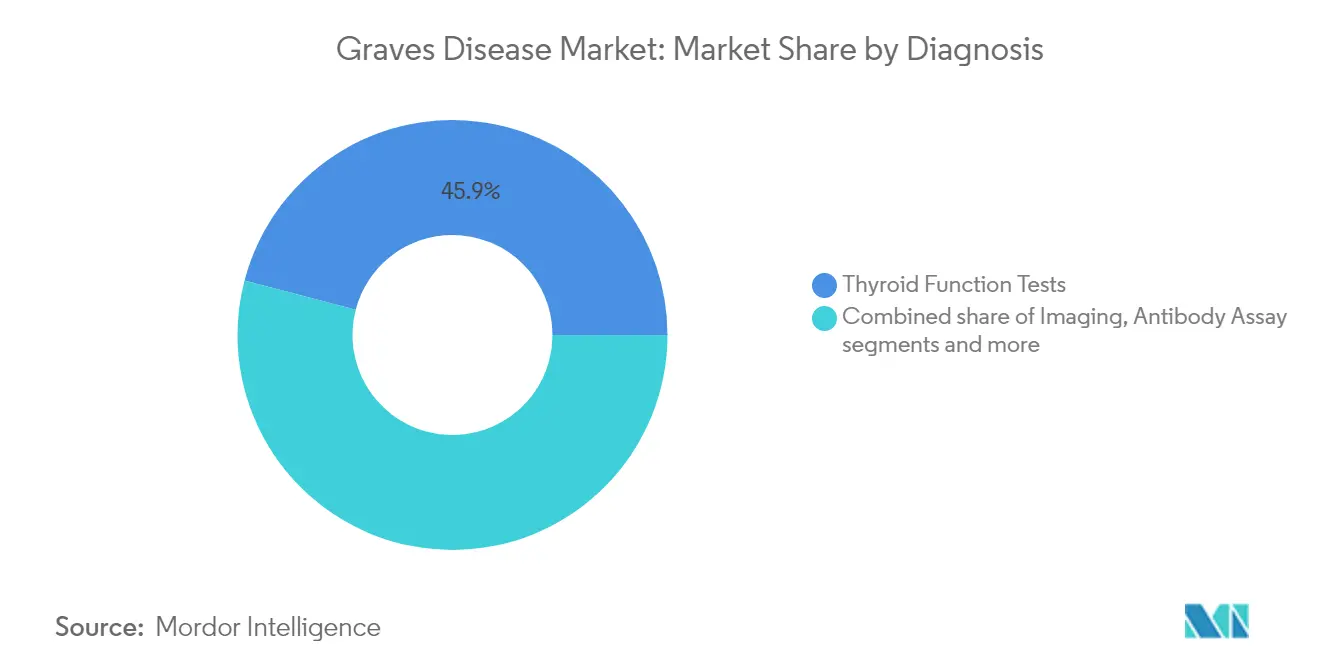
Precision Biomarkers Redefine Clinical DecisionsTSH testing retained 45.92% revenue share in 2025, underscoring its status as the primary screening and monitoring tool. Nevertheless, antibody assays are expanding at a 6.15% CAGR as clinicians correlate thyroid-stimulating immunoglobulin (TSI) titers with disease activity and treatment response. The Graves’ disease market accommodates both modalities, yet rapid-turnaround antibody panels increasingly guide personalized treatment strategies. Free T4 and T3 measurements remain indispensable for dose titration, while thyroglobulin tests monitor post-surgical recurrence. Vitamin D status testing is gaining ground after studies linked serum levels of 20-29 ng/mL to better TRAb remission rates.
A growing installed base of point-of-care platforms moves initial diagnostics closer to primary care, accelerating specialist referrals and expanding the overall Graves’ Disease market. High-resolution ultrasound and fusion imaging add structural insights that drive selection between radioiodine, surgery, or emerging ablation techniques. The Graves’ disease industry benefits from bundled diagnostic-and-therapy offerings that streamline patient journeys and raise provider margins. As reimbursement policies catch up with the clinical value of antibody profiling, labs capable of multiplex testing are poised to capture additional share.

By Treatment:
Immunotherapies Challenge Traditional DominanceAnti-thyroid drugs still control 40.78% revenue in 2025, reflecting easy oral dosing and low acquisition cost. Yet FcRn inhibitors and IGF-1R antagonists are set to generate the fastest 6.02% CAGR through 2031, rewriting the value hierarchy of the Graves’ disease market. Batoclimab’s 76% response rate in refractory patients illustrates the step-change in efficacy. Radioactive iodine therapy persists, favored for elderly cardiovascular-risk cohorts, while supply uncertainty limits aggressive expansion plans.
Thermal ablation offers a minimally invasive bridge option, achieving 96% one-year euthyroid status with minimal complications. Surgical thyroidectomy remains the definitive approach for large goiters, malignancy suspicion, or treatment failure, with updated nerve-monitoring protocols reducing complication rates. Overall, diversified modality availability protects patient choice, though the revenue mix skews increasingly toward biologics as payers embrace long-term cost avoidance.
By Patient Age Group:
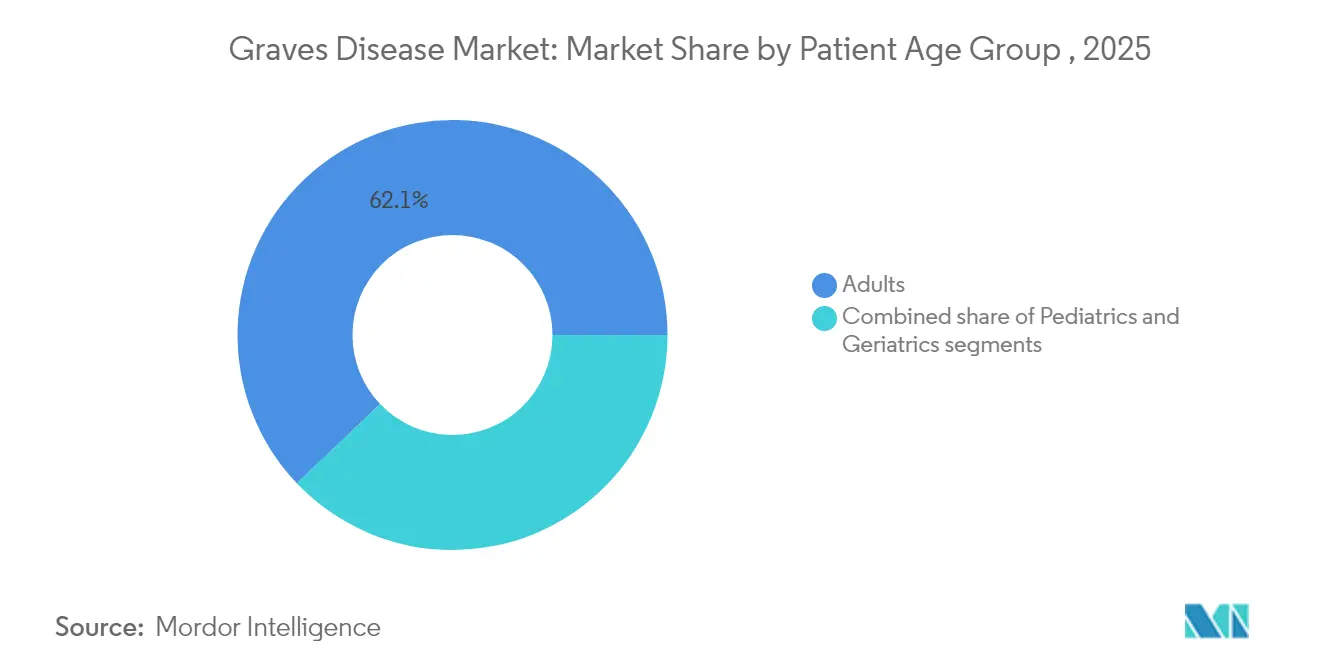
Pediatric Surge Drives InnovationAdults aged 18-64 accounted for 62.12% of the Graves’ disease market share in 2025, reflecting peak disease onset years. This cohort benefits from the broadest trial access and drives data generation that shapes global guidelines. Pediatric cases, growing at 6.21% CAGR, introduce distinct needs around growth, development, and medication adherence. Lower remission rates and higher symptom severity push clinicians to explore immunotherapies and tailored dosing regimens for children . Neonatal thyrotoxicosis cases underscore the need for maternal antibody screening, influencing obstetric protocols.
Geriatric patients often favor radioiodine due to comorbidity concerns, while novel biologics may reduce polypharmacy and improve quality of life. The Graves’ disease market therefore spans three age-defined sub-segments, each requiring unique safety data, formulation options, and support programs. Such complexity fuels investment in age-stratified research and opens secondary opportunities in caregiver support services.
By End-User:
Digital Transformation Reshapes DistributionHospitals captured 51.76% of the Graves’ disease market size in 2025 through integrated diagnostic, surgical, and nuclear medicine capabilities. Multidisciplinary endocrinology boards improve complex-case outcomes and facilitate early enrollment in investigational biologic trials. Specialty clinics leverage telemedicine to maintain frequent contact during dose titration, improving adherence and capturing ancillary lab revenues. Online and retail pharmacies, expanding at 6.44% CAGR, benefit from the oral formulation trend and direct-to-consumer prescription fulfillment models.
Ambulatory surgical centers gain traction for outpatient thermal ablation and minimally invasive thyroidectomy, offering lower overhead and faster scheduling. Digital consultation platforms such as Medii link primary-care physicians to specialists, accelerating referral cycles and raising diagnostic throughput. As therapy delivery decentralizes, manufacturers craft omnichannel distribution strategies to safeguard patient experience and ensure temperature-controlled biologic integrity. The Graves’ disease industry thus illustrates how virtual care and retail pharmacy growth can coexist with traditional hospital dominance.
Geography Analysis
North America Graves Disease Market
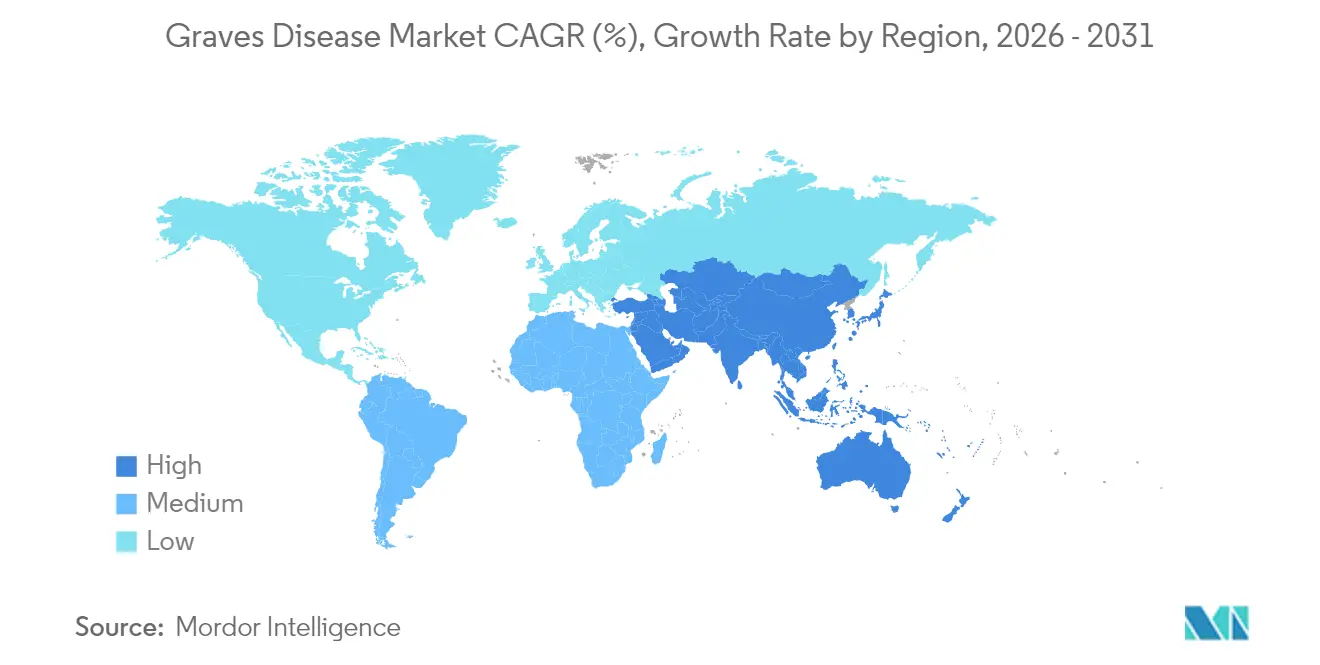
North America maintains leadership with 39.42% revenue share in 2025, supported by advanced infrastructure, deep clinical-trial networks, and payer readiness to cover first-in-class biologics. The region’s 4.38% CAGR through 2031 stems from steady transition to value-based care and widening access to precision diagnostics. United States providers increasingly bundle imaging, antibody panels, and endocrine consultations into integrated care pathways, reducing time to treatment initiation. High private-equity investment in specialty clinics further accelerates patient throughput and data generation for real-world evidence studies.
APAC, EMEA and South America Graves Disease Market
Asia Pacific is the fastest-growing arena for the Graves’ disease market, rising at 5.98% CAGR. Government health-insurance expansions in China and India drive higher diagnostic uptake, while Japan pioneers outpatient ablation protocols that shorten wait times and lower total cost of care. Domestic biotech investment unlocks localized manufacturing for biosimilar antibodies, boosting affordability. Telemedicine adoption soars in rural provinces, enabling specialists to manage complex cases remotely. Overall, demographic scale, economic growth, and policy reform combine to make Asia Pacific the primary engine of incremental revenue. Europe contributes a balanced 4.59% CAGR, anchored by public healthcare systems that emphasize cost-effectiveness and early technology assessment. Harmonized regulatory frameworks streamline biologic approvals, while well-established thyroid research consortia facilitate multicenter trials. Middle East & Africa achieves a 5.61% CAGR as infrastructure upgrades and rising chronic-disease awareness improve specialist access. Regional centers of excellence in the Gulf export know-how across North Africa, while pharmaceutical manufacturers target tender contracts to secure formulary placements. South America advances at 5.05% CAGR, with Brazil’s universal health system adding antibody testing reimbursement and Argentina incentivizing domestic levothyroxine production to cut import dependence. Collectively, these developments widen the global footprint of the Graves’ disease market and encourage multinational players to localize both manufacturing and medical education programs.
Regulatory Landscape
Graves disease regulation spans established endocrine care standards and product-specific approvals that increasingly center on targeted immunology and high-cost biologics, alongside longstanding controls for antithyroid drugs, surgery, and radioactive iodine (including radiation-safety and medical-waste handling requirements at treating facilities). In June 2026, the US FDA approved Viridian Therapeutics' Lumvoa (veligrotug-vvze) for thyroid eye disease (TED) across both active and chronic disease, reinforcing an IGF-1R class pathway tied to Graves-associated complications and tightening payer and formulary scrutiny around labeled populations and treatment duration.
In Europe, the EMA and the European Commission expanded the targeted-biologic footprint for TED in 2025 through EU-wide marketing authorization for Tepezza (teprotumumab). This provided an additional benchmark for benefit-risk expectations, pharmacovigilance, and real-world data generation in autoimmune thyroid-related disease. Separately, guideline bodies shape standard-of-care and clinical trial design, including the American Thyroid Association publishing updated 2026 guidance for thyroid disease in preconception, pregnancy, and postpartum, which affects therapeutic choices and monitoring pathways for Graves disease in these subpopulations.
Value Chain Analysis
The Graves disease value chain begins with patient presentation in primary care, OB-GYN, ophthalmology, and endocrinology settings, followed by laboratory diagnostics (TSH, free T4/T3, and TRAb/TSI antibody assays) and imaging (ultrasound and advanced thyroid imaging where available). Treatment selection then drives downstream services, including generic antithyroid drug dispensing through retail and online pharmacies, hospital-based nuclear medicine workflows for I-131 administration, and operating-room and device supply for thyroidectomy and thermal ablation. For biologics used in Graves-associated thyroid eye disease, the chain also depends on specialty distribution plus cold-chain logistics.
The innovation-led portion of the chain is increasingly defined by clinical development and manufacturing scale-up for complex biologics and novel modalities, with global trial execution and specialty-channel distribution as critical handoffs. Pipeline activity across multiple sponsors reflects this shift, including Immunovant initiating a global Phase 2b study of IMVT-1402 in 2025, Sanofi initiating a Phase 2 trial of rilzabrutinib in 2025, and argenx moving into Phase 3 evaluation of subcutaneous efgartigimod in 2026. These programs increase the importance of CDMO capacity, device and combination-product readiness for subcutaneous delivery formats, and specialty pharmacy services that support adherence, benefits verification, and patient support in higher-acuity autoimmune care.
Competitive Landscape
The Graves’ disease market exhibits moderate concentration as legacy endocrine franchises face challenger biologics. Amgen’s USD 27.8 billion acquisition of Horizon Therapeutics underscores the strategic value of rare-disease assets, with Tepezza sales reaching USD 488 million per quarter. Immunovant, Viridian Therapeutics, and Argenx deploy platform technologies that aim to treat multiple autoimmune indications, leveraging economies of scale in development and manufacturing. Traditional players such as Abbott and Novartis protect share through broad hormone-replacement portfolios and diagnostic integration but must now adjust commercial models to compete with targeted immunotherapies.
Strategic alliances proliferate as companies spread risk and access complementary capabilities. Bristol Myers Squibb teamed with Repertoire Immune Medicines in a USD 1.8 billion deal to develop tolerizing vaccines. Novartis acquired Calypso Biotech for IL-15 modulators, while Pfizer joined Flagship Pioneering to access next-generation autoimmune discovery engines. Delivery-technology differentiation has become critical: Argenx extended its Halozyme partnership, securing subcutaneous Enhanze technology to improve patient convenience and extend patent life. Competitive intensity spurs investment in patient-support programs and digital adherence tools, raising the service bar for new entrants.
Supply-chain resilience and manufacturing scale play growing roles in competitive positioning. Companies able to guarantee biologic supply during I-131 shortages gain prescribing preference. Meanwhile, real-world outcomes registries enable manufacturers to negotiate outcomes-based contracts that align price with long-term disease-control metrics. Across these dynamics, the Graves’ disease market rewards innovation, platform breadth, and customer-centric delivery models that de-risk the choice for physicians and payers alike.
Graves Disease Industry Leaders
-
Abbott Laboratories
-
F. Hoffmann-La Roche AG
-
Horizon Therapeutics plc
-
Immunovant Inc.
-
Pfizer Inc.
- *Disclaimer: Major Players sorted in no particular order
Graves Disease Market Companies Covered in this Report
- Abbott Laboratories
- Argenx SE
- bioMérieux
- Cardinal Health
- Eisai
- Roche
- GE HealthCare Technologies Inc.
- Horizon Therapeutics
- Immunovant Inc.
- Institute of Isotopes
- Jubilant Group
- Medtronic
- Merck
- Nanjing Nuoyuan Medical Devices Co.
- Novartis
- Pfizer
- Sun Pharmaceuticals Industries
- Teijin Pharma Ltd.
- Thermo Fisher Scientific
- Viridian Therapeutics Inc.
Market Opportunities and Future Outlook
A central whitespace in Graves disease management is durable disease modification that reduces relapse and long-term medication burden versus symptom control with antithyroid drugs, radioactive iodine, and surgery. The 2026 FDA approval of Viridian Therapeutics' Lumvoa (veligrotug-vvze) for thyroid eye disease across both active and chronic disease broadens access to targeted IGF-1R antagonism within Graves-associated complications. That creates a clearer commercial and clinical pathway for companies building adjacent autoimmune thyroid portfolios and companion services such as specialty pharmacy support, infusion-to-subcutaneous transitions, and outcomes tracking.
Another opportunity is expanding targeted immunology directly in Graves disease beyond orbitopathy, supported by late-stage and mid-stage trial activity that adds optionality across mechanisms and routes of administration. In June 2026, Biohaven initiated a pivotal Phase 3 program for BHV-1300 in Graves disease, and argenx initiated Phase 3 evaluation of subcutaneous efgartigimod in adult Graves disease. Together, these developments point to more scalable, outpatient-friendly biologic delivery. They also create room for diagnostics and care-pathway optimization, including broader TRAb/TSI testing adoption to select patients for targeted approaches and standardize monitoring across hospital and specialty clinic networks.
Recent Industry Developments in Graves Disease Market
- June 2026: Biohaven advanced BHV-1300 into a Phase 3 pivotal trial in Graves disease and enrolled the first patient. The program applies an extracellular protein degrader approach aimed at reducing pathogenic autoantibody activity, widening the competitive set beyond antibodies and small molecules. Progression into a pivotal study raises the bar for trial operations, endpoint selection, and future manufacturing readiness in this indication.
- May 2025: Viridian Therapeutics received US FDA Breakthrough Therapy Designation for veligrotug for thyroid eye disease. The designation accelerated regulatory engagement and validated IGF-1R antagonism in Graves-associated complications. It also strengthened the pathway toward near-term commercialization, while intensifying competitive pressure on incumbent TED biologics and raising payer focus on comparative differentiation.
- December 2024: Viridian Therapeutics reported positive topline results from the THRIVE-2 Phase 3 trial of veligrotug in chronic thyroid eye disease. The readout supported clinically meaningful improvements in proptosis and diplopia with high trial completion, reinforcing confidence in the program's risk-benefit profile. This dataset helped shape positioning for chronic TED, a segment that historically had fewer targeted options.
Graves Disease Market Report Scope and Research Methodology
Market Definition and Coverage
For this study, we size the Graves disease market as the revenue linked to diagnosing and managing Graves disease. This includes condition-specific diagnostic testing, drug therapy, radioactive iodine therapy, and procedure-related hospital services.
Scope exclusions: We exclude purely cosmetic eye procedures for Graves orbitopathy and broad thyroid panels ordered for conditions not linked to Graves disease.
Segments Covered in This Report
- By Treatment
- Anti-Thyroid Medication
- Radioactive Iodine Therapy
- Surgery (Thyroidectomy)
- Targeted Immunotherapies & Biologics
- Ultrasound-Guided Thermal Ablation
- By Patient Age Group
- Pediatrics
- Adults
- Geriatrics
- By End-User
- Hospitals
- Specialty Clinics & Endocrinology Centers
- Ambulatory Surgical Centers
- Retail & Online Pharmacies
- By Geography
- North America
- United States
- Canada
- Mexico
- Europe
- Germany
- United Kingdom
- France
- Italy
- Spain
- Rest of Europe
- Asia-Pacific
- China
- India
- Japan
- Australia
- South Korea
- Rest of Asia-Pacific
- Middle East and Africa
- GCC
- South Africa
- Rest of Middle East and Africa
- South America
- Brazil
- Argentina
- Rest of South America
- North America
Data Sources, Market Sizing, and Validation
Desk Research
Desk research starts with the epidemiology and care pathway, so the model is grounded in real patient flow rather than just product sales. We referenced public sources such as the World Health Organization, the US CDC, the NIH and National Library of Medicine for clinical context, and OECD health statistics for system-level utilization and spend signals.
To translate medical practice into a market number, we also reviewed guidance and clinical evidence published in peer-reviewed endocrinology journals, along with materials from endocrine associations. We used hospital pricing references and payer coverage notes where available to estimate unit economics across diagnostics, drugs, radioactive iodine, and procedure-related services. Company filings, investor presentations, and reputable press releases were reviewed to understand which therapies are actively marketed and how access is evolving. A paid subscription for company financials and news was used to sanity-check revenue direction and timing. These examples are not exhaustive, and many other public sources were reviewed to collect inputs, validate assumptions, and clarify data gaps.
Primary Interviews and Surveys
Primary work was used to pressure test the desk view of diagnosis rates, treatment choices, and the typical sequence of care, especially where published data is fragmented. We spoke with clinicians, hospital pharmacists, diagnostic stakeholders, and payer-facing roles across the Americas, EMEA, and APAC so regional practice patterns and access differences could be reflected in the final assumptions.
Distribution of primary research fieldwork respondents
| Company type | Respondent position | Region |
|---|---|---|
| Top tier: 30% | CXOs: 19% | APAC: 45% |
| Mid tier: 48% | Functional/Unit leaders: 35% | EMEA: 31% |
| Smaller Players: 22% | Managers: 46% | Americas: 24% |
Market-Sizing & Forecasting
The core sizing starts with a top-down build that converts the Graves disease patient pool into expected diagnosis and treatment volumes using prevalence, diagnosis rates, and the share of patients moving into first-line and subsequent options. These volumes are paired with typical testing frequencies, for example TSH and TRAb usage in suspected and monitored cases, and then mapped to a treatment mix across antithyroid drugs, radioactive iodine, and surgery. Average spend per care setting is then converted into USD revenue totals.
After the first pass, results are cross-checked using selective bottom-up approximations, such as sampling key therapy classes and estimating revenue from dose patterns and patient counts. We then validate channel and hospital assumptions using checks on procedure intensity and test ordering behavior. Where inputs were missing by country, proxy logic was applied using healthcare access indicators, endocrinology visit rates, and reimbursement consistency, and those assumptions were then re-tested with expert feedback.
For forecasting, scenario analysis was applied because the market is sensitive to changes in diagnosis intensity, biologic adoption timing, and the pace of switching from chronic drug management to definitive therapy. Growth rates by variable were reviewed with respondents, and the final outlook was kept consistent with expected clinical practice changes and access realities rather than a single aggressive uptake curve.
Data Validation & Update Cycle
Validation is done in layers so that obvious mismatches are caught early and smaller issues do not accumulate into a large swing. We compare model outputs against independent signals such as treated patient counts, test ordering intensity, and procedure mix, and outliers are reviewed by another analyst before sign-off.
If a large variance appears, the assumption is traced back to the driver, for example diagnosis rate, treatment mix, or unit spend, and relevant primary contacts are re-approached for confirmation. Reports are refreshed annually, with interim updates when material events occur such as guideline changes, new therapy launches, or major reimbursement shifts. Before delivery, a final pass is done to ensure the latest public updates and interview learnings are reflected in the numbers.
Mordor Intelligence's Graves Disease Market Size Compared Against Other Published Estimates
Published Graves disease market numbers often do not match because the counted revenue pool is not the same, and the year used for pricing and currency conversion can also differ. The biggest splits show up when one estimate tracks only drug sales, another mixes Graves orbitopathy services, or a study changes the treated population definition without stating the underlying care steps.
Some external estimates stay narrower by counting only antithyroid medicines and leaving out diagnostic testing, radioactive iodine therapy, and procedure-related hospital services. In Mordor Intelligence, revenue is counted only when it is tied to Graves-specific diagnosis and management, and cosmetic eye procedures plus non-specific thyroid panels are kept outside the total so spend reflects the actual care pathway.
Benchmark comparison
| Source | Market Size | Gaps in Research Methodology |
|---|---|---|
| Mordor Intelligence | USD 2.26 B (2026) | |
| Global Consultancy A | USD 0.68 B (2025) | Focuses on treatment revenue only and typically excludes diagnostic testing and hospital service components, which pulls the total down even if patient counts are similar. |
| Industry Publisher B | USD 2.00 B (2025) | Often reports a therapy-only view with simplified adoption assumptions and limited detail on test frequency, procedure mix, and currency timing, which can shift the year-to-year market level. |
The spread across sources mainly comes from what gets counted as Graves disease revenue and how treatment pathways are translated into dollars. By tying volumes to the diagnosed and treated pool, and then pairing them with clear unit spend logic for tests, drugs, and procedures, we end up with a number that is easier to replicate and audit during decision making.
Key Questions Answered in the Report
Why are targeted immunotherapies gaining momentum in Graves’ disease treatment?
Targeted immunotherapies such as FcRn and IGF-1R antagonists directly modulate the autoimmune pathways driving the disorder, leading to higher response rates and the possibility of discontinuing conventional antithyroid drugs for many patients.
How is radioactive iodine therapy adapting to cardiovascular-risk considerations?
Clinicians now prefer I-131 for patients with arrhythmias or other heart conditions because it normalizes thyroid hormone levels more rapidly than prolonged drug therapy, thereby lowering cardiac complications.
Clinicians now prefer I-131 for patients with arrhythmias or other heart conditions because it normalizes thyroid hormone levels more rapidly than prolonged drug therapy, thereby lowering cardiac complications.
Tests for TSI and TRAb are increasingly used to gauge disease activity, forecast treatment response, and help physicians decide whether a patient is a candidate for immunotherapy or more traditional options.
Why is the pediatric segment attracting heightened R&D attention?
Children show rising incidence rates, especially post-COVID-19, and often experience more severe symptoms, prompting the search for therapies that balance efficacy with long-term growth and developmental safety.
How are supply chain issues influencing therapy choices?
Intermittent shortages of I-131 isotopes encourage providers to explore non-radioactive alternatives such as thermal ablation and biologics, reshaping the therapeutic mix offered by hospitals and specialty centers.
What digital trends are reshaping medication access for Graves’ disease patients?
Growth in online and retail pharmacies, alongside telemedicine platforms, improves adherence and enables remote dose adjustments, making long-term management more convenient for both patients and clinicians.