
Market Overview
| Study Period | 2021 - 2031 |
|---|---|
| Market Size (2026) | USD 168.40 Billion |
| Market Size (2031) | USD 220.60 Billion |
| Growth Rate (2026 - 2031) | 5.50 % |
| Fastest Growing Market | Africa |
| Largest Market | Asia Pacific |
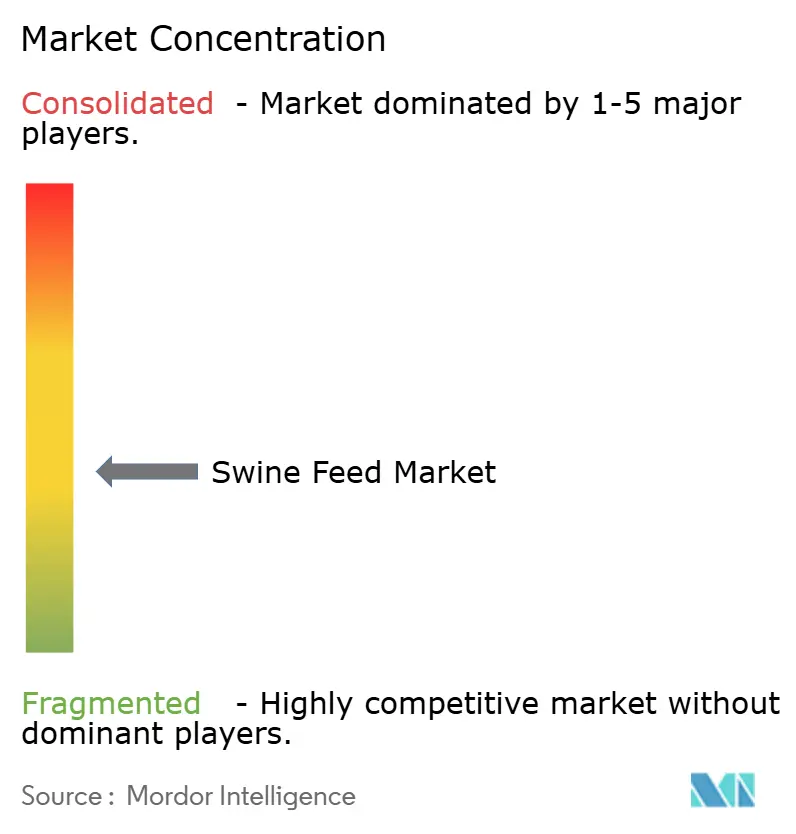
| Market Concentration | Low |
Major Players *Disclaimer: Major Players sorted in no particular order Image © Mordor Intelligence. Reuse requires attribution under CC BY 4.0. | |
Swine Feed Market Analysis by Mordor Intelligence
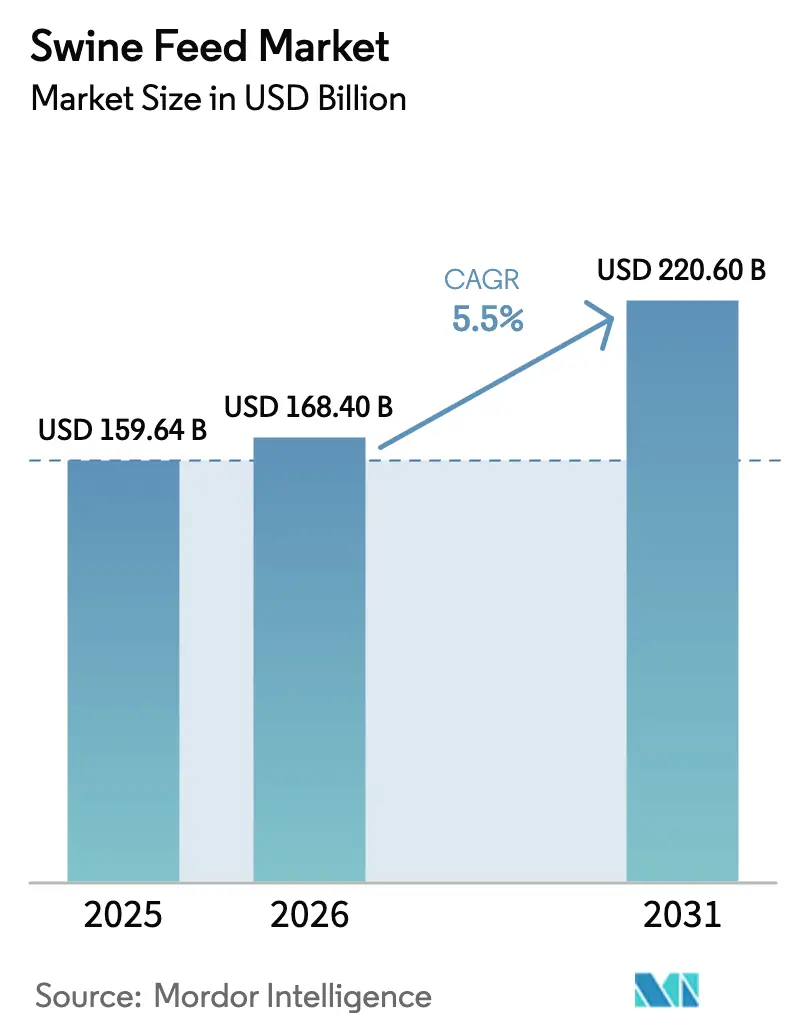
The swine feed market size is projected to expand from USD 159.64 billion in 2025 and USD 168.40 billion in 2026 to USD 220.60 billion by 2031, registering a CAGR of 5.50% between 2026 to 2031. Rising feed-conversion efficiency targets now guide profitability more than sheer tonnage expansion, while bans on antibiotic growth promoters encourage the use of enzyme-probiotic blends that maintain weight-gain levels without regulatory friction. African Swine Fever (ASF) containment rules embed biosecurity costs into ingredient sourcing and mill hygiene, adding working capital pressure while opening premium niches for mills that certify pathogen-free formulas. Precision feeding, mycotoxin control mandates, and carbon labeling by packers drive technology investment forward, pulling demand for feed with specialty additives and real-time feed formulation software. The swine feed market benefits from China’s post-ASF herd rebuild, Brazil’s soy-meal cost advantage, and Southeast Asia’s farm industrialization, but it also faces margin risk from corn-soy volatility and tight vitamin A and E supply.
Key Report Takeaways
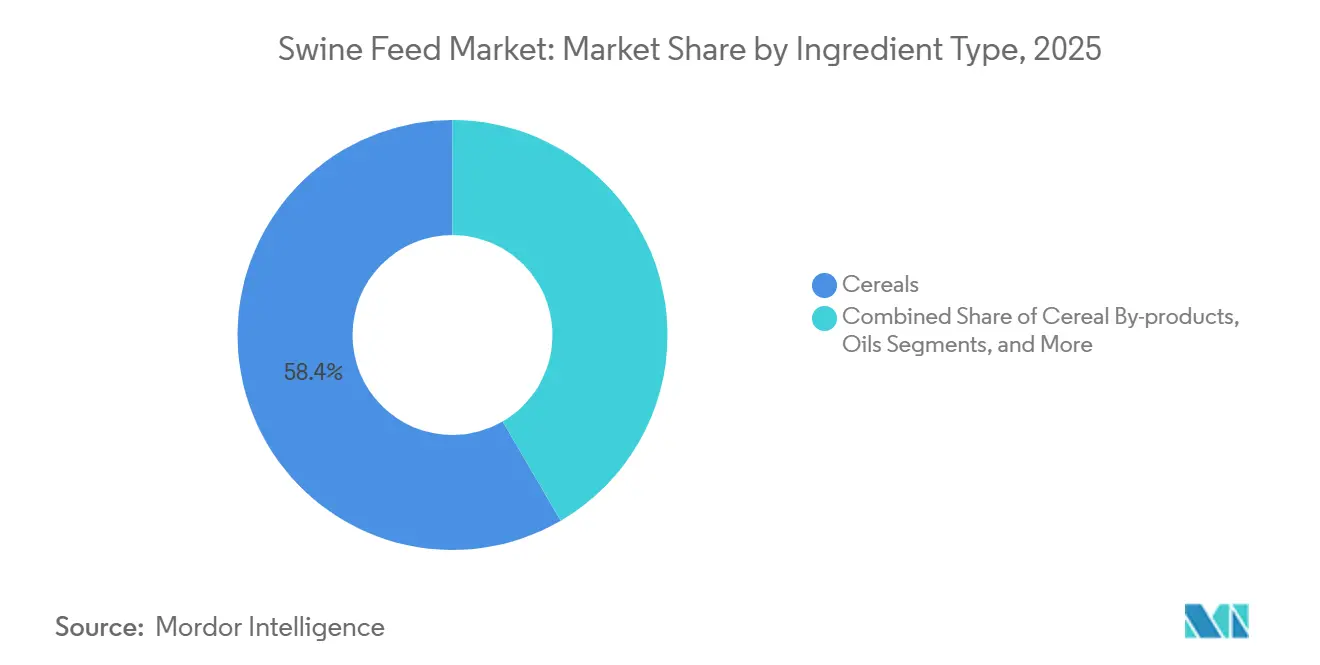
- By ingredient type, cereals captured 58.4% of the swine feed market share in 2025, while supplements are forecast to expand at a 6.5% CAGR through 2031.
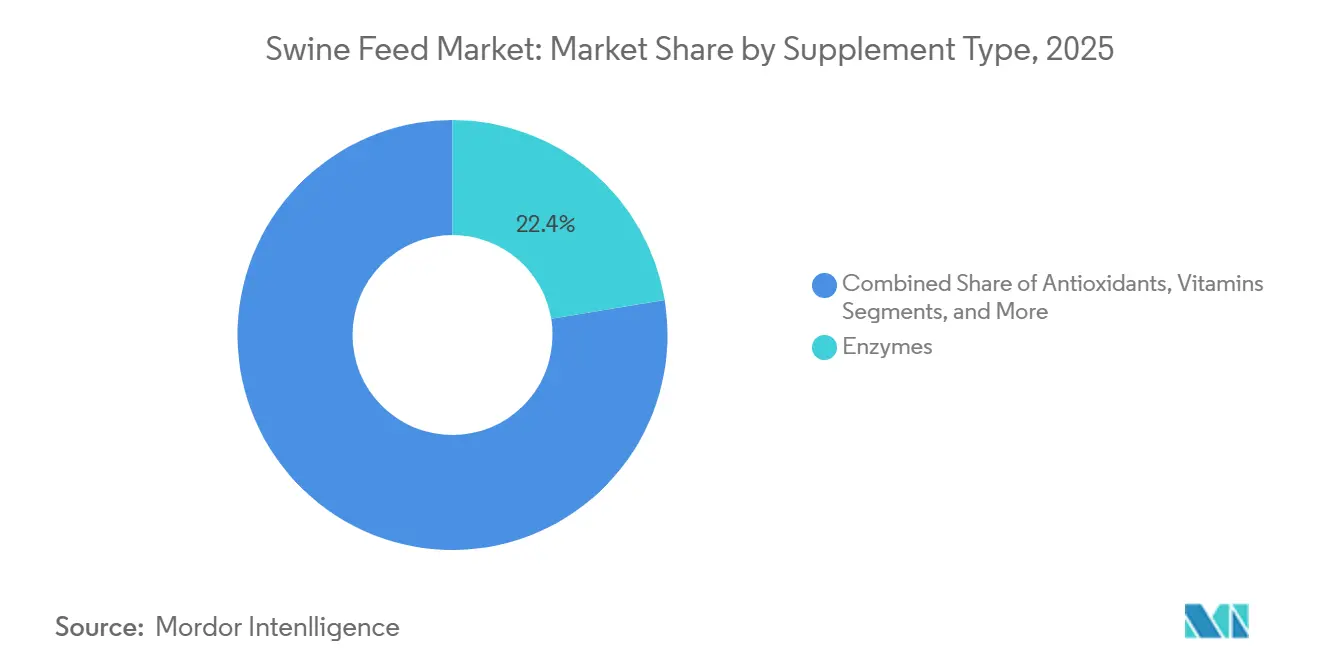
- By supplement type, enzymes led the swine feed market, accounting for a 22.4% value share in 2025 and are anticipated to record the fastest growth, at an 8.9% CAGR, through 2031.
- By life stage, finisher feeds accounted for 38.0% of the swine feed market size in 2025, and starter feeds advance at a 7.2% CAGR through 2031.
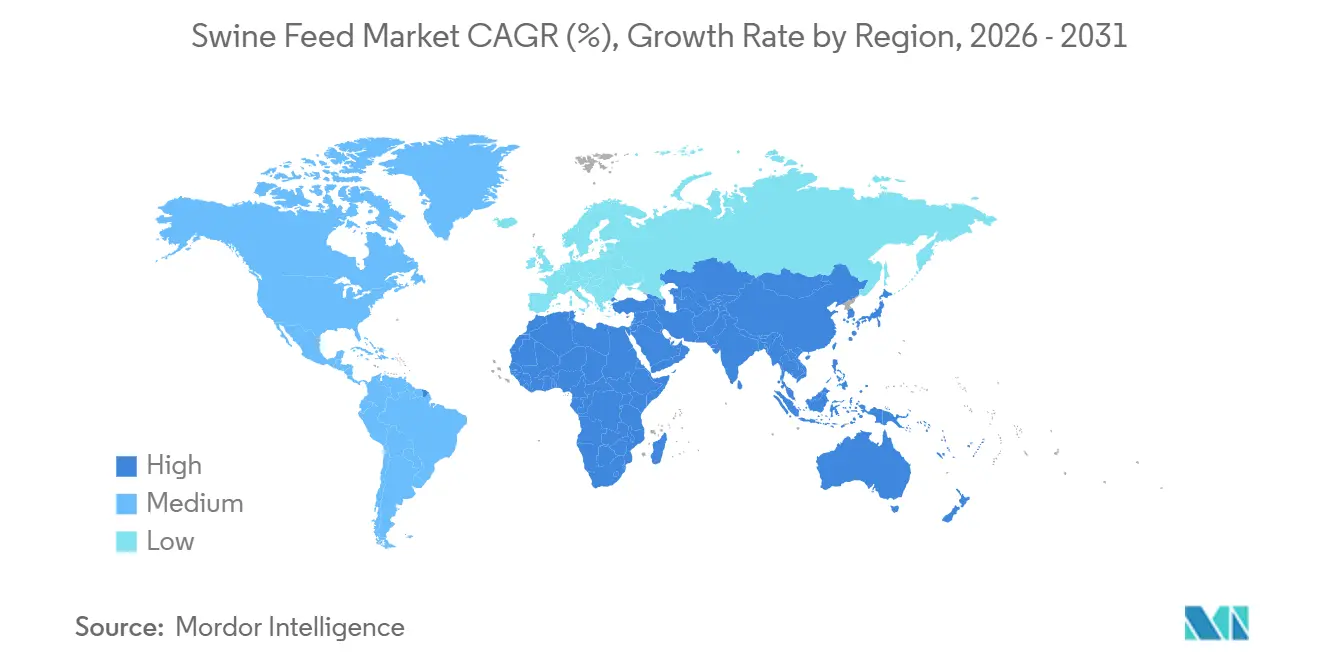
- By geography, the Asia-Pacific region held a 46.3% share in 2025, while Africa is forecast to grow at the fastest rate, with a 6.9% CAGR through 2026-2031.
Note: Market size and forecast figures in this report are generated using Mordor Intelligence’s proprietary estimation framework, updated with the latest available data and insights as of January 2026.
Global Swine Feed Market Trends and Insights
Drivers Impact Analysis*
| Driver | (~) % Impact on CAGR Forecast | Geographic Relevance | Impact Timeline |
|---|---|---|---|
| Feed Enzyme Cost-Efficiency Gains | +0.8% | Asia-Pacific core, North America, South America | Medium term (2–4 years) |
| Mycotoxin Risk-Management Mandates | +0.6% | Global, strongest in Asia-Pacific and South America | Short term (≤2 years) |
| Precision-Feeding Sensor Adoption | +0.5% | North America and Europe Lead | Long term (≥4 years) |
| Antibiotic-Reduction Policies | +0.9% | Europe and North America, expanding Asia-Pacific | Short term (≤2 years) |
| ASF-Related Biosecurity Investments | +0.7% | Asia-Pacific dominant | Medium term (2–4 years) |
| Carbon-Footprint Labelling by Packers | +0.4% | Europe and North America, emerging Asia-Pacific | Long term (≥4 years) |
| Source: Mordor Intelligence | |||
Feed Enzyme Cost-Efficiency Gains
Multi-enzyme cocktails deliver a 4–6% feed-conversion improvement, equivalent to a USD 8–12 extra margin per finished pig when corn exceeds USD 6 per bushel. Chinese provinces mandated digestible-phosphorus thresholds in 2025, effectively requiring phytase in every registered formula and accelerating adoption beyond 35% penetration levels in the Asia-Pacific region. Liquid-stable formats that withstand 85 °C pelleting now dominate launches, eliminating a former technical barrier. European feed mills report that enzyme ROI surpasses that of synthetic amino acids in grower diets, shifting their focus toward customized blends that match specific grain matrices. Enzyme suppliers leverage patent-protected thermostable variants, improving competitive insulation and nudging margins toward 25% gross levels compared with 8–10% for commodity supplements. The technology cascade arrives in South America as integrators seek cost buffers against crop-price swings, sustaining steady demand over the medium term. Regulatory acceptance remains favorable because enzymes lower total phosphorus excretion, supporting environmental compliance targets.
Mycotoxin Risk-Management Mandates
Aflatoxin and deoxynivalenol losses reached USD 6–18 billion globally in 2025, prompting regulators to tighten thresholds[1]. The European Union has reduced aflatoxin B1 limits in complete feed to 15 µg/kg, while China imposes random mycotoxin checks at provincial borders, creating operational disruptions for importers that once relied solely on port clearance. Toxin-binder volumes, encompassing yeast cell wall extracts and aluminosilicate clays, expanded 12% year on year, outpacing overall additive growth. The ISO 17025 laboratory capacity remains a constraint; a seven- to ten-day turnaround during harvest peaks forces mills to choose between accepting price premiums on certified grain and incurring rejection risk. Mills achieving verified low-mycotoxin status command 3–5% price premiums in export-oriented nursery feeds. Equipment vendors market on-site rapid test kits, but their higher false-negative rates keep full-lab confirmation in demand. Government subsidies for rapid-test technology in Vietnam and the Philippines could shorten detection times and broaden adoption among smallholders across the Asia-Pacific region.
Precision-Feeding Sensor Adoption
IoT-enabled silos, RFID-tagged bins, and cloud algorithms cut feed waste by 2–4% and labor by 15–20%, but the upfront costs of USD 50,000 to 150,000 per site deter sub-1,000-head farms that dominate Asia-Pacific. Payback shortened to 18 months during the Q2 2024 corn rally, triggering pilot uptake among U.S. integrators. Leasing models and data-as-a-service contracts now lower capital hurdles, yet patchy rural connectivity in inland China and Vietnam limits scale. Aggregated consumption data enables mills to shift from static nutrient specifications to dynamic least-cost formulas, resulting in an additional 1–2% feed-conversion gain and a 50-basis-point increase in mill margins. Sensor suppliers partner with genetic houses to harmonize feed curves with genotype-specific growth patterns, adding value in premium pork programs. Over the long term, LIDAR-based optical sensors could potentially replace weigh scales entirely, improving accuracy and reducing maintenance costs.
Antibiotic-Reduction Policies
Fully enforced bans in the European Union and phased U.S. state regulations removed 8,000–10,000 metric tons of in-feed antimicrobials annually by 2025. Substitutes such as organic acids, probiotics, and bacteriophages are projected to witness growth during the forecast period. However, they increase the overall feed cost per pig by USD 3–5. Export-oriented producers in Brazil and Denmark accept the premium to access antibiotic-free labels, which fetch 20% higher retail prices in Japan and South Korea. Regulatory ambiguity persists in China, where ionophores remain legal, creating a price wedge against imports. The European Food Safety Authority’s 2025 “essential use” guidance blurred the distinction between prophylactic and therapeutic definitions, complicating cross-border feed trade. Despite cost premiums, integrators see a marketing dividend, restaurant chains now require antibiotic-free pork for flagship menus, locking in demand for compliant feed. Probiotic suppliers in Thailand and Canada are ramping up capacity to hedge geopolitical risks and address tight Chinese vitamin supply chains.
Restraints Impact Analysis*
| Restraint | (~) % Impact on CAGR Forecast | Geographic Relevance | Impact Timeline |
|---|---|---|---|
| Volatile Corn and Soybean Prices | -1.2% | Global, acute in import-dependent Asia-Pacific, Middle East and Africa | Short term (≤ 2 years) |
| Tight Vitamin A and E Supply Chains | -0.6% | Global, highest exposure in Asia-Pacific | Medium term (2-4 years) |
| Regulatory Delays on Novel Additives | -0.4% | Europe primary, secondary North America | Long term (≥ 4 years) |
| Consumer Pushback on Gene-Edited Grain | -0.3% | Europe and selected Asia-Pacific markets | Long term (≥ 4 years) |
| Source: Mordor Intelligence | |||
Volatile Corn and Soybean Prices
Corn and soybean meal account for 65–75% of total formulation cost, leaving miller margins hostage to crop shocks. The 2024 South American drought cut Brazilian soy exports by 18 million metric tons, pushing prices to USD 16.80 per bushel, the highest since 2012, and compressing gross margins from 8–10% to 4–6%. Only integrators with origination arms hedged through crush margins, regional mills lacking futures access absorbed spot-price spikes or lost customers. Climate volatility raises U.S. corn yield variance from 6% in 2000–2010 to 9% in 2015–2025, eroding forward curve reliability. Smaller Asian mills often buy on a hand-to-mouth basis, suffering immediate hit rates when prices surge. Alternative proteins, such as insect meal, offer a partial hedge, yet remain 30–50% more expensive than soybean meal. Governments in Mexico and Indonesia reactivated talks on feed-grain subsidies in 2025, highlighting the political dimensions of commodity price swings. Until scalable substitutes emerge, raw-material risk remains the single largest drag on the CAGR of the swine feed market.
Tight Vitamin A and E Supply Chains
Vitamin A and E output is concentrated in three Chinese complexes that supply over 70% of global volume. A 2024 environmental shutdown in Zhejiang reduced capacity by 30% for five months, driving vitamin A prices from USD 18/kg to USD 72/kg. Premix producers rationed the supply from mills, lowered inclusion to the bare minimum nutritional limits, risking mild performance loss. European mills began dual-sourcing with DSM’s Scottish facilities, despite incurring 15–20% cost premiums, to hedge against the risk from China. Most feed mills increased safety-stock days from 30 to 90, tying up working capital. The complexity of chemical intermediates and stringent approvals deters new entrants, so supply concentration is anticipated to remain until at least 2028. Investment announcements by BASF and Zhejiang NHU to add 8,000 metric tons of capacity by 2027 may ease pressure, yet any delay could replay 2024’s spike[2].
*Our forecasts treat driver/restraint impacts as directional, not additive. The impact forecasts reflect baseline growth, mix effects, and variable interactions.
Segment Analysis
By Ingredient Type: Cereals Leads Volume While Supplements Drive Value
Cereals maintained 58.4% ingredient share in 2025, reflecting their dual role in supplying energy and pellet structure. Wheat and barley account for 35–40% of European inclusion, where local agronomics prevail, while corn dominates at over 70% in the Americas and Asia. The supplements sub-segment, although accounting for a low share of the value, is growing at a 6.5% CAGR as nutritionists seek marginal feed-conversion improvements that outweigh the additional cost.
Oilseed meals hold a major share but face gradual substitution by insect meal and single-cell proteins as cost parity nears. Cereal by-products serve as cost buffers when grain prices peak. However, variable nutrient profiles and higher mycotoxin susceptibility limit their share of the premium formula. Oils and fats, though small by tonnage, earn attention for both energy density and dust suppression, while molasses grows significantly on the back of liquid-feeding systems. High-margin niche items, such as encapsulated butyrate, medium-chain triglycerides, and oregano extract, cluster in the “Others” basket and deliver gross margins of 30–50%, compared with commodity additions’ 5–8%.

By Supplement Type: Enzymes Lead Functional Additive Surge
Enzymes accounted for 22.4% of the supplement value in 2025 and are projected to grow at an 8.9% CAGR through 2031, outpacing vitamins and amino acids. Phytase reached near-universal adoption by 2024. However, the uptake of carbohydrases and proteases remains limited in the Asia-Pacific region due to cost concerns and distribution inertia. Thermostable variants launched in 2025 survive 90 °C pelleting, removing a major performance barrier. Vitamins claim a high share and mirror overall feed tonnage growth. Synthetic amino acids expand slowly but steadily, as environmental emissions caps push mills to reduce total crude protein.
The share of antibiotics dropped to very low levels after bans, with alternatives such as organic acids and essential oils rising. Acidifiers offer low-cost pH control in nursery diets. Probiotics and botanicals gain favor under “natural” positioning, even though field efficacy remains context-dependent. Mills increasingly demand tailor-made premixes that bundle multiple functionals for specific grain matrices, shifting competition from single ingredients to solution packages.
By Life Stage: Starter Feeds Command Premium Pricing
In 2025, finisher feeds accounted for 38.0% of the swine feed market, emphasizing cost efficiency through the inclusion of by-products to reduce ingredient expenses. The selective use of premium additives in this segment is projected to result in a limited growth rate. Suppliers in this category typically focus on promoting carcass quality and feed-cost savings to meet the stringent return-on-investment (ROI) requirements of large-scale operations. In contrast, starter feeds represent a high-value segment, growing at a 7.2% CAGR through 2031. This segment captured a significant value share, with prices ranging from USD 600 to USD 800 per metric ton.
Growth in the starter feed category is driven by the inclusion of specialty ingredients, such as spray-dried plasma and high-grade whey, which are crucial for gut development and achieving an average daily gain of over 450 grams within the first 35 days. The grower feed segment further supports the market by balancing amino acid precision and mineral chelates to optimize lean growth. Additionally, strategic investments in the piglet sector are reinforced by the European Union's regulatory approval of specialized additives, effective from 2025. These advancements in early-stage nutrition reduce the total market cycle by 7–10 days, enhancing facility throughput and profitability.
Geography Analysis
In 2025, the Asia-Pacific region accounted for 46.3% of the global swine feed market value, primarily driven by China's hog inventory of approximately 400–450 million heads, which represents around half of the global swine population[3]. The market in this region is projected to grow at a significant CAGR through 2031, driven by increasing industrialization in countries such as Vietnam and the Philippines. In these nations, smallholder farms are transitioning to commercial operations with 500–1,000 heads, creating demand for consistent, formulated feeds instead of farm-mixed rations. China's recovery from African Swine Fever (ASF) emphasizes biosecurity and traceability, benefiting large-scale integrators such as New Hope Group and Guangdong Haid Group, while reducing reliance on village-level mills. However, regional fragmentation remains a challenge. For instance, Indonesia and Thailand continue to have on-farm mixing rates of 30–40%, which limits the penetration of commercial feed. This presents opportunities for suppliers who can effectively demonstrate return on investment (ROI) to cost-conscious producers.
South America emerges as one of the fastest-growing regions, propelled by Brazil's expanding pork export capacity and Argentina's regulatory modernization in animal nutrition. Brazil's pork exports are projected to increase by 6.6% in 2025 to 1.22 million tons, necessitating domestic feed production growth of approximately 2.8% to support breeding operations and meet both domestic and international demand. The region's competitive advantage stems from low labor and feed costs, with companies like GSI targeting nearly USD 200 million in revenue within five years through the expansion of automation solutions for post-harvest systems.
Africa accounts for a good share of the market but is growing at a 6.9% CAGR, the fastest globally, driven by urbanization, increasing pork demand, and gradual improvements in infrastructure. South Africa and Nigeria contribute 60% of the region's feed demand. While urbanization and rising protein consumption support growth, challenges such as unreliable electricity, inadequate cold chain systems, and fragmented distribution networks restrict commercial feed penetration to 25–30% of total swine production. However, as logistics improve, significant opportunities for expansion remain.
Regulatory Landscape
Feed safety and additive rules keep tightening, and implementation is moving toward digitized, auditable workflows. In Canada, the Feeds Regulations 2024 entered into force on July 3, 2024, and the mandatory transition period ended on June 17, 2025, which has pushed commercial mills and premixers to formalize preventive control plans, labeling practices, and documented traceability. For larger pork chains, these controls are increasingly treated as procurement prerequisites.
In Brazil, MAPA is modernizing oversight of animal feed facilities and plant registration procedures, including updated registration processes and documentation expectations for animal food and feed facilities. Separately, the European Commission adopted a Food and Feed Safety Simplification Package on December 16, 2025, proposing targeted changes across multiple acts, including feed additive authorizations and border controls. At the international standards level, ISO 22002-6:2025 reinforces prerequisite programs for feed production as a practical anchor for GMP and HACCP-style controls, aligning with the broader shift toward third-party verifiable systems such as ISO 22000 and GMP+ requirements referenced by multinational buyers.
Competitive Landscape
The top five players, including Cargill Incorporated, New Hope Group Co. Ltd., Charoen Pokphand Foods PCL, Archer Daniels Midland Company, and Nutreco N.V., accounted for a significant value share in 2025, indicating market fragmentation due to high transportation costs that favor local millers. Market leaders differentiate themselves through vertical integration and digital services, utilizing technologies such as automated near-infrared scanning and least-cost formulation software, which improve margins by 2–3%.
Patent filings for thermostable enzymes and encapsulated botanicals increased by 40% between 2022 and 2025, with Cargill Incorporated and DSM-Firmenich leading these advancements. Certification to ISO 22000 and GMP+ has become a standard requirement for supply agreements with multinational packers. Emerging players in insect protein (Ynsect, Protix) and single-cell protein (Calysta, Unibio) face cost challenges but maintain niche roles in starter feeds. Consolidation pressures are growing as packers demand Scope 3 carbon data only large mills can afford comprehensive full-chain audits, driving mergers in Europe and China.
Major companies are engaging in acquisitions, with Cargill Incorporated successfully bidding to acquire 100% of the shares of the Brazilian company Mig-Plus. This move aims to enhance their production capacity and expand market share in the emerging South American market. This deal is likely to be closed in the year 2026 which will impact the South American market significantly.
Swine Feed Industry Leaders
-
Cargill Incorporated
-
New Hope Group Co. Ltd.
-
Nutreco N.V. (SHV Holdings)
-
Charoen Pokphand Foods PCL (CP Group)
-
Archer Daniels Midland Company
- *Disclaimer: Major Players sorted in no particular order
Market Opportunities and Future Outlook
Sustainability accounting and more harmonized approaches to feed footprinting are creating room for mills and additive suppliers to package performance claims alongside auditable environmental data. In May 2026, GMP+ International launched the MI5.7 Feed Life Cycle Assessment (LCA) standard, and EU reporting obligations such as the Corporate Sustainability Reporting Directive move sustainability disclosure from optional to mandatory for many feed-adjacent businesses in 2026. That shift raises demand for formulation support, ingredient documentation, and verified Scope 3-ready datasets. Adoption examples, including CCPA Group using dsm-firmenich's Sustell platform (July 2026) to run carbon footprint assessments for livestock producers, also point to a pathway for mills that can support both compliant feed and measurable footprint reporting for packers using carbon labeling.
Functional and early-life nutrition continues to command attention in the context of antibiotic-reduction policies, biosecurity costs, and the economics of feed-conversion efficiency. Alltech's June 2026 introduction of Olerix, a phytogenic blend positioned around feed efficiency and gut health, fits the market's ongoing premiumization in nursery and starter rations, where validated improvements in intake, gut function, and resilience can translate into shorter time-to-market and lower medication reliance. At the same time, digital and automated formulation are becoming operational requirements as mills manage corn-soy volatility, mycotoxin control needs, and customer expectations for consistent outcomes. This supports opportunities for suppliers that can provide integrated additive programs along with real-time formulation software and rapid-test workflows, rather than selling single ingredients.
Recent Industry Developments
- June 2026: Trouw Nutrition (Nutreco) announced the launch of Milkiwean ActiBar, a piglet training bar designed to stimulate pre-weaning feed intake and support smoother feed transition. The launch reinforces the shift toward specialized early-life nutrition tools that help farms protect performance while operating under tighter antibiotic-reduction policies and higher biosecurity costs.
- August 2025: Cargill opened a new feed facility in Granger, Washington with 120,000 tons of capacity serving multiple species, including swine. The added regional capacity strengthens localized supply resilience and supports integrators seeking more consistent feed availability and quality control closer to production clusters.
- June 2024: Canada brought the Feeds Regulations 2024 into force (July 3, 2024), starting a transition period that ended in mid-2025 for mandatory compliance. The rule change increased the importance of documented preventive controls, traceability, and compliant labeling, raising the compliance bar for imported ingredients and finished swine feed marketed in Canada.
Research Methodology Framework and Report Scope
Market Definition and Coverage
For this study, the swine feed market is defined as the value of commercially produced feed (complete feed and concentrates) sold for pigs across key life stages, reported in USD at the point of sale by feed suppliers and channels.
Scope exclusions: We exclude pet pig diets, equipment and farm tools, and standalone animal health products that are not sold as feed.
Segmentation Overview
- By Ingredient Type
- Cereals
- Cereal By-products
- Oilseed Meals
- Oil
- Molasses
- Supplements
- Others
- By Supplement Type
- Vitamins
- Amino Acids
- Antibiotics
- Enzymes
- Anti-oxidants
- Acidifiers
- Probiotics and Prebiotics
- Others
- By Life Stage
- Starter
- Grower
- Finisher
- By Geography
- North America
- United States
- Canada
- Mexico
- Rest of North America
- South America
- Brazil
- Argentina
- Rest of South America
- Europe
- Germany
- Spain
- Russia
- Rest of Europe
- Asia-Pacific
- China
- Vietnam
- Philippines
- Rest of Asia-Pacific
- Middle East
- Saudi Arabia
- Iran
- Rest of Middle East
- Africa
- South Africa
- Nigeria
- Rest of Africa
- North America
Data Sources, Market Sizing, and Validation
Desk Research
Desk work starts with building the demand and supply context for pig production and industrial feed use. We lean on public statistics and technical references such as FAOSTAT for livestock and feed crop context, USDA reports for grain and oilseed balances, the International Grains Council for trade signals, and official customs portals for import and export snapshots of key feed inputs.
To shape assumptions that convert animal production into feed value, we also review peer reviewed animal nutrition journals and trade association publications on compound feed. We then incorporate credible press coverage where it clearly links to outbreaks or policy changes, such as antibiotic restrictions. Company annual reports, investor decks, and product sheets are used to sanity check product mix, pricing direction, and capacity mentions, and a paid subscription for company financials plus a patent database are used selectively to validate scale and innovation trends. This list is illustrative only, and many other sources were also consulted for data collection, cross checks, and clarification.
Primary Interviews and Surveys
Primary work is used to test the desk assumptions that usually drive the total value, especially feed inclusion rates, typical feed conversion shifts, and pricing behavior across pellets, mash, and crumbles. We spoke with feed formulators, distributors, integrators, and procurement and technical teams across major producing regions so that gaps in public data could be closed and the final model could be reconciled with how pricing and formulation are handled on the ground.
Distribution of primary research fieldwork respondents
| Company type | Respondent position | Region |
|---|---|---|
| Top tier: 37% | CXOs: 14% | APAC: 45% |
| Mid tier: 44% | Functional/Unit leaders: 39% | EMEA: 37% |
| Smaller Players: 19% | Managers: 47% | Americas: 18% |
Market-Sizing & Forecasting
Sizing is built using a top-down logic where pig population, production intensity, and feed use per head are translated into compound feed demand, then priced using region appropriate feed price benchmarks and observed mix across life stages. After the first pass, we corroborate totals with selective bottom-up approximations, such as sampled supplier revenue splits, channel checks on average selling prices, and volume to value conversions using typical formulation costs.
A few inputs that meaningfully shape the model (illustrative) include pig inventory and slaughter trends, feed conversion and productivity moves, cereal and oilseed meal price direction, additive penetration (for example enzymes and amino acids), and the split between pellets and mash. Where local volume data is thin, gaps are handled by using nearby-country benchmarks adjusted for production structure and import reliance, and then rechecked through interviews.
For forecasting, scenario analysis is used so that disease events, policy changes on antibiotic use, and grain price cycles can be reflected without forcing one single path. The final forecast path is selected only after expert feedback aligns on the most likely production recovery pace and the expected feed pricing trajectory.
Data Validation & Update Cycle
Model outputs are tested against independent signals such as pig production indicators, feed ingredient trade direction, and major price movements, and then variances are investigated before numbers are finalized. If a region shows a jump that cannot be explained by animal counts, formulation shifts, or price changes, the assumption set is revisited and targeted re contacts are triggered.
Before sign-off, the work is reviewed in steps so that calculations, unit conversions, and currency handling are checked consistently across regions. The report is refreshed annually, and interim updates are made when material events occur, followed by a final pre-delivery pass so clients receive the most current view.
Mordor Intelligence's Global Swine Feed Market Market Sizing Compared With Other Published Estimates
It is common to see different market sizes for swine feed because sources do not always count the same product basket, they use different years for pricing, and they apply different rules on what qualifies as commercial feed versus on-farm feeding. Forecast endpoints also vary because some outlooks assume quick herd rebuilding, while others assume longer disease and margin pressure.
In our checks, the biggest gaps typically come from whether only finished compound feed is valued or whether adjacent categories like premixes and broader feed additives are folded into the same total, and from how currency conversion timing is treated in regions with volatile exchange rates. Another driver is refresh cadence, since feed prices can swing within a year and move the value even if tonnage is steady, which makes older estimates drift away from current conditions.
Benchmark comparison
| Source | Market Size | Gaps in Research Methodology |
|---|---|---|
| Mordor Intelligence | USD 159.64 B (2025) | |
| Industry Publisher A | USD 127.20 B (2025) | Uses a narrower product and valuation lens that emphasizes feed additives and selected feed types, which can undercount full compound feed value where integrated producers source feed internally or price differently by region. |
| Global Consultancy B | USD 136.78 B (2025) | Applies a different type and regional weighting, and its price progression assumptions for pellets versus mash can shift the value in years where ingredient costs move sharply. |
The spread in the table is mainly explained by what is counted as feed value and how quickly pricing assumptions are refreshed across regions, especially when cereal and oilseed meal costs change. When commercial compound feed is separated from adjacent additive-only definitions and the pricing is rechecked with current signals, the total becomes easier to trace and repeat. This approach is used in the Mordor Intelligence estimate.
Key Questions Answered in the Report
How large will the swine feed market be by 2031?
It is projected to reach USD 220.60 billion, growing at a 5.50% CAGR from 2026.
Which region is expanding fastest in the swine feed market?
Africa leads with a 6.9% CAGR through 2031 as urbanization boosts pork consumption and commercial feed penetration rises.
Why are enzymes gaining share in swine rations?
Multi-enzyme blends improve feed-conversion ratios by 4–6%, delivering USD 8–12 extra margin per pig when grain prices run high.
How is African swine fever (ASF) influencing global feed demand?
ASF outbreaks can depress regional feed consumption for up to 18 months, cutting hog feed output by millions of tons in affected areas.
What is driving starter-feed premium pricing?
Specialized ingredients such as spray-dried plasma and encapsulated acids support piglet gut development, cutting market cycle by up to 10 days.