
Quillaia Extract Market Size and Share
Market Overview
| Study Period | 2021 - 2031 |
|---|---|
| Market Size (2026) | USD 349.85 Million |
| Market Size (2031) | USD 516.29 Million |
| Growth Rate (2026 - 2031) | 8.10 % |
| Fastest Growing Market | Asia Pacific |
| Largest Market | Europe |
| Market Concentration | Medium |
Major Players *Disclaimer: Major Players sorted in no particular order Image © Mordor Intelligence. Reuse requires attribution under CC BY 4.0. | |
Quillaia Extract Market Analysis by Mordor Intelligence
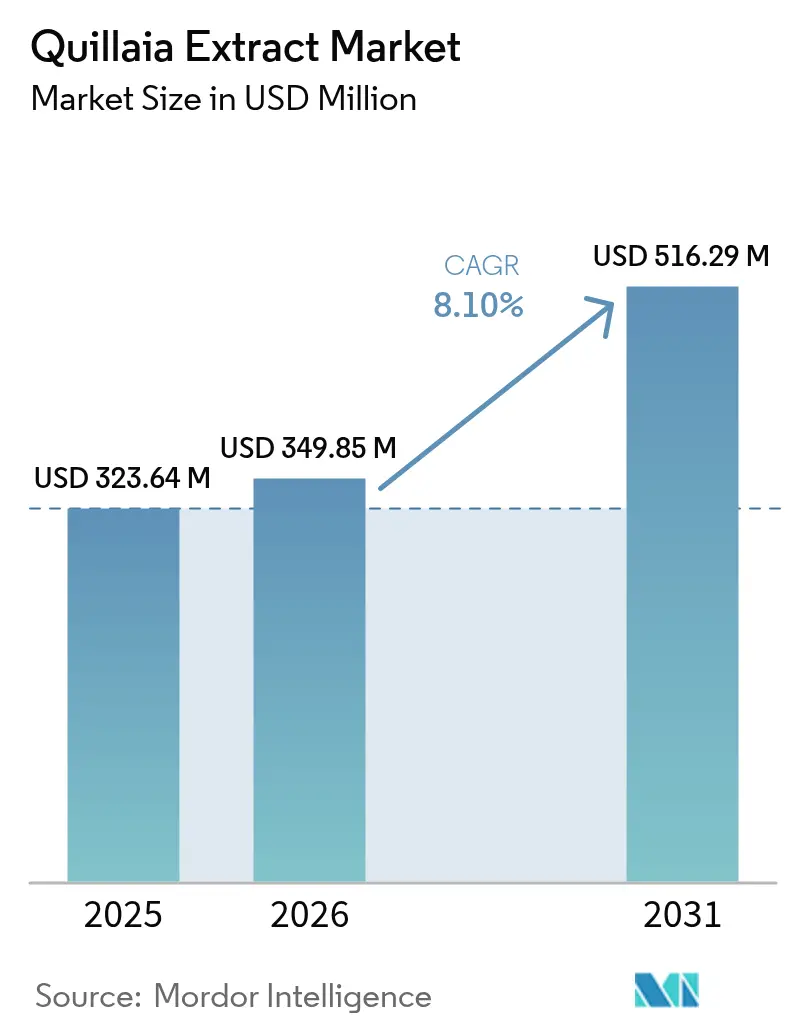
The quillaia extract market size is expected to grow from USD 323.64 million in 2025 to USD 349.85 million in 2026 and is forecast to reach USD 516.29 million by 2031 at 8.10% CAGR over 2026-2031. The market growth is driven by increasing consumer demand for natural and plant-based ingredients. Quillaia extract, obtained from the Quillaia Saponaria tree bark, serves as an effective emulsifier and foaming agent while offering health benefits. The extract finds increasing applications in natural beverages, veterinary vaccines, and personal care products, supported by clean-label initiatives and sustainable sourcing practices. Improved extraction methods and greater understanding of the extract's functional properties, particularly its role as a natural surfactant and immunostimulant, are driving market adoption. The market shows strong growth potential due to expanding regulatory approvals and ongoing research into new applications. As consumers become more aware of product safety and environmental concerns, manufacturers are increasingly turning to Quillaia extract as a favored natural alternative. This move towards sustainability is poised to amplify market demand across diverse industries.
Key Report Takeaways
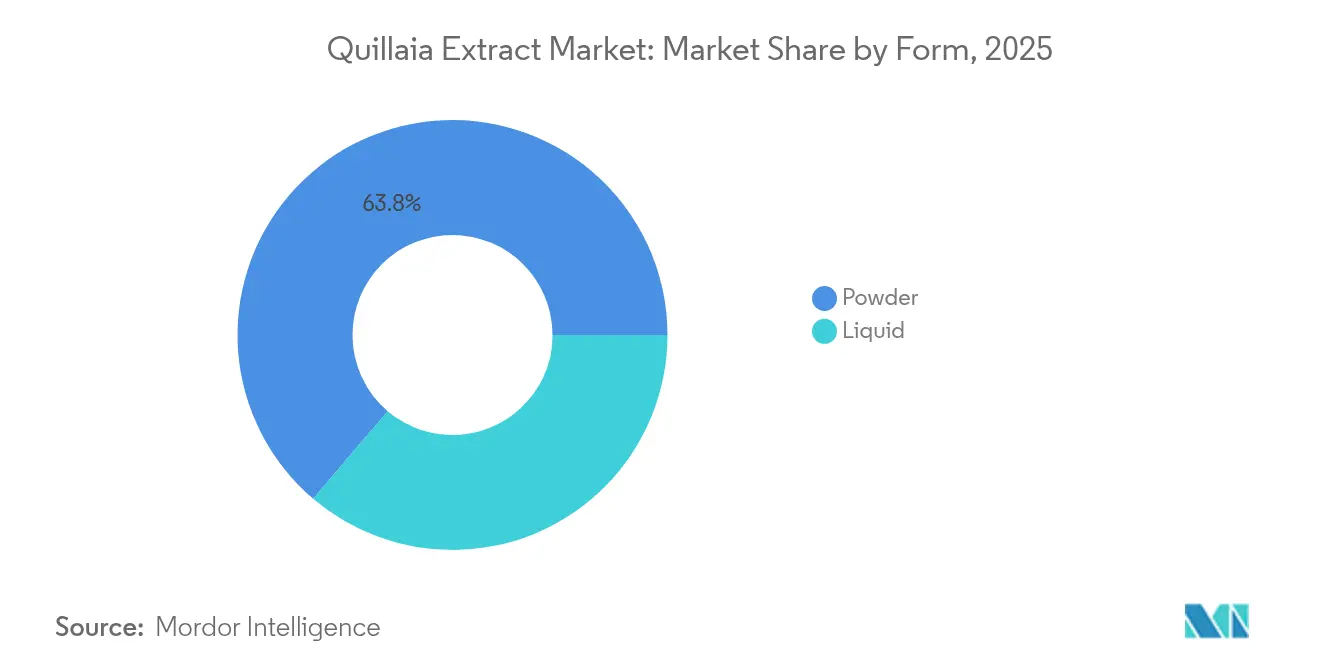
- By form, powder captured 63.78% of the market share in 2025, whereas liquid is projected to expand at a 9.41% CAGR through 2031.
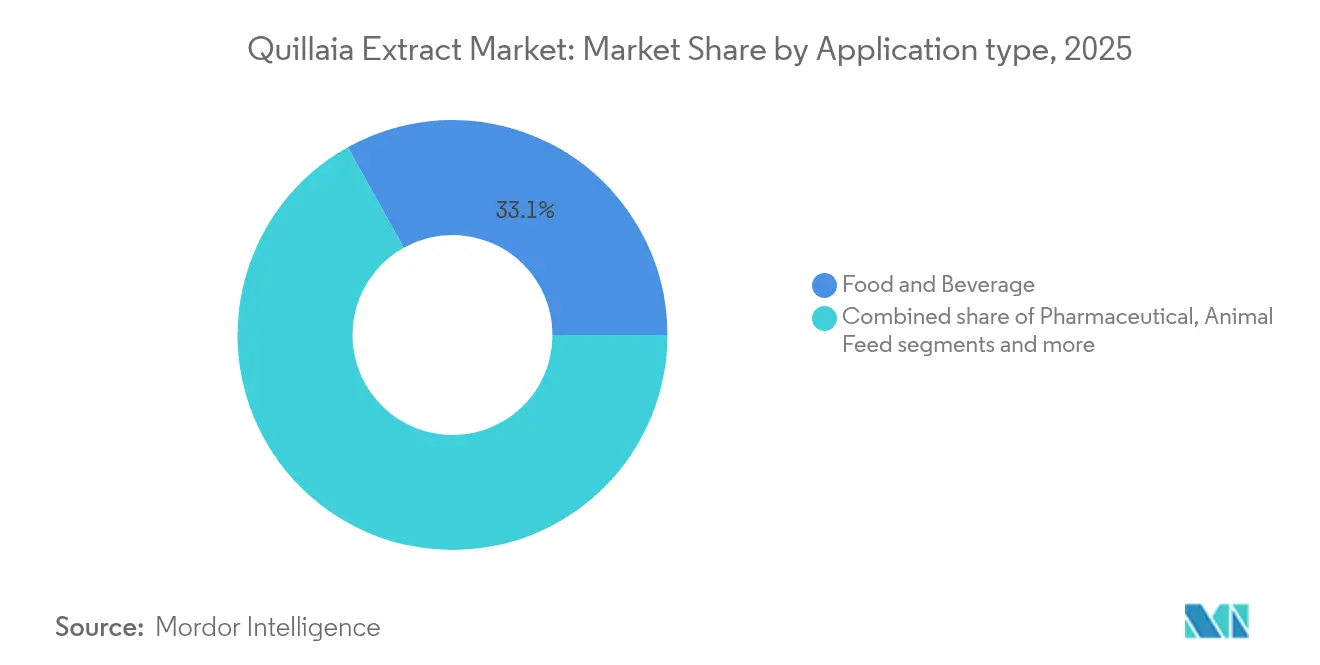
- By application, food and beverages held a 33.10% revenue share in 2025, while pharmaceuticals are advancing at a 9.25% CAGR through 2031.
- By geography, Europe led with a 34.05% share of the market in 2025, and Asia-Pacific is forecast to post a 9.60% CAGR to 2031.
Note: Market size and forecast figures in this report are generated using Mordor Intelligence’s proprietary estimation framework, updated with the latest available data and insights as of 2026.
Market Trends and Insights
Drivers Impact Analysis of Quillaia Extract Market*
| Driver | (~) % Impact on CAGR Forecast | Geographic Relevance | Impact Timeline |
|---|---|---|---|
| Rising Demand for Natural Foaming Agents in Beverages | +2.1% | Global, with concentration in North America and Europe | Medium term (2-4 years) |
| Increasing Usage in Animal Health and Feed Additives | +1.8% | Global, particularly strong in Europe and North America | Long term (≥ 4 years) |
| Growing Consumer Shift Towards Plant-Based Ingredients | +1.9% | Global, led by developed markets | Medium term (2-4 years) |
| Utilization in Herbal and Functional Beverages | +1.4% | Asia-Pacific core, spill-over to global markets | Short term (≤ 2 years) |
| Sustainable Extraction Methods | +0.9% | Global, with early adoption in Europe | Long term (≥ 4 years) |
| Inclusion in Organic and Clean-Label Cosmetics | +0.7% | North America and Europe, expanding to Asia-Pacific | Medium term (2-4 years) |
| Source: Mordor Intelligence | |||
Rising Demand for Natural Foaming Agents in Beverages
The beverage industry is experiencing a significant transition toward natural foaming agents, primarily driven by consumer demand for reduced synthetic additives and regulatory requirements. The molecular composition of quillaia extract, comprising both hydrophobic and hydrophilic elements, demonstrates superior foam stability characteristics compared to synthetic alternatives such as Tween 80, establishing its position as the preferred component in premium beverage formulations. Major beverage manufacturers are implementing product reformulations to comply with clean-label requirements, resulting in increased utilization of quillaja saponins in beverages. The Food and Drug Administration (FDA) approval of natural color additives, specifically butterfly pea flower extract in May 2025, demonstrates enhanced regulatory acceptance of natural ingredients, facilitating the implementation of quillaia extract [1].
Increasing Usage in Animal Health and Feed Additives
The animal feed market shows significant growth potential for quillaia extract applications, driven by the industry's shift from antibiotic growth promoters to natural performance enhancers that support animal health and ensure food safety. The European Food Safety Authority's approval of Magni-PHI (containing 85% Quillaja saponaria and 15% Yucca schidigera) for all poultry species in July 2024 confirms the safety and efficacy of quillaja-based feed additives at a concentration of 250 mg/kg in complete feed, as per EFSA. This regulatory approval creates market opportunities, as the global animal feed industry increases its focus on natural additives that improve nutrient absorption and immune function [2]. The antimicrobial properties of Quillaja saponins against pathogenic fungi and their function as natural immunoadjuvants make them effective solutions for livestock production, especially in regions with strict antibiotic regulations.
Growing Consumer Shift Towards Plant-Based Ingredients
The growing consumer preference for plant-based ingredients reflects broader societal shifts toward health consciousness and environmental sustainability. This has generated consistent demand for natural alternatives across food, pharmaceutical, and cosmetic applications. The trend extends beyond simple ingredient substitution to encompass lifestyle choices that emphasize product transparency, traceability, and environmental responsibility. The Asia-Pacific functional beverage market is experiencing significant growth in botanical ingredients, driven by regulatory frameworks in Japan and Australia that facilitate the use of natural additives. Givaudan's 2024 market analysis indicates increased customer demand for health and wellness products, along with greater consumer emphasis on sustainability and transparent sourcing. The plant-derived saponins market benefits from these developments, as quillaja extract's proven safety profile and multiple functional properties make it a viable alternative to synthetic ingredients in cosmetic and personal care applications. Natural biosurfactants provide environmental advantages while maintaining performance standards.
Utilization in Herbal and Functional Beverages
The functional beverage market's growth opportunities for quillaia extract, as manufacturers incorporate natural ingredients to enhance product functionality and appeal. Functional beverages represent a significant portion of the functional foods market in the Asia-Pacific region, with China, Japan, and Southeast Asian countries being major contributors. The cultural acceptance of traditional herbal medicine in these regions supports the adoption of natural ingredients. In October 2024, China's State Administration for Market Regulation expanded health food registration to include beverages, chocolates, and candies, creating additional applications for natural ingredients like quillaia extract. The functional beverage market's focus on natural and botanical ingredients, including adaptogens and plant-based components, aligns with wellness trends, making quillaia extract suitable for new functional beverage formulations.
Restraints Impact Analysis of Quillaia Extract Market*
| Restraint | (~) % Impact on CAGR Forecast | Geographic Relevance | Impact Timeline |
|---|---|---|---|
| Potential Toxicity at High Concentrations | -1.3% | Global, particularly stringent in Europe | Short term (≤ 2 years) |
| Regulatory Restrictions on Maximum Usage Limits | -1.1% | Europe and North America, expanding globally | Medium term (2-4 years) |
| Limited Awareness in Emerging Economies | -0.8% | Asia-Pacific and South America developing markets | Long term (≥ 4 years) |
| Complex and Costly Extraction Processes | -0.9% | Global, impacting supply chain economics | Medium term (2-4 years) |
| Source: Mordor Intelligence | |||
Potential Toxicity at High Concentrations
The hemolytic properties of quillaia extract at high concentrations present formulation challenges that limit its applications and necessitate precise dosage control across product categories. The European Food Safety Authority's re-evaluation established safety parameters, including an acceptable daily intake of 3 mg saponins per kg body weight per day, derived from a NOAEL of 1,500 mg/kg body weight per day in toxicological studies [3]. In pharmaceutical applications, QS-21's membranolytic effects require precise formulation to balance vaccine adjuvant benefits against potential adverse reactions. Due to these membranolytic concerns in parenteral use, alternative delivery systems such as Immunostimulating Complexes (ISCOMs) have been developed to maintain adjuvant properties without hemolytic activity at standard doses. These technical requirements drive advancements in formulation and delivery systems, benefiting companies that can develop safer and effective quillaia-based products.
Regulatory Restrictions on Maximum Usage Limits
The regulatory frameworks governing quillaia extract usage create compliance challenges that affect market growth and increase formulation costs across applications. The FDA's GRAS status includes specific usage limitations, while the European Union's E 999 designation requires adherence to maximum permitted levels across food categories. The European Food Safety Authority's (EFSA) recommendation to revise EU specifications for E 999, focusing on saponin content characterization, indicates evolving regulatory requirements that demand ongoing compliance monitoring and potential product reformulation. These restrictions affect high-volume applications where meeting functional requirements within permitted usage levels presents technical and economic challenges. The complex regulatory environment creates market entry barriers for smaller manufacturers, while established companies with regulatory expertise and resources can better manage compliance requirements across multiple jurisdictions.
*Our forecasts treat driver/restraint impacts as directional, not additive. The impact forecasts reflect baseline growth, mix effects, and variable interactions.
Quillaia Extract Market Segment Analysis
By Form:
Powder Dominance Drives Cost EfficiencyPowder form quillaia extract holds 63.78% market share in 2025, due to established manufacturing processes and cost advantages in traditional applications across food, pharmaceutical, and cosmetic industries. The powder form offers stability, extended shelf life, and efficient transportation, providing economic benefits for manufacturers with global supply chains, especially in price-sensitive markets. Liquid quillaia extract, while holding a smaller market share, is projected to grow at 9.41% CAGR through 2031, driven by its enhanced bioavailability and integration capabilities in modern formulations.
The industry's adoption of advanced extraction technologies supports liquid formulations, as supercritical CO2 extraction and other environmentally conscious methods produce high-quality liquid extracts for specialized applications. The 2024 Path2Green framework promotes sustainable extraction methods that typically result in liquid concentrates with enhanced functional properties compared to conventional powder processing. While the powder segment maintains its market leadership through established supply chains and market maturity, the liquid segment's growth indicates a shift toward advanced formulation technologies and higher-value applications.

By Application:
Pharmaceutical Innovation Accelerates GrowthThe food and beverage sector holds 33.10% of the market share in 2025. Quillaia extract serves as a natural foaming and emulsifying agent in carbonated beverages, syrups, sauces, and dairy products. Its foam stabilization and emulsification properties improve product quality and shelf life. Consumer demand for clean-label products without synthetic additives continues to drive their adoption in this segment. The pharmaceutical segment is projected to grow at a CAGR of 9.25% through 2031, making it the fastest-growing application. This expansion is driven by developments in vaccine adjuvant technology and drug delivery systems. QS-21, a saponin extracted from Quillaia Saponaria, demonstrates this growth potential through its integration in significant vaccine formulations, including GSK's Shingrix shingles vaccine and the Mosquirix malaria vaccine.
The personal care and cosmetics industry increasingly utilizes Quillaia saponins as natural surfactants in product formulations. These compounds provide biodegradable alternatives for shampoos, liquid soaps, and skincare products. The industry's focus on eco-friendly and natural ingredients strengthens the demand for Quillaia extract. Additional applications in industrial processes and biotechnology, while smaller, show growth potential through ongoing research into the extract's functional properties.
Geography Analysis
Europe Quillaia Extract Market
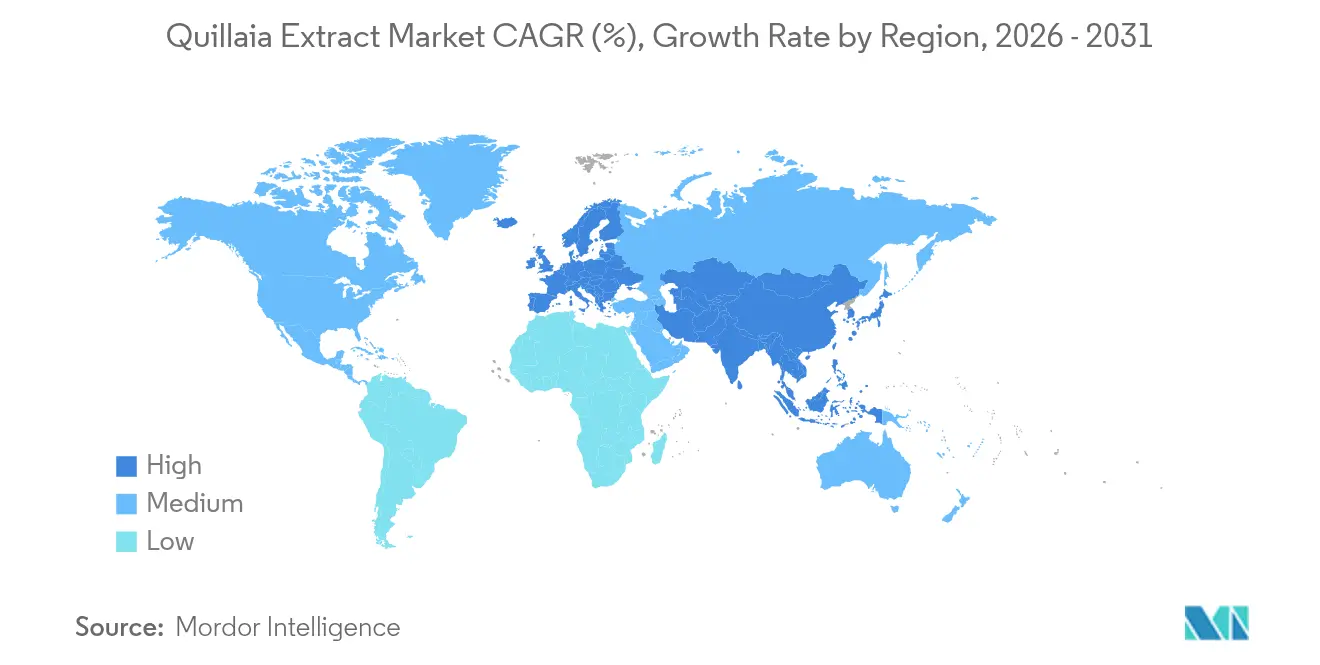
Europe holds 34.05% market share in 2025, driven by robust regulatory frameworks supporting natural ingredients and advanced pharmaceutical manufacturing capabilities. Germany, France, and the United Kingdom show significant demand for natural food additives and pharmaceutical ingredients. The European Union's Novel Foods Regulation facilitates botanical ingredient approval, while regional sustainability priorities support market growth due to quillaia extract's natural and biodegradable characteristics.
APAC Quillaia Extract Market
Asia-Pacific exhibits the highest growth rate at 9.60% CAGR through 2031. This growth stems from expanding functional beverage markets, increased regulatory acceptance of natural food additives, and enhanced pharmaceutical manufacturing capabilities in China, Japan, and India. China's State Administration for Market Regulation's October 2024 expansion of health food registration to include beverages, chocolates, and candies creates new opportunities for quillaia extract. The region benefits from traditional acceptance of herbal medicine, growing middle-class populations, and established regulatory frameworks, including Japan's Food Additives Association and Australia-New Zealand's Food Standards Australia New Zealand (FSANZ) guidelines.
The Americas and MEA Quillaia Extract Market
North America maintains a significant market position due to FDA GRAS status for quillaia extract and consumer preference for natural ingredients in food, pharmaceutical, and cosmetic applications. The United States represents the largest single-country market globally, supported by biotechnology investments and sustainable extraction technology development. Canada's natural products industry and Mexico's manufacturing capabilities contribute to regional growth. South America, particularly Chile, maintains a crucial role in global supply chains as the primary raw material source. The Middle East and Africa show emerging market potential as their regulatory frameworks and consumer awareness develop, particularly in countries with established pharmaceutical and food processing sectors.
Regulatory Landscape
Regulation for quillaia extract is shaped by food additive frameworks, with the European Union treating it as E 999 under Regulation (EC) No 1333/2008 and related specifications. In October 2025, Commission Regulation (EU) 2025/2084 amended EU rules and specifications for E 999, shifting maximum use levels to be expressed on a saponin basis and authorizing use in flavourings and specific food supplements. It also tightened specification controls (including limits for certain toxic elements) and supported a transition period where products placed on the market before 9 May 2026 can be used until stocks are exhausted.
In the United States, quillaia extract (Quillaja saponaria Molina) is regulated by the FDA as a food substance used as a flavoring agent or adjuvant (21 CFR 172.510), alongside GRAS notifications used by formulators for defined applications such as emulsification in beverage and related systems (for example, GRN 903). At the international level, WHO/FAO JECFA distinguishes Type 1 and Type 2 quillaia extracts (INS 999i and INS 999ii) and sets a group ADI on a saponins basis, which reinforces the need for suppliers to characterize and control saponin content and impurities to maintain multi-market access.
Value Chain Analysis
The value chain starts with cultivation and harvesting of Quillaja saponaria Molina, with raw material supply concentrated in Chile, creating reliance on local forestry practices, pruning and harvesting permissions, and climate variability. Upstream actors include forest owners, plantation operators, and bark or wood biomass collectors, followed by primary processors that handle cleaning, milling, and extraction using aqueous processes. An operational shift is emerging toward broader use of non-bark biomass (wood and leaves, as well as branches or limbs from pruning) to reduce pressure on bark sourcing and stabilize input availability while meeting sustainability requirements from downstream buyers.
Midstream stages include purification, concentration, drying (powder) or stabilization (liquid), and analytical standardization to verify saponin content, which has become more central as saponin-basis specifications tighten in key markets. Downstream, ingredient distributors and application specialists sell into beverage and food formulators (foaming and emulsifying), animal nutrition manufacturers (feed additives), and pharmaceutical supply chains where quillaia-derived saponins are used in adjuvant systems. Players use different supply-chain models, ranging from vertically integrated sourcing and processing to reliance on local exporters. Initiatives such as Desert King Internationals agroforestry development program in Chile (highlighted in February 2026 as including over 400 hectares of planted Quillaja) illustrate efforts to improve supply resilience and traceability.
Competitive Landscape
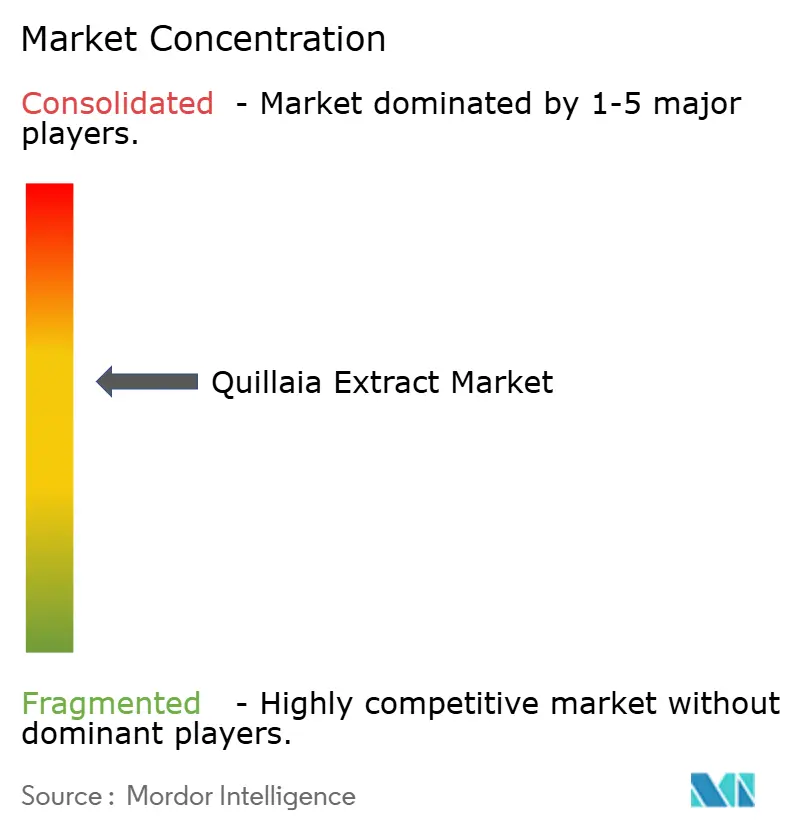
The quillaia extract market demonstrates moderate consolidation. This structure enables both multinational corporations and specialized natural ingredient suppliers to compete through distinct strategies and product applications. Market leaders maintain control through vertical integration, spanning raw material sourcing to finished product distribution, while smaller companies target niche applications and premium quality segments. The competitive landscape aligns with industry consolidation trends in the specialty ingredient sector as companies aim to enhance their capabilities and expand market presence.
The primary market participants include Garuda International Inc., Givaudan SA, Ingredion Incorporated, Baja Yucca Company, and Quillaja Green Biosolutions. Companies differentiate themselves through technology adoption, investing in sustainable extraction methods, biosynthetic production, and advanced formulation technologies to serve premium market segments and comply with regulations.
Companies prioritize sustainability credentials, regulatory compliance expertise, and application-specific product development to distinguish their offerings in the market. The development of QS-21 biosynthesis in engineered yeast marks a significant advancement that may transform traditional supply chains and market dynamics. Growth opportunities exist in emerging applications, including precision fermentation enhancement, vaccine adjuvant formulations, and specialized cosmetic applications where quillaia extract offers distinct advantages. Companies with established intellectual property portfolios and regulatory expertise are positioned to capitalize on these opportunities.
Quillaia Extract Industry Leaders
-
Garuda International Inc.
-
Givaudan SA
-
Ingredion Incorporated
-
Baja Yucca Company
-
Quillaja Green Biosolutions
- *Disclaimer: Major Players sorted in no particular order
Quillaia Extract Market Companies Covered in this Report
- Garuda International, Inc.
- Givaudan SA
- Ingredion Incorporated
- Baja Yucca Company
- Quillaja Green Biosolutions
- Plantae Labs
- Nexira SAS
- Desert King International
- Kerry Group plc
- Ataman Kimya A.S
- Chile Botanics S.A.
- Jiaherb Inc.
- Shaanxi Pioneer Biotech Co., Ltd.
- Taylor & Francis Group
- Undersun Biomedtech Corp.
- Madhu Chemicals
- Adams Food Ingredients Ltd
- Bioway Organic Ingredients Co.,Ltd
- Xi'an Haoze Biotechnology Co., Ltd.
- Synthite Industries Ltd
Market Opportunities and Future Outlook
Regulatory widening and clearer specifications are opening defined formulation whitespace, especially in Europe after Commission Regulation (EU) 2025/2084 (October 2025) authorized quillaia extract use in flavourings and specific food supplements and moved maximum use levels to a saponin basis. This change supports demand for standardized, analytically verified saponin concentrates, creating opportunities for suppliers that can provide tighter compositional characterization and documentation aligned to E 999 specification requirements. In the United States, continued use under FDA frameworks (including GRAS notifications such as GRN 903 for targeted applications) supports broader adoption in clean-label beverage foaming and emulsification where formulators need consistent performance within usage limits.
The most visible product and process opportunities are performance-driven applications and sustainability-led supply options. Food formulators are using quillaia saponins as natural foaming agents and emulsifiers in beverages and a wider set of systems, including dressings, baked goods, and plant-based analogs. Published R&D directions on colloidal multiphase systems and fat-mimetic structures also point to additional routes for saponins as functional surfactants in next-generation formulations. On the supply side, moves toward extracting from non-bark biomass (wood and leaves) and investment in regenerative sourcing models respond to traceability and environmental constraints tied to Chile-based raw material concentration. That positioning can benefit suppliers that can demonstrate sustainable biomass inputs and quality control for heavy metals and other specification limits demanded by regulators and multinational buyers.
Recent Industry Developments in Quillaia Extract Market
- May 2026: Ingredion Incorporated released its first-quarter 2026 results and discussed texture and formulation capabilities relevant to clean-label systems used by food and beverage customers. This reinforces competitive emphasis on functionality-driven ingredient solutions where natural surfactants and foaming agents such as quillaja-based ingredients can be positioned within broader texture and stability toolkits.
- April 2026: Garuda International, Inc. updated technical documentation (revision date 04/30/2026) for its Foamex Quillaja Extract Powder 65NC (certified organic) and 65CA (organic) products. The update highlights supplier focus on documented specifications and consistent quality attributes that help formulators meet tighter compliance and performance requirements across beverage and other applications.
- October 2025: The European Commission adopted Commission Regulation (EU) 2025/2084, amending EU rules for quillaia extract (E 999) by shifting maximum use levels to a saponin basis and authorizing use in flavourings and certain food supplements, alongside updated specifications for impurities. This regulatory update increases the importance of analytical verification of saponin content and contaminant controls, influencing procurement toward suppliers with stronger testing, characterization, and documentation capabilities.
Quillaia Extract Market Report Scope and Research Methodology
Market Definition and Coverage
For this report, we define the quillaia extract market as the global sales value of quillaia-derived extracts supplied in liquid or powder form for use as a functional ingredient (mainly foaming and emulsifying) across major end-use industries.
Scope exclusions: Exclusions include raw quillaia bark and other botanical saponin sources that are not derived from Quillaia saponaria.
Segments Covered in This Report
- By Form
- Powder
- Liquid
- By Application
- Food and Beverage
- Bakery and Confectionery
- Dairy and Dairy Products
- Beverage
- Others
- Pharmaceutical
- Personal Care and Cosmetic
- Animal Feed
- Others
- Food and Beverage
- By Geography
- North America
- United States
- Canada
- Mexico
- Rest of North America
- Europe
- United Kingdom
- Germany
- Spain
- France
- Italy
- Russia
- Rest of Europe
- Asia-Pacific
- China
- India
- Japan
- Australia
- Rest of Asia-Pacific
- South America
- Brazil
- Argentina
- Rest of South America
- Middle East and Africa
- Saudi Arabia
- South Africa
- Rest of Middle East and Africa
- North America
Data Sources, Market Sizing, and Validation
Desk Research
Desk work starts by grounding supply and demand context around quillaia extract and its main uses in food, personal care, pharma, and animal nutrition. Public references were used to frame what counts as quillaia extract, where it is used, and how regulation affects adoption of natural foaming and emulsifying ingredients.
Sources reviewed include, for example, regulatory and standards references such as the US FDA, the European Commission food additive resources, and Codex Alimentarius documents. We also used trade and macro signals such as UN Comtrade and World Bank datasets, followed by scientific and technical literature from sources like PubMed for use-case validation. Company filings, investor presentations, association websites, and reputed press coverage were then used to confirm capacity moves, product positioning, and channel focus, with selective support from paid databases for company financials and patent databases for new extract and purification activity. These examples are not exhaustive, and we checked many other sources to collect, validate, and clarify data points.
Primary Interviews and Surveys
Primary work was used to pressure-test the size model and fill gaps that desk sources do not answer well, such as typical pricing logic by form, demand shifts by application, and how customers qualify quillaia extract for use. We spoke with a mix of ingredient suppliers, distributors, and downstream users (formulators and procurement teams) across APAC, EMEA, and the Americas, so assumptions could be cross-checked across both producing and consuming regions.
Distribution of primary research fieldwork respondents
| Company type | Respondent position | Region |
|---|---|---|
| Top tier: 31% | CXOs: 13% | APAC: 48% |
| Mid tier: 53% | Functional/Unit leaders: 29% | EMEA: 30% |
| Smaller Players: 16% | Managers: 58% | Americas: 22% |
Market-Sizing & Forecasting
Sizing begins with a top-down build where the demand pool is reconstructed by tracking quillaia extract usage across key applications and regions, and then translating this into value using observed price bands for liquid and powder. For each region, the model is anchored to practical indicators, and the main clause comes after the checks have been applied and the inputs line up.
Inputs used include, illustratively, adoption of natural foaming agents in beverage and confectionery, clean-label reformulation intensity in food and beverage, cosmetics and personal care product output direction, and regulatory allowances for extract use in target markets. We also considered form-mix shifts between liquid and powder, observed procurement preferences by end users, and supply-side signals such as capacity additions and export availability where trade data is visible. Forecasts lean on scenario analysis, where baseline growth is adjusted using expert feedback on penetration limits, likely ASP movement, and timing of formulation switches.
Where bottom-up views were possible, we used selective supplier and channel approximations (sampled volumes multiplied by typical ASP ranges) to sanity-check totals and correct obvious gaps. If a country had limited visibility, nearby market behavior and import reliance were used as a proxy before being confirmed through interviews.
Data Validation & Update Cycle
Validation is done in layers so the final number is not driven by one assumption. We compare modeled totals against independent signals such as trade direction, regional demand proxies from end-use output trends, and realistic price ranges by form, and then large variances are investigated before sign-off. When a mismatch stays, we re-check definitions, re-contact sources, and revise the weakest input rather than force-fitting the result.
Each report goes through multi-step analyst reviews, with targeted variance checks across regions and applications, followed by a final consistency pass so the story and numbers match. Reports are refreshed annually, and interim updates are made when material events occur, such as major capacity changes, regulation shifts, or sharp pricing movement. Right before delivery, a fresh review is completed so clients receive the most current view available.
Mordor Intelligence's Global Quillaia Extract Market Size Compared With Other Published Estimates
Published market values for quillaia extract can differ because groups define the product scope differently, use different price and volume assumptions, and update their models on different cycles. Even when the same end uses are listed, the difference often comes from what is counted as true quillaia extract revenue and what is treated as an adjacent ingredient category.
Raw quillaia bark trade and harvest value sits outside Mordor Intelligence's scope, which keeps the market total tied to extracted ingredient sales in liquid and powder form rather than upstream raw-material turnover. Some figures also drift when they blend in other botanical saponins, assume aggressive shifts in form mix, or apply a single global ASP without adjusting for region and application price dispersion. Currency conversion timing and the year used for pricing baselines can widen the gap, especially when contracts reset and food and personal care demand moves at different speeds.
Benchmark comparison
| Source | Market Size | Gaps in Research Methodology |
|---|---|---|
| Mordor Intelligence | USD 323.64 M (2025) | |
| Industry Association A | USD 300.00 M (2025) | Often applies tighter inclusion rules for end uses, and it may under-count smaller personal care and animal nutrition volumes where purchasing is fragmented and harder to observe. |
| Trade Journal B | USD 365.00 M (2025) | May blend quillaia extract with broader natural saponin ingredients or use a single blended price point, which can inflate value when high-priced specialty grades are assumed across applications. |
The spread in the table is mostly explained by product inclusion choices and how prices are mapped across applications and regions. When definitions are kept tight and price logic is adjusted by form and end use, the output becomes easier to trace back to real demand drivers and easier to refresh as new signals appear.
Key Questions Answered in the Report
What is driving the strong CAGR of the Quillaia extract market between 2026 and 2031?
Premium beverage reformulation, rising demand for natural vaccine adjuvants, and supportive regulatory actions such as FDA GRAS 903 together propel an 8.10% CAGR.
Why does powder form remain dominant despite faster growth in liquid extracts?
Scalable spray-drying infrastructure, longer shelf life, and lower logistics costs keep powder at 63.78% share, even as liquid concentrates gain popularity for pharma and nutraceutical uses.
Which region offers the fastest growth prospects for suppliers?
Asia-Pacific posts a 9.60% CAGR, fueled by functional beverage innovation and expanding regulatory acceptance of botanical additives.
How do regulatory limits influence formulation strategies?
EFSA’s acceptable daily intake and varying jurisdictional caps force manufacturers to optimize saponin content, often blending Quillaia with other natural foaming agents to stay within legal thresholds.