
Market Overview
| Study Period | 2020 - 2031 |
|---|---|
| Market Size (2026) | USD 2.74 Billion |
| Market Size (2031) | USD 3.86 Billion |
| Growth Rate (2026 - 2031) | 7.09 % |
| Fastest Growing Market | North America |
| Largest Market | North America |
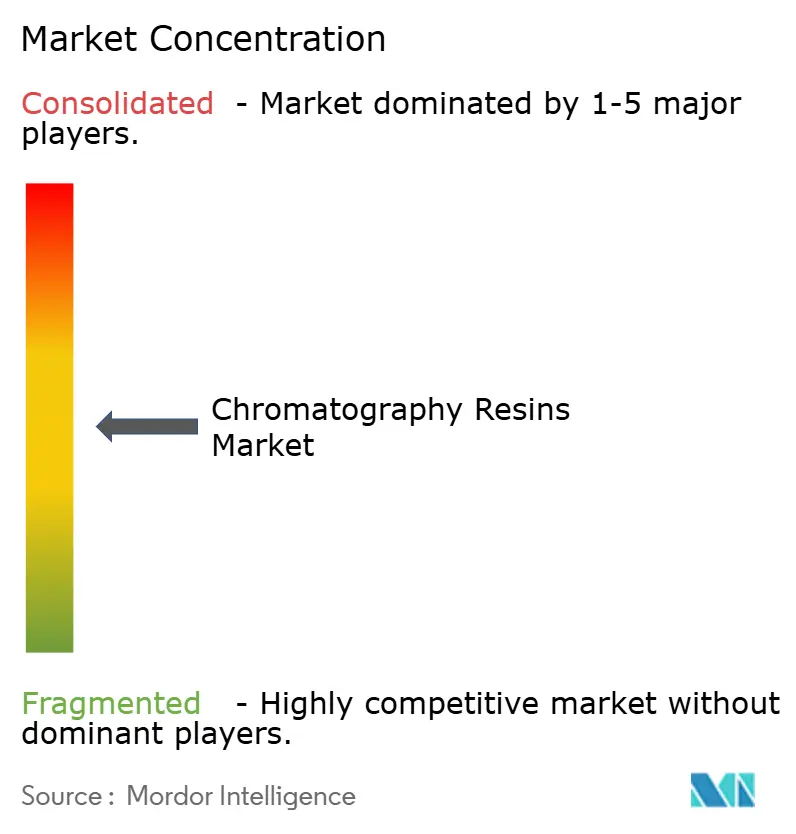
| Market Concentration | Medium |
Major Players *Disclaimer: Major Players sorted in no particular order Image © Mordor Intelligence. Reuse requires attribution under CC BY 4.0. | |
Chromatography Resins Market Analysis by Mordor Intelligence
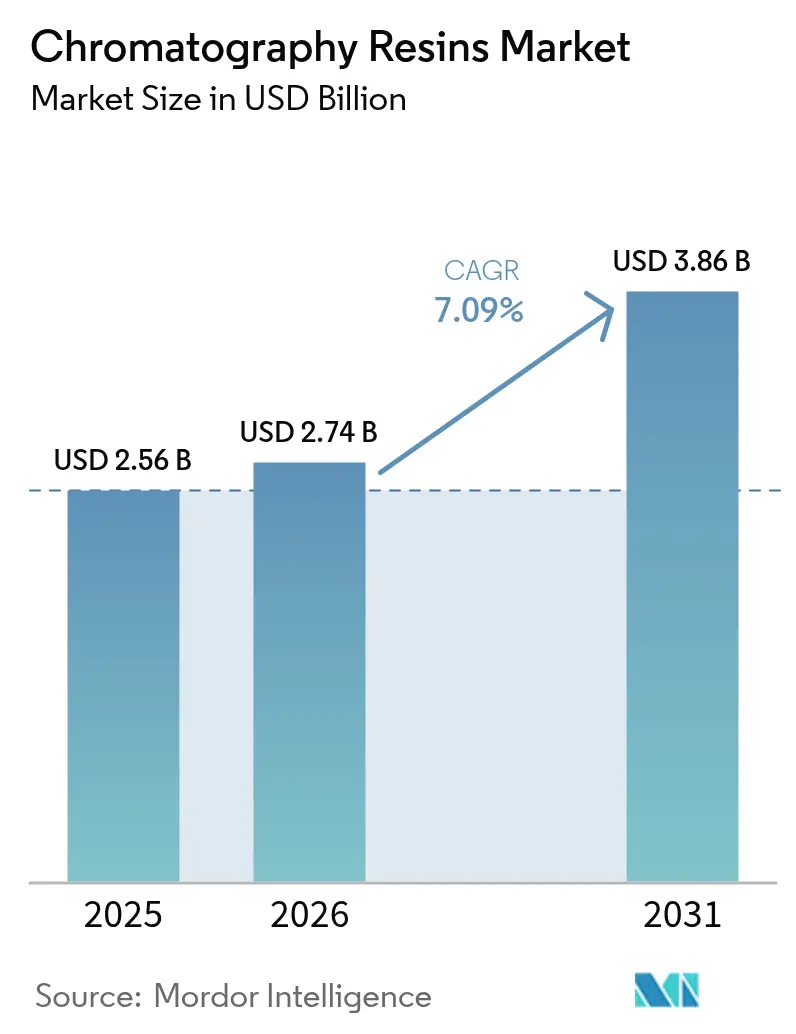
The Chromatography Resins Market size was valued at USD 2.56 billion in 2025 and estimated to grow from USD 2.74 billion in 2026 to reach USD 3.86 billion by 2031, at a CAGR of 7.09% during the forecast period (2026-2031). Steady growth reflects the segment’s integral role in biopharmaceutical purification, where downstream steps still consume close to 60% of total drug-manufacturing costs Avantor. Heightened regulatory focus on product purity, rising adoption of continuous bioprocessing that needs high-flow resins, and widening therapeutic pipelines together lift demand. Capacity investments—such as Cytiva and Pall’s USD 1.5 billion multiphase expansion—are shortening regional supply gaps and reinforcing secure sourcing strategies. At the same time, developers are moving toward synthetic matrices to gain reproducibility, while natural agarose grades gain niche momentum under sustainability mandates.
Key Report Takeaways
- By origin, synthetic-based resins held 75.78% of chromatography resins market share in 2025; natural-based grades post the quickest 8.48% CAGR to 2031.
- By product type, ion-exchange commanded 38.92% revenue share in 2025, whereas mixed-mode and multimodal formats expand fastest at 8.14% CAGR through 2031.
- By technology, affinity chromatography captured 46.74% share in 2025, while size-exclusion leads growth at 7.99% CAGR.
- By end-user, the pharmaceutical sector accounted for 76.32% of the chromatography resins market size in 2025 and is projected to grow at 8.41% CAGR.
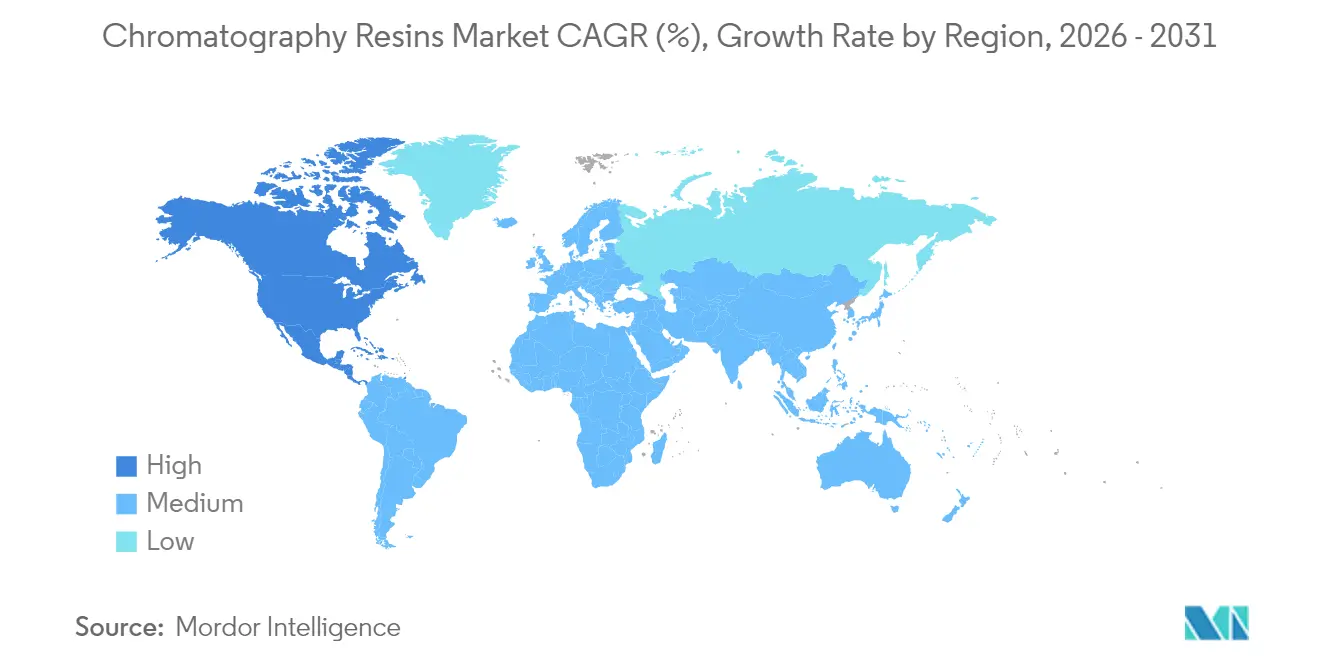
- By geography, North America dominated with 42.21% share in 2025 and is also the fastest-growing region at 8.37% CAGR.
Note: Market size and forecast figures in this report are generated using Mordor Intelligence’s proprietary estimation framework, updated with the latest available data and insights as of 2026.
Market Trends and Insights
Drivers Impact Analysis of Chromatography Resins Market*
| Driver | (~) % Impact on CAGR Forecast | Geographic Relevance | Impact Timeline |
|---|---|---|---|
| Rising demand for monoclonal-antibody production | +2.1% | North America and Europe focus; global influence | Medium term (2-4 years) |
| Expanding vaccine pipelines in emerging markets | +1.8% | APAC core, spill-over to Latin America and MEA | Long term (≥ 4 years) |
| Transition toward single-use downstream systems | +1.4% | North America and EU; uptake in APAC | Short term (≤ 2 years) |
| Regulatory push for higher-purity biologics | +1.2% | Global, led by FDA and EMA | Medium term (2-4 years) |
| Need for high-flow resins in continuous bioprocessing | +0.9% | North America and EU manufacturing hubs | Long term (≥ 4 years) |
| Source: Mordor Intelligence | |||
Rising Demand for Monoclonal-Antibody Production
Global mAb volumes keep climbing at a projected 13.23% CAGR to 2030, and resin consumption rises in parallel as antibody titers top 10 g/L, pushing Protein A beds to capacity limits. High-capacity alternatives such as Toyopearl GigaCap S-650M deliver dynamic binding above 90 g/L, more than doubling traditional media. Oncology indications account for 51% of therapeutic value, with autoimmune pipelines expanding fastest and broadening purification needs. North America retains 41.04% share of antibody output, yet Asia-Pacific advances at 13.24% CAGR, diversifying resin demand centers. In-vitro production now holds 78% of mAb supply, underscoring how downstream resin technology underwrites global access to biologics.
Expanding Vaccine Pipelines Across Emerging Markets
Post-pandemic capacity build-outs in India, China, Brazil and Indonesia keep vaccine demand buoyant, elevating need for resins that efficiently clear viral and plasmid impurities. Bio-Rad’s CHT Ceramic Hydroxyapatite captures more than 75% of influenza and dengue viral particles while trimming host proteins by 90%[1]. New ligands such as Repligen/Navigo’s spike-protein affinity resin exemplify purpose-built solutions for mRNA and viral-vector vaccines. Regulatory agencies from EMA to WHO now stipulate robust viral clearance studies, driving resin developers to validate higher selectivity and flow robustness for large-scale vaccine platforms.
Transition Toward Single-Use Downstream Systems
Demand for disposable chromatography hardware is rising as companies eliminate clean-in-place steps. GORE Protein Capture Devices show ten-fold higher productivity over packed columns without wash-down downtime. FDA guidance on disposable equipment, released in July 2022, clarifies qualification steps and accelerates adoption. Membrane adsorbers, in turn, reduce buffer use and fit seamlessly with continuous operations, while gamma-irradiated columns now sustain bioburden-free runs beyond 40 days. Although resin costs rise inside single-use cartridges, rapid turnaround and lower contamination risk offset expenses in multi-product plants.
Regulatory Push for Higher-Purity Biologics
Updated Q2(R2) analytical guidelines issued in March 2024 require deeper impurity profiling, thereby setting higher thresholds for chromatographic resolution FDA. EMA’s draft on solid-phase peptide synthesis spells out ligand cross-link density and extractables limits that directly govern resin qualification. WHO technical reports reinforce global alignment on raw-material quality, and ISPE guidance formalizes supplier audits—all of which heighten data-package requirements for every new resin lot. Consequently, suppliers invest in tighter process controls and extended CoAs to help users pass regulatory scrutiny.
Restraints Impact Analysis of Chromatography Resins Market*
| Restraint | (~) % Impact on CAGR Forecast | Geographic Relevance | Impact Timeline |
|---|---|---|---|
| High resin procurement and validation cost | -1.8% | Global, acute in emerging markets | Medium term (2-4 years) |
| Scarcity of skilled downstream-processing professionals | -1.2% | North America and EU, spreading to APAC | Long term (≥ 4 years) |
| Competition from disposable membrane chromatography | -0.9% | North America and EU manufacturing hubs | Short term (≤ 2 years) |
| Source: Mordor Intelligence | |||
High Resin Procurement and Validation Cost
Protein A resin prices have climbed to USD 9,000-12,000 per liter, yet most products bind under 40 g/L, stressing budgets for both clinical and commercial runs. Lengthy lead times—often beyond 15 weeks—force firms to raise safety stocks and tie up working capital. Each supplier or lot change triggers comparability testing, extending timelines and requiring extensive documentation that inflates overall validation expenses. Smaller firms and emerging-market plants find it harder to absorb these costs, slowing domestic production scale-up.
Scarcity of Skilled Downstream-Processing Professionals
Manufacturing expansions have outpaced the talent pipeline, leaving a deficit of chromatography specialists able to develop robust methods and manage continuous systems. Automation and AI tools accelerate routine data review, yet process design, resin packing, and troubleshooting still demand experiential knowledge. Academic curricula are only gradually incorporating continuous bioprocessing modules, setting up a persistent skills gap that heightens operational risk and complicates tech-transfer timelines.
*Our forecasts treat driver/restraint impacts as directional, not additive. The impact forecasts reflect baseline growth, mix effects, and variable interactions.
Chromatography Resins Market Segment Analysis
By Origin:
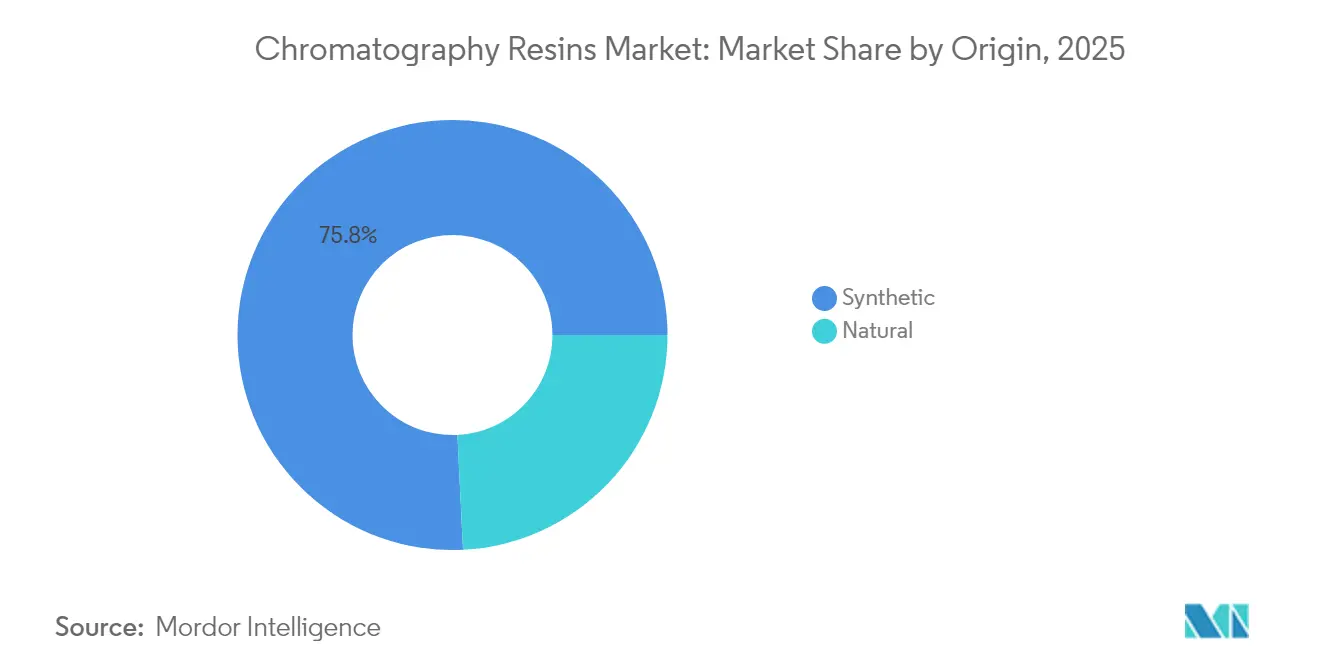
Synthetic Dominance Drives ScalabilitySynthetic-based materials represented 75.78% of 2025 revenue, reflecting manufacturers’ preference for lot-to-lot consistency and high mechanical strength. Such characteristics enable taller columns, faster flow, and straightforward scale-up, vital to the chromatography resins market where production cycles continue to shorten. In contrast, natural media—chiefly agarose—retain gentler chemistries that safeguard labile proteins, positioning them for niche vaccines and gene-therapy vectors. The natural segment’s 8.48% forecast CAGR signals renewed interest in renewable feedstocks and lower environmental footprints, especially in Europe where green- manufacturing incentives exist.
Adoption patterns illustrate a two-tier structure: multinationals install synthetic polymethacrylate beds for continuous antibody capture, whereas regional contract manufacturers expand capacity with agarose or cellulose for multi-product suites. The regulatory spotlight on adventitious-agent risk further pivots enterprise preference toward synthetics, yet biocompatibility concerns still pull natural grades into pediatric and cell-therapy pipelines. With both formats strengthening advanced ligand chemistries, competition will revolve less around base matrix and more around performance attributes such as dynamic capacity and alkaline stability in the chromatography resins market.

By Product Type:
Ion-Exchange Leadership Faces Multimodal ChallengeIon-exchange resins accounted for 38.92% of 2025 sales, cementing a decades-long role across capture, intermediate, and polishing stages. Their broad operating window, scalability, and relative affordability suit virtually every therapeutic protein. However, mixed-mode and multimodal media are projected to compound at 8.14% annually, because combined ionic, hydrophobic, and hydrogen-bond interactions allow single-step removal of aggregates and host-cell proteins, trimming buffer usage and skid footprint.
Protein A columns remain essential for IgG capture despite premium pricing, while hydrophobic-interaction units mitigate aggregation in continuous polishing. Size-exclusion devices fulfill buffer exchange or desalting without shear, an area where the chromatography resins market size for this niche is projected to widen steadily with a 7.99% CAGR. Ligand-coupled custom solutions are steadily entering pilot scale, driven by bispecific antibodies and viral vectors. Process-intensification roadmaps suggest multimodal beds will increasingly displace sequential ion-exchange-plus-HIC operations, underscoring shifting value pools inside the chromatography resins market
By Technology:
Affinity Chromatography Maintains Capture SupremacyAffinity platforms captured 46.74% of 2025 revenue, anchored by Protein A capture in mAb workflows. High flow-rate variants now exceed 65 g/L capacity while resisting NaOH cycles, reducing cost per gram processed. Ion-exchange technology keeps its multipurpose appeal, with newer giga-cap resins attaining 90 g/L dynamic capacities and fitting both bind-and-elute and flow-through modes. Size-exclusion is the quickest-expanding technology, mirroring the need for inline diafiltration and aggregate trimming ahead of final fill.
Hydrophobic-interaction chromatography remains critical for post-purification titer consolidation, and mixed-mode solutions blur traditional boundaries, adapting to hybrid batch-continuous operations. Custom affinity ligands advance most aggressively where standard Protein A cannot bind—such as Fc-free antibody fragments—illustrating how the chromatography resins market adapts to next-generation biologics. Automation integration across all technologies reduces operator-dependent variance and enables rapid resin-screening loops, shortening development timelines and enhancing reproducibility.
By End-user Industry:
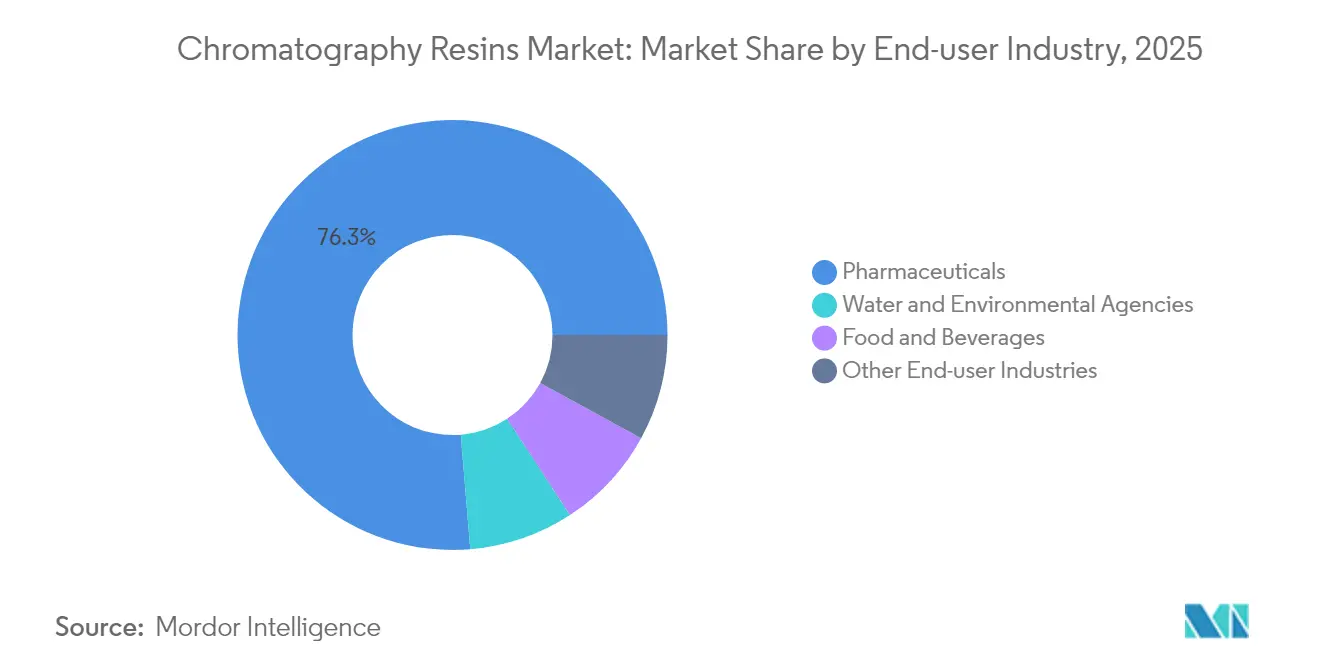
Pharmaceutical Sector Drives Dual LeadershipPharmaceutical manufacturers consumed 76.32% of global volume in 2025 and are on track for an 8.41% CAGR, an alignment that uniquely positions the segment as both the largest and fastest-growing buyer cohort. Expanding pipelines of bispecific antibodies, ADCs, and gene-therapy payloads demand bespoke purification schemes, intensifying reliance on high-performance media within the chromatography resins market. Biotechnology labs invest in high-throughput resin-screening platforms to shave months off lead-candidate selection. Drug-production plants, in turn, scale resin pack formats to multi-column continuous capture, extracting efficiency gains across multisite networks.
Water and environmental agencies employ ion-exchange beds for nitrate and heavy-metal remediation, representing a small but stable slice of demand. Food and beverage processors use strong-acid cation resins for juice deacidification and whey purification, yet overall uptake remains secondary to pharmaceutical urgency. With vaccination and advanced therapy capacity building spreading to APAC and LATAM, pharmaceutical actors will continue dictating product specifications and delivery timelines across the chromatography resins market.
Geography Analysis
North America Chromatography Resins Market
North America led with a 42.21% revenue contribution in 2025 and mirrors the fastest regional CAGR at 8.37% through 2031. Aggressive investments—Cytiva and Pall’s USD 1.5 billion program and Purolite’s new Pennsylvania agarose plant—aim to shorten lead times and insulate bioprocess supply chains. FDA analytical guidelines that tightened in 2024 cascade global expectations for resin consistency, anchoring North America’s status as regulatory reference hub.
Europe Chromatography Resins Market
Europe ranked second in value terms, combining long-standing GMP expertise with rising emphasis on sustainability. EMA process-validation rules force high-resolution separation and lean toward recyclable or lower-waste matrices. Investments such as Merck KGaA’s EUR 300 million research hub in Darmstadt and Tosoh Bioscience’s German expansion reinforce domestic supply. Green manufacturing incentives further nudge producers toward bio-based agarose and closed-loop solvent systems inside the chromatography resins market.
APAC Chromatography Resins Market
Asia-Pacific records the briskest structural expansion, spurred by Chinese, Japanese and Korean biologics programs as well as ASEAN vaccine initiatives. Tosoh’s new Yokkaichi plant exemplifies capacity alignment with regional demand. Policymakers funnel grants into local mAb and cell-therapy plants, raising consumption of high-capacity resins as multinationals localize production. India and Indonesia add volume in pandemic- readiness stockpiles, extending the customer base for continuous-flow compatible media.
MEA and South America Chromatography Resins Market
South America sees gradual build-up in Brazil and Argentina, focusing on public-health vaccine needs that increasingly seek dual-ligand mixed-mode beds for viral clearance. The Middle East and Africa remain nascent but exhibit pockets of growth around Gulf state pharma clusters pursuing insulin, plasma, and vaccine self-sufficiency. Collectively, non-OECD regions contribute modest shares today yet represent double-digit growth prospects, underscoring the globalization of the chromatography resins market.
Regulatory Landscape
Chromatography resins used across regulated biomanufacturing are governed under cGMP and submission expectations that emphasize impurity control and supplier documentation. FDA expectations for GMP (including Q7) and comparable EU requirements focus on resin-related risks such as resin lifetime, ligand leaching, and consistency, which are treated as part of process validation for biotechnology-derived active substances. For excipient-like quality systems, voluntary consensus standards such as NSF/IPEC/ANSI 363 are used by suppliers to structure cGMP programs and support customer audits.
Beyond biopharma quality, environmental and material regulations also shape resin selection and reporting. In the European Union, REACH restrictions targeting synthetic polymer microparticles (Commission Regulation (EU) 2023/2055) introduce additional compliance and release-reporting obligations, with implementation starting in 2026 for relevant materials. This extends traceability needs for both industrial users and suppliers. In some non-pharma applications, US FDA food-contact provisions (21 CFR 173.25 for ion-exchange resins) remain a reference requirement, reinforcing the need for fit-for-use documentation across end markets.
Value Chain Analysis
The chromatography resins value chain begins with specialty inputs (monomers, cross-linkers, base matrices such as agarose, and affinity ligands), followed by bead manufacture and functionalization. QC release testing and documentation packages then support customer validation. Downstream service layers such as column packing, application support, and comparability support help resin suppliers translate product specifications into end-user use cases, including biopharma manufacturers and CDMOs, where validated part numbers and lot traceability are central purchasing criteria.
Lead-time variability and qualification lock-in influence day-to-day switching between suppliers. Standard grades can typically run on multi-week supply cycles, while custom functionalized resins extend qualification timelines, and any supplier or lot change can trigger comparability work that slows transitions. Suppliers counter this with continuity programs and regional support infrastructure, including approaches built around business continuity planning and global quality standards across sites, such as those described in Merck Millipore supply program materials. Technical-support regionalization is also visible, including Ecolab opening an Asia-based Bioprocessing Applications Lab in Korea (supporting Purolite Resins), which tightens feedback loops for method development and helps integrate resins into local manufacturing networks.
Competitive Landscape
The chromatography resins market remains moderately fragmented. Top multinationals—Cytiva, Merck KGaA, Thermo Fisher Scientific, Sartorius Stedim Biotech, and Bio-Rad Laboratories—combine synthesis, ligand design, and packed hardware, offering bundled platforms that lock in customers for multi-step processes. Danaher’s consolidation of Cytiva and Pall enables filter–resin bundles, eliciting antitrust scrutiny but also catalyzing integrated workflow innovation. Second-tier specialists such as Purolite and JSR Life Sciences cultivate high-capacity agarose or advanced polymethacrylate products, filling gaps in niche modalities like viral-vector purification.
Strategic moves lean toward capacity scale-up and technology acquisition. Repligen’s purchase of ligand innovator Tantti in July 2024 added bespoke affinity libraries to its OPUS column franchise[2]. Avantor launched PROchievA to bolster supply flexibility for mAb capture workflows, addressing market bottlenecks. DuPont’s 2025 debut of AmberChrom TQ1 widened choices for oligonucleotide makers. Competitive intensity now centers on alkaline-stable ligands, flow-through multimodal designs, and columns pre-qualified for gamma irradiation.
Price pressure coexists with performance differentiation: while Protein A still commands premiums, alkaline stability and dynamic binding capacity gains are narrowing total-cost gaps. Automation-ready skids and RFID-tagged resin logistics add service layers. Smaller entrants find white spaces in cell-therapy unit operations, high-throughput ligand screening, and recyclable matrix chemistries aiming at circular-process credentials. Patent filings continue to rise around recombinant ligands and polymer grafting methods, signaling sustained R&D outlays and a vibrant innovation cycle across the chromatography resins market.
Chromatography Resins Industry Leaders
-
Cytiva
-
Merck KGaA
-
Thermo Fisher Scientific
-
Sartorius Stedim Biotech
-
Bio-Rad Laboratories
- *Disclaimer: Major Players sorted in no particular order
Chromatography Resins Market Companies Covered in this Report
- Avantor, Inc
- Bio-Rad Laboratories, Inc.
- Bio-Works
- Cytiva
- Dupont
- JSR Life Sciences, LLC
- Kaneka Eurogentec S.A.
- Merck KGaA
- Mitsubishi Chemical Corporation
- Purolite
- Repligen Corporation
- Sartorius Stedim Biotech
- Sepax Technologies
- Thermo Fisher Scientific
- Thermo Vectorlabs
Market Opportunities and Future Outlook
A clear whitespace is forming around modality-specific purification needs beyond traditional monoclonal antibodies, especially for peptides and oligonucleotides that require robust impurity clearance and simpler operational workflows. DuPont's April 2026 launch of AmberChrom XT20 SL and XT30 SL slurry resins targets workflow simplification by removing hydration steps, aligning with end-user priorities to reduce turnaround time in multi-product facilities. Capacity and localization investments further reinforce this opportunity set: Welch Materials inaugurated a chromatography packing material production base in Nanjing in January 2026, designed for large-scale column and purification material output, and adding regional supply options tied to China's bioprocess expansion.
Supply security and regional resilience continue to shape commercial decisions for both suppliers and biomanufacturers. Cytiva's announced facility investment program through 2028 includes expanded chromatography resin production in Uppsala, Sweden, and a new resin manufacturing site in Muskegon, Michigan, reflecting customer procurement focus on lead-time reduction and dual-sourcing. Additional supplier footprint moves, including Sunresin opening a European site in Uppsala Business Park in June 2026 and advancing a large life-science materials industrial park project in China, also expand the number of technically supported nodes for resin development, tech transfer, and localized regulatory documentation.
Recent Industry Developments in Chromatography Resins Market
- April 2026: Merck KGaA (MilliporeSigma in the United States and Canada) completed its acquisition of the chromatography business of JSR Life Sciences. The deal adds JSRs chromatography operations and Amsphere Protein A resin technologies into Mercks Process Solutions portfolio, strengthening its end-to-end downstream offering for regulated biomanufacturing.
- April 2025: Cytiva launched MabSelect SuRe 70 and MabSelect PrismA X, two Protein A chromatography resins positioned to broaden flexibility in monoclonal antibody purification. The additions expand Cytivas capture-resin lineup for users balancing capacity, lifetime, and process economics under validated GMP operations.
- October 2024: Sartorius launched Sartobind Rapid A Lab, an affinity membrane chromatography product for antibody purification positioned as an alternative to traditional resin columns for certain workflows. The launch supports faster, more flexible downstream processing where single-use formats and shorter cycle times are prioritized.
Chromatography Resins Market Report Scope and Research Methodology
Market Definition and Coverage
This market covers the sales value of chromatography resins used as separation media in chromatography columns to purify and analyze biomolecules across research and industrial workflows.
Scope exclusions: We exclude chromatography instruments, columns and hardware, prepacked column assemblies sold as finished devices, and routine lab consumables that do not function as the resin media.
Segments Covered in This Report
- By Origin
- Natural-based
- Agarose
- Cellulose
- Synthetic-based
- Silica Gel
- Aluminum Oxide
- Polystyrene
- Other Synthetic Based Resins
- Natural-based
- By Product Type
- Protein-A
- Ion-Exchange
- Mixed-Mode and Multimodal
- Hydrophobic-Interaction
- Size-Exclusion
- Ligand-Coupled Custom Resins
- By Technology
- Affinity Chromotography Resins
- Ion-Exchange Chromotography Resins
- Hydrophobic-Interaction Chromotography Resins
- Size-Exclusion Chromotography Resins
- Other Technologies
- By End-user Industry
- Pharmaceuticals
- Biotechnology
- Drug Discovery
- Drug Production
- Water and Environmental Agencies
- Food and Beverages
- Other End-user Industries
- Pharmaceuticals
- By Geography
- By Geography
- Asia-Pacific
- China
- Japan
- India
- South Korea
- ASEAN Countries
- Rest of Asia-Pacific
- North America
- United States
- Canada
- Mexico
- Europe
- Germany
- United Kingdom
- France
- Italy
- Spain
- Russia
- NORDIC Countries
- Rest of Europe
- South America
- Brazil
- Argentina
- Rest of South America
- Middle-East and Africa
- Saudi Arabia
- South Africa
- Rest of Middle-East and Africa
- Asia-Pacific
- By Geography
Data Sources, Market Sizing, and Validation
Desk Research
Desk research starts with building a clean view of demand drivers that pull resin volumes, and the supply side signals that indicate pricing direction. Public sources such as the US FDA databases for biologics approvals, NIH and other public grant trackers, OECD health statistics, and World Bank macro series were used to set context for bioprocessing activity and lab intensity. We also reviewed customs and trade statistics where available, alongside peer reviewed journals that discuss chromatography adoption, yield, and process changes.
To anchor the commercial side, we used company annual reports, investor presentations, product catalogs, and reputable press for capacity announcements and product mix clues. A paid subscription for company financials and intelligence was used to standardize revenue splits and reduce reporting noise across entities. The sources listed here are illustrative, and additional public documents were reviewed to collect data, validate assumptions, and clarify open questions.
Primary Interviews and Surveys
Primary work focused on conversations and surveys with resin suppliers, distributors, contract manufacturers, and end users in biopharma and research, so the model reflects how purchasing is handled in practice. Inputs were used to confirm resin type mix, typical price bands by application, and how demand shifts with downstream processing choices. These inputs then helped reconcile gaps found in public data across APAC, EMEA, and the Americas.
Distribution of primary research fieldwork respondents
| Company type | Respondent position | Region |
|---|---|---|
| Top tier: 39% | CXOs: 20% | APAC: 37% |
| Mid tier: 40% | Functional/Unit leaders: 22% | EMEA: 37% |
| Smaller Players: 21% | Managers: 58% | Americas: 26% |
Market-Sizing & Forecasting
Sizing was built using a top-down approach where biologics and bioprocessing activity indicators are translated into resin demand pools, and then converted into value using application level pricing. Key inputs included biologics pipeline and approval trends, installed biomanufacturing capacity expansions, downstream purification intensity (resin consumption per batch or per campaign as shared by interviewees), shifts toward continuous processing, and changes in resin reuse cycles that affect replacement rates. Where public series were patchy by country, we used regional proxies and then stress tested them with expert feedback until the patterns looked realistic.
The totals were checked using selective bottom-up approximations, such as supplier revenue ranges, sampled price per liter bands, and channel checks on typical order sizes, which helped flag outliers before finalizing the year values. For forecasting, we ran scenario analysis because adoption speed and capacity utilization can change quickly in biopharma. We then aligned scenario outputs to consensus views gathered from primary respondents on growth drivers and price movement. When a segment lacked direct volume or price visibility, we applied a conservative share-of-demand assumption first, then adjusted only when two independent checks supported the change.
Data Validation & Update Cycle
Numbers are validated through multiple cross-checks, so one data series does not drive the output on its own. We compare the modeled value against independent signals such as bioprocessing capacity announcements, biologics manufacturing intensity, and observed pricing direction, then investigate any large variances at the region and application level. If a swing cannot be explained by a clear event or a verified input change, we revisit the underlying assumption and, when needed, re-contact a respondent to confirm what changed.
Before publication, the full model goes through analyst review steps, including unit checks, currency and inflation handling checks, and sensitivity tests for the most influential variables. Reports are refreshed annually, with interim updates when material events occur that can move demand or pricing. Right before delivery, a final pass is completed so clients receive the most current view available.
Mordor Intelligence's Global Market for Chromatography Resins Market Size Compared Against Other Published Estimates
Published market sizes for chromatography resins can look inconsistent because the underlying scoping and conversion logic is not always the same. Differences usually come from what is counted as resin revenue, which end uses are emphasized, how prices are averaged, and how quickly assumptions are refreshed when capacity and product mix shift.
The gaps get larger when one estimate blends in adjacent items such as prepacked devices or broader chromatography consumables, or when pricing is projected without checking real purchase patterns by application. Currency conversion timing also matters, since resin pricing and sales footprints are spread across regions and can move with exchange rates, which then changes the reported USD value for the same underlying demand.
Benchmark comparison
| Source | Market Size | Gaps in Research Methodology |
|---|---|---|
| Mordor Intelligence | USD 2.74 B (2026) | |
| Global Consultancy A | USD 2.80 B (2025) | Uses a 2025 base year and a broad product framing that can mix resin demand from research workflows with wider chromatography consumables, which can shift the counted value even before forecasting assumptions are applied. |
| Industry Publisher B | USD 2.60 B (2025) | Leans on a slower growth view and a simpler price progression, and it is less explicit on how resin reuse cycles and downstream processing intensity are converted into annual replacement demand, which can pull the starting year lower. |
The table shows a tight spread around the mid USD 2 billion range, and Mordor Intelligence's model ties the 2026 value to resin-only revenues and cross-checks it against bioprocessing capacity additions and typical pricing bands shared in interviews. Once scope is kept consistent and the conversion variables are made visible, the remaining differences mostly come from base year choice, price averaging approach, and how quickly assumptions are updated after process and capacity shifts.
Key Questions Answered in the Report
What is the 2026 value of the chromatography resins market?
The market stands at USD 2.74 billion in 2026, reflecting strong demand from biopharmaceutical manufacturing.
How fast will the chromatography resins market grow through 2031?
It is projected to expand at a 7.09% CAGR, reaching USD 3.86 billion by the end of the forecast period (2026-2031).
Which resin origin type dominates?
Synthetic-based resins hold 75.78% share owing to superior reproducibility and scalability.
Why is North America both the largest and fastest-growing region?
A high concentration of biologics plants, ongoing capacity investments, and stringent regulatory leadership propel an 8.37% regional CAGR.
What is the main cost restraint for manufacturers?
Protein A procurement and validation costs—often USD 9,000-12,000 per liter—remain the largest expense barrier.