
In Vitro Toxicology Testing Market Size and Share
Market Overview
| Study Period | 2020 - 2031 |
|---|---|
| Market Size (2026) | USD 14.43 Billion |
| Market Size (2031) | USD 23.76 Billion |
| Growth Rate (2026 - 2031) | 10.49 % |
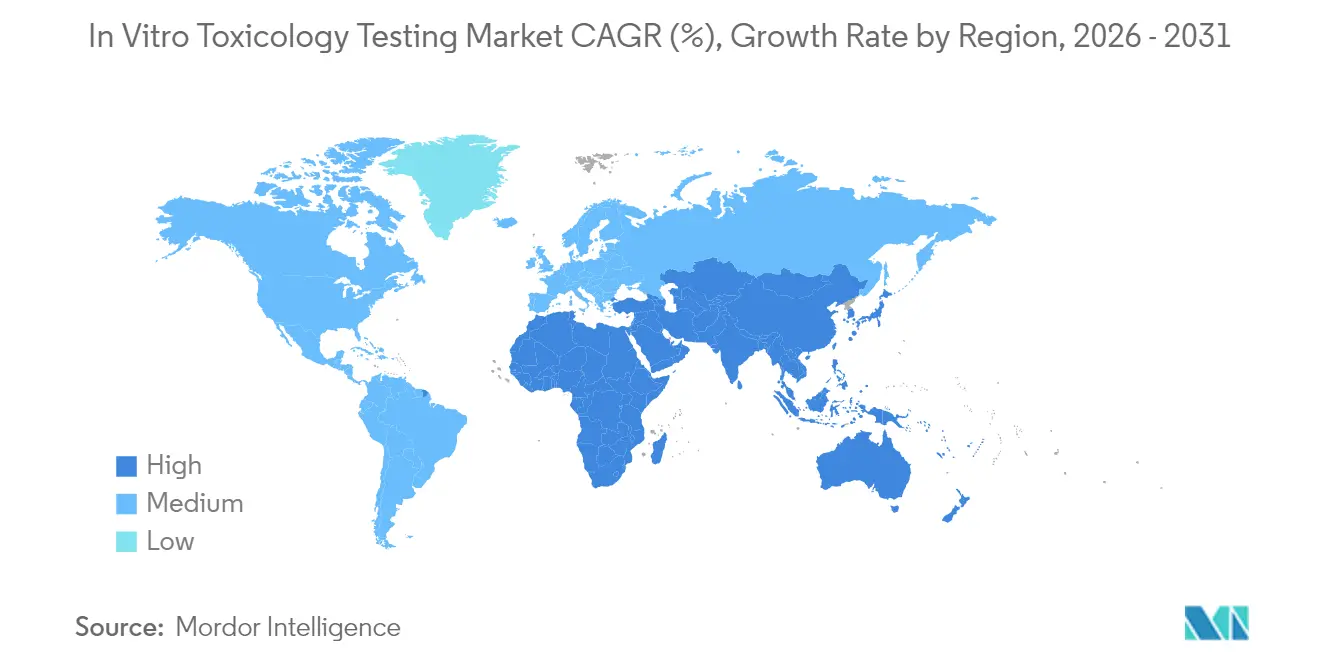
| Fastest Growing Market | Asia Pacific |
| Largest Market | North America |
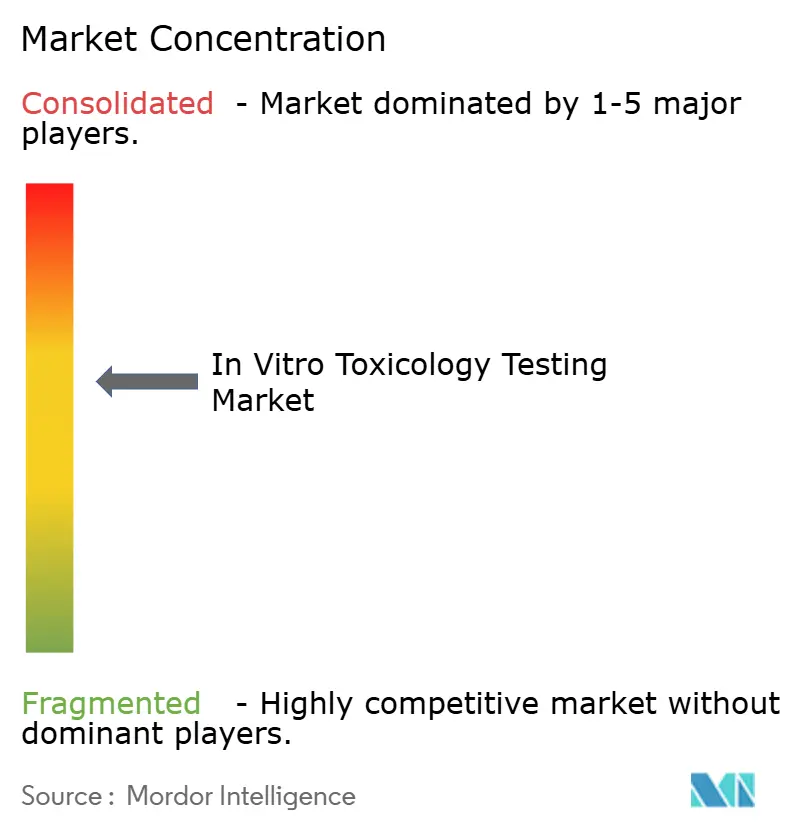
| Market Concentration | Medium |
Major Players *Disclaimer: Major Players sorted in no particular order Image © Mordor Intelligence. Reuse requires attribution under CC BY 4.0. | |
In Vitro Toxicology Testing Market Analysis by Mordor Intelligence
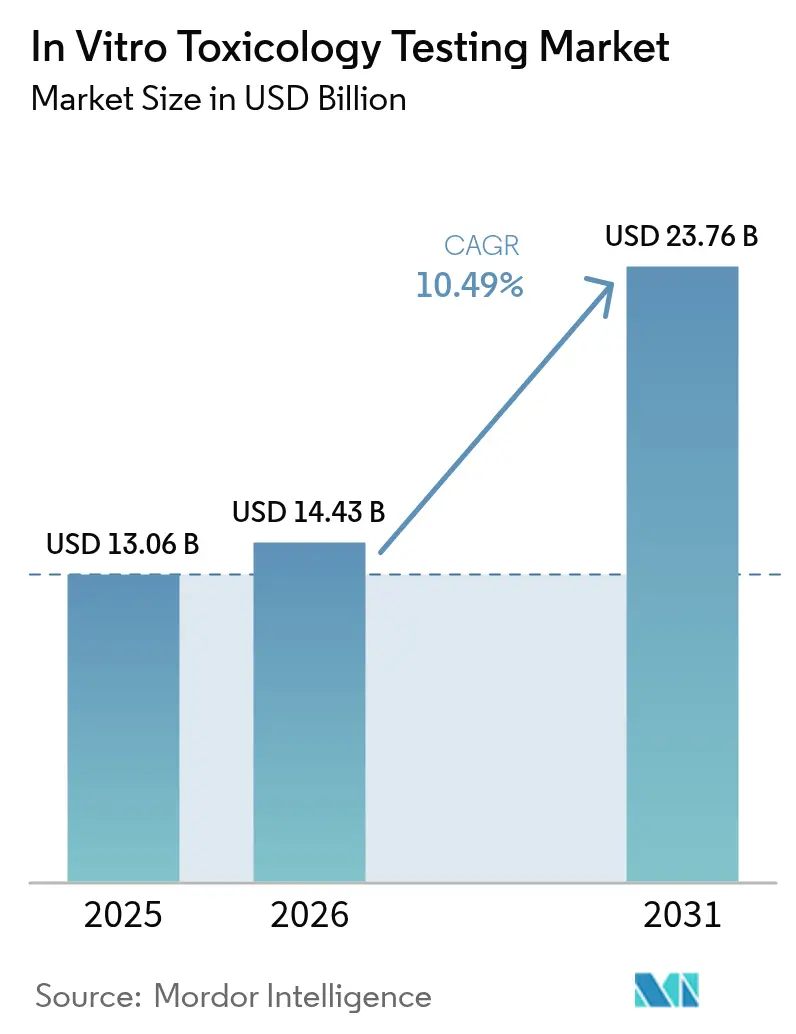
The In Vitro Toxicology Testing Market size was valued at USD 13.06 billion in 2025 and estimated to grow from USD 14.43 billion in 2026 to reach USD 23.76 billion by 2031, at a CAGR of 10.49% during the forecast period (2026-2031).
This pace underscores the sector’s central role in safeguarding human health across pharmaceuticals, cosmetics, and chemicals while meeting global regulations that discourage animal testing. Tighter safety mandates, the FDA’s New Alternative Methods program, and Europe’s roadmap to phase out animal models are spurring demand. Parallel advances in 3D cell culture, organ-on-chip systems, and AI-enabled analytics are raising predictive accuracy, trimming R&D costs, and opening new revenue streams for contract research organizations. Investor interest remains strong as the technology shift promises earlier toxicity detection, fewer late-stage failures, and faster time-to-market for innovative therapeutics.
Key Report Takeaways
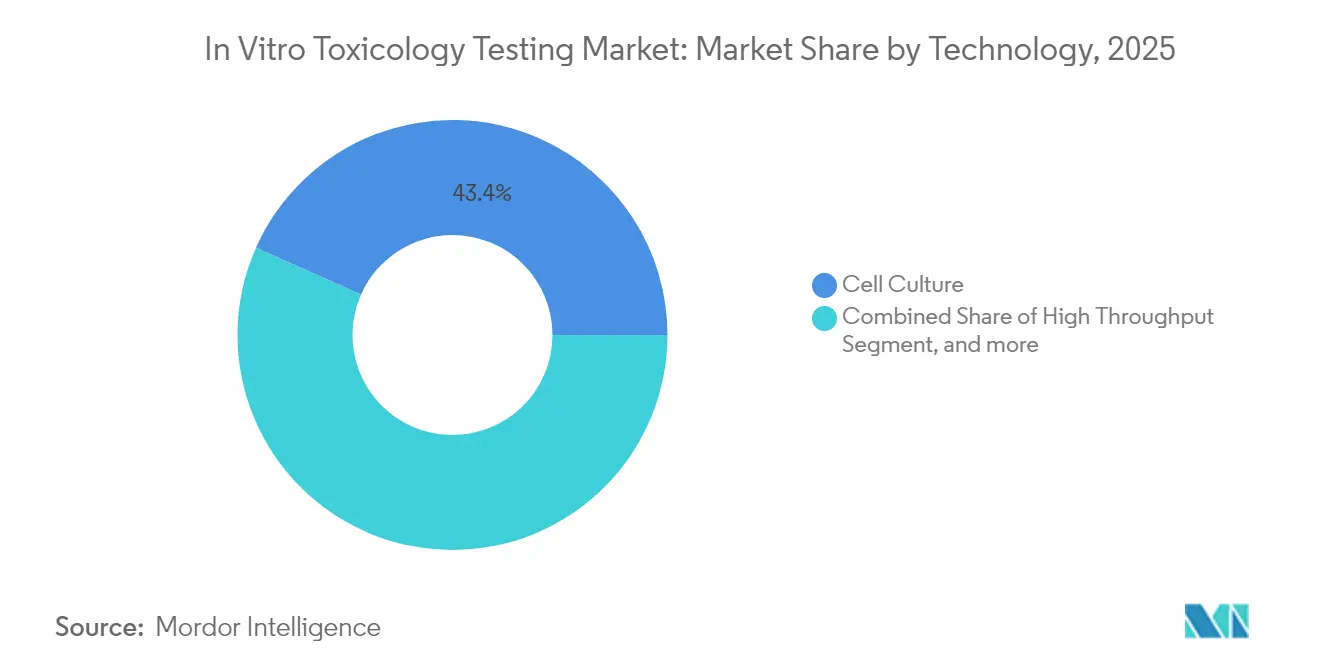
- By technology, cell culture led with 43.35% of the in vitro toxicology testing market share in 2025, while OMICS methods are forecast to grow at 13.61% CAGR through 2031.
- By method, cellular assays accounted for 35.72% share of the in vitro toxicology testing market size in 2025; in-silico techniques are projected to expand at 14.03% CAGR to 2031.
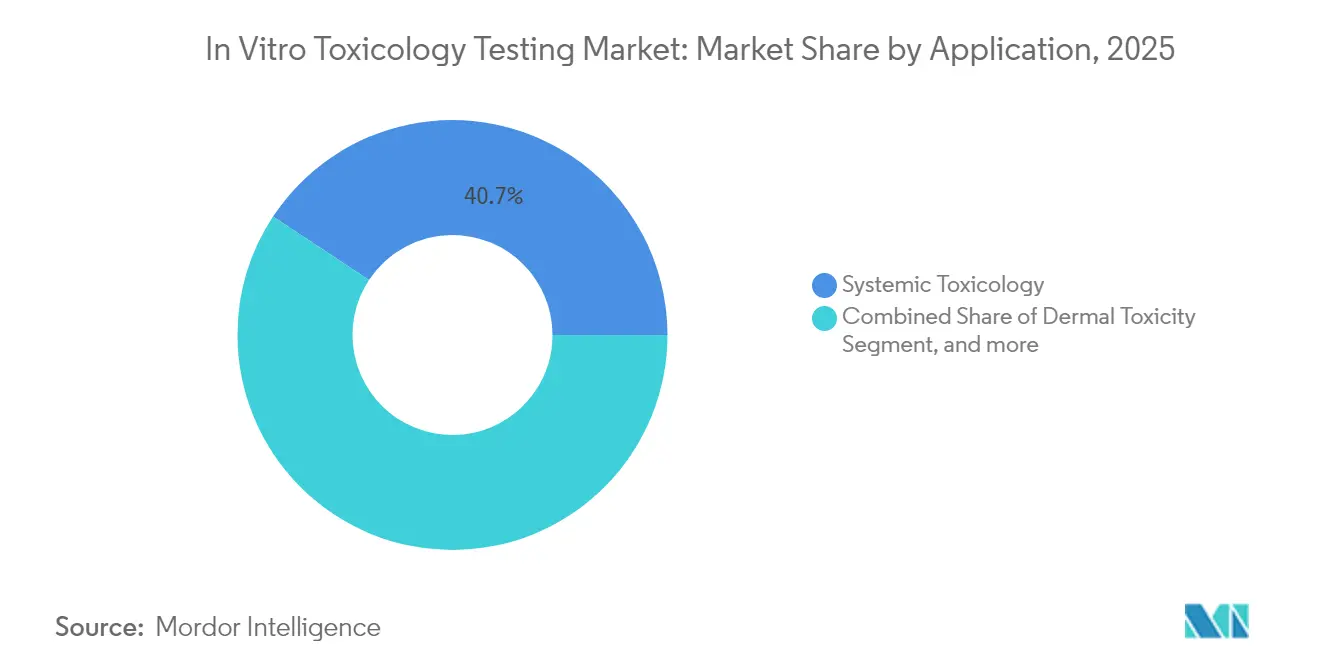
- By application, systemic toxicology commanded 40.72% of the in vitro toxicology testing market size in 2025, whereas endocrine disruption testing is advancing at a 12.33% CAGR through 2031.
- By end user, the pharmaceutical industry held 47.78% of the in vitro toxicology testing market share in 2025, while diagnostics is the fastest-growing segment at 12.97% CAGR.
- By geography, North America contributed 47.10% revenue in 2025; Asia-Pacific is set to register a 12.36% CAGR from 2026 to 2031.
Note: Market size and forecast figures in this report are generated using Mordor Intelligence’s proprietary estimation framework, updated with the latest available data and insights as of 2026.
Market Trends and Insights
Drivers Impact Analysis of In Vitro Toxicology Testing Market*
| Driver | ( ~ ) % Impact on CAGR Forecast | Geographic Relevance | Impact Timeline |
|---|---|---|---|
| Reduced animal use in pre-clinical research | +3.2% | Europe, North America | Medium term (2-4 years) |
| Advanced in-vitro assay development | +2.8% | North America, Europe | Long term (≥4 years) |
| Greater awareness of drug safety | +2.1% | Developed markets worldwide | Medium term (2-4 years) |
| Personalized medicine uptake | +1.9% | Global | Long term (≥4 years) |
| Expansion of high-throughput screening | +1.6% | Global | Medium term (2-4 years) |
| Regulatory push for animal-free testing | +1.4% | Europe, North America | Short term (≤2 years) |
| Source: Mordor Intelligence | |||
Opposition to the Usage of Animals in Pre-clinical Research
Ethical pressure and regulatory bans continue to displace animal studies. The Society of Toxicology notes that Europe’s strict cosmetics directive and the FDA Modernization Act 2.0 have legitimized non-animal approaches.[1]Society of Toxicology, “Alternatives to Animal Testing,” toxicology.org As companies align with these rules, demand for validated in vitro assays accelerates. Multinational firms now embed alternative methods into global submission dossiers, creating unified workflows across regions. The trend also catalyzes public-private partnerships that share reference data to speed assay validation. Rising social awareness further encourages investors to favor firms offering cruelty-free testing services.
Significant Advancements In-vitro Toxicology Assays
Breakthroughs in 3D organoids, microfluidics, and single-cell analytics deliver richer human-relevant data. Microfluidic lung-on-chip models now evaluate particulate toxicity with higher throughput than classical air–liquid interface tests.[2]Environmental Toxicology, “Microfluidic Approaches for Particulate Matter Toxicity,” environmentaltox.com Combined with real-time imaging and AI, scientists can capture subtle phenotypic changes hours after exposure. These tools support regulatory decision-making for complex endpoints such as developmental neurotoxicity, where rodent models often fall short. As protocols mature, CROs integrate assay bundles to provide full mechanistic insights, boosting their revenue per project.
Increasing Awareness Regarding Drug Product Safety
Late-stage toxicity failures cost the pharmaceutical sector billions. Roughly 30% of phase II/III attrition stems from unforeseen safety issues.[3]ScienceDirect, “Drug Attrition and Safety Assessment,” sciencedirect.com In response, companies invest in predictive multi-omics screens that flag liabilities earlier. Regulators encourage real-world-data integration, and precision-medicine initiatives rely on genomic-to-clinical correlation. Together, these factors push sponsors to adopt higher-content in vitro tests that reduce uncertainty, satisfy health-technology-assessment criteria, and protect brand reputation.
Rising Demand for Personalized Medicine
Tailoring therapy requires understanding individual toxicity risk. Single-cell omics and patient-derived organoids reveal genotype-specific responses, enabling bespoke dosing strategies. Hospitals adopt point-of-care cytotoxicity panels to monitor adverse events in real time, creating spill-over demand for commercial kits. Industry players respond by co-developing companion diagnostic-to-therapy bundles that combine efficacy and safety readouts.
Restraints Impact Analysis of In Vitro Toxicology Testing Market*
| Restraint | ( ~ ) % Impact on CAGR Forecast | Geographic Relevance | Impact Timeline |
|---|---|---|---|
| Limited autoimmunity & immunostimulation modeling | −1.8% | Advanced research hubs | Short term (≤2 years) |
| Complex regulatory pathways for novel assays | −1.4% | North America, Europe | Medium term (2-4 years) |
| Incomplete predictive accuracy for systemic toxicities | −1.2% | Global | Long term (≥4 years) |
| Data management and integration hurdles | −1.0% | Global | Medium term (2-4 years) |
| Source: Mordor Intelligence | |||
Incapability of In-vitro Models to Determine Autoimmunity and Immunostimulation
Even sophisticated 3D tissues lack full immune complexity. AZoLifeSciences underscores that organoids without vascular and lymphoid components struggle to predict cytokine storms. Biologics developers therefore still complement assays with in vivo studies. Emerging multi-organ-on-chip systems show promise, but reproducibility and regulatory validation remain ongoing challenges, delaying widespread adoption.
Stringent Regulatory Framework for the In-vitro Tests
The FDA’s 2024 rule classifying laboratory-developed tests as medical devices imposes design-control, quality, and post-market surveillance duties. Smaller innovators face resource constraints when compiling performance evidence. Lack of harmonized global standards further complicates multi-region approvals, slowing ROI for new platforms. Regulators, however, signal willingness to fast-track well-designed, context-of-use-specific assays.
*Our forecasts treat driver/restraint impacts as directional, not additive. The impact forecasts reflect baseline growth, mix effects, and variable interactions.
In Vitro Toxicology Testing Market Segment Analysis
By Technology:
Molecular-Level Insight Drives AdoptionCell culture retained the largest share at 43.35% of in vitro toxicology testing market in 2025, benefiting from mature protocols and broad user familiarity. The segment’s strength lies in its versatility across exploratory screens, potency assays, and regulatory submissions. The in vitro toxicology testing market size for Cell Culture applications is projected to remain above USD 9.12 billion by 2031 as enhancements such as CRISPR-edited lines and AI-assisted imaging unlock new mechanistic insights. Emerging 3D constructs further emulate human organs, reducing false negatives often seen with two-dimensional monolayers.
OMICS approaches, spanning transcriptomics, proteomics, and metabolomics, recorded the fastest CAGR at 13.61% to 2031. Rapid declines in sequencing costs and advances in single-cell analytics broaden adoption among pharma, biotech, and academia. The integration of multi-omics layers offers systems-level toxicological signatures that complement phenotypic screens, positioning OMICS as a cornerstone of next-generation safety pipelines. As datasets grow, machine-learning models trained on OMICS fingerprints refine structure–activity relationships and predict idiosyncratic toxicities earlier in drug discovery.



By Method:
Digital Models Rise, Classical Assays PersistCellular assays commanded 35.72% of the in vitro toxicology testing market share in 2025. Fluorescent reporter systems and automated microscopy supply quantitative data on apoptosis, oxidative stress, and DNA damage, underpinning regulatory-grade submissions. Concurrently, in-silico techniques are projected to generate the highest revenue increment, propelled by cloud-based machine-learning platforms that screen virtual libraries at minimal incremental cost.
The in vitro toxicology testing market size for in-silico tools is growing with CAGR 14.03% between 2026 and 2031, driven by pharmaceutical portfolio rationalization and regulatory acceptance of data-rich computational evidence. Biochemical assays and ex-vivo preparations continue to address pathway-specific questions and serve as bridging tools for complex endpoints where predictive models lack validation.
By Application:
Hormone Safety in the SpotlightSystemic toxicology remained the largest use case, contributing 40.72% of total revenue in 2025. Integrated liver, kidney, and cardiac models allow simultaneous multi-organ readouts, streamlining regulatory packages for new chemical entities.
In contrast, endocrine disruption testing posted the fastest CAGR at 12.33% amid mounting concern over hormone-active pollutants. European authorities fund projects such as ENDpoiNTs to refine predictive assays that incorporate species and sex differences. Heightened scrutiny of endocrine-active ingredients in plastics, pesticides, and cosmetics drives industry to adopt sensitive receptor-binding and gene-expression panels that detect subtle hormonal perturbations well before overt phenotypic changes arise.
By End User:
Diagnostics Accelerates, Pharma DominatesPharmaceutical companies retained 47.78% share as they anchor toxicology budgets from discovery through clinical phases. Heightened pipeline complexity and the shift toward biologics stretch traditional models, fueling demand for advanced in vitro platforms.
Meanwhile, Diagnostics shows the swiftest momentum at 12.97% CAGR as hospitals implement lab-developed cytotoxicity tests to safeguard personalized regimens. CROs leverage this opportunity by bundling toxicology with genomics and bioinformatics to offer turnkey services, while academic institutions remain pivotal in method invention and early validation stages.
Geography Analysis
North America in Vitro Toxicology Testing Market
North America led the in vitro toxicology testing market with 47.10% revenue in 2025, supported by FDA funding for alternative methods and high R&D spend per capita. The in vitro toxicology testing market size in the United States is driven by rapid adoption of AI-guided high-throughput platforms and a favorable reimbursement environment for advanced diagnostics. Regulatory clarity around laboratory-developed tests, although stringent, signals official endorsement of validated in vitro technologies.
APAC in Vitro Toxicology Testing Market
Asia-Pacific is the fastest-growing region, forecast at 12.36% CAGR from 2026 to 2031. Multinational firms establish regional innovation hubs to tap the vast patient base and cost-effective talent pool. These factors collectively elevate local demand for predictive safety solutions that meet global regulatory criteria.
EMEA and South America in Vitro Toxicology Testing Market
Europe holds a firm second place, bolstered by stringent animal-test bans and progressive chemical-safety directives. The European Commission’s November 2024 roadmap to eliminate animal studies propels early adoption of organ-on-chip and multi-omics assays. Regional consortia standardize validation pathways, offering companies smoother submission routes. Meanwhile, emerging markets in South America and the Middle East & Africa witness steady uptake as healthcare infrastructure and pharmacovigilance frameworks mature, presenting long-term growth prospects for test kit suppliers and service providers.

Regulatory Landscape
Regulatory acceptance of new approach methodologies (NAMs) is becoming more explicit across drug and chemical safety frameworks, with stronger expectations around validation, quality systems, and context-of-use documentation. In the United States, the FDA published a draft guidance in March 2026, "General Considerations for the Use of New Approach Methodologies in Drug Development," describing how NAMs can be supported in regulatory submissions using fit-for-purpose evidence and human biological relevance, reinforcing the agency focus on streamlined nonclinical approaches within CDER.
Internationally, OECD Test Guidelines continue to underpin cross-border acceptance of in vitro methods used in chemicals and product safety dossiers. In Europe, the European Commission Joint Research Centre (JRC) and EURL ECVAM continue to operationalize alternatives to animal testing through programs such as the February 2025 open call linked to the EURL ECVAM high-throughput testing (HTT) laboratory, which targets automating in vitro methods and generating reliability datasets to support transfer of assays from research use into regulatory-grade applications.
Competitive Landscape
The market shows moderate concentration, with a mix of diversified life-science conglomerates, midsize CROs, and agile start-ups. Incumbents expand service breadth through acquisition: Eurofins Scientific’s April 2025 purchase of an endocrine-testing lab widens its niche capabilities. Thermo Fisher’s January 2025 launch of an automated screening system strengthens its hardware–service bundle, enticing clients seeking unified platforms. Such moves signal a shift toward vertically integrated offerings that span data generation, analytics, and regulatory reporting.
Strategic partnerships between AI specialists and assay developers redefine competitive dynamics. The merger of Recursion and Exscientia aims to create a large-scale AI drug-discovery engine that incorporates toxicity prediction from day one. Smaller firms counter by focusing on white-space areas, including developmental neurotoxicity and immunotoxicity, offering high-fidelity models that incumbents lack. Pricing pressure intensifies as automation reduces per-sample costs, but providers differentiate on data quality, turnaround time, and consultative expertise.
Intellectual-property portfolios centered on microfluidic design, imaging algorithms, and multi-omics analytics become critical assets. Companies leverage these patents to negotiate exclusive agreements with big pharma, securing recurring revenue through multi-year master-service contracts. Overall, competition now hinges less on capacity and more on the scientific validity and regulatory acceptance of advanced human-relevant models.
In Vitro Toxicology Testing Industry Leaders
Charles River Laboratories International Inc.
Thermo Fisher Scientific Inc.
Eurofins Scientific SE
Merck KGaA
Agilent Technologies Inc.
- *Disclaimer: Major Players sorted in no particular order
In Vitro Toxicology Testing Market Companies Covered in this Report
- Charles River
- Thermo Fisher Scientific
- Eurofins
- SGS
- Merck
- Agilent Technologies
- Abbott Laboratories
- Bio-Rad Laboratories
- Danaher
- GE HealthCare Technologies Inc.
- Intertek Group
- Quest Diagnostics
- Catalent
- Evotec
- WuXi AppTec Co. Ltd.
- Cyprotex Ltd.
- Promega
- MB Research Laboratories
- Gentronix Ltd.
- BioIVT

Market Opportunities and Future Outlook
Regulatory clarity and formal listings of accepted NAMs are creating practical whitespace for suppliers that can package assays, data standards, and interpretation into submission-ready outputs. The FDA draft guidance issued in March 2026 on NAM use in drug development, together with FDA actions in 2025 such as making the ISTAND Pilot Program permanent and launching a searchable database of contexts where NAMs are acceptable, is driving demand for standardized validation services, reference datasets, and fit-for-purpose assay bundles across systemic toxicology and specialized endpoints.
Chemical safety policies are also broadening the addressable market for in vitro and computational workflows beyond pharmaceuticals. The US EPA issued a January 2026 memo recommitting to reducing animal testing with a long-horizon elimination goal for mammalian testing, and in June 2026 added additional NAMs for chemical assessments under TSCA and FIFRA, supporting greater use of high-throughput and mechanistic in vitro testing in regulatory decision-making. In Europe, the European Commission released a multi-action roadmap in 2026 to replace animal testing across policy areas, reinforcing demand for endocrine disruption and other non-animal approaches; this aligns with segment signals where endocrine disruption testing is one of the fastest-advancing application areas, and where platforms such as organ-on-chip and multi-omics gain traction when paired with regulator-recognized contexts of use.
Recent Industry Developments in In Vitro Toxicology Testing Market
- March 2026: The US FDA published a draft guidance, "General Considerations for the Use of New Approach Methodologies in Drug Development," describing how NAMs can be supported in regulatory submissions. The guidance formalizes fit-for-purpose and human-relevance principles that vendors and CROs can translate into validation packages, data standards, and regulatory-ready reporting services.
- October 2025: Charles River Laboratories announced a collaboration with Toxys to provide access to the ReproTracker in vitro assay for developmental toxicity hazard identification and to support validation of NAM use for developmental toxicity testing. The collaboration expands Charles River's NAM-aligned toxicology toolkit in an endpoint where sponsors face high cost and time burdens, strengthening its position with pharma and biotech clients seeking non-animal strategies.
- June 2024: Charles River Laboratories, in collaboration with MatTek Corporation, announced a multidisciplinary program backed by a USD 1.3 million grant from the Foundation for Chemistry Research and Initiatives to develop an in vitro alternative for inhalation toxicology using the MatTek EpiAirway model. The funding targets a technically challenging safety area, supporting method development and dataset generation that can later feed into more standardized offerings for inhalation-related assessments.


In Vitro Toxicology Testing Market Report Scope and Research Methodology
Market Definition and Coverage
For this study, the market covers revenues generated from in vitro toxicology testing, where chemicals, drug candidates, or formulations are assessed using cell based or biochemical systems to understand toxicity endpoints before wider development or use.
Scope exclusions: We exclude in vivo animal testing, clinical toxicology diagnostics done for patient care, and general lab equipment that is not primarily purchased for in vitro toxicity workflows.
Segments Covered in This Report
- By Technology
- Cell Culture
- High Throughput
- Molecular Imaging
- OMICS
- 3D Cell Culture & Organoids
- By Method
- Cellular Assay
- Biochemical Assay
- In-Silico
- Ex-Vivo
- By Application
- Systemic Toxicology
- Dermal Toxicity
- Endocrine Disruption
- Ocular Toxicity
- Other Applications
- By End User
- Pharmaceutical Industry
- Biotechnology & CROs
- Diagnostics
- Academic & Research Institutes
- By Geography
- North America
- United States
- Canada
- Mexico
- Europe
- Germany
- United Kingdom
- France
- Italy
- Spain
- Rest of Europe
- Asia-Pacific
- China
- Japan
- India
- Australia
- South Korea
- Rest of Asia-Pacific
- Middle East & Africa
- GCC
- South Africa
- Rest of Middle East & Africa
- South America
- Brazil
- Argentina
- Rest of South America
- North America
Data Sources, Market Sizing, and Validation
Desk Research
Desk work started with publicly available anchors that explain testing demand and regulatory pull, and then the numbers were cleaned and made comparable across regions. We leaned on sources such as the US FDA guidance and alternative method programs, OECD test guidelines, and the European Commission and ECHA pages covering chemicals and safety expectations. For life science volume signals, we also used sources such as NIH and EU research funding repositories, peer reviewed toxicology journals, and trade association publications that track laboratory practices.
Company filings, investor presentations, press releases, and conference posters were used to understand how vendors describe revenues and which offerings sit inside toxicology testing versus adjacent lab services. In a few places, paid subscriptions were used for company financials and news coverage, and a patent database was used to spot where activity is shifting toward organ on chip and 3D models. The sources listed here are illustrative only, and many other public references were also used to collect data, validate points, and clarify open questions during the work.
Primary Interviews and Surveys
Primary inputs came from interviews and structured surveys with lab directors, toxicology scientists, QA managers, CRO delivery leads, and procurement staff across pharma, biotech, chemicals, and cosmetics. Because this is a global market, our checks were balanced across APAC, EMEA, and the Americas to confirm adoption rates, the typical test mix, and how pricing changes with throughput and complexity. Where answers conflicted, respondents were re contacted to narrow the assumption range before finalizing the model.
Distribution of primary research fieldwork respondents
| Company type | Respondent position | Region |
|---|---|---|
| Top tier: 25% | CXOs: 12% | APAC: 43% |
| Mid tier: 59% | Functional/Unit leaders: 32% | EMEA: 33% |
| Smaller Players: 16% | Managers: 56% | Americas: 24% |
Market-Sizing & Forecasting
Sizing was built using a top-down and bottom-up combination, where demand pools were first reconstructed from safety testing intensity in key end use industries, followed by checks using sampled price times volume math. The top-down view was grounded in signals such as R&D spending trends, preclinical pipeline activity, and regulatory pressure to replace or reduce animal studies, which together shape how much in vitro work is commissioned.
To keep the model practical, a handful of market fingerprints were tracked and refreshed each cycle, including the split between cell culture based and biochemical assays, average price ranges by endpoint complexity, typical throughput per lab, CRO outsourcing share, and the pace of adoption for 3D culture and organ on chip formats. Forecasts were produced using scenario analysis supported by expert views on regulation, technology uptake, and budget constraints, and then the outputs were sanity checked using selective supplier roll ups and channel discussions. Where bottom-up detail was missing in smaller countries, ratios were inferred from comparable markets using R&D intensity and life science activity, and then adjusted after interview feedback.
Data Validation & Update Cycle
Outputs were validated by triangulating between the demand build up, interview feedback, and independent signals such as regulatory milestones and shifts in research funding. Outliers were flagged when a region showed growth that did not match known capacity additions, outsourcing behavior, or pricing movement, and then the driver assumptions were revisited.
Before sign off, the model goes through multiple analyst reviews, and specific gaps trigger re contact with respondents so unclear splits or price points are not left as guesswork. The report is refreshed annually, and interim updates are made when material events occur that can move adoption or pricing. Right before delivery, a final pass is completed so clients receive the most current view available.
Mordor Intelligence's Vitro Toxicology Testing Market Global Market Size Compared Against Other Published Estimates
Published market sizes for in vitro toxicology testing can vary a lot, even when the topic name looks identical, because each publisher groups services and test types in its own way. Differences usually come from what is counted as testing revenue versus enabling tools, which year is treated as the current base, and how quickly price and adoption assumptions are refreshed.
In vivo toxicology services are kept outside Mordor Intelligence's scope, and that single exclusion often shifts totals when other estimates blend in broader safety assessment programs. Additional spread shows up when some sources count general cell culture consumables or software as part of toxicology testing revenue, or when they convert currencies using different average year rates and then project ASP growth without validating it with lab buyers and CRO teams.
Benchmark comparison
| Source | Market Size | Gaps in Research Methodology |
|---|---|---|
| Mordor Intelligence | USD 13.06 B (2025) | |
| Industry Research Publisher A | USD 31.03 B (2023) | Uses an earlier base year and a wider revenue umbrella that appears to include broader in vitro research products and services beyond toxicology specific workflows, which lifts the reported total. |
| Research Publisher B | USD 16.97 B (2025) | Includes a broader set of product and service buckets and applies a different demand weighting across end use industries, which can change the 2025 roll up even if growth rates look similar. |
The table shows that most of the gap is explained by scope boundaries and base year choices, followed by how pricing and adoption are projected. By keeping the inputs tied to clear demand drivers like testing volume, outsourcing share, and endpoint mix, the final value stays traceable and can be repeated with the same steps in the next update.


Key Questions Answered in the Report
What is the current size of the in vitro toxicology testing market?
The in vitro toxicology testing market size stands at USD 14.43 billion in 2026 and is forecast to reach USD 23.76 billion by 2031.
Which technology segment is growing fastest?
OMICS-based platforms lead growth with a projected 13.61% CAGR through 2031 as they deliver comprehensive molecular insights and earlier toxicity detection.
Why is North America dominant in this market?
Strict FDA regulations supporting alternative methods, high R&D spending, and rapid adoption of AI-driven high-throughput systems give North America 47.10% revenue share.
What restrains complete replacement of animal testing?
Current in vitro models struggle to replicate autoimmunity and systemic immunostimulation, necessitating some complementary in vivo studies for complex biologics.
How does AI enhance toxicology testing?
AI algorithms analyze multi-omics and imaging data, predict toxic liabilities sooner, and optimize compound selection, cutting development timelines and costs.
Which end-user segment is expanding most rapidly?
Diagnostics is advancing at a 12.97% CAGR as hospitals integrate toxicity assays into personalized treatment monitoring.
Page last updated on:


 Your data is secure and never sold or shared.


