
Gluten Free Prepared Foods Market Size and Share
Market Overview
| Study Period | 2021 - 2031 |
|---|---|
| Market Size (2026) | USD 9.64 Billion |
| Market Size (2031) | USD 12.69 Billion |
| Growth Rate (2026 - 2031) | 5.66 % |
| Fastest Growing Market | Asia Pacific |
| Largest Market | North America |
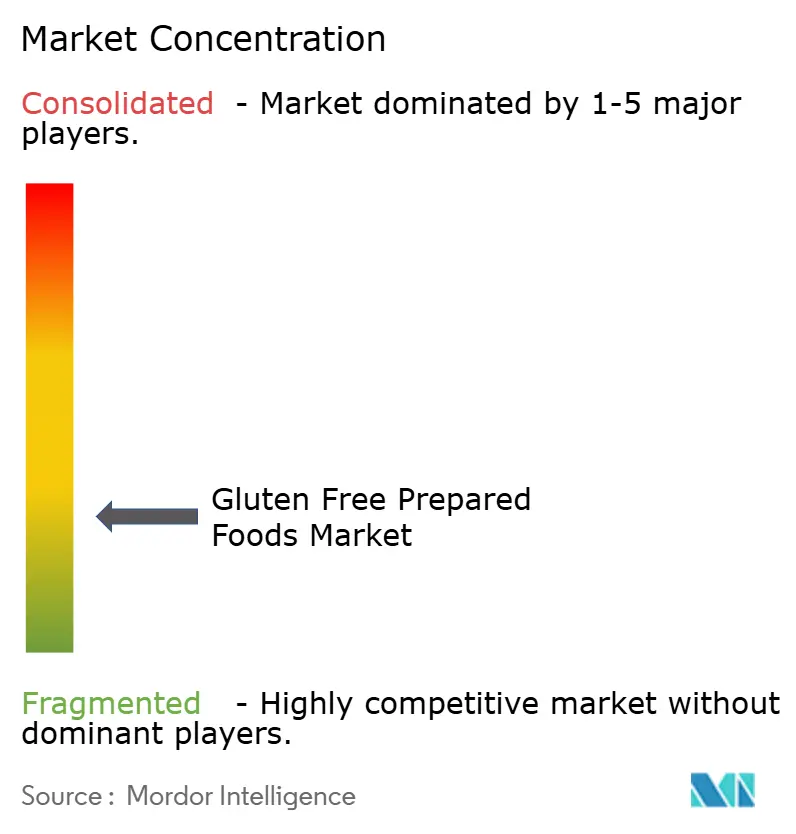
| Market Concentration | Low |
Major Players *Disclaimer: Major Players sorted in no particular order Image © Mordor Intelligence. Reuse requires attribution under CC BY 4.0. | |
Gluten Free Prepared Foods Market Analysis by Mordor Intelligence
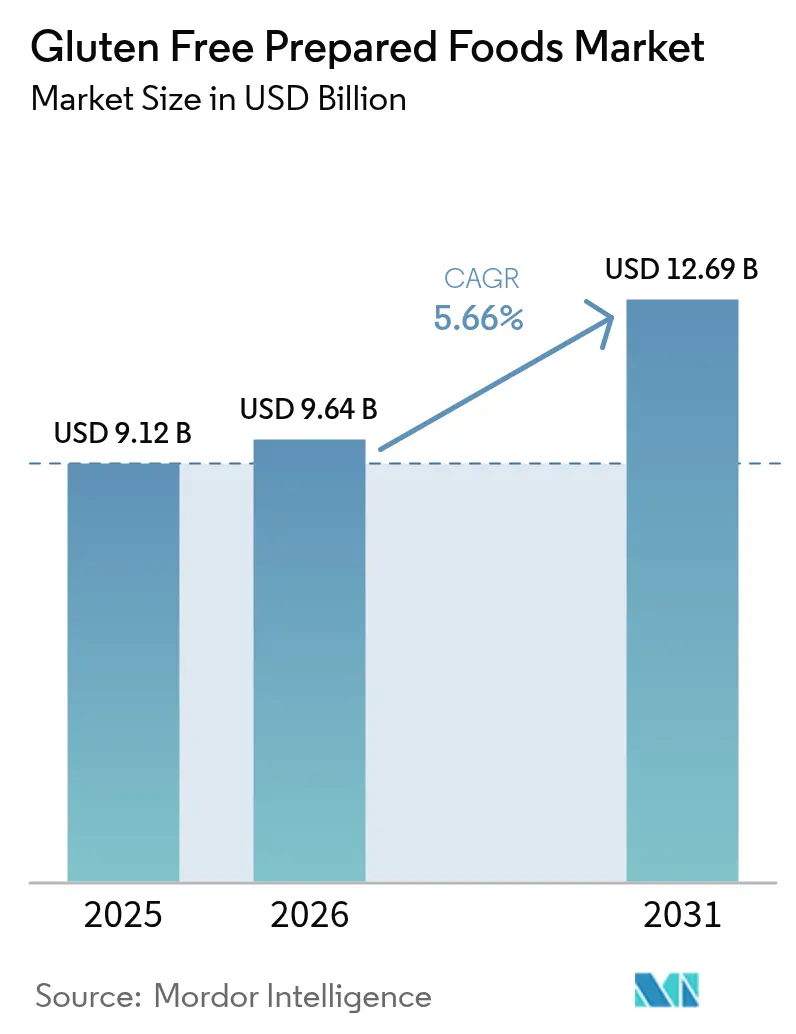
The gluten-free prepared foods market size is steadily expanding, growing from USD 9.12 billion in 2025 to USD 9.64 billion in 2026, and is projected to reach USD 12.69 billion by 2031, with a CAGR of 5.66% during 2026-2031. This growth is primarily driven by the rising diagnosis of gluten-related disorders and increased medical awareness regarding dietary management, which has established a consistent consumer base reliant on certified gluten-free products for daily nutrition. Additionally, the growing demand for convenience foods catering to specific dietary restrictions is a significant factor contributing to market growth. Advances in formulation science and food processing technologies have enhanced the taste, texture, and shelf stability of gluten-free products, reducing the quality gap with traditional foods and fostering repeat purchases.
Key Report Takeaways
- By product type, Bakery and Snacks led with 42.12% of the gluten-free food market share in 2025, while Ready Meals are forecast to expand at a 6.71% CAGR through 2031.
- By distribution channel, Off-Trade held 71.12% of the gluten-free food market size in 2025, whereas On-Trade is advancing at a 5.75% CAGR through 2031.
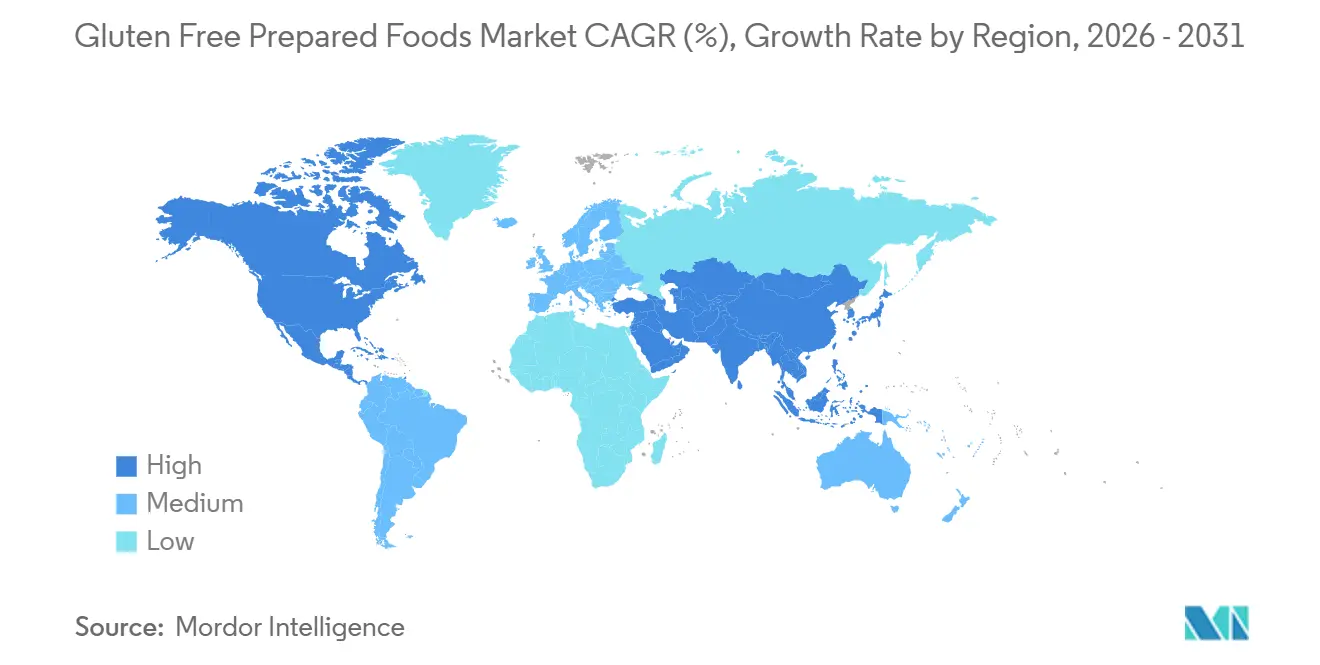
- By geography, North America accounted for 38.18% of 2025 revenue, while Asia-Pacific is projected to grow at a 6.58% CAGR between 2026 and 2031
Note: Market size and forecast figures in this report are generated using Mordor Intelligence’s proprietary estimation framework, updated with the latest available data and insights as of 2026.
Market Trends and Insights
Drivers Impact Analysis of Gluten Free Prepared Foods Market*
| Driver | (~) % Impact on CAGR Forecast | Geographic Relevance | Impact Timeline |
|---|---|---|---|
| Rising prevalence of celiac disease | +0.8% | Global, with acute impact in North America and Europe | Long term (≥ 4 years) |
| Health and wellness lifestyle adoption | +1.2% | Global, led by North America, Europe, and urban Asia-Pacific | Medium term (2-4 years) |
| Demand for convenient ready-to-eat meals | +1.0% | North America and Europe core, expanding to Asia-Pacific urban centers | Medium term (2-4 years) |
| Product innovation and improved taste and texture | +0.9% | Global, with Research and Development (R&D) concentration in North America and Europe | Short term (≤ 2 years) |
| Technological advancements in gluten-free food processing | +0.7% | Global, early adoption in North America and Europe | Medium term (2-4 years) |
| Expansion of clean-label and allergen-free trends | +0.6% | North America and Europe, spillover to Asia-Pacific premium segments | Long term (≥ 4 years) |
| Source: Mordor Intelligence | |||
Rising prevalence of celiac disease
The rising prevalence and diagnosis of celiac disease are key drivers of the global gluten-free prepared foods market. Individuals diagnosed with this condition must strictly and permanently avoid gluten to prevent intestinal damage and long-term health complications. Unlike lifestyle-based dietary choices, this necessity creates a consistent and non-substitutable demand for certified gluten-free prepared foods, as patients rely on safe, clearly labeled products for daily dietary management. For example, according to Beyond Celiac, approximately 1 in 133 Americans has celiac disease, representing a significant consumer base requiring gluten-free products as a medical necessity [1]. This sustained demand supports continuous market growth, as gluten-free prepared foods are essential for maintaining health and preventing complications, thereby driving the expansion of the global gluten-free prepared foods market.
Health and wellness lifestyle adoption
The increasing adoption of health- and wellness-focused eating habits is driving the market, as consumers increasingly associate gluten-free diets with digestive comfort, clean eating, and preventive health management. A notable segment of consumers now purchases gluten-free foods without a diagnosed medical condition, incorporating them into broader lifestyle choices such as clean-label eating, weight management, and gut-health awareness. This trend extends the market beyond consumers with medical restrictions, fostering higher product trials, repeat purchases, and deeper category penetration across everyday packaged meals and snacks. For instance, according to IfD Allensbach, approximately 2.23 million people in Germany purchased gluten-free products in 2025, compared to 2.16 million in 2024, reflecting a growing voluntary adoption rather than solely medical consumption [2]. This lifestyle-driven demand plays a significant role in market growth, as gluten-free prepared foods transition from a specialized dietary need to a mainstream health and wellness category.
Demand for convenient ready-to-eat meals
The growing demand for convenience foods is driven by consumers seeking meal solutions that require minimal preparation while adhering to strict dietary restrictions. Individuals following gluten-free diets often encounter challenges in home cooking, such as scrutinizing ingredient lists, avoiding hidden gluten sources, and preventing cross-contact during preparation. Ready-to-eat and heat-and-serve gluten-free meals address these issues by providing safe, pre-formulated products with verified labeling. These options enable consumers to save time while maintaining dietary compliance. This convenience is particularly significant for working professionals, students, and households looking for quick meal solutions without compromising health requirements. In response, manufacturers are expanding their product portfolios to include frozen and shelf-stable options, supported by advanced preservation technologies, clear allergen labeling, and dedicated gluten-free production practices.
Product innovation and improved taste and texture
Continuous product innovation and improvements in sensory quality are key factors driving the global gluten-free prepared foods market. Earlier gluten-free products were often criticized for being dry, dense, or crumbly due to the absence of gluten’s natural binding and elasticity. To address this, food manufacturers are utilizing alternative flours such as rice, sorghum, and pulse-based ingredients, along with specialized processing techniques, to better replicate the structure, softness, and mouthfeel of conventional products. Advances in formulation science, including optimized fat systems, starch blends, and moisture-retention technologies, have significantly reduced the quality gap between gluten-free and traditional foods. This has enhanced consumer satisfaction and encouraged repeat purchases. For example, in January 2026, Tate’s Bake Shop expanded its gluten-free cookie line by introducing products made with rice flour, butter, and chocolate. These cookies are also nut-free, produced in a dedicated gluten-free facility, and certified by the Gluten-Free Food Program.
Restraints Impact Analysis of Gluten Free Prepared Foods Market*
| Restraint | (~) % Impact on CAGR Forecast | Geographic Relevance | Impact Timeline |
|---|---|---|---|
| Higher product prices than conventional foods | -0.9% | Global, most acute in price-sensitive Asia-Pacific and South America | Short term (≤ 2 years) |
| Taste and texture limitations | -0.6% | Global, with higher impact in foodservice/on-trade applications | Medium term (2-4 years) |
| Risk of cross-contamination during processing | -0.4% | Global, particularly in shared-facility environments | Long term (≥ 4 years) |
| Strict regulatory labeling requirements | -0.3% | North America and Europe, with emerging impact in Asia-Pacific | Medium term (2-4 years) |
| Source: Mordor Intelligence | |||
Higher product prices than conventional foods
Higher pricing compared to conventional foods remains a significant restraint on the gluten-free prepared foods market. Gluten-free products necessitate specialized raw materials, including rice flour, sorghum, millet, quinoa, and pulse-based ingredients, which require careful processing and handling to avoid contamination. Additionally, manufacturers often utilize dedicated production lines, enforce stringent cleaning protocols, and conduct regular gluten testing to comply with certification standards. These additional manufacturing and quality assurance measures increase production complexity and drive up overall product costs. Consequently, gluten-free prepared foods generally have a noticeable price premium, deterring frequent purchases, especially among consumers without a medical necessity for a gluten-free diet. The higher cost also limits impulse buying and reduces product trial among new consumers, slowing mainstream adoption.
Taste and texture limitations
Taste and texture challenges continue to act as significant restraints in the global gluten-free prepared foods market. Gluten serves an essential functional role in conventional foods by providing elasticity, structure, and moisture retention. In its absence, many products face difficulties in achieving comparable softness, chewiness, and volume, often resulting in crumbly, dry, or dense textures. Despite advancements in formulation techniques, some consumers still perceive gluten-free baked and prepared foods as less satisfying than their traditional counterparts. This perception can hinder repeat purchases and long-term brand loyalty. Manufacturers have sought to address these issues by incorporating starch blends, gums, and protein additives. However, these alternatives do not always fully replicate the sensory qualities of wheat-based products and may sometimes alter flavor profiles. Consequently, first-time consumers may try gluten-free prepared foods but often return to conventional options unless they have specific dietary restrictions.
*Our forecasts treat driver/restraint impacts as directional, not additive. The impact forecasts reflect baseline growth, mix effects, and variable interactions.
Gluten Free Prepared Foods Market Segment Analysis
By Product Type:
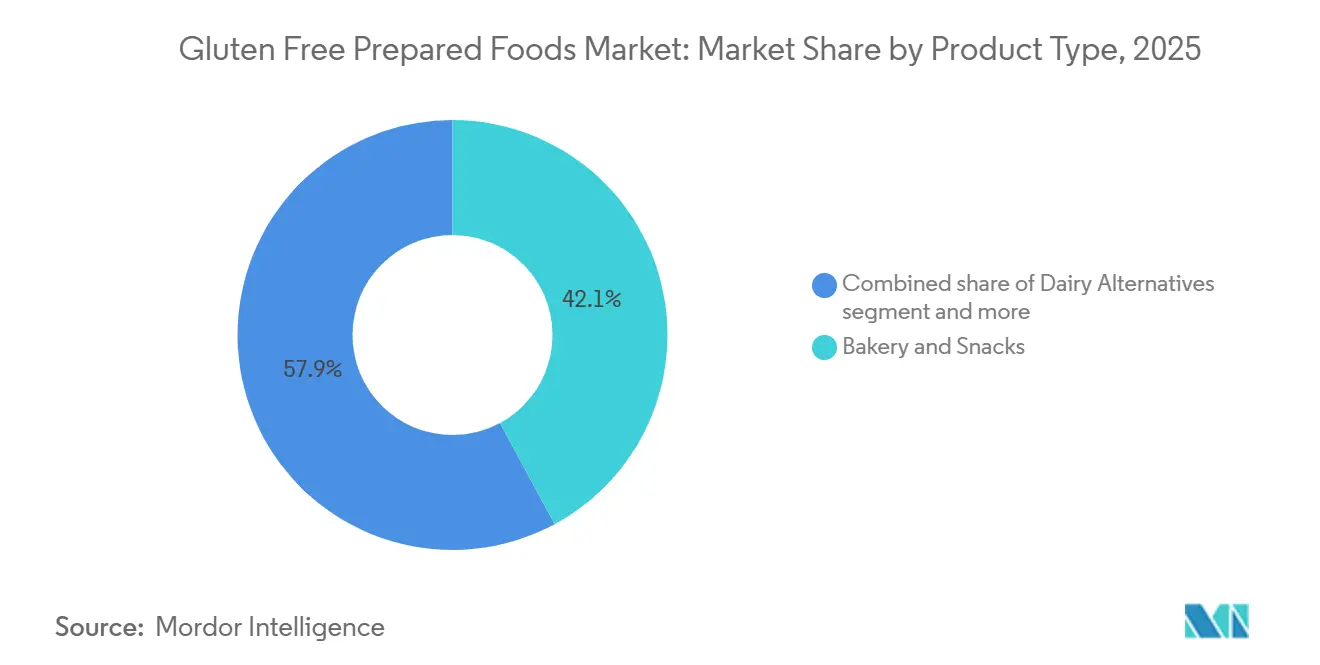
Ready Meals Drive Innovation Beyond Traditional BakeryThe bakery and snacks segment, which accounted for 42.12% of global gluten-free prepared foods revenue in 2025, is a primary driver of the market. This is due to the essential role of gluten replacement in this category, where its absence is most noticeable. Conventional baked goods rely heavily on wheat flour for structure, elasticity, and volume. Consequently, consumers adopting gluten-free diets actively seek suitable alternatives, generating consistent and recurring demand. Manufacturers have addressed this demand by advancing formulations using rice flour, sorghum, millet, corn, buckwheat, and pulse-based ingredients. These are combined with hydrocolloids and plant proteins to replicate gluten functionality, significantly enhancing softness, shelf stability, and overall palatability compared to earlier products.
The ready meals segment, projected to grow at a 6.71% CAGR through 2031, is one of the fastest-growing areas in the gluten-free prepared foods market. This growth is fueled by increasing consumer demand for complete meal solutions that adhere to strict dietary restrictions without requiring home preparation. Individuals following gluten-free diets often face challenges in preparing safe meals due to the risk of accidental gluten exposure during ingredient handling and cooking. Professionally manufactured, clearly labeled ready meals provide a trusted alternative. To meet this demand, food manufacturers are investing in dedicated gluten-free production lines, certified facilities, and rigorous testing protocols. These measures ensure product safety and reliability, strengthening consumer confidence and encouraging repeat purchases.

By Distribution Channel:
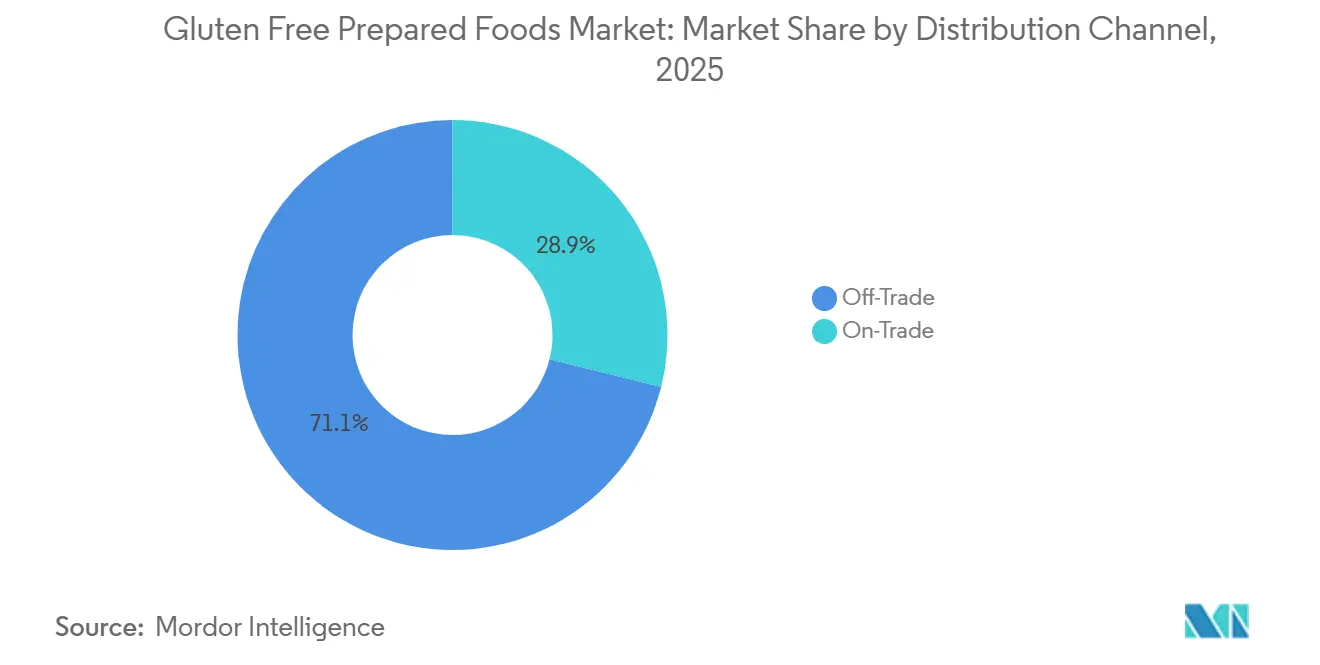
On-Trade Acceleration Signals Foodservice TransformationThe off-trade distribution channel accounted for 71.12% of gluten-free prepared foods sales in 2025. This channel drives the market as consumers managing gluten-related dietary restrictions prefer controlled and transparent purchasing environments. Retail outlets, including supermarkets, hypermarkets, health food stores, pharmacies, and online grocery platforms, provide detailed ingredient lists, allergen declarations, and certified gluten-free labeling. These features enable buyers to confidently evaluate products and avoid accidental gluten exposure. Additionally, shelf merchandising in dedicated free-from or health aisles enhances product visibility, simplifies comparisons, and encourages brand switching and trials of new products.
The on-trade distribution channel is projected to grow at a 5.75% CAGR through 2031, gaining significance in the gluten-free prepared foods market. Foodservice operators are increasingly offering diet-specific menu options to cater to consumers with medically necessary or lifestyle-driven dietary restrictions. Restaurants, cafés, quick-service chains, and institutional catering providers are expanding gluten-free menus and implementing standardized preparation procedures, such as separate cooking surfaces, dedicated utensils, and ingredient verification protocols, to minimize cross-contact risks and build consumer trust. This segment's growth is further supported by the global expansion of the foodservice industry. For instance, the United States Department of Agriculture (USDA) reported foodservice outlet sales reaching USD 1.52 trillion in 2024, reflecting rising menu diversification and greater accommodation of special dietary needs [3].
Geography Analysis
North America Gluten Free Prepared Foods Market
In 2025, North America accounted for 38.18% of global gluten-free prepared foods sales, making it the leading regional market. This dominance is attributed to strong clinical awareness and well-established dietary management practices. The region has a high diagnosis rate of gluten-related disorders, supported by healthcare professionals, dietitians, and patient advocacy groups, which promotes long-term adherence to gluten-free diets. Clear labeling standards, extensive third-party certification programs, and high retailer participation enable consumers to easily identify compliant products, boosting purchasing confidence and repeat consumption. Additionally, manufacturers in the region frequently launch new formulations with improved taste, fortified nutrition profiles, and clean-label positioning. Retailers further support the market by dedicating specific free-from sections, enhancing product visibility, and encouraging trials.
APAC Gluten Free Prepared Foods Market
Asia-Pacific is the fastest-growing region, expanding at an annual growth rate of 6.58%. Awareness of digestive health and food intolerance is rapidly improving among urban populations. Factors such as increasing diagnoses of wheat sensitivity, changing dietary habits, and greater exposure to global health trends are driving consumers to explore specialized diets. The region benefits from the traditional consumption of naturally gluten-free grains like rice and millet, simplifying product formulation for manufacturers and ensuring cultural acceptance among consumers. Local producers are introducing regionally adapted gluten-free prepared meals and snacks, while the expansion of modern retail and e-commerce platforms is improving accessibility and consumer education.
Europe, South America and Middle East Gluten Free Prepared Foods Market
Europe's gluten-free prepared foods market is strongly influenced by its structured regulatory environment and certification frameworks, which enhance consumer trust. Strict gluten-free labeling thresholds and standardized allergen disclosure rules encourage manufacturers to maintain compliance and consistent quality. In the United Kingdom, certification programs supported by national health guidance significantly contribute to market adoption. For instance, Coeliac UK, whose accreditation is recognized by the National Health Service, reports that over 3,000 food venues in the country are gluten-free accredited. South America is experiencing a gradual adoption of gluten-free prepared foods as awareness of food intolerances and digestive health increases, particularly in urban centers. In the Middle East, demand is primarily driven by growing dietary awareness, expanding modern retail infrastructure, and the rising importance of certified specialty foods.
Regulatory Landscape
Gluten-free labeling requirements and allergen controls remain central to compliance for prepared-food manufacturers, especially around cross-contact risk management and substantiation for pack claims. In the United States, the FDA gluten-free definition under 21 CFR 101.91 anchors market access, requiring foods labeled "gluten-free" to contain less than 20 ppm of gluten. That threshold supports routine testing, validated supplier controls, and segregation practices across shared-facility operations.
In 2026, regulatory attention increased on gluten cross-contact and precautionary labeling. The FDA opened a formal Request for Information (published January 2026, with comments due April 22, 2026) on labeling and prevention of gluten cross-contact for packaged foods, indicating a direction toward more explicit expectations for controls and labeling practices. Internationally, the FAO/WHO Codex Alimentarius Commission adopted new guidance for precautionary allergen labeling (PAL) in July 2026, using a harmonized, risk-based approach while reinforcing the global gluten-free benchmark of less than 20 ppm. For brands selling across multiple geographies, this raises the importance of documented risk assessment and allergen management programs.
Competitive Landscape
The gluten-free prepared foods market is moderately fragmented, featuring both specialized free-from manufacturers and large diversified packaged-food companies. Gluten-free specialists emphasize certification, formulation expertise, and building brand trust, while multinational food corporations utilize large-scale manufacturing, procurement capabilities, and global distribution networks to expand their market presence. Key players in the market include Dr. Schär AG, General Mills, Inc., The Hain Celestial Group, Inc., The Kraft Heinz Company, and Conagra Brands, Inc. Competition in the market is shaped by a dual structure: specialists focus on medical credibility and product authenticity, while large food manufacturers compete on pricing, shelf presence, and product variety across multiple prepared food categories.
A significant strategic development in the industry is the shift by multinational conglomerates to integrate gluten-free formulations into mainstream product portfolios. Rather than treating gluten-free as a niche health segment, companies are reformulating existing products and launching gluten-free variants under established core brands. This strategy helps retain brand loyalty among consumers with dietary restrictions while attracting health-conscious shoppers. Retailers are also contributing to this trend by expanding private-label gluten-free prepared food offerings, intensifying competition for both premium specialist brands and branded packaged-food manufacturers. Consequently, differentiation is evolving beyond basic free-from labeling to include factors such as taste, nutritional fortification, clean-label ingredients, and broader dietary compatibility, including plant-based and allergen-friendly options.
Technology plays a critical role in driving competitiveness within the gluten-free prepared foods market. Manufacturers are investing in advanced ingredient systems, enzyme technologies, and hydrocolloid blends to replicate gluten’s elasticity and structure, enhancing texture and shelf stability in prepared foods. Dedicated production lines, cross-contamination control systems, and analytical gluten testing capabilities are essential for maintaining certification standards and consumer trust. Additionally, packaging innovations, such as modified-atmosphere and frozen preservation technologies, are enabling longer shelf life and improved product quality during distribution.
Gluten Free Prepared Foods Industry Leaders
-
Dr. Schär AG
-
General Mills, Inc.
-
The Hain Celestial Group Inc.
-
The Kraft Heinz Company
-
Conagra Brands, Inc.
- *Disclaimer: Major Players sorted in no particular order
Gluten Free Prepared Foods Market Companies Covered in this Report
- Dr. Schar AG
- General Mills, Inc.
- The Hain Celestial Group Inc.
- WK Kellogg Co.
- The Kraft Heinz Company
- Conagra Brands, Inc.
- Nestle S.A.
- PepsiCo Inc.
- Amy's Kitchen Inc.
- Canyon Bakehouse LLC
- Bob's Red Mill Natural Foods
- Hero Group AG
- Freedom Foods Group
- Barilla S.p.A.
- Enjoy Life Foods Inc.
- Genius Foods Ltd.
- Feel Good Foods Inc.
- Caulipower LLC
- Udi's Gluten-Free (Conagra)
- Sapidum d.o.o.
Market Opportunities and Future Outlook
Product-format expansion into mainstream center-aisle and legacy meal occasions is creating additional whitespace beyond bakery-led gluten-free consumption, particularly in ready meals, soups, and frozen breakfast. In June 2026, The Campbell's Company launched a gluten-free condensed chicken noodle soup using chickpea pasta from Banza, showing how established prepared-food platforms can be reformulated into gluten-free variants while keeping the core consumption occasion. Similar mainstreaming activity is reflected in M&A and portfolio reshaping, including Cal-Maine Foods completing the acquisition of the Van's Foods business (gluten-free frozen waffles and pancakes) from Sara Lee Frozen Bakery, LLC in May 2026. The deal broadens distribution and promotional reach for gluten-free prepared breakfast items through larger-scale operators.
Regional capacity additions and dedicated allergen-free facilities also support assortment depth and private-label supply, particularly where off-trade dominates purchasing. In May 2026, Felicia opened a new 65,000-square-foot gluten-free manufacturing facility in London, Ontario, backed by a USD 55 million investment, with design capacity of 15,000 tonnes annually. The site provides additional support for expanded pasta and meal-adjacent offerings in North America. On the technology side, academic advances in 2026 on processing and structure-building approaches for gluten-free staples (including starch-protein network engineering for noodles) reinforce ongoing opportunities in texture parity and repeat-purchase performance, which remains a gating factor for foodservice/on-trade adoption where sensory gaps have historically limited menu penetration.
Recent Industry Developments in Gluten Free Prepared Foods Market
- July 2026: The FAO/WHO Codex Alimentarius Commission adopted new guidance for precautionary allergen labeling (PAL), establishing a harmonized, risk-based approach for "may contain" statements while maintaining the less-than-20-ppm gluten-free benchmark. The update increases the emphasis on formal allergen risk assessment and documentation for gluten-free prepared foods sold across multiple markets, tightening expectations on cross-contact controls and claim governance.
- May 2026: Felicia initiated operations at a new 65,000-square-foot gluten-free manufacturing facility in London, Ontario, supported by a USD 55 million investment and designed for 15,000 tonnes of initial annual capacity. The site strengthens regional supply for gluten-free pasta and adjacent prepared-food applications, helping scale distribution and reduce reliance on longer, cross-border supply chains.
- October 2024: Goodles launched a gluten-free pasta line formulated with corn, brown rice, and chickpeas, positioned with 8 grams of protein and 3 grams of fiber per serving. The move reflects continued reformulation toward higher-protein, better-for-you gluten-free staples that can function as meal components, supporting broader prepared-meal and pantry integration.
Gluten Free Prepared Foods Market Report Scope and Research Methodology
Market Definition and Coverage
This market is counted as the sales value of packaged or prepared food products that are formulated and marketed as gluten-free, and are bought for convenient eating at home or away from home across major global regions.
Scope exclusions (not counted): naturally gluten-free whole foods sold without gluten-free positioning, home baking ingredients and plain flours, and food safety testing services as standalone revenue.
Segments Covered in This Report
- By Product Type
- Bakery and Snacks
- Biscuits
- Cookies
- Cakes
- Others
- Dairy Alternatives
- Confectionery
- Sauces, Dressings and Seasonings
- Ready Meals
- Soups and Broths
- Others
- Bakery and Snacks
- By Distribution Channel
- On-Trade
- Off-Trade
- Supermarkets/Hypermarkets
- Convenience Stores
- Online Retail Stores
- Other Distribution Channels
- By Geography
- North America
- United States
- Canada
- Mexico
- Rest of North America
- Europe
- Germany
- United Kingdom
- Italy
- France
- Spain
- Netherlands
- Poland
- Belgium
- Sweden
- Rest of Europe
- Asia-Pacific
- China
- India
- Japan
- Australia
- Indonesia
- South Korea
- Thailand
- Singapore
- Rest of Asia-Pacific
- South America
- Brazil
- Argentina
- Colombia
- Chile
- Peru
- Rest of South America
- Middle East and Africa
- South Africa
- Saudi Arabia
- United Arab Emirates
- Nigeria
- Egypt
- Morocco
- Turkey
- Rest of Middle East and Africa
- North America
Data Sources, Market Sizing, and Validation
Desk Research
Desk work started with public demand and supply signals that are easy to verify and update year to year. We referenced sources such as USDA food availability data, US CDC and NIH publications on celiac disease and gluten sensitivity, the European Commission and national food safety agencies for labeling rules, and UN Comtrade for trade flows of relevant packaged food categories.
To connect the category story with company realities, we also reviewed annual reports, earnings decks, product and label registries, retailer announcements, and trusted food industry press. When helpful, we used a paid subscription source for company financials and a patent database to check brand activity, innovation intensity, and reported category exposure. These desk sources are illustrative, and many other public and paid references were also reviewed for cross-checks and clarification.
Primary Interviews and Surveys
Primary work focused on validating what is treated as gluten-free prepared foods in practice, and how pricing, channel mix, and new launches affect the value pool. We spoke with manufacturers, ingredient and private label stakeholders, distributors, and retail category managers across APAC, EMEA, and the Americas to fill gaps that desk sources do not resolve cleanly, including typical price premiums and the split between on-trade and off-trade sales.
Distribution of primary research fieldwork respondents
| Company type | Respondent position | Region |
|---|---|---|
| Top tier: 36% | CXOs: 12% | APAC: 43% |
| Mid tier: 47% | Functional/Unit leaders: 33% | EMEA: 31% |
| Smaller Players: 17% | Managers: 55% | Americas: 26% |
Market-Sizing & Forecasting
Sizing was built using a top-down approach where packaged food consumption and retail sales signals are reconstructed into a gluten-free prepared foods demand pool, and then filtered by the share of products that are explicitly gluten-free and routinely purchased for convenience eating. The total was then corroborated through selective bottom-up approximations, such as sampled price premiums by category, channel checks, and a light supplier and brand revenue roll-up to test whether the totals stay realistic.
Key model inputs included gluten-free labeling and threshold compliance (for example, the common 20 ppm benchmark used by regulators), diagnosed and self-reported gluten-avoidant population trends, price premium ranges versus conventional prepared foods, the on-trade versus off-trade split, and the pace of new product launches and shelf expansion. Where a bottom-up view had missing company coverage, we used category-level penetration and average selling price bands to close gaps instead of forcing an exact vendor list.
For forecasting, scenario analysis was used so growth can be explained through a few clear levers, and then the mid-case was chosen based on expert consensus. The forward view mainly reflects expected changes in penetration, channel mix, and pricing, with regional weighting adjusted when primary inputs point to a different adoption curve.
Data Validation & Update Cycle
Outputs were checked against independent signals, including category growth rates in packaged foods, observed price premium movements, and regional adoption indicators for gluten-free claims. If a region or channel result moved outside reasonable ranges, assumptions were revisited and, when needed, respondents were re-contacted to confirm whether a real market shift had occurred.
Before sign-off, the model goes through step-by-step analyst review so calculations, unit handling, and currency conversions stay consistent. Reports are refreshed annually, and interim updates are made when material events occur, such as major labeling changes, sharp inflation shifts, or large distribution expansions. Right before delivery, a final pass is completed so clients receive the latest updated view.
Mordor Intelligence's Global Gluten Free Prepared Foods Market Size Measured Against Other Published Estimates
Published market values for gluten-free prepared foods do not always match because authors pick different product baskets, channel coverage, and base years, and they also handle price premiums and currency timing in their own ways. Some estimates further differ because the forecast case is not clearly stated, which can quietly move the number up or down.
A common gap driver is scope creep, where broader free-from foods or naturally gluten-free staples are blended into the same total, and the result looks bigger. Some sources also rely on a single pricing uplift applied across regions, even though premium ranges can vary by channel and by category. For Mordor Intelligence, the count stays limited to prepared foods that are formulated and marketed as gluten-free, and pricing is adjusted by category and region using interview-led premium bands and channel mix checks.
Benchmark comparison
| Source | Market Size | Gaps in Research Methodology |
|---|---|---|
| Mordor Intelligence | USD 9.12 B (2025) | |
| Global Research Publisher A | USD 8.11 B (2025) | Uses a different base-year build that leans more on broader packaged food trends, and it appears to apply a more conservative gluten-free penetration and pricing uplift, which can understate value in higher-premium channels. |
| Industry Data Provider B | USD 6.50 B (2026) | Country-only coverage and wholesale price framing are presented, which limits comparability to a global retail value view. The narrower geography and the pricing basis can pull the reported figure down versus a global, consumer-value measure. |
The spread across the table is mainly explained by what gets included and how value is translated from volumes into dollars. When scope, channel basis, and price premium logic are made explicit, the market size becomes easier to trace back to clear demand signals and to update in a repeatable way as conditions change.
Key Questions Answered in the Report
How large will the gluten-free food market be by 2031?
It is projected to reach USD 12.69 billion by 2031, growing at a 5.66% CAGR from 2026-2031.
Which product category is expanding fastest?
Ready Meals lead growth, advancing at a 6.71% CAGR thanks to processing advances that improve texture and shelf life.
What share does Off-Trade hold today?
NOff-Trade commands 71.12% of 2025 sales, supported by supermarket aisles and accelerating online subscriptions.
Which region offers the highest growth upside?
Asia-Pacific is forecast to grow 6.58% annually as urban China and India combine rising incomes with greater diagnostic awareness.