
| Study Period | 2019 - 2030 |
| Market Size (2025) | USD 3.5 Billion |
| Market Size (2030) | USD 4.5 Billion |
| CAGR (2025 - 2030) | 4.90% |
| Fastest Growing Market | Asia Pacific |
| Largest Market | North America |
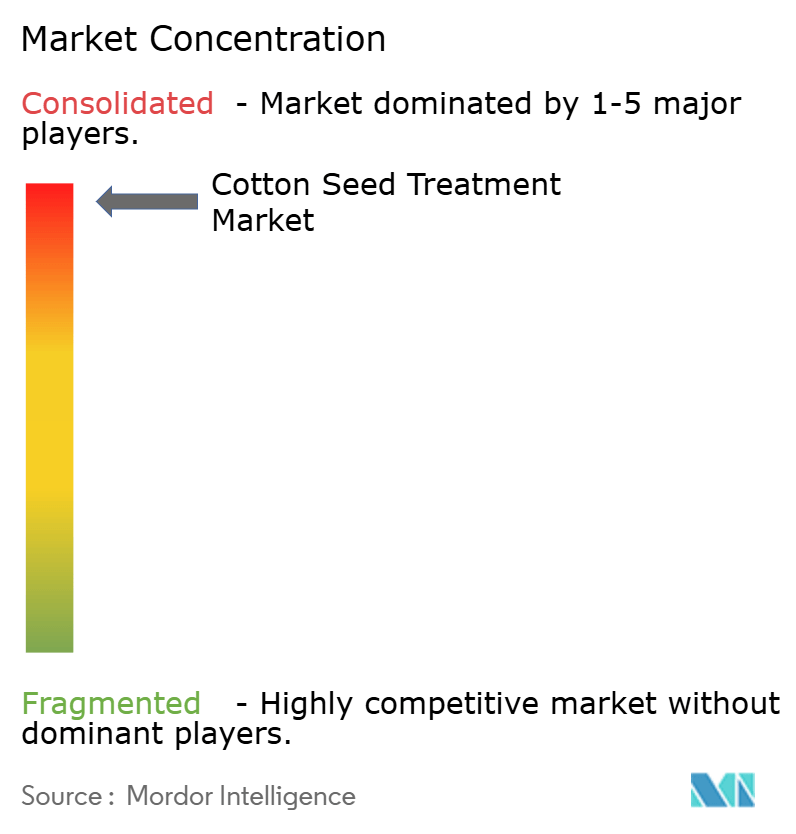
| Market Concentration | High |
Major Players *Disclaimer: Major Players sorted in no particular order |
Cotton Seed Treatment Market Analysis by Mordor Intelligence
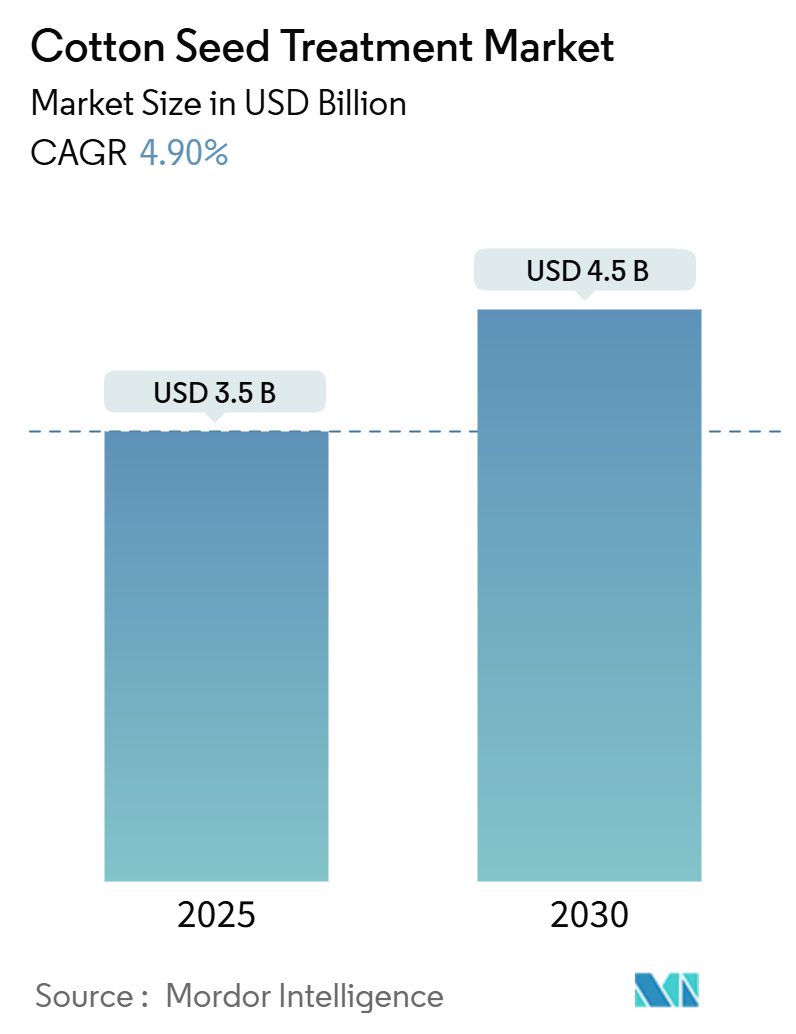
The Cotton Seed Treatment Market size is estimated at USD 3.5 billion in 2025, and is expected to reach USD 4.5 billion by 2030, at a CAGR of 4.90% during the forecast period (2025-2030).
The cotton seed treatment market is a crucial component of the agricultural sector, dedicated to improving cotton seed quality, protecting against pests and diseases, and promoting healthier crop growth. Cotton is highly susceptible to pests like boll weevil and aphids, as well as diseases such as Fusarium wilt. To mitigate these risks, treatments including fungicides, insecticides, and nematicides are applied to seeds, ensuring better germination and early-stage crop protection. Research conducted by Texas Tech University in 2024 revealed that insecticide seed treatments significantly influence cotton plant growth. These treatments provide dual benefits by enhancing plant growth and controlling pests, which can lead to improved cotton yields. As global demand for cotton rises—driven by its applications in textiles, industrial uses, and other sectors—the adoption of efficient farming practices, such as seed treatments, has become increasingly important. These treatments help boost productivity, minimize losses caused by pests and diseases, and improve the overall quality of yields.
Government support for increasing cotton production is also driving market growth. The Department of Agriculture & Farmers Welfare is implementing a cotton development program under the National Food Security Mission (NFSM) across 15 major cotton-growing states, including Maharashtra. This initiative aims to enhance cotton production and productivity. Additionally, a special project titled ‘Targeting technologies to agro-ecological zones- large scale demonstrations of best practices to enhance cotton productivity,’ led by ICAR-Central Institute for Cotton Research (CICR) in Nagpur, is being executed in Maharashtra and seven other states under NFSM during 2023-24 and 2024-25. This project focuses on increasing cotton productivity through technology transfer, including demonstrations and training programs to benefit farmers. These efforts promote the adoption of seed treatment technologies for cotton, further supporting market growth. Consequently, the growing importance of cotton and its vulnerability to pests and diseases are driving the increased use of seed treatments, contributing to the market's expansion during the forecast period.
Global Cotton Seed Treatment Market Trends and Insights
Rising Cotton Farming Fuels On-Farm Seed Treatments
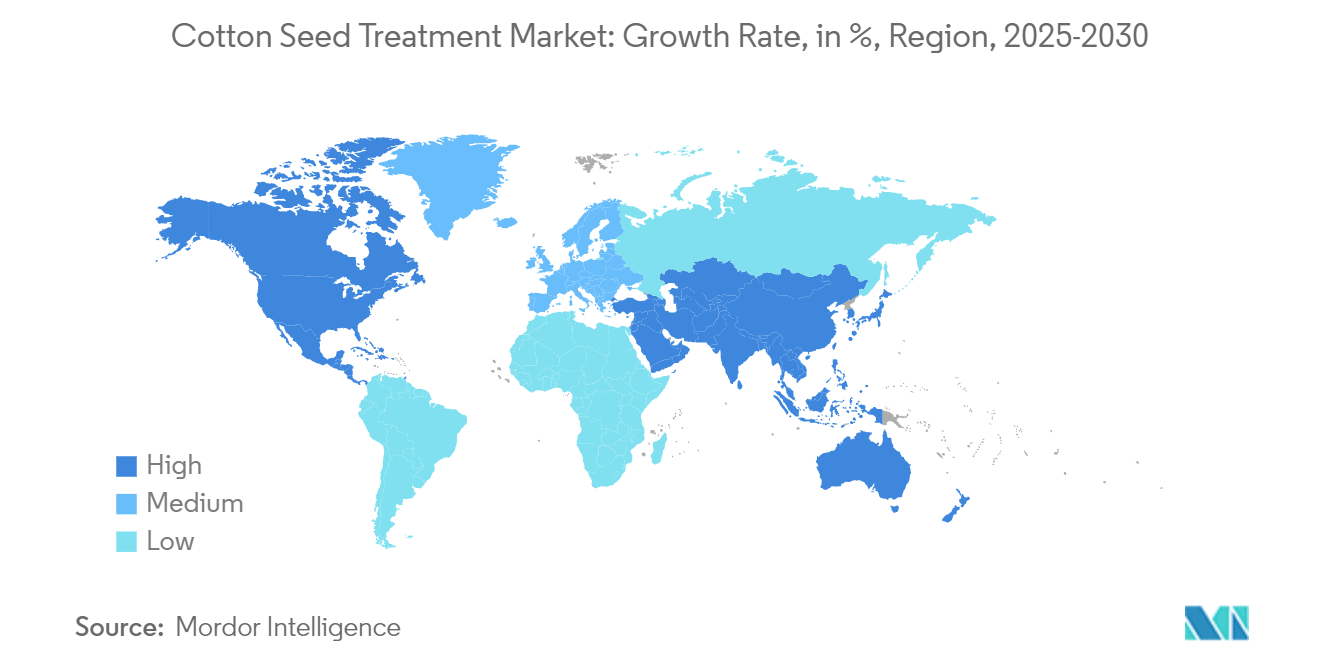
The expansion of cotton production areas is driving the growth of the cotton seed treatment market. According to FAOSTAT, the global harvested area for cotton increased from 31.4 million hectares in 2022 to 32.2 million hectares in 2023. As cotton cultivation expands, the focus on maximizing yield and efficiency intensifies, especially in regions with limited water resources and poor soil quality. Seed treatments play a crucial role in enhancing seed vigour, ensuring uniform germination, and reducing early-stage crop stress, which leads to healthier crops and higher productivity. Additionally, emerging markets like India, Africa, and parts of Latin America are witnessing a growing adoption of advanced agricultural practices. Farmers in these regions are increasingly relying on seed treatments to improve crop health and manage pests and diseases effectively.
In parallel, the rising emphasis on sustainability and the development of Integrated Pest Management (IPM) strategies are encouraging farmers to adopt holistic crop protection approaches. Seed treatments are becoming an integral part of these strategies, driving demand for eco-friendly and efficient solutions. For instance, in 2023, ADAS, NFU, SRUC, and the Voluntary Initiative (VI) introduced a complimentary IPM Planning Tool to help farmers create tailored IPM plans for crops, including cotton. This initiative aligns with the recognition of IPM planning as a compensated action under the Sustainable Farming Incentive (SFI).
The adoption of genetically modified (GM) cotton varieties, such as Bt cotton, is also contributing to the growth of the cotton seed treatment market. These GM crops offer resistance to specific pests and herbicides, but farmers continue to use seed treatments to address other pests, diseases, and environmental stresses. Agbio Investor GM Monitor reports that 76% of the total 32.2 million hectares of harvested cotton area, equivalent to 24.1 million hectares, is under GM cultivation in 2023. As GM cotton acreage grows, the demand for complementary seed treatments, such as biologicals for soil health and fungicides, is also increasing. Consequently, the combination of expanding cotton production areas and the adoption of innovative IPM technologies is driving the growth of the cotton seed treatment market during the forecast period.
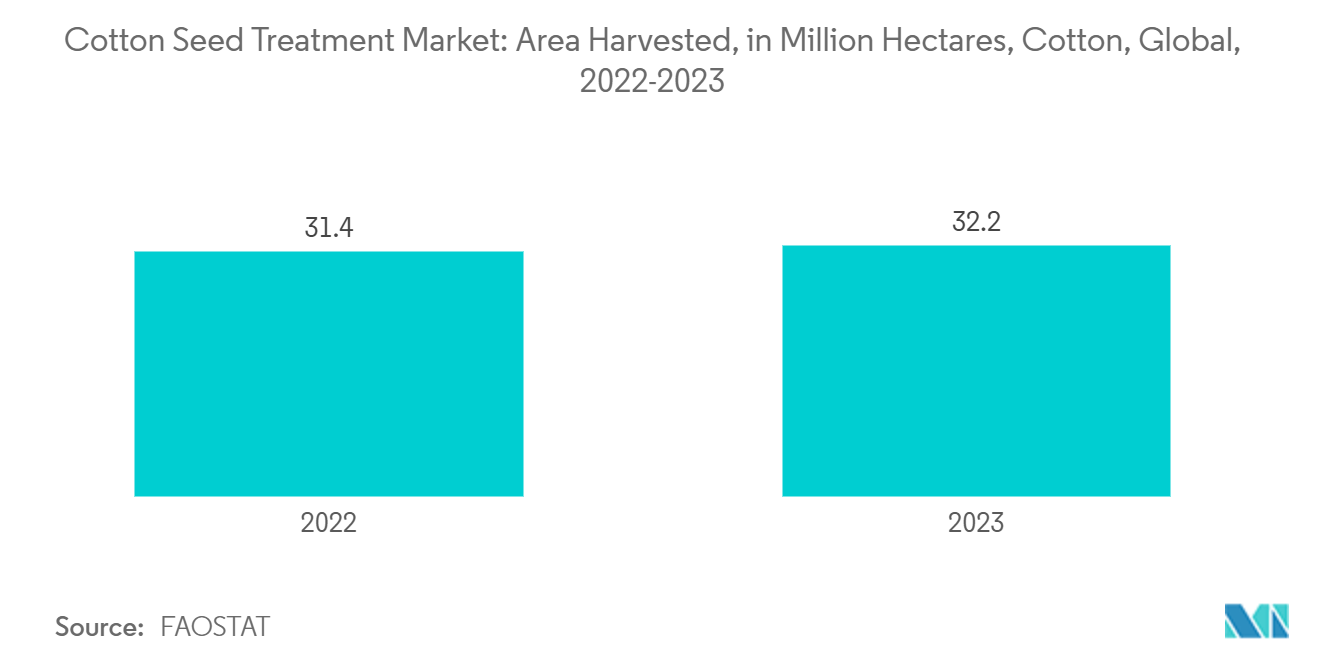


Asia Pacific Set to Experience Notable Growth in the Coming Years
Asia-Pacific is one of the global leaders in cotton production in the world. The increasing demand for cotton, particularly from the textile industry, is driving farmers to enhance yields, thereby boosting the regional market. Superior seed quality and protection are critical to meeting this demand. For example, the Textile Machinery Manufacturers Association reported that India produced 3.44 billion square meters of cotton fabric in the financial year 2023. Supporting this trend, FAO data shows that Asia's cotton production rose from 46 million metric tons in 2022 to 48 million metric tons in 2023. Seed treatment plays a pivotal role in this growth by improving germination rates and providing early growth protection, leading to higher yields.
India, China, and Pakistan dominate cotton cultivation in the Asia-Pacific region, with India being the largest global producer. Cotton in India is cultivated across three agroecological zones—Central, South, and North—covering 12.9 million hectares. The diverse applications of cotton, including its use in fibre, edible oil, and animal feed, have driven the demand for cotton seeds. This growing utilization is anticipated to significantly boost the market for cotton seed treatment in the Asia-Pacific during the forecast period.
Additionally, farmers in the region are increasingly adopting advanced seed treatment technologies. Innovations such as nutrient-releasing coatings, microencapsulation, and nano-formulations are gaining popularity. These technologies, often marketed with claims of increased yields, are encouraging farmers to expand their use of seed treatment products. For instance, in 2022, Syngenta Crop Protection’s Seedcare division introduced VICTRATO, a novel technology designed to control nematodes and diseases. Promoted as a solution to improve crop quality and yield while maintaining soil health, VICTRATO incorporates TYMIRIUM technology, which provides long-lasting protection against plant parasitic nematodes and key fungal diseases in crops like soybeans, corn, cereals, cotton, and rice. Such innovative product launches, coupled with the rising demand for cotton in the Asia-Pacific region, are driving market growth.

Competitive Landscape
The cotton seed treatment market is consolidated, with top global players commanding substantial shares. This dominance is driven by their highly diversified product portfolios and strategic moves, including acquisitions and agreements. These companies prioritize R&D, product portfolio expansion, geographic reach, and aggressive acquisition tactics. Key players in the market include BASF SE, Bayer Crop Science AG, Syngenta AG, UPL Limited, and Nufarm, among others.
Cotton Seed Treatment Industry Leaders
BASF SE
Syngenta AG
Bayer Crop Science AG
UPL Limited
Nufarm
- *Disclaimer: Major Players sorted in no particular order

Recent Industry Developments
- February 2024: In the United States, Syngenta has introduced Victrato, an innovative seed treatment for soybeans and cotton. This treatment is formulated to address nematodes, Sudden Death Syndrome (SDS), and Cotton Root Rot (CRR) while safeguarding beneficial organisms. Subject to approval by the Environmental Protection Agency, Victrato is anticipated to be available for the 2025 growing season.
- September 2023: BioConsortia, Inc., a leading innovator in sustainable agriculture, known for its microbial seed treatment solutions that address nematode issues in vital crops such as corn, soybean, sugarcane, cotton, and various vegetables, has announced its strategic expansion into the Brazilian market.


Global Cotton Seed Treatment Market Report Scope
Seed treatment refers to the application of fungicide, insecticide, or a combination of both, to seeds to disinfect them from seed-borne or soil-borne pathogenic organisms and storage insects. The Cotton Seed Treatment Market is Segmented by Chemical Origin (Synthetic and Biological), Product Type (Insecticides, Fungicides, and Other Product Types), Application (On-farm and Commercial), and Geography ( North America, Europe, Asia Pacific, South America, and Africa). The report offers market size and forecasts in terms of value (USD) for all the above segments.
Chemical Origin
| Synthetic |
| Biological |
Product Type
| Insecticides |
| Fungicides |
| Other Product Types |
Application
| On-farm |
| Commerical |
Geography
| North America | United States |
| Canada | |
| Mexico | |
| Rest of North America | |
| Europe | Germany |
| United Kingdom | |
| France | |
| Spain | |
| Russia | |
| Italy | |
| Rest of Europe | |
| Asia-Pacific | China |
| India | |
| Japan | |
| Australia | |
| Rest of Asia-Pacific | |
| South America | Brazil |
| Argentina | |
| Rest of South America | |
| Africa | South Africa |
| Rest of Africa |
| Chemical Origin | Synthetic | |
| Biological | ||
| Product Type | Insecticides | |
| Fungicides | ||
| Other Product Types | ||
| Application | On-farm | |
| Commerical | ||
| Geography | North America | United States |
| Canada | ||
| Mexico | ||
| Rest of North America | ||
| Europe | Germany | |
| United Kingdom | ||
| France | ||
| Spain | ||
| Russia | ||
| Italy | ||
| Rest of Europe | ||
| Asia-Pacific | China | |
| India | ||
| Japan | ||
| Australia | ||
| Rest of Asia-Pacific | ||
| South America | Brazil | |
| Argentina | ||
| Rest of South America | ||
| Africa | South Africa | |
| Rest of Africa | ||


Key Questions Answered in the Report
How big is the Cotton Seed Treatment Market?
The Cotton Seed Treatment Market size is expected to reach USD 3.5 billion in 2025 and grow at a CAGR of 4.90% to reach USD 4.5 billion by 2030.
What is the current Cotton Seed Treatment Market size?
In 2025, the Cotton Seed Treatment Market size is expected to reach USD 3.5 billion.
Who are the key players in Cotton Seed Treatment Market?
BASF SE, Syngenta AG, Bayer Crop Science AG, UPL Limited and Nufarm are the major companies operating in the Cotton Seed Treatment Market.
Which is the fastest growing region in Cotton Seed Treatment Market?
Asia Pacific is estimated to grow at the highest CAGR over the forecast period (2025-2030).
Which region has the biggest share in Cotton Seed Treatment Market?
In 2025, the North America accounts for the largest market share in Cotton Seed Treatment Market.
What years does this Cotton Seed Treatment Market cover, and what was the market size in 2024?
In 2024, the Cotton Seed Treatment Market size was estimated at USD 3.33 billion. The report covers the Cotton Seed Treatment Market historical market size for years: 2019, 2020, 2021, 2022, 2023 and 2024. The report also forecasts the Cotton Seed Treatment Market size for years: 2025, 2026, 2027, 2028, 2029 and 2030.
Page last updated on:


 Your data is secure and never sold or shared.


