
Market Overview
| Study Period | 2021 - 2031 |
|---|---|
| Market Size (2026) | USD 3.5 Billion |
| Market Size (2031) | USD 6.33 Billion |
| Growth Rate (2026 - 2031) | 12.53 % |
| Fastest Growing Market | Middle East and Africa |
| Largest Market | Asia Pacific |
| Market Concentration | Medium |
Major Players *Disclaimer: Major Players sorted in no particular order Image © Mordor Intelligence. Reuse requires attribution under CC BY 4.0. | |
Beauty Drinks Market Analysis by Mordor Intelligence
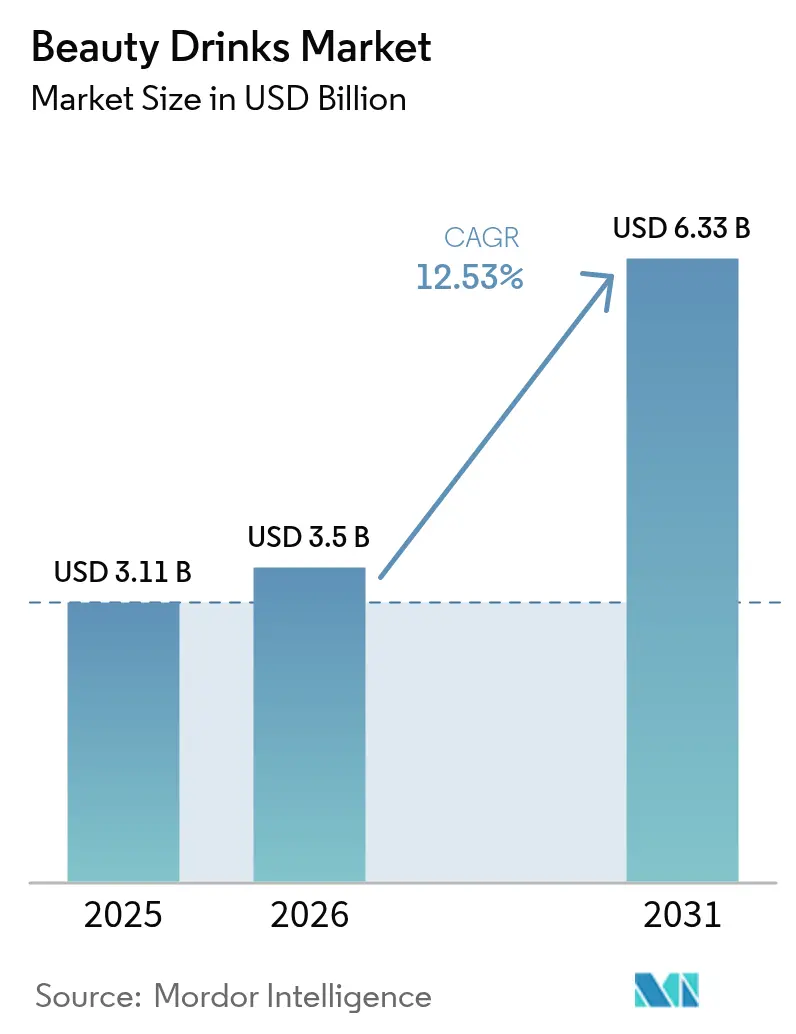
The global beauty drinks market size is expected to grow from USD 3.11 billion in 2025 to USD 3.50 billion in 2026 and is forecast to reach USD 6.33 billion by 2031 at 12.53% CAGR over 2026-2031. The market growth is primarily driven by increasing consumer awareness of preventive healthcare measures and a shift from traditional topical applications to ingestible beauty products. The rising aging population in developed countries, coupled with growing concerns about lifestyle-related diseases, has accelerated the adoption of beauty drinks. Additionally, these products have gained significant traction among women seeking to reduce wrinkles and enhance their appearance, with celebrity endorsements further amplifying market growth. n addition to these, the surge of e-commerce platforms has broadened the reach of beauty drinks, allowing brands to engage consumers directly through targeted marketing. Furthermore, the rising inclination towards natural and organic ingredients, coupled with personalized formulations catering to specific health and beauty requirements, is intensifying the demand.
Key Report Takeaways
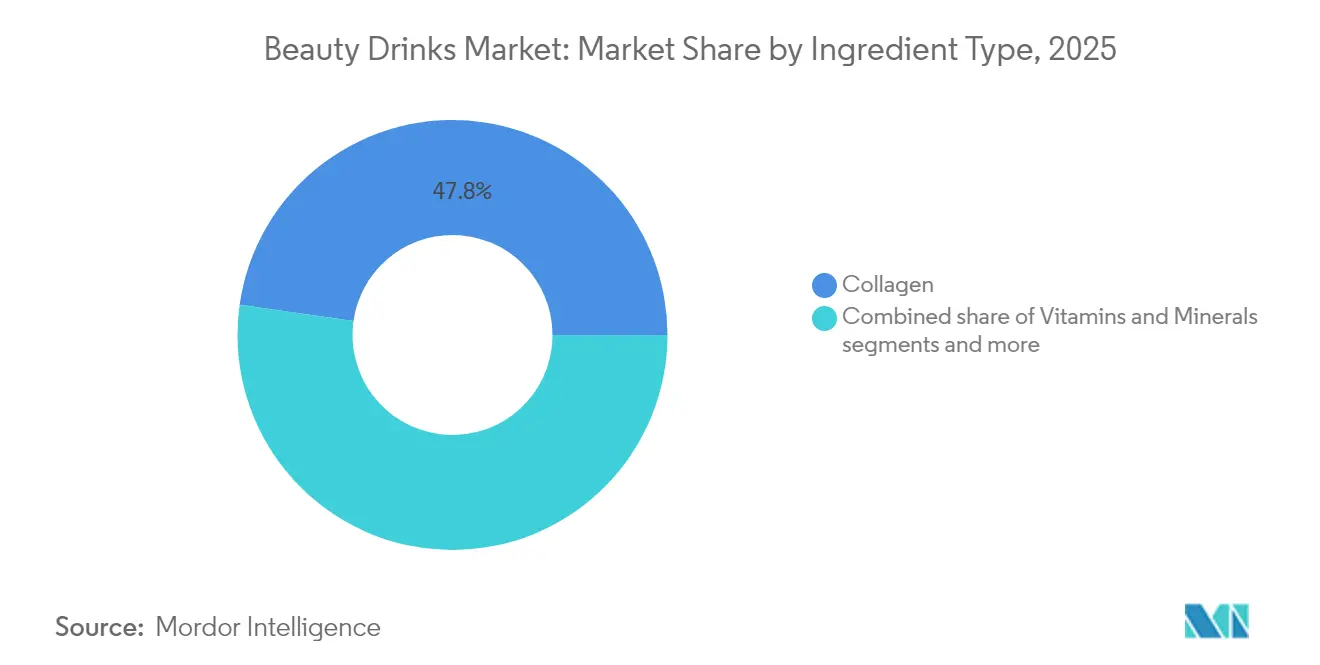
- By ingredient type, collagen held 47.75% of the market share in 2025, while vitamins and minerals are set to grow at a 14.32% CAGR through 2031.
- By functional benefit, anti-aging led with 41.55% revenue share in 2025, skin hydration is slated to expand at a 13.45% CAGR to 2031.
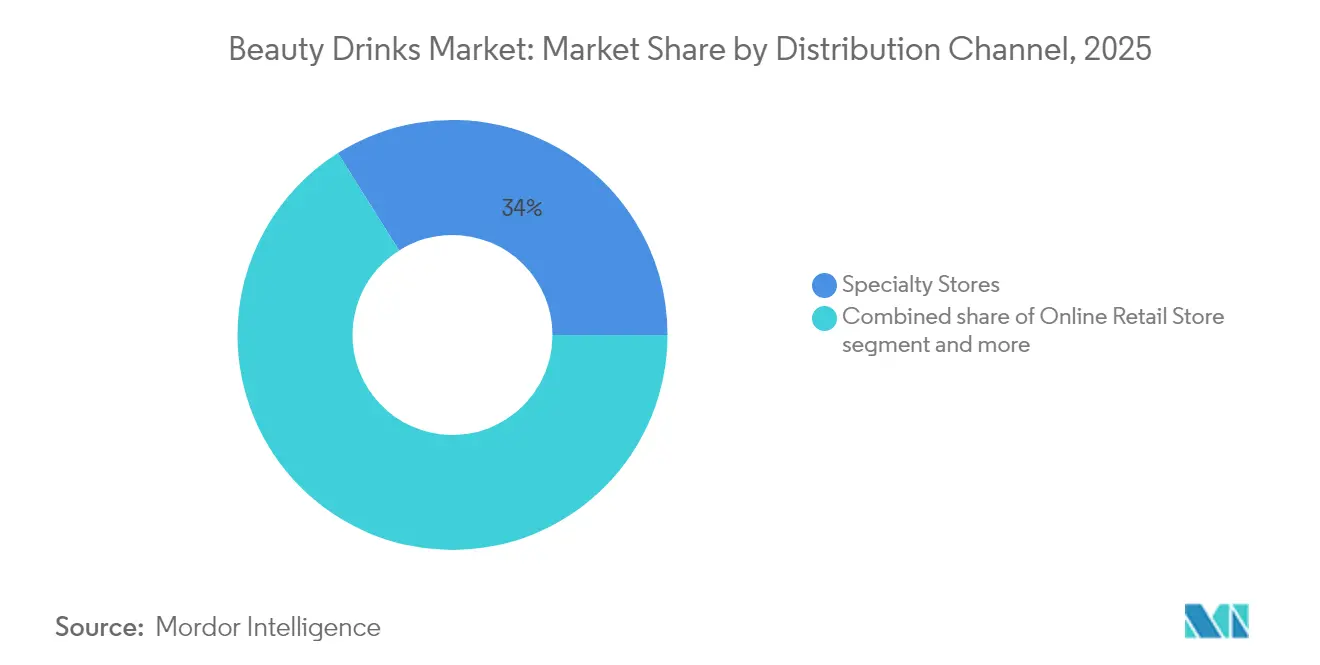
- By distribution channel, specialty stores commanded 33.95% of the beauty drinks market in 2025, and e-commerce channels are rising at a 12.55% CAGR through 2031.
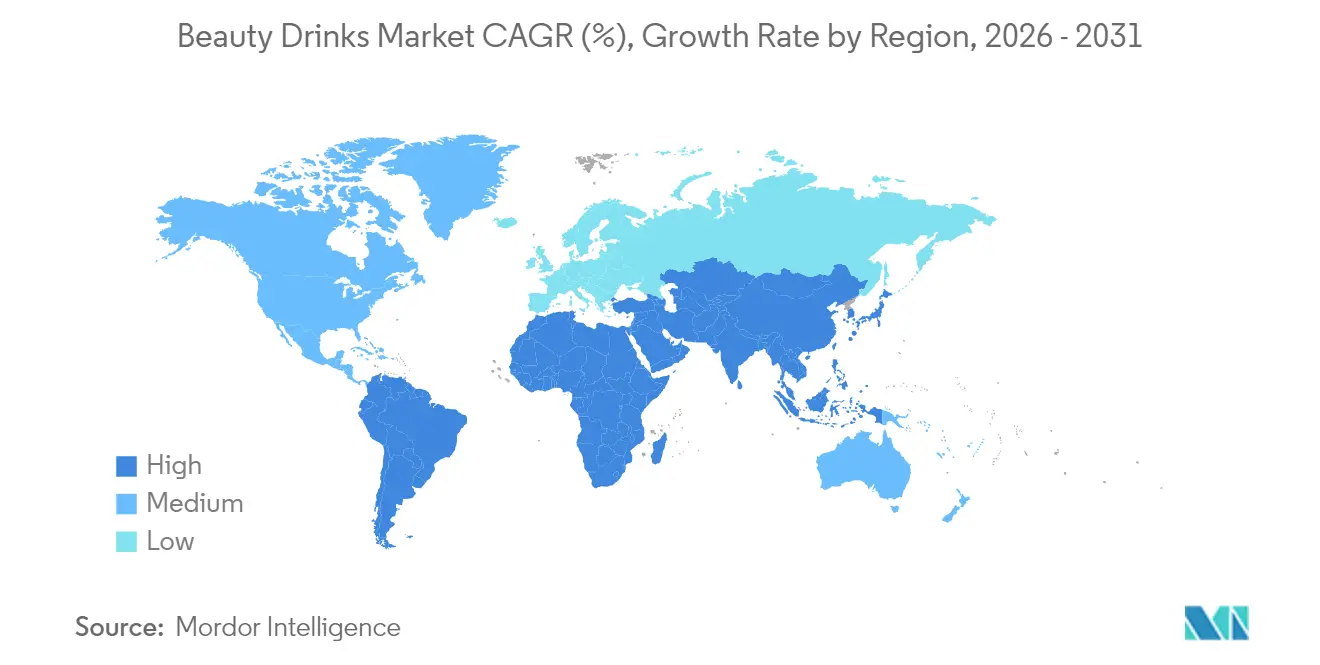
- By geography, Asia-Pacific captured 40.58% of the market share in 2025, and the Middle East and Africa will register the fastest 13.62% CAGR to 2031.
Note: Market size and forecast figures in this report are generated using Mordor Intelligence’s proprietary estimation framework, updated with the latest available data and insights as of 2026.
Market Trends and Insights
Drivers Impact Analysis of Beauty Drinks Market*
| Driver | (~) % Impact on CAGR Forecast | Geographic Relevance | Impact Timeline |
|---|---|---|---|
| Increasing consumer focus on anti-aging and inner wellness solutions | +2.1% | Global, led by Asia-Pacific and North America | Medium term (2-4 years) |
| Rising demand for beverages supporting skin and hair health | +1.8% | Asia-Pacific core, spill-over to Middle East and Africa and Europe | Short term (≤2 years) |
| Expanding availability of collagen and vitamin-enriched beauty beverages | +1.5% | Global, led by North America and Europe | Medium term (2-4 years) |
| Celebrity endorsements and influencer marketing boosting brand credibility | +1.2% | Global, highest in North America and Europe | Short term (≤2 years) |
| Shift toward preventive skincare over topical cosmetic applications | +2.3% | Global, strong in Asia-Pacific and North America | Long term (≥4 years) |
| Innovations in flavors and formulations improve consumer acceptance | +1.4% | Global, early adoption in developed markets | Medium term (2-4 years) |
| Source: Mordor Intelligence | |||
Increasing Consumer Focus On Anti-Aging And Inner Wellness Solutions
As populations age and wield greater purchasing power, beauty drinks are witnessing a surge in adoption. Heightened awareness about aging's impact on appearance has spurred demand for functional beverages that promise anti-aging benefits and bolster skin health. The "beauty from within" trend, gaining traction especially among millennials and Gen X, has led to a spike in the consumption of beauty drinks rich in collagen and antioxidants. Consumers' growing preference for holistic wellness is evident in the rising popularity of beauty drinks infused with bioactive ingredients like hyaluronic acid, vitamins, and peptides. According to the World Health Organization, the number of people aged 60 and older worldwide is projected to increase from 1.1 billion in 2023 to 1.4 billion by 2030, further strengthening the market growth potential [1]Source: World Health Organization, “Population Ageing Q&A,” who.int. This demographic evolution not only broadens the consumer base but also pushes brands to craft innovative formulations targeting specific age-related skin issues. Moreover, with older adults enjoying increased disposable incomes, premium pricing strategies become viable, positioning beauty drinks as a profitable niche in the expansive health and wellness sector.
Expanding Availability of Collagen And Vitamin-Enriched Beauty Beverages
Consumers are increasingly drawn to beauty drinks due to growing evidence supporting their efficacy in improving skin health. According to the National Library of Medicine, collagen supplements can enhance skin properties, including hydration, elasticity, and reduce the visibility of wrinkles [2]Source: Liquet-López C. et al., “Collagen Supplementation and Skin Health,” National Library of Medicine, ncbi.nlm.nih.gov.Manufacturers, spurred by scientific validation, are now crafting innovative formulations that blend collagen peptides with vital vitamins, minerals, and bioactive compounds. Market growth is buoyed by notable product launches, including Crushed Tonic's premium marine collagen-infused Korean Broth Beverage, debuting in February 2025. Consumers are increasingly drawn to the convenience of ingesting beauty-boosting nutrients in beverage form, sidestepping traditional supplements or topical applications. This shift resonates especially with those seeking straightforward skincare solutions. Furthermore, as personalized nutrition gains traction, brands are rolling out customizable beauty drinks, fine-tuned to individual skin types and concerns, fostering deeper consumer engagement. The trend also sees a push for natural flavors and transparent, clean-label ingredients, mirroring the beauty and wellness sector's growing emphasis on health-conscious choices and transparency.
Celebrity Endorsements And Influencer Marketing Boosting Brand Credibility
Social media platforms, especially TikTok, are reshaping consumer purchasing decisions in the beauty drinks market, underscoring the power of celebrity endorsements and influencer marketing. Testimonials and before-and-after results from trusted personalities lend authenticity to product claims, driving adoption, especially among younger demographics attuned to lifestyle and beauty influencers. TikTok's algorithm allows niche beauty drink brands to achieve viral success without hefty advertising budgets, leveling the playing field for emerging competitors through user-generated content. A testament to this trend, in December 2024, American podcaster Alex Cooper unveiled 'Unwell Hydration', a drink line packed with electrolytes, B-complex vitamins, and green coffee extract. Brands like Glow Recipe have also tapped into influencer partnerships and trending TikTok challenges, propelling their collagen-infused beauty drinks. Such digital marketing maneuvers are fueling rapid growth in the global beauty drinks market, emphasizing the pivotal role of social media endorsements in market penetration and trust-building.
Shift Toward Preventive Skincare Over Topical Cosmetic Applications
Cosmetic products can trigger adverse reactions ranging from mild irritation to severe health issues, with studies published in Clinical Epidemiology and Global Health reporting high prevalence of problems including conjunctivitis, acne, contact dermatitis, pigmentation issues, and itching among users [3]Source: Adityan S. et al., “Cosmetic Product Adverse Effects: A Cross-Sectional Study,” Clinical Epidemiology and Global Health, cegh.net .This awareness has sparked a significant shift in consumer behavior moving from reactive cosmetic treatments to proactive nutritional interventions. Consumers now understand that skin health is rooted in internal cellular processes, not just external applications. The beauty drinks market is witnessing significant growth, especially among Generation Z and Millennials. These consumers are prioritizing long-term skin health and preventive skincare over corrective treatments. They're increasingly opting for beauty drinks enriched with collagen, vitamins, antioxidants, and other bioactive compounds. These ingredients, known for their cellular benefits, are driving a consistent demand for daily beauty drinks, overshadowing sporadic cosmetic interventions. This shift is in harmony with broader wellness trends, emphasizing internal nourishment for skin health. Additionally, the rising demand for clean beauty and product transparency has led brands to eliminate harmful chemicals from their formulations. This move not only aligns with consumer preferences but also bolsters trust in ingestible beauty solutions.
Restraints Impact Analysis of Beauty Drinks Market*
| Restraint | (~) % Impact on CAGR Forecast | Geographic Relevance | Impact Timeline |
|---|---|---|---|
| High product costs limit access for price-sensitive consumers | -1.9% | Global, impactful in developing economies | Short term (≤2 years) |
| Lack of clinical evidence for long-term beauty benefit claims | -1.3% | Global, high in regulated markets | Medium term (2-4 years) |
| Consumer skepticism regarding effectiveness of ingestible beauty solutions | -1.1% | Primarily North America and Europe | Short term (≤2 years) |
| Limited awareness in developing economies about beauty drinks | -0.8% | Middle East and Africa, South America, parts of Asia-Pacific | Long term (≥4 years) |
| Source: Mordor Intelligence | |||
High Product Costs Limit Access For Price-Sensitive Consumers
Beauty drinks face a significant market restraint due to their high costs, especially in price-sensitive regions and developing economies. Premium ingredients such as marine collagen, vitamins, antioxidants, and bioactive compounds are pricier than traditional protein sources. Moreover, specialized extraction and processing technologies complicate manufacturing. These heightened production costs lead to steeper retail prices, making beauty drinks a luxury for budget-conscious consumers. This economic sensitivity is especially evident in developing markets, where limited disposable incomes curtail adoption, even amidst a rising interest in wellness products. As a result, many consumers turn to traditional beverages, basic nutritional supplements, or topical products as more affordable alternatives. This creates a tension between the allure of premium ingredient quality and the reality of market accessibility. Furthermore, a lack of widespread consumer education on the long-term benefits of beauty drinks dampens the enthusiasm to invest in these premium products. To navigate these challenges, brands might need to consider cost-effective formulations and tailored pricing strategies to broaden their appeal in emerging markets.
Lack of Clinical Evidence For Long-Term Beauty Benefit Claims
In markets under stringent regulatory scrutiny, beauty drink manufacturers grapple with the challenge of aligning marketing messages with scientifically validated claims. Regulatory bodies, like the FDA and Australia's Therapeutic Goods Administration, are tightening their grip, demanding robust clinical evidence for health claims on dietary supplements and beauty products. This push for evidence is underscored by a notable scarcity of comprehensive studies backing the long-term beauty benefits of these products. Such a void in evidence is especially pronounced for newer ingredients, such as glutathione and certain vitamin formulations, which haven't yet garnered the clinical validation that established ingredients, like collagen peptides. This lack of scientific backing not only hampers manufacturers in securing regulatory approvals for health claims but also casts a shadow on market growth and erodes consumer trust. In response, companies are ramping up investments in clinical trials and forging alliances with research institutions to bolster their evidence base. Furthermore, there's a concerted effort towards heightened transparency and educational initiatives, targeting both consumers and regulatory entities, to cultivate trust and ease market entry.
*Our forecasts treat driver/restraint impacts as directional, not additive. The impact forecasts reflect baseline growth, mix effects, and variable interactions.
Beauty Drinks Market Segment Analysis
By Ingredient Type:
Collagen Dominance Faces Vitamin InnovationCollagen commands a dominant 47.75% share in 2025, bolstered by clinical validations that highlight its hydrolyzed peptides' efficacy in enhancing skin hydration and elasticity. Glutathione, recognized for its antioxidant benefits in promoting cellular health and skin brightness, lacks the extensive clinical backing that collagen enjoys. Nevertheless, glutathione's potential in countering oxidative stress and fostering a luminous complexion has spurred its rising popularity, leading to heightened interest and investment in its scientific exploration. With a growing consumer appetite for natural and effective beauty solutions, both collagen and glutathione are poised to play synergistic roles in the burgeoning beauty drinks market.
The vitamins and minerals segment shows the highest growth potential with a 14.32% CAGR through 2031, driven by consumers seeking comprehensive nutritional solutions. This growth particularly stems from vitamin C's role in collagen synthesis and bioavailability enhancement, while biotin addresses specific hair and nail health requirements, indicating a shift toward more sophisticated, targeted nutritional interventions.



By Functional Benefit:
Anti-Aging Leadership Yields to Hydration GrowthAnti-aging applications command a dominant 41.55% market share in 2025, underscoring consumers' focus on staving off visible aging signs. Yet, the skin hydration segment is outpacing others, boasting a robust 13.45% CAGR growth rate projected through 2031. This surge signals a notable pivot towards prioritizing foundational skin health, especially among younger consumers who lean towards preventive care rather than reactive solutions. Heightened awareness about skin moisture's role in bolstering the skin barrier and postponing aging signs fuels this trend. Furthermore, the allure of beauty drinks, which meld hydrating agents with antioxidants and vitamins, is captivating health-savvy consumers eager for holistic internal skincare remedies..
The market demonstrates strong cross-category appeal through segments like detoxification, which attracts wellness-conscious consumers seeking holistic health benefits, and specialized hair and nail health applications that address specific concerns. This multi-functional approach enables beauty drinks that target multiple benefits to command premium pricing and foster stronger consumer loyalty compared to single-benefit alternatives.
By Distribution Channel:
Specialty Stores Lead as E-commerce AcceleratesSpecialty stores command a leading position with a 33.95% market share in 2025, capitalizing on expert consultations and product education to justify the premium pricing of their scientifically validated beauty drinks. Online retail stores, buoyed by the allure of convenience and an expansive product selection, are projected to expand at a robust 12.55% CAGR through 2031. Meanwhile, drug stores and pharmacies bolster the credibility of their offerings, especially those making health claims, by aligning with recognized healthcare associations. The rising trend of subscription models in online channels dovetails seamlessly with the daily consumption habits of beauty drinks, paving the way for consistent revenue streams for brands. This subscription approach not only fosters direct engagement with consumers but also empowers brands to customize their offerings based on individual purchase behaviors and preferences, significantly boosting customer retention and lifetime value.
Supermarkets and direct-to-consumer platforms are catering to price-sensitive consumers who prioritize convenience and cost savings. Supermarkets, with their one-stop shopping advantage, make beauty drinks readily accessible to a wide audience. In contrast, direct-to-consumer platforms allow brands to sidestep traditional retail markups, presenting competitive prices and tailored shopping experiences. These platforms also frequently offer subscription services and exclusive online promotions, boosting affordability and nurturing long-term loyalty among budget-conscious shoppers.
Geography Analysis
APAC Beauty Drinks Market
Asia-Pacific holds the largest market share at 40.58% in 2025, benefiting from deep-rooted cultural acceptance of functional beverages and well-developed regulatory frameworks. Japan and South Korea stand out as premium market leaders, where consumers readily invest in scientifically validated products. The region's demographic profile, combining an aging population seeking anti-aging solutions with younger consumers adopting preventive beauty approaches, creates a robust market for daily-use beauty drinks.
MEA Beauty Drinks Market
The Middle East and Africa region demonstrates the highest growth potential with a projected CAGR of 13.62% through 2031. This growth is supported by developing wellness tourism infrastructure and increasing urbanization. South Africa leads the sub-Saharan market with USD 56.9 million in cosmetics imports, showing particular demand for organic and natural beauty drinks. Rising consumer spending power across the region creates new consumer segments seeking convenient wellness solutions.
North America and Europe Beauty Drinks Market
North America and Europe maintain strong market positions through established nutraceutical awareness and comprehensive regulatory frameworks. These mature markets emphasize transparency in ingredient sourcing and manufacturing processes, particularly favoring clean-label products and sustainable practices. Marine collagen products with environmental credentials receive particular attention, reflecting these regions' focus on both personal wellness and environmental responsibility.

Regulatory Landscape
Regulation for beauty drinks is largely handled under food supplement and functional beverage rules, with marketing claims as the main trigger for enforcement. In the United States, the FDA regulates products either as dietary supplements or conventional foods (including expectations around permissible structure-function claims, and ingredient safety such as GRAS for food additives), which increases the compliance burden for brands using bioactives like collagen peptides, hyaluronic acid, and botanicals.
In the European Union, health claims fall under Regulation (EC) No 1924/2006 and require scientific substantiation assessed through EFSA processes, while many “beauty-from-within” style claims can face country-level advertising and consumer-protection scrutiny. A concrete 2026 anchor is the European Commission Implementing Regulation (EU) 2026/1427 (July 2026), which authorized enzymatically produced egg membrane hydrolysate as a novel food with defined use conditions for adult food supplements and a maximum daily amount, showing how novel ingredient pathways can shape formulation limits and labeling discipline for collagen-adjacent inputs.
Value Chain Analysis
The beauty drinks value chain begins with sourcing specialized bioactives (notably collagen peptides, plus vitamins and minerals, antioxidants, and other actives such as hyaluronic acid), followed by formulation and stability work, then beverage processing and filling, often via contract manufacturers and co-packers. Given the category’s premium positioning and the need to control taste, solubility, and shelf life, brands typically depend on standardized ingredient specifications and testing to support quality and claims discipline, while packaging selection (single-serve bottles, shots, sachets, and jelly formats) is closely linked to dosage accuracy and convenience.
Go-to-market commonly blends specialty stores and pharmacies for education-led selling with fast-scaling e-commerce and direct-to-consumer programs, including subscriptions aligned to daily-use regimens. Operational constraints are most visible for preservative-free or refrigerated formulations that require tighter distribution controls, and for smaller-batch innovation cycles where co-packer capacity and lead times can slow SKU expansion; these frictions often encourage brands to favor simplified formats and partnerships that can deliver consistent dosing and product integrity across channels.
Competitive Landscape
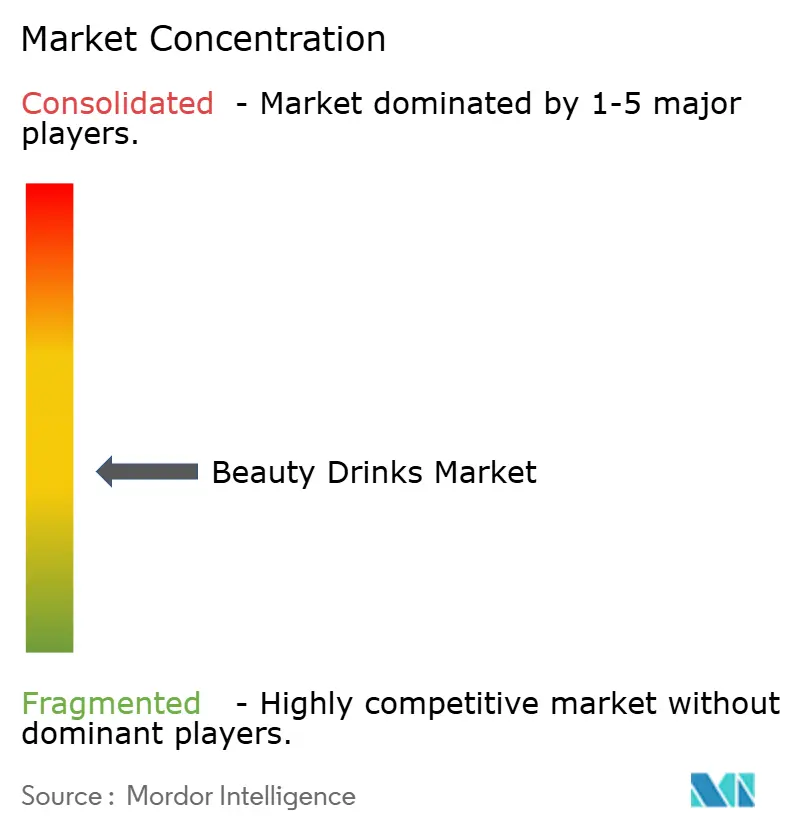
The beauty drinks market is moderately fragmented, presenting strategic opportunities for both established companies like SAPPE Public Company Limited, Shiseido Co. Ltd, Lacka Foods Limited, and Nestle SA, as well as emerging players. The competitive environment increasingly favors companies that can provide robust clinical evidence to support their efficacy claims, as regulatory frameworks and consumer sophistication demand scientific validation rather than marketing promises.
New market entrants are leveraging direct-to-consumer channels and social media marketing, particularly through user-generated content on platforms like TikTok, to connect with younger consumers seeking beauty-from-within solutions. The market presents opportunities in specialized formulations targeting specific demographic groups and functional benefits. In April 2024, Shiseido demonstrated this trend by launching new drink format supplements, which gained significant traction in Japan and China, marking its expansion in the ingestible beauty sector.
Technology adoption in the beauty drinks market enables personalized nutrition approaches and subscription-based business models that increase customer lifetime value. Companies are implementing omnichannel retail strategies that combine physical expertise with digital accessibility, creating competitive advantages against pure online competitors. These technological integrations help manufacturers better serve consumer needs while establishing stronger market positions.
Beauty Drinks Industry Leaders
Shiseido Co. Ltd
Kinohimitsu
Nestlé SA
Sappe Public Company Ltd
Lacka Foods Ltd
- *Disclaimer: Major Players sorted in no particular order
Beauty Drinks Market Companies Covered in this Report
- Nestle SA
- Shiseido Co Ltd (The Collagen)
- Sappe Public Company Ltd
- Kinohimitsu
- Lacka Foods Ltd
- Hangzhou Nutrition Biotechnology Co Ltd
- AmorePacific Corp
- Asterism Healthcare
- Revive Collagen
- Bella Berry
- My Beauty & GO
- Rejuvenated Ltd
- Molecule Beverages
- Big Quark
- On-Group Ltd
- Vital Proteins LLC
- DyDo Drin Co.
- Fine Japan Co. Ltd
- Skinade (Bottled Science Ltd)
- Elasten (Quiris Healthcare)

Market Opportunities and Future Outlook
Opportunities cluster around science-led premiumization and expanding formats that fit daily routines, where brands can defend price points using substantiation, controlled dosing, and clean-label positioning. Collagen remains the anchor ingredient (47.75% share in 2025), while vitamins and minerals are the growth driver within formulations, creating space for hybrid products that combine collagen peptides with supportive micronutrients for beauty-from-within regimens.
A visible 2026 proof point for innovation intensity is the continuing rollout of inner-beauty launches by established players, including Shiseido’s expansion of ingestible beauty formats and Asia-focused commercialization, alongside Kinohimitsu’s moves toward targeted demographic positioning (for example, male-oriented collagen offerings in ready-to-consume formats). At the same time, the EU novel food pathway exemplified by the July 2026 authorization of enzymatically produced egg membrane hydrolysate provides clearer compliance benchmarks for emerging collagen-derived inputs, which supports differentiated formulations where safety specifications and use conditions are defined upfront.
Recent Industry Developments in Beauty Drinks Market
- May 2026: Kinohimitsu launched Collagen Men Pro in Malaysia, positioning it as a daily, ready-to-consume sachet-format collagen product through an exclusive rollout at Watsons Malaysia. The launch reflects a shift toward demographic-specific beauty-from-within propositions and retailer-led exclusivity as a route to faster shelf access in Asia-Pacific.
- May 2025: MAR Advantage unveiled Athenas Glow Drink, a ready-to-drink beauty beverage positioned for women aged 45 and above and introduced in multiple flavors. The age-targeted positioning shows how brands are segmenting by life stage and leaning on convenient RTD formats to support repeat consumption.
- April 2024: Shiseido launched INRYU Intensive Beauty Drink in Japan, extending availability via Chinese cross-border e-commerce shortly afterward. This combined domestic launch and cross-border digital route highlights how premium brands use Asia-centric omnichannel distribution to scale ingestible beauty lines without waiting for full traditional retail rollout in every market.


Beauty Drinks Market Report Scope and Research Methodology
Market Definition and Coverage
For this study, the beauty drinks market covers ready-to-drink and drinkable format ingestible products that are marketed for beauty-related benefits, such as skin radiance, anti-aging, and hair and nail support, and that are sold through retail and online channels.
Scope exclusions: We exclude topical skincare and cosmetics, and we also exclude pills, powders, and gummies that are sold only as supplements rather than drinks.
Segments Covered in This Report
- By Ingredient Type
- Vitamins and Minerals
- Collagen
- Glutathione
- Other Types
- By Functional Benefit
- Anti-Ageing
- Detoxification
- Skin Hydration
- Hair and Nail Health
- Others Functional Benefits
- By Distribution Channel
- Specialty Stores
- Drug Stores and Pharmacies
- Online Retail Stores
- Other Distribution Channels
- By Geography
- North America
- United States
- Canada
- Mexico
- Rest of North America
- Europe
- Germany
- France
- United Kingdom
- Spain
- Netherlands
- Italy
- Sweden
- Poland
- Belgium
- Rest of Europe
- Asia-Pacific
- China
- India
- Japan
- Australia
- South Korea
- Indonesia
- Thailand
- Singapore
- Rest of Asia-Pacific
- South America
- Brazil
- Argentina
- Chile
- Colombia
- Peru
- Rest of South America
- Middle East and Africa
- United Arab Emirates
- South Africa
- Nigeria
- Saudi Arabia
- Egypt
- Morocco
- Turkey
- Rest of Middle East and Africa
- North America
Data Sources, Market Sizing, and Validation
Desk Research
Desk research was used to build the initial market structure and to anchor demand signals that can be checked over time. We referred to public sources such as customs and trade statistics, food and beverage labeling guidance, nutrition and functional-ingredient research in peer-reviewed journals, and statistics published by bodies such as the OECD and the World Bank for macro indicators.
On the industry side, we reviewed company annual reports and investor presentations, brand and retailer websites, and trusted media coverage to understand pack formats, claim language, and pricing direction. To avoid gaps where public disclosures are thin, we also used a paid subscription focused on company financials and another paid subscription focused on patent search signals to verify activity around collagen, vitamins, and carotenoid related formulations. These desk research sources are illustrative only, and additional references were used during data collection, validation, and clarification.
Primary Interviews and Surveys
Primary work focused on interviews and structured surveys with beverage brand teams, ingredient suppliers, distribution partners, and category managers, so that desk assumptions could be corrected before final sizing. Because this is a global market, inputs were balanced across APAC, EMEA, and the Americas, and we also spoke with stakeholders covering both mass retail and specialty channels to confirm velocity and pricing ranges.
Distribution of primary research fieldwork respondents
| Company type | Respondent position | Region |
|---|---|---|
| Top tier: 32% | CXOs: 13% | APAC: 45% |
| Mid tier: 53% | Functional/Unit leaders: 32% | EMEA: 36% |
| Smaller Players: 15% | Managers: 55% | Americas: 19% |
Market-Sizing & Forecasting
Sizing starts from a top-down demand pool build, where beverage category value is narrowed using penetration and adoption logic for beauty-positioned drinks across major regions, then filtered through channel mix and claim-led product presence. Once that path is set, we corroborate totals using selective bottom-up checks, such as sampling typical price per bottle and expected consumption frequency, and then scaling it to realistic buyer counts by geography.
Key inputs that shaped the model include average selling prices by channel, pack size and format shifts, collagen and vitamin based product mix, online versus offline share movement, and the speed of new product launches tied to beauty claims. For forecasting, scenario analysis is used so the base-case growth reflects the most repeated expert view on near-term demand, followed by a more normalized adoption curve as markets mature. Where a bottom-up check could not be built for a smaller country or a niche channel, we used proxy indicators such as urban income trends and e-commerce readiness, then re-tested the output against regional totals.
Data Validation & Update Cycle
Findings were validated through multiple passes, starting with variance checks across regions, channels, and price bands, then moving to consistency checks against independent demand signals. When an output looked off, for example an unrealistic jump in value without a matching change in pricing or distribution reach, the relevant assumption was reopened and select experts were re-contacted.
Before sign-off, the model is reviewed by another analyst, and outliers are challenged until the math and the narrative align. Reports are refreshed annually, and interim updates are made when material events occur, such as major regulatory shifts or sharp ingredient cost changes. Right before delivery, a fresh pass is completed so clients receive the most current view that can be supported by traceable inputs.
Mordor Intelligence's Global Beauty Drinks Market Market Estimate Compared With Other Published Estimates
Published market values for beauty drinks can look far apart, even when the topic name appears identical, because the counting rules are not always the same. Differences usually come from what formats are included, whether adjacent supplement forms are counted as drinks, and how pricing and currency timing are handled.
The main gap comes from format scope, where Mordor Intelligence counts only drinkable products positioned for beauty benefits, and does not fold in gummies, powders, or capsules that are often bundled into broader nutricosmetic totals. A second driver is the pricing path, since some sources apply aggressive premiumization across all regions, while we keep price movement tied to channel mix and observed pack-size trends. Refresh timing can also matter, because fast changes in online share and new collagen launches can move the near-year base if updates are not recent.
Benchmark comparison
| Source | Market Size | Gaps in Research Methodology |
|---|---|---|
| Mordor Intelligence | USD 3.50 B (2026) | |
| Industry Publisher A | USD 2.40 B (2024) | Uses a different base year and a longer forecast window, and its segmentation suggests broader inclusion of beauty-oriented nutrition items that may not be sold as ready-to-drink products. |
| Global Publisher B | USD 3.60 B (2024) | Reports a 2024 valuation with limited clarity on drink-only filtering, and the higher number can occur when adjacent supplement formats and more optimistic price uplift assumptions are blended into the same total. |
The table shows that year selection and what is counted as a drink create most of the spread, and pricing assumptions then widen it further. By keeping the model tied to drinkable beauty claims, channel-level pricing, and realistic adoption checks, the resulting market size stays easier to follow and repeat across updates without needing hidden inputs.


Key Questions Answered in the Report
What is the current size of the beauty drinks market and how fast is it growing?
The beauty drinks market was valued at USD 3.50 billion in 2026 and is projected to expand to USD 6.33 billion by 2031 at a 12.53% CAGR.
Which ingredient type holds the largest share in the beauty drinks market?
Collagen beverages captured 47.75% of global revenue in 2025, making them the dominant ingredient segment.
What functional benefit segment is growing the fastest?
Skin hydration formulations are forecast to rise at a 13.45% CAGR through 2031, outpacing anti-aging and detox categories.
Which region leads the beauty drinks market in revenue terms?
Asia-Pacific held 40.58% of global sales in 2025, driven by strong demand in Japan, South Korea, and China.
Page last updated on:


 Your data is secure and never sold or shared.


