
Glass Cockpit Market Size and Share
| Study Period | 2019 - 2030 |
| Market Size (2025) | USD 4.53 Billion |
| Market Size (2030) | USD 5.48 Billion |
| CAGR (2025 - 2030) | 3.87% |
| Fastest Growing Market | Asia Pacific |
| Largest Market | North America |
| Market Concentration | Medium |
Major Players *Disclaimer: Major Players sorted in no particular order |
Glass Cockpit Market Analysis by Mordor Intelligence
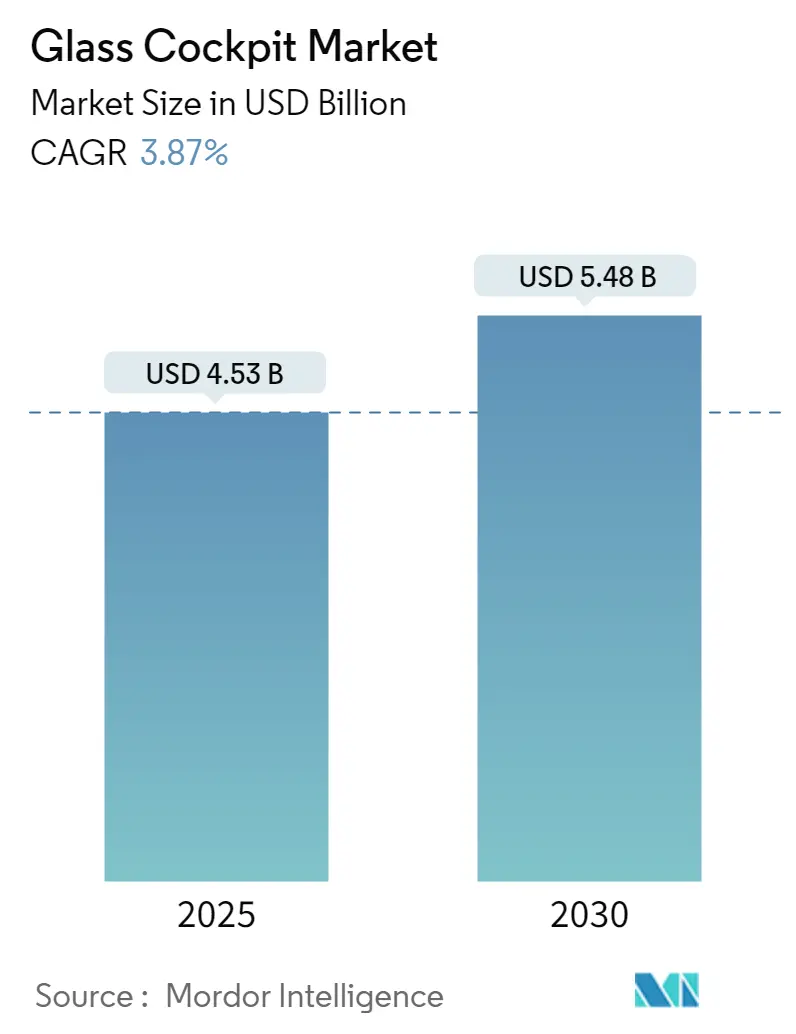
The Glass Cockpit Market size is estimated at USD 4.53 billion in 2025, and is expected to reach USD 5.48 billion by 2030, at a CAGR of 3.87% during the forecast period (2025-2030).
- As the aviation industry increasingly embraces advanced digital avionics systems, the glass cockpit market is witnessing robust growth. Glass cockpits, which utilize electronic flight instrument displays in place of traditional analog gauges, offer pilots heightened situational awareness, bolstered safety, and streamlined operations. By consolidating essential flight data—ranging from navigation and weather to engine performance—into intuitive interfaces, these systems not only lighten the pilot's workload but also facilitate swifter decision-making. A surge in demand for modernized aircraft across commercial, military, and general aviation sectors is propelling this market expansion.
- Technological strides in avionics play a pivotal role in the burgeoning glass cockpit market. Cutting-edge display technologies, including high-resolution LCDs and touchscreens, are amplifying the functionality and dependability of glass cockpit systems. Moreover, the incorporation of real-time data, automation, and satellite navigation dovetails with the industry's overarching shift towards smarter, interconnected aviation. The rising trend of retrofitting older aircraft with modern glass cockpit systems underscores the market's momentum, as operators aim to elevate legacy fleets in line with contemporary safety and efficiency benchmarks.
- In September 2024, Genesys Aerosystems, a Moog company, revealed that its Genesys Avionics Suite has been integrated into the newly launched Grob Aircraft France (GAF) Cobra trainer aircraft. After five years of clandestine development, GAF has introduced its latest model, boasting a comprehensive Genesys Aerosystems glass cockpit. Tailored for military pilot training, GAF’s Cobra is a cutting-edge, single-engine turboprop with high-performance capabilities.
- The military aviation sector, with its demand for sophisticated avionics in modern jets, transport planes, and helicopters, significantly bolsters the glass cockpit market. These advanced systems empower military pilots to swiftly access crucial mission data, amplifying effectiveness in intricate scenarios. On the commercial front, airlines are adopting glass cockpits not just for their operational advantages but also for reduced maintenance costs and improved fuel efficiency. Regions like Asia-Pacific and the Middle East are seeing a surge in adoption, driven by fleet expansions and investments in next-gen aircraft by regional airlines.
- While challenges like steep development and installation costs hinder growth—especially for smaller operators and general aviation users—the undeniable advantages of glass cockpits in safety, efficiency, and regulatory compliance drive their adoption. Major players are channeling efforts into innovation, forging partnerships, and pursuing strategic acquisitions to maintain a competitive edge. With the aviation sector emphasizing modernization and sustainability, the glass cockpit market stands on the brink of sustained growth, buoyed by technological advancements and a global appetite for cutting-edge aircraft.
Global Glass Cockpit Market Trends and Insights
Military Aviation Accounts For a Significant Share
- Military aircraft hold a significant share in the glass cockpit market due to their critical need for advanced avionics systems that enhance operational efficiency, mission readiness, and pilot situational awareness. Glass cockpits in military aircraft provide centralized, real-time data that is vital during complex operations such as combat, reconnaissance, and training missions. These systems allow pilots to access flight, navigation, and mission-specific information seamlessly, reducing cognitive load and improving decision-making in high-pressure scenarios.
- The demand for glass cockpits in military aviation is driven by the modernization of air forces worldwide. Many countries are investing in next-generation fighter jets, transport aircraft, and advanced training systems, all of which increasingly feature glass cockpit technology. These cockpits are equipped with cutting-edge displays and interfaces that integrate data from various sources, enabling pilots to execute their missions with greater precision. Military programs such as the development of stealth aircraft and unmanned aerial vehicles (UAVs) also contribute to the growing adoption of glass cockpit systems.
- Retrofitting older military aircraft with glass cockpits has further boosted their share in the market. As defense budgets in several countries prioritize the extension of existing fleet lifespans, upgrading avionics systems to include glass cockpits has become a cost-effective solution. These upgrades not only improve operational performance but also ensure compliance with modern safety and communication standards. This trend highlights the strategic importance of glass cockpits in maintaining the combat readiness of aging aircraft fleets.
- Additionally, the use of glass cockpits in military training aircraft underscores their significance in preparing pilots for modern combat scenarios. Advanced simulators equipped with glass cockpit systems replicate real-world conditions, providing trainees with hands-on experience in managing complex avionics systems. This alignment with operational aircraft ensures a smoother transition for pilots and reinforces the dominance of military applications in the glass cockpit market. With continuous advancements in avionics technology, military aircraft are expected to remain a key contributor to the growth of this market.
- In a significant move, in February 2024, Honeywell partnered with ST Engineering Defence Aviation Services (STEDAS) to enhance two C-130 aircrafts of the Tunisian Air Force (TAF). This collaboration marks STEDAS' inaugural integration of a Honeywell Aerospace Technologies solution into its offerings.
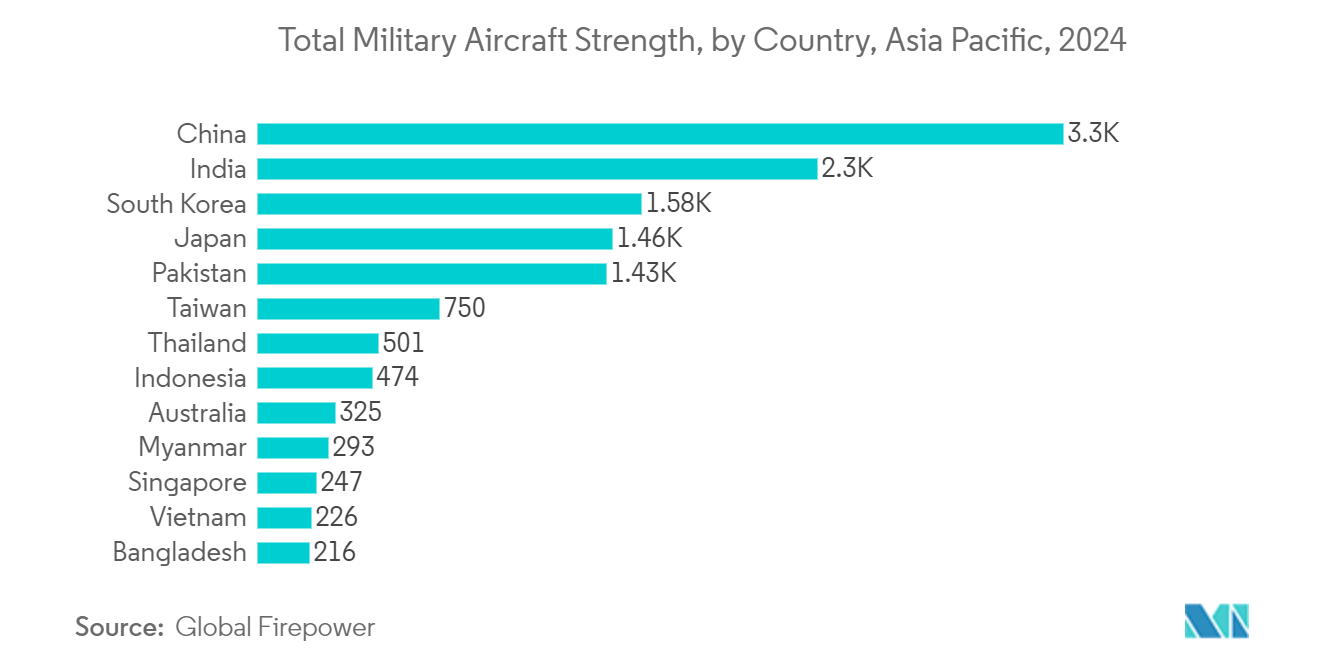
- The large number of military aircraft fleets in countries like China and India presents a significant opportunity for the glass cockpit market, as these nations modernize their aviation technologies. As per GFP data, with China’s estimated 3.3 thousand combat aircraft and India’s nearly 2.3 thousand, the demand for advanced avionics systems, including glass cockpits, is expected to rise significantly in these regions. As military aircraft fleets are upgraded, the adoption of glass cockpits will enhance pilot efficiency and mission success. In contrast, smaller fleets, such as Bhutan’s two aircraft, reflect the limited scope for glass cockpit deployment in countries with minimal defense resources.


North America Accounts For Major Share
- North America, led by aerospace giants like Honeywell, Garmin, and Rockwell Collins, dominates the glass cockpit market. The region's technological prowess, hefty investments in aviation infrastructure, and a robust appetite for next-gen avionics bolster its leadership. The U.S., a global aviation titan, plays a pivotal role, with its extensive fleet of commercial, military, and general aviation aircraft adopting glass cockpit systems to boost performance and safety.
- North America stands tall in commercial aviation, with numerous airline operators outfitting their fleets with cutting-edge glass cockpit technologies. Prioritizing fuel efficiency, safety, and operational reliability, the region's airlines leverage the advanced features of glass cockpits. These systems not only lighten the pilot's workload but also streamline flight paths and enhance aircraft management, driving up operational efficiency. This momentum is set to persist, as airlines in North America continue to retrofit older fleets and embed advanced avionics in new aircraft.
- North America's military aviation sector plays a pivotal role in the region's glass cockpit market dominance. The U.S. military, boasting a vast and tech-savvy fleet of fighter jets, transport aircraft, and training systems, leans on glass cockpits for heightened situational awareness, flight safety, and mission success. Ongoing modernization of military aircraft and retrofitting of older planes fuel the demand for advanced avionics. Additionally, North American defense contracts and government initiatives bolster the military's embrace of glass cockpit technology.
- North America's lead in the glass cockpit market is further strengthened by its robust regulatory framework and commitment to aviation safety. Agencies like the Federal Aviation Administration (FAA) set rigorous standards for aircraft avionics, promoting the adoption of cutting-edge technologies like glass cockpits. With a blend of innovation, regulatory backing, and significant investments in aerospace, North America cements its status as the global leader in the glass cockpit arena, with growth on the horizon.

Competitive Landscape
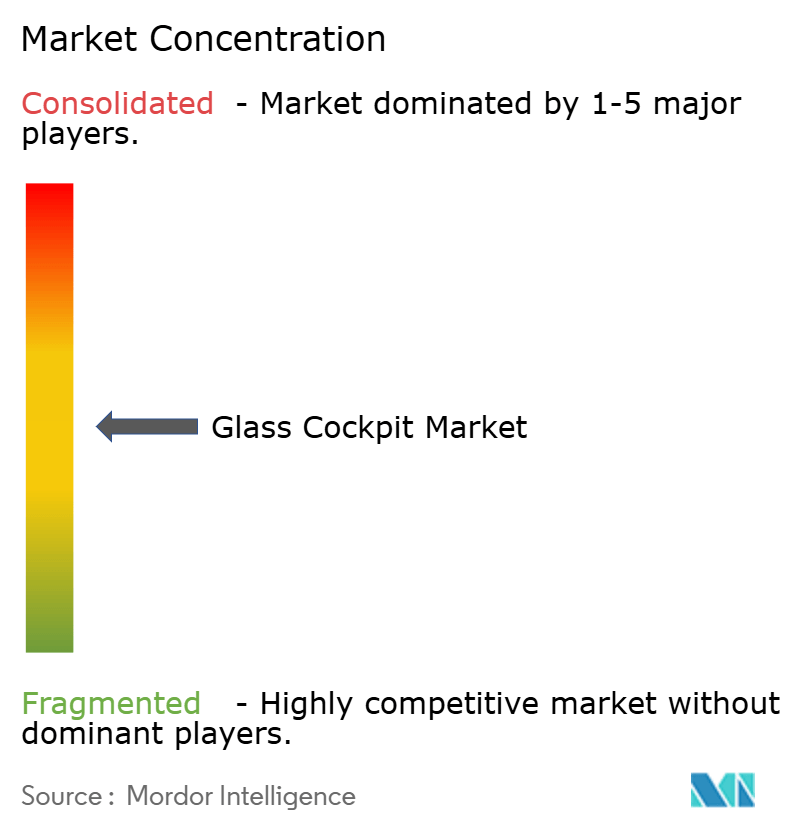
The glass cockpit market is fragmented, featuring key players such as Honeywell International Inc., Garmin Ltd., Thales Group, Rockwell Collins (Collins Aerospace), and Elbit Systems Ltd. The competitive landscape is marked by a mix of established aerospace giants and emerging players, each vying for market share through innovation and strategic partnerships. Companies are focusing on advancing cockpit technologies, such as enhancing display systems, improving integration capabilities, and incorporating advanced flight management systems. Mergers and acquisitions have also become a common strategy, enabling companies to broaden their product portfolios and strengthen their presence in both commercial and military sectors. Additionally, regional players are offering cost-effective solutions to cater to smaller market segments, particularly in emerging economies. The market remains dynamic, driven by continuous technological advancements and the increasing demand for next-generation avionics in modern aircraft.
Glass Cockpit Industry Leaders
Honeywell International Inc.
Garmin Ltd.
Thales Group
Rockwell Collins (Collins Aerospace)
Elbit Systems Ltd.
- *Disclaimer: Major Players sorted in no particular order

Recent Industry Developments
- August 2024: The H-65 Conversion/Sustainment Program celebrated a significant achievement by dispatching the 90th and final MH-65E to the Aviation Training Center (ATC) in Mobile, Alabama. The decade-long transition from the MH-65D to the MH-65E, known as the “Delta” and “Echo” configurations, has now reached its culmination. The avionics upgrade in the MH-65E boosts search and rescue capabilities, featuring a modern “glass cockpit” that enhances situational awareness for pilots and aircrew, aligning it with the service’s MH-60T Jayhawk fleet.
- March 2024: Bell Textron's BasiX-Pro Glass Retrofit Kit has secured certification from the US Federal Aviation Administration (FAA) for installation in Bell 412EP models. The Bell BasiX-Pro Glass Cockpit Retrofit Kit modernizes the Bell 412EP by replacing its analog instruments with advanced displays sourced from Astronautics and Garmin avionics, both of which are currently in production by Bell. This retrofit boasts cutting-edge technology and instrumentation, aligning it with the latest Subaru Bell 412EPX and Bell 429 aircraft standards.


Global Glass Cockpit Market Report Scope
The glass cockpit market refers to the use of advanced digital displays and electronic interfaces in aircraft, replacing traditional analog instruments. These systems integrate multiple functions, such as navigation, flight control, and communication, into a unified touchscreen or display panel, enhancing pilot awareness, efficiency, and safety. The market includes both commercial and military aircraft, with trends towards increased automation, data integration, and real-time information for improved decision-making.
The Glass Cockpit Market is segmented by aircraft type (commercial aviation, military aviation, general aviation), display type (primary flight displays (PFD), multi-function displays (MFD), engine-indicating and crew-alerting systems (EICAS)), technology (LCD displays, LED displays, enhanced vision systems (EVS)), and Geography (North America, Europe, Asia Pacific, Latin America, and Middle East and Africa). The market sizes and forecasts are provided in terms of value (USD) for all the above segments
| Commercial Aviation |
| Military Aviation |
| General aviation |
| Primary Flight Displays (PFD) |
| Multi-Function Displays (MFD) |
| Engine-Indicating and Crew-Alerting Systems (EICAS) |
| LCD Displays |
| LED Displays |
| Enhanced Vision Systems (EVS) |
| North America |
| Europe |
| Asia |
| Australia and New Zealand |
| Latin America |
| Middle East and Africa |
| By Aircraft Type | Commercial Aviation |
| Military Aviation | |
| General aviation | |
| By Display Type | Primary Flight Displays (PFD) |
| Multi-Function Displays (MFD) | |
| Engine-Indicating and Crew-Alerting Systems (EICAS) | |
| By Technology | LCD Displays |
| LED Displays | |
| Enhanced Vision Systems (EVS) | |
| By Geography*** | North America |
| Europe | |
| Asia | |
| Australia and New Zealand | |
| Latin America | |
| Middle East and Africa |


Key Questions Answered in the Report
How big is the Glass Cockpit Market?
The Glass Cockpit Market size is expected to reach USD 4.53 billion in 2025 and grow at a CAGR of 3.87% to reach USD 5.48 billion by 2030.
What is the current Glass Cockpit Market size?
In 2025, the Glass Cockpit Market size is expected to reach USD 4.53 billion.
Who are the key players in Glass Cockpit Market?
Honeywell International Inc., Garmin Ltd., Thales Group, Rockwell Collins (Collins Aerospace) and Elbit Systems Ltd. are the major companies operating in the Glass Cockpit Market.
Which is the fastest growing region in Glass Cockpit Market?
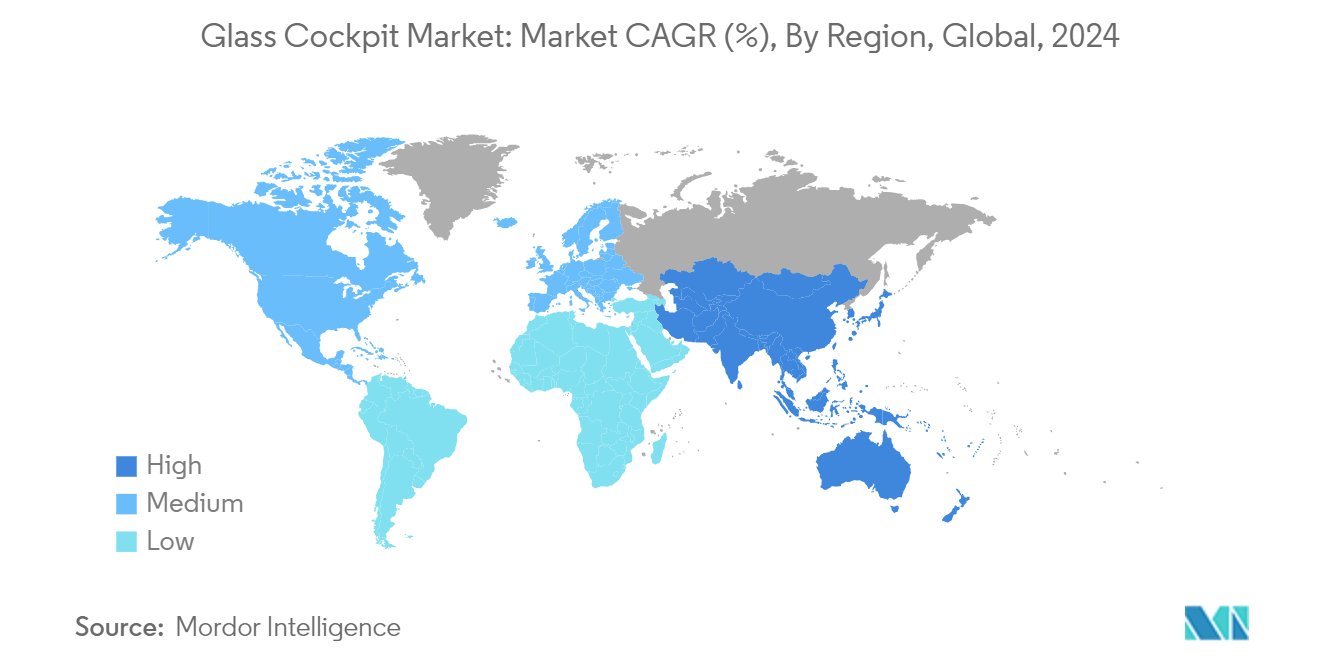
Asia Pacific is estimated to grow at the highest CAGR over the forecast period (2025-2030).
Which region has the biggest share in Glass Cockpit Market?
In 2025, the North America accounts for the largest market share in Glass Cockpit Market.
What years does this Glass Cockpit Market cover, and what was the market size in 2024?
In 2024, the Glass Cockpit Market size was estimated at USD 4.35 billion. The report covers the Glass Cockpit Market historical market size for years: 2019, 2020, 2021, 2022, 2023 and 2024. The report also forecasts the Glass Cockpit Market size for years: 2025, 2026, 2027, 2028, 2029 and 2030.
Page last updated on:
Glass Cockpit Market Report
Statistics for the 2025 Glass Cockpit market share, size and revenue growth rate, created by Mordor Intelligence™ Industry Reports. Glass Cockpit analysis includes a market forecast outlook for 2025 to 2030 and historical overview. Get a sample of this industry analysis as a free report PDF download.


 Your data is secure and never sold or shared.


