
Market Overview
| Study Period | 2020 - 2031 |
|---|---|
| Forecast Data Period | 2026 - 2031 |
| Base Year Market Size (2025) | USD 3.91 Billion |
| Market Size (2026) | USD 4.18 Billion |
| Market Size (2031) | USD 5.82 Billion |
| Growth Rate (2026 - 2031) | 6.86 % |
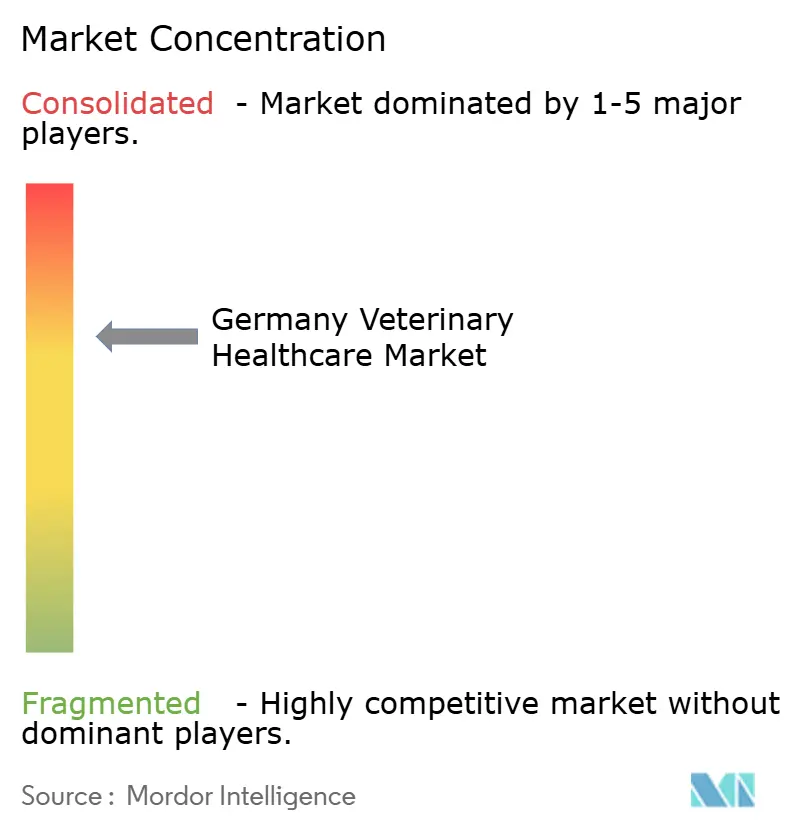
| Market Concentration | Medium |
Major Players *Disclaimer: Major Players sorted in no particular order Image © Mordor Intelligence. Reuse requires attribution under CC BY 4.0. | |
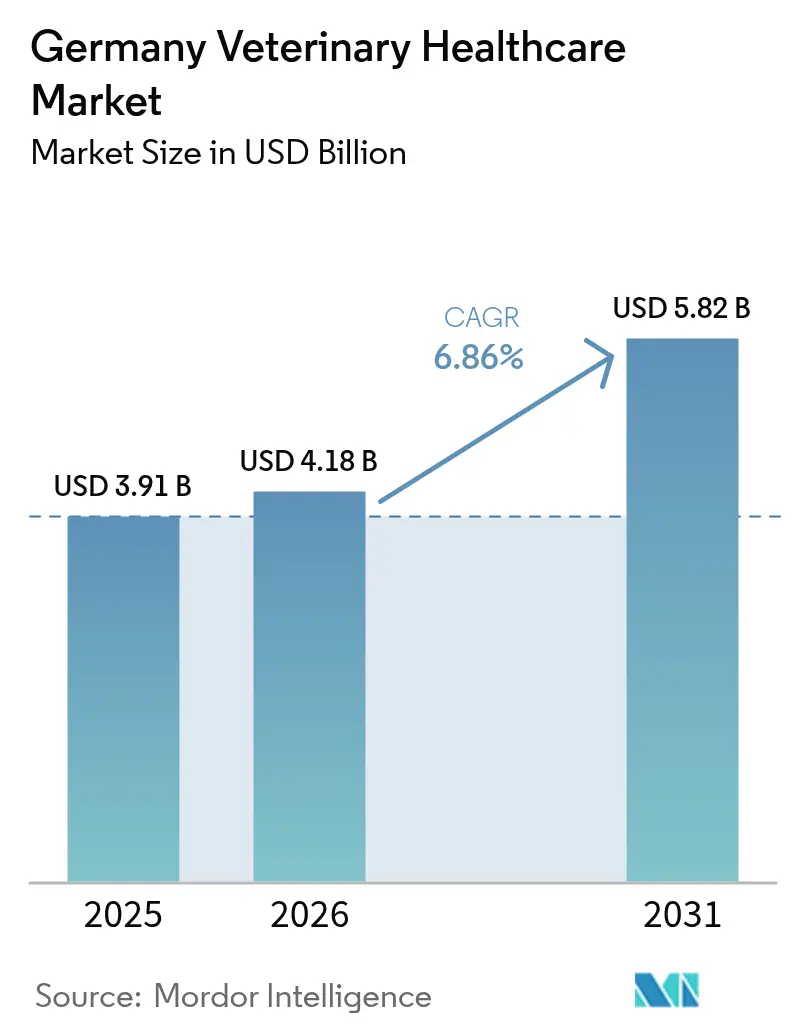
Germany Veterinary Healthcare Market Analysis by Mordor Intelligence
Germany veterinary healthcare market size in 2026 is estimated at USD 4.18 billion, growing from 2025 value of USD 3.91 billion with 2031 projections showing USD 5.82 billion, growing at 6.86% CAGR over 2026-2031. Steady companion-animal ownership, stricter livestock health mandates and rapid diagnostic innovation sustain this expansion. A pet population of 33.9 million animals underpins recurrent demand, while increasing zoonotic threats and the first domestic foot-and-mouth disease case since 1988 reinforce the need for robust preventive programs. Digital tools such as AI-powered hematology analyzers and teleconsultation platforms improve practice efficiency and support rural coverage gaps. Corporate consolidation among manufacturers accelerates product rollouts, and rising pet insurance uptake broadens affordability for higher-value care. However, workforce shortages and mandatory fee schedules temper near-term growth momentum.
Key Report Takeaways
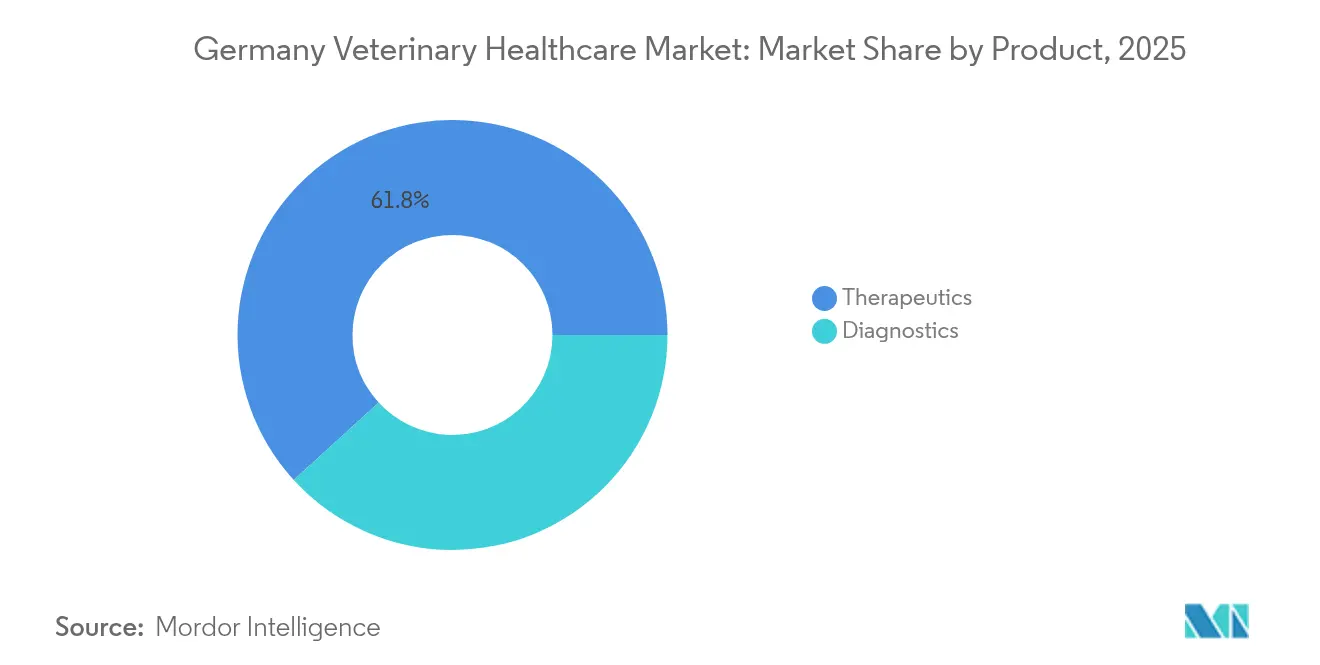
- By product type, therapeutics led with 61.78% Germany veterinary healthcare market share in 2025, while diagnostics are projected to expand at a 7.42% CAGR through 2031.
- By animal type, dogs and cats accounted for 46.02% of Germany veterinary healthcare market size in 2025; poultry is set to grow at a 6.88% CAGR to 2031.
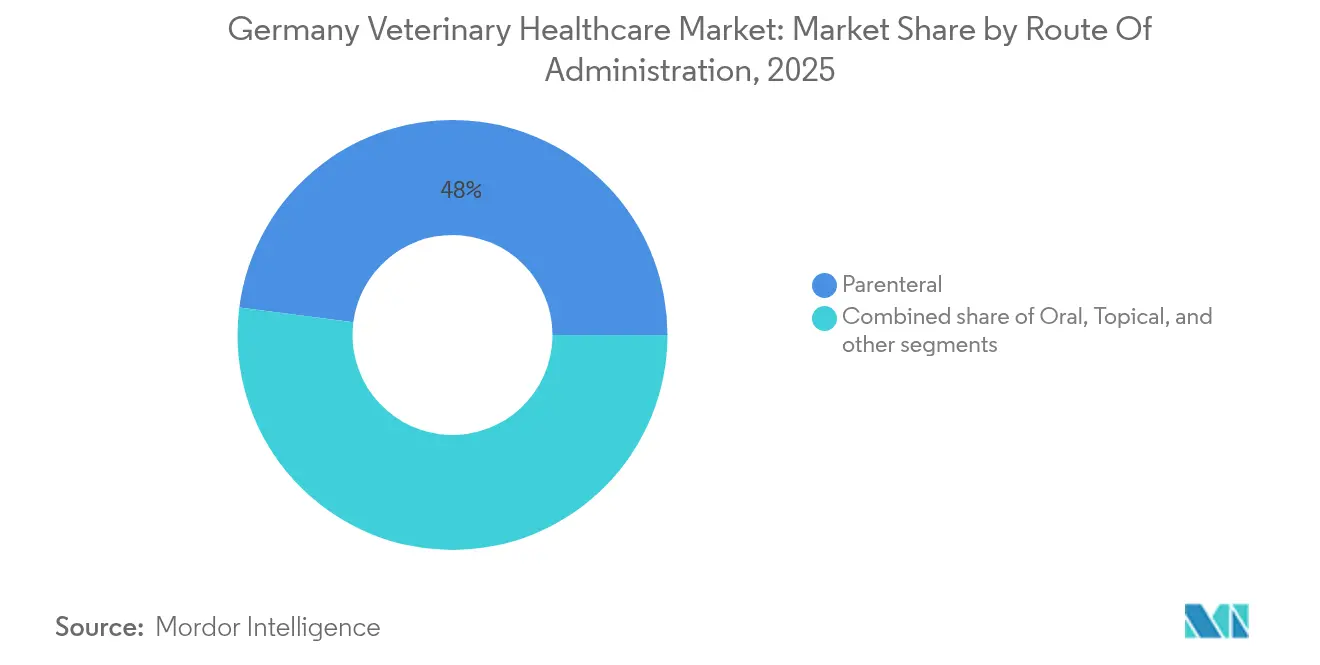
- By route of administration, parenteral formulations held 47.95% Germany veterinary healthcare market share in 2025, whereas oral products are advancing at a 6.58% CAGR.
- By end user, hospitals and clinics commanded 57.12% Germany veterinary healthcare market size in 2025; point-of-care testing settings show the fastest trajectory at 7.71% CAGR.
Note: Market size and forecast figures in this report are generated using Mordor Intelligence’s proprietary estimation framework, updated with the latest available data and insights as of 2026.
Germany Veterinary Healthcare Market Trends and Insights
Drivers Impact Analysis*
| Driver | % Impact on CAGR Forecast | Geographic Relevance | Impact Timeline |
|---|---|---|---|
| Growth in companion animal population | +1.2% | Urban centers nationwide | Medium term (2-4 years) |
| Rise in zoonotic disease incidence | +0.8% | National with rural focus | Short term (≤2 years) |
| Government animal health initiatives | +0.6% | Nationwide, EU-aligned | Long term (≥4 years) |
| Advancements in veterinary diagnostics and telehealth | +1.1% | Metropolitan areas | Medium term (2-4 years) |
| Expansion of pet insurance coverage | +0.4% | Nationwide | Long term (≥4 years) |
| Shift toward preventive livestock care | +0.7% | Intensive farming regions | Medium term (2-4 years) |
| Source: Mordor Intelligence | |||
Growth in Companion Animal Population
Rising pet ownership supports continuous service demand as 44% of German households kept at least one animal in 2024[1]Zentralverband Zoologischer Fachbetriebe, “Domestic Animal Statistics 2024,” zzf.de. Generational shifts position pets as family members, prompting willingness to pay for advanced treatments. Singles and couples in urban apartments boost per-capita spending, and post-pandemic adoption rates among families with children anchor long-term growth. This environment sustains specialty clinics, oncology services and nutrition counseling.
Rise in Zoonotic Disease Incidence
Climate change and cross-border trade intensify pathogen spread. Vector-borne threats such as Lyme borreliosis, affecting up to 200,000 people yearly, push owners toward tick preventives[2]Robert Koch-Institut, “Vector-borne Diseases in Germany,” rki.de. Schmallenberg seroprevalence jumped to 40.15% in 2023, underscoring viral unpredictability. The January 2025 foot-and-mouth outbreak triggered rapid containment, illustrating how one event reverberates across supply chains. Robust surveillance and vaccination programs therefore gain priority.
Government Animal Health Initiatives
Implementation of the Veterinary Medicinal Products Act aligns national policy with EU Regulation 2019/6, targeting a 50% antibiotic-use reduction by 2030. DART 2030 harmonizes human-animal antimicrobial stewardship, and mandatory herd-health management lifts dairy yields to 10,195 kg per cow. Federal funding for the Hannover skills lab strengthens clinical training capacity, mitigating workforce shortages.
Advancements in Veterinary Diagnostics and Telehealth
Point-of-care tools from Zoetis provide reference-lab quality hematology in minutes, shortening decision cycles. AI cytology systems streamline lymph-node screening, and wearable sensors derive real-time vitals without restraint. Teleconsult uptake remains modest due to legal ambiguity, yet remote follow-ups reduce clinic congestion and expand rural reach.
Restraints Impact Analysis*
| Restraints Impact Analysis | (~) % Impact on CAGR Forecast | Geographic Relevance | Impact Timeline |
|---|---|---|---|
| High cost of advanced veterinary care | -0.9% | Strongest in rural areas | Medium term (2-4 years) |
| Stringent regulatory approval process | -0.5% | Nationwide, EU oversight | Long term (≥4 years) |
| Shortage of skilled veterinary professionals | -0.7% | Rural and small-city clinics | Short term (≤2 years) |
| Ethical concerns over animal testing in R&D | -0.3% | Nationwide, academic hubs | Long term (≥4 years) |
| Source: Mordor Intelligence | |||
High Cost of Advanced Veterinary Care
Mandatory fee revisions raised procedure prices by roughly 50% in 2022, straining budgets despite quality benefits. Limited insurance penetration means owners self-finance surgeries and MRI scans, sometimes deferring care. Livestock producers weigh premium vaccines against thin margins, and escalating student debt discourages clinic startups in low-income districts, sustaining access disparities.
Stringent Regulatory Approval Process
Dual authority oversight requires extensive dossiers and pharmacovigilance reporting, extending time-to-market for novel drugs. Smaller manufacturers shoulder disproportionate costs, often partnering with larger firms or exiting. New PFAS guidelines for feed additives introduce additional data demands, while antimicrobial-reduction targets mandate expensive reformulations before launch.
*Our forecasts treat driver/restraint impacts as directional, not additive. The impact forecasts reflect baseline growth, mix effects, and variable interactions.
Segment Analysis
By Product: Therapeutics Dominate Amid Diagnostics Innovation
Therapeutics contributed 61.78% of Germany veterinary healthcare market size in 2025, anchored by vaccines and parasiticides. Poultry immunizations against Marek’s disease and avian influenza remain critical, and targeted antiparasitics protect companion animals from vector-borne diseases. Anti-infectives face volume curbs but benefit from premium pricing for last-resort molecules. Medical feed additives provide non-antibiotic growth support across swine and broilers.
Diagnostics, expanding at 7.42% CAGR, capture value from molecular panels that match therapies to BRAF or KIT mutations in canine cancers. AI-assisted imaging increases radiograph throughput, while on-farm PCR kits satisfy rapid outbreak containment rules. This convergence of regulatory demand and technology fuels segment acceleration.



By Animal Type: Companion Animals Lead While Poultry Accelerates
Dogs and cats maintained 46.02% Germany veterinary healthcare market share in 2025, reflecting high household penetration and willingness to fund specialty oncology or orthopedic interventions. Feline-specific anxiety therapies such as pregabalin oral solutions intend to close the care gap where only 40% of cats visit clinics annually.
Poultry, forecast to grow at 6.88% CAGR, responds to dense production environments needing comprehensive vaccination and water-quality oversight. H5N1 events have validated investment in multivalent vaccines, and PFAS-free feed additives gain traction to meet export standards.
By Route of Administration: Parenteral Dominance Challenged by Oral Innovation
Injectables held 47.95% Germany veterinary healthcare market share in 2025, valued for dose accuracy and fast onset in herd-health campaigns. Monoclonal antibodies such as bedinvetmab exemplify premium parenterals with documented safety from 25 million global doses.
Oral delivery, rising at 6.58% CAGR, capitalizes on owner preference for stress-free administration. Longevity tablets targeting canine metabolic decline and palatable suspensions for feline anxiety epitomize this convenience trend. In livestock, medicated feed offers scalable distribution while complying with new residue limits.
By End User: Hospitals Dominate While Point-of-Care Testing Surges
Hospitals and clinics captured 57.12% Germany veterinary healthcare market size in 2025, providing surgical suites and imaging. Workforce shortages—affecting 78.5% of European countries—propel consolidation under corporate groups capable of cross-regional staffing.
Point-of-care settings, advancing at 7.71% CAGR, integrate cartridge-based CBC analyzers that run 90-second panels, cutting external lab costs. Rural mobile clinics employ these devices to deliver immediate treatment plans, raising standards without brick-and-mortar expansion.
Geography Analysis
Germany anchors Europe’s largest companion-animal economy with EUR 7 billion in 2024 sales. Urban corridors such as Berlin-Hamburg host dense clinic networks, whereas low veterinarian density in eastern rural districts necessitates telehealth and mobile units. Federal surveillance infrastructure, including the Friedrich-Loeffler-Institut, coordinates rapid antigen bank deployment during outbreaks. National antimicrobial sales fell from 89.2 mg/PCU in 2016 to 69.9 mg/PCU in 2022, positioning Germany as a regional benchmark. Cross-border alignment with EU One-Health programs facilitates sharing of genomic pathogen data, strengthening predictive analytics.
Competitive Landscape
Germany’s veterinary healthcare market remains moderately consolidated, with the Bundesverband für Tiergesundheit’s 25 member companies controlling more than 90% of national sales. Market leadership rests with multinational firms such as Zoetis, Boehringer Ingelheim, Elanco and Ceva that benefit from extensive product portfolios and established distribution networks. Their scale supports sustained R&D spending, helping them navigate Germany’s dual-agency approval system and maintain high entry barriers for smaller rivals.
Technology adoption has become the primary competitive lever. Zoetis introduced AI-powered point-of-care hematology and cytology platforms that shorten diagnostic turnaround times and deepen clinic relationships. Boehringer Ingelheim expanded its vaccine pipeline by acquiring Saiba Animal Health, underscoring a strategic shift toward biologics for chronic pet diseases. Start-ups such as Loyal target niche opportunities, including longevity therapeutics for senior dogs, highlighting white-space areas that incumbents are now watching closely.
Practice ownership is slowly corporatizing: 16% of European veterinarians now work in consolidated groups, though Germany trails the UK’s penetration rate. Corporate chains leverage group purchasing and centralized digital records to improve margins while addressing rural staffing gaps created by nationwide veterinarian shortages. Strict antimicrobial-reduction targets and new PFAS feed regulations further favor well-capitalized players that can fund reformulations and compliance systems. Overall, the competitive field rewards scale, regulatory expertise and rapid integration of digital tools.
Germany Veterinary Healthcare Industry Leaders
Boehringer Ingelheim International GmbH
Zoetis, Inc
Elanco Animal Health
Ceva Animal Health
Vetoquinol S.A.
- *Disclaimer: Major Players sorted in no particular order

Market Opportunities and Future Outlook
Germanys veterinary healthcare spend is being pulled toward prevention and faster decision-making at the point of care, supported by a large companion-animal base (33.9 million pets) and tightening livestock-health compliance. The Bundesverband fuer Tiergesundheit (BfT) reported the German veterinary medicinal product market at EUR 1.098 billion turnover in 2025 (+4.7% year over year), with a 60.6% share in small animals and 39.4% in livestock. This mix creates whitespace for expanded chronic-care pathways in dogs and cats (pain, dermatology, oncology support), alongside herd and flock programs that bundle vaccination, rapid diagnostics, and monitoring to reduce outbreak disruption and antimicrobial use.
Near-term opportunity is also shaped by operational and regulatory frictions that favor scalable platforms. Ongoing shortages tied to non-EU raw material dependence and 2025-reported supply interruptions increase the value of localized sourcing, dual-supply qualification, and inventory visibility across wholesalers and clinic groups. On the policy side, the revised Tiergesundheitsgesetz (effective March 10, 2026) and EU-level implementation measures affecting distribution (BVL implementation of Commission Implementing Regulation (EU) 2026/758 on co-distribution) raise the premium on compliance-ready distribution, pharmacovigilance discipline, and traceability. That shift creates room for manufacturers and service providers that can simplify documentation while keeping products available to both companion-animal practices and intensive livestock regions.
Recent Industry Developments
- July 2026: Zoetis received European Commission marketing authorization for Poulvac Procerta HVT-ND, a poultry vaccine. The authorization expands Zoetis ability to supply prevention programs for intensive poultry production where rapid disease containment is a priority, reinforcing vaccines as a core spending area in the therapeutics mix.
- January 2026: Boehringer Ingelheim received European Commission marketing authorization for two avian influenza vaccines, VAXXITEK HVT+IBD+H5 and VAXXINACT H5, for use in chickens, turkeys, and ducks. This expands the portfolio of tools available for managing transboundary disease risks in European poultry value chains, supporting broader uptake of structured vaccination and surveillance protocols.
- June 2024: Boehringer Ingelheim launched an inactivated vaccine against Bluetongue virus serotype 3 (BTV-3) for sheep and cattle, following approval by the Bundesministerium fuer Ernaehrung und Landwirtschaft (BMEL) and the Paul-Ehrlich-Institut (PEI). The launch underlines the role of faster-access pathways and regulator-backed deployments during outbreak pressure, and it supports demand for ruminant vaccination programs in affected regions.


Research Methodology Framework and Report Scope
Market Definition and Coverage
This market covers spending in Germany on veterinary therapeutics and diagnostic products used to prevent, detect, and treat animal diseases across companion animals and livestock, as purchased and used through typical veterinary care pathways.
Scope exclusions: Human healthcare products, animal nutrition sold as standard feed, and non-medical pet accessories are excluded.
Segmentation Overview
- By Product
- By Therapeutics
- Vaccines
- Parasiticides
- Anti-infectives
- Medical Feed Additives
- Other Therapeutics
- By Diagnostics
- Immunodiagnostic Tests
- Molecular Diagnostics
- Diagnostic Imaging
- Clinical Chemistry
- Other Diagnostics
- By Therapeutics
- By Animal Type
- Dogs and Cats
- Horses
- Ruminants
- Swine
- Poultry
- Other Animals
Data Sources, Market Sizing, and Validation
Desk Research
Desk work starts by mapping Germany animal populations and care activity to a realistic demand pool, then aligning it with product availability and pricing signals. We used public sources such as the German Federal Statistical Office datasets, Federal Ministry of Food and Agriculture publications, and European Commission animal health and trade materials to understand livestock structure and policy triggers that can shift treatment patterns.
To keep assumptions anchored, we also reviewed sources such as the European Medicines Agency information on veterinary medicines, peer reviewed veterinary journals for disease and treatment trends, and association or chamber websites that describe clinic operations and care norms. General secondary sources, including company filings, investor presentations, and reputable press, were used to validate product mix shifts and distribution changes. Select paid subscriptions covering company financials and news, plus patent databases and shipment level trade data, were used to cross check the timing and direction of market signals. The sources listed here are illustrative only, and many other public references were also used for data collection, validation, and clarification.
Primary Interviews and Surveys
Primary interviews and structured surveys were used to test whether desk assumptions match real purchasing and usage patterns in Germany. We spoke with a mix of veterinarians, clinic procurement teams, distributors, and product specialists to confirm how therapies and diagnostics are selected, priced, ordered, and replenished across key animal cohorts.
Distribution of primary research fieldwork respondents
| Company type | Respondent position |
|---|---|
| Top tier: 25% | CXOs: 16% |
| Mid tier: 58% | Functional/Unit leaders: 40% |
| Smaller Players: 17% | Managers: 44% |
Market-Sizing & Forecasting
The core model uses a top-down demand pool build that starts from Germany animal populations and typical care intensity, then translates it into product demand by applying treatment rates and diagnostic testing frequency. To keep totals realistic, we corroborate results with selective bottom-up checks such as sampled average selling price (ASP) times estimated volumes for key therapy groups, plus channel checks with distributors and clinics.
Inputs used in the model include companion versus livestock population mix, vaccination and parasite control cadence, incidence of common infectious and chronic conditions seen in clinics, diagnostic test utilization per visit, and observed ASP progression for major therapeutic classes and core diagnostics. Where interview feedback showed variability by animal type or care setting, we adjusted penetration and mix assumptions before totals were finalized, and gaps were handled by using conservative ranges anchored to clinic purchasing behavior.
Forecasts were built using scenario analysis. The base case is guided by expected animal population trends, preventive care uptake, and pricing movement, then stress tested with upside and downside scenarios shared by interviewees. The final outlook is produced after checking that growth paths remain consistent with practical constraints such as clinic capacity and replacement cycles for diagnostic equipment.
Data Validation & Update Cycle
We validate outputs by triangulating modeled totals against independent signals such as product mix commentary in filings, public regulatory and animal health updates, and observed changes in clinic activity and testing behavior. Outliers are flagged early, then investigated through back checks to assumptions, and in some cases through a follow up contact with a relevant respondent group.
Before sign off, the model goes through a multi step internal review so that formulas, unit logic, and year over year movements are consistent and explainable. Reports are refreshed annually, and interim updates are made when material events shift pricing, access, or treatment patterns. Right before delivery, an analyst performs a fresh scan so clients receive the latest updated view.
Mordor Intelligence's Germany Veterinary Healthcare Market Market Sizing Compared With Other Published Estimates
Published market values for Germany veterinary healthcare can differ even when the topic label looks the same, because the counted items and the year basis are not consistent. The spread usually comes from what is treated as product revenue versus service revenue, how animal types are weighted, and whether prices are modeled as list prices or closer to realized selling prices.
Veterinary service revenue from clinic visits and procedures sits outside Mordor Intelligence's scope here, which can pull some published totals higher when they mix products and services together. Gaps also show up when one estimate uses an older base year and then applies a smooth CAGR, even though preventive care cycles and diagnostic usage can change faster in certain years. Currency timing and inflation handling also matter, since different sources convert and normalize prices using different reference points.
Benchmark comparison
| Source | Market Size | Gaps in Research Methodology |
|---|---|---|
| Mordor Intelligence | USD 3.91 B (2025) | |
| Industry Publisher A | USD 2.20 B (2025) | Often reflects a narrower counted revenue pool or more conservative price and penetration assumptions, which can understate diagnostics intensity and therapy mix within the same base year. |
| Market Analytics B | USD 2.19 B (2023) | Uses an earlier base year and may blend broader care activities into the definition, so forward values depend heavily on the chosen CAGR and how services are treated versus product revenue. |
Across the three figures, the main takeaway is that scope and base year explain most of the difference, and then pricing and utilization assumptions widen it further. By keeping the model tied to observable product demand drivers like treatment cadence and testing frequency, and then checking the totals with channel feedback, the final number stays traceable to inputs that can be reviewed and repeated.


Key Questions Answered in the Report
How large is the Germany veterinary healthcare market in 2026?
The sector is valued at USD 4.18 billion in 2026 and is projected to reach USD 5.82 billion by 2031.
Which segment holds the biggest share of spending?
Therapeutic products, mainly vaccines and parasiticides, hold 61.78% of total outlays in 2025.
What growth rate is expected for diagnostics?
Diagnostics are forecast to post a 7.42% CAGR through 2031 as AI and point-of-care tools gain traction.
Why is poultry healthcare a focus area?
Intensive production systems and recurring avian influenza outbreaks push poultry to the fastest segment growth at 6.88% CAGR.
How are workforce shortages being addressed?
Clinics increasingly deploy telemedicine and AI diagnostics, and universities have expanded simulation labs to accelerate graduate readiness.
Page last updated on:


 Your data is secure and never sold or shared.


