
Gemcitabine Hydrochloride Market Size and Share
Market Overview
| Study Period | 2020 - 2031 |
|---|---|
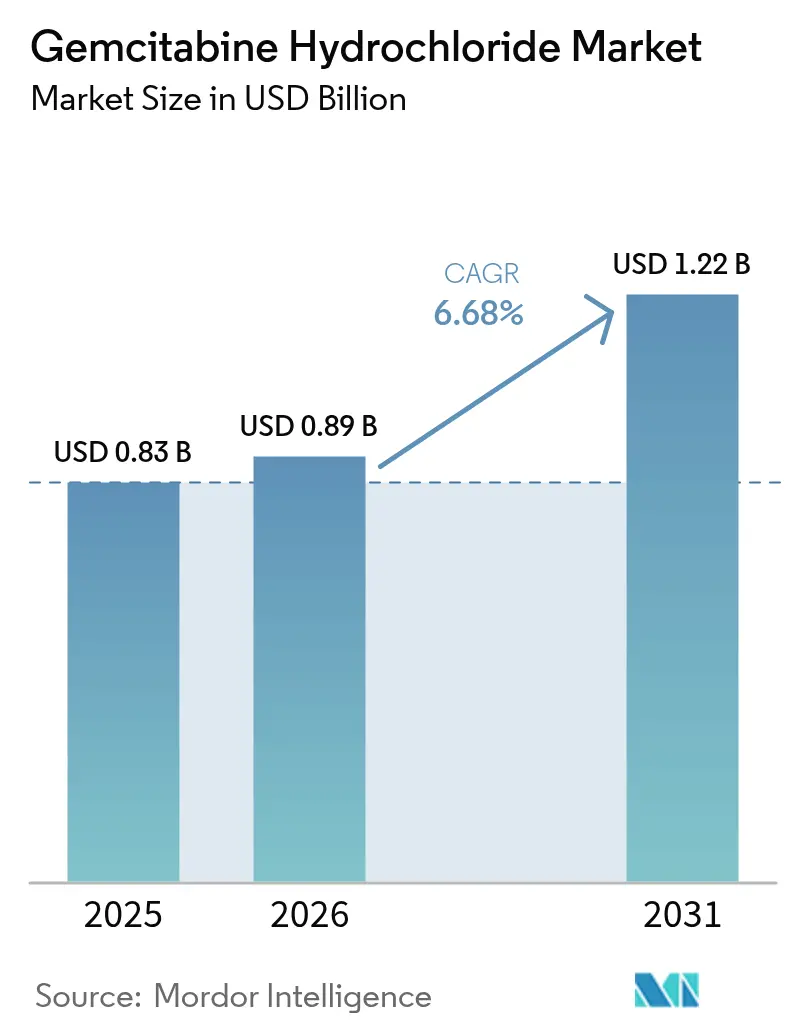
| Market Size (2026) | USD 0.89 Billion |
| Market Size (2031) | USD 1.22 Billion |
| Growth Rate (2026 - 2031) | 6.68 % |
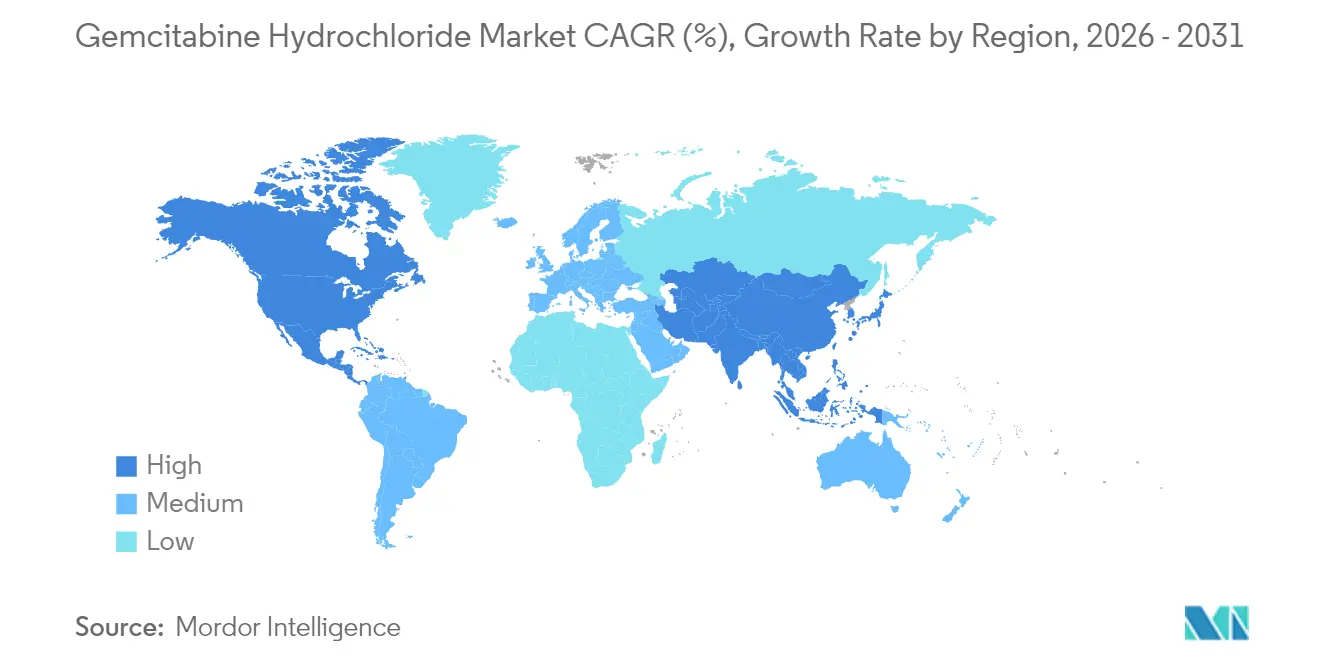
| Fastest Growing Market | Asia Pacific |
| Largest Market | North America |
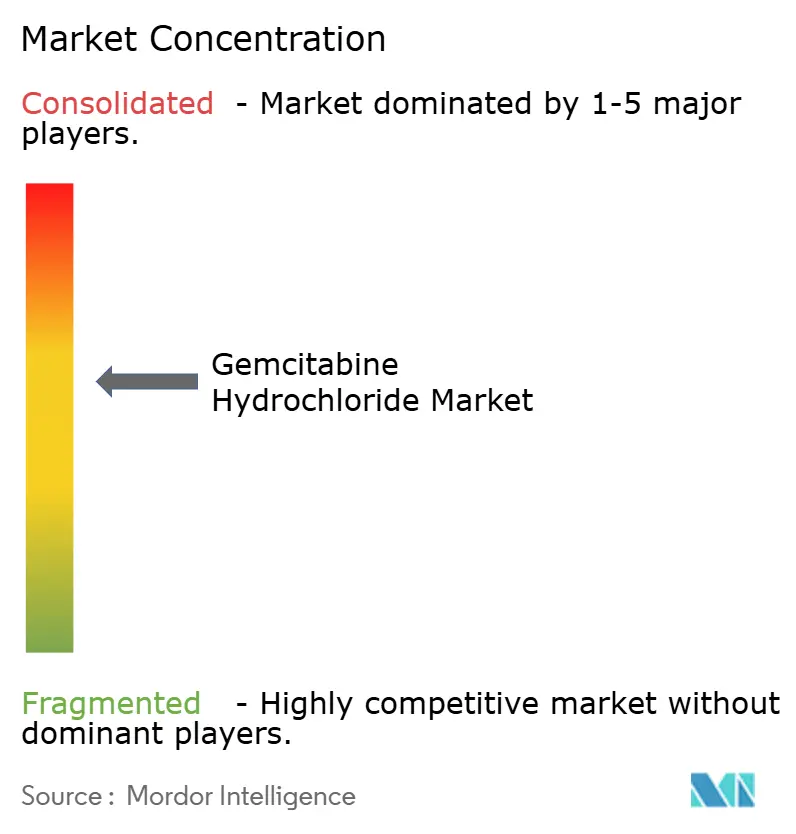
| Market Concentration | Medium |
Major Players *Disclaimer: Major Players sorted in no particular order Image © Mordor Intelligence. Reuse requires attribution under CC BY 4.0. | |
Gemcitabine Hydrochloride Market Analysis by Mordor Intelligence
Gemcitabine hydrochloride market size in 2026 is estimated at USD 885.44 million, growing from 2025 value of USD 0.83 billion with 2031 projections showing USD 1.22 billion, growing at 6.68% CAGR over 2026-2031. This solid mid-single-digit growth underscores the drug’s continuing relevance across multiple solid-tumor protocols despite surging investment in immuno-oncology. Uptake is reinforced by widespread clinical familiarity, reliable supply, and the molecule’s compatibility with next-generation regimens that seek to modulate, rather than replace, established cytotoxic backbones. The expansion of label-extension trials in hard-to-treat cancers, rapid regulatory approvals of gemcitabine-anchored combinations, and operational advantages of ready-to-use infusions in busy oncology centers also buoy demand. Strategic consolidation, such as Cheplapharm’s 2024 purchase of Gemzar, illustrates how specialty players are unlocking new value from mature assets while big pharma pivots to targeted therapies. At the same time, localized API incentives in India and China are compressing costs and improving global supply resilience, sharpening competition on both price and formulation innovation.
Key Report Takeaways
- By product type, injections held 71.56% of gemcitabine hydrochloride market share in 2025; ready-to-use IV solutions are projected to expand at a 7.71% CAGR through 2031.
- By indication, pancreatic cancer accounted for 39.22% of gemcitabine hydrochloride market size in 2025, whereas non-small cell lung cancer is forecast to deliver the fastest 7.63% CAGR to 2031.
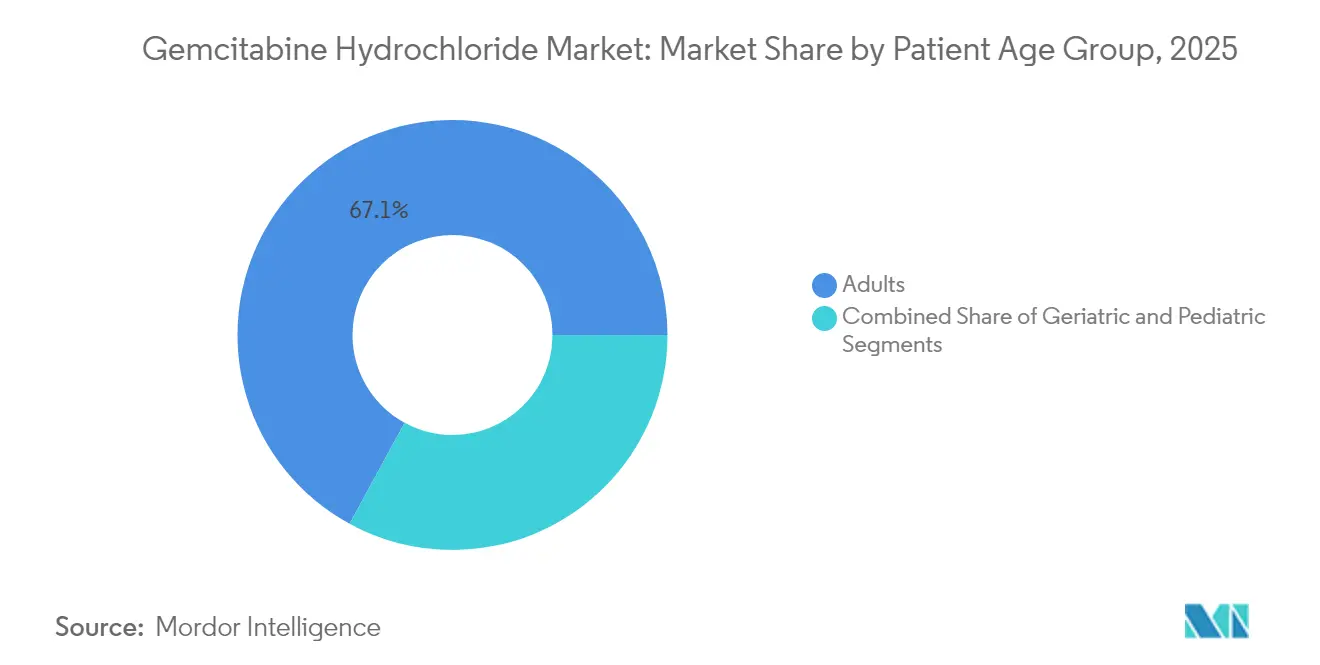
- By patient age group, adults captured 67.05% share of the gemcitabine hydrochloride market size in 2025, while the pediatric segment is set to grow at an 7.74% CAGR between 2026-2031.
- By geography, North America led with 40.58% of gemcitabine hydrochloride market share in 2025; Asia-Pacific is on track for the quickest 7.82% CAGR through 2031.
Note: Market size and forecast figures in this report are generated using Mordor Intelligence’s proprietary estimation framework, updated with the latest available data and insights as of 2026.
Market Trends and Insights
Drivers Impact Analysis of Gemcitabine Hydrochloride Market*
| Driver | (~) % Impact on CAGR Forecast | Geographic Relevance | Impact Timeline |
|---|---|---|---|
| Growing burden of solid-tumor cancers | +1.8% | Global – highest in APAC & MEA | Long term (≥ 4 years) |
| Oncology R&D pipelines & label-expansion | +1.5% | North America & EU; spill-over to APAC | Medium term (2-4 years) |
| Rapid genericisation in emerging markets | +1.2% | APAC core; Latin America; MEA | Short term (≤ 2 years) |
| High-dose cisplatin-sparing regimens | +0.9% | North America & EU; emerging in APAC | Medium term (2-4 years) |
| Localised API incentives in India & China | +0.8% | APAC core; global supply impact | Short term (≤ 2 years) |
| Nano-liposomal and depot delivery platforms | +1.0% | North America & EU; early APAC adoption | Medium term (2-4 years) |
| Source: Mordor Intelligence | |||
Growing Burden of Solid-Tumor Cancers
Rising incidence of pancreatic, lung, breast and bladder cancers is widening the addressable population for gemcitabine, especially in low- and middle-income countries undergoing rapid urbanisation. The compound’s proven efficacy across these tumors keeps it embedded in first-line and adjuvant protocols, and recent approvals pairing gemcitabine with novel checkpoint inhibitors further cement its role in multimodal therapy. Younger patient cohorts in Asia and Africa are contributing incremental volume, driving demand for paediatric-friendly dosing formats and protocols that mitigate haematological toxicity.
Intensifying Oncology R&D Pipelines & Label-Expansion Trials
More than 700 active or planned studies globally are exploring gemcitabine combinations, leveraging its well-characterised safety record to accelerate development timelines [1]. Roche’s Phase III STARGLO trial showed a 41% reduction in mortality when Columvi was combined with gemcitabine-oxaliplatin, securing European approval in April 2025 [2]. Such successes illustrate how synergistic regimens can extend the molecule’s lifecycle, open orphan indications, and justify premium pricing even after base-compound patent expiry.
Rapid Genericisation Driving Price Elasticity in Emerging Markets
Generic launches by Teva, Dr. Reddy’s and Sun Pharma are pushing unit prices down while unlocking new patient volumes in public health systems across APAC and Latin America. India’s Production-Linked Incentive scheme and three new Bulk Drug Parks are lowering API costs, enabling aggressive tenders that expand access without eroding total value because of higher utilisation. Premium ready-to-use formats, however, remain insulated from deep discounting, sustaining healthy margins for differentiated players.
Use in Novel Nano-Liposomal and Depot Delivery Platforms
Liposomal encapsulation exploits the enhanced permeation and retention effect for tumour-selective delivery, boosting intratumoral drug levels while sparing healthy tissue [3]. Microfluidics technologies now deliver tight control over particle size, scalability and reproducibility, addressing historical CMC hurdles. Stimuli-responsive carriers and theranostic constructs integrating imaging contrast agents enable real-time tracking of gemcitabine release, a feature attracting venture funding and partnership deals across North American biotech hubs.
Restraints Impact Analysis of Gemcitabine Hydrochloride Market*
| Restraint | (~) % Impact on CAGR Forecast | Geographic Relevance | Impact Timeline |
|---|---|---|---|
| Pharmacovigilance & cytotoxic regulations | -0.8% | Global – highest in North America & EU | Long term (≥ 4 years) |
| Severe haematological toxicity | -0.7% | Global – higher in resource-constrained | Long term (≥ 4 years) |
| Tender-based price erosion | -0.9% | Global – highest in emerging markets | Short term (≤ 2 years) |
| Displacement by immune checkpoint inhibitors | -0.6% | North America & EU core; rising in APAC | Medium term (2-4 years) |
| Source: Mordor Intelligence | |||
Stringent Pharmacovigilance & Cytotoxic Handling Regulations
FDA crack-downs on sterile injectables led to 30 ANDA withdrawals in 2024, underscoring scrutiny on manufacturing controls for cytotoxics. Hospitals must invest in closed-system transfer devices, negative-pressure rooms and specialised waste streams, raising total treatment costs and discouraging smaller facilities in Latin America and Africa from stocking gemcitabine. Compliance heterogeneity across jurisdictions complicates multi-site production and forces generic entrants to allocate significant capex before first revenue.
Competitive Displacement by Immune Checkpoint Inhibitors
Pembrolizumab, nivolumab and durvalumab have rewritten care standards in several solid tumors, prompting clinicians to reassess chemotherapy intensity. Yet cost constraints and limited single-agent efficacy in pancreatic cancer keep gemcitabine relevant, especially in doublets that balance cytotoxic debulking with immune activation. Small-molecule checkpoint inhibitors in early development may strike better pharmacoeconomic ratios, but until they mature, gemcitabine remains a pragmatic backbone in price-sensitive health systems.
*Our forecasts treat driver/restraint impacts as directional, not additive. The impact forecasts reflect baseline growth, mix effects, and variable interactions.
Gemcitabine Hydrochloride Market Segment Analysis
By Product Type:
Ready-to-Use Solutions Drive Premium PositioningIn 2025 injections dominated with a 71.56% gemcitabine hydrochloride market share, supported by universal familiarity in oncology pharmacies. Ready-to-use solutions, although niche, are forecast to advance at 7.71% CAGR, riding workflow efficiency, reduced error risk and lower exposure events for pharmacy staff. The launch of Infugem showed that hospitals will pay a premium for reconstitution-free bags, especially amid persistent staff shortages. Manufacturing sterility and shelf-life hurdles deter rapid generic entry, allowing innovators to defend price differentials and capture incremental value even in tender markets.
Workflow data from large US oncology networks show a 28% cut in compounding time when ready-to-use bags replace powder vials, freeing infusion chairs for higher throughput and raising revenue per square foot of clinic space. This operational upside, combined with lower hazardous waste volumes, resonates with value-analysis committees struggling to reconcile staff safety mandates with budget ceilings. As more hospital groups bundle drug acquisition costs with total labour savings, premium ready-to-use formats are expected to gain ground, lifting the overall gemcitabine hydrochloride market.


By Indication:
NSCLC Growth Outpaces Pancreatic DominancePancreatic protocols continued to command 39.22% of gemcitabine hydrochloride market size in 2025, reflecting entrenched first-line status and limited immunotherapy alternatives. NSCLC, however, is projected to register the stoutest 7.63% CAGR, leveraged by combination regimens pairing gemcitabine with PD-1/L1 antibodies or EGFR inhibitors in biomarker-selected populations. Growing evidence from Chinese and Brazilian real-world datasets indicates improved progression-free survival when gemcitabine anchors platinum-doublet maintenance, driving formulary inclusions.
As precision diagnostics proliferate, clinicians identify micro-segments—such as KRAS-mutated, PD-L1-low cases—where gemcitabine-based doublets outperform expensive monotherapies in quality-adjusted life-year terms. Orphan designations in biliary tract and gallbladder cancers offer further upside by granting market exclusivity for new fixed-dose combinations, translating into higher average selling prices. Consequently, the indication mix tilts progressively towards NSCLC and rare tumors, diversifying revenue streams away from pancreatic dependence.
By Patient Age Group:
Pediatric Expansion Challenges Adult DominanceAdults represented 67.05% of gemcitabine hydrochloride market share in 2025, aligned with the age clustering of solid-tumor incidence. Yet paediatrics will be the fastest-growing segment at 7.74% CAGR, fuelled by expanding data sets in malignant rhabdoid tumours, medulloblastoma and osteosarcoma. Regulatory incentives—priority review vouchers and 6-month exclusivity extensions—are encouraging sponsors to invest in child-specific PK/PD studies and palatable low-volume presentations.
Formulation science must confront small-volume accuracy, excipient tolerability and long-term stability, but payoff potential is underscored by the readiness of children’s hospitals in the US, EU and Japan to adopt regimens that show even incremental survival benefits. Age-tailored supportive care protocols that mitigate gemcitabine-induced neutropenia also foster clinician confidence, smoothing the path for broader paediatric uptake and supporting a wider risk-benefit acceptance curve.
Geography Analysis
North America Gemcitabine Hydrochloride Market
North America commanded 40.58% of the gemcitabine hydrochloride market in 2025 on the back of premium branded pricing, extensive clinical trial pipelines and payer coverage that cushions hospital formulary budgets. Continued domestic manufacturing investment—exemplified by Lilly’s USD 50 billion multi-site expansion—reinforces supply security and keeps the region a priority launch market. Nonetheless, chronic shortages of companion agents such as cisplatin have spotlighted gemcitabine as a substitution backbone, driving episodic demand spikes and creating openings for agile suppliers.
APAC Gemcitabine Hydrochloride Market
Asia-Pacific is forecast to deliver the most robust 7.82% CAGR through 2031 as cancer incidence climbs and regional governments court API self-sufficiency. India’s three Bulk Drug Parks and China’s 169-acre WuXi STA site illustrate policy-backed scale advantages that translate to cost-competitive exports. Concurrently, local regulatory harmonisation with ICH guidelines is elevating quality benchmarks, shrinking the trust gap between Western buyers and Asian producers and accelerating ANDA approvals for APAC-sourced injectables.
Europe Gemcitabine Hydrochloride Market
Europe maintains a sizeable share owing to high per-patient spending and early adoption of innovative combinations such as Columvi-gemcitabine-oxaliplatin authorised in April 2025. Stringent pharmacovigilance keeps average selling prices above global means, offsetting lower procedure volumes compared with the US and China. Moreover, collaborative procurement under the EU Joint Clinical Assessment is expected to expand access while safeguarding margins for quality-verified suppliers, preserving a stable revenue pillar for multinational and specialty firms alike.
Regulatory Landscape
Gemcitabine hydrochloride remains governed by established oncology drug frameworks in major markets, with authorities such as the US FDA and the European Commission/EMA managing approvals and labeling across pancreatic cancer and other solid tumor indications. For manufacturers, the main requirements focus on cGMP compliance for sterile injectables and CMC packages that substantiate identity, strength, quality, and purity, in line with the heightened scrutiny applied to cytotoxic products used in high-risk patient settings.
Regulatory submissions and lifecycle maintenance often rely on confidential drug substance documentation via FDA Drug Master Files (DMFs) under 21 CFR 314.420, supporting NDA/ANDA holders while protecting proprietary manufacturing know-how. Where outsourcing is involved, regulators place accountability on the product owner’s quality unit, with written quality agreements and oversight of contract facilities forming a core compliance expectation for market access and continuity of supply.
Value Chain Analysis
The gemcitabine hydrochloride value chain starts with upstream procurement of chemical building blocks and specialist synthesis of the oncology API under stringent GMP controls, alongside regulatory enabling work such as maintaining DMFs and meeting pharmacopeial expectations used by buyers (including USP/Ph. Eur. aligned testing in many tender specifications). API manufacturing capacity is concentrated among suppliers with established oncology handling capabilities, including a material footprint in India and China that supplies global sterile-injectable manufacturers.
Downstream, the chain moves through sterile fill-finish (lyophilized vials and differentiated ready-to-use IV formats), packaging and serialization, and distribution into hospitals, oncology networks, and public tenders. Availability risk is shaped by sterile manufacturing complexity and compliance execution, and in the United States, FDA drug shortage records listing gemcitabine hydrochloride injection with a discontinuation status points to how manufacturing readiness and lifecycle decisions can affect continuity even when demand persists.
Competitive Landscape
Competitive intensity is moderate: originator companies still own differentiated formulations while a widening pool of Indian and Chinese generics competes on vials. Cheplapharm’s worldwide rights to Gemzar outside South Korea, acquired from Eli Lilly in December 2024, exemplify the carve-out model whereby specialty firms exploit mature oncology brands that no longer fit big-pharma pipelines. Such deals unlock residual brand equity while freeing innovators to reinvest in immuno-oncology assets.
Fresenius Kabi posted 11% revenue growth in 2024, helped by double-digit expansion of its injectables franchise, demonstrating how integrated API-to-fill-finish capabilities can shield earnings amid price erosion. Pfizer continues to capitalise on its early-mover advantage in ready-to-use gemcitabine with Infugem, defended by proprietary formulation IP that raises the entry bar for copycats. Meanwhile, emerging Chinese CDMOs are partnering with Western biotech firms on liposomal and polymer-conjugated variants, seeking joint FDA filings that secure 3-7 year data exclusivity.
Supply chain resilience remains a differentiator. USP’s Medicine Supply Map assigns gemcitabine a low 15% vulnerability score, yet cascading shortages of complementary agents elevate its strategic importance. Companies with dual-source API networks, on-site sterility labs and validated cold-chain fleets are better positioned to win hospital tenders when competitors encounter regulatory or logistical setbacks. Forward-looking players are also investing in digital-traceability solutions to meet forthcoming DSCSA serialisation milestones, further reinforcing moat effects.
Gemcitabine Hydrochloride Industry Leaders
-
Eli Lilly & Co.
-
Apotex Inc.
-
Fressenius Kabi USA
-
Pfizer Inc. (Hospira Inc.)
-
Viatris Inc.
- *Disclaimer: Major Players sorted in no particular order
Gemcitabine Hydrochloride Market Companies Covered in this Report
- Eli Lilly and Company
- Pfizer
- Teva Pharmaceutical Industries
- Accord Healthcare
- Fresenius
- Apotex
- Gland Pharma
- Sagent Pharmaceuticals
- Jiangsu Hansoh Pharm.
- Hebei Changshan
- Cheplapharm Arzneimittel
- Dr Reddy's Laboratories
- Viatris
- Cipla
- Sun Pharmaceuticals Industries
- Intas Pharmaceuticals
- STADA Arzneimittel
- Hikma Pharmaceuticals
- Baxter
- Lupin
Market Opportunities and Future Outlook
Differentiated formulations and delivery systems appear to be the clearest areas of whitespace, particularly ready-to-use IV solutions that reduce reconstitution burden and staff exposure in high-throughput oncology settings. This opportunity is reinforced by operational gains cited by large US oncology networks when powder vials are replaced with ready-to-use bags, and by the fact that innovators defend ready-to-use positions with formulation know-how (including Pfizer/Hospira’s Infugem), leaving room for competitors to compete on sterility, stability, and supply reliability rather than vial price alone.
Manufacturing and supply resilience is also becoming a more investable route as buyers weight dependable sterile capacity and compliant API traceability. Capacity-building across the oncology supply base includes Morepen Laboratories reporting a first commercial dispatch tied to a large CDMO mandate and outlining phased reactor-capacity expansion, while FDA labeling updates (including an April 2026 update for a gemcitabine injection label) underline the ongoing need for strong regulatory maintenance capabilities among suppliers. As India and China continue executing localized API incentives and quality harmonization efforts referenced in the market context, suppliers that combine DMF-backed API access with validated sterile fill-finish and hospital-ready formats have the most actionable paths to defend margins in tender-heavy channels.
Recent Industry Developments in Gemcitabine Hydrochloride Market
- July 2026: Morepen Laboratories reported completing its first commercial dispatch tied to its INR 825 crore CDMO mandate and outlined phased increases in reactor capacity. The milestone indicates additional large-scale manufacturing bandwidth entering the broader sterile and oncology supply ecosystem, supporting buyers that prioritize continuity and multi-market supply options.
- September 2025: The US FDA approved Janssen’s INLEXZO (gemcitabine intravesical system) for certain bladder cancers. The approval extends gemcitabine into a differentiated, device-enabled delivery format, raising the bar beyond commodity vials and strengthening the premium pathway tied to procedure workflows and specialized channel access.
- December 2024: Cheplapharm completed the acquisition of Gemzar from Eli Lilly, taking over global commercial rights outside South Korea along with intellectual property and product registrations. The transaction reflects continued consolidation around mature oncology brands, with specialty pharma extracting value from established assets while originators reallocate focus and capital.
Gemcitabine Hydrochloride Market Report Scope and Research Methodology
Market Definition and Coverage
This market is defined as the revenue generated from gemcitabine hydrochloride drug products used in oncology care, covering commonly marketed presentations supplied through hospital and retail channels and tracked across major regions.
Scope exclusions: This sizing excludes upstream raw-material and intermediate chemical sales that are not sold as gemcitabine hydrochloride drug products for patient use.
Segments Covered in This Report
- By Product Type
- Injection
- Ready-to-use IV Solution
- By Indication
- Pancreatic Cancer
- Non-Small Cell Lung Cancer
- Breast Cancer
- Others
- By Patient Age Group
- Adults
- Geriatric
- Pediatric
- By Geography
- North America
- United States
- Canada
- Mexico
- Europe
- Germany
- United Kingdom
- France
- Italy
- Spain
- Rest of Europe
- Asia-Pacific
- China
- Japan
- India
- Australia
- South Korea
- Rest of Asia-Pacific
- Middle East and Africa
- GCC
- South Africa
- Rest of Middle East and Africa
- South America
- Brazil
- Argentina
- Rest of South America
- North America
Data Sources, Market Sizing, and Validation
Desk Research
Desk work starts with building a clean fact base on cancer burden, treatment patterns, and medicine access, then aligning it to what can realistically be attributed to gemcitabine hydrochloride. Public sources are used to anchor the model, such as WHO cancer statistics, GLOBOCAN outputs from IARC, OECD health statistics, and national health agency publications (including FDA labeling and safety updates).
We also review peer-reviewed oncology journals, government procurement and tender notices where available, and public company filings and investor presentations to understand supply trends and pricing direction. Where it helps, paid subscriptions for company financials and intelligence, patent databases, and shipment-level import and export data are used to fill gaps around manufacturing footprint and trade flows. The sources listed above are illustrative, and many other public documents and datasets were also checked for data collection, validation, and clarification.
Primary Interviews and Surveys
Primary interviews and surveys are used to pressure-test the desk assumptions with oncology pharmacists, hospital procurement teams, distributors, and manufacturing-side experts who track injectable oncology volumes and price movement. Coverage is balanced across major regions so that changes in treatment mix, tender pricing, and availability constraints are reflected in the final model, rather than being inferred from one country.
When inputs show wide ranges, we revisit the assumptions with follow-up questions so the model remains consistent across indication mix and presentation type.
Distribution of primary research fieldwork respondents
| Company type | Respondent position | Region |
|---|---|---|
| Top tier: 30% | CXOs: 22% | APAC: 46% |
| Mid tier: 48% | Functional/Unit leaders: 37% | EMEA: 33% |
| Smaller Players: 22% | Managers: 41% | Americas: 21% |
Market-Sizing & Forecasting
The sizing model is built using a top-down approach where epidemiology and treated-patient pools are converted into demand for gemcitabine hydrochloride, then filtered through regimen usage patterns and presentation-level consumption. In practice, we map key indications where gemcitabine is used, apply penetration and line-of-therapy assumptions, and translate treatment cycles into vial or ready-to-use solution volume.
To keep totals realistic, the results are corroborated with selective bottom-up checks, such as sampling average selling prices (ASPs) by geography, checking typical pack sizes, and validating channel mix through distributor and hospital feedback. Inputs that materially influence the model include incidence and prevalence trends for relevant tumors, protocol preference shifts, procurement route (tender versus retail), stock availability and substitution behavior, and ASP movement driven by generic intensity and inflation.
For forecasting, scenario analysis is applied so base, conservative, and aggressive paths can be tested against expected changes in diagnosis rates, access expansion, and pricing pressure. Where local data is thin, gaps are handled by using proxy countries with similar treatment guidelines and reimbursement structure, followed by revalidation with regional experts before finalizing the country roll-ups.
Data Validation & Update Cycle
Validation is done by checking whether modeled demand aligns with independent signals, including oncology drug spending direction, hospital utilization trends, and trade flow movements for relevant product forms, then investigating outliers. When a country shows an unusual step change, the assumptions are rechecked, and respondents may be re-contacted to confirm whether it is driven by tenders, supply disruption, or a therapy mix shift.
Each report goes through multi-step internal reviews where calculations, unit conversions, and regional roll-ups are inspected before sign-off. The study is refreshed annually, and material events such as large price resets, major supply additions, or meaningful label-driven demand shifts can trigger interim updates. Before delivery, a final analyst performs a fresh pass so clients receive an updated view that reflects the most recent public inputs and expert feedback.
Mordor Intelligence's Gemcitabine Hydrochloride Market Size Compared Against Other Published Estimates
Published sizes for this market can differ even when the same drug name is used, because the counted revenue scope and timing assumptions are not always aligned. Differences show up in how each publisher treats ready-to-use solutions versus standard injections, which indications are counted as routine use, and how regional price levels are translated into USD.
Refresh cadence and currency timing often create visible gaps in injectable oncology products, since tenders, supply changes, and generic launches can move realized prices quickly and exchange rates can shift the USD view within the same year. Those checks are refreshed and revalidated through ASP-by-region logic and follow-up price confirmation in the model used by Mordor Intelligence.
Benchmark comparison
| Source | Market Size | Gaps in Research Methodology |
|---|---|---|
| Mordor Intelligence | USD 0.89 B (2026) | |
| Industry Advisory A | USD 0.83 B (2024) | Uses an earlier base year and appears to blend channel pricing without fully separating tender-driven hospital ASPs from retail pricing, which can understate markets where public procurement dominates. |
| Trade Publisher B | USD 0.83 B (2025) | Uses a nearer-term year but provides limited detail on how indication mix and presentation type are weighted, so the conversion from treated patients into pack-level demand can vary by country. |
The table suggests that year selection, USD conversion timing, and ASP handling are the main reasons totals move across publishers even when the product is the same. By tying the math to treated-patient demand, regimen intensity, and country-level price checks, we keep a result that buyers can trace back to clear inputs and repeatable steps.
Key Questions Answered in the Report
What is the current gemcitabine hydrochloride market size and projected growth?
The market is valued at USD 885.44 million in 2026 and is expected to reach USD 1.22 billion by 2031, reflecting a 6.68% CAGR.
Which region leads gemcitabine hydrochloride market share today?
North America holds 40.58% of global share, driven by premium pricing, robust clinical trials, and strong manufacturing infrastructure.
Which formulation segment is expanding the fastest?
Ready-to-use IV solutions are projected to grow at 7.71% CAGR owing to workflow efficiency and reduced contamination risk.
Why is the pediatric segment gaining attention?
It is forecast to expand at 7.74% CAGR as new clinical evidence in childhood tumors and regulatory incentives spur development of child-friendly formulations.
What impact does immunotherapy have on gemcitabine demand?
Immune checkpoint inhibitors exert competitive pressure; however, combination regimens often retain gemcitabine due to cost advantages and synergistic efficacy, limiting outright displacement.
How vulnerable is the gemcitabine supply chain?
USP assigns a low 15% vulnerability score, yet recent shortages of companion agents make secure gemcitabine sourcing strategically important for oncology centers.