
Gastrointestinal Bleeding Treatment Market Size and Share
Market Overview
| Study Period | 2020 - 2031 |
|---|---|
| Market Size (2026) | USD 0.93 Billion |
| Market Size (2031) | USD 1.19 Billion |
| Growth Rate (2026 - 2031) | 5.01 % |
| Fastest Growing Market | Asia Pacific |
| Largest Market | North America |
| Market Concentration | Medium |
Major Players *Disclaimer: Major Players sorted in no particular order Image © Mordor Intelligence. Reuse requires attribution under CC BY 4.0. | |
Gastrointestinal Bleeding Treatment Market Analysis by Mordor Intelligence
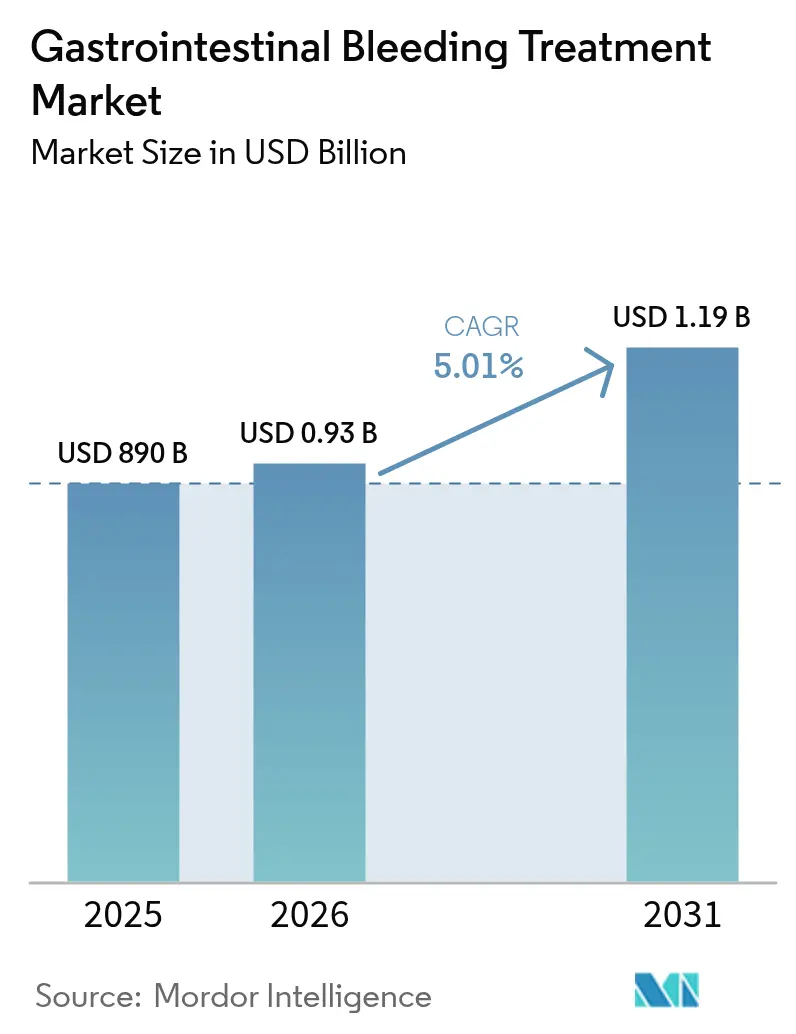
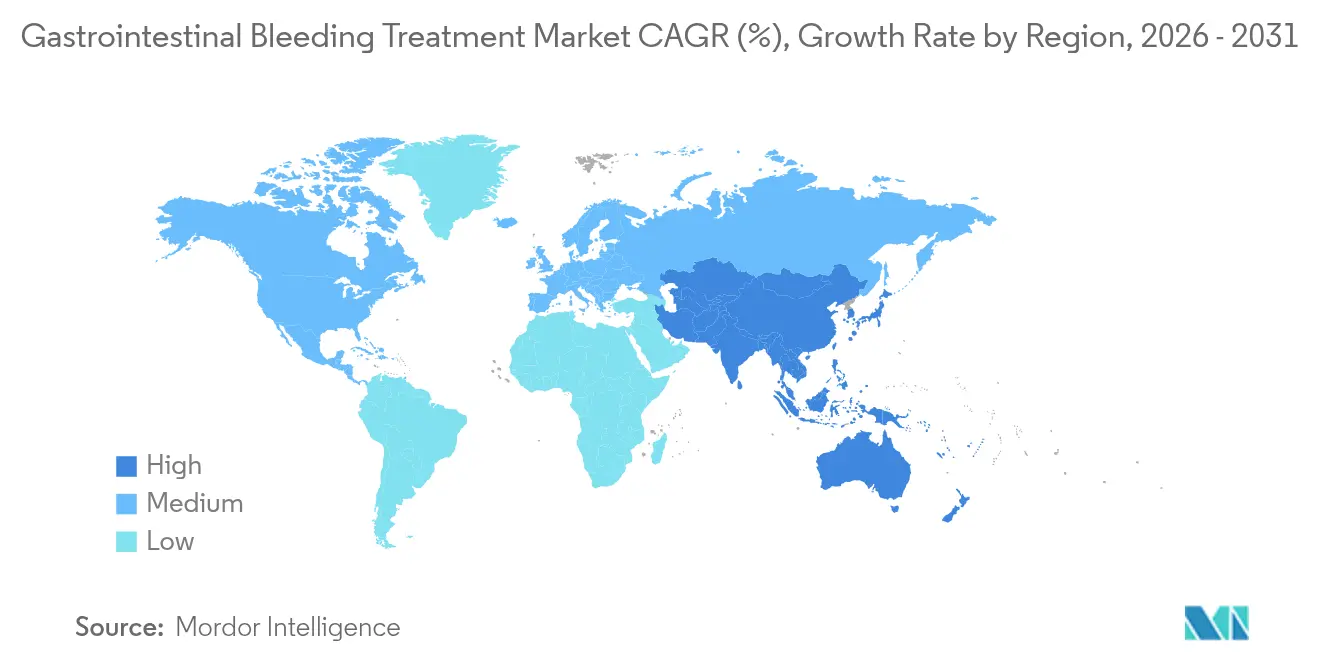
The gastrointestinal bleeding treatment market size in 2026 is estimated at USD 934.59 million, growing from 2025 value of USD 890 million with 2031 projections showing USD 1.19 billion, growing at 5.01% CAGR over 2026-2031. Momentum comes from the steady rise in complex upper-GI cases, broader adoption of minimally invasive hemostasis, and a reimbursement climate that rewards technology capable of shortening hospital stays. Hospitals remain the spending core, yet ambulatory surgical centers (ASCs) attract investment because Medicare now reimburses an expanded list of endoscopic procedures, allowing outpatient sites to capture revenue that once defaulted to inpatient settings. Endoscopic mechanical clips still dominate procedure volumes, but topical hemostatic sprays, capsule endoscopy, and AI-assisted risk stratification tools are the fastest-scaling niches. Regionally, North America anchors demand, while Asia-Pacific delivers the highest incremental growth as hospitals equip new endoscopy suites and train specialists.
Key Report Takeaways
- By product, endoscopic mechanical devices led with 44.74% gastrointestinal bleeding treatment market share in 2025; topical hemostatic sprays are projected to expand at a 11.9% CAGR to 2031.
- By GI tract division, upper-GI procedures accounted for 62.53% of the gastrointestinal bleeding treatment market size in 2025, while small bowel interventions advance at a 9.74% CAGR through 2031.
- By end user, hospitals and clinics held 70.12% revenue share in 2025; ASCs record the fastest growth at 9.18% CAGR to 2031.
- By geography, North America commanded 40.25% of the gastrointestinal bleeding treatment market in 2025, whereas Asia-Pacific posts an 8.49% CAGR through 2031.
Note: Market size and forecast figures in this report are generated using Mordor Intelligence’s proprietary estimation framework, updated with the latest available data and insights as of 2026.
Market Trends and Insights
Drivers Impact Analysis of Gastrointestinal Bleeding Treatment Market*
| Driver | (~) % Impact on CAGR Forecast | Geographic Relevance | Impact Timeline |
|---|---|---|---|
| Rising incidence of upper-GI bleeding cases | +1.2% | Global, higher in North America & Europe | Medium term (2-4 years) |
| Shift toward minimally invasive endoscopic hemostasis | +0.8% | North America & EU, expanding to Asia-Pacific | Long term (≥ 4 years) |
| Availability of next-generation clips & sprays | +0.9% | Global, led by developed markets | Short term (≤ 2 years) |
| Expanding elderly population using anticoagulants | +1.1% | Global, especially Asia-Pacific & North America | Long term (≥ 4 years) |
| AI-driven bleeding-risk prediction algorithms | +0.4% | North America & EU first, global rollout | Medium term (2-4 years) |
| Hospital incentives for 24/7 GI-bleed teams | +0.6% | North America & EU, selective Asia-Pacific | Short term (≤ 2 years) |
| Source: Mordor Intelligence | |||
Rising Incidence Of Upper GI Bleeding Cases
Upper-GI bleeding rates remain 84-160 per 100,000 adults, with mortality still near 10% despite newer therapies. Anticoagulant uptake in aging cohorts magnifies risk and pushes clinicians to deploy combination hemostasis kits during the index endoscopy to curb costly rebleeds. Hospitals quantify savings when rapid hemostasis avoids surgical conversion, strengthening demand for devices that shorten procedure time and enhance clip retention. Manufacturers therefore package clips, sprays, and injection catheters in modular kits to ensure readiness for any bleeding phenotype. Health systems with capitated payment models increasingly standardize these kits across sites to cut variation and improve outcomes reporting.
Shift Toward Minimally-Invasive Endoscopic Hemostasis
Over-the-scope clips and single-channel suturing systems now seal full-thickness wall defects once referred for open surgery, reducing hospital days and narcotic use. Boston Scientific’s OverStitch NXT connects to a standard gastroscope and completes suture patterns in fewer passes, allowing faster turnover in busy labs. Early data show lower 30-day rebleed rates relative to thermal coagulation, especially for fibrotic ulcers. The skill gap, however, necessitates simulation-based upskilling and has opened a parallel market for VR-enabled training modules. Hospitals that couple advanced tools with rigorous credentialing enjoy fewer emergency transfers and better quality scores under pay-for-performance contracts.
Availability Of Next-Generation Hemostatic Clips & Sprays
FDA clearance for plant-derived powders such as Traumagel validates alternative biomaterials that form an instant mechanical barrier, useful in coagulopathic patients. STERIS’s Padlock Clip deploys circumferential arms that grasp tissue in under 12 seconds, trimming average deployment time by 4 minutes 45 seconds and reducing the clip count per lesion by 44% against legacy systems. Non-contact powders like Hemospray coat diffuse oozing surfaces, closing a treatment gap for malignancy-related bleeding where mechanical closure is impractical[1]Cook Medical, “Hemospray Endoscopic Hemostat,” cookmedical.com. Side-by-side trials demonstrate significant reductions in procedure length and anesthesia exposure when sprays precede clip placement for large-area bleeding.
Expanding Elderly Population Using Anticoagulants
Direct oral anticoagulants drive major bleeding at 27.9 per 1,000 person-years, with the GI tract accounting for 45% of events. Mortality climbs to 10.5% within 28 days for anticoagulated patients compared with 2.8% for controls, intensifying calls for device-plus-drug protocols that expedite reversal and achieve durable hemostasis. Device makers now design clips validated in anticoagulated models and seek labeling that specifies performance under altered coagulation. Hospitals develop bundled order sets embedding reversal agents and next-gen clips to cut time-to-hemostasis, an approach that bolsters procedure volumes in centers of excellence and pushes the gastrointestinal bleeding treatment market toward outcome-based purchasing agreements.
Restraints Impact Analysis of Gastrointestinal Bleeding Treatment Market*
| Restraint | (~) % Impact on CAGR Forecast | Geographic Relevance | Impact Timeline |
|---|---|---|---|
| Shortage of skilled endoscopists in emerging markets | -0.7% | Asia-Pacific emerging, Latin America, Middle East & Africa | Long term (≥ 4 years) |
| High cost of advanced endoscopic devices | -0.5% | Global, most acute in price-sensitive regions | Medium term (2-4 years) |
| Supply-chain bottlenecks in specialty metals & powders | -0.3% | Global manufacturing hubs in Asia | Short term (≤ 2 years) |
| Antimicrobial-stewardship limits on prophylactic PPIs | -0.4% | North America & Europe regulatory environments | Medium term (2-4 years) |
| Source: Mordor Intelligence | |||
Shortage Of Skilled Endoscopists In Emerging Markets
Asia-Pacific adds thousands of endoscopy rooms annually, yet lacks certified staff trained in advanced closure devices, delaying uptake of premium solutions. ESGE recommends objective competence metrics that extend training cycles, placing strain on national budgets and widening urban-rural gaps. Vendors respond with simplified clip applicators and tele-mentoring platforms, but credentialing backlogs persist. Consequently, procurement committees defer purchase of high-end kits until skill pipelines mature, tempering the gastrointestinal bleeding treatment market in lower-income countries.
High Cost Of Advanced Endoscopic Devices
Single-use suturing catheters and robotic platforms raise per-case supply costs by up to USD 640, challenging ASCs that operate on fixed facility fees. Hospitals renegotiate bulk contracts, demanding tiered pricing and evidence of rebleed avoidance to justify premiums. Component shortages in nitinol and biopolymer powders elevate manufacturing costs, which suppliers partially pass through in 2025[2]U.S. FDA, “Medical Device Supply Chain and Shortages,” fda.gov. Emerging markets pivot toward reusable devices, but stricter infection-control rules in high-income jurisdictions constrain that option, keeping pricing pressure elevated.
*Our forecasts treat driver/restraint impacts as directional, not additive. The impact forecasts reflect baseline growth, mix effects, and variable interactions.
Gastrointestinal Bleeding Treatment Market Segment Analysis
By Product:
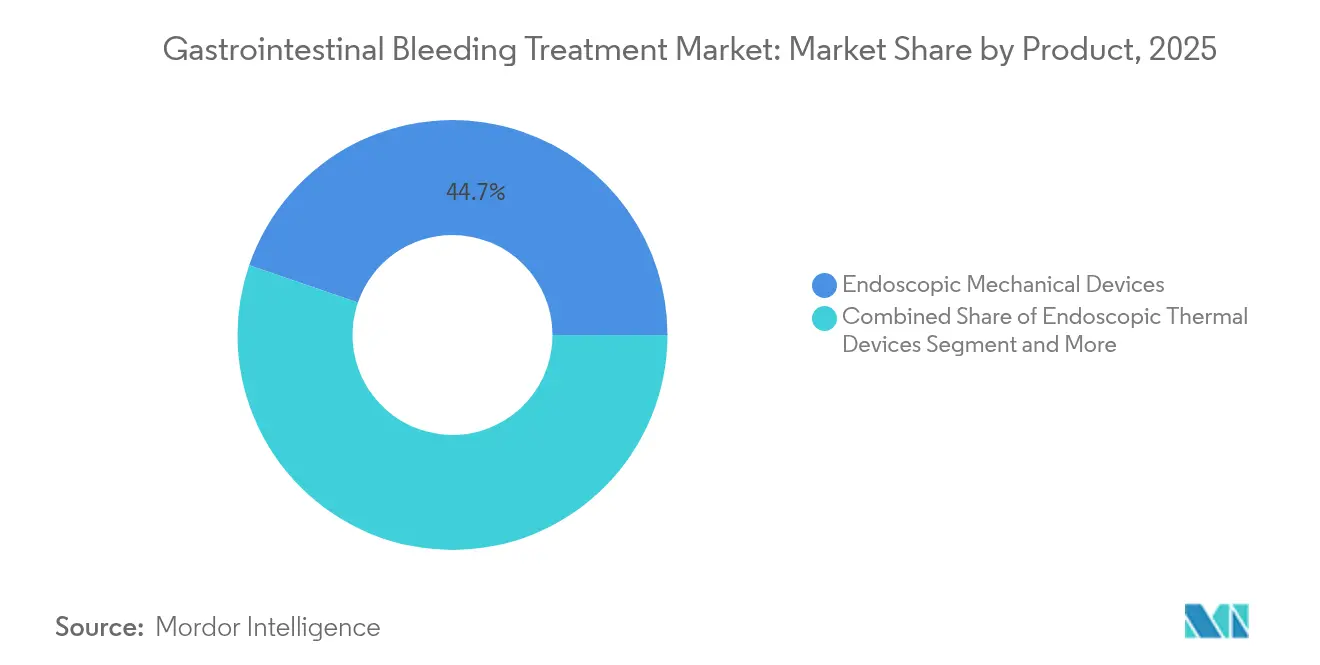
Mechanical Devices Lead Innovation WaveMechanical clips held 44.74% of the gastrointestinal bleeding treatment market in 2025 thanks to decades-long clinician familiarity and multi-lesion versatility. The segment benefits from continuous miniaturization and stronger grasp forces that cut clip counts per case. The gastrointestinal bleeding treatment market size for topical sprays, though smaller, expands at a 11.9% CAGR because powders address diffuse bleeding and function regardless of coagulation status. Thermal probes and injection catheters maintain niche roles for variceal management and are frequently bundled in combination kits to guarantee first-pass hemostasis.
Performance metrics now focus on deployment speed; Boston Scientific’s MANTIS clip requires 4 fewer clips and nearly 5 fewer minutes than predecessors, freeing lab capacity for additional cases. Biocompatible hemostatic agents sourced from algae reduce immunogenicity, opening use in immunosuppressed cohorts. Manufacturers differentiate via pre-loaded, rotation-controlled handle designs and radiopaque markers that aid fluoroscopic confirmation during hybrid procedures.



By GI Tract Division:
Small Bowel Innovations Drive GrowthUpper-GI interventions represented 62.53% gastrointestinal bleeding treatment market share in 2025, supported by clear diagnostic pathways and higher bleeding incidence. Capsule endoscopy enables small bowel visualization without fluoroscopy, propelling mid-GI procedure volumes at a 9.74% CAGR. The gastrointestinal bleeding treatment market size attributed to small-bowel cases will accelerate as PillCam Genius transmits real-time alerts, letting clinicians retrieve and treat lesions during the same encounter.
Robotic wireless capsules under development incorporate steering coils and onboard drug reservoirs to one-day deliver therapeutics directly to bleeding sites. Pan-intestinal capsules appeal to inflammatory bowel disease care models, promising a single-day, non-sedated assessment of mucosal health. Lower-GI bleeding management also benefits from AI-aided colonoscopy that flags oozing lesions in real time, tightening polypectomy margins and reducing miss rates in busy outpatient lists.
By End User:
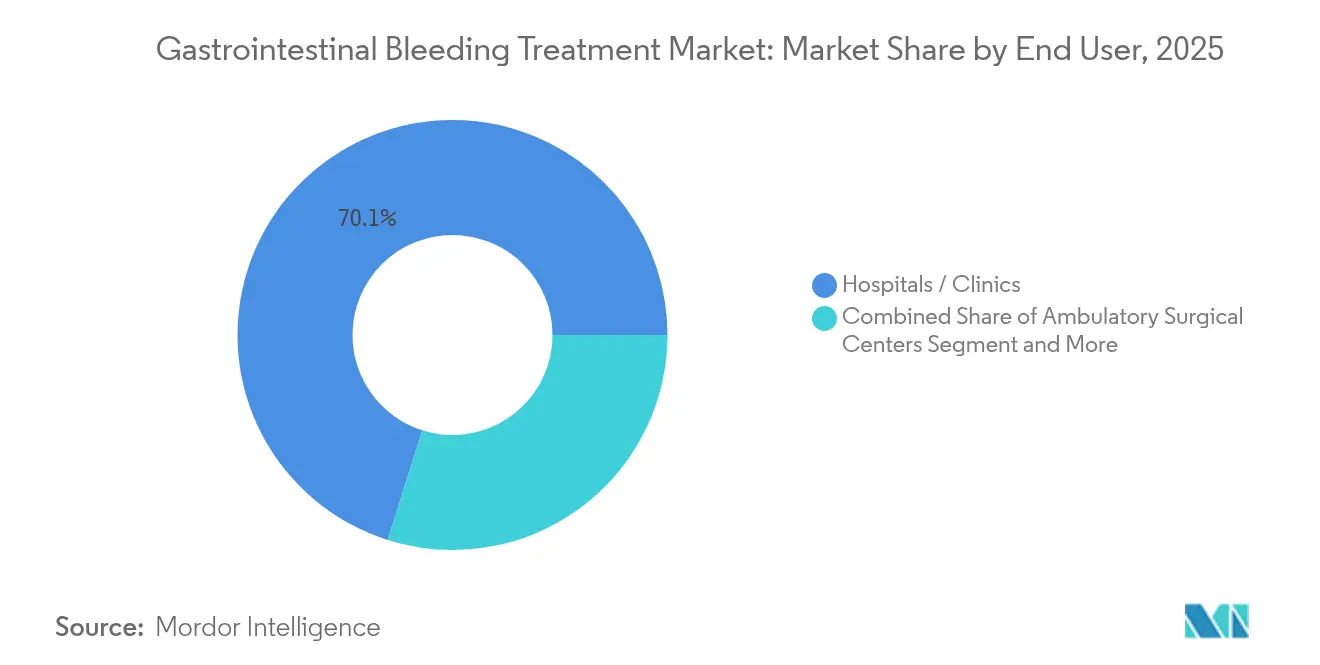
ASCs Capitalize On Outpatient ShiftHospitals anchored 70.12% of procedures in 2025, supported by trauma call coverage and interventional radiology backup. Nonetheless, ASCs grow at 9.18% CAGR as Medicare’s ASC fee schedule now lists over 30 upper- and lower-GI codes, incentivizing providers to move eligible bleeds to outpatient sites. Diagnostic labs integrate with regional ASC networks to offer platelet function testing and drug-level assays that inform reversal strategies before same-day discharge.
Specialized GI centers win referrals by combining 24/7 call coverage with fixed-price episode bundles that guarantee no unplanned readmission penalties. Manufacturers supply ASC-specific device kits with pre-sterilized, single-use handles that align with quicker room turnovers. Vendor service models now include loaner inventories delivered overnight, minimizing downtime and smoothing capital expenditure peaks for independent operators.
Geography Analysis
North America Gastrointestinal Bleeding Treatment Market
North America generated 40.25% of global revenue in 2025 because Medicare reimburses both inpatient and ASC-based hemostasis, stabilizing cash-flows for providers. U.S. health systems also pilot AI-guided triage that decreases emergency endoscopy wait times and promotes early intervention. Canada’s single-payer framework funds national bulk buys of hemostatic powders, ensuring uniform access and driving predictable procurement cycles. Mexico benefits from cross-border medical tourism for endoscopic treatment, particularly among uninsured U.S. patients seeking lower procedure costs.
APAC Gastrointestinal Bleeding Treatment Market
Asia-Pacific is the fastest-growing region at 8.49% CAGR, reflecting a sharp rise in gastrointestinal cancers and anticoagulant prescriptions. China upgrades county-level hospitals with fluoroscopy suites and capsule endoscopy readers under national health reforms, whereas Japan commercializes robot-assisted suturing platforms that cater to a super-aged population. India’s private hospitals expand advanced GI services for an insured middle class and focus on rebleed-avoidance metrics to compete for medical tourists from the Gulf.
Europe Gastrointestinal Bleeding Treatment Market
Europe posts stable growth, aided by ESGE guidelines that harmonize training and drive collective device purchasing across hospital consortia. Germany pioneers outpatient reimbursement for over-the-scope clips, while the United Kingdom expands rapid-access GI bleed units to meet the National Health Service’s 4-hour emergency target. The new EU Medical Device Regulation lengthens approval timelines but lifts public confidence, encouraging hospitals to invest in CE-marked innovations.
MEA and South America Gastrointestinal Bleeding Treatment Market
The Middle East and Africa plus South America occupy smaller shares yet report double-digit volume growth as tertiary centers open dedicated endoscopy units. High import tariffs remain a hurdle, steering facilities toward multipurpose devices that cover both bleeding and polypectomy use-cases.

Competitive Landscape
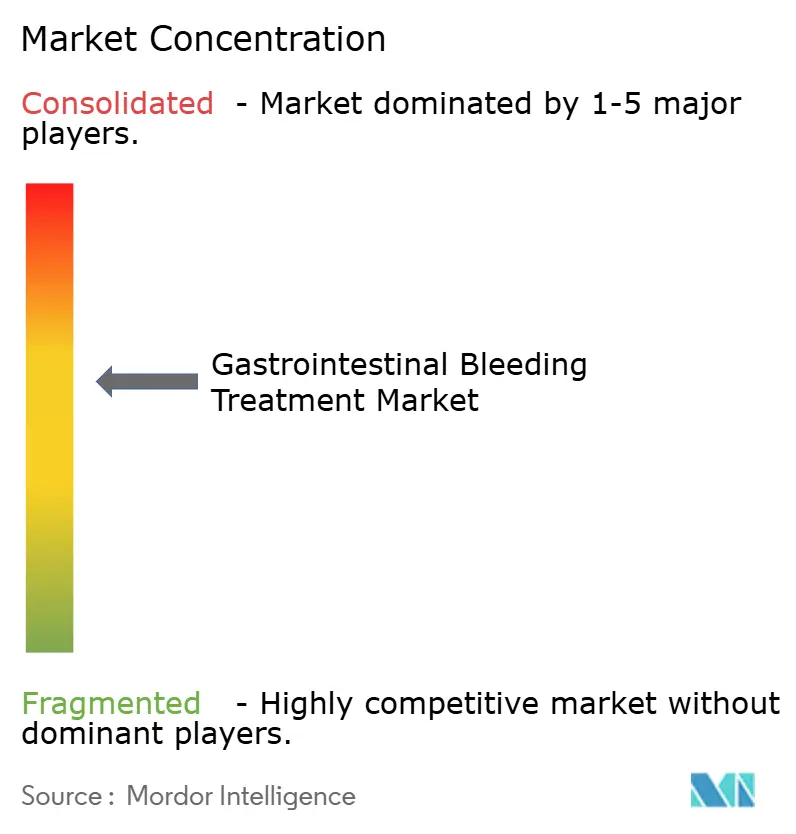
Market fragmentation persists, with the top five suppliers accounting for significant global revenue. Boston Scientific leverages a portfolio that spans Resolution 360 clips, OverStitch suturing, and Gold Probe catheters, underpinned by longitudinal data showing lower rebleed rates than monotherapy approaches. STERIS differentiates through vacuum-packaged, ready-to-use clip systems and integrated irrigation pumps that slot into existing towers. Cook Medical focuses on non-contact powders and actively seeks indications that extend beyond NVUGIB into malignant bleeding.
Emerging entrants exploit novel biomaterials; Cresilon’s plant-based Traumagel gains early adopters among trauma surgeons and may transition into endoscopy once delivery catheters are scaled. Software firms such as RedEye AI bundle real-time bleed detection into visualization systems, selling subscriptions that integrate with existing scopes. Partnerships between device firms and AI platforms accelerate because predictive analytics boost procedure volumes by flagging high-risk patients earlier.
Direct purchasing groups in the United States negotiate multi-year value-based contracts tying clip spend to rebleed rates, motivating vendors to supply both training and data-collection dashboards. In Asia, distributors play a pivotal role due to fragmented hospital ownership, compelling manufacturers to co-invest in local training centers that shorten learning curves for advanced tools.
Gastrointestinal Bleeding Treatment Industry Leaders
Boston Scientific Corporation
CONMED Corporation
ERBE Elektromedizin GmbH
Ovesco Endoscopy AG
Cook Group (Cook Medical)
- *Disclaimer: Major Players sorted in no particular order
Gastrointestinal Bleeding Treatment Market Companies Covered in this Report
- Boston Scientific
- Olympus
- Medtronic
- Cook Group
- Conmed
- Erbe Elektromedizin
- Ovesco Endoscopy
- STERIS
- Pfizer
- U.S. Medical Innovations
- Fujifilm Holdings Corp.
- HOYA Corp. (Pentax Medical)
- Johnson & Johnson
- Baxter
- Teleflex
- B. Braun
- Takeda Pharmaceutical Co.
- Novo Nordisk
- Smiths Group
- Ferring Pharmaceuticals
Read Analysis of Gastrointestinal Bleeding Treatment Companies

Market Opportunities and Future Outlook
White-space is opening at the intersection of diagnosis and intervention, where capsule endoscopy and risk stratification are moving beyond episodic visualization toward continuous monitoring and earlier escalation. Upper-GI bleeding still accounts for the majority of procedures (62.53% share in 2025), and R&D is increasingly focused on ingestible electronic systems designed for closed-loop diagnosis and preventative monitoring of gastric bleeding, as described in 2026 literature. This direction also aligns with provider incentives to reduce emergent endoscopy load and shorten hospital stays.
A second opportunity is taking shape in non-contact hemostasis and combination therapy pathways, where powders and adjunctive agents for both upper and lower GI bleeding continue to advance through comparative clinical development. The TREET study (NCT06188585), initiated in June 2024, evaluates hemostatic powder versus conventional endoscopic therapy, and 2026 registry activity includes a pilot study at National Cheng Kung University Hospital (NCT07679139) assessing endoscopic application of a hemostatic drug powder (tranexamic acid and sucralfate) for lower GI bleeding. On clinical practice, ESGE issued a 2026 update for peptic ulcer bleeding management, reinforcing guideline-driven standardization that supports procurement of device-plus-consumable kits and training packages across hospital and outpatient endoscopy settings.
Recent Industry Developments in Gastrointestinal Bleeding Treatment Market
- April 2026: CONMED completed the divestiture of its remaining gastrointestinal product lines to an undisclosed buyer, finalizing its previously stated decision to exit gastroenterology effective January 1, 2026. This reduces one mid-sized competitor in the GI hemostasis device landscape and shifts installed-base support and future product roadmaps to the acquiring party.
- December 2025: Ovesco Endoscopy AG received FDA 510(k) clearance (K251562) for the OTSCneo System Set, indicated for endoscopic treatment of gastrointestinal hemorrhage. This clearance supports the over-the-scope clip segment and expands options for durable mechanical hemostasis in complex bleeding and defect-closure scenarios.
- April 2024: The FDA classified a Boston Scientific recall of Obsidio Conformable Embolic as Class I, citing risks including bowel ischemia when used with the aliquot technique in lower GI bleeding procedures. The classification increases scrutiny around embolic use in GI bleeding workflows and can affect hospital purchasing controls, labeling adherence, and training emphasis across interventional and endoscopic teams.


Gastrointestinal Bleeding Treatment Market Report Scope and Research Methodology
Market Definition and Coverage
This market covers the value of products and procedures used to diagnose, control, and treat bleeding that originates in the gastrointestinal tract, across hospital and outpatient care. It includes commonly used endoscopic, interventional, and supportive treatment approaches captured through commercial sales.
Scope exclusions: services billed purely as physician fees, broader GI disease drugs not used for active bleeding control, and general hospital infrastructure costs are excluded.
Segments Covered in This Report
- By Product
- Endoscopic Mechanical Devices
- Endoscopic Thermal Devices
- Endoscopic Injection Devices
- Topical Hemostatic Sprays
- Combination Therapy Kits
- Other Products
- By GI Tract Division
- Upper GI Tract
- Small Bowel / Mid GI Tract
- Lower GI Tract
- By End User
- Hospitals / Clinics
- Ambulatory Surgical Centers
- Specialized GI Centers
- Diagnostic Laboratories
- Other End Users
- Geography
- North America
- United States
- Canada
- Mexico
- Europe
- Germany
- United Kingdom
- France
- Italy
- Spain
- Rest of Europe
- Asia-Pacific
- China
- Japan
- India
- South Korea
- Australia
- Rest of Asia-Pacific
- Middle East and Africa
- GCC
- South Africa
- Rest of Middle East and Africa
- South America
- Brazil
- Argentina
- Rest of South America
- North America
Data Sources, Market Sizing, and Validation
Desk Research
Desk research starts with building the demand pool for gastrointestinal (GI) bleeding episodes and the typical care pathway, then mapping where spending actually occurs along that pathway. Public sources such as the US CDC and CMS datasets, WHO health statistics, OECD health data, and national health ministry publications are used to anchor procedure volumes, care settings, and utilization patterns.
We also reviewed clinical guidance and evidence from peer reviewed gastroenterology journals and society guidelines (for example, endoscopy and hemostasis recommendations) to understand how treatment choice shifts by severity and bleed location. On the supply side, company annual reports, investor materials, product labels, and reputable press are used to confirm product availability, pricing direction, and geographic exposure, and we supplement this with paid subscriptions for company financials, news and financials, and patent databases to cross-check innovation and portfolio activity. The desk source list is illustrative only, and additional public references were consulted for data collection, validation, and clarifying assumptions.
Primary Interviews and Surveys
Primary work focused on clinician and hospital procurement inputs, distributors, and device and therapy specialists who see ordering patterns behind GI bleed management. These interviews were used to confirm adoption of endoscopic hemostasis methods, typical case mixes by care setting, and price movement by region, and then to pressure-test any desk assumptions that looked too optimistic or too conservative across APAC, EMEA, and the Americas.
Distribution of primary research fieldwork respondents
| Company type | Respondent position | Region |
|---|---|---|
| Top tier: 27% | CXOs: 17% | APAC: 50% |
| Mid tier: 55% | Functional/Unit leaders: 30% | EMEA: 31% |
| Smaller Players: 18% | Managers: 53% | Americas: 19% |
Market-Sizing & Forecasting
Sizing begins with a top-down build where incidence and treated-case assumptions are converted into procedure volumes, then paired with typical modality splits and average selling prices to reconstruct total spending. In practice, our model uses repeatable inputs such as the share of upper versus lower GI bleeds, endoscopy utilization rates, procedure setting mix (inpatient versus outpatient), use of hemostatic clips and injection therapies per case, and reimbursement or tender price signals that influence realized ASPs.
To keep totals grounded, the outputs are corroborated with selective bottom-up checks, including roll-ups from sampled supplier revenues, channel checks on unit volumes, and ASP times volume sanity checks for high-usage product categories. When a country has limited public data, gaps are handled by using proxy utilization ratios from clinically similar markets and then re-scaling to local hospital activity and healthcare spend indicators.
Forecasts are built using scenario analysis supported by short trend models. Drivers such as endoscopy capacity expansion, aging population trends, anticoagulant use, and guideline-driven shifts in therapy choice are varied, then aligned with what interviewees describe for near-term planning cycles.
Data Validation & Update Cycle
Validation is done through triangulation across demand signals, supply signals, and pricing checks, so the final number is not dependent on one data series. Outliers are flagged when growth rates, per-procedure spend, or regional splits diverge from healthcare activity indicators, and then the underlying assumptions behind the variance are reviewed and corrected before sign-off.
Reports are refreshed annually, and interim updates are triggered when material events occur, such as major product launches, reimbursement shifts, or regulatory actions that change procedure adoption. Before delivery, the model receives a refreshed analyst pass so clients get the latest updated view with consistent definitions and documented assumptions.
Mordor Intelligence's Gastrointestinal Bleeding Treatment Market Size Versus Other Published Estimates
Published market sizes for gastrointestinal bleeding treatment often do not match because studies may count different revenue streams, use different base years, or translate clinical activity into spending in different ways. Differences also show up when some sources use broader therapeutic baskets, and others stay tighter around procedure-linked products.
Key gap drivers typically come down to scope and input choices, such as whether supportive care drugs are fully counted, how endoscopic device bundles are priced, and whether the estimate is refreshed after reimbursement or guideline changes. Some external figures also rely on a single base year or a single region-to-global scaling factor, which can shift totals when procedure mix varies by geography.
Benchmark comparison
| Source | Market Size | Gaps in Research Methodology |
|---|---|---|
| Mordor Intelligence | USD 0.93 B (2026) | |
| Industry Publisher A | USD 0.56 B (2024) | Uses an earlier base year and tends to emphasize a narrower billed-product view for active treatment, which can understate markets where device use per procedure and hospital pricing have moved up after 2024. |
| Global Research Outlet B | USD 0.81 B (2023) | Reports a broader period and higher growth profile, but the public summary does not clearly separate procedure-linked devices from adjacent GI therapeutics, and currency timing and inflation handling are not transparent. |
The spread is easiest to understand when the year and what is being counted are lined up, and then the same clinical activity signals are used to convert into dollars. Some estimates lean wider into adjacent therapy baskets, and then the number rises. In Mordor Intelligence, the count is limited to treatment products and approaches directly tied to GI bleeding management as observed through procedure volumes and validated ASP logic.


Key Questions Answered in the Report
What is the current size of the gastrointestinal bleeding treatment market?
The gastrointestinal bleeding treatment market size stands at USD 934.59 million in 2026, with a projected value of USD 1.19 billion by 2031.
Which product category leads the market?
Endoscopic mechanical devices hold the largest share at 44.74% because clinicians rely on clip-based closure across most bleeding scenarios.
Why are ambulatory surgical centers gaining traction?
ASCs grow at a 9.18% CAGR because expanded Medicare coverage and lower facility fees encourage outpatient management of eligible GI bleeds.
Which region is expanding fastest?
Asia-Pacific records the highest CAGR of 8.49% due to healthcare infrastructure upgrades and rising elderly populations requiring anticoagulant therapy.
How are AI tools influencing treatment pathways?
EHR-linked algorithms predict bleeding risk up to a day earlier, permitting earlier endoscopy scheduling and improving outcomes while optimizing resource use.
Page last updated on:





