
Flea And Tick Product Market Size and Share
Market Overview
| Study Period | 2020 - 2031 |
|---|---|
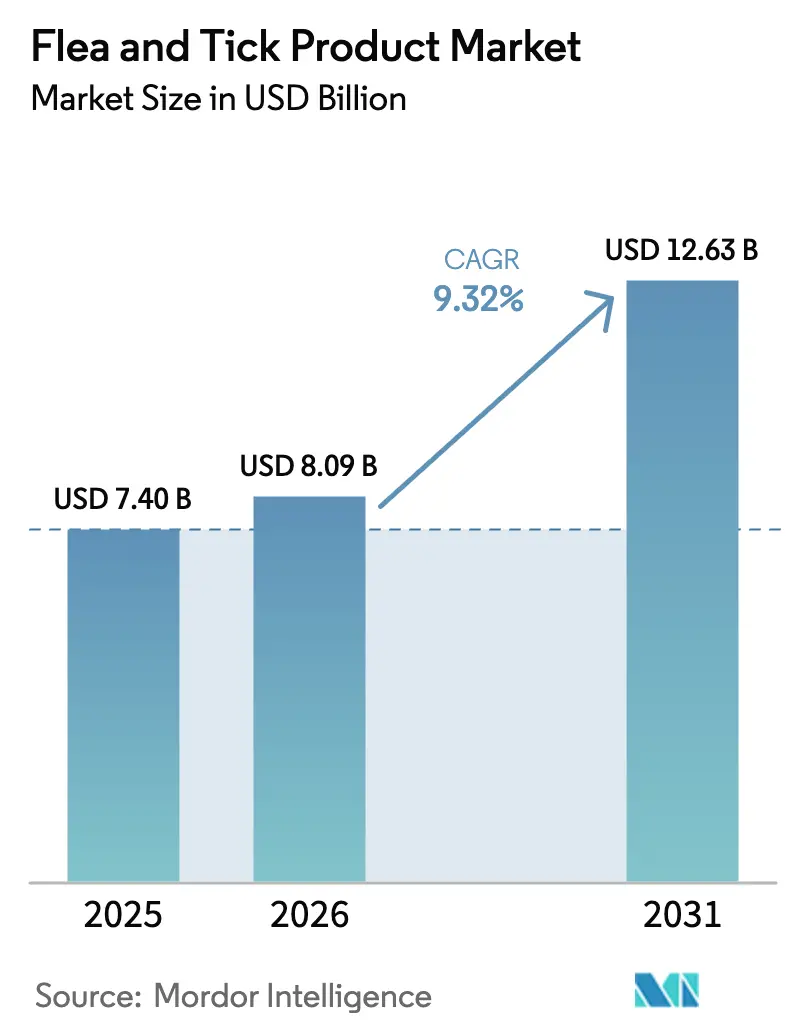
| Market Size (2026) | USD 8.09 Billion |
| Market Size (2031) | USD 12.63 Billion |
| Growth Rate (2026 - 2031) | 9.32 % |
| Fastest Growing Market | Asia Pacific |
| Largest Market | North America |
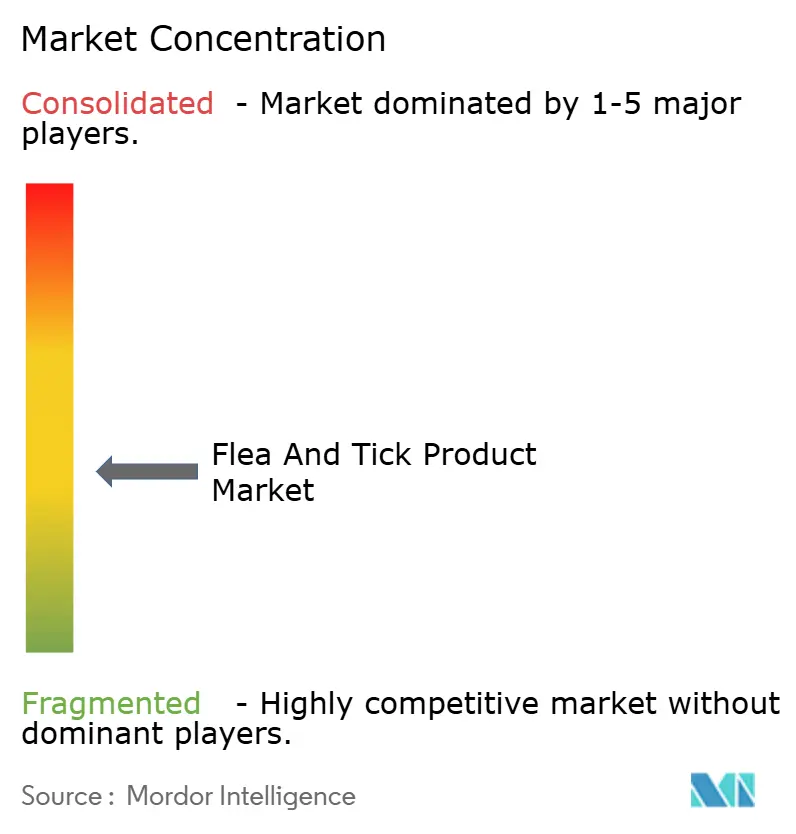
| Market Concentration | Medium |
Major Players *Disclaimer: Major Players sorted in no particular order Image © Mordor Intelligence. Reuse requires attribution under CC BY 4.0. | |
Flea And Tick Product Market Analysis by Mordor Intelligence
The flea and tick product market size is expected to grow from USD 7.40 billion in 2025 to USD 8.09 billion in 2026 and is forecast to reach USD 12.63 billion by 2031 at 9.32% CAGR over 2026-2031. Robust urban pet ownership, higher vector-borne disease incidence, and the growing appeal of long-acting combination formulations collectively accelerate growth across every major region. Heightened media coverage of zoonotic risks, especially Lyme disease, spurs preventive spending, while e-commerce auto-ship programs raise adherence and widen rural access.[1]Centers for Disease Control and Prevention, “Lyme Disease Data and Surveillance,” cdc.gov Competitive intensity rises as incumbents defend isoxazoline franchises against natural-product entrants, even as regulators fast-track 6- to 12-month options that tackle fleas, ticks, heartworm, and intestinal parasites in a single dose. Manufacturers also leverage subscription pricing and breed-specific palatability formats to retain customers. On the downside, acaricide resistance, safety-label revisions, and counterfeit items threaten both confidence and future revenue trajectories.[2]Merck Animal Health, “2025 Global Parasitology Survey,” merck-animal-health.com
Key Report Takeaways
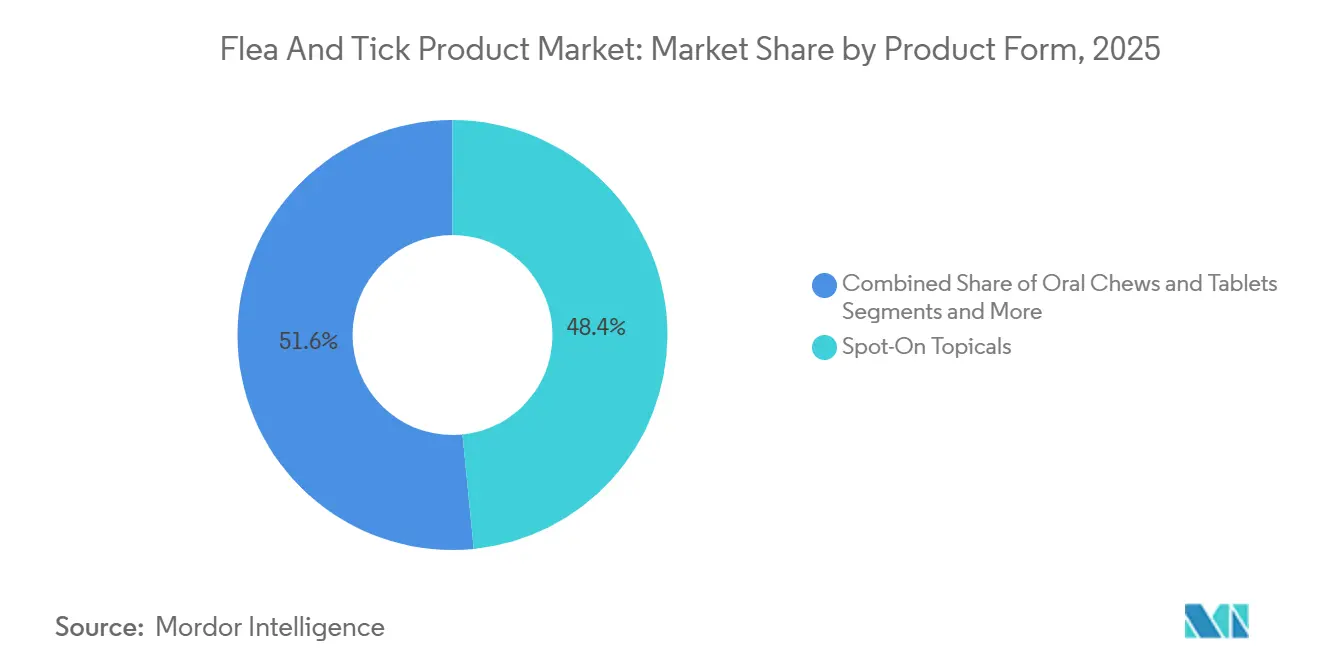
- By product form, spot-on topicals led with 48.42% of flea and tick products market share in 2025, whereas oral chews and tablets are forecast to expand at a 10.49% CAGR through 2031.
- By animal, dogs represented 58.87% of 2025 revenue, while the cat segment is poised to grow at a 10.44% CAGR through 2031.
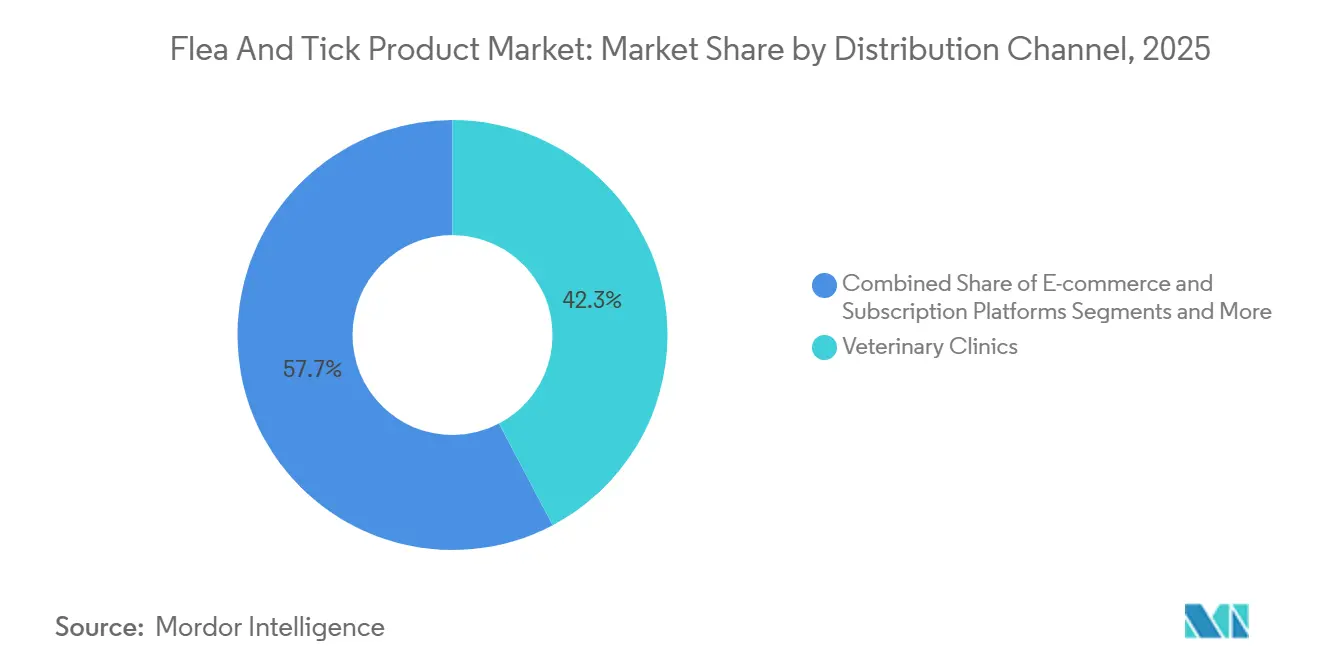
- By distribution channel, veterinary clinics held 42.29% of the flea and tick products market size in 2025, yet e-commerce and subscription platforms carry the fastest projected CAGR at 10.39% to 2031.
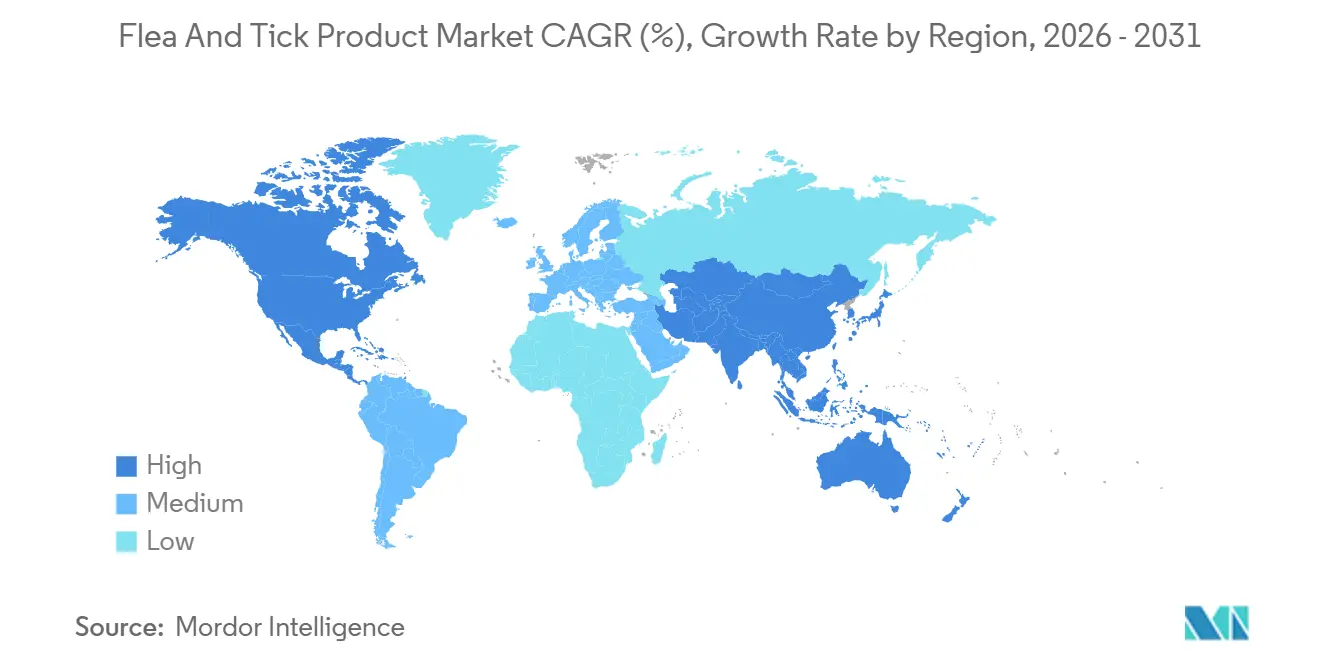
- By geography, North America captured 41.98% of 2025 revenue, whereas Asia-Pacific is the quickest-growing region at a 10.54% CAGR through 2031.
Note: Market size and forecast figures in this report are generated using Mordor Intelligence’s proprietary estimation framework, updated with the latest available data and insights as of January 2026.
Market Trends and Insights
Drivers Impact Analysis of Flea And Tick Product Market*
| Driver | (~) % Impact on CAGR Forecast | Geographic Relevance | Impact Timeline |
|---|---|---|---|
| High prevalence of flea- and tick-borne diseases in pets | +2.1% | Global, with acute pressure in North America (Lyme endemic zones) and Europe (Mediterranean spotted fever regions) | Medium term (2-4 years) |
| Increasing pet adoption and humanization trend | +2.5% | Global, led by Asia-Pacific urban centers (China, India) and Latin America (Brazil, Argentina) | Long term (≥ 4 years) |
| Growing owner awareness of zoonotic risks | +1.4% | North America and Europe, spillover to APAC metropolitan areas | Short term (≤ 2 years) |
| Tele-health and e-commerce subscriptions expand access | +1.8% | North America and Europe core, early adoption in APAC (Japan, South Korea) | Medium term (2-4 years) |
| Regulatory push for long-duration combo formulations | +0.9% | Global, with FDA and EMA as primary drivers | Long term (≥ 4 years) |
| Climate-driven expansion of tick habitats | +0.6% | North America (Canada), Northern Europe, temperate Asia-Pacific zones | Long term (≥ 4 years) |
| Source: Mordor Intelligence | |||
High Prevalence of Flea- and Tick-Borne Diseases in Pets
CDC surveillance logged 89,000 Lyme disease cases in 2023, 68.5% above the 2017-2019 baseline, while veterinary laboratories report Ehrlichia and Anaplasma positivity exceeding 5% in 15 U.S. states. Rising Babesia gibsoni detection in Japanese and South Korean dogs further widens the prophylaxis addressable base. Treatment outlays ranging from USD 500 to USD 2,000 per canine case contrast with annual preventive costs near USD 300, prompting owners to view year-round regimens as a cost-saving necessity. The resulting demand uptick directly underpins current double-digit expansion of oral, long-duration options.[3]World Health Organization, “Vector-Borne Diseases Fact Sheet,” who.int
Increasing Pet Adoption and Humanization Trend
The American Pet Products Association documented pet ownership in 66% of U.S. households in 2024, up 10 percentage points versus 2019. China reached 120.75 million companion animals in 2023, while India’s pet sector is set to hit USD 24.8 billion by 2032 on a 20% CAGR. Owners increasingly select premium combination chewables - exemplified by Simparica Trio and NexGard Plus - to bundle flea, tick, heartworm, and intestinal parasite control into one monthly dose. Growing pet insurance eligibility for preventive care in the U.K. and Scandinavia also nudges compliance.
Growing Owner Awareness of Zoonotic Risks
The WHO’s 2024 vector-borne disease bulletin states that 17% of infectious illnesses are vector-transmitted. After a 2024 three-fatality Powassan virus cluster in the U.S. Northeast, media reports spiked veterinary inquiries about year-round protection. Safety advisories on isoxazolines, updated in 2024, pushed manufacturers to refine labeling and bolster veterinarian training, maintaining product confidence despite social-media amplification of adverse-event anecdotes. The net result is rising demand among owners who prioritize both efficacy and documented safety.
Tele-Health and E-Commerce Subscriptions Expand Access
Amazon’s May 2025 prescription launch allows owners to upload veterinary-verified scripts and receive same-day delivery, accelerating digital adoption. Chewy’s pharmacy arm neared USD 1 billion in fiscal 2023, driven by auto-ship adherence rates of 89% versus 62% for one-off purchases. California’s AB 1399 and Arizona’s ARS 32-2240.03 permit 14-day tele-Rx supplies, gently eroding clinic gatekeeping. In India, tele-veterinary startups mitigate the 1:5,000 veterinarian-to-pet ratio, thereby unlocking demand in cities such as Mumbai and Bengaluru.
Restraints Impact Analysis of Flea And Tick Product Market*
| Restraint | (~) % Impact on CAGR Forecast | Geographic Relevance | Impact Timeline |
|---|---|---|---|
| Adverse-event and safety concerns with chemicals | -1.2% | Global, with heightened scrutiny in North America and EU due to FDA/EMA pharmacovigilance | Short term (≤ 2 years) |
| Counterfeit and sub-standard products in grey market | -0.7% | Asia-Pacific (China, India), Latin America (Brazil), and e-commerce channels globally | Medium term (2-4 years) |
| Emerging acaricide resistance in tick populations | -0.5% | Global, with documented cases in Mediterranean Europe, southern US, and Australia | Long term (≥ 4 years) |
| Tightening EU eco-toxicology regulations on actives | -0.4% | European Union, with spillover to UK and Switzerland | Long term (≥ 4 years) |
| Source: Mordor Intelligence | |||
Adverse-Event and Safety Concerns with Chemicals
The FDA’s updated 2024 alert on isoxazolines details neurologic events in a small subset of pets, recommending caution for animals with seizure histories. The EMA’s pharmacovigilance panel reviewed 1,200 Bravecto reports and reaffirmed a positive benefit-risk ratio while advising closer veterinarian guidance. Social-media groups spotlight anecdotal cases, pushing a minority of owners toward botanical choices such as cedar-oil sprays from Wondercide, which posted 40% revenue growth in 2024.
Emerging Acaricide Resistance in Tick Populations
Studies confirm permethrin resistance in Rhipicephalus sanguineus across Mediterranean Europe and the southern United States. French and German Ixodes ricinus populations show 3- to 5-fold higher fipronil LC50 values. As no global monitoring network for companion-animal tick resistance exists, early-stage detection remains fragmented, potentially limiting the lifetime of both legacy and new actives.
*Our forecasts treat driver/restraint impacts as directional, not additive. The impact forecasts reflect baseline growth, mix effects, and variable interactions.
Flea And Tick Product Market Segment Analysis
By Product Form:
Oral Adoption AcceleratesOral chews and tablets are slated for a 10.49% CAGR, the quickest within the flea and tick products market, as FDA-approved Simparica Trio and NexGard Plus add heartworm and intestinal parasite coverage in a single monthly chew. Spot-on topicals still held 48.42% of 2025 revenue, but their share is eroding as owners prefer mess-free systemic options. Collars capture an 8-month window of efficacy yet face environmental scrutiny over neonicotinoid residues. Sprays, powders, and shampoos account for <10% combined, confined to shelter and kennel usage. Bravecto Quantum’s 12-month injectable model exemplifies the shift toward ultra-long-duration solutions, eliminating monthly owner reminders and bolstering adherence documented as low as 45% among non-subscription users.
Consumer preference for flavored chewables also lifts palatability R&D, with beef, chicken, and fish variants tailored to breed size. Systemic delivery avoids dermal irritation, a frequent pyrethroid complaint, reinforcing oral dominance within the flea and tick products market.



By Animal:
Cat Segment Closes the GapDogs contributed 58.87% of 2025 revenue, yet the cat segment will expand at a 10.44% CAGR through 2031 on the back of Credelio CAT’s U.S. emergency authorization and Bravecto TriUNO’s EU approval. Historical feline under-representation stemmed from pyrethroid toxicity and smaller wallet share, but rising urban cat ownership—73.8 million in the United States—now justifies targeted R&D. Future pipelines prioritize feline combination chewables that integrate flea, tick, and heartworm control, narrowing a long-standing therapeutic gap.
Other companion species remain niche, accounting for <5% revenue. Ferret and rabbit treatments rely on off-label dosing of canine products, creating veterinary liability hurdles. Equine ectoparasite prevention centers on spray formulations and feed-through larvicides distinct from companion-animal segments.
By Distribution Channel:
Digital Disruption HoldsVeterinary clinics retained 42.29% of 2025 revenue within the flea and tick products market, yet e-commerce and subscription portals deliver the steepest 10.39% CAGR through 2031. Amazon’s script upload function and Chewy’s auto-ship model illustrate how digital channels erode the traditional Veterinary-Client-Patient Relationship barrier. U.S. state tele-health rules now permit short-term prescriptions online, allowing refill capture after an initial clinic visit. Retail pet chains and human pharmacies cater to cost-sensitive owners via OTC fipronil and permethrin products, but their single-active coverage limits uptake among multi-pet households seeking comprehensive protection. Subscription adherence gains of 27 percentage points over single-purchase cohorts translate into measurably lower parasite incidence.
Geography Analysis
North America and Europe Flea and Tick Product Market
North America commanded 41.98% of 2025 revenue, anchored by USD 200 – USD 400 annual per-pet preventive spending and an entrenched clinic network. Continued vector-borne disease growth sustains demand, especially as Ixodes scapularis pushes into Canada’s southern provinces. Europe follows at 28%, yet faces emerging eco-toxicology regulations that may limit fipronil and permethrin usage.
APAC, South America and MEA Flea and Tick Product Market
Asia-Pacific posts the fastest 10.54% CAGR through 2031 owing to China’s expanding urban pet base and India’s rapid 20% sector CAGR. Slower regulatory approvals can extend launch cycles by up to 36 months, affording local generics an interim share. South America and the Middle East & Africa jointly deliver under 15% but hold headroom as veterinary infrastructure improves; the African Medicines Agency, founded 2024, intends to streamline approvals across 55 member states.

Regulatory Landscape
Flea and tick products fall under two main oversight tracks in the United States, with the FDA Center for Veterinary Medicine regulating animal drugs (including systemic products) and the EPA regulating pesticide products that act on the animal surface. In 2024-2025, FDA communications continued to stress pharmacovigilance expectations for companion-animal parasiticides, and FDA and EPA also began modernization discussions for products that sit between drug and pesticide classifications, which can apply to certain topical ectoparasiticides.
In Europe, the veterinary framework is anchored by Regulation (EU) 2019/6 (applicable since 28 January 2022), which governs marketing authorization, manufacturing, import controls, and post-market surveillance for veterinary medicinal products. In October 2025, the European Commission added new GMP requirements for veterinary medicinal products and active substances via Implementing Regulations (EU) 2025/2154 and (EU) 2025/2091, raising compliance requirements for manufacturers and suppliers. The United Kingdom also updated domestic procedures through The Veterinary Medicines (Amendment etc.) Regulations 2024, reflecting ongoing alignment in authorization and administrative processes for veterinary medicines.
Value Chain Analysis
The flea and tick product value chain starts with active ingredient and excipient suppliers that support R&D and formulation work for oral chews/tablets, spot-ons, collars, and sprays. After formulation, clinical and field efficacy programs feed into regulatory dossier preparation, followed by manufacturing in-house plants and contract manufacturing organizations (CMOs). Quality systems are aligned to regional GMP expectations for veterinary medicinal products, while packaging and labeling are often localized by geography and channel (clinic packs versus retail multipacks) to fit prescription and OTC rules and language requirements.
Distribution typically moves through veterinary clinics, wholesalers, and retail pet stores and pharmacies, with e-commerce and subscription platforms playing a larger role through prescription verification and repeat fulfillment. Cold-chain is generally less critical than for biologics, but integrity controls such as anti-counterfeit measures, batch traceability, and controlled storage remain important given the presence of grey-market parasiticides. Large animal health manufacturers manage diversified supplier bases and external manufacturing networks to secure capacity and continuity, while online pharmacies and retail service models increasingly shape last-mile access for preventive parasiticide regimens.
Competitive Landscape
Zoetis, Elanco, and Boehringer Ingelheim collectively capture an estimated 55 – 60% of 2025 revenue, cementing a moderately concentrated arena. Zoetis’ Simparica Trio logged double-digit gains, pushing companion-animal sales to USD 2.37 billion in Q3 2024. Elanco continues to rationalize its Seresto collar acquisition while absorbing litigation costs tied to imidacloprid residue claims. Merck’s Bravecto franchise broadened with a 12-month injectable that directly addresses documented owner non-adherence.
Natural-product challengers such as Wondercide exploit chemical-averse segments, albeit with limited field efficacy data. Retail-oriented PetIQ undercuts prescription brands on price via Walmart and Amazon, yet its single-active formulas lack multi-parasite reach. Innovation pipelines point to transdermal patches and IoT-enabled collars that pair GPS tracking with dosing alerts, indicating rising tech convergence inside the flea and tick products industry.
Flea And Tick Product Industry Leaders
Ceva
Elanco
Virbac
Boehringer Ingelheim
Zoetis Inc.
- *Disclaimer: Major Players sorted in no particular order
Flea And Tick Product Market Companies Covered in this Report
- Bayer AG (Seresto)
- Bimeda Animal Health
- Boehringer Ingelheim
- Central Garden & Pet
- Ceva Santé Animale
- Dechra Pharmaceuticals
- Ecto Development
- Elanco
- Hartz Mountain
- Laboratoires Expanscience
- Merck
- PetArmor (Tevra)
- PetIQ / Sergeant’s
- Professional Pet Products
- Promika (Manna Pro)
- Vetoquinol
- Virbac
- Wellmark International
- Wondercide
- Zoetis

Market Opportunities and Future Outlook
Long-duration and broader-label parasiticide solutions create whitespace for products that reduce missed dosing and respond to evolving tick ecology. Merck Animal Healths March 2026 FDA label expansion for BRAVECTO QUANTUM (fluralaner) injection to cover Asian longhorned tick and Gulf Coast tick for 12 months in dogs illustrates how manufacturers are using regulatory pathways to match emerging tick species and geographic spread with updated claims, reinforcing the shift toward fewer-dose, higher-compliance options.
Channel and format diversification also creates room where access and affordability limit preventive use. Elancos April 2026 launch of the Advantage Collar for Dogs (four months of continuous protection against fleas, ticks, and mosquitoes) points to continued investment in extended-duration, non-oral formats that appeal to owners seeking alternatives to monthly dosing. On the retail touchpoints that drive repeat purchase, the May 2026 acquisition of VIP Petcare by Tractor Supply Company expands service-linked access for preventive care, supporting refill capture and compliance beyond traditional clinic-only pathways.
Recent Industry Developments in Flea And Tick Product Market
- May 2026: Tractor Supply Company completed the acquisition of VIP Petcare, a mobile veterinary care provider formerly owned by PetIQ. The deal expands access points for preventive services, including flea, tick, and heartworm prevention delivered in retail settings, strengthening the connection between veterinary service delivery and product sales at scale.
- March 2026: Merck Animal Health announced FDA label expansion for BRAVECTO QUANTUM (fluralaner) injection to cover Asian longhorned tick and Gulf Coast tick for 12 months in dogs. The expansion aligns label claims with shifting tick species distributions and supports longer-interval preventive strategies.
- October 2024: Elanco received FDA approval for Credelio Quattro (lotilaner, moxidectin, praziquantel, and pyrantel) as a canine oral parasiticide in a single monthly dose. The approval reinforced the shift toward combination products that bundle ectoparasite and endoparasite coverage, raising the bar for portfolio breadth among leading brands.


Flea And Tick Product Market Report Scope and Research Methodology
Market Definition and Coverage
For this study, the flea and tick product market covers revenue earned from products used to prevent or treat flea and tick infestations in animals, mainly companion pets, across major geographies and sales channels.
Scope exclusions: We exclude general pet hygiene items with no flea or tick claim, veterinary service revenue, and broader parasite therapies that are not intended for fleas or ticks.
Segments Covered in This Report
- By Product Form
- Oral Chews and Tablets
- Spot-On Topicals
- Sprays & Mists
- Collars
- Shampoos & Dips
- Powders & Dusts
- Others
- By Animal
- Dogs
- Cats
- Other Animals
- By Distribution Channel
- Veterinary Clinics
- Retail Pet Stores & Pharmacies
- E-commerce and Subscription Platforms
- Others
- By Geography
- North America
- United States
- Canada
- Mexico
- Europe
- Germany
- United Kingdom
- France
- Italy
- Spain
- Rest of Europe
- Asia-Pacific
- China
- Japan
- India
- Australia
- South Korea
- Rest of Asia-Pacific
- Middle East and Africa
- GCC
- South Africa
- Rest of Middle East and Africa
- South America
- Brazil
- Argentina
- Rest of South America
- North America
Data Sources, Market Sizing, and Validation
Desk Research
Desk research was used to build the basic demand story and to lock in repeatable input data before estimates were modeled. We referenced public animal health and zoonotic disease materials from sources such as the US CDC, the USDA, the European Medicines Agency, and the World Organisation for Animal Health (WOAH). We also used pet population and ownership indicators from sources such as the American Pet Products Association, along with customs and trade statistics where product flow signals were needed.
To connect those indicators to market value, we reviewed company filings, annual reports, investor presentations, and reputable press coverage on product launches and pricing moves. Patent databases were checked to understand formulation activity and durability claims that affect replacement cycles. Where needed, we used paid subscriptions for company financials and intelligence, and for news and financials to confirm corporate actions and geography exposure. These desk sources are illustrative only, and other public and paid references were also consulted for data collection, validation, and clarification.
Primary Interviews and Surveys
Primary work focused on validating the purchase path and how prevention versus treatment behavior changes by region and pet type. We interviewed and surveyed a mix of manufacturers, distributors, veterinarians, retail channel participants, and informed industry experts across APAC, EMEA, and the Americas. We then used that input to confirm assumptions that could not be reliably observed in public datasets.
Distribution of primary research fieldwork respondents
| Company type | Respondent position | Region |
|---|---|---|
| Top tier: 28% | CXOs: 14% | APAC: 41% |
| Mid tier: 58% | Functional/Unit leaders: 41% | EMEA: 37% |
| Smaller Players: 14% | Managers: 45% | Americas: 22% |
Market-Sizing & Forecasting
Sizing starts with a top-down demand pool build that ties pet population and ownership patterns to the treated cohort that is likely to buy flea and tick solutions. The model then applies category level usage rates and replacement timing to convert that cohort into annual unit demand, which is then valued using price bands that reflect typical product positioning and channel mix.
To keep the model grounded, we used a short list of market fingerprints that tend to move this market in a visible way. These included dog and cat population growth, incidence and seasonality of flea and tick activity by climate, preventive care adoption in veterinary settings, e-commerce share shifts in pet care, and the mix between oral products, spot-ons, collars, and sprays. After the first output is produced, we used selective bottom-up approximations as a cross-check. This included sampled price checks and volume logic by channel, plus supplier and distributor sense checks from primary discussions. When country level data was thin, we handled gaps using proxy indicators like pet ownership rates, disposable income patterns, and climate suitability, and then retested those assumptions with interview feedback.
For forecasting, scenario analysis was used so base, conservative, and upside cases could be built around adoption rates, pricing progression, and product mix changes. Those scenarios were then aligned to expert views gathered in interviews, before the final base case was selected for publication.
Data Validation & Update Cycle
Outputs are validated through triangulation across independent signals, and each large variance is investigated before the numbers are accepted. We run checks for sudden jumps that do not match pet population change, channel trends, or observed pricing movement, and then revisit the assumptions that caused the anomaly.
Before sign-off, the model and key inputs go through multi-step analyst reviews. Follow-up outreach is triggered when a critical metric does not reconcile with interview guidance or newly released public data. Reports are refreshed annually, and interim updates are made when material events occur, such as major regulatory actions, sharp price resets, or meaningful product launches. Right before delivery, a final pass is completed so clients receive the most current view available.
Mordor Intelligence's Flea and Tick Product Market Market Sizing Compared With Other Published Estimates
Published market values for flea and tick products can look far apart because the boundary of what is counted shifts from one study to the next. Differences in whether heartworm is bundled in, which animal categories are emphasized, and how channels like vet clinics versus online are treated can all change the final number.
Treatment cadence and price logic also create visible gaps. This is especially noticeable when one model assumes faster migration to oral formats or applies aggressive price expansion without checking real world buying behavior. Pet population signals and preventive care adoption, when used as sanity checks, help keep estimates tied to a realistic treated cohort. That evidence is the anchor behind Mordor Intelligence reporting USD 8.09 B (2026) for this market.
Benchmark comparison
| Source | Market Size | Gaps in Research Methodology |
|---|---|---|
| Mordor Intelligence | USD 8.09 B (2026) | |
| Global Consultancy A | USD 7.85 B (2024) | This figure uses a broader scope that includes heartworm alongside flea and tick, and its base year differs, which can shift pricing and adoption assumptions when compared to a flea and tick only cut. |
| Industry Publisher B | USD 8.73 B (2025) | This estimate appears to lean into companion animal formulations and a faster value build from mix upgrades, and the one-year timing difference can amplify effects from seasonal demand and currency conversion choices. |
The benchmark spread is mainly explained by scope boundaries, year of measurement, and how prevention intensity and price progression are translated into value. By keeping the model tied to a defined flea and tick demand pool and then cross-checking with channel and price reality checks, we end up with an estimate that is easier to trace back to clear inputs and repeatable steps.


Key Questions Answered in the Report
What is the 2026 value of the flea and tick products market?
The flea and tick products market size totals USD 8.09 billion in 2026.
Which product form is growing the fastest?
Oral chews and tablets are projected to post a 10.49% CAGR through 2031, outpacing all other forms.
Why is Asia-Pacific the fastest-growing region?
Rising urban pet ownership in China and India, plus improving veterinary access, drive a 10.54% regional CAGR.
How are e-commerce platforms affecting sales?
Amazon and Chewy auto-ship programs lift adherence to 89%, fueling the channel’s 10.39% CAGR to 2031.
Which companies lead the competitive landscape?
Zoetis, Elanco, and Boehringer Ingelheim collectively hold about 55 – 60% of global revenue.
What long-acting innovation recently entered the market?
Bravecto Quantum, a 12-month injectable fluralaner solution, gained FDA approval in July 2025.
Page last updated on:


 Your data is secure and never sold or shared.


