
Market Overview
| Study Period | 2021 - 2031 |
|---|---|
| Forecast Data Period | 2026 - 2031 |
| Base Year Market Size (2025) | USD 2.27 Billion |
| Market Size (2026) | USD 2.44 Billion |
| Market Size (2031) | USD 3.48 Billion |
| Growth Rate (2026 - 2031) | 7.36 % |
| Market Concentration | Medium |
Major Players *Disclaimer: Major Players sorted in no particular order Image © Mordor Intelligence. Reuse requires attribution under CC BY 4.0. | |
Europe Nutricosmetics Market Analysis by Mordor Intelligence
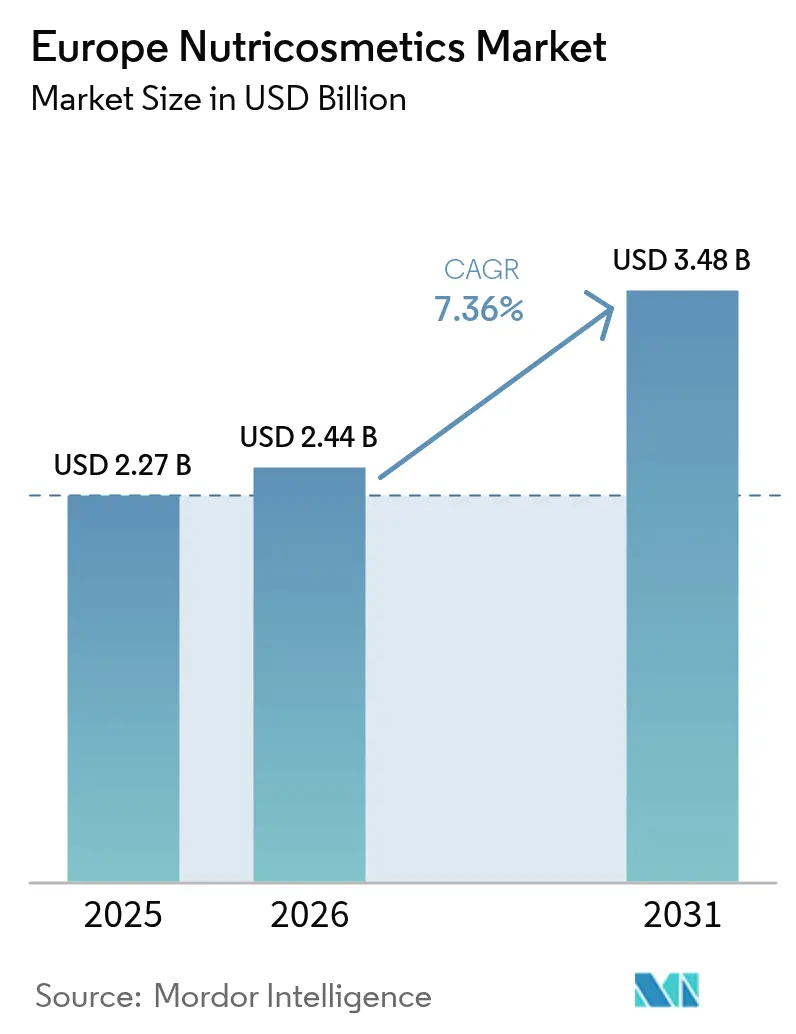
The European Nutricosmetics market size was valued at USD 2.27 billion in 2025 and estimated to grow from USD 2.44 billion in 2026 to reach USD 3.48 billion by 2031, at a CAGR of 7.36% during the forecast period (2026-2031). This growth is driven by increasing consumer interest in ingestible beauty products, a growing body of clinical research supporting their benefits, and the rising availability of these products through e-commerce platforms. In Italy, the use of daily supplements has become a common practice among consumers. Meanwhile, regulatory authorities in the Netherlands are simplifying approval processes, and in Germany, an increasing number of consumers are turning to online shopping for these products. Brands are focusing on developing innovative bioactive compounds, while manufacturers are creating new formats such as gummies, shots, and scented capsules, positioning them as lifestyle-oriented products. The competition in the market is intensifying as global companies in the food, beauty, and contract manufacturing sectors strive to secure exclusive active ingredients and advanced delivery technologies. Despite ongoing efforts toward consolidation, the market remains fragmented, with numerous players operating across the region.
Key Report Takeaways
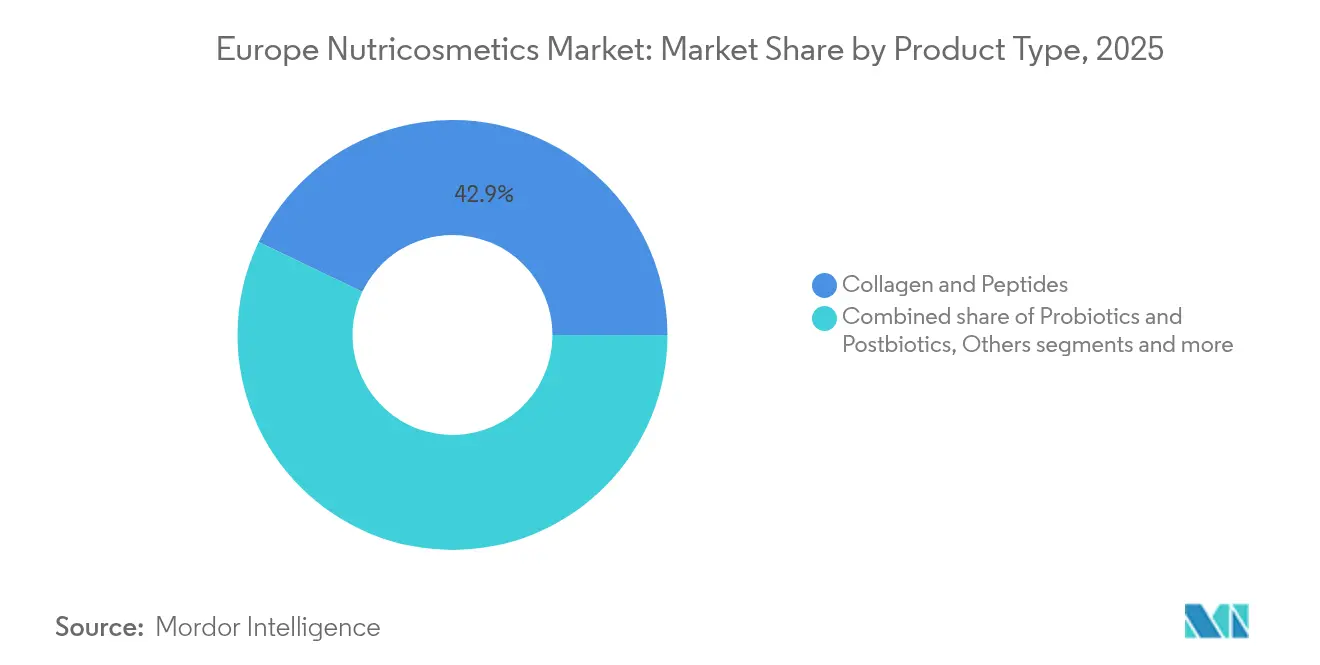
- By product type, collagen and peptides accounted for 42.88% of the European Nutricosmetics market share in 2025, while probiotics and postbiotics are expected to expand at a 9.20% CAGR through 2031.
- By form, tablets/capsules accounted for 45.21% of the European Nutricosmetics market size in 2025, while gummies are expected to advance at a 9.22% CAGR to 2031.
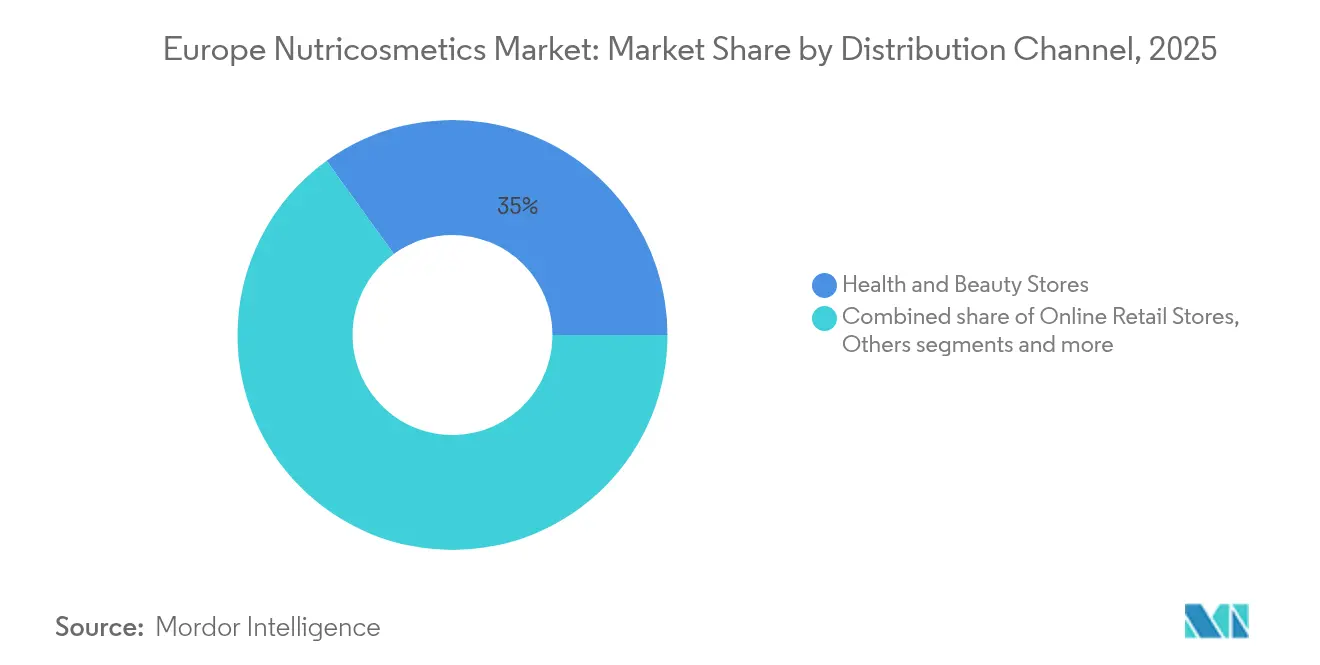
- By distribution channel, health and beauty stores commanded a 34.96% share of the European Nutricosmetics market size in 2025, whereas online retail stores are expected to expand at a 10.08% CAGR through 2031.
- By country, Italy led the European nutricosmetics market with 28.33% of the market share in 2025; the Netherlands is projected to register the highest CAGR at 9.42% through 2031.
Note: Market size and forecast figures in this report are generated using Mordor Intelligence’s proprietary estimation framework, updated with the latest available data and insights as of 2026.
Europe Nutricosmetics Market Trends and Insights
Drivers Impact Analysis*
| Driver | (~) % Impact on CAGR Forecast | Geographic Relevance | Impact Timeline |
|---|---|---|---|
| Higher consumer willingness to invest in premium self-care routines | +1.2% | Western Europe (Germany, France, United Kingdom, Netherlands), Northern Europe (Sweden) | Medium term (2-4 years) |
| Rising demand for ingestible collagen among fitness and wellness communities | +1.5% | Italy, Germany, France, United Kingdom, Spain | Short term (≤ 2 years) |
| Growing preference for natural, clean label, and plant-based ingredients | +1.0% | Netherlands, Germany, Sweden, Switzerland, United Kingdom | Medium term (2-4 years) |
| Increasing awareness of nutrient deficiencies and their impact on skin, hair, and nail health | +0.8% | All European countries | Long term (≥ 4 years) |
| Launch of sugar-free gummies and low-calorie drinkable beauty shots | +0.6% | France, United Kingdom, Germany, Netherlands | Short term (≤ 2 years) |
| Beauty influencers collaborations with brands to co-create limited edition nutricosmetics | +0.5% | Italy, France, United Kingdom, Spain | Short term (≤ 2 years) |
| Source: Mordor Intelligence | |||
Increasing awareness of nutrient deficiencies and their impact on skin, hair, and nail health
Awareness about micronutrient deficiencies is increasing across Europe, significantly driving the growth of the nutricosmetics market. The Zero Hidden Hunger EU project, launched in 2024 and set to run until 2027, highlights that nearly 70% of Europeans belong to groups at higher risk of nutrient deficiencies. These groups include children, teenagers, women of childbearing age, older adults, immigrants, and socially disadvantaged populations, according to the European Food Information Council[1]. The project involves 19 partner organizations from 12 countries working together to identify the extent of nutrient deficiencies and assess their health and economic impacts. The findings reveal that a lack of essential vitamins and minerals can directly affect skin elasticity, hair strength, and nail health. As a result, more consumers are turning to nutricosmetics products designed to improve beauty from within by addressing these deficiencies.
Higher consumer willingness to invest in premium self-care routines
Europeans are increasingly willing to spend on premium self-care products, which is driving significant growth in the nutricosmetics market. Personalized subscription services, such as those offered by Persona and The Nue Co., are transforming how consumers approach supplementation. Instead of viewing it as a one-time purchase, they now see it as an ongoing wellness routine. In the United Kingdom, a survey conducted by the PAGB Organization in July 2025 revealed that 84% of adults preferred self-care as their first choice for addressing health needs[2]. This indicates a clear shift toward proactive and preventive health practices. As a result, more consumers across Europe are opting for high-quality, innovative nutricosmetic products that align with their focus on long-term wellness and self-care. The growing demand for experiential solutions within the category further supports this trend.
Growing preference for natural, clean-label, and plant-based ingredients
Europe’s nutricosmetics market is growing steadily as more consumers prefer natural, plant-based, and clean-label products. In Italy, for example, there are approximately 964,800 vegans in 2024, according to World Population Review, highlighting a significant demand for beauty solutions that align with vegan and sustainable lifestyles[3]. Companies like Geltor are developing precision-fermented proteins, while DSM-Firmenich is producing algal omega-3 ingredients, both of which cater to these preferences while reducing reliance on marine resources. Regulatory authorities, such as those in the Netherlands, are pushing for stricter ingredient traceability and clearer labeling, ensuring greater transparency throughout the supply chain. These trends are driving the adoption of nutricosmetics that are sustainably sourced, plant-based, and clearly labeled, making them more appealing to environmentally conscious and health-focused consumers across Europe.
Launch of sugar-free gummies and low-calorie drinkable beauty shots
The nutricosmetics market in Europe is growing steadily as more consumers opt for sugar-free gummies and low-calorie beauty drinks. This shift is largely driven by increasing health awareness, with organizations like the National Health Service United Kingdom recommending that adults limit their daily sugar intake to no more than 30 grams[4]. High sugar consumption has been linked to issues such as weight gain, obesity, and dental problems, prompting consumers to seek healthier alternatives. In response, brands are creating innovative products that are both effective and enjoyable, without added sugars. For instance, Biocyte’s collagen express gummies provide a sugar-free blend of collagen and vitamin C, which helps improve skin firmness and hydration. These developments are fueling the demand for cleaner and healthier nutricosmetic products across Europe.
Restraints Impact Analysis*
| Restraint | (~) % Impact on CAGR Forecast | Geographic Relevance | Impact Timeline |
|---|---|---|---|
| High product costs limit adoption among price-sensitive consumers | -0.9% | Southern Europe (Spain, Poland), Eastern Europe (Rest of Europe) | Medium term (2-4 years) |
| Strict European regulations on health and beauty claims | -0.7% | Europe-wide (all countries), particularly stringent in Germany, Netherlands | Long term (≥ 4 years) |
| Growing concerns about counterfeit and low-quality supplements | -0.4% | Online retail channels across all countries | Short term (≤ 2 years) |
| Sustainability concerns related to sourcing marine ingredients | -0.3% | Netherlands, Sweden, Germany, Switzerland | Medium term (2-4 years) |
| Source: Mordor Intelligence | |||
Strict European regulations on health and beauty claims
Strict regulatory oversight is posing significant challenges for nutricosmetics brands in Europe. In April 2025, the European Court of Justice mandated the uniform enforcement of Regulation 1924/2006, requiring all companies to provide strong scientific evidence to support any health or beauty claims they make. This change has raised compliance standards across the region, giving an advantage to larger multinational companies that have the financial resources to conduct clinical trials and maintain extensive regulatory teams. On the other hand, smaller companies, which often lack the budget for expensive evidence generation, are being forced to shift their focus toward general wellness messaging instead of making specific claims about product efficacy. As a result, these stricter rules are slowing down innovation for new entrants and increasing the overall cost of entering and competing in the market.
Sustainability concerns related to sourcing marine ingredients
Concerns about the sustainability of marine ingredients are becoming a significant challenge for the European nutricosmetics market. Overfishing, damage to marine habitats, and the environmental impact of sourcing marine collagen and omega-rich extracts are drawing attention from regulators, environmental organizations, and consumers. These groups are increasingly questioning whether ocean-derived ingredients can be used responsibly in the long term. Companies that rely on fish or other marine by-products are under increasing pressure to demonstrate that their sourcing practices are sustainable, fully traceable, and meet stricter environmental standards. Meeting these requirements often leads to higher operational and certification costs. Environmentally conscious consumers are shifting their preferences toward plant-based or lab-grown alternatives, which is reducing demand for traditional marine-sourced ingredients.
*Our forecasts treat driver/restraint impacts as directional, not additive. The impact forecasts reflect baseline growth, mix effects, and variable interactions.
Segment Analysis
By Product Type: Collagen Still Leads While Probiotics Accelerate
Collagen and peptides are the key components driving the European nutricosmetics market in 2025, contributing 42.88% of the total revenue. Consumers highly trust these ingredients for their proven benefits in improving skin elasticity, firmness, and joint health. Products made from marine and bovine collagen are gaining popularity, available in various formats, including powders, gummies, and drinkable shots. The growing presence of these products in pharmacies and online platforms, along with a shift toward premium options such as hydrolyzed collagen or enhanced bioavailability formulations, is further boosting their demand.
Probiotics and postbiotics are emerging as the fastest-growing segment in the market, with an expected CAGR of 9.20% through 2031. This growth is driven by increasing awareness of the connection between gut health and skin health, as well as the role of the microbiome in addressing issues such as acne, sensitivity, and inflammation. Companies are focusing on creating strain-specific formulations backed by scientific research to cater to consumer demand for natural and effective solutions. Additionally, advancements in encapsulation technologies and the introduction of functional beverages are making probiotics and postbiotics more appealing and accessible to consumers across Europe.

By Form: Gummies Disrupt Traditional Tablets
Tablets and capsules continued to be the most popular delivery formats in Europe’s nutricosmetics market in 2025, accounting for 45.21% of the total market share. These formats are widely preferred because they offer accurate dosing, have a long shelf life, and are trusted by consumers, especially when purchased through pharmacy channels. Additionally, they are effective in preserving the strength and quality of active ingredients, which makes them a reliable choice for health-conscious buyers. Their familiarity and ease of use ensure steady demand across various consumer age groups, thereby reinforcing their market dominance.
Gummies are expected to grow rapidly, with a strong CAGR of 9.22% projected through 2031, driven by advancements in sugar-free and plant-based pectin formulations. These improvements have made it easier for brands to enhance the taste of ingredients like collagen and botanicals, making gummies more enjoyable and appealing to consumers. Their fun, chewy texture and convenience make them particularly appealing to younger audiences and those seeking simple, enjoyable self-care options. As a result, gummies are becoming a preferred choice for consumers seeking indulgent and lifestyle-friendly nutricosmetic products, gradually reshaping the market landscape.
By Distribution Channel: Online Retail Remaps the Route to Shelf
In 2025, health and beauty specialists accounted for 34.96% of the European nutricosmetics market. This dominance is largely due to consumers trusting these retailers for expert advice and carefully selected product offerings. These stores provide personalized recommendations, detailed ingredient information, and safety assurances, which are highly valued by customers seeking effective beauty-from-within solutions. The professional environment and knowledgeable staff in these outlets make them a preferred choice for premium and science-backed nutricosmetics brands, ensuring their continued importance in the market.
Online retail is expected to grow significantly, with a projected CAGR of 10.08% through 2031, and its market share in Europe is likely to reach nearly 39 percent. Digital platforms are gaining popularity due to their convenience and personalized shopping experiences. Leading players, including Talea, Amazon, and brand-owned websites, are enhancing customer engagement by offering features such as AI-driven skin assessments, interactive quizzes, and faster delivery options. These advancements make it easier for consumers, especially younger, tech-savvy individuals, to discover and purchase nutricosmetics.
Geography Analysis
Italy is the leading market for nutricosmetics in Europe, contributing 28.33% of the region's revenue. This dominance is driven by the country’s strong culture of supplement use and the trust consumers place in pharmacist recommendations. Italian consumers are highly informed, making them more likely to choose premium nutricosmetic products with clinically proven benefits. Additionally, the growing popularity of e-commerce platforms is making advanced formulations and specialized skincare solutions more accessible. These factors collectively strengthen Italy’s position as the top market in the region.
The Netherlands is expected to grow the fastest in the European nutricosmetics market, with a projected CAGR of 9.42% through 2031. Recent regulatory changes have simplified the approval process, making it easier for companies to introduce innovative products. Dutch consumers are increasingly drawn to clean-label, vegan, and sustainably sourced products, which is encouraging the development of premium offerings. Retailers and online platforms are also quick to adopt new product formats, increasing visibility and consumer interest. This combination of favorable regulations and conscious consumer preferences is driving rapid growth in the Netherlands.
Germany, France, and the United Kingdom are mature markets with well-established retail networks, strong beauty-pharmacy collaborations, and a high level of digital engagement. Online channels are expanding as brands offer personalized recommendations, subscription services, and faster delivery options. Consumers in these markets prefer products backed by scientific evidence, which benefits brands with validated claims. Meanwhile, emerging markets like Spain, Sweden, Poland, and Switzerland are steadily growing, supported by increasing consumer awareness and evolving ingredient preferences. The harmonization of EU regulations on product claims is also contributing to more consistent growth across these regions.
Regulatory Landscape
In Europe, nutricosmetics are regulated primarily as food supplements under Directive 2002/46/EC, rather than as cosmetics or medicines. This makes compliance with permitted nutrient sources and national notification requirements central to market access. Product positioning is also constrained by Regulation (EC) 1924/2006 on nutrition and health claims, where beauty-from-within claims require strong scientific substantiation and authorization pathways linked to EFSA assessments, raising the compliance bar for brands operating across multiple EU countries.
Ingredient innovation is shaped by the EU Novel Food framework under Regulation (EU) 2015/2283 for materials not consumed to a significant degree in the EU before 15 May 1997. Recent EU-level updates reflect the evolving compliance environment, including Commission Regulation (EU) 2025/2224 (published November 2025), which amends Annex II of Directive 2002/46/EC to add an additional folate source. EFSA also published updates to administrative guidance for applications on new nutrient sources (November 2025). EFSA scientific opinions, including its December 2025 opinion on egg membrane collagen peptides as a novel food for adult supplements, show how dossier-based assessments can determine which next-generation actives reach commercialization in ingestible beauty products.
Competitive Landscape
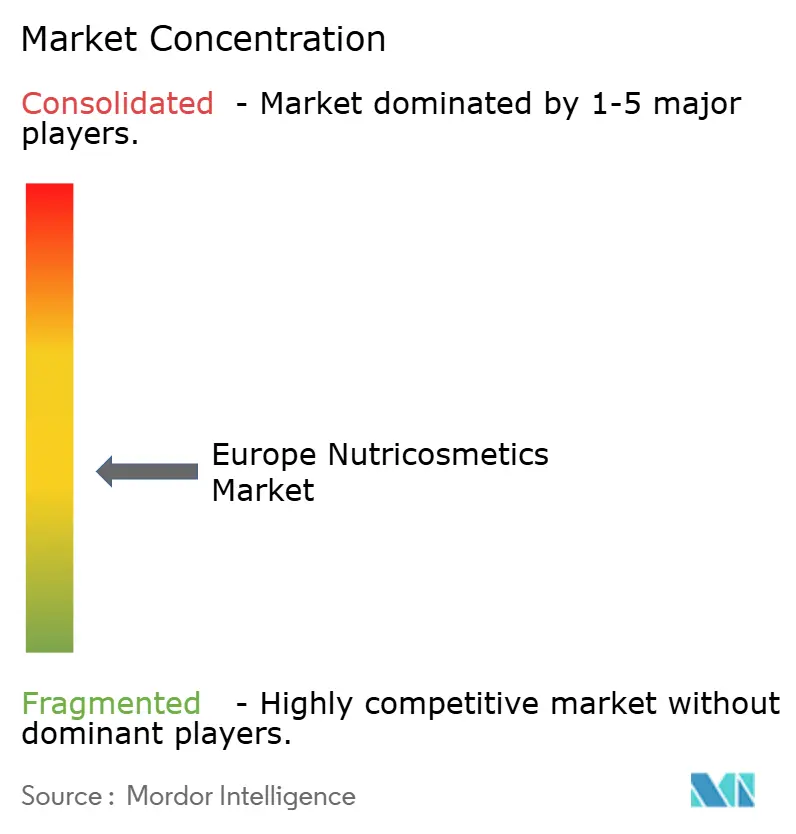
The European nutricosmetics market is moderately fragmented, indicating a mix of large global companies and smaller specialized brands. Major players, such as Amway Corporation and Nestlé SA, are actively expanding their product offerings by focusing on advanced formulations and combining expertise from various fields. For instance, Nestlé is playing a key role in driving innovation by emphasizing scientifically supported nutrition and expanding its range of beauty-from-within products. These efforts cater to the growing consumer demand for products that combine health and beauty benefits.
Companies such as Beiersdorf AG and Bayer AG are using their strong backgrounds in dermatology and healthcare to build trust with consumers. They rely heavily on pharmacy-led distribution channels, which are particularly influential in the European market, to reach their target audience. By incorporating clinically proven ingredients and adhering to strict regulatory standards, these companies ensure their products meet consumer expectations for safety and effectiveness. Additionally, MartiDerm Group, known for its expertise in dermatology, has successfully transitioned topical skincare solutions into ingestible formats, allowing it to compete effectively in the premium segment of the market.
Overall, these companies are shaping the competitive environment of the European nutricosmetics market by focusing on research-driven product innovation, regulatory compliance, and expanding their presence across various sales channels. Their efforts to promote evidence-based effectiveness, clean-label products, and consumer education are helping the market grow steadily. This approach is also contributing to the professionalization of the industry, meeting the evolving needs of consumers who are increasingly seeking innovative solutions that combine beauty and wellness.
Europe Nutricosmetics Industry Leaders
-
Amway Corporation
-
MartiDerm Group
-
Beiersdorf AG
-
Nestlé SA
-
Bayer AG
- *Disclaimer: Major Players sorted in no particular order
Market Opportunities and Future Outlook
Opportunities are concentrated among brands and ingredient suppliers that can manage EU claim substantiation and novel-food pathways while translating clinical evidence into compliant, differentiated product propositions. The April 2025 European Court of Justice decision on uniform enforcement of Regulation (EC) 1924/2006 increases the premium on robust dossiers, which tends to favor companies with established R&D capabilities. It also creates room for service providers that help compile EFSA-ready data packages, support analytical validation, and enable compliant labeling for multi-country rollouts.
Sourcing and formulation strategies are moving toward traceable, non-marine, and biotech-enabled inputs to reduce sustainability and traceability friction, alongside consumer-facing formats designed to improve adherence. Market signals include ingredient launches and partnerships around vegan and precision-fermented collagen, including Brenntag Specialties partnering with Cambrium on NovaColl for major European markets. The broader direction toward plant-based and fermentation-derived alternatives is also reflected in the competitive landscape, including precision-fermented proteins and algal omega-3. Format innovation such as sugar-free gummies and drinkable shots, together with fast-growing online retail and subscription models (including Persona and The Nue Co.), widens routes to market for premium nutricosmetics. At the same time, higher online penetration increases the need for authentication, quality assurance, and transparent ingredient traceability.
Recent Industry Developments
- July 2026: Solabia Group completed the acquisition of Swiss ingredients firm Mibelle Biochemistry. The deal strengthened Solabia’s active-ingredient portfolio used by nutricosmetics and beauty-from-within formulators, while improving access to specialized R&D capabilities for new bioactives and delivery systems across Europe.
- December 2025: EFSA authorized Lycored’s Lumenato (yellow tomato extract) and Lycoderm (tomato and rosemary extract blend) as novel foods for use in the EU. The approvals expanded the set of legally marketable ingestible skincare ingredients and supported new compliant product development around carotenoid and botanical antioxidant positioning.
- February 2024: Evonik introduced Vecollage Fortify L, a biotech-based vegan collagen ingredient targeted at beauty and personal care applications. The launch reinforced the shift toward non-animal, technology-enabled collagen alternatives that address both sustainability concerns and formulation needs for modern nutricosmetics.
Research Methodology Framework and Report Scope
Market Definition and Coverage
This market covers ingestible beauty products sold in Europe that are positioned to support skin, hair, and nail appearance through nutrition, and are typically delivered as capsules, tablets, powders, liquids, or gummies.
Scope exclusions: Topical cosmetics, prescription drugs, and in-clinic aesthetic procedures are excluded unless they are sold as ingestible nutricosmetic products.
Segmentation Overview
- By Product Type
- Collagen and Peptides
- Vitamins and Minerals
- Omega-3 and EFAs
- Probiotics and Postbiotics
- Botanical Extracts
- Others
- By Form
- Tablets/Capsules
- Powders
- Liquids
- Gummies
- Others
- By Distribution Channel
- Supermarkets/Hypermarkets
- Health and Beauty Stores
- Online Retail Stores
- Others
- By Country
- United Kingdom
- Germany
- France
- Italy
- Spain
- Netherlands
- Sweden
- Poland
- Switzerland
- Rest of Europe
Data Sources, Market Sizing, and Validation
Desk Research
Desk research was used to build the starting view of demand, regulatory boundaries, and country level context before any modeling assumptions were locked. We relied on public sources such as Eurostat for household spend and retail indicators, the European Commission and EFSA materials for supplement and health claim rules, and national food safety bodies for labeling and category guidance.
To ground the model in realistic supply and pricing signals, we also reviewed company annual reports, investor presentations, and product portfolio disclosures, along with association sites and reputed press coverage on beauty from within observed trends. Patent database scans were used to understand where innovation was active (for example, collagen peptides, probiotics, and botanical extracts), which helped interpret why certain forms and claims were moving faster. For sanity checks on players and cross-border availability, we used a paid subscription for company financials and intelligence and a paid patent database where needed. These examples are illustrative, and many other public sources were also reviewed for data collection, validation, and clarification.
Primary Interviews and Surveys
Primary work focused on validating what sits inside the nutricosmetics category in Europe and how pricing and sales splits move across channels. We spoke with a mix of brand owners, ingredient suppliers, contract manufacturers, distributors, and retail-facing experts across major European markets, and then used follow-ups to close gaps on form mix, claim positioning, and online retail momentum.
Distribution of primary research fieldwork respondents
| Company type | Respondent position |
|---|---|
| Top tier: 29% | CXOs: 17% |
| Mid tier: 52% | Functional/Unit leaders: 38% |
| Smaller Players: 19% | Managers: 45% |
Market-Sizing & Forecasting
Sizing starts with a top-down build where country level supplement and beauty nutrition demand is reconstructed using publicly visible indicators, and then filtered into the nutricosmetics portion based on category definitions and purchase behavior. We then corroborate totals using selective bottom-up approximations, such as sampled brand and channel checks, typical price per pack, and volume signals by popular formats, and adjustments are made when the two views do not align.
Key inputs used in the model include the share of capsules and tablets versus gummies and liquids, the pace of collagen and vitamin mineral adoption in beauty positioning, online retail penetration for supplements, average pricing by format and claim intensity, and country level differences in allowable claims and consumer trust in supplements. Where coverage is uneven for smaller brands, gaps are handled through conservative assumptions anchored to channel presence and observed price bands, and are then reviewed again during interviews.
For forecasting, scenario analysis was used around a base case, with growth paths tested against expected changes in e-commerce mix, aging population demand, and the availability of compliant claims. Final year-to-year growth is kept consistent with what experts consider feasible for Europe, rather than being driven only by straight line extrapolation.
Data Validation & Update Cycle
Outputs are checked through multiple passes, first by comparing model totals with independent signals like category growth rates, form mix shifts, and country level demand patterns. When a country level estimate moves sharply versus prior cycles, the drivers are reviewed, and respondents are re-contacted if the variance cannot be explained by pricing, channel, or scope changes.
Before sign-off, the numbers and assumptions go through an internal review so calculation logic, currency handling, and year mapping are consistent across countries. The report is refreshed annually, and interim updates are made when material events occur, such as regulatory changes or demand shocks. Right before delivery, a fresh validation pass is completed so clients receive the most current view supported by the latest checks.
Mordor Intelligence's Europe Nutricosmetics Market Estimate Compared With Other Published Estimates
It is normal to see different market sizes for Europe nutricosmetics because the category boundary is not always applied the same way, and because firms pick different base years and currency timing. Differences also come from how each study treats channel coverage, especially online retail versus store-based sales, and whether beauty supplements outside strict nutricosmetics claims are counted.
By tracking form-level mix shifts and country level claim boundaries, Mordor Intelligence keeps the market sized around ingestible beauty products that are actively positioned for skin, hair, or nails, which can move the total away from estimates that include a wider supplement basket or apply a single Europe average price curve.
Benchmark comparison
| Source | Market Size | Gaps in Research Methodology |
|---|---|---|
| Mordor Intelligence | USD 2.27 B (2025) | |
| Global Consultancy A | USD 2.62 B (2023) | Uses an earlier base year and groups nutricosmetics by end-use buckets (such as skin and hair) that can pull in broader beauty supplements, and the Europe total can shift if online retail and specialty stores are not reconciled country by country. |
| Industry Publisher B | USD 2.43 B (2025) | Applies a slightly broader ingredient-led definition and a different country coverage approach, which can change the value when clean label and general wellness supplements overlap with beauty positioning in retail listings. |
Taken together, the spread is mainly explained by base year choice and by how tightly ingestible beauty positioning is enforced in the category boundary. Our approach stays traceable to clear demand indicators, country level checks, and realistic pricing logic, so the final total can be repeated and reviewed step by step.
Key Questions Answered in the Report
What is the current value of the Europe Nutricosmetics market?
The market is valued at USD 2.44 billion in 2026.
How fast is the market expected to grow over the next five years?
It is projected to record a 7.36% CAGR, reaching USD 3.48 billion by 2031.
Which country holds the largest share?
Italy leads with 28.33% share thanks to high supplement penetration and prevention-driven culture.
Which product segment is growing the quickest?
Probiotics and postbiotics are expanding at a 9.20% CAGR through 2031.