
Market Overview
| Study Period | 2021 - 2031 |
|---|---|
| Forecast Data Period | 2026 - 2031 |
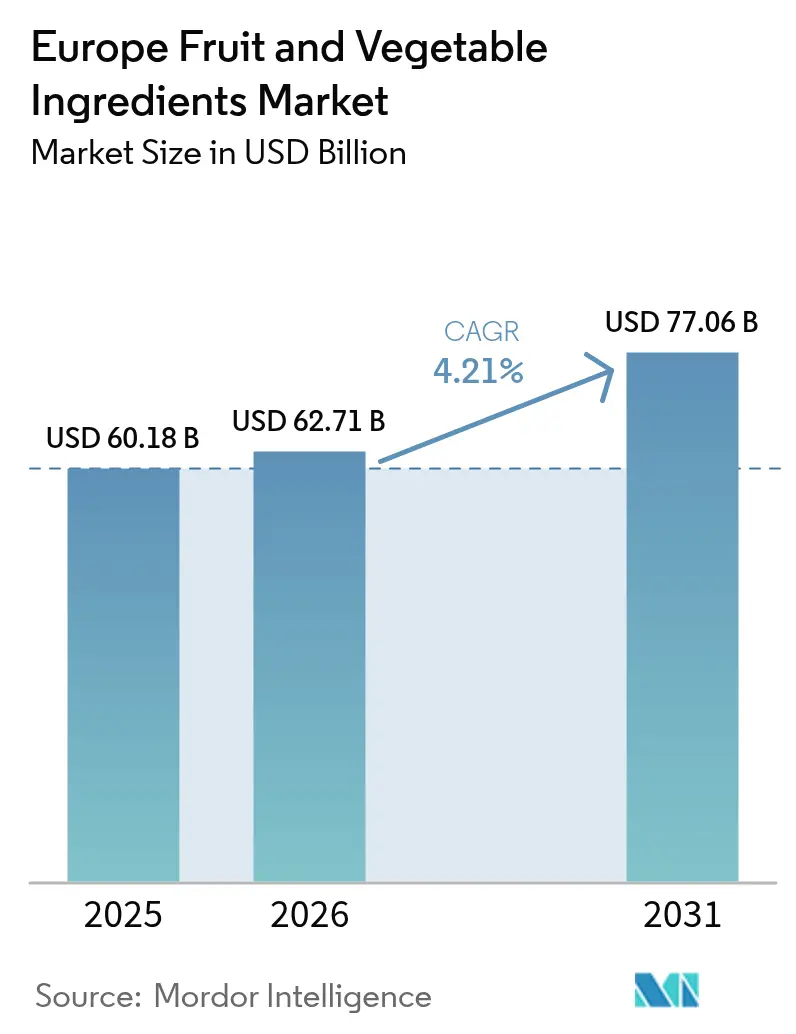
| Base Year Market Size (2025) | USD 60.18 Billion |
| Market Size (2026) | USD 62.71 Billion |
| Market Size (2031) | USD 77.06 Billion |
| Growth Rate (2026 - 2031) | 4.21 % |
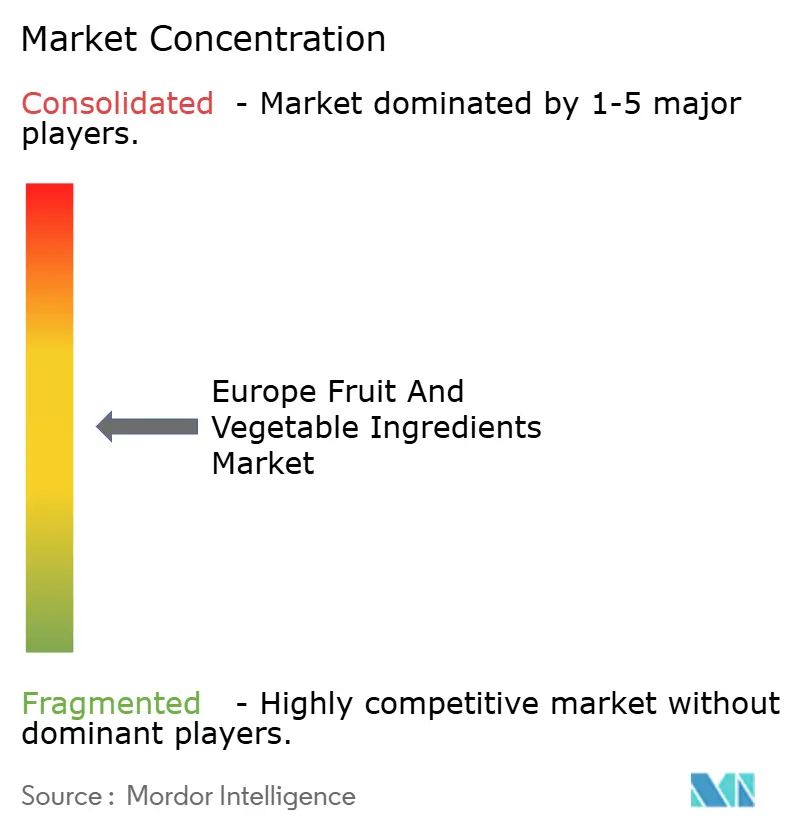
| Market Concentration | Medium |
Major Players *Disclaimer: Major Players sorted in no particular order Image © Mordor Intelligence. Reuse requires attribution under CC BY 4.0. | |
Europe Fruit And Vegetable Ingredients Market Analysis by Mordor Intelligence
The Europe fruit and vegetable ingredients market size was valued at USD 60.18 billion in 2025 and estimated to grow from USD 62.71 billion in 2026 to reach USD 77.06 billion by 2031, at a CAGR of 4.21% during the forecast period (2026-2031). Demand acceleration pivots on regulatory tightening against synthetic additives, rising clean-label awareness, and technology investments that lengthen shelf life while preserving nutrient density. Reformulation momentum is pronounced across confectionery, bakery, and beverage lines because the European Food Safety Authority’s latest guidance on additives and EU Regulation 1333/2008 discourages the use of titanium dioxide and several azo dyes, prompting brand owners to turn to plant-derived colorants. France’s revised Nutri-Score algorithm, effective March 2025, further penalizes synthetic colorants, pushing retailers to delist non-compliant SKUs. Competitive strategies coalesce around vertical integration, fermentation, and proximity processing, helping suppliers hedge against climate-driven yield volatility and meet traceability mandates. These shifts position the European fruit and vegetable ingredients market as a structural beneficiary of the Farm to Fork strategy, national nutrition plans, and consumer preference for recognizable ingredients.
Key Report Takeaways
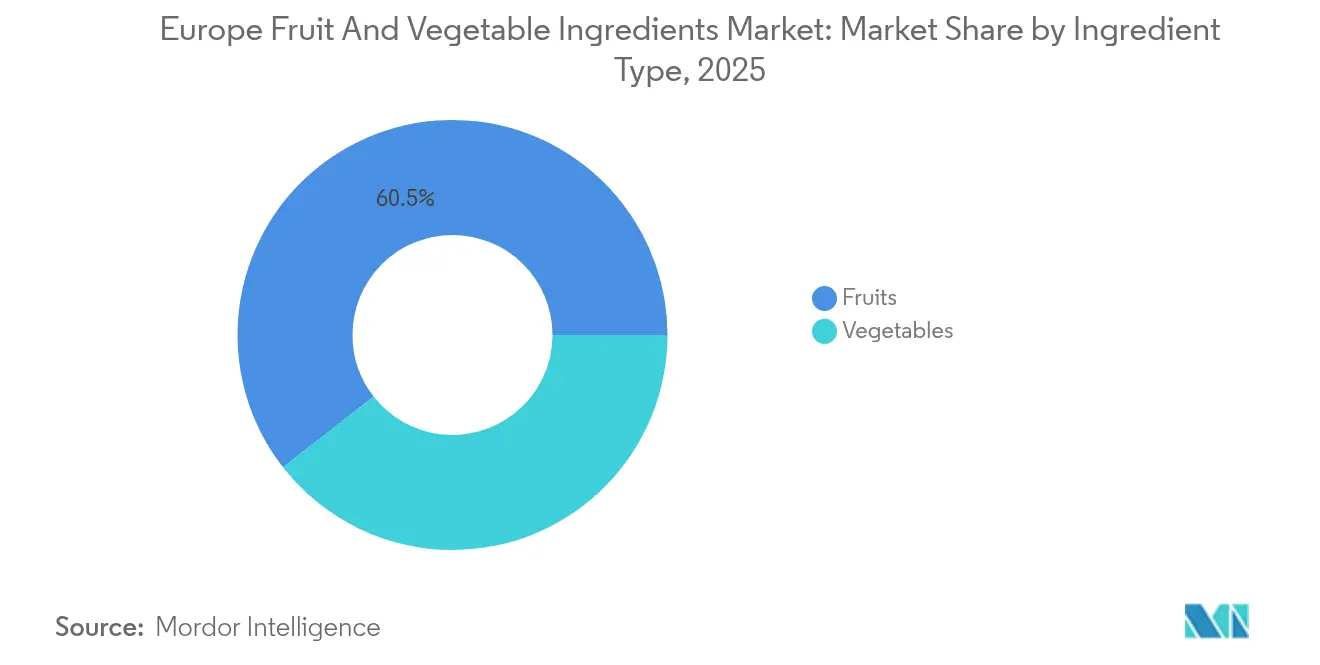
- By ingredient type, fruits led with 60.55% revenue share in 2025; vegetables are projected to expand at a 6.45% CAGR through 2031, the fastest among all ingredient classes.
- By product type, concentrates captured 42.80% of the European fruit and vegetable ingredients market share in 2025, while pastes and purees are forecast to grow at a 5.62% CAGR to 2031.
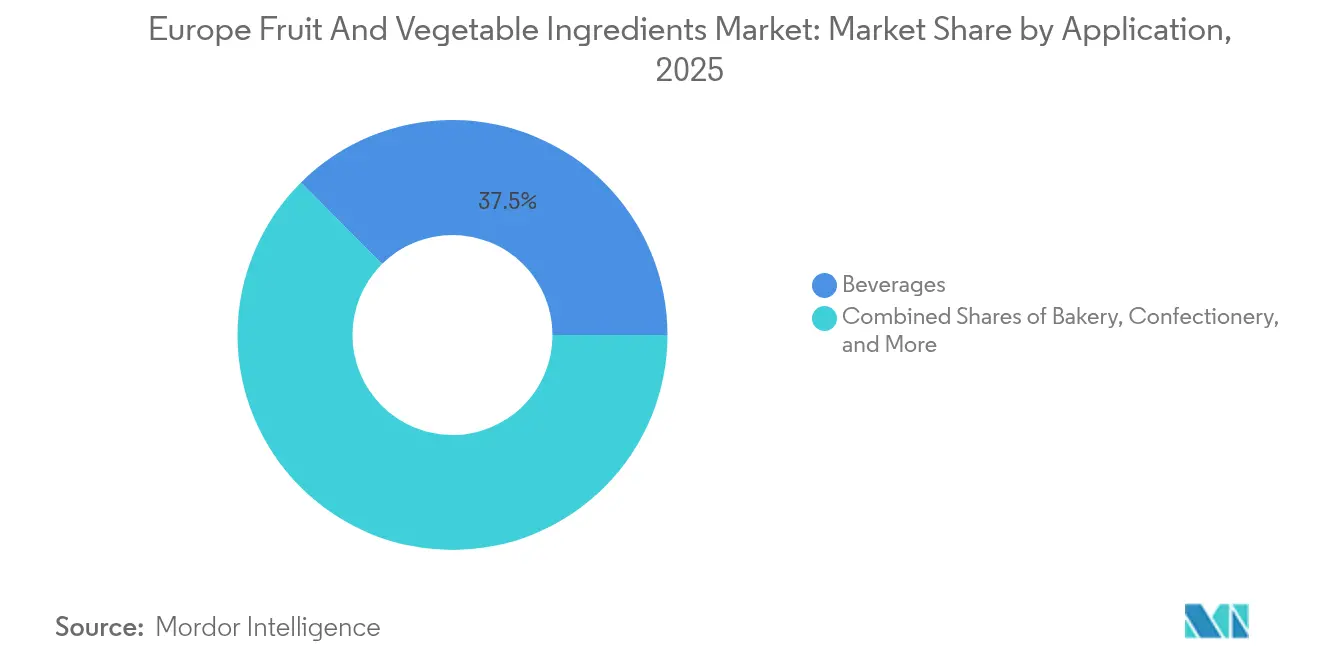
- By application, beverages accounted for 37.45% of the European fruit and vegetable ingredients market in 2025, whereas bakery products are advancing at a 6.22% CAGR through 2031.
- By geography, Germany commanded 31.85% of the European fruit and vegetable ingredients market in 2025; Spain is the fastest-growing geography, registering a 5.58% CAGR to 2031.
Note: Market size and forecast figures in this report are generated using Mordor Intelligence’s proprietary estimation framework, updated with the latest available data and insights as of 2026.
Market Trends and Insights
Drivers Impact Analysis of Europe Fruit And Vegetable Ingredients Market*
| Drivers | (~)% Impact on CAGR Forecasts | Geographic Relevance | Impact Timeline |
|---|---|---|---|
| Rising demand for clean-label and natural color/flavor alternatives | +1.2% | Global, with strongest uptake in Germany, France, UK | Medium term (2-4 years) |
| Rising applications in bakery products | +0.9% | Germany, France, Netherlands, UK | Medium term (2-4 years) |
| Expansion of plant-based dairy & beverage lines in Western Europe | +0.8% | Western Europe (Germany, UK, France, Netherlands) | Short term (≤ 2 years) |
| Government-backed health initiatives | +0.6% | EU-wide, national programs in France, Germany, Spain | Long term (≥ 4 years) |
| Vertical integration efforts by manufacturers securing long-term supplier agreements | +0.5% | Germany, Netherlands, Spain, Italy | Medium term (2-4 years) |
| Growth in fermentation and processing hubs among manufacturers | +0.4% | Germany, France, Netherlands | Long term (≥ 4 years) |
| Source: Mordor Intelligence | |||
Rising Demand for Clean-Label and Natural Color/Flavor Alternatives
In 2024, clean-label claims appeared on 42% of new food product launches in the EU, reflecting a growing consumer shift away from artificial additives. This trend is reinforced by stricter regulations targeting synthetic colorants and preservatives. For example, the European Food Safety Authority's 2024 re-evaluation of titanium dioxide (E171) and certain azo dyes has driven reformulations in the confectionery and dairy sectors. As a result, demand for natural alternatives such as anthocyanins from berries, carotenoids from carrots, and chlorophyll from spinach has surged. Additionally, France's updated Nutri-Score algorithm, effective March 2025, will penalize products containing synthetic additives, creating a competitive disadvantage for brands that delay reformulation, as noted by the French Government[1]. Although natural color concentrates command a 30-40% price premium over synthetic options, food manufacturers are absorbing these costs to retain their premium shelf positioning. The strategic takeaway is evident: companies that invest in diversified portfolios of fruit and vegetable extracts now are poised to achieve significant margin growth as regulatory pressures increase through 2030.
Rising Applications in Bakery Products
Bakery manufacturers are increasingly incorporating fruit and vegetable ingredients not only in traditional applications but also as functional components to improve fiber content, moisture retention, and shelf stability. The EU's whole-grain labeling thresholds, which require minimum fiber levels for health claims under Regulation (EC) No 1924/2006, have encouraged bakers to include apple fiber, citrus fiber, and beetroot powder in bread and pastry formulations. In July 2024, Ingredion introduced its citrus fibers, FIBERTEX CF 500 and CF 100, aimed at the EMEA bakery segment. These fibers provide water-binding capabilities, enabling bakers to reduce egg and fat usage while preserving crumb structure. This combination of nutritional enhancement and cost efficiency is particularly appealing to industrial bakeries operating with narrow profit margins. In Germany, the artisan bakery sector, which produces approximately 35% of the country's bread, is utilizing vegetable powders to differentiate premium product lines. Carrot and pumpkin variants, in particular, are achieving price premiums of 15-20% over standard offerings. This trend also extends to gluten-free and plant-based bakery segments, where fruit purees are being used as egg substitutes for binding. This approach is reflected in the growing availability of vegan pastries in retail chains across the UK and France during 2024-2025.
Expansion of Plant-Based Dairy and Beverage Lines in Western Europe
In 2024, Western Europe's plant-based dairy and beverage sector transitioned from its niche roots to mainstream prominence. Major brands are now fortifying their products, harnessing fruits and vegetables for enhanced flavor, color, and nutrition. Arla Foods, in 2024, unveiled a plant-based line that cleverly uses fruit concentrates to counteract the beany off-notes of pea and soy proteins, a hurdle that has long limited consumer acceptance. Alpro, in 2024, rolled out its 'Kids' range, infusing vegetable-derived vitamins and natural fruit flavors, positioning it as a direct competitor to dairy milk for children, appealing to parents who value clean labels. Plenish, in 2024, launched a fortified oat milk that combines fruit extracts with added vitamins, ensuring functional benefits while proudly holding an organic certification under EU Regulation 2018/848. The overarching strategy reveals that plant-based beverages are evolving from mere dairy substitutes to functional platforms, emphasizing superior nutrition through fruit and vegetable ingredients. This shift is fueling ingredient demand in Germany, the UK, and the Netherlands. In 2024, these countries witnessed per-capita consumption of plant-based milk exceeding 8 liters annually, propelling consistent growth for fruit concentrates and vegetable extracts projected through 2030.
Government-Backed Health Initiatives
As part of the European Green Deal's Farm to Fork strategy, the European Union targets a 50% reduction in pesticide use and a 20% reduction in fertilizer application by 2030[2]. This initiative is expected to drive higher demand for organic fruits and vegetables. To align with these directives, member states have revised national nutrition programs to encourage food manufacturers to adopt minimally processed, plant-based ingredients. In 2024, France updated its National Nutrition and Health Program (PNNS) 4, recommending a daily consumption of 5 portions of fruits and vegetables. This update has increased institutional demand for ingredient suppliers offering cost-effective solutions for school meals and public catering. Similarly, Germany's Federal Ministry of Food and Agriculture launched a USD 218 million initiative in 2024 to support organic farming and processing infrastructure. This initiative provides direct subsidies to facilities such as freeze-drying and spray-drying units, which convert surplus produce into shelf-stable ingredients. These policy measures are reshaping supply chains, prompting processors to align their capital investments with government priorities to access subsidies and preferential procurement contracts. The long-term outcome is a structural transition toward regionally sourced, minimally processed ingredients that fulfill both sustainability and health objectives.
Restraints Impact Analysis of Europe Fruit And Vegetable Ingredients Market*
| Drivers | (~)% Impact on CAGR Forecasts | Geographic Relevance | Impact Timeline |
|---|---|---|---|
| Stringent EU food safety and labeling regulations | -0.7% | EU-wide, particularly Germany, France, Netherlands | Medium term (2-4 years) |
| Short shelf life and perishability of fresh ingredients | -0.5% | All European markets, acute in Southern Europe | Short term (≤ 2 years) |
| Climate change and water scarcity in key growing regions | -0.6% | Southern Europe (Spain, Italy, Greece), spillover to France | Long term (≥ 4 years) |
| Price competition from synthetic alternatives | -0.4% | Price-sensitive segments across EU | Medium term (2-4 years) |
| Source: Mordor Intelligence | |||
Stringent EU Food Safety and Labeling Regulations
The European Union's Novel Food Regulation (EU) 2015/2283 mandates stringent pre-market approvals for fruit and vegetable extracts processed via unconventional methods. This regulation extends approval timelines to 18-24 months and inflates compliance costs by an estimated USD 530,000 to USD 1.06 million per dossier, as noted by the European Commission. Such regulatory challenges disproportionately burden small and medium-sized processors, who often lack the technical and financial means to navigate the European Food Safety Authority's (EFSA) scientific evaluation. Under Regulation (EU) No 1169/2011, labeling mandates require comprehensive ingredient disclosures, encompassing processing aids and extraction solvents. This transparency can lead to consumer skepticism, even when the disclosed compounds are naturally derived, as highlighted by the European Commission. A strategic dilemma emerges: regulatory compliance imposes a first-mover disadvantage. Early adopters shoulder the costs of novel food approvals, while their competitors benefit from these established precedents without incurring the same expenses. Germany and France, in particular, adopt stringent interpretations of EU directives. They conduct post-market surveillance, with the authority to recall products if labeling strays from approved specifications. Such regulatory rigor not only decelerates innovation cycles but also deters investments in novel extraction technologies, limiting the market's agility in adapting to shifting consumer preferences.
Short Shelf Life and Perishability of Fresh Ingredients
Fresh fruits and vegetables require an uninterrupted cold-chain logistics system from harvest to processing. This necessity increases landed costs by 15-20% compared to synthetic alternatives and introduces vulnerabilities to the supply chain. Temperature fluctuations during transport can cause enzymatic browning and microbial spoilage, rendering batches unsuitable for food-grade applications and forcing processors to bear financial losses. While Europe's cold-chain infrastructure is advanced, it faces capacity limitations during peak harvest seasons. This issue is particularly pronounced in Southern Europe, where summer temperatures frequently exceed 35°C, straining refrigerated transport networks, as highlighted by the European Environment Agency[3]. To address perishability, processors use techniques such as freeze-drying, spray-drying, and concentration. However, these thermal processes compromise heat-sensitive vitamins and volatile flavor compounds, reducing the nutritional and sensory qualities that justify premium pricing. The strategic takeaway for ingredient suppliers is the need to invest in rapid processing infrastructure near growing regions. Although this approach is capital-intensive, it favors larger, vertically integrated players over smaller processors. Spain and Italy are emerging as key processing hubs by situating drying and concentration facilities within 50 kilometers of major production zones, minimizing transit time and preserving ingredient quality.
*Our forecasts treat driver/restraint impacts as directional, not additive. The impact forecasts reflect baseline growth, mix effects, and variable interactions.
Europe Fruit And Vegetable Ingredients Market Segment Analysis
By Ingredient Type:
Vegetables Accelerate on Color InnovationIn 2025, fruits accounted for 60.55% of Europe's fruit and vegetable ingredients market, driven by their strong presence in beverages, confectionery, and dairy due to their flavor and sweetness. Vegetables, with a smaller share, are projected to grow at a 6.45% CAGR through 2031, as their use in natural coloring and fortification rises. Beetroot extract is preferred for its stable red coloring in plant-based products, outperforming berry anthocyanins. Carrot concentrate and green powders like spinach and kale are gaining traction in fortified foods and health-focused products.
Vegetables are transitioning from niche ingredients to mainstream formulation tools, valued for their dual role as colorants and nutrient sources. Fruits remain dominant in taste-driven applications like juices and confections, but their growth is slowing as these markets mature. Vegetables are capturing demand in emerging segments like plant-based proteins and functional snacks, aligning with clean-label trends. Processors expanding vegetable extraction capacity now will benefit from rising plant-based food consumption, particularly in Germany and the Netherlands.

By Product Type:
Pastes and Purees Gain on Texture DemandsIn 2025, concentrates held 42.80% of the market, valued for their logistical efficiency and extended shelf life, which lower transportation costs and reduce spoilage risks. Pastes and purees are growing at a 5.62% CAGR through 2031, driven by their ability to replicate authentic fruit and vegetable textures in premium applications. Greek-style yogurts and smoothie bowls increasingly use fruit purees for enhanced viscosity and visual appeal, commanding 20-30% price premiums over concentrate-based alternatives. Pieces and powders cater to niche applications like granola bars, instant soups, and dry beverage mixes, where reconstitution properties and particle size are critical. Juices, though mature, are seeing renewed interest in cold-pressed and not-from-concentrate formats that preserve flavor compounds and heat-sensitive vitamins.
The competitive landscape is shifting towards formats that balance convenience with sensory authenticity. Concentrates remain dominant in cost-sensitive segments like private-label beverages and industrial bakeries due to their standardized flavor profiles and consistent performance. Pastes and purees are gaining traction in premium markets, where consumers prioritize whole-fruit content and scrutinize ingredient lists. Processors must diversify product portfolios, as no single format meets all application needs. Germany's beverage sector, consuming 35% of the country's fruit and vegetable ingredients, is fragmented, with premium brands favoring purees and mass-market players relying on concentrates.
By Application:
Bakery Outpaces Beverages on Fiber FortificationIn 2025, beverages accounted for 37.45% of application demand, driven by their reliance on fruit concentrates and vegetable juices for flavor and color. Bakery products are growing at a 6.22% CAGR through 2031, fueled by fiber fortification mandates and clean-label reformulation. EU regulations under (EC) No 1924/2006 require minimum fiber levels for "source of fiber" and "high fiber" claims, prompting bakers to use apple fiber, citrus fiber, and vegetable powders. Ingredion's FIBERTEX CF 500 and CF 100, launched in July 2024, address this demand by reducing fat and egg usage while maintaining crumb structure. Confectionery and dairy applications are mature, with growth slowing as premium segment penetration exceeds 70%.
Soups, sauces, and ready-to-eat products are gaining traction as manufacturers adopt clean-label formulations, replacing synthetic thickeners with vegetable purees and fruit concentrates. Bakery's strong performance reflects shifting consumer priorities, with fiber and whole-grain claims driving purchases in Northern Europe. Beverages face saturation in core categories like fruit juices, pushing innovation into functional hydration and plant-based milk alternatives. Processors focusing on bakery-grade fibers and purees can capture higher margins, as these products command 15-20% price premiums over beverage concentrates. Germany's artisan bakery sector, producing 35% of the country's bread, uses vegetable powders like carrot and pumpkin to differentiate premium lines, achieving similar price premiums.
Geography Analysis
Germany and the United Kingdom Fruit and Vegetable Ingredients Market
In 2025, Germany holds a 31.85% share of Europe's food processing market, reaffirming its position as the continent's leading hub. The country features a concentrated industrial bakery and beverage sector, emphasizing clean-label formulations. Germany's strict interpretation of EU food safety directives creates a high-compliance environment that benefits established ingredient suppliers with robust quality management systems certified to ISO 22000 and FSSC 22000 standards. Germany's artisan bakery sector, which produces approximately 35% of the nation's bread, has adopted fruit and vegetable powders to differentiate premium product lines. Carrot and pumpkin variants, in particular, command a 15-20% price premium over standard offerings. In the UK, discount retailers dominate the grocery market with a 40-45% share, applying downward pricing pressure that limits the adoption of premium natural ingredients in private-label categories.
Southern and Western Europe Fruit and Vegetable Ingredients Market
France's updated Nutri-Score algorithm, effective March 2025, penalizes synthetic additives, creating a regulatory advantage for fruit and vegetable extracts in confectionery and dairy applications, as noted by the French Government. Italy's processing sector is concentrated in the Po River basin, where tomato paste and citrus concentrate production face yield fluctuations due to water scarcity. This challenge is driving processors to diversify sourcing, increasingly relying on Spain and Greece, as highlighted by the European Environment Agency. Spain is experiencing rapid growth, with a 5.58% CAGR projected through 2031. This growth is driven by investments in freeze-drying and spray-drying infrastructure, which extend shelf life while preserving nutritional value. Spain's proximity to North African growing regions and competitive labor costs position it as a key processing hub for citrus, stone fruits, and tomatoes destined for Northern European markets.
Northern, Southern and Eastern Europe Fruit and Vegetable Ingredients Market
The Netherlands leverages its advanced logistics infrastructure and biotech expertise to attract fermentation investments. Companies like Symrise and Ingredion have established R&D facilities to develop nature-identical flavor molecules from fruit metabolites, as reported by Symrise. A critical insight is the division of geographic competitiveness: Southern Europe excels in raw material sourcing and thermal processing, while Northern Europe leads in fermentation, formulation expertise, and proximity to end-use markets. Processors adopting a dual-site strategy, conducting primary processing in Spain or Italy and secondary formulation in Germany or the Netherlands, can optimize costs while maintaining flexibility to meet customer requirements. The "Rest of Europe" category, which includes Eastern European countries such as Poland and Romania, represents a growing market. Rising disposable incomes and regulatory harmonization driven by EU accession are expanding the demand for premium natural ingredients.
Regulatory Landscape
The regulatory environment for fruit and vegetable ingredients in Europe is anchored in EU-wide rules on additives, labeling, and novel foods. Regulation (EU) 2015/2283 continues to cover unconventional extracts and processing methods through EFSA-led pre-market assessment, with the European Commission using implementing acts to authorize specific ingredients; in June 2026, an implementing regulation authorized placing rhamnogalacturonan-I enriched carrot extract (cRG-I) on the market for NutriLeads B.V., reflecting an ongoing pathway for proprietary, science-backed plant-derived ingredients.
On additives, EU Regulation 1333/2008 and related specification updates shape reformulation toward plant-derived colorants, fibers, and texturizers. Commission Regulation (EU) 2026/196 updated specifications for several stabilizers and gelling agents commonly used alongside fruit and vegetable preparations (including pectin), with compliance timelines extending from 2026 into 2028 and increasing documentation and QC demands for ingredient suppliers. Trade measures also affect sourcing economics for processed fruit and vegetable inputs; from May 2026, the provisional application framework linked to the EU-Mercosur agreement introduced tariff changes for certain fruit preparations, while additional 2026 tariff measures (including for selected processed fruit and vegetable imports from the United States) added another layer to procurement strategy and cost optimization.
Value Chain Analysis
The value chain runs from growers and cooperatives through collectors and traders to primary processors (washing, sorting, pulping, juicing, concentration, drying, and freezing), then to ingredient formulators that standardize brix, color, particle size, and microbiological specifications for industrial customers in beverages, bakery, dairy, confectionery, and soups/sauces. Associations such as AIJN (fruit juice), FRUCOM (processed fruit and vegetables, dried fruit and nuts), and EUCOFEL (fresh produce) function as coordination points across standards, trade flows, and industry advocacy, while large ingredient houses and regional specialists provide application support, blending, and customer-facing innovation.
Upstream volatility is a recurring constraint. European processors face weather extremes, reduced acreage, and seasonal labor shortages, which can tighten availability and elevate costs for key fruits and vegetables used in concentrates, purees, pieces, and powders. That dynamic increases the value of multi-origin sourcing, contracted supply, and proximity processing near growing regions to reduce cold-chain exposure and losses. Downstream, retailer shelf-life requirements (often exceeding 6 months) interact with clean-label reformulation, pushing processors toward processing interventions (concentration, pasteurization, sterilization, freeze-drying, and spray-drying) and robust QA systems; at the same time, the EU Corporate Sustainability Due Diligence Directive adopted in July 2024 raises expectations on supplier transparency, accelerating audits and traceability across fragmented agricultural supply chains.
Competitive Landscape
The European fruit and vegetable ingredients market exhibits moderate fragmentation, indicating that multinational ingredient houses coexist with regional specialists and vertically integrated processors. Competitive strategies emphasize vertical integration, fermentation technology, and geographic diversification to mitigate raw material volatility and regulatory complexity. Tate & Lyle's USD 1.8 billion acquisition of CP Kelco in June 2024, completed in November 2024, exemplifies the consolidation wave, as the deal provides direct access to citrus peel and apple pomace from contracted orchards in Spain and Italy, ensuring consistent pectin and fiber feedstock Reuters. Symrise's investment in Cellibre's precision fermentation platform in October 2025 signals a strategic pivot toward bioprocessing routes that bypass agricultural constraints, producing nature-identical flavor molecules from fruit metabolites with cost parity to traditional extraction.
White-space opportunities exist in vegetable-derived colorants for plant-based proteins, freeze-dried fruit pieces for premium snacking, and fermentation-derived compounds that eliminate pesticide residues while maintaining organic certification. Emerging disruptors are leveraging fermentation and enzyme technology to democratize access to premium ingredients, challenging incumbents that rely on agricultural sourcing. Ingredion's partnership with Cosaic, announced in November 2025, focuses on fermentation-derived ingredients for plant-based applications, targeting the EMEA market with scalable production capacity Ingredion.
The strategic implication is that technology adoption will determine competitive positioning through 2030, as processors that integrate fermentation capacity by 2027 will gain structural cost advantages over traditional extraction methods. Market leaders are also pursuing geographic expansion into Eastern Europe, where EU accession-driven regulatory harmonization and rising disposable incomes are expanding addressable demand for premium natural ingredients. The competitive landscape is likely to consolidate further, as regulatory compliance costs and capital requirements for fermentation infrastructure favor scale players, yet niche specialists with proprietary extraction methods or exclusive grower contracts will retain defensible positions in premium segments.
Europe Fruit And Vegetable Ingredients Industry Leaders
-
Archer Daniels Midland Company
-
Döhler Group SE
-
Südzucker AG
-
Kerry Group
-
Symrise AG
- *Disclaimer: Major Players sorted in no particular order
Europe Fruit And Vegetable Ingredients Market Companies Covered in this Report
- Archer Daniels Midland
- Kerry Group PLC
- Olam International Ltd
- SunOpta Inc.
- Symrise AG
- Döhler Group SE
- Südzucker AG / AGRANA Beteiligungs-AG
- SVZ International B.V.
- Sensient Technologies
- European Freeze Dry Ltd
- Paradise Fruits Solutions GmbH
- Coöperatie Royal Cosun
- Louis Dreyfus Company B.V.
- Bonduelle S.A.
- Ingredion Inc.
- Tree Top Inc.
- Diana Food (Symrise)
- Givaudan SA
- Freeze-Dry Foods GmbH
- Kanegrade Ltd
Read Analysis of Europe Fruit And Vegetable Ingredients Companies
Market Opportunities and Future Outlook
A clear opportunity area is technology-led processing capacity that improves supply security while supporting cleaner ingredient labels, particularly for vegetables used as colorants and fortifiers and for bakery-oriented fibers. In 2026, several named investments show where capacity and capability are being added within Europe: Suntory Beverage and Food GB&I announced a GBP 14.5 million blackcurrant processing facility in Ledbury, UK with advanced evaporation, membrane filtration, and digital tracking; Mutti allocated EUR 42.5 million in 2026 toward new processing plants and AI-integrated operating systems as part of a broader multi-year plan; and La Doria continued capacity expansion across multiple Italian sites, including tomato and ready-made sauce lines. Together, these moves support a shift toward higher-spec concentrates, purees, and extracts with tighter traceability and consistency requirements from large beverage and food manufacturers.
Policy-driven transparency and waste reduction also create room for differentiated formulations that help manufacturers reformulate without making labels more complex. The EU revised fruit and vegetable marketing standards effective January 2025 to curb food waste and improve traceability, and the Empowering Consumers for the Green Transition Directive entering into force in January 2026 increases scrutiny of environmental claims, raising the value of verifiable sourcing and processing attributes. For suppliers, this translates into more specific offerings such as audited, regionally sourced concentrates and purees; standardized vegetable powders for bakery and snack applications; and fermentation- or process-enabled solutions designed to reduce variability and documentation burdens across multi-origin procurement.
Recent Industry Developments in Europe Fruit And Vegetable Ingredients Market
- June 2026: Archer Daniels Midland Company expanded its Customer Creation and Innovation Center (CCIC) in Hungary to support beverage development across Eastern Europe. The expanded site strengthens application support for functional and wellness beverage concepts that frequently use fruit and vegetable concentrates, extracts, and color solutions. It also shortens product development cycles for regional customers by pairing formulation work with local technical services.
- July 2025: Abaca Fruit Purees launched premium fruit purees in the United Kingdom, using a 100% fruit puree base positioned for alcoholic and non-alcoholic drinks. The launch reflects continued premiumization in beverage formulation where ingredient lists and fruit content are central to brand differentiation. It also expands downstream pull for consistent puree specifications and reliable cold-chain compatible formats.
- February 2024: Frulact Group acquired International Flavors and Fragrances Inc.'s fruit preparation business serving food, beverage, and pet food applications across Western Europe, the Nordics, and North Africa. The transaction broadened Frulact's portfolio and manufacturing footprint in fruit-based preparations that overlap with industrial demand for purees and processed fruit inclusions. It also increased competitive intensity for regional specialists by adding scale in customer relationships and application know-how.
Europe Fruit And Vegetable Ingredients Market Report Scope and Research Methodology
Market Definition and Coverage
This market covers ingredients made from fruits and vegetables that are used by food and beverage manufacturers for taste, color, texture, and nutrition. It includes items such as concentrates, pastes and purees, pieces and powders, and juices sold across Europe in value terms (USD).
Scope exclusions: Fresh whole fruits and vegetables sold for direct consumption, and finished packaged foods where the ingredient value cannot be separated, are excluded.
Segments Covered in This Report
- By Ingredient Type (Value)
- Fruits
- Vegetables
- By Product Type (Value)
- Concentrates
- Pastes and Purees
- Pieces and Powders
- Juices
- By Application
- Beverages
- Confectionery Products
- Bakery Products
- Soups and Sauces
- Dairy Products
- RTE Products
- By Geography
- Germany
- United Kingdom
- Italy
- France
- Spain
- Netherlands
- Rest of Europe
Data Sources, Market Sizing, and Validation
Desk Research
Desk work starts by building the boundary and the demand pool, then collecting reference data that can be checked country by country. Public sources such as Eurostat production and trade tables, FAOSTAT food balance and crop data, the European Commission agriculture and food statistics, and EFSA publications on additives and food safety help anchor volumes, seasonality, and regulatory context.
We also review manufacturer annual reports, investor decks, product specification sheets, and press releases to understand which ingredient forms are sold into which applications. For trade flow and price direction checks, an import and export shipment-level database is used selectively, mainly to confirm that ingredient movement and pricing patterns line up with the model assumptions. The sources listed above are not exhaustive, and many other references are used during data collection, validation, and clarification.
Primary Interviews and Surveys
Primary work is used to convert broad signals into usable sizing inputs, especially where public data is aggregated or delayed. We speak with ingredient suppliers, distributors, food and beverage formulators, and category specialists across major European markets so assumptions on usage rates, application mix, and price bands can be confirmed and refined with real selling and procurement experiences.
Distribution of primary research fieldwork respondents
| Company type | Respondent position |
|---|---|
| Top tier: 37% | CXOs: 14% |
| Mid tier: 41% | Functional/Unit leaders: 32% |
| Smaller Players: 22% | Managers: 54% |
Market-Sizing & Forecasting
Sizing is built using a top-down approach where Europe level demand is reconstructed from a mix of processed fruit and vegetable output, trade movement for key ingredient forms, and conversion into ingredient-equivalent consumption for major application groups. Once the demand pool is formed, average selling prices are applied by product form and adjusted for country mix, since concentrates and juices typically price differently than powders and purees.
To keep the math realistic, we use market fingerprints such as processed fruit and vegetable volumes, import reliance for selected ingredients, packaged food and beverage output trends, reformulation activity tied to clean-label demand, and observed pricing direction from contracts and quotations shared during interviews. Where a country has weak disclosure, gaps are handled by applying peer-country ratios based on a similar processing footprint and application mix, then cross-checking with a bottom-up approximation from sampled supplier revenues and channel checks.
For forecasting, scenario analysis is used around a central case because end use demand and input cost swings can move at different speeds across Europe. The forward view is then stress-tested against expert expectations for capacity additions, crop variability, and likely price progression by ingredient form.
Data Validation & Update Cycle
Results are validated through multiple passes that check for variance across countries, product forms, and applications, and then for alignment with independent signals such as trade direction, processed output trends, and pricing movement. If a value looks inconsistent, the assumptions are reopened, and respondents are re-contacted to confirm whether the issue is a real shift or a modeling artifact.
Before sign-off, the dataset is reviewed by another analyst so unit logic, currency handling, and growth drivers stay consistent across chapters. Reports are refreshed annually, and interim updates are made when material events occur, such as regulatory changes affecting additives or sharp commodity shocks. Right before delivery, we do a final freshness check to ensure the numbers reflect the latest available inputs.
Mordor Intelligence's Europe Fruit and Vegetable Ingredient Market Estimate Compared With Other Published Estimates
Published market sizes can differ even when they sound like they cover the same topic, because boundaries and conversion steps are not always handled the same way. Differences usually come from what is counted as an ingredient, how country coverage is treated, and whether prices are modeled as a single average or by product form.
By tracking trade and processed output indicators and then refreshing price bands at the product-form level, Mordor Intelligence separates concentrates, purees, pieces and powders, and juices in a way that avoids double counting between ingredient sales and finished food revenue.
Benchmark comparison
| Source | Market Size | Gaps in Research Methodology |
|---|---|---|
| Mordor Intelligence | USD 60.18 B (2025) | |
| Regional Consultancy A | USD 61.61 B (2025) | Uses a broader ingredient basket that can pull in adjacent extracts and fibers, and applies higher blended pricing assumptions across countries, which can lift the total for the same year. |
| Industry Publisher B | USD 62.68 B (2025) | Tends to present a Europe value that follows a higher growth narrative and may lean on application-driven demand without fully reconciling it back to trade and processing constraints, which can widen the estimate. |
The spread in the table is mainly explained by scope edges and by how prices and form-level conversions are treated, rather than by a single missing data point. When the market is kept tied to observable processing and trade signals and then translated into value by form-specific pricing, the output stays traceable and easier to reproduce across countries.
Key Questions Answered in the Report
How large is the Europe fruit and vegetable ingredients market in 2026?
It is valued at USD 62.71 billion in 2026 and is projected to reach USD 77.06 billion by 2031 at a 4.21% CAGR.
Which ingredient type is expanding fastest?
Vegetable-derived ingredients grow at a 6.45% CAGR thanks to their dual role as colorants and nutrient fortifiers.
What product format is gaining popularity in premium applications?
Pastes and purees are rising at a 5.62% CAGR because they deliver authentic mouthfeel in yogurts and smoothies.
Which country shows the highest market share?
Germany holds 31.85% of regional value due to its robust bakery and beverage industries.