
Endpoint-Centric MDR Services Market Size and Share
Market Overview
| Study Period | 2021 - 2032 |
|---|---|
| Market Size (2027) | USD 5.64 Billion |
| Market Size (2032) | USD 11.06 Billion |
| Growth Rate (2027 - 2032) | 14.42 % |
| Fastest Growing Market | Asia-Pacific |
| Largest Market | North America |
| Market Concentration | Medium |
Major Players *Disclaimer: Major Players sorted in no particular order Image © Mordor Intelligence. Reuse requires attribution under CC BY 4.0. | |
Endpoint-Centric MDR Services Market Analysis by Mordor Intelligence
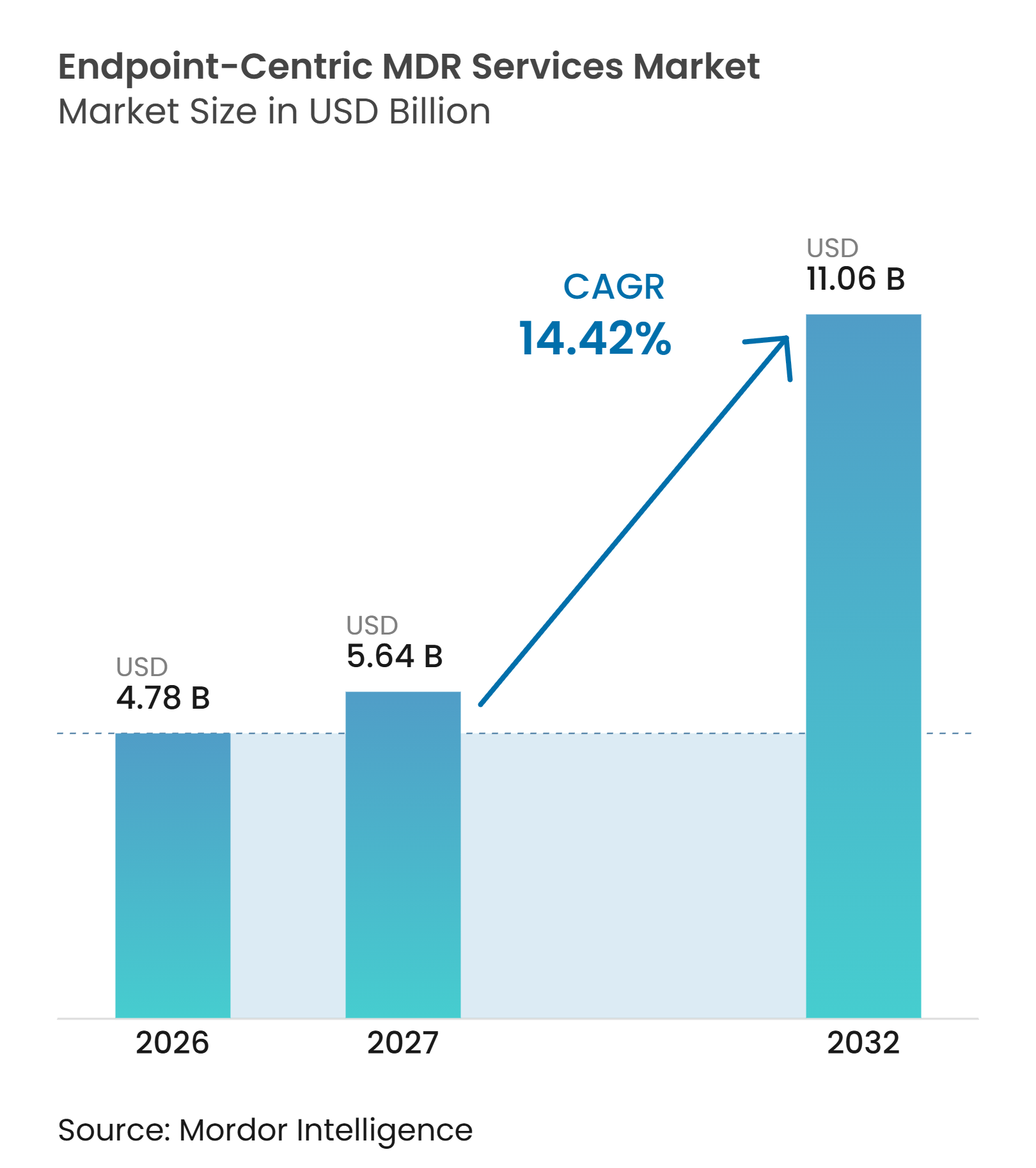
The Endpoint-Centric MDR Services Market size is projected to expand from USD 4.78 billion in 2026 to USD 11.06 billion by 2032, registering a CAGR of 14.42% between 2027 and 2032. The Endpoint-Centric MDR Services Market is supported by ransomware campaigns that increasingly combine malware delivery with stolen credentials, which places endpoint visibility at the center of incident response. Buyers are shifting from supplementary monitoring to continuous managed coverage because many internal security teams cannot staff a 24/7 operation. Providers are responding by combining endpoint technology, threat intelligence, and response services in a single contract. The Endpoint-Centric MDR Services Market also faces pressure to provide autonomous investigation, regional data handling, and practical coverage for regulated customers without making services unaffordable for smaller organizations.
Key Report Takeaways
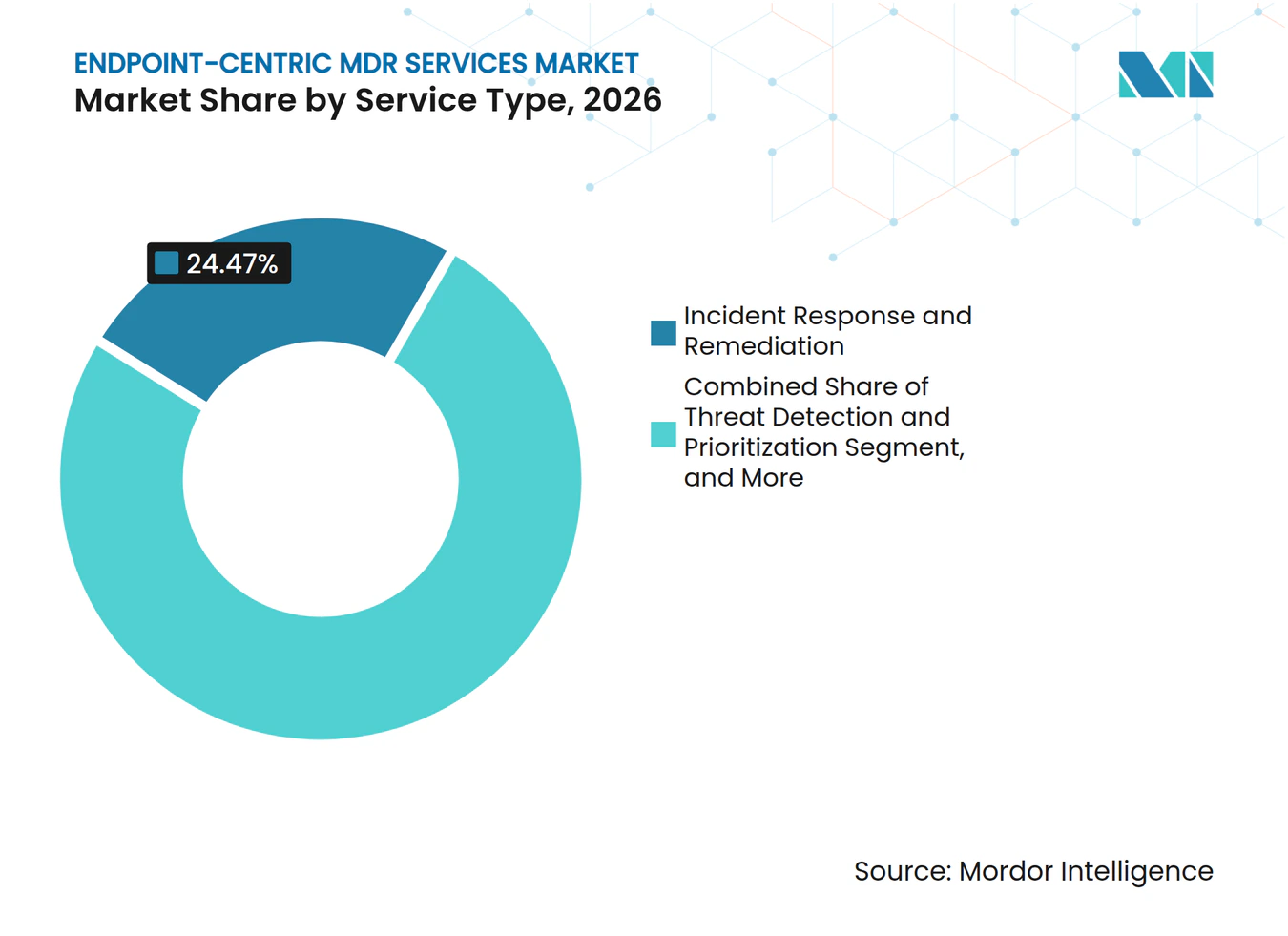
- By service type, Incident Response and Remediation held 24.47% of the Endpoint-Centric MDR Services Market share in 2026, while Endpoint Policy and Exposure Management is projected to expand at a 14.58% CAGR through 2032.
- By security type, Managed Endpoint Detection and Response held 45.22% share in 2026, while Managed Extended Detection and Response is projected to expand at a 14.79% CAGR through 2032.
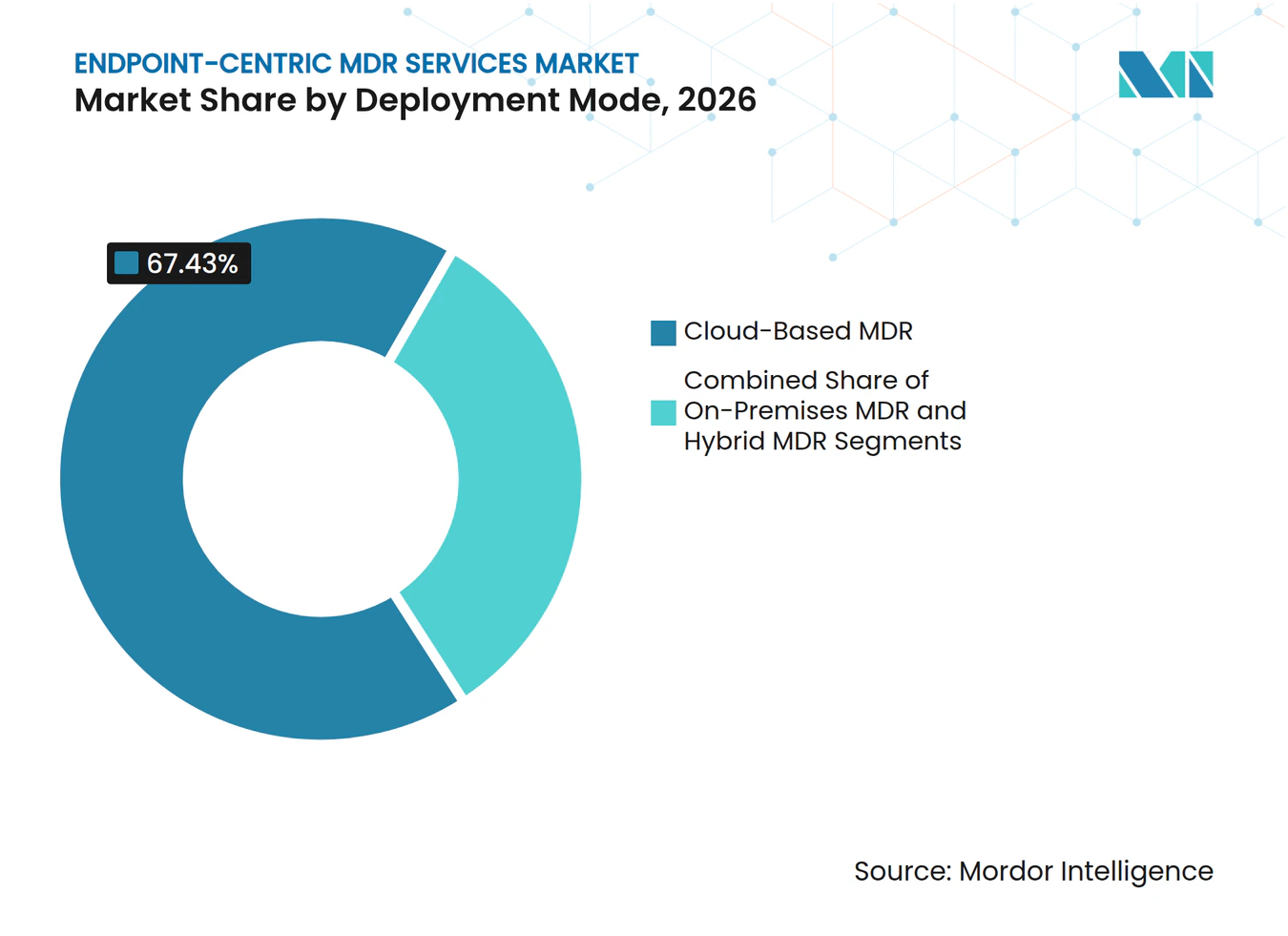
- By deployment mode, Cloud-Based MDR held 67.43% of the Endpoint-Centric MDR Services Market share in 2026 and is projected to expand at a 14.94% CAGR through 2032.
- By organization size, Large Enterprises held 61.24% share in 2026, while Small and Medium-Sized Enterprises are projected to expand at a 15.13% CAGR through 2032.
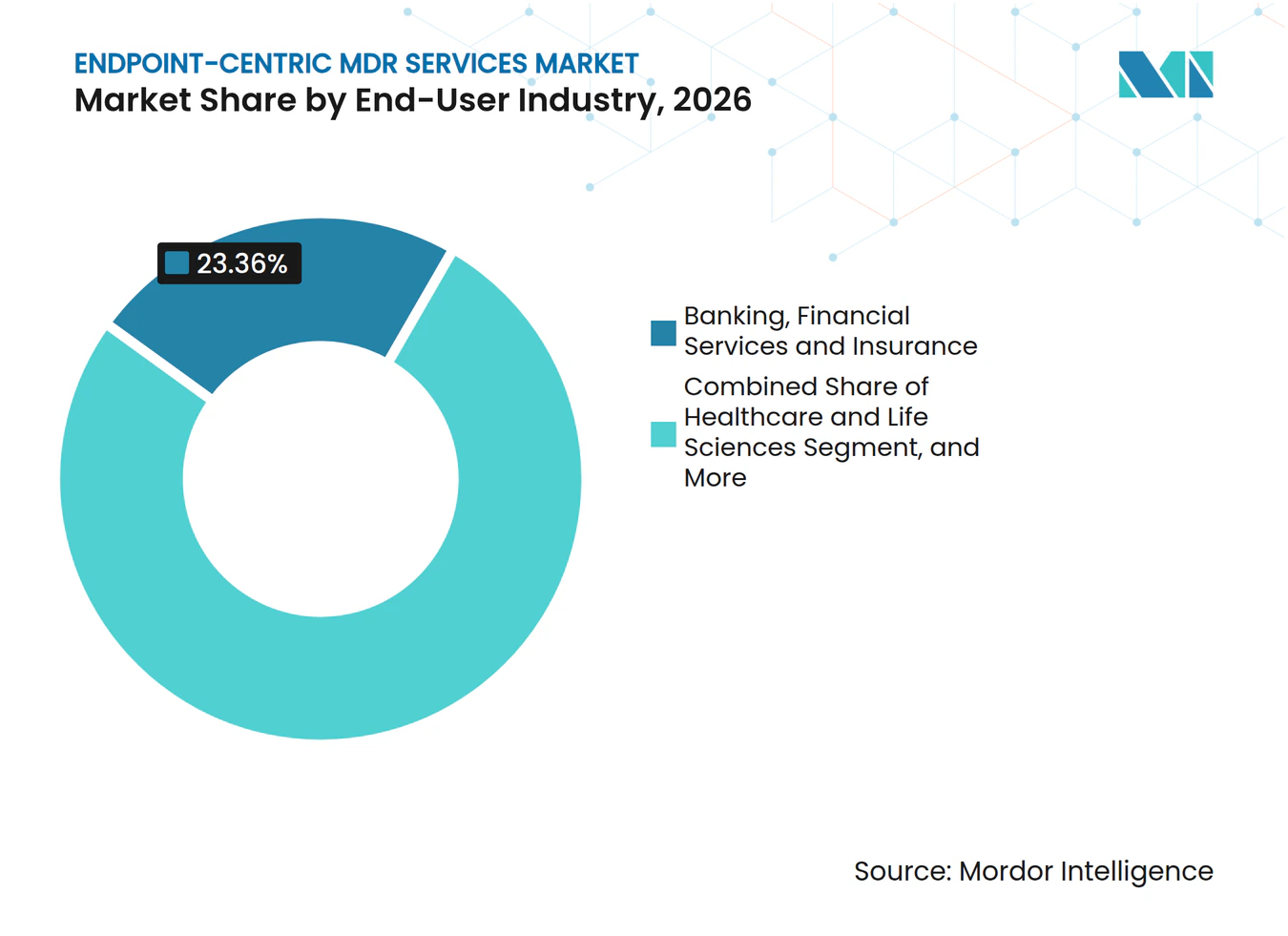
- By end-user industry, Banking, Financial Services, and Insurance held 23.36% share in 2026, while Healthcare and Life Sciences are projected to expand at a 15.28% CAGR through 2032.
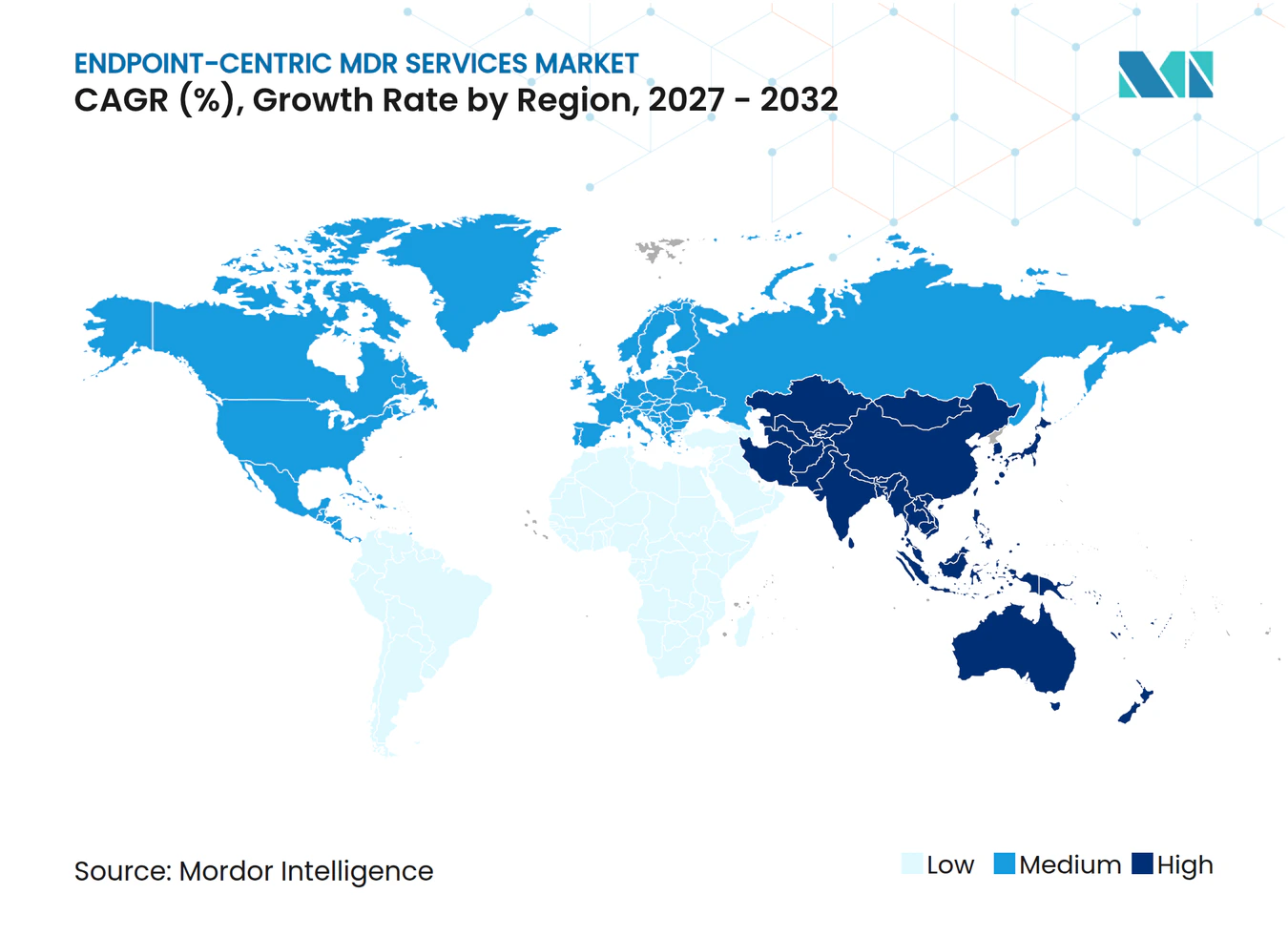
- By geography, North America held 51.28% share in 2026, while Asia-Pacific is projected to expand at a 14.66% CAGR through 2032.
Note: Market numbers in this report are based on Mordor Intelligence's proprietary estimation framework, which combines nine months of actuals with Q4 projections for base year 2026.
Market Trends and Insights
Drivers Impact Analysis of Endpoint-Centric MDR Services Market*
| Driver | (~) % Impact on CAGR Forecast | Geographic Relevance | Impact Timeline |
|---|---|---|---|
| Escalating Ransomware and Credential-Theft Attacks | +3.2% | Global | Short term (≤ 2 years) |
| Cybersecurity Talent Shortages and 24/7 Monitoring Needs | +2.9% | Global | Medium term (2-4 years) |
| Expanding Regulatory and Cyber-Insurance Requirements | +2.4% | EU, North America, and Asia-Pacific | Medium term (2-4 years) |
| Remote and Hybrid Work Expanding Endpoint Exposure | +1.7% | Global | Short term (≤ 2 years) |
| Endpoint Telemetry Convergence With Identity, Cloud, and Network Signals | +1.3% | North America and Europe | Medium term (2-4 years) |
| Endpoint-Local AI Remediation Reducing Containment Time | +1.1% | Global | Long term (≥ 4 years) |
| Source: Mordor Intelligence | |||
Escalating Ransomware and Credential-Theft Attacks
Ransomware campaigns now often begin with identity compromise rather than encryption alone, which increases the need for managed endpoint monitoring. KELA recorded 7,549 ransomware victims in 2025, up 45% from the prior year, and identified 2.86 billion compromised credentials during the year.[1] Stolen credentials allow attackers to enter target networks through legitimate access paths rather than relying solely on perimeter breaches, which can delay detection when access appears normal. Endpoint telemetry can identify suspicious processes, token use, and device behavior before an attacker can move through the environment and begin broader data theft or service disruption. This pattern favors Endpoint-Centric MDR Services Market providers that can correlate endpoint, identity, and behavioral signals before stolen access is used for lateral movement. Providers that combine these signals with rapid containment can turn a business-disrupting ransomware event into a contained alert for the customer.
Cybersecurity Talent Shortages and 24/7 Monitoring Requirements
The cost of maintaining a 24/7 in-house security operation continues to support outsourced response services. ISC2 reported that 95% of surveyed organizations had at least 1 cybersecurity skill need in 2025, while 59% reported critical or significant shortfalls ISC2.ORG. The study showed that the share reporting serious shortfalls rose from 44% in 2024.[2] Red Canary reported that 75% of surveyed organizations faced skills shortages in intrusion detection and 72% in incident response, while average cyber incident costs were USD 3.7 million in the preceding year. A functioning around-the-clock security operations center requires analysts, detection tools, incident processes, and continuous training, and requires enough staff depth to cover turnover, escalation, and specialist investigations. The Endpoint-Centric MDR Services Market therefore benefits when providers use assisted triage to handle routine alerts, lower labor demand per alert, and reserve analyst time for higher-risk investigations.
Expanding Regulatory and Cyber-Insurance Requirements
Regulatory obligations are making continuous monitoring a more urgent procurement requirement for financial institutions and critical infrastructure operators. The EU Digital Operational Resilience Act took effect in January 2025, while the national implementation deadline for NIS2 passed in October 2024. These frameworks require structured information and communications technology risk management, incident reporting, and oversight of third-party risk.[3] DORA places responsibility for information and communications technology risk programs with management bodies, strengthening board-level attention to endpoint monitoring and making incomplete coverage a governance issue. Cyber-insurance buyers are increasingly considering active endpoint protection and monitored response when evaluating security coverage, which gives mid-sized companies a financial incentive to formalize their service arrangements. This compliance pressure provides a durable demand base for the Endpoint-Centric MDR Services Market because reporting and monitoring duties are less discretionary than many technology projects.
Remote and Hybrid Work Expanding Endpoint Exposure
Hybrid work has widened the endpoint perimeter and reduced the effectiveness of controls designed only for office networks. Verizon reported that 46% of infostealer-related hits targeted unmanaged or bring-your-own-device endpoints in its 2025 findings, as cited by Fidelis Security. The same source noted that attacks targeting virtual private networks increased 8 times year over year. Devices returning from home networks can carry dormant malware, stale credentials, and misconfigured agents that perimeter tools may not identify consistently, while unmanaged devices may fall outside ordinary patch and policy processes. Continuous monitoring of behavioral baselines helps security teams identify these devices before they create a broader reinfection or lateral-movement risk. Providers in the Endpoint-Centric MDR Services Market that can collect telemetry across diverse operating systems and network conditions are better placed to serve distributed device fleets and compete for accounts that relied on perimeter controls.
Restraints Impact Analysis of Endpoint-Centric MDR Services Market*
| Restraint | (~) % Impact on CAGR Forecast | Geographic Relevance | Impact Timeline |
|---|---|---|---|
| High Total Cost of Ownership for Small and Medium-Sized Enterprises | -1.8% | Global, concentrated in South America and Southeast Asia | Medium term (2-4 years) |
| Data Sovereignty and Cross-Border Telemetry Restrictions | -1.4% | EU, India, China, and Middle East | Long term (≥ 4 years) |
| Alert Fatigue and Inconsistent Multi-Tool Detection Policies | -0.9% | Global | Short term (≤ 2 years) |
| Visibility Gaps Across Unmanaged IoT and Medical Devices | -0.6% | Asia-Pacific and North America | Medium term (2-4 years) |
| Source: Mordor Intelligence | |||
High Total Cost of Ownership for Small and Medium-Sized Enterprises
The total cost of ownership remains a barrier for smaller organizations, even though they are expected to adopt managed protection faster than larger enterprises. MDR list prices typically involve per-endpoint monthly charges, onboarding fees, and additional costs for log ingestion beyond contracted limits. Organizations may also incur hourly charges for incident response work outside the base contract. Additional log ingestion, incident-response retainers, and contract escalation clauses can raise costs beyond initial estimates for organizations with complex multi-cloud environments and high alert volumes. Smaller customers may also find that lower-priced plans exclude threat hunting, forensic work, or cloud workload coverage, which are services under-resourced teams may need most. The Endpoint-Centric MDR Services Market will need clearer bundled plans and dependable round-the-clock support to make the service viable for this buyer group.
Data Sovereignty and Cross-Border Telemetry Restrictions
Managed detection services depend on timely endpoint telemetry, but localization rules can restrict the movement and processing of this data. Digital Policy Alert tracked 332 regulatory developments concerning cross-border data-flow restrictions at national and EU levels as of April 2025. These constraints require providers to consider local collection, storage, and analytics arrangements for regulated customers, rather than using a single global processing location. Separate regional data planes can raise the cost of expansion and reduce the efficiency of globally centralized service delivery. Providers without compliant local architectures may be excluded from government and regulated-industry procurement, where contract values and retention can be high. The Endpoint-Centric MDR Services Market faces higher regional delivery costs when providers must create separate data planes, but these requirements can also favor vendors with established local infrastructure and compliance experience.
*Our forecasts treat driver/restraint impacts as directional, not additive. The impact forecasts reflect baseline growth, mix effects, and variable interactions.
Endpoint-Centric MDR Services Market Segment Analysis
By Service Type:
Incident Response Leads, Exposure Management AcceleratesIncident Response and Remediation held 24.47% of service-type revenue in 2026. The result reflects the buyer's focus on containing breaches quickly and restoring normal operations after an incident. These engagements commonly cover detection, investigation, containment, remediation guidance, and lessons learned after the event. This broad scope can make incident-response contracts among the highest-value offerings in the Endpoint-Centric MDR Services Market, especially when buyers need one provider to manage detection, containment, investigation, and recovery coordination. CrowdStrike stated that Falcon Complete resolved more than 13 million detections annually and reported a 75% reduction in mean time to respond against its baseline. Large enterprises and government buyers often prioritize this service because complex device estates make manual containment slower and harder to manage.
Endpoint Policy and Exposure Management is projected to expand at a 14.58% CAGR through 2032. This direction points to greater emphasis on finding vulnerabilities, enforcing configuration baselines, and addressing policy gaps before an incident begins. Threat monitoring and detection prioritization remain core elements of service delivery. Threat hunting and managed investigations remain important for enterprises facing persistent adversaries that require proactive review rather than alert-only handling. The Endpoint-Centric MDR Services Market is likely to favor vendors that combine prevention, detection, hunting, response, and exposure management within a coherent service portfolio. A single provider relationship can reduce procurement complexity for customers seeking to consolidate security services.



By Security Type:
Managed EDR Retains Scale, Managed XDR AdvancesManaged Endpoint Detection and Response accounted for 45.22% of security-type revenue in 2026. Endpoints remain a major entry point for malware, credential theft, and suspicious process activity. CrowdStrike reported more than 1,800 distinct AI applications running on enterprise devices across its customer base, representing 160 million unique application instances. This operational complexity increases the importance of distinguishing expected application behavior from meaningful threats. Managed Network Detection and Response and Cloud Detection and Response provide important context for lateral movement and data exfiltration that may not be fully visible from an endpoint alone. Identity Detection and Response is becoming more relevant because credential theft can turn a device-level event into a broader access and fraud risk.
Managed Extended Detection and Response is projected to expand at a 14.79% CAGR through 2032. This service brings together endpoint, network, cloud, and identity signals to identify attack sequences across environments, giving the Endpoint-Centric MDR Services Market a practical route to broader coverage without separate alert queues. NIST published a methodology for characterizing Internet of Things device network behavior in August 2025, providing an approach that can help extend behavior-based monitoring beyond traditional information technology devices. DORA and NIS2 reinforce this wider approach because their monitoring expectations extend across information and communications technology systems, not endpoints alone. The endpoint-centric MDR services industry is moving toward unified detection environments where customers can add adjacent telemetry without replacing their existing provider. Vendors with a clear transition path from managed EDR to managed XDR can capture upgrade demand in regulated European sectors.
By Deployment Mode:
Cloud-Based MDR Sets the PaceCloud-Based MDR held 67.43% of deployment-mode revenue in 2026. It is also projected to expand at a 14.94% CAGR through 2032, making it both the largest and fastest-expanding deployment option. Cloud delivery enables providers to process high telemetry volumes without requiring customers to install dedicated analytics infrastructure at every site. It also allows centralized teams to apply new detection logic across customer environments more quickly. Arctic Wolf stated that its Aurora Platform processed more than 9 trillion security observations weekly across more than 10,000 customers in October 2025. These operational advantages support the continued central role of cloud delivery in the Endpoint-Centric MDR Services Market.
On-premises MDR remains relevant for defense, financial services, and other organizations that cannot allow sensitive telemetry to leave controlled environments. Hybrid MDR provides another option by keeping time-sensitive containment controls local while using cloud systems for reporting and threat intelligence. These models can help enterprises move away from legacy infrastructure in stages rather than through a full migration at once. Data localization rules in Europe and Asia-Pacific are encouraging providers in the Endpoint-Centric MDR Services Market to establish regional processing capacity. Flexible delivery methods remain necessary because a globally centralized cloud model cannot serve every regulated buyer.

By Organization Size:
Large Enterprises Anchor Revenue, SMEs Add DemandLarge Enterprises held 61.24% of organization-size revenue in 2026. Their endpoint estates are larger, their security stacks are more complex, and their potential losses can justify premium managed coverage, which supports longer service contracts and tailored capabilities in the Endpoint-Centric MDR Services Market. Multi-year contracts often include dedicated advisors, tailored detection content, incident readiness work, and support across multiple jurisdictions. These agreements provide a recurring revenue base that supports investment in technology, analysts, and regional service capacity. ReliaQuest stated that its GreyMatter platform integrates with more than 200 cybersecurity tools, illustrating the multi-vendor integration requirements of large enterprise customers. Providers with compliance experience and regional delivery options can command stronger pricing in these complex accounts.
Small and Medium-Sized Enterprises are projected to expand at a 15.13% CAGR through 2032. Managed coverage can offer a practical alternative for companies that cannot build and staff a full internal security operations center. Bundled per-endpoint plans that include endpoint protection, detection, vulnerability assessment, and analyst response can reduce purchasing complexity. HENNGE announced an endpoint and managed security service in Japan in February 2026 that combined endpoint detection, 24/7 MDR, and vulnerability assessment for organizations with limited security staff. The service was priced at JPY 950 per device per month. The Endpoint-Centric MDR Services Market will depend on service plans that provide meaningful response capability instead of business-hours alert forwarding for this buyer group.
By End-User Industry:
BFSI Leads, Healthcare and Life Sciences AcceleratesBanking, Financial Services, and Insurance accounted for 23.36% of end-user revenue in 2026. The sector holds valuable transaction and customer data, making it a persistent target for criminal groups and state-linked attackers. Financial institutions also need continuous visibility because transaction systems and customer channels operate outside standard business hours. DORA, United States financial-sector requirements, and similar frameworks across the Asia-Pacific increase the need for formal monitoring and response processes. Regional compliance programs are also increasing attention to continuous endpoint monitoring and real-time security posture management. Government and defense, information technology and telecommunications, and manufacturing also remain important demand groups, especially where ransomware disrupts essential operations.
Healthcare and Life Sciences are projected to expand at a 15.28% CAGR through 2032. Protected health information has high value to attackers, while connected medical devices and legacy systems can make security coverage difficult to standardize. A 2025 peer-reviewed study found that managed EDR can reduce dwell time and support faster threat isolation in healthcare settings while accounting for clinical operational constraints. The same operating environments may have uptime requirements that limit when endpoint agents and patches can be deployed. Outsourced detection can help healthcare organizations monitor these environments continuously when internal staff capacity is limited. Retail and e-commerce organizations are also increasing managed security coverage before high-volume sales periods, when breach exposure and staffing pressure can rise.
Geography Analysis
North America Endpoint-Centric MDR Services Market
North America held 51.28% of regional revenue in 2026. The region has mature endpoint detection adoption, large cybersecurity budgets, and significant demand from financial services and government entities. KELA found that more than 53% of the 7,549 ransomware victims it recorded in 2025 were United States-based organizations. Disclosure requirements and sector-specific obligations make rapid detection and response more important for large enterprises. Canada presents further demand in financial services and critical infrastructure, while Mexico benefits from security standardization among suppliers serving United States-linked operations.
APAC Endpoint-Centric MDR Services Market
Asia-Pacific is projected to expand at a 14.66% CAGR through 2032. The region combines widening digital operations, rising ransomware exposure, evolving regulatory requirements, and a shortage of specialist security staff, creating several distinct demand paths for the Endpoint-Centric MDR Services Market across national markets. Japan has active managed security launches, including NTT Docomo Business’s WideAngle SIEM and MDR service, which launched in October 2025. NTT Security Japan began distributing Arctic Wolf Aurora Managed Endpoint Defense to enterprise customers in May 2026. India’s financial services sector also requires locally compliant service designs where data-location requirements apply. The Endpoint-Centric MDR Services Market in South Korea includes regional providers that compete through local compliance expertise and delivery capabilities.
EMEA and South America Endpoint-Centric MDR Services Market
Europe is shaped by DORA, NIS2, and buyer attention to sovereign data processing. Germany, the United Kingdom, and France are key markets because regulated enterprises need continuous monitoring and documented response processes. Deutsche Telekom introduced MDR Start for small businesses and municipalities in Germany in September 2025. European providers are responding to buyer demand for processing arrangements that keep sensitive telemetry within appropriate jurisdictions. South America offers potential in Brazil and Argentina, where financial-sector requirements and ransomware affect manufacturing and logistics. The Middle East and Africa is supported by Saudi Arabia and the United Arab Emirates, where national cybersecurity programs and digital transformation are expanding enterprise endpoint estates.
Competitive Landscape
Market Concentration
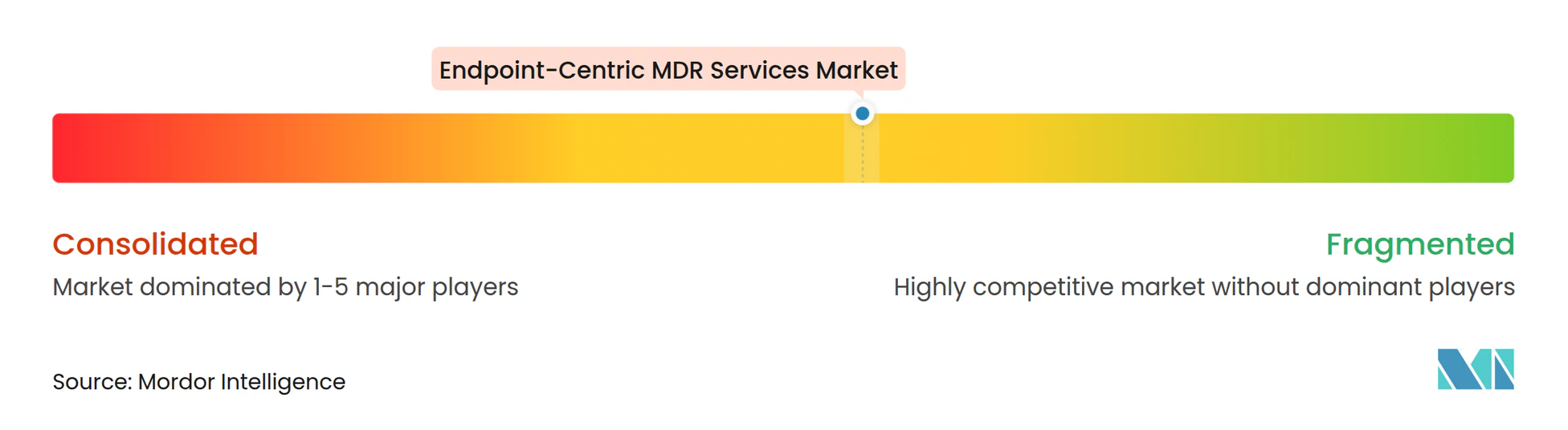
The Endpoint-Centric MDR Services Market has a moderately concentrated top tier, with platform-native vendors, specialist managed security providers, and large information technology services firms competing for enterprise contracts. CrowdStrike and SentinelOne compete with specialists such as Arctic Wolf, eSentire, and ReliaQuest, while Accenture, IBM, and Tata Consultancy Services offer managed security within broader technology services relationships. Providers are increasingly seeking control of both the endpoint technology and the response layer to reduce handoffs during incident handling. Sophos completed its USD 859 million acquisition of Secureworks in February 2025, combining the Taegis XDR platform and Counter Threat Unit intelligence with Sophos’s security portfolio. Arctic Wolf acquired BlackBerry’s Cylance endpoint assets for USD 160 million in February 2025, expanding its position from managed services into endpoint prevention.
Artificial intelligence is becoming a key point of competition as vendors automate routine investigation and containment work. CrowdStrike introduced Agentic MDR at the RSA Conference 2026 to extend managed response with autonomous investigation for recurring security workflows. Expel also introduced an MDR service covering the full AI attack surface in April 2026. Palo Alto Networks reported that 32.5% of corporate network devices were unmanaged and nearly 39% of information technology devices lacked active EDR coverage in its 2025 device-security report. These gaps make agentless and device-focused monitoring relevant additions to standard Endpoint-Centric MDR Services Market offerings.
Smaller challengers such as Binary Defense, BlueVoyant, Expel, and WithSecure compete through vertical knowledge, analyst availability commitments, and response-time targets. Regional providers in Asia-Pacific use local compliance knowledge and price positioning to address buyers that require local data processing. ReliaQuest raised more than USD 500 million at a USD 3.4 billion valuation in March 2025, reflecting funding interest in platforms that integrate heterogeneous security environments. Providers without independent control attestations, credible breach warranties, or sovereign deployment choices can face limits in public-sector and regulated-sector procurement. The Endpoint-Centric MDR Services Market rewards providers that combine technology integration, response capacity, compliance-ready delivery, clear scope, and manageable total cost.
Endpoint-Centric MDR Services Industry Leaders
-
CrowdStrike Holdings, Inc.
-
Arctic Wolf Networks, Inc.
-
Rapid7, Inc.
-
eSentire Inc.
-
SentinelOne, Inc.
- *Disclaimer: Major Players sorted in no particular order
Endpoint-Centric MDR Services Market Companies Covered in this Report
- CrowdStrike Holdings, Inc.
- Arctic Wolf Networks, Inc.
- Rapid7, Inc.
- eSentire Inc.
- SentinelOne, Inc.
- Sophos Group plc
- Secureworks, Inc.
- Red Canary, Inc.
- Expel, Inc.
- ReliaQuest, LLC
- Palo Alto Networks, Inc.
- Google LLC
- IBM Corporation
- Accenture plc
- Tata Consultancy Services Limited
- Atos SE
- WithSecure Corporation
- Kroll, LLC
- Trustwave Holdings, Inc.
- Binary Defense Systems, Inc.
- Critical Start, Inc.
- BlueVoyant, Inc.
Recent Industry Developments in Endpoint-Centric MDR Services Market
- June 2026: WatchGuard Technologies launched Total MDR, a fully integrated AI-driven managed detection and response service covering endpoints, identities, networks, and cloud environments from a single portal. The service achieves a median detection-to-response time of 6 minutes, an 80% reduction relative to the industry average of 30 minutes, and targets managed service providers serving organizations in hybrid information technology ecosystems.
- May 2026: NTT Security Japan, in partnership with Arctic Wolf Japan, launched Aurora Managed Endpoint Defense for Japanese enterprise clients, combining a prevention-first EPP and EDR architecture with 24/7 expert monitoring and consultant-led environment tuning. The service is designed to minimize alert escalations to customer teams, addressing Japan's acute cybersecurity staffing shortage and the increase in double-extortion ransomware incidents.
- May 2026: Tanium launched a cybersecurity compliance framework for Malaysian banks aligned with Bank Negara Malaysia's Risk Management in Technology guidelines, enabling financial institutions to achieve continuous endpoint monitoring and real-time compliance posture management across their regulated information technology environments.
- April 2026: CrowdStrike unveiled Agentic MDR at RSA Conference 2026, extending Falcon Complete with intelligent AI agents that autonomously investigate and remediate high-frequency security workflows at machine speed. The release positions CrowdStrike's human analysts to focus on novel and high-severity threats that require judgment, while agents handle routine containment and investigation steps independently.
Global Endpoint-Centric MDR Services Market Report Scope
The Endpoint-Centric MDR Services Market comprises outsourced, 24/7 security operations services that focus primarily on endpoint telemetry (laptops, desktops, servers, mobile devices) for threat detection, investigation, and response, using EDR/XDR platforms as the core technology stack.
The Endpoint-Centric MDR Services Market Report is Segmented by Service Type (Threat Monitoring, Threat Detection and Prioritization, Threat Hunting, Managed Investigation Services, Incident Response and Remediation, and Endpoint Policy and Exposure Management), Security Type (Managed Endpoint Detection and Response, Managed Network Detection and Response, Cloud Detection and Response, Identity Detection and Response, and Managed Extended Detection and Response), Deployment Mode (Cloud-Based MDR, On-Premises MDR, and Hybrid MDR), Organization Size (Small and Medium-Sized Enterprises and Large Enterprises), End-User Industry (Banking, Financial Services and Insurance, Healthcare and Life Sciences, IT and Telecommunications, Government and Defense, Manufacturing, Retail and E-Commerce, and Other End-User Industries), and Geography (North America, South America, Europe, Asia-Pacific, and Middle East and Africa). The Market Forecasts Are Provided in Terms of Value (USD).
Segmentation Overview
| Threat Monitoring |
| Threat Detection and Prioritization |
| Threat Hunting |
| Managed Investigation Services |
| Incident Response and Remediation |
| Endpoint Policy and Exposure Management |
| Managed Endpoint Detection and Response |
| Managed Network Detection and Response |
| Cloud Detection and Response |
| Identity Detection and Response |
| Managed Extended Detection and Response |
| Cloud-Based MDR |
| On-Premises MDR |
| Hybrid MDR |
| Small and Medium-Sized Enterprises |
| Large Enterprises |
| Banking, Financial Services and Insurance |
| Healthcare and Life Sciences |
| IT and Telecommunications |
| Government and Defense |
| Manufacturing |
| Retail and E-Commerce |
| Other End-user Industries |
| North America | United States |
| Canada | |
| Mexico | |
| South America | Brazil |
| Argentina | |
| Rest of South America | |
| Europe | Germany |
| United Kingdom | |
| France | |
| Italy | |
| Spain | |
| Rest of Europe | |
| Asia-Pacific | China |
| Japan | |
| India | |
| South Korea | |
| Australia | |
| Rest of Asia-Pacific | |
| Middle East and Africa | Saudi Arabia |
| United Arab Emirates | |
| South Africa | |
| Egypt | |
| Rest of Middle East and Africa |
| By Service Type | Threat Monitoring | |
| Threat Detection and Prioritization | ||
| Threat Hunting | ||
| Managed Investigation Services | ||
| Incident Response and Remediation | ||
| Endpoint Policy and Exposure Management | ||
| By Security Type | Managed Endpoint Detection and Response | |
| Managed Network Detection and Response | ||
| Cloud Detection and Response | ||
| Identity Detection and Response | ||
| Managed Extended Detection and Response | ||
| By Deployment Mode | Cloud-Based MDR | |
| On-Premises MDR | ||
| Hybrid MDR | ||
| By Organization Size | Small and Medium-Sized Enterprises | |
| Large Enterprises | ||
| By End-user Industry | Banking, Financial Services and Insurance | |
| Healthcare and Life Sciences | ||
| IT and Telecommunications | ||
| Government and Defense | ||
| Manufacturing | ||
| Retail and E-Commerce | ||
| Other End-user Industries | ||
| By Geography | North America | United States |
| Canada | ||
| Mexico | ||
| South America | Brazil | |
| Argentina | ||
| Rest of South America | ||
| Europe | Germany | |
| United Kingdom | ||
| France | ||
| Italy | ||
| Spain | ||
| Rest of Europe | ||
| Asia-Pacific | China | |
| Japan | ||
| India | ||
| South Korea | ||
| Australia | ||
| Rest of Asia-Pacific | ||
| Middle East and Africa | Saudi Arabia | |
| United Arab Emirates | ||
| South Africa | ||
| Egypt | ||
| Rest of Middle East and Africa | ||
Key Questions Answered in the Report
What is the Endpoint-Centric MDR Services Market size?
The market is valued at USD 4.78 billion in 2026 and is projected to reach USD 11.06 billion by 2032, with a 14.42% CAGR from 2027 to 2032. Demand is supported by the need for continuous endpoint monitoring, incident response, and broader identity-aware threat detection.
What is driving demand for endpoint-centric MDR services?
Ransomware, stolen credentials, security staffing gaps, compliance obligations, and distributed endpoint environments are strengthening demand across organizations with limited internal response capacity.
Which service type has the largest share?
Incident Response and Remediation leads the service type segment with 24.47% share in 2026.
Which deployment model leads managed detection and response services?
Cloud-Based MDR leads with 67.43% share in 2026 and is projected to expand at a 14.94% CAGR through 2032.
Which end-user sector is expanding fastest?
Healthcare and Life Sciences is projected to expand at a 15.28% CAGR through 2032 because of high-value data, connected devices, and limited internal security capacity.
Which region is expanding fastest?
Asia-Pacific is projected to expand at a 14.66% CAGR through 2032, supported by digitalization, regulatory change, and demand for locally compliant services.