
OT and IoT MDR Services Market Size and Share
Market Overview
| Study Period | 2021 - 2032 |
|---|---|
| Market Size (2027) | USD 1.39 Billion |
| Market Size (2032) | USD 3.19 Billion |
| Growth Rate (2027 - 2032) | 22.78 % |
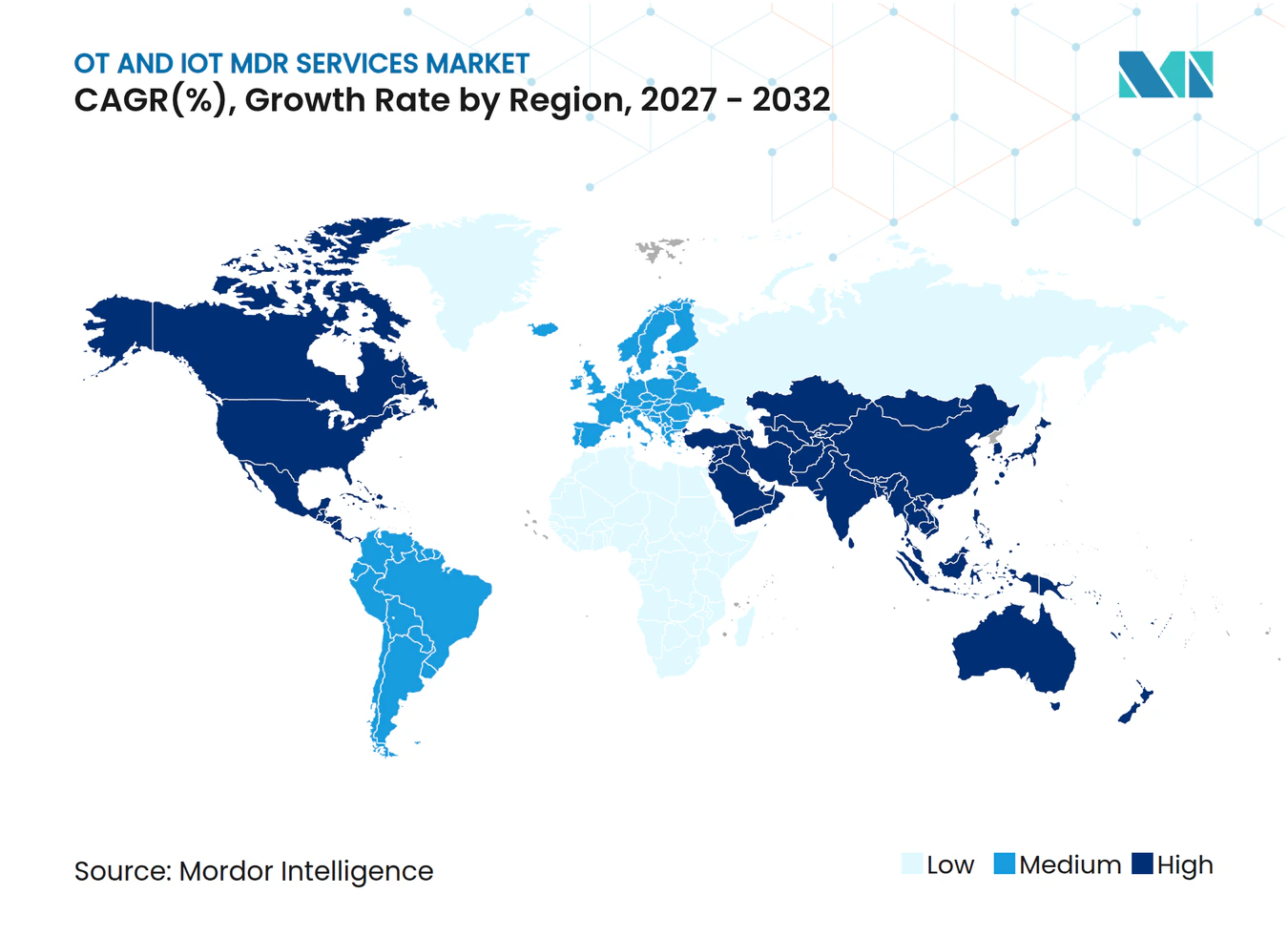
| Fastest Growing Market | Asia-Pacific |
| Largest Market | North America |
| Market Concentration | Medium |
Major Players *Disclaimer: Major Players sorted in no particular order Image © Mordor Intelligence. Reuse requires attribution under CC BY 4.0. | |
OT and IoT MDR Services Market Analysis by Mordor Intelligence
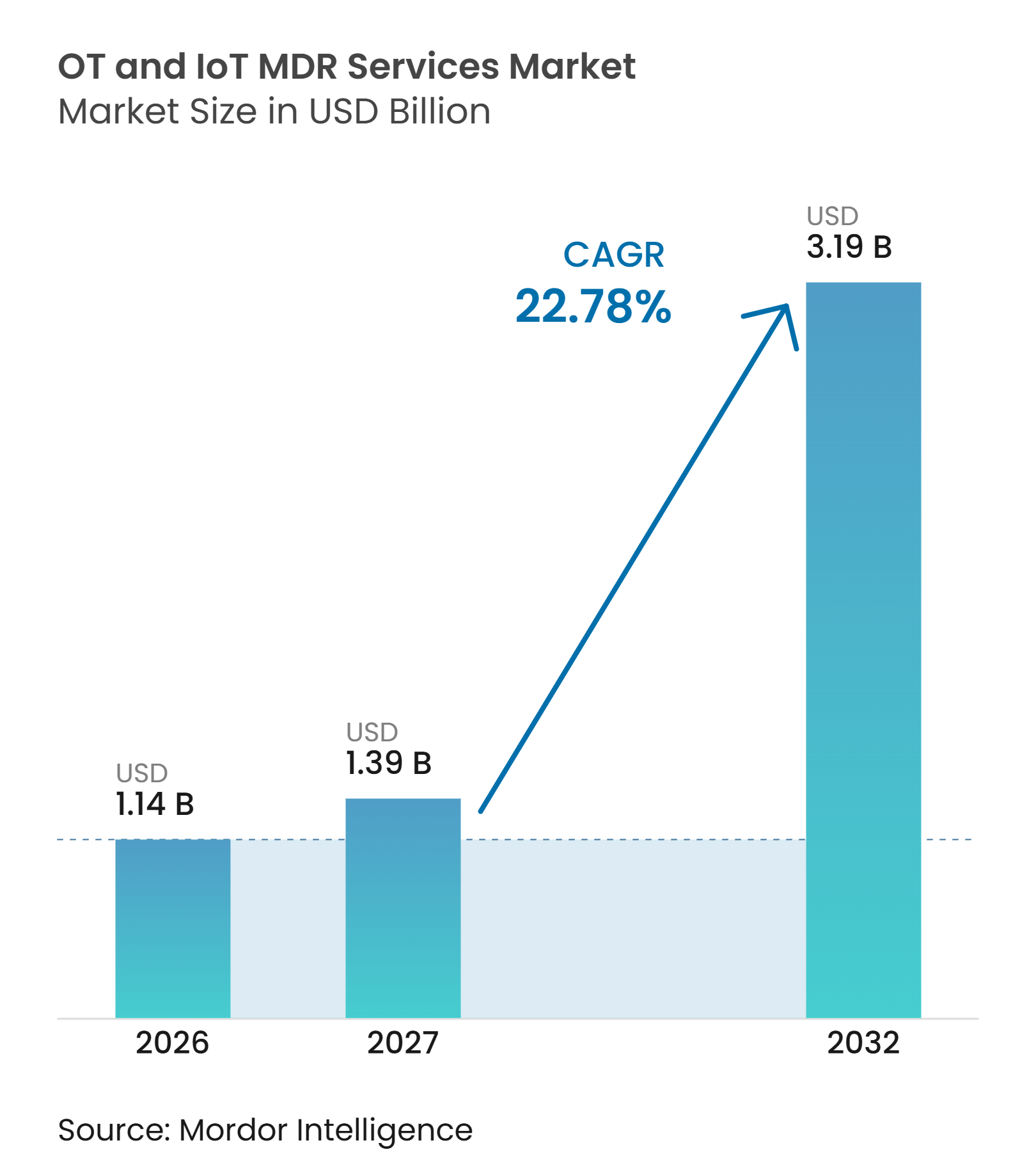
The OT and IoT MDR services market size was valued at USD 1.14 billion in 2026 and is estimated to grow from USD 1.39 billion in 2027 to reach USD 3.19 billion by 2032, at a CAGR of 22.78% during the forecast period, 2027-2032. The OT and IoT MDR services market is being shaped by the closer connection between enterprise networks and operational environments. Continuous monitoring requirements are becoming more important for infrastructure operators. Many industrial organizations do not have enough staff with both security and operational technology experience. This makes external coverage more practical for detection, investigation, and response. The OT and IoT MDR services market also benefits from the need to protect industrial control systems, SCADA environments, and connected physical assets without interrupting production.
Key Report Takeaways
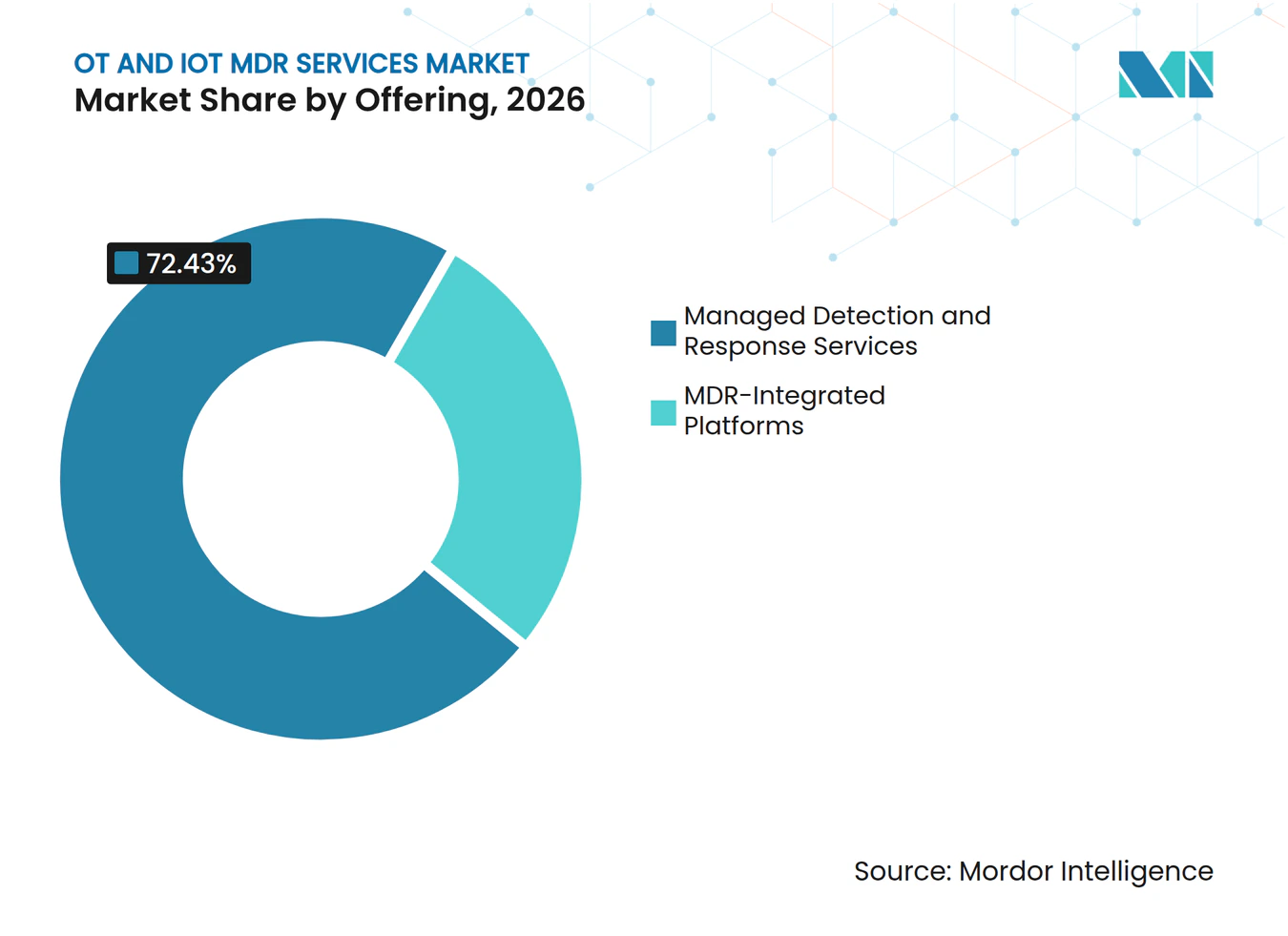
- By offering, managed detection and response services held 72.43% of the OT and IoT MDR services market share in 2026, while MDR-integrated platforms are projected to expand at a 23.18% CAGR through 2032.
- By service type, fully managed MDR services held 40.13% revenue share in 2026, while co-managed MDR services are expected to expand at a 23.77% CAGR through 2032.
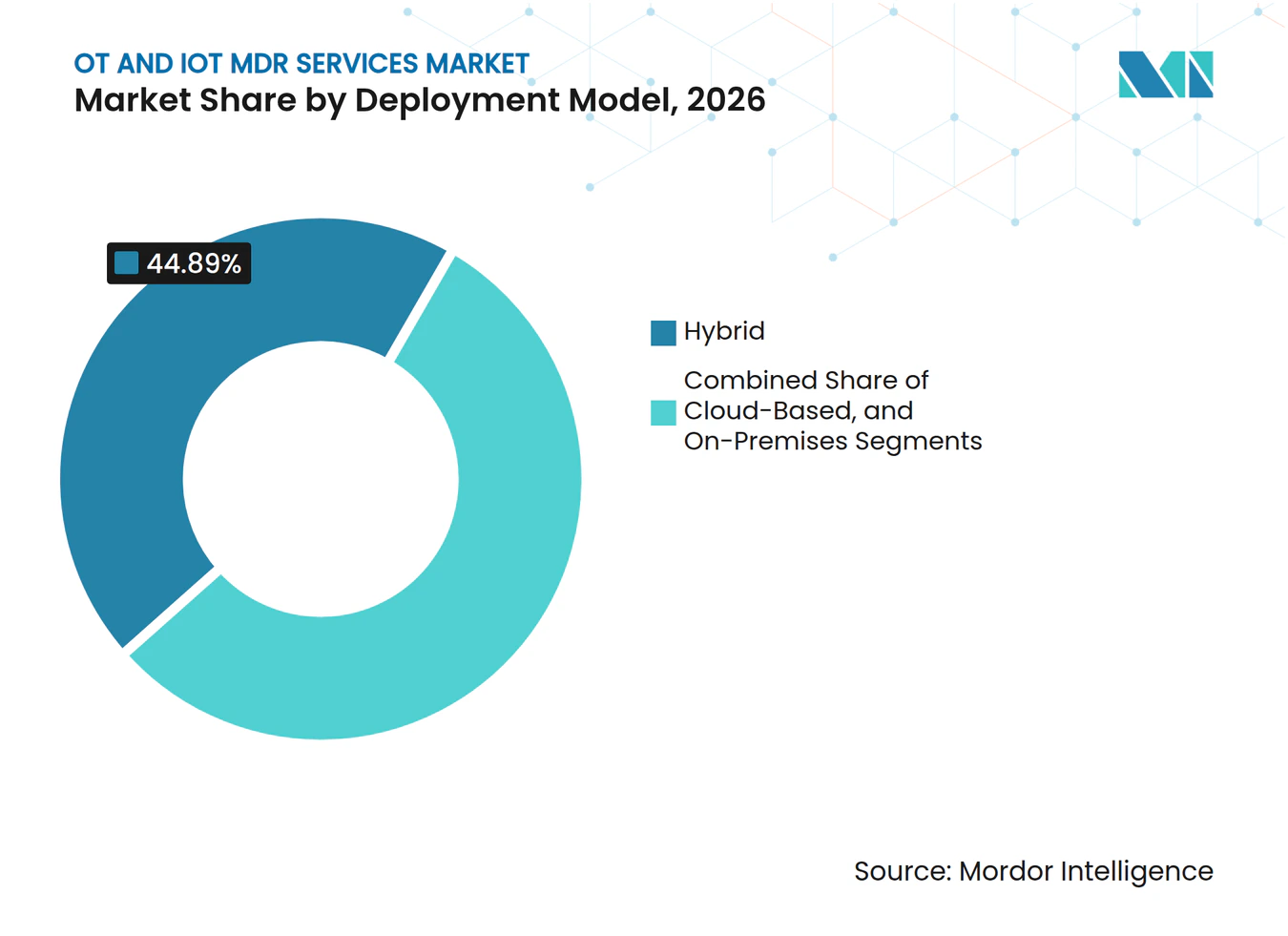
- By deployment model, hybrid deployment held 44.89% revenue share in 2026, while cloud-based deployment is projected to expand at a 23.36% CAGR through 2032.
- By organization size, large enterprises accounted for 79.07% revenue share in 2026, while small and medium-sized enterprises are forecast to expand at a 23.17% CAGR through 2032.
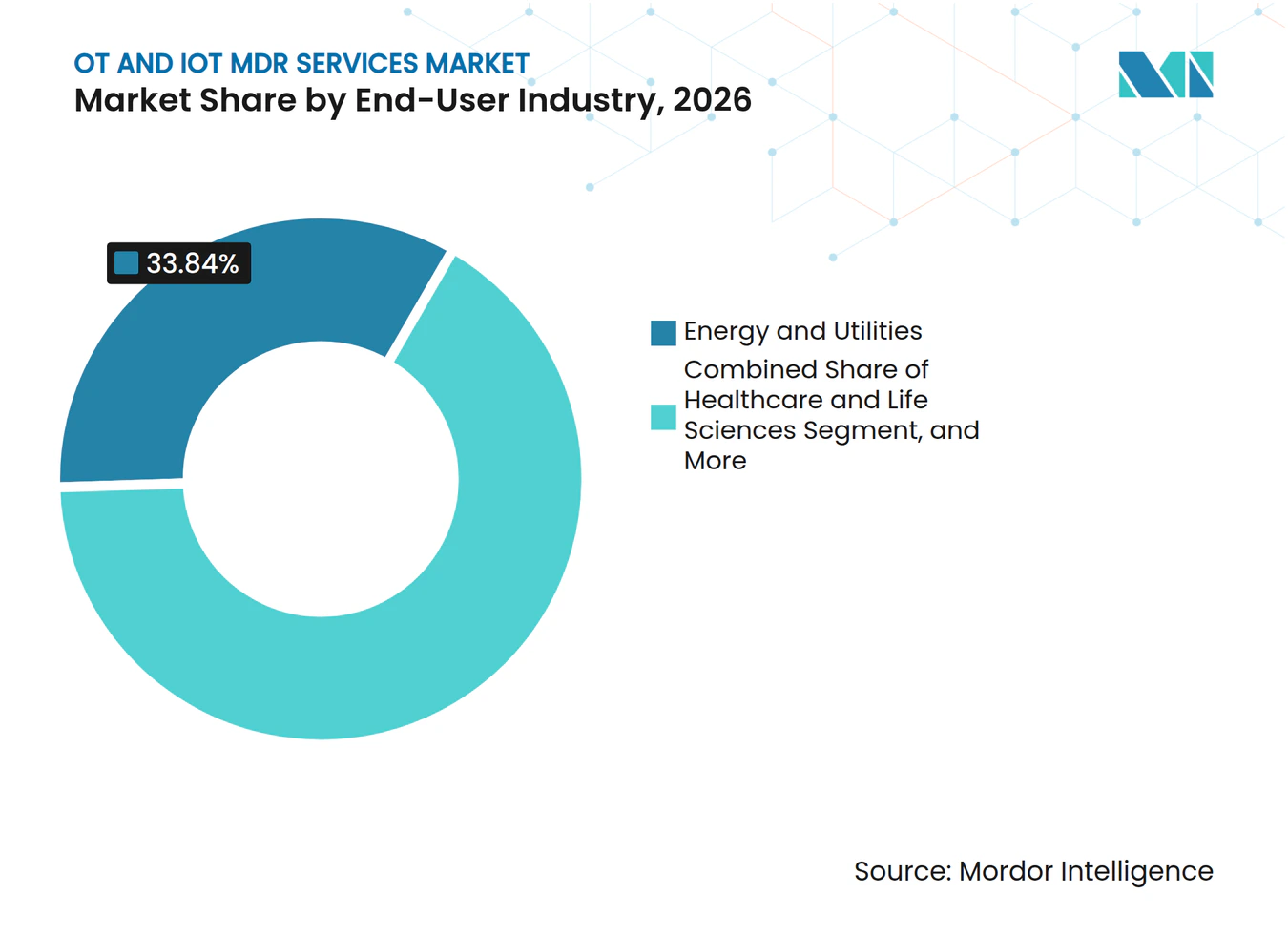
- By end-user industry, energy and utilities held 33.84% revenue share in 2026, while healthcare and life sciences are expected to expand at a 23.94% CAGR through 2032.
- By geography, North America held 39.17% revenue share in 2026, while Asia-Pacific is projected to expand at a 23.72% CAGR through 2032.
Note: Market numbers in this report are based on Mordor Intelligence's proprietary estimation framework, which combines nine months of actuals with Q4 projections for base year 2026.
Market Trends and Insights
Drivers Impact Analysis of OT and IoT MDR Services Market*
| Driver | (~) % Impact on CAGR Forecast | Geographic Relevance | Impact Timeline |
|---|---|---|---|
| Rising IT-OT Network Convergence | +5.2% | Global, highest intensity in North America and Europe | Short term (≤ 2 years) |
| Increasing Regulatory Requirements for Critical Infrastructure Cybersecurity | +4.3% | North America and Europe, with spillover to Asia-Pacific and the Middle East | Medium term (2-4 years) |
| Shortage of OT Cybersecurity Skills and 24/7 Monitoring Capacity | +3.8% | Global, most acute in Asia-Pacific and South America | Short term (≤ 2 years) |
| Expansion of Unmanaged IoT and Cyber-Physical Assets | +3.2% | Global, with early gains in North America and Asia-Pacific manufacturing hubs | Short term (≤ 2 years) |
| Growing Demand for Operational Resilience and Production Continuity | +2.8% | Global, particularly North America, Europe, and core Asia-Pacific markets | Medium term (2-4 years) |
| Increasing Adoption of AI-Assisted Detection and Autonomous Triage in OT SOCs | +2.5% | North America and Europe, with early adoption in Asia-Pacific | Medium term (2-4 years) |
| Source: Mordor Intelligence | |||
Rising IT-OT Network Convergence Is the Primary Commercial Catalyst
The OT and IoT MDR services market is influenced by the declining separation between information technology and operational technology networks. The 2025 SANS survey found that 58% of organizations identified IT compromises spreading into OT networks as the leading initial attack vector for ICS and OT incidents. The same survey reported that unauthorized external access accounted for 50% of reported incidents.[1] A Palo Alto Networks and Siemens study identified more than 1 million unique IP addresses for internet-accessible OT devices in January 2025. These exposed assets included SCADA application servers that were not designed for use beyond the plant floor.[2] Providers therefore need protocol knowledge, asset context, and continuous correlation across the IT-OT boundary.
Industrial operators also need to understand movement across internal networks, not only activity at the perimeter. FERC approved NERC CIP-015-1 to require processes for monitoring, detecting, and evaluating anomalous east-west activity within electronic security perimeters. The standard became effective on September 2, 2025. This requirement gives bulk electric system operators a practical reason to seek specialist monitoring services. An enterprise SOC may recognize common IT threats but still lack the context to assess industrial protocols. MDR providers can fill that gap by joining asset visibility with security operations coverage.
Increasing Regulatory Requirements Create Non-Discretionary Procurement
Regulatory requirements increasingly lead directly to procurement decisions in the OT and IoT MDR services market. CIP-015-1 moves internal network monitoring from a recommended control toward a formal operating requirement for affected U.S. electric entities.[3] The requirement covers anomalous east-west activity, which is difficult to monitor with security programs designed only for enterprise systems. The EU NIS2 Directive is also expanding cybersecurity obligations for essential and important entities across sectors including water, transport, and manufacturing. This creates demand for documented monitoring processes and security measures suited to operational environments. Existing managed security agreements often cover IT telemetry but exclude OT devices, which can require a separate commercial arrangement.
CISA and the UK National Cyber Security Centre issued joint OT architecture guidance in September 2025. The guidance reinforces the importance of knowing which assets operate in an environment before attempting to secure them. CISA also presents asset inventory as a foundation for OT cybersecurity programs. MDR providers can incorporate inventory development during onboarding. This makes the service relationship useful for compliance reporting as well as alert monitoring. It also raises switching costs where the provider becomes part of an operator’s operating evidence and reporting process.
Shortage of OT Cybersecurity Skills Sustains Durable Demand
The shortage of OT cybersecurity skills supports demand for externally delivered monitoring. The 2025 ISC2 workforce study found that 59% of respondents reported critical or significant skills needs within their security teams. This was higher than the 44% reported in 2024. Fortinet estimated a worldwide shortage of more than 4.7 million cybersecurity professionals in its 2025 report. OT security requires a narrower mix of skills that includes ICS protocols, industrial processes, and security operations. That combination is not easily built through a standard enterprise security hiring program.
SANS found that practitioners spent an average of 52% of their time on ICS and OT cybersecurity, while only 9% spent all of their time on it. This indicates that responsibility is often distributed across staff who have competing duties. Rockwell Automation reported in 2025 that only 36% of industrial organizations felt well prepared with the internal OT security staff needed to manage incidents. Managed services provide access to analysts without requiring every operator to build a full OT SOC. They also provide around-the-clock coverage where one internal team cannot support all shifts. This demand is likely to persist because the training time for experienced OT personnel remains substantial.
Expansion of Unmanaged IoT and Cyber-Physical Assets Widens Monitoring Scope
Unmanaged connected assets increase the monitoring scope addressed by the OT and IoT MDR services market. These assets include IoT sensors, IP cameras, building automation controllers, medical devices, and other cyber-physical systems. Palo Alto Networks studied more than 27 million devices across 1,803 enterprise networks in 2025. It found that 32.5% of enterprise devices operated outside IT control. The study also found that 48.2% of IoT-to-corporate-IT connections originated from high-risk IoT devices. These connections enlarge the number of pathways that require visibility and risk assessment.
Forescout analyzed 10 million devices in October 2025. It reported that 2 out of 3 enterprise devices were network devices or extended IoT rather than traditional IT assets. OT and medical devices were among the asset groups carrying known exploited vulnerabilities. Dragos acquired Phosphorus Cybersecurity in June 2026 to extend coverage to connected devices that conventional OT programs can miss. The move shows why buyers increasingly assess OT, IoT, and cyber-physical assets together. Service providers that can observe these systems through one operating model are better placed to serve multi-asset environments.
Restraints Impact Analysis of OT and IoT MDR Services Market*
| Restraint | (~) % Impact on CAGR Forecast | Geographic Relevance | Impact Timeline |
|---|---|---|---|
| High Cost of OT-Safe Deployment and Specialized Service Delivery | -0.8% | Global, most acute in South America and Africa | Long term (≥ 4 years) |
| Operational Risk From Incorrect Automated Response Actions | -0.5% | Global, with highest sensitivity in energy, manufacturing, and healthcare | Medium term (2-4 years) |
| Fragmented Legacy Protocols and Incomplete Asset Inventories | -0.4% | Global, with greatest exposure in brownfield Asia-Pacific and South American environments | Long term (≥ 4 years) |
| Data Residency, Air-Gapped Network, and Third-Party Access Constraints | -0.3% | Europe, the Middle East, and government and defense sectors globally | Medium term (2-4 years) |
| Source: Mordor Intelligence | |||
High Cost of OT-Safe Deployment Compresses the Addressable Market
OT-safe deployment costs can limit adoption, especially for smaller operators. Passive sensors must be installed without disrupting continuous industrial processes. Older systems often require retrofitting before they can support secure monitoring. CISA identified costs related to legacy modernization, public-key infrastructure, specialist staffing, and compliance documentation as barriers to OT secure communications deployment. These costs can cause operators to prioritize more familiar IT controls. The constraint is particularly relevant in brownfield sites with diverse equipment and limited modernization budgets.
Annual OT MDR contracts of USD 200,000 to USD 600,000 can represent a large budget commitment for a single-plant operator. This can delay security investment even when the operational need is clear. Providers can reduce the barrier through modular packages and staged onboarding. Sensor-free collection options can also help where installation windows are restricted. These approaches are relevant to the OT and IoT MDR services market because they make specialist coverage practical below the largest enterprise tier. They also allow operators to begin with critical assets before expanding coverage across a site.
Operational Risk From Automated Response Limits Autonomous Triage Deployment
Automated response creates a separate concern for industrial operators. Isolating a compromised endpoint in an IT environment often has limited physical consequences. The same action can interrupt a process when it affects an industrial control asset. Energy, manufacturing, and healthcare environments are especially sensitive because availability and safety depend on connected systems. This limits how quickly fully autonomous response can be used in production settings. It also makes human approval an important part of service design.
AI-assisted triage can still support enrichment, correlation, prioritization, and non-disruptive recommendations. These activities reduce analyst workload without changing production conditions directly. Providers can reserve containment decisions for qualified analysts and operator personnel. This tiered model matches the operational requirements of critical environments. It also means that autonomous SOC features may be introduced gradually rather than applied uniformly. The OT and IoT MDR services market can therefore adopt AI while retaining accountable human decision-making for production-affecting actions.
*Our forecasts treat driver/restraint impacts as directional, not additive. The impact forecasts reflect baseline growth, mix effects, and variable interactions.
OT and IoT MDR Services Market Segment Analysis
By Offering, Services Dominate While Platforms Support Longer-Term Expansion
Managed detection and response services held 72.43% of the OT and IoT MDR services market share in 2026. This position reflects the need for continuous monitoring without the capital cost of a proprietary OT SOC. Service providers give customers access to analysts who can investigate industrial alerts. They also support directed response across ICS environments. Many enterprise security teams do not have the protocol knowledge needed to interpret industrial events. This supports continued demand for externally delivered operations.
MDR-integrated platforms are projected to expand at a 23.18% CAGR through 2032. The OT and IoT MDR services market size for platform-led offerings is supported by demand for unified asset visibility, detection, and response orchestration. Buyers increasingly want one interface for security events, asset context, and reporting. Consolidation has reinforced this preference for broader platform relationships. The Accenture and Dragos transaction combined managed-service reach with specialized OT capabilities. ServiceNow’s acquisition of Armis similarly connected asset intelligence to a wider security platform. These moves support commercial models that package monitoring, exposure management, and compliance reporting together.


By Service Type, Co-Managed Services Reflect a More Mature Buyer Base
Fully managed MDR services held 40.13% of service-type revenue in 2026. This model is useful for industrial organizations that do not have a 24/7 SOC baseline. Asset-heavy manufacturers and mid-sized operators can transfer much of the monitoring responsibility to the provider. The provider can handle detection, investigation, and escalation under a defined service process. This reduces the need to maintain full internal coverage. It also gives early-stage security programs access to specialized analysts.
Co-managed MDR services are expected to expand at a 23.77% CAGR through 2032. The OT and IoT MDR services market size for co-managed delivery reflects organizations that have built basic OT security awareness but still lack enough staff for continuous monitoring. Customers retain direct involvement in triage and operational decision-making. Providers add specialist threat detection and overnight coverage. OT threat hunting gives advanced customers a way to seek adversaries that passive monitoring may not identify. Incident response retainers also support organizations seeking formal support arrangements. These retainers can be relevant when insurers require documented response capacity as part of coverage conditions.
By Deployment Model, Hybrid Architecture Matches Industrial Operating Conditions
Hybrid deployment held 44.89% of revenue in 2026. This model fits OT environments where latency-sensitive control traffic cannot be directed entirely to cloud analytics. It also allows centralized aggregation across multiple operational sites. Cloud back ends can deliver threat intelligence updates and broader analysis. Local components can preserve the responsiveness required for industrial systems. The model therefore accommodates both operational constraints and centralized security management.
Cloud-based deployment is projected to expand at a 23.36% CAGR through 2032. The OT and IoT MDR services market size for cloud delivery is supported by mid-sized operators that prefer lower-cost and API-based collection methods. These organizations may have less brownfield complexity than large industrial sites. Dragos expanded its Microsoft collaboration in February 2026 to enable SaaS deployment of the Dragos Platform on Azure. The collaboration also integrated OT telemetry and threat intelligence with Microsoft Sentinel. On-premises models remain necessary where air-gapped operations or classified networks prohibit external connectivity. Deployment choice will continue to depend on operational architecture and data access requirements.


By Organization Size, Large Enterprises Lead While SMEs Gain Access
Large enterprises accounted for 79.07% of organization-size revenue in 2026. Heavily regulated operators in energy, utilities, and critical manufacturing were early adopters of OT security services. These organizations generally have larger asset estates and more formal compliance requirements. They are also more likely to operate multiple facilities that require centralized security oversight. Their procurement scale supports dedicated coverage and customized deployment. This explains their leading position in current revenue.
Small and medium-sized enterprises are forecast to expand at a 23.17% CAGR through 2032. The OT and IoT MDR services market size for these operators is being supported by modular pricing and smaller deployment packages. A January 2026 Dragos survey of 500 industrial organizations found that 70% of companies with fewer than 500 employees or single-plant operations lacked dedicated OT security staff. The same survey found that 62% experienced at least 1 OT cyber incident in 2025. Phosphorus introduced a transparent per-device pricing model in November 2025. Such pricing models can make managed coverage more accessible for customers with limited asset counts and budgets.
By End-User Industry, Energy Leads While Healthcare and Life Sciences Advance Fastest
Energy and utilities held 33.84% of end-user revenue in 2026. SCADA-dependent infrastructure creates a clear need for visibility and monitoring. Electricity operators also face formal cybersecurity obligations that support recurring security spending. The OT and IoT MDR services market is therefore closely tied to energy-sector compliance and resilience requirements. Continuous coverage is valuable where disruption can affect essential services. The sector’s scale and regulatory profile explain its leading position.
Healthcare and life sciences are expected to expand at a 23.94% CAGR through 2032. The OT and IoT MDR services market share opportunity in this vertical is supported by connected medical devices and legacy operating systems. Claroty reported that devices with known exploited vulnerabilities were present in 99% of analyzed healthcare organizations in 2025. RunSafe found that 22% of surveyed healthcare organizations experienced cyberattacks that directly affected medical devices. Its 2025 index also found that 35% identified OT systems as their primary cybersecurity concern. Manufacturing, transportation and logistics, and government and defense also support demand as operators require better incident visibility. Sector-specific operating requirements favor MDR providers that can apply relevant asset context and response procedures.
Geography Analysis
North America OT and IoT MDR Services Market
North America held 39.17% of the OT and IoT MDR services market share in 2026. The region benefits from concentrated critical infrastructure and compliance-led spending by bulk electric system operators. The United States has a mature group of purpose-built OT security vendors and large managed security providers. Many providers operate dedicated OT SOCs that support industrial customers. Canada and Mexico also contribute as U.S.-based energy and manufacturing companies extend service coverage across operational sites. The region’s regulatory environment supports a recurring need for documented monitoring and response processes.
Europe OT and IoT MDR Services Market
Europe is the second-largest regional market. Germany’s industrial automation base provides a large installed base of operational assets. The United Kingdom’s critical national infrastructure programs also support demand for specialized security services. France contributes through nuclear, defense, and industrial systems. NIS2-related obligations reinforce the need for controls that extend beyond conventional enterprise security. Europe’s data handling and third-party access expectations can favor providers that offer flexible deployment and governance options.
APAC and MEA OT and IoT MDR Services Market
Asia-Pacific is projected to expand at a 23.72% CAGR through 2032. China’s industrial digitization, Japan’s reinforcement of control systems, and India’s reporting requirements for power and smart-city infrastructure each support regional demand. The OT and IoT MDR services market size in Asia-Pacific is also supported by rapid industrial IoT deployment across Southeast Asia. The Middle East benefits from critical infrastructure digitization associated with Saudi Arabia’s Vision 2030 and the UAE’s cybersecurity development plans. Global providers are expanding through relationships with regional systems integrators. Africa remains at an earlier stage, with South Africa and Egypt acting as initial adopters through bundled managed security engagements.
Competitive Landscape
Market Concentration
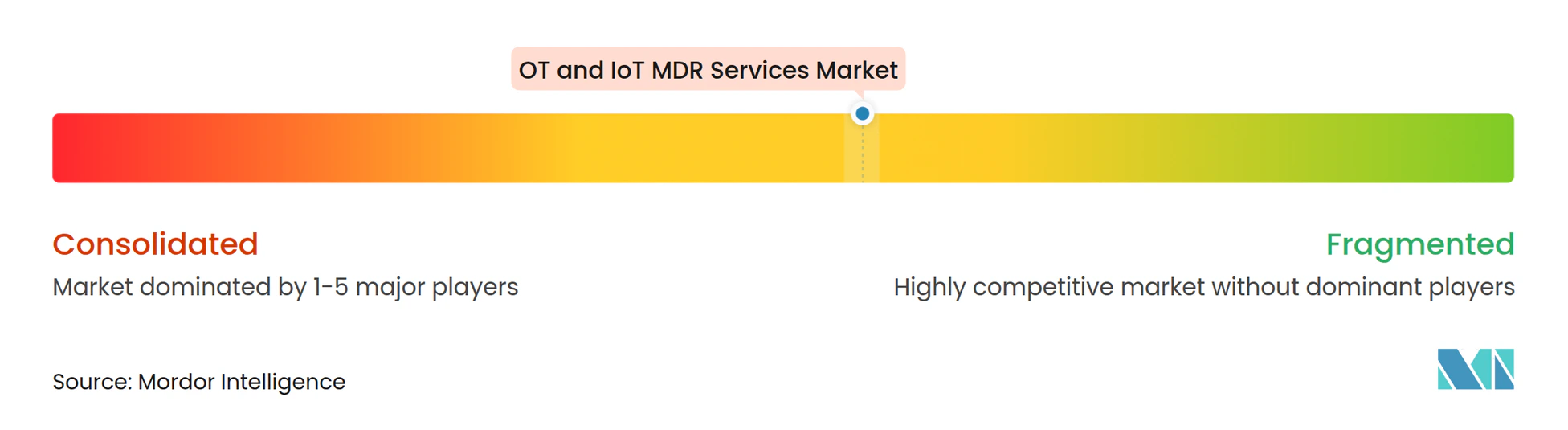
The OT and IoT MDR services market is moderately concentrated among platform leaders and fragmented across smaller specialists. Larger companies are seeking broad coverage across OT, IoT, medical devices, exposure management, and managed operations. ServiceNow completed its acquisition of Armis for USD 7.75 billion in April 2026. The transaction extended ServiceNow’s security platform into operational and physical environments. Accenture entered agreements in June 2026 to acquire a majority stake in Dragos and acquire runZero and NetRise. These transactions indicate that OT asset intelligence is becoming a strategic platform capability.
Dragos completed the acquisitions of runZero and NetRise in September 2026 after the Accenture investment closed. The combination added asset visibility, firmware supply chain security, exposure management, and threat detection to its xOT platform. Claroty raised USD 150 million in Series F funding in January 2026. These moves favor providers with the funding and technical depth to integrate multiple security functions. Compliance reporting is becoming part of the competitive proposition. Providers can differentiate by helping customers document controls related to NERC CIP-015-1, NIS2, and other sector requirements.
Competitive differentiation also depends on detection quality, brownfield deployment methods, and sector-specific threat intelligence. Providers with OT-focused intelligence libraries can build rules that are more relevant to industrial protocols and assets. AI-assisted triage is another active area of development. However, operational buyers are likely to prioritize response safety and analyst oversight before adopting autonomous containment. Opportunities remain in modular pricing for smaller operators. Additional opportunities exist in building automation, agricultural IoT, and co-managed services for regulated operators. The OT and IoT MDR services market is likely to reward vendors that combine broad asset context with practical deployment and accountable response processes.
OT and IoT MDR Services Industry Leaders
-
Dragos, Inc.
-
Claroty Ltd.
-
Nozomi Networks, Inc.
-
Armis Security Ltd.
-
Forescout Technologies, Inc.
- *Disclaimer: Major Players sorted in no particular order
OT and IoT MDR Services Market Companies Covered in this Report
- Armis Security Ltd.
- Claroty Ltd.
- Dragos, Inc.
- Nozomi Networks, Inc.
- Forescout Technologies, Inc.
- Tenable Holdings, Inc.
- TXOne Networks Inc.
- Phosphorus Cybersecurity Inc.
- Radiflow Ltd.
- Mission Secure, Inc.
- Industrial Defender, Inc.
- Xage Security, Inc.
- Verve Industrial Protection, Inc.
- Rhebo GmbH
- Sepio Systems Ltd.
- Sternum Ltd.
- Ordr, Inc.
- Finite State, Inc.
- Cynerio Israel Ltd.
- Medigate Ltd.
Recent Industry Developments in OT and IoT MDR Services Market
- September 2026: Dragos completed its acquisitions of runZero and NetRise following the close of Accenture's majority-stake investment, creating an integrated xOT platform spanning OT asset visibility, firmware supply chain security, exposure management, and threat detection. The Dragos component of the transaction carried a USD 3.25 billion enterprise valuation, making the combined Accenture-Dragos entity the most comprehensively capitalized pure-play OT cybersecurity platform to date.
- June 2026: Accenture entered agreements to acquire a majority stake in Dragos and 100% of runZero and NetRise at a combined enterprise value of USD 4.175 billion, preserving Dragos as a standalone entity while adding Accenture's proprietary OT datasets and global managed-services delivery reach, the largest capital commitment in industrial cybersecurity history.
- June 2026: Dragos acquired Phosphorus Cybersecurity, extending its platform to cover the full extended-IoT environment including IP cameras, HVAC controllers, badge readers, and other connected devices that traditional OT security programs systematically miss. Dragos estimated its total addressable market at over USD 50 billion following the acquisition.
- April 2026: ServiceNow completed its acquisition of Armis for USD 7.75 billion in cash, the company's largest-ever transaction, extending ServiceNow's security platform into the physical and operational layers of the enterprise with real-time asset intelligence across OT, IoT, medical devices, and cloud infrastructure.
Global OT and IoT MDR Services Market Report Scope
The OT and IoT Managed Detection and Response (MDR) Services Market is defined as the market for platforms and services that provide continuous monitoring, threat detection, investigation, and response capabilities for operational technology (OT) environments and Internet of Things (IoT) devices. These solutions help organizations identify and mitigate cyber threats targeting industrial control systems, supervisory control and data acquisition (SCADA) systems, connected devices, industrial networks, and other cyber-physical infrastructure.
The OT and IoT MDR Services Marke Report is Segmented by Offering (MDR-Integrated Platforms, Managed Detection and Response Services), Service Type (Fully Managed MDR Services, Co-Managed MDR Services, OT Threat Hunting Services, OT Incident Response Retainer Services, Vulnerability and Exposure Management Services), Deployment Model (Cloud-Based, On-Premises, Hybrid), Organization Size (Large Enterprises, Small and Medium-Sized Enterprises), End-User Industry (Energy and Utilities, Manufacturing, Transportation and Logistics, Government and Defense, Healthcare and Life Sciences, Other End-User Industries), and Geography (North America, South America, Europe, Asia-Pacific, Middle East, Africa) . The Market Forecasts are Provided in Terms of Value (USD).
Segmentation Overview
| MDR-Integrated Platforms |
| Managed Detection and Response Services |
| Fully Managed MDR Services |
| Co-Managed MDR Services |
| OT Threat Hunting Services |
| OT Incident Response Retainer Services |
| Vulnerability and Exposure Management Services |
| Cloud-Based |
| On-Premises |
| Hybrid |
| Large Enterprises |
| Small and Medium-Sized Enterprises |
| Energy and Utilities |
| Manufacturing |
| Transportation and Logistics |
| Government and Defense |
| Healthcare and Life Sciences |
| Other End-User Industries |
| North America | United States |
| Canada | |
| Mexico | |
| South America | Brazil |
| Argentina | |
| Chile | |
| Rest of South America | |
| Europe | Germany |
| United Kingdom | |
| France | |
| Italy | |
| Spain | |
| Russia | |
| Rest of Europe | |
| Asia-Pacific | China |
| Japan | |
| India | |
| South Korea | |
| Australia | |
| Singapore | |
| Rest of Asia-Pacific | |
| Middle East | Saudi Arabia |
| United Arab Emirates | |
| Israel | |
| Turkey | |
| Rest of Middle East | |
| Africa | South Africa |
| Nigeria | |
| Egypt | |
| Rest of Africa |
| By Offering | MDR-Integrated Platforms | |
| Managed Detection and Response Services | ||
| By Service Type | Fully Managed MDR Services | |
| Co-Managed MDR Services | ||
| OT Threat Hunting Services | ||
| OT Incident Response Retainer Services | ||
| Vulnerability and Exposure Management Services | ||
| By Deployment Model | Cloud-Based | |
| On-Premises | ||
| Hybrid | ||
| By Organization Size | Large Enterprises | |
| Small and Medium-Sized Enterprises | ||
| By End-User Industry | Energy and Utilities | |
| Manufacturing | ||
| Transportation and Logistics | ||
| Government and Defense | ||
| Healthcare and Life Sciences | ||
| Other End-User Industries | ||
| By Geography | North America | United States |
| Canada | ||
| Mexico | ||
| South America | Brazil | |
| Argentina | ||
| Chile | ||
| Rest of South America | ||
| Europe | Germany | |
| United Kingdom | ||
| France | ||
| Italy | ||
| Spain | ||
| Russia | ||
| Rest of Europe | ||
| Asia-Pacific | China | |
| Japan | ||
| India | ||
| South Korea | ||
| Australia | ||
| Singapore | ||
| Rest of Asia-Pacific | ||
| Middle East | Saudi Arabia | |
| United Arab Emirates | ||
| Israel | ||
| Turkey | ||
| Rest of Middle East | ||
| Africa | South Africa | |
| Nigeria | ||
| Egypt | ||
| Rest of Africa | ||
Key Questions Answered in the Report
What is the size of the OT and IoT MDR services market?
The OT and IoT MDR services market was valued at USD 1.14 billion in 2026 and is projected to reach USD 3.19 billion by 2032, at a 22.78% CAGR from 2027 to 2032.
What is driving demand for OT and IoT MDR services?
IT-OT convergence, continuous-monitoring obligations, unmanaged connected assets, and a shortage of OT security skills are increasing demand for specialist monitoring.
Which offering has the largest share?
Managed detection and response services held 72.43% of offering-type revenue in 2026.
Which end-user sector is expanding fastest?
Healthcare and life sciences are projected to expand at a 23.94% CAGR through 2032, supported by connected medical device exposure and legacy systems.
Which deployment model leads current revenue?
Hybrid deployment held 44.89% of revenue in 2026 because industrial environments need both local responsiveness and centralized analytics.
Which region is expanding fastest?
Asia-Pacific is projected to expand at a 23.72% CAGR through 2032, supported by industrial digitization and critical infrastructure protection requirements.