
Electronic Skin Patches Market Size and Share
Market Overview
| Study Period | 2020 - 2031 |
|---|---|
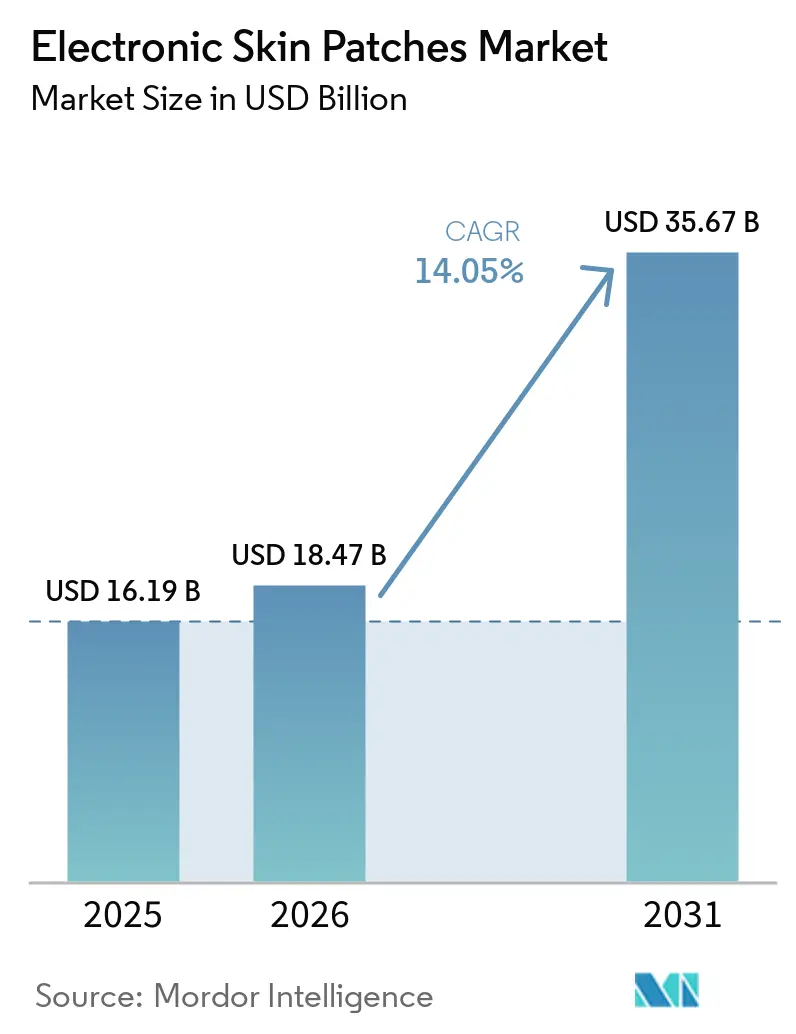
| Market Size (2026) | USD 18.47 Billion |
| Market Size (2031) | USD 35.67 Billion |
| Growth Rate (2026 - 2031) | 14.05 % |
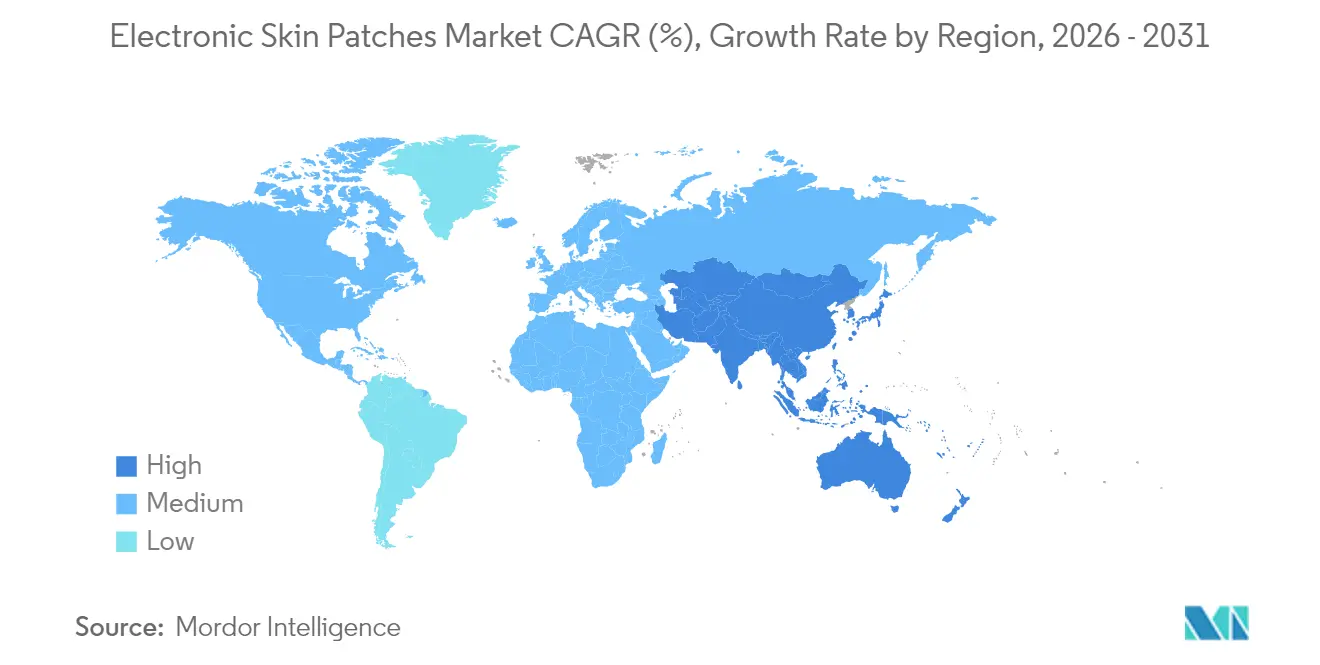
| Fastest Growing Market | Asia Pacific |
| Largest Market | North America |
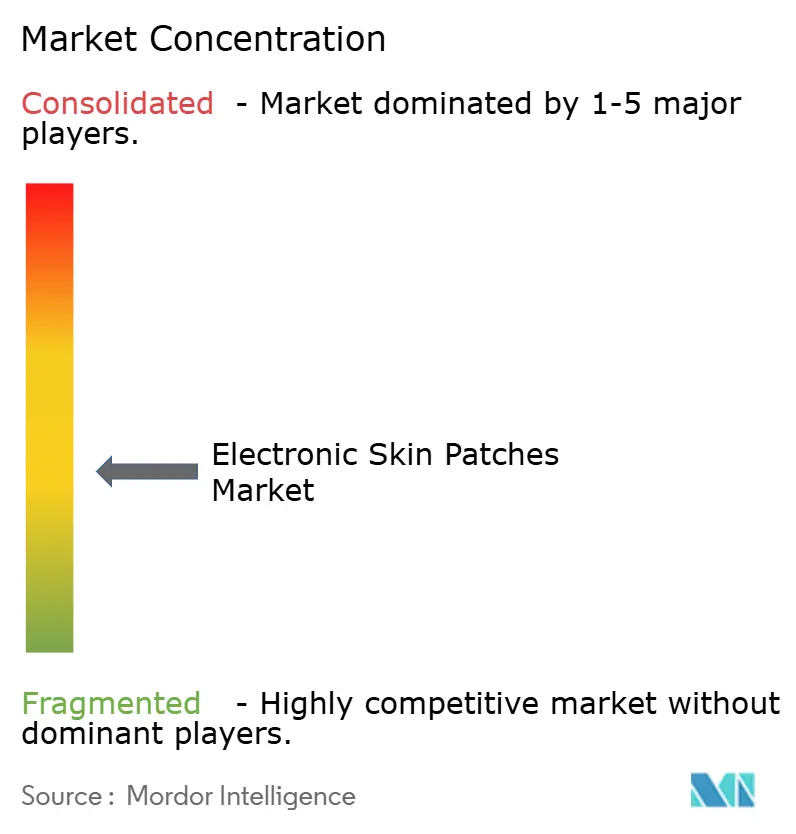
| Market Concentration | Medium |
Major Players *Disclaimer: Major Players sorted in no particular order Image © Mordor Intelligence. Reuse requires attribution under CC BY 4.0. | |
Electronic Skin Patches Market Analysis by Mordor Intelligence
Electronic Skin Patches Market size in 2026 is estimated at USD 18.47 billion, growing from 2025 value of USD 16.19 billion with 2031 projections showing USD 35.67 billion, growing at 14.05% CAGR over 2026-2031.
Sensing and Diagnostic Patches hold the largest 46% revenue share in 2024, while Energy-Harvesting Smart Patches, enabled by battery-less power architectures, post the strongest 21.8% CAGR outlook. Cardiovascular Monitoring leads all applications at 38.2% share, but Women’s Health and Fertility registers the fastest 19.51% CAGR, as at-home breast ultrasound and hormone tracking patches attract new users. Regionally, North America commands a 37.9% share, backed by the FDA clearance of over-the-counter continuous glucose monitors (CGMs) from Dexcom and Abbott in 2024. In contrast, the Asia Pacific region accelerates at a 16.5% CAGR, underpinned by large-scale electronics manufacturing and supportive innovation programs. Investment momentum remains high: VitalConnect and Biolinq each secured USD 100 million rounds in 2025 to expand high-volume manufacturing and regulatory submissions, illustrating how funding channels reward platforms that blend clinically validated sensors with consumer-grade usability.[1]Andrew Rhew, “VitalConnect Raises USD 100 Million for Remote Monitoring Expansion,” medtechdive.com
Key Report Takeaways
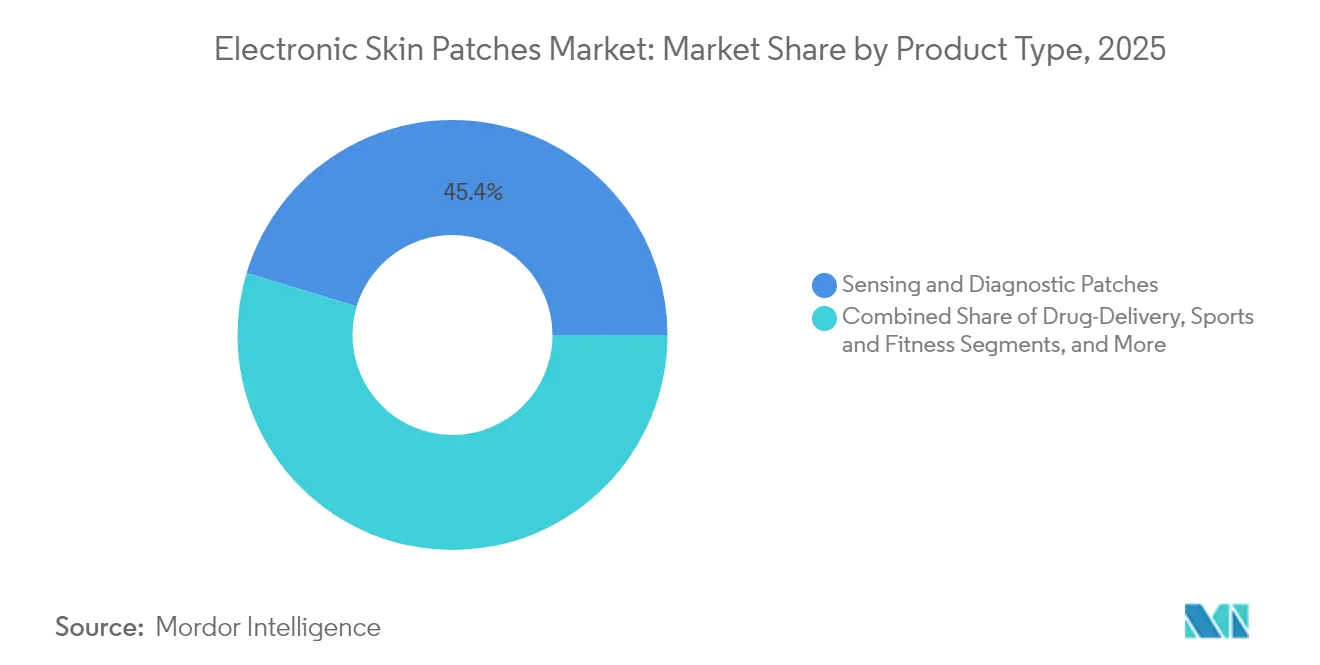
- By product type, Sensing and Diagnostic Patches led with 45.35% revenue share in 2025, while Energy-Harvesting Smart Patches are forecast to expand at 21.23% CAGR through 2031.
- By application, Cardiovascular Monitoring held 37.55% of the electronic skin patch market share in 2025; Women’s Health and Fertility is projected to expand at a 19.04% CAGR.
- By technology, Electrochemical Biosensors accounted for 34.82% share of the electronic skin patch market size in 2025, whereas Energy-Harvesting and Battery-less platforms are advancing at a 23.05% CAGR.
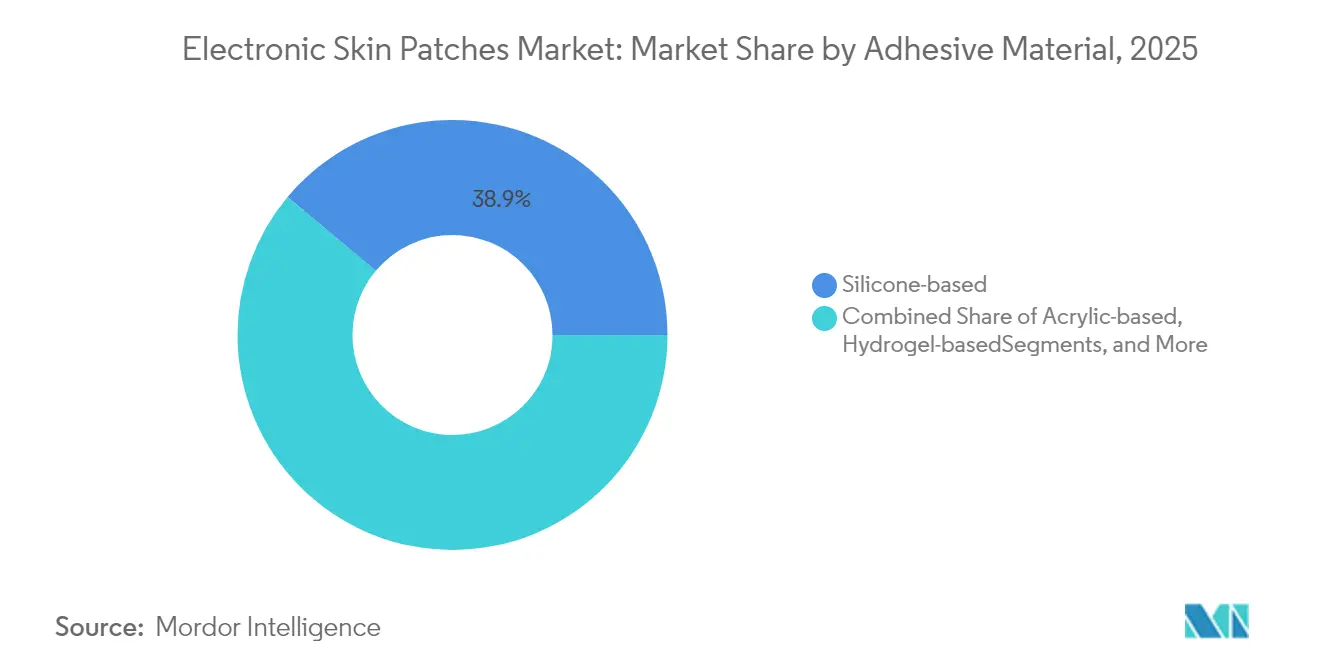
- By adhesive material, Silicone-based systems captured 38.92% share in 2025, while Hydrogel-based formulations grow quickest at 17.02% CAGR.
- By end-user, Hospitals and Clinics retained a 41.86% share in 2025; Home Healthcare is set to rise at 17.92% CAGR as reimbursement expands for remote monitoring.
- By geography, North America led with 37.55% market share in 2025; Asia Pacific records the fastest 16.32% CAGR through 2031.
Note: Market size and forecast figures in this report are generated using Mordor Intelligence’s proprietary estimation framework, updated with the latest available data and insights as of 2026.
Global Electronic Skin Patches Market Trends and Insights
Drivers Impact Analysis*
| Driver | (~) % Impact on CAGR Forecast | Geographic Relevance | Impact Timeline |
|---|---|---|---|
| Continuous glucose-monitoring patch adoption surge | +3.2% | Global, North America leading | Short term (≤ 2 years) |
| Home-based cardiac telemetry reimbursement | +2.8% | North America and EU, expanding to APAC | Medium term (2-4 years) |
| Ageing population and chronic-care decentralisation | +2.1% | Global, concentrated in developed markets | Long term (≥ 4 years) |
| Flexible biofuel-cell power sources in mass production | +1.9% | Global, Asia Pacific manufacturing hubs | Medium term (2-4 years) |
| Hospital-at-home CPT codes for connected patches | +1.5% | North America, pilot programs in EU | Short term (≤ 2 years) |
| API-level integration with digital-therapeutics | +1.3% | Global, led by North America and EU | Medium term (2-4 years) |
| Source: Mordor Intelligence | |||
Continuous Glucose-Monitoring (CGM) Patch Adoption Surge
FDA clearance of Dexcom Stelo and Abbott Lingo in 2024 removed prescription barriers and opened the CGM category to 25 million U.S. type 2 diabetics not on insulin, while also legitimizing consumer-grade biosensing for preventive metabolic health.[2]U.S. Food and Drug Administration, “FDA Allows Marketing of First Over-the-Counter Continuous Glucose Monitors,” fda.gov Disposable, all-in-one designs such as Dexcom’s Simplera lower training costs for payers and providers, fostering rapid uptake in pharmacy channels. Dexcom projects USD 40 million first-year revenue from Stelo, signaling strong elasticity in the newly addressable segment. Pharmaceutical firms are now embedding CGM data streams into weight-loss and metabolic-syndrome programs, expanding device demand beyond the core diabetes cohort. Growth is global, yet North America captures early volumes due to favorable reimbursement. Vendors are racing to integrate glucose telemetry into closed-loop therapy ecosystems, accelerating adoption of the sensor patch as a replacement for finger-stick meters in home settings.
Home-Based Cardiac Telemetry Reimbursement Expansion
Medicare, major U.S. commercial insurers, and several EU payers now reimburse 14-day and 30-day patch ECG services, citing up to 30% lower readmission rates compared with traditional telemetry. VitalConnect earmarked its 2025 USD 100 million raise to triple VitalPatch output for Hospital-at-Home contracts. Complementary platforms such as the LEAF Patient Monitoring System, covered under fall-prevention DRGs, illustrate how multiparameter patches can bundle cardiology and safety use-cases. Reimbursement clarity attracts health-system procurement budgets, which favor patches over bulky holter monitors for elderly patients. Expansion is strongest in the United States today, yet Germany, France, and Japan have introduced pilot codes that should unlock medium-term European and Asian volume.
Ageing Population and Chronic-Care Decentralisation
United Nations forecasts show the global 65+ cohort rising to 1.03 billion by 2030, straining facility-based care. Electronic skin patch market demand benefits as remote multiparameter sensing permits continuous, low-touch management of hypertension, heart failure, and COPD at home. Continuous remote monitoring is one application within the broader electronic skin market. Self-healing “e-skin” substrates that recover 80% mechanical integrity within 10 seconds now mitigate durability concerns for frail users. AI engines running on edge processors convert dense raw signals into actionable alerts, allowing clinicians to triage before symptom escalation. Governments that bundle remote monitoring into capitated payment models, such as the U.K. Integrated Care Systems are demonstrating lower total cost of care, reinforcing long-run growth tailwinds.
Flexible Biofuel-Cell Power Sources Hit Mass Production
Asia Pacific foundries began high-volume roll-to-roll printing of sweat-powered nanogenerators that charge small IoT devices in 6 minutes from 0.6 mL perspiration.[3]A. Nguyen, “Sweat-Powered Nanogenerators Ready for Mass Production,” cen.acs.org University of Waterloo’s thermoelectric yarns convert body heat plus ambient light into continuous 300-µW output, adequate for BLE streaming. Piezoelectric harvesters now deliver 280-fold greater conversion efficiency than early-generation films, allowing patches to run indefinitely on human motion.[4]S. Choi et al., “280-Fold-Efficiency Piezoelectric Energy Harvester for Wearables,” dgist.ac.kr Removing the battery sub-assembly cuts BOM cost by up to 25%, eliminates environmentally regulated lithium waste, and improves device thinness, which boosts user comfort and therefore adherence.
Restraints Impact Analysis*
| Restraint | (~) % Impact on CAGR Forecast | Geographic Relevance | Impact Timeline |
|---|---|---|---|
| Data-security and privacy compliance costs | –2.1% | Global, highest in EU and North America | Short term (≤ 2 years) |
| Adhesion / skin-irritation failure rates | –1.8% | Global, varies with climate and demographics | Medium term (2-4 years) |
| Battery-disposal and e-waste regulation pressure | –1.3% | EU leading, global adoption rising | Long term (≥ 4 years) |
| Patch reimbursement gaps in emerging economies | –0.9% | APAC, MEA, Latin America | Long term (≥ 4 years) |
| Source: Mordor Intelligence | |||
Data-Security and Privacy Compliance Costs
Patches that blur medical-device and consumer-wellness categories face fragmented regulation. HIPAA exempts many direct-to-consumer wearables, while GDPR imposes strict consent, encryption, and data-minimization obligations. Building dual-stack architectures capable of satisfying both frameworks can add 15-20% to R&D budgets for small manufacturers. Only 20 U.S. states have explicit wearable data laws, creating legal uncertainty that drives conservative security investments. Larger incumbents use existing SOC-2 and ISO-27001 programs to spread compliance fixed costs, widening the competitiveness gap.
Adhesion / Skin-Irritation Failure Rates
Silicone and acrylic adhesives provoke erythema in up to 25% of users after 72-hour wear. Hydrogel formulations lower irritation but cost 40-60% more and complicate automated dispensing lines. Manufacturers must validate multiple glue chemistries to serve varying humidity and skin-type profiles, inflating inventory SKUs. Self-healing hydrogels restore adhesion under shear stress, yet require multi-site clinical trials to win clinician trust, delaying broad roll-outs. Failure to manage dermatologic tolerability suppresses reorder rates and limits multi-week monitoring protocols.
*Our forecasts treat driver/restraint impacts as directional, not additive. The impact forecasts reflect baseline growth, mix effects, and variable interactions.
Segment Analysis
By Product Type: Energy-Harvesting Patches Drive Innovation
Energy-Harvesting Smart Patches are growing at a 21.23% CAGR, overtaking traditional, battery-powered sensing platforms in demand velocity. The electronic skin patch market size for this sub-category is projected to more than triple between 2026 and 2031 as power-autonomous designs remove both environmental waste and user inconvenience linked to weekly sensor swaps. Sensing and Diagnostic Patches, while mature, still control 45.35% 2025 revenue and remain essential in regulated care pathways where clinicians prioritize accuracy and established reimbursement. Drug-Delivery Patches keep steady adoption in pain and hormone therapy, but lack the growth inflection energy-harvesting variants enjoy. Cosmetic and Wellness Patches, driven by consumer focus on anti-aging and hydration analytics, form a modest but rising revenue line that attracts beauty majors eager for data-rich personalization.Recent academic-industry collaboration produced sweat-powered micro-supercapacitors that output 20 mA cm⁻² after a six-minute charge, validating real-world readiness beyond lab prototypes. University of Waterloo researchers knit thermoelectric yarns directly into biocompatible substrates, integrating power and sensor arrays without added thickness. Such advances align with OEM roadmaps to re-engineer housings around thinner, more flexible stacks, allowing devices to conform to high-motion anatomical sites like elbows and knees. As IP matures, licensing deals between chipmakers, adhesive formulators, and consumer-health brands should accelerate, further boosting electronic skin patch market penetration in outpatient protocols and lifestyle segments alike.



By Application: Women’s Health Emerges as Growth Leader
Cardiovascular Monitoring held a commanding 37.55% electronic skin patch market share in 2025, upheld by payer focus on reducing readmissions through rhythm surveillance. Yet Women’s Health and Fertility applications, projected at 19.04% CAGR, now represent the most dynamic vector as long-neglected clinical needs receive venture backing. MIT’s portable breast ultrasound patch exemplifies how self-contained imaging can transition from hospitals to living rooms. Fertility-tracking companies leverage hormone-sensing hydrogels for continuous luteinizing hormone readouts, empowering users with cycle predictions more precise than basal-temperature charts.Pain and Musculoskeletal management harnesses electrical-stimulation patches that gate nerve signals, offering opioid-free analgesia. Diabetes Management remains sizeable due to CGM volume, yet its growth moderates as penetration approaches saturation in insulin-dependent cohorts. Neuro-mental health remains nascent but promising: electrodermal-activity patches, coupled with machine-learning classifiers, screen for anxiety episodes, enabling timely behavioral cues. The diversification across applications reduces revenue cyclicality and underscores the electronic skin patch industry’s ability to pivot toward underserved populations.
By Technology: Battery-less Solutions Lead Innovation
Electrochemical biosensors, accounting for 34.82% 2025 revenue, maintain market shepherd status by converting analyte-specific reactions into quantifiable signals with proven clinical accuracy. Nevertheless, Energy-Harvesting and Battery-less architectures outpace at 23.05% CAGR, spotlighting the sector’s shift toward maintenance-free wearables. MEMS-enabled microfluidics now route sub-microliter sweat samples through multiplexed assay chambers, while RF-ID/NFC links power patch read-outs via smartphone taps, removing onboard batteries entirely.Piezoelectric harvesters anchored on PZT micro-domes achieve 280× efficiency improvements over 2018 benchmarks, allowing cardiac-motion energy to sustain Bluetooth Low Energy telemetries. Optical/PPG sensor stacks grow sophisticating, embedding multi-wavelength emitters that derive SpO₂, blood pressure proxies, and hydration indices without added photodiode count. Edge AI compression reduces data packets by 90%, sustaining weekly transmission on micro-amp budgets. Taken together, these advances enable the electronic skin patch market to address long-wear military and industrial scenarios where battery logistics are prohibitive.
By Adhesive Material: Hydrogels Transform Biocompatibility
Silicone adhesives remain ubiquitous, capturing 38.92% 2025 share, favored for process familiarity and broad-spectrum skin compatibility. Yet the segment’s growth moderates as hydrogels clock a brisk 17.02% CAGR. The electronic skin patch market size for hydrogel-based products rises in tandem with user demand for multi-week comfort. Hydrogel matrices loaded with ionic liquids now double as conductive pathways, merging adhesion and sensing functions, a design convergence that trims bill-of-materials. Researchers at the Terasaki Institute engineered self-healing hydrogel networks that restore 80% tensile strength within seconds, curbing delamination after sudden strain. Conductive polymer grafts maintain impedance stability even after 50 wash cycles, opening sports-garment integration. Hybrid silicone-hydrogel stacks meet sweat-rich sport users while preserving low-cost mass-production lines. Adhesive material diversification ultimately raises total addressable segments and lowers dermatologic discontinuation rates, thereby lifting overall electronic skin patch market penetration,
By End-User: Home Healthcare Drives Decentralization
Hospitals and Clinics own 41.86% revenue share in 2025, leveraging bundled procurement and established payor relationships to deploy high-accuracy patches in acute and outpatient settings. However, Home Healthcare surges at 17.92% CAGR, supported by CPT codes that reimburse continuous remote physiologic monitoring. The electronic skin patch industry now sees consumer retail chains and telehealth providers procuring devices in bulk, reflecting care migration out of brick-and-mortar sites.Sports and Fitness centers integrate lactate and hydration patches into athlete performance dashboards, while Military and Emergency Services deploy multi-parameter platforms to monitor soldier core temperature and stress markers. Research Institutions pilot next-generation sensing chemistries, such as cortisol assays, accelerating path-to-market for mental-health applications. Cosmetic and Dermatology clinics add micro-needling drug-delivery patches to anti-aging portfolios, demonstrating cross-industry uptake that cushions demand volatility tied to any single healthcare vertical.
Geography Analysis
North America commands 37.55% electronic skin patch market share in 2025, benefited by FDA pathways that brought OTC CGMs to pharmacy shelves, thus expanding unit volumes beyond endocrinology clinics. Hospital-at-Home reimbursement codes convert remote monitoring into predictable revenue streams for providers, sustaining purchase orders even after pandemic peaks. Canada experiments with provincial remote-cardiac programs, while Mexican maquiladoras attract OEM assembly due to tariff-free USMCA logistics, shaving 8-10% off landed costs.Asia Pacific delivers the fastest 16.32% CAGR, powered by China’s Healthy China 2030 blueprint that funds digital-health pilots and by Japan’s Silver Economy demand spike. South Korea’s ODM fabs tout vertical integration—from flex-PCB etching to sterile packaging—slashing lead times for Western brands entering the region. India’s National Digital Health Mission reimburses Bluetooth LE-enabled patches in pilot diabetes programs, albeit with price caps that favor energy-harvesting models over battery-heavy imports.Europe grows steadily despite GDPR friction: stringent data controls catalyze investments in on-patch encryption ASICs, yielding differentiated products able to command premium ASPs. The bloc’s Battery Regulation, effective 2027, pushes manufacturers toward biofuel-cell power, aligning with eco-design incentives. Germany leverages public-private clusters in Baden-Württemberg for polymer research, while the U.K. NHS integrates patches into virtual-ward targets aimed at freeing 5,000 acute beds by 2026. Nordic e-prescription networks automatically link CGM data, enabling algorithmic insulin dosing in primary care.

Regulatory Landscape
Electronic skin patches sit across regulated medical devices and consumer wearables, so regulatory pathways depend on intended use, claims, and how software supports clinical decision-making. In the United States, the FDA continues to formalize oversight for patch-based therapeutics and sensor-enabled devices, and in June 2026 it issued a final order classifying a skin patch for treatment of hyperhidrosis as a Class II device with special controls, reinforcing the shift toward defined control sets for skin-contact patches beyond purely diagnostic use cases.
In Europe, the EU Medical Device Regulation (MDR 2017/745) is the primary framework for medical-claim patches, and classification and conformity assessment requirements extend to software components and associated apps, as reflected in MDCG guidance on software. Cybersecurity requirements are also becoming more explicit for connected wearables: ETSI released a mature draft in April 2026 (EN 304-634) outlining cybersecurity requirements for personal wearables in the context of the Cyber Resilience Act (Regulation (EU) 2024/2847), which raises compliance workload for patch OEMs and their cloud or app ecosystems, even when products span medical and wellness positioning.
Value Chain Analysis
The value chain covers (1) materials and components (biocompatible substrates, conductive inks or electrodes, hydrogel or silicone adhesives, sensors, BLE/NFC/RF modules and ICs), (2) design and integration (sensor stacks, firmware, analytics, and smartphone or cloud interfaces), (3) manufacturing (printed or flexible electronics, flex PCB, lamination, die attach, encapsulation, and medical-grade packaging), (4) regulatory and quality (ISO 13485-aligned QMS, biocompatibility and validation testing), and (5) distribution and service (hospital procurement, payer-supported remote monitoring programs, pharmacy or consumer channels, and digital-therapeutics or EHR integrations). CDMOs and specialist converters matter disproportionately for scale-up because they can combine material formulation, roll-to-roll or flat-bed processing, multilayer lamination, and sterile packaging in one workflow; examples of integrated smart-patch manufacturing offerings include Linxens (Healthcare, stick-to-skin solutions) and Lohmann (smart patch solutions).
Key constraints concentrate in medical-grade flexible electronics capacity and specialty inputs. AtlasPCB highlighted in 2026 that demand for medical-grade flexible PCBs is increasing mass-production requirements, while lead times for specialized polyimide materials have stretched to roughly 12 to 16 weeks, creating planning risk for OEM launches and clinical trial builds. Upstream innovation also affects supplier qualification cycles: 2026 publications described battery-free, wireless multisensory patches using RF energy harvesting and more durable conductive elastomer stacks, which can shift BOM composition and require new electrode, encapsulant, and test partners before designs reach regulated production.
Competitive Landscape
The electronic skin patch market displays moderate fragmentation: no single vendor exceeds a 15% revenue share, yet the top five hold roughly 48%, creating room for both incumbents and niche entrants. Legacy device majors—Medtronic, Abbott, Dexcom—exploit regulatory expertise, multi-channel distribution, and post-market surveillance infrastructure to sustain hospital contracts. Conversely, specialists such as VitalConnect and Biolinq orient around single-use, high-resolution patches and rely on venture funding to turn rapid design iterations into FDA clearances.
Competitive differentiation shifts from raw sensing accuracy to holistic platform play. Leaders bundle multi-modal sensors, edge analytics, and FHIR-compatible APIs, making their patches sticky inside provider workflows. Intellectual-property defenses have moved upstream into advanced materials: Shin-Etsu Chemical patented a silver-nanowire bio-electrode that maintains conductivity under 50% strain while reducing dermatitis incidents by 60%. M&A activity is likely as full-stack vendors seek novel adhesives, power solutions, or AI algorithms unavailable in-house.
Consumer-wellness entrants, often born in Silicon Valley, compete on design and subscription-based insights rather than regulated endpoints. While margins are thinner, volume potential is higher, especially as pharmacies merchandise patches adjacent to fitness trackers. Industrial-safety use-cases form a nascent battleground where established medical OEMs lack domain contacts, allowing newcomers with gas-sensor or heat-stress expertise to win early contracts. Over the forecast horizon, strategic alliances between chipmakers, polymer suppliers, and healthcare platforms will determine who captures incremental market share.
Electronic Skin Patches Industry Leaders
Vital Connect Inc.
Leaf Healthcare Inc.
Quad Industries
L'Oréal SA
Sensium Healthcare Ltd
- *Disclaimer: Major Players sorted in no particular order

Market Opportunities and Future Outlook
A near-term opportunity exists for products that can navigate clear regulatory pathways while moving beyond single-parameter monitoring. FDA clearance activity for therapeutic patches and continued mainstreaming of OTC wearables broaden commercialization options. For example, Transtimulation Research Inc. received FDA 510(k) clearance in April 2025 for its Patch-TEA (Model TRI-21) transcutaneous electrical nerve stimulation device, illustrating how patch-form-factor neuromodulation can progress through established Class II routes. In parallel, the shift from prescription-only to more accessible consumer channels in adjacent patch categories, including CGM expansion referenced in the report context, increases pressure on vendors to build compliant, scalable app-device systems that can support higher-volume distribution.
White space is also opening around battery-less and on-body compute architectures that reduce dependence on continuous cloud connectivity and lower data-transfer burden, directly addressing the privacy and operating-cost restraints highlighted in the market context. University research disclosed in May 2026 described a stretchable, skin-like AI computing patch capable of processing health data on the body, reinforcing edge analytics as a differentiator for continuous monitoring use cases. Another opportunity centers on multimodal biochemical plus biophysical sensing on a single patch, supported by 2026 research demonstrations combining ECG with sweat glucose measurement, which aligns with the market shift toward platforms that bundle multiple parameters for home healthcare and hospital workflows rather than single-signal devices.
Recent Industry Developments
- June 2026: Smith+Nephew launched its next-generation LEAF patient monitoring system in the United States, using wearable sensors and a cloud-hosted platform to monitor patient mobility and help prevent hospital-acquired pressure injuries. The refresh strengthens LEAF Healthcare's position in inpatient monitoring programs, where protocol adherence and EMR-friendly workflows influence system-wide purchasing decisions.
- February 2025: VitalConnect secured USD 100 million in combined equity and debt financing, led by Ally Bridge Group, to accelerate commercialization and scaling of its VitalPatch ambulatory cardiac monitoring biosensor. The financing supports higher-volume manufacturing and deeper penetration of Hospital-at-Home and remote cardiac telemetry deployments that favor disposable, multi-parameter patch platforms.
- November 2024: Henkel, Covestro, and Quad Industries announced a collaboration to advance medical wearables based on printed electronics technology. The partnership links materials science (adhesives and polymers) with printed-electronics manufacturing know-how, targeting improved scalability and skin-wear performance for next-generation patch architectures.


Research Methodology Framework and Report Scope
Market Definition and Coverage
For this study, the electronic skin patch market covers thin, flexible, skin-adhered electronic patches that sense, record, and sometimes transmit health or motion signals for monitoring, diagnostics, and selected therapeutic support. Market value reflects revenues generated from these patch systems sold into clinical and consumer use cases.
Scope exclusions: We exclude conventional non-electronic adhesive bandages and simple drug-only transdermal patches that do not contain sensing or electronic functions.
Segmentation Overview
- By Product Type
- Sensing and Diagnostic Patches
- Drug-Delivery Patches
- Electrical-Stimulation Patches
- Cosmetic and Wellness Patches
- Energy-Harvesting Smart Patches
- By Application
- Cardiovascular Monitoring
- Diabetes Management
- Pain / Musculoskeletal
- Infectious-Disease and Fever
- Women's Health and Fertility
- Neuro and Mental Health
- Sports and Fitness
- Drug-Delivery
- By Technology
- Electrochemical Biosensors
- Optical / PPG Sensors
- MEMS and Microfluidics
- RFID / NFC Smart Patches
- Energy-Harvesting and Battery-less
- By Adhesive Material
- Silicone-based
- Acrylic-based
- Hydrogel-based
- Others (PU, Hybrid)
- By End-User
- Hospitals and Clinics
- Home Healthcare
- Sports and Fitness Centres
- Military and Emergency Services
- Cosmetic and Dermatology Clinics
- Research Institutions
- By Geography
- North America
- United States
- Canada
- Mexico
- South America
- Brazil
- Argentina
- Rest of South America
- Europe
- Germany
- United Kingdom
- France
- Italy
- Spain
- Russia
- Rest of Europe
- Asia Pacific
- China
- India
- Japan
- South Korea
- Rest of Asia Pacific
- Middle East and Africa
- Middle East
- Saudi Arabia
- UAE
- Turkey
- Rest of Middle East
- Africa
- South Africa
- Nigeria
- Rest of Africa
- Middle East
- North America
Data Sources, Market Sizing, and Validation
Desk Research
Desk work starts by locking the definition and the value chain point being counted, then gathering anchors that keep assumptions realistic. Public sources such as US FDA device databases and guidance notes, US CDC chronic disease statistics, World Health Organization burden indicators, and World Bank population and health spend series are used to shape the demand pool context.
We also review evidence trails on product readiness and usage patterns, including clinical trial registries, peer-reviewed journals for wearable biosensing, and patent databases for flexible electronics and sensor designs. Company filings, investor presentations, reputable press, and selective paid subscriptions for company financials and news help cross-check revenue exposure and regional focus. The desk sources listed are illustrative only, and we reviewed additional public references for data collection, validation, and research clarification.
Primary Interviews and Surveys
Primary discussions were completed with a mix of device makers, component specialists, clinical stakeholders, and distribution-side participants to test which use cases are scaling and how pricing is moving. Since this is a global market, inputs were checked across APAC, EMEA, and the Americas, and we re-contacted sources when desk signals and field feedback did not align on volumes, reimbursement influence, or average selling price ranges.
Distribution of primary research fieldwork respondents
| Company type | Respondent position | Region |
|---|---|---|
| Top tier: 36% | CXOs: 14% | APAC: 45% |
| Mid tier: 46% | Functional/Unit leaders: 29% | EMEA: 30% |
| Smaller Players: 18% | Managers: 57% | Americas: 25% |
Market-Sizing & Forecasting
Sizing is built using a top-down approach where chronic disease prevalence, remote monitoring penetration, and care-setting mix are used to reconstruct the demand pool that can realistically adopt electronic skin patches over time. After that pool is set, adoption and usage assumptions are applied so it is clear how many users convert to patch usage and how often patches are replaced.
To keep totals grounded, we corroborate results with selective bottom-up checks, such as sampled price ranges by patch category, volume proxies from channel checks, and supplier roll-ups where public revenue disclosures are available. Key inputs for this market include average selling prices by monitoring patch category, replacement frequency or wear duration, remote patient monitoring enrollment trends, sensor bill-of-material direction (which influences pricing), and the regulatory clearance pace for new indications. Forecasts are based on scenario analysis, where adoption and pricing paths are tested with expert consensus, then smoothed so the curve matches realistic rollout constraints. When bottom-up signals are thin for smaller countries, gaps are handled through ratio-based scaling from comparable markets using health spend, age mix, and device adoption indicators.
Data Validation & Update Cycle
Validation is performed by comparing model outputs with independent signals, then checking whether implied volumes and pricing look reasonable by region and care setting. Outliers are flagged, reviewed by another analyst, and corrected only after the driver assumption is traced to a source or to field feedback.
A final review step is completed before sign-off, where currency handling, year alignment, and growth-step logic are checked for variance. Reports refresh annually, and interim updates are triggered when material events occur, such as major regulatory changes, pricing shifts, or step-changes in remote monitoring programs. Before delivery, we conduct a fresh pass so the latest public indicators and interview learnings are reflected in the numbers.
Mordor Intelligence's Electronic Skin Patch Market Size Compared With Other Published Estimates
Published market numbers for electronic skin patches often do not align because the definition of a patch, the value chain point being counted, and the timing of currency conversions can differ. Gaps also appear when one estimate uses shipment-style logic while another leans more on demand indicators and adoption rates.
The main gap comes from whether downstream channel markups and bundled remote monitoring services are included in the total, and Mordor Intelligence keeps the scope focused on patch revenues by validating adoption, replacement frequency, and realistic price bands before final totals are set.
Benchmark comparison
| Source | Market Size | Gaps in Research Methodology |
|---|---|---|
| Mordor Intelligence | USD 18.47 B (2026) | |
| Global Consultancy A | USD 19.38 B (2026) | Uses a broader end-user spending view that can fold in program-related costs alongside patches, which can lift the 2026 value versus a patch-revenue-only total. |
| Industry Publisher B | USD 14.48 B (2025) | Reports a different base year and applies a factory-gate framing in places, which can compress the comparable size when pricing and adoption are moving quickly. |
Overall, the spread mainly reflects what is included in the spend line, plus differences in base year choice and how price progression is handled. Our sizing stays repeatable by tying the total to adoption signals, replacement behavior, and a price range that can be reviewed step by step.


Key Questions Answered in the Report
What is the current size of the electronic skin patch market?
The market stands at USD 18.47 billion in 2026 and is forecast to reach USD 35.67 billion by 2031 at a 14.05% CAGR.
Which product segment grows fastest through 2031?
Energy-Harvesting Smart Patches post the highest 21.23% CAGR as battery-less power technology reaches mass production.
Why is North America the largest regional market?
FDA clearance of over-the-counter CGMs and supportive reimbursement for Hospital-at-Home programs give North America 37.55% 2025 share and strong forward momentum.
What factors restrain wider adoption of electronic skin patches?
Data-security compliance costs and skin-irritation issues tied to adhesive materials collectively trim the forecast CAGR by nearly 4 percentage points.
How are electronic skin patches powered without batteries?
Sweat-based biofuel cells, thermoelectric yarns, and advanced piezoelectric harvesters convert body energy into electricity, enabling multi-year operation without battery replacement.
Which application shows the most rapid growth?
Women’s Health & Fertility leads with 19.04% CAGR, propelled by at-home breast imaging and hormone-tracking innovations.
Page last updated on:


 Your data is secure and never sold or shared.


