
Blueberry Ingredient Market Size and Share
Market Overview
| Study Period | 2021 - 2031 |
|---|---|
| Market Size (2026) | USD 2.01 Billion |
| Market Size (2031) | USD 2.69 Billion |
| Growth Rate (2026 - 2031) | 5.95 % |
| Fastest Growing Market | Asia Pacific |
| Largest Market | North America |
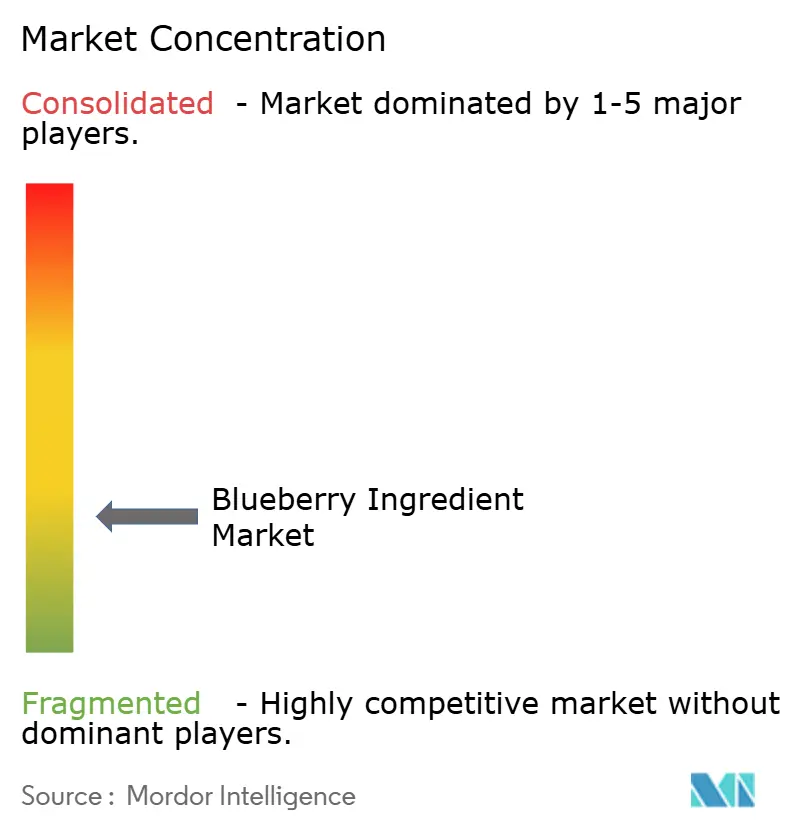
| Market Concentration | Low |
Major Players
*Disclaimer: Major Players sorted in no particular order Image © Mordor Intelligence. Reuse requires attribution under CC BY 4.0. |
|
Blueberry Ingredient Market Analysis by Mordor Intelligence
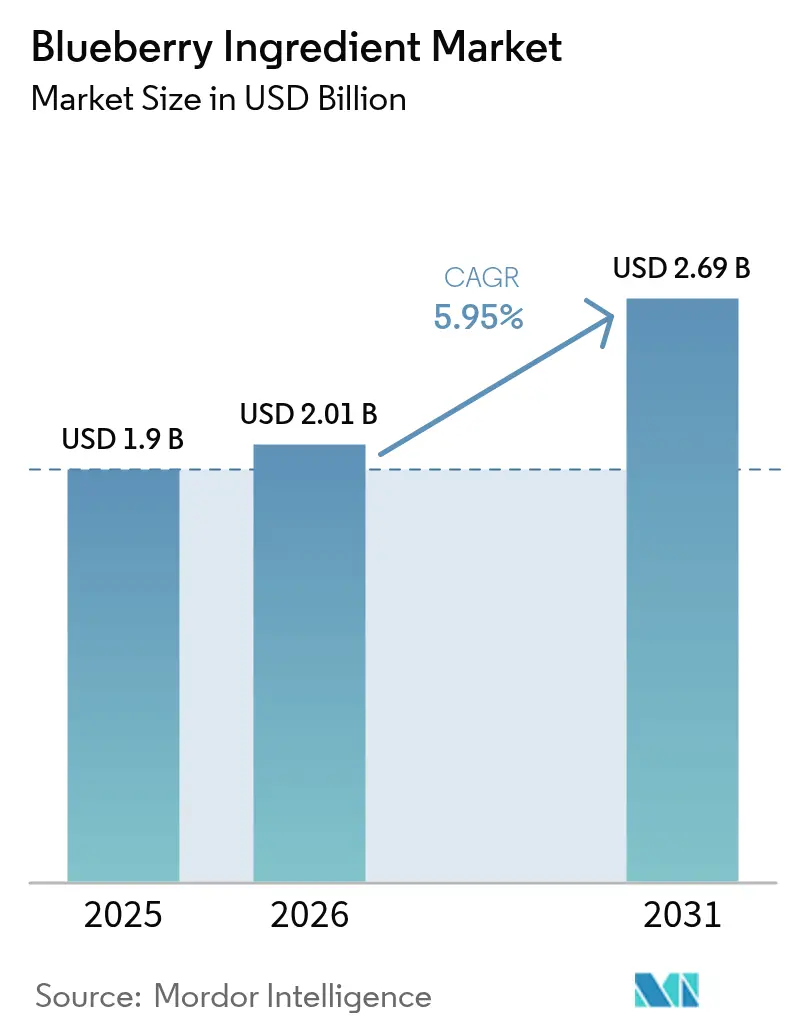
The Blueberry Ingredients market size was valued at USD 1.90 billion in 2025 and estimated to grow from USD 2.01 billion in 2026 to reach USD 2.69 billion by 2031, at a CAGR of 5.95% during the forecast period (2026-2031). Strong demand for standardized anthocyanin extracts, clean-label formulations, and functional products is steering the Blueberry Ingredients Market toward higher-margin formats such as powders and concentrates. Processors with spray-drying and encapsulation assets are benefiting from the shift, while frozen forms face slower growth as retail bakery channels mature. Regional supply imbalances continue to shape pricing: Peru’s export surge is compressing United States growers’ margins even as Asian demand accelerates. Competitive intensity remains low, yet the emergence of vertically integrated suppliers and investments in cold-chain infrastructure is starting to raise entry barriers.
Key Report Takeaways
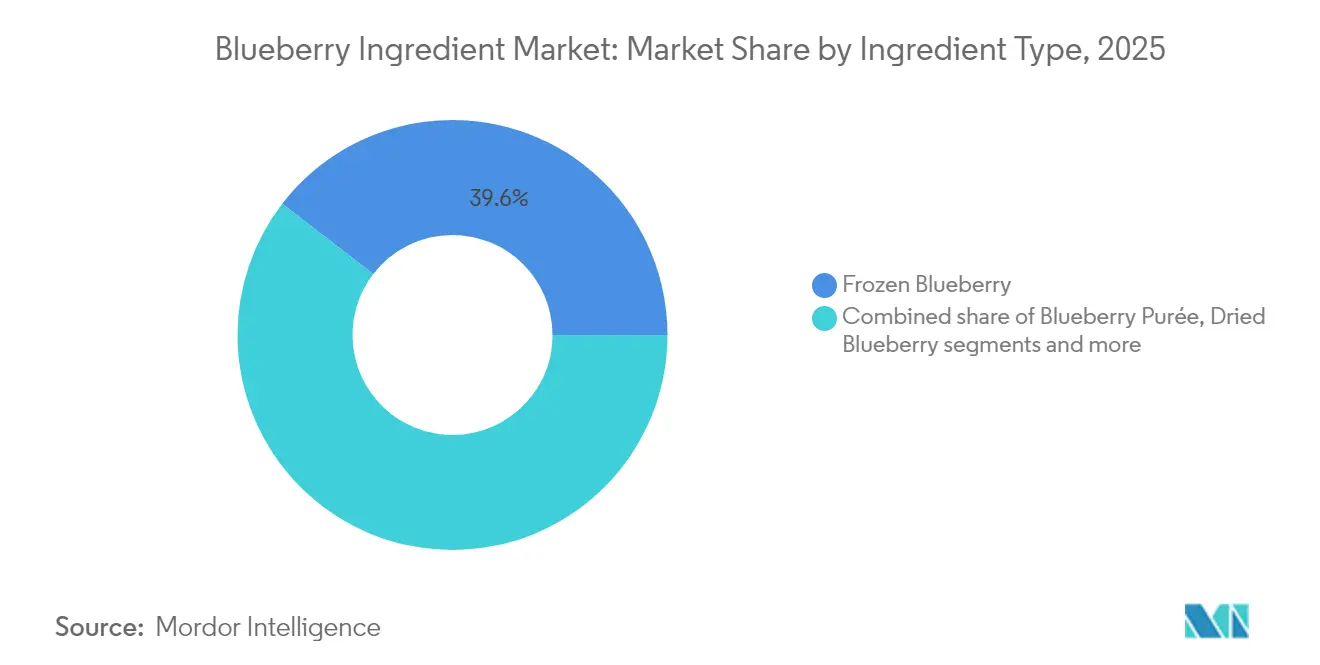
- By ingredient type, frozen blueberries led with 39.55% of the Blueberry Ingredients market share in 2025, whereas extracts and powders are advancing at a 6.82% CAGR through 2031.
- By application, food and beverage accounted for 58.10% of the Blueberry Ingredients Market in 2025; nutraceutical and dietary supplements are set to grow at 7.05% through 2031.
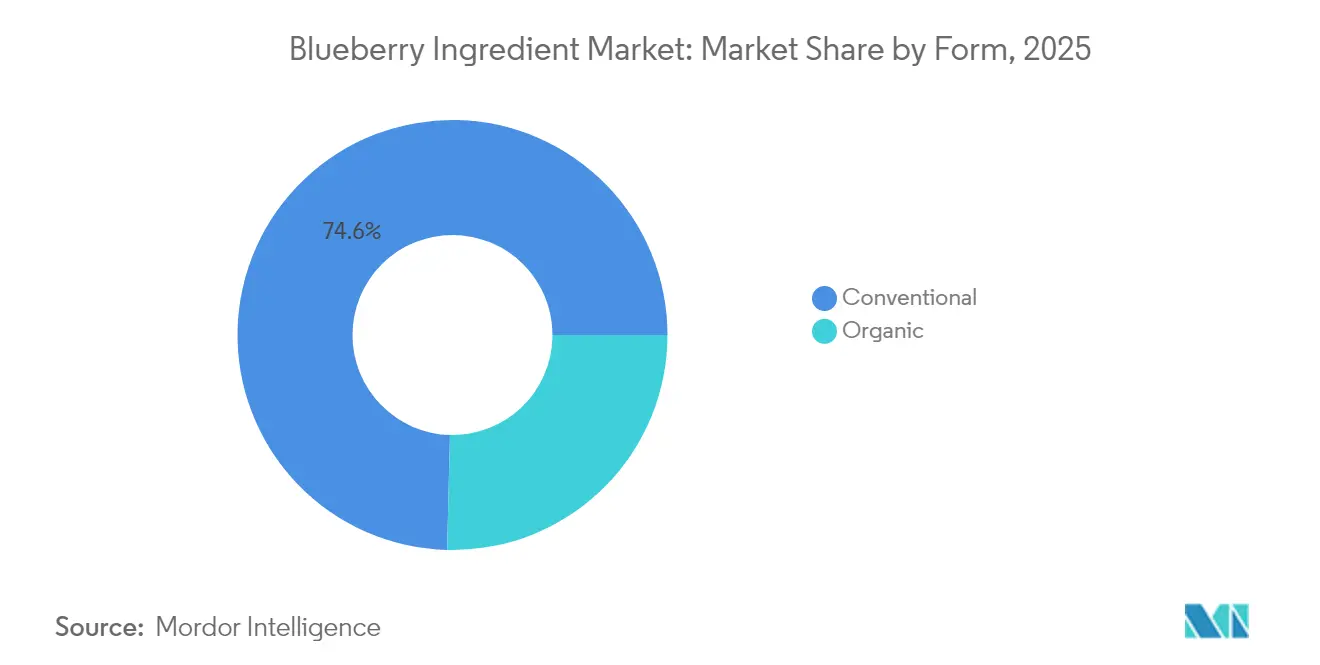
- By form, conventional products held 74.60% of 2025 revenue, while organic formats are forecast to expand at an 8.02% CAGR to 2031.
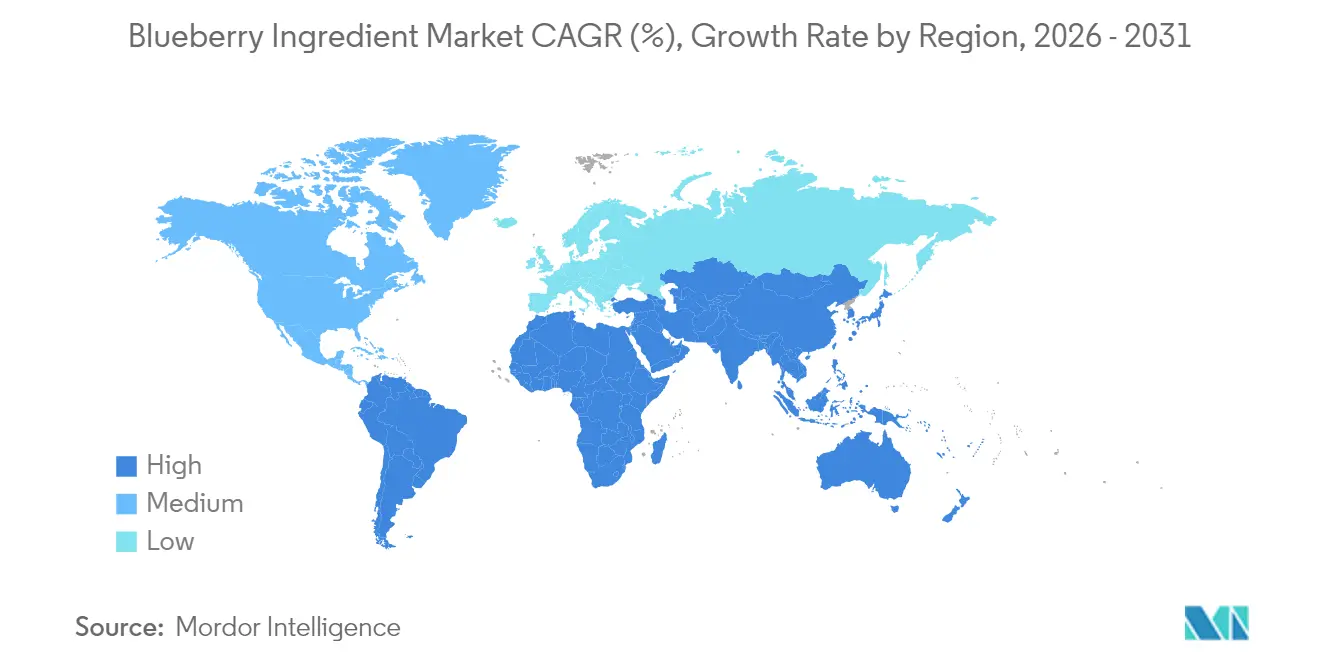
- By geography, North America generated 37.95% of 2025 revenue, yet Asia-Pacific is projected to rise at a 7.46% CAGR through 2031.
Note: Market size and forecast figures in this report are generated using Mordor Intelligence’s proprietary estimation framework, updated with the latest available data and insights as of 2026.
Market Trends and Insights
Drivers Impact Analysis of Blueberry Ingredient Market*
| Driver | (~) % Impact on CAGR Forecast | Geographic Relevance | Impact Timeline |
|---|---|---|---|
| Rapid growth of processed and convenience foods | +1.2% | Global, with concentration in North America, Europe, and urban Asia-Pacific | Medium term (2-4 years) |
| Rising demand for functional foods and beverages | +1.5% | Global, led by North America, Europe, and Japan | Long term (≥ 4 years) |
| Consumer shift toward clean-label and natural additives amid health awareness | +1.1% | North America, Europe, with spillover to Australia and urban China | Medium term (2-4 years) |
| Increasing vegan and flexitarian diets drives plant-derived nutraceutical applications | +0.9% | Europe, North America, with emerging adoption in Southeast Asia | Long term (≥ 4 years) |
| Innovation in processing techniques enhances shelf life and versatility across forms | +0.8% | Global, with Research and Development hubs in North America and Europe | Long term (≥ 4 years) |
| Rising use in cosmetics for anti-aging properties from bioactive compounds | +0.6% | Asia-Pacific (Japan, South Korea), Europe, North America | Medium term (2-4 years) |
| Source: Mordor Intelligence | |||
Rapid growth of processed and convenience foods
Rising demand for processed and convenience foods is accelerating the use of blueberry ingredients, including frozen, dried, purees, and powders, across various ready-to-eat products. These ingredients are integrated into items such as yogurt parfaits, energy bars, and smoothie packs, with frozen blueberries offering consistent freshness and nutrient retention, while dried variants cater to shelf-stable snack options. Expanding applications in bakery and confectionery further support this growth, as demonstrated by brands like Chobani, which use blueberry purees in Greek yogurts to deliver creamy textures for busy consumers, and KIND bars, which incorporate dried blueberries for convenient nutrition. The preference for natural and plant-based options is also driving demand, with blueberry juice concentrates enhancing flavor in bottled smoothies from brands like Innocent Drinks, appealing to health-conscious and vegan-friendly consumers. According to the Department for Environment, Food and Rural Affairs, average weekly per-person expenditure on food and drink in the United Kingdom reached GBP 47.19 for the financial year ending 2024, reflecting increased demand for convenient products such as Clif energy gels infused with blueberry extracts for functional benefits [1]Source: Department for Environment, Food and Rural Affairs, "Family Food FYE 2024", gov.uk . Advances in processing techniques are extending shelf life, enabling the use of blueberry extracts and powders in products like Quaker instant oatmeal, while clean-label trends promote the inclusion of organic blueberries in premium ready meals, addressing consumer demand for real-fruit convenience.
Rising demand for functional foods and beverages
Blueberry ingredients, including extracts and powders, are increasingly integrated into functional foods and beverages due to their clinically supported health benefits, such as antioxidant protection and immune support, aligning with the growing consumer preference for nutrient-dense options beyond basic nutrition. The shift toward natural, plant-based products is evident in the use of blueberry purees in smoothies from brands like Bolthouse Farms, which provide anti-inflammatory benefits while meeting clean-label demands with real-fruit formulations. Convenience snacks, such as protein bars like RXBAR featuring dried blueberries, enhance cognitive and heart health claims, reflecting the expansion of nutraceutical applications using blueberry powders for targeted wellness. In bakery products, blueberry juice concentrates are utilized in muffins to promote gut health through fiber content, catering to vegan diets with plant-based ingredients. Additionally, the rising demand for organic products has elevated the use of blueberry powders in functional beverages, aligning with clean-label trends and pharmaceutical formulations targeting specific health outcomes. A November 2023 survey by Korea Agro-Fisheries & Food Trade Corp. revealed that 84.5% of South Korean respondents consumed health functional foods, emphasizing the role of blueberries in immunity-focused ready-to-drink products [2]Source: Korea Agro-Fisheries & Food Trade Corporation, "2023 Health Functional Foods - Processed Food Segmentation Market Stats Report", atfis.or.kr . Advancements in cultivation techniques ensure consistent antioxidant potency across various forms, extending applications to cosmetics for anti-aging benefits and reinforcing their reliability in nutraceuticals, positioning blueberry ingredients as essential in meeting proactive wellness demands.
Increasing vegan and flexitarian diets drives plant-derived nutraceutical applications
The increasing adoption of vegan and flexitarian diets is driving the demand for plant-derived nutraceutical applications, with blueberry ingredients such as extracts and powders gaining prominence. Rising health consciousness is pushing consumers toward natural options, where the antioxidants in blueberries deliver clinically validated benefits in vegan supplements. This trend aligns with the growing popularity of convenience snacks, as seen in dried blueberries used in Larabar fruit bars, which provide portable, plant-based nutrition that supports immune health while meeting functional food demands. In the bakery sector, companies like LBP Bakeries are incorporating blueberry purees into Vegan Very Berry Muffin, enhancing fiber content for gut health and leveraging the organic trend for clean-label appeal. Blueberry powders are also being utilized in plant-based shakes by Orgain to address chronic disease reduction, with innovations in processing ensuring stable delivery for flexitarian diets. The rising preference for organic ingredients is boosting the use of blueberry extracts in vegan bone health formulas by Nutrabytes Advanced Vegan Collagen Supplement, which also finds applications in cosmetics for anti-aging benefits, reinforcing the reliability of nutraceuticals. A report by the Good Food Institute Europe indicates that by 2025, 51% of adults in the United Kingdom and Germany plan to increase plant-based consumption or reduce animal-based products, directly influencing the blueberry nutraceutical market [3]Source: Good Food Institute Europe (GFI Europe), "Research: Four in 10 German and UK Adults Plan to Eat More Plant-based Food", gfieurope.org . Advancements in cultivation techniques ensure bioactive consistency, supporting pharmaceutical formulations for targeted vegan wellness. These interconnected dynamics are positioning blueberry ingredients as essential components in plant-based nutraceuticals, addressing the evolving health goals of flexitarian consumers.
Rising use in cosmetics for anti-aging properties from bioactive compounds
The increasing application of blueberry ingredients in cosmetics highlights their growing importance due to their bioactive compounds, including anthocyanins, flavonoids, and vitamins, which effectively neutralize reactive oxygen species responsible for wrinkles and reduced skin elasticity. These antioxidants mitigate oxidative stress and inflammation in skin cells, supporting collagen integrity and enhancing the skin's barrier function, making blueberry extracts highly desirable in serums and creams targeting firming and wrinkle-smoothing benefits. Studies demonstrate that blueberry extracts improve skin smoothness, hydration, and elasticity, prompting formulators to use standardized extracts instead of simple fruit aromas to deliver measurable anti-aging results. Brands like Kajo Cosmetics have introduced products featuring berry-derived antioxidants, while niche players such as Natura Siberica emphasize blueberry extract in facial care to differentiate their "shielding" and "radiance" claims from conventional formulations. These developments reflect the broader functional positioning of blueberry ingredients across food, nutraceutical, and personal care sectors, leveraging the same polyphenol profile to address environmental stressors like UV exposure and pollution. Manufacturers are also adopting microencapsulation techniques to stabilize sensitive polyphenols, ensuring bioactivity over shelf life and aligning cosmetic innovation with practices in functional foods and dietary supplements. As clean-label and plant-based beauty trends gain momentum, blueberry extracts, oils, and powders offer a compelling "food-grade" narrative, fostering consumer trust in naturally derived anti-aging solutions and driving growth in high-value derma-cosmetic applications.
Restraints Impact Analysis of Blueberry Ingredient Market*
| Restraint | (~) % Impact on CAGR Forecast | Geographic Relevance | Impact Timeline |
|---|---|---|---|
| Inadequate blueberry production leads to supply shortages and sourcing challenges | -0.8% | Global, with acute pressure in North America and Europe during off-season months | Short term (≤ 2 years) |
| Perishable nature requires complex cold chain logistics, raising operational risks | -0.6% | Global, particularly impacting processors in regions with unreliable infrastructure (South America, Southeast Asia) | Medium term (2-4 years) |
| Competition from alternative berries dilutes market share in applications | -0.5% | Global, with pronounced impact in North America and Europe where açaí, aronia, and elderberry compete in functional foods | Medium term (2-4 years) |
| Stringent food safety regulations increase compliance burdens for processors | -0.4% | North America (FDA FSMA), Europe (EU Regulation 2073/2005), with spillover to export-oriented processors in South America and Asia-Pacific | Long term (≥ 4 years) |
| Source: Mordor Intelligence | |||
Inadequate blueberry production leads to supply shortages and sourcing challenges
Inadequate blueberry production is causing significant supply shortages, impacting both fresh fruit availability and industrial ingredient streams such as purees, concentrates, and freeze-dried powders. Manufacturers are being forced to adjust sourcing strategies and reformulate products to address these challenges, as highlighted by the International Blueberry Organization. Reduced harvests in key producing regions are tightening raw material supplies for processors, driving up input costs and increasing the likelihood of rationing or reformulation for seasonal products like yoghurts, bakery inclusions, and functional powders, according to the Economic Research Service. With global output stabilizing at approximately 1.7–1.9 million tonnes in recent years, localized disruptions from weather, labor, or logistics issues are creating ripple effects across supply chains. In 2023, the United States experienced a production decline to around 648 million pounds, demonstrating how fluctuations in major origins can immediately reduce availability for both fresh and processed uses, as reported by the National Agricultural Statistics Service. Retailers and brands are also under pressure, with major supermarkets reporting limited shelf supplies during crop disruptions, while leading suppliers like Driscoll’s face challenges balancing contract obligations with spot-market procurement. Importers are grappling with compliance and traceability demands, navigating diverse phytosanitary regulations, freight bottlenecks, and rising cold-chain costs when shifting between hemispheres. For ingredient buyers, these pressures translate into longer lead times, fragmented supplier networks, and increased reliance on flexible formulations and multi-origin contracts, as noted by Blueberries Consulting. Rising ingredient prices are prompting manufacturers to explore blends, stabilizers, or alternative fruits to protect margins. Mitigation strategies, though costly, include long-term sourcing agreements, improved cold-chain logistics, and diversification into emerging export origins.
Competition from alternative berries dilutes market share in applications
Competition from alternative berries such as raspberries, blackberries, and cranberries is eroding the market share of blueberry ingredients across various applications, as businesses and consumers increasingly explore diverse flavor and nutritional profiles. Companies producing functional foods, beverages, and bakery products are substituting or blending blueberries with these alternatives to optimize cost, availability, and sensory appeal, as demonstrated by Driscoll’s product innovations. The growing demand for cranberry powders and raspberry purees in products like yoghurts, smoothies, and snack bars is reducing the reliance on blueberry concentrates and freeze-dried powders, as highlighted in market reports. Additionally, smaller health-focused brands are prioritizing berries with higher antioxidant claims, leading to shifts in sourcing strategies. This trend is intensifying pricing pressure on blueberry ingredients, as buyers compare the costs and nutritional benefits of multiple berry options. Seasonal and regional availability of alternative berries further enhances manufacturers’ flexibility, reducing the dominance of blueberries in formulations during supply constraints. To remain competitive, blueberry ingredient suppliers are focusing on innovation through blends, fortified powders, or exclusive sourcing agreements. The increasing presence of alternative berries is compelling global blueberry ingredient producers to differentiate their offerings strategically to sustain their market position.
*Our forecasts treat driver/restraint impacts as directional, not additive. The impact forecasts reflect baseline growth, mix effects, and variable interactions.
Blueberry Ingredient Market Segment Analysis
By Ingredient Type:
Extracts and Powders Lead InnovationExtracts and powders are driving innovation in the blueberry ingredients market, projected to grow at 6.82% annually from 2026 to 2031. Formulators are increasingly focusing on standardized bioactive content rather than bulk fruit fills. Frozen blueberries, which held a 39.55% market share in 2025, remain popular in retail bakery applications for their whole-fruit identity. However, extracts and powders offer greater flexibility, longer shelf life, and easier incorporation into functional foods, beverages, and dietary supplements. Dried blueberries, often used in snack mixes and cereals for their ambient stability, retain only 50–60% of their anthocyanin content due to heat exposure, making extracts and powders the preferred choice when nutritional potency is critical. Spray-dried powders are increasingly utilized to meet consumer demand for high-antioxidant content in clean-label applications, reinforcing the trend toward ingredient standardization and formulation precision.
Blueberry juice concentrate continues to be widely used in beverages but is constrained by its 12–15 Brix sugar content, which limits its suitability for low-calorie products. This has led to a shift toward water-soluble extracts that provide color and antioxidant benefits without adding calories. Spray-dried powders with 15–25% anthocyanin content now meet pharmaceutical-grade specifications, enabling their use in capsules and tablets. Companies such as FutureCeuticals and Martin Bauer Group are capitalizing on this trend, positioning extracts and powders as the fastest-growing ingredient type by combining nutritional efficacy, formulation versatility, and compliance with clinical validation standards.



By Application:
Nutraceutical Segment Gains Clinical TractionFood and beverage applications accounted for 58.10% of the market share in 2025. However, the nutraceutical and dietary supplement segments are expected to grow at a rate of 7.05% through 2031. This growth is supported by regulatory approvals that allow health claims on packaging, aligning with increasing consumer health awareness and the use of extracts and powders for antioxidant benefits in plant-based formulations. Pharmaceutical applications, while niche, offer high margins, with blueberry anthocyanins being studied for their potential in managing diabetic retinopathy and reducing cardiovascular risks. These developments connect with the nutraceutical segment through standardized powders that meet pharmaceutical-grade requirements. Cosmetics and personal care represent the fastest-growing application area, driven by the use of blueberry bioactives in anti-aging formulations that cater to the demand for clean-label products. Food and beverage applications continue to lead in volume, with examples such as blueberry purées in yogurt, freeze-dried pieces in granola, and juice concentrates in functional beverages. However, their slower growth reflects market maturity and rising competition from alternatives like açaí and aronia in sports nutrition, alongside the appeal of frozen products.
The nutraceutical segment benefits from the increasing demand for functional foods. Powders used in supplements provide clinical benefits beyond flavor, bridging the gap to pharmaceutical trials through consistent anthocyanin delivery, despite supply chain challenges. This trend is further supported by the shift toward plant-based diets, as plant-derived extracts in capsules enhance heart health claims. Similarly, cosmetics are incorporating these bioactives for skin protection, outpacing the growth of traditional food applications. Overall, regulatory support and bioactive standardization position nutraceuticals as a high-growth segment, expanding the use of blueberry ingredients across premium applications, even as traditional food applications face growing competition.
By Form:
Organic Surges on Retailer MandatesOrganic blueberry ingredients are anticipated to grow at a compound annual growth rate of 8.02% from 2026 to 2031, outpacing conventional forms. This growth is driven by stricter pesticide-residue limits and clean-label initiatives from European retailers such as Aldi and United States brands like Whole Foods. These measures align with increasing consumer demand for natural, health-focused food and cosmetic products, where blueberries are valued for their antioxidant properties. In 2025, conventional blueberries held a 74.60% market share, supported by established supply chains and lower production costs. This dominance is evident in price-sensitive applications such as bakery products, private-label yogurt, and juice blends. However, concerns over synthetic fungicides and fertilizers are limiting growth in the conventional segment, creating opportunities for organic blueberries in premium categories like nutraceuticals and personal care.
Conventional blueberries maintain leadership in bulk fruit applications due to cost efficiencies, but the rising demand for organic products is compressing this market. Retailers are implementing stricter sourcing mandates, prompting processors to expand offerings of organic blueberry purees, powders, and extracts. Innovation trends further support this shift, with organic powders increasingly featured in functional beverages by brands such as Bai. The growing adoption of vegan and flexitarian diets, which favor certified organic products for their perceived health and environmental benefits, is also driving demand. The interplay between cost advantages of conventional supply chains and the rising preference for organic products underscores the evolving dynamics of the blueberry ingredients market.
Geography Analysis
North America Blueberry Ingredient Market
North America accounted for 37.95% of 2025 revenue but faces moderate growth challenges due to domestic production limitations and increased reliance on imports. In Canada, blueberry production is concentrated in regions such as British Columbia and Quebec, supplying frozen ingredients to processors like Driscoll's. However, labor shortages are impacting harvest efficiency. Mexico's emerging blueberry industry primarily focuses on fresh exports to the United States, leaving limited volumes for domestic processing. This affects ingredient availability for nutraceutical and convenience food producers. The region's dependence on imports adds pressure to supply chains, particularly as demand for frozen, dried, and powdered blueberry forms continues to grow in the food and personal care industries.
APAC Blueberry Ingredient Market
Asia-Pacific is projected to grow at 7.46% from 2026 to 2031, driven by increasing domestic consumption in China and a well-established nutraceutical market in Japan, where blueberry extracts are gaining traction in functional foods and dietary supplements. India and Southeast Asia are developing markets with limited domestic production, relying on imported frozen fruit for premium yogurt and bakery products. Rising middle-class incomes and growing awareness of health trends are expected to accelerate demand for blueberry powders and purees in wellness and convenience food segments. This growth is likely to increase imports and drive supply chain developments in the region.
EMEA and South America Blueberry Ingredient Market
Europe remains a significant market, supported by production in Poland, Spain, and Germany, but continues to rely on imports from South America, particularly Peru and Chile. South America primarily serves as a raw material supplier, with Peru leading in production and exports but showing limited value-added processing capabilities. Meanwhile, the Middle East and Africa, with marginal market shares, depend on imports for premium segments. Emerging production in Morocco and South Africa could diversify supply sources post-2027, supporting growth in food, nutraceutical, and cosmetic applications.

Regulatory Landscape
Blueberry ingredients supplied into food, beverage, and supplement applications face tightening expectations around food safety and traceability, especially in the United States under the FDA Foods Program and FSMA. The FSMA Final Rule on Requirements for Additional Traceability Records for Certain Foods is a key compliance anchor for processors and brand owners handling multi-origin frozen fruit, purees, and concentrates, with a focus on end-to-end lot-level documentation and faster recall readiness across counter-seasonal supply chains.
Trade and ingredient approval pathways are also influencing commercial decisions for blueberry-derived color and fruit systems. In the United States, FDA actions in 2025 included confirming an effective date (June 26, 2025) for a final order approving Galdieria extract blue as a color additive for multiple food categories, including frozen fruits, adding another natural color option that can compete with anthocyanin-driven positioning. For import economics, industry reporting cited a 10% ad valorem import duty effective February 24, 2026 under Section 122 of the Trade Act of 1974, with exemptions referenced for USMCA-compliant fresh and frozen blueberries. This raises the importance of origin qualification, customs documentation, and multi-country sourcing strategies for ingredient buyers.
Value Chain Analysis
The blueberry ingredient value chain begins with cultivation in major producing origins and counter-seasonal hubs (notably Peru and Chile) that support year-round supply into North America, Europe, and Asia-Pacific. Upstream actors include growers, nurseries, and agronomic service providers, followed by harvest crews and primary handlers that feed packhouses and cold stores. Midstream processing converts fruit into frozen berries, dried inclusions, purees, juice concentrates, and higher-margin extracts and powders using capabilities such as spray-drying and encapsulation. Toll processors play a larger role when harvest variability or limited in-house extraction capacity constrains integrated suppliers.
Downstream, ingredient distributors and formulation partners supply food and beverage manufacturers, nutraceutical and dietary supplement brands, and cosmetics and personal care formulators that need consistent specifications, including standardized anthocyanin content. Cold-chain and export logistics remain the main structural bottlenecks, including refrigerated container availability, port congestion (such as Callao, Peru), canal transit delays, and freight-rate volatility. These factors can affect fruit condition and processing yields. Industry bodies such as the U.S. Highbush Blueberry Council and the International Blueberry Organization support market development and industry coordination, while growers and exporters increasingly rely on multi-origin programs and logistics diversification to reduce disruption risk across the 2025-2026 seasonal cycles.
Competitive Landscape
The blueberry ingredients market demonstrates a low concentration level, reflecting significant fragmentation among grower cooperatives, toll processors, and ingredient specialists. No single company holds a dominant global market share, enabling a diverse supply of extracts and powders. This structure supports the expanding nutraceutical segment, where companies standardize bioactive compounds to enhance clinical applications. The low concentration is also linked to the growing demand for organic products. Cooperatives supply conventional frozen blueberries for food applications, while toll processors convert limited harvests into stable dried forms to address production shortages. Fragmentation further drives innovation in cosmetics, particularly in anti-aging and vegan applications, as ingredient firms develop anthocyanin-rich powders that cooperatives often cannot customize efficiently.
Grower cooperatives dominate the supply of bulk purée and frozen blueberries for bakery applications, leveraging economies of scale to maintain their position in conventional products. However, climate variability has increased reliance on toll processors for extracts. Ingredient specialists focus on functional beverages, offering water-soluble concentrates that align with trends in convenience snacks and health-conscious products. These specialists also provide pharmaceutical-grade options, going beyond the bulk-focused offerings of cooperatives. The fragmented market structure sustains competition, as no single entity controls the entire supply chain, promoting partnerships for developing powders used in personal care products despite supply chain disruptions.
Fragmentation in the market drives adaptation in high-growth segments such as nutraceuticals. Companies produce flowable powders that address the limitations of frozen blueberries, particularly for vegan supplements. Toll processors bridge gaps in grower output, enabling flexible processing of organic blueberries to meet clean-label demands. Despite challenges such as volatile yields, this structure ensures a rapid response to surging demand for functional foods and clinical validations, positioning the market for sustained innovation and growth.
Blueberry Ingredient Industry Leaders
-
Südzucker AG
-
Döhler Group SE
-
Ingredion Incorporated
-
Symrise AG
-
R. J. Van Drunen & Sons, Inc.
- *Disclaimer: Major Players sorted in no particular order
Blueberry Ingredient Market Companies Covered in this Report
- Südzucker AG
- Ingredion Incorporated
- Döhler Group SE
- R. J. Van Drunen & Sons, Inc.
- Symrise AG
- Givaudan SA
- Tianjin Jianfeng Natural Product R & D Co.,Ltd.
- Scenic Fruit Co.
- Nutragreen Biotechnology
- Sensient Technologies Corp.
- Azelis Holding SA
- Hortifrut SA
- FutureCeuticals
- Wyman’s of Maine
- Oxford Frozen Foods
- SunOpta Inc.
- SonderJansen BV
- Royal Ridge Fruits
- Kiantama Oy
- True Blue Farms

Market Opportunities and Future Outlook
Higher-value opportunities center on standardized extracts and powders used in functional foods, supplements, and beauty-from-within concepts, where buyers prioritize bioactive consistency, label simplicity, and shelf-stable formats over bulk fruit inclusion. The commercialization pipeline is reinforced by industry-led programs such as the U.S. Highbush Blueberry Council Blueberry Boost Accelerator, which helps ingredient developers and brands shorten iteration cycles from prototype to scale.
Postharvest and processing technology upgrades are also creating room for suppliers that can deliver tighter quality specs, higher yields, and safer ingredient streams from multi-origin fruit. In June 2026, TOMRA Food launched the 5S Blueberry sorting and grading platform using Spectrim with Lucai deep learning technology to improve defect detection and preserve bloom, supporting more consistent raw material quality entering freezing and processing lines. Separately, academic work in 2026 highlighted non-thermal and precision-processing routes, including a continuous in-package dielectric barrier discharge cold atmospheric plasma (DBD-CAP) approach shown to inactivate pathogens such as E. coli O157:H7 while maintaining or enhancing anthocyanin metrics, aligning with manufacturer needs for validated interventions as traceability and food safety scrutiny intensify across global supply chains.
Recent Industry Developments in Blueberry Ingredient Market
- June 2026: TOMRA Food launched the 5S Blueberry sorting and grading platform, integrating Spectrim with Lucai deep learning for improved defect detection and bloom preservation. The upgrade supports packhouses and ingredient processors seeking tighter incoming-quality specs for freezing, drying, and extraction, improving throughput consistency when supply comes from multiple origins.
- August 2025: Four companies were selected for the inaugural Blueberry Boost Accelerator by the U.S. Highbush Blueberry Council in collaboration with VentureFuel, focusing on extract-forward concepts for gut health and snack formats. The program supports faster iteration from prototype to scale for blueberry-based ingredients and helps brands reach higher-margin applications.
- October 2024: Fruit d'Or introduced Blue d'Or Vitality at SupplySide West 2024, a blend of wild blueberry and cranberry powders aimed at sports nutrition and nutraceutical uses. The launch underscored continued product development in clean-label, organic powder systems where blending can address performance claims, taste, and supply flexibility.


Blueberry Ingredient Market Report Scope and Research Methodology
Market Definition and Coverage
For this study, the blueberry ingredient market covers ingredients made from blueberries that are sold to other businesses for use in formulated products. The market value is measured at the first commercial sale of the ingredient.
Scope exclusions: It excludes consumer-ready finished foods and beverages where blueberries are just one component, as well as direct retail sales of whole fresh blueberries.
Segments Covered in This Report
-
By Ingredient Type
- Frozen Blueberry
- Dried Blueberry
- Blueberry Juice Concentrate
- Blueberry Purée
- Extracts and Powders
-
By Application
- Food and Beverage
- Nutraceutical/Dietary Supplement
- Pharmaceutical
- Cosmetics and Personal Care
-
By Form
- Conventional
- Organic
-
By Geography
-
North America
- United States
- Canada
- Mexico
- Rest of North America
-
Europe
- Germany
- United Kingdom
- Italy
- France
- Spain
- Netherlands
- Poland
- Belgium
- Sweden
- Rest of Europe
-
Asia-Pacific
- China
- India
- Japan
- Australia
- Indonesia
- South Korea
- Thailand
- Singapore
- Rest of Asia-Pacific
-
South America
- Brazil
- Argentina
- Colombia
- Chile
- Peru
- Rest of South America
-
Middle East and Africa
- South Africa
- Saudi Arabia
- United Arab Emirates
- Nigeria
- Egypt
- Morocco
- Turkey
- Rest of Middle East and Africa
-
North America
Data Sources, Market Sizing, and Validation
Desk Research
Desk work starts with understanding how much blueberry raw material is available and how it typically moves into ingredient formats. We referenced public sources such as USDA (including NASS and ERS series), FAOSTAT, UN Comtrade, and national agriculture and customs statistics where they are available, which helps define outer boundaries for supply and trade flows.
From there, we reviewed ingredient and processing cues from sources like peer reviewed food science journals (to inform yield and solids assumptions), relevant patent databases (for extraction and drying activity), and company filings and investor presentations where ingredient revenue is discussed. For pricing and deal context, we also used a paid subscription for company financials and intelligence, plus an import and export shipment level database to sense-check concentrate and powder movements. The sources listed here are illustrative only, and we used many other public and paid references to collect data, validate it, and clarify open points.
Primary Interviews and Surveys
Primary work was used to confirm how blueberries are converted into concentrates, purees, powders, and extracts, and how pricing changes when crop quality, brix, and inventory levels move. We spoke with ingredient manufacturers, processors, importers, and downstream formulators across major producing and consuming regions. Those respondent inputs were then used to tighten conversion assumptions and channel splits.
Distribution of primary research fieldwork respondents
| Company type | Respondent position | Region |
|---|---|---|
| Top tier: 26% | CXOs: 13% | APAC: 51% |
| Mid tier: 58% | Functional/Unit leaders: 35% | EMEA: 31% |
| Smaller Players: 16% | Managers: 52% | Americas: 18% |
Market-Sizing & Forecasting
The core sizing starts with a top-down build that reconstructs ingredient demand from blueberry production and trade signals, then translates that into ingredient output using realistic conversion and loss factors. Once the demand pool is formed, it is valued using observed price ranges by ingredient format and application, and then adjusted for mix shifts across regions.
To keep totals grounded, we also run selective bottom-up checks, such as sampled supplier revenues where disclosed, sampled average selling price times volume for concentrate and powder, and channel checks with formulators. In places where reporting is thin, we close gaps using proxy indicators like processed berry utilization rates, the split between industrial use and fresh consumption, and import dependency for concentrate inputs.
Key model inputs include blueberry harvest volumes and yield per hectare, the split between fresh and processing grade fruit, concentrate brix assumptions, powder yield from spray-drying, and typical usage rates in beverages, dairy, bakery, and supplements. For forecasting, we use scenario analysis anchored on crop cycles, capacity additions, and expected application demand, with scenarios aligned to what experts considered a reasonable price and volume path over the forecast window.
Data Validation & Update Cycle
Validation is done by comparing the modeled market value against independent signals, including trade values for concentrates, reported processing volumes where available, and price direction seen in procurement conversations. When a regional output looks inconsistent with production or trade reality, we revisit the assumptions and re-contact experts to clarify what changed.
Before sign-off, the model goes through a multi-step analyst review where calculations are rechecked, outliers are investigated, and year-to-year growth is compared against realistic capacity and demand movement. Reports are refreshed annually, and interim updates are made when material events occur, such as sharp crop disruptions or major processing expansions. Right before delivery, we run a final pass so clients receive an up-to-date view.
Mordor Intelligence's Blueberry Ingredient Market Size Measured Against Other Published Estimates
Published market values for blueberry ingredients can differ substantially even when the studies aim to describe the same industry. The differences usually come from what each study counts as an ingredient, how it treats whole fruit versus processed formats, and the price and conversion assumptions used to turn volumes into dollars.
The table shows a visible spread versus other public estimates. In Mordor Intelligence's model, the value is counted at the ingredient sale level for formats like concentrates, purees, powders, and extracts, and it avoids mixing in the retail value of finished foods or the broader value of whole fresh berries.
Benchmark comparison
| Source | Market Size | Gaps in Research Methodology |
|---|---|---|
| Mordor Intelligence | USD 1.90 B (2025) | |
| Global Consultancy A | USD 2.82 B (2025) | Uses a wider revenue boundary that can pull in a larger share of whole fruit and downstream value capture, and it tends to apply higher blended prices across applications when valuing ingredient use. |
| Industry Publisher B | USD 2.80 B (2025) | Leans on a longer forecast frame with less visible conversion logic between blueberry supply and ingredient outputs, which can overstate volumes when processing-grade allocation and yield losses are not tightly constrained. |
Across the three figures, the main takeaway is that scope and pricing mechanics drive most of the variance. By tying volumes to observable production and trade signals and then valuing only ingredient-format sales with clear conversion steps, the estimate stays easier to reproduce and to stress-test when assumptions change.


Key Questions Answered in the Report
What is the current value of the Blueberry Ingredients Market?
The Blueberry Ingredients market size is USD 2.01 billion in 2026 and is projected to climb to USD 2.69 billion by 2031.
Which ingredient type is growing fastest?
Extracts and powders are expanding at a 6.82% CAGR thanks to demand for standardized anthocyanin content.
Why are organic blueberry ingredients gaining traction?
European retailer residue limits and U.S. clean-label premiums are pushing organic formats to grow at an 8.02% CAGR.
Which region shows the highest growth potential?
Asia-Pacific leads with a 7.46% CAGR as China’s per-capita intake rises rapidly from a low base.
Page last updated on:


 Your data is secure and never sold or shared.


