
Egypt Trucks Market Size and Share
| Study Period | 2019 - 2030 |
| Forecast Data Period | 2025 - 2030 |
| Historical Data Period | 2019 - 2023 |
| Market Size (2025) | USD 0.65 Billion |
| Market Size (2030) | USD 1.51 Billion |
| CAGR (2025 - 2030) | 18.47% |
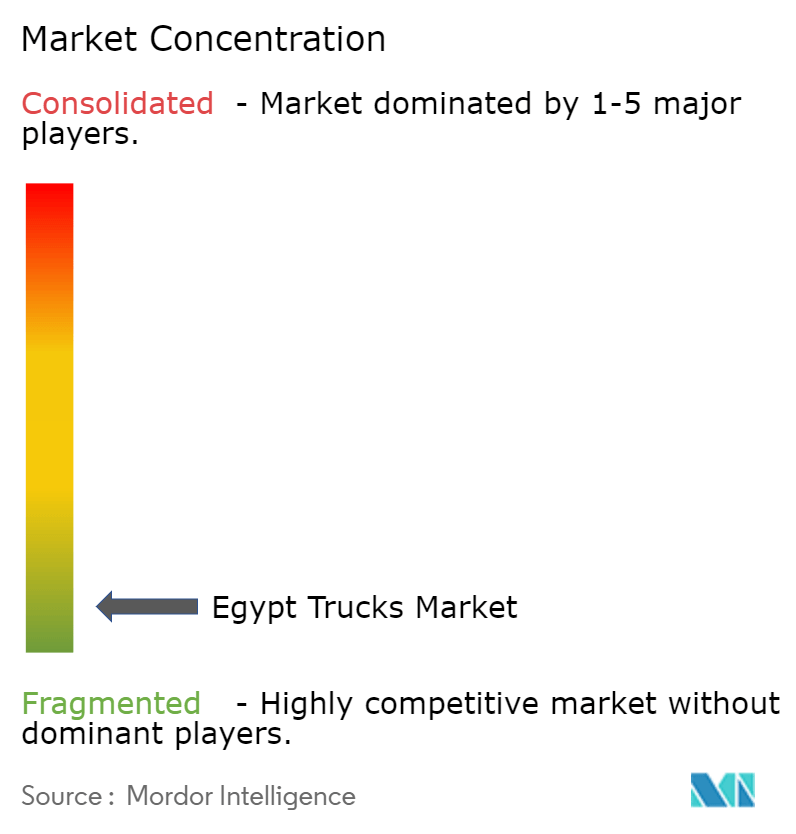
| Market Concentration | Low |
Major Players *Disclaimer: Major Players sorted in no particular order |
Egypt Trucks Market Analysis by Mordor Intelligence
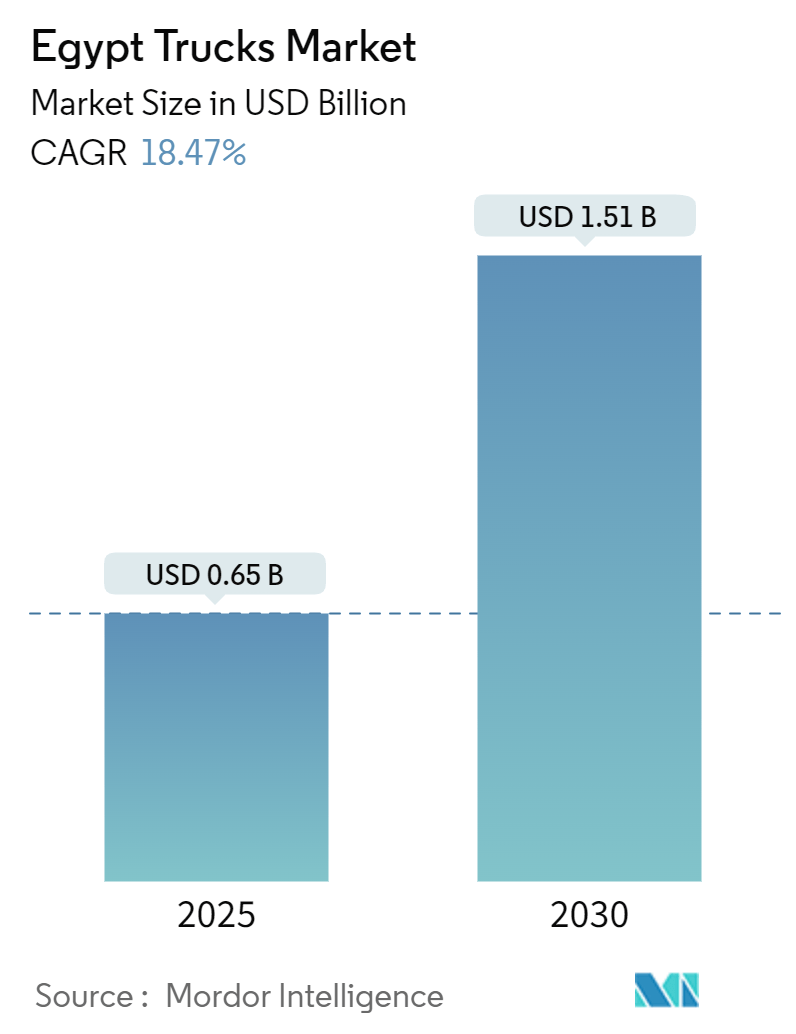
The Egypt Trucks Market size is estimated at USD 0.65 billion in 2025, and is expected to reach USD 1.51 billion by 2030, at a CAGR of 18.47% during the forecast period (2025-2030).
- Several key factors are driving this anticipated growth. The Egyptian government's substantial investments in infrastructure development, including the expansion of road networks and construction of new ports, are enhancing the logistics and transportation sectors. This infrastructural advancement is expected to boost demand for commercial trucks, facilitating the movement of goods across the country. For instance,
- In January 2025, the Egyptian Ministry of Transport signed an agreement with Swiss company MEDLOG for the funding, design, construction, operation, and maintenance of a new dry port and logistics centre in the 10th of Ramadan City. This project is part of Egypt's plan to enhance its transport and logistics infrastructure by building 33 dry ports and seven logistical corridors.
- Additionally, the rise of e-commerce and retail sectors is contributing to increased demand for efficient trucking services. As online shopping becomes more prevalent, the need for reliable delivery and distribution networks intensifies, further stimulating the truck market.
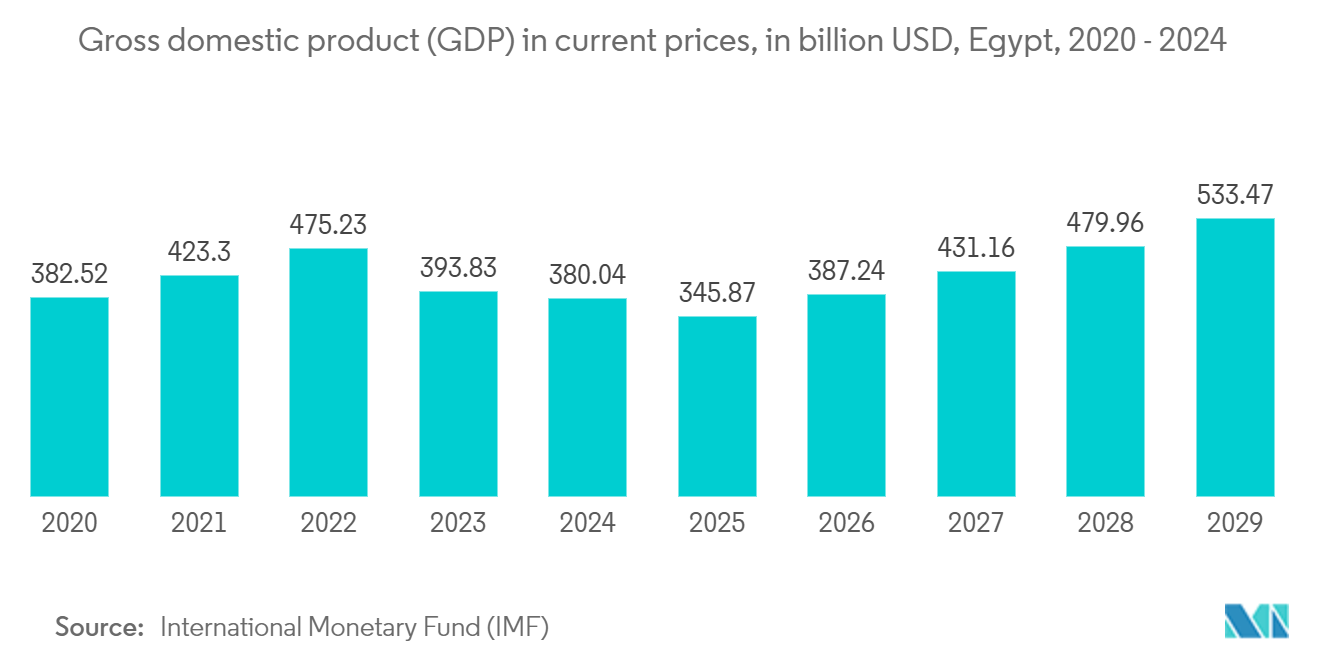
- Furthermore, with urbanization accelerating and retail trade contributing over 458,433.132 EGP million to GDP as of June 2024, truck OEMs is targeting niche segments such as last-mile delivery and urban freight transport, which require smaller, more versatile vehicles tailored for city use. Companies like UD Trucks, which launched operations in Egypt in November 2024 with local partner GB Auto, exemplify the potential for OEMs to capitalize on these opportunities by offering robust product portfolios and localized support systems tailored to Egypt's evolving market needs.
- Another significant opportunity for truck OEMs in Egypt lies in the growing demand for environmentally sustainable and energy-efficient vehicles, particularly as the country pushes towards green transportation initiatives. Egypt has been actively working to reduce its carbon emissions as part of its commitment to the Paris Agreement. In this context, the government's strategy to introduce incentives for adopting electric vehicles and expand charging infrastructure opens a new frontier for truck OEMs to invest in and introduce electric trucks and hybrid models.
- For example, the recent assembly of Sinotruk Howo T7H trucks by Geyushi Automotive in Egypt demonstrates how localized production can cater to both current market needs and the future shift towards cleaner technologies.
- Moreover, the global trend towards greener supply chains, coupled with Egypt's participation in Africa’s Green Economy Initiative, encourages logistics and transportation companies to prioritize sustainability, creating demand for OEMs to provide trucks with lower emissions and higher fuel efficiency.
- However, he market has faced import restrictions and shortages of assembly kits and spare parts, leading to declines in truck sales. For instance, in 2023, the market contracted significantly, with consumption declining by 20.9% due to these constraints, highlighting the need for improved supply chain mechanisms and local manufacturing capabilities.
Egypt contributes to a system defined not by any single country or region but by the interaction of many. The global truck market data by Mordor Intelligence represents that combined structure.
Egypt Trucks Market Trends and Insights
LCV dominates Egypt’s truck market, driven by the growth of e-commerce and the increasing demand for efficient last-mile delivery solutions.
- In Egypt truck market, light commercial trucks (LCVs) represent the largest segment, driven by their versatility and widespread applications across various industries. The dominance of LCVs is largely attributed to their role in supporting small- and medium-sized enterprises (SMEs) and last-mile delivery operations, which have grown in significance with the rise of the e-commerce sector. For example, the rapid growth of online shopping platforms like Jumia Egypt and the increasing reliance on logistics companies for efficient deliveries have created strong demand for LCVs. Their ability to navigate congested urban areas and deliver goods in smaller quantities makes them indispensable in Egypt's urban logistics ecosystem.
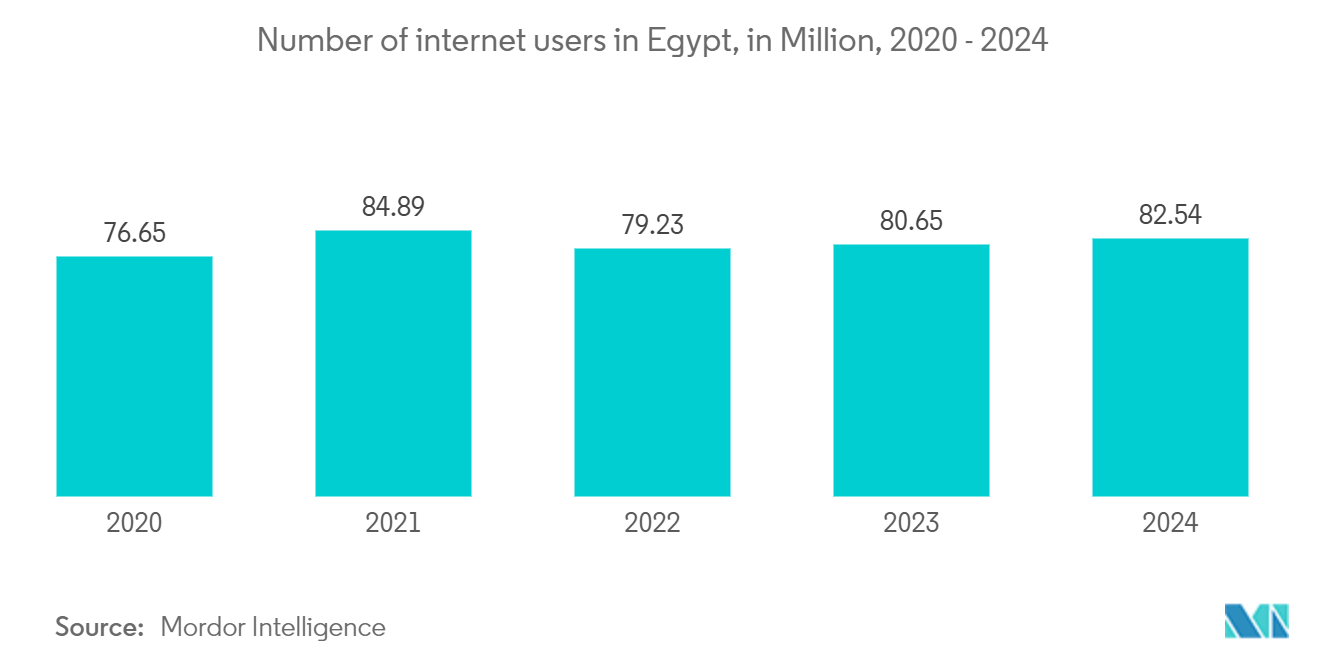
- Egypt's e-commerce sector has experienced significant growth in recent years, with the number of users increasing from 7.44 million in 2019 to an estimated 10.2 million by 2030.
- Furthermore, LCVs have been bolstered by supportive government policies that make vehicle financing more accessible to SMEs, enabling entrepreneurs to acquire these vehicles for diverse applications, including mobile services, goods distribution, and catering to local businesses. The presence of global players like Isuzu and Toyota, which offer popular models such as the Isuzu D-Max and Toyota Hilux, has also contributed to the dominance of this segment by providing vehicles tailored to meet local requirements.
- However, heavy-duty trucks are emerging as the fastest-growing segment, fueled by Egypt’s ambitious infrastructure development initiatives under Vision 2030. Projects such as the New Administrative Capital, Suez Canal Economic Zone, and expansions in the country’s road and port networks have significantly boosted the demand for heavy-duty trucks to transport construction materials, machinery, and other large loads. For instance, the construction of the Galala Plateau Project required substantial logistics support, where heavy-duty trucks played a pivotal role in ensuring the timely transport of heavy construction materials.
- Egypt has been recognized for its progress in infrastructure development, ranking second in Africa for the most improved infrastructure in 2023. The country has also attracted significant private investments, leading African nations with USD 2.3 billion in private infrastructure investment in 2023.
- In addition to infrastructure, the mining and construction sectors are also driving this growth. Egypt’s mineral extraction projects, particularly in phosphate and gold mining, require specialized heavy-duty trucks capable of operating in rugged terrains. Companies like Volvo Trucks and UD Trucks have capitalized on this demand by introducing robust models equipped with advanced features such as telematics and enhanced payload capacities to cater to these industries.
BEVs are rapidly emerging as the fastest-growing segment driven by governmental initiatives for greener transportation.
- In Egypt’s truck market, the diesel-powered truck segment remains the largest by propulsion, driven by its widespread availability and cost-effectiveness in industrial and logistics applications. Diesel trucks have long been the backbone of the Egyptian transportation sector, powering fleets across industries such as construction, mining, and freight. This dominance is further reinforced by government subsidies on diesel fuel, which make these vehicles a financially viable option for businesses requiring heavy-duty operations. For instance, Isuzu, a leading truck manufacturer in Egypt, continues to report robust demand for its diesel-powered models like the Isuzu F-Series, widely used in construction and logistics.
- Compressed natural gas (CNG)-powered trucks are also gaining traction as Egypt continues to expand its natural gas infrastructure. The government’s Natural Gas Vehicle (NGV) Conversion Program has facilitated the conversion of thousands of diesel-powered commercial vehicles to CNG. This transition is particularly significant for light and medium-duty trucks operating in urban areas, where CNG provides an environmentally friendly and cost-effective alternative to diesel. For instance, the introduction of CNG-compatible trucks by local manufacturers like Geyushi Automotive has seen a positive market response.
- However, the battery electric vehicle (BEV) segments are emerging as the fastest-growing propulsion categories, propelled by Egypt’s push towards greener transportation. The government’s commitment to reducing carbon emissions under the Egypt Vision 2030 has led to initiatives encouraging the adoption of alternative fuel vehicles.
- For example, the Electric Vehicle Strategy, announced in 2023, includes plans for local assembly and import incentives for BEVs, including trucks. The plan aims to produce at least 500,000 electric vehicles annually by the end of the decade, positioning Egypt as a key player in the global EV market.
- To achieve these ambitious targets, the Egyptian government has been actively engaging with international automotive manufacturers, offering incentives such as tax reductions and subsidized land to encourage the establishment of production facilities within the country.
- For instance, in May 2024, GV Investments, an Egyptian investment firm, entered into a partnership with China's FAW Group to produce affordable electric vehicles domestically, with local production slated to commence in the first quarter of 2025.
- Furthermore, the rising global focus on sustainable logistics has also motivated private sector players to invest in electric truck fleets for urban delivery applications. Companies like BYD and Volvo Trucks are capitalizing on this trend by introducing electric trucks tailored to the region’s needs.
The truck market is analyzed by Mordor Intelligence across multiple other geographies. This is complemented by country-specific insights for India, reflecting various localized market behavior and policy environments' coverage.
Competitive Landscape
- Leading global players like Isuzu Motors, Mercedes-Benz, and Volvo Trucks dominate the heavy and medium-duty segments, driven by their reputation for quality, reliability, and advanced technology. These brands often collaborate with local distributors or manufacturers to establish a strong foothold, as seen with Mercedes-Benz’s partnership with MCV and Volvo Trucks’ active presence in infrastructure-related heavy-duty applications. Their focus on fuel efficiency, payload capacity, and robust aftersales services positions them as leaders in industrial and construction-related logistics.
- In the LCV segment, Toyota Egypt, Suzuki Motor Corporation, and Nissan Motor Egypt lead the market by offering versatile, durable, and fuel-efficient models. The Suzuki Carry and Toyota Hilux are particularly popular among SMEs and urban logistics companies due to their maneuverability and low operating costs. These manufacturers benefit from a growing e-commerce market and rising demand for last-mile delivery solutions, driving competition in this high-volume segment. Additionally, local manufacturers such as Geyushi Automotive provide cost-effective solutions tailored for Egyptian businesses, further intensifying competition in the LCV category.
- Emerging players like King Long and Sinotruk, often targeting the affordable and mid-tier markets, are gaining traction by addressing gaps in the market for budget-friendly yet reliable trucks.
- For example, Sinotruk’s Howo T7H, assembled locally by Geyushi Automotive, combines affordability with performance, making it a preferred choice for small construction firms and logistics operators. Similarly, King Long has built a niche in light commercial vehicles, catering to the urban transport needs of smaller businesses and fleet operators.
- Domestic manufacturers like GB Corp (Ghabbour Group) and MCV hold significant market shares, supported by government incentives promoting local assembly and production. These companies often act as assemblers and distributors for global brands, ensuring high-quality vehicles tailored to local demands.
- For instance, GB Corp’s partnership with UD Trucks introduced advanced heavy-duty models to support Egypt’s growing infrastructure sector. This collaboration reflects a competitive edge for local assemblers that combine international standards with localized pricing and servicing.
- The electrification trend adds a new dimension to competition, with companies like BYD, Shift EV, and Danone Egypt pioneering electric vehicle adoption in the commercial space. Global brands are also entering this segment, challenging traditional diesel and CNG-powered trucks. As infrastructure for EVs improves, manufacturers that can offer reliable electric models will gain a competitive edge. This evolving landscape ensures a dynamic and increasingly segmented market where innovation, affordability, and adaptability are the key differentiators among competitors.
Egypt Trucks Industry Leaders
-
Toyota Egypt
-
Nissan Motor Egypt
-
King Long
-
Suzuki Motor Corporation
-
General Motors Egypt
-
Isuzu Motors Egypt
-
Volvo Trucks Egypt
-
Mercedes-Benz Egypt
-
GB Corp (Ghabbour Group)
-
El Nasr Automotive Manufacturing Company
- *Disclaimer: Major Players sorted in no particular order
Recent Industry Developments
- November 2024: UD Trucks, in collaboration with GB Auto, launched operations in Egypt, marking a significant entry into the country's commercial vehicle market. The inauguration event, held at the historic Citadel of Saladin, underscored the partnership's commitment to providing reliable and efficient trucks tailored to the needs of Egyptian businesses. This strategic move aims to enhance the logistics and transportation sectors, aligning with Egypt's infrastructure development goals.
- October 2024: Geyushi Automotive Industry, in collaboration with Sinotruk, celebrated the opening of the first Sinotruk showroom in Egypt. This development is part of their efforts to introduce advanced heavy-duty trucks to the Egyptian market, catering to the growing demand in the logistics and construction sectors. The showroom aims to provide customers with access to a range of Sinotruk models, enhancing the availability of high-quality commercial vehicles in the country.
- November 2023: Geyushi Automotive Industry commenced the assembly of the Sinotruk Howo T7H tractor head at their facility in the 10th of Ramadan Industrial City. This initiative is poised to strengthen Egypt's position in automotive manufacturing by offering modern solutions for the nation's transportation infrastructure. The locally assembled Howo T7H is expected to become an integral component of Egypt's transport fleet, driving the country's progress in industrial and economic advancement.
Egypt Trucks Market Report Scope
- The Egypt Truck Market Report explores the evolving demand for commercial vehicles in Egypt, driven by infrastructure development, e-commerce growth, and the transition toward sustainable transportation. The report analyzes the penetration of various propulsion technologies in the market, investments by truck OEMs to localize production, and the market shares of key players operating in the country. It highlights emerging opportunities in logistics, urban freight, and green transportation.
- The Egypt Truck Market is segmented by Vehicle Type, Propulsion, and End Use. By Vehicle Type, the market is segmented into Light Commercial Trucks, Medium-Duty Trucks, and Heavy-Duty Trucks. By Propulsion, the market is segmented into Diesel, Compressed Natural Gas (CNG), Battery Electric Vehicles (BEVs), Plug-In Hybrid Electric Vehicles (PHEVs), Hybrid Electric Vehicles (HEVs), and Others. and by End Use, the market is segmented into Industrial, Mining & Construction, Logistics, and Others.
- The report provides market size and forecasts for the Egypt Truck Market in Value (USD) and Volume (Units) across all the above segments, offering insights into key trends, challenges, and opportunities shaping the market.
| Light Commercial Trucks |
| Medium-Duty Trucks |
| Heavy-Duty Trucks |
| Diesel |
| Compressed Natural Gas (CNG) |
| Battery Electric Vehicles (BEVs) |
| Plug-In Hybrid Electric Vehicles (PHEVs) |
| Hybrid Electric Vehicles (HEVs) |
| Others |
| Industrial |
| Mining & Construction |
| Logistics |
| Others |
| Vehicle Type | Light Commercial Trucks |
| Medium-Duty Trucks | |
| Heavy-Duty Trucks | |
| Propulsion | Diesel |
| Compressed Natural Gas (CNG) | |
| Battery Electric Vehicles (BEVs) | |
| Plug-In Hybrid Electric Vehicles (PHEVs) | |
| Hybrid Electric Vehicles (HEVs) | |
| Others | |
| End Use | Industrial |
| Mining & Construction | |
| Logistics | |
| Others |
Key Questions Answered in the Report
How big is the Egypt Trucks Market?
The Egypt Trucks Market size is expected to reach USD 0.65 billion in 2025 and grow at a CAGR of 18.47% to reach USD 1.51 billion by 2030.
What is the current Egypt Trucks Market size?
In 2025, the Egypt Trucks Market size is expected to reach USD 0.65 billion.
Who are the key players in Egypt Trucks Market?
Toyota Egypt, Nissan Motor Egypt, King Long, Suzuki Motor Corporation, General Motors Egypt, Isuzu Motors Egypt, Volvo Trucks Egypt, Mercedes-Benz Egypt, GB Corp (Ghabbour Group) and El Nasr Automotive Manufacturing Company are the major companies operating in the Egypt Trucks Market.
What years does this Egypt Trucks Market cover, and what was the market size in 2024?
In 2024, the Egypt Trucks Market size was estimated at USD 0.53 billion. The report covers the Egypt Trucks Market historical market size for years: 2019, 2020, 2021, 2022, 2023 and 2024. The report also forecasts the Egypt Trucks Market size for years: 2025, 2026, 2027, 2028, 2029 and 2030.