
Dishwashing Products Market Size and Share
Market Overview
| Study Period | 2021 - 2031 |
|---|---|
| Market Size (2026) | USD 26.06 Billion |
| Market Size (2031) | USD 30.79 Billion |
| Growth Rate (2026 - 2031) | 3.39 % |
| Fastest Growing Market | Asia-Pacific |
| Largest Market | Europe |
| Market Concentration | Medium |
Major Players *Disclaimer: Major Players sorted in no particular order Image © Mordor Intelligence. Reuse requires attribution under CC BY 4.0. | |
Dishwashing Products Market Analysis by Mordor Intelligence
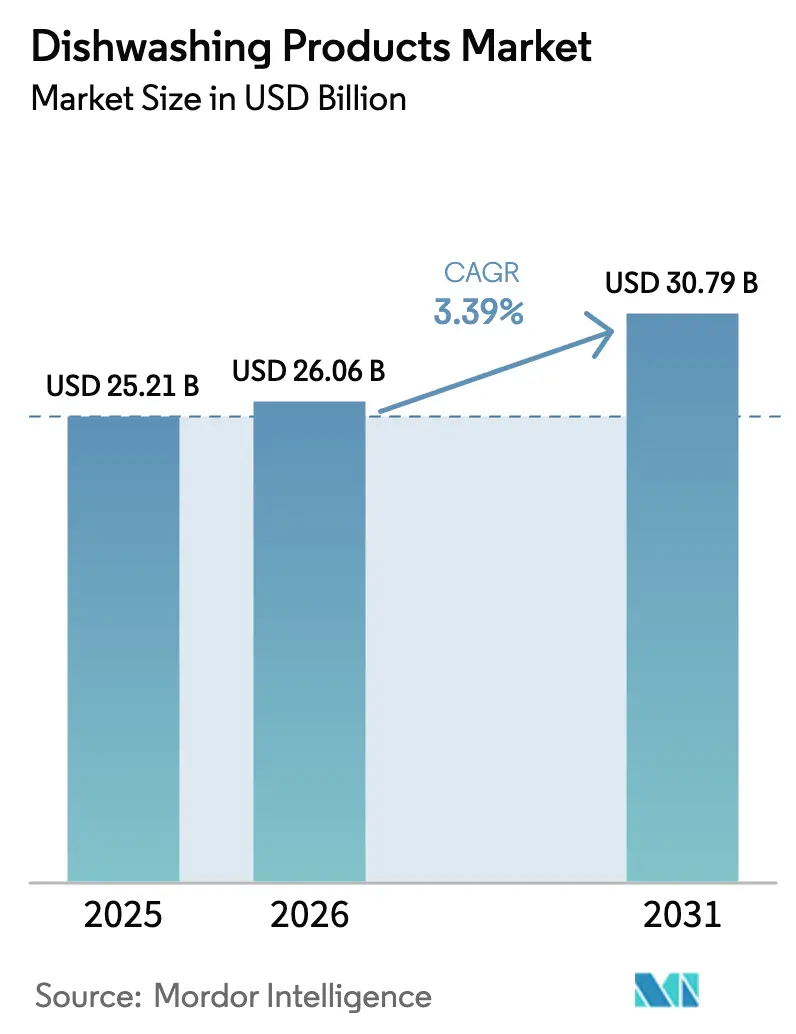
Dishwashing products market size in 2026 is estimated at USD 26.06 billion, growing from 2025 value of USD 25.21 billion with 2031 projections showing USD 30.79 billion, growing at 3.39% CAGR over 2026-2031. Market growth is driven by rising hygiene awareness, health consciousness, and social media endorsements. Emerging economies show steady growth, while mature regions face slower expansion due to high household penetration. Liquid dishwashing products dominate, but concentrated pods and organic options are gaining popularity due to health and eco-friendly trends. Adults drive most demand, with growing interest in child-friendly products. Supermarkets and hypermarkets remain key sales channels, though online sales are rapidly increasing due to convenience. Sustainable packaging, like refill pouches, is becoming popular. In Europe, strict environmental regulations are driving investments in sustainable product design and packaging. The market is moderately concentrated, with Procter & Gamble, Unilever, and Reckitt leveraging strong brands, procurement networks, and research and development to stay competitive.
Key Report Takeaways
- By product type, liquid cleaners held 43.10% of the dishwashing products market share in 2025, are set to post the fastest 3.55% CAGR through 2031.
- By ingredient profile, conventional products retained 82.10% revenue share in 2025; natural and organic alternatives are forecast to expand at a 3.86% CAGR to 2031.
- By end user, adults accounted for 94.40% of demand in 2025, yet formulations for children are growing at a 4.12% CAGR on the back of skin-sensitive positioning.
- By packaging format, bottles dominated with 61.55% share in 2025; refill pouches are the fastest-growing format at a 4.61% CAGR to 2031.
- By distribution channel, supermarkets/hypermarkets controlled 44.90% of 2025 sales, whereas online retail stores are on track for a 4.87% CAGR to 2031.
- By geography, Europe led with 32.10% revenue share in 2025, while Asia-Pacific is projected to grow the quickest at 5.25% CAGR to 2031.
Note: Market size and forecast figures in this report are generated using Mordor Intelligence’s proprietary estimation framework, updated with the latest available data and insights as of 2026.
Market Trends and Insights
Drivers Impact Table of Dishwashing Products Market*
| Driver | (~) % Impact on CAGR Forecast | Geographic Relevance | Impact Timeline |
|---|---|---|---|
| Rising hygiene awareness and health consciousness | +0.8% | Global, with stronger impact in Asia-Pacific and Middle East and Africa | Medium term (2-4 years) |
| Innovation in eco-friendly formulations and packaging | +0.6% | Europe and North America core, expanding to Asia-Pacific | Long term (≥ 4 years) |
| Technological advancements in dishwashing products | +0.5% | Global, led by developed markets | Long term (≥ 4 years) |
| Travel and convenience-driven consumption | +0.4% | Europe and North America primarily | Medium term (2-4 years) |
| Social media influence and endorsements | +0.3% | Global, strongest in urban markets | Short term (≤ 2 years) |
| Increasing adoption of dishwashers | +0.7% | Asia-Pacific core, spill-over to South America and MEA | Long term (≥ 4 years) |
| Source: Mordor Intelligence | |||
Rising hygiene awareness and health consciousness
Hygiene awareness and health consciousness are driving the dishwashing products market. Consumers prefer premium products with antimicrobial benefits and safer, clearly labeled ingredients. In response to 2024 P&G research identifying dishwashing as a disliked chore, Dawn launched Dawn PowerSuds, offering double the suds to trap grease and reduce residue transfer. Brands like Ecover are adopting plant-based surfactants for effective cleaning without harsh chemicals. Advancements in biological cleaning agents are enhancing germ protection, boosting multifunctional product demand. As of 2024, with 55% of the global population in urban areas (projected to reach 68% by 2050, per the United Nations), urban consumers favor convenient formats like pods and sprays [1]. Products such as Finish Quantum Ultimate and Method Dish Spray are gaining popularity for their ease of use and transparent marketing.
Innovation in eco-friendly formulations and packaging
In Europe, strict sustainability regulations are driving rapid growth in eco-friendly dishwashing products and packaging. Companies are investing in research and development to develop 100% bio-based products, such as Sunlight’s 2024 plant-based product line. Brands like Ecover and Seventh Generation are adopting concentrated refills and recyclable packaging, reducing plastic waste and shipping emissions while supporting recycling programs. Enzyme technologies from companies like Novozymes enable effective cleaning at lower temperatures and shorter wash cycles, saving energy and water. Products like Finish Eco Dishwasher Tablets and Method’s Plant-Based Dish Soaps reflect this trend. These practices help brands secure premium shelf space and align with circular economy goals, though smaller manufacturers face challenges due to high transition costs.
Technological advancements in dishwashing products
Advanced technologies are enhancing dishwashing products, improving effectiveness and convenience. Innovations like enzymatic blends, microbial boosters, and water-hardness stabilizers boost compact pod performance. For instance, the 2024 launch of Finish Quantum Infinity Shine offers precise dosing and easy storage. Fragrance innovation is also a focus, with products like Cascade Platinum Plus featuring advanced scent-release technologies. Eco-friendly options, such as Sunlight dishwashing liquid, deliver excellent cleaning using 100% plant-based, renewable, and biodegradable ingredients. These advancements meet consumer demands for convenience, effectiveness, and sustainability, keeping brands competitive.
Travel and convenience-driven consumption
With busy lifestyles and frequent travel becoming more common, there is a growing need for dishwashing products that are easy to carry and use. According to the United Nations, in 2024, international tourism saw a significant rebound, with approximately 1.4 billion people traveling internationally [2]. Compact options like small sachets, pre-measured pods, and portable sprays are gaining traction for their lightweight nature and ease of fitting into bags or luggage. These products cater especially to travelers, be it backpackers, campers, or families on road trips, by saving space and simplifying dish cleaning on the go. For example, small sachets serve as a perfect solution for short trips, camping, or picnics. They're particularly beneficial for solo travelers seeking a quick dishwashing solution while traveling. In countries such as India and Indonesia, where affordability and daily purchases are the norm, brands have rolled out these budget-friendly and travel-friendly small sachets and compact refill packs.
Restraints Impact Analysis of Dishwashing Products Market*
| Restraint | (~) % Impact on CAGR Forecast | Geographic Relevance | Impact Timeline |
|---|---|---|---|
| Consumer preference for traditional alternatives | -0.4% | Global, stronger in rural and developing markets | Medium term (2-4 years) |
| Availability of counterfeit products | -0.3% | APAC and MEA primarily, emerging in online channels | Short term (≤ 2 years) |
| High production costs | -0.5% | Global, particularly affecting smaller manufacturers | Medium term (2-4 years) |
| Price fluctuation in raw material | -0.6% | Global, with regional supply chain variations | Short term (≤ 2 years) |
| Source: Mordor Intelligence | |||
Availability of counterfeit products
Counterfeit dishwashing products remain a significant challenge in the market. UNCTAD reports that as of 2025, 44% of its member countries lack adequate consumer-safety regulations, enabling counterfeit detergents to spread across physical stores and online platforms [3]. These products often mimic reputable brands but contain substandard or harmful ingredients, endangering consumer health and damaging trusted manufacturers' reputations. The presence of counterfeits also forces legitimate companies to lower prices, disrupting market equilibrium. To address this, companies like Procter & Gamble and Henkel are implementing measures such as unique product codes, tamper-proof packaging, and QR codes for authenticity verification. Additionally, brands are educating consumers through websites and social media, urging them to buy only from authorized retailers. These efforts aim to protect consumers and uphold market integrity.
Consumer preference for traditional alternatives
In rural and semi-urban areas, families often rely on homemade cleaning solutions made from natural ingredients like citrus extracts, coconut oil, aloe vera, and ash. These options are seen as safer, more natural, and more affordable compared to commercial dishwashing products. This preference is strongly tied to cultural traditions, where natural cleaning methods have been passed down through generations and are valued for their simplicity and perceived health benefits. As a result, branded dishwashing products face challenges in gaining acceptance and achieving widespread use in these regions. To address this, companies need to design marketing strategies that respect and acknowledge these local cleaning habits. By educating consumers about the additional benefits of modern products, such as better hygiene, ease of use, and time-saving features, manufacturers can gradually build trust and encourage people to try these products. Without such efforts, it will remain difficult for companies to expand their presence and increase adoption in these markets.
*Our forecasts treat driver/restraint impacts as directional, not additive. The impact forecasts reflect baseline growth, mix effects, and variable interactions.
Dishwashing Products Market Segment Analysis
By Product Type:
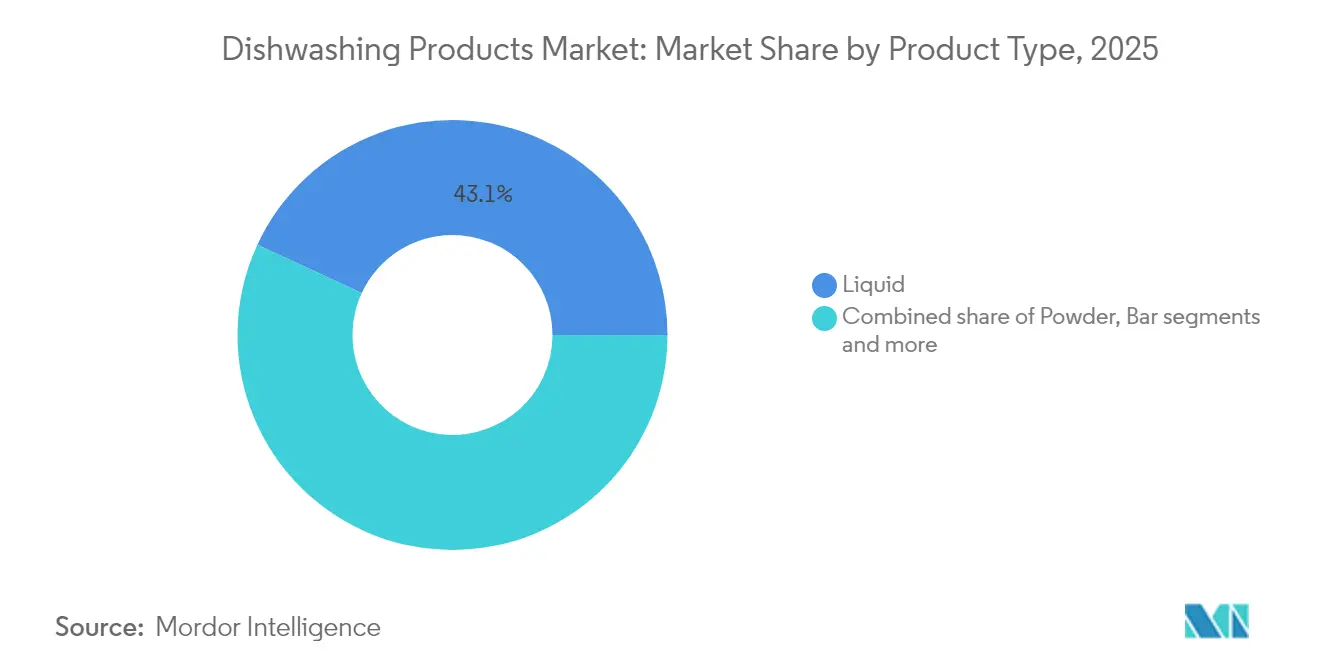
Liquid Leadership and Pod ConvenienceIn 2025, liquid cleaners dominated the dishwashing products market, capturing 43.10% of the revenue share and projected to grow at a CAGR of 3.55% through 2031. Their versatility across varying water hardness levels and widespread consumer familiarity, both for manual and machine dishwashing, bolsters their steady demand amidst the rise of new product formats. Emerging contenders like concentrated pods, dissolvable film powders, and spray-on pre-treatments are gaining traction. Marketed as mess-free, eco-friendly, and easy to store, these formats resonate with urban consumers valuing convenience. The inclusion of biological additives enables these products to excel in cold washes, positioning pods as a premium choice.
In response to the pod trend, liquid cleaner brands are enhancing their offerings with potent formulas, appealing fragrances, and initiatives like recyclable bottle programs to combat plastic waste. A case in point: Ecover unveiled its concentrated liquid dish soap line, packaged in 100% recycled plastic bottles topped with 50% recycled caps, merging eco-friendliness with superior cleaning. In regions grappling with hard water, powders retain their significance due to their stain-removing alkaline properties. On the other hand, environmentally-conscious consumers gravitate towards bar soaps for their minimal packaging. This product diversification strategy not only broadens the customer base but also solidifies the supremacy of liquid cleaners, suggesting a harmonious coexistence of product types in the market.

By Ingredients:
Conventional Scale Meets Natural MomentumConventional synthetic formulations accounted for the largest market share of 82.10% in 2025. Their popularity is driven by their well-established supply chains and proven ability to clean tough grease and heavily soiled cookware effectively. Consumers widely trust these products for their consistent performance. However, natural and organic products are gaining traction, with a projected CAGR of 3.86%. Stricter European regulations, such as the ban on phosphates, and the increasing demand for private-label products in North America, fuel this growth. To meet these changing demands, leading brands are now incorporating sugar-based surfactants and coconut-derived foaming agents while gradually eliminating phosphates to align with sustainability goals.
Advancements in product development are helping natural products improve their cleaning performance, although they still face challenges in handling heavy grease and adapting to different water hardness levels. Hybrid formulations, which combine plant-based ingredients with enzyme boosters, are emerging as a practical solution. These products offer strong cleaning power while being environmentally friendly, making them appealing to eco-conscious consumers. Additionally, brands are sourcing local ingredients like coconut oil and aloe vera in regions such as India and Southeast Asia to cater to regional preferences and reduce costs. Looking ahead, clear labeling of ingredients and certifications, such as eco-friendly or organic seals, are expected to play a more significant role in influencing consumer buying decisions.
By End User:
Adult Stability and Children-Focused GrowthAdults are the primary users of dishwashing products, accounting for 94.40% of total consumption in 2025. This is because adults typically handle household shopping and kitchen cleaning tasks. They prefer products that are effective at removing grease and leave behind pleasant scents like citrus or lavender. For example, brands like Dawn and Palmolive cater to these needs by offering powerful grease-fighting formulas with fresh, appealing fragrances. These products are designed to make cleaning faster and easier, which is especially important for busy households. Additionally, the availability of concentrated formulas and refill packs from these brands adds convenience and cost-effectiveness, making them even more popular among adult users.
In contrast, the children’s segment is smaller but growing steadily, with an expected CAGR of 4.12%. This growth is driven by parents who prioritize safer and gentler dishwashing options for their children, such as hypoallergenic or dye-free liquids and foams. For instance, brands like Babyganics and Dapple focus on creating child-friendly products with tear-free and non-toxic formulations. Companies are also introducing features like ergonomic pumps and colorful packaging to make these products easier and safer for kids to use. Claims such as "gentle on skin" or "dermatologist-tested" are particularly appealing to parents concerned about skin sensitivity. While these products are more common in developed markets, awareness is increasing in emerging economies.
By Packaging:
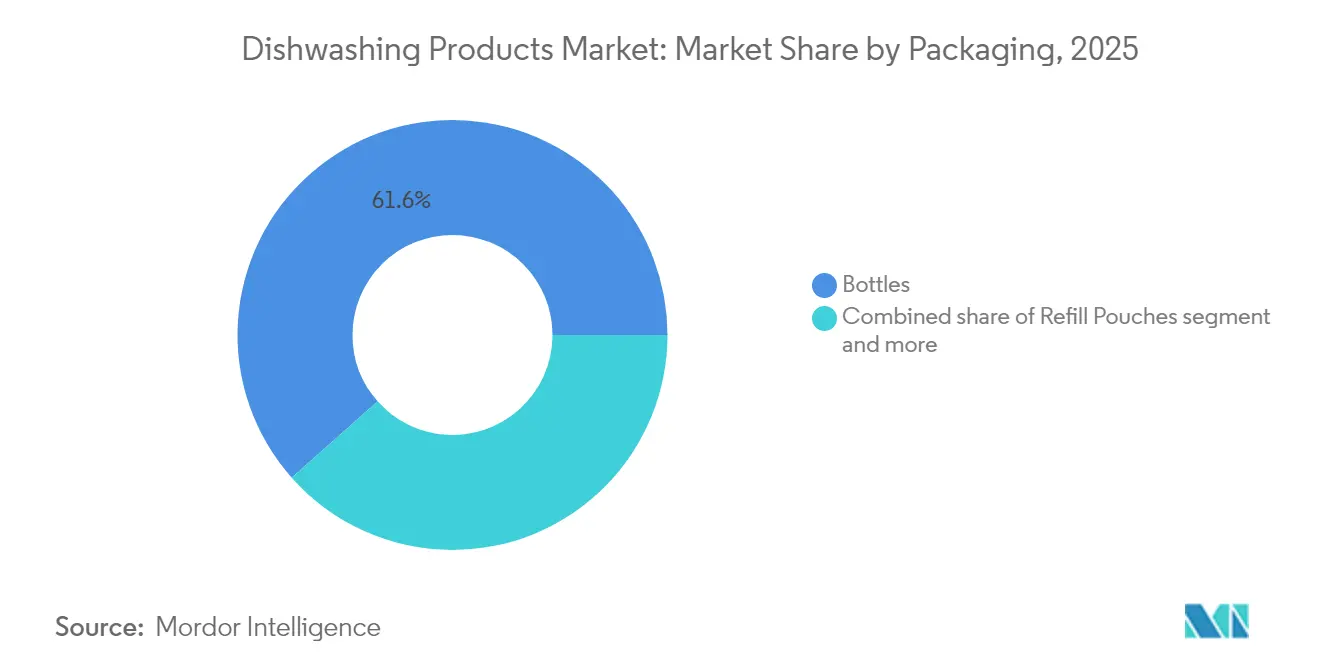
Bottles Dominate as Refills RiseBottles made up 61.55% of the revenue in 2025 due to their convenience and ease of use. They are practical for dispensing liquids and work well with existing filling systems. Many consumers prefer bottles because they allow better control over the amount of product used, thanks to improved cap designs. For instance, Fairy’s Platinum Plus dishwashing liquid introduced a “no-mess dosing cap” that dispenses the exact amount needed for each wash. This feature helps households avoid wasting product, saving money while being environmentally friendly. Bottles remain a popular choice for their functionality and user-friendly designs, making them a staple in the dishwashing products market.
On the other hand, refill pouches are gaining popularity, growing at a CAGR of 4.61%, as more consumers look for eco-friendly and cost-effective options. These pouches help reduce plastic waste and are often promoted by retailers through in-store refill stations, where customers can reuse durable containers. This aligns with the growing zero-waste movement. For example, brands like Method and Ecover offer refill pouches that allow consumers to refill their bottles at home, reducing the need for single-use plastics. Additionally, innovations like water-soluble wrappers for powder tablets and lightweight, recyclable pumps are becoming more common. Companies like Grove Collaborative, which acquired Grab Green in February 2025, are investing in sustainable packaging solutions that not only reduce environmental impact but also maintain a premium look on store shelves.
By Distribution Channel:
Store Strength and Online AccelerationSupermarkets and hypermarkets continue to dominate as the main sales channels, holding a 44.90% market share in 2025. These outlets are popular because they offer a wide variety of products, attractive promotional displays, and the convenience of immediate purchase. For example, stores like Walmart and Carrefour often feature discounts or bundle deals on dishwashing products, encouraging bulk purchases. The ability to physically inspect products before buying makes these stores a preferred choice for many consumers. Seasonal sales during holidays or special events, like Christmas or Black Friday, further boost sales in these stores. The availability of well-known brands and the ease of access make supermarkets and hypermarkets a go-to option for many consumers.
On the other hand, online retail is growing rapidly, with an expected CAGR of 4.87% through 2031. This growth is driven by the convenience of home delivery and the rise of subscription services that ensure automatic restocking of dishwashing products. For instance, platforms like Amazon and Instacart allow customers to easily compare prices and access niche, eco-friendly brands that may not be available in physical stores. Hybrid models, such as click-and-collect services offered by retailers like Target, combine the ease of online shopping with the option to pick up products in-store. These strategies are helping manufacturers and retailers expand their reach while providing consumers with more flexible shopping options.
Geography Analysis
Europe Dishwashing Products Market
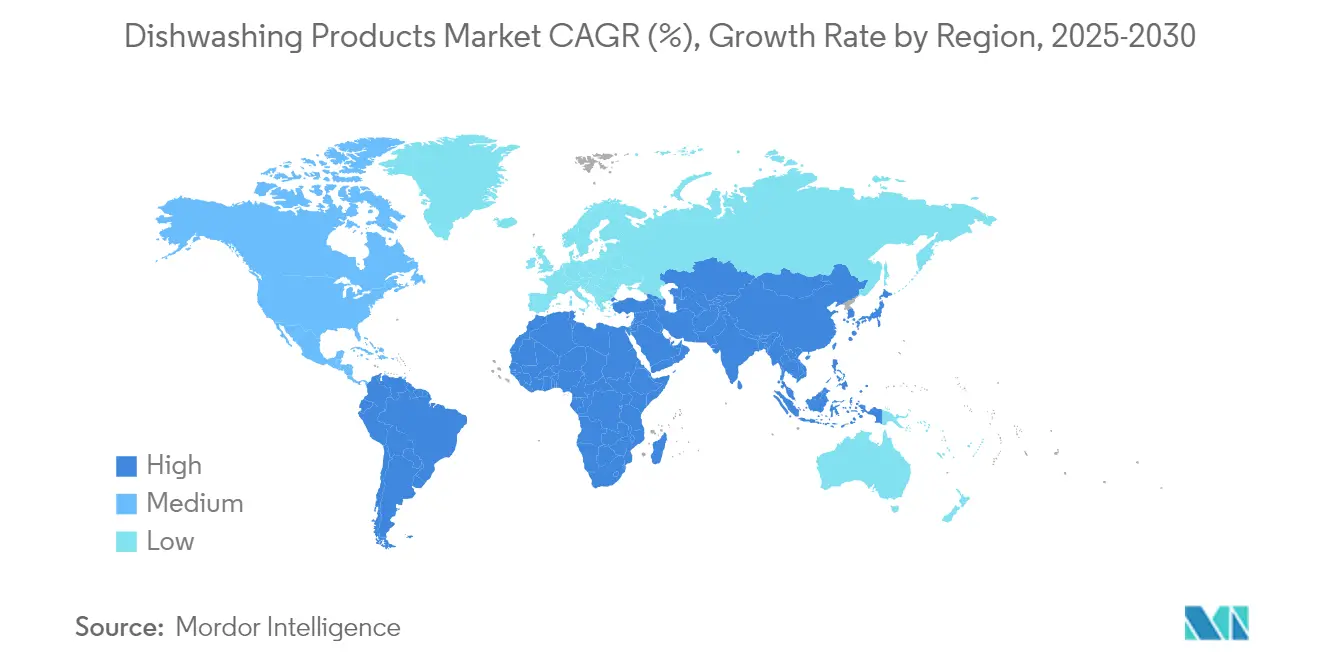
In 2025, Europe captured 32.10% of the revenue share, driven by strict eco-design regulations, high dishwasher ownership, and consumer demand for sustainable products. Circular-economy laws are pushing companies to use recyclable materials and low-carbon processes. Brands like Finish and Ecover have introduced eco-friendly packaging and biodegradable formulas. In Western Europe, saturated markets are focusing on unique fragrances and skin-friendly claims. Regional material sourcing is helping manufacturers reduce costs and stay competitive in price-sensitive markets.
APAC Dishwashing Products Market
The Asia-Pacific region is set to grow at the highest CAGR of 5.25%, fueled by rising disposable incomes, a growing younger middle class, and urbanization in countries like China, India, and Vietnam. Smaller households and fast-paced lifestyles are driving demand for dishwashers and ready-to-use solutions. In 2024, the dishwasher sector recorded CNY 11 billion in annual retail sales, with a 2.9% penetration rate, highlighting growing adoption and detergent demand . In price-sensitive markets like India, manufacturers are offering affordable options such as concentrated sachets and small-pack refills.
The Americas and Africa Dishwashing Products Market
North America shows stable sales and a growing preference for premium, plant-based dishwashing pods. Potential plastic taxes and producer responsibility policies may impact packaging strategies, with brands like Seventh Generation adopting sustainable packaging. South America and Africa, though smaller markets, are growing, driven by urbanization and retail modernization. Challenges like limited infrastructure and counterfeit products persist, prompting companies to partner with trusted distributors and run educational campaigns promoting hygienic dishwashing products over traditional methods.
Regulatory Landscape
Regulation (EU) 2026/405, published in March 2026, updates EU requirements for detergents and surfactants by replacing Regulation (EC) No 648/2004 and expands compliance obligations across formulation, labeling, and traceability. The framework adds Internal Production Control (Module A), which requires manufacturers to maintain technical documentation (including formula and safety assessment files). It also requires non-EU manufacturers to appoint an EU Authorized Representative for products placed on the EU market.
The regulation further formalizes new information and access mechanisms, including a mandatory Digital Product Passport (DPP) delivered via a QR code for new products from September 23, 2029, which increases data-management and packaging-design demands for brands and private-label suppliers selling in Europe. It explicitly addresses refill systems by extending safety and labeling expectations to refill equipment, while the European Commission is tasked to assess potential reductions in phosphorus limits in automatic dishwasher detergents within two years of the regulation entering into force, keeping phosphate-related reformulation and performance trade-offs in focus for automatic dishwashing portfolios.
Competitive Landscape
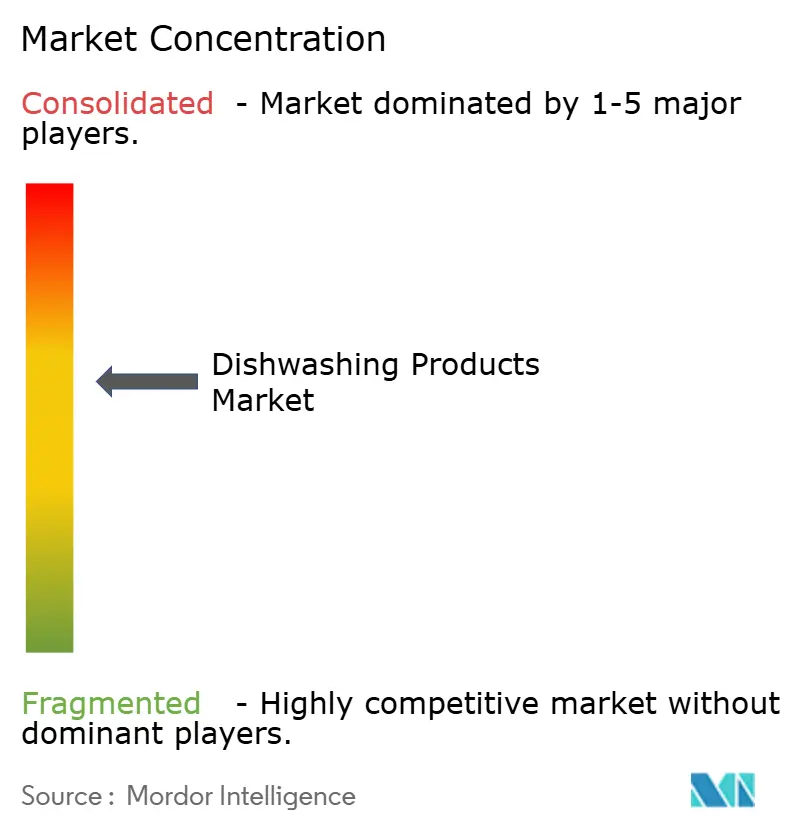
The dishwashing products market is moderately consolidated, led by Procter & Gamble, Unilever, and Reckitt. These companies rely on strong brands, large-scale production, and R&D investments to maintain their positions but face competition from private-label brands and eco-friendly startups like Dropps and Blueland. Private-label brands benefit from retailer partnerships, while startups attract consumers with sustainable products like plastic-free pods. To stay competitive, established firms are focusing on eco-friendly technologies, digital marketing, and acquiring niche brands to meet the preferences of environmentally conscious consumers.
Technology is a key differentiator in the dishwashing products market. Novozymes provides enzymes for biodegradable detergents with effective grease removal, while innovations like fragrance microcapsules enable premium products with lasting freshness. E-commerce analytics help brands like Procter & Gamble and Unilever run targeted campaigns, boosting customer loyalty and promoting complementary products like rinse aids. Procter & Gamble uses data-driven strategies to enhance its online presence and sales.
Merger and acquisition activities are reshaping the market. First Quality acquired Henkel’s private-label business to strengthen its retailer brand segment, while Grove Collaborative purchased Grab Green to expand its eco-friendly offerings. Reckitt is considering selling its Essential Home division to focus on healthcare. Large companies benefit from cost advantages in packaging and enzyme sourcing, while mid-sized innovators adapt to environmental regulations and offer sustainable solutions like refillable packaging and plant-based cleaners, driving growth among eco-conscious consumers.
Dishwashing Products Industry Leaders
-
The Procter & Gamble Company
-
Unilever Plc
-
Henkel AG & Co. KGaA
-
Reckitt Benckiser Group PLC
-
Colgate-Palmolive Company
- *Disclaimer: Major Players sorted in no particular order
Dishwashing Products Market Companies Covered in this Report
- The Procter & Gamble Company
- Unilever PLC
- Reckitt Benckiser Group PLC
- Henkel AG & Co. KGaA
- Colgate-Palmolive Company
- Kao Corporation
- The Clorox Company
- Church & Dwight Co., Inc.
- SC Johnson & Son, Inc.
- Godrej Consumer Products Ltd.
- Lion Corporation
- Werner & Mertz GmbH
- McBride plc
- Liby Group Co., Ltd.
- Nice Group Co., Ltd.
- Saraya Co., Ltd.
- Blueland Holdings, Inc
- Amway Corporation
- Dropps Ltd
- Bombril S/A
Market Opportunities and Future Outlook
Europe-focused compliance and transparency requirements under Regulation (EU) 2026/405 create an opportunity for differentiated packaging and data-enabled product formats, particularly where QR-based Digital Product Passports and refill-system rules intersect with sustainability claims. Brands that already use recyclable and recycled-content packaging programs have a practical foundation to align dishwashing packs with these requirements. For example, Colgate-Palmolive uses 100% post-consumer recycled plastic bottles for Palmolive Ultra dish soap in North America and reports broad progress on recyclable packaging transitions across its portfolio by end-2025.
A second opportunity is performance plus sustainability premiumization, where enzyme-driven cleaning at lower temperatures, concentrated formats (pods, boosters, refills), and reduced-plastic delivery systems overlap with retailer and e-commerce shelf competition. Henkel setting packaging design-for-recycling goals and recycled-plastic targets, along with P&G working on plastic-waste processing through recycling technologies, highlight investment toward circularity that can be applied to dishwashing formats such as bottles and refill pouches. At the same time, UNCTAD's 2025 counterfeit-product pressure supports the case for authentication-linked packaging (unique codes, tamper evidence, QR verification), which aligns with the regulation-driven shift toward digital product information.
Recent Industry Developments in Dishwashing Products Market
- June 2026: Cascade launches the Clean and Dry Booster Rinse Aid to provide a superior shine and dry experience. The rinse aid targets water spots and hard water sediment, reinforcing premiumization and differentiation in the dishwashing portfolio and enhancing performance-led value perception.
- March 2026: Dawn launches a redesigned refill jug and an upgraded Platinum dish soap formula. The updates offer a more sustainable and time-saving dishwashing solution, enabling portfolio optimization via premium, convenient formats and strengthening brand leadership in dish care.
- March 2025: Cascade launches improved Platinum Plus dishwasher detergent for tougher meal cleanups. The product delivers enhanced cleaning performance for the premium segment and reinforces leadership in premium dishwashing category and product credibility.
Dishwashing Products Market Report Scope and Research Methodology
Market Definition and Coverage
For this study, the dishwashing products market covers packaged cleaners used to wash utensils and cookware in homes and foodservice, including both hand dishwashing and automatic dishwashing formats sold through retail and online channels.
Scope exclusions: We exclude dishwashers as appliances, paper disposables, and general surface or laundry cleaners that are not intended for washing dishes.
Segments Covered in This Report
- By Product Type
- Powder
- Liquid
- Bar
- Other Product types
- By Ingredients
- Conventional
- Natural and Organic
- By End User
- Adult
- Kids/Children
- By Packaging
- Bottles
- Refill Pouches
- Others
- By Distribution Channel
- Supermarkets/Hypermarkets
- Convenience/Grocery Stores
- Online Retail Stores
- Others Distribution Channel
- By Geography
- North America
- United States
- Canada
- Mexico
- Rest of North America
- Europe
- Germany
- United Kingdom
- Italy
- France
- Spain
- Netherlands
- Poland
- Belgium
- Sweden
- Rest of Europe
- Asia-Pacific
- China
- India
- Japan
- Australia
- Indonesia
- South Korea
- Thailand
- Singapore
- Rest of Asia-Pacific
- South America
- Brazil
- Argentina
- Colombia
- Chile
- Peru
- Rest of South America
- Middle East and Africa
- South Africa
- Saudi Arabia
- United Arab Emirates
- Nigeria
- Egypt
- Morocco
- Turkey
- Rest of Middle East and Africa
- Middle East and Africa
- North America
Data Sources, Market Sizing, and Validation
Desk Research
Desk research was used to set the market boundaries, anchor realistic demand drivers, and understand how the category is tracked in public statistics. We relied on non-paywalled sources such as UN Comtrade trade data and national statistics offices for household spending and CPI series. For detergent ingredients, we used U.S. EPA Safer Choice listings and similar regulator guidance, and we reviewed association publications covering home and personal care products. We also reviewed peer-reviewed papers on surfactants and biodegradability to sanity-check ingredient shifts, including phosphate-free trends, and how these shifts influence product mix.
To convert these signals into usable inputs, we added company filings, investor presentations, retailer category notes, and reputable press to capture pricing moves and channel shifts. In parallel, we used a paid subscription focused on company financials and news to standardize reported revenue disclosures and corporate actions across regions. The desk sources referenced above are illustrative, and additional public documents and data series were also used for data collection, validation, and research clarification.
Primary Interviews and Surveys
Primary work focused on validating category splits and pricing logic that are hard to read from public data alone. We spoke with stakeholders across manufacturing, distribution, and retail, and we also included formulators and packaging-facing experts to verify how concentrated liquids, tablets, and refill packs are being adopted. Since this is a global market, inputs were balanced across major consumption regions so assumptions could be checked against local channel structure and promotion intensity.
Distribution of primary research fieldwork respondents
| Company type | Respondent position | Region |
|---|---|---|
| Top tier: 34% | CXOs: 18% | APAC: 40% |
| Mid tier: 47% | Functional/Unit leaders: 22% | EMEA: 37% |
| Smaller Players: 19% | Managers: 60% | Americas: 23% |
Market-Sizing & Forecasting
The main model was built using a top-down approach where household and foodservice demand pools are reconstructed from consumption indicators, category penetration, and price ladders across hand and automatic dishwashing formats. These totals are then corroborated with selective bottom-up approximations, such as rolling up a sample of supplier revenues by region, channel checks on typical shelf prices, and sampled volume times average selling price (ASP) for key formats, before adjustments are finalized.
Several practical inputs guided the build: household count and urbanization as a proxy for addressable kitchens, dishwasher penetration rates by country to split automatic versus hand formats, observed shifts toward tablets, gels, and concentrated liquids, and the inflation path from CPI sub-indexes to keep ASP movement realistic. We also tracked packaging mix changes, such as refill pouches, because pack size and concentration can move value even when wash loads remain stable. Forecasting relied on scenario analysis supported by primary feedback, where adoption curves for automatic formats, expected promo intensity, and cost pass-through timing were stress-tested and then translated into value growth by region.
Data Validation & Update Cycle
Model outputs were checked against independent signals, including trade flows for relevant product groups, household spend trends, and disclosed category performance in company statements. If a country result looked off, the drivers were re-opened, usually starting with penetration assumptions, ASP progression, and channel weighting, and then it was re-tested with a second analyst review.
We refresh the report annually, and interim updates are made when material events shift pricing or availability, such as major regulatory changes, raw material shocks, or channel disruptions. Before delivery, a final pass is completed so clients receive a view that reflects the latest public releases and any re-contacts triggered by large variances.
Mordor Intelligence's Dishwashing Products Market Size Versus Other Published Estimates
Published values for dishwashing products can vary more than expected because sources do not always count the same product set, and they also handle automatic versus hand dishwashing demand differently. Differences also show up when one estimate uses an older pricing base year, or when currency conversion timing is not aligned across regions.
The table shows a spread that mainly comes from scope and pricing build details, especially around whether rinse aids, dishwasher additives, and adjacent kitchen cleaning items are included, and whether value is modeled using list prices or net realized prices after promotions. Timing gaps matter too, since some estimates lock inflation and mix shifts early and then carry them forward without re-checking regional adoption rates. The table shows the 2026 value at USD 26.06 B, and in Mordor Intelligence's model this total covers hand and automatic dishwashing products, but it excludes broader kitchen surface cleaners and appliance-related revenue.
Benchmark comparison
| Source | Market Size | Gaps in Research Methodology |
|---|---|---|
| Mordor Intelligence | USD 26.06 B (2026) | |
| Global Consultancy A | USD 22.00 B (2024) | Uses an earlier base year and applies a broad inflation factor, and it appears to undercount automatic formats in markets where dishwasher penetration is rising quickly. |
| Trade Journal B | USD 30.76 B (2026) | Likely folds in adjacent items such as rinse aids and dishwasher cleaners, and it leans on higher assumed ASPs without consistent promo and channel netting. |
Overall, the gap is explained by what is counted as dishwashing value and how price is translated from shelf to net levels across regions. Our approach stays traceable to demand pool signals, penetration splits, and realistic ASP movement, which makes the final number easier to reproduce and update when conditions change.
Key Questions Answered in the Report
What is the current size of the dishwashing products market?
The dishwashing products market is valued at USD 26.06 billion in 2026 and is forecast to reach USD 30.79 billion by 2031.
Which product type dominates global sales?
Liquid formulations lead with 43.10% share, owing to their versatility across hand and machine washing.
Which region is expanding the quickest?
Asia-Pacific is projected to grow at a 5.25% CAGR, driven by urbanization, rising incomes and higher dishwasher penetration.
How are brands responding to stricter environmental rules?
Manufacturers invest in plant-based surfactants, enzyme boosters and recyclable packaging to comply with evolving regulations and meet consumer expectations