
Contrast Enhanced Ultrasound Market Size and Share
Market Overview
| Study Period | 2020 - 2031 |
|---|---|
| Market Size (2026) | USD 2.34 Billion |
| Market Size (2031) | USD 3.03 Billion |
| Growth Rate (2026 - 2031) | 5.31 % |
| Fastest Growing Market | Asia Pacific |
| Largest Market | North America |
| Market Concentration | Medium |
Major Players *Disclaimer: Major Players sorted in no particular order Image © Mordor Intelligence. Reuse requires attribution under CC BY 4.0. | |
Contrast Enhanced Ultrasound Market Analysis by Mordor Intelligence
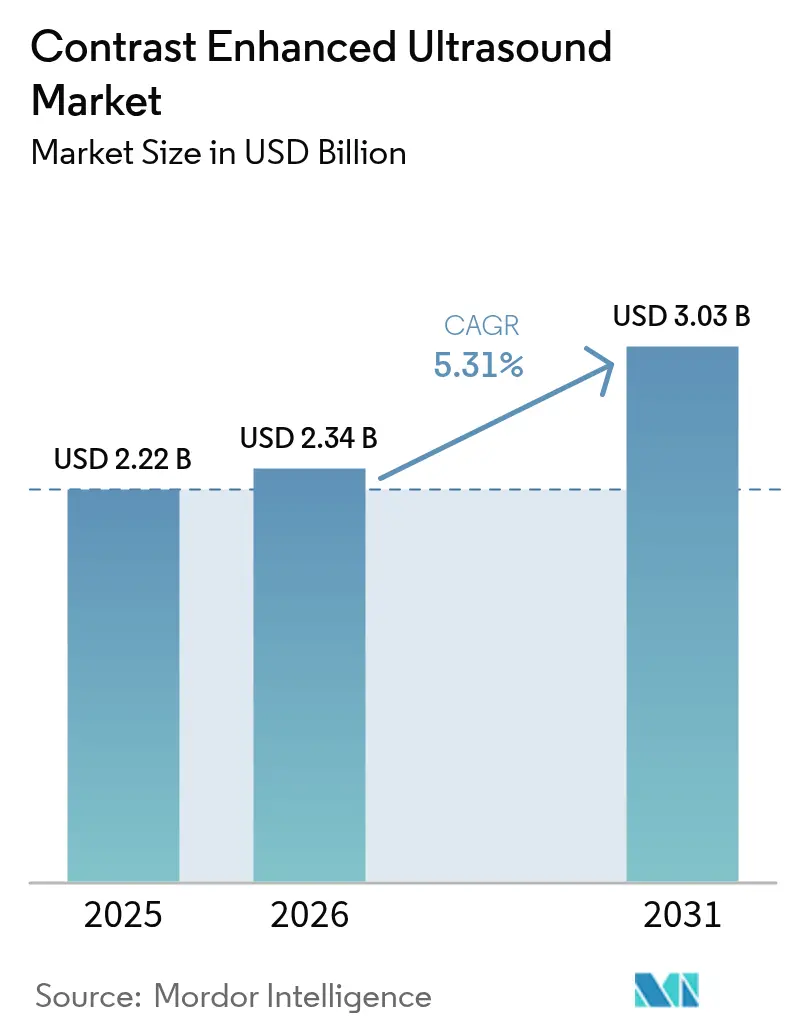
Contrast Enhanced Ultrasound Market size in 2026 is estimated at USD 2.34 billion, growing from 2025 value of USD 2.22 billion with 2031 projections showing USD 3.03 billion, growing at 5.31% CAGR over 2026-2031.
Demand is propelled by the rising use of radiation-free imaging, the growing burden of cardiovascular and hepatic disorders, and broader point-of-care adoption. Equipment sales remain the largest revenue generator, yet contrast-agent volumes are accelerating as new microbubble formulations deepen clinical utility. Asia is the fastest-growing geography on the back of infrastructure expansion in China and Japan, while oncology leads application growth as CEUS becomes integral to tumor characterization. Strategic investments by vendors and governments are shortening innovation cycles even as regulatory hurdles and workforce shortages temper near-term momentum.
Key Report Takeaways
- By product type, equipment commanded 61.42% of the contrast-enhanced ultrasound market share in 2025; contrast agents are advancing at an 10.74% CAGR through 2031.
- By technology, non-targeted CEUS held 88.07% of the contrast-enhanced ultrasound market share in 2025, whereas targeted CEUS is projected to grow at 14.02% CAGR between 2026-2031.
- By application, cardiovascular imaging captured 40.64% of the contrast-enhanced ultrasound market size in 2025, and oncology is expected to register the fastest growth rate of 12.11% from 2025 to 2031.
- By end-user, hospitals accounted for a 69.03% share of the contrast-enhanced ultrasound market size in 2025, while diagnostic imaging centers are expected to expand at a 10.04% CAGR through 2031.
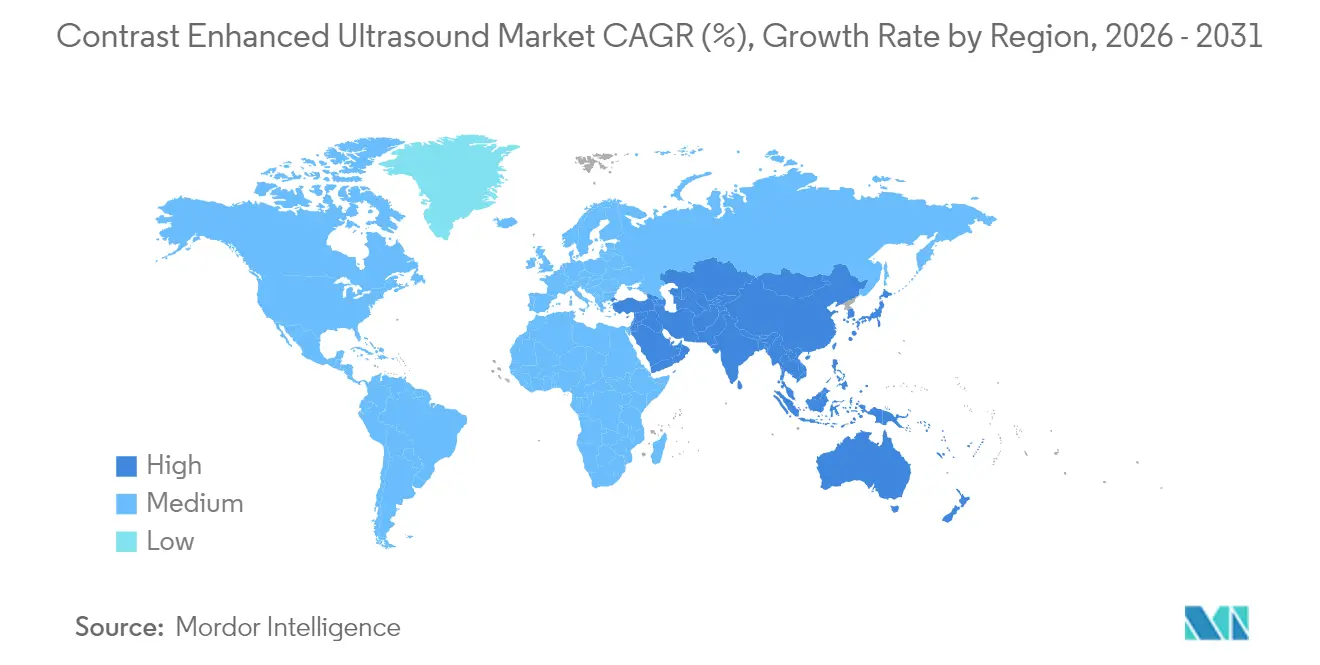
- By geography, North America commanded 36.88% of the 2025 contrast-enhanced ultrasound market share; Asia-Pacific is set to grow at 9.41% CAGR to 2031.
Note: Market size and forecast figures in this report are generated using Mordor Intelligence’s proprietary estimation framework, updated with the latest available data and insights as of 2026.
Market Trends and Insights
Drivers Impact Analysis of Contrast Enhanced Ultrasound Market*
| Driver | (~) % Impact on CAGR Forecast | Geographic Relevance | Impact Timeline |
|---|---|---|---|
| Chronic cardiovascular & hepatic disease burden | +2.1% | North America, Europe, global emerging economies | Medium term (2-4 years) |
| Shift toward radiation-free imaging | +1.8% | Global (early uptake in North America & Europe) | Long term (≥ 4 years) |
| Expansion of point-of-care ultrasound | +1.2% | North America, Europe, major Asian metros | Medium term (2-4 years) |
| Government & private investment surge | +0.9% | North America, Europe, Asia | Short term (≤ 2 years) |
| Rising demand for minimally invasive diagnostics | +0.7% | Global | Long term (≥ 4 years) |
| Technological advances in microbubble agents | +0.6% | Global research hubs | Medium term (2-4 years) |
| Source: Mordor Intelligence | |||
Rising Burden of Chronic Cardiovascular & Hepatic Diseases Necessitating Real-Time Perfusion Imaging
Steady growth in cardiac and liver pathologies heightens demand for dynamic perfusion assessment. CEUS delivers real-time visualization of microvascular flow that conventional B-mode ultrasound misses, achieving 86% sensitivity and 91.3% specificity for differentiating malignant from benign liver lesions in multi-center trials.[1]Tian-Hua Tian et al., “Diagnostic Performance of CEUS in Liver Lesions,” Journal of Clinical Medicine, jclinmed.com These performance gains reduce secondary imaging and support earlier interventions, promoting wider procedural adoption across tertiary centers in North America and Europe.
Shift Toward Radiation-Free Imaging for Pediatric & Pregnant Populations
Concerns over ionizing radiation continue to steer clinicians toward ultrasound. CEUS provides diagnostic performance comparable with CT or MRI while eliminating radiation and nephrotoxicity risks. Severe adverse reactions occur in fewer than 0.01% of administrations, according to the Cleveland Clinic.[2]Cleveland Clinic, “Ultrasound Contrast Agent Safety Update,” clevelandclinic.org Policy directives in Europe and updated pediatric guidelines in the United States further reinforce this transition, encouraging hospitals to embed CEUS pathways in routine pediatric liver and renal work-ups.
Expansion of Point-of-Care Ultrasound Platforms in Emergency & Critical Care
Bedside CEUS integrated into portable systems accelerates triage for trauma, stroke, and cardiac emergencies. Studies presented at RSNA 2024 showed 45-minute faster bleeding source identification compared with CT pathways in abdominal trauma cases.[3]Radiological Society of North America, “Contrast Ultrasound in Trauma,” rsna.org Vendors such as GE HealthCare have embedded AI tools into new point-of-care models, allowing generalists to obtain diagnostic-grade images rapidly, which reduces downstream imaging cascade and saves ICU resources.
Growing Investments by Government and Private Organizations
Capital projects and acquisitions are enlarging capacity and diversifying product lines. Bracco’s USD 90.1 million Hexagon facility in Geneva will triple global supply of ultrasound contrast vials, addressing earlier shortages. GE HealthCare’s USD 51 million purchase of Intelligent Ultrasound injects real-time AI analytics into its premium scanners, raising the competitive bar for workflow efficiency. Public research grants in China and the EU further underwrite translational trials that expand labeled indications.
Restraints Impact Analysis of Contrast Enhanced Ultrasound Market*
| Restraint | (~) % Impact on CAGR Forecast | Geographic Relevance | Impact Timeline |
|---|---|---|---|
| Limited pool of CEUS-trained sonographers | –1.5% | Emerging markets, rural North America & Europe | Medium term (2-4 years) |
| Regulatory delays for novel contrast agents | –0.8% | Highest in United States, moderate elsewhere | Long term (≥ 4 years) |
| High capital cost of premium systems | –0.7% | Asia, Africa, Latin America | Short term (≤ 2 years) |
| Adverse reaction & safety concerns | –0.4% | Global | Short term (≤ 2 years) |
| Source: Mordor Intelligence | |||
Limited Availability of CEUS-Trained Sonographers
A 2024 Journal of Diagnostic Medical Sonography survey found 42% of professionals cite inadequate training as the chief obstacle to CEUS deployment. Skill shortages lengthen exam scheduling and curb utilization, especially in smaller hospitals lacking structured mentorship. Large vendors now bundle e-learning modules with console purchases, yet adoption in emerging economies lags, constraining volume growth in regions that would benefit most from radiation-free imaging.
Stringent & Lengthy Regulatory Pathways for Novel Contrast Agents
Contrast agents are regulated as both pharmaceuticals and devices, extending approval timelines beyond 5 years in the United States. Although post-marketing surveillance shows strong safety records, targeted agents face extra scrutiny owing to biologic conjugates. These hurdles elevate development costs and discourage smaller entrants, slowing innovation velocity.
*Our forecasts treat driver/restraint impacts as directional, not additive. The impact forecasts reflect baseline growth, mix effects, and variable interactions.
Contrast Enhanced Ultrasound Market Segment Analysis
By Product Type:
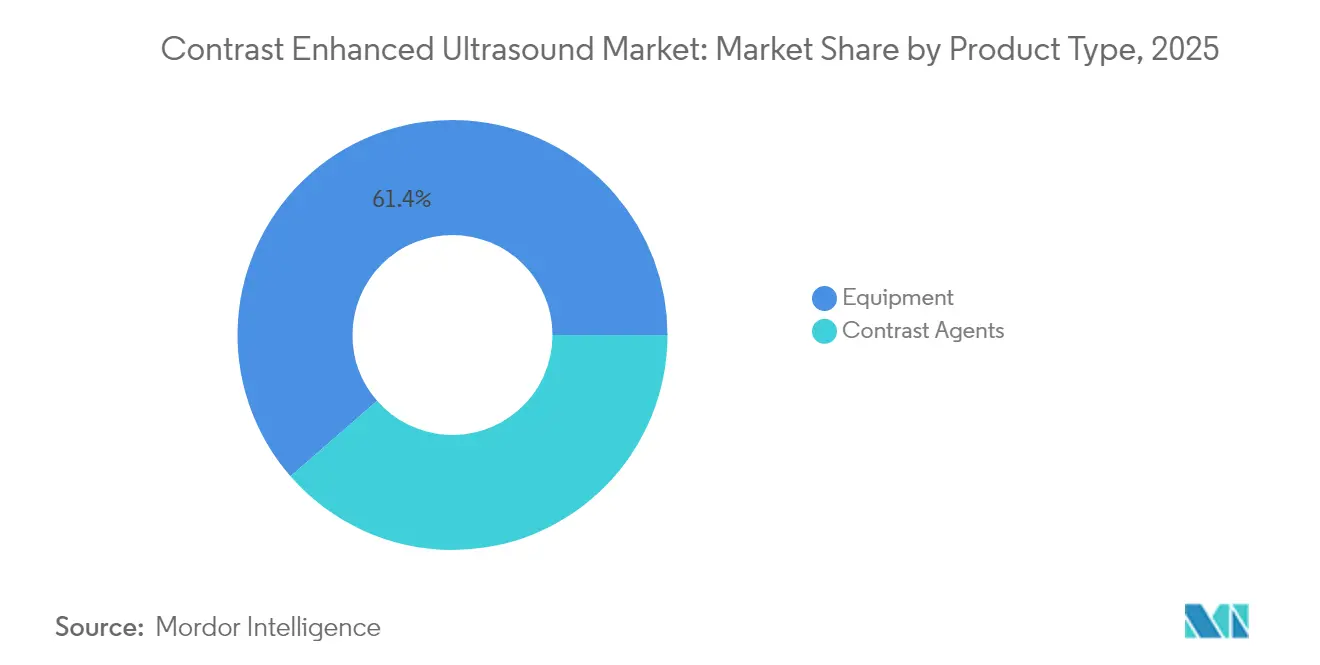
Equipment Dominates but Agents AccelerateIn 2025, equipment generated 61.42% of revenue within the contrast enhanced ultrasound market. Hospitals prize multi-purpose premium consoles for their versatility across abdominal, cardiac, and obstetric imaging. The contrast enhanced ultrasound market size for equipment is projected to climb steadily alongside replacement cycles in North America and Europe. Meanwhile, contrast agents are expanding at 10.74% CAGR thanks to broader procedure counts and the approval of safer sulfur-hexafluoride microbubbles. Bracco’s Hexagon plant will remove historical supply bottlenecks and underpin double-digit shipment growth across Asia and Latin America. Innovation momentum is strongest in targeted agents that enable molecular imaging, an area attracting collaborative R&D between biotech firms and scanner OEMs.
Demand synergies are evident: every incremental console installation spurs recurring consumable sales, while new agents trigger software upgrades that differentiate vendors. Bundled service contracts that combine transducer warranties and agent purchasing agreements are creating stickier customer relationships. Emerging economies, however, still favor cost-effective mid-tier machines paired with generic microbubbles, hinting at a bifurcated purchasing landscape that challenges single-price global strategies.



By Technology:
Targeted CEUS Emerges from Niche to Growth EngineNon-targeted CEUS held 88.07% of revenue in 2025, anchored by broad regulatory clearance and established clinical protocols. The contrast enhanced ultrasound market size for non-targeted exams continues to rise, driven by cardiology and abdominal imaging volumes. Yet targeted CEUS is gaining traction as academic centers validate ligand-specific microbubbles for oncology and inflammation.
The segment’s 14.02% CAGR to 2031 reflects a pipeline of agents aimed at VEGF, integrins, and immune checkpoints. Early adopters in Europe are publishing encouraging results on drug-response monitoring, opening reimbursement discussions. Obstacles remain: longer regulatory reviews and interpretive complexity require tighter radiologist–clinician collaboration. Still, targeted imaging aligns with precision medicine trends, positioning the modality for outsized sampling in oncology trials and immune-therapy monitoring.
By Application:
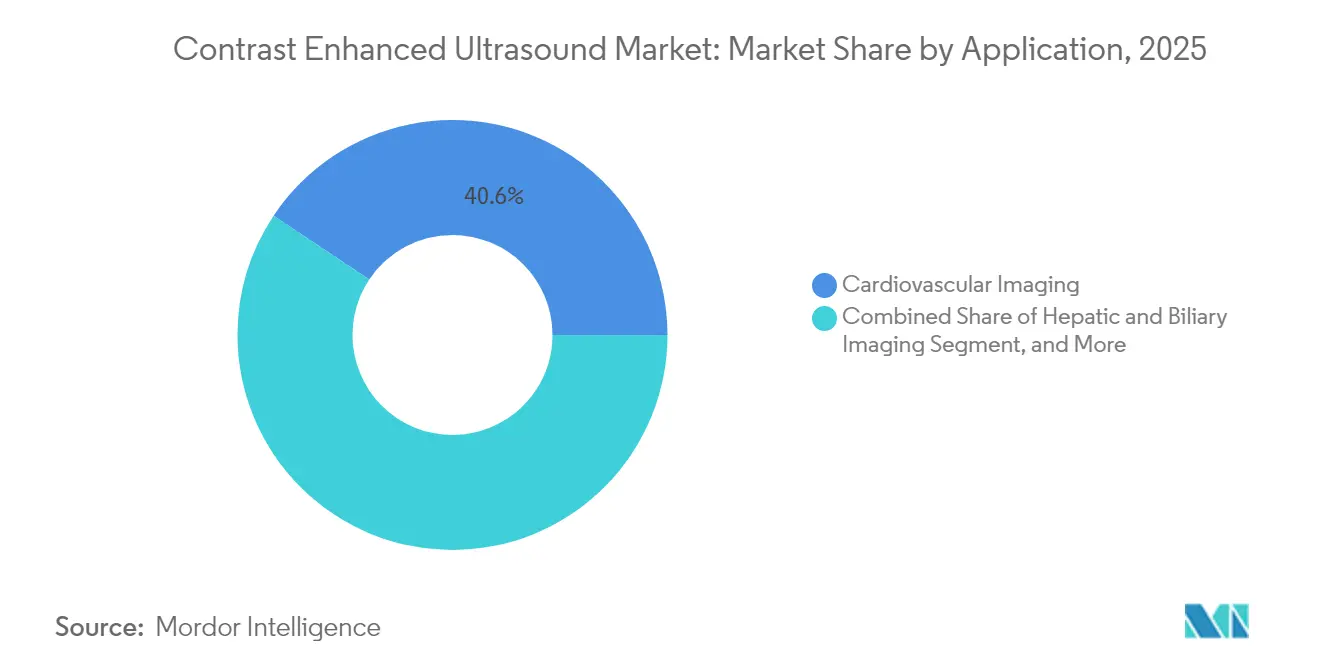
Cardiovascular Stable, Oncology AcceleratingCardiovascular exams accounted for 40.64% revenue in 2025, supported by echo labs that rely on CEUS for endocardial border definition and myocardial perfusion. The contrast enhanced ultrasound market share for cardiology remains sizable as guideline revisions in 2025 recommend CEUS before nuclear studies in patients with suboptimal acoustic windows.
Oncology exhibits the sharpest trajectory, climbing 12.11% CAGR as microvascular characterization becomes pivotal in liver, renal, and breast tumor work-ups. CEUS accurately detects lesions under 2 cm with 88.9% accuracy, shrinking diagnostic delays. Additionally, CEUS guides ablation therapies and assesses early response, minimizing repeat CT scans. Hepatic and biliary uses remain core, while urology and obstetric applications are expanding through investigational studies that highlight safety in impaired renal function and pregnancy.
By End User:
Hospitals Lead, Diagnostic Centers Gain GroundHospitals captured 69.03% of the contrast enhanced ultrasound market in 2025, leveraging consolidated budgets and multidisciplinary case mix. Academic hospitals pioneer new applications, securing research grants that finance high-end consoles. Nonetheless, diagnostic imaging centers show a 10.04% CAGR as outpatient volumes shift from inpatient settings.
Favorable reimbursement, shorter wait times, and increasing patient preference for community-based imaging drive this rise. The contrast enhanced ultrasound market size for independent centers in Asia could double by 2030 as governments encourage private participation to relieve public-sector loads. Ambulatory surgical centers adopt CEUS for immediate pre- and post-procedure evaluation, reinforcing the shift toward decentralized care.
Geography Analysis
North America and Europe Contrast Enhanced Ultrasound Market
North America commanded 36.88% revenue in 2025, supported by early FDA approvals and robust reimbursement. Numerous teaching hospitals lead CEUS guideline formulation, ensuring rapid diffusion into community practice. Canada’s inclusion of CEUS in national hepatocellular carcinoma pathways further cements leadership. Europe ranks second, with Germany and the United Kingdom emphasizing radiation-dose mitigation; the European Federation of Societies for Ultrasound in Medicine and Biology’s updated 2024 guidelines codify best practices and foster uniform quality across member states.
APAC Contrast Enhanced Ultrasound Market
Asia delivers the highest growth at 9.41% CAGR. China’s Healthy China 2030 plan prioritizes advanced imaging, funneling subsidies toward provincial hospitals that adopt CEUS. Japan’s rapidly aging population drives cardiovascular and oncologic imaging, and local vendors introduce compact scanners tailored to clinic use. India remains nascent but exhibits strong potential as awareness grows and local distributors market competitively priced consoles.
LATAM and MEA Contrast Enhanced Ultrasound Market
Latin America and the Middle East & Africa trail in aggregate adoption, weighed by capital constraints and limited practitioner training. Multilateral development banks fund select pilot sites, hinting at gradual diffusion. Government partnerships with leading vendors could quicken momentum if bundled equipment-training packages lower entry barriers.

Regulatory Landscape
Contrast-enhanced ultrasound (CEUS) is governed by a split regulatory model in major markets: ultrasound systems and CEUS software modes are regulated as medical devices, while ultrasound contrast agents are regulated as medicinal products or drugs. This creates parallel compliance and surveillance obligations for manufacturers and providers. In the United States, CEUS agents are FDA-regulated drugs, with Lumason (Bracco Diagnostics), Definity (Lantheus Medical Imaging), and Optison (GE HealthCare) among the established approvals, while ultrasound equipment follows FDA device pathways and quality-system requirements.
Regulatory and standards updates are tightening execution requirements across regions. The US FDA Quality Management System Regulation (QMSR) took effect on February 2, 2026, updating CGMP expectations for device manufacturers, and EN IEC 60601-2-37:2024 provides safety and essential performance expectations for diagnostic ultrasound equipment. In China, standard YY/T 1919-2023 (implemented September 15, 2024) specifies test methods for performance of contrast-enhanced ultrasound imaging equipment, supporting more standardized verification for CEUS-capable systems entering the market.
Competitive Landscape
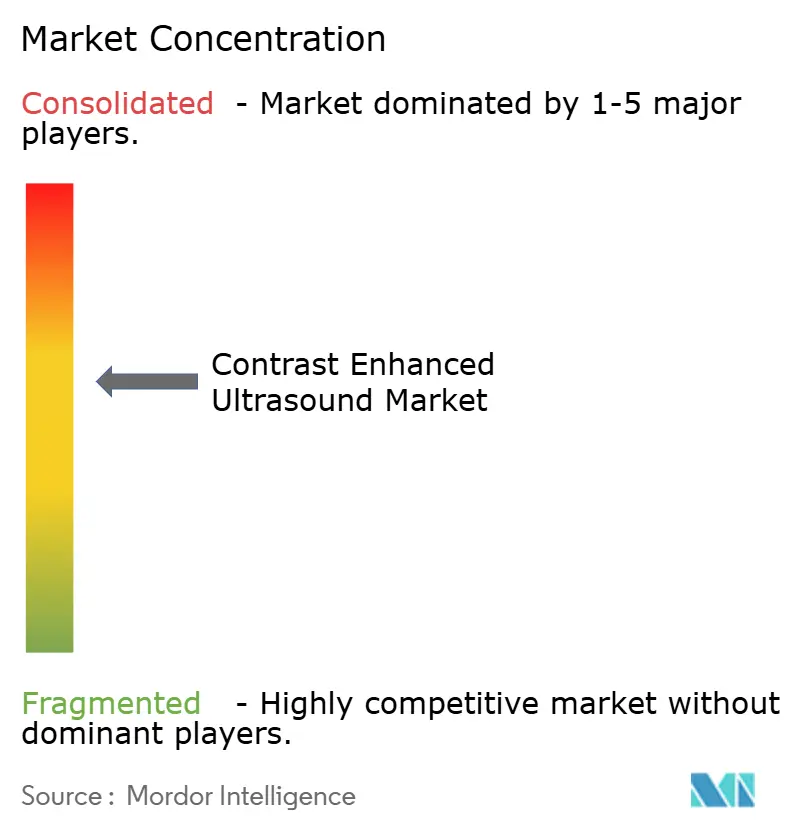
The market is moderately concentrated. In the contrast-enhanced ultrasound market, global players maintain strong positions through diverse imaging portfolios and extensive service networks. Specialized firms lead in contrast-agent development, while regional manufacturers continue to expand their presence by capitalizing on local market strengths. GE HealthCare’s 2024 acquisition of Intelligent Ultrasound infuses real-time AI into its Versana and LOGIQ lines, differentiating workflows with automated border detection. Siemens’ Acuson Sequoia 3.5 integrates AI Abdomen packages that cut exam time by 20%.
Strategic alliances are intensifying. Samsung Medison’s 2024 MoU with Bracco pairs hardware innovation with consumable supply, promising bundled clinical solutions. Cost-focused Chinese manufacturers such as Mindray and SonoScape target rural markets with sub-USD 50,000 consoles, threatening incumbent share in price-sensitive segments. Companies are building competitive advantages through proprietary technologies, such as high-MI contrast modes and patented microbubble formulations. To address skill gaps among users, many also invest in training platforms for sonographers, helping strengthen customer loyalty and ecosystem integration.
Contrast Enhanced Ultrasound Industry Leaders
Siemens Healthineers AG
GE Healthcare
Bracco Diagnostic Inc.
Koninklijke Philips N.V.
Leriva Group
- *Disclaimer: Major Players sorted in no particular order
Contrast Enhanced Ultrasound Market Companies Covered in this Report
- Bracco
- Lantheus
- GE HealthCare Technologies Inc.
- Siemens Healthineers
- Koninklijke Philips
- Daiichi-Sankyo Co. Ltd.
- Canon
- Samsung Medison Co. Ltd.
- Esaote S.p.A.
- Mindray
- Hitachi Healthcare (Fujifilm)
- Guerbet SA
- Trivitron Healthcare
- Chison Medical Imaging Co. Ltd.
- Terason
- Sonoscape Medical Corp.
- Supersonic Imagine SA (Hologic)
- FUJIFILM VisualSonics Inc.
- Leriva Group

Market Opportunities and Future Outlook
Workflow and standardization represent clear whitespace, particularly where staffing constraints limit CEUS throughput. A practical signal is the push toward automated, repeatable contrast preparation and delivery in cardiology and point-of-care settings. Agitated Solutions received a CE Mark in May 2026 for the Orbis microbubble generator, which is intended to automate and standardize bubble studies in echocardiography. Professional bodies are also formalizing practice pathways that can unlock capacity, with the International Contrast Ultrasound Society (ICUS) publishing expert consensus supporting sonographer administration of contrast agents at the point of care under appropriate supervision, which targets a key operational barrier for hospitals and diagnostic imaging centers.
Platform competition is widening access to CEUS capabilities beyond the incumbent premium ultrasound base, creating openings in price-sensitive and fast-expanding geographies. In May 2026, Wuhan United Imaging Healthcare secured US FDA 510(k) clearances for the uSONIQUE ultrasound series, including CEUS and MicroFlow imaging capabilities, adding another CEUS-capable platform option for providers and procurement channels. Adoption is also getting more structure in specific clinical areas, including updated guidance for breast CEUS: the Chinese Association of Ultrasound in Medicine and Engineering released an updated 2025 edition of clinical practice recommendations in January 2026, supporting standardized technique and reporting for oncology-adjacent breast imaging pathways.
Recent Industry Developments in Contrast Enhanced Ultrasound Market
- May 2026: ACIST Medical Systems (a Bracco company) announced US FDA clearance for the ACIST Pro Diagnostic System, positioning it as a contrast management solution for cardiovascular procedures. The clearance expands Bracco-linked workflow offerings alongside contrast agent supply, supporting more standardized administration in cath lab and cardiovascular imaging environments.
- August 2025: GE HealthCare launched the Vivid Pioneer cardiovascular ultrasound system and noted both CE Mark and US FDA 510(k) clearance for the platform. The launch raises competitive intensity in echocardiography by pairing a new system generation with AI-powered imaging capabilities aimed at improving exam consistency and productivity.
- May 2024: Inteleos and the International Contrast Ultrasound Society (ICUS) formed a partnership to develop a standardized education and certification ecosystem for contrast-enhanced ultrasound (CEUS). Building common training and credentialing pathways supports broader clinical deployment by reducing operator variability and addressing a key constraint: limited availability of CEUS-trained personnel.


Contrast Enhanced Ultrasound Market Report Scope and Research Methodology
Market Definition and Coverage
This market covers the revenue generated from contrast enhanced ultrasound (CEUS) used in clinical imaging, where contrast agents are administered and ultrasound equipment is used to create enhanced diagnostic images across key care settings and indications.
Scope exclusions: Standard ultrasound exams that do not use contrast agents are excluded, along with unrelated imaging modalities such as CT and MRI contrast media.
Segments Covered in This Report
- By Product Type
- Equipment
- Contrast Agents
- By Technology
- Non-targeted CEUS
- Targeted CEUS
- By Application
- Cardiovascular Imaging
- Hepatic & Biliary Imaging
- Renal & Urological Imaging
- Obstetrics & Gynecology
- Oncology & Tumor Characterisation
- Others
- By End User
- Hospitals
- Diagnostic Imaging Centers
- Ambulatory Surgical Centers
- Academic & Research Institutes
- By Geography
- North America
- United States
- Canada
- Mexico
- Europe
- Germany
- United Kingdom
- France
- Italy
- Spain
- Rest of Europe
- Asia-Pacific
- China
- Japan
- India
- Australia
- South Korea
- Rest of Asia-Pacific
- Middle East & Africa
- GCC
- South Africa
- Rest of Middle East & Africa
- South America
- Brazil
- Argentina
- Rest of South America
- North America
Data Sources, Market Sizing, and Validation
Desk Research
Desk research started by building a clear picture of how CEUS is adopted, where it is used, and what typically drives procedure volume and pricing. We referred to public health statistics and clinical utilization signals, including sources such as the World Health Organization, OECD health statistics, the US FDA safety labeling and approvals pages, peer reviewed clinical journals indexed in PubMed, and national health ministries that publish imaging and hospital activity snapshots.
Along with these, we reviewed manufacturer public filings, investor presentations, and medical imaging press to track product launches and broader pricing moves. For cross checks, we also used paid subscriptions focused on company financials and intelligence, plus patent database access to identify innovation themes that can shift adoption. The sources listed here are illustrative only, and many other public and internal references were used for data collection, validation, and clarification during the research.
Primary Interviews and Surveys
Primary work was used to sanity check procedure growth, contrast agent usage rates, and how quickly hospitals and imaging centers are adding CEUS into routine protocols. We spoke with radiology and cardiology stakeholders, procurement teams, and clinical operations leaders, along with channel participants, across the Americas, EMEA, and APAC so assumptions could be corrected where local practice differs.
Distribution of primary research fieldwork respondents
| Company type | Respondent position | Region |
|---|---|---|
| Top tier: 27% | CXOs: 13% | APAC: 51% |
| Mid tier: 53% | Functional/Unit leaders: 39% | EMEA: 31% |
| Smaller Players: 20% | Managers: 48% | Americas: 18% |
Market-Sizing & Forecasting
Sizing was built using a top-down approach where imaging demand indicators are converted into a CEUS addressable pool, then filtered through adoption and spend assumptions. We began with country level healthcare activity signals and imaging capacity, and then applied CEUS penetration and contrast utilization factors by major use areas.
Key inputs used in the model included: estimated CEUS procedure volumes by setting, contrast agent dose usage per exam, average selling prices for contrast agents, equipment replacement and upgrade cycles for compatible ultrasound systems, and regional reimbursement and guideline adoption signals that influence clinician use. Where published data was thin, gaps were handled through conservative ranges, then narrowed using interview feedback and cross checks against import or trade patterns for relevant products when applicable.
Forecasting relied mainly on scenario analysis, since adoption tends to move in steps when guidelines expand, new indications get approved, or reimbursement improves. In each scenario, we projected procedure growth, penetration change, and price movement separately, then combined them to estimate revenue in a way that can be repeated and audited.
Data Validation & Update Cycle
Outputs were checked against independent signals such as regional imaging utilization direction, hospital budget cycles, and the expected pace of contrast agent uptake shared by practitioners. If a country model showed unusual jumps, the assumptions were re-tested, and follow-up calls were used to confirm whether the change reflected real practice shifts or a data artifact.
Before sign-off, the model is reviewed in steps by another analyst to ensure definitions, conversions, and growth logic are consistent across regions. The report is refreshed annually, and interim updates are made when material events occur, such as a major regulatory change, a meaningful pricing move, or a new clinical indication that changes adoption. Right before delivery, a final pass is completed so the numbers reflect the most current verified view.
Mordor Intelligence's Contrast Enhanced Ultrasound Market Size Compared Against Other Published Estimates
Published CEUS market values often differ because each publisher selects its own year, scope, and the way equipment and contrast agents are counted. Differences also show up when one estimate leans more on shipment style signals while another ties the market to procedure use and pricing.
The main gap comes from whether recurring contrast agent spend is sized as procedure driven demand or blended with broader ultrasound system revenue, which is why Mordor Intelligence keeps equipment and contrast agents inside the CEUS scope but anchors agent revenue to dose usage and exam volume rather than assuming a uniform attachment rate across all installed systems.
Benchmark comparison
| Source | Market Size | Gaps in Research Methodology |
|---|---|---|
| Mordor Intelligence | USD 2.34 B (2026) | |
| Industry Publisher A | USD 2.04 B (2024) | Uses a different base year and may apply broader ultrasound system revenue assumptions, which can shift totals when CEUS enabled features are counted beyond contrast driven procedures. |
| Industry Publisher B | USD 1.89 B (2025) | Starts from a 2025 base and can be more conservative on near term penetration, especially where reimbursement and guideline uptake are assumed to move slowly across end users. |
The spread across the table mostly reflects year choice and how exam driven contrast usage is translated into revenue, especially when equipment is treated as a broader platform sale. By keeping assumptions tied to a small set of checkable inputs, like procedure direction, dose usage, and pricing, the estimate stays transparent and easier to reconcile across regions.


Key Questions Answered in the Report
What is the current value of the contrast enhanced ultrasound market?
The market stands at USD 2.34 billion in 2026 and is projected to rise to USD 3.03 billion by 2031 at a 5.31% CAGR.
Which segment is growing fastest within the contrast enhanced ultrasound market?
Oncology applications are expanding the quickest, registering a 12.11% CAGR through 2031 as CEUS gains prominence in tumor detection and therapy monitoring.
Why are contrast agents expected to outpace equipment sales?
New microbubble formulations tailored to specific clinical tasks, coupled with rising procedure volumes, propel contrast-agent revenue at an 10.74% CAGR compared with more modest equipment replacement growth.
Which region shows the highest growth potential?
Asia Pacific is projected to achieve a robust 9.41% CAGR, bolstered by healthcare infrastructure upgrades and higher chronic disease prevalence in China and Japan.
What are the main hurdles restraining market expansion?
A shortage of CEUS-trained sonographers, stringent regulatory reviews for novel agents, and high capital costs for premium consoles collectively temper adoption, particularly in emerging economies.
How does CEUS benefit pediatric and pregnant populations compared with CT or MRI?
CEUS delivers diagnostic-grade imaging without ionizing radiation or nephrotoxic contrast, offering a safer alternative that aligns with radiation-dose reduction mandates for vulnerable groups.
Page last updated on:





