
Cerebral Palsy Treatment Market Size and Share
Market Overview
| Study Period | 2020 - 2031 |
|---|---|
| Forecast Data Period | 2026 - 2031 |
| Market Size (2026) | USD 3.76 Billion |
| Market Size (2031) | USD 4.39 Billion |
| Growth Rate (2026 - 2031) | 3.18 % |
| Fastest Growing Market | Asia-Pacific |
| Largest Market | North America |
Major Players *Disclaimer: Major Players sorted in no particular order Image © Mordor Intelligence. Reuse requires attribution under CC BY 4.0. | |
Cerebral Palsy Treatment Market Analysis by Mordor Intelligence
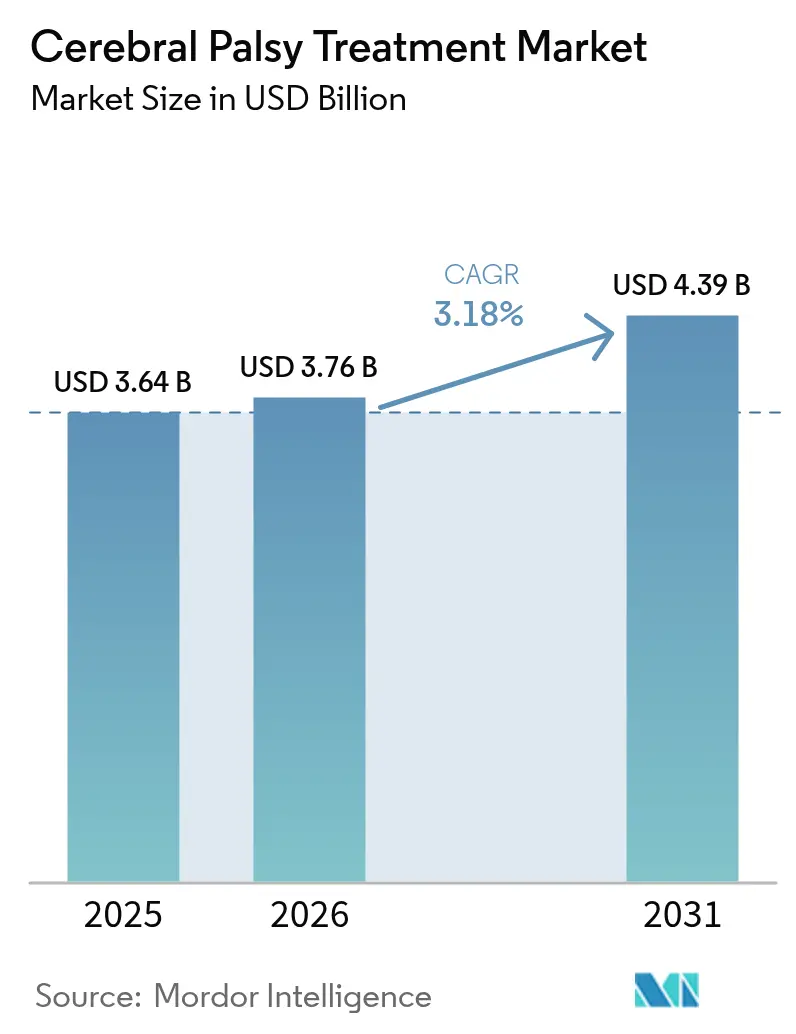
The cerebral palsy treatment market size was valued at USD 3.64 billion in 2025 and estimated to grow from USD 3.76 billion in 2026 to reach USD 4.39 billion by 2031, at a CAGR of 3.18% during the forecast period (2026-2031). Continued demand for botulinum-toxin injections, growing adoption of programmable intrathecal baclofen pumps, and steady reimbursement expansion underpin this moderate headline growth. Behind the topline numbers, artificial-intelligence-enabled gait analysis, soft exoskeletons, and adaptive neuromodulation are shifting clinical pathways toward earlier, less invasive, and more personalized care. Regulatory agencies in the United States and Europe now expedite clearances for mini-pump systems and long-acting botulinum-toxin formulations, shortening commercialization timelines and broadening patient access. Simultaneously, Asia-Pacific governments invest in pediatric neuro-rehabilitation hubs that integrate robotics and tele-monitoring, creating attractive downstream opportunities for device manufacturers. Technology convergence also fuels the home-care segment, where portable stimulators and remote dashboards reduce hospital dependency while improving quality-of-life metrics.
Key Report Takeaways
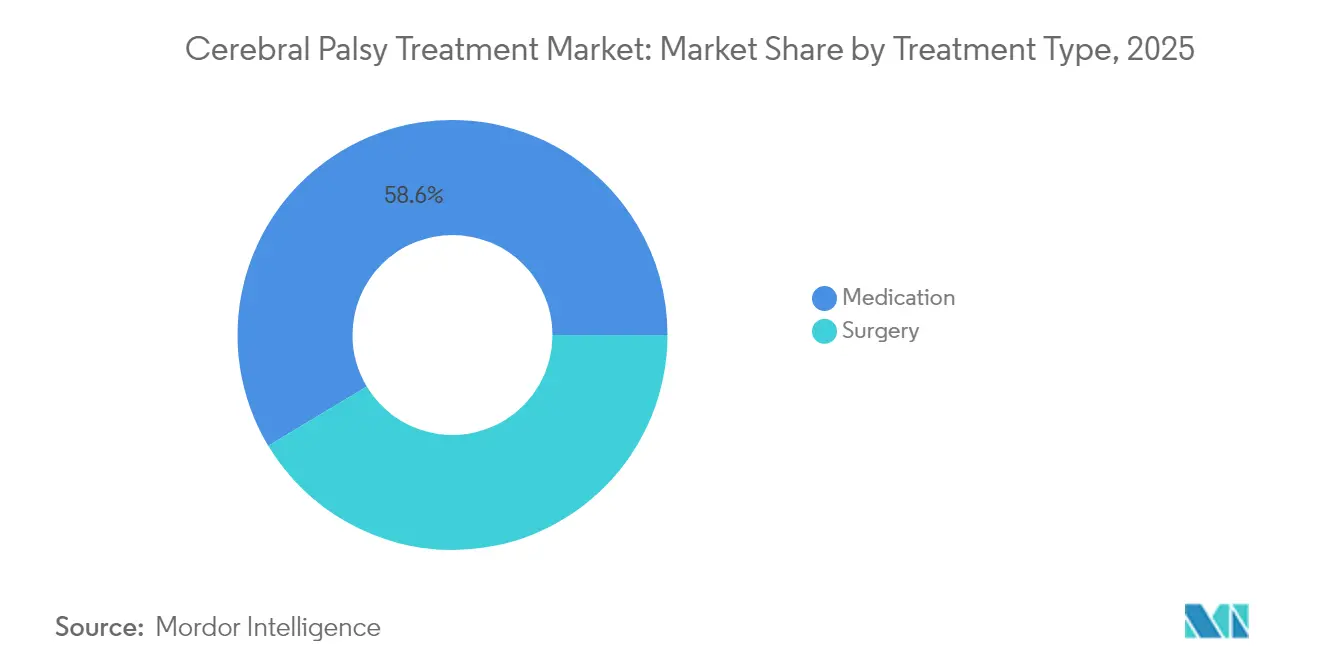
- By treatment type, medication interventions led with 58.61% revenue share of the cerebral palsy treatment market in 2025, while surgical procedures are projected to advance at a 3.82% CAGR through 2031.
- By type of cerebral palsy, spastic presentations accounted for 68.15% of the cerebral palsy treatment market share in 2025, whereas the dyskinetic subset is poised to grow quickest at 4.19% CAGR over the forecast window.
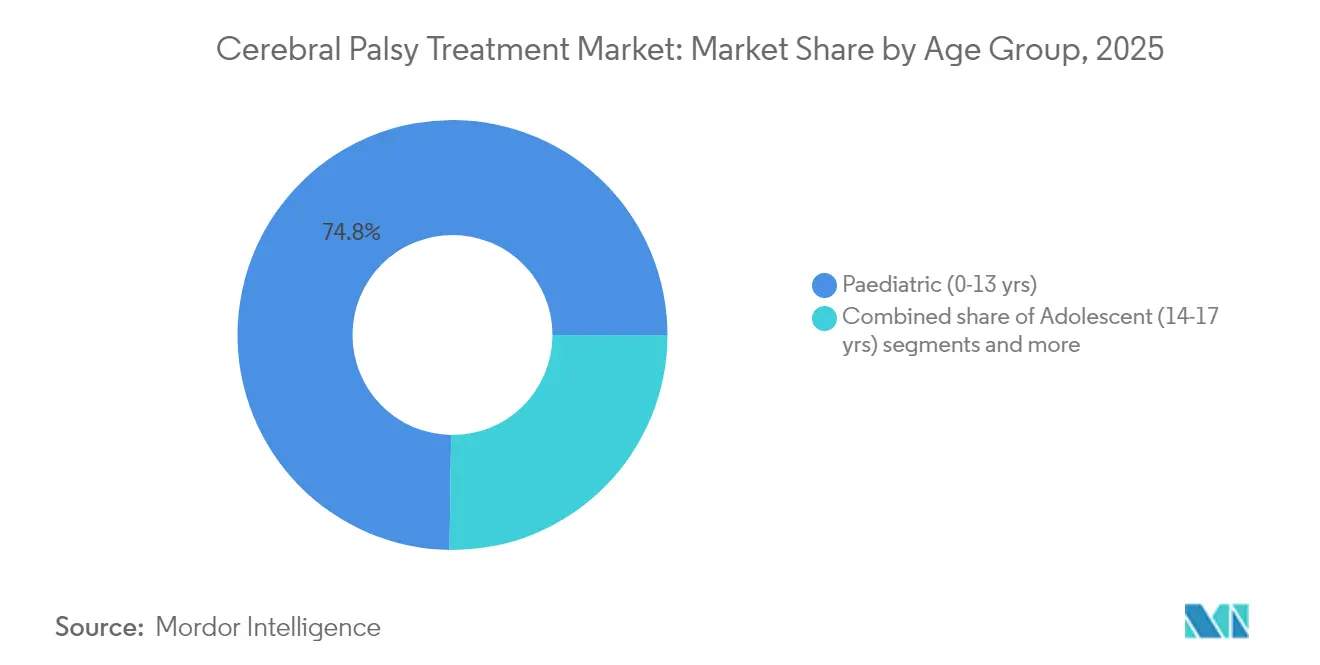
- By age group, children aged 0–13 years represented 74.78% of the cerebral palsy treatment market size in 2025 and are set to expand at a 4.87% CAGR to 2031.
- By end user, hospitals retained 53.10% share in 2025, yet home-care settings will register the fastest 4.74% CAGR as tele-rehab and wearables gain traction.
Note: Market size and forecast figures in this report are generated using Mordor Intelligence’s proprietary estimation framework, updated with the latest available data and insights as of 2026.
Market Trends and Insights
Drivers Impact Analysis of Cerebral Palsy Treatment Market*
| Driver | (~) % Impact on CAGR Forecast | Geographic Relevance | Impact Timeline |
|---|---|---|---|
| Rising diagnosis rates due to universal neonatal screening | +0.8% | Global, with early adoption in North America & EU | Medium term (2-4 years) |
| Wider reimbursement for botulinum-toxin injections | +0.6% | North America & EU core, expanding to APAC | Short term (≤ 2 years) |
| Mini-pump intrathecal baclofen gaining FDA/CE clearances | +0.4% | Global, led by North America regulatory approvals | Medium term (2-4 years) |
| Growth of paediatric neuro-rehab centres in Asia-Pacific | +0.5% | APAC core, spill-over to MEA | Long term (≥ 4 years) |
| AI-guided gait analysis enabling personalised orthotics | +0.3% | North America & EU, expanding globally | Long term (≥ 4 years) |
| Spinal neuromodulation + ABNT showing Phase II efficacy | +0.2% | North America & EU research centers | Long term (≥ 4 years) |
| Source: Mordor Intelligence | |||
Rising Diagnosis Rates via Neonatal Screening
Universal neonatal screening now incorporates General Movement Assessment and Hammersmith Infant Neurological Examination protocols capable of predicting cerebral palsy with more than 95% accuracy in infants under five months. Earlier identification accelerates therapy initiation during peak neuroplasticity windows, which improves gross-motor outcomes and lowers long-term care costs. Systematic reviews of wearable accelerometers confirm high sensitivity and specificity for early motor-development assessment. Governments that link metabolic newborn screening with neuro-developmental referral networks report declining disability burden and reduced surgical demand in later childhood. These successes explain why neonatal screening programs are spreading from the United States and Western Europe to high-volume maternity hospitals in Nepal and Indonesia.
Broader Reimbursement for Botulinum-Toxin Injections
Recent Centers for Medicare & Medicaid Services regulations cover botulinum-toxin use in upper and lower limb spasticity, removing previous age and dosage caps. Long-acting formulations such as daxibotulinumtoxinA extend clinical benefit to 28 weeks, cutting annual injection frequency in half and heightening compliance. Expanded coverage drives hospital formularies to stock Dysport, Botox, and Xeomin, fostering competitive pricing. European payers are adopting similar protocols, and pilot reimbursement schemes in India and Brazil earmark subsidies for pediatric spasticity care. Cumulative uptake helps sustain the cerebral palsy treatment market even as drug prices moderate in mature economies.
Mini-Pump Intrathecal Baclofen Clearances
Programmable intrathecal baclofen (ITB) pumps such as Medtronic’s SynchroMed III deliver precise spinal dosing that cuts systemic side effects while lowering oral baclofen requirements by 90%. Meta-analysis finds a 40.25% reduction in spasticity scores and 9.62% motor-function gain after pump implantation. Pediatric-sized pumps now reach CE and FDA approvals, enabling implantation in children weighing as little as 13 kg. Device telemetry allows clinicians to adjust dosing remotely, promoting outpatient titration and reducing clinic visits. High patient satisfaction—99% of users request pump replacement at battery end-of-life—adds commercial momentum for vendors.
Expansion of Pediatric Neuro-Rehab Centers in APAC
Across Asia-Pacific, governments and private investors co-fund centers that integrate robotics, virtual-reality therapy, and AI-based motion capture. Hope Abilitation Medical Center exemplifies the model, offering interdisciplinary care that bundles physiotherapy, speech therapy, and feeding programs under one roof. These hubs recruit international clinicians, embed tele-consult platforms to reach rural districts, and attract medical tourists from the Gulf and Africa. Regional birth-rate trends guarantee a sustained pediatric caseload, while insurance schemes in Singapore, South Korea, and the United Arab Emirates now reimburse intensive neuro-rehab sessions. Collectively, these initiatives give the cerebral palsy treatment market its highest regional CAGR through 2030.
Restraints Impact Analysis of Cerebral Palsy Treatment Market*
| Restraint | (~) % Impact on CAGR Forecast | Geographic Relevance | Impact Timeline |
|---|---|---|---|
| High therapy cost for life-long care | -0.9% | Global, particularly acute in emerging markets | Long term (≥ 4 years) |
| Long-term safety concerns with repeat botulinum-toxin use | -0.4% | Global, regulatory scrutiny in North America & EU | Medium term (2-4 years) |
| Shortage of multidisciplinary CP-specialist teams | -0.6% | Global, severe in rural and emerging regions | Long term (≥ 4 years) |
| Limited commercial incentive for adult-onset CP therapies | -0.3% | Global, affecting R&D investment priorities | Long term (≥ 4 years) |
| Source: Mordor Intelligence | |||
High Therapy Cost over Patient Lifetime
Annual direct costs can exceed USD 50,000 when ITB refills, orthotics, and intensive therapy are bundled, a figure that outstrips average household income in many emerging economies. Advanced exoskeletons attract Medicare payments of USD 91,031.93 yet remain unaffordable outside insured markets. For hospitals, capital budgets must cover robotics, motion-capture labs, and neuromodulation suites, limiting adoption to tertiary centers. Caregiver absenteeism and productivity losses add intangible burdens that rarely enter reimbursement calculations. Cost constraints slow market uptake despite proven clinical benefit, applying the largest negative drag on the cerebral palsy treatment market CAGR.
Long-Term Safety Concerns with Repeat Botulinum-Toxin
Systematic reviews note potential antibody development, muscle atrophy, and systemic diffusion after prolonged injection cycles in pediatric cohorts. Regulators now request post-marketing studies tracking cumulative exposure and functional outcomes over ten-year horizons. Clinicians respond by spacing treatments or alternating with phenol neurolysis, which can introduce scheduling gaps that reduce treatment adherence. Payers increase prior-authorization demands, adding administrative delays. These uncertainties discourage some families from pursuing aggressive botulinum-toxin regimens, trimming incremental revenue growth.
*Our forecasts treat driver/restraint impacts as directional, not additive. The impact forecasts reflect baseline growth, mix effects, and variable interactions.
Cerebral Palsy Treatment Market Segment Analysis
By Treatment Type:
Medication Leads, Surgery AcceleratesMedication interventions anchored by botulinum-toxin injections delivered 58.61% of 2025 revenue in the cerebral palsy treatment market. Combination regimens that pair abobotulinumtoxinA with selective physiotherapy reduce spasticity scores within four weeks, reinforcing the clinical status quo. Anticonvulsants and antidepressants address comorbid seizures and mood disorders, enlarging pharmacy baskets and supporting steady prescription renewals. The cerebral palsy treatment market size for surgical procedures is forecast to climb at a 3.82% CAGR, reflecting breakthroughs in minimally invasive selective dorsal rhizotomy and adaptive deep-brain stimulation.
Robotic guidance platforms shorten operative time and enhance precision, reducing postoperative infection rates. Intrathecal baclofen pump implantation straddles medical and surgical domains, delivering 99% device survival at seven years. Spinal neuromodulation trials using percutaneous leads report Ashworth scale improvements from 3.0 to 1.14, sparking interest among payers seeking long-term cost offsets.

By Type of Cerebral Palsy:
Spastic Dominance Spurs Focused InnovationSpastic presentations commanded 68.15% cerebral palsy treatment market share in 2025, ensuring that tone-modulating drugs and neurosurgical options receive disproportionate investment. Continuous infusion of baclofen via micro-pumps stabilizes lower limb posture and reduces surgical hip relocations. Dyskinetic presentations expand at 4.19% CAGR because deep-brain stimulation and novel cerebellar targets now show Phase II promise.
Ataxic subtypes, though numerically smaller, benefit from balance-training robots and transcranial direct-current stimulation under early feasibility studies. Mixed phenotypes often require sequential therapy layering, driving multidrug use and complex care pathways that add to the cerebral palsy treatment industry revenue base.
By Age Group:
Pediatric Care Drives Lifetime DemandChildren under 14 accounted for 74.78% of the cerebral palsy treatment market size in 2025, with universal neonatal screening and AI-based motor assessment accelerating case detection. Early initiation of constraint-induced therapy yields superior fine-motor gains, nurturing steady demand for occupational-therapy services. The segment grows fastest at 4.87% CAGR as governments prioritize early-intervention funding.
Adolescents experience growth-related orthopedic complications that boost surgical volumes, while adults face chronic pain and fatigue, encouraging uptake of multimodal pain management. Transitional clinics bridge pediatric and adult systems to maintain therapy continuity. Wearable exoskeletons like MyoStep adjust to user stature, allowing long-term device use throughout growth phases.
By End User:
Hospital Scale Meets Home-Care FlexibilityHospitals generated 53.10% of 2025 revenue in the cerebral palsy treatment market, supported by multidisciplinary teams and operating-room capacity. Tertiary centers concentrate complex surgeries and research trials, sustaining referral pipelines. Home-care environments will rise at a 4.74% CAGR as portable stimulators and tele-supervised physiotherapy prove clinically equivalent for selected cases.
Rehabilitation centers maintain specialized expertise in gait-training robotics and hydrotherapy pools, while specialty clinics offer one-stop spasticity services that combine injection, orthotics, and therapy. Pay-for-performance models shift follow-up visits to virtual channels, enhancing convenience and reducing caregiver travel costs.
Geography Analysis
North America Cerebral Palsy Treatment Market
North America held 41.85% of 2025 revenue thanks to comprehensive reimbursement, world-class research hospitals, and early adoption of AI-enabled diagnostics. FDA Breakthrough Device designations accelerate time-to-market for neuromodulation and brain-computer interface products, reinforcing the region’s innovation edge. Nonetheless, rural clinics face specialist shortages that impede consistent access, and cost pressures prompt insurers to renegotiate hospital contracts.
Europe Cerebral Palsy Treatment Market
Europe follows with integrated public health systems that prioritize early intervention and multidisciplinary care. CE-marking harmonization enables cross-border device sales, and national formularies have added Dysport pediatric indications, widening market reach. Outcome-registry initiatives support value-based payment models that favor technologies with clear functional-gain metrics.
APAC, South America and MEA Cerebral Palsy Treatment Market
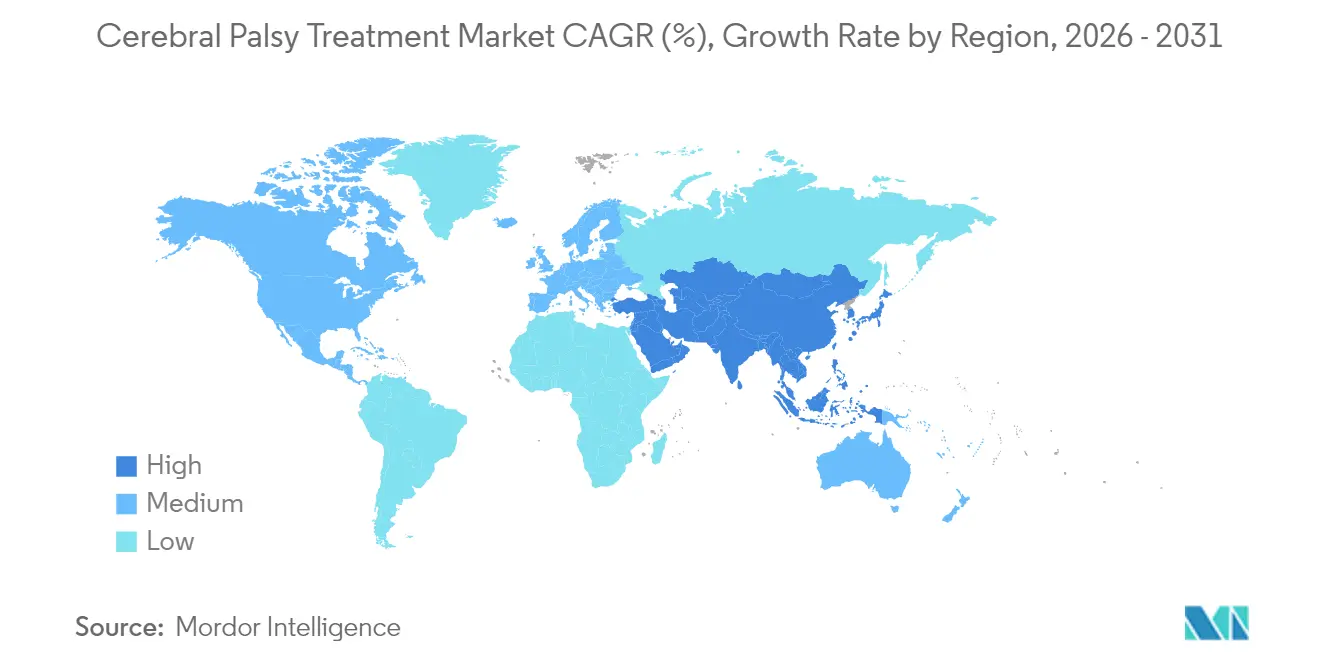
Asia-Pacific delivers the fastest regional CAGR at 4.41% to 2031 as governments invest in pediatric neuro-rehabilitation hubs and expand insurance coverage. High birth rates in India, Indonesia, and the Philippines guarantee a steady patient pipeline, while medical-tourism corridors to Singapore and the United Arab Emirates attract international clientele. Newborn metabolic screening programs in Nepal illustrate the preventive shift underway. South America and the Middle East & Africa remain nascent yet draw investment through public-private partnerships aimed at robotics deployment and tele-medicine networks.
Regulatory Landscape
Regulation spans pharmaceuticals (spasticity drugs and adjunct medications), implantable and non-implantable devices (intrathecal baclofen pumps, orthoses, robotics), and combination care models, with approvals and label expansions shaping access in key markets. In the United States, the FDA continues to update pediatric spasticity frameworks for botulinum neurotoxins, including a 2026 label update expanding the pediatric dosing framework and upper limb spasticity population for Merz Pharma's Xeomin. FDA marketing clearance activity has also covered assistive robotics such as CYBERDYNE's Medical HAL (Lower Limb Type) for cerebral palsy (patients over 12 years of age, cleared in 2024).
Policy and legislative changes are also influencing development incentives and competition dynamics. In February 2026, the 2026 Consolidated Appropriations Act (H.R.7148) included Section 6605, which restricts orphan drug exclusivity to the specific approved indication rather than a broader designated disease, a change with relevance to rare-disease adjacencies within pediatric neurology. In Australia, an April 2026 Pharmaceutical Benefits Scheme (PBS) expansion for incobotulinumtoxinA (Xeomin) for cerebral palsy-related spasticity signals how reimbursement-linked policy can widen patient access for established therapies. Europe continues to route clinical development and approvals through EMA frameworks, including EU CTIS-registered trials that support comparative evidence generation for interventions used in non-ambulatory pediatric cerebral palsy.
Value Chain Analysis
The value chain starts with R&D and clinical validation across pharmaceuticals (notably botulinum neurotoxins for spasticity management) and medtech (implantables such as programmable intrathecal baclofen pumps, plus wearable orthoses and rehabilitation robotics). Upstream inputs include biologic fermentation capabilities for neurotoxin production and specialized components for devices (sensors, semiconductors, polymers, and software), followed by manufacturing, regulatory quality systems, and distribution that often relies on direct-to-hospital channels for high-volume injectables and implant programs.
Downstream, hospitals and rehabilitation centers concentrate multidisciplinary spasticity care (injection services, pump implantation and refills, and intensive therapy). Specialty clinics expand community access through procedure-based delivery and orthotics fitting. Key bottlenecks include validated botulinum toxin production capacity and device component dependencies that can delay availability for advanced orthoses and robotics. Differentiation increasingly comes from bundling therapies with data and workflow tools, aligning drug, device, and monitoring capabilities into integrated care packages that support dosing optimization, longitudinal outcomes tracking, and home-care transition pathways.
Competitive Landscape
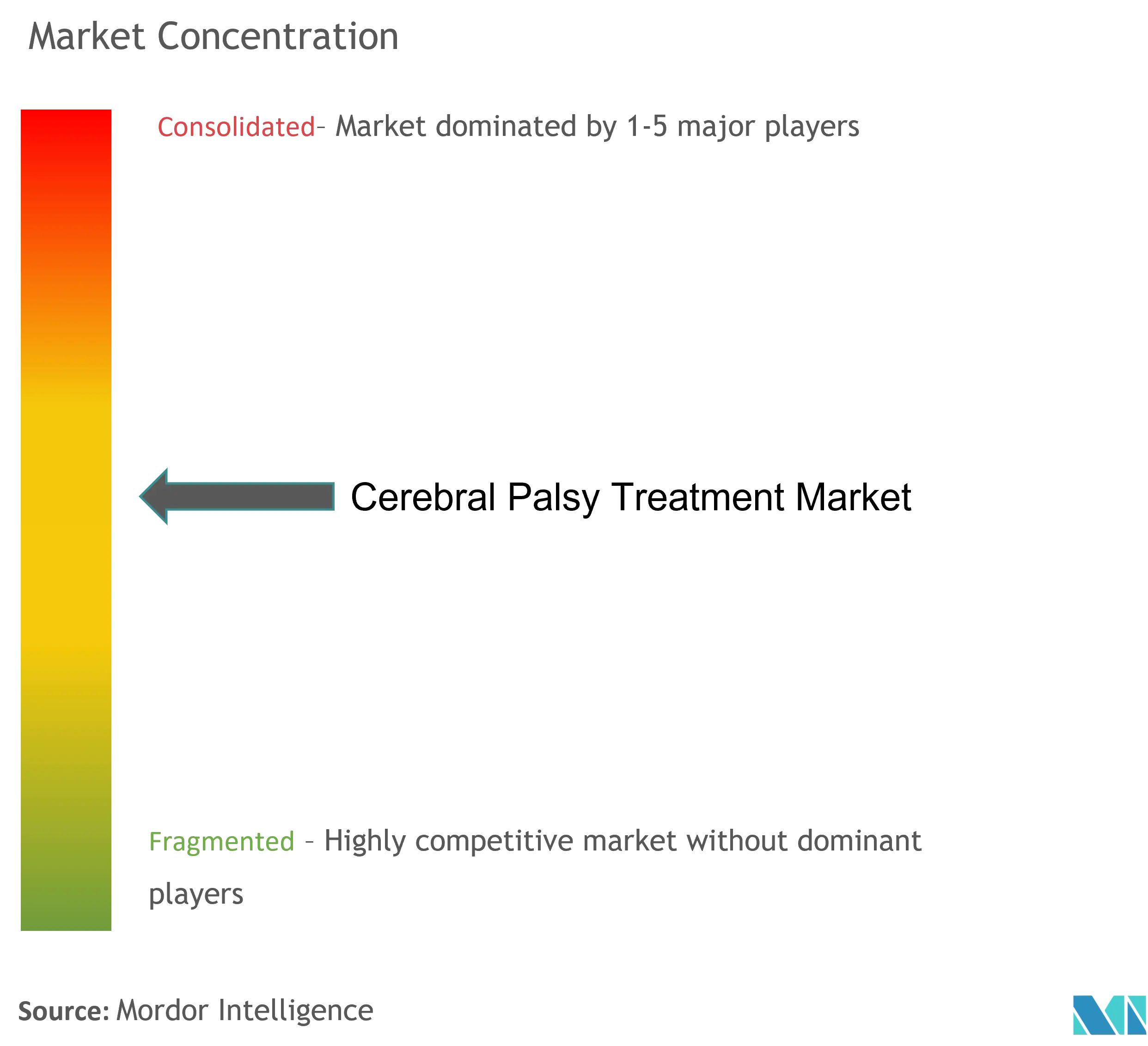
The cerebral palsy treatment market features moderate fragmentation, with no player exceeding a double-digit global share. Ipsen, AbbVie, and Merz Pharma dominate the botulinum-toxin arena, leveraging extensive sales forces and post-marketing data to defend formulary positions. Medtronic, Zimmer Biomet, and Stryker supply implantables and surgical hardware, while Ekso Bionics and Trexo Robotics pioneer gait-training exoskeletons.
Strategic activity centers on platform integration. Pharmaceutical firms collaborate with device makers to bundle drugs, pumps, and analytics dashboards into comprehensive care packages. Ekso Bionics partners with Shepherd Center to refine clinical protocols and evidence collection. Venture funding flows to AI start-ups that analyze motion-sensor streams, creating acquisition targets for incumbents seeking data capabilities.
Regulatory navigation and reimbursement coding expertise shape competitive advantage, particularly in the United States where CMS determinations dictate capital-equipment adoption. White-space opportunities persist in adult spasticity management and value-tier products for emerging markets, areas currently underserved by premium-priced Western offerings. Players that localize manufacturing or create scalable subscription models are positioned to outpace the broader cerebral palsy treatment market.
Cerebral Palsy Treatment Industry Leaders
-
Ipsen Biopharmaceuticals Inc.
-
Merz GmbH & Co. KGaA
-
Teva Pharmaceutical Industries Ltd.
-
Supernus Pharmaceuticals, Inc.
-
Abbvie Inc.
- *Disclaimer: Major Players sorted in no particular order
Cerebral Palsy Treatment Market Companies Covered in this Report
- Ipsen
- Abbvie
- Merz Pharma
- DIH (Hocoma)
- Tyromotion
- Ossur
- Zimmer Biomet
- Stryker
- Orthofix
- Ottobock
- Ekso Bionics
- BioSerenity
- MicroPort NeuroTech
- Neuralink
- Natus Medical
- Teva Pharmaceutical Industries
- Sanofi
- Novartis
- Pfizer
Market Opportunities and Future Outlook
Label expansions and reimbursement actions are creating near-term whitespace in pediatric spasticity pathways by lowering access friction for established botulinum neurotoxins and encouraging broader protocol standardization. In April 2026, Australia expanded PBS coverage for incobotulinumtoxinA (Xeomin) for cerebral palsy-related spasticity (including dynamic equinus foot deformity). This reduces out-of-pocket burden and strengthens the treated patient base for injection-led care. In the United States, the FDA updated the pediatric cerebral palsy label for Xeomin for upper limb spasticity in 2026, reinforcing a growth route for incumbents through pediatric indication expansions rather than de novo product launches.
Clinical and commercial opportunity is also emerging where comparative evidence, non-invasive neuromodulation, and device-enabled rehabilitation converge. Europe authorized a phase IV CTIS trial (2024-518822-33-01) at UZ Leuven comparing intrathecal baclofen pump implantation versus selective dorsal rhizotomy in non-ambulatory children, supporting clearer procedure selection and pathway design for high-acuity pediatric segments. In the United States, multiple pediatric cerebral palsy studies have been initiated, including a University of Pittsburgh trial evaluating transcutaneous spinal cord stimulation (tSCS) to reduce spasticity and a Shirley Ryan AbilityLab study examining a smart ankle-foot orthosis (AFO) within a combined approach, indicating a wearable-plus-therapy pipeline. On the partnering side, Kidswell Bio and Treehill Partners formed Kidswell USA in 2026 to advance a cell therapy program for pediatric cerebral palsy with development support from Thermo Fisher Scientific, reflecting ongoing whitespace for disease-modifying and regenerative approaches beyond symptomatic tone management.
Recent Industry Developments in Cerebral Palsy Treatment Market
- June 2026: Merz Therapeutics announced an FDA label update for XEOMIN (incobotulinumtoxinA), expanding the pediatric upper limb spasticity indication to include children and adolescents aged 2 years and older with cerebral palsy. The update strengthens XEOMIN's positioning in pediatric spasticity clinics, where labeling clarity supports dosing standardization and payer documentation.
- May 2025: Neuralink received FDA Breakthrough Device designation for a speech-restoration brain-computer interface intended for severe paralysis, including cerebral palsy patients. The designation raised competitive attention around neurotechnology-enabled functional restoration and increased visibility for BCI pathways within complex neurorehabilitation care models.
- May 2024: CYBERDYNE received FDA marketing clearance for its Medical HAL (Lower Limb Type) for cerebral palsy in patients over 12 years of age. This clearance adds a regulated robotics option to rehabilitation toolkits and supports broader adoption of device-assisted gait training in specialized centers.
Cerebral Palsy Treatment Market Report Scope and Research Methodology
Market Definition and Coverage
For this study, the market covers spending tied to treating cerebral palsy across medical and interventional care, where the intent is to manage symptoms, improve function, and reduce complications across children and adults.
Scope exclusions: We exclude basic caregiving expenses that are not a treatment (for example, general household support), and we also exclude non-CP neurological disorders even if they share similar symptoms.
Segments Covered in This Report
- By Treatment Type
- Surgery
- Medication
- AntiCholinergic aganet
- Botulinum-Toxin Injections
- Anticonvulsants
- Antidepressants
- Antispastic
- Other Medication
- By Type of Cerebral Palsy
- Spastic CP
- Dyskinetic CP
- Ataxic CP
- Mixed/Other
- By Age Group
- Paediatric (0–13 yrs)
- Adolescent (14–17 yrs)
- Adult (18 yrs +)
- By End User
- Hospitals
- Specialty Clinics
- Rehabilitation Centres
- Home-Care Settings
- By Geography
- North America
- United States
- Canada
- Mexico
- Europe
- Germany
- United Kingdom
- France
- Italy
- Spain
- Rest of Europe
- Asia-Pacific
- China
- India
- Japan
- South Korea
- Australia
- Rest of Asia-Pacific
- South America
- Brazil
- Argentina
- Rest of South America
- Middle East and Africa
- GCC
- South Africa
- Rest of Middle East and Africa
- North America
Data Sources, Market Sizing, and Validation
Desk Research
Desk research was used to set the guardrails for the model and to keep assumptions tied to public healthcare signals. We reviewed epidemiology and disability statistics, healthcare utilization notes, and reimbursement cues from sources such as the US CDC, WHO, NIH, and Medicare and Medicaid public coverage and payment references.
We also used non-paywalled publications and datasets from sources such as national health ministries, OECD health statistics, and peer reviewed clinical journals that track spasticity management and CP care pathways. On the industry side, we checked company annual reports, investor presentations, and press releases to understand product focus, product launches, and geographic exposure. Where helpful, paid datasets were used for company financials and news tracking, and patent databases were referenced to gauge the innovation pace. These examples are illustrative only, and many other public and paid sources were also used to collect, validate, and clarify inputs.
Primary Interviews and Surveys
Primary interviews and structured surveys were carried out with a mix of clinicians, rehabilitation specialists, payor and hospital procurement stakeholders, and industry participants involved in CP care delivery. The discussions helped confirm which therapies are used in real practice, how treatment intensity varies by age and severity, and how pricing and adoption differ across major regions.
Distribution of primary research fieldwork respondents
| Company type | Respondent position | Region |
|---|---|---|
| Top tier: 33% | CXOs: 15% | APAC: 48% |
| Mid tier: 51% | Functional/Unit leaders: 39% | EMEA: 33% |
| Smaller Players: 16% | Managers: 46% | Americas: 19% |
Market-Sizing & Forecasting
Market sizing was built using a top-down approach where the treated demand pool is reconstructed from cerebral palsy prevalence, diagnosed share, and therapy utilization patterns across key care settings, and then converted into value using typical annual treatment intensity and pricing. Once the headline total was formed, it was cross-checked with selective bottom-up approximations, such as sampled therapy volumes multiplied by observed price bands, along with channel and hospital checks to adjust outliers.
In practice, a few variables mattered most for keeping the model realistic, including CP prevalence by age cohort, spasticity treatment uptake, procedure and injection frequency assumptions, pump and device adoption where relevant, and reimbursement availability that shifts access. Because pricing is not uniform, currency conversion timing and inflation adjustments were applied consistently before regional totals were summed to global value. For forecasting, we used scenario analysis supported by expert inputs, where adoption changes and reimbursement shifts are tested under a base case and then stress tested with conservative and faster uptake cases. When bottom-up visibility was limited in smaller countries, we filled gaps using peer country proxies built from healthcare spend and specialist density, and then revalidated those shares through interviews.
Data Validation & Update Cycle
Outputs were validated by triangulating the market totals against independent signals such as therapy utilization trends, procedure volumes where available, and payer coverage direction, followed by a reasonableness check on regional shares. Variances were reviewed in steps, first at the input level and then at the final output level, so unusual jumps in prevalence, pricing, or uptake could be corrected before sign-off.
If a large mismatch is found, analysts re-contact relevant experts to clarify what changed (for example, a reimbursement rule update or a shift in clinical practice). Reports are refreshed annually, and interim updates are made when material events occur that can move demand or pricing. Before delivery, a final review pass is completed so the numbers reflect the latest available information.
Mordor Intelligence's Cerebral Palsy Treatment Market Size Versus Other Published Estimates
Published market sizes for cerebral palsy treatment often differ because studies do not always count the same set of therapies, patient pools, or end users, and they also apply different pricing and currency timing. Differences can also show up when one study is updated more recently than another, particularly in markets influenced by reimbursement changes and evolving care pathways.
The main gap comes from whether the estimate includes broad rehabilitation service revenue and long-term supportive care. In the Mordor Intelligence model, the market is counted only when spending is tied to defined CP treatment modalities, and it is supported by utilization and price checks at a regional level. Another driver is how treatment intensity is assumed, since injection frequency, medication persistence, and device adoption can shift the annual value per patient. Some estimates also lean on aggressive growth assumptions without rechecking payer coverage and real-world uptake, which can inflate near-term totals.
Benchmark comparison
| Source | Market Size | Gaps in Research Methodology |
|---|---|---|
| Mordor Intelligence | USD 3.76 B (2026) | |
| Global Consultancy A | USD 3.48 B (2026) | Uses a narrower treated pool built from diagnosed cases in higher income markets and applies more conservative utilization rates for interventions such as injections and device based therapy, which lowers the total. |
| Industry Publisher B | USD 4.50 B (2026) | Rolls in broader rehabilitation and long-term care spending alongside medical interventions, and also assumes faster price progression, which pushes the value higher than treatment-only accounting. |
Across the three figures, the spread is mainly explained by what gets counted as treatment revenue and how annual treatment intensity is assumed for different age and severity groups. By keeping inputs traceable to prevalence, utilization, and pricing checks, the approach gives a practical number that can be repeated and updated without relying on hidden assumptions.
Key Questions Answered in the Report
What is the projected revenue for the cerebral palsy treatment market in 2031?
The cerebral palsy treatment market is expected to reach USD 4.39 billion by 2031.
Which therapy type is growing fastest within the cerebral palsy treatment market?
Surgical interventions are forecast to climb at a 3.82% CAGR, the highest among treatment categories.
Why is the pediatric segment critical to market growth?
Children under 14 drive a 4.87% CAGR because universal neonatal screening and AI-based assessments enable earlier, more intensive intervention.
Which region offers the strongest growth outlook?
Asia-Pacific shows the highest 4.41% regional CAGR, supported by new pediatric neuro-rehabilitation centers and rising healthcare investments.
What are the main cost barriers hindering therapy adoption?
High lifetime expenses for intrathecal pumps, exoskeletons, and intensive rehabilitation can surpass USD 50,000 annually, limiting accessibility.