
Cell Based Immunotherapy Market Size and Share
Market Overview
| Study Period | 2020 - 2031 |
|---|---|
| Market Size (2026) | USD 5.64 Billion |
| Market Size (2031) | USD 10.78 Billion |
| Growth Rate (2026 - 2031) | 13.83 % |
| Fastest Growing Market | Asia Pacific |
| Largest Market | North America |
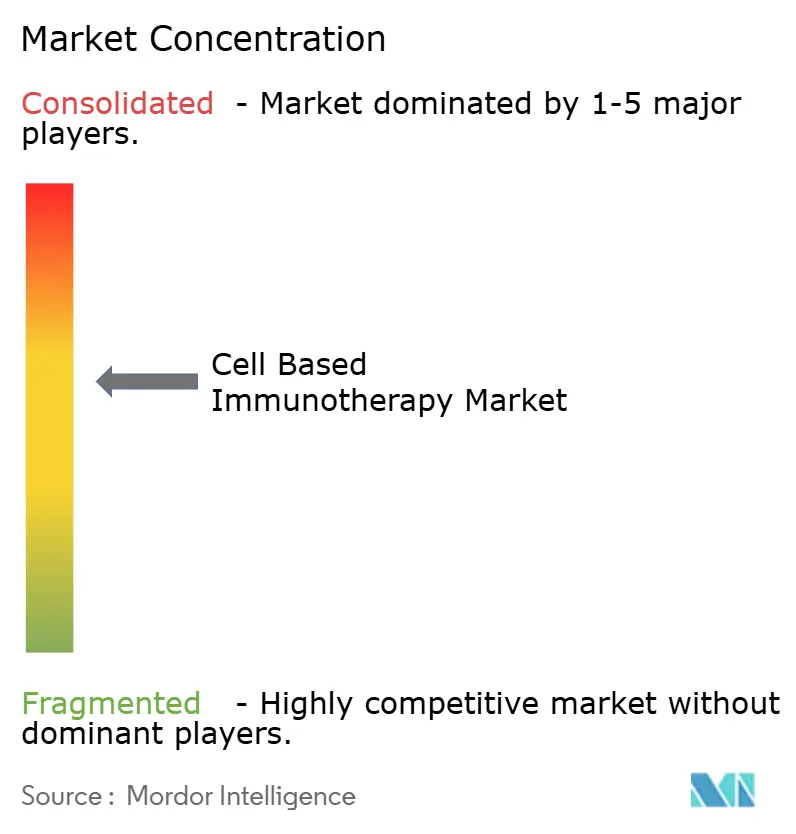
| Market Concentration | Medium |
Major Players *Disclaimer: Major Players sorted in no particular order Image © Mordor Intelligence. Reuse requires attribution under CC BY 4.0. | |
Cell Based Immunotherapy Market Analysis by Mordor Intelligence
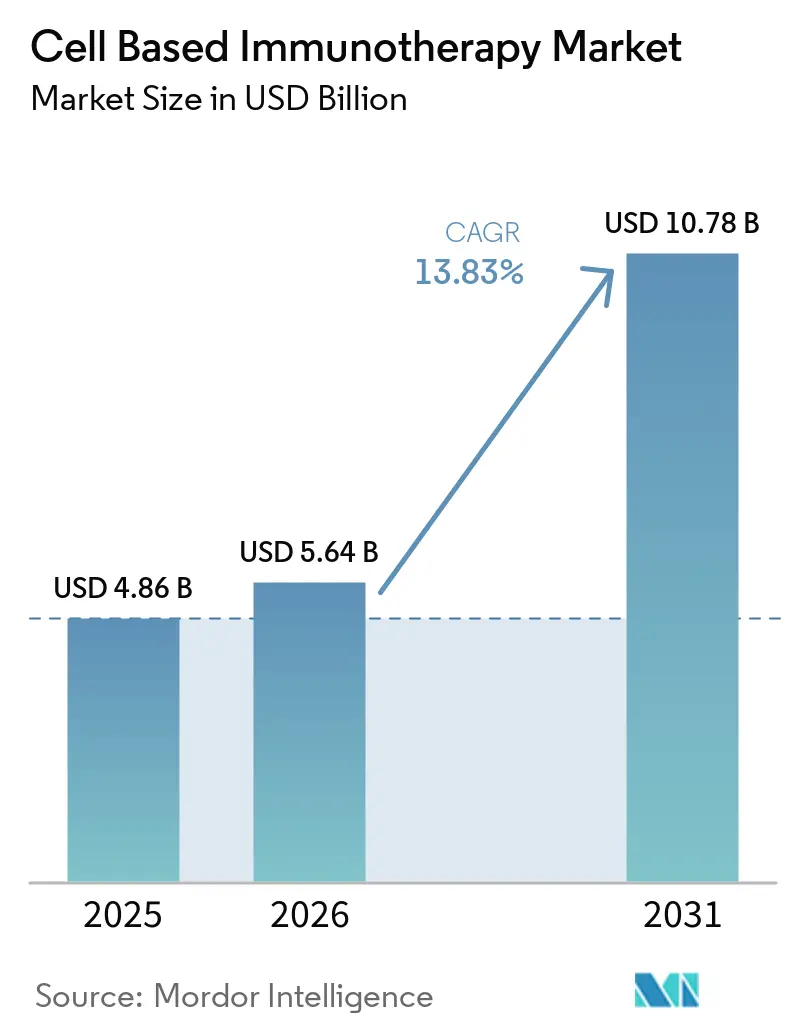
The Cell Based Immunotherapy Market size is expected to increase from USD 4.86 billion in 2025 to USD 5.64 billion in 2026 and reach USD 10.78 billion by 2031, growing at a CAGR of 13.83% over 2026-2031.
Rapid label expansions into second-line settings, expanding reimbursement frameworks, and sustained big-pharma capacity build-outs are repositioning engineered immune cells from salvage options to earlier-line standards of care. Autologous franchises still dominate volumes, yet off-the-shelf allogeneic programs are accelerating on the back of CRISPR edits that abrogate graft-versus-host risk and trim manufacturing lead times. Technology convergence across gene editing, viral vector engineering, and point-of-care microfactories is compressing the vein-to-vein cycle, while outcome-based contracts are de-risking payer adoption. Meanwhile, new entrants are utilizing in vivo delivery and natural killer–cell chassis to open up solid-tumor opportunities that incumbent CAR-T platforms have yet to capture.
Key Report Takeaways
- By cell source, autologous therapies held 72.31% of the cell-based immunotherapy market share in 2025, whereas allogeneic constructs are forecast to expand at a 14.14% CAGR through 2031.
- By cell type, CAR-T products accounted for 64.73% of the revenue in 2025, while CAR-NK platforms are poised for the fastest growth, with a 15.07% CAGR from 2026 to 2031.
- By primary indication, B-cell malignancies accounted for 46.48% of 2025 revenue; renal cell carcinoma is expected to register the quickest 12.36% CAGR over the forecast period.
- By end user, hospitals treated 71.46% of patients in 2025, while specialty cancer centers represented the fastest-growing 17.84% CAGR through 2031.
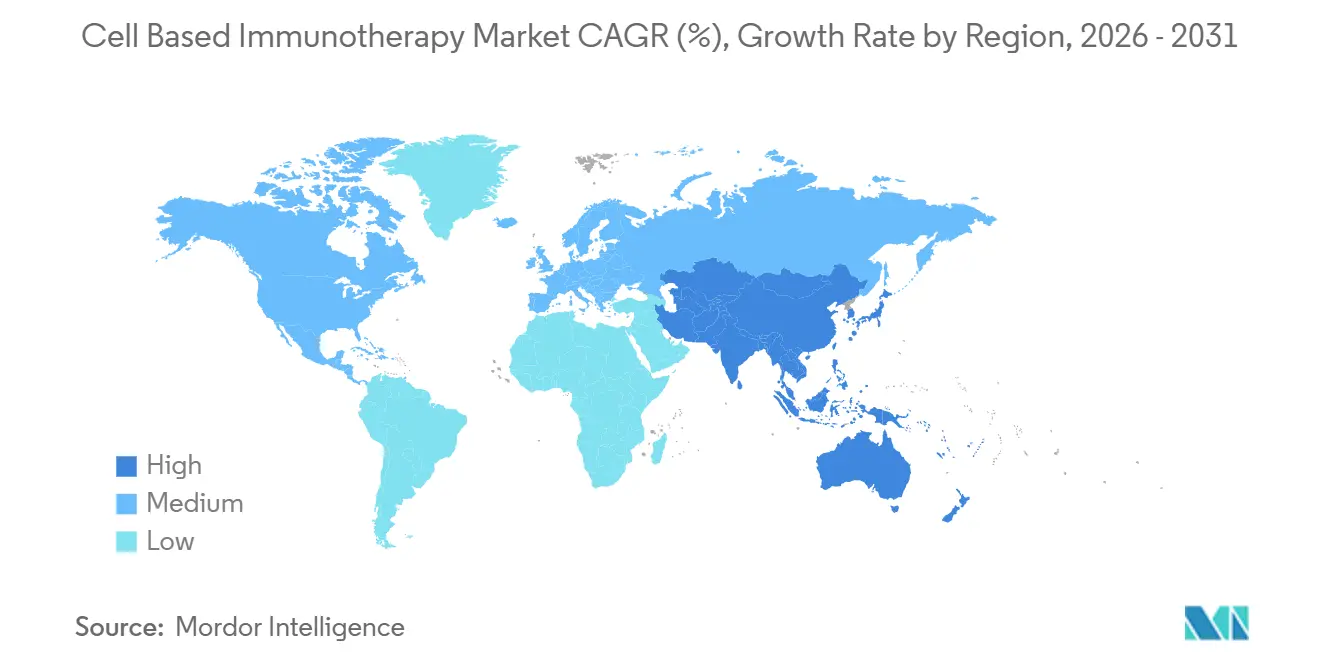
- By geography, North America accounted for 44.26% of revenue in 2025, and the Asia-Pacific region is expected to experience a 16.21% CAGR through 2031.
Note: Market size and forecast figures in this report are generated using Mordor Intelligence’s proprietary estimation framework, updated with the latest available data and insights as of January 2026.
Market Trends and Insights
Drivers Impact Analysis of Cell Based Immunotherapy Market*
| Driver | (~) % Impact on CAGR Forecast | Geographic Relevance | Impact Timeline |
|---|---|---|---|
| Surging Cancer Prevalence and Earlier-Line Use Approvals | +3.2% | North America, Europe | Short term (≤ 2 years) |
| Rapid Advances in Gene-Editing & Viral-Vector Engineering | +2.8% | North America, Europe, APAC | Medium term (2-4 years) |
| Expanding Reimbursement Frameworks for Commercial CAR-T Launches | +2.5% | North America, Western Europe, GCC, Brazil | Medium term (2-4 years) |
| Big-Pharma M&A, Licensing Deals, and Capacity Build-Outs | +2.1% | Global | Short term (≤ 2 years) |
| Point-of-Care Micro-Factories Slashing Vein-to-Vein Cycle Time | +1.9% | North America, spill-over to EU & APAC | Medium term (2-4 years) |
| In-Vivo CAR Payload Delivery Platforms Eliminating Lymphodepletion | +1.4% | North America, Europe | Long term (≥ 4 years) |
| Source: Mordor Intelligence | |||


Surging Cancer Prevalence and Earlier-Line Use Approvals
Global cancer incidence reached 20 million new cases in 2024, and regulators responded by green-lighting the use of second-line CAR-T therapy in diffuse large B-cell lymphoma, shifting a sizable share of fitter patients into the cell-based immunotherapy market. Regulators anticipate 10-20 new approvals annually by 2025, a volume that reinforces the T-cell immunotherapy market as one of the fastest-growing segments in biopharma. The U.S. FDA’s expanded label for Yescarta moved 40% of eligible patients forward by one therapy line. At the same time, the European Medicines Agency followed with conditional approval for Kymriah in second-line follicular lymphoma.[1]“Conditional Marketing Authorization for Kymriah,” European Medicines Agency, ema.europa.eu Real-world evidence now shows a 24-month progression-free survival rate of 52% in second-line CAR-T cohorts, compared to 31% in third-line cohorts. Sponsors are redesigning registrational trials around earlier-line endpoints, anticipating that this regulatory momentum will hold through 2027.
Rapid Advances in Gene-Editing and Viral-Vector Engineering
CRISPR, base-editing, and optimized lentiviral systems are enhancing cell potency and reducing the cost of goods by 35% per dose.[2]“Advances in Lentiviral Vector Production,” Nature Methods, nature.com Caribou’s TRAC-edited allogeneic CAR-T therapy delivered a 68% complete response rate with no graft-versus-host disease in Phase 1, highlighting the feasibility of single-step edits to enhance persistence. Parallel innovations in adeno-associated virus serotype engineering enabled Sana Biotechnology’s in vivo CAR approach, which transduced 80% of T cells in non-human primates without ex vivo manipulation. These advances are lowering technical barriers for smaller entrants and intensifying competition for first-generation autologous incumbents.
Expanding Reimbursement Frameworks for Commercial CAR-T Launches
Outcome-based payment models are gaining traction. The U.S. Centers for Medicare & Medicaid Services finalized a coverage policy that refunds 50% of the list price if patients fail to achieve a 6-month complete response. Germany set a precedent for value-based pricing at EUR 320,000 (USD 345,000) per dose with mandatory registry enrolment.[3]“Value-Based Pricing for Abecma,” Federal Joint Committee, g-ba.de Japan’s regenerative-medicine rulebook grants conditional approval, allowing for the collection of real-world evidence, which cuts 18 months off market-entry timelines. These frameworks de-risk launches and catalyze the development of regional manufacturing hubs.
Big-Pharma M&A, Licensing Deals, and Capacity Build-Outs
Strategic transactions surged in 2024-2025 as manufacturers sought platform optionality. Bristol Myers Squibb’s USD 13.4 billion takeover of Myeloid Therapeutics secured a myeloid-cell engager that complements its autologous CAR-T franchise. Gilead opened a USD 450 million Irish plant that trims European vein-to-vein cycles by 11 days. Novartis invested USD 380 million in an allogeneic expansion in New Jersey to future-proof its capacity. Contract manufacturers followed suit, with Lonza deploying additional Cocoon units across the APAC region.
Restraints Impact Analysis of Cell Based Immunotherapy Market*
| Restraint | (~) % Impact on CAGR Forecast | Geographic Relevance | Impact Timeline |
|---|---|---|---|
| Complex, Fragile Supply Chain & Specialized Talent Shortages | -1.8% | North America, Europe | Short term (≤ 2 years) |
| Cytokine-Release-Syndrome (CRS) Risk & Associated Liability Costs | -1.3% | North America, Europe, APAC | Medium term (2-4 years) |
| Viral-Vector Raw-Material Bottlenecks Constraining Scale-Up | -1.1% | North America, Europe | Medium term (2-4 years) |
| Regulatory Uncertainty Around In-Vivo Gene-Delivery Vectors | -0.9% | North America, Europe | Long term (≥ 4 years) |
| Source: Mordor Intelligence | |||
Complex, Fragile Supply Chain & Specialized Talent Shortages
Cold-chain mishaps and workforce gaps continue to trigger batch failures. A global survey found that 68% of contract manufacturers had unfilled process development roles, with a median hiring time of over 9 months. Cryopreservation excursions caused 12% of 2024 batch rejections. Academic programs are scaling slowly; only 14 universities offer lentiviral-production curricula. Vertical integration efforts such as Gilead internalizing vector production and Novartis co-running a technician academy with the University of Pennsylvania will take several years to close the gap.
Cytokine-Release-Syndrome (CRS) Risk & Associated Liability Costs
The FDA logged 1,847 serious CRS events in 2024, including 23 fatalities. Tocilizumab adds USD 18,000 per patient to manage severe cases, eroding margins in value-based contracts. Liability insurers hiked premiums 40% for cell-therapy trials. A Memorial Sloan Kettering algorithm predicting grade 3-4 CRS with 82% sensitivity cut ICU admissions by 31%, indicating that biomarker-guided prophylaxis can mitigate risk, though regulatory acceptance is pending.
*Our forecasts treat driver/restraint impacts as directional, not additive. The impact forecasts reflect baseline growth, mix effects, and variable interactions.
Cell Based Immunotherapy Market Segment Analysis
By Cell Source:
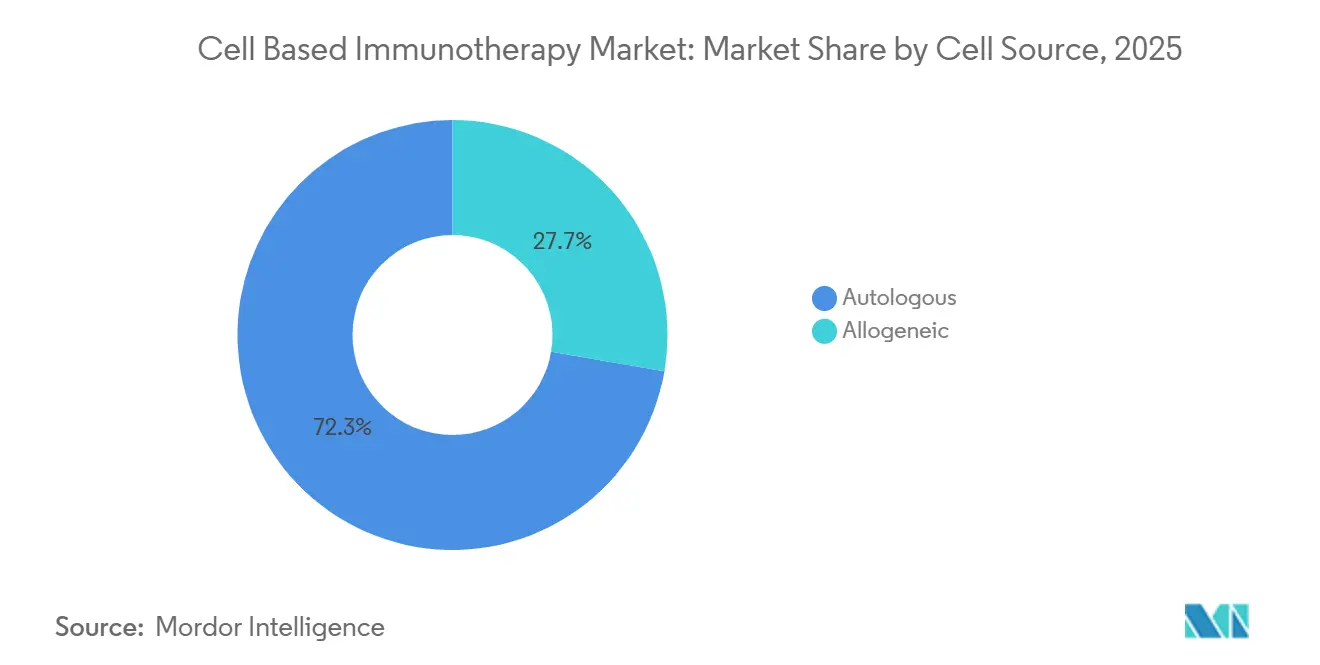
Autologous Dominance Meets Allogeneic DisruptionAutologous therapies accounted for 72.31% of the cell-based immunotherapy market share in 2025, driven by four commercial CAR-T brands that collectively treated over 18,000 patients in 2024. Patient-specific products carry zero graft-versus-host risk and have commanded list prices above USD 400,000. Yet they rely on 14-28 day manufacturing windows, during which 15-20% of patients progress. The allogeneic segment, projected to expand at a 14.14% CAGR, circumvents these delays. Donor cells edited at the TRAC, B2M, and CIITA loci can be banked for off-the-shelf dosing as soon as the disease is confirmed.
Allogeneic programs are already infusing patients within 3 days of leukapheresis and are demonstrating an overall response rate of 75% in early lymphoma trials. Regulators now permit sponsors to extrapolate specific autologous safety endpoints, thereby streamlining the development process. Persistence beyond 24 months remains a crucial unknown, and payers are aware of the higher cumulative cost associated with repeat dosing. Even so, the operational simplicity of inventory models is incentivizing contract manufacturers to carve out allogeneic-dedicated suites.


By Cell Type:
CAR-T Incumbency Faces CAR-NK and TIL InsurgencyCAR-T platforms accounted for 64.73% of 2025 revenue, driven by six FDA-approved products for hematologic malignancies. Manufacturing infrastructure is established, and vein-to-vein times have almost halved since 2020. Nonetheless, low trafficking and antigen heterogeneity cap solid-tumor response rates at single digits. CAR-NK programs, forecast for a 15.07% CAGR, sidestep HLA matching and have yet to register any CRS or neurotoxicity signals, making them attractive as off-the-shelf candidates.
Induced-pluripotent-stem-cell-derived CAR-NK products achieved a 63% objective response in advanced ovarian cancer without severe toxicities, validating their innate cytotoxicity. Tumor-infiltrating lymphocyte (TIL) therapy occupies a smaller niche but won its first U.S. approval in 2024 for metastatic melanoma, providing an option for neoantigen-rich tumors. TCR-T products gained traction in synovial sarcoma and could eventually target intracellular antigens inaccessible to CARs, although HLA restriction limits addressable populations.
By Primary Indication:
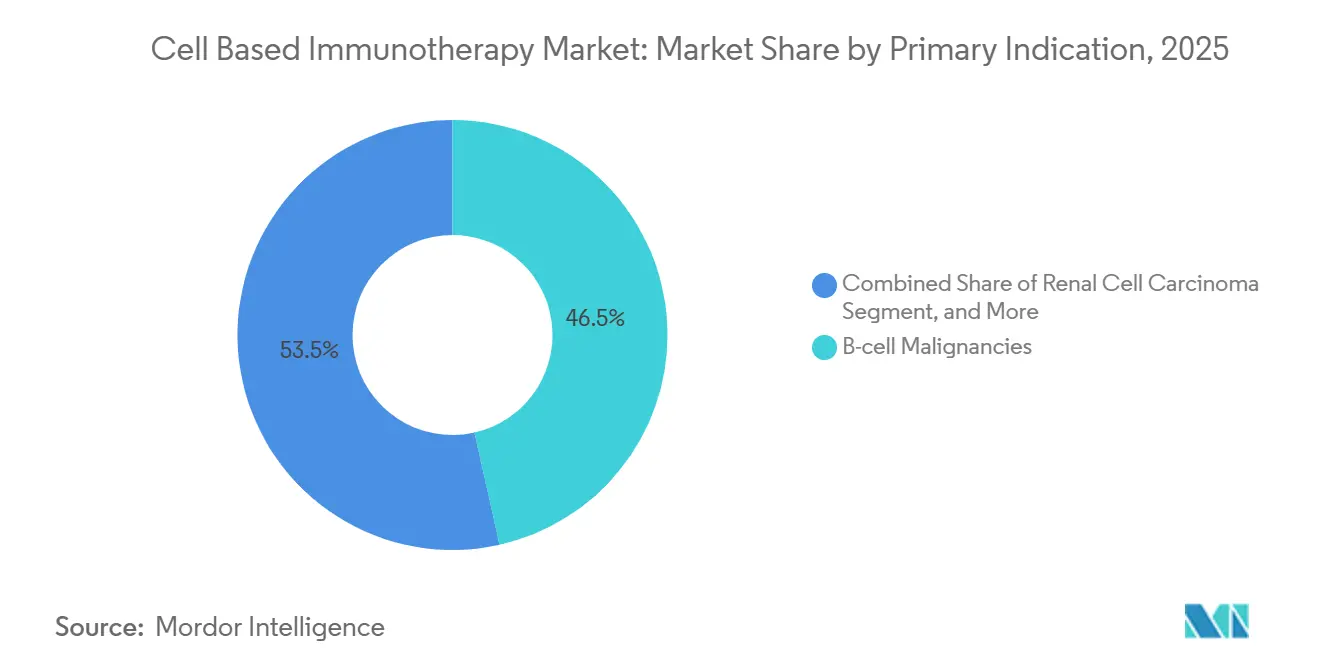
B-Cell Malignancies Anchor Growth While Solid Tumors BeckonB-cell malignancies accounted for 46.48% of 2025 revenue, leveraging well-characterized antigens and established care pathways. Solid tumors, however, hold the lion’s-share opportunity. Renal cell carcinoma leads the solid-tumor pipeline with a projected 12.36% CAGR as multi-antigen CAIX-, CD70- and PSMA-targeted constructs enter mid-stage trials. Early prostate-cancer data already show a 28% response rate, up from historical low double digits. In liver cancer, the selective hepatic-artery infusion of CAR-T cells resulted in a 41% response in a small pilot study, highlighting the promise of locoregional techniques.
Sponsors are layering armoring modules secreted IL-15, PD-1 blockers, and hypoxia-inducible factors onto CAR scaffolds to overcome suppressive microenvironments, but these enhancements extend development timelines by two to three years. Still, 18 new solid-tumor CAR-T trials launched in 2024-2025, signifying an industry-wide push to diversify beyond hematology.
By End User:
Specialty Cancer Centers Outpace Hospitals in Adoption VelocityHospitals infused 71.46% of commercial patients in 2025 thanks to existing apheresis units and 24-hour ICU coverage. Establishing a CAR-T capability, however, requires USD 2-3 million in capital and specialized staff that smaller facilities struggle to recruit. Payers are increasingly directing beneficiaries to a narrow network of high-volume centers, thereby magnifying patient flow to institutions with demonstrated outcomes.
Specialty cancer centers are consequently expanding at a 17.84% CAGR. The top three U.S. academic centers alone treated 4,200 patients in 2024. Many have installed point-of-care bioreactors, allowing them to run investigational and commercial programs side-by-side. Academic and research institutes, responsible for 80% of early-phase trials, remain the crucible for next-generation constructs, ensuring they will continue to be central to innovation.
Geography Analysis
North America Cell Based Immunotherapy Market
North America generated 44.26% of global revenue in 2025, supported by six FDA-approved products, 180 active trials, and outcomes-based reimbursement that underwrites high list prices. In 2024, the United States treated 9,500 patients, 60% of whom received therapy at 15 high-volume centers that now operate automated on-site manufacturing facilities. Canada lags with only three approved products and third-line coverage limits, while Mexico’s access remains confined to medical tourists traveling to U.S. sites.
APAC Cell Based Immunotherapy Market
The Asia-Pacific region is the fastest-growing, with a 16.21% CAGR forecast. In 2024, China’s regulator cleared eight domestic CAR-T products, priced at CNY 1.2 million (approximately USD 165,000), to undercut imports. Japan’s conditional pathway cuts 18 months off review timelines, fueling trial starts. India and Australia are still in their early stages but have earmarked public funds for domestic manufacturing by 2027, indicating longer-term upside.
EMEA and South America Cell Based Immunotherapy Market
Germany embraced value-based pricing, whereas the United Kingdom rejected one leading product for cost-effectiveness, pending confidential rebates. Italy and Spain face regional budget allocations that can delay reimbursement up to two years after an EMA green light. Middle East & Africa and South America represent just 6% of demand, though Dubai’s center-of-excellence model and Brazil’s priority reviews hint at incremental growth as local capacity emerges.

Regulatory Landscape
Cell-based immunotherapies are regulated primarily as biologics and advanced therapy medicinal products (ATMPs), with oversight centered on manufacturing controls, traceability (chain-of-identity/chain-of-custody), and long-term safety monitoring. In the United States, the FDA has been updating its cellular and gene therapy policy stack, including a May 2026 final guidance that outlines Chemistry, Manufacturing, and Controls (CMC) flexibilities intended to better fit the realities of individualized and rapidly evolving manufacturing processes. The FDA also issued an April 2026 draft guidance on safety assessments for genome editing, reflecting growing regulatory focus on edited cell products and associated off-target risks.
In Europe, the EMA framework for ATMPs (including cell-based immunotherapies) continues to be shaped through scientific guidelines and the Committee for Advanced Therapies (CAT), which in its February 18-20, 2026 meeting adopted scientific recommendations on ATMP classifications and discussed procedural guidance relevant to developer interactions. The EMA guideline on quality, non-clinical, and clinical requirements for investigational ATMPs in clinical trials took effect in July 2025, raising the bar for development packages earlier in clinical planning. Cross-region execution is also being influenced by ICH, which adopted the M11 clinical electronic structured protocol template at Step 4 in November 2025, supporting more standardized global clinical trial documentation for complex modalities such as cell and gene therapies.
Value Chain Analysis
The cell-based immunotherapy value chain begins with patient identification and referral into certified treatment networks, followed by leukapheresis (or donor cell sourcing for allogeneic models) at clinical sites, and then tightly controlled packaging and pickup by specialized couriers and 3PL providers. Manufacturing spans receipt and intake, cell activation/engineering (often using viral vectors or gene editing), expansion, fill-finish, and release testing (sterility, identity, potency, and other lot release requirements), after which product is shipped back under cryogenic or ultra-low temperature conditions for patient infusion and follow-up monitoring. The autologous model adds unique complexity because each patient batch is single-use, amplifying scheduling dependencies between site readiness, manufacturing slot availability, and time-sensitive logistics.
As of 2025, cross-region data systems and trial documentation are increasingly guided by ICH M11, adopted in November 2025, which supports harmonized electronic submissions and clinical trial records across geographies.
Competitive Landscape
The cell-based immunotherapy market exhibits moderate concentration, with Novartis, Gilead Sciences, Bristol Myers Squibb, and Johnson & Johnson controlling a significant market share of 2025 revenue through vertically integrated CAR-T franchises. Outcomes-based contracts that claw back up to 50% of the list price on non-responders are pressuring margins, motivating incumbents to acquire platform technologies. Off-the-shelf disrupters such as Allogene Therapeutics, Caribou Biosciences, and Precision BioSciences aim to commoditize autologous workflows with CRISPR-edited inventory, while specialty developers like Sana Biotechnology push in vivo delivery to bypass manufacturing entirely.
More than 4,200 patents were filed in 2024, although foundational BCMA and CD19 claims are set to expire in 2026-2028, potentially opening a biosimilar gateway. Contract manufacturers are consolidating to secure viral-vector supplies, exemplified by Catalent’s purchase of plasmid producer Delphi Genetics. As CD19 and BCMA exclusivity wanes, differentiation will likely shift to focus on manufacturing logistics, armoring strategies, and combination regimens rather than single-antigen targeting.
Cell Based Immunotherapy Industry Leaders
Novartis AG
Bristol-Myers Squibb Co.
Pfizer Inc.
Johnson & Johnson
Gilead Sciences, Inc.
- *Disclaimer: Major Players sorted in no particular order
Cell Based Immunotherapy Market Companies Covered in this Report
- Adaptimmune Therapeutics plc
- Allogene Therapeutics
- Atara Biotherapeutics Inc.
- Autolus Therapeutics plc
- Bluebird Bio
- Bristol-Myers Squibb
- Cabaletta Bio Inc.
- Caribou Biosciences Inc.
- Celyad Oncology SA
- Roche
- Gamida Cell Ltd
- Gilead Sciences
- Johnson & Johnson
- JW Therapeutics Co. Ltd
- Legend Biotech Corp.
- Lonza Group
- Miltenyi Biotec B.V. & Co. KG
- Mustang Bio Inc.
- Novartis
- Orca Bio Inc.
- Pfizer
- Precision BioSciences Inc.
- Sorrento Therapeutics
- Tessa Therapeutics Ltd

Market Opportunities and Future Outlook
A major whitespace sits in expanding beyond today’s hematology-heavy commercial base by combining differentiated cell types with more scalable operations. Regulatory T-cell therapies illustrate this expansion: in June 2026, the FDA approved Orca Bio’s TREGZI for matched-donor hematopoietic stem cell transplantation in adults with hematological malignancies, highlighting commercial momentum for precision-engineered immune cell approaches outside classic CAR-T use cases. At the same time, national reimbursement and pricing constructs continue to shape where launches convert into treated patients; examples already visible in-market include outcomes-based payment structures in the United States (including refund mechanisms tied to response) and Germany’s value-based pricing with registry enrollment, which rewards programs that can document real-world benefit and manage toxicity-linked cost exposure.
Manufacturing throughput and logistics reliability remain the most actionable opportunity levers because they gate patient access across autologous and emerging off-the-shelf models. Developers and their partners are shifting from manual, labor-intensive workflows toward automation and multi-region capacity: in January 2026, Autolus began evaluating Cellares’ Cell Shuttle platform for automated manufacturing of AUCATZYL (obe-cel), and in June 2026 Orca Bio added East Coast manufacturing capacity in Princeton, New Jersey while expanding operations staffing in Sacramento, California. Parallel capability build-outs are also extending to NK and other cell platforms, such as ImmunityBio’s March 2026 manufacturing engineering milestone reporting 5 billion cell yields per apheresis for its M-ceNK program. These moves, paired with FDA CMC flexibilities finalized in May 2026 and increasingly harmonized clinical documentation standards (ICH M11 adopted in November 2025), create clearer pathways for scaling, tech transfer, and multi-geography execution in the current study period.
Recent Industry Developments in Cell Based Immunotherapy Market
- June 2026: Orca Bio received U.S. FDA approval for TREGZI, a regulatory T-cell immunotherapy for adult patients with hematological malignancies undergoing matched-donor stem cell transplantation. The approval expands the commercial cell-therapy landscape beyond CAR-T into immune reconstitution and graft-versus-host disease-related outcomes, broadening the addressable mix of cell-based modalities.
- March 2026: Johnson & Johnson announced an investment of over USD 1 billion to build a new cell therapy manufacturing facility in Montgomery County, Pennsylvania, to support its oncology and immunology pipeline. The scale of the build-out underscores how capacity and supply assurance have become strategic differentiators as more programs advance and compete for manufacturing slots.
- February 2025: The U.S. FDA approved streamlined patient monitoring requirements and removal of REMS programs for Bristol Myers Squibb's Breyanzi and Abecma labels. Easing these class-associated administrative controls lowers friction for treatment centers and supports broader site participation as CAR-T moves deeper into routine care pathways.


Cell Based Immunotherapy Market Report Scope and Research Methodology
Market Definition and Coverage
This market covers revenues generated from therapies that use living immune cells that are collected, engineered or expanded, and then administered to patients to treat disease, most often cancer, through an immune response.
Scope exclusions: We do not count checkpoint inhibitors, monoclonal antibodies, or small-molecule immuno-oncology drugs under this market.
Segments Covered in This Report
- By Cell Source
- Autologous
- Allogeneic
- By Cell Type
- CAR-T Cells
- TCR-T Cells
- CAR-NK Cells
- Tumor-Infiltrating Lymphocytes (TIL)
- By Primary Indication
- B-cell Malignancies
- Prostate Cancer
- Renal Cell Carcinoma
- Liver Cancer
- Other Indications
- By End User
- Hospitals
- Specialty Cancer Centers
- Academic & Research Institutes
- By Geography
- North America
- United States
- Canada
- Mexico
- Europe
- Germany
- United Kingdom
- France
- Italy
- Spain
- Rest of Europe
- Asia-Pacific
- China
- Japan
- India
- Australia
- South Korea
- Rest of Asia-Pacific
- Middle East & Africa
- GCC
- South Africa
- Rest of Middle East & Africa
- South America
- Brazil
- Argentina
- Rest of South America
- North America
Data Sources, Market Sizing, and Validation
Desk Research
Desk research is used to set the scientific and commercial context, and then to build consistent assumptions for pricing, adoption, and the addressable patient pool. Public sources reviewed include, for example, US FDA and EMA product and approval databases, clinical trial registries such as ClinicalTrials.gov, WHO and national health statistics, and peer-reviewed journals that track cell therapy outcomes and safety.
We also refer to company annual reports, earnings call transcripts, and investor presentations, along with reputable press coverage, to understand launches, geographic rollouts, and manufacturing scale-up plans. When needed, paid subscriptions are used only to standardize company financials and news timelines, and to cross-check patent activity for platform-level momentum. The desk sources mentioned here are illustrative, and other public references are used for data collection, validation, and clarification.
Primary Interviews and Surveys
Primary work centers on interviews and structured surveys with therapy developers, contract manufacturers, transplant and oncology care providers, distributors, and subject matter experts who follow approvals and reimbursement. These inputs help confirm what is actually billed and recognized as revenue, how pricing is moving by indication, and how adoption differs across major regions, then the assumptions are reconciled back into the model.
Distribution of primary research fieldwork respondents
| Company type | Respondent position | Region |
|---|---|---|
| Top tier: 32% | CXOs: 19% | APAC: 44% |
| Mid tier: 47% | Functional/Unit leaders: 29% | EMEA: 29% |
| Smaller Players: 21% | Managers: 52% | Americas: 27% |
Market-Sizing & Forecasting
The sizing starts with a top-down build that reconstructs the treated patient pool by key indications, and then applies therapy eligibility, penetration, and average realized price to reach the revenue total. To keep this practical, we lean on signals that can be traced, such as incidence and prevalence for relevant cancers, the share of patients reaching specialty centers, approvals and label expansions by year, and manufacturing throughput constraints, which often cap near-term volumes.
Once the main number is produced, it is corroborated through selective bottom-up checks such as sampling therapy list prices versus net pricing patterns, validating expected patient counts per center, and sanity-checking launch curves by region. When any piece of bottom-up evidence is incomplete, gaps are handled with conservative ranges that are reviewed with experts, then narrowed using comparable therapies and observed ramp patterns.
For forecasting, scenario analysis is used because the market is shaped by discrete events, including approval timing, new indications, manufacturing additions, and reimbursement decisions. The final year-by-year outlook is adjusted after checking whether assumed penetration and ASP changes match what interviewees expect in real purchasing and referral settings.
Data Validation & Update Cycle
Outputs are cross-checked against independent signals, and large jumps are tested back to the drivers that created them, such as patient counts, price assumptions, and approval dates. If a region or year looks inconsistent, the underlying inputs are rechecked and, when needed, experts are re-contacted to confirm whether the change is real or caused by a missing factor.
Before sign-off, the model goes through multiple analyst reviews that look for unit consistency, currency conversion timing, and any double counting between therapy categories. Reports are refreshed annually, and interim updates are made when material events occur, such as major approvals, safety actions, or meaningful pricing shifts. Right before delivery, a final pass is done so clients receive the most current view available.
Mordor Intelligence's Cell Based Immunotherapy Market Size Versus Other Published Estimates
It is common to see different market values for cell based immunotherapy because each publisher makes its own calls on what therapies to include, which year is treated as the reference, and how quickly adoption is assumed to expand in new indications.
The biggest gaps usually come from scope and timing choices, and then from how pricing is handled as volumes rise. Some publications fold in adjacent immuno-oncology drug revenues or broad cell therapy platforms, and then apply aggressive growth based on long-horizon pipelines. In contrast, Mordor Intelligence counts only immune-cell therapies that are manufactured and administered as cell based immunotherapies, and it keeps revenue tied to realistic treated patient volumes and current approval-led rollouts.
Benchmark comparison
| Source | Market Size | Gaps in Research Methodology |
|---|---|---|
| Mordor Intelligence | USD 4.86 B (2025) | |
| Healthcare Publisher A | USD 5.28 B (2025) | Uses a broader definition that can include upstream research, development services, and manufacturing activity, which can lift the revenue pool beyond therapy sales recognized in the market year. |
| Global Consultancy B | USD 9.72 B (2025) | Aggregates a wider therapy scope and may apply faster penetration assumptions across multiple indications and geographies, which can expand volumes before capacity and reimbursement constraints are reflected. |
The spread in the table is mostly explained by what gets counted as revenue and how quickly adoption is assumed to scale across indications. By tying volumes to eligible treated patients and checking ramp limits with real-world expert inputs, the estimate stays easier to trace back to clear variables and repeatable steps.


Key Questions Answered in the Report
How large is the cell based immunotherapy market in 2026?
The cell-based immunotherapy market size was USD 5.64 billion in 2026 and is on track to reach USD 10.78 billion by 2031 at a 13.83% CAGR.
Which segment currently dominates revenue?
Autologous cell sources held 72.31% of the 2025 cell based immunotherapy market share, reflecting the commercial maturity of Kymriah, Yescarta, Breyanzi and Carvykti.
What is the fastest-growing technology platform?
CAR-NK programs are projected to achieve a 15.07% CAGR, thanks to off-the-shelf dosing without HLA matching or lymphodepletion.
Which region will grow the quickest through 2031?
Asia-Pacific leads with a 16.21% CAGR, propelled by regulatory fast tracks in China and Japan and local price points well below Western benchmarks.
What is the chief manufacturing bottleneck?
Viral-vector raw-material shortages and a limited pool of GMP-trained scientists are constraining near-term scale-up, trimming industry CAGR by an estimated 1.1%.
Page last updated on:


 Your data is secure and never sold or shared.


