
Cannabidiol (CBD) Hemp Oil Market Size and Share
Market Overview
| Study Period | 2020 - 2031 |
|---|---|
| Market Size (2026) | USD 1.63 Billion |
| Market Size (2031) | USD 2.85 Billion |
| Growth Rate (2026 - 2031) | 11.84 % |
| Fastest Growing Market | Asia-Pacific |
| Largest Market | North America |
| Market Concentration | Medium |
Major Players *Disclaimer: Major Players sorted in no particular order Image © Mordor Intelligence. Reuse requires attribution under CC BY 4.0. | |
Cannabidiol (CBD) Hemp Oil Market Analysis by Mordor Intelligence
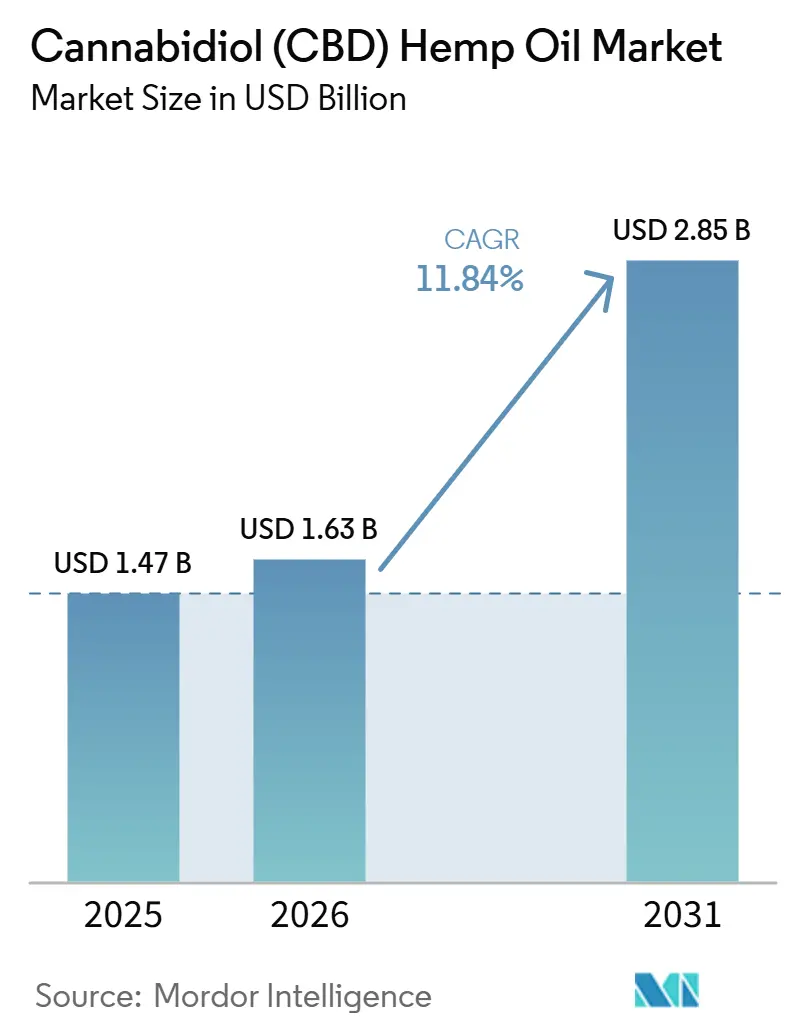
The Cannabidiol Hemp Oil Market size is projected to be USD 1.47 billion in 2025, USD 1.63 billion in 2026, and reach USD 2.85 billion by 2031, growing at a CAGR of 11.84% from 2026 to 2031.
The cannabidiol (CBD) hemp oil market is moving forward on the back of stronger medical use, a more supportive policy direction in major Western countries, and wider availability across clinical, retail, and direct channels. A major change arrived on April 1, 2026, when the US Centers for Medicare & Medicaid Services began the Beneficiary Engagement Incentive pilot, which allows eligible healthcare organizations to fund up to USD 500 a year per beneficiary for qualifying hemp-derived CBD products, bringing the category closer to reimbursable healthcare spending than discretionary wellness demand. That shift is raising the value of documentation, consistency, and certified production, which benefits suppliers that can meet tighter quality and compliance expectations. It also supports a clearer premium tier for compliant full-spectrum products, while still leaving room for isolate-based products in formulations where a zero-THC profile is commercially important. The cannabidiol (CBD) hemp oil market is also seeing faster consolidation as better-capitalized operators use restructurings, channel partnerships, and clinical development programs to secure scale before regulation tightens further.
Key Report Takeaways
- By product type, full-spectrum CBD hemp oil led with 48.13% revenue share in 2025, while CBD isolate is projected to expand at a 12.10% CAGR through 2031.
- By product form, oils and tinctures held 41.36% share in 2025, while edibles and gummies are forecasted to grow at a 12.54% CAGR through 2031.
- By application, medical and therapeutic use accounted for 44.62% share in 2025, while personal care and cosmetics are expected to advance at a 13.21% CAGR through 2031.
- By distribution channel, hospitals and clinics captured 42.51% share in 2025, while online platforms are projected to grow at a 13.67% CAGR through 2031.
- By geography, North America held 45.22% share in 2025, while Asia-Pacific is expected to record the fastest regional CAGR at 14.42% through 2031.
Note: Market size and forecast figures in this report are generated using Mordor Intelligence’s proprietary estimation framework, updated with the latest available data and insights as of 2026.
Market Trends and Insights
Drivers Impact Analysis of Cannabidiol (CBD) Hemp Oil Market*
| Driver | (~) % Impact on CAGR Forecast | Geographic Relevance | Impact Timeline |
|---|---|---|---|
| Hemp-Friendly Legalization and THC Threshold Clarity | +3.0% | North America, EU, APAC spillover | Short term (≤ 2 years) |
| Medical Acceptance for Chronic Pain and Epilepsy | +2.6% | Global, strongest in North America and Europe | Medium term (2-4 years) |
| Consumer Shift Toward Plant-Based, Non-Opioid Wellness Solutions | +2.0% | Global, accelerating in Asia-Pacific and South America | Long term (≥ 4 years) |
| E-Commerce and Omnichannel Access Expansion | +1.6% | North America, Europe, Asia-Pacific e-commerce hubs | Medium term (2-4 years) |
| Minor Cannabinoid Blending and Personalized Formulations | +1.1% | North America, Germany, Netherlands, UK | Medium term (2-4 years) |
| Seed-To-Shelf Traceability and Premiumization Demand | +0.7% | Global, strongest where batch tracking is required | Long term (≥ 4 years) |
| Source: Mordor Intelligence | |||
Hemp-Friendly Legalization and THC Threshold Clarity
Federal policy direction in the United States remains the clearest near-term growth trigger for the cannabidiol (CBD) hemp oil market. The April 1, 2026, CMS Beneficiary Engagement Incentive pilot lets eligible healthcare organizations provide up to USD 500 each year per Medicare beneficiary for qualifying hemp-derived CBD wellness products, which opens a demand stream that behaves more like managed healthcare purchasing than specialty retail buying.[1]High Tide Inc., “High Tide Subsidiary NuLeaf Naturals Pursues Participation in U.S. Medicare CBD Pilot Launching Today,” PR Newswire, prnewswire.com The pilot also specifies non-intoxicating full-spectrum products with up to 3 mg of tetrahydrocannabinols per serving, which effectively points buyers toward a narrower compliance profile and a smaller set of suppliers that can reliably meet it. The result is a market that starts to look less like an impulse wellness category and more like a supervised therapeutic purchase. That matters because the cannabidiol (CBD) hemp oil market gains a steadier revenue base when spending begins to move through healthcare channels instead of only through discretionary consumer budgets.
Medical Acceptance for Chronic Pain and Epilepsy
Clinical support for CBD use strengthened in 2025, and that is giving the cannabidiol (CBD) hemp oil market a more durable medical foundation. A Phase 3 randomized placebo-controlled trial published in Nature Medicine found that a chemically defined full-spectrum cannabis extract produced meaningful reductions in chronic low back pain, which adds a stronger level of evidence than the category usually had in earlier years.[2]Luis Romero et al., “Full-Spectrum Extract from Cannabis Sativa DKJ127 for Chronic Low Back Pain A Phase 3 Randomized Placebo-Controlled Trial,” Nature Medicine, link.springer.com An open-label pilot study published in Biomedicines reported lower anxiety scores among participants who used a hemp-derived, high-CBD full-spectrum product, which supports the case for further controlled trials. Long-term data published in Epilepsia also showed sustained seizure reduction through 144 weeks in focal epilepsy patients treated with CBD, which reinforces the value of standardized formulations in neurologic use.[3]“Clinical and Cognitive Improvement Following Treatment with a Hemp-Derived, Full-Spectrum, High-Cannabidiol Product in Patients with Anxiety An Open-Label Pilot Study,” Biomedicines, doi.org As more pharmaceutical-pathway products advance, the cannabidiol (CBD) hemp oil market is likely to keep moving toward better documentation, tighter specifications, and stronger willingness to pay for evidence-backed products.
Consumer Shift Toward Plant-Based, Non-Opioid Wellness Solutions
The cannabidiol (CBD) hemp oil market also benefits from a broader move toward plant-derived wellness products that are positioned around stress, sleep, pain support, and skin health. This demand is not limited to one buyer profile, because therapeutic users, older consumers, and healthcare-referred patients support one side of the category, while younger consumers support more lifestyle-oriented formats. That split matters because it keeps the category from depending on a single use case or a single product form. It also explains why personal care and cosmetics is the fastest-growing application, with premium skincare and topical products drawing interest from brands that want hemp-derived actives without relying only on ingestible demand. The appeal is stronger when buyers view CBD as a functional ingredient rather than as a novelty. In that setting, the cannabidiol (CBD) hemp oil market gains resilience because medical demand and wellness demand are expanding on different but complementary paths.
E-Commerce and Omnichannel Access Expansion
Wider route-to-market options are improving access and keeping the cannabidiol (CBD) hemp oil market visible across more purchase settings. Hospitals and clinics remained the largest distribution channel in 2025, while online platforms are set to grow the fastest through 2031, which shows that supervised use and digital buying are rising at the same time. Brands are using subscription models, direct shipping, and telehealth-linked support to build repeat purchases instead of one-time trial behavior. At the same time, pharmacy and organized retail presence matters because it improves credibility and makes the category easier for mainstream buyers to understand. Companies that can combine clinical-grade positioning with a direct-to-consumer offer are better placed to defend pricing and retain customers. That is why the cannabidiol (CBD) hemp oil market is moving toward an omnichannel structure instead of relying on a single dominant route.
Restraints Impact Analysis of Cannabidiol (CBD) Hemp Oil Market*
| Restraint | (~) % Impact on CAGR Forecast | Geographic Relevance | Impact Timeline |
|---|---|---|---|
| Fragmented THC, Labeling, and Testing Standards | -1.7% | North America state variation, EU member-state variation, Asia-Pacific | Short term (≤ 2 years) |
| Cross-Border Customs and Import Compliance Friction | -1.1% | EU trade flows, Asia-Pacific imports, South America | Medium term (2-4 years) |
| Organic Hemp Seed and Certified Biomass Supply Constraints | -0.6% | Global cultivation markets, EU certified-variety systems | Long term (≥ 4 years) |
| Consumer Confusion Around Hemp-Derived Versus Marijuana-Derived CBD | -0.4% | Global, strongest where disclosure standards are weak | Medium term (2-4 years) |
| Source: Mordor Intelligence | |||
Fragmented THC, Labeling, and Testing Standards
The lack of a unified global standard for THC measurement and labeling continues to slow the cannabidiol (CBD) hemp oil market. Producers that sell across more than one jurisdiction must adjust formulations, packaging, and testing protocols, which raises compliance costs and complicates inventory planning. In Europe, EFSA set a provisional safe daily intake for CBD as a novel food at 0.0275 mg per kg of body weight per day, which is close to 2 mg per day for a 70 kg adult, and that benchmark creates a strict reference point for ingestible product positioning. When one region leans toward low daily intake expectations and another uses a different framework, suppliers face a harder task in keeping one broad portfolio across markets. That problem affects both premium and mass-positioned brands because the issue is structural rather than brand-specific. The cannabidiol (CBD) hemp oil market therefore carries a regulatory cost burden that slows speed to shelf and raises the advantage of firms with stronger quality systems.
Cross-Border Customs and Import Compliance Friction
Cross-border movement remains a practical hurdle for the cannabidiol (CBD) hemp oil market even where demand is clearly present. Documentation needs, claim restrictions, and product classification differences can all change the viability of a shipment from one market to another. Spain's Real Decreto 903/2025 sets conditions for standardized magistral cannabis preparations, which supports a more formal pharmaceutical route but also highlights how country-specific structures can shape access instead of allowing a single regional playbook. These kinds of requirements tend to favor larger operators that can maintain regulatory teams and country-level paperwork, while smaller firms face longer lead times and higher risk. The effect is not just slower trade, because it also changes who can expand internationally with confidence. That is one reason the cannabidiol (CBD) hemp oil market is consolidating from below, with scale becoming a practical compliance tool as much as a commercial advantage.
*Our forecasts treat driver/restraint impacts as directional, not additive. The impact forecasts reflect baseline growth, mix effects, and variable interactions.
Cannabidiol (CBD) Hemp Oil Market Segment Analysis
By Product Type:
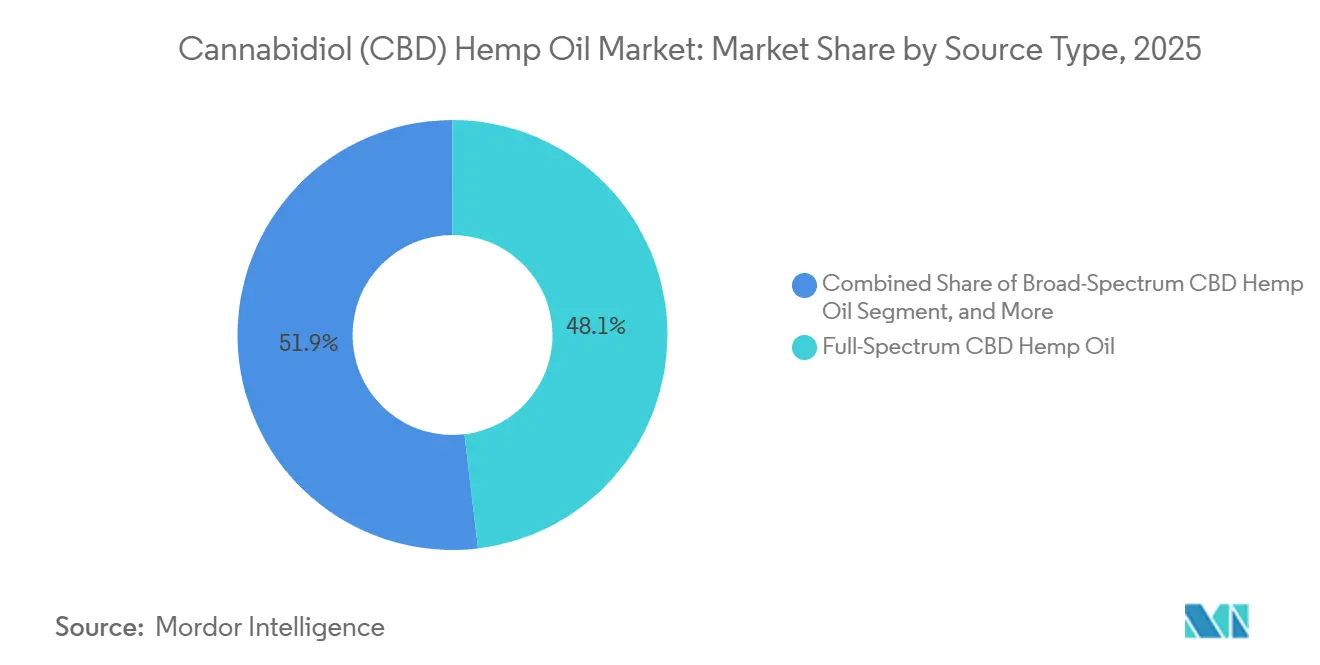
Full-Spectrum Leads, Isolate Disrupts from BelowFull-spectrum CBD hemp oil held 48.13% of the cannabidiol (CBD) hemp oil market share in 2025, which shows that whole-plant extracts still set the pace for the category. Buyers continue to favor formulations that include CBD alongside minor cannabinoids, terpenes, and flavonoids, because those products are viewed as more complete solutions in both wellness and therapeutic use. That preference gives full-spectrum products relevance across retail shelves, practitioner recommendations, and more structured clinical pathways. As a result, the leading part of the cannabidiol (CBD) hemp oil market is tied not only to consumer familiarity but also to a growing healthcare use case.
CBD isolate hemp oil is expected to be the fastest-growing product type, and the cannabidiol (CBD) hemp oil market for isolate is projected to expand at a 12.10% CAGR between 2026 and 2031. Growth here is tied to the need for a confirmed zero-THC starting point in beverages, functional foods, cosmetics, nutraceuticals, and pharmaceutical intermediates. Manufacturers in these areas value precision because it supports dosing consistency, batch repeatability, and easier label control. Isolate also gives formulators a cleaner path when they want to build a finished product without the variability that can come with broader extracts. This part of the cannabidiol (CBD) hemp oil market is therefore advancing on compliance utility as much as on end-consumer demand.



By Product Form:
Oils Dominate, Gummies Reshape Consumer EngagementOils and tinctures held 41.36% share in 2025, which confirms that traditional liquid formats still carry the core of the cannabidiol (CBD) hemp oil market. Their appeal comes from straightforward dose titration, familiar consumer usage, and a strong fit with both wellness and clinically guided positioning. Healthcare practitioners also prefer formats where dose adjustment is simple and where onset can be tracked with more clarity than in some other forms.
Edibles and gummies are anticipated to be the fastest-growing product form, and the cannabidiol (CBD) hemp oil market for edibles and gummies is projected to grow at a 12.54% CAGR from 2026 to 2031. Convenient serving sizes, repeatable routines, and a format that fits daily supplement behavior are driving that rise. The form also broadens reach because it lowers the learning curve for new users compared with tinctures. At the same time, companies need form mix flexibility because ingestible products face a more demanding regulatory path in several markets than topical products do. That combination keeps gummies attractive, but it also makes the cannabidiol (CBD) hemp oil market more dependent on regulatory execution in each region. Softgels and capsules sit between tinctures and gummies in buyer perception, because they retain dosing order while looking more like conventional healthcare products. Together, these shifts show that product form in the cannabidiol (CBD) hemp oil market is becoming more segmented by use case, channel, and compliance burden.
By Application:
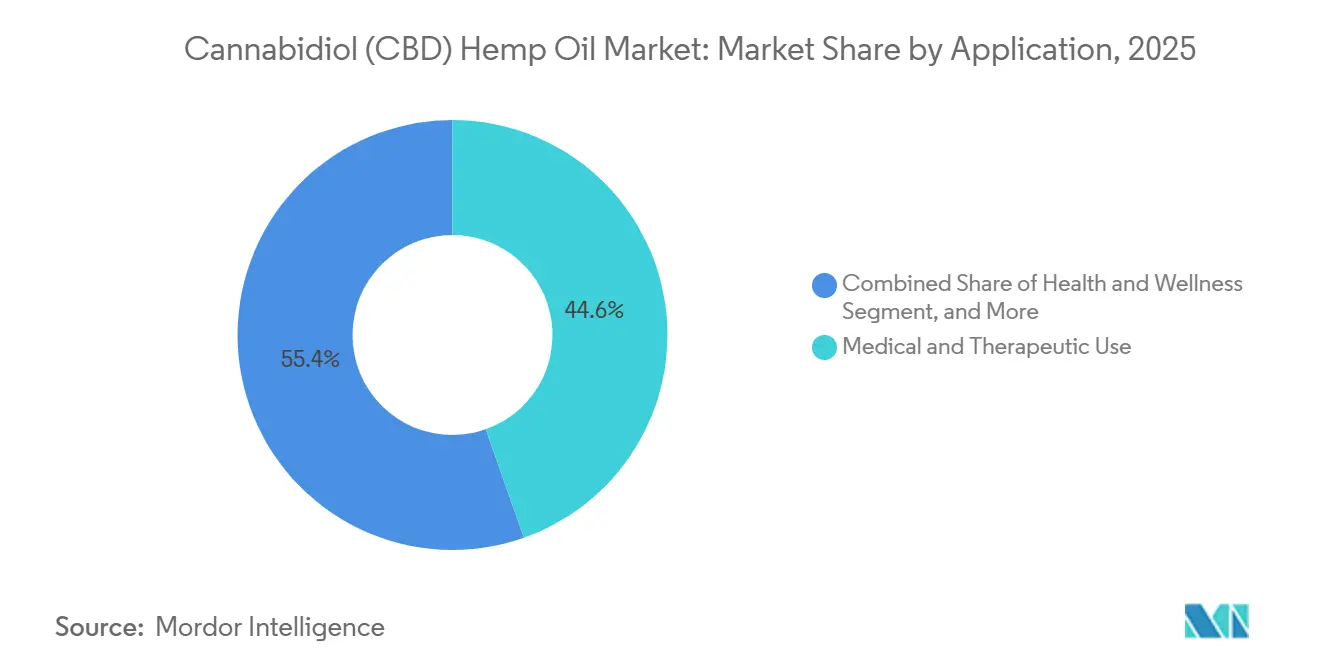
Medical Segment Anchors Volume, Personal Care Drives Premium GrowthMedical and therapeutic applications accounted for 44.62% of the cannabidiol (CBD) hemp oil market size in 2025, making healthcare-linked use the main volume anchor for the category. That share reflects demand tied to pain management, epilepsy, anxiety, and other conditions where standardized use matters more than novelty. Long-duration epilepsy data also supported sustained benefit, which reinforces the value of documentation and product consistency in this application set. The April 2026 CMS pilot adds another layer of support because it can convert physician-referred CBD use from discretionary spending into a more structured healthcare expense. That is why the cannabidiol (CBD) hemp oil market continues to lean on medical use for scale, legitimacy, and pricing discipline.
Personal care and cosmetics are the fastest-growing applications, and the cannabidiol (CBD) hemp oil market for personal care and cosmetics is projected to rise at a 13.21% CAGR through 2031. Growth here comes from CBD's anti-inflammatory and skin-restorative positioning in serums, moisturizers, bath products, and other premium topical formats. For that reason, the cannabidiol (CBD) hemp oil market is not relying on one application lane, because volume is anchored by medical use while premium growth is increasingly led by personal care. Health and wellness remain an important adjacent application because it captures buyers focused on routine support rather than treatment-led consumption. That breadth helps the cannabidiol (CBD) hemp oil market sustain growth across consumer cycles and across different channel environments.
By Distribution Channel:
Clinical Scale Meets Digital GrowthHospitals and clinics held 42.51% of the cannabidiol (CBD) hemp oil market share in 2025, which shows how important healthcare gatekeepers have become to category scale. This channel benefits from patient trust, practitioner oversight, and a stronger preference for documented formulations. High Tide said NuLeaf Naturals was pursuing participation in the pilot, and that move reflects how major brands are positioning early for practitioner-linked demand rather than waiting for broader retail normalization. The clinical channel therefore gives the cannabidiol (CBD) hemp oil market a base of supervised demand that smaller and less documented brands may struggle to reach.
Online platforms are expected to be the fastest-growing distribution channel at a 13.67% CAGR through 2031, and that reflects the continuing strength of direct buying, home delivery, and broad assortment. Digital channels help brands keep closer control over education, repeat ordering, and customer service. Retail pharmacies are also gaining relevance as the category matures and needs less specialist explanation than it once did. Specialty stores remain useful for early adopters who want in-person product discovery and more detailed discussion. Supermarkets and hypermarkets matter mainly for simpler, more familiar formats such as topicals and certain edibles. The channel mix in the cannabidiol (CBD) hemp oil market is therefore becoming more layered, with each outlet serving a different stage of buyer adoption.
Geography Analysis
North America Cannabidiol (CBD) Hemp Oil Market
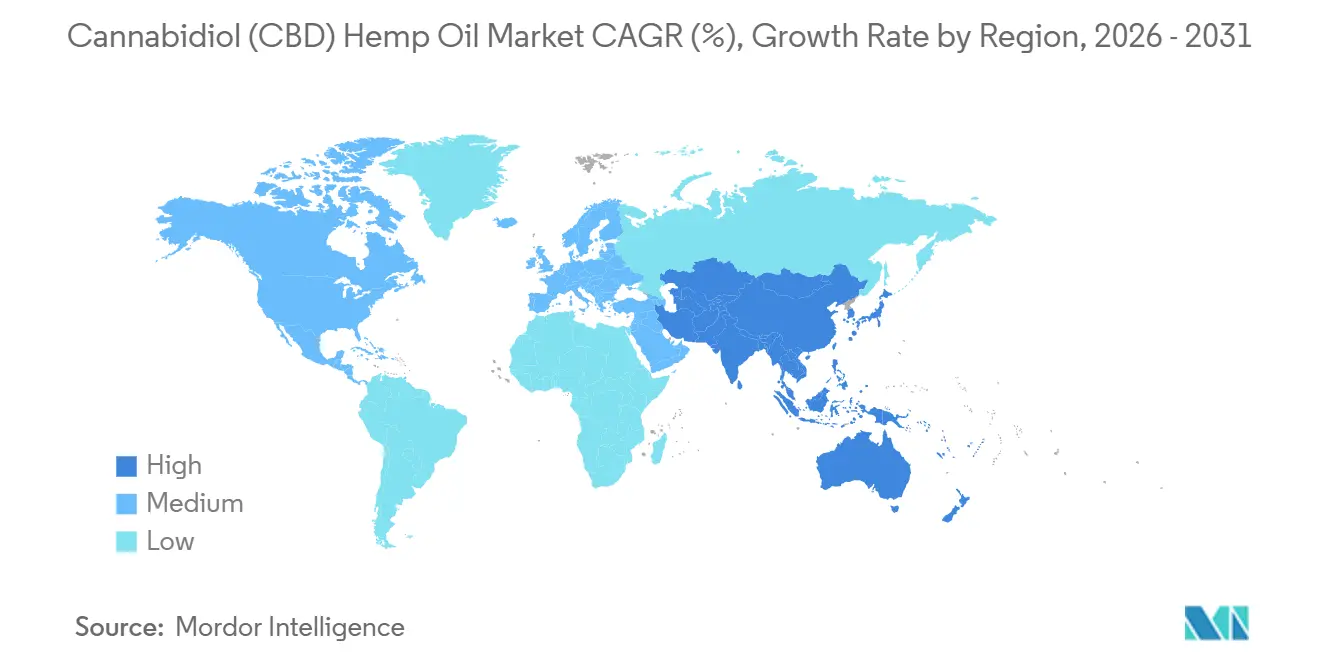
North America retained 45.22% share in 2025, making it the largest regional block in the cannabidiol (CBD) hemp oil market. That position came from a mature US ecosystem that already included direct-to-consumer brands, specialty retail, pharmacy access, and an emerging clinical pathway. Canada adds stability because its regulated medical framework supports a more orderly operating environment for products that are positioned through healthcare use. Mexico remains a smaller but emerging opportunity as healthcare regulation evolves and creates a more formal path for category development.
Europe Cannabidiol (CBD) Hemp Oil Market
Europe remains important because national rules continue to shape what kind of cannabidiol (CBD) hemp oil market growth is possible in each country. The region still presents more room for topical and medically directed formats than for broadly positioned ingestibles in several countries. The UK and the Netherlands remain relatively workable markets for CBD consumer products, while other countries continue to move at a slower and less uniform pace. EFSA's provisional safe daily intake for CBD is likely to remain a central influence on how ingestible products are formulated and marketed across Europe.
APAC, South America and MEA Cannabidiol (CBD) Hemp Oil Market
Asia-Pacific is projected to be the fastest-growing regional segment at a 14.42% CAGR through 2031, which gives the cannabidiol (CBD) hemp oil market one of its strongest forward growth engines. Growth in the region is supported by rising wellness demand in India, South Korea, and Australia, even though commercial routes differ widely across countries. South America is still earlier in development, with Brazil and Argentina leaning more toward pharmaceutical formulation pathways than open consumer retail. MEA remains smaller, with the GCC and South Africa more likely to expand through clinical and wellness frameworks as regulation matures.

Competitive Landscape
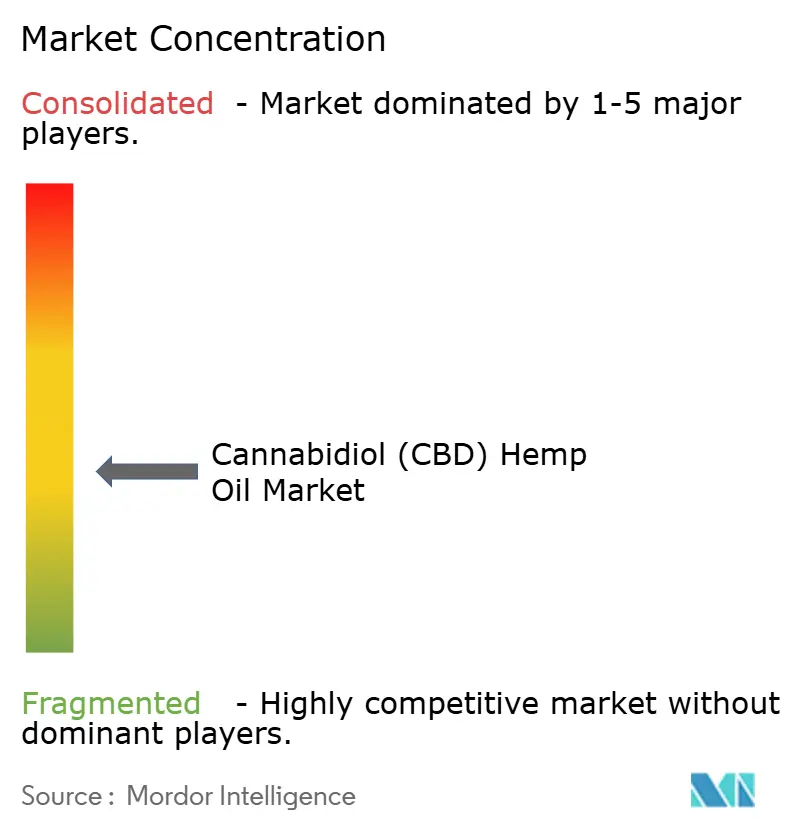
The cannabidiol (CBD) hemp oil market remains moderately fragmented, with a few vertically integrated operators holding stronger channel access and clinical credibility than the wider field. Charlotte's Web, Medterra CBD, and Canopy Growth stand out because they are better placed to support quality assurance, channel partnerships, and a broader product mix than many smaller rivals. Leading players are increasingly competing through vertical integration, clinical channel access, and broader cannabinoid portfolios rather than through simple CBD-only offerings. That pattern keeps the cannabidiol (CBD) hemp oil market tilted toward operators that can manage seed sourcing, extraction, formulation, and compliance as one connected system.
Another clear strategic move is the push into regulated medical development, because it gives companies a stronger moat than supplement-only positioning can offer. Charlotte's Web said its DeFloria joint venture received FDA clearance for Phase 2 trials of AJA001 under the FDA's Botanical Drug Pathway, which could create a higher barrier to entry if the product advances successfully. The senior healthcare channel created by the CMS pilot is also still underbuilt, which means few operators have the institutional sales and documentation systems needed to capture it at scale. Aurora Cannabis highlighted EU GMP certification for its Ontario facility in its FY2026 annual results, which supports access to more tightly regulated international channels. These moves show that the cannabidiol (CBD) hemp oil market is rewarding companies that can pair geographic reach with regulated-channel execution.
Competitive white space is also visible in formulation ingredients, where suppliers can serve beverage, cosmetic, nutraceutical, and pharmaceutical customers without fighting head-on in a crowded branded retail shelf. That route is especially relevant for isolated and minor cannabinoid suppliers that can deliver repeatable specifications to business customers. At the same time, the long tail of regional brands continues to compete on price and niche positioning, which keeps the market from becoming highly concentrated. The cannabidiol (CBD) hemp oil market is therefore consolidating, but it is still far from controlled by a very small group of players.
Cannabidiol (CBD) Hemp Oil Industry Leaders
Charlotte’s Web Holdings, Inc.
CV Sciences, Inc.
Medterra CBD
Green Roads, Inc.
CBD American Shaman
- *Disclaimer: Major Players sorted in no particular order
Cannabidiol (CBD) Hemp Oil Market Companies Covered in this Report
- Aurora Cannabis Inc.
- Cannoid
- Canopy Growth
- CBD American Shaman
- Charlotte's Web Holdings, Inc.
- CV Sciences, Inc.
- Elixinol
- ENDOCA
- Folium Europe B.V.
- Gaia Herbs, Inc.
- Green Roads, Inc.
- Hempfusion Wellness Inc.
- Isodiol International, Inc.
- Jazz Pharmaceuticals plc
- Medical Marijuana
- Medterra CBD
- NuLeaf Naturals
- PharmaHemp
- The Cronos Group
- Tilray Brands, Inc.

Recent Industry Developments in Cannabidiol (CBD) Hemp Oil Market
- May 2026: Charlotte's Web Holdings closed its restructuring transaction with British American Tobacco, converting approximately CAD 75.3 million (approx. USD 55 million) in convertible debt plus accrued interest into equity, with BAT providing an additional USD 10 million in fresh capital. BAT now holds approximately 40% of Charlotte's Web, and the proceeds are earmarked for CMS Medicare pilot participation and DeFloria Phase 2 clinical development.
- April 2026: Tilray Brands announced the acquisition of Lyphe, strengthening its UK medical cannabis and CBD presence, and confirmed plans to pursue participation in the US CMS Medicare CBD pilot program as a supplier of hemp-derived cannabinoid products for underserved patient populations.
- April 2026: NuLeaf Naturals (a High Tide subsidiary) and Medterra CBD joined the National Compassionate Care Council as founding members alongside Tilray, Feals, and Lazarus Naturals, establishing a healthcare-industry coalition to advance CMS Medicare CBD pilot access for seniors.


Global Cannabidiol (CBD) Hemp Oil Market Report Scope
According to the report’s scope, the cannabidiol (CBD) hemp oil market comprises the production, processing, and commercialization of hemp-derived CBD oil products used for wellness, therapeutic, personal care, and nutritional applications. These products contain cannabidiol extracted from industrial hemp and are marketed in forms such as oils, tinctures, capsules, topicals, and edibles.
The cannabidiol (CBD) hemp oil market is segmented into product type, product form, application, distribution channel, and geography. By product type, the market is segmented into full-spectrum CBD Hemp oil, broad-spectrum CBD hemp oil, and CBD isolate hemp oil. By product form, the market is segmented into oils and tinctures, capsules and softgels, topicals and creams, edibles and gummies, and other product forms. By application, the market is segmented into health and wellness, medical and therapeutic use, personal care and cosmetics, and other applications. By distribution channel, the market is segmented into online platforms, retail pharmacies, specialty stores, supermarkets and hypermarkets, and hospitals and clinics. By geography, the market is segmented into North America, Europe, Asia-Pacific, the Middle East and Africa, and South America. The report also covers the estimated market sizes and trends for 17 countries across major regions globally. The report offers values (USD) for all the above segments.
| Full-Spectrum CBD Hemp Oil |
| Broad-Spectrum CBD Hemp Oil |
| CBD Isolate Hemp Oil |
| Oils and Tinctures |
| Capsules and Softgels |
| Topicals and Creams |
| Edibles and Gummies |
| Other Product Forms |
| Health and Wellness |
| Medical and Therapeutic Use |
| Personal Care and Cosmetics |
| Other Applications |
| Online Platforms |
| Retail Pharmacies |
| Specialty Stores |
| Supermarkets and Hypermarkets |
| Hospitals and Clinics |
| North America | United States |
| Canada | |
| Mexico | |
| Europe | Germany |
| United Kingdom | |
| France | |
| Italy | |
| Spain | |
| Rest of Europe | |
| Asia-Pacific | China |
| Japan | |
| India | |
| Australia | |
| South Korea | |
| Rest of Asia-Pacific | |
| Middle East and Africa | GCC |
| South Africa | |
| Rest of Middle East and Africa | |
| South America | Brazil |
| Argentina | |
| Rest of South America |
| By Product Type | Full-Spectrum CBD Hemp Oil | |
| Broad-Spectrum CBD Hemp Oil | ||
| CBD Isolate Hemp Oil | ||
| By Product Form | Oils and Tinctures | |
| Capsules and Softgels | ||
| Topicals and Creams | ||
| Edibles and Gummies | ||
| Other Product Forms | ||
| By Application | Health and Wellness | |
| Medical and Therapeutic Use | ||
| Personal Care and Cosmetics | ||
| Other Applications | ||
| By Distribution Channel | Online Platforms | |
| Retail Pharmacies | ||
| Specialty Stores | ||
| Supermarkets and Hypermarkets | ||
| Hospitals and Clinics | ||
| By Geography | North America | United States |
| Canada | ||
| Mexico | ||
| Europe | Germany | |
| United Kingdom | ||
| France | ||
| Italy | ||
| Spain | ||
| Rest of Europe | ||
| Asia-Pacific | China | |
| Japan | ||
| India | ||
| Australia | ||
| South Korea | ||
| Rest of Asia-Pacific | ||
| Middle East and Africa | GCC | |
| South Africa | ||
| Rest of Middle East and Africa | ||
| South America | Brazil | |
| Argentina | ||
| Rest of South America | ||


Key Questions Answered in the Report
What is the current outlook for cannabidiol hemp oil through 2031?
The market is projected to grow from USD 1.47 billion in 2025 to USD 1.63 billion in 2026 to USD 2.85 billion by 2031 at an 11.84% CAGR, supported by medical use, better channel access, and tighter product standardization.
Which product type leads revenue generation today?
Full-spectrum CBD hemp oil led with 48.13% share in 2025, helped by demand for multi-cannabinoid formulations and a stronger fit with emerging healthcare use.
Which application is growing the fastest?
Personal care and cosmetics are the fastest-growing application at a 13.21% CAGR through 2031, driven by premium skincare and other topical products using hemp-derived actives.
Which region offers the strongest growth runway?
Asia-Pacific is expected to grow the fastest at a 14.42% CAGR through 2031, while North America remains the largest regional market by 45.22% share.
Page last updated on:


 Your data is secure and never sold or shared.


