
Car Care Products Market Size and Share
Market Overview
| Study Period | 2021 - 2031 |
|---|---|
| Market Size (2026) | USD 12.85 Billion |
| Market Size (2031) | USD 16.14 Billion |
| Growth Rate (2026 - 2031) | 4.66 % |
| Fastest Growing Market | Asia Pacific |
| Largest Market | Asia Pacific |
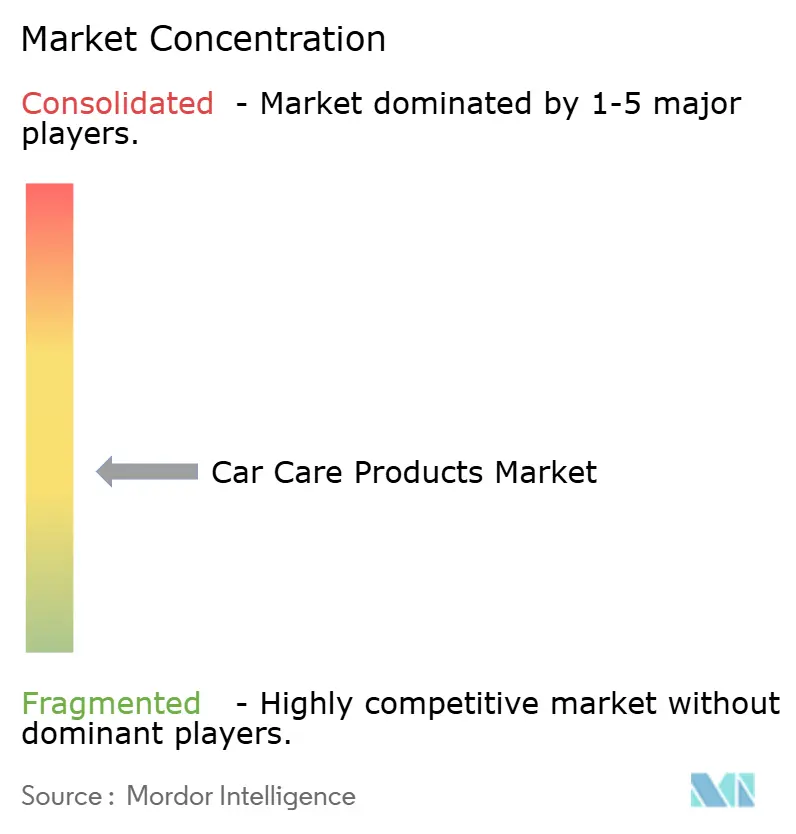
| Market Concentration | Medium |
Major Players *Disclaimer: Major Players sorted in no particular order Image © Mordor Intelligence. Reuse requires attribution under CC BY 4.0. | |
Car Care Products Market Analysis by Mordor Intelligence
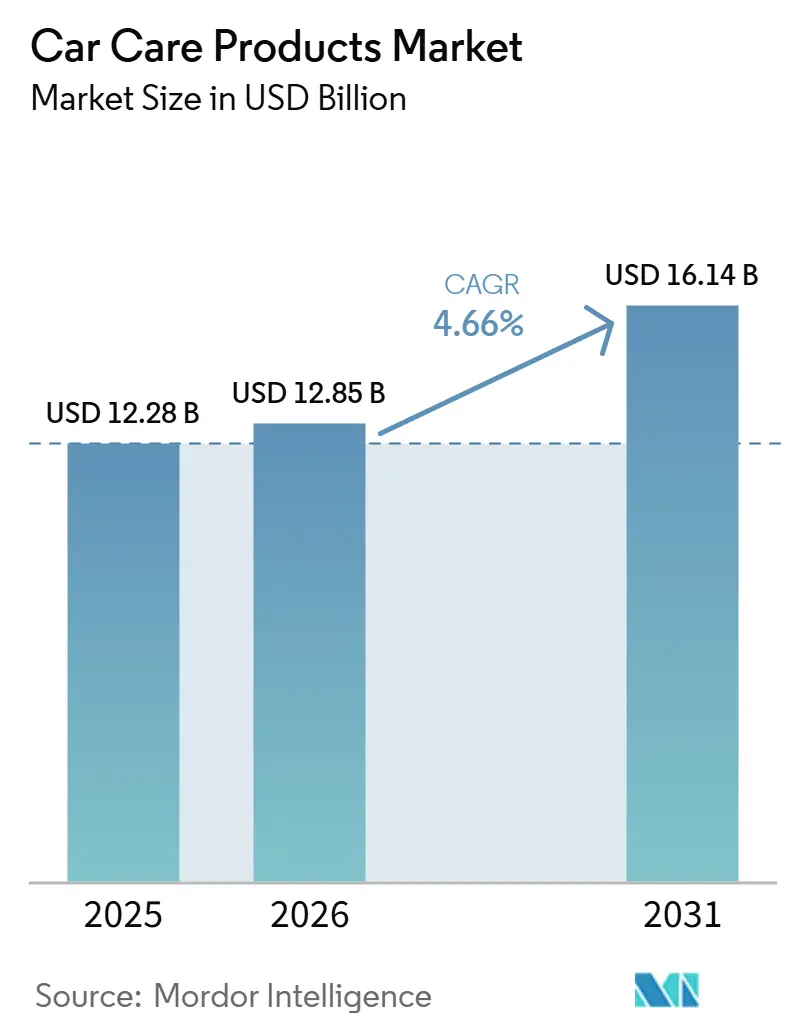
The car care products market size is projected to be USD 12.28 billion in 2025, USD 12.85 billion in 2026, and reach USD 16.14 billion by 2031, growing at a CAGR of 4.66% from 2026 to 2031. The spread of water-saving chemistries and tighter volatile-organic-compound (VOC) caps in OECD economies is rewriting how consumers purchase, apply, and replenish detailing consumables. Asia-Pacific already contributes the largest regional share, and its faster vehicle-park expansion offsets mileage declines in North America and Europe. Globally, interior care is outpacing exterior wash liquids because longer ownership cycles and cabin-air-quality concerns lift demand for odor neutralizers and leather conditioners. Meanwhile, foams and trigger-sprays are gaining favor with both do-it-yourself (DIY) enthusiasts and professional detailers because they comply more easily with January 2025 U.S. aerosol-coating regulations that limit VOC content.
Key Report Takeaways
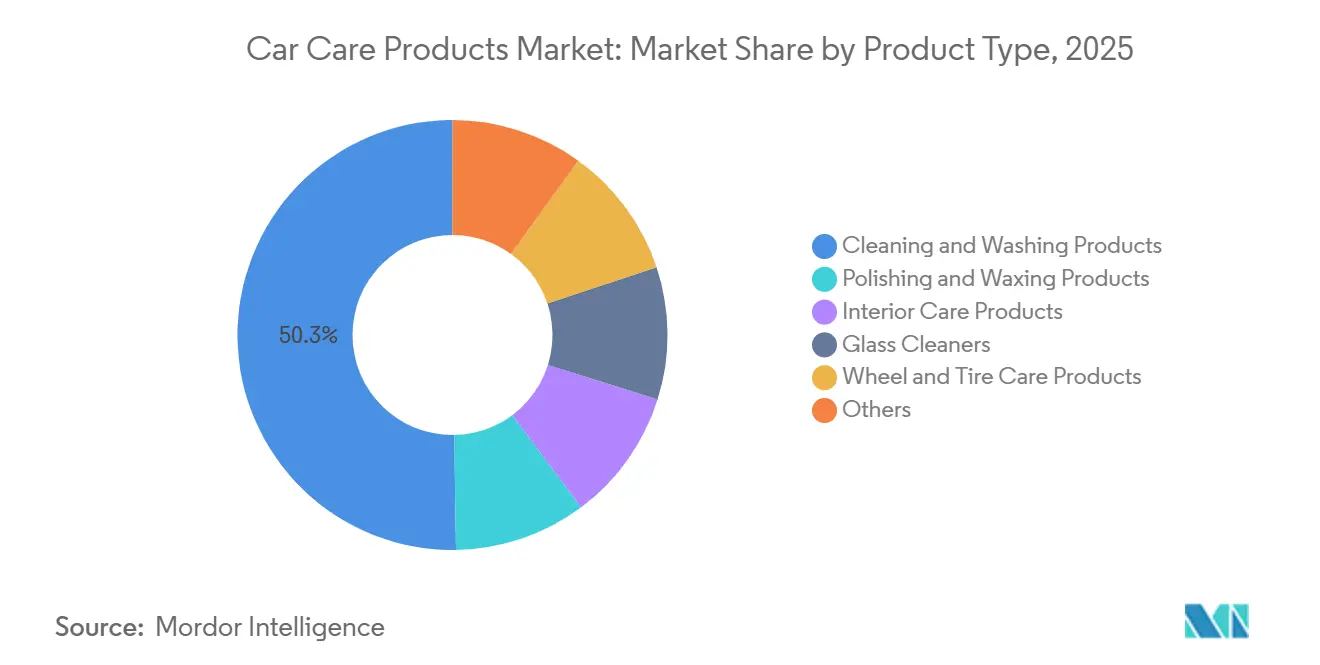
- By product category, cleaning and washing solutions led with 50.26% of the car care products market share in 2025, whereas interior care is projected to expand at a 5.26% CAGR through 2031.
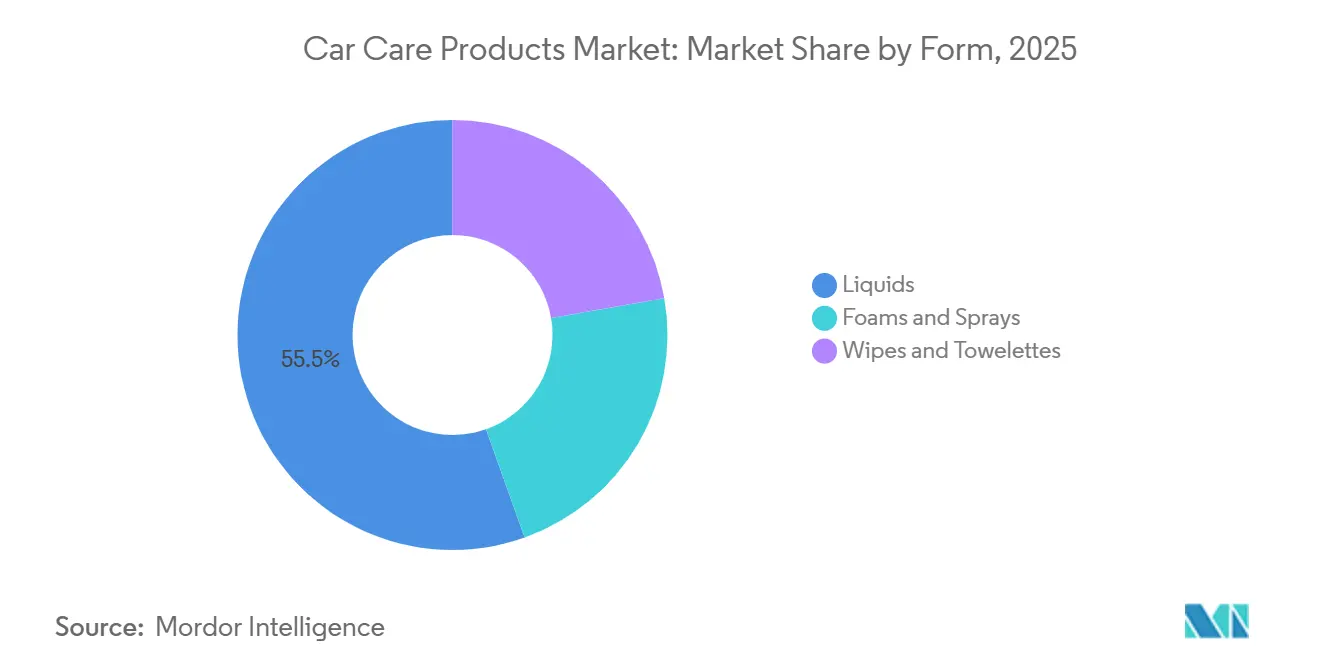
- By form, liquids accounted for 55.45% of the car care products market size in 2025, and foams-plus-sprays are advancing at a 5.52% CAGR between 2026 and 2031.
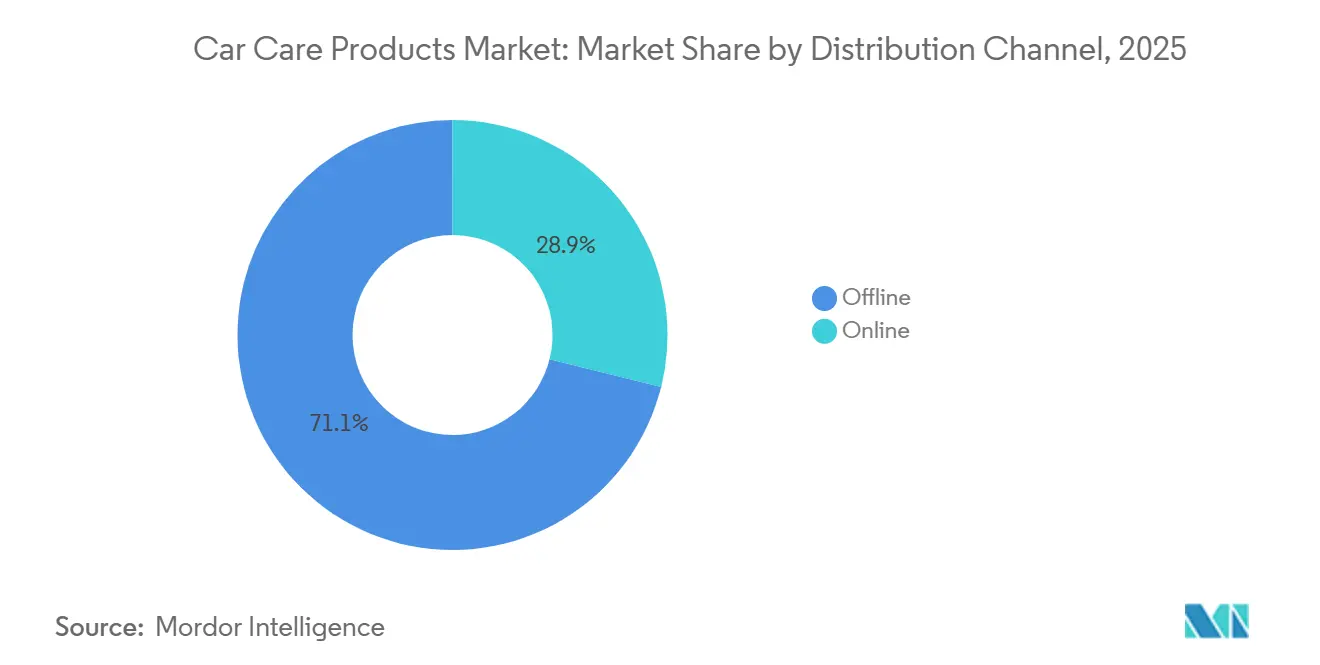
- By distribution channel, offline outlets held 71.12% share of the car care products market in 2025, while online platforms show the highest forecast CAGR at 6.16% between 2026 and 2031.
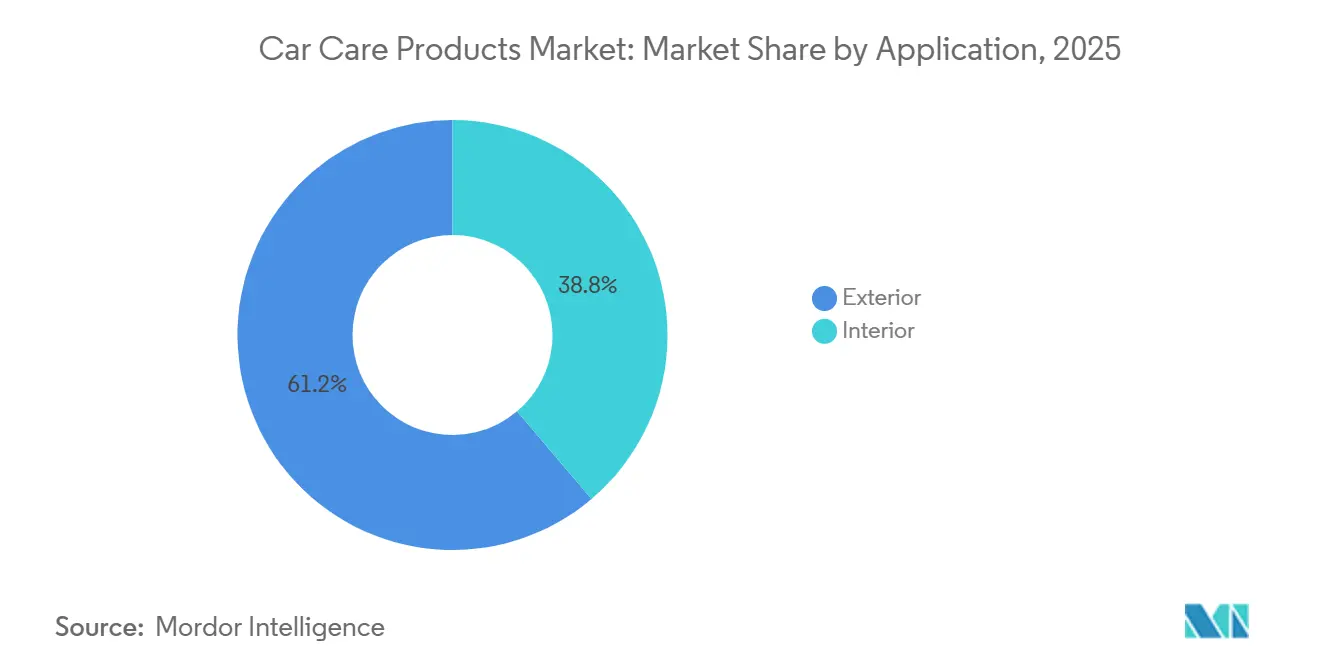
- By application, exterior treatments captured 61.18% of revenue in 2025, and interior care is rising at a 5.42% CAGR between 2026 and 2031.
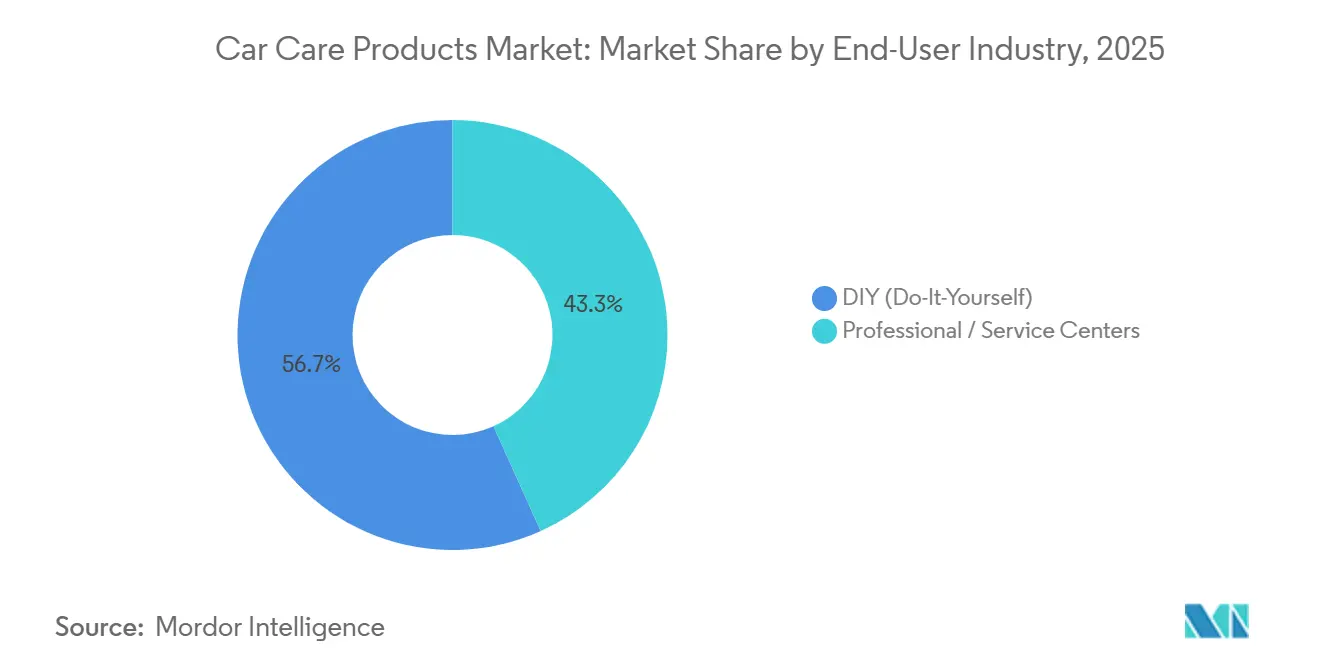
- By end user, DIY buyers represented 56.72% of demand in 2025 and are growing at 5.21% CAGR between 2026 and 2031.
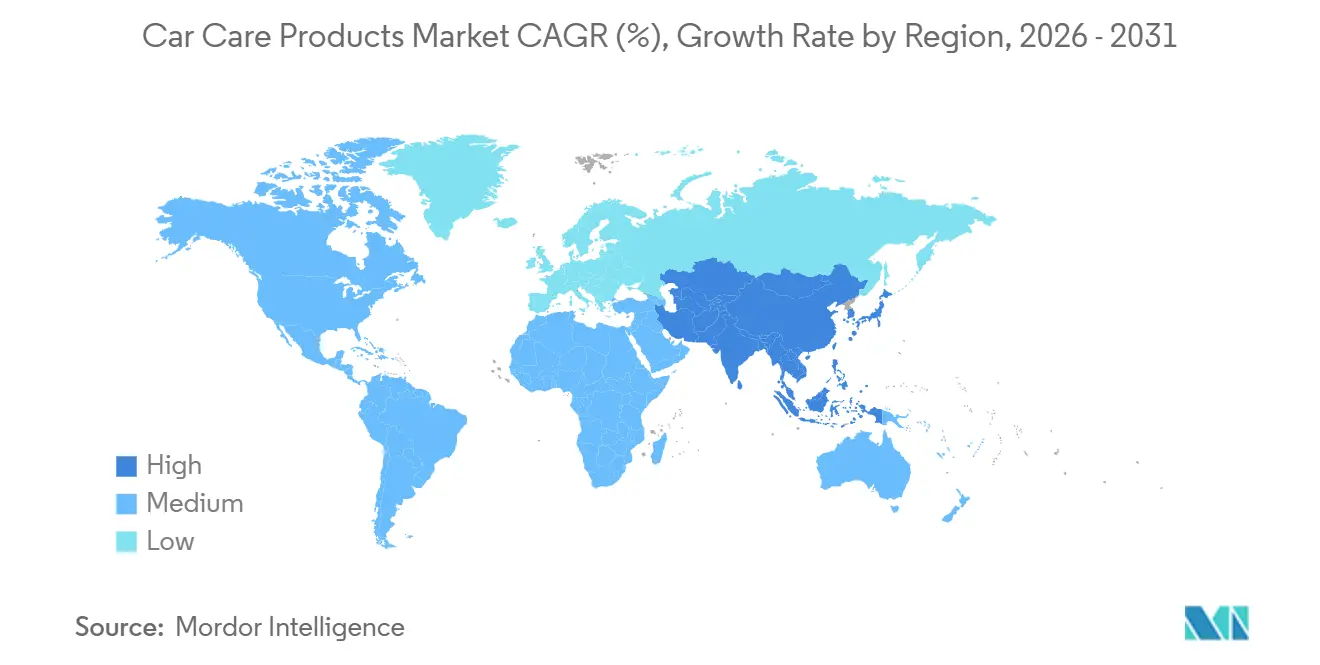
- By geography, Asia-Pacific dominated with 37.95% of global revenue in 2025 and is predicted to climb at a 5.89% CAGR between 2026 and 2031.
Note: Market size and forecast figures in this report are generated using Mordor Intelligence’s proprietary estimation framework, updated with the latest available data and insights as of January 2026.
Market Trends and Insights
Drivers Impact Analysis of Car Care Products Market*
| Driver | (~) % Impact on CAGR Forecast | Geographic Relevance | Impact Timeline |
|---|---|---|---|
| Growing automotive sales & expanding aftermarket | +1.2% | Global, with APAC and Latin America leading new-vehicle registrations | Medium term (2–4 years) |
| Rising consumer awareness of preventive maintenance | +0.9% | North America, Europe, urban APAC (China, Japan, South Korea) | Long term (≥4 years) |
| Proliferation of professional wash/detail centers | +0.8% | North America, Europe, Brazil, urban China and India | Medium term (2–4 years) |
| Shift toward waterless, eco-friendly formulations | +0.7% | North America (CARB states), EU, Australia, urban Latin America | Long term (≥4 years) |
| OEM-launched subscription bundles for care consumables | +0.4% | North America, Western Europe, early pilots in APAC | Short term (≤2 years) |
| Source: Mordor Intelligence | |||
Growing Automotive Sales and Aftermarket Expansion
In 2025, Europe saw new-vehicle registrations climb to 11 million units, with battery-electric vehicles (BEVs) making up 19% of these deliveries[1]International Council on Clean Transportation, “European Vehicle Registrations 2025,” theicct.org . This increase in BEV registrations has spurred a growing demand for sensor-safe cleaners and non-conductive interior disinfectants. Meanwhile, in the U.S., the automotive aftermarket reached USD 142.77 billion in 2025. This growth is largely attributed to an aging fleet, averaging 12 years, which in turn boosts spending on restorative polishes and tire dressings. In Brazil, full-detail packages costing up to BRL 2,800 (equivalent to USD 560) highlight the market's willingness to pay for premium coatings. China, responsible for over 70% of the world's air freshener production, not only drives global growth but also faces increased compliance risks. Notably, some of its substandard gel products have been found to exceed EU formaldehyde limits by significant double-digit multiples.
Rising Consumer Awareness of Preventive Maintenance
In 2022, the average annual mileage for vehicles per U.S. household dropped to 7,937 miles. However, with extended ownership durations, consumers are now prioritizing longevity over mere aesthetics. India's Central Pollution Control Board set a cap of 500 µg/m³ on interior VOC levels. Additionally, with 68% of Indian car owners expressing dissatisfaction with current air-freshener performance, there's a clear market opportunity for certified low-emission alternatives. In 2025, UK franchise Revive! completed 270,000 repairs, generating revenues of GBP 26.5 million (USD 33.6 million). This underscores a trend of increasing outsourcing to specialists, particularly those utilizing commercial-grade polishes.
Proliferation of Professional Wash/Detail Centers
In 2025, the U.S. wash and detailing sector generated USD 20.2 billion. Mobile and subscription models are reducing capital barriers and accelerating franchise roll-outs. In Brazil, launching a mobile detailing start-up requires an investment between BRL 6,000 and BRL 12,000 (equivalent to USD 1,200-2,400). Notably, this segment reports an annual growth rate of 8-12%, even during economic downturns. Meanwhile, in Argentina, YPF tunnel washes are elevating their services, offering everything from basic shampooing to double drying. This strategy of bundling services is effectively increasing their ticket size.
Shift Toward Waterless, Eco-Friendly Formulations
While U.S. 40 CFR Part 59 sets nationwide VOC ceilings, California imposes stricter limits, mandating an 18% reduction for air fresheners. This push has led formulators to transition from petroleum solvents to bio-based inputs. Meanwhile, the EU Directive 2004/42/EC currently enforces VOC ceilings of up to 840 g/L, but these limits are set to tighten with a 2026 Ecolabel revision[2]European Environmental Agency, “VOC Emission Limits for Decorative Paints and Vehicle Refinishing Products,” europa.eu. Concurrently, water scarcity issues in regions like California, northern Mexico, India, and southern Europe are straining feedstock crops essential for renewable surfactants. As a result, producers are increasingly turning to fermentation-derived or up-cycled ingredients.
Restraints Impact Analysis of Car Care Products Market*
| Restraint | (~) % Impact on CAGR Forecast | Geographic Relevance | Impact Timeline |
|---|---|---|---|
| Intense price pressure from unorganized brands | -0.6% | India, Southeast Asia, Latin America, Africa | Medium term (2–4 years) |
| Stringent VOC caps on detailing aerosols in OECD nations | -0.4% | North America (especially CARB states), EU, Australia | Long term (≥4 years) |
| Declining average vehicle miles in mature economies | -0.3% | United States, Western Europe, Japan | Long term (≥4 years) |
| Source: Mordor Intelligence | |||
Intense Price Pressure from Unorganized Brands
In India, Southeast Asia, and parts of Latin America, a surge of low-priced, unbranded detergents is compelling global brands to introduce smaller pack sizes and reduce promotional prices. This challenge is especially pronounced online, where non-compliant imports slip through scrutiny, undercutting their labeled counterparts by 30 to 40%. As a result, margins for branded players shrink, unless they can justify premiums through performance or sustainability credentials. While enforcement has been slow, recent customs seizures of counterfeit wash liquids in Indonesia and Mexico hint at tighter oversight in 2026. In response, brands are adopting QR-code traceability and launching in-house micro-influencer initiatives to educate consumers about counterfeit risks.
Stringent VOC Caps on Detailing Aerosols in OECD Nations
In January 2025, the U.S. EPA introduced an aerosol-coating rule, setting caps on product-weighted VOC ratios and mandating full compliance by July 2025. Meanwhile, Canada is in talks over harmonized limits. Across the Atlantic, the European Commission is preparing for a 2026 Ecolabel tightening, targeting restrictions on titanium dioxide and semi-volatile content. While major players can spread out reformulation costs across various regions, local players face challenges, leading to SKU withdrawals or squeezed margins. Brands that do not comply face significant repercussions, including potential delisting from major e-commerce platforms and being shut out from municipal fleet tenders.
*Our forecasts treat driver/restraint impacts as directional, not additive. The impact forecasts reflect baseline growth, mix effects, and variable interactions.
Car Care Products Market Segment Analysis
By Product Type:
Interior Care Outpaces Legacy Wash CategoriesCleaning and washing solutions commanded 50.26% of 2025 revenue in the car care products market. Interior care is the fastest-growing slice at 5.26% CAGR because longer ownership and air-quality vigilance raise consumption of conditioners and odor eliminators. The dominance of exterior shampoos remains, yet their growth is capped by ceramic and graphene coatings that extend repaint intervals. Specialty odor neutralizers also respond to new BIS standard IS 17359:2020 in India, rewarding low-VOC labels.
Polishing and waxing face substitution pressure from next-generation coatings promising multi-year durability. Glass cleaners and wheel-and-tire SKUs remain mid-single-digit contributors but enjoy steady demand where regulatory frameworks, such as China’s T/CPQS A0042-2025, push low-emission interior products. Portfolio bifurcation is clear: commoditized washes compete on shelf price, while high-tech coatings and cabin treatments justify premium tickets through performance claims.



By Distribution Channel:
Online Channels Accelerate Despite Offline DominanceIn 2025, offline outlets accounted for a dominant 71.12% of the global turnover, capitalizing on tactile merchandising and bundled services. Meanwhile, online revenues are on an upward trajectory, growing at a 6.16% CAGR, as YouTube tutorials and AR overlays simplify multi-step coatings. Subscription models, like SOFT99’s Subs99, are shifting one-time purchases into a steady stream of recurring revenue, even as attach rates hover below 15%.
Digital adoption is not uniform: North America and Western Europe are leading, while rural buyers in Asia-Pacific still lean towards local parts stores. The importance of omnichannel integration is highlighted by Valvoline’s December 2025 acquisition of 162 Breeze Autocare stores, showing how a denser network can enhance the cross-sale of premium liquids at oil-change counters.
By Form:
Foams and Sprays Gain on Convenience and ComplianceLiquids represented 55.45% of 2025 sales, a testament to their versatility across bucket washes and machine dispensers. Yet foams and sprays are expanding at 5.52% CAGR because trigger-ready formats cut application time and minimize overspray. Under the EPA’s 2025 aerosol rule, compliant propellant blends now serve as differentiators, and brands with deeper formulation muscle seize shelf space vacated by sub-scale peers.
Wipes and towelettes fill niche fleet-maintenance needs but generate higher waste footprints that invite scrutiny from corporate procurement teams. Refill-cartridge systems such as GLOVEBOXRx reduce plastic mass and shipping cost and resonate with sustainability-minded buyers. The alignment of packaging innovation and regulatory compliance underpins the form-factor shift toward foams and sprays.
By Application:
Interior Care Gains as EV Adoption RisesIn 2025, spending on car care products allocated 61.18% to exterior applications. However, as BEV owners increasingly prioritize cabin sanitization and sensor cleanliness over traditional degreaser use, interior care is projected to grow at a CAGR of 5.42%. Consequently, the market size for interior SKUs in car care products is set to outpace that of exterior segments through 2031.
With the average age of the U.S. fleet at 12.5 years, there is a growing demand for upholstery refurbishing and leather restoration. In Brazil, professional detailers charge up to USD 100 for exclusive interior deep cleans, reflecting consumers' willingness to pay a premium for specialized services. Brands that offer interior refresh packs, specifically designed for BEV sensors, are positioned to capture this emerging market opportunity.
By End User:
DIY Consumers Drive Volume, Professionals Command MarginIn 2025, DIY shoppers accounted for 56.72% of the demand and are projected to grow at a CAGR of 5.21%. This surge is attributed to AR-guided content, which effectively lowers skill barriers. A prime example is Ethos Car Care’s graphene coating, designed for consumer application and marketed with one-hour layer intervals, showcasing the accessibility of what were once professional-only chemistries.
Professional centers continue to enjoy healthy margins, supported by fleet contracts and standards tied to warranty-linked lease returns. In 2025, U.K. franchise Revive! achieved a 10% revenue growth, underscoring the persistent momentum in outsourcing. Brands are adopting a dual go-to-market approach: offering retail-size bottles for hobbyists while providing bulk concentrates and certification programs tailored for professionals.
Geography Analysis
APAC Car Care Products Market
In 2025, the Asia-Pacific region accounted for 37.95% of the car care products market revenue and is projected to grow at a CAGR of 5.89% through 2031. After laboratory tests revealed that 42% of "eco-friendly" air-freshener gels produced in China surpassed EU formaldehyde limits by 17 times, the country's export scrutiny has tightened. This has paved the way for domestic brands to step in, provided they secure the necessary certifications. In India, the BIS IS 17359:2020 standard and CPCB's VOC threshold of 500 µg/m³ incentivize low-emission products. Furthermore, with 68% of owners expressing dissatisfaction with current air fresheners, there is a clear gap in the market. Celebrating its 70th anniversary in 2024, Japan's SOFT99 underscores the region's rich legacy in durable waxes and coatings.
North America and Europe Car Care Products Market
While North America and Europe continue to be significant players, they are also witnessing maturity in their markets. The pace of reformulation is largely dictated by EPA and CARB's VOC caps. Looking ahead to 2026, tighter Ecolabel standards will limit the use of titanium dioxide and certain semi-volatiles. This shift is pushing formulators to consider bio-based surfactants, even as they navigate the challenges posed by palm-oil supply fluctuations, a consequence of Indonesia's 2022 export ban. The trend of online adoption in the U.S. is outpacing global averages, bolstered by the success of direct-to-consumer subscriptions. However, with U.S. households averaging just 7,937 miles in 2022, the frequency of exterior washes has been impacted. To offset this decline, there has been an increase in the use of interior conditioners and odor management products.
LATAM and EMEA Car Care Products Market
Regions like Latin America, the Middle East, and Africa, though contributing smaller market shares, are witnessing growth in certain areas. Detailers in Brazil are commanding prices of up to USD 560 for comprehensive ceramic packages, highlighting a market willing to pay for high-durability coatings. In Argentina, fuel retailer YPF is transforming automated tunnel washes into multi-tiered convenience services. Meanwhile, in Brazil, mobile start-ups are making their debut with initial investments as modest as USD 1,200. The Middle East's challenging UV and dust conditions are boosting sales of radiation-resistant sealants. Additionally, municipalities in the Gulf are implementing mandatory water-recycling quotas, favoring products with low-water chemistries. However, water scarcity issues in northern Mexico and southern Europe are limiting feedstock yields for bio-surfactants, prompting suppliers to explore fermentation methods.

Competitive Landscape
The Car Care Product market is partially fragmented. Turtle Wax's recent patents on water-based graphene dispersions highlight the competitive race for next-generation coating intellectual property. Meanwhile, Illinois Tool Works' brands, Rain-X and Permatex, achieved sales of USD 1.764 billion in 2024, boasting a 27.4% profit margin. Companies like 3M, LIQUI MOLY, and SONAX are harnessing extensive R&D and diverse portfolios to navigate evolving regulatory landscapes.
Strategic maneuvers in the industry revolve around three main pillars. Firstly, the trend of premiumization, driven by ceramic and graphene chemistries, not only extends protection cycles but also elevates average selling prices. Secondly, there is a shift towards sustainability: initiatives like bio-based surfactants, waterless washes, and refill cartridges are not only reducing environmental impacts but also earning Ecolabel certifications. Lastly, a blend of omnichannel strategies is emerging, marrying influencer-driven direct-to-consumer platforms with collaborations at physical service centers. BP's move to sell a 65% stake in Castrol to Stonepeak for USD 10.1 billion, with plans to finalize before the end of 2026, signals a strategic shift towards lighter, subscription-oriented business models.
Emerging opportunities are evident in areas like EV sensor cleaners, anti-static glass sprays, and hypoallergenic treatments for interiors, especially those adhering to stringent air-quality standards like China's T/CPQS A0042-2025. Agile newcomers, such as Ethos Car Care and GLOVEBOXRx, are capitalizing on these niches through a digital-first approach, steering clear of traditional brick-and-mortar costs and channeling those savings into educational content. In response, established players are launching their own educational platforms and forging alliances with professional academies to bolster their product credibility.
Car Care Products Industry Leaders
Turtle Wax, Inc.
Sonax GmbH
3M
Energizer Auto
Chemical Guys
- *Disclaimer: Major Players sorted in no particular order
Car Care Products Market Companies Covered in this Report
- 3M
- BP p.l.c
- Chemical Guys
- Energizer Auto. Armor All
- Griot’s Garage
- Illinois Tool Works Inc. (ITW)
- LIQUI MOLY GmbH
- Malco Products, Inc.
- Meguiar’s
- Mothers
- Shell plc
- Simoniz USA
- SOFT99 Corporation
- Sonax GmbH
- Turtle Wax, Inc.
- Würth Group
- Zep Inc.

Recent Industry Developments in Car Care Products Market
- April 2026: Shell unveiled Castrol Helix Extra, a thermally stable premium lubricant range aimed at Europe and Asia-Pacific.
- January 2026: Chemical Guys introduced Decon Pro, a professional-grade iron-particle remover for paint-correction prep.


Global Car Care Products Market Report Scope
Car care products are specialized chemical formulations designed to clean, protect, maintain, and enhance a vehicle’s interior and exterior surfaces.
The Car Care Products market is segmented by product type, distribution channel, form, application, and end-user industry. By product type, the market is segmented into cleaning and washing products, polishing and waxing products, interior care products, glass cleaners, wheel and tire care products, and other product types. By distribution channel, the market is segmented into online and offline channels. By form, the market is segmented into liquids, foams and sprays, and wipes and towelettes. By application, the market is segmented into interior and exterior applications. By end-user industry, the market is segmented into DIY (Do-It-Yourself) and professional/service centers. The report also covers the market size and forecasts for car care products in 17 countries across the world. For each segemnt market sizing and forecasts are provided in terms of value (USD).
| Cleaning and Washing Products |
| Polishing and Waxing Products |
| Interior Care Products |
| Glass Cleaners |
| Wheel and Tire Care Products |
| Others |
| Online |
| Offline |
| Liquids |
| Foams and Sprays |
| Wipes and Towelettes |
| Interior |
| Exterior |
| DIY (Do-It-Yourself) |
| Professional / Service Centers |
| Asia-Pacific | China |
| India | |
| Japan | |
| South Korea | |
| ASEAN Countries | |
| Rest of Asia-Pacific | |
| North America | United States |
| Canada | |
| Mexico | |
| Europe | Germany |
| United Kingdom | |
| France | |
| Italy | |
| Rest of Europe | |
| South America | Brazil |
| Argentina | |
| Rest of South America | |
| Middle-East and Africa | United Arab Emirates |
| Saudi Arabia | |
| South Africa | |
| Rest of Middle-East and Africa |
| By Product Type | Cleaning and Washing Products | |
| Polishing and Waxing Products | ||
| Interior Care Products | ||
| Glass Cleaners | ||
| Wheel and Tire Care Products | ||
| Others | ||
| By Distribution Channel | Online | |
| Offline | ||
| By Form | Liquids | |
| Foams and Sprays | ||
| Wipes and Towelettes | ||
| By Application | Interior | |
| Exterior | ||
| By End-user Industry | DIY (Do-It-Yourself) | |
| Professional / Service Centers | ||
| By Geography | Asia-Pacific | China |
| India | ||
| Japan | ||
| South Korea | ||
| ASEAN Countries | ||
| Rest of Asia-Pacific | ||
| North America | United States | |
| Canada | ||
| Mexico | ||
| Europe | Germany | |
| United Kingdom | ||
| France | ||
| Italy | ||
| Rest of Europe | ||
| South America | Brazil | |
| Argentina | ||
| Rest of South America | ||
| Middle-East and Africa | United Arab Emirates | |
| Saudi Arabia | ||
| South Africa | ||
| Rest of Middle-East and Africa | ||


Key Questions Answered in the Report
How large will global spending on car-care consumables be by 2031?
The car care products market size is forecast to reach USD 16.14 billion in 2031, expanding at a 4.66% CAGR from 2026.
Which product group is expanding fastest?
Interior care products, including dressings and odor neutralizers, are projected to grow at 5.26% CAGR through 2031.
With what CAGR online channels are growing?
Online platforms are growing at 6.16% CAGR, the quickest among all channels.
Which region contributes the most revenue?
Asia-Pacific leads with 37.95% of 2025 turnover and is expected to post a 5.89% CAGR to 2031.
Page last updated on:


 Your data is secure and never sold or shared.


