
Canine Arthritis Market Size and Share
Market Overview
| Study Period | 2020 - 2031 |
|---|---|
| Market Size (2026) | USD 3.63 Billion |
| Market Size (2031) | USD 4.85 Billion |
| Growth Rate (2026 - 2031) | 5.96 % |
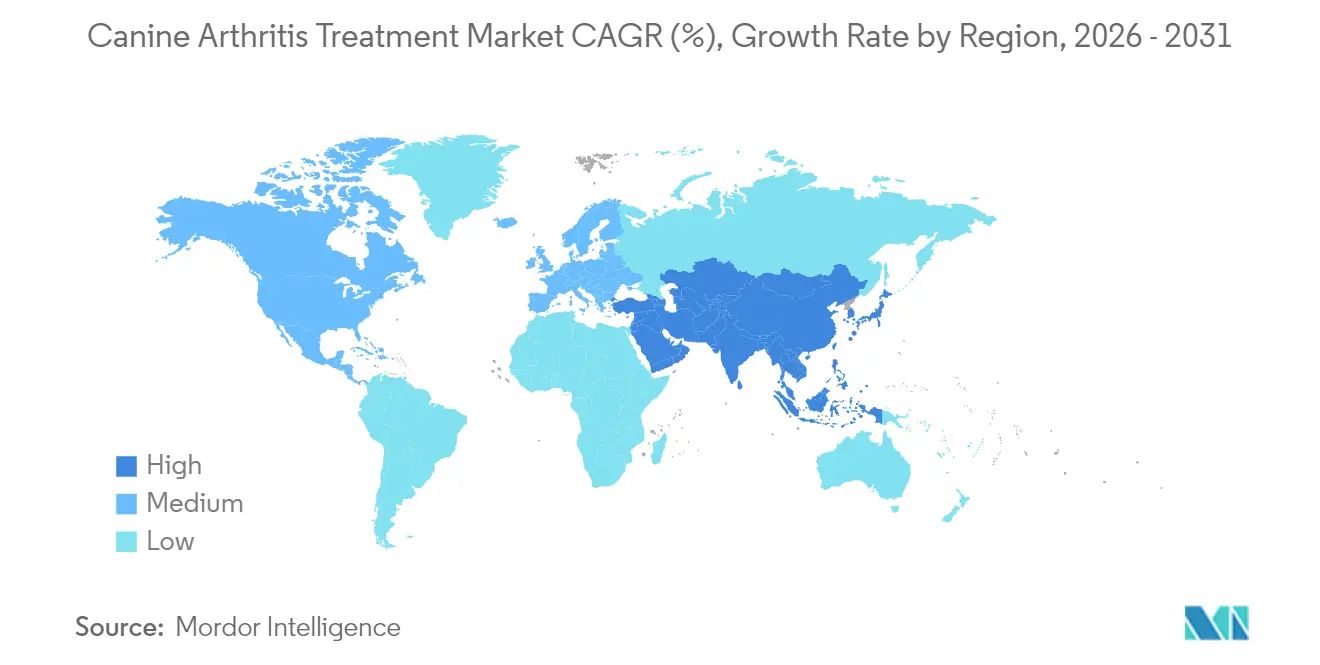
| Fastest Growing Market | Asia Pacific |
| Largest Market | North America |
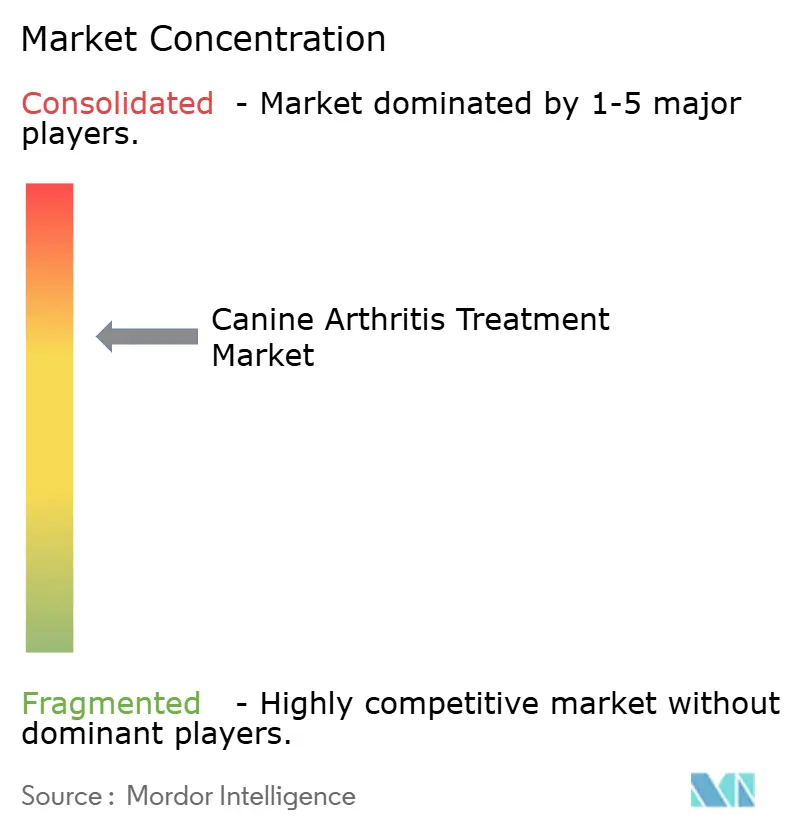
| Market Concentration | Medium |
Major Players *Disclaimer: Major Players sorted in no particular order Image © Mordor Intelligence. Reuse requires attribution under CC BY 4.0. | |
Canine Arthritis Market Analysis by Mordor Intelligence
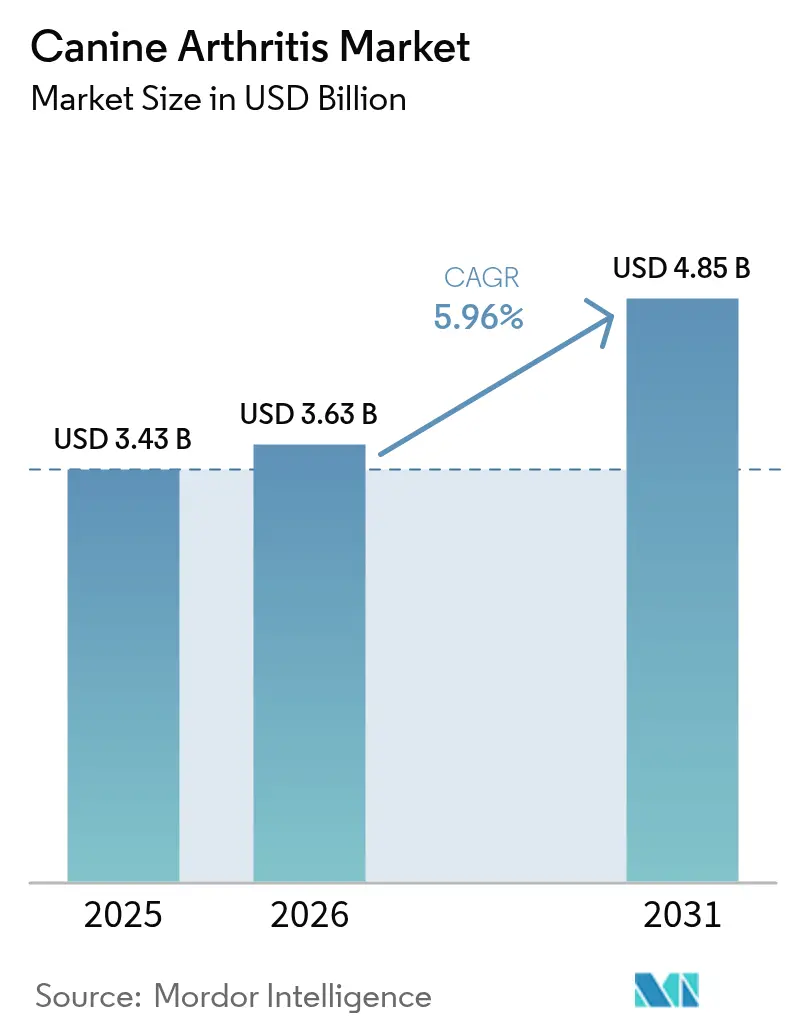
The canine arthritis market size is expected to grow from USD 3.43 billion in 2025 to USD 3.63 billion in 2026 and is forecast to reach USD 4.85 billion by 2031 at 5.96% CAGR over 2026-2031. Growth is propelled by three structural forces: a swelling population of senior dogs, faster regulatory pathways for veterinary biologics, and artificial-intelligence-enabled imaging that detects pre-clinical osteoarthritis. The European Medicines Agency’s record 25 veterinary approvals in 2024, including monoclonal antibodies for nerve growth factor inhibition, illustrate how policy support is compressing product launch cycles.[1]European Medicines Agency, “Veterinary Medicines in 2024,” ema.europa.eu At the same time, AI radiomics platforms integrated with force-plate gait analytics allow veterinarians to begin disease-modifying therapy up to 18 months before overt lameness. These advances encourage a pivot from symptom control toward joint preservation and are enlarging the addressable canine arthritis treatment and diagnostics market.
Key Report Takeaways
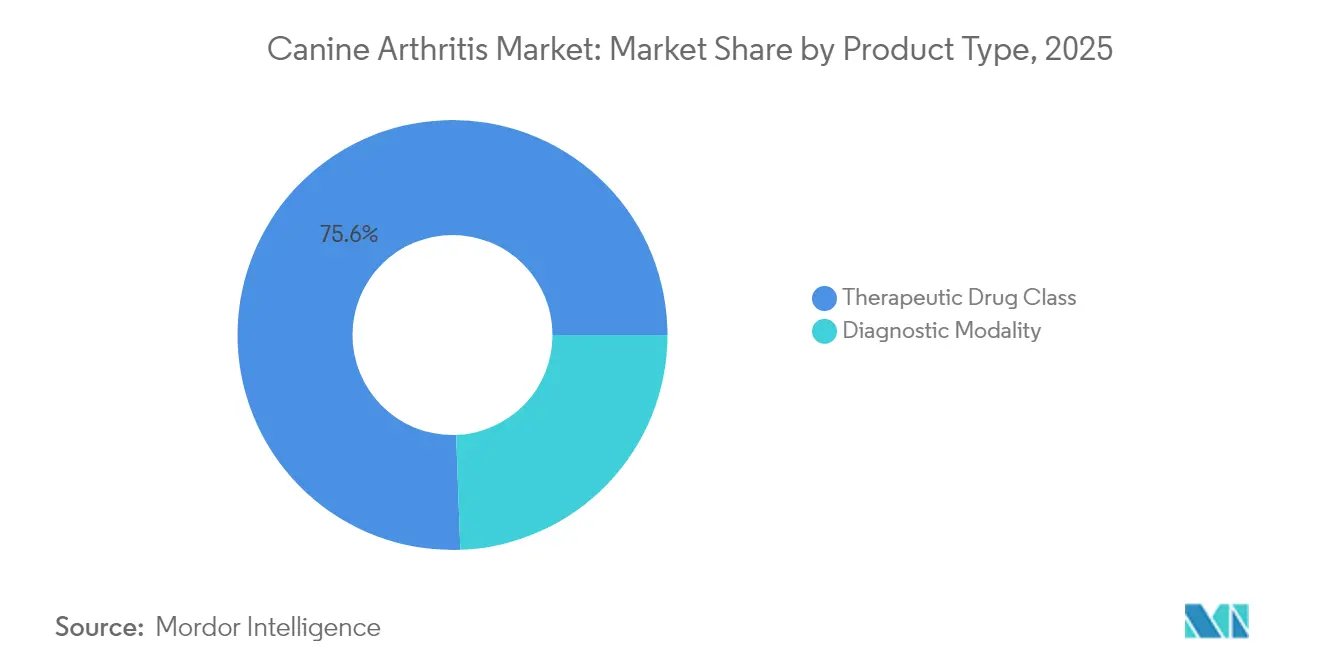
- By product type, therapeutic drug classes led with 75.58% revenue share in 2025; diagnostic modalities are forecast to expand at a 6.78% CAGR to 2031.
- By disease stage, moderate arthritis (Grade 3) captured 33.89% of cases in 2025, while pre-clinical and Grade 0-1 interventions are advancing at a 7.01% CAGR through 2031.
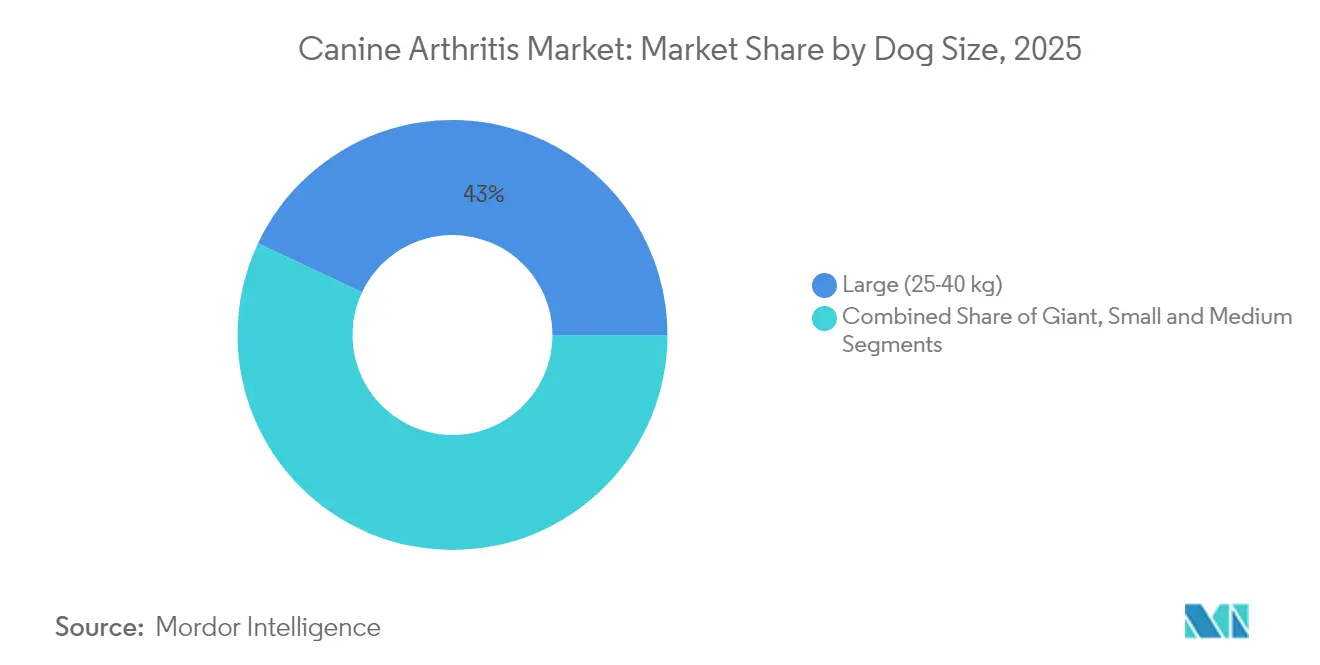
- By dog size, large breeds commanded 42.98% of the canine arthritis treatment and diagnostics market share in 2025; giant breeds are set to grow at an 8.45% CAGR to 2031.
- By age group, senior dogs made up 57.74% of patients in 2025; adult dogs are the fastest-growing cohort, registering a 9.07% CAGR to 2031.
- By end user, veterinary hospitals and specialty clinics held 45.62% of 2025 revenue, while home-care settings are rising at a 9.68% CAGR on the back of telemedicine uptake.
- By geography, north america held 34.88% of 2025 revenue, while asia-pacific is rising at a 9.88% CAGR.
Note: Market size and forecast figures in this report are generated using Mordor Intelligence’s proprietary estimation framework, updated with the latest available data and insights as of 2026.
Market Trends and Insights
Drivers Impact Analysis of Canine Arthritis Market*
| Driver | ~ (%) Impact on CAGR Forecast | Geographic Relevance | Impact Timeline |
|---|---|---|---|
| High Prevalence of Canine Obesity and Motion Injuries | +0.9% | North America, Western Europe | Medium term (2-4 years) |
| Ageing Pet Population and Pet-Humanization Trend | +1.2% | North America, Europe, urban Asia-Pacific | Long term (≥ 4 years) |
| Rising Penetration of Pet Insurance and Veterinary Spend | +0.8% | North America, Europe, emerging Asia-Pacific | Medium term (2-4 years) |
| Regulatory Fast-Track for Veterinary Monoclonal Antibodies | +1.0% | North America, EU, Australia, Japan | Short term (≤ 2 years) |
| AI-Driven Radiomics Enabling Sub-Clinical OA Detection | +0.7% | North America, Europe, Asia-Pacific follow-on | Medium term (2-4 years) |
| Preventive Joint-Health Functional Treats | +0.6% | Global premium segments | Long term (≥ 4 years) |
| Source: Mordor Intelligence | |||
High Prevalence of Canine Obesity and Motion Injuries
Fifty-nine percent of U.S. dogs were overweight or obese in 2024, a biomechanical burden that accelerates cartilage wear in weight-bearing joints.[2]Banfield Pet Hospital, “State of Pet Health 2024 Report,” banfield.com Comparable surveys in the United Kingdom found a 50% obesity rate and a 2.8-fold rise in osteoarthritis diagnoses before age 8 among overweight dogs.[3]PDSA, “Animal Wellbeing Report 2024,” pdsa.org.uk Excess adiposity elevates systemic cytokines such as interleukin-6, eroding synovial viscosity. Agility sports and hard-surface urban exercise further compound joint trauma in working breeds. With 67% of U.S. households now owning pets, roughly 38 million dogs carry elevated arthritis risk. This demographic pressure sustains demand for early diagnostics and weight-management nutraceuticals that address inflammation before irreversible damage occurs.
Aging Pet Population and Pet-Humanization Trend
The median age of U.S. dogs climbed to 6.2 years in 2024, reflecting better nutrition and preventive medicine. Senior dogs already comprise 58.38% of arthritis patients, and owners increasingly treat them as family members, spending USD 1,543 per dog on veterinary care in 2024. Generation Z pet parents allocate discretionary income to platelet-rich plasma and hydrotherapy once reserved for performance animals. In Japan, 38% of households insure canine companions, reinforcing a culture of proactive longevity care. This willingness to invest underpins steady uptake of disease-modifying and regenerative therapies within the canine arthritis treatment and diagnostics market.
Rising Penetration of Pet Insurance and Veterinary Spend
More than 5 million U.S. dogs carried insurance in 2024, with orthopedic reimbursement ratios reaching 90% in premium tiers. Sweden’s 90% penetration and the United Kingdom’s 25% demonstrate insurance as a catalyst for advanced imaging adoption. Average orthopedic claims climbed 12% year-over-year, indicating owners pursue comprehensive diagnostics when financial risk is capped. This financial buffer expands the canine arthritis treatment and diagnostics market by opening the door to biologics and specialty care.
Regulatory Fast-Track for Veterinary Monoclonal Antibodies
The EMA cleared 25 veterinary drugs in 2024, including nerve-growth-factor inhibitors for osteoarthritis. In parallel, the U.S. ADUFA 2024 reauthorization trimmed biologic review cycles to 12 months. Zoetis’s bedinvetmab secured FDA approval in 2023 and generated USD 120 million in first-year sales, validating accelerated pathways. Harmonized VICH guidelines introduced in 2025 further streamline global launches, lowering capital hurdles for mid-sized innovators.
Restraints Impact Analysis of Canine Arthritis Market*
| Restraint | ~ (%) Impact on CAGR Forecast | Geographic Relevance | Impact Timeline |
|---|---|---|---|
| High Lifetime Cost of Long-Term Analgesic and Biologic Therapy | -0.7% | Global, sharper in low-insurance markets | Medium term (2-4 years) |
| NSAID-Related Safety Concerns | -0.5% | North America, EU regulatory focus | Short term (≤ 2 years) |
| Limited Reimbursement for Advanced Imaging and Gait Analytics | -0.4% | North America, Europe | Medium term (2-4 years) |
| Divergent Global Rules for Autologous Cell and Gene Therapies | -0.3% | Worldwide | Long term (≥ 4 years) |
| Source: Mordor Intelligence | |||
High Lifetime Cost of Long-Term Analgesic and Biologic Therapy
Monthly monoclonal antibody injections cost USD 80-120, pushing lifetime expense beyond USD 3,000 for dogs diagnosed at age 8. Autologous stem-cell cycles run USD 2,500-4,500, limiting uptake to affluent owners. Generic NSAIDs remain cheaper but require indefinite dosing and frequent monitoring. Where insurance penetration is low, cost becomes a primary barrier that tempers expansion of the canine arthritis treatment and diagnostics market.
NSAID-Related Safety Concerns
The FDA mandated stronger NSAID warning labels in 2024 after carprofen accounted for 47% of adverse-event reports. Voluntary withdrawal of deracoxib in Europe highlighted gastrointestinal risks. Owner hesitancy and the extra USD 150-300 in yearly bloodwork dampen first-line NSAID use, nudging clinicians toward higher-priced biologics while still constraining overall therapy volume.
*Our forecasts treat driver/restraint impacts as directional, not additive. The impact forecasts reflect baseline growth, mix effects, and variable interactions.
Canine Arthritis Market Segment Analysis
By Product Type:
Therapeutics Dominate, Diagnostics AccelerateTherapeutic classes controlled 75.58% of 2025 revenue, underscoring pharmacologic reliance in the canine arthritis treatment and diagnostics market. NSAIDs still underpin daily pain control, yet nerve-growth-factor monoclonal antibodies such as bedinvetmab recorded USD 120 million in first-year U.S. sales, signifying rapid clinician adoption. Disease-modifying agents like polysulfated glycosaminoglycans enlarge the toolbox for early-stage disease.
Diagnostics accounted for a smaller base but are growing at 6.78% CAGR, buoyed by AI radiomics and biomarker assays that spot degradation before radiographic confirmation. Subscription analytics platforms expand usage beyond specialty hospitals, creating new touchpoints that enlarge the canine arthritis treatment and diagnostics market size.



By Disease Stage:
Pre-Clinical Interventions Gain MomentumModerate arthritis remained the largest cohort at 33.89% of cases in 2025, aligning with the first point when owners notice mobility decline. Severe Grade 4 disease often forces euthanasia discussions despite multimodal analgesia.
In contrast, pre-clinical and Grade 0-1 cases are expanding at 7.01% CAGR as radiomics and force-plate screens become routine in wellness visits. Early intervention with disease-modifying drugs preserves cartilage and delays costly surgery. This shift shows how technology is pulling revenue into the front end of the canine arthritis treatment and diagnostics market.
By Dog Size:
Giant Breeds Drive Premium TherapeuticsLarge breeds held 42.98% of revenue in 2025, but giant breeds are topping the growth chart at 8.45% CAGR. A longitudinal review of 4.9 million dogs revealed giant breeds develop osteoarthritis 3.2 years earlier than small dogs. Dosage economics favor NSAIDs for giants but make biologics proportionally costlier, influencing product-mix decisions for veterinarians and owners. Targeted messaging around quality of life is converting giant-breed owners into high-value clients within the canine arthritis treatment and diagnostics market.
By Age Group:
Adult Dogs Enter Preventive ParadigmSenior dogs still dominate with 57.74% share, yet adult dogs aged 1-7 years are rising fastest at 9.07% CAGR. Breeders and performance-dog handlers popularized prophylactic supplements at 6 months of age, and mainstream owners are following suit. Force-plate gait screening at annual checkups is catching sub-clinical lameness that once went unnoticed. This preventive orientation strengthens lifetime value per patient and expands the overall canine arthritis treatment and diagnostics market size for wellness-based solutions.
By End User:
Home-Care Settings Disrupt Traditional DeliveryVeterinary hospitals and specialty clinics generated 45.62% of 2025 revenue, steered by CT, MRI, and surgical interventions. Yet telemedicine is shifting revenue to the home, where remote consultations pair with mailed NSAIDs and nutraceuticals. Regulatory acceptance of remote prescribing in 2024 unlocked a 9.68% CAGR channel that augments reach, lowers client acquisition cost, and diversifies the canine arthritis treatment and diagnostics market.
Geography Analysis
North America Canine Arthritis Market
North America retained 34.88% of 2025 revenue. U.S. veterinary spend averaged USD 1,500 per dog, and 22% of arthritic dogs received a monoclonal antibody injection within 12 months of Librela’s launch, illustrating biologic traction. Canada’s provincial insurance incentives for imaging further increase early diagnosis rates, whereas Mexico’s emerging middle class is price sensitive, dampening biologic uptake but stimulating generic NSAID sales.
APAC Canine Arthritis Market
Asia-Pacific is the fastest-growing region at 9.88% CAGR. China’s pet economy hit RMB 130 billion (USD 18.2 billion) in 2024, with millennial owners prioritizing preventive care. Japan’s high insurance penetration and hospice services showcase market maturity. India and South-East Asian nations are easing import rules for veterinary biologics, a policy change expected to accelerate growth of the canine arthritis treatment and diagnostics market.
Europe, South America and Middle East Canine Arthritis Market
Europe held 27.62% of 2025 revenue. Germany and France favor holistic adjuncts, while the United Kingdom’s 25% insurance penetration boosts rehabilitative therapy demand. EMA’s centralized procedure for biosimilar biologics promises price competition and broader access. Emerging regions in South America and the Middle East are smaller today yet show double-digit growth curves fueled by rising disposable income and greater availability of imported therapeutics.

Regulatory Landscape
Regulation for canine osteoarthritis therapeutics is shaped by parallel pathways for innovative biologics and high-volume generic NSAIDs. In the European Union, the European Medicines Agency (EMA) highlighted a high cadence of veterinary authorizations in 2024, and the European Commission granted marketing authorization for Zoetis Lenivia (izenivetmab) in November 2025. This centralized review supports faster multi-country launches for NGF-targeting monoclonal antibodies.
In the United States, the FDA Center for Veterinary Medicine (CVM) continues to clear abbreviated new animal drug applications (ANADAs) for established osteoarthritis NSAIDs, including multiple meloxicam oral suspension approvals across 2025 and a final approval (ANADA 141-459) in June 2026. Administrative maintenance also remains active, with an FDA Federal Register rule effective April 16, 2026 updating animal drug regulations to reflect prior NADA and ANADA actions. Policy scrutiny persists around conditional approval incentives following a 2026 GAO review of animal drug development programs.
Value Chain Analysis
The value chain starts with active pharmaceutical ingredients and excipients for NSAIDs and nutraceuticals, and it extends to specialized biologics manufacturing for monoclonal antibodies. These biologics require endotoxin-controlled production, validated sterility assurance, and species-specific testing. Innovation inputs increasingly include data and software layers for early detection, including AI-enabled imaging analytics and gait measurement tools, which can shift prescribing and therapy initiation earlier in the disease course.
Manufacturers (for example, Zoetis, Boehringer Ingelheim Animal Health, Merck Animal Health, Elanco, and American Regent) distribute through veterinary-focused channels that support cold-chain handling for injectables and controlled substance compliance where applicable. Downstream, veterinary hospitals and specialty clinics remain key administration points for long-acting injectables, while e-pharmacy and telemedicine-linked fulfillment expands access for oral NSAIDs and supplements. The July 2026 launch of Zoetis Lenivia in Canada and the European Union highlights how regulatory clearance quickly translates into new stocking, cold-chain logistics, and clinic-level protocols for quarterly dosing biologics.
Competitive Landscape
The top five players captured large share of 2024 revenue, indicating moderate concentration. Zoetis commands the monoclonal antibody niche with bedinvetmab, targeting USD 500 million annual sales by 2027. Elanco’s Credelio Plus combines NSAID and nutraceutical ingredients to appeal to early-stage cases, and Boehringer Ingelheim is co-developing autologous cell therapy with VetStem. Dechra focuses on ISO-certified generic NSAIDs, while Ceva aligns around practitioner education. Telemedicine entrants such as Vetster are building vertically integrated ecosystems that stitch diagnostics, e-pharmacy, and data analytics into remote care pathways, expanding the digital flank of the canine arthritis treatment and diagnostics market.
Strategic thrusts include diagnostic acquisitions that bundle imaging and therapeutics, joint ventures to cut manufacturing costs for regenerative products, and R&D into biosimilar monoclonal antibodies ahead of patent cliffs in 2027. The FDA’s draft guidance on AI-powered devices provides a clearer runway for software innovators, setting sensitivity and specificity thresholds that are commercially achievable.
Canine Arthritis Industry Leaders
Boehringer Ingelheim
Zoetis
Elanco
Boehringer Ingelheim
Dechra Pharmaceuticals
Merck Animal Health
- *Disclaimer: Major Players sorted in no particular order
Canine Arthritis Market Companies Covered in this Report
- American Regent (Adequan)
- AniCell Biotech
- Antech Diagnostics
- Arthrex Vet Systems
- Boehringer Ingelheim Internation GmBH
- Can-Fite BioPharma
- Ceva Santé Animale
- Dechra Pharmaceuticals
- Elanco
- Epica Medical Innovation
- Heska
- IDEXX
- Medrego
- Merck
- Nutramax Laboratories
- Nutri-Vet
- OrthoPets / Movora
- Vetalogica
- Vetoquinol
- VetStem Biopharma
- Zoetis

Market Opportunities and Future Outlook
One opportunity sits at the intersection of earlier diagnosis and earlier intervention, as clinics move beyond symptom-only management toward structured, stage-based care. The report scope already shows pre-clinical and Grade 0-1 interventions advancing faster than later stages. AI radiomics paired with force-plate gait analytics also supports detection up to 18 months before overt lameness, which can create more routine touchpoints for disease-modifying drugs, supplements, and long-acting injectables.
Another opportunity is the widening biologics and next-generation pipeline alongside price-competitive NSAID generics. Zoetis expanded geographic access for NGF-targeting therapy with Lenivia approvals (Great Britain in May 2026) and commercial launch in Canada and the European Union in July 2026. At the same time, the FDA continued approving meloxicam oral suspensions through 2025-2026, supporting broad first-line coverage where cost sensitivity is high. Early-stage biologic innovation is also visible in 2026 disclosures such as VetrixBio clinical data for VTX-304 (a bispecific approach targeting NGF and ADAMTS-5) and Gallant activity around an FDA-CVM conditional approval pathway eligibility for a canine osteoarthritis stem-cell therapy program.
Recent Industry Developments in Canine Arthritis Market
- July 2026: Zoetis launched Lenivia (izenivetmab injection) in Canada and the European Union for the reduction of pain associated with osteoarthritis in dogs. The rollout expands access to an NGF-targeting monoclonal antibody dosing model designed around extended intervals, reinforcing biologics as a mainstream alternative to daily oral analgesics. It also increases competitive pressure on incumbent OA regimens in markets where centralized EU authorization can rapidly translate into multi-country commercialization.
- November 2025: The European Commission granted marketing authorization for Zoetis Lenivia (izenivetmab) to reduce pain associated with osteoarthritis in dogs. This approval strengthened the EU pathway for novel veterinary monoclonal antibodies and enabled subsequent country-level launches under a single authorization framework. The decision also signaled regulatory comfort with long-acting biologics supported by post-authorization pharmacovigilance obligations.
- April 2024: A pilot study reported amorphous calcium carbonate achieving 45.5% success versus 21.4% for placebo in dogs with osteoarthritis, prompting larger follow-on trials. The readout supported continued exploration of adjunct and non-traditional approaches alongside NSAIDs and monoclonal antibodies. Positive early clinical signals in supplements and novel modalities broaden the competitive field for non-prescription and preventive joint-health positioning.


Canine Arthritis Market Report Scope and Research Methodology
Market Definition and Coverage
This market covers the value of products used to manage canine arthritis, mainly clinically diagnosed osteoarthritis in dogs, where spending is tied to ongoing pain control and mobility support.
Scope exclusions: We exclude surgical joint replacements, orthopedic implants, diagnostic imaging fees, rehabilitation services, and any arthritis therapies intended for non-canine animals.
Segments Covered in This Report
- By Product Type
- Therapeutic Drug Class
- NSAIDs
- Monoclonal Antibodies
- Nutraceutical Supplements
- Disease-Modifying OA Drugs (DMOADs)
- Autologous Cell & Gene Therapies
- Others
- Diagnostic Modality
- Physical Examination / Palpation
- Radiography (X-ray)
- Advanced Imaging (CT / MRI / Ultrasound)
- Force-plate & Gait-analysis Wearables
- Biomarker Panels (Serum / Synovial Fluid)
- Therapeutic Drug Class
- By Disease Stage
- Pre-clinical / Grade 0–1
- Mild / Grade 2
- Moderate / Grade 3
- Severe / Grade 4
- By Dog Size
- Small (Less than 10 kg)
- Medium (10–25 kg)
- Large (25–40 kg)
- Giant (More Than 40 kg)
- By Age Group
- Juvenile (Less Than 1 yr)
- Adult (1–7 yrs)
- Senior (More Than 7 yrs)
- By End User
- Veterinary Hospitals & Specialty Clinics
- General Veterinary Practices
- Research & Academic Institutes
- Home-care Settings
- By Geography
- North America
- United States
- Canada
- Mexico
- Europe
- Germany
- France
- United Kingdom
- Italy
- Spain
- Rest of Europe
- Asia-Pacific
- China
- Japan
- India
- South Korea
- Australia
- Rest of Asia-Pacific
- Middle East & Africa
- GCC
- South Africa
- Rest of Middle East & Africa
- South America
- Brazil
- Argentina
- Rest of South America
- North America
Data Sources, Market Sizing, and Validation
Desk Research
Desk research was used to build a clean starting point for demand, treatment patterns, and price ranges so the model does not rely on one data stream. We referenced public sources such as the US FDA Center for Veterinary Medicine for approvals and labels, USDA and similar national animal health statistics for pet population signals, and trade data from sources like UN Comtrade for relevant ingredient and finished product movement.
We also checked peer-reviewed veterinary journals for osteoarthritis prevalence ranges and typical care pathways, alongside association and veterinary hospital network publications that describe practice-level use of pain management options. Company filings, annual reports, and investor presentations helped us sanity-check product focus and broad revenue direction, and a paid subscription for company financials plus a patent database were used to confirm ownership of key assets and the timing of innovation waves. These examples are not exhaustive, and we reviewed many other public sources to collect, validate, and clarify inputs.
Primary Interviews and Surveys
Primary work focused on how cases get treated in real settings, what drives switching between options, and how pricing changes are actually taken into account (including pack sizes, dosing duration, and refill behavior). We spoke with a mix of veterinarians, practice managers, distributors, and industry experts across APAC, EMEA, and the Americas so assumptions from desk research could be confirmed, corrected, and then used consistently across the model.
Distribution of primary research fieldwork respondents
| Company type | Respondent position | Region |
|---|---|---|
| Top tier: 33% | CXOs: 15% | APAC: 46% |
| Mid tier: 47% | Functional/Unit leaders: 42% | EMEA: 29% |
| Smaller Players: 20% | Managers: 43% | Americas: 25% |
Market-Sizing & Forecasting
Sizing was built using a top-down demand pool approach where dog population and osteoarthritis prevalence are translated into a treated cohort, which is then converted into annual spend based on typical therapy mix and refill cycles. To keep the totals realistic, we cross-checked with selective bottom-up approximations, such as sampled price per month of therapy multiplied by expected volumes, and channel checks on what is moving through veterinary and retail pathways.
Key inputs used in the model included clinically diagnosed osteoarthritis prevalence ranges, share of dogs receiving ongoing therapy versus intermittent care, shifts between prescription options and nutraceutical support, typical dosing duration for chronic management, and average selling price movement based on pack size and inflation pass-through. Where a local price point was missing, we used a nearby market proxy and then adjusted it through currency conversion timing and primary feedback on price sensitivity.
For forecasting, we relied mainly on scenario analysis, since diagnosis rates, owner willingness to pay, and therapy adoption do not move in a straight line year to year. Scenarios were tied to practical signals such as aging dog mix, vet visit intensity, and the pace of uptake of newer therapies, and then the final view was reconciled with what experts considered a reasonable adoption curve by region.
Data Validation & Update Cycle
Validation was done through step-by-step cross checks so model outputs stayed consistent with real-world signals. We compared implied treated dog counts, annual cost per treated case, and region mix against independent indicators like prevalence ranges in literature, reported veterinary care spend direction, and product availability and pricing evidence.
Outliers were flagged and reviewed, and any large variance triggered a re-check of assumptions and, when needed, a re-contact with a relevant expert to confirm what changed. Before sign-off, the model and narrative went through internal peer review so calculation logic and market boundaries were applied consistently. The report is refreshed annually, with interim updates if a material approval, pricing shift, or policy change alters expected demand, and a final pre-delivery pass is completed to reflect the latest public information.
Mordor Intelligence's Canine Arthritis Market Size Measured Against Other Published Estimates
Published market sizes for canine arthritis do not always match, even when they refer to similar end uses, because the study boundaries and pricing choices are not identical. The gap usually comes from what is counted as treatment spending, how average selling prices are updated over time, and whether currency conversion is applied consistently for the same year.
In refresh-led reviews, pricing and currency timing tends to move the number more than people expect, especially when pack sizes, chronic dosing duration, and repeat purchase behavior are treated differently across regions. By re-checking price ladders and treated cohort assumptions during each refresh cycle, and by locking FX timing to the specific year being sized, Mordor Intelligence reduces drift that can happen when older ASP baselines are carried forward without a fresh validation pass.
Benchmark comparison
| Source | Market Size | Gaps in Research Methodology |
|---|---|---|
| Mordor Intelligence | USD 3.63 B (2026) | |
| Global Consultancy A | USD 4.17 B (2026) | Uses a broader treatment scope that can pull in adjacent spending lines (for example, procedures and non-drug care categories) and applies faster ASP progression, which lifts the 2026 value even if treated case volumes are similar. |
| Industry Publisher B | USD 2.44 B (2025) | Anchors the estimate to a narrower paid-therapy definition and an earlier-year pricing base, and the value is more sensitive to how diagnosed cases are counted versus total symptomatic dogs. |
The spread across sources is largely explained by scope boundaries and refresh choices, not just a different growth view. When the treated cohort, therapy mix, and price updates are documented and checked against practical signals, the resulting market size is easier to trace and repeat across geographies and years.


Key Questions Answered in the Report
How large is the canine arthritis treatment and diagnostics market in 2026?
The market stands at USD 3.63 billion in 2026 and is forecast to reach USD 4.85 billion by 2031.
Which product class leads current spending?
Therapeutic drug classes, dominated by NSAIDs and monoclonal antibodies, captured 75.58% of 2025 revenue.
Which region is expanding fastest?
Asia-Pacific posts the highest growth at a 9.88% CAGR, supported by rising pet ownership and easier biologic approvals.
What drives the shift toward early diagnosis?
AI-powered radiomics and force-plate gait analytics detect sub-clinical joint changes, enabling intervention up to 18 months before lameness.
How costly are long-term biologic therapies?
Monthly monoclonal antibody injections cost USD 80-120, leading to lifetime expenses exceeding USD 3,000 for a senior dog.
Which companies dominate monoclonal antibodies?
Zoetis leads with bedinvetmab, while Elanco and Boehringer Ingelheim also invest aggressively in next-generation biologics.
Page last updated on:


 Your data is secure and never sold or shared.


