
Canada Indoor Farming Market Size and Share
| Study Period | 2019 - 2030 |
| Forecast Data Period | 2025 - 2030 |
| Historical Data Period | 2019 - 2023 |
| Market Size (2025) | USD 1.20 Billion |
| Market Size (2030) | USD 2 Billion |
| CAGR (2025 - 2030) | 9.80% |
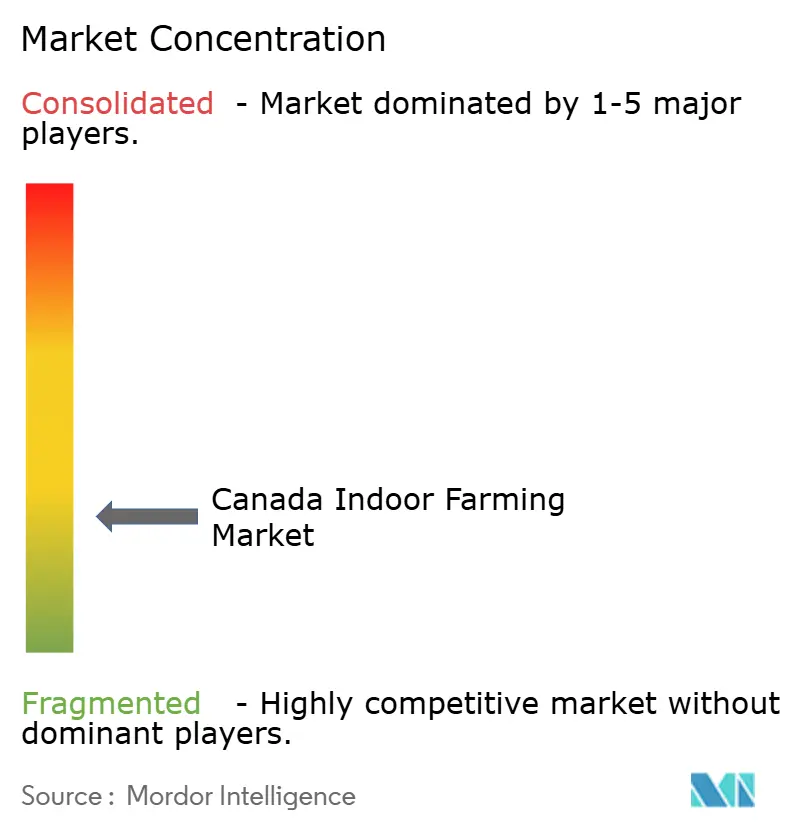
| Market Concentration | Low |
Major Players *Disclaimer: Major Players sorted in no particular order |
Canada Indoor Farming Market Analysis by Mordor Intelligence
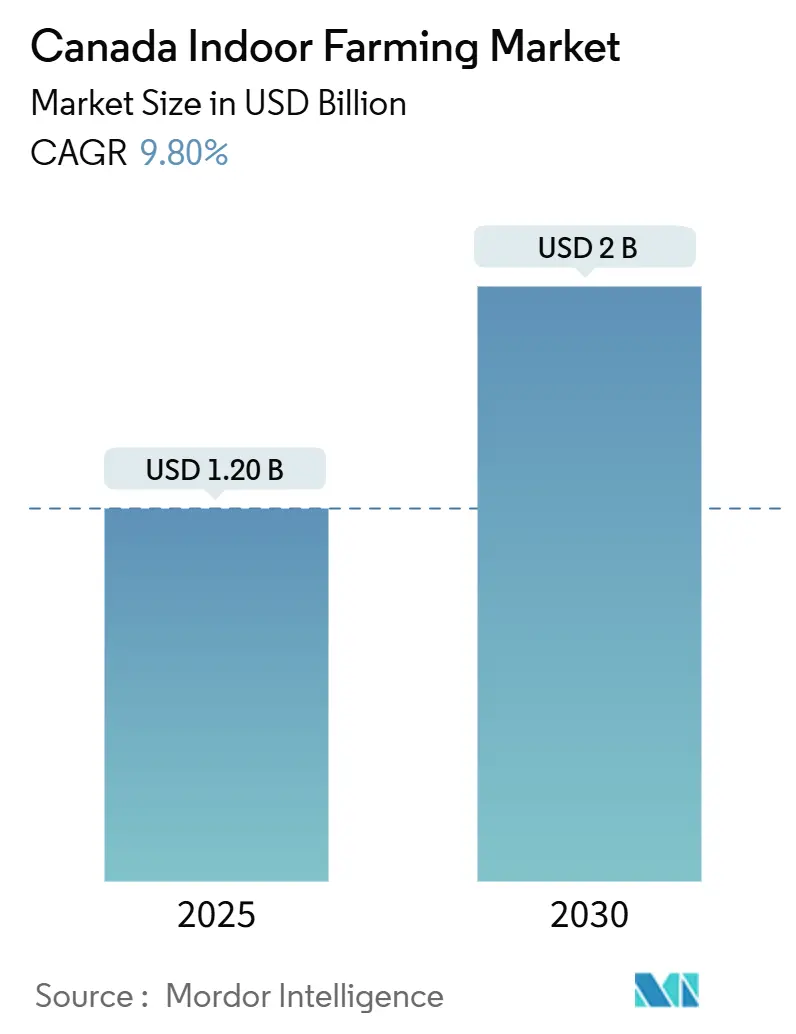
The Canada Indoor Farming Market size is estimated at USD 1.20 billion in 2025, and is expected to reach USD 2 billion by 2030, at a CAGR of 9.80% during the forecast period (2025-2030).
Indoor farming involves cultivating crops in controlled environments, such as greenhouses, hydroponic systems, and vertical farms. This method enables year-round production, independent of external weather conditions, and is particularly beneficial in urban areas with limited arable land.
The Canadian indoor farming market is growing substantially due to technological advancements in LED lighting, sensors, and automation, which improve operational efficiency and sustainability. LED lighting systems reduce energy consumption and heat generation compared to traditional lighting solutions, while environmental sensors enable precise control of temperature and humidity for optimal plant growth.
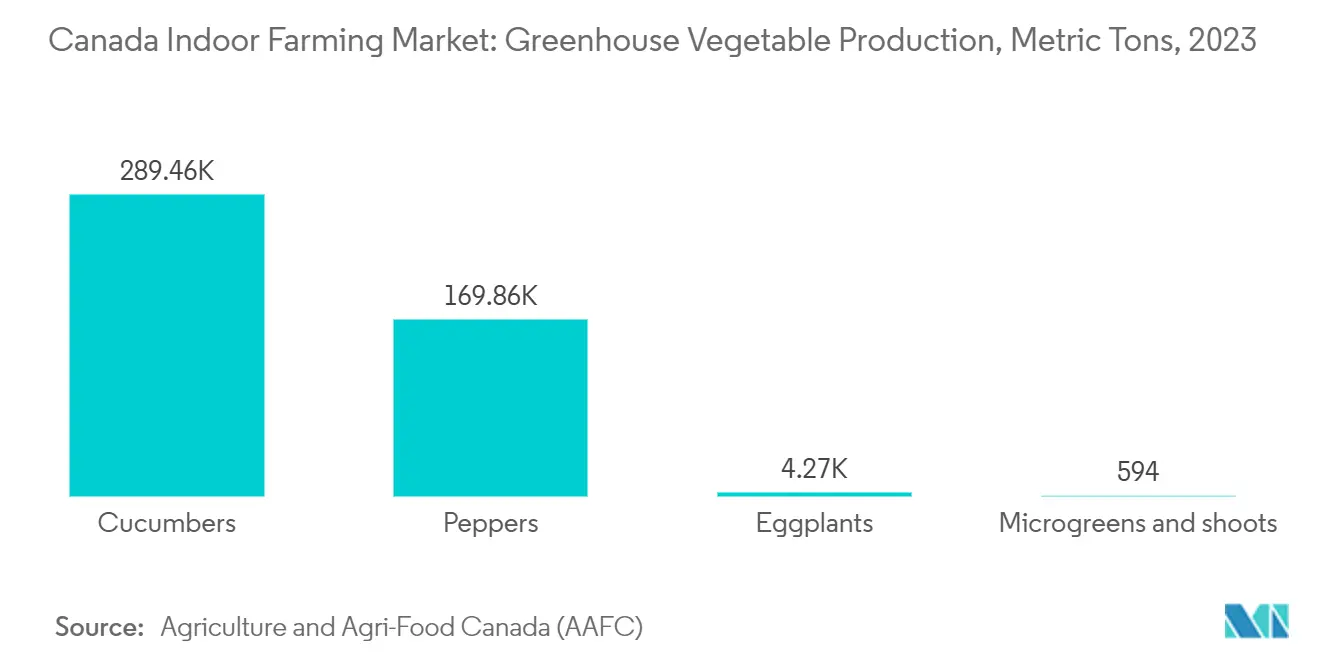
Greenhouse vegetables constitute a significant portion of Canada's fresh produce exports at 51.3%. According to Agriculture and Agri-Food Canada's Statistical Report, in 2023, the country had 920 commercial greenhouse vegetable operations producing 802,163 metric tons of vegetables, marking a 7% increase from 2022. Ontario dominated the greenhouse vegetable sector with 72% of total production, followed by British Columbia at 14% and Quebec at 8%. The remaining 6% was distributed among other provinces.
Environmental consciousness has accelerated the adoption of sustainable agricultural practices in indoor farming. Hydroponic and aeroponic systems in Canada demonstrate reduced water consumption and eliminate pesticide use, while indoor farming methods generally require less water and land compared to traditional agriculture.
Worldwide, activity is shaped by contributions from multiple countries and regions, with Canada representing one among them. The global report on indoor farming market by Mordor Intelligence reflects how these countries and regional layers combine into a single system.
Canada Indoor Farming Market Trends and Insights
Hydroponics Hold a Significant Position by Growing System
Hydroponics has established a significant presence in Canada's indoor farming sector, providing a soil-free cultivation method for year-round crop production. This approach proves valuable in regions with harsh climates and limited arable land. According to the World Bank, Canada's arable land decreased from 38,648,000 hectares in 2019 to 38,259,000 hectares in 2022. As urban areas expand and arable land diminishes, indoor farming through hydroponics offers a practical solution by utilizing vertical spaces and repurposed buildings for local food production.
Hydroponic systems create controlled environments that enable consistent crop production independent of external weather conditions. This advantage is particularly important in Canada, where traditional farming faces limitations from cold winters and short growing seasons. In British Columbia, Urban Cultivator manufactures indoor gardening appliances for growing herbs, microgreens, vegetables, and flowers indoors, serving both residential and commercial markets.
The Canadian hydroponics market is driven by increasing demand for salads and specialty vegetables, including lettuce, microgreens, and other leafy greens. Consumer preference for fresh, high-quality produce, particularly among health-conscious individuals, supports this growth. Due to the high costs of imported exotic fruits and vegetables, research institutions and universities are developing simplified hydroponics systems to increase production and meet growing demand. According to Agriculture and Agri-Food Canada (AAFC) in 2023, Canada's greenhouse vegetable growers produce a variety of commodities through hydroponics, including tomatoes, cucumbers, lettuce, bell peppers, and various herbs and microgreen vegetables. Of these commodities, tomatoes, cucumbers, and peppers are Canada's main greenhouse vegetable crops. Tomatoes account for 35% of the total greenhouse vegetable sales, followed by cucumbers and peppers at 32% and 26%, respectively.


Fruit and Vegetable Dominate the Market
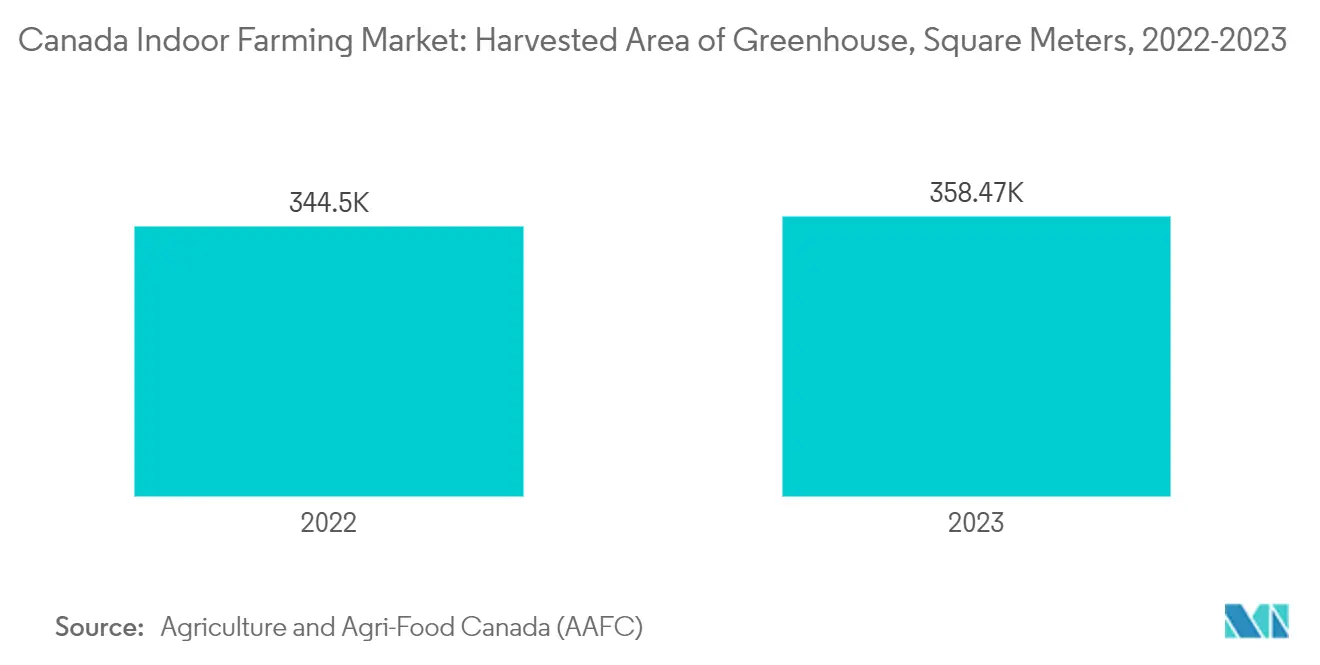
In Canada, the indoor farming market primarily focuses on fruit and vegetable cultivation in controlled environments like greenhouses, vertical farms, and hydroponic systems. The greenhouse sector, concentrating on vegetables like tomatoes, cucumbers, and peppers, along with fruits such as strawberries, continues to expand. Statistics Canada reported an increase in the harvested area of greenhouse lettuce from 344,496 square meters in 2022 to 358,474 square meters in 2023. This expansion reflects the effectiveness of hydroponic and vertical farming methods.
The country's harsh winter climate restricts traditional outdoor farming. Indoor farming enables year-round production, maintaining a steady supply of fresh vegetables and fruits, including tomatoes, lettuce, cucumbers, and strawberries, throughout all seasons. Greenhouses and vertical farms provide controlled environments for these crops. Lufa Farms, a notable urban indoor farming operation in Montreal, manages rooftop greenhouses to grow various vegetables, including lettuce, tomatoes, and cucumbers. The company distributes fresh produce directly to consumers, strengthening local food systems while maintaining environmental sustainability through renewable energy usage.
Indoor farming systems, particularly vertical farms, maximize space efficiency in urban areas like Toronto, Montreal, and Vancouver, where real estate is limited and costly. This enables urban populations to access locally grown fruits and vegetables with reduced environmental impact. Companies like Elevate Farms demonstrate the growth of urban farming ventures. Using vertical farming techniques, they produce leafy greens, microgreens, and vegetables such as spinach and lettuce. Elevate Farms employs controlled environment technology to minimize pesticide use and optimize urban space utilization.

Mordor Intelligence provides coverage of the indoor farming market across other key regional markets, including North America and Europe, each with their regulatory frameworks and demand patterns.
Competitive Landscape
The Canadian indoor farming market is highly fragmented with major players including AeroFarms, Bowery Inc., Netafim, Hydrofarm, and Bright Farms Inc..Companies in the market are expanding their product portfolios and business operations to maintain their market positions. Key players are forming partnerships to increase their market share. Additionally, companies are pursuing mergers and acquisitions as primary growth strategies.
Canada Indoor Farming Industry Leaders
AeroFarms
Bowery Inc.
Netafim
Hydrofarm
Bright Farms Inc
- *Disclaimer: Major Players sorted in no particular order

Recent Industry Developments
- October 2023: Orbia’s Precision Agriculture Business Netafim has partnered with Vermillion Growers to Open a State-of-the-Art Commercial Greenhouse, Providing Fresh Produce and Bridging the Gap in Food Production in Central Canada. Gakon Netafim’s greenhouse solutions make it possible, and profitable, to meet consumers' preferences for local produce that is grown sustainably.
- November 2022: G.S.P.M. Distribution Inc., a leafy green vegetable producer, received USD 846,625 from the Canadian government to install an indoor vertical hydroponic farming system, enabling year-round vegetable production.


Canada Indoor Farming Market Report Scope
Indoor farming refers to growing crops indoors in a controlled environment. Canada Indoor Farming Market is Segmented by Growing System (Aeroponics, Hydroponics, Aquaponics, Soil-based, and Hybrid), Facility Type (Glass or Poly Greenhouses, Indoor Vertical Farms, Container Farms, Indoor Deep Water Culture Systems, and Other Facility Types), and Crop Type (Fruits and Vegetables, Herbs and Microgreens, Flowers and Ornamentals, and Other Crop Types). The report offers market size and forecasts for the abovementioned segments regarding value in (USD).
| Aeroponics |
| Hydroponics |
| Aquaponics |
| Soil-based |
| Hybrid |
| Glass or Poly Greenhouses |
| Indoor Vertical Farms |
| Container Farms |
| Indoor Deep Water Culture Systems |
| Other Facility Types |
| Fruits and Vegetables |
| Herbs and Microgreens |
| Flowers and Ornamentals |
| Other Crop Types |
| Growing System | Aeroponics |
| Hydroponics | |
| Aquaponics | |
| Soil-based | |
| Hybrid | |
| Facility Type | Glass or Poly Greenhouses |
| Indoor Vertical Farms | |
| Container Farms | |
| Indoor Deep Water Culture Systems | |
| Other Facility Types | |
| Crop Type | Fruits and Vegetables |
| Herbs and Microgreens | |
| Flowers and Ornamentals | |
| Other Crop Types |


Key Questions Answered in the Report
How big is the Canada Indoor Farming Market?
The Canada Indoor Farming Market size is expected to reach USD 1.20 billion in 2025 and grow at a CAGR of 9.80% to reach USD 2 billion by 2030.
What is the current Canada Indoor Farming Market size?
In 2025, the Canada Indoor Farming Market size is expected to reach USD 1.20 billion.
Who are the key players in Canada Indoor Farming Market?
AeroFarms, Bowery Inc., Netafim, Hydrofarm and Bright Farms Inc are the major companies operating in the Canada Indoor Farming Market.
What years does this Canada Indoor Farming Market cover, and what was the market size in 2024?
In 2024, the Canada Indoor Farming Market size was estimated at USD 1.08 billion. The report covers the Canada Indoor Farming Market historical market size for years: 2019, 2020, 2021, 2022, 2023 and 2024. The report also forecasts the Canada Indoor Farming Market size for years: 2025, 2026, 2027, 2028, 2029 and 2030.
Page last updated on:
Canada Indoor Farming Market Report
Statistics for the 2025 Canada Indoor Farming market share, size and revenue growth rate, created by Mordor Intelligence™ Industry Reports. Canada Indoor Farming analysis includes a market forecast outlook for 2025 to 2030 and historical overview. Get a sample of this industry analysis as a free report PDF download.





