
Bovine Tuberculosis Diagnosis Market Size and Share
Market Overview
| Study Period | 2020 - 2031 |
|---|---|
| Market Size (2026) | USD 0.89 Billion |
| Market Size (2031) | USD 1.18 Billion |
| Growth Rate (2026 - 2031) | 5.85 % |
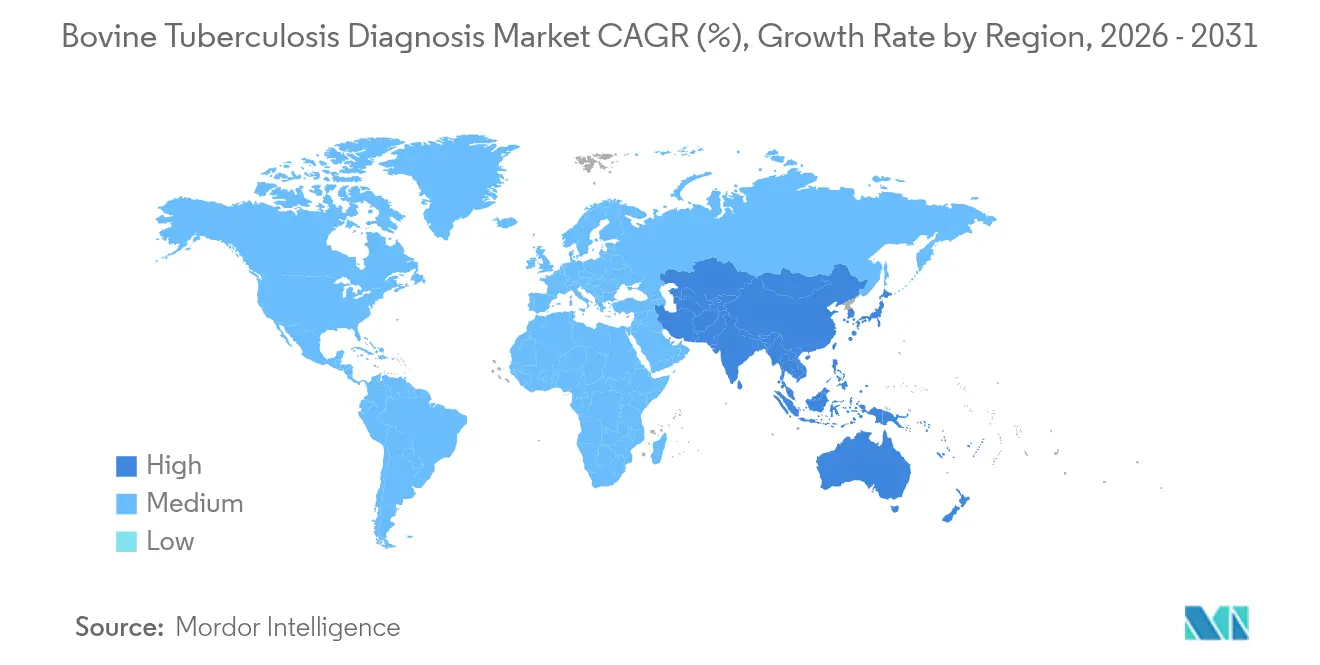
| Fastest Growing Market | Asia-Pacific |
| Largest Market | North America |
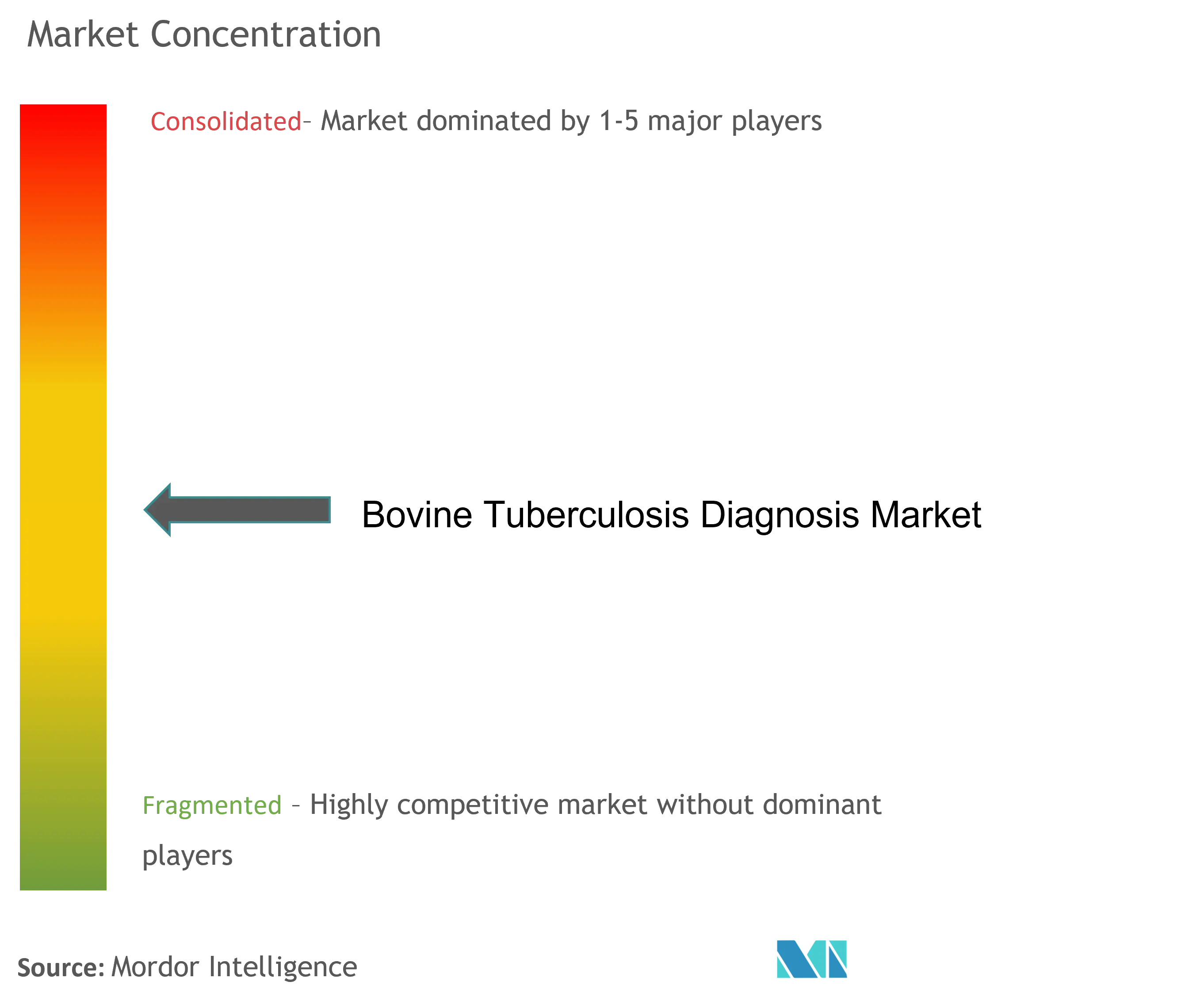
| Market Concentration | Medium |
Major Players *Disclaimer: Major Players sorted in no particular order Image © Mordor Intelligence. Reuse requires attribution under CC BY 4.0. | |
Bovine Tuberculosis Diagnosis Market Analysis by Mordor Intelligence
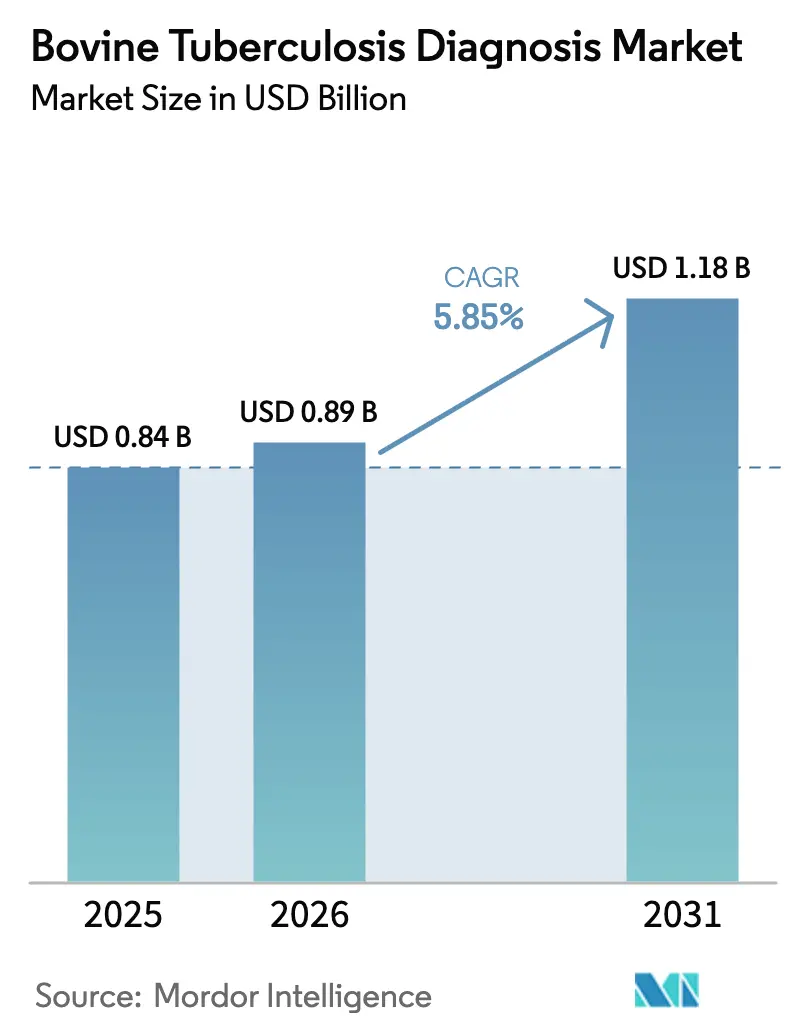
The Bovine Tuberculosis Diagnosis Market size is projected to be USD 0.84 billion in 2025, USD 0.89 billion in 2026, and reach USD 1.18 billion by 2031, growing at a CAGR of 5.85% from 2026 to 2031.
Expanding dairy and beef herds, stricter food-safety rules, and rising zoonotic-disease awareness keep testing volumes on a steady upward path. Mandatory surveillance in export-oriented dairies, compensation-backed culling programs, and government funding for molecular assays reinforce baseline demand. Molecular platforms—particularly PCR and emerging CRISPR assays—continue to gain favor because they detect infection earlier than the tuberculin skin test. At the same time, field-deployable AI-enabled readers, carbon-credit-linked “TB-free” labels, and integrated wildlife monitoring open new competitive frontiers.
Key Report Takeaways
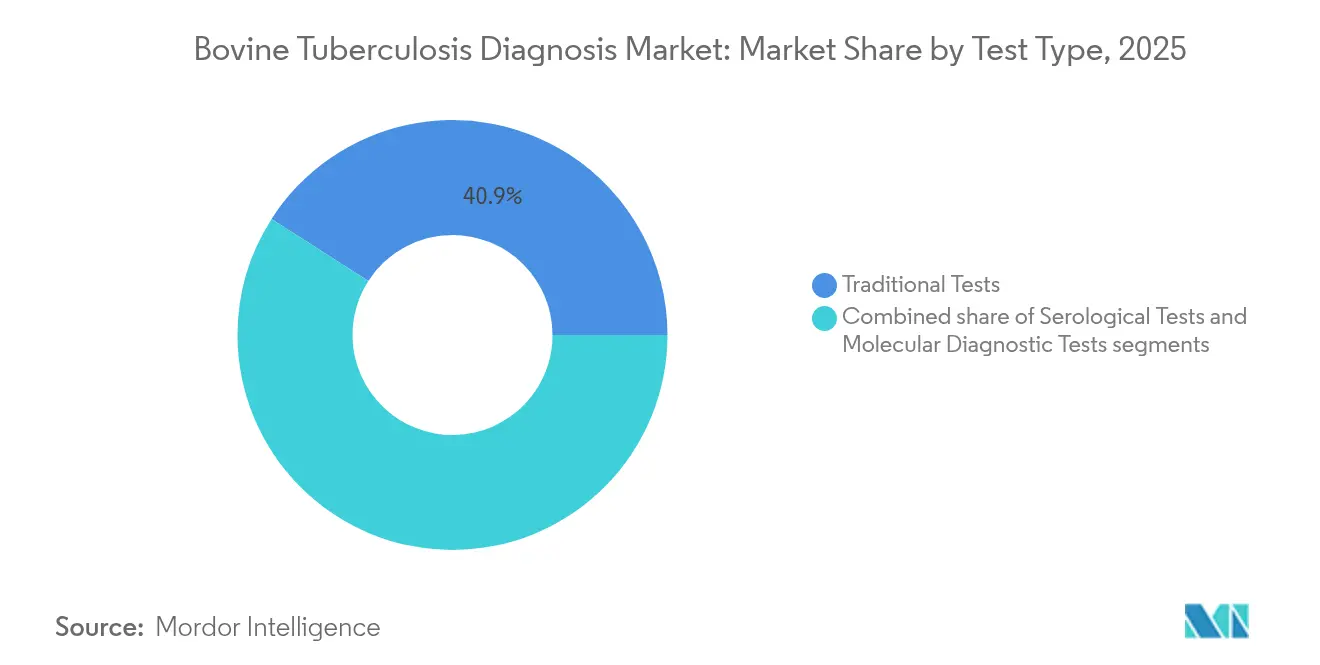
- By test type, traditional skin and interferon-gamma assays led with 40.92% of the Bovine tuberculosis diagnosis market share in 2025, while molecular methods are expanding at a 6.69% CAGR through 2031.
- By animal type, dairy cattle accounted for 68.18% of the Bovine tuberculosis diagnosis market size in 2025; buffalo and bison are set to grow the fastest at a 6.66% CAGR to 2031.
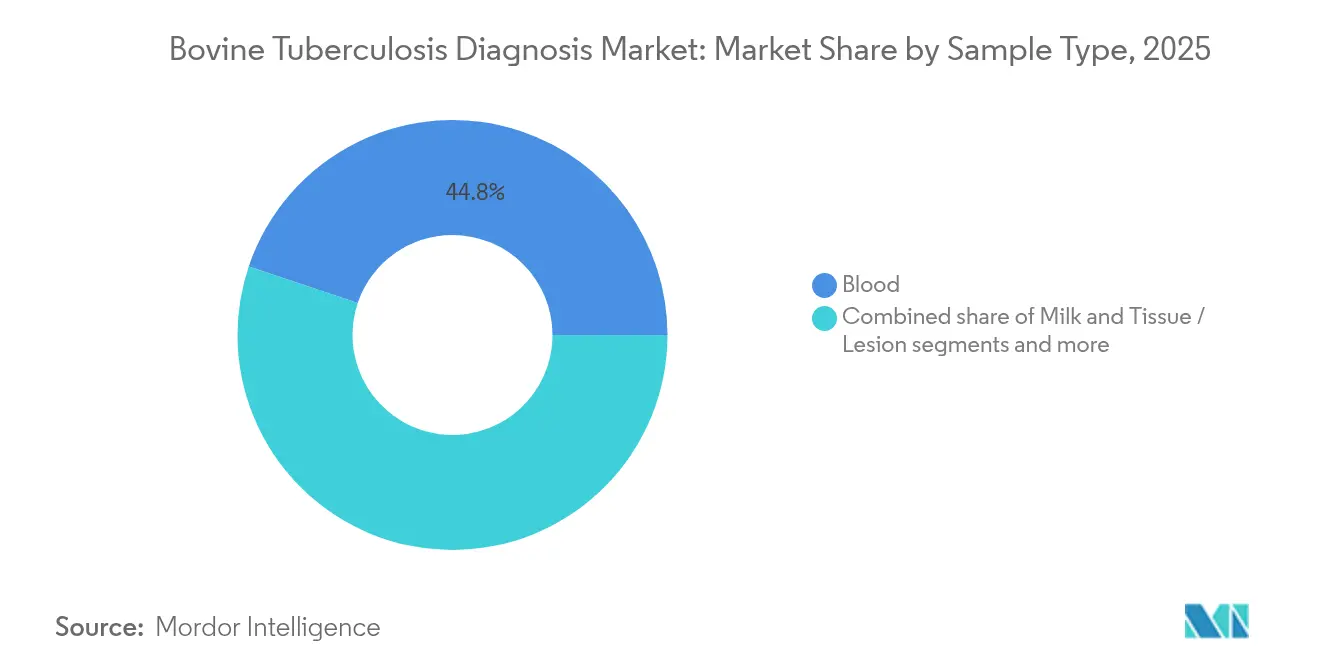
- By sample type, blood testing held 44.83% of the Bovine tuberculosis diagnosis market size in 2025, whereas fecal and environmental swabs are the quickest-rising segment at 7.21% CAGR.
- By end-user, on-farm point-of-care testing dominated with 55.49% of revenue in 2025 and shows the highest growth at 6.14% CAGR.
- By region, North America led with 37.34% revenue in 2025, while Asia-Pacific is projected to register a 6.48% CAGR to 2031.
Note: Market size and forecast figures in this report are generated using Mordor Intelligence’s proprietary estimation framework, updated with the latest available data and insights as of 2026.
Market Trends and Insights
Drivers Impact Analysis of Bovine Tuberculosis Diagnosis Market*
| Driver | (~) % Impact on CAGR Forecast | Geographic Relevance | Impact Timeline |
|---|---|---|---|
| Increasing prevalence of zoonotic TB & test-and-slaughter programs | +1.5% | Global, particularly Europe and North America | Short term (≤ 2 years) |
| Growing global cattle population & rising demand for animal-sourced protein | +1.2% | Global, with concentration in Asia-Pacific and Latin America | Medium term (2-4 years) |
| Mandatory routine screening in export-oriented dairies | +0.8% | North America, Europe, Australia, select emerging markets | Medium term (2-4 years) |
| Government reimbursement for advanced molecular tests (select OECD) | +0.7% | OECD countries, primarily North America and Europe | Long term (≥ 4 years) |
| AI-enabled image-based field diagnostics gaining VC funding | +0.4% | Global, with early adoption in developed markets | Long term (≥ 4 years) |
| Carbon-credit linked "low-methane, TB-free" certification premiums | +0.3% | Europe, North America, select Asia-Pacific markets | Long term (≥ 4 years) |
| Source: Mordor Intelligence | |||
Increasing Prevalence of Zoonotic TB & Test-and-Slaughter Programs
Governments intensify surveillance as zoonotic transmission from unpasteurized milk raises public-health alarms. In South Asia, M. orygis now eclipses M. bovis in certain pockets[1], prompting expanded testing beyond cattle. Compensation-backed culling doubles testing touchpoints because animals undergo both screening and confirmatory assays. The United Kingdom alone paid millions in indemnities during 2024[2], underscoring how large the compulsory-testing pool has become.
Growing Global Cattle Population & Rising Demand for Animal-Sourced Protein
Rapid herd expansion in China, India, Brazil, and Mexico boosts routine surveillance loads. USDA data[3] show that testing volumes are climbing in U.S. states with herd growth, echoing the link between demographic scale and diagnostic throughput. Producers increasingly view diagnostics as an insurance premium against whole-herd depopulation. Producers increasingly view preventive diagnostics not just as a regulatory obligation, but as a crucial risk management strategy, especially given the economic stakes of undetected tuberculosis leading to the potential depopulation of entire herds.
Mandatory Routine Screening in Export-Oriented Dairies
Trade partners now insist on disease-free certification, turning Bovine tuberculosis diagnosis market compliance into a ticket for access. USDA import rules adopted in 2024 require testing within 60 days pre-export and post-arrival quarantine, fueling demand for rapid, high-throughput assays. Recent regulatory shifts, such as Canada's removal of tuberculosis testing mandates for cattle in select provinces, underscore the direct influence of evolving trade policies on diagnostic market dynamics. These changes present lucrative opportunities for companies adept at swiftly navigating the changing regulatory terrain.
Government Reimbursement for Advanced Molecular Tests
Government reimbursement policies for advanced molecular diagnostic tests in select OECD countries are creating market incentives that accelerate adoption of PCR-based and next-generation sequencing platforms over traditional tuberculin skin tests. Free or subsidized PCR in the United States and extended UK reimbursement for post-mortem PCR reduce producer cost sensitivity and lift molecular uptake. The trend toward government-funded molecular diagnostics reflects recognition that early, accurate detection reduces long-term program costs through improved disease control outcomes.
Restraints Impact Analysis of Bovine Tuberculosis Diagnosis Market*
| Restraint | (~) % Impact on CAGR Forecast | Geographic Relevance | Impact Timeline |
|---|---|---|---|
| Limited veterinary infrastructure in emerging beef-producing belts | -1.1% | Sub-Saharan Africa, parts of Latin America, rural Asia | Medium term (2-4 years) |
| High cost & cold-chain dependence of PCR kits | -0.9% | Global, particularly emerging markets and remote areas | Short term (≤ 2 years) |
| Farmer resistance to mandatory culling despite compensation | -0.6% | Global, with regional variations in compensation adequacy | Medium term (2-4 years) |
| Strain diversity causing false negatives in wildlife reservoirs | -0.4% | Europe, North America, regions with wildlife-livestock interface | Long term (≥ 4 years) |
| Source: Mordor Intelligence | |||
Limited Veterinary Infrastructure in Emerging Beef-Producing Belts
East-African studies[4] highlight gaps in lab capacity, workforce training, and cold-chain logistics, all of which blunt molecular expansion. Smallholders far from laboratories default to skin tests, leaving early infections unchecked. Geographic disparities in testing quality and frequency arise from a shortage of trained veterinary personnel adept at complex diagnostic procedures. This shortfall notably impacts smallholder operations, which account for substantial portions of cattle populations in emerging markets.
High Cost & Cold-Chain Dependence of PCR Kits
Per-test PCR prices, plus refrigeration, slow penetration among cost-sensitive herds. Even compact point-of-care units command premiums that many small farms struggle to justify. In tropical and subtropical regions, the reliance on cold-chain logistics for molecular reagents presents significant hurdles. Here, dependable refrigeration is often a luxury, constraining the spread of cutting-edge diagnostic technologies. This challenge is further magnified by the economic implications: producers, already squeezed by fluctuating feed prices and market unpredictability, find their costs ballooning. This is especially true when molecular tests require repetition for confirmation.
*Our forecasts treat driver/restraint impacts as directional, not additive. The impact forecasts reflect baseline growth, mix effects, and variable interactions.
Bovine Tuberculosis Diagnosis Market Segment Analysis
By Test Type:
Molecular Methods Drive InnovationTraditional skin and interferon-gamma assays held 40.92% of the Bovine tuberculosis diagnosis market share in 2025 thanks to low price and regulatory familiarity. Yet molecular methods are tracking a 6.69% CAGR, outpacing legacy tests as producers prioritize earlier detection. CRISPR assays now deliver femtomolar sensitivity in roughly 80 minutes, narrowing the practicality gap with on-farm workflows. PCR still dominates molecular share because of well-established SOPs, while next-generation sequencing and CRISPR are carving niches in confirmatory testing. Traditional approaches remain essential screening tools, but their inability to flag subclinical cases sustains molecular momentum.
Demand for hybrid algorithms that pair AI-enhanced image scoring with antigen-based tests is climbing. These platforms augment accuracy while preserving affordability, an attractive compromise for mid-scale producers seeking incremental upgrades without overhauling lab infrastructure.

By Animal Type:
Dairy Dominance with Emerging SegmentsDairy herds, tightly regulated for milk quality and export access, generated 68.18% of the Bovine tuberculosis diagnosis market size in 2025. Intensively managed operations test more often, making diagnostics integral to risk management. Buffalo and bison herds are expanding at a 6.66% CAGR, notably in India and the United States where conservation and commercial ranching overlap. Oral vaccine research in bison underscores the heightened vigilance around wildlife-livestock interfaces.
Beef cattle generally test less frequently, but pre-movement and export rules create periodic surges. Wildlife reservoirs—deer, elk, badgers—are attracting funding for surveillance, opening niche demand for non-invasive sampling tools.
By Sample Type:
Blood Testing Leads, Environmental Sampling GrowsBlood accounted for 44.83% of the Bovine tuberculosis diagnosis market share in 2025, favored for gamma-interferon ELISAs and PCR. Fecal and environmental swabs are rising fastest at 7.21% CAGR as regulators seek broader ecosystem insight. Environmental DNA assays now detect M. bovis signatures in soil and water without capturing animals, a major logistical advantage. Milk testing appeals to dairy farms for its convenience, and mid-infrared spectral AI models have achieved >95% diagnostic accuracy.
By End-User:
Point-of-Care Settings Lead MarketOn-farm and point-of-care settings commanded 55.49% of the Bovine tuberculosis diagnosis market share in 2025, advancing 6.14% CAGR as portable readers shorten decision cycles. Zoetis’s Vetscan OptiCell illustrates the push toward AI-assisted hematology at barn-side while maintaining lab-grade precision. Reference labs stay vital for confirmatory work and complex analytics, and their networks are consolidating—Zoetis opened a flagship Louisville lab in May 2025 to expedite national logistics.
Academic centers and public-sector labs propel innovation, especially around CRISPR and NGS. Their validation studies form the evidence base regulators need to authorize new modalities.
Geography Analysis
North America Bovine Tuberculosis Diagnosis Market
North America led with 37.34% share in 2025, anchored by USDA’s century-old eradication program that screens millions annually, generating roughly 7 cases per million cattle inspected. Government reimbursement removes price objections to PCR, encouraging rapid technology turnover. Canada’s province-based zoning eliminated tests for animals from tuberculosis-free regions in 2024, illustrating how dynamic risk assessments reshape local demand.
APAC Bovine Tuberculosis Diagnosis Market
Asia-Pacific is the fastest-growing region at a 6.48% CAGR. China’s expanding commercial dairies and India’s large smallholder network are both tightening disease controls, though infrastructure gaps linger. Harmonization work by the World Organisation for Animal Health is streamlining cross-border standards, making it easier for diagnostic suppliers to scale regionally.
Europe Bovine Tuberculosis Diagnosis Market
Europe, backed by stringent animal-health directives, sustains robust demand. The UK’s 2024 badger survey found prevalence rates up to 14.5% in some counties, keeping wildlife surveillance budgets intact. EU sustainability policies favor non-invasive testing and low-carbon livestock labels, fueling interest in environmental DNA kits and carbon-linked certification diagnostics.
Competitive Landscape
The Bovine tuberculosis diagnosis market is moderately fragmented. IDEXX holds a significant share of the global veterinary diagnostics revenue, leveraging a broad menu and USD 261 million R&D spend in 2023 to stay ahead. Zoetis differentiates through an expanding lab network and AI-infused devices such as the Vetscan OptiCell hematology analyzer. bioMérieux’s collaboration with Illumina shows how sequencing expertise is entering routine veterinary workflows.
Start-ups focus on CRISPR, microfluidics, and AI image analytics, targeting lower-cost molecular solutions for emerging markets. Barriers include lengthy multi-jurisdiction approvals and the need to validate assays across diverse M. bovis strains. Nevertheless, players offering multipurpose platforms—combining tuberculosis, brucellosis, and mastitis screens—are gaining traction as producers consolidate diagnostic spend.
Emerging markets present a white-space opportunity for cost-effective molecular diagnostic solutions. Additionally, environmental sampling technologies tailored for wildlife surveillance have potential. Furthermore, integrated diagnostic platforms that merge tuberculosis testing with other livestock health assessments are gaining traction.
Bovine Tuberculosis Diagnosis Industry Leaders
-
Bio-Rad Laboratories
-
IDEXX Laboratories
-
Innovative Diagnostics SAS (IDvet)
-
Thermo Fisher Scientific Inc
-
Zoetis Inc
- *Disclaimer: Major Players sorted in no particular order
Bovine Tuberculosis Diagnosis Market Companies Covered in this Report
- Abbott Laboratories
- AsureQuality
- bioMérieux
- Bionote
- Bio-Rad Laboratories
- Creative Diagnostics
- Enfer Group
- Hangzhou Frenovo Biotech Co., Ltd.
- IDEXX
- Innovative Diagnostics SAS (IDvet)
- Neogen
- QIAGEN
- Randox Food Diagnostics
- Sansure Biotech
- Thermo Fisher Scientific
- Zoetis
Recent Industry Developments in Bovine Tuberculosis Diagnosis Market
- May 2025: Zoetis opened a reference laboratory in Louisville, KY, co-located with UPS Healthcare, to accelerate nationwide sample turnaround.
- January 2025: APHIS implemented new user fees for veterinary diagnostics, aligning charges with actual costs and potentially nudging adoption toward bundled testing.
- October 2024: UK DEFRA updated PCR protocols for tuberculosis testing in pet mammals, widening the diagnostic market beyond livestock.
- January 2024: Northern Ireland’s DAERA launched an eight-week consultation on phased reductions in tuberculosis-compensation rates to 90% and later 75% of market value.
Bovine Tuberculosis Diagnosis Market Report Scope and Research Methodology
Market Definition and Coverage
Our study defines the bovine tuberculosis (bTB) diagnosis market as the annual revenue generated from commercial test kits, reagents, instruments, and associated consumables used to detect Mycobacterium bovis infection in cattle and buffalo herds across on-farm, laboratory, and point-of-care settings worldwide. According to Mordor Intelligence, forecasts are offered in USD value for 2025-2030, with a 2025 baseline of USD 0.84 billion.
Scope exclusion: This assessment does not cover human TB diagnostics, therapeutic drugs, or vaccine revenues.
Segments Covered in This Report
- By Test Type
- Serological Tests
- ELISA Kits
- Agglutination / Lateral-flow
- Molecular Diagnostic Tests
- PCR
- NGS & CRISPR-based Assays
- Traditional Tests
- Tuberculin Skin Test
- Gamma-Interferon Assay
- Serological Tests
- By Animal Type
- Dairy Cattle
- Beef Cattle
- Buffalo & Bison
- By Sample Type
- Blood
- Milk
- Tissue / Lesion
- Fecal & Environmental Swab
- By End-User
- Veterinary Reference Laboratories
- On-farm / Point-of-care Settings
- Government Agencies & Animal Health Departments
- Academic & Research Institutes
- By Geography
- North America
- United States
- Canada
- Mexico
- Europe
- Germany
- United Kingdom
- France
- Italy
- Spain
- Rest of Europe
- Asia-Pacific
- China
- India
- Japan
- Australia
- South Korea
- Rest of Asia-Pacific
- Middle East and Africa
- GCC
- South Africa
- Rest of Middle East and Africa
- South America
- Brazil
- Argentina
- Rest of South America
- North America
Data Sources, Market Sizing, and Validation
Primary Research
Mordor analysts interviewed veterinary epidemiologists, state-run lab directors, cattle-producer cooperatives, and distributors across North America, Europe, Latin America, and Asia. These discussions validated screening penetration rates, average selling prices, and the speed at which molecular assays are replacing skin tests, helping us refine assumptions that were only partly visible in secondary material.
Desk Research
We began by mapping disease prevalence, animal census numbers, and trade movements using freely accessible sources such as FAO animal production statistics, World Organisation for Animal Health (WOAH) bTB notification reports, USDA-APHIS surveillance data, Eurostat livestock databases, and peer-reviewed papers in Veterinary Microbiology. Company filings, investor presentations, and vetted news on diagnostic launches were collated through Dow Jones Factiva.
To size supplier revenue and shipment flows, we extracted financial snapshots from D&B Hoovers and matched global import-export codes for tuberculin and PCR kits through Volza customs analytics. These data, combined with regional veterinary association price lists and public tenders, formed the numerical bedrock. The listed sources are illustrative; many additional references informed data checks and clarification.
Market-Sizing & Forecasting
A blended top-down, bottom-up approach was followed. National cattle inventories, routine-testing penetration, average tests-per-head, and weighted ASPs generated an initial demand pool; supplier roll-ups and channel checks served as a cross-validation. Key variables in our model include herd size growth, bTB prevalence trends, mandatory certification timelines, uptake of interferon-gamma assays, test price erosion, and molecular-diagnostic adoption curves. Multivariate regression, stressed by three scenario bands, projects values through 2030, while data gaps in informal markets are bridged by calibrated prevalence multipliers.
Data Validation & Update Cycle
We pass every output through variance screens against historical series and independent cost-of-disease estimates, after which a senior reviewer signs off. Reports refresh annually, and material events such as new eradication mandates trigger an interim revision before client delivery.
How Mordor Intelligence's Bovine Tuberculosis Diagnosis Market Size Compares to Other Published Estimates
Published figures often diverge because firms pick different product mixes, price bases, and refresh cadences. We acknowledge those realities upfront so users can reconcile numbers with confidence.
Key gap drivers appear when other publishers exclude rapid-PCR kits, fold veterinary service fees into product revenue, or apply single prevalence proxies that over-inflate emerging-market demand. By contrast, Mordor's disciplined scope selection and yearly herd-level recalibration keep our baseline balanced and reproducible.
Benchmark comparison
| Market Size | Anonymized source | Primary gap driver |
|---|---|---|
| USD 0.84 B (2025) | Mordor Intelligence | |
| USD 0.80 B (2023) | Regional Consultancy A | Omits Asia-Pacific data and counts only skin-test consumables |
| USD 0.96 B (2025) | Global Analyst B | Blends product and veterinary service revenue, uses single prevalence proxy |
Taken together, the comparison shows that when scope breadth, variable choice, and annual refresh discipline are aligned, as in Mordor's model, clients gain a transparent, dependable baseline for decision-making.
Key Questions Answered in the Report
What testing technologies are gaining the most traction in bovine tuberculosis diagnosis?
Molecular platforms such as PCR and newer CRISPR-based assays are being adopted faster than skin-test methods because they detect infections earlier and integrate well with digital reporting tools.
Why are dairy producers more aggressive in tuberculosis surveillance than beef operations?
Milk quality regulations and export certification rules require frequent disease checks, so dairies face direct revenue risks if even a single animal tests positive and milk must be withheld.
How do wildlife reservoirs influence diagnostic strategy?
Regions with high badger, deer, or bison interaction often layer environmental DNA sampling on top of livestock testing to catch spillover cases that traditional herd-only programs might miss.
What role do government policies play in accelerating molecular test adoption?
Subsidized or reimbursed PCR programs lower out-of-pocket costs for producers, making advanced assays the default choice rather than an optional upgrade.
Which sample types are emerging beyond blood draws, and why?
Fecal and environmental swabs are gaining popularity because they reduce animal handling stress and allow monitoring of both herds and surrounding habitats.
How are diagnostic companies differentiating themselves in this market?
Vendors are bundling AI-enabled readers, cloud data dashboards, and multi-disease panels to give producers a single platform that covers tuberculosis alongside other high-impact livestock ailments.