
Bovine Mastitis Market Size and Share
Market Overview
| Study Period | 2020 - 2031 |
|---|---|
| Market Size (2026) | USD 1.76 Billion |
| Market Size (2031) | USD 2.24 Billion |
| Growth Rate (2026 - 2031) | 4.88 % |
| Fastest Growing Market | Asia-Pacific |
| Largest Market | North America |
| Market Concentration | Medium |
Major Players *Disclaimer: Major Players sorted in no particular order Image © Mordor Intelligence. Reuse requires attribution under CC BY 4.0. | |
Bovine Mastitis Market Analysis by Mordor Intelligence
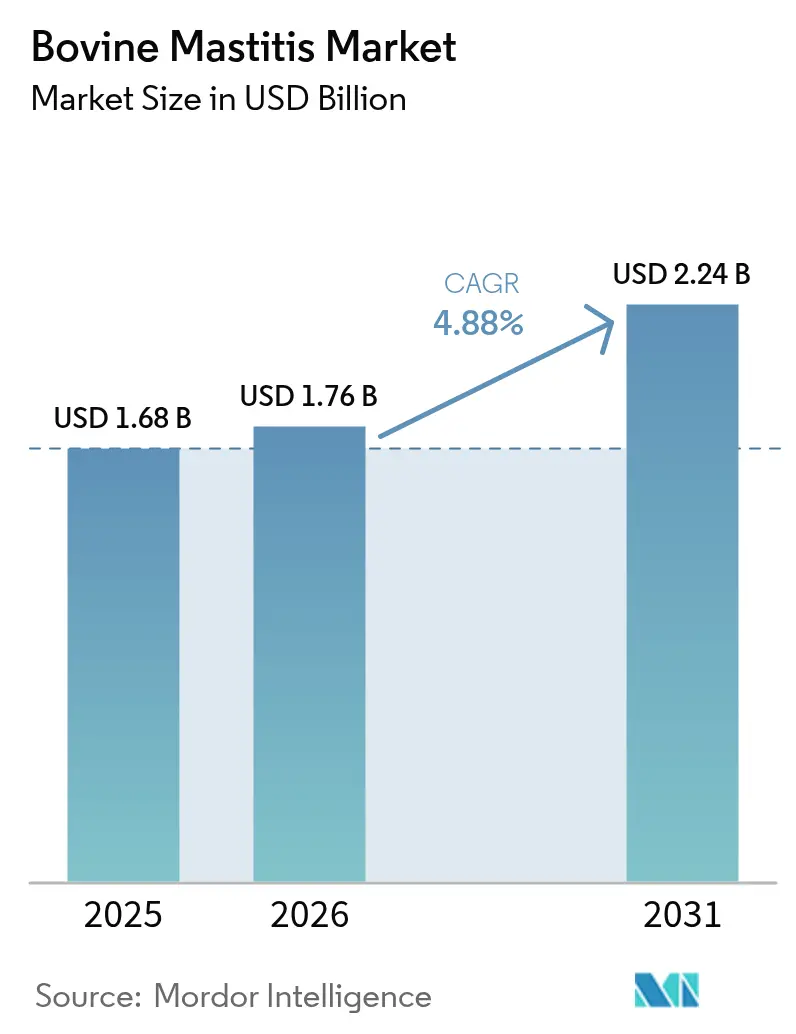
Bovine mastitis market size in 2026 is estimated at USD 1.76 billion, growing from 2025 value of USD 1.68 billion with 2031 projections showing USD 2.24 billion, growing at 4.88% CAGR over 2026-2031. Growth is tied to dairy processors tightening milk-quality rules, regulators curbing prophylactic antibiotic use, and farm operators investing in rapid diagnostics and precision herd-health platforms. Heightened economic losses from mastitis, estimated at up to USD 32 billion a year, are pushing producers toward prevention-centric protocols that blend selective dry-cow therapy with on-farm culture kits. Vaccine pipelines, phage formulations, and short-withdrawal intramammary drugs are expanding as antimicrobial-resistance (AMR) pressure reshapes treatment choices. Strategic alliances that fuse therapeutics with data-driven decision tools—such as Zoetis’ partnership with Danone on genetic resistance—signal the next phase of integrated solutions in the bovine mastitis market.
Key Report Takeaways
- By disease type, clinical mastitis commanded 58.02% of the bovine mastitis market size in 2025; the subclinical segment exhibits the highest projected CAGR at 5.33% through 2031.
- By product type, antibiotics held 76.62% of the bovine mastitis market share in 2025; vaccines are the fastest-growing product category at a 5.62% CAGR to 2031.
- By route of administration, the systemic segment accounted for 86.10% of the bovine mastitis market size in 2025 and is poised to expand at a 5.05% CAGR through 2031.
- By therapy, dry-period treatment captured 62.04% revenue share in 2025 and leads growth with a 5.36% CAGR to 2031.
- By end-user, dairy farms & cooperatives held 79.55% of the bovine mastitis market share in 2025 and is also the fastest-growing segment at 5.11% CAGR to 2031.
- By geography, North America led with 33.12% share of the bovine mastitis market in 2025 while Asia-Pacific is the fastest-growing region at a 5.86% CAGR.
Note: Market size and forecast figures in this report are generated using Mordor Intelligence’s proprietary estimation framework, updated with the latest available data and insights as of 2026.
Global Bovine Mastitis Market Trends and Insights
Drivers Impact Analysis*
| Driver | (~) % Impact on CAGR Forecast | Geographic Relevance | Impact Timeline |
|---|---|---|---|
| Rising incidence and cost burden | +1.2% | Global | Medium term (2-4 years) |
| Veterinary spending and herd-automation growth | +0.9% | APAC and Latin America | Long term (≥ 4 years) |
| Advances in on-farm diagnostics | +0.8% | North America & EU | Short term (≤ 2 years) |
| Short-withdrawal intramammary drugs | +0.6% | EU & North America | Medium term (2-4 years) |
| ESG-linked responsible-antibiotic sourcing | +0.5% | EU first, then Global | Medium term (2-4 years) |
| Venture funding in phage and peptide therapy | +0.4% | North America & EU | Long term (≥ 4 years) |
| Source: Mordor Intelligence | |||
Rising Incidence and Cost Burden
Mastitis affects one in four U.S. dairy cows each year, with every clinical case costing from USD 128 to USD 444 in lost milk, treatment, and culling expenses[1]Thermo Fisher Scientific, “Bovine Diagnostics: How Much Does Mastitis Cost Dairy Producers Annually,” thedairysite.com. Subclinical infections silently depress yield by 10% to 20% per cow, prompting European herds to adopt routine somatic-cell screening to avoid milk-quality penalties. The mounting financial toll steers producer budgets toward predictive analytics, vaccination programs, and selective therapy, which all underpin sustained demand in the bovine mastitis market.
Growth in Veterinary Spending and Herd-Management Automation
Large farms are allocating bigger capital outlays to automated milking systems, inline sensors, and professional veterinary services. DeLaval and John Deere’s Milk Sustainability Center illustrates how cloud-based dashboards now merge feed, fertility, and udder-health data to boost profitability. Asia-Pacific herds are scaling rapidly, replicating Western automation models and lifting regional sales of diagnostics, vaccines, and decision-support software that keep the bovine mastitis market expanding at the fastest clip worldwide.
Technological Advances in On-Farm Diagnostics and Sensors
AI-enabled image analysis and IoT milk-conductivity probes detect Gram-positive pathogens in hours rather than days. Zoetis’ Vetscan Mastigram+ identifies Gram-positive mastitis within 8 hours, cutting blanket antibiotic use. Trial data show machine-learning models reach over 95% accuracy for subclinical detection[2]Moonsun Shin, “AI-Based Smart Monitoring Framework for Livestock Farms,” Applied Sciences, mdpi.com , though farms still face false-positive alerts that vendors are tackling through refined algorithms.
Adoption of Short-Withdrawal Intramammary Antibiotics
Regulators now favor products that preserve milk sales. The FDA approval of Flunine and Merck’s BANAMINE TRANSDERMAL set the tone for 48-hour milk-withdrawal therapies. EU rules mandating selective dry-cow therapy spur R&D into formulations that balance potency with minimal residue, reinforcing demand in the bovine mastitis market.
Restraints Impact Analysis*
| Restraint | (~) % Impact on CAGR Forecast | Geographic Relevance | Impact Timeline |
|---|---|---|---|
| Escalating antimicrobial resistance | -0.7% | EU & North America | Short term (≤ 2 years) |
| Low farmer adherence to protocols | -0.5% | APAC, Latin America, MEA | Medium term (2-4 years) |
| Stricter milk-residue audits | -0.4% | EU & North America | Medium term (2-4 years) |
| Variable accuracy of pen-side kits | -0.3% | Global | Short term (≤ 2 years) |
| Source: Mordor Intelligence | |||
Escalating Antimicrobial Resistance (AMR)
EU Regulation 2019/6 has banned prophylactic use and tightened metaphylactic approvals[3]Ivo Schmerold, “European regulations on the use of antibiotics in veterinary medicine,” European Journal of Pharmaceutical Sciences, sciencedirect.com, forcing practitioners to blend systemic and intramammary drugs with NSAIDs to manage resistant strains. MRSA outbreaks in cattle shrink cure rates and elevate costs, dampening short-term growth until vaccines and phage solutions mature.
Low Farmer Adherence in Emerging Markets
Studies in Brazil and Rwanda show gaps between veterinary guidance and on-farm practice, owing to cost constraints and limited extension services. Pilot One-Health projects[4]Sara N Garcia, “A one health framework to advance food safety and security: An on-farm case study in the Rwandan dairy sector,” PubMed, pubmed.ncbi.nlm.nih.gov lift compliance to 90% when training is provided, yet scaling such programs remains a hurdle that restrains the bovine mastitis industry in developing regions.
*Our forecasts treat driver/restraint impacts as directional, not additive. The impact forecasts reflect baseline growth, mix effects, and variable interactions.
Segment Analysis
By Disease Type: Clinical Cases Drive Treatment Urgency
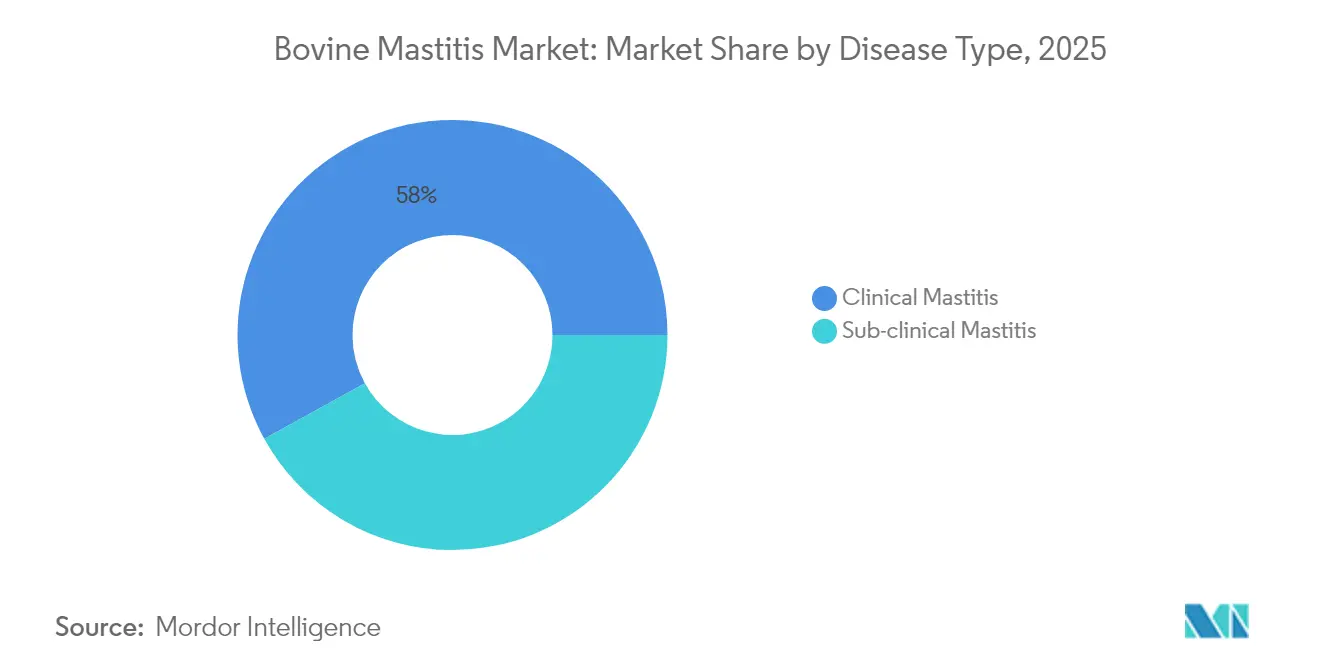
Clinical mastitis held 58.02% of the bovine mastitis market size in 2025 and is expanding at 5.18% CAGR on the back of visible symptoms that demand immediate treatment to avoid milk loss and animal welfare penalties. Rapid therapy translates to higher spending per case, sustaining revenue streams for antibiotics and NSAIDs. The economic sting of each clinical outbreak keeps producers alert to early warning sensors that flag udder swelling or milk discoloration.
Subclinical infections trail in market value yet contribute 10%-20% latent yield loss, prompting investment in somatic-cell count trackers and AI pattern recognition. Smartphones now deliver 2-minute cell-count reads, nudging farms toward proactive cures that could soon narrow the revenue gap with clinical cases. As technology shrinks diagnostic costs, the subclinical sub-segment may accelerate faster than headline projections, adding depth to the bovine mastitis market.



By Product: Antibiotic Dominance Faces Innovation Pressure
Antibiotics accounted for 76.62% of the bovine mastitis market share in 2025 and are on track to grow at a good pace through 2031. Their dominance stems from fast, reliable cures in acute clinical cases, which protect both cow welfare and farm income. Regulators are tightening oversight; however, the European Union now restricts prophylactic use and scrutinizes critical drug classes, prompting more selective prescribing.
Vaccines are the quickest-rising category, advancing at a 5.62% CAGR, as prevention proves cheaper than treatment and supports industry efforts to curb antibiotic reliance. Zoetis’ Protivity for Mycoplasma bovis and other multi-pathogen projects show the pivot toward immunological control.
By Route of Administration: Systemic Delivery Maintains Dominance
Systemic therapies made up 86.10% of the bovine mastitis market size in 2025 and are set to climb at 5.05% CAGR because they address both localized and systemic infections while simplifying dosing. Injectable ceftiofur or oral formulations save labor in large herds where time per cow is at a premium.
Intramammary products, though smaller in value, allow high local drug concentrations and reduced residues. The FDA’s 21 CFR Part 526 pathway guides new extended-release tubes that maintain therapy across the dry period without repeated infusions. As more selective dry-cow programs roll out, intramammary lines may edge up their contribution to overall bovine mastitis market growth.
By Therapy: Dry-Period Treatment Leads Prevention Focus
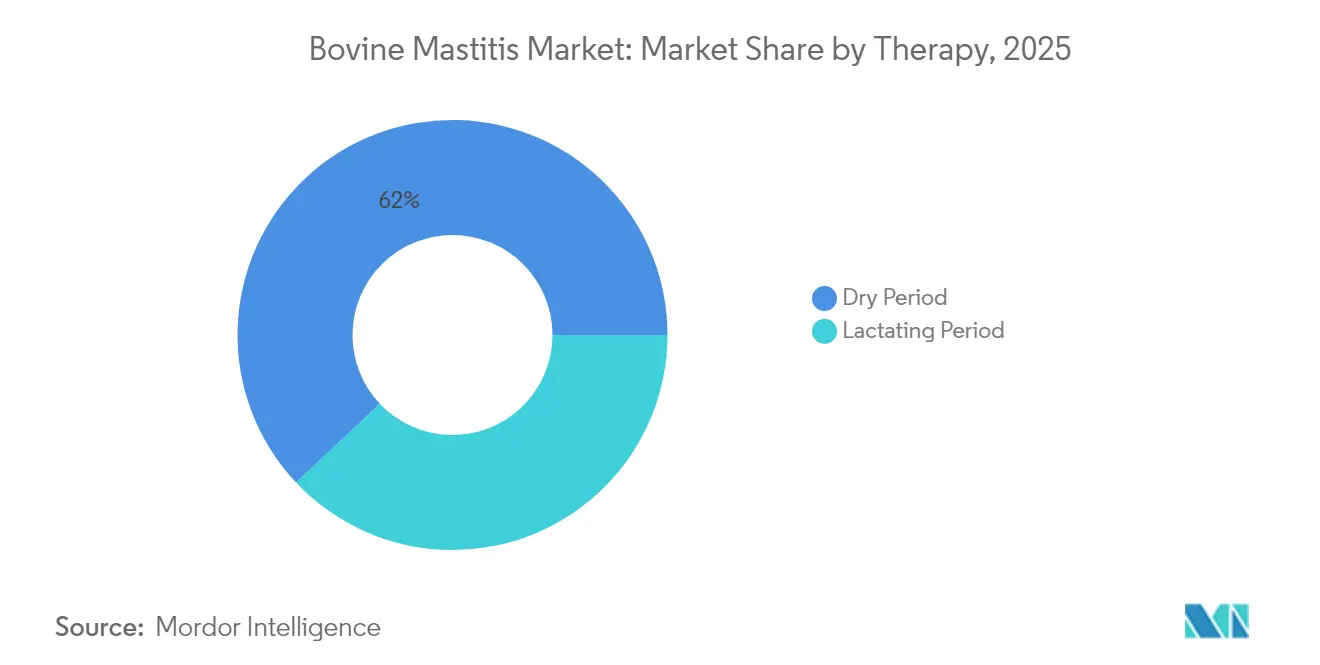
Dry-period therapy captured 62.04% of the bovine mastitis market share in 2025 and posts the fastest CAGR at 5.36%. Treating cows between lactations sidesteps withdrawal losses and lets antibiotics linger for complete pathogen clearance. EU mandates now require culture-based selection, spurring diagnostics that decide which quarters need dosing and which can transition to internal teat sealants alone.
Lactation-period therapy grapples with milk-discard costs and AMR rules but benefits from recent approvals that cut withholding intervals to 48 hours. Anti-inflammatory combinations shorten clinical signs and help producers keep mastitis-affected cows in production. Both dynamics preserve demand across the bovine mastitis market as farms balance productivity with compliance.
By End-User: Dairy Farms Drive Direct Implementation
Dairy farms and cooperatives accounted for 79.55% of the bovine mastitis market size in 2025 and advance at 5.11% CAGR because they shoulder the direct economic burden of mastitis. Consolidating herds wield procurement power, purchasing diagnostics and therapeutics in bulk and integrating them into digital farm-management suites.
Veterinary hospitals remain central for complex or chronic cases that need culture, sensitivity testing, or surgery. Zoetis’ Louisville reference lab extension offers faster microbial identification, underscoring the link between lab capacity and frontline mastitis control. Academic institutions and government labs continue to drive basic research that filters into commercial solutions, reinforcing an innovation pipeline vital for the bovine mastitis industry.
Geography Analysis
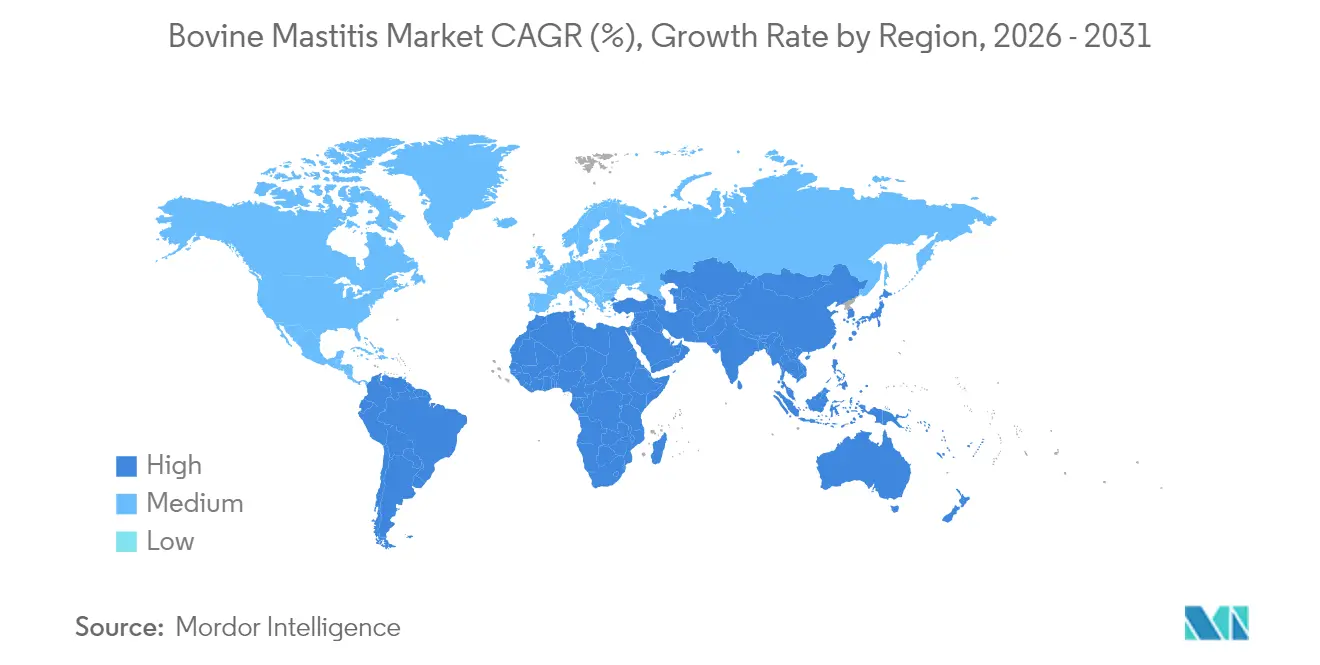
North America generated 33.12% of bovine mastitis market revenue in 2025 and will climb at 4.65% CAGR through 2031. Investment exceeding USD 8 billion in new U.S. processing capacity boosts milk-quality demands, motivating farms to adopt selective therapy and inline diagnostics. The FDA’s evolving antibacterial guidance shapes label claims and withdrawal times, rewarding firms that navigate compliance swiftly.
Europe follows a 4.92% CAGR backed by some of the world’s strictest antimicrobial policies. Regulation 2019/6 pushes selective dry-cow therapy and caps prophylactic use, intensifying demand for sensor-driven treatment decisions and alternative biologics. Nordic producers showcase low somatic-cell averages, proving preventive systems can maintain output while shrinking antibiotic loads.
Asia-Pacific is the fastest propeller with a 5.86% CAGR thanks to surging dairy consumption in China, India, and Southeast Asia. Larger herd sizes, international joint ventures, and Western farming models necessitate structured mastitis control. Investments in milk-analysis labs and vet services unlock pent-up demand for culture kits, vaccines, and AI platforms, enlarging regional share of the bovine mastitis market. Latin America and the Middle East & Africa trail at slightly lower yet robust CAGRs of 5.72% and 5.31% respectively as integrated farm projects scale up in Brazil and the Gulf states.

Regulatory Landscape
The regulatory environment for bovine mastitis products is tightening around antimicrobial stewardship and residue control, which is shaping labels and on-farm protocols. In the United States, FDA CVM published a draft revised Guidance for Industry (GFI) #49 in December 2024 for evaluating target animal safety and effectiveness of antibacterial new animal drugs for bovine mastitis, updating the legacy 1996 framework and reinforcing evidence expectations for antibacterial claims.
In Europe, the Veterinary Medicines Regulation (EU) 2019/6 (applicable since 2022) operationalizes One Health-driven constraints on prophylaxis and raises compliance requirements through antimicrobial-use data reporting (with the first Agency report due by March 31, 2025, and subsequent reporting thereafter). Portfolio risk is also shaped by secondary legislation, including Commission Implementing Regulation (EU) 2024/1973, which enters into effect on August 8, 2026 and restricts or prohibits certain antimicrobials, and Commission Delegated Regulation (EU) 2026/1073 (published March 2026), which amends rules for use of specific veterinary medicinal products for listed diseases. Together, these measures are pushing suppliers toward selective dry-cow therapy and alternatives that reduce reliance on restricted antibiotic classes.
Value Chain Analysis
The bovine mastitis value chain runs from upstream API and excipient sourcing through formulation and fill-finish (intramammary tubes, injectables, and vaccines), then through regulatory release, wholesaler and veterinary channels, and finally into farm-level protocols implemented by dairy farms and cooperatives (the dominant end users in this report scope). Manufacturing for specialized biologics and vaccines is concentrated in facilities in Europe and North America, while many small-molecule APIs are globally sourced, commonly from India and China. As a result, continuity of supply and quality assurance are central to commercial execution.
Downstream, farm adoption is shaped by milk-quality thresholds and standard-setting bodies that influence purchasing toward prevention-centric bundles. The National Mastitis Council maintains a Recommended Mastitis Control Program (seven-point protocol) that supports consistent demand for teat sealants, dry-cow therapy products, and supportive treatments. Public programs such as India's Livestock Health and Disease Control Programme (LH&CP) support mastitis prevention activities, including field distribution of CMT kits via ASCAD, strengthening last-mile implementation. Product innovation also feeds back into the chain: Boehringer Ingelheim's April 2026 launch of LENZELTA in multiple EU countries adds a prevention node that increases requirements for cold-chain handling, veterinarian engagement, and alignment of vaccination scheduling with dry-off management.
Competitive Landscape
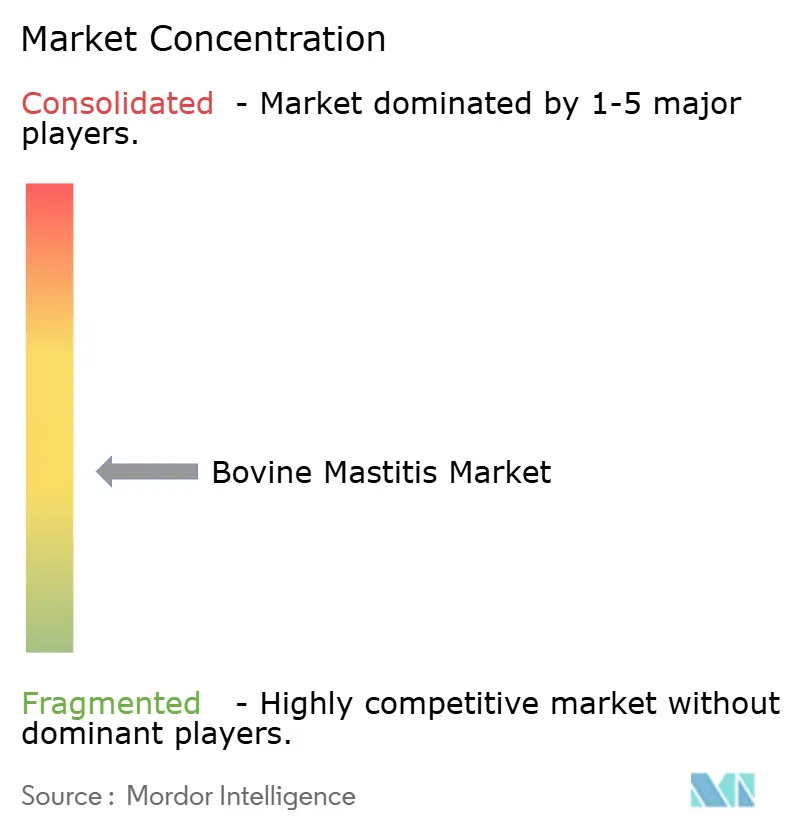
The bovine mastitis market shows moderate fragmentation. Zoetis, Elanco, and Boehringer Ingelheim lead with diversified antibiotic and vaccine lines plus global distribution. Zoetis sold its medicated-feed unit to Phibro for USD 350 million to fund diagnostics and genetics, signaling a pivot toward data-centric offerings. Elanco pairs therapy pipelines with Medgene’s mRNA technology to diversify against AMR headwinds.
Emerging biotech firms court venture capital to advance phage and peptide candidates that directly attack resistant pathogens. Strategic tie-ups, such as Zoetis-Danone’s genomic-selection program, illustrate the drive toward value-chain integration where therapeutic efficacy merges with milk-quality bonuses.
White-space opportunities exist in developing markets where limited veterinary infrastructure and cost-sensitive customers require simplified, affordable solutions that can be implemented by farmers with minimal professional oversight. This creates potential for disruptive business models that challenge traditional distribution approaches.
Bovine Mastitis Industry Leaders
Boehringer Ingelheim GmbH
Elanco Animal Health
Phibro Animal Health Corporation
Virbac SA
Zoetis Inc.
- *Disclaimer: Major Players sorted in no particular order

Market Opportunities and Future Outlook
Opportunities are expanding where regulators and processors are tightening antimicrobial-use requirements and where farms are shifting from blanket treatment to targeted, prevention-led protocols. In Europe, the transition under Regulation (EU) 2019/6 and related antimicrobial restrictions creates whitespace for solutions that reduce antibiotic exposure while preserving cure outcomes, including vaccines, internal teat sealants used in selective dry-cow therapy programs, and integrated decision tools that support culture-guided treatment at the quarter or cow level.
Commercial and regulatory proof points also support a prevention and precision pivot within the current market. Boehringer Ingelheim launched LENZELTA in April 2026 across several EU countries for S. aureus and E. coli mastitis prevention during the dry-off period. In the same month, Laboratorios HIPRA received a positive CVMP opinion to modify the Startvac vaccination scheme to allow administration independent of parturition dates, which can reduce operational friction for herds that struggle to synchronize dosing to calving. On the technology side, validation work reported in 2026 for point-of-care pathogen identification (for Gram-positive mastitis pathogens) reinforces the on-farm testing pathway that enables selective therapy and supports processor-driven responsible-antibiotic sourcing programs highlighted in this report scope.
Recent Industry Developments
- April 2026: Boehringer Ingelheim launched LENZELTA, a bovine mastitis vaccine positioned to reduce the incidence and severity of clinical mastitis, with rollout beginning in multiple EU countries. The two-dose regimen is administered during the dry-off period and targets protection against S. aureus and E. coli. The launch adds a prevention-focused option that aligns with EU antimicrobial stewardship and can shift spend toward immunological control in dry-period programs.
- February 2025: Zoetis expanded its cattle anti-infective portfolio by acquiring marketing rights for Loncor 300 (florfenicol) from Elanco. While indicated for bovine respiratory disease and foot rot, the acquisition reinforces Zoetis's scale in cattle anti-infectives and strengthens field relationships with large dairy and beef operations that also purchase mastitis therapeutics. Broader anti-infective breadth supports bundling and contracting across herd-health categories.
- October 2024: Phibro Animal Health Corporation completed the acquisition of Zoetis medicated feed additive portfolio and certain water-soluble products. The transaction covered more than 37 product lines across 80 countries and included manufacturing sites in the United States, Italy, and China. The deal increased Phibro's production animal health footprint and adds supply-chain scale that can influence pricing, distribution reach, and cross-selling into dairy accounts.


Research Methodology Framework and Report Scope
Market Definition and Coverage
For this methodology, the bovine mastitis market is counted as the annual revenue generated from products used to prevent and treat mastitis in cattle, mainly through intramammary and systemic therapies used during lactation and dry-cow periods.
Scope exclusions: Routine milking parlor hygiene chemicals and standalone mastitis diagnostic test kits are excluded from this market size.
Segmentation Overview
- By Disease Type
- Clinical Mastitis
- Sub-clinical Mastitis
- By Product
- Antibiotics
- Vaccines
- NSAIDs & Pain-killers
- Others
- By Route of Administration
- Intramammary
- Systemic
- By Therapy
- Lactating Period
- Dry Period
- By End-User
- Hospitals & Veterinary Clinics
- Dairy Farms & Cooperatives
- Other End-Users
- By Geography
- North America
- United States
- Canada
- Mexico
- Europe
- Germany
- United Kingdom
- France
- Italy
- Spain
- Rest of Europe
- Asia-Pacific
- China
- India
- Japan
- Australia
- South Korea
- Rest of Asia-Pacific
- Middle East and Africa
- GCC
- South Africa
- Rest of Middle East and Africa
- South America
- Brazil
- Argentina
- Rest of South America
- North America
Data Sources, Market Sizing, and Validation
Desk Research
Desk research was used to understand the real-world demand pool for mastitis products and the conditions that shape usage. We reviewed public animal health guidance, food safety requirements, and dairy production signals that influence prevention versus treatment patterns, before building the first set of assumptions.
Common inputs came from public sources such as USDA dairy statistics, the European Commission and Eurostat agriculture data, FAO livestock and dairy datasets, and national veterinary drug and antimicrobial-use reports (where available). We also reviewed peer-reviewed veterinary journals for mastitis prevalence and treatment practice notes, and then cross-checked trends using company annual reports, investor presentations, and credible press coverage. Where it improved consistency across geographies, paid subscriptions for company financials and patent databases were used to validate product portfolios and innovation activity. These examples are not exhaustive, and many other public references were used to collect data, validate it, and clarify open questions.
Primary Interviews and Surveys
Primary work was used to pressure-test scope, pricing, and real adoption of key therapies across farm types and regions. We spoke with veterinarians, dairy farm managers, distributors, and technical staff involved in mastitis prevention programs and treatment protocols, and then reconciled differences across mature dairy markets and faster-growing production regions so assumptions stayed realistic.
Distribution of primary research fieldwork respondents
| Company type | Respondent position | Region |
|---|---|---|
| Top tier: 26% | CXOs: 16% | APAC: 46% |
| Mid tier: 53% | Functional/Unit leaders: 33% | EMEA: 35% |
| Smaller Players: 21% | Managers: 51% | Americas: 19% |
Market-Sizing & Forecasting
Sizing started with a top-down build that reconstructs demand from cattle and dairy production indicators, mastitis incidence ranges, typical treatment rates, and the split between lactation and dry-cow use, and then converts this demand pool into value using price ranges validated in interviews. Once the first totals were formed, we corroborated the outputs with selective bottom-up approximations, including sampled product revenue roll-ups, distributor channel checks, and ASP times volume checks in a few anchor countries. That comparison was then used to adjust the final totals.
Key model inputs included dairy herd and milk production trends, mastitis prevalence and clinical versus subclinical mix, adoption of dry-cow therapy and teat sealants, average course counts per case, and price movement for intramammary antibiotics and preventive products. Forecasts were built using scenario analysis so changes in antimicrobial stewardship rules, milk quality penalties, and preventive uptake could be reflected without forcing one straight-line trajectory. When bottom-up inputs were missing for smaller countries, we used proxy uptake rates tied to dairy intensity and veterinarian access, and those proxies were then checked again in follow-up calls.
Data Validation & Update Cycle
Results were validated through triangulation across independent signals, including dairy production direction, disease prevalence ranges, and the expected mix of preventive versus therapeutic spend. Outliers were reviewed country by country, and when a number moved beyond a reasonable band, we re-checked the assumptions behind treatment rates, price ranges, or product inclusion.
Before sign-off, the model and outputs go through multiple analyst reviews so the math, logic, and documentation stay consistent. Reports are refreshed annually, and interim updates are made when material events occur, such as major regulatory actions affecting antibiotic use or a significant shift in dairy herd economics. Prior to delivery, a final review pass is completed so clients receive the most current view available at the time.
Mordor Intelligence's Bovine Mastitis Market Size Measured Against Other Published Estimates
Published numbers for the bovine mastitis market can vary because sources do not always count the same product basket, and they also differ in how they convert usage into value through pricing and geography assumptions. The timing of currency conversion and the year used for the starting point can further widen the spread, even when the growth story sounds similar.
Diagnostic kits are a frequent swing factor, since they sit outside Mordor Intelligence's scope for this market size, and some publications roll them in alongside treatments and prevention products. Differences also come from how dry-cow prevention is treated, where some estimates apply aggressive adoption jumps, and others keep older usage splits that do not match current farm practice. Finally, some published figures lean on fixed FX or older base-year prices, which can distort totals when veterinary drug prices and regional mixes shift.
Benchmark comparison
| Source | Market Size | Gaps in Research Methodology |
|---|---|---|
| Mordor Intelligence | USD 1.68 B (2025) | |
| Global Consultancy A | USD 1.67 B (2024) | Uses a prior-year base and applies fixed FX timing, and it also excludes vaccine revenue within mastitis prevention, which lowers the counted spend versus a broader prevention basket. |
| Industry Association B | USD 2.00 B (2024) | Expands scope to include diagnostic kits and udder sanitizers, and it may apply higher prevention adoption assumptions without consistently separating routine hygiene from mastitis-specific products. |
The table indicates that the biggest differences come from what gets counted as a mastitis product and how prevention is valued, particularly when diagnostics and hygiene are bundled in. By keeping the scope tied to treatment and prevention products and then checking totals against usage rates and price ranges, the resulting market size remains traceable to clear, repeatable inputs.


Key Questions Answered in the Report
How are dairy sustainability goals influencing mastitis treatment choices?
Processors are rewarding farms that document responsible antibiotic use, so producers increasingly adopt rapid diagnostics and selective dry-cow therapy to qualify for premiums tied to ESG metrics.
Why are vaccines gaining momentum in mastitis control programs?
Vaccines lower antibiotic dependence and align with antimicrobial-stewardship rules, making them attractive to regulators, retailers, and large herds seeking long-term disease resilience.
What role do AI-enabled sensors play in early mastitis detection?
Inline conductivity probes and machine-learning image tools flag subtle udder changes within hours, allowing targeted treatment before clinical signs appear and reducing discarded milk.
How is antimicrobial resistance shaping product pipelines?
Rising resistance to conventional drugs is accelerating investment in phage therapies, antimicrobial peptides, and short-withdrawal intramammary formulas that minimize residue risks.
Why are strategic partnerships between animal-health firms and dairy processors becoming more common?
Collaborations combine genetic testing, diagnostics, and treatment protocols, helping processors secure consistent milk quality while giving suppliers real-time herd data to refine products.
What factors limit mastitis-management adoption in emerging dairy markets?
Limited veterinary infrastructure and cost constraints reduce farmer adherence to treatment guidelines, prompting demand for low-cost culture kits and mobile training programs that bridge knowledge gaps.
Page last updated on:





