
Livestock Vaccines Market Size and Share
Market Overview
| Study Period | 2020 - 2031 |
|---|---|
| Forecast Data Period | 2026 - 2031 |
| Market Size (2026) | USD 6.37 Billion |
| Market Size (2031) | USD 7.72 Billion |
| Growth Rate (2026 - 2031) | 3.92 % |
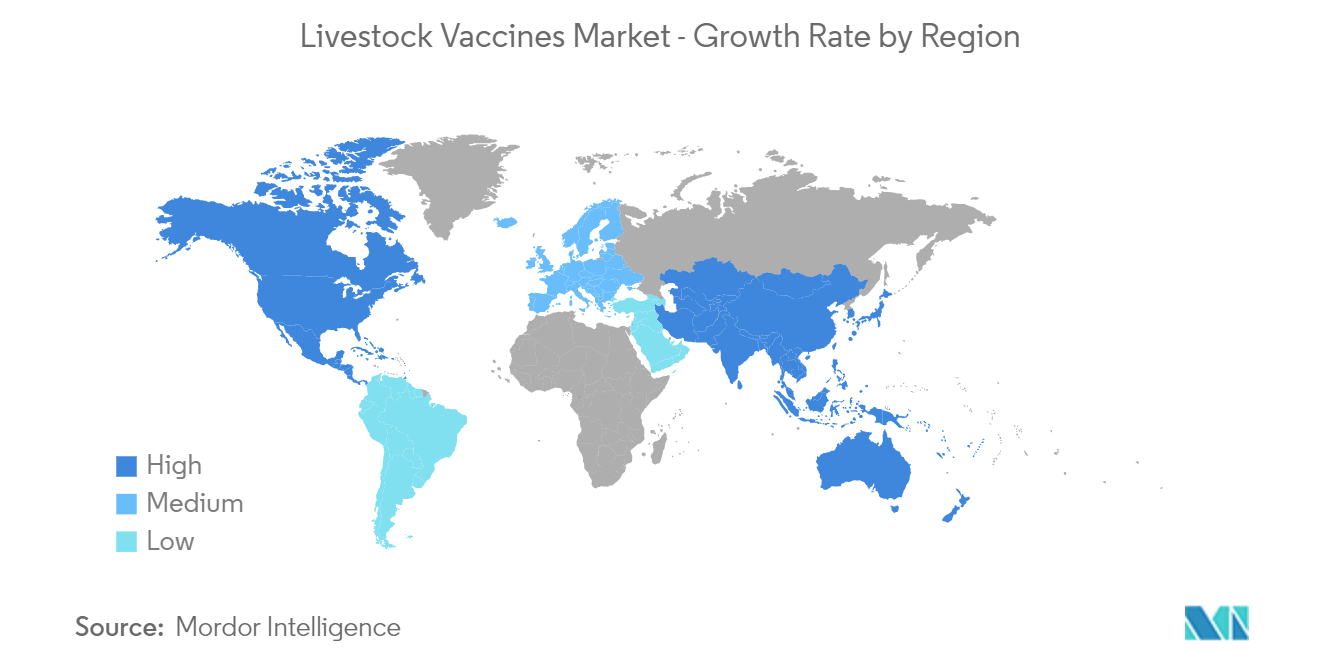
| Fastest Growing Market | Asia Pacific |
| Largest Market | North America |
Major Players *Disclaimer: Major Players sorted in no particular order Image © Mordor Intelligence. Reuse requires attribution under CC BY 4.0. | |
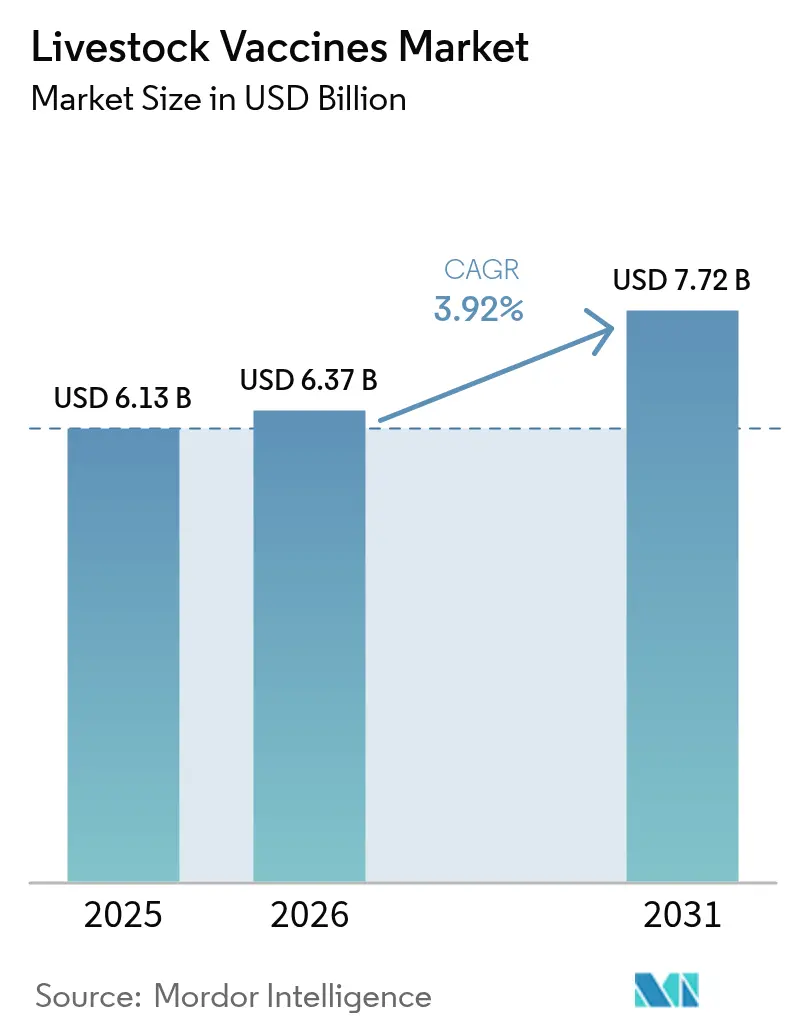
Livestock Vaccines Market Analysis by Mordor Intelligence
The Livestock Vaccines market size is expected to grow from USD 6.13 billion in 2025 to USD 6.37 billion in 2026 and is forecast to reach USD 7.72 billion by 2031 at 3.92% CAGR over 2026-2031.
The COVID-19 pandemic has impacted all industries, including livestock vaccines. Supply disruption and shortages of veterinary medicines have been observed in several countries, primarily due to the temporary lockdowns of manufacturing sites, export bans, and increased demand for COVID-19 medicines. Governments are taking measures to mitigate the supply of medicines. Certain specific and precautionary guidelines were given to veterinary professionals to treat companion animals during the COVID-19 pandemic by the Centers for Disease Control and Prevention in July 2020. Additionally, many government authorities, such as the Centers for Disease Control and Prevention, recommended veterinary hospitals and clinics prioritize urgent and emergency visits and procedures. This initiative by such national bodies may reduce the dependence on and usage of diagnostic equipment in veterinary healthcare management. Hence, a slight short-term negative impact is witnessed on the companion livestock vaccine market, primarily due to the reduced veterinary visits during the COVID-19 outbreak.
Globally, the livestock sector is witnessing an increased demand for livestock products such as meat and dairy products. Though this trend has traditionally been evident in developed countries across North America and Europe, demand for livestock products has increased significantly in emerging Asia Pacific and Latin American countries over the past decade.
This can primarily be attributed to the growing population in these regions, coupled with the rapid urbanization and economic growth. The repeated outbreaks of certain diseases in livestock animals are expected to support growth of the veterinary vaccines market by increasing the focus on animal health and preventive animal healthcare approaches among stakeholders in the livestock sector.
The coronavirus spreads from animal to animal with contact or aerosol transmission, thus infecting other animals. Incidents such as COVID-19 infected farmed minks were reported in numerous nations such as the U.S. and Denmark during late 2020. Thereby, such incidents have triggered the need for the COVID-19 animal vaccine. As a result, the market players are getting involved to manufacture veterinary vaccines against COVID-19. For instance, Zoetis is in process of donating over 11,000 doses of its experimental COVID-19 vaccine to help protect the health and well-being of Zoo animals. On the other hand, in April 2021, Russia has registered the world's first Covid-19 vaccine called Carnivac-Cov for animals. Thus, the growing cases of COVID-19 infections in domestic and wild animals will promote the acceptance of animal vaccines for safeguarding preventive animal health, thus soaring the industry growth.
In June 2021, the Government of the United Kingdom announced the establishment of a United Kingdom. Animal Vaccine Manufacturing and Innovation Centre in Surrey, intending to accelerate the vaccine development for livestock and to control the spread of viral diseases including coronavirus. The United Kingdom government will contribute USD 24.79 million while the Bill & Melinda Gates Foundation will contribute USD 19.43 million to establish this center. Thereby, the research initiatives adopted by the market players, growing COVID-19 infection cases in animals, and government support will enable the significant expansion of the livestock vaccines industry.
In addition, in an attempt to retain share and diversify the product portfolio, major players are frequently opting for various strategies such as mergers and acquisitions, partnerships, and new product launches. For instance, in February 2021, Ceva partnered with the French National Research Institute for Agriculture, Food, and Environment (INRAE) for R&D in the prevention of infectious diseases from animal origin and improvement of animal health. Similarly, in January 2021, Zoetis launched the Poulvac Procerta HVT-IBD vaccine for the protection of poultry against Infectious Bursal Disease (IBD).
However, high storage cost of vaccines and lack of veterinarians and skilled farm workers to administer vaccines is expected to restrain the Livestock Vaccines market growth.
Note: Market size and forecast figures in this report are generated using Mordor Intelligence’s proprietary estimation framework, updated with the latest available data and insights as of 2026.
Global Livestock Vaccines Market Trends and Insights
Poultry Vaccine is Expected to Cover a Large Share of the Livestock Vaccines Market
Poultry includes domesticated birds kept by humans for their eggs, their meat, or their feathers. Poultry is the most produced livestock in the world. The world's average stock of chickens is nearly19 a billion, or three per person, according to statistics from the United Nations Food and Agriculture Organisation. Moreover, the production of poultry is expected to increase in the future.
In December 2020, a bird flu outbreak was reported in 9 Indian states. Due to this, the price of poultry products has gone down, severely affecting the overall livestock industry. According to the Poultry Federation of India, chicken consumption has reduced to 50%, with a drop of 30% in the prices, as of December 2020. While most Asian countries have adopted vaccination policies, India has primarily resorted to the culling of birds. Punjab and Haryana state governments are close to legalizing vaccinations, which is expected to positively impact the segment's growth.
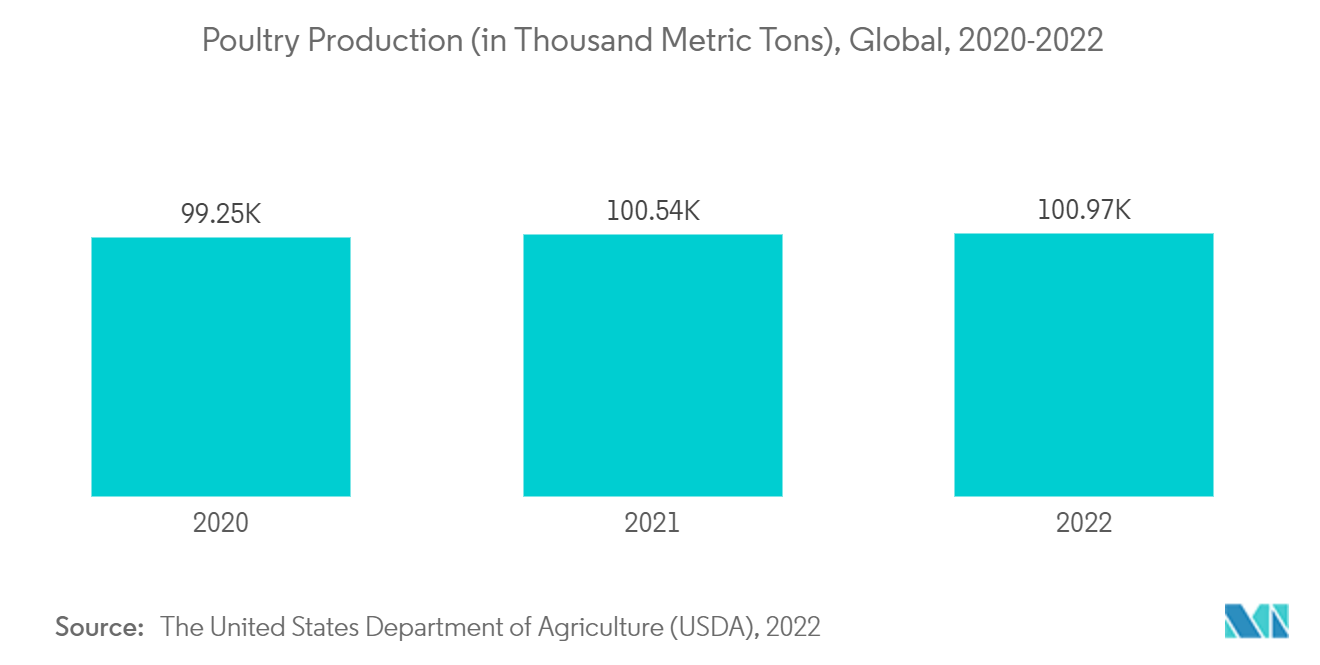
According to the United States Department of Agriculture, Foreign Agricultural Service, January 2022 report 'Livestock and Poultry: World Markets and Trade,' global chicken meat production for 2022 is forecast at 100.8 million tons, virtually unchanged from October. Similarly, global chicken meat exports for 2022 are raised by 1% to 13.4 million tons.
Therefore with the increasing poultry production, the number of poultry affected by the diseases is also expected to increase. To counter this, the farmers are expected to opt for preventive vaccines to prevent future economic loss. This is expected to help the growth of the Livestock Vaccines Market.


North America is Expected to Dominate the Market
North America is expected to grow due to the increasing adoption of veterinary vaccines for quality food products and for better animal health.
As per the January 2022 report by the United States Department of Agriculture and the Food and Agriculture Organization, cattle and calves on feed for the slaughter market in the United States for all feedlots totaled 14.7 million head in January 2022. The inventory is up slightly from the January 2021 total of 14.7 million heads. Cattle on feed in feedlots with a capacity of 1,000 or more head accounted for 81.9 percent of the total cattle on feed on January 1, 2022, up slightly from the previous year.
Additionally, in the United States, advancements in vaccine development include the development of live vector vaccines, non-replicating recombinant antigen vaccines, nucleic acid-mediated vaccines, and live-gene-deleted vaccines. For instance, in January 2020, Zoetis, a leading animal health company, further expanded its poultry vaccine portfolio by introducing Poulvac Procerta HVT-ND, a vectored recombinant vaccine for protection against Newcastle and Marek's disease viruses.
Moreover, the North American countries of the United States and Canada have a developed and well-structured health care system. These systems also encourage research and development. These policies encourage global players to enter the US and Canada. Hence, as a result, these countries enjoy the presence of many global market players. As high demand is met by the presence of global players in the region, the market is further expected to increase.

Competitive Landscape
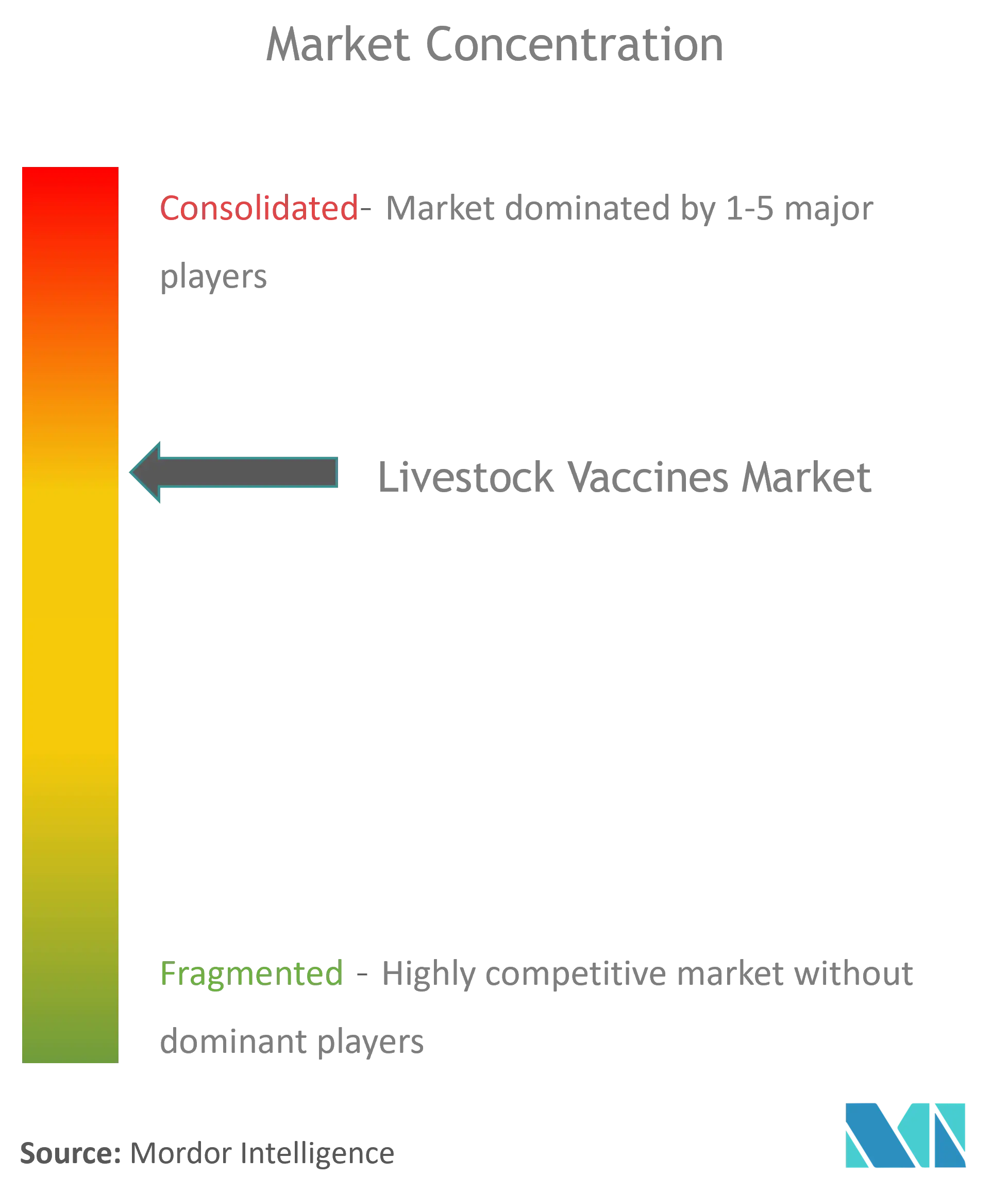
The livestock vaccines market is fairly competitive and consists of several major players. The majority of livestock vaccines are being manufactured by the global key players. Market leaders with more funds for research and better distribution system have established their position in the market. Moreover, Asia-pacific is witnessing an emergence of some small players due to the rise of awareness and the livestock industry in the region. This has also helped the market grow.
Livestock Vaccines Industry Leaders
Elanco
Boehringer Ingelheim International GmbH
Zoetis Inc
Merck & Co.
Ceva Santé Animale
- *Disclaimer: Major Players sorted in no particular order

Market Opportunities and Future Outlook
Large-scale manufacturing and capacity additions create room for broader immunization coverage and faster emergency response, especially in high-throughput poultry and swine systems. Merck Animal Health announced an USD 895 million expansion in De Soto, Kansas (May 2025) to add biologics manufacturing and R&D capacity, and Ceva announced a new 7,000 m2 vaccine manufacturing plant in Monor, Hungary (November 2024) focused on fermentation-based multicomponent inactivated vaccines, with operations scheduled for late 2026. In addition, Nigeria's plan to modernize NVRI to raise domestic output from 120 million to 850 million doses annually (April 2025), and MEVAC's third industrial complex in New Salhia City, Egypt with stated capacity exceeding 12 billion doses per year (June 2025), supports more localized supply. Shorter routing for tenders can also reduce lead times for routine vaccination programs.
Procurement changes are also opening near-term access routes for priority livestock vaccines. FAO introduced a vaccine registration system for priority livestock diseases (June 2026) to shorten procurement timelines from about 16 weeks to around 5 to 7 weeks through streamlined technical assessment and pre-approved suppliers. On the demand and product-design side, WOAH's PROEVA work (February 2026) updated priority disease lists where vaccines can reduce antimicrobial use across swine, poultry, fish, cattle, sheep, and goats, reinforcing investment into vaccines aligned with AMR stewardship, DIVA-compliant approaches, and multicomponent platforms used in export-oriented health management programs.
Recent Industry Developments
- July 2026: Zoetis received European Commission marketing authorization for Poulvac Procerta HVT-ND for poultry. The authorization expands access to a vectored recombinant option for Newcastle disease and Marek's disease control within the EU. It also supports Zoetis in a high-volume segment where flock-level prevention is tied to productivity and trade continuity.
- December 2025: Merck Animal Health announced commercial availability of Circumvent CL, a ready-to-use swine vaccine covering porcine circovirus types 2a and 2d and Lawsonia intracellularis. The combined protection in a single product supports simplification of vaccination programs in intensive pork production. It also reinforces portfolio depth in the porcine segment where disease complexes drive recurring vaccination demand.
- February 2024: Merck Animal Health announced the acquisition of Elanco's aquaculture business for USD 1.3 billion. The deal changes competitive positioning in aquatic animal health by transferring established product lines and commercial capabilities. It also gives Merck Animal Health a broader platform to serve vaccination needs across livestock and aquaculture production systems.


Research Methodology Framework and Report Scope
Market Definition and Coverage
For this study, the livestock vaccines market covers preventive immunization products used in food producing animals and other farmed species, as measured by manufacturer level revenues from vaccines sold through veterinary and livestock health channels.
Scope exclusions: This sizing excludes diagnostics, therapeutic drugs, feed additives, and veterinary services, and it also excludes vaccines meant only for companion animals.
Segmentation Overview
- By Product Type
- Bovine Vaccine
- Poultry Vaccine
- Porcine Vaccine
- Other Livestock Vaccines
- By Technology
- Live Attenuated Vaccine
- Inactivated Vaccine
- Toxoid Vaccine
- Recombinant Vaccine
- Other Technologies
- Geography
- North America
- United States
- Canada
- Mexico
- Europe
- Germany
- United Kingdom
- France
- Italy
- Spain
- Rest of Europe
- Asia-Pacific
- China
- Japan
- India
- Australia
- South Korea
- Rest of Asia-Pacific
- Middle-East and Africa
- GCC
- South Africa
- Rest of Middle East and Africa
- South America
- Brazil
- Argentina
- Rest of South America
- North America
Data Sources, Market Sizing, and Validation
Desk Research
Desk work started with aligning the demand pool to animal populations and disease pressure by species and region, then matching it to how vaccines are approved and supplied. Public sources such as the World Organisation for Animal Health (WOAH) disease notifications, FAOSTAT livestock numbers, USDA and Eurostat livestock statistics, and government animal health department updates were used to anchor herd sizes, production cycles, and outbreak timing.
To ground the commercial side, we reviewed sources such as company annual reports, investor presentations, and product label information posted by regulators, along with reputable press coverage on outbreaks and vaccination campaigns. Where needed, paid subscriptions for company financials and intelligence, patent databases, and an import-export shipment level database were used to cross check manufacturing footprint, product focus, and trade flows. These sources were illustrative, and other public references were also used for validation and clarification during the work.
Primary Interviews and Surveys
Primary discussions were completed with vaccine manufacturers, distributors, large farm operators, veterinarians, and animal health program stakeholders across key producing regions, so the assumptions are not built only from published data. We used the input to validate species level uptake, typical booster schedules, pricing direction, and how channel margins and tender purchases show up in reported revenues.
Distribution of primary research fieldwork respondents
| Company type | Respondent position | Region |
|---|---|---|
| Top tier: 33% | CXOs: 13% | APAC: 48% |
| Mid tier: 48% | Functional/Unit leaders: 43% | EMEA: 30% |
| Smaller Players: 19% | Managers: 44% | Americas: 22% |
Market-Sizing & Forecasting
Sizing was built using a top-down approach where animal population data and production cycles are converted into a vaccine addressable demand pool, then scaled by penetration and pricing patterns. The model is then checked with selective bottom-up approximations, such as sampled supplier revenue splits by species, channel checks on average selling prices, and volume sanity checks using vaccination schedule logic.
Key inputs used (illustrative) included cattle, poultry, and swine headcount by region, incidence and recurrence of priority diseases and outbreaks, vaccination coverage rates in commercial versus backyard systems, typical dose and booster schedules, and price progression by vaccine technology type. When a variable was weak in one geography, we filled gaps using nearby country analogs with similar production systems, and then adjusted using expert feedback.
For forecasting, scenario analysis was used around outbreak cycles, policy-led vaccination programs, and adoption of newer technologies. It was supported by a simple multivariate regression on livestock inventories, protein production trends, and historical vaccine revenue growth. Assumptions were kept traceable to measurable indicators so they could be explained consistently across regions.
Data Validation & Update Cycle
Outputs were validated through multiple checks, starting with cross comparing implied doses and implied spend per animal against known vaccination practices and farm economics. Variance flags were reviewed when growth rates moved away from livestock production trends, reported outbreak intensity, or channel commentary, after which the assumptions were revisited.
Before sign-off, a second analyst review was completed to pressure test scope, math, and year-over-year continuity, and targeted re-contacts were triggered when there were material mismatches with field inputs. Reports are refreshed annually, with interim updates when major disease events, regulatory shifts, or meaningful pricing changes occur. Right before delivery, we run a final pass so clients receive the latest updated view.
Mordor Intelligence's Livestock Vaccines Market Size Versus Other Published Estimates
Published market values for livestock vaccines can differ across sources even when the topic name is the same, because the counting rules are not always aligned. Differences typically come from what animal categories are included, whether values reflect manufacturer revenues or end-user spend, and how outbreak years and government programs are treated.
In this market, the main gap drivers are usually whether companion animal vaccines are mixed into the total, whether aquaculture is treated as part of livestock, and whether the estimate inflates the market by using retail pricing that includes clinic and distributor markups. Year choice also matters, since outbreak-driven demand can create short spikes, and currency conversion timing can move USD totals when local prices remain stable.
Benchmark comparison
| Source | Market Size | Gaps in Research Methodology |
|---|---|---|
| Mordor Intelligence | USD 6.37 B (2025) | |
| Industry Publisher A | USD 6.33 B (2025) | Uses a broader segmentation lens and may mix different channel pricing points across countries, which can slightly shift the manufacturer-level value for the same year. |
| Market Aggregator B | USD 6.40 B (2024) | Uses an earlier base year and a higher growth setting tied to long-range drivers, with less visibility on outbreak cycle normalization and short-term program timing. |
The spread is not large in the near term, and it is explained by year selection, pricing point selection, and how closely the scope is kept to livestock-only vaccine revenues. Keeping the model tied to species headcounts, vaccination coverage, and outbreak cadence helps avoid double counting of markups and adjacent animal categories, a choice applied by Mordor Intelligence.


Key Questions Answered in the Report
How big is the Global Livestock Vaccines Market?
The Global Livestock Vaccines Market size is expected to reach USD 6.37 billion in 2026 and grow at a CAGR of 3.92% to reach USD 7.72 billion by 2031.
What is the current Global Livestock Vaccines Market size?
In 2026, the Global Livestock Vaccines Market size is expected to reach USD 6.37 billion.
Who are the key players in Global Livestock Vaccines Market?
Elanco, Boehringer Ingelheim International GmbH, Zoetis Inc, Merck & Co. and Ceva Santé Animale are the major companies operating in the Global Livestock Vaccines Market.
Which is the fastest growing region in Global Livestock Vaccines Market?
Asia Pacific is estimated to grow at the highest CAGR over the forecast period (2026-2031).
Which region has the biggest share in Global Livestock Vaccines Market?
In 2025, the North America accounts for the largest market share in Global Livestock Vaccines Market.
What years does this Global Livestock Vaccines Market cover, and what was the market size in 2025?
In 2025, the Global Livestock Vaccines Market size was estimated at USD 6.37 billion. The report covers the Global Livestock Vaccines Market historical market size for years: 2019, 2020, 2021, 2022, 2023 and 2024. The report also forecasts the Global Livestock Vaccines Market size for years: 2026, 2027, 2028, 2029, 2030 and 2031.
Page last updated on:


 Your data is secure and never sold or shared.


